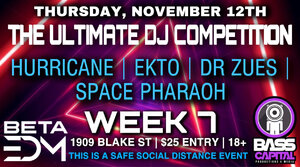
Events and Programming
There are no current events or tickets at BETA EVENT CENTER. The venue at 1909 Blake Street lost its liquor, dance cabaret and underage-patrons licenses on January 5, 2022, and the building has not returned to operation under the BETA EVENT CENTER name. A proposed successor called Beta X also failed to open in 2026 after its liquor-license application was withdrawn.
Historically, the venue was one of Denver’s most prominent electronic-music clubs. The original Beta opened in March 2008 and booked international DJs and producers including A-Trak, Boys Noize, Paul van Dyk, Matthew Dear, Above & Beyond, Danny Tenaglia and Hercules and Love Affair. Other documented performers associated with the venue include deadmau5, John Digweed, Tiësto, David Guetta, Adventure Club, Pendulum, Rich the Kid and Shaquille O’Neal.
Its regular programming centered on electronic dance music, especially house, techno, progressive house, trance, dubstep and drum and bass. A recurring “Proper Sundays” series focused on techno, tech house and house, while the later Beta Event Center period broadened the calendar to hip-hop, Top 40, Latin music, comedy, R&B and occasional crossover parties. In August 2020, the planned weekly pattern was EDM and techno on Thursdays, Top 40 on Fridays, hip-hop on Saturdays and Latin music on Sundays, with country programming also discussed.
The public event record becomes much thinner after the original club closed in January 2019. A concert archive lists one Beta performance in 2021, GAWM on May 20, while a performer archive records SOLI at The Beta Event Center in June 2021. Visitor-posted records also mention a Wednesday comedy night in April 2021. No reliable operating schedule or confirmed public performances at the venue has been found for 2022, 2023, 2024, 2025 or 2026.
For historical ticket expectations, surviving listings show some standard club nights priced around $10, while larger artist bookings, special events and VIP packages varied. A dependable complete price history does not survive, so older cover charges should not be treated as current prices. There is no active box office, presale calendar or on-sale schedule for BETA EVENT CENTER.
Tickets and Booking
There are no BETA EVENT CENTER tickets currently on sale. Event pages that continue to appear in search results are historical listings or inactive venue records rather than evidence of a current calendar. Visitors should not travel to 1909 Blake Street expecting entry, door sales or a replacement event.
During the venue’s operating years, tickets and cover charges varied by night. Standard club programming was commonly sold as general admission, with higher prices for nationally recognized DJs, holiday parties and special productions. VIP tables and bottle-service areas were also part of the later operating model. Historical listings show that some underground Sunday events carried a $10 cover, but prices for major headliners were not consistent enough to establish a single reliable range.
The venue did not operate like a conventional theater with a permanent box office or assigned seating. Popular shows were best approached with advance admission because the main room could reach its occupancy limit. During the pandemic-era reopening in August 2020, the city permitted only 100 people inside, reservations were required, walk-ins were prohibited and guests were seated by hosts. Those restrictions were temporary and are not current visitor policies.
About BETA EVENT CENTER
BETA EVENT CENTER was the later identity of the venue historically known as Beta Nightclub. It occupied 1909 Blake Street in Denver’s Lower Downtown, between 19th and 20th streets, in a roughly 1910 commercial building. Property materials describe approximately 11,028 square feet of former nightlife space, three floors, multiple bars, a VIP basement level and an elevator serving the building.
Published capacity figures vary by configuration and period. The original main room was described as holding about 900 people, while later reporting referred to a normal full capacity of approximately 1,000. These are historical standing-room figures, not an approved current capacity for the building. No verified room-by-room dimensions or permanent seating chart has been located.
The venue’s importance came from its unusual combination of serious club sound design, international bookings and a downtown location close to Coors Field and Union Station. In 2013, Rolling Stone ranked Beta the number-one dance club in America, and Billboard later included it among the 25 greatest dance clubs of all time. Those distinctions helped establish Denver as a major stop on the touring electronic-music circuit.
Ownership and programming changed near the end of the club’s life. Founders Brad Roulier and Mike McCray closed the original operation in January 2019 after roughly 11 years. The venue returned later that year as Beta 2.0, then came under the control of Hussam Kayali, who operated it under the name Valentes Corleons and promoted the space as Beta Event Center.
Seating and Layout
Beta was primarily a standing nightclub rather than a seated performance venue. The main experience was an open dance floor facing the DJ booth, with bars and circulation areas around the perimeter. Historical descriptions also refer to an upstairs lounge, VIP and bottle-service areas, an outdoor patio and, in some periods, multiple stages. There was no standard theater-style seat map for ordinary shows.
The original room’s intimate scale placed the crowd close to the DJ rather than behind a distant stage. DJ Mag described four large speaker stacks facing into a main room of approximately 900 people. For the best sound, the center of the main floor offered the strongest impact, while the edges and elevated areas provided a less intense listening experience and more room to move.
Beta 2.0 plans called for moving the DJ booth from the upstairs lounge and turning the patio into a second room. A pool was also proposed during the 2019 renovation process, but available reporting does not provide a definitive as-built inventory of the completed 2019-20 space.
Getting There and Parking
The former venue address was 1909 Blake Street, Denver, Colorado 80202. The building sits in LoDo near Coors Field, Union Station, Dairy Block and McGregor Square. It is a walkable downtown location, but the venue did not have a documented dedicated visitor parking lot. Parking in the area historically consisted of metered street spaces, private surface lots and commercial garages, with costs varying according to baseball games, concerts, time of day and special events.
Union Station is the most useful transit connection. Property transportation data places the former venue roughly half a mile, or about a nine-minute walk, from the station. From the station area, walk northeast toward 19th Street and Blake Street. Union Station provides access to RTD commuter rail, light rail and bus connections, including the A Line to Denver International Airport.
The former venue was also approximately 0.4 miles from the 38th & Blake rail area according to property transportation data, although Union Station was the more practical connection for downtown visitors. Rideshare vehicles historically used the surrounding Blake Street and LoDo curb network, but no current BETA-specific pickup or drop-off zone exists.
Denver Union Station does not have a dedicated parking lot. Visitors attending another future event at the building would need to verify parking arrangements separately because the property’s ownership, use and curb rules have changed since the club closed.
Inside the Venue
Historical visitor accounts describe a dark, high-energy club interior with loud music, changing lights, bars, a main dance floor, upstairs viewing or VIP areas and an outdoor patio. Reviews mention coat check, bathroom attendants, card payments, free water and food trucks outside on some nights. These details describe the operating venue before closure and should not be read as current amenities.
Entry generally involved a ticket or cover charge, identification checks and security screening. Procedures changed by event and ownership period. During the August 2020 reopening, guests needed reservations, signed a COVID-19 waiver, were seated by hosts and could not dance. Earlier and later operating periods used more conventional nightclub entry and standing-room procedures.
The strongest consistent feature was the sound and lighting environment. The original Beta was built around its DJ booth and acoustic performance rather than treating production as an add-on. The later renovation aimed to make the room more visually immersive, although there is no current production team or technical rider for the former venue.
Nearby Amenities
1909 Blake Street is in one of Denver’s densest entertainment districts. Coors Field, Union Station, hotels, restaurants, bars, breweries and late-night businesses surround the former venue. Baseball games and major downtown events can sharply increase pedestrian traffic, parking prices and rideshare delays, so historical visitors typically benefited from arriving well before the headline set.
Union Station was the most practical base for visitors staying downtown or connecting from the airport. Late-night transportation required checking current RTD service, arranging a rideshare pickup away from the busiest curb activity or walking with a group through the active LoDo district. There is no BETA-specific late-night transportation service.
Sound, Lighting and Production
Beta’s original sound system was its defining technical feature. DJ Mag reported a Funktion One Dance Array system, four towering speaker stacks and a main-room capacity of approximately 900. The system was engineered and acoustically tuned for the room, and the club reportedly operated it at roughly 30 to 40 percent of available capacity to preserve clarity and warmth rather than simply maximizing volume.
Another historical account described the system as 72,000 watts and warned that the center of the floor could be extremely loud. Event reviews praised its bass response and clarity but also advised ear protection for guests standing directly between the speakers. Sound levels and equipment should be understood as historical; there is no current technical specification for the closed venue.
The original design used low-voltage LED signs, recycled concrete bar surfaces, acoustic panels made from reclaimed denim and mirrors made from reformed glass. DJ Mag described the club as having a 90 percent environmentally green rating and a botanical garden on its patio. These features helped distinguish Beta from a conventional warehouse club.
For Beta 2.0, the owners announced at least 260 LED screen panels and approximately 240 to 250 additional lighting fixtures. Local designer Justin Martinez was associated with the interior work, and the planned system was promoted as a highly unusual room-specific installation. Because the reports describe planned or newly installed equipment rather than a final technical inventory, an exact as-built fixture count cannot be confirmed.
Accessibility, Policies and Visitor Information
Property materials describe an elevator serving all three floors, but that does not by itself confirm a compliant public entrance, accessible restrooms, accessible viewing areas or current ADA accommodations. Historical public information does not reliably document accessible seating, assistive listening, captioning, service-animal procedures or the location of an accessible entrance. Since the venue is closed, there are no current event-specific accessibility arrangements to verify.
Historical rules varied by event and ownership. The city’s final licensing decision specifically addressed occupancy limits, security licensing, alcohol-service hours, entry screening and enforcement of posted club rules. The decision revoked the venue’s tavern liquor, dance cabaret and underage-patrons licenses effective January 5, 2022.
No dependable current record establishes a permanent bag policy, camera policy, dress code, coat-check policy, age rule or merchandise program. Age restrictions appear to have varied because the venue held an underage-patrons license during part of its history, while many nightclub nights operated as adult nightlife events. Visitors should not rely on old listings for current rules.
What Makes This Venue Special
Beta mattered because it treated a nightclub as a carefully engineered music room. Its founders came from Denver’s electronic-music and sound-system communities, and the club’s early identity was built around credible bookings, a close DJ-to-crowd relationship and unusually ambitious acoustic design. International artists helped turn the venue into a destination rather than simply another downtown bar.
The club also reflected Denver’s broader evolution from a regional nightlife market into a nationally recognized electronic-music city. Its 2008 opening, major rankings and steady flow of touring DJs gave local audiences access to artists who might otherwise have bypassed Colorado. The venue’s cultural influence is well documented; a formal venue-specific economic-impact study with attendance, payroll or tax figures was not located.
The later years were more complicated. Beta Event Center expanded the music mix beyond the original EDM identity and continued to attract favorable reviews for its atmosphere, sound and international talent. At the same time, COVID-19 violations, public-nuisance proceedings, reported safety concerns and the eventual license revocation shaped the venue’s final chapter. The closure ended one of Denver’s best-known club stories while leaving the historic LoDo building available for a new use.
Frequently Asked Questions
Is BETA EVENT CENTER open in 2026?
No. The former BETA EVENT CENTER at 1909 Blake Street closed after Denver revoked its liquor, dance cabaret and underage-patrons licenses on January 5, 2022. The building has since been treated as a former nightclub property rather than an operating event venue. A proposed 2026 successor, Beta X, also failed to open after its liquor-license application was withdrawn.
Are there any current BETA EVENT CENTER events?
No confirmed 2026 events are listed for BETA EVENT CENTER. Public archives identify limited 2021 activity, including GAWM in May and SOLI in June, but no reliable public event record has been found for 2022 through 2026. Search results showing future dates generally reflect stale venue pages or historical databases rather than a live operating calendar.
Is Beta Nightclub the same place as Beta Event Center?
Yes. Beta Nightclub was the original and best-known identity of the venue at 1909 Blake Street. After the 2019 relaunch and ownership changes, the operation was also promoted as Beta 2.0 and BETA EVENT CENTER. References to the original nightclub, later event-center period and former Beta building all point to the same LoDo property.
Why did BETA EVENT CENTER close?
Denver’s final licensing decision cited continuing legal and code-compliance concerns, including alcohol-service issues, security licensing, occupancy controls and enforcement of venue rules. The city revoked the tavern liquor, dance cabaret and underage-patrons licenses effective January 5, 2022. The closure followed investigations and hearings during 2021, rather than a routine business rebrand.
Will Beta X replace the former venue?
No confirmed replacement opened. In 2026, an operator proposed Beta X as a cultural venue with live music and DJs, but the proposal encountered neighborhood opposition and the city liquor-license application was withdrawn in April 2026. That means the former BETA space does not currently have a confirmed successor operating under either Beta X or BETA EVENT CENTER.
What was the capacity of BETA EVENT CENTER?
Historical reports place the main room around 900 people, while later coverage described the venue’s normal full capacity as approximately 1,000. During the pandemic reopening, the city limited attendance to 100 people. These figures describe different operating periods and configurations. They are not a current legal capacity for the former venue.
Did BETA EVENT CENTER have assigned seats?
Usually not. Beta operated primarily as a standing nightclub with an open dance floor, bars, upstairs areas and VIP or bottle-service sections. Temporary tables were used during special formats, including the 2020 restricted reopening, but there was no standard theater seating plan. A complete historical seat map or room-by-room layout has not been publicly verified.
What kind of music did Beta book?
The original club focused on electronic dance music, including house, techno, trance, progressive house, dubstep and drum and bass. Later BETA EVENT CENTER programming broadened into hip-hop, R&B, Top 40, Latin music, comedy and crossover nightlife. That shift explains why older descriptions of the venue can differ sharply depending on the year being discussed.
Which famous DJs played at Beta?
Documented performers include A-Trak, Boys Noize, Paul van Dyk, Matthew Dear, Above & Beyond, Danny Tenaglia, Hercules and Love Affair, deadmau5, John Digweed, Tiësto, David Guetta, Adventure Club and Pendulum. This is a representative historical list rather than a complete archive of every artist who appeared during the club’s 14-year history.
What was special about Beta’s sound system?
The original room used a Funktion One Dance Array system with four large speaker stacks facing the approximately 900-capacity main room. The system was acoustically tuned for the space and praised by touring DJs and reviewers for clarity, monitoring and bass impact. Historical accounts also describe it as extremely loud near the center of the dance floor, making ear protection sensible.
What did the Beta 2.0 renovation add?
Plans for Beta 2.0 included at least 260 LED screen panels, approximately 240 to 250 lighting fixtures, redesigned interiors, a relocated DJ booth and a renovated outdoor patio. A pool was also proposed. Public reporting does not provide a definitive final inventory confirming which planned features were completed, so these details should be treated as renovation plans and reported features rather than a current technical specification.
Is the former Beta building historic?
The property is described as a historic commercial building constructed around 1910, with brick architecture and flexible interior volumes. Its architectural interest came from the adaptive reuse of an older LoDo building as a highly technical nightclub. The building was not simply a purpose-built modern concert hall; its historic shell and nightlife infrastructure were layered together over time.
How far was Beta from Union Station?
The former venue was approximately half a mile from Denver Union Station, or roughly a nine-minute walk under typical conditions. The route led through the active LoDo district toward 19th Street and Blake Street. Union Station also connected visitors with RTD rail, buses and the A Line to Denver International Airport.
Did BETA EVENT CENTER have its own parking lot?
No dedicated visitor parking facility is reliably documented for the former venue. Historical visitors used street parking, private surface lots and commercial garages in LoDo. Availability and pricing changed with Coors Field games, downtown concerts and nighttime demand. Union Station itself does not have a dedicated parking lot, so transit was often more practical than driving.
Was BETA EVENT CENTER wheelchair accessible?
Property materials describe an elevator serving all three floors, but that does not confirm full ADA access for a public event. Available historical information does not reliably establish the entrance route, accessible restrooms, seating areas, assistive listening or other accommodations. Because the venue is closed, there are no current accessibility services or event-specific arrangements to verify.
Was Beta a 21-and-over venue?
Age rules varied by period and event. The venue held an underage-patrons license during part of its history, while many late-night club events were adult-oriented and subject to identification checks. Because programming, ownership and licensing changed, old claims that Beta was always 21-plus are too broad. No current age policy exists because the venue is closed.
What did visitors like about Beta?
Reviews commonly praised the international bookings, powerful sound, immersive lighting, outdoor patio, friendly crowds and the ability to see the DJ from close range. Some visitors also mentioned free water, food trucks and efficient coat-check or bathroom service. Other reviews criticized crowding, pricing, customer-service inconsistency and the intensity of the sound, producing a mixed but vivid visitor record.
Did Beta have food and drinks?
Yes, during its operating years the venue had bars and served alcoholic drinks. Historical visitor records also mention food trucks outside, while the restricted 2020 reopening offered food and drink under special rules. There is no current food, beverage, bar or concession service at the former venue, and old menu or price references should not be treated as current.
What should visitors do if they find an old Beta ticket?
Do not assume it is valid. Since the venue closed in January 2022 and no current operator is running BETA EVENT CENTER, an old ticket is almost certainly tied to a past event, a canceled booking or an inactive listing. Verify the event date and venue status before making travel plans, and do not expect door admission at 1909 Blake Street.
Why is Beta important to Denver’s music history?
Beta helped establish Denver as a serious touring destination for electronic music. Its 2008 opening, international DJ bookings, engineered sound system and national rankings gave the city a club with influence beyond its local audience. Its history also illustrates the challenges of operating late-night entertainment in a dense downtown district, where cultural importance and public-safety concerns can coexist.