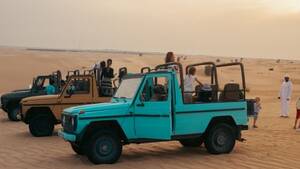
About Al Marmoom Conservation Reserve
Al Marmoom Conservation Reserve, officially Al Marmoom Desert Conservation Reserve, remains open and operating in the Saih Al Salam desert area of Dubai. It is not a conventional entertainment venue with one entrance, auditorium or seating plan. It is a protected landscape of approximately 949.35 square kilometres, covering almost 23% of Dubai and incorporating dunes, ghaf woodland, gravel plains, sabkha, artificial lakes and wildlife habitats. It is classified as an IUCN Category II protected area and is among the UAE’s first large, unfenced desert sanctuaries open for sustainable public recreation.
The reserve’s legal history predates its tourism identity. Dubai’s Law No. 11 of 2003 established the framework for protected areas, while Decree No. 22 of 2014 formally protected Al Marmoom. Environmental work was already under way by 2008, including relocating wildlife threatened by urban development. A 2016 expansion plan proposed growing the protected area from 391 to roughly 933 square kilometres, together with observation platforms, camping areas, a nature studies centre and improved visitor access.
In January 2018, the reserve was publicly launched as a major environmental, tourism and recreation project. Plans included more than 20 cultural, sporting and ecological initiatives, observation decks, an outdoor theatre, longer cycling routes, a native-plant nursery and the Marmoom Biosphere Centre. The reserve’s current biodiversity inventory includes 258 bird species, 11 mammals, 26 reptiles, 47 plants, 134 invertebrates and three fish species. Arabian oryx, sand gazelle, Arabian gazelle and houbara are among its defining wildlife.
Events and Programming
Programming is concentrated in Dubai’s cooler months and uses temporary outdoor sites rather than a permanent performance hall. The best-known cultural event is Al Marmoom: Film in the Desert, launched in March 2020 with open-air screenings, masterclasses, children’s workshops and discussions around films shaped by desert landscapes. Its first programme included Arab and international narrative films, documentaries, Emirati shorts and restored cinema.
Publicly documented activity from 2021 onwards has combined endurance sport, environmental education and temporary cultural production. Al Marmoom Ultramarathon activity continued in 2021, followed in February 2022 by a 50-kilometre desert race and community dune run. The second film festival followed in December 2022, screening 27 films and presenting 23 talks and workshops alongside heritage displays, food pop-ups, live performances and facilities for People of Determination.
In 2023, Al Marmoom hosted the 33rd Arab Scout Camp, with approximately 1,500 participants attending cultural, conservation and educational activities. The third film festival expanded substantially in January 2024, showing more than 70 films and offering over 30 workshops and more than ten talks. Its subjects ranged from acting and script development to cinematography, editing, dubbing and documentary production. The event was free, with weekday evening and longer weekend operating hours.
The fourth film festival ran in January 2025 with around 80 films, live music, public art, digital installations, a family zone, a marketplace and experiments using artificial intelligence. The temporary layout took inspiration from the ghaf tree, with a central pathway branching into screening, exhibition and activity areas. Visitors could also use a telescope observation deck, planetarium and interactive installations that created short films, music and light-based portraits.
Major 2026 programming included the Middle East debut of the Hood to Coast relay, using a route of more than 100 kilometres through lakes, dunes and the solar park; several Al Salam Cycling Championship races; and Al Marmoom: The Living Wild. That ten-day drive-through photography exhibition presented 24 wildlife images using solar-powered desert structures and augmented-reality features, attracting more than 10,000 visitors.
As of 13 August 2026, no fifth edition of Film in the Desert or fixed 2027 performance season had been confirmed in the official announcements reviewed. The most significant longer-term development is Al Layan Oasis, approved in February 2026 under Dubai’s 2030 water-and-green-space programme. The project proposes a one-million-square-metre destination, a lake exceeding 250,000 square metres and 14 kilometres of paths connecting with Al Marmoom routes.
Camel racing and the Al Marmoom Heritage Festival are important to the wider district but generally take place at Al Marmoom Camel Race Track and Heritage Village, not at a single stage inside the conservation reserve. Visitors should therefore confirm the exact landmark rather than treating “Al Marmoom” as one venue address.
Tickets and Booking
General access to the reserve and Al Qudra Lakes is normally free, with no standard box office or reserve-wide admission ticket. The 2024 film festival was also free, but races, private safaris, workshops, camping experiences and hospitality packages may require advance registration or payment. No dependable venue-wide price range exists because independent organisers set their own charges. Popular winter events may use timed entry, registration limits or temporary car passes.
Seating, Layout and Technical Production
There is no permanent reserve capacity, seating chart, general-admission bowl or verified fixed VIP section. Film festivals and exhibitions install event-specific screens, stages, pathways, seating and hospitality areas. Attendance projections—such as the 50,000 visitors anticipated for the 2024 film festival—represent footfall across multiple days, not simultaneous capacity.
A covered amphitheatre was designed as part of the reserve masterplan. Published concept material describes a 300-square-metre structure with terraced viewing levels, a performance platform, screen, service rooms and a dune-inspired open canopy. The same material inconsistently gives capacity as 350 and up to 400, while listing its status as “design completed”; it should not be assumed to be a fully commissioned house venue.
No permanent house sound system, lighting inventory, rigging grid, stage dimensions, power distribution, backline or acoustic specification has been published. Production is brought in for each event and has included large screens, projection, LED frames, amplified stages, immersive digital art and solar-powered exhibition structures. Wind, dust and the open desert can influence sound and sightlines, so central positions facing temporary screens usually provide the most balanced experience.
Getting There and Parking
The reserve extends across Saih Al Salam and the Al Qudra area, approximately 55 kilometres by road from central Dubai. Al Qudra Road, D63, is the principal approach to the lakes, with additional regional access from Emirates Road, Jebel Ali–Lehbab Road, Al Fayah Road and Dubai–Al Ain Road. A normal saloon car can reach the main lake attractions, although some final sections are compacted sand or gravel.
Parking is distributed among lake pull-offs, cycling facilities, event car parks and attraction-specific areas. No reserve-wide paid-parking tariff or guaranteed capacity is published. During large events, follow temporary traffic signs and marshal instructions rather than an old map pin. Do not leave the firm track or park on vegetation, and avoid soft dune shoulders unless travelling in a suitable vehicle with desert-driving experience.
There is no Dubai Metro station near the reserve. Bus 67 serves the Endurance City and Saih Al Salam corridor from Al Ghubaiba, but services are infrequent and stops may be far from lakes or temporary event entrances. Public transport is therefore rarely practical for a casual visit. Pre-booked transport, a private car or an event shuttle is safer, particularly at night when finding a return taxi can be difficult.
Inside the Reserve
Ordinary visits have no central lobby, security line, cloakroom, merchandise shop or reserve-wide Wi-Fi. Facilities are scattered, and some lake areas have few or distant toilets. Food is concentrated around selected cycling and leisure hubs, private desert camps and seasonal pop-ups. Film festival editions have hosted sizeable marketplaces of home-grown cafés and food businesses, but these disappear when the event closes.
Eight wildlife-observation towers have been built within the reserve. Their low-impact design is intended to help visitors watch birds without disrupting habitat; one award-recognised concept, “The Nest”, uses nest-like patterning and non-reflective surfaces. The landscape itself remains the primary attraction, particularly at sunrise, sunset and during winter bird migration.
Nearby Amenities
This is not a walkable entertainment district. Visitors should buy water, snacks and fuel before leaving built-up Dubai. The Al Qudra cycling area has refreshments and bike-related services, while a nearby desert resort provides hotel accommodation and multiple restaurants. Private camps and glamping operations also serve the wider Al Marmoom area, but they are separately booked businesses rather than public reserve facilities.
Allow extra time between attractions because Love Lake, Al Qudra Lakes, cycling facilities, event sites and heritage venues can be many kilometres apart. For an evening programme, arrange the return journey in advance. There is no dependable late-night Metro connection, taxi rank or bar-and-restaurant strip within walking distance.
What Makes Al Marmoom Special
Al Marmoom’s character comes from placing ambitious cultural and sporting programmes inside a functioning desert ecosystem. Open-air cinema, endurance racing, photography and Emirati heritage are presented against habitats supporting oryx, gazelles, reptiles and migratory birds. The reserve also contains the Iron Age landscape of Saruq Al Hadid and the Mohammed bin Rashid Solar Park, bringing archaeology, conservation and renewable energy into one unusually large public destination.
Its community impact is cultural as well as economic. Film festivals give regional directors and emerging creatives public exposure, while temporary markets create trading opportunities for Dubai-born food businesses. Sport draws international participants into the desert, and conservation-focused events turn wildlife into a subject for education and art. No audited reserve-wide economic-impact figure has been published, so visitor numbers and business participation are more meaningful than speculative revenue claims.
Visitor Tips, Accessibility and Policies
Recent visitors consistently praise the quiet scenery, birdlife, sunrise views and sense of escape from central Dubai. Common complaints concern weekend noise, litter, limited toilets and inconsiderate camping near popular lakes. Weekday mornings are generally calmer than Friday or Saturday evenings. Carry drinking water, sun protection, closed shoes, warm layers for winter nights, rubbish bags, a charged phone and an offline location pin.
The reserve has not published an American ADA-compliance statement, and ADA is not the applicable standard in the UAE. Natural sand, gravel and long distances make independent wheelchair movement difficult. Some temporary festivals have specifically provided facilities for People of Determination, but accessibility varies by event and location. Do not assume that observation towers, lake edges, toilets or shuttle vehicles are step-free without event-specific confirmation.
Rules differ between the wider desert and sensitive lake shorelines. Official ecotourism information lists camping and raised barbecues among Al Qudra activities, but signs at particular lakes have prohibited camping, dogs, swimming, fishing and fires. Never light charcoal directly on the sand, drive through habitat, disturb or feed wildlife, leave rubbish or ignore a local restriction sign. The instruction posted at the site should always take priority.
Frequently Asked Questions
Is Al Marmoom Conservation Reserve still open?
Yes. Al Marmoom Desert Conservation Reserve remains open to the public year-round for sustainable recreation. Individual attractions, private camps and temporary events may keep different hours, while summer conditions can make daytime visits unsafe or uncomfortable. October to March is the officially recommended main season for wildlife observation, camel experiences and longer outdoor visits.
Is Al Marmoom a concert or theatre venue?
Not in the conventional sense. Al Marmoom is a vast conservation reserve that hosts temporary screenings, performances, exhibitions and sports events. There is no single auditorium, permanent concert calendar or standard seating capacity. Event organisers construct their own footprint, stage, screen, seating, catering and controlled entrance within an approved part of the reserve.
How much does it cost to enter Al Marmoom?
General entry to the public reserve and Al Qudra Lakes is normally free. Charges apply only when visitors book a separately operated safari, desert meal, accommodation package, workshop or race. Temporary cultural festivals have often been free, but that is not guaranteed for future editions. Parking charges have not been established across the reserve as one uniform system.
What address should I use for navigation?
Use the precise attraction or event name rather than entering only “Al Marmoom”. The reserve covers hundreds of square kilometres, and Al Qudra Lakes, Love Lake, Endurance City, the cycling track, camel-racing facilities and festival sites are widely separated. Most leisure visitors approach through Al Qudra Road, while some sporting events start in Saih Al Salam or Endurance City.
Do I need a four-wheel-drive vehicle?
No four-wheel drive is needed for the paved approach and principal Al Qudra lake areas, which are generally accessible in an ordinary saloon car. However, some final tracks are unpaved. Stay on firm, established routes and never follow another vehicle blindly onto soft sand. A four-wheel drive is necessary for genuine dune travel, which is better undertaken with an experienced operator.
Can I reach Al Marmoom by Dubai Metro or bus?
There is no nearby Metro station. Bus 67 reaches the Endurance City and Saih Al Salam corridor, but it does not provide convenient door-to-door access to most lakes or temporary event sites. Infrequent service and substantial last-mile distances make a private car, organised transfer or event shuttle the more practical choice, especially after sunset.
Is parking available at Al Marmoom?
Yes, but parking is decentralised. Lake areas, cycling facilities, private attractions and major events use separate car parks or compacted desert parking areas. Capacity and surface quality vary, and there is no single reserve car park. At busy winter events, arrive early and follow temporary directions because road closures or wildlife protection measures may change the normal traffic route.
Are toilets available throughout the reserve?
No. Toilets are available at selected developed attractions, cycling facilities, private camps and major event sites, but not continuously throughout the reserve. Some lake visitors report that the nearest facilities can be several kilometres from their chosen picnic or camping position. Use facilities before travelling deeper into the area and never treat open desert or vegetation as a toilet.
Can I buy food and drinking water there?
Refreshments are available around some developed hubs, private camps and seasonal events, but there is no reserve-wide concession network. Film festivals have offered extensive temporary food markets, while ordinary lake areas may have nothing nearby. Bring more drinking water than you expect to need, particularly when cycling, running or visiting outside the coolest winter months.
Is Al Marmoom wheelchair accessible?
Accessibility is limited and location-specific. Sand, gravel, kerbs and long distances create substantial barriers for wheelchair users. Some organised festivals have installed accessible facilities for People of Determination, but that does not mean the entire reserve is step-free. Visitors should establish the surface, toilet access, parking distance and shuttle arrangements for their exact event or attraction before travelling.
What is the best time of day to visit?
Sunrise is best for cooler temperatures, softer light and active birdlife. Late afternoon offers sunset views and is convenient for evening festivals, but popular lake areas become busier at weekends. Avoid strenuous activity around midday, especially outside winter. If remaining after dark, carry warm layers, lighting and a clear navigation route back to the main road.
What wildlife might I see?
Possible sightings include Arabian oryx, sand gazelle, Arabian gazelle, hares, desert reptiles and a broad range of resident and migratory birds. Flamingos are associated with the wetland system, although sightings are never guaranteed. Observe from a distance, keep noise and lights low, and do not pursue animals for photographs or place food near them.
Are camping and barbecues allowed?
They may be allowed in designated parts of the wider Al Qudra area, but restrictions differ around individual lakes. Some shorelines prohibit camping and fires, while official visitor guidance still recognises camping and raised barbecues in suitable areas. Read every sign, keep heat and ash off the sand, remove all waste and be prepared to relocate if instructed.
Can I bring a dog or other pet?
Do not assume pets are permitted. Signs around sensitive Al Qudra lake areas have prohibited dog walking because domestic animals can disturb birds and free-ranging wildlife. Private camps also set their own rules. If an attraction has not explicitly confirmed pet access, leave animals at home rather than risking refusal, wildlife disturbance or exposure to heat and rough desert terrain.
Does the reserve have a fixed seating capacity?
No. The reserve has no single capacity because events occupy different temporary sites. A proposed covered amphitheatre was described as holding approximately 350 to 400 people, but published design information does not confirm it as the reserve’s permanent operational venue. Multi-day festival attendance figures should not be interpreted as the number of people accommodated at one time.
What should I bring for an evening event?
Bring drinking water, closed footwear, a light jacket or warm layer, sun protection for the arrival period, a charged phone, portable power, any registration document and an offline location pin. A small ground mat may be useful only when permitted. Avoid oversized equipment unless the organiser confirms it, and never leave belongings or waste behind in the desert.
Are there age restrictions or a dress code?
The public reserve has no general age limit or formal dress code, although children require close supervision around roads, lakes and wildlife. Individual races, workshops and private experiences may impose age, fitness or clothing requirements. Modest, practical outdoor clothing is appropriate. Wear shoes suitable for sand and gravel rather than sandals intended only for paved city attractions.
How early should I arrive for a festival or race?
Allow at least 45 to 60 minutes beyond the normal driving estimate. Temporary desert car parks, security checks, shuttle transfers and long walks can delay entry, while sunset traffic is particularly busy during winter weekends. Competitors should follow their event’s check-in requirement. Spectators benefit from arriving before dusk, when signs and parking boundaries remain easier to see.