About Dubai Desert Conservation Reserve
Dubai Desert Conservation Reserve, usually shortened to DDCR, remains open under this name as a protected natural area, visitor attraction and controlled ecotourism destination. It is not a conventional theatre, arena or festival ground. Covering approximately 225.9 square kilometres in south-eastern Dubai, the reserve represents nearly 5% of the emirate and contains more than 560 recorded species of plants, mammals, birds, reptiles and invertebrates. Arabian oryx, sand gazelles, Arabian gazelles, foxes, desert reptiles and migratory raptors are among its signature inhabitants.
The reserve’s story began in 1999, when a 27-square-kilometre conservation area was created around the newly opened Al Maha desert resort. The larger DDCR was established in 2002, followed by Dubai’s Law No. 11 of 2003, which provided the legal framework for nature reserves and ecotourism. Decree No. 22 of 2014 formally listed Dubai Desert Conservation Reserve, also called Al Maha in the legislation, among Dubai’s protected areas.
Management has continued through collaboration between the Dubai Government, Dubai Municipality, the Dubai Conservation Board and the Emirates Group. A renewed management agreement was signed in 2023. The same year brought the most visible visitor-focused development in the reserve’s history: the DDCR Visitor Centre opened on 4 October 2023 after pandemic-related construction delays.
Since its creation, the reserve has moved beyond simply protecting fenced land. Its work has included Arabian oryx and gazelle reintroduction, houbara releases, vegetation monitoring, archaeological surveys, wildlife tracking and university partnerships. By 2023, more than AED 28 million had been invested, 2,800 houbara had been reintroduced and more than 31,000 native trees were growing within the reserve.
Events and Programming
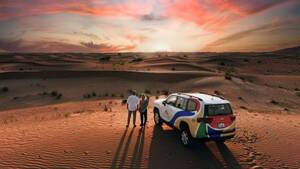
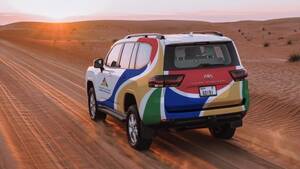
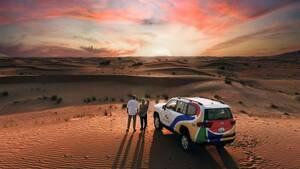
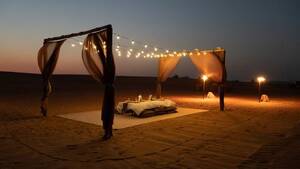
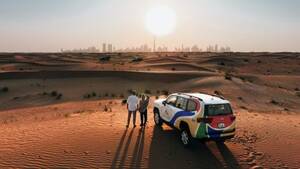
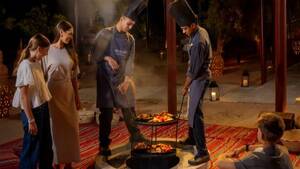
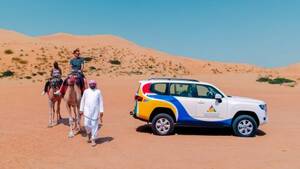
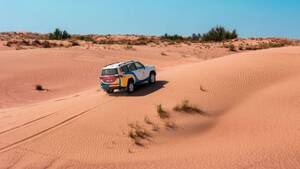
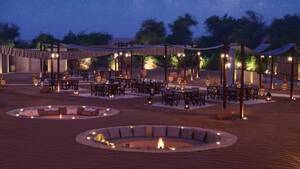
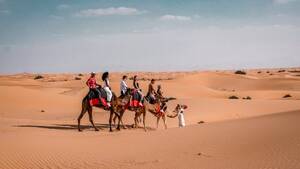
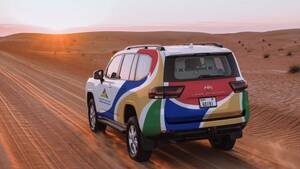
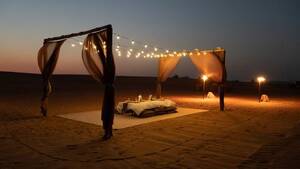
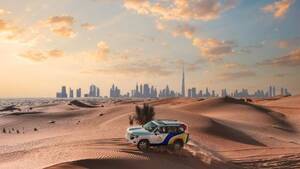
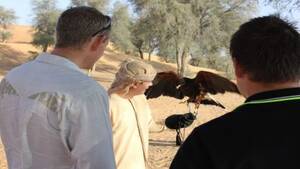
DDCR does not book touring concerts or publish a conventional performance calendar. Its regular programme consists of nature drives, controlled dune drives, camel rides, falconry demonstrations, wildlife observation, sandboarding, desert dinners and overnight camping. Selected evening camps add live musicians, fire performances, traditional dance, stargazing and children’s activities, but these are temporary, operator-managed experiences rather than productions in a permanent auditorium.
Public programming between 2021 and 2026 has increasingly combined tourism with education and research. Work documented during this period included student field surveys, satellite-based habitat research, Arabian red fox studies and an archaeological survey that uncovered a Neolithic arrowhead estimated to date from around 5000 BC. The 2023 Visitor Centre subsequently hosted school groups and became the reserve’s main interpretation and outreach facility.
During 2024 and 2025, reserve activity included conservation talks, a volunteer reptile survey, rare-bird sightings, Arabian oryx relocations and the first DDCR project to place GPS trackers on Pharaoh eagle owl chicks. These were scientific or educational events, not ticketed public performances. Recent visitor totals have remained substantial: approximately 213,000 tour-operator visitors were recorded in 2023/24 and about 208,000 in 2024/25.
No headline entertainment season has been announced for 2026 and beyond. Instead, the 2025–2030 management plan prioritises rewilding, specialist nature tourism, driver training, public education and greater use of renewable energy. It also proposes carefully introducing a native apex predator to help regulate ungulate populations by the end of 2026, subject to conservation planning and stakeholder approval.
Tickets and Booking
The Visitor Centre is the simplest option for an independent visit. Published admission information lists AED 35 for adults aged 19 and over, AED 25 for children aged five to 18, and free admission for children under five. The standard experience is unguided and lasts approximately one hour. Admission covers the building and viewing platform, not unrestricted entry into the surrounding reserve.
Access to the reserve interior must normally be arranged through an approved concession operator or as part of a stay at the on-site resort. There is no general ticket permitting visitors to drive independently through the dunes. Book in advance and confirm that the product specifically names Dubai Desert Conservation Reserve, because many cheaper “Dubai desert safari” packages operate in unrelated, unprotected desert areas.
Recent 2026 prices illustrate the wide range. Conservation-focused shared drives have started at roughly AED 495 per adult, while premium dinner experiences have ranged from about AED 690 to AED 990 depending on season. Private vehicle experiences can cost approximately AED 1,700 to nearly AED 4,000 per booking. Inclusions vary considerably, particularly for hotel transfers, meals, drinks, camel rides and private seating.
Cool-season sunset dinners, weekends and festive periods are usually the highest-demand options. Book earlier if wildlife viewing, a private vehicle, dietary support or an accessible transfer is important. Check cancellation terms carefully: some Visitor Centre bookings allow a refund up to 48 hours before arrival, while safari and camp conditions vary by operator.
Layout, Viewing and Technical Features
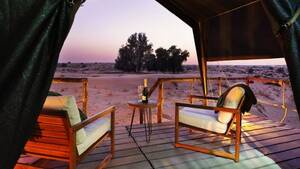
There is no fixed seated or standing capacity for the 225.9-square-kilometre reserve, and no seat map applies. The Visitor Centre also does not publish auditorium dimensions or a public capacity figure. Safari camps use their own changing arrangements, including dining tables, lounge furniture, cushions or majlis-style seating. Any VIP areas, private tables or front-row positions belong to the individual package rather than the reserve itself.
The Visitor Centre contains five principal zones: a reception hall, cultural hall, audiovisual hall, habitat hall and nocturnal hall. Features include an interactive reserve map, a short film in a mini cinema, 3D-printed wildlife models, holographic displays, real specimens, bird-call audio devices and an immersive dome presentation devoted to nocturnal wildlife. Oryx hoofprints guide visitors between rooms, while an elevated outdoor platform provides open-desert views.
DDCR does not publish a house sound-system specification, lighting plot, rigging capacity, stage dimensions or production rider. Permanent technology is interpretive rather than concert-oriented. Evening entertainment uses temporary, operator-specific lighting and audio equipment, so production quality and sound levels differ between camps. Visitors primarily interested in tranquillity should choose a wildlife drive or morning programme rather than a dinner package with performances.
Getting There and Parking
The Visitor Centre address is Dubai Desert Conservation Reserve, Margham Gate, Dubai, United Arab Emirates. It is roughly 60 kilometres by road from Downtown Dubai, with a typical journey of about 45 to 60 minutes depending on traffic and starting point. Follow directions specifically to the Visitor Centre or Margham Gate rather than a general map pin for the enormous reserve.
Self-driving, taxi, pre-arranged private transport and safari hotel collection are the practical options. There is no direct Dubai Metro connection and no convenient public bus serving the Visitor Centre entrance. A bus-and-taxi combination is theoretically possible but involves a lengthy last-mile transfer, making it unsuitable for most visitors. If using a taxi, organise the return journey in advance because the site is remote.
Free visitor parking is available. DDCR has announced an extension of the Visitor Centre car park to accommodate growing demand, together with proposed solar-panel canopies intended to generate power and provide shaded parking. Until completion is confirmed, do not assume every bay will be covered. Remain on signed access roads and never drive a private vehicle into restricted dunes.
Inside the Visitor Centre and Reserve
Published Visitor Centre hours are 10am to 6pm daily, although Ramadan operations may include Tuesday and Wednesday closures. The centre is self-guided, with pre-recorded audio, interactive displays and a short film providing context before a safari. Allow about an hour, or longer if you plan to study the wildlife exhibits and spend time on the viewing platform.
A coffee shop is located inside, but food and drinks are not included with general admission. A small retail range featuring reserve photography and nature-related items has also been introduced. There is no published coat-check service, permanent merchandise concourse or concert-style concessions area. Dinner, refreshments and licensed drinks are available only when included in a particular camp, resort or excursion package.
Entry to the protected interior is controlled. Visitors travelling with an approved excursion will normally remain with their guide, use designated routes and attend authorised camps or activity areas. Security staff and reserve officers patrol the boundaries, document violations and monitor unauthorised access, speeding, off-route driving and littering.
Accessibility and Inclusive Visits
Published admission information describes the Visitor Centre as accessible to individuals with disabilities. In UAE terminology, visitors may also see the phrase “People of Determination”. The United States’ ADA does not apply in Dubai, and DDCR does not publish a detailed access guide specifying gradients, hearing loops, sensory facilities, adapted toilets or wheelchair dimensions. Contact arrangements should therefore be made before travelling if particular support is essential.
The indoor exhibition is likely to be more manageable than a dune excursion for visitors with reduced mobility. Sand, vehicle steps, camel mounting, heat and uneven camp surfaces can create barriers even when transfers are accessible. Request a gentle wildlife drive, suitable vehicle, step-free camp access and accessible toilet information before paying. Dubai’s transport network includes taxis designed for People of Determination, but advance booking is advisable for this remote destination.
Nearby Amenities
DDCR has no walkable entertainment district, restaurant row or late-night public transport hub. The Visitor Centre coffee shop is the most convenient independent refreshment option. Visitors joining organised programmes usually eat at a designated camp, while those making a short Visitor Centre trip should bring water and arrange their main meal before leaving the city or after returning.
Al Maha, a Luxury Collection Desert Resort & Spa is the only verified hotel inside the reserve. It has 42 private-pool villas, a restaurant, terrace bar and guided desert activities, but dining and facilities should not be treated as casual walk-in amenities. Most day visitors stay in Downtown Dubai, Business Bay, Dubai Marina or near the airport and use an excursion with hotel collection.
What Makes the Reserve Special
DDCR matters because it links Dubai’s tourism economy with active ecological restoration. All visitor revenue is directed towards conservation and wildlife care, while commercial tourism contributes a significant share of annual reserve expenditure. Operator numbers, routes and annual visitor targets are controlled so that revenue does not automatically take priority over habitat capacity.
Its cultural interpretation is equally important. Falconry, camel husbandry, date cultivation and traditional knowledge of desert plants are presented as living parts of Emirati heritage rather than decorative entertainment. Archaeological discoveries, including pottery, shells associated with historic trade and Neolithic tools, show that the landscape has a much longer human story than Dubai’s modern skyline suggests.
Recent visitors frequently praise the sunsets, quiet landscapes, knowledgeable guides, oryx and gazelle sightings, curated Visitor Centre and overnight stargazing. Less positive reports emphasise that wildlife sightings are never guaranteed and that camp food, entertainment, toilets and group organisation depend heavily on the chosen excursion. Selecting the experience carefully is more important than simply choosing the cheapest advertised safari.
Visitor Tips and Reserve Rules
Wear lightweight, modest clothing, closed shoes and sun protection. Take a warm layer between November and February, particularly for sunrise, sunset or overnight visits. Bring water unless your package clearly includes it. Avoid loose sandals for walking on dunes, and tell the organiser in advance about mobility limitations, pregnancy, back problems, young children, allergies or dietary requirements.
Do not remove plants, rocks, soil or wildlife; feed or disturb animals; leave litter; drive off approved routes; or enter through an unauthorised gate. Dubai law also prohibits hunting, introducing non-native species, pollution and unlicensed vehicle or commercial activity within protected areas. Commercial filming requires prior approval and relevant permits. Serious infringements can lead to exclusion, confiscation, fines or prosecution.
Frequently Asked Questions
Is Dubai Desert Conservation Reserve open to visitors?
Yes. The reserve continues to operate under the Dubai Desert Conservation Reserve name. Independent visitors can use the Visitor Centre, while access to the protected interior is generally through an approved excursion or an on-site resort stay. The reserve should not be treated as an open public desert where anyone can enter, camp or drive without permission.
Is DDCR the same place as Al Marmoom Desert Conservation Reserve?
No. They are separate protected areas. DDCR is a controlled, largely fenced reserve of approximately 225.9 square kilometres in south-eastern Dubai. Al Marmoom is much larger, lies around Saih Al Salam and includes public recreational areas and lakes. Check the full attraction name before travelling, because searches and excursion descriptions frequently confuse the two reserves.
Can I visit DDCR without booking a safari?
You can visit the Visitor Centre independently and view its exhibitions and outdoor platform. General admission does not permit you to continue driving through the protected reserve. For wildlife drives, dinners, camel activities or overnight camping, you need a pre-arranged experience through an authorised operator or access connected to the on-site resort.
How much does a visit cost?
Visitor Centre admission is listed at AED 35 for adults and AED 25 for children aged five to 18, with younger children admitted free. Guided reserve experiences cost considerably more. Recent conservation drives have begun near AED 495 per adult, while premium dinners and private vehicles can range from several hundred to several thousand dirhams.
How long should I allow for the visit?
Allow around one hour for the self-guided Visitor Centre. Morning wildlife drives commonly occupy four to five hours including transport, while evening safaris and dinner programmes generally last about six hours. Overnight experiences extend until the following morning. Confirm whether the stated duration begins at hotel collection or at the reserve gate.
What is the best time of year to visit?
October to April normally provides the most comfortable conditions for outdoor drives, dinners and overnight stays. Early morning and late afternoon offer softer light and cooler temperatures. Summer visits remain possible, especially inside the air-conditioned Visitor Centre, but some operators shorten, pause or replace outdoor dining components between June and September because of the heat.
Are Arabian oryx sightings guaranteed?
No wildlife sighting is guaranteed. Arabian oryx and gazelles have established populations, but animals move freely and may avoid busy routes or extreme daytime heat. Quiet morning drives often provide favourable viewing conditions, although recent visitors have reported both excellent encounters and trips with few sightings. Treat wildlife as an unpredictable highlight rather than a promised performance.
Is the reserve suitable for young children?
The Visitor Centre is suitable for families, with interactive displays, animal replicas and free admission for children under five. Safari suitability depends on the activity. Gentle wildlife drives may work well for families, while vigorous dune driving, long evenings and camel rides can be difficult for infants. Ask about child seats, minimum ages and gentler alternatives before booking.
Can pregnant visitors or people with back problems join a safari?
They should avoid assuming every safari is suitable. Repeated dune crossings can involve sudden drops, vibration and sharp changes of direction. Disclose pregnancy, recent surgery, neck or back conditions and limited mobility before booking. A smooth conservation drive or Visitor Centre visit may be a more appropriate alternative, but the operator must confirm vehicle and route suitability.
Can I drive a normal car to the Visitor Centre?
Visitors are instructed to drive themselves or arrange transport to the Margham Gate Visitor Centre, where free parking is provided. Follow the signed road and navigation point for the centre. A private car must not be taken onto dunes, concession routes or through restricted gates, regardless of whether it has four-wheel drive.
Is there public transport to DDCR?
There is no direct Metro station or convenient city bus stopping at the Visitor Centre. Reaching the wider Margham area by bus still leaves a substantial taxi journey. Self-driving, a pre-booked taxi, private chauffeur or an excursion with hotel collection is far more practical. Arrange a confirmed return transfer rather than expecting taxis to wait nearby.
Is parking free?
Yes, published Visitor Centre information states that car parking is free. The reserve has also announced plans to extend the car park and install solar-panel canopies, improving capacity while generating renewable power and creating shade. As completion details may change, arrive early during busy winter weekends and do not rely on every space being covered.
Can I buy food at the Visitor Centre?
A coffee shop operates inside the Visitor Centre, but general admission does not include food, soft drinks or a full meal. Reserve dinner camps and resort programmes provide their own menus when included in the booking. Visitors with allergies, vegetarian requirements or children needing specific food should obtain written confirmation of the menu before departure.
What toilet facilities are available on overnight trips?
Facilities vary between camps and are not standardised across DDCR. Some permanent or premium camps have conventional amenities, while small overnight experiences may use limited or portable facilities. Recent visitors have praised the camping experience but occasionally noted long walks to toilets. Ask specifically about private toilets, lighting, distance from accommodation and accessibility before booking.
Is photography allowed?
Personal photography is a normal part of most visits, provided it does not disturb wildlife or involve entering restricted areas. Commercial filming is different: it requires approval from the Dubai Conservation Board and the relevant Dubai media authority, together with the necessary permits and no-objection documentation. Follow guide instructions around animals, research sites and sensitive habitats.
Is the reserve wheelchair accessible?
The Visitor Centre is described as accessible for individuals with disabilities, but a comprehensive facility-by-facility access guide is not published. Dunes, camel activities, high vehicle steps and temporary camps may remain challenging. Request step-free access, suitable toilets, an adapted transfer and a gentle route in advance. The American ADA standard does not govern facilities in Dubai.
Can visitors camp independently inside DDCR?
No. Private access is not permitted, and camping must form part of an authorised operation in a designated area. This protects wildlife, limits off-road damage and allows the reserve to monitor visitor numbers and waste. Independent campers should not enter through service gates, cross fences or leave public roads in an attempt to find an unofficial campsite.
Does the entrance fee support conservation?
Yes. All DDCR visitor revenue is directed towards conservation and wildlife care. Tourism income helps support habitat management, research, rangers, monitoring and species programmes. The reserve nevertheless limits operators, routes and visitor targets rather than pursuing unrestricted growth; its regulations set an annual ceiling of 350,000 visitors to protect environmental and aesthetic capacity.