Events and Programming
ArtsDistrict Brooklyn is no longer operating under that name, and there are no current ArtsDistrict events or tickets on sale as of August 24, 2026. Its last widely documented event was an electronic-music show on January 1, 2024. The venue was publicly reported as shuttered in March 2024, while a later court decision recorded that its operating company and ArtsDistrict had been forced into bankruptcy by September 2023. No 2026 or later ArtsDistrict season has been announced.
The program began in summer 2022 with three immersive productions. The centerpiece, Limitless AI , used artificial intelligence, projection mapping, science data, historical art and live music to create a five-part journey across the walls, columns and floor. Darkfield’s Flight and Séance placed small audiences inside customized 40-foot shipping containers, in complete darkness, for binaural audio dramas. Previews began July 28 and the Darkfield productions officially opened August 4.
Limitless AI was promoted as a 60- to 70-minute experience, although session lengths varied during the run. Visitors could sit on movable seating or explore the room while imagery generated from art, physics, space and brainwave data surrounded them. Tickets were generally about $44.50 to $49.50. Darkfield admission ranged from roughly $30 to $49.50, depending on the experience and combination purchased. Court records state that the operating company suspended Limitless AI by September 2022 because of low ticket sales, despite public schedules that had advertised performances later in the fall.
Programming changed substantially in 2023 when ArtsDistrict entered a partnership for a planned series of 20 electronic-music events. The venue’s 360-degree visuals, warehouse floor and late-night license made it particularly suitable for house, techno, minimal and tech-house bookings. The first weekend featured Nina Kraviz and Magdalena, followed by KAS:ST, Kevin de Vries and David Lindmer; both shows sold out.
The 2023 calendar included Carlita’s multimedia Senza Fine party with Seth Troxler, HVOB and Ahmed Spins; a New York Fashion Week appearance by Diplo; Dixon’s sold-out Transmoderna show; Dennis Ferrer and Paco Osuna; Joris Voorn; a Solomun after-party; Seth Troxler’s Freakbox; Maceo Plex; Nicole Moudaber; Dennis Cruz; Joseph Capriati; Marco Carola; Anfisa Letyago; Vintage Culture; Pan-Pot; Bonobo; Damian Lazarus; and Guy Gerber. Typical late-night hours ran approximately 10 p.m. to 5 a.m., with most club events restricted to ages 21 and older.
The booking was broader than conventional DJ nights. April 2023 brought the femme-forward Prophets Over Profits fundraiser, featuring art, comedy, vendors, food and music from Lion Babe, Hot Honey Sundays, SUSU, Big Body Kweeng and others while benefiting Girls Write Now. Ladyfag presented the costumed Fashion Is Dead party and a two-room New Year’s Eve event featuring Dee Diggs, Kevin Aviance, Alinka, SKIN and a Mykki Blanco performance.
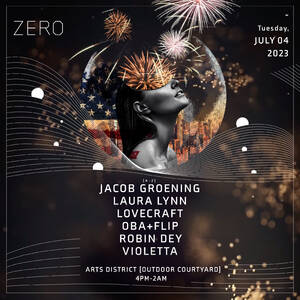
The courtyard also hosted daytime-to-sunset dance parties. La Cala’s Indulgence series mixed house, tech house, deep tech and lo-fi, with performers including Junior Sanchez, Ky William, Ms. Mada, Miss Jennifer, Marshall Jefferson and Jalal Ramdani. A separate Fourth of July event combined DJs, live art, food and views toward the East River fireworks. These outdoor bookings showed how the complex could function as an urban festival site rather than only an enclosed nightclub.
No ArtsDistrict-branded events have been verified for 2025 or 2026. An independently organized music, food and lifestyle event used 25 Franklin Street in April 2026, but it was not presented as a reopening of ArtsDistrict Brooklyn. The property was still being marketed for sale or lease in mid-2026, so an isolated rental should not be interpreted as a restored venue calendar.
Tickets and Booking
There is currently no ArtsDistrict Brooklyn box office, active event calendar or verified advance-sale channel. Pages that continue to advertise generic ArtsDistrict tickets without listing real events should be treated as outdated. Anyone seeing a new event at 25 Franklin Street should check which producer is actually operating it, because the address may be hired for an independent event without the ArtsDistrict name returning.
During the venue’s active period, tickets were normally released online by the presenting producer rather than through a traditional daily box office. High-profile electronic shows frequently sold out, particularly Nina Kraviz, KAS:ST with Kevin de Vries, Dixon, Dennis Cruz, Joseph Capriati and Marco Carola. Advance prices commonly started around $40 and reached $70 or more; elaborate multimedia parties occasionally cost approximately $80 before fees. Early-entry, general-admission and VIP or table options were offered for selected nights.
For historical comparison, a standard immersive-art admission generally cost in the mid-$40s, while headline DJ events usually ranged from approximately $40 to $70. New Year’s Eve admission was advertised around $50 to $80. Prices changed by release, entry time and demand, and late purchasers could pay more. There is no evidence that the venue maintained a dependable walk-up box office, so advance purchase was the safest strategy when it was open.
About ArtsDistrict Brooklyn
ArtsDistrict Brooklyn occupied a former industrial warehouse at 25 Franklin Street, Brooklyn, NY 11222 , beside Bushwick Inlet and the Greenpoint-Williamsburg waterfront. The overall indoor-and-outdoor complex covered approximately 25,000 square feet. It was conceived as a flexible home for immersive media, visual art, science, film, music, live performance, private events and technology-driven experiences.
The property was already embedded in Brooklyn event history. Vans converted what had reportedly been an Odwalla warehouse into House of Vans in 2010. That free cultural space combined concerts, skateboarding, workshops, screenings and community programs. House of Vans closed with an Interpol performance on August 24, 2018, after eight years, leaving a significant gap in the local skate and music community.
ArtsDistrict was announced in May 2022 by producers David Galpern and Charles Roy and launched that summer. Its opening converted the raw warehouse into a projection-heavy theater, gallery, café and courtyard complex. However, its ambitious technology and uneven ticket demand were accompanied by serious financial problems. Reports published after the closure described unpaid vendors, staff turnover, equipment disputes and default judgments.
After the final known events around New Year 2024, the ArtsDistrict identity disappeared. A hospitality group subsequently applied to operate a roughly 1,000-person nightclub at the address until 4 a.m. The proposal drew opposition concerning noise, traffic, exclusivity and the neighboring Bushwick Inlet ecosystem, and the planned club had not opened by mid-2026. The property was instead being advertised again as a possible concert hall, sports center, studio or event venue.
Seating, Capacity and Layout
ArtsDistrict did not have one fixed capacity because the warehouse could be configured for installations, concerts, dinners, weddings or multi-room parties. Published rental information described the 11,000-square-foot Main Space as accommodating approximately 500 seated guests or 740 standing. It included an elevated stage, a private VIP loft, two bars and direct connections to the Gallery and courtyard.
The Gallery measured approximately 1,200 square feet, with published capacities of 50 seated or 150 standing. The open-air Courtyard covered about 7,000 square feet. Whole-property real-estate materials later claimed the site had historically handled as many as 1,500 standing or 810 seated guests, while the proposed 2024 nightclub sought a 1,000-person limit. Those numbers represent different operators, egress plans and layouts and should not be treated as a single official ArtsDistrict concert capacity.
The main room had a flat, open floor rather than permanent theater seating. For Limitless AI , benches and movable chairs let visitors sit or circulate. A mezzanine provided a broad elevated perspective, while floor-level corners revealed different projection alignments. For club events, the room became predominantly general admission, with the strongest conventional stage view near the center and better personal space toward the back and sides.
Because projections covered walls, pillars and portions of the floor, there was no single ideal position for an immersive show. Moving periodically produced a more complete experience. At dance events, standing immediately beside traffic routes to bars, restrooms or the second room could mean frequent interruptions. Archived attendee comments praised the room but noted constant movement through the crowd and, on some nights, substantial restroom lines.
Architecture, Design and Production Technology
The building retained the character of a large waterfront warehouse: an understated street entrance, broad open floor plates, exposed industrial elements and ceilings advertised at approximately 20 to 30 feet across the property. ArtsDistrict overlaid that shell with contemporary projection surfaces, bars, performance infrastructure and a climate-control system. Rental materials noted newly installed HVAC in the indoor spaces.
The most technically documented installation used 63 high-definition projectors to fill a 10,000-square-foot gallery with 360-degree video. Earlier launch plans called for more than 70 Barco projectors, while later rental advertising cited 72. The operating configuration therefore appears to have changed by production phase. Fourteen projection walls rose more than 14 feet, and a revolving stage incorporated both concave and convex projection surfaces.
Seven Hippotizer Boreal+ MK2 media servers handled approximately four terabytes of graphics. Twenty-one DataPath units managed outputs, while 10-gigabit networking moved data between TouchDesigner computers and the media servers using NDI. A grandMA3 console, DMX components and synchronized timecode coordinated visual and audio cues. During the finale, EEG information from live musicians could alter visual data in real time, making each performance slightly different.
The main theater was marketed with a Meyer Sound package, but a complete speaker and amplifier inventory was not publicly preserved. Outdoor promoters sometimes brought event-specific systems: one courtyard series advertised Traction Sound, while the Fourth of July party used a separate d&b system. Conventional lighting inventories were likewise not published, although projection mapping, lasers, moving effects and show-specific rigs were central to the venue’s presentation.
Getting There and Parking
The former venue is at 25 Franklin Street, near North 15th Street, Kent Avenue, the Brooklyn Waterfront Greenway and Bushwick Inlet Park. The B32 bus is the closest public-transit option, stopping around North 14th Street and Kent Avenue before continuing toward Williamsburg Bridge Plaza or Long Island City.
The Greenpoint Avenue G station is roughly a 12- to 15-minute walk north, depending on the route and entrance used. The station has elevators between the street, mezzanine and platforms. The Bedford Avenue L station is farther south in Williamsburg and generally requires a walk of approximately 15 to 20 minutes. Allow extra time for weekend service changes.
NYC Ferry’s North Williamsburg landing at North 6th Street and the Greenpoint landing at India Street both provide alternatives from Manhattan, Queens and other Brooklyn waterfront neighborhoods. North Williamsburg is usually the shorter walk. Ferry service is separate from the subway and bus fare system, so a ferry-to-bus or ferry-to-subway transfer requires another fare.
No dedicated ArtsDistrict parking lot was advertised. Curb parking in Greenpoint and northern Williamsburg is limited, with restrictions, loading zones and residential demand making spaces unpredictable. Commercial garages are available deeper in Greenpoint and Williamsburg, but rates vary by time and event. Transit, cycling or a rideshare is usually more practical. Drivers should avoid waiting or double-parking on Franklin Street, where previous large events generated congestion complaints.
The protected waterfront cycling route makes the location convenient by bicycle, and several Citi Bike stations are distributed along Franklin Street, Kent Avenue and near both ferry landings. For rideshare drop-off, the Franklin Street and North 15th Street area is the logical approach, although pickups after a large event may be easier a block or two away from the entrance.
Inside the Former Venue
When operating, guests generally entered through a security and ticket-check area before reaching the main theater, Gallery Bar or courtyard. The interior contained two main-room bars, another bar in the Gallery and outdoor bar facilities. Launch plans also included a daytime or pre-show café with light refreshments and Wi-Fi, although its availability varied as the business changed its operating model.
The warehouse atmosphere was intentionally industrial rather than ornate. Projection light transformed otherwise plain surfaces, while the Gallery served as a smaller lounge or second music room. The courtyard provided open air, skyline glimpses, social space and, during 2022, the two Darkfield containers. A private loft overlooking the floor could be used for VIP hospitality or event production.
There was no enduring, well-documented universal bag, coat-check, re-entry or photography policy. Rules changed by producer. Darkfield prohibited photography and video during Flight , while visual-art visitors commonly photographed the larger projection installation. Some courtyard and club events explicitly enforced no re-entry. Late-night events required government-issued proof of age, and professional cameras generally depended on promoter approval.
Accessibility and Sensory Considerations
ArtsDistrict’s original immersive-event listing described the venue as ADA compliant, and private-event materials identified it as wheelchair accessible. The primary theater, Gallery and courtyard were largely ground-level flexible spaces. However, a detailed accessibility guide documenting every route, viewing platform, counter and restroom was not preserved, so claims about specific lift or mezzanine access should be treated cautiously.
The programming created significant sensory considerations. Limitless AI surrounded visitors with moving floor and wall imagery, powerful sound and rapid changes in light; reviewers noted that looking down while walking could cause dizziness. Club nights used lasers, flashing effects, prolonged high volume and dense standing crowds. Earplugs were sensible, and visitors with epilepsy, vertigo, migraines or sensory sensitivities needed to consider the production carefully.
Flight took place in darkness inside a confined aircraft-style cabin and was not recommended for pregnant visitors or people with certain heart, back or mobility conditions. It carried a published minimum age of 14, with younger teenagers requiring an accompanying adult. Both Darkfield experiences depended on isolation, darkness and binaural sound, making them unsuitable for anyone uncomfortable with confined environments.
Nearby Amenities
Although there is no current show to attend, the address sits between Greenpoint’s Franklin Street dining corridor and the hotels and restaurants of northern Williamsburg. Current options farther north include El Pingüino for seafood and drinks, Sereneco for New American food and MADRE at the Franklin Guesthouse. Restaurant hours and late-night kitchens change frequently, so visitors to an independent event at the property should plan before arriving.
Nearby lodging includes The William Vale, Wythe Hotel, The Hoxton Williamsburg and Arlo Williamsburg to the south, with Franklin Guesthouse, Henry Norman Hotel and The Box House Hotel farther into Greenpoint. Williamsburg usually offers the most convenient combination of hotel inventory, subway access and late-night dining.
For an evening event at 25 Franklin Street, arriving 30 to 45 minutes before doors would allow time for the walk from the subway, security and any line at the entrance. After late events, the B32 may be less frequent, and ferry service may have ended for the night. The G and L trains, night buses, taxis and rideshares are the principal late-night options.
Visitor Experiences and Reviews
Reactions to the 2022 immersive program were mixed. Reviewers generally agreed that Limitless AI was technically beautiful, with spectacular color, scale and projection coverage. Some considered it mesmerizing, while others felt it functioned more as an elaborate light show than a genuinely participatory artwork. Darkfield’s detailed environments and binaural sound were often judged more dramatically engaging.
Dance-music audiences appreciated the unusual visual canvas and the chance to hear major international DJs in a relatively compact warehouse. Archived comments also raised practical criticisms: limited restroom capacity on busy nights, long lines, people repeatedly crossing through the dance floor and different sound experiences depending on crowd position. These accounts were anecdotal rather than a formal survey, but they illustrate the compromises of converting an immersive gallery into a high-volume club.
Cultural and Community Impact
ArtsDistrict brought the United States premieres of major international immersive works to Brooklyn and briefly established a permanent platform for AI-driven visual art. Its collaboration with electronic promoters connected that technology to New York’s house and techno scene. Fundraisers, femme-focused programming and courtyard parties broadened the calendar beyond a single commercial installation.
Its economic legacy is more difficult. The venue’s short life did not allow a sustained impact to be demonstrated, while reported unpaid invoices, lost deposits and legal disputes harmed contractors, vendors and private clients. A marketing company obtained a default judgment exceeding $180,000 against the operating company, and other substantial claims were reported. These problems complicate any description of ArtsDistrict as an uncomplicated cultural success.
The continuing debate over 25 Franklin Street also reflects Greenpoint’s changing waterfront. Some residents value large cultural and music spaces, especially after the loss of House of Vans. Others have raised concerns about traffic, outdoor bass, late-night crowds, pricing and ecological pressure beside Bushwick Inlet Park. The site remains a test case for balancing nightlife, public space, industry, wildlife and residential growth.
What Made This Venue Special
ArtsDistrict’s defining feature was not traditional architecture but the way technology changed the warehouse. Walls, columns, floors and a revolving stage became one continuous digital canvas. Audiences could watch artificial intelligence reinterpret Renaissance art and scientific data, then return another night to dance beneath projection-mapped visuals from internationally known DJs.
Few venues combined a 10,000-square-foot immersive room, outdoor waterfront courtyard, two purpose-built audio-theater containers, live EEG data, a gallery lounge and a club-ready floor. Its significance lies in that ambitious collision of art installation, experimental theater and nightlife—even though the business behind it proved unable to build a stable long-term institution.
Frequently Asked Questions
Is ArtsDistrict Brooklyn still open?
No. ArtsDistrict Brooklyn stopped operating under that name after its final publicly documented events around January 1, 2024. Its closure was reported in March 2024, and subsequent court records described bankruptcy involving the operator. The Franklin Street property still exists, but occasional independent rentals at the address do not mean that ArtsDistrict Brooklyn itself has reopened.
Are there ArtsDistrict Brooklyn events scheduled for 2026 or later?
No ArtsDistrict-branded 2026 or later program has been announced. An independently organized event took place at 25 Franklin Street in April 2026, but it was not promoted as an ArtsDistrict production. The property was also being marketed for sale or lease during 2026, indicating that the building may host rentals while its long-term identity remains unsettled.
Can I currently buy tickets for ArtsDistrict Brooklyn?
No verified current ArtsDistrict Brooklyn tickets are available because the venue has no active calendar. Generic pages that continue to advertise tickets without naming a real production are outdated. If an event is announced specifically for 25 Franklin Street, confirm the date, operator, refund conditions, age rule and exact address before purchasing because it may be a one-off rental.
What was ArtsDistrict Brooklyn’s capacity?
The main 11,000-square-foot theater was marketed for approximately 500 seated or 740 standing guests. The 1,200-square-foot Gallery held about 50 seated or 150 standing. Whole-property figures varied substantially by configuration, with later materials citing up to 1,500 standing. Event permits, exits, staging and access to the courtyard determined the usable capacity.
Did ArtsDistrict Brooklyn have assigned seating?
Most programming was general admission. Immersive exhibitions used movable chairs and benches, allowing visitors to change position or walk through the projections. Electronic-music events were predominantly standing-room shows. Reserved tables and a private VIP loft appeared at selected nightlife events, but these were hospitality packages rather than a conventional numbered balcony or orchestra seating plan.
Where was the best place to view the projections?
The mezzanine offered the clearest overall view of the room, while the center floor provided the strongest sense of being surrounded by imagery. Corners revealed projection details that were harder to see from the center. Because visuals also reached the floor and columns, the best approach was to move carefully between several positions rather than remain in one place.
Was ArtsDistrict Brooklyn wheelchair accessible?
The venue was advertised as ADA compliant and wheelchair accessible, with its principal event areas arranged in largely level, flexible spaces. However, a surviving official guide does not document every accessible route or the private loft and mezzanine. Anyone attending a future independent event at the property should confirm temporary seating, restroom access and entry arrangements with that specific event’s organizer.
What was the nearest subway station?
Greenpoint Avenue on the G line is the most practical nearby subway station, approximately a 12- to 15-minute walk from 25 Franklin Street. The station includes elevators. Bedford Avenue on the L line is another option from Williamsburg, though its walk is generally longer. The B32 bus reduces walking and stops near North 14th Street and Kent Avenue.
Could visitors take the ferry to ArtsDistrict Brooklyn?
Yes. The North Williamsburg ferry landing at North 6th Street and the Greenpoint landing at India Street both serve the East River route. North Williamsburg is normally the closer walk to 25 Franklin Street. Ferries offer attractive skyline views, but evening schedules can be less convenient after a late show and transfers to buses or subways require another fare.
Did ArtsDistrict Brooklyn have on-site parking?
No dedicated visitor parking facility was publicly advertised. Drivers depended on regulated curb spaces or commercial garages in Greenpoint and Williamsburg. Street parking could be difficult during busy evenings, and large events previously produced complaints about double-parking and rideshare congestion. Public transit, bicycles and drop-offs away from the main entrance were usually the more predictable choices.
Were ArtsDistrict Brooklyn events restricted to ages 21 and older?
Age requirements depended on the program. Limitless AI welcomed all ages, while Flight carried a minimum age of 14 and specific health warnings. Nearly all late-night electronic events were 21 and older because alcohol was served and performances continued into the early morning. Valid government-issued photo identification was required at those club nights.
What were the camera and photography rules?
There was no universal rule covering every production. Visitors commonly photographed the large visual installation, although flash could interfere with the experience. Darkfield prohibited photography and recording inside Flight , where darkness and surprise were essential. Professional cameras, detachable lenses and commercial filming generally required permission from the event producer rather than ordinary general-admission approval.
Were food and drinks available?
The complex was designed with two bars in the Main Space, another bar in the Gallery and outdoor bar service in the courtyard. Original plans also described a café with refreshments and Wi-Fi. Availability varied by production, however, and many late-night events concentrated on drinks rather than full meals. Visitors typically ate along Franklin Street or in northern Williamsburg beforehand.
Did the venue have a coat check?
Coat or bag storage was offered at some nightlife and private events, but no reliable permanent house policy survives. Service could depend on the producer, expected attendance and season. Guests attending any future rental at 25 Franklin Street should not assume that a coat check is included; carrying only a small bag remains the safest approach for a warehouse-style event.
Were there flashing-light or motion warnings?
Yes, the programming could be visually intense. Projection mapping covered walls and floors, and reviewers reported mild dizziness when walking while looking down. Club nights added lasers, strobes and high sound levels. Darkfield used darkness, enclosed seating, binaural voices and startling physical effects. Visitors with photosensitivity, vertigo, migraines, claustrophobia or hearing concerns needed to assess each production carefully.
Was ArtsDistrict Brooklyn the same place as House of Vans?
It occupied the same Franklin Street warehouse, but it was a separate business. House of Vans operated there from 2010 until August 24, 2018, offering free concerts, skate sessions, films and workshops. ArtsDistrict arrived in 2022 after extensive conversion of the space for projection-based art, private events and electronic music. The two venues had different owners, programming models and identities.
Can the former ArtsDistrict building be rented?
Real-estate materials in 2026 marketed the property as suitable for event, concert, studio, sporting or private-hire uses. That does not establish a permanent public venue or guarantee that every type of event is permitted. Any rental would require arrangements with the current property representative and compliance with occupancy, alcohol, sound, security, accessibility and neighborhood conditions.
What is expected to replace ArtsDistrict Brooklyn?
A large nightclub was proposed in 2024, with an intended capacity of about 1,000 and hours extending to 4 a.m. The plan encountered substantial community and political opposition and had not produced an operating venue by August 2026. With the property subsequently advertised for sale or lease, no confirmed permanent replacement can yet be identified.