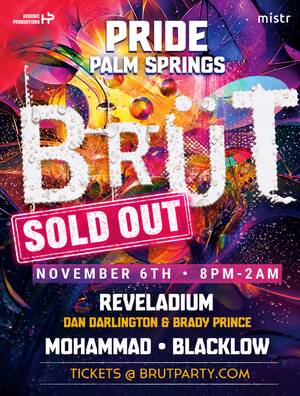
Location clarification: Palm Springs Pride is in Palm Springs, California, not Palm Springs, New York. It is also not a conventional venue with one building or address. Greater Palm Springs Pride is an active nonprofit organization whose signature festival occupies several streets, parks, stages, and businesses across downtown Palm Springs.
About Palm Springs Pride
Palm Springs Pride is a large, free street festival and parade centered on Palm Canyon Drive, Museum Way, and the Arenas District. The usual festival footprint includes Palm Canyon Drive between Amado Road and Baristo Road, Arenas Road between Palm Canyon Drive and South Calle Encilia, and space around Museum Way. Because this is a changing public-event zone rather than an enclosed venue, there is no fixed room capacity, building dimension, permanent seating chart, or single entrance. Organizers have recently planned for approximately 200,000 visits over a multi-day celebration, but that is not a simultaneous venue capacity.
The celebration began in 1986 as “Sizzle,” a dinner and local variety show in the Riviera Resort ballroom. The festival moved to Perez Auto Park, then Demuth Park in 1991. The first Desert Gay and Lesbian Pride Parade followed in 1992 with 35 units traveling to Demuth Park. Pride shifted from Memorial Day to the cooler Veterans Day period in 1995, moved through Ramon Road and Palm Canyon Drive, and formally adopted the Greater Palm Springs Pride name in 1997.
The festival used Arenas Road and Marquis Gardens before relocating to Palm Springs Stadium in 2000. After its final stadium edition in 2013, it returned to the heart of downtown in 2014, when the city approved what was then its largest street closure. That move created today’s defining experience: stages, dancing, vendors, restaurants, public art, and LGBTQ+ nightlife integrated into the city rather than isolated inside a fenced festival ground.
Events and Programming
Programming combines pop, rock, disco, dance music, DJs, drag, comedy, community performers, cultural showcases, marching bands, nonprofit exhibits, youth activities, recovery programming, food, and nightlife. Recent booking history illustrates its unusually broad range. The 2021 return featured Third Eye Blind, Jody Watley, A Flock of Seagulls, Shannon, Jeanie Tracy, drag performers, DJs, local singers, and the Trans Chorus of Los Angeles.
In 2022, Todrick Hall and Pussy Riot led a lineup that also included Tanzer, Polartropica, Jake Zyrus, and Ballet Folklorico Proyecto Trans Latina. The 2023 festival paired Idina Menzel with 10,000 Maniacs and Lisa Lisa, while a 50-artist community stage presented local vocalists, dancers, comedians, drag artists, and tribute performances. Latin Pride programming added salsa, merengue, reggaeton, cumbia, DJs, and a Latin drag revue.
The 2024 program placed Neon Trees and Sister Sledge alongside Brian Justin Crum, Pretty Poison featuring Jade Starling, Jesika Von Rabbit, a George Michael tribute, and dance programming from MODGIRL. In 2025, Pride emphasized queer and allied emerging artists through a 68-act program featuring NOVUL, Sorana, Jules Liesl, ViRR, Real Xman, Bryce Xavier, Ashley Paul, Planet Booty, Chase Brown, community acts, and approximately 20 DJs.
The official 2026 celebration is scheduled for November 6–8 under the theme “Be Included.” Announced components include downtown entertainment stages, nightly block parties, more than 200 marketplace exhibitors and vendors, children’s and youth areas, the Pride 5K, an arts-and-short-film program, and a Sunday parade expected to include more than 225 entries. As of August 13, 2026, a complete main-stage artist lineup and post-2026 festival program had not been announced.
Tickets and Booking
The central Pride Festival and parade are free and do not require tickets. Donation stations help fund the event and preserve free public admission. There is no central festival box office because independently produced concerts, parties, museum programs, charity meals, and athletic events may use their own admission or registration arrangements.
Recent paid add-ons illustrate the possible range: approximately $15–$20 for a museum dance program, $45–$55 for the Pride 5K, around $95 for a benefit breakfast, and roughly $55–$150 for premium tribute-concert seating or VIP experiences. These are examples rather than standard Pride prices. Reserve early for seated shows, races, brunches, and limited-capacity hotel events.
Seating and Layout
The festival is primarily standing-room and general admission. Temporary stages change by year, but recent layouts have included an Arenas District stage, a DJ stage near Palm Canyon and Amado, a community stage near Palm Canyon and Tahquitz Canyon Way, and partner stages at nearby businesses. There is no permanent grandstand, balcony, VIP bowl, or assigned festival seating.
For concerts, arrive early and stand near the centerline for the clearest view; stay farther back if you want room to dance or easier access to vendors. Sound-sensitive visitors should avoid positions directly beside temporary speaker towers. Parade viewers seeking commentary can use the official reviewing-stand areas, while the Deaf Pride stand north of Amado provides interpretation and limited first-come seating. Crowding, tents, landscaping, and street furniture create the principal sightline obstructions.
Getting There and Parking
There is no single festival address. For navigation, use downtown Palm Springs around Palm Canyon Drive and Amado Road, then follow event signage and street-closure instructions. The parade begins at Tachevah Drive in the Uptown Design District, proceeds south on Palm Canyon Drive, and finishes at Amado Road beside the festival. Palm Canyon and connecting streets close in phases, so driving directly to the event boundary is usually inefficient.
Downtown parking options include the garage reached from Belardo Road near the art museum and Hyatt, with recent plans listing free parking subject to a four-hour limit. Other suggested areas include Amado Road toward the Convention Center, Andreas Road and Calle El Segundo, the Prairie Schooner lot behind the Hilton, and the time-limited structure at 275 South Indian Canyon Drive. Parade parking has also been suggested near Ruth Hardy Park and Katherine Finchy Elementary School. Availability and restrictions change during closures.
SunLine Route 1WV serves downtown, including stops around Palm Canyon at Baristo and Palm Canyon at Stevens, although Pride closures can produce temporary detours. Palm Springs International Airport supports taxis and rideshare pickups, and public buses stop a short walk from the terminal. No permanent Pride rideshare zone is published; arrange pickup outside barricaded streets and follow temporary police signage. Bicycle corrals are normally provided around Arenas Road, Palm Canyon Drive, the library, and the Palm Canyon Theatre area.
Inside the Festival Zone
This is a gateless downtown event rather than an arena entrance experience. Police officers and event security operate throughout the zone, while first-aid locations have recently been placed near Palm Canyon and Andreas and in the Arenas District. The principal lost-and-found and production area has been near Belardo and Andreas. Organizers advise visitors to secure valuables, avoid leaving bags unattended, and report suspicious activity.
More than 200 exhibitors, nonprofits, food operators, and beverage vendors are expected for 2026. Pride beverage stations have recently been credit-card-only, with ATMs near the food court, and drinks purchased from authorized stations can be carried through the defined event zone. Public and portable restrooms are distributed across Downtown Park, Palm Canyon, Andreas, Tahquitz, Arenas Road, and the parade route. There is no general coat check.
Production infrastructure is temporary and reconfigured each year. Organizers do not publish model-level specifications for the PA, lighting desks, video systems, stage dimensions, or power distribution. Past editions have nevertheless supported full touring bands, DJ stages, extensive lighting, a 100-foot Ferris wheel, and the 2021 Global Rainbow laser installation projected toward the mountains.
Nearby Amenities
The Arenas District is the nightlife center, with Hunters, Streetbar, Chill Bar, Blackbook, and neighboring businesses operating beside the festival footprint. Palm Canyon Drive offers numerous sit-down restaurants, patios, coffee shops, and casual counters, but reservations are advisable during Pride. Downtown hotels within or near walking distance include Hotel Zoso, Best Western Plus Las Brisas, Kimpton Rowan, Hilton Palm Springs, Hyatt Palm Springs, and Renaissance Palm Springs.
Staying downtown reduces dependence on parking and late-night rideshares. Choose an Arenas-adjacent property for nightlife access, the central Palm Canyon area for stages and restaurants, or a hotel east of Indian Canyon Drive for a somewhat quieter retreat. Recent visitors praise the event’s walkability but warn that rooms facing Arenas can be noisy and that lodging prices rise during this high-demand November weekend.
What Makes Palm Springs Pride Special
Unlike a festival contained behind arena walls, Pride uses the city itself as its design. Palm-lined streets, views of the San Jacinto Mountains, rainbow crosswalks, desert-modern buildings, local bars, Downtown Park, and public art become part of the experience. November timing is another distinctive local tradition: it avoids the desert’s extreme June heat and extends the national Pride season into Palm Springs’ busier winter period.
The permanent Pride Monument in nearby Frances Stevens Park adds a physical expression of that history. Dedicated in October 2025, Jim Isermann’s eight-foot-tall, 14-foot-wide sculpture consists of 720 colored stainless-steel modules. Its lambda-shaped foundation, triangular geometry, and rainbow palette connect gay-liberation symbolism, the reclaimed pink triangle, Gilbert Baker’s flag, transgender colors, and recognition of LGBTQ+ communities of color.
Visitor Tips and Information
Recent accessibility plans have included ADA-compliant portable toilets, ASL interpretation at the Arenas and Community stages, first aid, an ADA parade-viewing area at Palm Canyon and Gran Via Valmonte, a Deaf Pride reviewing stand, and reserved accessible parade parking on Gran Via Valmonte. Final locations can change when each year’s map is issued.
The main festival is all-ages, with Children’s Headquarters for infants through preteens and a Youth Zone for LGBTQ+ visitors approximately 14–21. A sobriety-focused Recovery Oasis has also appeared in recent layouts. Leashed or harnessed pets are permitted under published guidance, but hot pavement, loud music, crowds, and limited shade make leaving noise-sensitive animals at home the safer choice.
No universal attendee bag-size rule, dress code, or blanket photography restriction is currently published. Bring identification, a payment card, sunscreen, water, comfortable shoes, medication, and a portable phone battery. Avoid oversized bags, unattended belongings, glass containers, and anything that could obstruct pedestrian or accessibility routes. Visitors regularly describe Pride as friendly, mixed-age, and easier to navigate than major-city celebrations, though the busiest stages and Arenas bars become tightly packed.
Economic and Cultural Impact
Pride is both a civil-rights gathering and a major tourism event. In 2010, official events recorded 57,502 attendees, $12.3 million in direct spending, and support for an estimated 314 full-time-equivalent jobs. Reported regional impact exceeded $22 million in 2015 and reached $24 million in 2017. Organizers projected more than 200,000 visits and approximately $35 million in impact for 2025. These figures are organizer studies or estimates, not a permanent annual guarantee.
Frequently Asked Questions
Is Palm Springs Pride in New York or California?
It is in Palm Springs, California, in Riverside County’s Coachella Valley. The reference to “Palm Springs, New York” is incorrect. Festival activity is concentrated in downtown Palm Springs along Palm Canyon Drive, Arenas Road, Museum Way, and nearby parks. The closest commercial airport is Palm Springs International Airport, located near downtown.
Is Pride a permanent concert venue?
No. Palm Springs Pride is an annual festival, parade, and nonprofit organization rather than a permanent theater or arena. Temporary stages, vendor areas, beverage stations, toilets, accessibility facilities, and security posts are built across downtown streets. This is why searches do not produce a reliable fixed capacity, seating chart, stage dimension, or permanent technical specification.
When is Palm Springs Pride in 2026?
The 40th annual Palm Springs Pride celebration is scheduled for Friday, November 6 through Sunday, November 8, 2026. Festival entertainment begins Friday, continues across several stages Saturday, and concludes Sunday. The parade steps off at 10 a.m. Sunday, November 8, and is expected to last approximately two hours.
Do I need a ticket for the festival or parade?
No ticket is required for the central street festival or parade. Both are free, open public events, although organizers encourage voluntary contributions. Separate concerts, brunches, races, pool parties, hotel shows, or charity programs may charge admission and establish their own age limits, seating arrangements, entry times, and refund policies.
How many people attend Palm Springs Pride?
Recent organizer planning has anticipated approximately 200,000 visits across the multi-day celebration. That number should not be interpreted as 200,000 people occupying one enclosed space simultaneously. Attendance is distributed between Palm Canyon Drive, Arenas Road, stages, the marketplace, the parade route, restaurants, bars, hotels, parks, and independently produced events.
What is the best place to watch the parade?
The official reviewing stands provide commentary and a clearer presentation of each contingent. The broadcast area is traditionally near 849 North Palm Canyon Drive, while the Deaf Pride reviewing stand is north of Amado Road. For more room, consider the northern route near Tachevah; for immediate festival access afterward, watch closer to Amado.
How early should I arrive for the parade?
Arrive at least 60–90 minutes before the 10 a.m. step-off if you want curbside space near a reviewing stand. Earlier arrival is sensible for accessible viewing or groups. Parking becomes scarce near parade time, and road closures affect Palm Canyon Drive and surrounding streets, so allow additional time to park and walk.
Is parking at Palm Springs Pride free?
Some downtown public parking is free, including the principal downtown garage under recently published arrangements, but a four-hour limit may apply. Other structures and street spaces have separate time limits. Read every posted sign because Pride closures, temporary no-parking zones, parade staging, and local business restrictions can supersede normal conditions.
Can I reach Pride using public transportation?
Yes. SunLine Route 1WV normally serves downtown Palm Springs, including the Palm Canyon corridor. Because the festival closes portions of Palm Canyon and adjoining streets, temporary stop relocations or detours are possible. Public transit is practical during daytime and early evening, but verify that return service operates late enough for your planned stage or block-party finish.
How do I get to Pride from Palm Springs airport?
Taxis and rideshare services operate from Palm Springs International Airport. Public bus stops are also located a short walk from the terminal. Rideshare drop-offs should occur at a legal point outside festival barricades rather than directly on closed Palm Canyon or Arenas Road. Airport taxis may offer a flat-fare option, but confirm the fare before departing.
Is Palm Springs Pride wheelchair accessible?
The organizers provide accessible portable toilets, designated parade viewing, accessible parking, first aid, and ASL interpretation under recent plans. The event nevertheless covers public streets with crowds, curb transitions, cables, temporary ramps, and changing routes. Visitors who need a specific accommodation should arrive early and locate accessibility areas before peak attendance.
Is Palm Springs Pride family-friendly?
Yes. The central festival and parade are all-ages and include Children’s Headquarters with crafts and games, plus a supervised Youth Zone offering entertainment and community resources. Nightlife inside individual Arenas District bars is separate and may be age-restricted. Families generally find daytime marketplace hours and the Sunday parade the easiest periods to navigate.
Are pets allowed at the festival?
Published guidance welcomes pets provided dogs remain on a leash or harness. Consider the animal’s comfort before bringing it: pavement can remain warm, speakers are loud, and dense crowds make movement difficult. Carry water and avoid forcing an anxious animal close to stages, parade drums, pyrotechnic effects, or congested bar entrances.
Can I buy food and alcohol inside Pride?
Yes. The festival marketplace includes food vendors, snacks, sweets, beverage stations, and immediate access to downtown restaurants and bars. Recent Pride-operated beverage stations have accepted cards rather than cash, with ATMs near the food court. Alcohol purchased through authorized festival stations may be carried within the designated event zone but not beyond its legal boundaries.
Does Palm Springs Pride have a bag policy?
No detailed festival-wide size limit is currently published. Because Pride is a large public street event, use a compact bag that can remain secured against your body. Never leave belongings unattended. Security personnel may investigate suspicious or abandoned items, and independently operated indoor shows can impose stricter bag, search, photography, and prohibited-item rules.
Are chairs provided for concerts or the parade?
General festival seating is not provided on the scale of an arena or amphitheater. Concert areas are predominantly standing-room, and curbside parade positions are first come, first served. Limited seating is associated with reviewing stands and accessibility areas. Do not place personal seating where it blocks sidewalks, curb ramps, emergency lanes, business doors, or pedestrian flow.
What should I wear and bring?
There is no published festival-wide dress code. Wear comfortable walking shoes and clothing suitable for warm daytime sun and cooler desert evenings. Bring sunscreen, identification, a payment card, required medication, water, and a charged phone. Elaborate Pride outfits are common, but choose footwear and accessories that remain comfortable across several hours of standing and walking.
What happens if the weather is bad?
Palm Springs Pride is an outdoor event, so schedules can be modified for wind, rain, extreme heat, or other safety concerns. Most central programming is free, meaning there is no festival-admission refund issue. Independently ticketed events establish their own weather and cancellation terms. Bring sun protection and a light evening layer even when the forecast appears mild.