Weather can be one of the most unpredictable and dangerous challenges for any outdoor festival. Over the years, festival organizers have learned that a clear sky in the morning is no guarantee of calm weather by afternoon. High winds, sudden downpours, and extreme heat waves have disrupted events and even caused serious accidents at poorly prepared festivals. Weather-proofing tents and temporary structures is not just about comfort – it’s a critical safety measure. Every festival producer, whether running a small local fair or a massive international event, must plan for adverse weather to ensure their structures remain safe and functional under all conditions.
Understanding Weather Hazards
Different weather hazards pose different risks to festival structures:
- High Winds – Strong gusts can topple tents, stages, and signage if they are not secured. Winds turn unsecured structures into sails or projectiles that can endanger attendees.
- Heavy Rain – Rain can flood event grounds, soak through poorly protected equipment, and cause tent roofs to sag or collapse under pooled water.
- Extreme Heat (and Cold) – Temperature extremes can make enclosed tents unbearably hot or chilly, affecting attendee comfort and potentially causing health issues. Heat can also stress equipment and require special cooling measures.
- Lightning and Storms – Thunderstorms bring a combination of hazards: lightning (which can strike structures or electrical systems), high winds, and torrential rain. Severe storms may necessitate evacuating structures entirely for safety.
Understanding these threats is the first step. Organizers should research typical weather patterns for their venue and season, and also be ready for freak weather events that defy the averages.
Securing Tents and Structures Against High Winds
Wind is the most common adversary of temporary festival structures. A sudden gust can lift an unsecured tent or canopy off the ground, risking injuries and equipment damage. Proper anchoring and wind protection measures are essential:
Accept Payments Across 8 Global Markets
Local currency processing in the US, UK, Canada, Australia, New Zealand, India, Indonesia, and Mexico with region-specific payment methods.
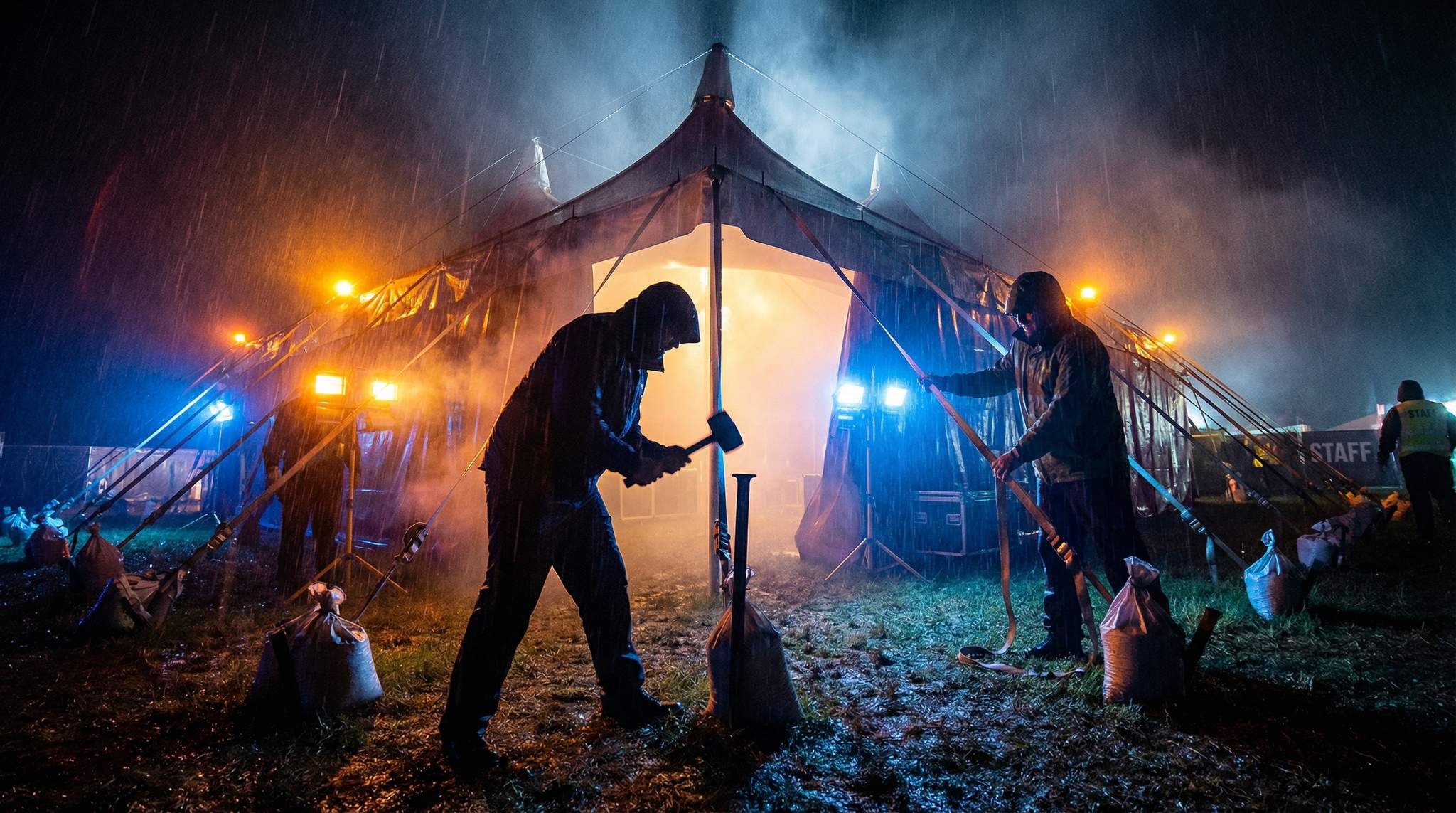
- Use Adequate Weights or Stakes: Every tent, from small vendor canopies to large festival tents, must be anchored. For hard ground where stakes can’t be used, weighted ballasts (sandbags, water barrels, concrete blocks) are critical. Many collapsible 10×10 vendor tents need at least 40–50 pounds (18–23 kg) of weight on each leg to stay grounded in moderate wind; larger tents require even more substantial anchoring. It’s better to err on the side of more weight and secure tie-downs than risk a tent becoming airborne.
- Wind Walls and Natural Windbreaks: Strategically use wind walls or side panels on tents to block gusts – but use them wisely. While tent sidewalls can reduce wind entering the tent, they also increase wind pressure on the structure. In sustained high winds, experts actually recommend removing tent sidewalls to allow wind to pass through. As a producer, judge when to deploy walls to shield against a breeze versus when to open things up. Additionally, take advantage of natural windbreaks (trees, hills, buildings) or place solid structures (like trucks or barricades) upwind to reduce wind force on tents.
- Engineered Tent Designs: For large festival tents (big tops, stage covers, etc.), work with professional riggers or tent providers to ensure the structure is engineered for wind resistance. Modern festival structures can include aerodynamic designs or vent panels that relieve pressure. Always install tents according to manufacturer specifications – taut fabric, correct tension on guy lines, and all hardware secure. A loosely installed tent is far more likely to fail in wind.
- Monitor Wind Conditions: Assign someone on the team (or use a weather monitoring service) to keep track of real-time wind speeds at the site. Set clear action thresholds: for example, if winds exceed a certain speed (commonly around 30–40 mph), pause activities and start moving people to safe areas. Many events have anemometers (wind meters) on site and a protocol to evacuate large tents if sustained winds reach roughly 35 mph (56 km/h). This may mean ushering guests out and even taking down vulnerable structures if possible.
- Secure All Loose Items: High winds don’t just threaten tents themselves – they can turn other objects into flying debris. Ensure that signage, lighting trusses, speaker towers, inflatables, and even portable toilets are firmly secured or ballasted. A flying trash can or branch can tear through a tent. Before the festival, do a site walk to identify anything that could become a projectile in wind and tie it down or remove it.
By rigorously securing tents and other structures, an organizer increases the odds that even a strong gust will pass without incident. The goal is to prevent any part of a structure from collapsing or blowing away when the wind kicks up.
Waterproofing Structures and Managing Rain
Rain is a fact of life for outdoor festivals, so structures must be prepared to keep people (and equipment) dry. Waterproofing goes beyond just using any tent – it requires thoughtful preparation:
Planning a Festival?
Ticket Fairy's festival ticketing platform handles multi-day passes, RFID wristbands, and complex festival operations.
- Use Quality Waterproof Materials: Ensure the tents and canopies use waterproof or highly water-resistant fabric. Seams should be sealed, and older tent covers should be inspected for holes or wear that could leak. Keep spare tarps or plastic sheets on hand to cover any equipment or patch a leaking spot in a pinch.
- Rain Covers for Equipment: Electronics and staging equipment are especially vulnerable to water. Use waterproof covers or enclosures for sound boards, lighting consoles, cables, and speakers when rain is in the forecast. Many festivals prepare by wrapping vulnerable gear in plastic overnight or anytime rain threatens. Even a simple tarp over a mixer or a plastic sleeve on a cable connection can prevent a show-stopping short circuit.
- Proper Tent Setup to Avoid Pooling: One common tent failure in rain is water pooling on the roof. If a tent top isn’t pulled tight enough or if the structure sags, rain can collect in a pocket, adding tremendous weight. Eventually, the weight can cause fabric to tear or poles to buckle. To avoid this, set up tents with the proper tension and use tent designs with center peaks or arch shapes that naturally shed water. If heavy rain is expected, periodically push up on the tent roof from underneath with a broom or pole (if safe to do so) to dump accumulating water before it builds up.
- Drainage and Ground Conditions: Manage the ground around structures. If your site is prone to puddles or mud, consider putting down flooring in tents or creating slight trenches to channel water away. Elevating important areas with sturdy flooring (e.g., wooden platforms or plastic floor tiles) keeps them above minor flooding. Also, position tents on higher ground if possible; avoid hollows where water will flow.
- Secure Tent Edges and Walls: In heavy rain combined with wind, rain can blow in from the sides. Attach sidewalls or rain flaps to tents when needed to keep the interior dry. However, keep an eye on wind as mentioned – if wind becomes extreme, you might remove some walls for safety despite some rain getting in. Prioritize safety over perfect dryness.
An event that is well-prepared for rain can often continue operating safely through showers. Guests will appreciate staying reasonably dry, and critical infrastructure will be protected. Just remember that if rain turns into a severe storm with lightning or dangerous winds, it’s time to shift from “rain management” to emergency weather protocols.
Climate Control for Extreme Heat (and Cold)
Festivals aren’t always threatened by storms – sometimes the danger is a scorching sun or an unexpected cold snap. Climate control measures keep tents safe and functional in temperature extremes:
- Cooling Solutions for Heat: In hot weather, the inside of a tent can become stifling, turning into a greenhouse. This is not just uncomfortable but can lead to dehydration or heat stroke among staff and attendees seeking shade. Combat this by using fans, evaporative coolers, or portable air conditioning units inside enclosed tents. High-capacity fans can improve air circulation, and misting fans can drop the temperature in open-sided tents. If power is limited, even battery or generator-powered fans placed in multiple corners of a tent will help move air. Also consider using shade cloths or reflective tarps over the tent to reduce heat absorption.
- Ventilation: If the weather is hot but dry and safe otherwise, open the tent sidewalls or flaps to encourage airflow. Ventilation is key – a tent that traps heat is counterproductive to its purpose as a refuge. Design your tent layouts so that air can cross-ventilate. In large structures, roof vents or cracked-open side panels near the top can let rising hot air escape.
- Heating for Cold Conditions: For events in cold weather, portable heaters (electric or safely-designed propane heaters) can make enclosed tents cozy. Place heaters in safe spots away from flammable materials and where people won’t accidentally touch them. Use fans to help distribute warm air evenly, as heat tends to rise. Make sure any fuel-burning heaters are vented or rated for indoor tent use to avoid carbon monoxide risks.
- HVAC Professionals for Large Structures: For big indoor-style festival tents (like those used for expos or indoor stages), it may be worth hiring HVAC professionals to install temporary climate control systems. They can calculate the BTUs needed to cool or heat the space and provide industrial units and ducting. This level of climate control ensures that even in a heat wave or cold spell, your tents remain hospitable and equipment operates within safe temperature ranges.
- Hydration and Shaded Areas: In heat, structure safety also means attendee safety. Provide plenty of water stations and create shaded rest areas (with canopy tents or shade sails) where people can cool down. While not “climate control” in the HVAC sense, these measures complement your tent cooling efforts and prevent medical emergencies. A festival’s structures should contribute to keeping everyone safe from heat stress.
Managing temperature is as important as guarding against wind and rain. Heat can weaken people’s ability to enjoy the event and even threaten lives, while cold can be dangerous in other ways. By equipping tents with the right gear and planning for ventilation or heating, producers ensure that the festival can go on in comfort no matter the weather.
Emergency Protocols for Storms and Extreme Weather
Even with the best preparations, there are times when Mother Nature wins and you must temporarily halt the festival for safety. Having clear emergency weather protocols in place before the event is crucial. Key elements include:
- Weather Monitoring and Alerts: Designate a team member or hire a professional weather service to monitor forecasts and real-time radar during the event. Use technology (weather apps, lightning detectors, wind meters) to get alerts for approaching storms. If severe weather is forming, you’ll want as much lead time as possible to execute your plan.
- Decision Triggers: Establish specific criteria that will trigger an emergency action. For example, lightning within an 8-mile radius is a common standard for evacuating outdoor events. Similarly, sustained winds above a certain speed (e.g., 35–40 mph) or a severe storm warning from authorities would also prompt shutting down stages and moving people to shelter. Defining these triggers in advance removes guesswork and speeds up decision-making when time is of the essence.
- Evacuation Plans: Every festival should have a plan for getting attendees, staff, and artists to safety if a storm hits. Identify the nearest sturdy shelters – ideally permanent buildings or vehicles, since tents are not safe in lightning or high winds. If the venue doesn’t have any substantial buildings, the plan might instruct attendees to go to their cars or buses (hard-top vehicles provide protection from lightning). Make sure exits are clearly marked and staff are trained to guide crowds calmly. Practice how you will make emergency announcements (PA systems, text alerts, mobile apps) so that you can direct everyone quickly.
- Securing or Lowering Structures: Train your crew on how to rapidly secure loose elements or take down structures if a dangerous storm is approaching. For example, lower lighting trusses to ground level if high winds are imminent, or drop the canopy of a stage roof if it’s designed to be lowered quickly. Large tents can sometimes be partially dropped – removing sidewalls and even lowering tent poles – to reduce wind loading. This requires experienced crew and should be done before winds become too intense. Decide ahead of time who has authority to order a structure to be taken down or evacuated, and empower them to act fast.
- Pause and Resume Protocol: Outline how you will pause the event and how you’ll decide when it’s safe to resume. Often, it’s wise to wait a minimum time after the last lightning strike (e.g., 30 minutes since last thunder) before resuming a show. Communicate clearly with attendees: let them know where to go, and later, how you’ll announce the all-clear. After the storm, inspect all tents and structures for damage or water accumulation before allowing crowds back under them.
Real-world examples have shown the importance of these protocols. In one case, a major outdoor festival quickly evacuated tens of thousands of attendees when a fast-moving storm approached, and no one was harmed because of the orderly retreat. In contrast, inadequate planning can lead to disaster – as seen when stage structures collapsed in storms at events like the Indiana State Fair (2011) and Medusa Festival in Spain (2022), causing injuries and loss of life.
Such tragedies underline why weather-proofing and emergency planning are non-negotiable parts of festival production. The safety of your audience and crew depends on it, and so does the future of your event – a festival that handles weather crises well earns trust and can literally save lives.
Need Festival Funding?
Get the capital you need to book headliners, secure venues, and scale your festival production.
Frequently Asked Questions
How much weight is needed to anchor a festival tent?
Collapsible 10×10 vendor tents require at least 40–50 pounds (18–23 kg) of weight on each leg to stay grounded in moderate wind. For larger structures or hard ground where stakes cannot be used, organizers must use substantial weighted ballasts like sandbags, water barrels, or concrete blocks to ensure stability and prevent the structure from becoming airborne.
When should festival tent sidewalls be removed?
Tent sidewalls should generally be removed during sustained high winds to allow air to pass through the structure rather than building up pressure. While walls block light breezes, they can turn a tent into a sail in strong gusts. Experts recommend opening up the tent to reduce wind force and prevent the structure from collapsing.
How can organizers prevent water pooling on tent roofs?
Preventing water pooling requires setting up tents with proper tension and using designs with center peaks or arches that naturally shed rain. If heavy rain occurs, staff should periodically push up on the roof from underneath to dump accumulating water. Loose setups allow pockets to form, which can add tremendous weight and cause fabric tears or pole buckling.
Are tents safe shelters during lightning storms?
Tents are not safe shelters during lightning storms or high winds. Festival organizers must evacuate attendees to permanent buildings or hard-top vehicles when lightning is detected within an 8-mile radius. Tents offer no protection against strikes and can become dangerous projectiles or collapse during the severe weather that often accompanies thunderstorms.
How can festival tents be cooled during extreme heat?
Cooling festival tents involves using high-capacity fans, evaporative coolers, or portable air conditioning units to circulate air. Organizers should facilitate cross-ventilation by opening sidewalls and using shade cloths or reflective tarps to reduce heat absorption. Misting fans can also help drop temperatures in open-sided structures to prevent heat stroke among attendees and staff.
At what wind speed should outdoor festival tents be evacuated?
Evacuation protocols for large tents are typically triggered when sustained winds reach roughly 35 mph (56 km/h). Organizers should use on-site anemometers to monitor speeds and pause activities if winds exceed 30–40 mph. Moving attendees to safe areas prevents injuries from potential structural collapse or flying debris caused by strong gusts.