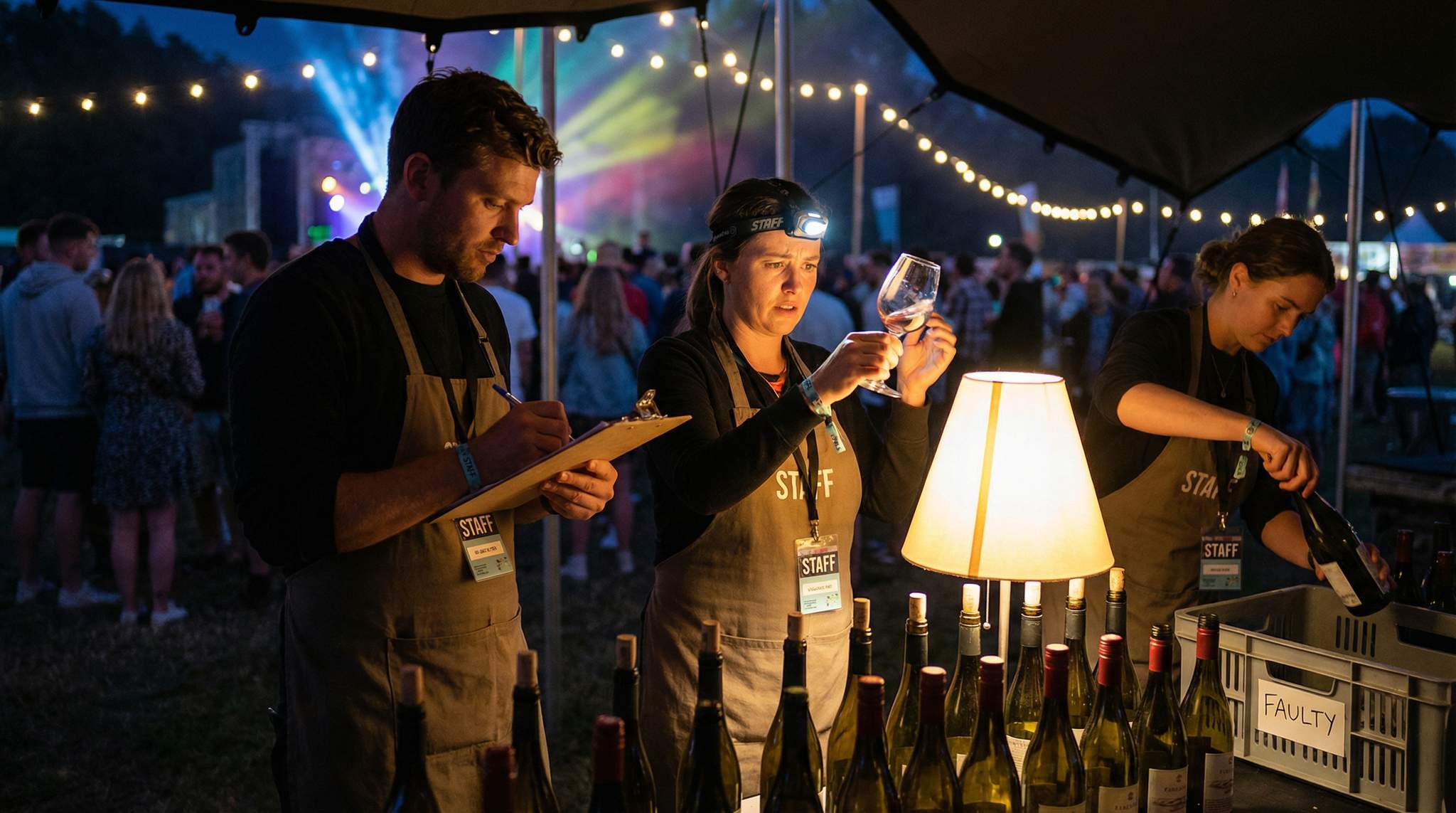
The Importance of Quality Control at Wine Festivals
Hosting a wine festival means curating not just a selection of wines, but also the experience in every glass. No matter if it’s a boutique vineyard event in New Zealand or a massive wine expo in California, maintaining quality control is critical. One off tasting pour can dampen a guest’s enthusiasm and trust. Festival producers know that protecting a wine’s integrity from bottle to glass keeps attendees happy, ensures the festival’s reputation, and encourages repeat visits.
Why focus on wine faults? Even outstanding wines can suffer from issues like cork taint (TCA), oxidation, or reduction. These faults cause unpleasant aromas or flavors that undermine the intended experience. Identifying and handling faults swiftly – without causing a scene – separates professional events from amateur ones. The goal is simple: every guest’s sample should reflect the wine at its best.
Common Wine Faults and How to Spot Them
Wine is a natural, variable product, and occasionally things go wrong. Three of the most common faults festival staff should watch for are TCA (cork taint), oxidation, and reduction. Training your pourers to recognize these faults by sight and smell ensures that no flawed wine reaches your attendees. Here’s a closer look at each fault and how to detect it:
Cork Taint (TCA) – The “Corked” Wine
What it is: Cork taint is primarily caused by the compound 2,4,6-trichloroanisole (TCA), often originating from a contaminated cork. It gives wine a musty “wet cardboard” or damp basement smell. This isn’t a minor quirk – TCA can strip a wine of its fruity aromas and flavors, leaving it dull or downright unpleasant.
How to identify: The tell-tale sign is a moldy or mildewed odor. Train staff to sniff a small sample from each newly opened bottle. If the wine smells like a dank cellar, wet newspaper, or even a chlorine-like chemical, it’s likely corked. The taste will confirm it – corked wines taste flat, with muted fruit and a bitter, musty finish. Keep in mind that TCA can vary in intensity: some bottles reek immediately, while others have low-level taint that just makes the wine seem muted. Encourage pourers to trust their nose – if in doubt, set the bottle aside.
Protocol: Never serve a suspected corked wine. In a festival environment, where hundreds of bottles might be opened (especially in regions favoring natural cork closures from France to Australia), you can expect a small percentage to be tainted. In fact, it’s commonly estimated that around 3% of cork-finished bottles could have TCA. This means at a large festival in, say, Canada or Spain with hundreds of bottles, a few are statistically likely to be corked. Prepare for it. Have extra inventory ready. When a pourer finds a corked bottle, they should discreetly stop using it, inform a supervisor or the winery’s representative, and open a fresh bottle for guests. No drama, no blame – it’s nobody’s fault, and it’s a normal risk of serving wine. By swiftly replacing a corked bottle, the festival team maintains quality without most attendees ever realizing there was an issue.
Planning a Festival?
Ticket Fairy's festival ticketing platform handles multi-day passes, RFID wristbands, and complex festival operations.
Oxidation – When Wine Goes Stale
What it is: Oxidation happens when wine is over-exposed to air, causing it to deteriorate. Think of how a cut apple turns brown and loses flavor when left out – wine undergoes a similar process. An oxidized wine has lost its vibrancy: oxygen has essentially “staled” the liquid, diminishing its fresh fruit notes and often changing its color.
How to identify: Visual cues are key. Color changes are a giveaway – white wines may darken toward amber or brown, and red wines can take on a brick-orange tint at the rim. The aroma may shift to sherry-like or nutty notes (in a wine that isn’t supposed to have them) or even smell like bruised apples. On the palate, oxidized wines taste flat or vinegar-ish, lacking the brightness they should have. For example, a young Sauvignon Blanc at a festival in New Zealand should be pale and zesty; if it’s deep gold and smells like madeira or cider, something is wrong. Train your pouring staff to compare the wine’s appearance and smell to what’s expected for its type. If it seems dull, brown, or off-scent, it could be oxidized.
Protocol: Oxidation is irreversible – once a wine is oxidized, there’s no saving it. This fault might occur if a bottle had a poor seal, was stored improperly (heat is a common culprit, so outdoor festivals in hot climates like India or Mexico should be extra cautious), or if it’s been open too long. At your festival, emphasize proper storage and handling: keep bottles cool, shaded, and don’t open more wine than needed for the moment. If a bottle was opened earlier in the day for slow tastings, consider using inert gas wine preservers or simply discarding the remainder after a set time (a couple of hours) to avoid serving a tired wine. Volunteers and staff should feel empowered to pull an oxidized bottle off the table immediately. Replace it with a new one, and make a note of the affected batch. If multiple bottles of the same wine show oxidation, alert the winery or supplier – they might have a bad lot, and it’s better to switch that wine out entirely than risk disappointing multiple guests. As always, do it calmly: “We’re opening a fresh bottle to ensure you get the best taste of this wine.” Most guests won’t question it – and those who do will appreciate the commitment to quality.
Reduction – The “Stinky” Sulfur Issue
What it is: Reduction in wine is the opposite of oxidation – it’s when a wine hasn’t gotten enough air during winemaking or bottling. This can lead to a buildup of volatile sulfur compounds. The result? Aromas that range from struck matchstick or burnt rubber, to rotten eggs or boiled cabbage in worse cases. Some modern winemaking, especially with screw caps or in regions like Australia and New Zealand that often use reductive styles to preserve freshness, can lead to these smells if the wine is bottled with very low oxygen.
How to identify: The nose knows. A reduced wine might initially smell like sulfur – common descriptors include burnt matches, fart-like odor, garlic, onion, or cooked cabbage. It’s a distinctly unpleasant funk that sits apart from any fruit or earth notes the wine should have. For instance, a young Shiraz in South Africa or Syrah in France should boast bold fruit or peppery aromas; if instead a volunteer gets a whiff of rotten egg, that bottle is reduced. Visually, reduction doesn’t have a clear color indicator (the wine’s appearance might be normal). It’s all about that funky smell. One tricky part: mild reduction vs. wine style. Some wines (like certain Chardonnays or Old World reds) intentionally have a light struck-match or mineral note – in small doses this can be a stylistic choice and not considered a flaw by aficionados. However, if the sulfuric odor is strong enough that it overwhelms the wine’s normal aroma, treat it as a fault.
Protocol: The good news is some cases of reduction are fixable. Often, the remedy is simply exposure to air. Teach your staff a quick test: swirl the wine in a glass or in the bottle (with the cork out) to see if the stinky aroma dissipates. In a restaurant, a sommelier might decant a reduced wine vigorously to “blow off” the odor or even use a clean copper coin trick (copper can bind with sulfur compounds) – but at a bustling festival, no one has time to play chemist. If a freshly opened bottle smells strongly reduced, it’s fastest to crack open another bottle of the same wine for comparison. If the second bottle smells clean, problem solved – pour the good one and mark the stinky one as faulty (it can be given a few minutes to see if it improves, or just returned to the winery rep). If the entire case is showing that matchstick funk (which sometimes happens with certain batches or highly sulfur-stabilized wines), it might be best not to serve that wine. Work with the winery if they are present – often they know that a bit of aroma will blow off and might advise to decant or might themselves demonstrate the wine is fine after some air. But never subject guests to a pungent first sniff. It’s better to momentarily hold service of that wine than to have visitors walking away saying “that booth’s wine smelled like eggs”. A tactful way to handle this: “We’re going to let this wine breathe a little more before serving. In the meantime, can I offer you our other varietal to try?” This keeps things positive while you sort it out.
Need Festival Funding?
Get the capital you need to book headliners, secure venues, and scale your festival production.
Training Pourers to Catch Faults Early
Having a knowledgeable pouring team is your first line of defense against wine faults. Many festivals, from local fairs in France to international wine showcases in Singapore, rely on volunteers or temporary staff to serve wine. These individuals may not all be certified sommeliers – in fact, some might be enthusiasts with little formal training. That’s why a practical training session before the event is invaluable.
During training, educate your staff about wine faults in simple terms. You don’t need to dive deep into chemistry; focus on what matters for service:
– Explain each common fault (TCA, oxidation, reduction) and describe the smell/taste in relatable ways (e.g., “cork taint smells like a wet dog or old damp cardboard box”).
– Use real examples if possible. For instance, if you can source a demonstrably corked bottle (maybe from a previous event or a winery donation for training purposes), have the team smell it. Comparing it side-by-side with a good bottle of the same wine can be an eye-opener – once someone has experienced that musty TCA aroma, they won’t forget it. Similarly, you might intentionally let a wine sit open for a day to show oxidation effects, or use a screwcapped wine known for a slight sulfur note to discuss reduction.
– Provide a faults cheat-sheet. Create a one-page reference with fault names, bullet-point signs, and what to do. This can be posted at each pouring station or kept behind the counter for quick refreshers.
– Role-play scenarios. Have trainees practice what to say and do if they encounter a fault. For example, act out a guest coming up and saying “I think this wine is bad.” Train the pourer to respond calmly and positively: “I’m sorry you didn’t get the optimal taste there – let me get you a fresh pour from a new bottle.” This way, when the real moment comes, your staff won’t panic or react defensively.
Crucially, foster a mindset that identifying a fault is a professional duty, not an embarrassment. Emphasize that faults are not rare – they can happen with any wine from Napa to New Delhi. Spotting them is doing right by the guest and the winery. Make sure your team knows that festival management fully supports swapping out bottles for quality reasons, no questions asked. A volunteer in the UK or Germany might feel shy to declare a wine “off” if they’re serving a famous winemaker’s product – but assure them that the winemaker would prefer their prized vintage be shown correctly or not at all, rather than in flawed form.
Protocols for Replacing Faulty Bottles (Gracefully)
Even with the best training, it’s how staff act in the moment that determines if a fault incident is a non-event or a festival faux pas. Implement clear fault replacement protocols and communicate them to every pourer and supervisor. Key points to cover in your festival’s plan include:
- Don’t Blame or Highlight the Fault Publicly: If a pourer detects a fault (or a guest points one out), the staff should never dramatize it. There’s no need to announce “This wine is corked!” loudly. Instead, they should quietly remove the bottle from service. If guests are waiting, offer a brief, upbeat explanation such as, “I’m going to open a new bottle to ensure you get the best possible taste.” Most guests will intuitively understand or simply appreciate the extra care.
- Immediate Replacement: Always have backup bottles accessible. The last thing you want is a thirsty crowd and a gap in service. For each wine being poured (especially if it’s a popular pour or a medal-winning wine people came to try), keep at least one spare bottle at the station or with a runner. In large festivals like those in the US or UK with thousands of attendees, a rapid replace keeps lines moving and guests smiling.
- Discreet Disposal or Marking: Once a bottle is deemed faulty, mark it (a stripe on the label or a note) and stow it out of sight. At the end of a session, these bottles can be tallied for inventory records and, if applicable, returned to the vendor or evaluated. Some festival organizers, for instance in Australia and New Zealand, even arrange with wineries beforehand that any corked or faulty bottles will be credited or replaced post-event. Whether or not such an agreement exists, remove the temptation for any staff (or curious attendee) to pour from that bottle again.
- Involve the Experts: Encourage pourers to call over a floor manager, sommelier, or the winery’s representative if they suspect a fault and feel unsure. Many large wine festivals (like those in France or Italy) have roaming wine experts or area managers overseeing a set of booths. Their job is to support the staff. Getting a second opinion is fine – wine faults can be subtle. A quick sniff by a specialist can confirm the issue. If confirmed, they can also help communicate with the winery or determine if multiple bottles are affected.
- Calm Guest Service: If it’s a guest who first notices something off, the protocol is apologize, replace, reassure. A sample script: “Thank you for letting us know. Let’s get you a fresh taste from another bottle – we want to make sure you experience this wine properly.” A festival attendee in, say, India or Indonesia might not be familiar with the term “corked,” but they know when a wine doesn’t taste right. Regardless of their wine knowledge, treating their concern with respect shows stellar hospitality. Never argue with the guest about the fault; even if the wine seems fine to the staff, a replacement avoids confrontation and shows you value their enjoyment. In many cases, if the wine truly was fine and the guest just didn’t like it, they’ll likely enjoy the second pour more just from the psychological reassurance that you cared to address their concern.
- Document and Learn: After the festival (or during a lull), have a quick debrief on any fault incidents. How many bottles were pulled for TCA or other faults? Were there complaints that might indicate a missed fault? Use this data to improve future operations. For example, if one winery’s bottles had multiple issues, perhaps next year you’ll remind them to check their stock or pack bottles carefully. Or if staff missed an oxidized wine that guests commented on, maybe extra training or earlier bottle rotation is needed. Each festival – from intimate tastings in Argentina to grand wine summits in Singapore – is a learning opportunity to refine your fault protocols.
Success Stories and Cautionary Tales
Being proactive with fault management has tangible benefits. Consider a case where things went right: at a major wine festival in California, a volunteer noticed a subtle musty smell when uncorking a premium Cabernet Sauvignon. She wasn’t entirely sure if it was cork taint, but she remembered the training and flagged down her section manager. They decided to open a second bottle of the same Cab just in case. The new bottle was perfectly aromatic – rich cassis and oak on the nose – confirming that the first one was indeed off. The potentially corked bottle was quietly set aside, and the guests enjoying that tasting flight were none the wiser that they narrowly avoided a disappointing pour. In fact, that winery earned great feedback from attendees, all of whom tasted the wine as it was meant to be. The festival organizers noted only later in their report that one bottle had been faulty – a minor footnote rather than a public incident.
On the flip side, imagine a learning moment from a smaller event. At a regional wine & food festival in South America, organizers initially skipped formal training for their volunteer pourers. Early in the day, a handful of guests at one booth started whispering that a particular Chardonnay didn’t taste quite right – “demasiado pasado,” one remarked (essentially “too far gone”). The volunteer pouring that Chardonnay was unaware that the deep golden color and nutty, flat aroma were signs of oxidation; she kept cheerfully serving it, thinking that was just the wine’s style. By the time a more experienced staff member made rounds and caught on, dozens of attendees had sampled what they thought was a poor wine. Word spread, and that winery’s reputation took a needless hit at the festival. The fix was simple – they pulled the oxidized batch and opened fresh bottles from a newer shipment, which were bright and citrusy as expected. But the damage was done in those guests’ minds. The lesson for that festival team was clear: never assume volunteers will “just know” – train them. The next year, they implemented a fault protocol and tasting tutorial upfront, and saw a marked improvement in guest satisfaction scores.
These anecdotes underscore a common theme: preparation prevents problems. By investing time in fault protocols and training, you protect the festival experience. Whether your event is in a famed wine region like Bordeaux or an emerging scene like Indonesia, the fundamentals hold true. Great wine can only shine if it’s served in great condition.
Upholding Excellence Across All Festival Types
It’s worth noting that fault protocols aren’t just for high-end wine expos. If you’re running a wine and music festival in the UK, a food and wine pairing weekend in Australia, or even a craft wine pop-up in India, maintaining quality pours is universally important. Each audience, regardless of their wine expertise, deserves the best possible impression of each bottle.
Different festival scales might approach it differently:
– Small boutique festivals (perhaps a few vineyards at a local farm) have the advantage of intimate oversight. Here, the event organizer might personally taste wines throughout the day, catching any issues. Still, having volunteers primed to notice problems is a safety net – you can’t be everywhere at once.
– Large-scale festivals (hundreds of wineries, thousands of guests across big cities like London, New York, or Hong Kong) absolutely require decentralized quality control. This means every pourer is effectively a quality guardian for their station. Communication systems should be in place – radios or messaging apps – so a pourer can quickly say “I need a new bottle of X at Booth 12 due to cork taint” and get a response. Big events might even assign a “Wine Quality Control Squad” who roams and assists.
– Differing demographics: A festival aimed at wine connoisseurs (say, an international Pinot Noir celebration in Oregon) might have attendees who themselves recognize faults and will call it out. In contrast, a wine tasting as part of a broader food festival might host more casual drinkers who might not pinpoint “this is oxidized,” but they will simply think the wine is bad. In both cases, the festival’s reputation is at stake — either among educated critics or via silent disappointment. Thus, the onus is on the event team to catch faults proactively in both scenarios.
Lastly, align your fault management with your overall festival ethos. If your marketing promises “the finest wines and an impeccable tasting experience”, then delivering on that means no funky wines in guest glasses. Think of fault protocol as part of your festival’s quality assurance. Just as you’d ensure food safety at a food festival or sound quality at a music festival, the integrity of wine at a wine festival must be guarded.
Frequently Asked Questions
What does cork taint smell like in wine?
Cork taint, primarily caused by the compound TCA, typically smells like wet cardboard, a damp basement, or wet newspaper. This fault strips wine of its intended fruity aromas, leaving it tasting flat and musty. It affects approximately 3% of cork-finished bottles and requires immediate replacement to ensure quality.
How can you identify an oxidized wine?
You can identify oxidized wine by visual cues like a brownish or amber color and aromas resembling bruised apples, sherry, or nuts. Oxidation occurs when wine is over-exposed to air or heat, causing it to lose freshness and vibrancy. Since this fault is irreversible, the bottle must be discarded.
Can reduced wine be fixed before serving?
Reduction, characterized by sulfurous smells like burnt matches or rotten eggs due to a lack of oxygen, is often fixable. Staff can swirl the wine in a glass or bottle to help the volatile compounds dissipate. If the unpleasant odor persists after aeration, the bottle should be replaced.
What is the protocol for handling faulty wine at a festival?
Staff should discreetly remove the suspected bottle from service and immediately open a fresh backup to keep lines moving. Pourers must avoid making a scene or blaming the winery, instead offering a polite explanation to guests while providing a new sample to ensure they experience the wine correctly.
Why is staff training essential for wine festivals?
Practical training empowers volunteers and pourers to recognize common faults like TCA, oxidation, and reduction before they reach the guest. Educating staff on specific sensory signs and replacement protocols prevents negative experiences and ensures that every sample reflects the wine’s true quality, protecting the event’s reputation.
What causes reduction in wine bottles?
Reduction occurs when a wine does not receive enough oxygen during winemaking or bottling, leading to a buildup of volatile sulfur compounds. This often happens in wines sealed with screw caps or those made in reductive styles to preserve freshness, resulting in funky aromas like struck matches or boiled cabbage.