Education & STEAM as a Sponsored Festival Utility
Festival producers worldwide are discovering the power of education and STEAM (Science, Technology, Engineering, Arts, and Mathematics) as a unique sponsorship utility. By integrating hands-on learning experiences into events, festivals not only delight attendees with interactive content but also attract sponsors eager to support community learning. The key is to curate educational activities that provide real value to the audience – and measurable impact for the sponsors. From intimate local fairs to massive international festivals, making learning a core feature can boost engagement, broaden your audience, and strengthen sponsor relationships.
Curate Engaging Hands-On STEAM Labs (Safety & Accessibility First)
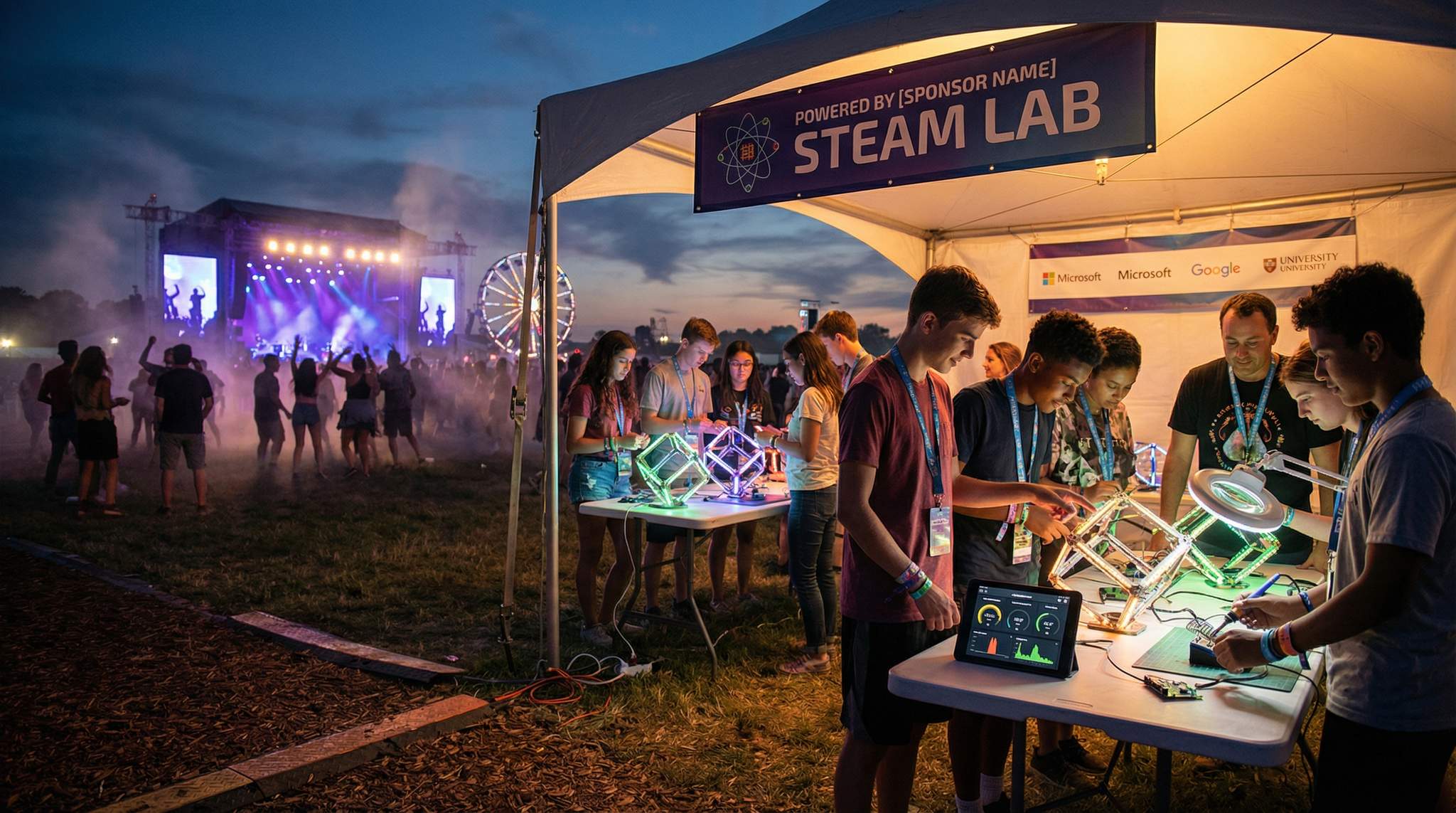
Design interactive learning zones where attendees can roll up their sleeves and explore. Hands-on labs and workshops – from robotics and coding corners to art-meets-science projects – transform passive observers into active participants. Choose activities that align with your festival’s theme and audience; for example, a food festival might include a fermentation science demo, while a music festival could feature a sound engineering workshop. It’s crucial to partner with educators or experts (local science centres, universities, makerspaces) to ensure activities are informative and well-crafted.
Safety is paramount. Conduct risk assessments for each activity: provide proper equipment (goggles, gloves, etc.), limit participant numbers for crowd control, and have staff or volunteers trained to supervise. For instance, Green Man Festival’s famous Einstein’s Garden includes science stalls and even taxidermy workshops, all run with careful oversight. This area is integrated at the heart of the festival, not tucked away, signaling that learning is a valued attraction, as noted in The Guardian’s coverage of science at festivals. Position your educational labs in high-traffic, family-friendly zones with sufficient space, ventilation, and access to facilities (water, power, first aid).
Data-Driven Event Marketing
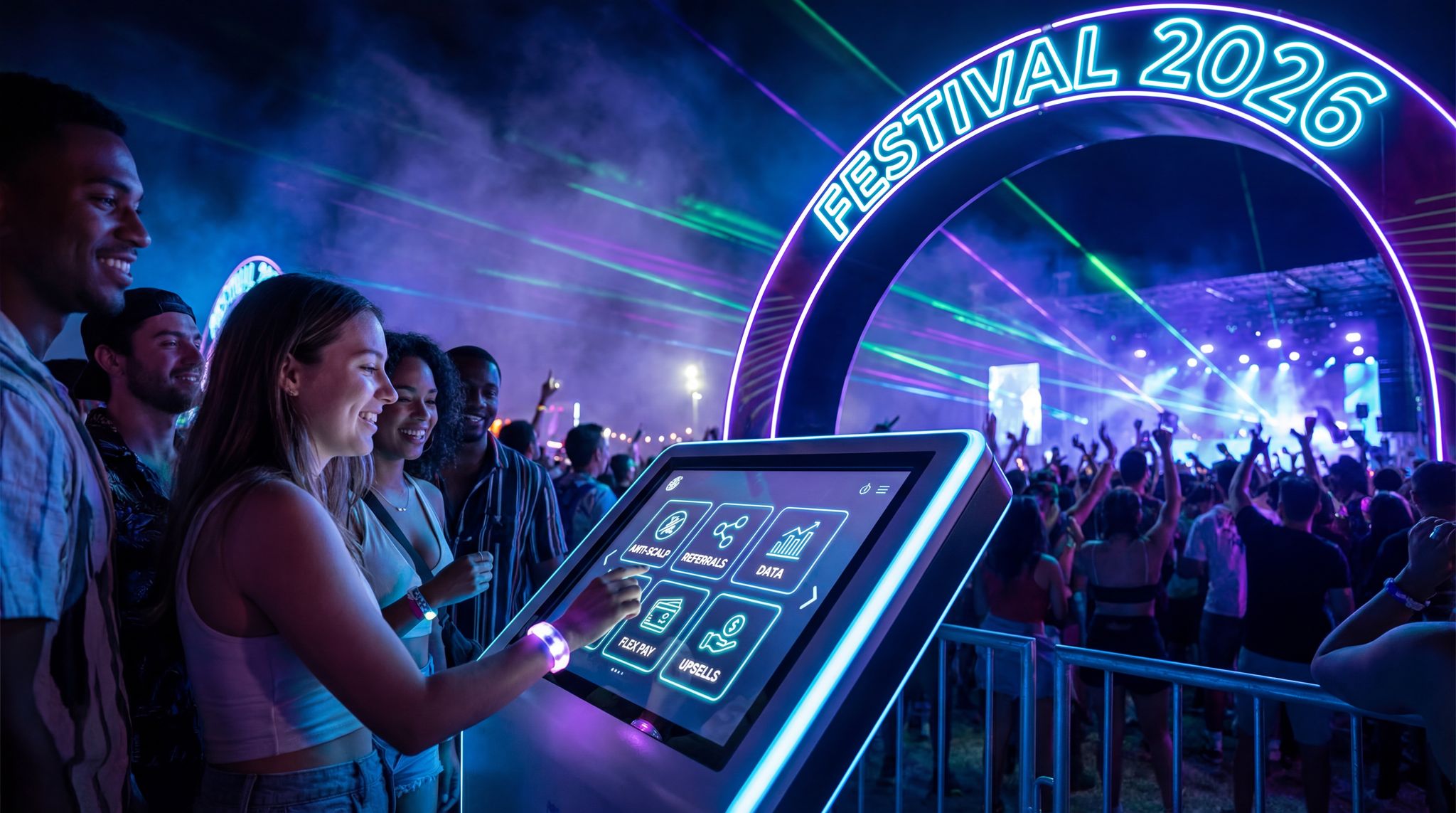
Track ticket sales, demographics, marketing ROI, and social reach in real time. Exportable reports give you the insights to make smarter decisions.
Make it inclusive. If your festival serves a diverse audience or international visitors, offer multilingual signage or staff for translation. Visual aids and simple instructions can bridge age and language gaps. The goal is to make every curious mind – kids, teens, and adults – feel welcome to join in. Such inclusive, well-run labs become highlights that people talk about long after the festival ends.
Give Sponsors Subtle Credit on Learning Materials
When education is sponsored, acknowledge funders without overpowering the experience. Branding should be present but measured. Instead of plastering logos everywhere, credit sponsors sparingly – for example, a small note on a lab instruction sheet (“This activity is made possible by XYZ Corp”) or a discreet banner at the entrance of the STEAM zone. Attendees come for the fun and discovery, so maintain an environment of creativity rather than a commercial booth.
Planning a Festival?
Ticket Fairy's festival ticketing platform handles multi-day passes, RFID wristbands, and complex festival operations.
Many sponsors prefer a humble approach in educational settings, as it showcases their support for the community rather than pure advertising. For instance, at a science festival in Nigeria, organizers listed partners like Argentil, Access Bank, and engineering firms on event signage and brochures, but the focus remained on the kids and activities, a strategy highlighted by The Guardian Nigeria regarding STEM Africa Fest. Offer thanks in opening/closing remarks or on a dedicated “Thank You” board rather than constant announcements. This way, the audience associates the sponsor with a positive contribution to their learning experience, building goodwill.
If a sponsor contributed to developing curriculum or kits, include their name in fine print on those materials. Keep mentions tasteful and mission-focused (“Thanks to the support of XYZ, 3,000 children explored robotics this weekend”). This not only gives credit where it’s due but also frames the sponsorship as a public service.
Track Participation and Engagement Metrics
Educational sponsors will ask: What impact did we make? Be prepared with solid data. Track the number of participants for each activity (“completions”) using sign-in sheets, ticket scans for workshops, or simply headcounts at intervals. Note how many fully completed a lab exercise or earned a “badge” or certificate if you offer one. For example, a coding station might log 200+ completed mini-projects in a day, or a science experiment might run 50 sessions with full attendance.
Measure time-on-task – how long visitors engage with the activity on average. High dwell times signal deep interest. If one hands-on exhibit keeps attendees absorbed for 15 minutes on average, that’s a big success for engagement. Large STEM expos like the USA Science & Engineering Festival see attendees spend significant time at interactive exhibits; with over 3,000 hands-on activities and an expected 350,000 visitors, engagement is key, according to National Science Foundation event statistics. Even at smaller festivals, comparing dwell times across activities can help identify which experiences were most captivating.
Accept Payments Across 13 Countries
Local currency processing via Stripe, Razorpay, Xendit, Paystack, and OXXO across 13 countries with region-specific payment methods.
Don’t forget to tally teacher and educator sign-ups. Often, teachers attend with school groups or come scouting for ideas. Provide a quick way for educators to register – a physical sign-up sheet or a QR code – to receive follow-up lesson kits or news about future educational events. Each teacher sign-up is valuable, as it may lead to dozens of students being impacted back in the classroom. If 40 teachers sign up for more info, and each has a class of 25, that’s potentially 1,000 students who could benefit from your festival’s content later on.
Share Post-Event Lesson Kits and Resources
Keep the learning alive even after the festival gates close. Prepare take-home lesson kits or digital resources that expand on the festival activities. This could include simple experiment guides, DIY project instructions, or related content for various age groups. Distribute these kits to interested parents and teachers at the event, or send them by email afterward to those who signed up. Not only does this extend the educational impact, but it also gives sponsors continued visibility in a meaningful way (each kit can feature a small sponsor acknowledgment).
Need Festival Funding?
Get the capital you need to book headliners, secure venues, and scale your festival production.
For example, the global Maker Faire event provides a “Class Pack” – a booklet of activities and behind-the-scenes insights for teachers and parents – to extend learning beyond the weekend, a concept detailed in Make Magazine’s overview of Maker Faire education. By sharing this curated guide after the fair, Maker Faire helps translate a weekend of fun into ongoing learning in classrooms and homes. Your festival can do something similar: if you hosted a hands-on lab about renewable energy, send participants a PDF with instructions to build a simple solar oven or a wind turbine craft at home.
These post-event resources show sponsors that their support has a lasting impact. It also reinforces to attendees that your festival is committed to education, not just entertainment. In turn, families and educators will be more likely to return year after year knowing there’s real educational value on offer.
Fit STEAM Learning to Your Festival’s Scale and Audience
Educational activations can be scaled to fit any festival size or type. A small community festival might start with just one or two workshop booths (perhaps run by a local school or library, with a modest local business sponsor). In Mexico City’s maker fair events, for instance, a single sponsored robotics table can draw a crowd of excited kids without requiring a huge budget. Focus on quality over quantity – a well-run small activity that leaves attendees inspired is better than stretching resources too thin.
At a large international festival, you might create an entire STEAM Village. Take inspiration from events like Green Man Festival (Wales), which dedicates a whole area to science and nature engagement. Over the years, Green Man’s Einstein’s Garden has engaged over 400,000 people with science since 2008, according to Green Man Trust’s impact reports – a remarkable feat at a music festival. Large festivals can partner with multiple organisations (museums, tech companies, universities) to populate a diverse range of exhibits and labs. Ensure each partner’s contribution is coordinated so that topics complement each other and the space is managed cohesively.
Consider your audience demographics. If your crowd is mostly young adults, gear some workshops towards that age group (e.g. creative tech, gaming, or maker projects that resonate with twenty-somethings). If you draw families, ensure there are kid-friendly stations (crafts, safe science experiments) as well as more advanced demos for parents and teens. Festivals in multicultural regions should think about bilingual content or universally visual demonstrations to engage wider communities. In Singapore’s science festival scene, for example, activity facilitators often speak both English and Mandarin to welcome more locals. Tailoring the educational content to your audience makes the sponsor’s investment more effective, as participation will be higher and more enthusiastic.
Lastly, match the type of festival with appropriate learning themes. A music festival can weave in technology and the physics of sound; an eco-festival can host environmental science labs (sponsored by green-tech companies); and a pop culture convention might offer STEM workshops on the science of special effects or cosplay materials (which entertainment studios or tech brands could fund). This alignment makes the educational component feel like a natural extension of the event rather than a bolt-on.
Demonstrate Impact – Learning Partners Love Measurable Change
Education-focused sponsors (think corporate CSR programs, science foundations, universities, and public agencies) are often driven by a mission. They care deeply about outcomes. To keep these partners on board (and to win new ones), show them the measurable change resulting from their sponsorship. This means translating the metrics you’ve gathered into a compelling impact report.
When reporting back after the festival, go beyond vanity numbers. Instead of just “10,000 people came through the gate,” highlight how many engaged in the learning activities and what that meant. For example: “600 children conducted their first chemistry experiment in our lab tent,” or “Teachers from 25 schools downloaded our post-event kit to continue the lessons.” If you conducted any surveys or captured feedback, include quotes – e.g. a parent noting their child “is now excited about science class” or a teacher saying the experience “sparked my students’ creativity.” Hard numbers coupled with personal stories paint a powerful picture.
Sponsors will also appreciate any media coverage or social media buzz around the educational aspects. If a news outlet praises the festival’s STEAM zone or a video of kids captivated by a demo goes viral, share that. It proves that the sponsor’s involvement enhanced the festival’s reputation and reach. For instance, Lockheed Martin’s major sponsorship of the USA Science & Engineering Festival not only let thousands of students try flight simulators and space tech hands-on, as reported in SpaceNews coverage of the event, but also positioned Lockheed as a champion of STEM education in the public eye.
Remember, learning partners are in it for the long game. If they see evidence that their contribution truly sparked curiosity or taught new skills, they’ll be more likely to renew and even expand their sponsorship. By delivering measurable impact – and communicating it clearly – you can transform a one-off sponsor into a lasting partner in your festival’s educational mission.
Frequently Asked Questions
How can festivals integrate STEAM education into their events?
Festivals integrate STEAM by designing interactive learning zones where attendees participate in hands-on workshops like robotics or coding. Organizers should partner with experts like universities or makerspaces to ensure content is high-quality. Activities work best when aligned with the festival theme, such as sound engineering workshops at music events.
How should festivals acknowledge educational sponsors?
Educational sponsors should be acknowledged subtly to maintain a creative environment rather than a commercial one. Effective methods include small notes on instruction sheets, discreet banners at zone entrances, or mentions in opening remarks. This approach frames the sponsorship as a public service and community support rather than pure advertising.
What metrics track the success of festival educational activities?
Key metrics for tracking educational success include total participant numbers, completion rates for specific tasks, and average time-on-task. Organizers should also track teacher sign-ups for follow-up resources. These data points demonstrate measurable impact to sponsors, going beyond simple footfall counts to show deep engagement and interest.
How do festivals ensure safety in hands-on science labs?
Festivals ensure safety by conducting risk assessments for every activity and providing necessary protective equipment like goggles or gloves. Organizers must limit participant numbers to manage crowds and employ trained staff or volunteers for supervision. Positioning labs in spacious, well-ventilated areas with access to first aid is also critical.
What is a good dwell time for interactive festival exhibits?
A dwell time of 15 minutes or more at a single hands-on exhibit indicates high engagement and deep interest from attendees. Measuring how long visitors stay absorbed in activities allows organizers to identify the most captivating experiences. High dwell times are a key success indicator for educational sponsors.
How can festivals extend learning impact after the event?
Festivals extend impact by distributing take-home lesson kits or digital resources like experiment guides and DIY project instructions. Organizers can email these materials to parents and teachers who sign up during the event. This strategy keeps the learning alive at home and provides ongoing visibility for sponsors.
What are examples of STEAM activities for music festivals?
Music festivals can feature STEAM activities that explore the science of sound, such as sound engineering workshops or instrument-building labs. Other relevant examples include fermentation science demos for food areas or technology-focused creative zones. Aligning activities with the event type ensures the educational content feels like a natural extension.
Why should festivals target teachers for educational programs?
Engaging teachers allows festivals to amplify their educational impact, as one teacher sign-up can influence dozens of students in the classroom. Providing educators with curriculum kits or future event news creates a multiplier effect. This metric is highly valuable to sponsors looking for broad, long-term community outreach.