Festival sponsorships have become a cornerstone of event financing and fan experience. From community food fairs to global music extravaganzas, the right sponsors can elevate a festival’s production quality and financial stability. But sponsorship is about more than slapping logos on banners – it’s about strategic partnerships that enhance the event for everyone involved. Festival producers need a nuanced approach to secure funding without selling out their mission or alienating fans.
Key Stat: Live Nation’s global sponsorship revenue hit a record $1.2 billion in 2024 (Pollstar), underscoring how integral brand partnerships have become to live events. Even smaller festivals are seeing increased sponsor interest as brands seek authentic ways to connect with audiences. Yet with opportunity comes responsibility – producers must craft sponsorship strategies that deliver value to sponsors and attendees alike.
This definitive guide breaks down festival sponsorship strategies for events of all sizes, from boutique 500-person gatherings to massive 50,000+ attendee spectacles. You’ll learn how to align sponsors with your festival’s vision, build sellable sponsorship packages, pitch and close deals, integrate brands on-site in meaningful ways, measure sponsor ROI, and foster long-term partnerships. Let’s dive in.
Table of Contents
- The Evolving Role of Sponsorship in Festivals
- Aligning Sponsors with Your Festival’s Vision
- Mapping Your Sponsorship Assets & Packages
- Pitching and Closing Sponsorship Deals
- Onsite Sponsor Activations & Amenities
- Infrastructure & Operational Partnerships
- Digital and Year-Round Sponsorships
- Contracts, Exclusivity & Risk Management
- Measuring Impact and Sponsorship ROI
- Retaining Sponsors & Building Long-Term Partnerships
- Essential Reading
- FAQ
- Glossary
- Conclusion
The Evolving Role of Sponsorship in Festivals
Sponsorship is no longer a “nice-to-have” for festivals – it’s often a make-or-break revenue stream and a key part of the attendee experience. For many events, sponsors underwrite stages, amenities, and even entire festival editions. Major music festivals commonly derive 20% or more of their revenue from brand partnerships. At the same time, savvy producers treat sponsorship income as a bonus rather than the backbone of their budget, ensuring the show can go on even without it. Striking that balance is vital: sponsors should amplify your festival’s vibe, not overrun it.
Pro Tip: Plan your festival budget to break even with ticket sales, merch, and concessions. Treat sponsorship money as the “extra sauce” that enhances the event – better production, special attractions – rather than the only thing keeping the lights on. This mindset helps you negotiate from a position of strength, not desperation.
Sponsorship opportunities have recently exploded. Brands are eager to reach live audiences they can’t find elsewhere – one reason global sponsorship spending is projected to reach nearly $100 billion in 2025. But securing sponsorship is not as simple as blasting out proposals. It requires understanding your festival’s unique appeal and the needs of potential sponsors. A boutique indie music festival, for instance, might partner with a local craft brewery and an arts nonprofit, while a 50,000-person EDM festival attracts big consumer brands and tech companies. The scale and nature of your event shape your approach to sponsors.
Planning a Festival?
Ticket Fairy's festival ticketing platform handles multi-day passes, RFID wristbands, and complex festival operations.
When considering sponsorship strategy, context matters. A first-year festival should probably aim for fewer sponsors with deeper partnerships in year one rather than signing every mom-and-pop in town (sponsorship strategies for a festival’s first year). This allows new events to build a few showcase integrations and case studies, setting the stage for growth. In contrast, an established major festival might manage dozens of sponsors across various categories – but even then, careful curation is key. No matter your festival’s size, the goal is to create sponsorships that genuinely enhance the event, align with your mission, and deliver ROI for the brands involved.
Aligning Sponsors with Your Festival’s Vision
Every sponsorship should feel “on-brand” for the festival. Before chasing any deal, clarify your event’s mission and values. Are you an underground art festival focused on local culture? A massive EDM rave known for high-tech spectacle? Knowing your identity lets you seek sponsors that fit. Aligning a sponsor with your festival’s ethos makes the partnership feel authentic to fans and yields a better outcome for the brand.
Start with a mission-first approach – identify your “North Star” and let that guide sponsorship choices. Producers who define what matters most to their festival can more easily evaluate potential sponsors: Does this company share our values or enhance our vision? For example, a sustainability-focused festival might partner with a solar energy provider rather than a random beverage brand. A family-oriented festival might seek an education or toy sponsor over an alcohol company. By keeping “mission before monetization” (defining a sponsorship “North Star” mission), you ensure that sponsor activations resonate with the audience instead of feeling like sell-outs.
If your festival champions a social or environmental cause, consider cause marketing sponsors who can amplify that mission – but do it carefully. Fans can smell insincerity. The goal is to champion causes ethically (champion causes ethically via festival sponsorships). For instance, a music festival supporting mental health awareness might team up with a nonprofit or healthcare sponsor to provide on-site counseling services. This provides real value to attendees and lets the sponsor demonstrate authentic commitment. Avoid “cause-washing” – any cause partnership should include tangible actions, not just slogans on stage screens.
Smart Promo Codes & Presale Access
Create percentage or flat-rate discount codes with usage limits, date ranges, and ticket type restrictions. Plus unlock codes for private presales.
Don’t overlook community and local partnerships. Government, tourism boards, and civic organizations can be valuable sponsors if you align with their community goals (aligning with government and community goals). They might offer grants or in-kind support (like police services or park venues) in exchange for the festival delivering cultural or economic benefits. Likewise, creative small-business sponsorships that build goodwill can punch above their weight. A beloved local coffee roaster or craft shop might invest a modest amount but bring huge hometown credibility to your event. These local sponsors often promote the festival passionately to their customer base, amplifying your marketing. And because they have genuine roots in the community, their presence feels organic on the festival grounds.
When looking at the broader landscape of sponsors for festivals, it helps to understand the specific niches brands target. For example, organizers often ask, “Who sponsors cultural festivals in the U.S.?” The answer usually lies in brands seeking highly engaged, demographic-specific audiences. Airlines, international beverage conglomerates, heritage brands, and regional banks frequently underwrite cultural and arts events to demonstrate community investment and diversity initiatives. By understanding the distinct motivations of these corporate partners, festival organizers and sponsors can build campaigns that celebrate cultural heritage while achieving targeted brand awareness.
Need Festival Funding?
Get the capital you need to book headliners, secure venues, and scale your festival production.
A common thought exercise among producers is matching specific brand personas to distinct event areas. For instance, if a beer brand was sponsoring the perfect festival stage, which brand would fit that vibe? The answer depends entirely on the stage’s curation. A high-octane EDM main stage pairs perfectly with a globally recognized, high-energy lager or hard seltzer brand looking for massive scale. Conversely, an intimate, acoustic indie-folk stage is the ideal home for a regional craft brewery whose brand identity centers on artisanal quality and grassroots community. Matching the sponsor’s aesthetic to the specific stage’s atmosphere ensures the integration feels natural to the fans.
Warning: Resist sponsorships that conflict with your core values or audience expectations. A short-term cash grab from the “wrong” brand can backfire – damaging your festival’s reputation and trust with fans. It’s better to walk away from a misaligned sponsor than to jeopardize the integrity that makes your event special.
Key Stat: 63% of consumers feel more loyal to brands that sponsor events they love (Nielsen). This loyalty only holds when the partnership makes sense – a well-aligned sponsor who truly adds to the festival experience can turn attendees into lifelong brand fans.
Mapping Your Sponsorship Assets & Packages
To attract sponsors effectively, you need a clear picture of what you have to offer. Start by mapping out a comprehensive inventory of festival assets. This means listing every tangible and intangible asset that a sponsor could conceivably touch – stages, performance tents, viewing platforms, VIP areas, bars, art installations, signage locations, digital assets like your website/app, and the capabilities of your event ticketing platform, even “presenting sponsor” rights to the event name. Think broadly: infrastructure and utilities (e.g. power generators or water stations) can be sponsored, as can experiences (a sponsored chill-out lounge or gaming zone for example). By creating an asset map, you won’t leave money on the table or accidentally double-sell something.
Next, design sponsorship packages by bundling these assets in ways that deliver outcomes for sponsors. This is where many festivals move away from the old “Gold, Silver, Bronze” tier model. Rather than generic levels, consider bespoke sponsorship packages built around each sponsor’s objectives. For instance, one sponsor might care most about on-site engagement – their package could include a large activation space, stage naming rights for prime visibility, and social media integration. Another sponsor might value media exposure – their package might emphasize logo placements on streams, emails, and influencer content. By tailoring benefits to what each sponsor truly wants, you make your proposals much more compelling.
Pro Tip: Resist the temptation to list every tiny logo placement or minor perk as a selling point. A shorter list of high-impact, meaningful benefits will resonate more with brands than a cluttered page of “bronze-level” logos that no one notices. Quality over quantity – focus on the assets that actually move the needle for sponsors.
When brainstorming innovative festival sponsorship ideas, consider how different assets can be combined to solve a brand’s specific marketing challenges. The most lucrative festival sponsorship packages often blend physical footprint (like a branded lounge) with digital reach (such as pre-event social media takeovers) and experiential utility (like underwriting the festival’s official mobile app). This multi-channel approach ensures the sponsor remains visible throughout the entire attendee lifecycle, from initial ticket purchase to post-event recap.
Also decide which sponsor categories will be exclusive. Many festivals promise category exclusivity in areas like beverage, automotive, or telecom – meaning you won’t have two competing beer or phone brands, for example. But exclusivity needs precision. Define the scope (is a “beverage” sponsor exclusive across all drinks, or just energy drinks?). It’s wise to negotiate category exclusivity with precision so you don’t handcuff yourself from future deals. If you grant a broad exclusive, you may have to turn down other potential sponsors in that segment, so ensure the price justifies the opportunity cost.
Next, design sponsorship packages by bundling these assets in ways that deliver outcomes for sponsors. This is where many festivals move away from the old “Gold, Silver, Bronze” tier model. Rather than generic levels, consider bespoke sponsorship packages built around each sponsor’s objectives. For instance, one sponsor might care most about on-site engagement – their package could include a large activation space, stage naming rights for prime visibility, and social media integration. Another sponsor might value media exposure – their package might emphasize logo placements on streams, emails, and influencer content. By tailoring benefits to what each sponsor truly wants, you make your proposals much more compelling.
Pro Tip: Resist the temptation to list every tiny logo placement or minor perk as a selling point. A shorter list of high-impact, meaningful benefits will resonate more with brands than a cluttered page of “bronze-level” logos that no one notices. Quality over quantity – focus on the assets that actually move the needle for sponsors.
When brainstorming innovative festival sponsorship ideas, consider how different assets can be combined to solve a brand’s specific marketing challenges. The most lucrative festival sponsorship packages often blend physical footprint (like a branded lounge) with digital reach (such as pre-event social media takeovers) and experiential utility (like underwriting the festival’s official mobile app). This multi-channel approach ensures the sponsor remains visible throughout the entire attendee lifecycle, from ticket purchase to post-event recap.
Also decide which sponsor categories will be exclusive. Many festivals promise category exclusivity in areas like beverage, automotive, or telecom – meaning you won’t have two competing beer or phone brands, for example. But exclusivity needs precision. Define the scope (is a “beverage” sponsor exclusive across all drinks, or just energy drinks?). It’s wise to negotiate category exclusivity with precision so you don’t handcuff yourself from future deals. If you grant a broad exclusive, you may have to turn down other potential sponsors in that segment, so ensure the price justifies the opportunity cost.
Some sponsorship assets warrant special consideration. Naming rights are the crown jewel – you might offer a title sponsor naming the entire festival, or stick to stage/area sponsorship to avoid altering your event’s identity. Weigh the pros and cons by comparing festival naming rights vs. stage sponsorships. A title sponsor (e.g. “Acme Presents XYZ Festival”) brings a big check but can carry branding risk if that company falters. Stage or venue sponsors are lower risk and still lucrative, but you may need several to equal a title deal’s value. Align this choice with your brand strategy and risk tolerance.
Don’t forget to include in-kind sponsorships in your asset mapping. In-kind means a sponsor provides goods or services instead of cash – and it can seriously stretch your budget if done smartly. Think free beverages from a drink sponsor (saving your catering costs), or a tech company providing rental lighting rigs in exchange for branding. Look for clever in-kind trade opportunities that pay off where a sponsor fulfills a festival need directly. It’s a win-win: the festival saves money, and the sponsor still gets the exposure and goodwill. Just be sure to assign a fair monetary value to in-kind contributions when comparing offers – $50k of equipment loaned is worth $50k you don’t spend elsewhere.
Warning: Keep meticulous track of your inventory. The quickest way to burn sponsor relationships is accidentally promising the same asset to two different partners. Use a spreadsheet or sponsorship CRM to update availability in real time. Once the Main Stage is committed to Sponsor A, everyone on your team needs to know it’s off the table for Sponsor B.
Pitching and Closing Sponsorship Deals
With your asset map and strategy in hand, it’s time to approach potential sponsors. Effective outreach is a marathon, not a sprint. Many top festivals start sponsor outreach a year or more in advance of the event. The timeline below illustrates a typical sponsorship sales cycle:
Data-Driven Event Marketing
Track ticket sales, demographics, marketing ROI, and social reach in real time. Exportable reports give you the insights to make smarter decisions.
| Time Before Festival | Sponsorship Outreach & Sales Milestone |
|---|---|
| 12–18 months out | Identify target sponsors and build a hit list. Begin introductory conversations for big national brands whose budgeting cycles are far in advance. Craft your pitch materials (proposal deck, one-sheet) highlighting your festival’s USP (unique selling points). |
| 9–12 months out | Initial outreach in full swing. Schedule discovery calls with interested sponsors. Customize proposals for each, focusing on how partnering will achieve their goals. Negotiate tentative terms with anchor sponsors (e.g. title or presenting sponsors) so they can allocate budget. |
| 6–9 months out | Lock in major sponsorship agreements. Finalize contracts for top-tier partners so they can begin planning activations and marketing integration on their side. Keep the pipeline going for mid-tier and local sponsors – follow up consistently. |
| 3–6 months out | Fill any remaining slots (smaller sponsors, in-kind deals). At this point, most big deals should be signed. Work closely with confirmed sponsors on activation logistics: their branding artwork deadlines, on-site needs, etc. |
| 1–3 months out | Deliver on any pre-event deliverables (co-branded marketing, social media mentions) and confirm on-site details. Coordinate with sponsors on final logistics – from ensuring their booth space is set up to double-checking VIP hospitality arrangements. Train your staff on sponsor needs so that on-site teams know who gets what access, signage placement, etc. |
| During festival | Account management on-site. Personally greet sponsors, escort them if needed, and troubleshoot any issues. Post to social media to shout out sponsor activities (if part of the deal). Basically, make them feel like VIPs and ensure all promised benefits are delivered. |
| 1–4 weeks after | Post-event follow-up. Send thank-you notes within days. Begin compiling data for the wrap report. Schedule a debrief call to gather sponsor feedback and discuss results. Plant the seed for next year’s renewal by sharing initial successes and expressing enthusiasm to partner again. |
Notice how early the process starts. It’s wise to start conversations 12+ months ahead, especially with big corporations. Many companies finalize their marketing budgets in Q3 or Q4 of the previous year – if your festival is in summer 2024, you might need to pitch in fall 2023 to get a line item in their budget.
If you are wondering exactly how to discover music festival sponsorship opportunities, start by looking outside your immediate bubble. Identifying potential sponsors for a music festival requires proactive research into brands that are actively spending in the live entertainment space. Monitor industry trades, use platforms like SponsorPitch or LinkedIn Sales Navigator, and analyze which consumer brands are activating at similar events. The best festival sponsorships for consumer brands often stem from companies launching new products, expanding into new regional markets, or trying to reach Gen Z and Millennial demographics. Build a target list of these active spenders before you ever send a cold email.
Securing the right sponsors for music festivals—or any large-scale live event—also means looking at emerging brand categories. Beyond traditional beverage and apparel companies, modern festival sponsors include health-tech startups, sustainable energy providers, and direct-to-consumer (DTC) lifestyle brands. When evaluating potential partners, consider companies that have recently secured funding rounds or launched major rebranding campaigns, as they typically have fresh marketing capital ready to deploy in experiential settings.
Focus your outreach on quality relationships over quantity. Begin with a discovery phase: ask questions to understand each sponsor’s marketing priorities. A thoughtful sponsorship discovery call that unlocks budget can reveal what a brand really wants – whether it’s pouring rights, data capture, content creation, or community goodwill. Use those insights to craft a tailored proposal.
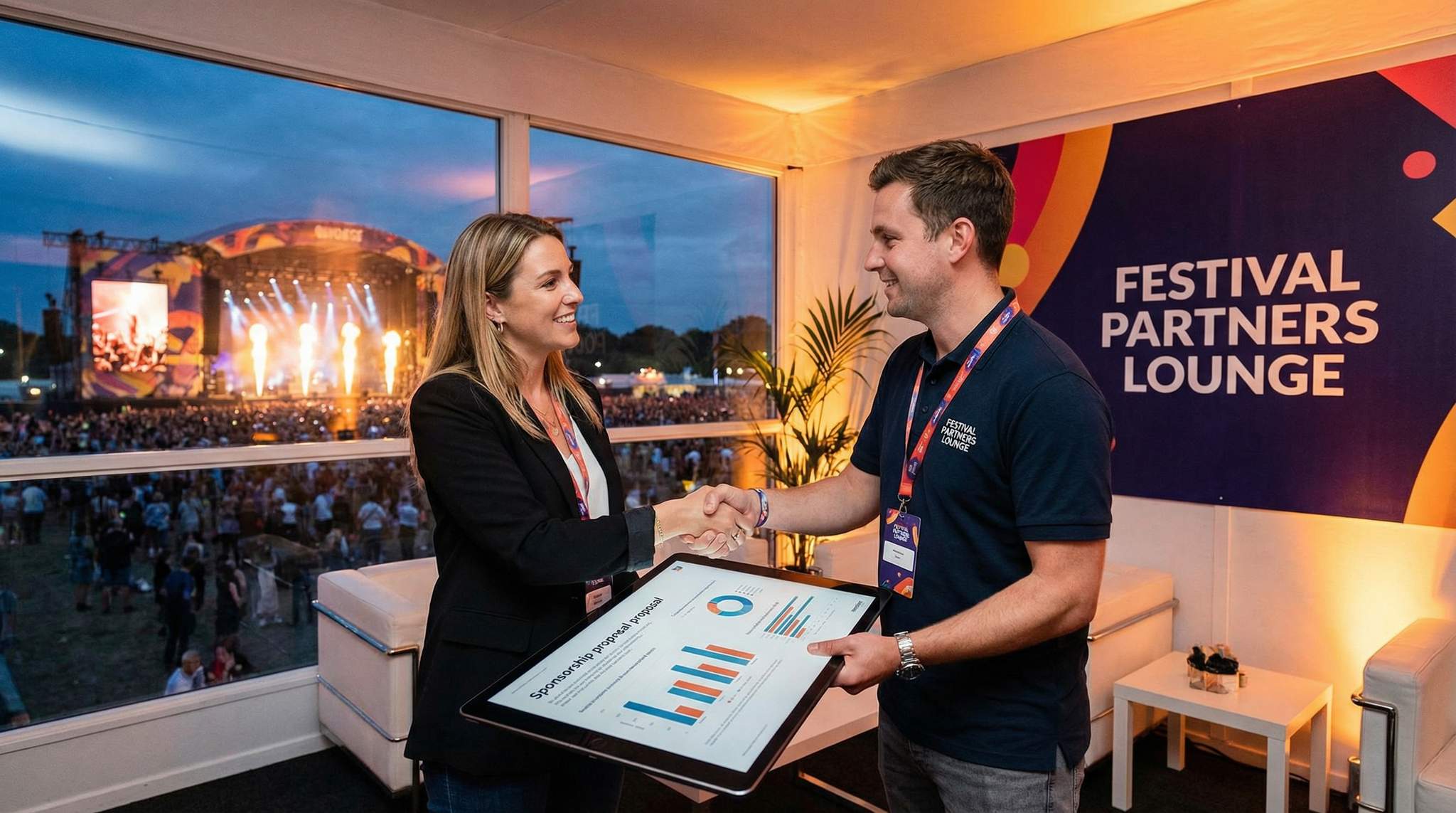
Your sponsorship pitch deck or proposal should tell a story. Rather than a dry list of benefits, paint a picture of the partnership. For example, show a day-in-the-life of an attendee interacting with the sponsor’s activations. Include compelling visuals and anecdotes. Many experienced producers create storytelling decks that sell sponsorships. These decks weave data (attendance demographics, social reach) with narrative (how the sponsor will be perceived as a hero to your fans). Always highlight ROI – e.g. “Our attendees are your target market, and here’s how we’ll drive them to engage with your brand before, during, and after the festival.”
When defining exactly what a sponsorship deck is for your internal team, think of it as your festival’s commercial prospectus. A standard presentation typically runs 10 to 15 slides and follows a specific narrative arc. It opens with the “hook” (your event’s unique cultural impact), transitions into audience data (detailed attendee demographics, household income, and geographic pull), and then showcases past activation case studies. Only after establishing this value does the document introduce specific partnership tiers or bespoke inventory options. By structuring the pitch this way, you shift the conversation from simply selling logo placements to offering a comprehensive marketing solution.
Go Cashless With RFID Technology
Enable contactless payments, faster entry, and real-time spending analytics with RFID wristbands and NFC-enabled ticketing for your events.
Manage your sales pipeline diligently. Treat sponsorship sales like any B2B sales process – because it is. Keep track of prospects, conversations, proposals out, and responses. Maintaining a clean sponsorship sales pipeline ensures no potential deal slips through the cracks. It also helps you forecast revenue and identify if you need to generate more leads. If you’ve sent 10 proposals and only closed 2, analyze why – do you need to sweeten the deals, target better-fit companies, or simply follow up more effectively?
Pro Tip: Start early and stay consistent. Aim to have your top-tier sponsor slots (like title sponsor, stage sponsor, presenting partner) secured 9–12 months out. Brands have long planning lead times. By the 6-month mark, you want the bulk of your sponsor roster in place so everyone can prepare quality activations.
Warning: Never blast out a generic sponsorship email to dozens of prospects. Cold emails are fine, but personalize them. Reference the brand’s current campaigns or values and connect them to your festival. A sponsor pitch that clearly was copy-pasted will likely be ignored. Quality research and a personal touch go a long way in earning a meeting.
Onsite Sponsor Activations & Amenities
When festival gates open, it’s showtime for your sponsors as much as for your artists. The best sponsorships add to the attendee experience. Think of your festival through the eyes of a fan: a great sponsor activation is something fun, useful, or memorable that wouldn’t have been there otherwise.
For example, sponsors can dramatically improve comfort and inclusivity on-site. A family zone sponsor that puts kids and parents first might provide a children’s play area with shade, changing stations, and ear protection giveaways – all branded subtly with the sponsor’s logo. An accessibility sponsorship that funds accommodations for disabled fans can cover the cost of wheelchair viewing platforms, sign language interpreters on stage, or free wheelchair rentals. These aren’t just feel-good initiatives; they expand your audience and show that the sponsor genuinely cares about attendees’ well-being. Health and wellness partners can make a big impact too – a health & wellness partnership can elevate festival safety by providing free water refill stations, sunscreen booths, or even yoga sessions each morning for camping festival-goers. Such contributions elevate safety and comfort for everyone.
Sponsors also shine by creating exclusive or premium experiences. Many festivals enlist a brand to upgrade their VIP offerings. A sponsor-backed VIP lounge experience could feature comfy seating, air-conditioned tents, charging stations, and mixologists serving a sponsor’s signature cocktails. The brand gets to pamper key festival attendees (often influencers or high-spenders) and associate itself with luxury treatment. From the festival’s perspective, a good VIP sponsor can offset costs for those amenities or even enable a higher tier of service than ticket sales alone would justify.
Grow Your Social Following With Every Sale
Require social media follows, shares, or playlist adds to unlock presale access or special pricing. Turn every ticket purchase into audience growth.
Education and creativity can be part of activations too. At some events, a tech or education sponsor might set up a workshop space or interactive exhibit. Picture a science museum sponsoring a “STEAM Tent” at an arts festival – offering art-and-technology demos for kids. Or a software company hosting a hackathon during a multi-day event. These educational sponsor activations and workshops enrich the festival’s content and give the sponsor a chance to showcase expertise in a way attendees actually enjoy.
And let’s not forget photo ops and shareable moments – the currency of modern festivals. Brands love to create visually appealing installations that fans can’t resist posting on Instagram. It could be a giant art piece or a quirky photo booth. Festivals are increasingly deploying sponsored photo ops and UGC moments – think along the lines of a dazzling backdrop with the sponsor’s tagline, or an AR-driven scavenger hunt in the festival app sponsored by a game company. The key is to obtain attendee consent for any data capture (always follow privacy laws), but if done right, these interactive moments give fans a cool experience and flood social media with festival content that subtly includes the sponsor.
If you are looking for fresh festival sponsorship ideas to pitch this season, consider moving beyond standard logo placements into high-utility integrations. Some of the most effective sponsorship ideas include sensory-friendly decompression zones (ideal for health and wellness brands), gamified recycling centers where attendees win merch for returning cans (perfect for eco-conscious corporate partners), and dedicated content-creator studios where influencers can borrow ring lights and charging banks (a natural fit for tech or telecom companies). These concepts transform passive advertising into active, memorable fan experiences.
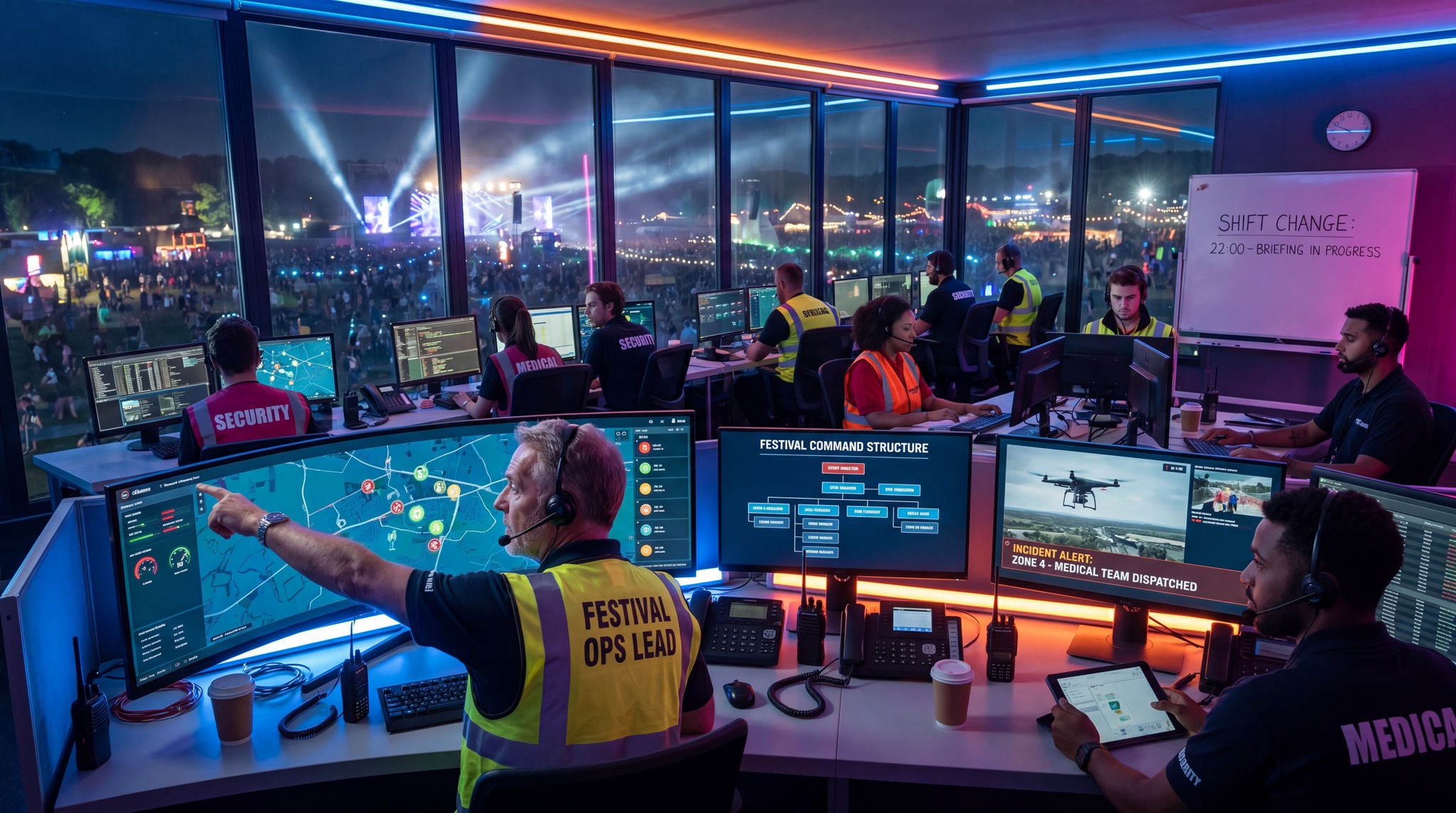
When scaling up to mega-events, global sponsorship activation and on-site production become highly specialized disciplines. Multinational brands often bring complex, multi-story build-outs that require their own dedicated production schedules, heavy machinery, and specialized rigging. As a festival producer, managing these massive footprints means integrating the sponsor’s experiential agency directly into your site operations team months in advance. You must ensure their custom builds meet your local engineering sign-offs, power grid capacities, and crowd flow dynamics without compromising the core festival aesthetic.
A critical component of seamless onsite sponsorship production is establishing a strict vendor timeline. Because brand experiential teams often operate independently of your core stage crews, their load-in and strike schedules must be meticulously staggered. Designating a dedicated sponsor liaison within your site operations team ensures that third-party fabricators aren’t competing with your main production vendors for forklift time, loading dock access, or temporary power drops. This level of logistical foresight prevents costly delays and keeps the physical build-out of brand activations running smoothly.
When evaluating festival partners, organizers frequently ask what makes the best festival partner for brand activations. The ideal collaborator isn’t just a company with a large marketing budget; it’s a brand or experiential agency that understands live audience psychology. The most successful festival partner will bring interactive, value-add concepts—like immersive art installations, gamified reward systems, or high-utility lounges—rather than static billboards. By prioritizing partners who treat the activation as a co-created fan experience, producers ensure the integration feels authentic and elevates the overall event production.
Free Tool: Size Your Festival Site
Zoned capacity planning for arena, campsite, parking and entry lanes — against UK Purple Guide and NFPA density standards. Finds your bottleneck zone.
Pro Tip: Always design sponsor activations with the fan in mind. Ask yourself: “If I were an attendee, would I spend time here or use this service?” The more a sponsorship enhances festival-goers’ enjoyment or comfort – be it through fun, freebies, or conveniences – the more organically successful it will be.
Keep an eye on the practical side too. If a sponsor plans to distribute free samples or swag, coordinate closely on logistics. You might need extra trash bins or staff to handle the packaging waste so the grounds don’t end up littered. (No one wants a beautiful field turned into a sea of cups and flyers – as guides on CPG sampling without trashing the grounds will tell you.) Work with the sponsor on a plan: maybe they provide recycling bins or hire a cleanup crew as part of their deal. That way, giveaways remain a positive touchpoint rather than a mess.
In sum, think of sponsors as part of your creative team. When sponsor activations align with attendee desires, it feels like the festival just got better – and that’s the ultimate win-win.
Infrastructure & Operational Partnerships
Some of the most crucial festival sponsorships are the ones attendees may not even notice outright – the behind-the-scenes partners that keep the event running smoothly. These sponsors provide essential infrastructure or services, often in exchange for branding and access that might not be as flashy as a main stage logo, but are absolutely vital.
Consider connectivity: many large festivals partner with telecom or tech firms to ensure robust cell coverage and Wi-Fi on-site. A telecom sponsor that builds out festival connectivity might bring mobile towers, charging stations, or even a sponsored festival app feature. In return, they get promotion as the official connectivity provider – a subtle but high-impact presence (after all, everyone notices if their phone works or not!). Attendees might see “Wi-Fi powered by XYZ Telecom” on their screen – a quiet reminder of the sponsor’s value.
Similarly, utilities and amenities can be sponsored. If your festival is outdoors, think about water, power, shade, and seating. A company can sponsor free drinking water refill stations or misting tents (earning goodwill from thirsty crowds). Providing water, shade, power, or seating shows that a brand is caring for attendees’ basic needs. A solar energy sponsor might power an entire stage with renewable energy, gaining a green halo effect. Or a furniture brand might deck out chill zones with seating in exchange for signage. These touches make the festival more comfortable while giving sponsors organic exposure.
Free Tool: Project Your Bar Revenue
Per-head spend benchmarks by event type turned into projected bar and food revenue, with a stock-mix estimate and gross-margin line. Free calculator.
Sustainability is another big operational area. Festivals produce waste and consume resources – sponsors can help mitigate that. For instance, an environmental services company could handle recycling and composting as a sponsor, with messaging about eco-friendly practices. Some events even partner with energy startups to convert waste to energy on-site – literally turning trash into electricity to run the lights. These “from waste to watts” sustainability sponsorships both solve a problem and send a positive message about innovation. Make sure to give sustainable sponsors visibility: publicize that “XYZ Corp helped this festival divert 80% of waste from landfill!” – it’s great PR for them and for your event.
Warning: If a sponsor’s technology or service is mission-critical (e.g. your cashless payment system or shuttle buses), have a backup plan. Technology can fail and logistics can go awry. Ensure generators are on standby in case the “sponsored” power drops, or have extra staff ready if the “sponsored” shuttle service falls behind. Your team must be prepared to deliver the core service even if the partner hits a snag – attendees will blame the festival, not the sponsor, if something goes wrong.
Transport and mobility are huge operational challenges that sponsors love to tackle. For example, co-branded shuttles or rideshare zones sponsored by transit partners can reduce traffic headaches and give sponsors credit for getting fans to the fun. Auto brands often join in too – some festivals have a car company sponsor the “keys to the city” by offering test drives or displaying new models on-site (with test rides as an attraction). The key is coordination with city authorities and clear signage (“Rideshare drop-off sponsored by XYZ”) so attendees know whom to thank.
Don’t overlook payments and fintech as operational sponsors. In the age of RFID wristbands and mobile wallets, a bank or tech company might sponsor your entire festival payment system. Cashless payment technology partnerships can offer perks like branded wristbands, tap-to-pay incentives (e.g. a discount courtesy of the sponsor for using their card or app), and even revenue-sharing on transaction fees. For the festival, going cashless improves speed and security; for the sponsor, it’s huge usage data and branding on every transaction. Just ensure any cashless system is battle-tested – you don’t want payment outages in the middle of a show.
Beyond basic transaction processing, payment companies sponsoring music festivals have become a massive growth sector. Fintech brands, “buy now, pay later” (BNPL) services, and digital wallet providers are eager to acquire young, tech-savvy users. They often underwrite significant operational costs in exchange for exclusive integration into your ticketing and on-site POS systems. Similarly, operational sponsorships can extend to food and beverage infrastructure. A branded bar or cocktail lounge isn’t just an attendee amenity; it’s a highly lucrative music festival operation sponsorship. Liquor brands or hospitality groups will frequently cover the build-out costs of premium mixology spaces, transforming a standard beverage tent into an immersive, revenue-generating VIP destination.
Crucially, payment company sponsorships elevate fan experiences far beyond the point of sale. When fintech brands or credit card providers underwrite an event, they frequently offer exclusive perks to their cardholders. This can include dedicated fast-track entry lanes, access to premium viewing decks, or surprise merchandise drops. By transforming a standard operational utility into a VIP touchpoint, these financial partners directly enhance the attendee journey while driving their own user acquisition metrics.
Finally, plan for the unglamorous side of freebies. If a snack sponsor is handing out thousands of samples, coordinate trash and recycling to keep the grounds clean – possibly as part of that sponsor’s responsibility. (As mentioned earlier, it’s wise to have extra bins and cleanup tied into such deals.) Similarly, if a tech sponsor is doing a massive giveaway, make sure you have crowd control and line management figured out.
Pro Tip: Secure your infrastructure sponsors early. These partners (telecom, power, transport, etc.) often need long lead times to deploy equipment and integrate their services. A telco might need months to plan temporary cell towers; a transit agency might need to adjust bus routes. By bringing them in during the early planning stages, you ensure their services integrate smoothly into your event – and they appreciate having the prep time.
Operational sponsorships might not come with the glory of a main stage banner, but they are often the backbone of a successful festival. When your attendees have full phone bars, easy rides home, short lines at the bar due to tap-and-go payments, and a clean venue, you’ve created a superior fan experience – with crucial help from sponsors who often prefer delivering substance over splash.
Digital and Year-Round Sponsorships
The festival might only last a weekend, but your sponsorship opportunities aren’t limited to the physical event. Digital channels and year-round content can massively extend sponsor value. In fact, some sponsors care more about the online reach and fan community than the on-site footprint.
One major area is online content and commerce. Festivals generate videos, photos, interviews, and other content that live online indefinitely. Consider partnering with brands on this digital content. For example, a fashion retailer could sponsor your livestream or video series of artist interviews – with subtle product placements or “presented by” branding. Or you might work with an e-commerce company to sell limited-edition festival merchandise or artist collabs, sharing revenue. These e-commerce and social commerce partnerships can turn your festival’s off-stage content into revenue and engagement, keeping sponsors invested beyond the event itself.
Email and CRM are another goldmine. Your festival’s email list and fan database are incredibly valuable to sponsors – if used wisely. You can offer dedicated sponsor messages or special offers to your subscribers, but be careful not to spam or alienate your base. The key is segmentation and relevance. A ticketing partner might underwrite an email informing fans of next year’s dates with an exclusive presale code (sponsor gets exposure and goodwill). A beverage sponsor could send a “thank you” coupon to attendees after the festival. The trick is to monetize these channels without causing subscriber fatigue. Always disclose sponsor content and keep it useful. And crucially, handle data ethically – if you share any attendee info or engagement metrics with sponsors, do so transparently and with user privacy in mind. (Producers are increasingly prioritizing data ethics and first-party trust so that sponsors get value from data without violating fan trust or privacy laws.)
Your festival app and website real estate are prime digital inventory. Just like a physical venue, your app’s schedule page or interactive map can host sponsor banners or branded stages. Offer in-app perks: a scavenger hunt AR game “brought to you by” a sponsor, or a GPS-triggered coupon when fans visit a sponsor’s booth. Festival digital inventory (apps, maps, and moments) can be monetized similar to web ads, but be sure to not overdo it. One well-placed push alert (like a sponsored reminder about a headline set or a surprise event) can be cool; five push alerts in an hour will annoy users. Balance is key.
Media partnerships fall into this digital/off-site realm as well. Traditional media like radio, TV, print, and blogs can partner with your festival for promotion in exchange for sponsor benefits. Perhaps a local radio station gets naming rights to a side stage by promoting the festival for weeks in advance (sponsor value: on-air mentions; your value: free advertising). Or a magazine becomes the “official media partner,” running festival features that highlight sponsors’ involvement. These agreements often boost your festival’s reach and satisfy sponsors by driving ticket sales or engagement. The right media partnerships can measurably move tickets and other KPIs. When negotiating media deals, ensure your sponsors get some love – maybe mentions in media partner coverage or inclusion in co-branded promotions.
Even outside the digital world, think beyond the festival weekend. Festivals have off-season events, pop-ups, merch lines, podcasts, and more. A clever example is working with retail. Retail & Grocery Tie-Ins for Festival Sponsorship can place your festival’s brand in stores – say, a grocery chain runs a summer promotion where buying certain products enters customers to win festival tickets, effectively making those brands indirect sponsors. Or a record shop hosts a “Festival Spotlight” week with displays of artists’ albums, sponsored by that shop in partnership. These collaborations create year-round touchpoints that keep your festival in fans’ minds (and sponsors’ brands in the mix) well before and after the main event.
Warning: Don’t overload your loyal fans with constant sponsor messages. Your email list, app users, and social followers are core evangelists – treat their attention as precious. A few well-placed sponsored posts or emails can be effective, but weekly blasts will lead to unsubscribes and diminishing returns. Always prioritize content that genuinely interests your audience, with sponsor branding woven in tastefully.
If done right, digital and year-round sponsorships not only bring in extra revenue but also deepen the sponsor’s integration into your festival’s story. It shifts the relationship from a one-off event sponsorship to a continuous partnership that engages fans in new ways, all year long.
Contracts, Exclusivity & Risk Management
So you’ve lined up a slate of sponsors – congratulations! Now it’s crucial to formalize everything in solid agreements and plan for the “what ifs.” A well-structured sponsorship contract protects both you and the sponsor by setting expectations clearly. Include detailed descriptions of sponsor benefits (deliverables) and obligations, timelines (when payments are due, when logos must be submitted, etc.), and any remedies if things don’t go as promised. For instance, if an exclusive sponsor finds a rival’s logo snuck onto the grounds, what remedy do they get? Or if the sponsor fails to deliver something (say, they were supposed to provide free product but didn’t), what’s your recourse? Don’t leave these things vague. Iron them out in writing, and consider adding KPIs and SLAs into sponsorship agreements so that key outcomes (like minimum on-site activation spend, or a certain number of posts by the sponsor) are contractually agreed. It may feel awkward, but both parties are happier knowing there’s a clear plan.
Another must-have in contracts: category exclusivity clauses, if promised. Be very precise in language here. For example, instead of saying “Official soft drink sponsor” (which might inadvertently block you from having a water sponsor), list what that exclusivity actually covers (“exclusive carbonated soft drink and energy drink sponsor, excludes water, coffee, alcohol,” etc.). Category exclusivity without unnecessary handcuffs is an art – you give the sponsor enough exclusivity to feel special, but not so much that you can’t sign anyone else. And once exclusives are in place, ambush-proof your event: include provisions and site rules to prevent non-paying competitors from sneaking in marketing. For instance, ban unauthorized flyer distribution, and work with local authorities to control billboard space around your venue. Preventing ambush marketing on your festival campus may also involve having security remove rogue advertising or reserving nearby ad spots to keep them out of rivals’ hands.
Warning: Never rely on handshake deals or informal emails when it comes to sponsors. Always have a signed contract for each sponsor, no matter how friendly the relationship. It only takes one misunderstanding or personnel change for a verbal promise to fall apart. A written agreement ensures everyone remembers their commitments months down the line.
Make sure your contracts also address contingencies and compliance issues. Festivals are exposed to weather, disasters, and other curveballs. Include a force majeure clause that actually works for festivals – typically allowing you or the sponsor to be excused or have obligations adjusted if events beyond your control (like a government shutdown, extreme weather, pandemic, etc.) cancel or alter the festival. Decide in advance: will you refund the sponsor fee if Day 2 is rained out? Or roll it over to a rescheduled date? Also consider clauses about morality or PR issues – if a sponsor has a scandal, can you terminate the deal (and vice versa)? It might sound pessimistic, but it’s easier to agree on these “breakup” scenarios in the contract phase than in the heat of a crisis.
Be very mindful of laws and regulations in sponsorship activities. If you’re doing any contests, giveaways, or promotions as part of sponsor deals (like a sponsored sweepstakes for free tickets), make sure to follow all applicable laws. Use resources like a festival promotions legal guide to cover things like no-purchase-necessary rules, age restrictions (COPPA for any under-13 data, alcohol rules for liquor sponsors, etc.), and required disclosures. Non-compliance can lead to fines and embarrassment for both you and sponsors.
Finally, have a plan for crisis communication involving sponsors. If something goes wrong at your festival – say a serious incident or negative publicity – loop in your sponsors early. They should hear bad news from you, not Twitter. Agree on a communication protocol in advance if possible. During the event, if an emergency happens, have a point person to update sponsor reps on site. Post-event, debrief sponsors on what occurred and how it was handled. If the issue directly involves them (e.g. their sponsored stage had a safety problem), work together on messaging. Handling crises well can actually strengthen partnerships. Many sponsors understand that things happen; they judge you on transparency and responsiveness. On the flip side, if a sponsor causes a problem (like their activation malfunctions or they post something insensitive on social media during your event), you need a plan to protect your festival’s reputation. This is where clauses in the contract help, but also just having a crisis comms gameplan with sponsors is invaluable.
Sponsorship is a long game – and contracts and risk planning are your safety nets to play it wisely. By setting clear terms, securing necessary protections, and aligning on crisis responses, you demonstrate professionalism to sponsors. It gives new partners confidence to sign on, and it gives returning partners reason to stay.
Measuring Impact and Sponsorship ROI
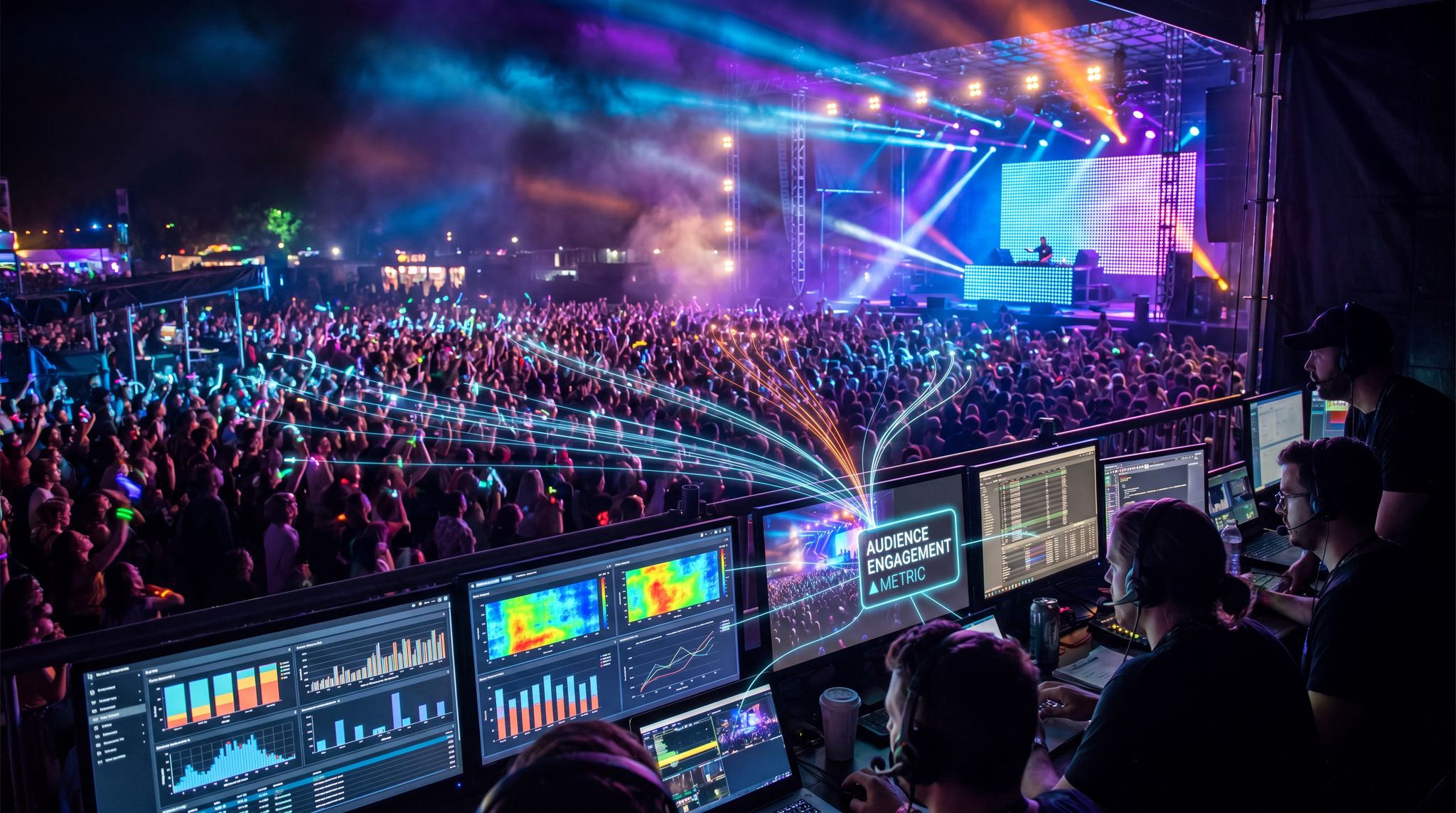
Sponsors will ask the million-dollar question: was it worth it? From the get-go, set yourself up to answer that with data. Measurement is what separates long-term sponsor relationships from one-and-dones. Before the festival, collaborate with each sponsor to define success metrics (KPIs) that align with their goals. Maybe Sponsor A cares about brand awareness (so you’ll track impressions, media reach, social mentions), while Sponsor B cares about engagement (so you’ll track booth foot traffic, app sign-ups, product samples given). Establishing a measurement framework the sponsor believes in means you’re on the same page about what data will come after the event.
During the festival, gather data diligently. Use technology where possible – RFID scans can count how many people visited a sponsored zone, unique promo code redemptions can show conversions, social listening tools can quantify mentions of hashtags. Immediately after the event, compile everything while it’s fresh.
When it’s time to prove ROI, go beyond vanity metrics. Sponsors love hearing huge “impressions” numbers, but smart ones know not all impressions are equal. Emphasize throughput and quality of engagement. For instance, instead of just saying “50,000 saw your banner,” highlight that “5,000 visited your activation and spent an average of 8 minutes engaging with your product.” It’s the difference between cost-per-thousand eyeballs and actual impact. As one pricing guru put it, “CPM lies, throughput tells the truth.” This means focus on metrics that indicate genuine interactions caused by the sponsorship.
Your post-event report to each sponsor is your chance to shine – and set up a renewal. Make it visual, concise, and results-focused. Include an executive summary of key wins (e.g. “1.2 million social impressions, 12,000 attendees visited your installations, 8,500 coupon codes redeemed, 4.5/5 average favorability in our post-event survey”). Use charts or infographics to tell the story. Show photos of their branding beautifully integrated into the event (seeing is believing!). And don’t shy away from lessons learned: if something didn’t work as well as hoped, acknowledge it and propose how to improve next time. (In fact, crafting a sponsor report that secures a renewal is an art in itself.)
Pro Tip: If possible, capture a few testimonials or quotes. A brief fan survey asking “Which sponsor activation did you enjoy?” can provide great soundbites (“‘X Tent’ was a lifesaver in the heat – thank you Brand Y!”). Including a couple of real attendee quotes about the sponsor’s presence in your report can really humanize the impact beyond the numbers.
Be prepared to discuss ROI in holistic terms. Some returns are directly measurable (e.g. X sales leads scanned at the booth), others are broader (brand lift, goodwill). If you collected any data on purchase intent or brand perception – for example, a survey showing that 78% of attendees are more likely to consider the sponsor’s product after the festival – trumpet that finding. It justifies the sponsor’s spend in language their CMO or CFO will appreciate.
Lastly, use the reporting phase to segue into the future. Point out opportunities: “With the data from this year, we could grow your impact even more next year by expanding to two stages or integrating your product into our VIP package.” Show them you’re already thinking about how to make them even more successful at the next edition.
Remember, measurement isn’t just about patting yourself on the back – it’s about learning and improving. Analyze which sponsorship elements delivered the best bang for the buck and which fell flat. Maybe the branded lounge was packed (great ROI), but a sponsored hashtag campaign didn’t catch on (time to rethink that piece). By demonstrating a commitment to continuous improvement, you instill confidence in sponsors that investing in your festival is a smart move year after year.
Warning: Never fudge the numbers. It can be tempting to inflate that attendance figure or gloss over a missed deliverable, but resist. Trust is everything. Deliver a realistic, honest account of performance – sponsors will respect your integrity and be more likely to renew, even if some metrics fell short. If something underperformed, acknowledge it and suggest how you’ll help make it right or do better next time.
Retaining Sponsors & Building Long-Term Partnerships
The true measure of sponsorship success isn’t just a check clearing – it’s having that sponsor excited to partner with you again (and maybe at a higher level) next year. Retention saves you a ton of effort, since renewing an existing sponsor is easier than finding a new one. So how do you turn a one-year deal into a multi-year relationship?
Firstly, treat sponsors like VIPs throughout the whole cycle. During the festival, make sure their team is well taken care of: provide them with on-site hospitality (free tickets, a comfortable sponsor lounge, guided tours if they want to see their activation in action). Many festivals even have a dedicated sponsor relations manager on-site to personally attend to sponsor needs. This kind of white-glove treatment leaves a lasting positive impression. Sponsor hospitality that feels like brand love – little gestures like thank-you gift bags or a shout-out from the stage – can make sponsors feel truly valued, not just like walking wallets.
After the event, follow up promptly and personally. Within a day or two, send a sincere thank-you email to each sponsor, expressing appreciation and sharing one exciting highlight (e.g. “Fans absolutely raved about your neon garden installation!”). Deliver the formal post-event report as soon as it’s ready, ideally within a few weeks. This report, as discussed, is your key to winning that sponsor’s renewal. Offer to present the results in a meeting or call – walking the sponsor through the achievements helps reinforce the impact and lets them ask questions.
When it comes to renewing, don’t just copy-paste last year’s deal. Use what you learned to propose an even better, possibly bigger package for next time. Maybe the sponsor saw such great returns that you pitch them a multi-year commitment. Emphasize the benefits of locking in a longer-term deal – stability for both sides, the ability to plan bigger activations with more lead time, perhaps a loyalty discount or first right of refusal on new opportunities. Multi-year festival sponsorship deals can be a win-win, as long as they’re not overly restrictive. If you go multi-year, keep terms flexible enough (with escape clauses or yearly review points) so neither party feels trapped if things change.
It’s also good to keep sponsors engaged in the off-season. Drop them occasional updates about your festival’s plans (“We just booked our 2024 venue – can’t wait to share details soon!”) and perhaps involve them in any off-season events or content (e.g. invite them to your lineup announcement party as honored guests). This keeps the relationship warm and maintains their sense of investment in your festival community.
If your festival is growing or expanding, bring sponsors along for the ride. Maybe you’re launching a second location or a new genre spin-off event. This is a great opportunity to pitch an existing sponsor on coming aboard the new project. Explain how you’ll manage their category across multiple editions to ensure consistency and maximum ROI. Many brands love the idea of scaling with a festival – it positions them as foundational partners from the early days through major expansion.
Pro Tip: Turn your sponsors into insiders. Share exclusive previews with them – like a sneak peek at next year’s lineup or new site map – before it goes public. When sponsors feel like part of the festival’s inner circle, they develop an emotional connection to your event’s success. They’re not just investing money; they’re invested in the journey.
Lastly, always ask for feedback and genuinely listen. What did they love? What could be better? Maybe they wished for a bigger booth space, or felt outshined by another sponsor. These insights are gold. By addressing a sponsor’s concerns and adapting, you show that you’re a collaborative partner. That builds trust and often leads to not just renewals, but upgrades – a sponsor increasing their spend because they see the partnership growing stronger.
A great real-world example is how some local festivals cultivate small sponsors into much larger ones. Perhaps a local craft brewery started as the beer garden sponsor with a modest contribution. Over a few years of good partnership – consistent crowds loving their product, strong sales, mutual respect – that brewery might step up to become a presenting sponsor of the entire festival. By nurturing relationships and delivering value, you create an environment where sponsors want to deepen their involvement.
In the end, the goal is to transform sponsors from one-off clients into true partners who feel a sense of ownership in your festival’s success. When your sponsors are excitedly emailing you ideas for next year, you know you’ve achieved that ideal alchemy – their brand and your festival building something amazing together, year after year.
Warning: Don’t take returning sponsors for granted. Even if a company has sponsored you for five years straight, approach each new edition like you’re pitching them for the first time. Markets change, people change roles – you need to continuously demonstrate value. Complacency is the enemy of retention. Keep innovating and showing your long-time sponsors that you’re as enthusiastic and proactive as you were on day one.
Essential Reading
- CPG Sampling That Doesn’t Trash the Festival Grounds
- Auto & Mobility: Keys Without Chaos
- From Waste to Watts: Sustainability Sponsorship Strategies for Festivals
- Festival Promotions Legal Guide: Sweepstakes, COPPA, and Alcohol Compliance
- Festival Naming Rights vs Stage Sponsorship: Balancing Exposure, Branding, and Risk
When should I start approaching sponsors for my festival?
For large festivals, outreach typically begins 12–18 months before the event. Big brands plan budgets far in advance, so you want to be on their radar early. Mid-sized events often start 9–12 months out. Even for a small festival, giving yourself at least 6 months to pitch sponsors is wise. Early outreach allows time for relationship-building, proposal tweaks, and getting into sponsors’ fiscal year budgets.
Is it better to have a few large sponsors or many small ones?
In most cases, a smaller number of well-aligned sponsors is better. A few major sponsors can cover a big portion of your budget and are easier to manage, especially for a first-time festival. Having too many small sponsors can clutter the event with logos and complicate fulfillment. However, it’s about balance – some festivals mix a couple of big-name sponsors with a handful of local partners for flavor. The key is ensuring each sponsor gets meaningful value and doesn’t feel lost in a crowd of logos.
How do I determine what to charge a festival sponsor?
Pricing sponsorships is part art, part science. Start by calculating the hard costs you can offset (e.g. a stage sponsorship might logically equal the stage production cost). Research comparable events – if a similar festival sold presenting rights for $100k, that’s a useful benchmark. Consider the audience size and marketing reach you offer; sponsors often think in terms of cost per impression or engagement. Most importantly, factor in the sponsor’s potential ROI – if you reasonably estimate a sponsor could generate $200k in sales from your audience, charging $50k-$75k for the package might be justified. Be prepared to negotiate and adjust based on the sponsor’s feedback on value.
How can I attract sponsors if my festival is small or new?
Focus on your niche and community appeal. A small or first-year festival won’t entice a Fortune 500 right away, but it can be very attractive to local businesses and regional brands. Emphasize your unique audience – maybe you have a tight-knit community or a demographic sponsors find hard to reach elsewhere. Offer creative, custom packages (because you likely have flexibility larger events don’t). And highlight any growth potential or media attention to show sponsors they’ll be getting in on the ground floor of something exciting. Personal passion in your pitch goes a long way – people often sponsor people as much as events, so let your enthusiasm shine.
What are some creative ways to integrate sponsors on-site?
Think beyond banners. Create interactive experiences: for example, a sponsor can host a game zone, art installation, or lounge that adds entertainment value. Provide utility: a tech sponsor might run a phone charging station or free Wi-Fi hotspot shaped as a cool art piece. Embrace photo ops: design a unique backdrop or prop that attendees will flock to for selfies (with the sponsor subtly branded). Food and drink sponsors can do themed menu items or “pop-up” tasting booths that fit the festival vibe. The goal is to make the sponsor activation something attendees will seek out because it’s fun or useful, not just an advertisement.
How do I measure if a sponsorship was successful?
It comes down to the goals set. Common metrics include: on-site engagement (e.g., foot traffic and dwell time at the sponsor’s activation), brand impressions (festival attendance, social media reach, livestream views), and direct response (promo codes redeemed, leads collected, sales made during/after event). Also gather qualitative feedback – survey attendees on sponsor recall and sentiment (“Did Sponsor X’s presence improve your experience?”). If the sponsor had specific objectives (like media coverage), track those too. In your post-festival report, you’ll compare these outcomes against expectations. A sponsorship is successful if it delivered a strong ROI or ROO (return on objective) for the sponsor – meaning the benefits (sales, goodwill, exposure) outweighed the cost and effort they invested.
What should I include in a sponsorship proposal or pitch deck?
Your proposal should cover: an overview of the festival (what it is, when/where, audience size and demographics, and what makes it special), clear sponsorship opportunities (the assets they can sponsor – stages, areas, digital content, etc.), the benefits to the sponsor (expected reach, brand alignment, on-site engagement, media coverage, hospitality perks), and supporting evidence (past success metrics or testimonials if you have them, or projections if new). Design-wise, keep it visual and on-brand with your festival’s vibe. Include photos or mock-ups of how their sponsorship might look (“Here’s an example of your logo on our main stage” or “concept art of the activation space”). Finally, outline next steps and your openness to tailor the package – you want to invite a conversation, not just deliver a take-it-or-leave-it doc.
How do I negotiate music festival sponsorship deals effectively?
Successful negotiation relies on leverage and data. When figuring out how to negotiate music festival sponsorship deals, always anchor your pitch in your audience demographics and historical throughput data. Don’t negotiate against yourself by dropping prices immediately; instead, negotiate on deliverables. If a brand can’t meet your financial ask, reduce the assets in their package or ask for budget-relieving in-kind trades (like covering staff catering or providing rental equipment) to bridge the gap.
What should be included in modern festival sponsorship packages?
Modern festival sponsorship packages should move away from rigid “Gold, Silver, Bronze” tiers. Instead, they should be modular and outcome-based. Include a mix of physical assets (stage naming rights, branded lounges, VIP activations), digital inventory (app push notifications, social media takeovers, livestream lower-thirds), and experiential elements (exclusive meet-and-greets, dedicated fast-track entry lanes). Always leave room to customize the package based on the brand’s specific marketing KPIs.
Who typically sponsors cultural festivals in the U.S.?
Cultural festivals in the U.S. are frequently sponsored by regional banks, airlines, heritage brands, and international beverage companies. These organizations look for sponsors for festivals that align with their diversity, equity, and inclusion (DEI) initiatives or community outreach goals. Additionally, local tourism boards and civic organizations often provide grants or in-kind support to cultural events that drive regional economic impact.
How do organizers handle global sponsorship activation and on-site production?
Managing global sponsorship activation and on-site production requires treating the brand’s footprint like a mini-festival within your event. Large multinational companies often hire specialized experiential agencies to design massive, multi-story structures. Festival producers must integrate these external teams into their master site plan early. This involves coordinating heavy equipment load-ins, securing local engineering and safety permits for custom builds, and ensuring the activation’s power and internet requirements don’t overload the main grid. Clear communication between your site operations director and the brand’s production lead is essential to execute these complex builds safely.
What makes the best festival partner for brand activations?
The best festival partner for brand activations is one that prioritizes attendee experience over traditional advertising. Ideal festival partners bring interactive, high-utility, or visually spectacular elements to the event—such as immersive lounges, gamified experiences, or essential amenities like charging stations and shade. Rather than simply placing logos on banners, these partners collaborate with organizers to seamlessly integrate their brand into the festival’s unique culture and aesthetic, ultimately adding tangible value for the fans.
What is a sponsorship deck?
A sponsorship deck is a visual presentation—typically a slide deck or PDF—used by event organizers to pitch partnership opportunities to potential brand sponsors. It outlines the festival’s audience demographics, historical attendance data, unique selling propositions, and available sponsorship packages. A highly effective deck goes beyond a simple price list; it tells a compelling story about how a brand can integrate into the fan experience and achieve specific marketing ROI.
What are some high-ROI festival sponsorship ideas for independent promoters?
For independent promoters, the best festival sponsorship ideas focus on solving attendee pain points while providing organic brand integration. Consider pitching a “sunscreen and hydration station” to a skincare brand, a “fast-track entry lane” to a regional bank or credit union, or a “local artist showcase stage” to a community-focused business. These partnership concepts require relatively low overhead to execute but deliver massive goodwill and highly visible touchpoints for the sponsor.
What is the timeline for onsite sponsorship production?
The timeline for onsite sponsorship production typically begins weeks before the festival gates open. While initial site surveys and engineering approvals happen months in advance, the physical build-out of brand activations usually starts 7 to 14 days prior to the event, depending on the scale. Heavy infrastructure, such as multi-story lounges or custom domes, must be loaded in and erected before the main stage production monopolizes heavy machinery and site access. Final aesthetic touches, branding wraps, and tech rehearsals are completed 24 to 48 hours before attendees arrive.
Glossary
- Activation: A sponsor activation is an on-site marketing activity or installation that actively engages festival attendees. Examples include interactive booths, live demonstrations, or experiential zones created by a sponsor to promote their brand in a fun, memorable way.
- Ambush Marketing: When a brand that isn’t an official sponsor tries to associate itself with an event in deceptive or unofficial ways. Ambush marketing can range from a rival logo appearing near the festival grounds to guerrilla stunts; it undermines exclusivity promised to official sponsors.
- Category Exclusivity: An agreement that a sponsor will be the only brand from its product/service category involved in the festival. For instance, a category exclusivity clause might ensure only one beer brand (and no competitors) can be a sponsor, protecting that sponsor’s turf.
- CPM (Cost Per Mille): An advertising metric meaning cost per 1,000 impressions. In sponsorships, it’s sometimes used to gauge the cost-effectiveness of exposure (e.g., how much a sponsor paid versus how many people saw their branding). However, CPM alone doesn’t measure engagement or quality of impressions.
- First-Party Data: Data that a festival collects directly from its attendees (e.g., ticket buyer information, app usage stats, survey responses). This data is highly valuable to sponsors because it’s accurate and consented; festivals must handle it ethically and often leverage it for targeted sponsor campaigns.
- Force Majeure: A contract clause that frees parties from obligations if extraordinary events beyond their control occur. In festival sponsorships, force majeure covers things like extreme weather, natural disasters, or government actions that cause cancellations, allowing adjustments or termination of the agreement without penalty.
- In-Kind Sponsorship: A sponsorship where the brand provides goods or services instead of cash. In-kind deals might include a water company supplying bottles (saving you costs) or a tech firm providing equipment. The sponsor still receives benefits (branding, tickets, etc.) equivalent to the value of what they provided.
- KPI (Key Performance Indicator): A measurable metric that indicates success. For sponsorships, KPIs could be things like number of attendees who engaged with the sponsor’s activation, social media impressions generated, or amount of product sampled. They are agreed upon to evaluate the sponsorship’s performance.
- Naming Rights: A high-level sponsorship where a brand earns the right to have its name integrated into the event or a component of it. Full naming rights might rebrand the festival itself (“BrandName Festival”), whereas stage or venue naming rights title a specific area (“BrandName Main Stage”). Naming rights deals carry significant exposure and often significant price tags.
- ROI (Return on Investment): In sponsorship context, ROI refers to the benefits a sponsor gains from the partnership relative to what they spent. These benefits can be financial (sales, leads) or intangible (brand awareness, goodwill). A positive ROI means the sponsorship was worthwhile for the sponsor; demonstrating this is crucial for renewals.
- SLA (Service Level Agreement): A section of a contract that specifies performance standards and responsibilities. In festival sponsorships, an SLA might outline things like minimum activation size or staffing the sponsor will provide, or on the festival side, the uptime of the sponsored Wi-Fi network (“99% uptime guaranteed”). SLAs make expectations explicit and enforceable.
- Throughput: In festival marketing lingo, throughput refers to the volume of people actively engaging with a sponsor’s activation per unit of time. It’s a way to measure not just how many people pass by (impressions), but how many actually participate. High throughput indicates strong interest and engagement at a sponsor’s booth or experience.
- Tiered Sponsorship: A traditional sponsorship model offering predefined packages (often labeled Bronze, Silver, Gold, etc.). Each tier comes with a set list of benefits at a set price. While straightforward, tiered packages can be less flexible; many modern festivals now opt for more customized, outcome-based deals instead of strict tiers.
Conclusion
Festival sponsorships, when done right, are far more than just revenue streams – they become an integral part of the event’s tapestry. An independent festival producer who masters sponsorship strategy can unlock upgrades in attendee experience, financial stability, and community impact that would otherwise be out of reach. It’s all about fit and follow-through: pairing with sponsors that genuinely complement your festival, and then delivering on your promises to create win-win outcomes.
From a tiny boutique gathering landing its first local business sponsor to massive international festivals managing multi-million dollar global partnerships, the core principles remain the same. Authenticity, creativity, and diligence are your best tools. Align sponsorships with your mission so they feel organic. Get creative to give brands enriching roles at your event (rather than just logo space). And treat sponsors as true partners – communicate openly, fulfill obligations, and show them the appreciation they deserve.
The world’s most beloved festivals often have sponsors who stick around year after year – a sign that those relationships were nurtured to mutual benefit. By applying the strategies in this guide, you’re positioning your festival to join those ranks. You have the blueprint to attract the right sponsors, craft deals that deliver value on both sides, and sustain those partnerships over the long haul. Here’s to securing sponsorships that not only fund your dreams, but also add new magic to the festival experience for all involved.