Teach, Don’t Just Tell: Seasoned festival organisers know that a standard press kit (press release, a photo, basic info) is just scratching the surface. To earn better media coverage, an Americana festival’s press kit should go further – it should teach editors about the event’s story, context, and significance. When editors and journalists have deeper understanding and rich content at their fingertips, they can craft more compelling pieces. Whether it’s a boutique folk gathering in the UK or a large-scale Americana festival in the US, providing extra detail and context helps your story stand out internationally. Remember: in an age where newsrooms are stretched thin, a press kit that does the homework for editors inspires them to give your festival more attention.
Pronunciation Guides for Names and Places
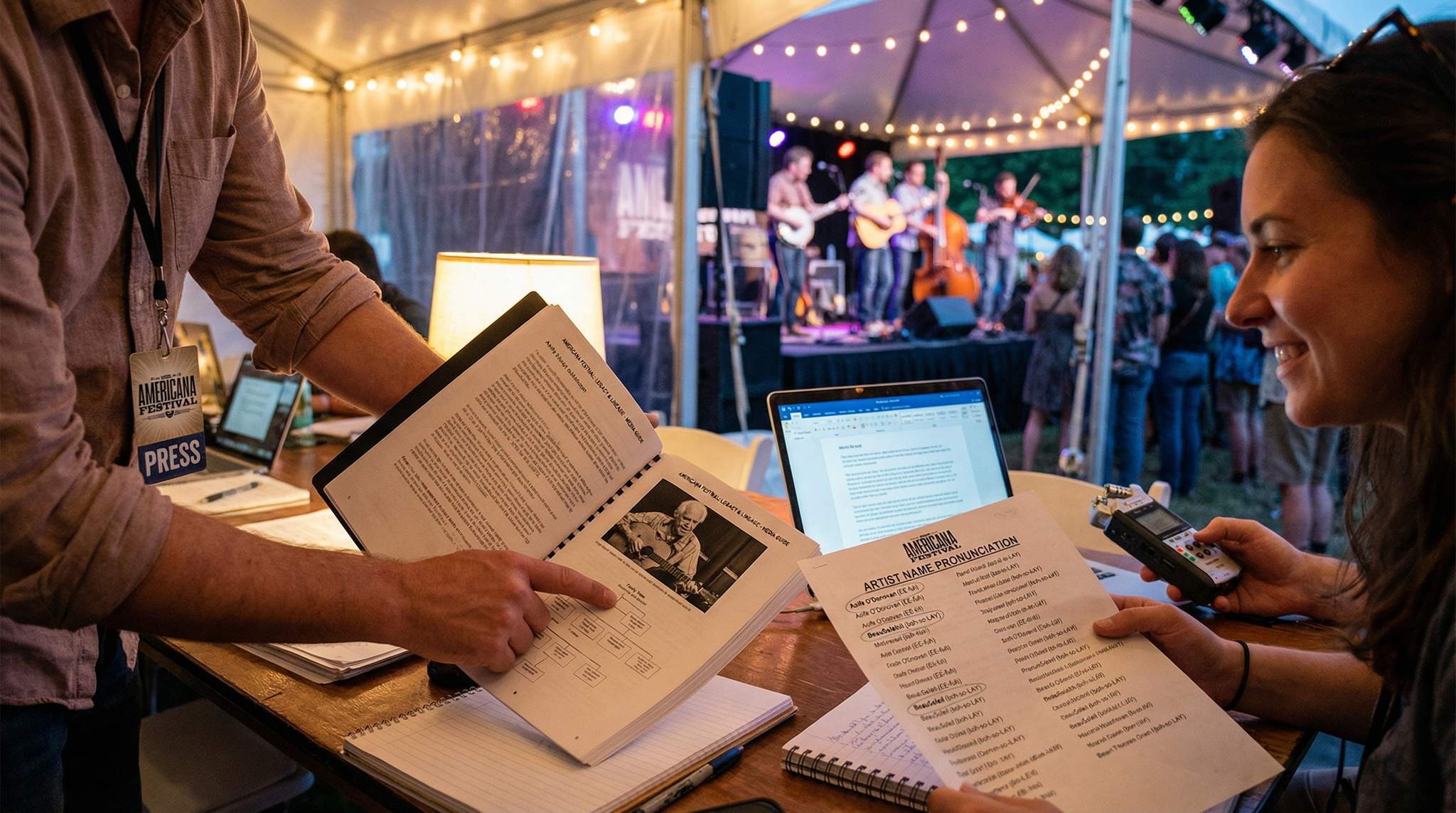
Nothing trips up an excited music writer or radio host like not knowing how to say a name. Americana music is full of artists with unique names (think Irish folk singer Aoife O’Donovan, pronounced “EE-fuh”, or Cajun band BeauSoleil, pronounced “boh-so-LAY”). If your festival features performers, locations, or even instrument names that might be unfamiliar, include a simple pronunciation guide in the press kit. For example, if an upcoming headliner is Los Texmaniacs, note that it’s said “Los Tex-MAY-nee-acks.” If your event is held in a town like Tønder (Denmark) or Zhujiajiao (China), provide phonetics so foreign media get it right. These guides save editors embarrassment and time – they can confidently discuss the festival on air or in print without scrambling for pronunciation info. It’s a small gesture of courtesy that goes a long way, especially for international press and multilingual festival lineups.
Lineage Notes: Connecting Past and Present
Americana music is all about heritage and lineage – and so are great festivals. Include notes about the lineage of the music, artists, or even the festival itself. This could mean highlighting that an artist is a third-generation bluegrass fiddler, or that they learned banjo from a legendary master. It could also mean noting your festival’s roots (e.g., “Founded in 1995 by folk legend Emmylou Harris, this festival carries forward a Nashville legacy.”). Such lineage notes give editors ready-made story angles. Instead of just reporting that “Artist X will perform,” a journalist can write “Artist X, a protégé of the late great [Mentor’s Name], will bring the classic Appalachian sound passed down through generations.” For instance, MerleFest in North Carolina often mentions its origins – it was founded by guitar icon Doc Watson in memory of his son Merle – which adds emotional and historical weight to any coverage. By spelling out connections between past and present, you not only educate the media about why a performer or festival is significant, but also feed them a narrative thread they can weave into articles and radio segments across the US, UK, Europe or anywhere Americana music resonates.
Nailing the Sub-Genre Labels
Americana is a big tent spanning bluegrass, alt-country, folk, blues, gospel, Tex-Mex, Cajun, Appalachian old-time, and more. Don’t leave it to a rushed editor to guess what style of music you’re offering – provide accurate sub-genre labels for your artists and programs. If a band is described in your materials simply as “Americana” or “folk,” journalists might use a generic label (or worse, the wrong one). Instead, be specific: say “Grammy-winning bluegrass quartet”, “Texas outlaw country singer-songwriter”, or “New Orleans gospel-soul ensemble”. These descriptors paint a vivid picture and ensure the coverage is accurate and enticing to readers. It also prevents mislabeling – for example, a traditional Cajun group probably wouldn’t appreciate being called “country music,” and a UK newspaper might confuse Americana with generic “American music” without context. Many successful festivals do this: Canada’s Calgary Folk Music Festival press materials often tag artists with genres like Appalachian folk, indie-folk, blues-rock, or Inuit throat-singing, giving reporters clarity on what each act represents. Likewise, the Tonder Festival in Denmark (which features Americana alongside Nordic folk) carefully classifies each performer’s style for international press. By nailing sub-genres, you help editors quickly grasp the diversity and niche appeal of your lineup – a benefit when they craft stories or event recommendations for specific audiences, from country fans in Australia to blues aficionados in India.
Data-Driven Event Marketing
Track ticket sales, demographics, marketing ROI, and social reach in real time. Exportable reports give you the insights to make smarter decisions.
Provide Captioned Photos (with Credits)
A picture is worth a thousand words – but only if the editor knows what they’re looking at. That’s why your press kit should include high-quality photos with captions and credits. Feature a variety of images: artists performing at past festivals, enthusiastic crowd shots, unique moments (like a late-night campfire jam or dancers in traditional attire, if those are part of your festival’s vibe). For each photo, provide a caption that identifies who or what is in the shot, where and when it was taken, and who to credit for the image. For example: “Americana icon Rhiannon Giddens captivates the crowd at the 2023 [Your Festival Name] – Photo by John Doe.” Clear captions save journalists time; they can drop the photo into an article knowing exactly how to label it. It also prevents mistakes like a magazine printing a photo of one band with another band’s name by accident (a risk when editors have to guess). Rights clarity is crucial here – explicitly note that these images are approved for editorial use (e.g., “Photo credit required as noted, for press use only”). Major events like the New Orleans Jazz & Heritage Festival provide media with a gallery of pre-vetted, captioned photos each year, ensuring that outlets from the US to Japan can easily illustrate their stories without legal worries. Smaller festivals can emulate this by hiring a photographer (or tapping a skilled volunteer) to snap some great shots and then sharing those photos in a press folder with descriptive file names and a text file listing all captions and credits. When your images are easy to find and properly documented, you’re far more likely to see them published in that glowing festival preview or review – which means more eyes on your event.
Include B-Roll and Video Content
In today’s multimedia news landscape, a stellar press kit isn’t just static text and photos. Video B-roll and audio clips can dramatically increase your chances of coverage, especially on TV, radio, and digital platforms. B-roll refers to supplementary footage that editors can cut into their pieces – for a festival, this might be sweeping drone shots of the venue, 10-second clips of previous performances, or atmosphere footage of dancing crowds and food stalls. Providing a download link to a few short, high-quality B-roll clips (with clear labels like “crowd dancing at sunset, 2022” or “headliner on main stage, cheering audience”) can make a busy TV producer’s life easier. The same goes for radio and podcasts: include a couple of audio snippets – perhaps a quote from the festival director inviting fans, or a high-quality live recording of an artist’s chorus – that journalists can embed or play. When the Byron Bay Bluesfest in Australia hit its 30th year, for example, it shared archival video highlights and artist interview clips with the press, resulting in richer TV news segments. If your festival is smaller or budget is tight, even smartphone footage of a signature moment (steady and in good lighting) is better than nothing – just ensure it’s clear and you have permission from whoever is filmed. Always clarify usage rights for these materials too (“B-roll footage courtesy of [Festival]; free for press use with attribution”). By supplying ready-to-use multimedia, you increase the likelihood that your festival will be featured not just in print, but across broadcast and online media.
Planning a Festival?
Ticket Fairy's festival ticketing platform handles multi-day passes, RFID wristbands, and complex festival operations.
Add a “Why Now” Memo
Even if you have the most amazing annual festival, editors will ask, “Why is this newsworthy now?” In your press kit, include a brief “why now” memo or section that spells out the timely hook. This is essentially a cheat-sheet for editors to justify covering your festival at this moment. Some effective “why now” angles could be:
- Anniversary or Milestone: (“2025 marks the 10th anniversary of the festival, celebrating a decade of Americana music in Singapore.”)
- New and Notable: (“First-ever reunion of a legendary folk band,” or “World premiere of a collaboration between Mexican and American country artists.”)
- Trend or Context: (“Riding a wave of Americana’s growing global popularity – with record streaming numbers in Europe – the festival showcases how roots music is resonating with young audiences today.”)
- Community Impact: (“After wildfires hit California, this year’s festival is partnering with local relief efforts — a story of music bringing a community together.”)
- Postponement or Revival: (“Returning for the first time since the pandemic, with a renewed mission to support live artists.”)
Spell it out clearly, perhaps as a short bulleted list or a highlighted paragraph in your press release. For example, the press release for Cambridge Folk Festival (UK) one year emphasised that folk and Americana album sales were surging nationally – a context that gave editors a bigger story to latch onto. By giving the press a “why now” narrative (essentially answering, “why should readers care this week or this month?”), you arm journalists with a compelling reason to cover your event immediately, not someday.
Offer Experts for Context and Quotes
Journalists love having credible voices and expert insights to enrich their stories. Don’t limit your press kit quotes to just the festival organiser or performing artists. Consider offering third-party experts – such as luthiers, historians, or radio hosts knowledgeable in your festival’s genre – for context and colour. For instance, if you host a guitar-focused Americana festival, a renowned luthier (guitar maker) could provide a quote about the resurgence of handcrafted instruments in modern music. If your festival highlights Appalachian folk traditions, a music historian or professor could comment on why those traditions matter today. Many top festivals leverage this approach. In fact, a retrospective review of press coverage from the Smithsonian Folklife Festival found that the most memorable articles were “highly descriptive, full of stories and quotes,” and packed with “detailed bios and quirky facts” about participants, according to an analysis of twenty years of festival press reports. By seeding your press kit with similar rich details and authoritative voices, you help journalists craft stories that go beyond basic event listings. Closer to Americana’s heart, a festival press kit might feature a blurb from a respected radio DJ – for example, BBC Radio 2’s Bob Harris (a champion of Americana in the UK) praising the lineup, or a popular NPR host in the US reflecting on the genre’s evolution. These external voices act like endorsements and provide ready-to-use soundbites that journalists can plug into their articles or broadcasts. Additionally, explicitly offer to connect media with these experts for interviews if they need a deeper dive. If a reporter knows they can call up a local blues historian to get a colourful quote about your festival’s Chicago blues night, they might turn a short blurb into a full feature. By broadening the range of voices, you demonstrate that your festival isn’t just self-promotional – it’s part of a bigger cultural story, with many people (not just your team) attesting to its value.
Make Assets Easy to Find (and Rights Clear)
Once you’ve assembled all these fantastic assets – pronunciation guide, backgrounders, photos, videos, quotes – ensure that everything is easy to access and that usage rights are crystal clear. Organise your press kit logically, whether it’s a ZIP file you send out or a dedicated press page on your website. For example:
Accept Payments Across 8 Global Markets
Local currency processing in the US, UK, Canada, Australia, New Zealand, India, Indonesia, and Mexico with region-specific payment methods.
- Create folders for Images, Videos, Press Release & Info, Artist Bios, etc.
- Use descriptive file names (e.g.,
FestivalName2024_MainStage.jpginstead ofDSC_1234.jpg). - Include a concise index or readme file that outlines what’s in the kit and how to use it.
- State the rights for each asset: e.g., “All photos © Photographer Name – free for editorial use with credit,” or “Video footage courtesy of [Festival] – may be used by media covering the event.”
- Provide a contact person (PR manager or festival media coordinator) with phone and email prominently in the kit, in case editors have questions or need something extra.
The easier you make it, the more likely an editor will delve into the material. Imagine the alternative: a journalist has to hunt through your website or request photos one by one – chances are, they’ll move on to a story that’s less work. Avoid Dropbox links that expire unexpectedly or pages buried behind passwords (unless absolutely necessary for unreleased info). Some festivals even create a press login section on their site with everything up-to-date; others share a permanent Google Drive link or use services like Ticket Fairy’s promoter portal for unified media asset management. Whichever method you choose, test it from an outsider’s perspective. Can someone unfamiliar with your festival quickly find what they need? If yes, you’ve done your job. Clarity in access and rights not only protects you legally, it also gives news outlets confidence – they know exactly what they can use and how. The end result: your photos, quotes, and stories are more likely to appear in the press, exactly as you intended.
Depth = Better Coverage
At the end of the day, the effort you invest in creating a deep, informative press kit directly influences the quality of coverage your festival will get. By treating your press materials as a mini-education for editors, you transform them from basic announcements into storytelling gold. Publications and broadcasters respond to that depth. Instead of a tiny event listing, you might get a full-page feature exploring the revival of Americana music in your region – all because you handed the journalist rich content and context on a silver platter. From small-town folk festivals in New Zealand to big Americana extravaganzas in Texas, this principle holds true: the more substance and clarity you provide, the more compelled media will be to cover your story at length. It builds trust too – editors learn that when your festival PR hits their inbox, it’s worth their time. So, embrace the role of educator. Share the pronunciations, the lineage, the sub-genres; give them photos that pop and quotes that inform; make everything easy and explicit. In return, you’ll earn press coverage that not only boosts your ticket sales and profile but also honors the rich tapestry of Americana music and culture that your festival represents.
Need Festival Funding?
Get the capital you need to book headliners, secure venues, and scale your festival production.
Frequently Asked Questions
What should be included in a music festival press kit?
A comprehensive music festival press kit should include a press release, high-quality captioned photos with credits, and video B-roll. It must also provide pronunciation guides for artist names, specific sub-genre labels, and a “why now” memo explaining the event’s current relevance to help editors craft compelling stories.
How can Americana festivals get better media coverage?
Americana festivals earn better media coverage by providing press kits that educate editors on the event’s lineage and context. Organizers should include detailed artist backgrounds connecting past and present traditions, specific sub-genre descriptors like “bluegrass” or “Cajun,” and expert quotes from historians or radio hosts to add authority.
Why are pronunciation guides important in press kits?
Pronunciation guides prevent embarrassing on-air mistakes and save journalists time when researching artists with unique names or foreign locations. Providing phonetic spellings for performers ensures radio hosts and writers can confidently discuss the lineup, which encourages them to feature the festival in their coverage without hesitation.
How should Americana music genres be labeled in press materials?
Press materials should use specific sub-genre labels rather than broad terms like “folk” or “Americana” to ensure accurate reporting. Descriptors such as “Appalachian old-time,” “Texas outlaw country,” or “New Orleans gospel-soul” help editors understand the specific style of the lineup and target the right audience demographics effectively.
What type of photos should be included in a festival electronic press kit?
A festival electronic press kit must include high-quality, captioned images of artists performing, enthusiastic crowd shots, and unique atmosphere moments like campfire jams. Each photo requires clear metadata identifying the subjects, location, and photographer credits, along with explicit statements granting editorial usage rights to media outlets.
What is B-roll footage for music festivals?
B-roll for music festivals consists of supplementary video footage, such as drone shots of the venue, crowd reactions, or short performance clips, used by TV and digital editors to illustrate stories. Providing downloadable, high-quality B-roll increases the likelihood of broadcast coverage by giving producers ready-to-use visual content.
How do you make a festival press release newsworthy?
Making a festival press release newsworthy requires a “why now” angle that justifies immediate coverage. Effective hooks include highlighting significant anniversaries, exclusive artist reunions, connections to current cultural trends, or community impact initiatives. This context gives editors a compelling reason to run the story immediately rather than later.
Who should provide quotes for a music festival press release?
Beyond organizers and artists, press releases benefit from quotes by third-party experts like music historians, instrument makers, or respected radio DJs. These external voices provide independent validation and historical context, offering journalists authoritative soundbites that enrich the narrative and demonstrate the festival’s cultural significance.