Introduction
Festivals are not one-off events – they are living, evolving experiences that build momentum over multiple years. From small boutique gatherings to massive international spectacles, successful festivals plan for the long term. A well-executed first year is only the beginning; what comes next is equally critical. Organizers must think beyond immediate logistics and consider how each edition paves the way for the future.
Key Stat: A single major festival like Bonnaroo can contribute nearly $340 million to the local economy in one year, according to a recent Axios report – a level of impact only achievable through sustained growth and community buy-in over many editions. This underscores why strategic multi-year planning is essential.
Multi-year growth involves scaling attendance, expanding programming, refining finances, and preserving the festival’s core identity as it matures. It means securing partners for the long haul, keeping fans excited year after year, and learning from each event to make the next one better. The following guide breaks down how veteran festival producers approach long-term evolution, ensuring their events not only survive but thrive for decades.
Table of Contents:
1. Multi-Year Vision from Day One
2. Financial Foundations and Long-Term Partnerships
3. Scaling Up Wisely: Attendance and Expansion
4. Evolving the Experience: Feedback and Innovation
5. Balancing Innovation and Consistency for Loyal Fans
6. Institutional Continuity: Documentation and Succession
7. Overcoming Setbacks and Planning Comebacks
8. Long-Term Vision and Future-Proofing
9. Essential Reading
10. FAQ
11. Glossary
12. Conclusion
Data-Driven Event Marketing
Track ticket sales, demographics, marketing ROI, and social reach in real time. Exportable reports give you the insights to make smarter decisions.
Multi-Year Vision from Day One
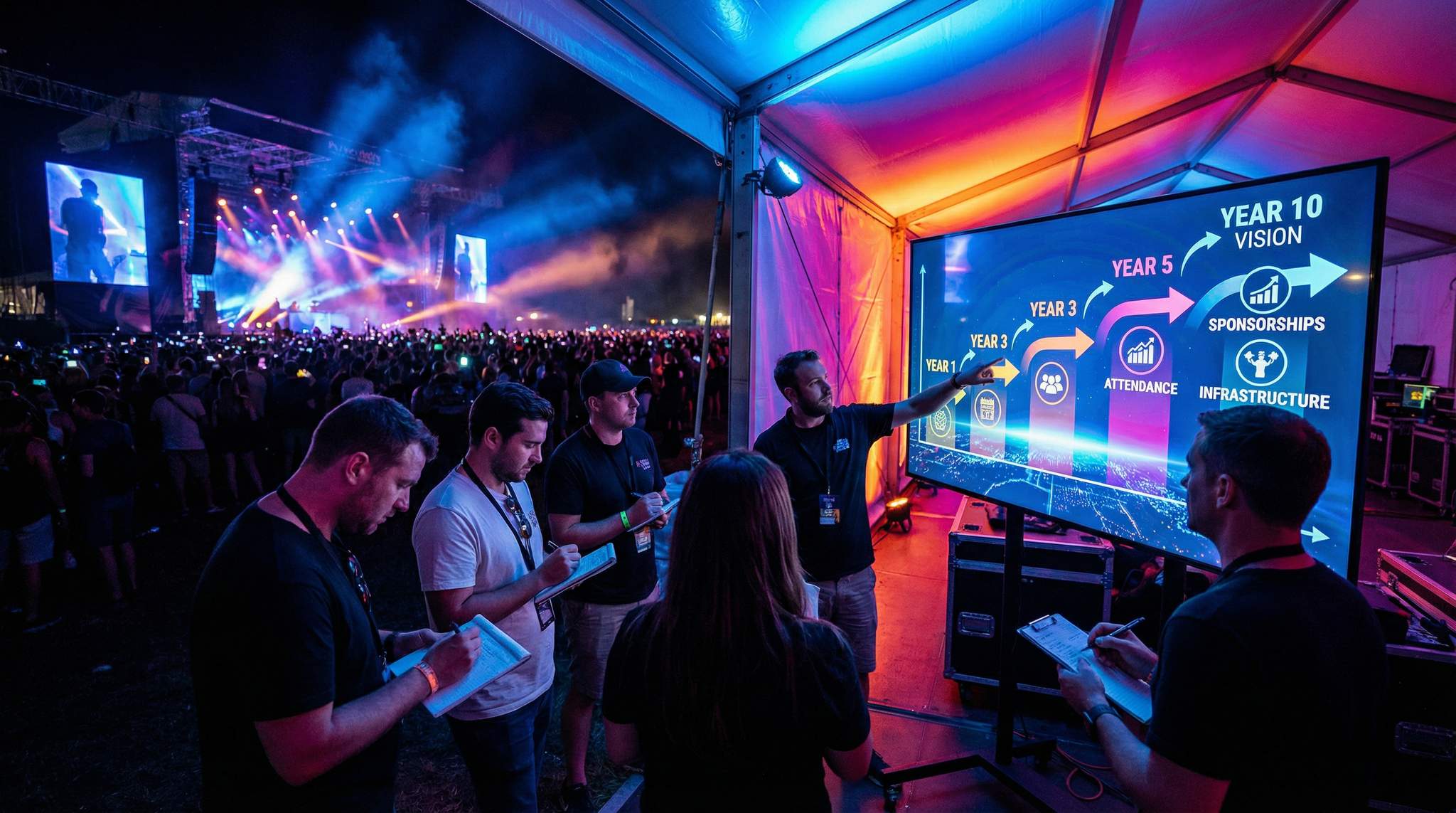
A festival’s first edition is often a proof of concept – but experienced producers treat it as the launchpad for a multi-year journey. From the outset, organizers should adopt a multi-year roadmap mentality. This means envisioning how the festival can grow and improve over 2, 5, or even 10 years, rather than focusing solely on the inaugural event. For example, leadership at a new festival might already plan to add a second stage by year three or target a regional audience in year five. Laying out these milestones early provides direction and helps align stakeholders with a long-term mission.
Establishing a multi-year plan involves setting clear goals beyond ticket sales for year one. It could include targets like community impact, reputation building, or future venue expansion. Many successful events start modestly and scale up gradually – a deliberate approach that allows learning and adjustment. By creating a multi-year roadmap beyond the inaugural year, organizers can transform initial momentum into a sustainable trajectory. This roadmap acts as a strategic blueprint, informing decisions such as when to invest in new infrastructure or how to sequence growth initiatives.
Planning a Festival?
Ticket Fairy's festival ticketing platform handles multi-day passes, RFID wristbands, and complex festival operations.
Pro Tip: Immediately after the first festival, conduct a thorough debrief and update your 3–5 year festival plan. Capturing lessons from Year 1 and refining your multi-year strategy right away ensures early successes (and mistakes) shape the event’s future while insights are fresh.
Crucially, a multi-year vision must remain flexible. The festival landscape can change due to trends, competition, or unforeseen events. Organizers should treat the roadmap as a living document that adapts annually based on real-world feedback and results. Still, having that long-term perspective from day one helps in making consistent decisions. Every choice – from branding to infrastructure investments – should be evaluated for its impact on not just the upcoming edition, but the next five or ten. This future-oriented mindset is what distinguishes festivals that merely occur from those that become enduring cultural fixtures.
Financial Foundations and Long-Term Partnerships
Financial planning for longevity starts as soon as the first festival ends. It’s common for a new festival to break even or even lose money in Year 1, so a sound plan for Year 2 and beyond is vital. Organizers should reassess their budget assumptions and scale expenses in line with realistic growth projections. Engaging in financial planning for year two and beyond helps producers adjust from a startup mindset to a sustainable model. For instance, a festival might reinvest initial profits into critical upgrades (like better sound or amenities) that enhance the attendee experience and justify higher ticket sales in subsequent years.
One key to financial stability is building multi-year revenue streams. Sponsorship deals are a prime example. Instead of one-off sponsorships that leave funding uncertain each year, many producers focus on securing long-term sponsorship and partnership deals for the festival. Multi-year sponsorships provide predictable income and often grow in value as the festival expands. For example, a local brewery might sign a 3-year agreement to be the exclusive beer partner, giving the festival guaranteed support while the sponsor locks in branding rights as the event’s profile rises. Likewise, cultivating government or tourism board partnerships can yield multi-year grants or support, tying the festival’s success to community development goals.
Turn Fans Into Your Marketing Team
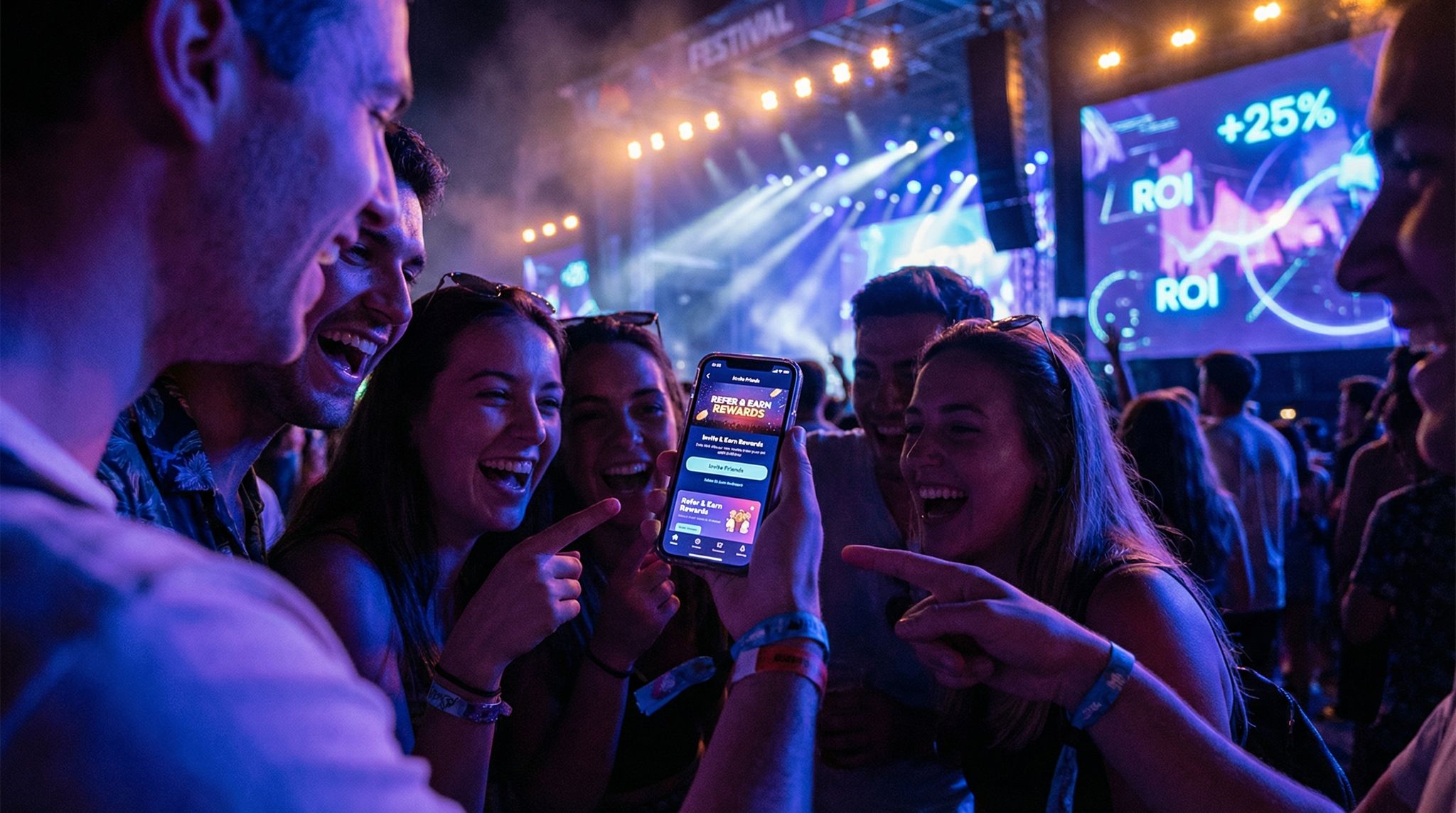
Ticket Fairy's built-in referral rewards system incentivizes attendees to share your event, delivering 15-25% sales boosts and 30x ROI vs paid ads.
Diversification is another pillar of long-term financial health. Relying solely on ticket revenue can be risky, so mature festivals develop multiple income streams: merchandise, camping or VIP upgrades, concessions, and year-round events can all supplement the bottom line. Early editions might start small in these areas, but each year offers a chance to introduce or expand revenue sources. For instance, a boutique music festival might add a paid workshop series in its second year or launch an off-season concert that keeps cash flowing and the brand visible.
To illustrate how a festival’s finances might scale, consider a simplified budget progression:
Need Festival Funding?
Get the capital you need to book headliners, secure venues, and scale your festival production.
| Budget Item | Year 1 | Year 3 | Year 5 |
|---|---|---|---|
| Talent Booking | $150,000 | $400,000 | $800,000 |
| Production & Operations | $200,000 | $500,000 | $900,000 |
| Marketing & Promotion | $50,000 | $150,000 | $300,000 |
| Staff & Crew | $80,000 | $200,000 | $350,000 |
| Contingency Reserve | $20,000 | $50,000 | $100,000 |
| Total Budget | $500,000 | $1,300,000 | $2,450,000 |
Example: Hypothetical budget growth from a 5,000-attendee first year to a 30,000-attendee fifth year. Each line item grows to support a larger, higher-quality event.
Reviewing budgets year-over-year is crucial. Costs often rise as festivals scale – more attendees mean more toilets, staff, security, and bigger talent fees. Experienced producers plan for these increases rather than being caught off guard. They also set aside contingency funds to cover unanticipated expenses or a revenue shortfall in any given year. Forecast conservatively: it’s better to exceed a modest growth budget than to fall short of an overly optimistic one.
Warning: Don’t assume that a successful first year guarantees financial security. Expanding the budget too quickly (for example, doubling talent spend in Year 2 without evidence of demand) can backfire if ticket sales don’t keep pace. Growth should be incremental and backed by data like early bird sales or surveys, rather than gut feelings.
Multi-year financial discipline also involves analyzing which investments yield returns. For instance, upgrading stage production might increase attendee satisfaction and future ticket demand – a smart investment. In contrast, spending heavily on a fringe activity that few attendees engage with might be cut in future budgets. By tracking metrics (attendance, satisfaction, profit margins) over several editions, festival accountants adjust spending to focus on what drives sustainable growth.
Scaling Up Wisely: Attendance and Expansion
Every festival organizer faces the enticing question of growth: more attendees, additional days, new stages, perhaps even new locations. But bigger isn’t automatically better – scaling up must be timed and executed wisely. The first consideration is demand. If a festival has sold out its current capacity or has long waitlists, it might be time to expand. However, knowing the right time to expand your festival with new days or stages is critical. Expand too soon and you risk half-empty venues and financial loss; expand too late and you might lose momentum or allow competitors to fill the gap.
There are several ways to scale attendance. One approach is increasing capacity at the current venue – for example, selling 20% more tickets each year if the site and infrastructure can handle it. Another is adding an extra day or stage to accommodate more people and programming. A major international example is Coachella, which famously doubled its festival by adding a second weekend in 2012 after years of sell-out crowds, as reported by The Washington Post. Rather than cramming more people into one weekend, organizers spread the same lineup across two weekends, effectively doubling attendance while preserving the attendee experience. Smaller festivals might mirror this strategy by adding a second day once demand consistently exceeds a single day’s capacity.
Geographic expansion is another avenue – establishing a new edition in a different city or country. Before taking that leap, producers often create detailed feasibility studies and build local partnerships. A successful home festival doesn’t automatically translate to a new market without adapting to local tastes and regulations. Sometimes the wiser course is to consolidate and perfect the original event, and only then franchise the concept elsewhere. If expansion is on the table, studying strategies that successfully scale up festival attendance – such as targeted marketing to new demographics or introducing popular attractions – can help ensure that increases in capacity are met with actual attendees.
As festivals grow, they inevitably encounter new operational challenges. More attendees mean heavier strain on entry points, parking, sanitation, and safety protocols. Organizers must preempt these issues by scaling infrastructure in tandem with ticket sales. Many events incrementally build up their infrastructure year by year. For instance, if foot traffic flow was tight at 5,000 attendees, by 8,000 attendees you might add additional entrances or larger walkways. It’s wise to treat the first time you expand as a learning experience – perhaps through a “soft” expansion (a small increase) before a major leap. In any case, be prepared to face the growing pains that come with a larger festival and allocate budget and staff to address them.
To visualize prudent scaling, consider this example progression of key metrics:
| Year | Attendance | Festival Days | Stages | Staff/Volunteers |
|---|---|---|---|---|
| Year 1 | 5,000 | 2 | 2 | 150 |
| Year 3 | 15,000 | 3 | 4 | 300 |
| Year 5 | 30,000 | 4 | 6 | 500 |
Example: Hypothetical scaling plan where capacity and offerings expand steadily. A small festival adds one day and a couple of stages by Year 3, and continues to grow by Year 5, along with necessary staff and crew increases.
Steady, stepwise growth like the above ensures that each expansion is digested. After each edition, organizers should evaluate: Did the extra stage draw enough crowd to justify costs? How did additional attendees affect wait times or security incidents? This data-driven approach prevents overreach.
Warning: Escalating a festival’s size without strengthening its infrastructure and operations can damage its reputation overnight. Numerous events have faltered by adding too many attendees or an extra day without sufficient planning – resulting in long lines, safety issues, and unhappy fans. Expansion should never outpace the festival’s ability to deliver a quality experience.
Lastly, communication around growth is important. Loyal attendees can be wary of changes that might “commercialize” or overcrowd the event they love. Successful festivals frame their growth in positive terms – more stages can mean more diverse music, an extra day can mean a long weekend of celebration. By being transparent that quality and vibe won’t be sacrificed, organizers can bring their community along as the festival evolves.
Evolving the Experience: Feedback and Innovation
No festival can afford to be static. Attendee expectations evolve, and so should the event itself. The best festival producers treat each year as an opportunity to introduce something new and better. A crucial practice is gathering and acting on feedback. Through post-event surveys, social media, and staff debriefs, organizers collect insights into what worked and what didn’t. By actively evolving their festival based on feedback from past years, they demonstrate to fans that their voices are heard and that the festival is continually improving.
Key Stat: Half of surveyed European festivals made significant changes to their events in 2022, and 57% planned major changes for the following year, based on findings from IQ Magazine. Continual evolution – whether in programming, logistics, or amenities – is the norm, not the exception, in a healthy festival.
Common feedback-driven improvements include adding more water stations, adjusting stage layouts to reduce sound bleed, improving signage and navigation, or refining the music lineup mix. For example, if attendees say there weren’t enough chill-out spaces, the next year’s plan might include a new ambient lounge area. If surveys reveal the food options were lacking, organizers can diversify the vendor lineup. These iterative tweaks each year accumulate into a dramatically better experience over time.
Innovation isn’t just about fixing problems – it’s also about surprising and delighting fans with fresh features. Many top festivals deliberately unveil a new element every edition. It could be a new stage theme, an interactive art installation, a mobile app feature, or a novel activity. Introducing new features each year to keep the experience fresh ensures the festival stays exciting even for long-time attendees. Think of it as adding chapters to the festival’s story: one year might debut a ferris wheel overlooking the grounds, the next year a pop-up theater or a secret speakeasy bar for attendees to discover. These additions create buzz and give people a reason to return beyond the lineup.
Sometimes, evolution involves more dramatic shifts. If a festival’s concept has run its course or the market has changed, organizers might consider pivoting the festival’s theme or focus in future editions. A historical example is SXSW in Austin: originally a small music showcase, it pivoted in the 2000s to become a multifaceted music, film, and tech festival, capitalizing on the tech boom. Such pivots are risky – they should be driven by clear evidence that a new direction could rejuvenate interest or tap into an underserved audience. If attendance has plateaued and surveys suggest changing tastes, a carefully planned pivot (e.g. shifting from a rock-centric festival to a broader arts and culture festival) might reinvigorate growth. Any rebranding or major thematic change should be messaged clearly to avoid alienating existing fans while trying to attract new ones.
A continuous improvement approach can be illustrated with a few examples of feedback and corresponding festival changes:
| Attendee Feedback | Change Implemented Next Year |
|---|---|
| Entry lines were too long | Added extra entry gates and staff |
| Not enough shade in daytime heat | Installed more shade tents and cooling areas |
| Lineup lacked genre diversity | Curated a wider variety of artists |
| Sound overlap between stages | Repositioned stages and adjusted schedules |
| Limited vegetarian food options | Brought in additional vegetarian/vegan vendors |
Example: Festivals often implement tangible changes based on prior attendee feedback, resulting in a better experience.
Pro Tip: Engage attendees shortly after the festival ends – through online surveys or social media – to gather fresh feedback. Ask what their favorite and least favorite aspects were. This not only yields actionable insights for next year, but also makes fans feel like collaborators in the festival’s evolution.
Of course, not every piece of feedback can or should be acted on. Festival producers must balance practical feasibility and the event’s vision against fan suggestions. However, establishing a cycle of listening, adapting, and innovating creates a powerful virtuous loop. Attendees see improvements, become more loyal, and then offer even more constructive input. Over years, this process can transform a decent festival into an outstanding one, as cumulative tweaks and creative ideas push the experience to new heights.
Balancing Innovation and Consistency for Loyal Fans
While change is vital, so is consistency. The challenge for multi-year festivals is to constantly evolve without losing the core elements that made people fall in love with the event in the first place. Long-time attendees cherish certain aspects – it could be a traditional closing song, the unique vibe of the venue, or an iconic piece of festival art that is present every year. As organizers implement new ideas, they also need to preserve the festival’s core brand identity through expansion. In practice, this means identifying the non-negotiable parts of the festival’s character and ensuring they remain intact as the event grows.
A festival’s brand identity encompasses its values, aesthetic, and the community culture that surrounds it. For example, a festival known for its eco-friendly ethos and intimate atmosphere should strive to maintain those qualities even as it scales up. This might involve limiting attendance to retain a boutique feel or doubling down on sustainability measures as the event expands. Balancing changes and consistency to satisfy the festival’s loyal fans is an art: too much change and you risk alienating your core audience, too little and the event may grow stale.
One effective approach is to establish traditions that carry over annually. Rituals give returning attendees something to look forward to and confer a sense of legacy. It could be a signature closing fireworks display, a yearly theme reveal, or even small touches like the festival founder addressing the crowd at a certain time. By building beloved festival traditions that attendees cherish, festivals create continuity amid change. Glastonbury Festival in England, for instance, has a tradition of a surprise “Legend” performance on Sunday afternoon each year – fans know to expect a classic act in that slot. Burning Man’s climactic burning of the effigy is a ritual that defines it, no matter what else changes. These consistent elements become part of the festival’s identity and are key to fan loyalty.
At the same time, new generations of festival-goers keep coming. In fact, audience turnover can be high – a significant portion of attendees each year might be first-timers. How do you cater to both new and returning crowds? It requires a dual mindset. The event should feel familiar and nostalgic to veterans, yet fresh and exciting to newcomers. One telling statistic: as much as 80% of a festival’s audience in a given year may be experiencing it for the first time, according to festival marketing statistics from Amra & Elma. That means organizers cannot assume deep knowledge or attachment from the majority of attendees – they have to reintroduce the festival’s magic afresh while still rewarding the loyal minority who come back repeatedly.
Key Stat: Each year, up to 80% of a festival’s attendees may be first-timers, based on data from Amra & Elma. This underscores the importance of constant innovation to attract new audiences, balanced with familiar touchpoints to keep the veteran fans feeling at home.
One strategy to harmonize innovation and consistency is involving loyal fans in the process of change. For example, if you’re considering a major change – say, moving to a new venue or changing the date – get feedback from long-term attendees or fan clubs. Their insight can help preserve what’s important during the transition. Furthermore, communicate changes transparently to manage expectations. When Tomorrowland introduced a second weekend, they framed it as a way to share the experience with more people (while keeping each weekend identical to maintain quality). Loyal fans appreciated the transparency and the effort to maintain the original atmosphere across both weekends.
Warning: Sudden, drastic changes implemented without regard for your core audience can trigger backlash. There are cautionary tales – festivals that switched genre focus or venues abruptly and lost their loyal fanbase. Always gauge fan sentiment and roll out changes in a way that brings your community along for the journey. Loyal attendees want to feel respected; if they trust that growth won’t erase the festival’s soul, they’ll stay onboard and even embrace the new aspects.
In summary, delivering a consistent-through-the-years experience doesn’t mean nothing changes – it means the essential vibe and values persist even as the festival evolves. A multi-year success story is one where attendees say “It’s different every year, but it always feels like our festival.” Achieving that is a hallmark of masterful festival stewardship.
Institutional Continuity: Documentation and Succession
As a festival grows over the years, one often overlooked challenge is keeping organizational knowledge intact. The team that launched the festival in Year 1 might not be the same in Year 5 or Year 10. Key personnel may move on, and fresh staff or volunteers join. Without proper knowledge transfer, hard lessons learned can be forgotten and past mistakes repeated. That’s why savvy producers focus on documenting processes in a detailed festival playbook. A festival playbook is essentially an internal guide or manual that records every major aspect of the event’s production – timelines, contact lists, vendor information, permits, site layouts, contingency plans, and more.
By creating this institutional memory, festivals ensure that even if the entire core team turned over, the new team could pick up the playbook and understand how to run the event. For example, after its second year, a festival might document how early they secured suppliers, what the critical path for staging was, and how marketing was scheduled. That way, when planning Year 3, nobody has to reinvent the wheel. The playbook grows and updates each edition, capturing new insights (like “Add 20% more trash bins than last year” or “Province X permit requires 90-day lead time”) so that mistakes are not repeated and efficiencies are built upon.
Alongside documentation comes the human side of continuity: planning for changes in key festival personnel. Festivals need succession plans just like companies do. Consider the scenario of a festival whose charismatic founder has overseen every edition – what happens if they step back? Ideally, upcoming leaders or a management structure have been groomed to take over. This might mean identifying a deputy director who can assume command or distributing the founder’s roles among a team as the festival matures. The goal is to avoid a power vacuum or loss of direction if a key person leaves.
A real-world illustration comes from the Texas Renaissance Festival, one of the largest of its kind, long run by its founder well into his 80s. The lack of a clear succession plan led to a public power struggle documented in an HBO series discussed in MultiBriefs, emphasizing how critical it is to address leadership transition proactively. In contrast, many well-run festivals establish boards or committees that can help ensure continuity beyond any one individual. They might also bring on advisors or former organizers in consultant roles during transition years to guide new staff.
Warning: If vital knowledge – like supplier contacts, budget breakdowns, or site layouts – lives only in one veteran production manager’s head, the festival is at risk. Should that person depart unexpectedly, it can leave the next team scrambling in the dark. Always assume that any key team member might not be there next year, and plan accordingly by sharing information and responsibilities.
Pro Tip: Treat your festival playbook as a living document. After each edition, have every department head (marketing, operations, artist liaison, etc.) update their section with what they learned and any new procedures. This ongoing documentation means new team members get a crash course in what the festival is and how it operates, drastically cutting down the onboarding time and errors.
By fostering a culture of knowledge sharing, festivals also empower junior staff and volunteers. When processes and rationale are transparent, newer team members can learn the ropes faster and even contribute ideas. It demystifies the production process, making the organization more resilient. In a multi-year context, the pay-off is huge: even as faces change, the festival’s core practices and ethos remain steady, carried forward by each successive crew armed with the wisdom of those before them.
Overcoming Setbacks and Planning Comebacks
No multi-year journey is without its hiccups. Festivals can face major setbacks – from extreme weather to financial shortfalls, venue losses, or global events like pandemics forcing cancellations. Some festivals even choose to take a “fallow” year (a planned hiatus) to regroup. What separates festivals that bounce back from those that disappear is preparedness and goodwill. Developing a comeback plan to successfully relaunch the festival after a hiatus or setback is an integral part of long-term strategy.
First, if an unplanned cancellation or hiatus occurs, communication is key. Organizers should maintain open lines with ticket holders, artists, and sponsors. Offering roll-over tickets or refunds promptly, and keeping the community engaged online with updates or virtual content, helps preserve trust. Many festivals demonstrated this during the 2020 COVID cancellations – those that kept their fan communities alive with livestreams, archive footage, or simply honest updates found a readier audience upon return.
A textbook example of a comeback is Lollapalooza. After a successful run in the early 1990s, the festival went on hiatus in 1998 due to declining interest and financial issues. Rather than ending for good, the organizers reimagined it and relaunched in 2003 with a new format (though that year struggled) and then anchored it in Chicago from 2005 onward. Today, Lollapalooza is a global brand with editions in multiple countries. The revival succeeded because the team analyzed what went wrong (the touring model had issues), made bold changes (stationary location, broadened genre range), and leveraged the festival’s name recognition to reignite interest. This kind of pivoted comeback reflects both a willingness to change and respect for the festival’s identity – they kept the Lollapalooza spirit but delivered it in a sustainable way.
Not every comeback involves such dramatic reinvention; sometimes it’s about restoring normalcy. If extreme weather forced a cancellation one year, the comeback plan might focus on enhanced contingency measures and reassuring attendees of improved safety. If a festival had a PR crisis, the comeback might hinge on demonstrating that the issues were fixed (for example, new management, new venue, better organization). In any case, a comeback is as much a marketing exercise as an operational one. Organizers often treat the return as a chance to generate fresh buzz – “Festival X is back and better than ever!” – highlighting new features or headliners to entice people to give it another chance.
Underpinning any successful return is the goodwill banked with fans. A loyal community will rally behind a festival if they feel a sense of ownership and trust. This goes back to how you handle the setback itself. Honesty and transparency when things go wrong can actually strengthen audience support. For example, a mid-sized festival that had to skip a year due to funding issues might openly explain the situation to fans, who in turn might crowdfund or heavily promote the festival’s return. Many events have emerged from hiatus even stronger, propelled by a narrative of “we’re in this together” between organizers and attendees.
Pro Tip: If you must take a break – whether by choice or circumstance – don’t go dark. Keep your festival’s spirit alive through social media, email newsletters, or small off-season events. Engaging the community during a hiatus (for instance, hosting a one-night showcase or releasing a documentary of past editions) maintains interest and ensures that when you’re ready to return, there’s an eager audience waiting.
Planning for setbacks also means embedding resilience into the festival model. This includes financial resilience (having emergency funds or insurance), operational resilience (backup vendors, contingency plans for rain), and even leadership resilience (the ability for your team to adapt under stress). When the unexpected happens, a well-prepared festival can pivot rather than break. And if a pause is necessary, it’s viewed not as a failure but as a strategic regrouping. With a solid comeback strategy, Year 0 (the gap year) can be the prelude to a triumphant Year 1 again.
Long-Term Vision and Future-Proofing
Truly enduring festivals think in decades. While day-to-day details matter, so does asking: What should our festival look like in 5, 10, or 20 years? Having a long-term vision provides a guiding star for all the incremental changes across editions. It’s about imagining the legacy and staying power of the event. Festival founders and executives often engage in periodic “visioning” exercises – brainstorming where cultural trends, music tastes, and technology are headed, and how their event can remain at the forefront. By envisioning the festival 5 to 20 years ahead, planners make choices that aren’t just reactive to the present, but proactive for the future.
One aspect of future-proofing is embracing innovation early. Technological changes (cashless payments, augmented reality, RFID check-ins, immersive art installations) can enhance the festival experience and are often expected by younger audiences. A festival that was ahead of the curve in adopting live streaming or mobile apps, for instance, gained global exposure and engaged fans who couldn’t attend in person. As the years progress, new innovations will emerge – perhaps AI-driven personalized schedules or virtual reality attendance. Keeping an eye on such developments allows a festival to integrate them in a way that amplifies the core experience, not replaces it.
Another facet is cultural relevance. Festivals that endure adjust with generational shifts. A long-term vision accounts for the fact that today’s 18-year-old attendee will be 38 in twenty years – and a whole new cohort of youth will define the zeitgeist. Many rock festivals in the 1990s had to broaden their music policy by the 2010s as electronic and hip-hop rose in popularity. Some did this successfully and stayed relevant; others clung to a formula and saw attendance dwindle. The lesson: maintain a future-oriented programming strategy. This could mean gradually incorporating emerging genres or fostering new talent that will draw tomorrow’s crowds. It’s a delicate balance – you don’t want to alienate your base, but you also can’t ignore the evolution of entertainment and culture.
Global expansion can also play a role in a 5- or 10-year vision. A festival that dominates locally might see an opportunity to replicate its brand abroad. We’ve seen this with events like Tomorrowland (born in Belgium, later launching offshoots in Brazil and the USA) or Download Festival (originating in the UK, expanding to France, Spain, and beyond). If international editions are a goal, that vision will influence present-day actions: building a universally resonant brand, forging industry connections worldwide, and perhaps testing the waters with collaborations in target regions. However, expanding globally requires the original festival to be rock-solid in identity and operations, which circles back to ensuring the home base is perfected first.
Sustainability and social impact are increasingly part of long-term festival thinking as well. Envisioning the festival 20 years out naturally raises questions: How will we minimize our environmental footprint as we grow? How will we continue to engage the local community and authorities positively? Festivals that neglect these issues may find growth blocked by regulators or public sentiment. Conversely, festivals that embed green practices (like Glastonbury’s decades-long push for environmental responsibility) often become pioneers that others follow, securing their relevance in an eco-conscious future.
Finally, consider the legacy you want the festival to have. Some events aim to become cultural institutions that outlast their founders. To do so, they may establish educational programs, archives, or foundations that extend the festival’s influence beyond the event itself. For example, Montreux Jazz Festival (running since 1967) has a foundation preserving recordings of every performance – a legacy of musical heritage. Thinking in these terms might seem grand when a festival is only a few years old, but it guides decisions in favor of longevity over quick wins.
In practice, a long-term vision might be summarized in a statement or document that the team revisits annually. It could be as simple as: “In 10 years, we want to be the premier music and arts festival in the Asia-Pacific region, known for cutting-edge technology integration and a zero-waste operation, with a community of superfans who plan their year around our dates.” With such a vision in mind, each year’s objectives can ladder up to it. When opportunities or dilemmas arise, organizers can ask: Does this move us toward our 10-year vision or away from it?
Long-term success is never guaranteed, but thinking expansively and proactively gives a festival the best shot at a vibrant future. By blending imagination with practical planning, today’s one-weekend event might just become tomorrow’s iconic institution.
Essential Reading
- Securing Multi-Year Festival Sponsorships and Partnerships
- When to Expand Your Festival: Adding Days, Stages, or New Locations Wisely
- Leadership Succession in Festival Management: Planning for Changes in Key Personnel
- Documenting Your Process: Creating a Festival Playbook
- Scaling Up: Strategies for Growing Your Festival Attendance
- Adapting to Feedback: Evolving Your Festival Based on Past Years
- Maintaining Consistency: Preserving Your Festival’s Brand as You Expand
- Financial Planning for Year 2 and Beyond: Scaling Your Festival Budget
- Long-Term Vision: Imagining Your Festival 5, 10, 20 Years Out
- Balancing Change and Consistency to Keep Loyal Festival Fans Happy
- Keeping Your Festival Fresh: Introducing New Features Each Year
- Beyond Year One: Creating a Multi-Year Festival Roadmap
- Dealing with Growing Pains: Challenges of a Larger Festival
- Building Festival Traditions: Establishing Rituals Attendees Love
- The Comeback Plan: Relaunching a Festival After a Hiatus or Setback
- Pivoting Your Festival’s Theme or Focus in Future Editions
FAQ
When should a festival consider expanding with extra days or stages?
A festival should consider expanding only when demand clearly exceeds current capacity and the quality of experience can be maintained. Signs include consistently sold-out events, long waitlists, or attendee feedback for more programming. Even then, expansion must be well-planned – for example, adding one extra day or stage at a time and ensuring infrastructure (staff, amenities, security) scales up accordingly. Expanding too soon or too fast can lead to half-empty venues or operational issues, so organizers typically do so in gradual steps after a successful track record at the current size.
How can I secure sponsors that will support the festival for multiple years?
To attract multi-year sponsorships, festivals should demonstrate a clear long-term vision and growth trajectory. Start by delivering a high-quality event and gathering data (attendance, demographics, media reach) that show increasing value. Approach sponsors with multi-year proposals that offer escalating benefits each year – for example, a discounted rate for a 3-year commitment or exclusive rights that strengthen over time. Building personal relationships is key: engage sponsors as partners by involving them in the festival’s story and success. Also, be prepared to show year-over-year improvements and how sponsor contributions make an impact. A professional sponsorship deck outlining the festival’s 3-5 year plan can reassure brands that your event will be around and growing, making a longer-term deal worthwhile for them.
What if my festival didn’t make a profit in Year 1? How do we stay financially afloat for future years?
It’s common for new festivals not to profit in the first year. The key is to treat Year 1 as an investment and learning phase. For Year 2 and beyond, revisit your budget to trim unnecessary costs and identify new revenue streams (more sponsorship, merchandise, food and beverage sales, etc.). Re negotiate vendor deals based on first-year performance and seek community grants or partnerships if available. Implement early-bird ticket sales right after Year 1 to boost cash flow for Year 2. Most importantly, analyze what drove expenses versus what drove value – you may need to scale back certain elements for a year or two while building your audience. A solid multi-year financial plan, possibly including a modest increase in ticket price or attendance, can show stakeholders (and creditors or investors) how the festival will break even and eventually profit. Patience and prudent scaling are essential – many festivals only turn a profit after several years of growth.
How do we keep attendees coming back every year without the festival feeling repetitive?
The key is balancing fresh content with beloved traditions. Each year, introduce new elements – whether it’s different artists, new attractions, upgraded facilities, or interactive experiences – so that even repeat attendees have something novel to enjoy. Simultaneously, maintain a few signature features (e.g., a famous closing ceremony, a particular stage design, or annual rituals) that give the festival a consistent identity. Engaging with your community for feedback helps identify what they love and what they’d like evolved. Many festivals also implement loyalty programs or exclusive perks for returning ticket holders (like early access or discounts) to incentivize repeat attendance. Ultimately, if attendees feel the core spirit of the festival remains but each edition has a “new chapter” to explore, they’ll return year after year.
What happens if a key organizer or founder leaves the team?
Change in personnel is inevitable over a festival’s life. The best approach is to plan for it before it happens. Succession planning involves identifying and mentoring potential replacements for key roles and sharing critical knowledge through documentation. If a founder or director leaves, having a second-in-command or a management committee in place can ensure continuity. Immediately inform stakeholders (staff, artists, sponsors) of the leadership change with reassurance of the festival’s stability and vision. Draw on the festival playbook and past records to guide new leadership. Often, festivals bring departing leaders on in advisory roles for a transition period. While any big personnel change is challenging, a festival run by a well-prepared team with shared knowledge can continue seamlessly as long as the new leaders understand and embrace the event’s core values and long-term plans.
Is it a good idea to pivot the festival’s theme or music genre after a few years?
Pivoting a festival’s theme or genre can reinvigorate growth, but it should be done with careful consideration. It’s a good idea if attendance is stagnating, demographics are shifting, or you see a new market opportunity – and if the new direction still aligns with your core mission. Before pivoting, gather data: Would a significant portion of your current audience support the change? Can you attract a new audience to make up for those who won’t? If you proceed, communicate the changes clearly and well in advance so attendees know what to expect. Sometimes a gradual pivot (expanding the lineup diversity year by year) works better than an abrupt switch. Keep some familiar elements during the transition to carry over loyal fans. Successful pivots often happen when festival leadership brings in new expertise or partners related to the new theme. When executed thoughtfully, a pivot can launch the festival into its next phase of growth – but if done hastily, it risks alienating the very fans who built your foundation.
How do we come back after skipping a year or a major setback?
Relaunching after a hiatus or setback requires transparency, re-engagement, and often a refreshed approach. First, be open about why the festival paused (financial issues, venue loss, global events) and emphasize what’s being done to address it. Maintain communication during the off-year – keep social media active, update fans on plans, maybe host small teaser events. When you’re ready to return, treat it almost like a brand new festival in terms of marketing excitement: announce compelling headliners or new features to signal that the comeback edition will be special. Offer incentives for previous ticket holders (like early access or discounts) to win back trust. Operationally, double down on problem areas – if the hiatus was due to logistical issues, visibly improve those in the comeback. Many festivals also engage their core community in the comeback planning (through forums or meetups) to rebuild goodwill. A successful return is possible – audiences love a good comeback story, especially if they feel they’re part of it. By showing that the festival learned from the setback and is launching into an even better era, you can often return with momentum and loyalty stronger than before.
Glossary
- Multi-Year Roadmap: A strategic plan outlining how a festival will develop over several years, including growth targets, new initiatives, and key milestones for expansion.
- Sponsorship Renewal: The process of extending or renegotiating sponsorship agreements for future editions, ensuring long-term partnerships and recurring funding.
- Capacity: The maximum number of attendees a festival can accommodate based on venue size and infrastructure. Often increased in stages as a festival grows.
- Fan Retention: The ability to keep attendees returning year after year. High fan retention indicates strong loyalty and satisfaction with the festival experience.
- Brand Identity: The unique characteristics, values, and image of the festival. A clear brand identity helps maintain consistency as the event evolves over multiple years.
- Festival Playbook: A comprehensive document (or set of documents) that records all operational procedures, contacts, timelines, and best practices. It’s used to pass knowledge to new team members and ensure consistency each year.
- Succession Planning: Preparing for transitions in key leadership or staff positions. Involves identifying who will take over crucial roles and training them in advance.
- Expansion: The act of growing the festival, such as adding more days, stages, or even launching in new locations. Expansion is usually done in response to demand and with careful planning to maintain quality.
- Pivot: A significant change in a festival’s theme, genre focus, or concept in response to market trends or strategic refocusing. For instance, shifting from a rock festival to a broader arts festival would be a pivot.
- Hiatus: A planned or unplanned break in a festival’s annual cycle (skipping a year or more). Festivals may go on hiatus due to external factors or to recalibrate and make improvements for a comeback.
- Contingency Budget: Funds set aside to handle unexpected costs or emergencies (like bad weather, last-minute changes). It provides financial stability by ensuring the festival can absorb surprises without jeopardizing the event.
- Headliner: A top-billed artist or act, usually closing out a stage or night. Headliners are a major draw for ticket sales and are often secured well in advance as part of multi-year talent booking strategies.
- Early-Bird Tickets: Discounted tickets sold early (often immediately after the previous edition) to incentivize early commitment and generate upfront revenue for the next year. They reward loyal fans and help gauge interest for the upcoming festival.
- Economic Impact: The total financial contribution of a festival to its local economy, including attendee spending on hotels, food, transport, etc. Economic impact tends to grow as a festival expands and can be a key argument for community and sponsor support.
Conclusion
Multi-year festival growth is a balancing act between ambition and authenticity. The world’s most enduring festivals combine big-picture thinking with on-the-ground adaptability – they dream about what the event could become in 5, 10, or 20 years, yet they execute those dreams one year at a time with meticulous care. By planning finances for the long haul, cultivating partnerships and fan communities, and relentlessly improving while preserving their essence, festivals can transform from fledgling events into cultural institutions. Challenges will arise, from growing pains to unforeseen setbacks, but with resilience and a loyal support base, these can become turning points rather than end points. Ultimately, the reward for thoughtful multi-year evolution is a festival that doesn’t just happen annually – it lives on in tradition, impact, and the hearts of attendees across generations. The journey from year one to year twenty is filled with learning and change, but guided by the right strategies, it’s a journey that can create something truly legendary.