Introduction
Festival lineups can make or break an event. The talent booked – from star headliners to hidden-gem locals – largely determines whether tickets sell out and attendees leave satisfied. A well-curated lineup builds a festival’s brand, draws the right crowd, and creates unforgettable moments on stage. Conversely, missteps in booking (like overpaying for an act that doesn’t resonate, or failing to secure visas for an international DJ) can derail an otherwise promising festival. This authoritative guide explores the art and science of talent booking and lineup curation for festivals of all sizes, offering strategies refined by veteran producers over decades of experience.
Producers at boutique events and mega-festivals alike face the same core challenge: assembling a roster of performers that fits their vision, budget, and audience. Achieving this requires balancing big-name draws with emerging talent, negotiating fair fees, scheduling stages to flow seamlessly, and planning for the unexpected. From intimate 1,000-person cultural fêtes to 50,000+ multi-stage music extravaganzas, smart talent booking is key to a festival’s success. In the pages ahead, festival organizers will learn how to strategically plan their bookings, avoid common pitfalls, and deliver lineups that wow fans without breaking the bank.
Table of Contents
- Laying the Groundwork: Strategy and Timeline
- Crafting a Balanced Lineup (Headliners, Locals & Diversity)
- Budgeting and Negotiating Artist Deals
- Booking Special Attractions and Non-Musical Talent
- International Acts: Visas, Travel & Cultural Logistics
- Scheduling the Lineup and Stage Times
- Artist Relations, Hospitality, and Technical Riders
- Contingency Planning: Cancellations & Backups
- Data-Driven Booking: Using Audience Insights
- Emerging Trends and Innovative Lineup Approaches
- Essential Reading
- FAQ
- Glossary
- Conclusion
Laying the Groundwork: Strategy and Timeline
Every successful festival lineup starts with a clear strategy and ample lead time. Festival organizers begin by defining the event’s identity and goals: Is the festival genre-specific or eclectic? Is its mission to showcase emerging regional talent or to pull global superstars? Clarity on these questions informs the target list of artists and the tone of the lineup. For example, a jazz festival will prioritize virtuoso musicianship and cross-generational acts, while an EDM festival might focus on trending DJs and high-energy visuals. With a vision in place, producers can map out a timeline for booking that vision into reality.
Talent booking typically kicks off 12–18 months before a major festival. Top headliners often schedule tours a year or more in advance, so early outreach is crucial. Mid-level acts and special performers are generally locked in 6–12 months out, ensuring time to handle contracts and marketing. Smaller local acts might be added closer to the event (3–6 months out) once the bigger slots are filled. The timeline also involves announcing the lineup in phases: many festivals unveil a few headliners early to boost early ticket sales, then roll out the full lineup as the date approaches. By working backward from the festival date and setting internal booking deadlines, the team reduces the risk of last-minute scrambles.
Data-Driven Event Marketing
Track ticket sales, demographics, marketing ROI, and social reach in real time. Exportable reports give you the insights to make smarter decisions.
To illustrate how festival scale impacts booking, consider the following lineup scope differences:
| Festival Scale | Typical # of Stages | Total Artists | Event Duration |
|---|---|---|---|
| Small boutique festival (?1,000 attendees) | 1 stage | 10–20 acts | 1 day |
| Mid-size regional festival (5,000–20,000 attendees) | 2–3 stages | 30–50 acts | 2 days |
| Major international festival (50,000+ attendees) | 5+ stages | 100+ acts | 3+ days |
Even a modest community festival might feature a dozen performers, while a giant like Glastonbury juggles hundreds of acts across multiple days. The lead time, budget, and staffing needed for talent booking rise accordingly. Large festivals often hire dedicated talent buyers or agencies to handle the volume of outreach and negotiation, whereas a smaller festival’s core team might book artists directly. In all cases, it’s wise to start the booking process as early as possible – especially for in-demand artists who schedule appearances well in advance.
Planning a Festival?
Ticket Fairy's festival ticketing platform handles multi-day passes, RFID wristbands, and complex festival operations.
When booking artists for festivals, the workflow must be meticulously structured. A seasoned festival booker doesn’t just send out random emails; they build a targeted acquisition pipeline. This involves tracking an act’s touring cycle, understanding their regional exclusivity constraints, and timing the offer perfectly. Whether you are securing a local indie band or negotiating a massive headlining act booking, the fundamental mechanics of booking an artist require aligning your event’s dates with their logistical availability and financial expectations.
For any dedicated festival booker, the music festival artist selection process is a rigorous exercise in balancing brand identity with commercial viability. Lineup booking isn’t just about picking favorite bands; it requires a systematic approach to evaluating market demand, routing availability, and budget constraints. The stakes are particularly high when it comes to headlining act booking. Securing a marquee name often dictates the financial structure of the entire event, requiring promoters to lock in these top-tier contracts before any other programming can proceed.
Stepping into the role of a lead festival booker means wearing multiple hats simultaneously. A top-tier talent curator acts as a financial analyst, a master negotiator, and a cultural tastemaker all at once. The most successful professionals in this position don’t just rely on their personal music tastes; they build extensive networks with global booking agencies, track emerging subgenres through data analytics, and understand the intricate routing logistics of touring artists. Whether you are an independent promoter handling the lineup booking yourself or a dedicated programming director at a mega-festival, mastering these multifaceted responsibilities is what ultimately transforms a good event into an unmissable, sold-out experience.
Pro Tip: When developing your talent booking strategy, build a calendar working backwards from your event date. Include target dates for headliner commitments, lineup announcement releases, and contract deadlines. This timeline-driven approach keeps everyone accountable and ensures you start securing acts before your competitors do.
Laying the groundwork also means researching which artists align with your audience. Seasoned festival producers study streaming trends, past festival lineups, social media, and local music scenes to identify acts that fit their concept and have drawing power. This preparatory work helps prioritize a “wish list” of performers – from mega-stars down to local heroes – before any calls or offers are made. By planning strategically and early, organizers set the stage for a lineup that feels intentional and cohesive, rather than a random collection of whoever was available.
Crafting a Balanced Lineup (Headliners, Locals & Diversity)
A compelling festival lineup strikes a careful balance. Mixing superstar headliners with local and mid-tier talent not only controls costs but also creates a richer experience. Big names sell tickets, yet it’s often the smaller artists – local bands, niche genre DJs, regional cultural performers – that give a festival its soul and sense of discovery. The goal is to diversify the roster in terms of artist size, genre, and background, so the event appeals to a broad audience and showcases a variety of voices.
One key decision is how many headliners versus supporting acts to book. For instance, a two-day festival might feature one or two marquee headliners per night, supported by dozens of lesser-known acts earlier each day. Having multiple well-known acts is a draw, but too many top-heavy bookings can blow the budget and leave little room for emerging talent. Veteran organizers advise reserving a healthy portion of stage time for local and up-and-coming artists. Not only do these acts usually come at a lower fee, they also bring fresh energy and often a loyal regional following. In fact, booking homegrown talent can boost local ticket sales as their fans come out to support, a strategy often cited in guides on talent budgeting and pay scales.
Pro Tip: Including popular local artists not only adds authenticity to your lineup, it also helps boost attendance. Local bands and DJs tend to bring their own loyal fans and drive word-of-mouth promotion in the community, giving your festival a grassroots buzz that headliners alone can’t achieve.
Balancing genres and demographics is equally important. A diverse lineup – spanning different musical styles, genders, cultures, and eras – widens your festival’s appeal and can enhance its reputation. Many festivals now emphasize authentic inclusion on stage. This means going beyond tokenism to truly represent the audience’s makeup and musical tastes in the performer roster. For example, major European events have joined initiatives to achieve gender-balanced lineups within this decade. Key industry players have recognized that representation matters: Forty-five international festivals pledged to reach a 50/50 gender split in their lineups by 2022, as reported by Pitchfork regarding the Keychange initiative. The public is increasingly vocal about festivals whose billings are homogeneous, whether that’s an overabundance of all-male rock bands or a lack of local cultural acts.
A practical approach to lineup diversity is setting internal benchmarks. Organizers might aim, for instance, to ensure a certain percentage of acts are fronted by women or to include artists of at least X nationalities or ethnic backgrounds. Genre diversity is another consideration – mixing indie rock with electronic, hip-hop with folk – to create a musically rich experience. Niche festivals can diversify too, by including sub-genres or pairing new talent with legacy icons in the same genre. An authentically diverse lineup not only satisfies social expectations but often leads to a more interesting, dynamic festival atmosphere, supported by recent music festival attendance statistics. Attendees get to discover new sounds and feel represented, which builds loyalty to the festival brand.
Finally, consider the balance between familiarity and discovery. Festivals are unique because fans come not just to see their favorites but also to uncover new artists. A lineup that’s 100% familiar names can actually be less exciting than one with thoughtful surprises. Many renowned festivals deliberately book a few “wild card” artists from outside the main genre or trending scene to spice things up. For example, a predominantly EDM festival might include an alternative pop act or a reggae legend as an unexpected twist – broadening horizons and setting the event apart from competitors. In crafting a balanced lineup, think of it like a great mixtape or playlist: anchor it with a few hits (headliners), surround those with solid tracks that complement the mood (mid-tier acts), and sprinkle in some undiscovered gems (locals or niche artists) to keep things vibrant.
Warning: Don’t blindly chase hype when booking talent. An artist could be trending globally, but if they don’t fit your festival’s vibe or appeal to your core audience, their set could fall flat. Always consider the audience–artist fit, not just the artist’s fame. A buzzworthy name means little if the crowd isn’t into their music.
Ultimately, lineup curation is about storytelling and experience design: weaving artists together in a way that feels both coherent and surprising. By diversifying the talent roster – balancing big stars with local heroes, mixing genres, and embracing inclusion – festival producers create a rich tapestry that can satisfy casual attendees, hardcore fans, and critics alike. The strongest lineups have their own personality, one that reflects the festival’s identity and the community it serves.
Budgeting and Negotiating Artist Deals
Talent fees are often the single largest expense in a festival budget, so getting the finances right is critical. Seasoned producers approach talent budgeting as both an art and a science of allocation. It starts with setting a cap on total talent spend – commonly around 30–50% of the overall festival budget, depending on the event’s scale and programming priorities. For example, many major music festivals allocate roughly 40% of their total budget to artist fees and related talent costs. This ensures that other vital areas (production, marketing, logistics) aren’t starved of funds, a principle detailed in talent budgeting and pay scale resources. Once the total talent budget is determined, the challenge is how to split it wisely among a roster of acts.
One strategy is to follow a rough “60/40 rule” or similar: allocate about 60% of talent dollars to headliners and major acts, and 40% to all the other performers combined. In practice this might mean one or two big names command hefty fees, while dozens of smaller artists split the remainder. For instance, a festival with a $200,000 talent budget might spend $120,000 on two headliners (perhaps $70k and $50k each), and use the remaining $80,000 to book 15–20 supporting acts. This approach balances star power with depth. Spreading the budget across multiple acts also hedges against risk – if one artist cancels or underperforms, not all the money was on them. On the other hand, a blockbuster headliner can sometimes single-handedly sell enough tickets to justify an outsized fee. The art for promoters is knowing which investments will pay off.
To better understand how fee tiers break down, here’s an example of artist fee ranges by level for a mid-sized festival:
Turn Fans Into Your Marketing Team
Ticket Fairy's built-in referral rewards system incentivizes attendees to share your event, delivering 15-25% sales boosts and 30x ROI vs paid ads.
| Artist Tier | Typical Fee Range | Example Context |
|---|---|---|
| Local opening act | $0 – $1,000 | Local bands or DJs, often playing for exposure or a small stipend at a community festival. |
| Mid-level regional act | $5,000 – $15,000 | Established act with a regional fanbase, suitable for afternoon/evening slots at mid-sized events. |
| National touring artist | $20,000 – $50,000 | Popular mid-tier artist on national circuits; a strong draw below headliner status at major festivals. |
| Headliner (major festival) | $100,000 – $300,000 | Big-name artist topping the bill at a large festival (varies by their current popularity and exclusivity). |
| Superstar headliner | $500,000+ | Global superstar booked as a headline act for marquee festivals (can reach into the millions for the biggest names). |
Note: These figures are illustrative – actual fees vary widely by genre, market, and negotiation. An indie folk headliner might earn $50k at a regional fest, while a superstar pop artist can command several million at a major festival. In all cases, festivals should budget not just for the fee itself but also for associated costs like travel, accommodation, and hospitality for each artist (more on those later).
Key Stat: Artist performance fees have surged 30–40% since 2020 in many markets, with reports from Le Monde highlighting fragile economics. Competition for talent post-pandemic, combined with rising production costs, means festivals today often pay significantly more for the same acts than a few years ago. This inflation makes careful budgeting and tough negotiation even more important.
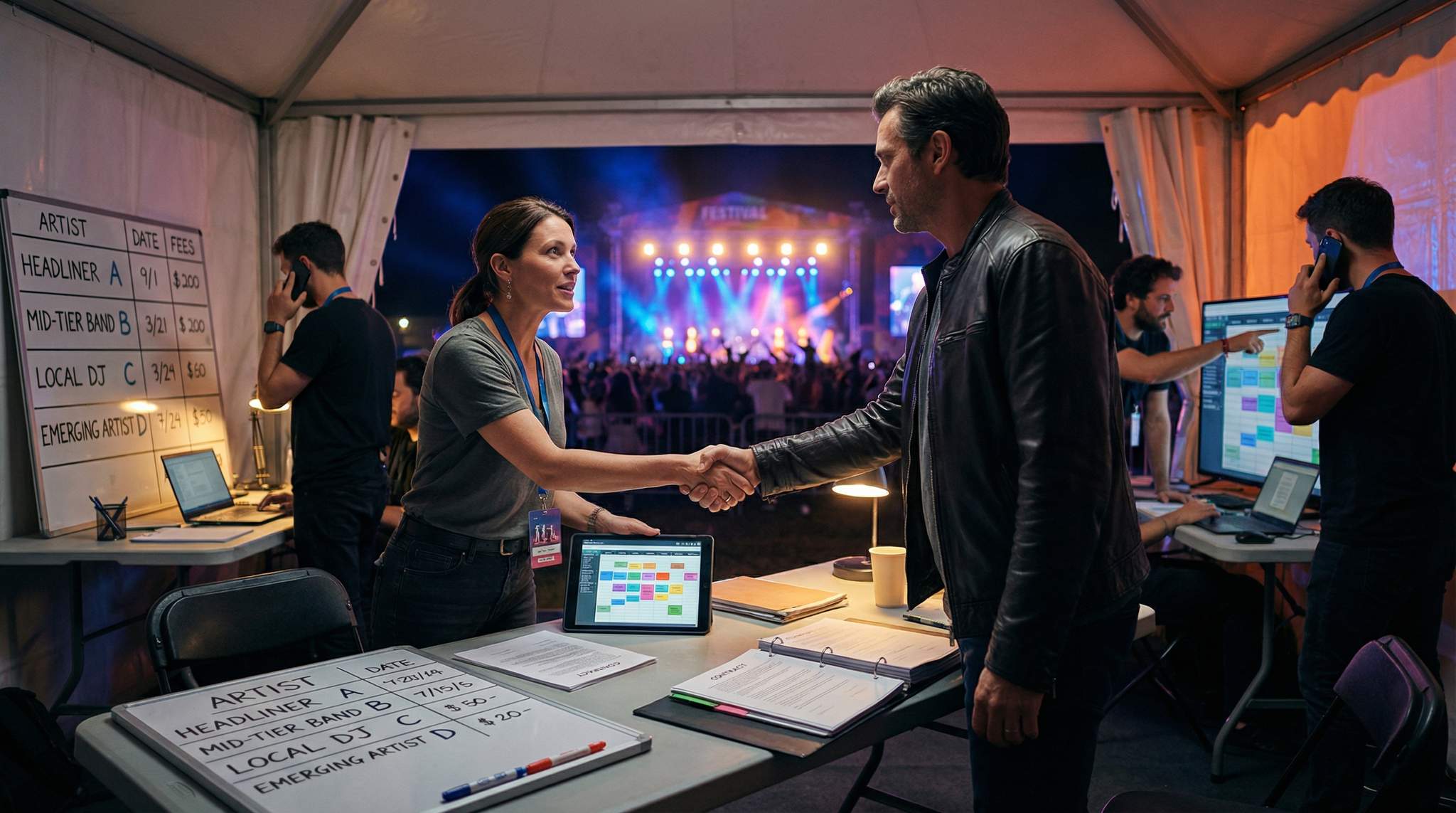
Negotiating with artists (or rather, their agents) is a delicate dance. Festivals typically extend an offer to an artist’s booking agent, which includes the proposed fee, date, set length, and other key terms. Agents may counter with higher demands or specific conditions (like billing position, length of set, or special production needs). Successful negotiation requires understanding the artist’s market value while also communicating the non-monetary benefits of playing your festival – for example, the opportunity to reach new audiences or be part of a prestigious event. It’s often helpful to be flexible: if an artist’s fee is slightly out of reach, a promoter might negotiate by offering a better slot time, longer set, or improved hospitality instead of more cash.
Pro Tip: Cultivate strong relationships with booking agents. Agents often route their artists through multiple festivals and tour stops; if your festival is known for professionalism and fair deals, agents may prioritize you when scheduling their artists’ tours. Good rapport can sometimes lead to better rates or first pick of rising stars on an agent’s roster.
Another tactic in negotiation is package deals. If you run multiple festivals or know friendly promoters of other events, coordinating bookings can save money. For example, an international artist might discount their fee per show if they can book two or three festival dates in the same trip. By teaming up with another festival in a nearby region on back-to-back weekends, both events could negotiate a slightly lower fee for that artist, since travel costs and routing are optimized. Similarly, some agents will offer a bundle rate for booking several artists from their roster at once. Of course, always evaluate package offers to ensure all the acts suit your festival; never book an unrelated artist just to get a supposed discount on another.
One imperative in negotiation is to get everything in writing via formal contracts. Verbal promises or informal emails are not enough. A standard festival artist contract covers the fee, payment schedule (often a 50% deposit upfront and 50% after performance), cancellation terms, force majeure clauses, and any special conditions (like “artist will play no other show within 100 miles for X days” known as a radius clause). Strong contracts protect the festival if an artist backs out or if unexpected issues arise. For instance, including a clause that the deposit is refundable if the artist cancels can save a huge headache later – otherwise you might lose that money. If an artist insists on no-refund deposit, the festival might negotiate a lower deposit percentage.
Key Stat: Superstar headliners can command astonishing fees – far above the rest of the lineup. Beyoncé, for example, was reportedly paid as much as $4 million for her Coachella headline performance, with Ebony Magazine noting the $4 million figure. Such figures are outliers reserved for the absolute top tier of artists, but they underscore how crucial it is for festivals to budget wisely and ensure that big fees will provide a return in ticket sales.
Finally, always remember the human side of negotiation. Agents and artists are more likely to be flexible with festivals that treat them with respect and transparency. Hardball tactics can sour relationships; instead, aim for win-win outcomes. If your budget truly can’t meet an artist’s quote, be honest about it – some artists will still choose to play for a lower fee if they’re excited about the event or see other value (like media exposure or a vacation opportunity). Also, consider offering incentives like profit-sharing bonuses (if ticket sales exceed targets) or future booking commitments. Creative negotiation can bridge gaps without simply raising the fee. By budgeting conservatively, negotiating smartly, and maintaining goodwill, festival producers can maximize talent within their means and avoid financial surprises when the show is over.
Need Festival Funding?
Get the capital you need to book headliners, secure venues, and scale your festival production.
Effective lineup booking also demands strict adherence to a dynamic budget model. As a festival booker navigates the music festival artist selection process, they must constantly adjust their financial projections. If headlining act booking consumes a larger percentage of the budget than initially forecasted, the talent buyer must creatively source high-impact, lower-cost emerging acts to fill the remaining slots. This financial agility ensures the overall roster remains compelling without pushing the event into the red.
Another critical factor when booking artists for festivals is understanding the difference between a “festival quote” and a standard touring quote. Agents often charge a premium for festival appearances because these events typically preclude the performer from playing their own hard-ticket shows in that market for several months. A savvy talent buyer anticipates this markup and negotiates by highlighting the promotional value, the built-in audience, and the high-tier production quality the event provides.
Booking Special Attractions and Non-Musical Talent
Modern festivals are more than just back-to-back concerts – they’re immersive experiences. Booking non-musical talent and special attractions can add huge value to a festival’s program. Comedians, celebrity speakers, wellness instructors, magicians, dance troupes, live painters, even record-breaking stunt performers – these attractions diversify the entertainment and give attendees memorable breaks between musical acts. For producers, non-musical bookings often come at a fraction of the cost of big music artists, yet they can markedly enhance the attendee experience by providing variety and surprise.
Approaching festival entertainment booking as a holistic endeavor means looking beyond the main stage. A comprehensive strategy for booking festivals involves curating a diverse portfolio of experiences—from interactive art installations and roaming theatrical troupes to immersive culinary demonstrations. By diversifying the types of performers you secure, you create a multi-sensory environment that keeps attendees engaged from gates open to curfew, ultimately driving higher perceived ticket value and stronger brand loyalty.
When considering special attractions, think about what complements your festival’s theme and audience interests. A daytime yoga session led by a known instructor or influencer fits perfectly at a wellness or transformational music festival. Stand-up comedy nights or improv troupes might slot in nicely at eclectic arts festivals or as late-night campground entertainment. Industry panels or keynote speakers (such as famous producers or artists doing Q&As) can elevate a festival’s educational and cultural cred. For example, an electronic music festival might host a production workshop with a top DJ, or a film festival might feature a director’s talk. These non-musical elements create additional touchpoints for fans and can even draw attendees who are more interested in the holistic experience than any single performance.
Booking non-musical talent follows a slightly different process than booking bands, though agents are still often involved. There are comedy agents, speaker bureaus, and specialist talent agencies for performers like circus acts or magicians. Festivals should reach out early to secure popular non-musical acts, as their calendars can book up (especially comedians who tour or speakers who have limited availability). The negotiation for these acts can sometimes be easier – their fees are typically lower, and they may be more flexible with scheduling (e.g. doing multiple short sets over a weekend). However, always clarify the unique needs of each performer. A comedian might need a certain stage setup or a minimum audience size to feel comfortable. A yoga instructor might require a quiet morning timeslot and a capacious, clean stage. Technical requirements for speakers (projectors, microphones, interpreters) should be planned in advance.
Pro Tip: When booking special attractions, consider the overall flow of your festival schedule. Placing a high-energy activity or show during a lull in musical programming can re-energize the crowd. For instance, scheduling a popular comedian on the second stage while the main stage resets can keep attendees entertained and prevent them from getting restless during changeovers.
Another increasingly popular attraction is artist and fan interaction sessions, such as meet-and-greets, autograph signings, or moderated fan Q&As. These require careful coordination – you’ll need a secure, controlled environment and staff to manage lines and timing – but they can significantly enhance fan satisfaction. If offering meet-and-greets, always work closely with the artists’ teams to schedule them at convenient times (never immediately after a grueling performance, for example) and clarify the format (photos, autographs, etc.). Safety and organization are paramount: festivals often use wristbands or pre-selected passes to ensure only a limited number of fans access the session, avoiding chaos, a level of organization often discussed alongside initiatives for gender-balanced lineups. Also, have security or artist relations staff on hand to ensure both fans and artists feel comfortable.
Special attractions can also include interactive installations and roaming performers. These aren’t “booked” in the traditional sense of a stage performance, but rather hired to enrich the festival atmosphere. Examples include costumed stilt walkers mingling with the crowd, art cars with DJs playing pop-up sets, or a small circus troupe doing pop-up shows around the grounds. While these might be coordinated by the festival’s art or operations team, they are still a part of talent curation – the goal is to create magical moments beyond the scheduled acts. Budgeting for these elements is important; set aside a portion of talent budget for “experience performers” if they fit your concept.
Booking non-musical talent requires looking beyond typical music industry channels. Festival producers should tap into local arts networks, comedy circuits, speaker lists, and cultural organizations to discover unique acts. Community connections can help here: for a food & music festival, reaching out to a local celebrity chef or craft brewer to do a demo can tie in perfectly. Many festivals also partner with sponsors to fund special attractions (e.g. a sponsor might underwrite a firework show or a speaker series, gaining branding in return). This helps cover costs and adds value for attendees at the same time.
At the end of the day, adding comedians, speakers, and performers, as suggested in guides on talent budgeting and pay scales, beyond music makes a festival more well-rounded and engaging, ensuring that budgeting across the lineup is balanced. People can only dance in front of speakers for so many hours; offering a comedy hour, a captivating talk, or an unusual performance gives them a mental reset and often a big highlight to talk about later. When curating your lineup, think of your festival-goer’s journey: what delightful surprise or enriching activity will greet them when they need a break from the tunes? By integrating special attractions into the programming, you elevate the festival from a series of concerts into a truly immersive event.
International Acts: Visas, Travel & Cultural Logistics
Bringing international artists to your festival can exponentially increase its appeal – fans love seeing global stars or culturally diverse performers on the lineup. However, booking talent from overseas introduces added complexity in visas, travel, and hospitality that domestic bookings don’t have. Seasoned festival producers emphasize meticulous advance planning when dealing with international acts, as bureaucratic or logistical hurdles can take months to resolve.
Visas and work permits are the first major consideration. Every country has its own immigration regulations for visiting performers. For example, a U.S. festival booking a European band will likely need to obtain P-1 or O-1 visas (for internationally recognized entertainers) for each member of the entourage, as outlined in USCIS guidelines for P-1B visas. This process can require an immigration attorney or specialist, documentation of the artist’s credentials, and fees per person. Similarly, a European festival bringing in U.S. artists must navigate work permit rules; the UK, for instance, has specific visa routes for visiting artists and entertainers, specifically the UK guidance for creative professionals. These applications often must be submitted many weeks (or even several months) in advance of the travel date. Failing to secure the proper visa can lead to artists being turned away at the border, a disaster scenario that has indeed happened to festivals. Therefore, it’s wise to budget for professional assistance and make visa arrangements a top priority as soon as an international act is booked.
Beyond legal paperwork, consider travel logistics and costs for international talent. Flights (sometimes first-class or business for higher-profile artists), ground transportation, and accommodations for the artist and their crew may all fall on the festival’s tab, depending on the deal. These expenses should be accounted for in the offer budget. Many artist contracts for international acts will include an airfare buyout or a specific travel stipend if the festival isn’t directly booking the tickets. If you are in charge of travel, working with experienced travel agents or tour managers can streamline the process. Keep in mind time zone differences and jet lag – an artist flying in from halfway around the world might need an extra day to acclimate before performing. It’s courteous (and often contractually mandated) to build in proper rest time and perhaps even some local tourism for the artist, especially if they’re traveling far. For instance, if a DJ from Brazil is playing a New Zealand festival, the promoter might fly them in 3-4 days early to adjust to the time difference and even schedule a press event or VIP meetup while they’re there.
Cultural needs and differences also come into play. International artists may have specific requirements due to their cultural or religious practices, which should be respected in hospitality planning. This could range from dietary needs (e.g. vegetarian or halal catering) to scheduling considerations (avoiding programming them during prayer times, etc.). A classic example is respecting Golden Week travel challenges if booking Japanese artists or accommodating fasting during daylight for artists observing Ramadan at a summer festival. Open communication is key: ask the artist’s team during advancing if there are any cultural accommodations that will make their experience better. These gestures go a long way in making international guests feel welcome.
Pro Tip: Coordinate with other festivals or events when booking international talent to save on costs and logistics. If a band from overseas is already touring your region or playing a festival in a neighboring country the week before, try to book them around that timeframe. Sharing travel costs or aligning schedules (sometimes called “routing”) with other promoters can significantly reduce airfare expenses and make an international booking more feasible for everyone.
Language barriers are another factor. Ensure you have translators or multilingual staff if needed, especially during critical phases like airport pickup, soundcheck, or artist hospitality. Provide key info in the artist’s language when possible – for example, a welcome packet that includes stage schedules, local emergency contacts, and city guides in the artist’s native language can be very thoughtful. If the artist is expected to interact with media or fans in a Q&A, consider hiring an interpreter or briefing them with translated questions in advance.
Logistically, you’ll also need to handle cargo and equipment for international acts. Many bands will not carry full instrument backline across continents – they will expect the festival to provide certain gear per their technical rider (e.g. drum kits, amplifiers, keyboards). International DJs might need CDJs or mixers of specific models. Work closely with artists on advancing their technical needs (which we’ll cover more in the next section) and arrange rentals or suppliers locally. Additionally, factor in customs for any gear they do bring. Some countries require carnets (an international customs document) to temporarily import instruments and equipment duty-free. Assist artists with those documents by providing invitation letters listing the festival and gear, if required by customs.
Finally, Budget extra buffer time for everything when dealing with international talent. Flights can be delayed, visas can take longer than expected, and communication across time zones can slow the planning process. A smart practice is to have a backup plan if an international artist’s paperwork falls through. This might mean identifying a local replacement act or having a flexible schedule that can absorb a cancellation. It’s also prudent to insure against international no-shows if possible. Some festivals take out event cancellation insurance that covers major talent failing to appear (though policies and costs vary). At minimum, having a contingency artist on standby for critical slots can save the show if a visa issue or travel snafu prevents an overseas headliner from arriving.
Bringing international performers is absolutely worthwhile for the richness they add to a festival lineup. Fans love seeing their favorite foreign artists without having to travel abroad, and a cosmopolitan lineup can elevate a festival’s status. With careful attention to visas, travel, cultural sensitivity, and a plan B, festival producers can successfully navigate the complexities and give their audience a truly global experience on stage, contributing to the momentum of initiatives like the Keychange pledge.
Scheduling the Lineup and Stage Times
Booking great artists is only half the battle – how you schedule them on the day (or days) of the festival is critical to the event’s flow and success. Crafting a festival schedule is like conducting an orchestra: you must arrange set times, stages, and changeovers so that the energy rises and falls naturally, and so that logistics like equipment swaps happen smoothly behind the scenes. Attendees should be able to enjoy a continuous stream of entertainment with minimal downtime or frustrating overlaps for must-see acts.
For single-stage festivals, scheduling is relatively straightforward (though still needs finesse). Typically, you’ll program lower-profile or local acts earlier in the day when gates open, gradually building toward the biggest headliner in the closing slot. It’s wise to allow slightly longer set times for the top-billed acts and keep opening sets shorter to stay on track. Multi-stage festivals introduce more complexity: you need to decide whether to run stages concurrently or stagger them. Many large festivals offset the schedules of their main stages – for example, Stage 1’s headliner might finish at 10:00 PM and then Stage 2’s headliner starts at 10:15 PM, so fans can catch portions of both. Alternatively, a festival might run several stages at the same time, accepting that the audience will self-select which act to watch.
One common strategy is to avoid booking artists of the exact same genre or fanbase in conflicting slots on different stages. This minimizes the scenario where one act “steals” the crowd from another or forces fans to make an agonizing choice. For instance, a festival with a rock stage and an EDM stage might ensure the rock headliner doesn’t overlap with the EDM headliner, since some attendees would want to see both. But overlapping a folk singer on one stage with a death metal band on another could be fine, as the audience overlap is small. Staggering set times and carefully sequencing genres can maximize the audience for every performance, a sentiment echoed in BBC Newsbeat coverage of festival logistics.
When crafting the schedule, also account for set length and changeover times. Early-day acts might get 30-minute sets, mid-tier acts 45–60 minutes, and headliners 75–90 minutes or more, depending on curfew constraints. Each set needs a buffer afterward for changeover – the time to tear down one band’s gear and set up the next. The required changeover time varies: a simple DJ handover might be 15 minutes, whereas a full live band change on a main stage might need 30–45 minutes (especially if there’s complex instrumentation or backdrop changes). Build these buffers into the schedule religiously; never assume you can run back-to-back without downtime, or the whole day will slide off schedule. As a rule of thumb, it’s better to have a short gap with nothing happening than to end up running late – many festivals have strict curfews or risk fines if they go over time.
Pro Tip: Always include a cushion of a few extra minutes in each changeover beyond what you think is needed. A 10-minute buffer can absorb unexpected delays (an amp failing, a musician running late to stage, etc.) and prevent a minor holdup from cascading into major schedule issues later in the day. It’s easier to fill a brief idle period with a MC announcement or background music than to recover lost time from an overly tight schedule.
Communication is key to keeping performances on time. The stage manager and production crew should have a detailed show schedule (often down to 5-minute increments) and a communication system (radios, in-ear monitors) to coordinate everything. Artists and their teams need to be informed well in advance of exactly when and where they are expected for load-in, soundcheck, and stage time. During the event, a stage scheduling coordinator should be actively ensuring artists are ready to go on stage at their allotted time, adhering to regulations for creative professionals. If one act runs over their time, stage managers must be prepared to cut power or fade out – as diplomatically as possible – to protect the overall schedule. This is an uncomfortable scenario, so it’s better to brief artists ahead of time on the importance of sticking to set lengths. Many festivals use visual cues (clocks, subtle light changes) to signal artists when their time is nearly up.
In designing the daily schedule, also consider the ebb and flow of energy. Too many high-intensity acts in a row can exhaust the crowd, while too many mellow acts back-to-back might lull the energy. Savvy curators often alternate or build waves: for example, a couple of upbeat bands followed by a slightly slower acoustic set, before ramping up to a dance act, and so on. On multi-stage events, you can let one stage cool down while another heats up, giving attendees a chance to migrate or take breaks. The placement of non-musical content is relevant here as well – perhaps you schedule a popular dance workshop or comedy set right when the main stage breaks for a lengthy changeover, so there’s always something engaging happening.
Naturally, the headline slot is the climax of each day’s schedule. Plan surrounding set times to highlight your headliners. Often, the act before a headliner (sometimes called the sub-headliner) will finish with enough time for the final stage preparations and to build anticipation. Some festivals even go dark for 15 minutes before the headliner, amplifying the crowd’s excitement when the lights go up again. Others keep a smaller stage active to maintain momentum until the headliner is ready. There’s no one formula, but the goal is to ensure your biggest act goes on at the peak of the crowd’s energy and attendance. Usually this is in the late evening, but at certain cultural festivals or multi-venue events, headline acts could be at other times, so adjust to context.
Finally, remain adaptable. Despite best-laid plans, schedules can and do shift on the fly due to inclement weather, technical issues, or artist delays. Have a stage scheduling & changeover plan that accounts for contingencies, keeping in mind immigration routes for artists and entertainers: maybe a DJ can play an impromptu 20-minute set if a band is late, or have your MC entertain the crowd during unforeseen pauses. Keep communication with the audience transparent too – if there’s a delay, a quick announcement (“we’re resolving a brief tech issue”) can keep fans patient. When everything runs smoothly, attendees might not consciously notice – but they will definitely remember if the festival felt chaotic or if they missed part of a favorite artist because of scheduling snafus. A well-curated lineup and a well-run schedule go hand in hand to deliver the seamless, enjoyable experience that festival-goers expect.
Artist Relations, Hospitality, and Technical Riders
Once artists are booked and scheduled, a festival’s job is far from over – it then becomes crucial to take care of the artists’ needs and experience. Happy performers tend to give better shows and speak positively about your festival in industry circles (which helps with future bookings). This is where artist relations, hospitality, and fulfilling contractual riders come into play. Essentially, it’s about making every artist – from the headliner to the opening act – feel welcome, safe, and valued on site.
Artist relations (AR) is the team or individual dedicated to liaising with artists and their management in the lead-up to and during the festival. They handle everything from sending advance info, to greeting artists on arrival, to solving any on-site issues. A good AR team functions like concierge and problem-solver, ensuring artists can focus on performing. Well before the festival weekend, the artist relations lead will reach out to each artist’s tour manager or representative to “advance the show” – that is, to confirm all the details: arrival times, ground transportation, hotel check-in, soundcheck schedule, etc., a process distinct from events like Burning Man’s community-driven model. Advancing is critical; it’s the difference between an artist wandering the grounds confused or having a smooth, guided experience. By coordinating in depth ahead of time, festivals prevent miscommunications such as a band assuming gear is provided when it’s not, or the festival assuming a DJ didn’t need a hotel when in fact they do.
Warning: If performers are treated poorly or their needs not met, word spreads quickly in the entertainment industry. Festivals that skimp on hospitality, delay payments, or ignore agreed-upon technical specs risk developing a bad reputation among artists. This can make it harder (and more expensive) to book quality talent in the future, as agents talk to each other. Protect your festival’s name by honoring commitments and treating every artist professionally.
An essential aspect of artist hospitality is the backstage experience. Artists typically are provided a green room or dressing area, where they can relax before and after their set. For smaller festivals, this might be a shared tent with basic amenities; for larger ones, individual trailers or rooms might be allocated to bigger acts. It’s important to stock these areas with refreshments and comfort items as specified in the artist’s hospitality rider – the section of the contract detailing their backstage needs. Common hospitality rider items include specific beverages (water, juice, beer, liquor), snacks or hot meals (some artists request local cuisine or have dietary restrictions), and comfort items (towels, sofas, mirrors, phone chargers). While some riders infamously list extravagant demands (the proverbial “bowl of only green M&Ms”), most requests are reasonable and focused on making the artist comfortable. Providing quality backstage catering and a clean, welcoming green room environment goes a long way, supporting broader goals like gender-equal lineup pledges. It signals that the festival respects the performers.
Technical riders are equally (if not more) crucial. A technical rider is the document listing an artist’s on-stage production requirements – things like sound equipment, stage layout, lighting preferences, power needs, and crew support. Festival production teams must review each artist’s technical rider in advance and communicate any concerns or modifications well before show day, ensuring compliance with visa requirements for internationally recognized groups. For example, if a band’s rider asks for a specific guitar amplifier model that the festival doesn’t have, the production manager will either source it or discuss an acceptable substitute with the band’s team. On the day of performance, all agreed technical requirements should be in place. This includes correct microphone setups, monitors, drum kits at the right height, etc. A small oversight (like forgetting a requested guitar stand or using the wrong type of DI box) can throw off a performance or irritate an artist who then has to scramble last-minute. By meeting the technical rider’s demands, festivals enable artists to sound their best – which benefits everyone.
Artist hospitality also extends to smooth on-site logistics. Ensure that your artists have clear credentials/passes and escorts to move around the venue without hassle. An act shouldn’t be stuck at a gate arguing with security about access when they’re due on stage in 15 minutes. Provide dedicated shuttles or carts if the distance from artist parking to stages is large. Many festivals create an artist lounge area with food, drinks, and comfortable seating where performers can mingle or rest away from the public. This can foster a sense of community (artists often enjoy catching up with each other or watching other shows after their set) and further enhance their experience.
One aspect festivals must prepare for is special requests and last-minute changes from artists. Perhaps an artist’s flight got delayed and they now need a different pickup time, or they decided on a whim to join the crowd after their set and need discreet security to accompany them. The AR team should be flexible and solution-oriented. It’s helpful to have a few staff on “floating” duty to handle unexpected errands, like a rush pharmacy trip if a singer needs throat lozenges, or a quick rearrangement of the schedule if two band members are running late. Keeping a cool head and a positive attitude in accommodating artists’ reasonable needs will often earn their gratitude and positive feedback.
Managing this volume of human logistics requires robust infrastructure. Modern organizers often rely on comprehensive event management software to keep operations centralized. Utilizing a centralized festival management system with space for unlimited artists, guests, volunteers, contractors, crew, vendors, and any other contacts ensures that everyone from the main stage closer to the overnight security team is properly credentialed and tracked. This digital backbone prevents the behind-the-scenes chaos that can otherwise derail a meticulously planned event.
Pro Tip: Personal touches matter. Stock each artist’s green room with a small welcome note or a local treat – for example, a festival in Mexico might include some artisan chocolates, or a New Zealand event might gift a small Maori craft. These gestures, while minor in cost, make artists feel truly welcomed and can set your festival apart as especially artist-friendly.
In summary, delivering a great artist experience is about fulfilling all promises and then going a bit beyond. Feed them well, provide the equipment and support they expect, pay them on time, and treat them kindly – this is the baseline. Then add those thoughtful extra touches to make them feel like honored guests. Festivals like Coachella and Tomorrowland have become known for their top-notch artist hospitality and organization, which is one reason big artists love playing them (aside from the prestige and audience). But even a small festival can earn a reputation for treating artists like family. When artists walk away happy, they’ll be eager to return in future years and will spread the word to others. It closes a virtuous circle: good artist relations lead to easier talent booking down the road. In the immediate term, of course, it means the artists will take the stage in a good mood – and that positive energy translates into a better show for your audience.
Contingency Planning: Cancellations & Backups
No matter how expertly you curate and plan, unexpected problems can and will arise when dealing with live events and human talent. Artists might cancel at the last minute due to illness, travel issues, or unforeseen conflicts. Weather might force schedule changes. Technical failures could knock out a stage temporarily. The mark of a seasoned festival producer is not the absence of problems, but rather how well they’re handled. Building contingency plans for talent is as important as the primary booking itself.
Artist cancellations are among the most disruptive scenarios. If a headliner or other anticipated act pulls out close to the festival date (or even mid-event), it can throw fans and schedules into disarray. The best defense is proactive preparation. When booking major acts, consider lining up a backup option – perhaps an artist of similar style or popularity who could fill in if needed. Some festivals maintain relationships with a few artists who agree to be on standby (sometimes called “backup headliners”), often local or regional acts that can mobilize quickly if called. While you may not advertise these backups, knowing you have someone to call can be a lifesaver. For instance, when a top rock band canceled on short notice at a UK festival, a well-prepared organizer swiftly promoted a mid-tier band (already on the lineup) to the headliner slot and extended their set, softening the blow for attendees.
Communication is key when an artist cancellation happens. Inform attendees as soon as possible and be transparent about the situation. In the age of social media, news travels fast – it’s better that fans hear the official plan from you than through rumors. If you’ve arranged a replacement or schedule shuffle, announce it promptly and emphasize any positives (e.g. “We’re disappointed that Artist X can’t make it, but we’re excited to have Artist Y extend their performance and we’re adding a surprise guest DJ to keep the energy up!”). Fans will still be upset, but they appreciate prompt communication and effort to compensate. Some festivals offer limited-time partial refunds or credit toward future tickets if the cancellation is a huge headliner – this can build goodwill, though it’s a financial hit. Review the contractual terms you have: often headliner contracts include clauses about cancellation after announcement and any required refunds. Insurance can also cover certain cancellations (like if an artist is a no-show due to illness), so having event insurance is worth considering, albeit with additional cost.
On the scheduling side, revisit your schedule for flexibility. If an act in the middle of the day cancels, perhaps nearby artists can play slightly longer sets, or an empty stage can host a local band as a filler. In worst-case scenarios, moving set times around may be necessary – for example, shifting an early evening act into the headliner slot if the headliner cancels day-of. This is where maintaining good relations with all artists pays off: a supportive act might be willing to step up to a bigger slot on short notice, as Florence + The Machine famously did at Glastonbury 2015 when they were asked to headline after Foo Fighters canceled due to an injury. It was a triumph for the festival and the band, who delivered a fantastic set on short notice.
Cancellations aren’t the only hiccup to plan for. Severe weather can force temporary halts or evacuations. If you know a thunderstorm is likely, have a plan to pause performances safely and resume when possible. Some festivals designate “rain delay” artists – perhaps a solo acoustic performer or DJ who can perform on short notice when rain clears, giving production teams time to reset larger stages. Also consider technical failures: if one stage’s power goes down, can you divert acts to another stage or adjust the running order to keep music playing somewhere? Keep emergency contact lists of sound and light technicians, spare generators, and alternate equipment providers.
Health emergencies could happen too – say an artist falls ill on the day. In such cases, you might have to reassign their slot to a DJ set or ask an earlier performer to do an encore later. At one festival, when a singer lost their voice an hour before their set, the festival quickly arranged for a well-known local jam band (who were attending as fans) to jump in for an impromptu performance. The audience was informed of the situation, and most rolled with it due to the festival’s quick solution. Having a network of local talent on standby – even if not officially booked – can be a huge asset in these moments .
Warning: Never advertise or promise an artist appearance until the contract is fully executed and you’re confident in their commitment. It can be tempting to tease a big name before all details are firm, but if that deal falls through, your festival’s credibility suffers immensely. It’s better to wait on announcements than to face anger and refund demands because a touted artist “mysteriously” disappeared from the lineup.
Another contingency to plan for is if an artist runs late. Traffic, flight delays, or other shows can cause an act to miss their slot. In a festival, the schedule might be too tight to simply push everything back (especially if there’s a hard curfew). So, have a plan: maybe a shorter substitute performance, a DJ to fill the gap, or swapping order of two acts if one is present and ready while another is missing. Some festivals build a “TBA” slot into early evening specifically to use as a buffer if something needs to shift – if not needed, that slot can become a surprise act or a longer changeover break.
Finally, extend contingency thinking to the audience expectations and safety. If a big cancellation occurs, ensure your customer service team is ready to handle inquiries. On the safety front, have an evacuation and shelter plan for extreme weather – coordinate with local authorities on this well in advance. If worst-case scenarios like a full cancellation of the event day happen, know the local regulations on refunds and have a communications template ready for that scenario too.
In the unpredictable world of live events, contingency planning isn’t just a bonus – it’s a necessity. The investment in backup solutions and clear emergency procedures can mean the difference between a hiccup that attendees quickly forget versus a disaster that overshadows the festival. Attendees often judge a festival not just by how perfect things were, but by how well the organizers handled imperfections. Show them that you’re prepared, responsive, and always have another trick up your sleeve when things go sideways.
Data-Driven Booking: Using Audience Insights
In the past, festival lineup decisions were driven largely by gut feeling, industry buzz, and personal networks. While those still play a role, today’s top festival producers increasingly turn to data and audience analytics to inform talent booking. Leveraging data can help answer questions like: Which artists will draw the biggest crowd? What genre mashups do my ticket buyers want to see? Who’s the next breakout star in the scene? By tapping into concrete audience insights – from streaming stats to ticket sales patterns – promoters can curate lineups that are more likely to resonate and sell.
One of the most valuable data sources is historical ticketing and attendance data. If your festival has been held before, analyze which days and which artists corresponded to spikes in single-day ticket sales or attendance at stages. Perhaps you notice EDM acts consistently drew larger late-night crowds than indie rock acts at your event – that’s a cue to lean more into EDM for the late slots. Or ticket purchase data might reveal that a significant segment of your audience travels from a particular city or region, which could prompt booking a popular artist from that area to boost affinity. Some festivals segment their audience data by age, location, and past behavior (like VIP purchasers or repeat attendees) and tailor parts of the lineup to those segments. For example, if data shows a growing contingent of attendees under 21, the festival might book more emerging artists popular on TikTok or YouTube to cater to Gen Z tastes, a demographic shift noted in coverage of events like Fyre Festival.
Streaming and social media metrics have become powerful tools in talent booking. Platforms like Spotify, YouTube, and SoundCloud offer insights into which artists are trending upward. A smart talent buyer will keep an eye on regional streaming charts: if an unknown band suddenly lands in the Top 50 for your country or city, that’s a strong indicator they have momentum and a local following. Social media can likewise signal an artist’s drawing power – high engagement on an artist’s posts about touring, or rapid growth in followers, might translate to ticket demand. There are now even analytics services that aggregate these kinds of data, giving festivals predictive scores of which acts are “heat scores” or “novelty factors” for upcoming seasons. Using these data-driven predictions can lead you to book an artist right before they break big, which is a win-win: fans get to see a hot act at your festival, and the artist often appreciates the early slot. Many major festivals proudly tout that they had Artist X on a small stage just before they exploded in popularity the next year, a phenomenon discussed in articles about festival organization.
Surveys and direct audience feedback are another cornerstone. Don’t underestimate the simple tactic of asking your audience which artists or genres they’d love to see. Polls via email or social media can yield thousands of responses. While you can’t rely solely on popularity contests (and you must consider feasibility and cost), these surveys often highlight recurring names that you might have overlooked. For instance, many niche genre fans will rally behind their favorites in such polls – if you see an unexpected volume of requests for a particular artist or a genre like K-pop or Latin trap, that’s valuable insight. Some festivals even create “fan voting” competitions for a slot (especially for local bands), which doubles as engagement marketing. More broadly, tracking sentiment – from post-event feedback forms to chatter on Reddit or Discord – can alert you if your lineup strategy is veering off course from attendee expectations. Consistent comments like “I wish there were more hip-hop” or “too many DJs, not enough live bands” should be heeded in future bookings.
Data can also refine when and where artists are booked within the festival. Analyzing foot-traffic data or RFID scans on multi-stage festivals might show that one stage drew consistently fewer people in the early afternoon. To fix this, you could place a moderately popular act (based on data) in that weaker slot next time to pull more crowd. Or maybe data shows a significant portion of attendees never ventured to the second stage at all; that might signal a need to book a bigger “crossover” artist on that stage to entice main-stage loyalists to walk over. Granular data like heat maps of crowd movement, bar sales by time, and even Wi-Fi or app usage onsite can paint a picture of crowd behavior that helps schedule talent more effectively.
Key Stat: A 2019 industry analysis revealed that over 60% of festival-goers cite the lineup as the number one factor in their decision to attend a festival. This underscores that selecting the right artists – those that genuinely match your audience’s tastes – is crucial to a festival’s success. Using hard data to curate that lineup can significantly improve the odds of getting it right.
Internally, festivals may compile an “artist scorecard” that weighs various data points for potential bookings: streaming numbers in target markets, recent ticket sales in the region, social media engagement rate, and past festival performances (if they’ve played similar events). This scorecard approach, balancing qualitative reputation with quantitative metrics, can aid in ranking which new artists to go after for limited lineup spots. It brings objectivity to discussions that can otherwise get clouded by personal bias or hype.
However, it’s important to strike a balance. Data-driven booking should inform, not dictate, your lineup decisions, as highlighted by Taika Waititi’s critique of Fyre Festival. Over-reliance on numbers can result in a homogeneous lineup of all the most-streamed artists, which might lack uniqueness or cohesion. There is still room for instinct, curation vision, and taking chances on an unknown purely because you believe in their art. The best approach is to let data guide you to possibilities and validate hunches. If your gut says a certain rising artist would be perfect, and then you see their streaming stats have doubled in the last 3 months – that’s a strong green light. Conversely, if an artist is critically acclaimed but data shows almost no local following, you might still book them for credibility or diversity, but perhaps on a smaller stage rather than betting a headline slot.
In an era where entertainment options are abundant, using audience insights helps ensure your festival delivers what fans actually want. It reduces the guesswork and can even reveal new directions that set your event apart. By embracing analytics – yet still applying a curator’s savvy – you can create a high-demand lineup that feels both on-trend and true to your festival’s spirit. This approach of marrying intuition with information is quickly becoming standard practice among successful festival organizers worldwide.
Emerging Trends and Innovative Lineup Approaches
The festival landscape is always evolving, and with it, the way talent is curated continues to innovate. In recent years, several trends have emerged that are reshaping how lineups are crafted and marketed. Staying aware of these trends – and even capitalizing on them – can keep your festival fresh and relevant in a competitive industry.
One notable trend is the rise of artist-curated festivals and stages. In these scenarios, a prominent artist is given the reins (either for an entire boutique festival or for a specific stage/night at a larger festival) to curate the lineup themselves . The idea leverages the artist’s brand and influence to create a signature experience. For example, rapper Tyler, The Creator’s Camp Flog Gnaw Carnival is a festival entirely curated by him, featuring a mix of his favorite performers across hip-hop, R&B, and alternative genres. Similarly, some big festivals have special stages or one-off events curated by headliners – like when a star DJ curates an all-night takeover of an electronic stage, inviting their own collaborators and inspirations to perform. This approach can be a huge draw for fans of that artist, as it offers insight into their tastes and often unique artist collaborations on stage. From a production standpoint, collaborating with an artist-curator requires flexibility and trust, but it can result in a very cohesive and buzzworthy lineup segment .
Another trend is the incorporation of genre-specific days or themed lineups within a festival. Festivals might dedicate a full day or stage to a particular genre or scene, essentially creating a “festival within a festival.” For instance, a major music festival might have a “Latin Music Day” featuring predominantly Latin artists, responding to the booming global popularity of Latin pop and reggaeton. Or an alternative festival might host a one-night “throwback” lineup of legacy acts from the 90s to attract older millennial attendees. Themed programming can reinvigorate interest each year and allow more granular marketing (“Come for EDM Friday, stay for Hip-Hop Saturday”). Just be careful to still provide something for everyone each day unless your event is explicitly themed by day – you don’t want attendees feeling like one of the days isn’t for them at all. Many events strike a balance by theming secondary stages instead of entire days.
We also see the trend of experiential lineups, where the focus is on unique pairings or special sets rather than just individual artist names. This could include booking notable “back-to-back” DJ sets (where two DJs who don’t normally play together share a set), or arranging for one-time-only supergroups/tribute sets. Festivals have, for example, advertised that a legendary band will perform one of their classic albums in full – a special performance you can’t see on their regular tour. Other innovations include cross-genre collaborations curated exclusively for the festival stage. All of these give extra incentive for fans to attend your festival because they know the content is exclusive and not just a repeat of standard tour shows. It does require more coordination (and sometimes extra rehearsal or negotiation with artists), but the payoff is a memorable lineup that stands out.
A significant movement in recent years is pushing for greener and more socially conscious lineups. This doesn’t just mean booking artists who align with causes (though that happens too); it’s also about the festival making statements through its talent choices. Ensuring diversity, as discussed earlier, is one aspect. Another is highlighting indigenous or local community artists prominently, as part of an ethos to support homegrown culture. Some festivals are also choosing to avoid artists with histories of problematic behavior, in response to fan scrutiny – effectively a “values filter” on bookings. While artistry is the main criterion, festivals know that the lineup can reflect their principles as an organization. Celebrating artists who advocate for sustainability or social justice can organically align with a festival’s brand if those are priorities. For example, a festival might host a small stage powered by solar panels and feature artists known for climate activism performing acoustic sets there – blending talent with a statement.
Key Stat: According to industry surveys, 78% of festival-goers say they are more likely to attend a festival if it offers unique experiences or special collaborations they can’t get elsewhere. This trend underlines why festivals increasingly promote exclusive sets, rare artist pairings, and themed showcases to differentiate their lineup in a crowded market.
In terms of marketing, lineup announcements themselves are evolving. Gone are the days of simply dropping a poster with names. Now festivals tease fans with creative rollout campaigns – scavenger hunts revealing one artist at a time on social media, or engaging the audience in unlocking lineup details through interactive games. From a production standpoint, this doesn’t change how you book talent, but it might influence which talent you book first (for example, securing a big headliner early so you can anchor your announcement around them). Some events announce key acts individually in lead-up months to maximize media cycles (e.g., “BigFestival confirms The Weeknd as 202X Headliner” in a press release, then full lineup later). The trend here is making the lineup reveal an event in itself, building hype and narrative rather than a one-off info dump.
No discussion of modern trends is complete without mentioning the influence of case studies like Coachella’s lineup strategy. Coachella has become famed for trendsetting lineups that blend mega pop headliners with cutting-edge emerging artists across genres . They often book reunion sets (like getting a band back together exclusively for the festival) and surprise guest appearances that become talking points. This model of carefully balancing commercial appeal with cultural leadership has been emulated by many festivals. Studying how Coachella curates a trendsetting lineup – for instance, how they were one of the first to elevate Latin trap and K-pop artists alongside rock and EDM on the main stage – can offer lessons. They take calculated risks on new sounds, knowing their audience is adventurous, and it keeps the festival feeling fresh each year. Smaller festivals can adapt this by always considering a few “firsts” or “festival debuts” in their lineup mix to build a reputation for discovery.
Finally, technology is creating new possibilities. Virtual and hybrid festivals (with live talent streamed to global audiences) have been explored out of necessity and innovation. While a physical festival’s lineup will remain about in-person performances, some are starting to incorporate remote or holographic performances for novelty. For example, a festival might feature a virtual avatar DJ set or a mixed-reality performance art piece as part of the lineup. These are still emerging and not yet mainstream, but early adopters can generate significant buzz. Imagine booking a popular virtual artist (like those from video games or the metaverse) to “perform” on a side stage – it could draw curious crowds and press coverage.
In conclusion, keeping an eye on emerging trends in talent booking and lineup presentation helps ensure your festival stays ahead of the curve. Whether it’s collaborating with artists in new ways, crafting exclusive experiences, or aligning lineups with cultural moments, innovation in curation is a hallmark of festivals that thrive. Don’t be afraid to experiment with one or two new ideas each edition; festivals themselves are an evolving art form, and a lineup can be the canvas for that creative evolution.
Ultimately, modern lineup booking is shifting from a purely transactional process to a collaborative partnership between promoters, agencies, and the artists themselves. By treating the music festival artist selection process as an ongoing dialogue rather than a one-off negotiation, a forward-thinking festival booker can secure unique performances—like exclusive back-to-back sets or full-album plays—that elevate the event above the competition.
Essential Reading
- Talent Buying 101: Securing the Right Acts for Your Festival
- Talent Budgeting and Pay Scales for Festivals
- Negotiating Artist Fees and Contracts for Festivals: A Deep Dive
- Building a Festival Lineup: Crafting the Perfect Schedule
- Ensuring a Diverse Festival Lineup: Strategies for Authentic Inclusion on Stage
- Headliners vs. Locals: Diversifying Your Festival Talent Roster
- Data-Driven Talent Booking: Using Audience Insights to Curate a High-Demand Festival Lineup
- Artist Relations: Delivering a Great Festival Artist Experience
- International Artists at Festivals: Visas, Cultural Needs and Travel Logistics
- Stage Scheduling & Changeovers: Keeping Festival Performances on Time
FAQ
When should festival talent booking begin?
It’s advisable to start booking talent 12–18 months before a large festival, especially for securing headliners. Major artists plan their tours far in advance, so early outreach is key to locking them in. Mid-range acts are often booked 6–12 months ahead of the event, and local or smaller acts can fill in closer to the date (3–6 months out). The larger and more popular the artist, the sooner you should begin discussions. Small festivals with primarily local talent might work on a shorter timeline, but generally, earlier is better to ensure availability and to handle contracts, visas, and marketing timelines.
How do I choose the right headliners for my festival?
Selecting headliners should be guided by your festival’s identity and audience interests. First, consider artists who align with your event’s genre mix and have strong appeal to your target demographic. Look at data: which artists have been selling tickets or getting heavy streaming play in your region? Fan surveys and social media buzz can offer clues as well. Aim for a balance between star power (to attract broad attention) and relevance – the headliner should excite your core attendees. It’s also wise to diversify headliners across festival days or stages (for example, one pop star, one rock band, one EDM DJ) if your event is multi-genre. Budget is a factor too; sometimes a slightly less expensive headliner who is a perfect thematic fit is better than a bigger name that’s a mismatch. Ultimately, the right headliner is one that will fuel ticket sales, fit your brand, and deliver a memorable performance for your crowd.
How can I negotiate lower artist fees for a festival?
Negotiating artist fees starts with knowing the market rate for the artist and what value they bring. If an artist quotes a fee above your budget, consider non-monetary levers: offer them a higher placement on the lineup or a longer set, which can boost their exposure. You might negotiate covering certain expenses (flights, lodging) in exchange for a lower guaranteed fee. Another strategy is to book artists when they are already touring nearby, so it’s more convenient and cost-effective for them – this can sometimes lead to a discount. Packaging multiple artists through the same agent for a bundle deal is also common: an agent might accept a lower fee on one act if you book another act from their roster at the same time. Building a good relationship with agents and managers is crucial; if they trust your festival and see long-term partnership potential, they may be more willing to flex on price. Always be respectful and transparent about your budget constraints. In some cases, offering a bonus based on ticket sales (a percentage over a certain threshold) can turn a “no” into a “yes” – the artist shares in the upside if the event does well. Remember, negotiation is about finding a win-win: figure out what matters to the artist (e.g. scheduling, billing, hospitality) and see if you can enhance that in exchange for a fee concession.
What is an artist rider and do I have to meet all the requests?
An artist rider is a set of requests or requirements that the performer asks the festival to fulfill as part of their contract. There are two main types: the hospitality rider, which covers backstage comfort items (food, drinks, towels, etc.), and the technical rider, which details the equipment and technical setup needed for their performance (specific sound gear, lighting, stage layout). Festivals should review all rider requests carefully during booking negotiations. You are generally expected to meet reasonable requests, especially those related to technical needs – these directly impact the quality of the performance. Hospitality requests should be accommodated within reason (most are standard, like certain beverages or meals). If there’s something in a rider that’s not feasible, you can negotiate it out or find a compromise. For example, if an artist requests a very expensive item or unusual equipment you don’t have, discuss alternatives with them. It’s important to finalize which rider elements will be provided and which won’t (with mutual agreement) before signing the contract. Ignoring a rider can lead to an unhappy artist or even a breach of contract, so take it seriously. However, artists also understand practical limits and often work with promoters on adjustments. In summary: meet the critical technical and hospitality needs as promised, communicate about anything you cannot provide, and document those agreements in advance.
What if an artist cancels at the last minute?
Late cancellations are a challenge, but good preparation minimizes the damage. The moment you learn of a cancellation, activate your backup plan. Ideally, you’ll have a few pre-identified replacement options – either a standby artist who agreed to fill in if needed, or another act on the lineup who can extend their set or play an extra slot. Communicate the change to your audience as quickly and honestly as possible (via social media, app, stage announcements) to manage expectations. If the canceling artist was a headliner or major draw, many festivals try to offer something extra to compensate – perhaps a surprise guest, a fireworks display, a ticket discount for next year, or an upgraded experience for that set time. This isn’t always possible, but it helps maintain goodwill. Internally, shuffle the schedule if necessary to ensure there are no dead gaps; maybe move another act into the canceled slot or adjust set times slightly. Most importantly, prioritize the audience experience: fans will be disappointed, but they’ll be far more understanding if they see the festival making an effort to deliver a great time regardless. Afterwards, if appropriate, honor any refund policy you have (some festivals offer partial refunds if a headliner cancels, depending on terms of sale). Document what led to the cancellation and review your contract clauses – was it something that could be anticipated or prevented? Use that insight to tighten your booking agreements in the future (for example, having penalties for last-minute dropouts or requiring artists to have travel insurance). Ultimately, while you can’t avoid every cancellation, you can respond in a way that upholds your festival’s reputation.
How can I make my festival lineup more diverse and inclusive?
Creating a diverse and inclusive lineup starts with intention and broad sourcing. Set diversity goals during your planning – for instance, aim for a certain percentage of artists from underrepresented genders or ethnic backgrounds, and include a mix of genres reflecting different cultures. Reach out beyond the usual channels to find acts: engage with communities, cultural organizations, and genre-specific promoters who can recommend talent you might not be aware of. It’s also valuable to include local and regional artists, not just international names, to give a platform to different voices. When evaluating artists, be mindful of unconscious bias – focus on the quality and fit of their music, and actively consider how a variety of perspectives can enhance the festival experience. Some festivals use a “blind” review process for a portion of submissions to avoid bias. Additionally, involve people on your team who come from diverse backgrounds in the curation process; they can provide insight and suggestions that resonate with different groups. Once your lineup is set, highlight the diversity in your marketing – it signals that everyone is welcome at your event. And remember, inclusion isn’t just about who is on stage, but also how they are treated. Ensure equitable billing (don’t always put the same type of artists in the smallest font on the poster), and provide equal hospitality and production support to all performers. Over time, a track record of inclusive lineups will attract a more diverse audience as well, creating a virtuous cycle that strengthens your festival’s community.
How do I book international artists for a festival?
Booking international artists involves additional steps compared to domestic acts. First, initiate the conversation early – securing visas and work permits can take months. Research what type of visa is required for performers in your country (for example, a U.S. festival usually needs to arrange P-1 or O-1 visas for foreign artists). Often, you’ll need to provide an official letter of invitation or engage a specialized visa agent or attorney to handle the paperwork. Build the timeline and cost of visas into your planning. Next, factor in travel logistics: you may need to cover airfare, local transportation, and accommodations for the artist and their crew. When budgeting an offer for an international act, include these travel costs or discuss if the artist’s fee is “all-in” (inclusive of travel) or if they expect you to arrange travel separately. Communication is key – there may be language barriers or time zone delays, so be patient and clear. It helps to get all travel preferences (number of people traveling, departure city, equipment they’ll bring) in writing early. Cultural considerations are important too; ask if the artist has any specific needs (dietary, scheduling around holidays, etc.) so you can accommodate them. Partnering with a local promoter or festival in the artist’s home country can sometimes ease the process – they might share insights or even costs if the artist is doing multiple dates. Finally, once booked, start the visa application immediately and stay on top of it, providing any additional info requested by immigration authorities. Have a contingency plan (like a backup local artist) in case visas are denied or flights get canceled last-minute. With careful planning and open communication, international bookings can be a smooth process – and they often add major prestige and draw to your lineup.
What does headlining a show mean in a festival context?
In the festival industry, headlining a show means an artist is the primary draw for that day or stage, typically performing the final, longest set of the night. The headlining act booking process reflects this status, as these artists command the highest fees, receive top billing on all promotional materials, and often dictate specific production and staging requirements that the festival must accommodate.
What are some common behind-the-scenes challenges when managing high-profile talent?
While television productions like Britain’s Got Talent face unique broadcast hurdles, live music festivals share many of the same common behind-the-scenes challenges when managing high-profile acts. These include navigating complex, last-minute changes to technical riders, coordinating tight arrival and departure logistics to avoid crowd mobbing, managing large entourages with varying credential access, and resolving sudden scheduling conflicts if an artist’s travel is delayed. A seasoned festival booker anticipates these friction points by building buffer times into the schedule and maintaining a highly communicative artist relations team.
What are the primary responsibilities of a festival booker?
A festival booker (often synonymous with a talent buyer) is the architect behind an event’s programming. Their primary responsibilities extend far beyond simply choosing which bands or DJs to invite. A professional in this role conducts deep market research to validate the music festival artist selection process, negotiates complex performance contracts, manages the overarching talent budget, and coordinates with agents to secure routing that makes financial sense. Furthermore, a skilled booker constantly monitors industry trends to identify rising stars before their fees skyrocket, ensuring the lineup remains both culturally relevant and economically viable for the organizing team.
How does lineup booking differ between boutique events and mega-festivals?
While the core principles of the music festival artist selection process remain similar, the scale of lineup booking drastically alters the operational approach. A festival booker for a boutique event often deals directly with independent artists or smaller agencies, focusing heavily on niche curation and community fit. In contrast, mega-festivals require a massive, multi-tiered strategy where headlining act booking is negotiated years in advance with major global agencies. Large-scale events also rely heavily on complex routing strategies, strict radius clauses, and advanced data analytics to justify the multi-million dollar talent budgets required to fill five or more stages over a weekend.
What is the difference between music curation and comprehensive festival entertainment booking?
While music curation focuses strictly on securing bands, DJs, and vocalists, comprehensive festival entertainment booking encompasses the entire spectrum of live programming. This broader approach to booking festivals includes sourcing comedians, guest speakers, roaming performers, visual artists, and interactive installations. For modern organizers, treating the event as a multi-disciplinary entertainment hub rather than just a concert series is essential for standing out in a crowded market and providing attendees with continuous engagement between musical sets.
What are the most common mistakes when booking artists for festivals?
One of the most frequent errors promoters make when booking artists for festivals is failing to account for routing logistics. If an act is touring on another continent, flying them in for a one-off performance will drastically inflate your talent budget due to travel buyouts and backline rentals. Another common pitfall is ignoring radius clauses, which can lead to legal disputes or forced cancellations if the performer is already playing a nearby venue. Finally, inexperienced organizers often blow their entire budget on a single headlining act booking, leaving insufficient funds to curate a compelling undercard. Successful festival bookers avoid these issues by building a holistic, financially viable roster from the top down.
Glossary
- Talent Buyer – The person or team responsible for sourcing and booking artists for a festival. They often negotiate fees and handle contracts with agents. In a festival context, the talent buyer works closely with the festival director to shape the lineup.
- Festival Booker – The industry professional tasked with curating and securing the performance roster for an event. While often used interchangeably with “Talent Buyer,” the term can sometimes imply a broader curatorial role that includes shaping the overarching artistic vision and thematic flow of the festival’s stages.
- Booking Agent – A professional who represents artists in securing performance engagements. Agents work for talent agencies and negotiate on behalf of artists with festivals and venues. When you approach an artist to book them, you usually talk to their booking agent rather than the artist directly.
- Headliner – The top-billed artist(s) at a festival, usually performing in the most prominent time slot (e.g., last slot of the night on the main stage) and expected to be a big draw for ticket sales. Headliners get prominent placement on promotional materials (often the largest font in lineup posters).
- Support Act / Undercard – These terms refer to artists on the lineup who are not headliners. “Support act” often means an opener for a bigger name, whereas “undercard” colloquially refers to the rest of the lineup beneath the headliners on the festival bill. They fill earlier time slots or secondary stages.
- Radius Clause – A contract clause that restricts an artist from performing within a certain geographic area and time frame of the festival. Festivals use radius clauses to ensure exclusivity – for example, a clause might forbid a band from playing any other show within 100 miles and 60 days of the festival date, so that fans can’t see that artist locally except at the festival.
- Advancing – The process of coordinating all logistical and technical details with an artist’s team in the weeks leading up to the festival. This includes confirming arrival times, transportation, stage plots, equipment needs, soundcheck schedules, hospitality, etc. “Advancing the show” ensures the artist and festival are in sync on all requirements before the event.
- Technical Rider – Part of an artist’s contract that lists their technical requirements for the performance. It can include the stage layout (input list, number of mics, monitors, etc.), sound system specifications, lighting preferences, backline (instruments and gear), and crew needs. The festival production team uses the technical rider to prepare the stage and equipment for the artist.
- Hospitality Rider – The section of the artist’s requirements that covers non-technical needs, primarily backstage hospitality. This can range from specific food and drink requests, to towels, furniture in the green room, hotel standards, and sometimes transportation or security requests. It’s all about the comfort of the artist while they are at the festival.
- Backline – Musical instruments and equipment provided for performers on stage, often by the festival. Common backline items include drum kits, guitar amps, keyboards, etc., which festivals supply so artists don’t have to carry all their own heavy gear. Artists will typically specify in their technical rider what backline they need.
- Changeover – The interval between performances on a stage when one artist’s gear is removed and the next artist’s setup is prepared. Efficient changeovers are crucial to keeping a festival on schedule. Festivals plan specific changeover durations (e.g., 20 minutes) and stage crews execute the transition. Also called “changeover time” or “turnover.”
- Set – A performance by an artist or band at the festival. It refers to their time slot and the collection of songs or pieces they perform. For example, a 45-minute set on the second stage. Also used in phrases like “DJ set” (a performance where an artist DJs rather than plays live instruments) or “acoustic set” (a stripped-down performance).
- Billing – How artists are presented or ordered in festival promotional materials. Higher billing means closer to the top or in larger text on lineup posters. Billing is often negotiated; an artist’s contract might specify their billing (e.g., “second line” on the poster or “co-headliner” status). Billing implies the relative prominence of an act in the lineup.
- First Refusal / Hold – In booking, you might ask for a “hold” on an artist for your dates, which is a reservation pending confirmation. If multiple festivals want the same artist around the same time, the artist’s agent may grant first refusal to whoever asked first. This means that festival gets the first right to either confirm the booking or pass. If they pass, the next festival (second hold) gets their turn.
- All-in Offer – A booking offer that includes all fees and expenses in one amount. For example, if you propose $50,000 all-in, it means that $50k is the total payment and should cover the artist’s performance fee as well as any travel or accommodation costs. Alternatively, deals can be “plus expenses,” where the festival pays the fee and additionally covers specific costs like flights and hotels.
Conclusion
Talent booking and lineup curation is often called an art, but as we’ve seen, it’s also a complex science and serious business. A festival’s lineup is its heartbeat – determining not only ticket sales, but the atmosphere and identity of the event. The world’s most successful festival producers don’t leave it to luck. They combine creative vision with data-driven insight, pour over contracts and riders, nurture industry relationships, and have contingency plans for the unexpected.
By booking a well-balanced mix of acts, negotiating smart deals that respect both the budget and the artists, and delivering top-notch hospitality and production, you set the stage for performances that will thrill your audience. From the first talent inquiry a year out to the final encore on festival night, the process demands professionalism, patience, and passion for music and culture. It’s about taking big-picture ideas – like diversity, community inclusion, artistic innovation – and realizing them through the very practical tasks of scheduling and contracting real human artists with their own needs and schedules.
In the end, a great lineup is one that resonates. It resonates with fans (who feel the lineup was made for them), with artists (who feel honored to be part of it), and with the wider community and press (who see the event as a culturally significant moment). Pulling this off across festivals small and large is no easy feat, but with the guidance and strategies provided in this guide, a producer at any level can approach talent booking with confidence. Remember to keep your festival’s core values in focus – let them inform every booking decision – and you’ll curate lineups that aren’t only impressive on paper, but impactful in person.
At the close of every festival, as the last notes fade and the crowd erupts in applause, the true reward of meticulous lineup curation becomes clear. It’s in those moments of shared joy and discovery, the headliner sing-alongs and the surprise breakout performances, that all the hard work pays off. And as you begin planning the next edition, armed with lessons learned and new inspiration, you carry forward the legacy of great festival lineups – continually raising the bar for live music experiences. Here’s to crafting lineups that will be talked about for years to come, and to the endless creativity and collaboration that festival production brings. Happy booking!