In a world overflowing with festivals of every shape and size, the events that rise above the noise all have one thing in common: a powerful concept and vision at their core. From a modest folk gathering in a small town to global spectacles like Tomorrowland or Glastonbury, every successful festival starts as a bold idea. It’s this initial vision – the festival’s purpose, theme, and identity – that lays the groundwork for everything to follow. A strong concept not only sparks the imaginations of founders and fans alike, but also guides countless decisions from day one.
Imagine iconic festivals like Burning Man or Oktoberfest – each is instantly recognizable by its concept. Burning Man evolved from a humble desert art gathering into a world-famous experiment in radical self-expression and community. Oktoberfest, originating as a royal Bavarian celebration, has a clear purpose rooted in beer heritage and cultural tradition. In both cases, the concept is more than a marketing angle; it’s the DNA of the event. It influences who attends, how the site is designed, which sponsors get involved, and why the festival matters year after year.
Yet for every Coachella or Rio Carnival that thrives on a clear vision, there are countless new festivals that struggle or fade out because their concept wasn’t fully thought through. Without a unique identity and guiding purpose, a festival can easily become just another event – or worse, a logistical disaster trying to be something it’s not. Whether you’re planning a boutique 500-person indie music retreat in New Zealand or a massive 50,000-attendee extravaganza in the heart of Los Angeles, nailing the concept and vision early is crucial. It aligns your team and stakeholders, attracts the right audience, and sets the stage for an unforgettable experience.
This authoritative guide for festival producers dives deep into the concept and vision phase of festival production. From crafting your festival’s unique theme and mission to aligning with stakeholders and balancing dreams against practical realities, each section offers expert insights to help turn your idea into a thriving event. By the end, you’ll understand how to build a strong foundation that makes every other aspect of festival planning – from booking artists to marketing – fall into place with purpose and clarity. Now, let’s break down the essential elements of developing a festival concept and vision.
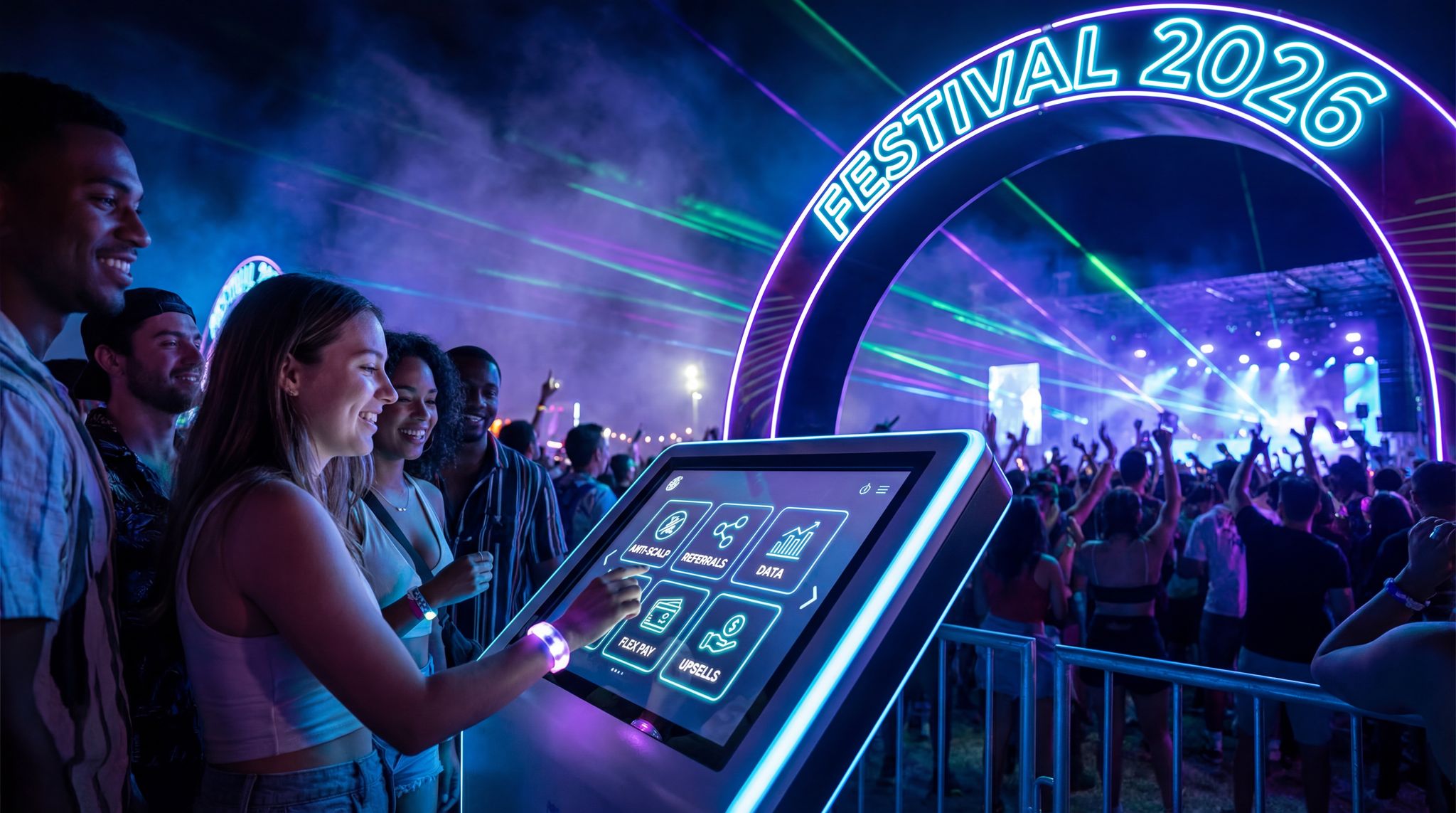
Data-Driven Event Marketing
Track ticket sales, demographics, marketing ROI, and social reach in real time. Exportable reports give you the insights to make smarter decisions.
Key Stat: Global festival tourism was valued at nearly $36.4 billion in 2024, according to Grand View Research’s market analysis – a reminder of how much cultural and economic impact a well-conceived festival can generate.
Table of Contents
- From Big Idea to Clear Vision: Why Concept Comes First
- Crafting a One-of-a-Kind Festival Theme and Identity
- Standing Out in a Crowded Market: Differentiation Strategies
- Getting Stakeholders on Board: Aligning Vision with Expectations
- Crafting Mission and Vision Statements that Inspire
- Defining Core Values and Purpose for Your Festival
- Setting Clear Goals and Objectives
- Nonprofit or For-Profit? Choosing the Right Festival Model
- Naming Your Festival and Shaping Its Brand Identity
- Dream Big, Plan Smart: Balancing Ambition with Reality
From Big Idea to Clear Vision: Why Concept Comes First
Every great festival begins with a big idea. Before booking artists or scouting venues, veteran producers emphasize the importance of crystallizing the event’s core concept and purpose. This means taking that spark of inspiration – whether it’s a jazz & street food weekend in Chicago or a digital arts showcase in Singapore – and shaping it into a clear vision that will guide all planning. Simply put, concept comes first. Without a solid foundation, even ample funding or superstar headliners can’t ensure a festival’s success.
A clear vision functions as the festival’s North Star. It answers the fundamental question: “What is this festival really about?” For example, the founders of Lollapalooza in 1991 envisioned a touring alternative music carnival celebrating diverse rock subcultures. That guiding vision helped Lollapalooza grow from a one-off tour into an enduring brand. Similarly, Glastonbury began with farmer Michael Eavis’s dream to bring the free-spirited vibe of the 1960s counterculture to his dairy farm – a vision that still shapes Glastonbury’s identity today, decades on.
Importantly, the vision isn’t just about genre or location. It encompasses the why behind the event. Are you filling a cultural void in your region? Showcasing a niche art form you feel deserves a platform? Building a community around a lifestyle or cause? Clarifying this underlying purpose will sharpen every other aspect of your plan. Many seasoned organizers even draft a preliminary vision statement in the early brainstorming stage, distilling the idea to a sentence or two. This exercise forces you to articulate what will make the festival compelling and different.
When you have that strong concept defined, you’ll find it easier to make decisions down the line. The vision becomes a filter for evaluating choices: does each artist booking, venue choice, or sponsor fit the concept, or not? For instance, if your vision is a sustainable world music festival celebrating indigenous cultures, that clearly sets parameters – you’ll likely prioritize eco-friendly vendors, book artists from diverse cultural backgrounds, and seek partners that share those values. On the other hand, without a clear vision, a festival can drift aimlessly, trying to be everything to everyone.
Pro Tip: Before diving into logistics, write down your festival’s core concept in one or two sentences. If you can’t explain why your event should exist (and what makes it special) in a couple of lines, the idea isn’t ready. Refine it and test it on friends or team members until the unique vision is crystal clear.
In the concept stage, it also pays to research and learn from others. Look at successful festivals you admire and ask what core vision drives them. Conversely, study high-profile flops – often, you’ll find a weak or muddled concept at the root of the failure. The infamous Fyre Festival (2017) is a cautionary tale: it was sold on a vague promise of luxury and celebrity glamour, but without a grounded, realistic concept behind the hype. The result was an event that collapsed spectacularly when wishful thinking met reality. In contrast, a festival like South by Southwest (SXSW) thrived because it had a clear concept from the start – uniting music, film, and tech into a creative convergence – and every year it stays true to that vision while adapting and growing.
Remember, concept development is not the stage to worry about detailed budgets or logistics. It’s about defining the dream in concrete terms. Once you’ve honed in on that big idea and the reason it matters, you’ve built the cornerstone on which all other festival planning rests. As one guide on turning a festival idea into a clear vision and theme notes, establishing this vision early on will align every decision that follows. In short: know your “why” before your “how.” Everything else – talent booking, marketing, operations – will flow more smoothly when driven by a strong central concept.
Planning a Festival?
Ticket Fairy's festival ticketing platform handles multi-day passes, RFID wristbands, and complex festival operations.
Crafting a One-of-a-Kind Festival Theme and Identity
A festival’s theme is the creative manifestation of its vision – it’s the flavor that makes your event instantly recognizable. Crafting a one-of-a-kind theme and identity is all about pinpointing what will set your festival apart at first glance. In a crowded events landscape, this uniqueness is gold. Attendees often decide where to spend their money based on which event feels the most exciting or meaningful to them, so your festival’s aesthetic and thematic identity need to spark that connection.
Start by brainstorming elements that stem from your core concept. If your vision is the “celebration of futuristic digital art,” is the theme a high-tech neon cyberpunk aesthetic? If your concept is a folk and blues weekend in the countryside, maybe the theme leans into rustic charm and heritage. The theme encompasses everything from the festival name and logo to the on-site decor and even the tone of communications. Successful themes resonate – think of how Tomorrowland (Belgium) commits to an otherworldly fairy-tale theme each year, with stages built as fantastical castles and forests. That consistency has created an identity so strong that attendees know, without explanation, what Tomorrowland stands for.
When developing your theme, ensure it’s not only unique but also authentic. A common mistake is choosing a gimmicky theme that doesn’t truly align with the music or community of the festival. For example, slapping a random costumes-and-carnival theme onto a generic music festival might come off as forced. Instead, the theme should grow naturally from the festival’s personality. Identifying your festival’s core identity early will help here: is it an edgy underground rave, a family-friendly cultural fair, or an avant-garde art salon? The answers will point you toward thematic choices that feel organic.
One useful exercise is to define a few key words or imagery that encapsulate your festival’s vibe, and build from there. Suppose you’re launching a new event focused on holistic wellness and music. Your keywords might be “healing, nature, community, transformation.” From this, you could develop a theme around a “forest sanctuary” – stages decorated with plants, sound baths at sunrise, and a logo featuring a tree or circular symbol of harmony. Notice how the theme reinforces what the festival is about at its core.
Boost Revenue With Smart Upsells
Sell merchandise, VIP upgrades, parking passes, and add-ons during checkout and via post-purchase emails. Increase average order value by up to 220%.
It’s also crucial to differentiate your theme from others, especially those in the same region or genre. If dozens of EDM festivals use neon paint and sci-fi motifs, perhaps your electronic music event leans into a retro 8-bit video game theme to stand out. The goal isn’t to be different just for the sake of it, but to carve out an identity that attendees will remember. A guide on developing a unique festival concept and theme emphasizes that a memorable, specific theme (even one as niche as a garlic or chili food festival) can gain nationwide fame by offering something novel. In other words, embrace what makes your idea weird or special – that’s your festival’s fingerprint.
Warning: Avoid theme creep – when a festival tries to mash too many ideas together. It’s tempting to add “a bit of everything” to appeal to broader crowds, but an unfocused theme confuses attendees and dilutes your brand. Stick to a coherent identity. You can always expand in future years once your core concept is established, but in year one, focus on doing one thing exceptionally well.
As you refine your theme, imagine the attendee’s journey. What feelings or experiences do you want to evoke when they see your festival poster, walk through the entrance, or reminisce afterwards? Maybe it’s the thrill of entering a haunted Halloween music festival where every stage is a spooky set, or the joy of a colorful Holi-inspired bash where attendees throw powdered colors in the air. Use those emotional targets to guide design and programming decisions. In crafting a standout theme and identity, every detail matters – from the festival name (which we’ll explore later) to the hashtags you use. When your theme clicks, it becomes a powerful marketing asset in itself, generating buzz because it gives people a story to tell and a vibe to share.
Finally, be sure to document your theme decisions as part of your overall festival brand guidelines. Consistency is key: your website, social media, ticketing page, and on-site signage should all sing in harmony aesthetically. If you’ve chosen a vibrant cosmic space theme, carry that into the fonts, colors, and content style. This unified front not only looks professional but also reinforces to your audience what makes your festival your festival. Investing the time and creativity to craft a true one-of-a-kind theme will pay off immensely when your event goes live and attendees feel like they’ve stepped into a world you envisioned from scratch.
Standing Out in a Crowded Market: Differentiation Strategies
The festival market is intensely competitive. In major markets like the US and Europe, fans often have multiple events vying for their attention on any given weekend. Standing out isn’t just a marketing slogan – it’s a make-or-break necessity. Differentiation starts with your concept and theme, but it also extends to how you execute and promote the event. The question to constantly ask is: “Why will someone choose this festival over all the other options?”
One effective differentiation strategy is to specialize. Instead of being a jack-of-all-trades, zero in on a niche and own it. Many of the longest-running festivals succeeded by catering deeply to a specific audience or genre in a way no one else was. Burning Man (to revisit that example) differentiates itself not through famous headliners – in fact, it has none – but through an utterly unique participatory culture and artistic ethos. Likewise, a small festival like Viva Las Vegas Rockabilly Weekend thrives by doubling down on a 1950s rockabilly theme, complete with vintage cars, fashion, and music, offering an immersive experience hardcore fans can’t find elsewhere.
Geography can also be a differentiator. Perhaps your festival is the only surf-rock festival on the East Coast, or the highest-altitude music festival set in the mountains. Lean into local advantages. A festival in Mexico City might incorporate Aztec cultural elements that no European festival could replicate authentically. A winter festival in northern Canada could turn extreme weather into a feature, like an “ice stage” concept. If your location or community has a story, make it part of your festival’s DNA.
Of course, differentiation involves knowing your competition. Conduct a landscape analysis of festivals in your space. List out what each of them emphasizes – their genre, their vibe, their audience – and look for gaps or underserved tastes. If every food festival in your country focuses on gourmet street food, maybe there’s room for a rustic farm-to-table food festival with local farmers at the center. If large music festivals all book the same rotating headliners, perhaps your event can champion emerging independent artists and give fans an alternative. As the guide on differentiating your festival in a crowded market points out, finding a unique angle is vital to draw attention away from established players. It could be an innovative format (like a festival cruise or a 24-hour nonstop event), a crossover of genres (music + tech, or film + culinary), or a commitment to a cause (e.g., a festival where all proceeds go to environmental restoration).
Key Stat: The United States hosts hundreds of music festivals annually, with estimates of over 800 festivals each year in the US alone. This sheer volume means new festivals must clearly communicate what makes them different to avoid getting lost in the shuffle.
Differentiation should also be reflected in your marketing. Your festival’s branding and messaging should highlight the aspects that no one else offers. For example, one festival’s differentiation guide suggests emphasizing specific experiences or features that set you apart. If your festival has a curated artisanal marketplace, an on-site spa, or interactive art installations while others don’t, make that front-and-center in promotions. Sometimes a single signature element can become your calling card (think of Tomorrowland’s jaw-dropping stage designs or Burning Man’s climactic burning of the effigy).
It’s worth noting that standing out is not only about what you add, but also what you omit. Strategic focus means possibly doing less, but exceptionally well. A common pitfall is trying to copy a bit of everything successful festivals do – a strategy that usually ends up as a pale imitation. Instead, be bold about the few things you want your festival known for. If you choose to highlight local culture, for instance, you might forego expensive international headliners to invest in authentic local performances and atmosphere. Sure, you might sell fewer tickets initially than a generic big-name festival, but you’re building a differentiated brand that can grow a loyal following over time. In a saturated market, a smaller group of passionate fans is often more sustainable than a larger crowd of casual attendees with lukewarm interest.
Finally, differentiation isn’t a one-and-done task – it’s an ongoing mindset. As your festival evolves year to year, keep an eye on how the market around you changes. Innovation is key. The most beloved festivals continuously add fresh ideas that reinforce their unique identity. Your second-year edition might unveil a new twist or exclusive program item that further separates you from copycats. In summary: stand out, stay true to what makes you unique, and fans will find you.
Getting Stakeholders on Board: Aligning Vision with Expectations
Festival production is a team sport that extends far beyond your core staff. Stakeholders – which include investors, sponsors, local community leaders, municipal authorities, and even the artists – all have a stake in your festival’s success and, naturally, their own expectations. Aligning your vision with stakeholder expectations from the outset can prevent conflicts and build essential support for your concept. A festival might have a dazzling vision, but if key stakeholders aren’t convinced or feel neglected, that vision might never become reality.
Start by identifying who your primary stakeholders are. For a grassroots community festival, local city council or cultural committees could be critical stakeholders who care about community impact, noise, and safety. For a commercial music festival, investors and sponsors will be major stakeholders focused on ROI and brand alignment. Each group will look at your concept through a different lens. An important early step is to communicate your festival’s vision clearly to each of these parties, and listen to their feedback and concerns. This doesn’t mean you should dilute your concept to appease everyone, but rather find the common ground between your creative goals and their objectives.
Need Festival Funding?
Get the capital you need to book headliners, secure venues, and scale your festival production.
For example, if your vision is an all-night electronic music rave in a city park, the local authorities (stakeholders) may worry about noise, security, or community disturbance. Aligning expectations might involve adjusting the concept (perhaps ending at a reasonable hour or including community cultural programming during the day) to show you value local concerns. It’s about finding a balance where stakeholders feel heard and see their priorities integrated, without abandoning the heart of your vision.
Investors and sponsors warrant special attention. An investor who’s funding your event will expect that your concept has a viable business plan and audience appeal. They’ll want to know your vision is not just artistically exciting but also financially sound. This is where having clear goals and objectives (see the section on setting goals) ties into aligning vision. If you can show sponsors that your unique festival concept comes with a smart strategy – say, targeting a lucrative niche audience that’s underserved – you align your creative vision with their expectation of reaching customers. Every sponsorship should feel on-brand for the festival; conversely, as noted in sponsorship playbooks, you should clarify your mission and values before chasing deals. A potential sponsor will quickly pass if they can’t figure out what your festival stands for or if it clashes with their image. Thus, communicating your concept in stakeholder-friendly terms is key: highlight the aspects of your vision that dovetail with each stakeholder’s interests.
Warning: Don’t blindside your stakeholders with major decisions that alter the festival’s concept or scope. A common mistake is changing key elements (like the venue, scale, or theme) without consulting those who have skin in the game. If local partners supported a family-friendly cultural fest and you suddenly pivot it into an EDM megafest, expect backlash. Keeping stakeholders involved and informed builds trust and prevents nasty surprises – it’s much easier to maintain support than to win it back after it’s lost.
Regular check-ins and transparent planning processes can greatly aid alignment. Some festivals form advisory boards or committees including community reps, business partners, and creative advisors during the planning phase. By sharing your vision in presentations or planning meetings, you invite stakeholders to become champions of that vision. For instance, if city officials feel included and see your festival’s positive potential (like tourism or youth engagement), they’re more likely to smooth the path with permits or even provide grants. If a sponsor early on buys into your mission of, say, sustainability and diversity, they might not only fund you but actively promote the festival as part of their brand’s story.
Aligning vision with expectations is also about setting realistic promises. Be careful not to over-promise to any stakeholder just to win their approval. Instead, find alignment in honest, achievable terms. If your vision is ambitious, acknowledge the challenges. For example, you might tell investors, “We aim to draw 10,000 attendees in three years by tapping a unique niche, but Year 1 will be a smaller proof-of-concept event for 2,000 passionate fans.” This shows you have vision and realism – a combination stakeholders appreciate. In fact, aligning with stakeholders often requires referencing your festival’s core values and purpose in conversations, demonstrating that decisions are anchored in those values.
In summary, getting everyone on the same page early – from the city mayor to the main stage headliner’s agent – creates a support network around your concept. It’s much easier to execute a bold vision when your stakeholders see themselves in it. By proactively aligning your festival’s vision with their expectations, you turn potential roadblocks into partners, and you fortify the foundation of your event against the friction and misunderstandings that can derail even the best ideas.
Crafting Mission and Vision Statements that Inspire
Once your concept is taking shape, it’s time to articulate it in the form of a mission statement and vision statement. These concise declarations distill your festival’s purpose (mission) and its long-term aspiration (vision) into words that can rally your team, attract partners, and even entice attendees. Crafting these statements is an exercise in clarity and inspiration – done right, they become the philosophical backbone of your festival.
A mission statement explains the here-and-now: what your festival does, who it serves, and how it does it. For example, a mission might be, “To celebrate and elevate indigenous film and music by hosting an annual non-profit festival that connects native artists with global audiences.” This tells us the festival’s purpose (celebrate and elevate indigenous art), the method (annual festival), and the beneficiaries (artists and global audiences). It’s specific and actionable. Your mission statement should be rooted in your festival’s core values (more on that soon) and identity – essentially, it’s your concept framed as an actionable mandate.
A vision statement, on the other hand, is forward-looking. It paints a picture of the future you hope your festival will help create. It’s often aspirational and a bit idealistic. Using the same example, a vision might be, “A world where indigenous storytellers are celebrated as a vital part of mainstream culture.” Notice this is a broad, uplifting goal that your festival contributes to. Not every festival has a grand vision of changing the world, but even a fun-focused event can have a vision: e.g., “To be the most beloved dance music weekender in the country, known for uniting people in a transformative experience.” The vision fires up imaginations and gives the team a north star to strive toward beyond the day-to-day tasks.
When crafting these statements, brevity and impact are key. Aim for one or two sentences each. They should be easy to remember and repeat. Avoid jargon or overly general phrases that could apply to any festival. (“To host great bands in a fun environment” is too generic to be meaningful.) Instead, highlight what’s unique about your festival. Incorporate your festival’s USP – unique selling proposition – into the wording. If sustainability is core to your concept, weave that in. If education or cultural exchange is part of your purpose, say so. The process of writing a mission and vision statement can even reveal if your concept is still too fuzzy. As one article on crafting your festival’s mission and vision statement notes, putting your vision into words forces you to clarify exactly what you stand for. Don’t be afraid to go through multiple drafts.
Involve key team members or co-founders in brainstorming the mission and vision. Often, a group discussion will bring out phrases that resonate. You might start by each answering, “Why are we doing this festival?” and “What change or impact do we hope to make?” Collect the responses and find common themes. The final statements should feel true to your collective intent.
Pro Tip: When finalizing a mission or vision statement, test it with outsiders. Share it with a trusted friend or industry colleague who isn’t deeply involved in the planning. If they read it and go, “Wow, that’s inspiring” or can at least accurately describe what your festival is about from it, you’ve nailed it. If they look confused or say it sounds like every other festival, sharpen it up.
Once you have mission and vision statements that you’re proud of, put them to work! These statements aren’t just internal doctrine; they can be public-facing too. Many festivals prominently display their mission on their website’s About page or even on promotional materials. This can attract like-minded sponsors and attendees. For instance, Afropunk Festival underscores its mission of providing an open, afro-centric safe space for expression. That clarity appeals strongly to its target audience and partners. Internally, refer back to your mission and vision when making major decisions. They are touchstones that keep your team aligned. If a proposal or opportunity comes up that doesn’t fit the mission, you have the language to justify passing on it.
Finally, remember that mission and vision statements can evolve over time, but change them sparingly. They’re meant to be enduring, guiding principles. If you find after a couple of years that your initial mission needs a tweak because your festival has evolved, that’s okay – just ensure any change is deliberate and communicated. At their best, a strong mission and an inspiring vision statement become rallying cries that energize everyone involved in your festival, from staff to sponsors to the ticket-buying public.
Defining Core Values and Purpose for Your Festival
Beyond the mission and vision statements, defining your festival’s core values and overall purpose adds another layer of guidance to your concept. Core values are the fundamental beliefs and principles that will inform how you make decisions. They’re like the DNA of your festival’s culture – shaping its personality and how it interacts with attendees, artists, and the community. Identifying these values early ensures that as your festival grows, it remains true to its essence.
Start by brainstorming what values are inherent in your festival’s concept. Is it inclusivity? Creativity? Sustainability? Community empowerment? Most festivals will have a handful of core values (usually three to five) that really define their ethos. For example, a transformational arts festival might choose values like: 1) radical self-expression, 2) ecological responsibility, 3) participation, and 4) diversity & inclusion. These could be very different from, say, a luxury food and wine festival whose values might be: 1) quality and authenticity, 2) hospitality, 3) cultural celebration, and 4) philanthropy (if it has a charity angle). There’s no right or wrong set of values – they must fit your festival’s identity and ambitions.
Defining values goes hand-in-hand with articulating your festival’s purpose. Purpose is closely tied to mission: it’s essentially why the festival exists, on a philosophical level. If mission is what you do, purpose is why you do it (beyond making money). For many nonprofit events, the purpose might be obvious (e.g., supporting the arts, fostering community pride, etc.). For for-profit festivals, purpose can still go beyond profit – maybe it’s about spreading love of a genre, or boosting the local economy, or innovating the live event experience. A guide on identifying your festival’s core values and purpose notes that having this clarity not only guides internal decisions but also resonates with modern audiences who often choose events aligning with their own values.
When you’ve outlined a draft set of values, discuss them with your team and even with stakeholders. Do these principles ring true? Would you make tough calls to uphold them? Core values shouldn’t be lip service – they need to be actionable. For example, if “sustainability” is a core value, will your team commit to eco-friendly practices even if they cost a bit more or require extra effort (like comprehensive recycling, or banning single-use plastics on site)? If “inclusivity” is a value, how will that manifest (perhaps through diverse lineup bookings, ADA-compliant venues, and a safe space policy)? It’s better to have three genuine values that you actively honor than ten lofty ideals that aren’t reflected in reality.
Document these core values and incorporate them into your planning processes. Share them during team onboarding, volunteer training, and vendor meetings. Over time, these values create a culture around your festival. Attendees will notice too. Festivals like Electric Forest in Michigan have cultivated a reputation for values like respect, community, and creativity – so much so that the attendee community self-polices to uphold them. That kind of brand loyalty comes from consistently living the festival’s values.
Warning: Be cautious of value drift – saying your festival stands for one thing, but acting differently under pressure. If profitability or external pressures lead you to contradict your stated values (for instance, a “green festival” concept taking on a big oil company as sponsor), it can damage credibility with your audience and partners. It’s usually better to turn down opportunities that conflict with your core values and find alternatives that reinforce what you believe in.
Defining purpose and values also has a pragmatic benefit: it helps attract the right team members and partners. People who believe in what you’re doing will go the extra mile. If potential staff or sponsors see that your festival truly aligns with their own values, they’ll be more excited to join the journey. In today’s events landscape, many festival-goers also care about what an event stands for. Purpose-driven festivals – whether that purpose is environmental sustainability, social justice, or just the celebration of a subculture – often cultivate more passionate fan bases. For instance, Pride festivals around the world have a clear purpose of celebrating and affirming LGBTQ+ communities; that purpose is a huge part of why attendees, artists, and sponsors show unwavering support.
In conclusion, take the time to spell out the core values and purpose underlying your festival concept. This introspective work pays dividends throughout the festival lifecycle. When faced with tough decisions (and you will face plenty in production), those values become a compass. They remind you why you started this venture and what you refuse to compromise on. And at the end of the day, when your festival finally comes to life, it’s often these intangibles – the sense of purpose, the values in action – that attendees will remember and that will differentiate your event in a sea of options.
Setting Clear Goals and Objectives
With your vision, mission, and values in place, the next step is to translate those ideals into concrete goals and objectives. Think of goals as the targets that define success for your festival, and objectives as the measurable steps to reach those targets. Without clear goals, you can’t gauge progress or performance – and stakeholders, whether investors or team members, won’t have a clear understanding of what you’re collectively trying to achieve. As one guide puts it, before the first stage is built or a single ticket is sold, a successful festival begins with clear goals.
Start by identifying a few key goals for your festival’s first edition (or the next edition, if it’s ongoing). Goals typically fall into categories such as attendance, financial, experience, and impact. For example:
– Attendance Goal: e.g., Attract 3,000 attendees to the two-day festival.
– Financial Goal: e.g., Achieve $250,000 in ticket revenue and break even (or a specific profit margin) in Year 1.
– Experience Goal: e.g., Earn an average attendee satisfaction score of 8/10 or higher (via post-event surveys).
– Impact Goal: e.g., 30% of attendees travel from out of region (to boost local tourism), or raise $10,000 for a charity if it’s a cause-based event.
Each festival will have different priorities, but limit your top-level goals to a handful of the most important outcomes. Goals give you direction, but they need to be made concrete with objectives. This is where the classic SMART criteria (Specific, Measurable, Achievable, Relevant, Time-bound) is useful. For each goal, set specific objectives that meet these criteria. For instance, if your goal is to attract 3,000 attendees, an objective could be “Launch a targeted social media ad campaign by March to drive 5,000 early sign-ups/registrations by end of May,” which is specific and measurable.
Formalizing goals and objectives also helps align your team and stakeholder expectations. If everyone knows that “Breakeven by Year 1” or “Sell 500 early bird tickets by June 1” is a goal, they can coordinate efforts towards it. It turns the broad vision into an actionable plan. Internal planning documents like your festival business plan or project management timeline should clearly list these goals. Some organizers even stick them up on the office wall as constant reminders.
It’s worth noting that goals should be ambitious yet realistic. Setting a goal to have 100,000 attendees in Year 1 when you’re a brand-new festival with a niche concept is probably not achievable and could demoralize the team or mislead investors. On the flip side, goals shouldn’t be so easy that they don’t push the team to excel. It’s a balance, often informed by research (look at benchmarks from similar events or pilot events if you’ve done one). If you find yourself unsure, err on the side of conservative realism for financial goals but be optimistic and creative in goals related to experience and impact.
Let’s illustrate how a goal-setting framework might look in practice:
| SMART Criteria | Festival Goal Example |
|---|---|
| Specific | “Sell 5,000 weekend passes to the indie music festival by Event Day.” |
| Measurable | “Achieve at least 85% positive feedback (rating >= 4/5) in attendee surveys regarding the festival’s atmosphere and organization.” |
| Achievable | “Book 15 local bands and 5 national headliners, aligning with the budget and our folk-rock theme (ensuring this mix is realistic given our booking contacts and funds).” |
| Relevant | “Launch a community outreach program in the host city by 3 months out (relevant to our goal of being a community-driven festival, it boosts local engagement).” |
| Time-Bound | “Secure 20 corporate sponsors by Q2 2025 to meet our funding goal, with each sponsor agreement signed no later than 8 weeks before the festival.” |
In the table above, each entry translates a broad goal into a SMART objective, ensuring the team knows exactly what to aim for. For instance, instead of a vague goal like “get lots of sponsors,” the objective is time-bound and specific: “20 sponsors by Q2 2025.”
Warning: Avoid setting too many goals, especially in your inaugural year. It’s better to nail the most crucial objectives than to stretch your team thin chasing 20 different metrics. Prioritize goals that align with your festival’s concept and survival. For example, an indie film festival’s central success might be measured in industry press coverage and filmmaker satisfaction rather than pure ticket sales. Know what success looks like for your concept, and focus on that.
Once goals are set, devise the strategies to achieve them. This is where sub-teams (marketing, logistics, etc.) create their action plans. If one goal is high attendee satisfaction, an operations objective might be “keep average wait times at food stalls under 5 minutes” and then plan accordingly with vendor management. Regularly track progress on these objectives. Use simple dashboards or meetings to review ticket sales against targets, budget vs actuals, and so on. This practice allows you to adjust tactics in real-time. Maybe early bird ticket sales are slow – you might launch an extra promo if you know the goal and see a shortfall.
In essence, clear goals and objectives turn your festival vision into a project with defined endpoints. They give everyone clarity and something to celebrate when achieved. And importantly, after the festival, reviewing how you fared against goals provides invaluable lessons. If you hit most of them – great, you have a formula to build on. If you missed some, analyze why: was the goal unrealistic, or was execution lacking? Then refine and reset for the next edition. That continuous improvement is how good festivals become great over time.
Nonprofit or For-Profit? Choosing the Right Festival Model
Early in the concept phase, festival founders need to decide on a critical question: will your festival operate as a for-profit business or a nonprofit organization? This choice has profound implications for how you structure your event, raise funds, and define success. Neither model is inherently better – the right fit depends on your festival’s mission, values, and funding strategy. What’s important is that the model aligns with your vision and stakeholder expectations.
A nonprofit festival is typically mission-driven and often qualifies for certain grants, public funding, or tax-exempt status. Many cultural, community, or arts festivals choose the nonprofit route. The idea is that any surplus (profit) is reinvested into the festival or related community causes, rather than distributed to owners or investors. For example, a folk music heritage festival might be run by a nonprofit that aims to preserve cultural traditions. This model can attract donations and sponsorships from entities that prefer supporting a charitable cause. It also may involve more community representation in governance (like a board of directors). The flip side is that nonprofits rely heavily on fundraising, grants, or public subsidies which can be competitive and uncertain. Decision-making might be slower if multiple stakeholders or board members have a say to ensure the festival stays true to its charitable mission.
A for-profit festival operates as a private or corporate entity. Its primary goal is to be financially sustainable through ticket sales, sponsorship, and other revenue streams, generating profit for owners or shareholders if successful. The majority of large commercial music festivals (think Coachella, Lollapalooza, etc.) are for-profit ventures, even if they incorporate philanthropic elements. This model typically allows more agility in decision-making and easier access to private investment capital. Investors are willing to put money in if they see potential returns. You can also scale up the event as a business, replicate it in other cities, or sell it in the future. However, a pure profit-driven approach might clash with some values; for instance, choices might skew toward what’s profitable versus what’s artistically pure or community-oriented. Also, any profits are taxed, and you can’t directly solicit tax-deductible donations.
To decide, reflect on your festival’s core purpose (recall the exercise of identifying your purpose and values). If your festival’s primary aim is social or cultural and you plan to seek funding from arts councils or foundations, a nonprofit model could be advantageous. Some countries have robust public arts funding that nonprofits can tap into, whereas for-profits cannot. On the other hand, if your concept is more entertainment-focused and you anticipate strong revenue from attendees and sponsors, a for-profit model might make more sense. As one resource on choosing the right festival model suggests, consider long-term sustainability and stakeholder expectations. For example, sponsors might not care about your status, but large donors or government grants will typically only fund nonprofits.
There are also hybrid approaches. Some festivals start as nonprofits but have for-profit subsidiaries for certain activities, or they operate for-profit but create a charitable foundation to handle community programs. These can be complex but offer flexibility. Another aspect is control: as a founder, a for-profit can offer more personal control (especially if you’re sole proprietor or have equity), whereas a nonprofit is ultimately community-owned (you could even be voted out by a board). If maintaining personal creative control is important, be mindful of that dynamic.
Let’s compare some key differences in a quick snapshot:
| Aspect | Nonprofit Festival | For-Profit Festival |
|---|---|---|
| Primary Purpose | Mission-focused (cultural, charitable, educational purpose). Profits reinvested in mission. | Profit-focused (commercial entertainment or enterprise). Profits can be distributed to owners. |
| Funding Sources | Grants, donations, public funding, sponsorships (mission-aligned), ticket sales. Often volunteer support. | Private investment, sponsorships (ROI-driven), ticket sales, merchandise. Primarily revenue-driven. |
| Governance | Board of directors/trustees for oversight. Greater stakeholder/community input. | Owners, shareholders, or partners control operations. More centralized decision-making. |
| Advantages | Tax-exempt status (in many regions), eligibility for grants & donations, public goodwill for cause. Mission clarity. | Flexibility in operations, easier to attract investors, potential for financial growth and expansion, simpler decision structure. |
| Challenges | Reliance on fundraising, possible limited capital, decisions subject to board approval, must stick to charitable purpose. | Taxed on profits, need to maintain profitability, public perception might be solely profit-driven, less access to grants. |
Pro Tip: Research similar festivals in your country or region to see what models they use. If festivals akin to yours (size or genre-wise) are largely nonprofit and benefit from public arts grants, that’s a clue. Conversely, if you see entrepreneurs successfully running festivals like yours as businesses, reach out and politely ask for insights into their choice of structure. Learning from real-world examples can illuminate the best path for your event.
Choosing a model is not irreversible, but changing later can be complicated. Some festivals have transitioned (nonprofit to for-profit or vice versa) as they evolved, but doing so involves legal and financial restructuring. It’s best to choose the model you can stick with for the foreseeable future. Consult with a legal advisor who has experience in events or entertainment law when setting up your festival entity – they can explain local laws, liability implications, and paperwork. For instance, forming a nonprofit requires bylaws and filings for tax-exempt status, while an LLC or limited company might be simpler but offers different protections.
In the end, whether nonprofit or for-profit, your festival’s success will still hinge on delivering a great experience and sound management. The model is a means to support your vision. Pick the one that aligns with how you plan to fund and operate the festival, and that sits comfortably with your festival’s identity. Then, communicate that choice transparently: if you’re nonprofit, promote the mission (people often like to support a cause). If you’re for-profit, you don’t need to shout it, but you can still highlight any philanthropic or community initiatives to show you’re not just about money. Either way, integrity and authenticity in how you run the festival will earn respect from attendees and stakeholders alike.
Naming Your Festival and Shaping Its Brand Identity
Choosing a name for your festival is a pivotal moment in bringing your concept to life. The right name can evoke the spirit of your event, spark curiosity, and stick in people’s minds – while a bland or confusing name can make marketing an uphill battle. Along with the name, your festival’s brand identity – the logo, visuals, and overall style – will form the first impression for potential attendees, so it needs to be crafted with care and consistency.
When brainstorming a festival name, consider these guidelines:
– Reflect the Concept: Ideally, the name gives a hint of the festival’s theme or vibe. For example, “Jazz in the Park” is straightforward about genre and setting; “Electric Daisy Carnival” metaphorically conveys an electric dance music party (with a whimsical twist); “SXSW” (South by Southwest) in Austin hints at its geographic/cultural roots and now carries brand legacy. A name like “Global Rhythms Summit” would suggest a world music focus, whereas “WinterWonderFest” conjures images of a festive winter-themed event. Think about what you want people to immediately associate with your festival.
– Keep it Memorable and Pronounceable: Shorter tends to be better. Many top festivals have one to three-word names. If the name is long or a tongue-twister, people might shorten it for you (and not always kindly). Test potential names verbally – are they easy to say and spell? This matters when people search you online or talk about the event. An unusual word can work if it’s catchy (e.g., “Bonnaroo” is gibberish but memorable), but be cautious with obscure languages or inside jokes that newcomers won’t get.
– Unique and Non-Conflicting: Do a thorough search to ensure your festival name isn’t too similar to another event, especially one in your region or industry. Not only to avoid legal issues (trademark conflicts), but also for brand clarity. You wouldn’t want to name your event “Tomorrow’s Land” and be constantly correcting people that no, it’s not Tomorrowland. If you plan to secure a trademark for your festival name/logo down the line, uniqueness will be crucial. Check domain name availability as well – having a matching website URL (or social media handles) will make your life easier.
Once you have a shortlist, imagine the name in use. Say it out loud in a sentence (“We’re going to ___ Festival this summer!”). Show it in a mock-up logo or on a sample poster. Does it fit the mood? Gathering feedback at this stage is wise – sometimes organizers fall in love with a clever name that others might not resonate with. Ensure the name doesn’t carry unintended meanings or negative connotations in other languages, especially if you aim for an international audience.
After naming, developing the visual identity is the next step. Brand identity encompasses your logo, color palette, typography, and design style. Consistency here builds recognition. For a high-energy EDM festival, your brand might feature bold neon colors, futuristic fonts, and dynamic graphics. For a tranquil yoga and wellness festival, you might choose earthy tones, simple elegant fonts, and nature-inspired imagery. The visuals should align with the emotions and experiences you want to convey (recall the earlier section on theme).
Engaging a professional designer or branding agency with experience in events can be a worthwhile investment. They can create a logo that works well across various mediums (posters, merch, app icons) and graphics that convey your vibe. Provide them with your concept brief and any thematic elements so they can translate that into design. For instance, when naming and branding your festival, consistency is key: if your event title includes a symbol or character (like how Burning Man uses the stick man figure in its logo), integrate that thoughtfully.
Warning: Before finalizing your name and logo, double-check legalities. This means ensuring you’re not infringing on trademarks. If your festival is called something common like “Sunrise Festival,” note that there might be a dozen similar names around the world – that could be a branding headache. In some cases, festivals have had to rename after a few years due to legal challenges from similarly named events. Save yourself that pain by choosing and registering a distinct name upfront.
Brand voice is another aspect of identity. How do you speak to your audience? Is it playful and conversational, or formal and informative? This should match your festival’s character. A comic-con style festival might use a fun, geeky tone on social media, whereas a classical music festival might maintain a more refined, artistic voice. Develop a short brand guide that outlines this voice, along with correct usage of your name and visuals. For example, decide if you will call it “XYZ Fest” in short or always the full “Xyz Festival.” These details ensure your team and partners present the brand cohesively.
Finally, roll out the name and brand with intent. Your festival’s launch announcement is a prime opportunity to start building brand recognition. Have the website and social media handles ready to go, with the branding in place. Consistently use your logo and branded hashtag on marketing materials. Over time, repetition will make your name synonymous with an image and a feeling in your audience’s mind. Think of how the word “Woodstock” immediately evokes a mental image of peace signs and tie-dye, or how “Ultra” (the festival in Miami) calls to mind electronic beats and LED fireworks – that’s the power of brand identity built over years.
A great name and brand won’t guarantee a great festival, but they will greatly enhance your first impression and memorability in a busy market. Combined with the strong concept you’ve developed, a compelling name and cohesive identity give your event its best chance to lodge in people’s minds – and ultimately, to draw them through the gates.
Dream Big, Plan Smart: Balancing Ambition with Reality
At the heart of every festival producer is a dreamer – it takes ambition to imagine a gathering of thousands of people coming to revel in the experience you create. Ambition is what drives innovation and makes festivals magical. However, seasoned producers will tell you that an equally important trait is pragmatism. Turning wild ideas into a sustainable event means continually balancing the big dreams with real-world constraints. The mantra “dream big, plan smart” encapsulates this delicate dance.
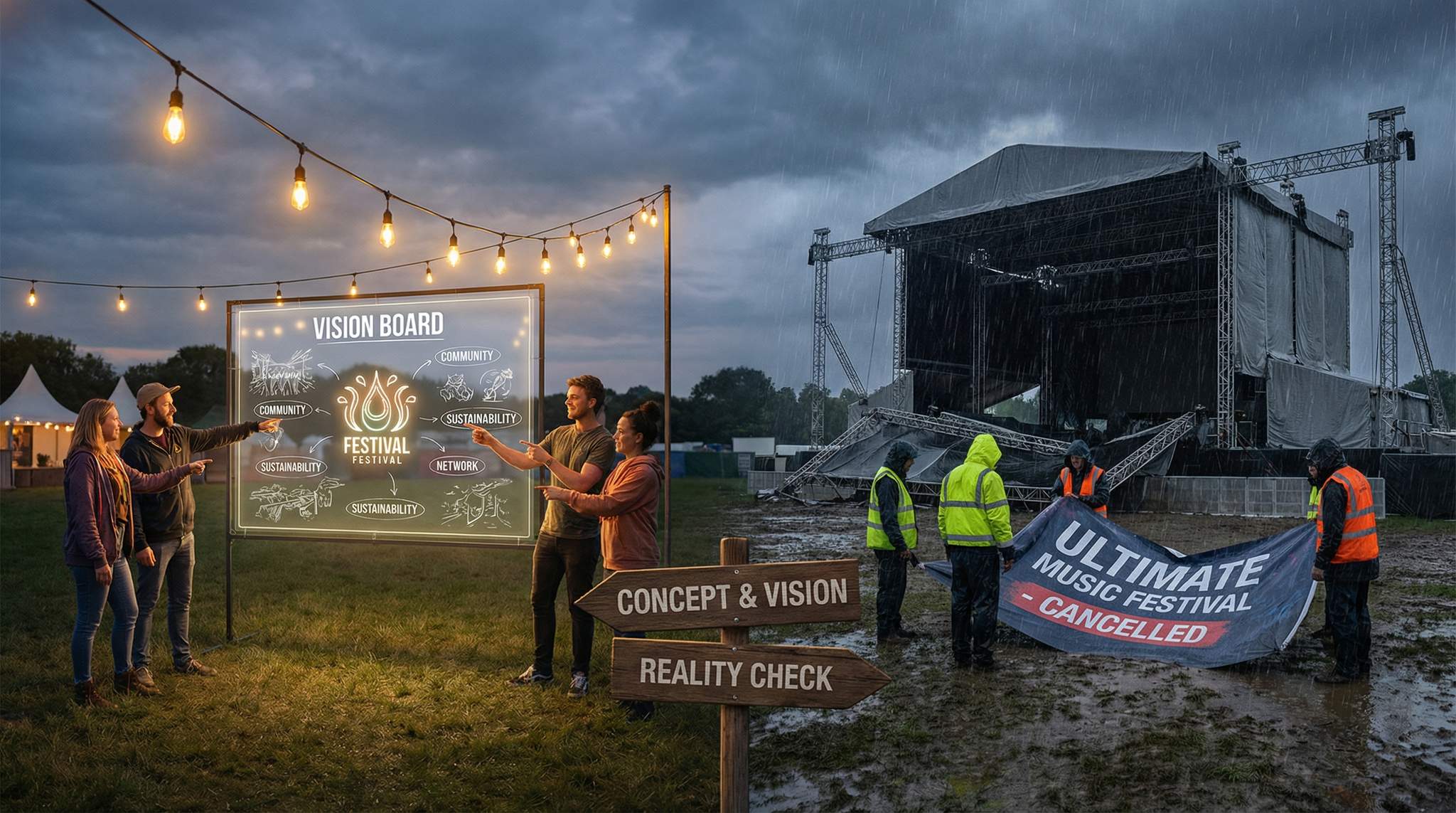
In the concept phase, you likely envisioned grand things: perhaps a jaw-dropping venue, spectacular stage designs, A-list performers, cutting-edge technology integrations, and so on. Those ambitions give your festival its unique flair and aspirational quality. Don’t lose sight of them – they are what can set your event apart. However, as planning progresses, every lofty idea must face a reality check: budget, timeline, logistical feasibility, and safety, to name a few. The key is not to kill the ambition, but to channel it efficiently.
Start by identifying your non-negotiables – the elements of your vision that define the festival’s soul. Maybe it’s crucial that the festival is on a beach at sunset, or that it features interactive art installations, or that it’s free to attend for under-12 kids. Whatever those are, protect them, and plan around them. Next, identify the areas where you have flexibility. Perhaps you dreamed of four stages but realize two well-curated stages might achieve the atmosphere you want without overextending resources. Or you imagined a three-day event but scaling to two days in the first year could be wiser financially. Balancing ambition with reality often means phasing your plans: do in year one what you can do well and save some expansions for years two or three once you’ve built momentum (and proven the concept).
One useful approach is to create two budgets and timelines: an “ideal scenario” and a “minimum viable festival” scenario. The ideal scenario includes all the bells and whistles. The minimum viable version focuses on what it takes to deliver a great experience at its most basic; this is your fallback that you know you can execute even if challenges arise. Reality usually ends up somewhere between these. For instance, you might want a giant interactive art sculpture as a centerpiece. In the ideal plan, you commission a famed artist for a $100k installation. In a viable fallback, you might partner with a local art school for a smaller-scale piece within a $10k budget. By exploring both, you’re ready to calibrate as needed.
Experienced festival organizers also advise building a time buffer into planning. Ambition can lead to tight timelines if you’re not careful – wanting to launch ASAP or announce big features before they’re locked in. Pad your schedule; if you think something will take 2 months, allow 3. It’s far better to open ticket sales a bit later with everything properly set than to rush and court disaster. Remember the cautionary tales like Fyre Festival: a huge part of its failure was compressing an unrealistic amount of work into a few months on a remote island. The vision was grand, but the planning was anything but smart in that case.
Warning: Beware of scope creep as you move from concept to execution. It’s easy for well-meaning ideas to pile on – one more stage, a bigger tent, extra VIP amenities – especially when different stakeholders push for additions. Protect your core plan from becoming overburdened. Every new element adds cost and complexity; ask if it truly serves the festival’s vision and audience or if it’s just an ego-driven “nice to have.” It’s often better to deliver a slightly smaller-scale event that nails the attendee experience than a giant one that feels chaotic or half-baked.
A practical tool for balancing ambition with reality is the festival timeline. Lay out all the critical milestones from concept to event day, and be realistic about lead times. Here’s a simplified example of major planning phases:
| Time Before Festival | Vision & Concept Milestones |
|---|---|
| 18–24 months out | Define the festival’s core vision, theme, and values. Conduct a feasibility study (audience research, venue possibilities, ballpark budget). Decide on festival model (nonprofit vs. for-profit). Start aligning key stakeholders (major partners, local authorities) with the concept. |
| 12–18 months out | Finalize festival name and branding. Craft mission and vision statements. Set clear goals (e.g., attendance, budget). Secure the venue and dates (ensure it fits the concept and season). Draft a preliminary lineup wish list that fits the theme. Begin sponsor outreach, leveraging the unique vision to attract interest. |
| 6–12 months out | Confirm headline artists or key content that defines the festival experience. Launch initial marketing with concept-forward messaging. Open early ticket sales if possible to gauge interest. Continue sponsor confirmations – focus on those that align with festival values. Start permit and logistics processes with authorities, showing you have solid plans (safety, traffic, etc.). |
| 3–6 months out | Execute full-scale marketing campaign (highlight how the festival stands out). Ramp up production planning (stage design, site layout) ensuring all elements remain true to the concept. Engage the community (local pop-up events or social media storytelling about the festival’s vision). Finalize all operational plans with contingency measures for weather, low ticket sales, etc., as safety nets. |
This timeline is generalized, but it illustrates pacing. Ambition might tempt you to compress timelines (launch earlier) or overcommit early (book too many acts 18 months out without finances in place). Sticking to a well-spaced timeline is part of “planning smart.” It gives you room to adjust if, say, sponsor funding comes in lower than hoped – you’ll still have time to scale back some expenses without derailing the event.
The ultimate aim is to realize as much of your creative vision as possible with the resources at hand. If you find yourself having to compromise due to budget or time, remember that creativity often flourishes under constraints. Maybe you can’t afford a massive firework show finale – what’s a cheaper but unique alternative? A synchronized drone light display or a crowd participatory ritual might be equally impactful and memorable. The history of festivals is full of examples where limitations led to innovative solutions that became beloved traditions.
In conclusion, hold onto the passion that sparked your festival concept – it will motivate you and inspire others. But ground every decision in sound planning and realistic assessment. By dreaming big and planning smart, you give your festival concept the best chance to not only come to life but to thrive and grow year after year, turning that initial dream into an enduring reality.
Essential Reading for Festival Producers: Concept & Vision
Understanding festival concept and vision deeply will set you up for success. The following resources offer further insights into developing and refining your festival’s foundation:
– Developing a Unique Festival Concept and Theme – In-depth strategies for crafting a one-of-a-kind theme that differentiates your event from the rest, with examples from successful festivals.
– Standing Out: Differentiating Your Festival in a Crowded Market – Expert advice on analyzing the competition and finding a unique niche for your festival to dominate.
– Aligning Your Festival Vision with Stakeholder Expectations – A guide to ensuring that your festival’s key partners and supporters are on board with your concept from the early stages through execution.
– Crafting Your Festival’s Mission and Vision Statement – Step-by-step help on writing powerful mission and vision statements that encapsulate your festival’s purpose and inspire your team.
– Identifying Your Festival’s Core Values and Purpose – Learn how to pinpoint the guiding principles that will influence every decision in your festival planning and operations.
– Setting Clear Festival Goals and Objectives – Tips on turning your high-level vision into measurable targets and KPIs, using frameworks like SMART to keep your festival on track.
– Choosing the Right Festival Model: Nonprofit vs For-Profit – An analysis of different organizational structures for festivals, helping you decide which model aligns with your mission and growth strategy.
– Naming Your Festival and Building a Brand Identity – Guidance on selecting a memorable name, designing a compelling logo, and establishing a brand that captures your festival’s essence.
– Creating a Festival Concept: What to Consider – A comprehensive overview of the conceptual phase, covering everything from audience profiling to theme development, with practical examples.
– Dream Big, Plan Smart: Balancing Ambition with Reality – Advice on how to pursue an ambitious festival vision while maintaining pragmatic plans, including cautionary lessons from past festival failures and successes.
FAQ
What is the difference between a festival’s concept and its theme?
The concept is the big idea or purpose behind the festival – it’s the overall vision that defines what the event is about (its genre, mission, and core experience). The theme, on the other hand, is how that concept is expressed aesthetically and programmatically in a given edition. For example, the concept of a festival might be to celebrate science fiction in film, while the theme this year could be “Space Exploration,” influencing decor, film selections, and costumes. The concept tends to remain fairly constant (it’s the identity of the festival), whereas themes can change from year to year as creative variations under the umbrella of the core concept.
How early should I start planning my festival concept and vision?
It’s wise to start working on your festival concept and vision 12–24 months before your intended event date, especially for larger festivals. This lead time allows you to refine the idea, conduct market research, and secure stakeholders. Many successful festivals begin planning 18+ months out, using the first few months solely to develop the concept, mission, and feasibility studies. Smaller local festivals might work with shorter timelines (e.g., 6–12 months out), but even then the earlier you clarify your vision, the better. An early start also gives you time to pitch the concept to potential partners and adjust based on feedback.
Can a festival have multiple themes or genres and still be successful?
Festivals can be multi-genre or multi-theme (for instance, a city festival that includes music, film, and food), but they still need a unifying vision to be successful. The key is to ensure there’s a cohesive thread tying everything together – essentially a meta-concept. Without it, a multi-faceted festival can feel disjointed. Many large festivals successfully incorporate diverse content (e.g., SXSW spans music, film, and tech) because they have a clear unifying purpose and brand identity. If you plan to go multi-genre, articulate what holds it all together (say, “celebration of local culture” or “innovation in creative arts”) so that attendees and stakeholders understand the festival’s overall identity.
How do I align a group of co-founders or team members around one vision?
Start with open discussions to create a shared vision document. Have each founder/team member describe their ideal version of the festival and the goals they have in mind. Look for common ground and merge these ideas into a singular mission and set of core values. It helps to write out a mission statement and a vision statement as a team exercise – this forces clarity and consensus. Also solidify roles based on areas of passion or expertise, so each person feels ownership of part of the vision. Regular check-ins are key; as planning gets underway, revisit the vision document to ensure decisions align with it. When everyone has participated in shaping the concept, they’re more likely to champion it with unity.
What if my festival’s vision doesn’t resonate with investors or sponsors?
If you find that potential investors or sponsors aren’t connecting with your vision, try to translate your concept into value terms that matter to them. This could mean emphasizing the size of the niche audience you’ll attract, the brand alignment opportunities, or the community impact (depending on what the stakeholder prioritizes). It’s possible your vision is sound but you’re pitching it to the wrong people – refocus on partners who naturally align with your festival’s theme or values. However, be open to feedback; if multiple seasoned experts indicate concerns, consider refining your concept rather than abandoning it. Sometimes a slight repositioning (not changing the core, but how it’s framed) can make it more compelling. Remember, every great festival idea faces skepticism at first – persistence and the ability to communicate your passion in business terms are key.
How detailed should my festival vision be in the early stages?
In the early stages, your vision should be clear but not overly detailed. You want a strong elevator pitch – e.g., “A weekend outdoor adventure film festival in Colorado celebrating environmental activism” – which covers the essence of concept, audience, and vibe. However, you don’t need to have every variable (down to each sub-event or decor element) decided initially. In fact, some flexibility is beneficial; it allows collaborators to contribute ideas and for the concept to evolve with input. Focus on nailing the core elements: purpose, target audience, genre, and key differentiators. As planning progresses, you will add layers of detail (schedules, specific thematic touches, etc.). Overloading the vision with too many specifics too soon can be limiting – leave room for creative development during the planning journey.
Glossary
- Festival Concept – The foundational idea and overarching vision for a festival, including its theme, purpose, and unique identity. It answers “what is this festival about and why does it exist?”
- Vision Statement – A short, aspirational description of what a festival hopes to achieve or become in the future. It’s future-oriented and meant to inspire (e.g., “To foster global unity through music and art”).
- Mission Statement – A concise declaration of a festival’s present purpose and approach. It outlines what the festival does, for whom, and how (e.g., “An annual three-day jazz festival providing a platform for emerging local talent and enriching the regional arts scene”).
- Stakeholders – Individuals or organizations with an interest or investment in the festival. This includes founders, sponsors, investors, attendees, local community, vendors, and authorities. Stakeholders can influence or be affected by the festival’s success.
- Core Values – The fundamental beliefs and principles that guide a festival’s decisions and culture. Examples might be sustainability, inclusivity, creativity, or community focus. These values shape how the festival is planned and executed.
- Differentiation (USP) – Unique Selling Proposition; in festivals, this refers to what sets your event apart from others. It could be a niche focus, a special location, a signature experience, or any element that makes the festival distinct in the market.
- SMART Goals – A framework for setting clear objectives. SMART stands for Specific, Measurable, Achievable, Relevant, Time-bound. Festivals use SMART criteria to set and track goals like ticket sales targets or social media engagement numbers.
- Nonprofit vs. For-Profit – Two types of organizational models. Nonprofit festivals run under organizations where surplus funds are reinvested in the mission (often eligible for grants and donations, with a board governance structure). For-profit festivals operate as businesses aiming for profitability for owners or shareholders.
- Brand Identity – The visual and tonal representation of the festival’s brand, including name, logo, color schemes, typography, and communication style. It’s how the festival presents itself to the world and is crucial for recognition and marketing.
- Scope Creep – The gradual expansion of a project’s goals or requirements beyond its original plans, often without proper adjustments to resources or timeline. In festival planning, scope creep can occur if new ideas or demands keep being added, risking overextension beyond budget or capacity.
- Feasibility Study – An early assessment conducted to evaluate the viability of the festival concept. It covers market demand, audience interest, financial projections, and logistical considerations to determine if the idea is realistic and what challenges might need to be addressed for success.
Conclusion
Concept and vision are the cornerstones of any festival – they capture the dream that inspires all the hard work to come. By thoughtfully defining what your festival stands for, whom it serves, and what makes it extraordinary, you create a guiding light that can lead your team through every challenge. The world’s most celebrated festivals, from tiny community gatherings to massive international spectacles, all began with someone articulating a clear concept and believing in it.
As a festival producer, your role is part visionary and part pragmatist. This guide has shown the importance of balancing those aspects: nurture your bold ideas and unique themes, but also ground them in solid research, smart planning, and clear communication. When vision and reality are in harmony, magic happens – not just in the stories you tell in a pitch deck, but on the festival ground where attendees can feel the heart and soul you poured into the concept.
Embarking on this journey, remember that refining a festival concept is an iterative process. Don’t be afraid to tweak your mission statement, adjust goals, or realign with stakeholders as you learn along the way. Keep your core values at the forefront, and they will act as a compass through the noise of logistics and business. With a strong concept and vision as your foundation, you’re not just organizing an event – you’re creating an experience with meaning and legacy. Now, armed with knowledge and inspiration, go forth and build the festival you’ve envisioned – the world is ready to share in your dream.