The 2026 Festival Frontier: Why New Markets Are Booming
Growing Middle Classes and Youth Demographics
Global festival producers are looking beyond traditional hubs as emerging markets surge with young, eager audiences. Regions across Asia, Africa, the Middle East, and Latin America boast booming youth populations and expanding middle classes ready to spend on live entertainment, a key driver for succeeding in emerging markets with limited infrastructure. In sub-Saharan Africa, over 70% of the population is under 30, and Asia-Pacific is on track to comprise two-thirds of the world’s middle class by 2030, as noted in a UNDP report on Asia-Pacific development. This translates into millions of new potential festival-goers with disposable income. For example, Nigeria’s Gidi Culture Fest tapped into West Africa’s huge youth demographic and rapidly grew by featuring Afrobeats stars alongside international acts, demonstrating how producers can succeed in emerging markets. The lesson: rising incomes plus youthful energy equal ripe demand for festivals.
Government Cultural Initiatives Fueling Festivals
It’s not just consumer demand driving the boom – governments are actively courting festivals. Many emerging economies see festivals as engines for tourism, jobs, and global image-building, often resulting in support from governments and tourism boards. In the Middle East, Saudi Arabia’s Vision 2030 reforms unleashed massive support for entertainment events, exemplified by the state-backed MDLBEAST Soundstorm festival drawing an expected 600,000 visitors according to Pollstar’s 2025 forecast. Likewise, Jordan’s new Medaina festival in Petra was co-sponsored by the tourism board and airlines to revitalize tourism through music, as described in a review of the Medaina electronic music festival. Across Latin America, national and city governments are offering incentives and logistics help to attract international events. From cultural grants to fast-tracked permits, public initiatives are reducing barriers. Savvy producers are leveraging these programs – partnering with tourism boards or economic development agencies – to secure venues, funding, and promotion in new regions.
Global Connectivity and Cross-Cultural Fandoms
The rise of social media and streaming means music and festival culture now transcends borders instantly. A teen in Jakarta or Lagos can livestream Coachella or Tomorrowland and develop the same festival FOMO as one in Los Angeles. These shared global tastes create pent-up local demand for similar experiences at home. For example, K-pop’s worldwide popularity has given rise to K-pop themed festivals and tours across emerging markets, proving that Asia’s live boom is only getting started. International acts are also adding stops in cities once overlooked – Coldplay’s 2024-25 tour played to 200,000+ fans in Abu Dhabi and showed major artists that full Middle East or Asia tour legs are now viable. Additionally, cheap flights and travel visas mean fans will hop borders for festivals. Music tourism is exploding – the global music tourism market is projected to grow from $97 billion in 2024 to $268 billion by 2030 according to Axean Festival data – indicating people are willing to travel for great events. This connectivity of cultures and ease of travel greatly amplify the potential audience for festivals in new regions.
Pushing Beyond Saturated Home Markets
Finally, established festival promoters are eyeing emerging regions as relief from saturated Western markets. In Europe and North America, competition is fierce and costs are high, squeezing profit margins. By contrast, emerging markets often have open competitive space – few or no major festivals yet – allowing a newcomer to become a marquee event for the region, capitalizing on untapped audiences and less competition. For instance, when only one or two big festivals exist in a country, a new entrant can quickly capture audience and media attention. Promoters also report that government support and lower local operating costs can offset the challenges, making expansion financially attractive, especially with support from governments and tourism boards. Rather than launch yet another festival in California or London, visionary producers are pivoting to places like Southeast Asia, East Africa, or the Middle East where they can be first movers. The strategic positioning is clear: go where the growth is. As Live Nation’s Asia-Pacific president observed, “From 2023 onwards, the growth [in Asia]has been nothing short of incredible” – confirming that Asia’s live boom is only getting started – and other regions are seeing similar trajectories.
Turn Fans Into Your Marketing Team
Ticket Fairy's built-in referral rewards system incentivizes attendees to share your event, delivering 15-25% sales boosts and 30x ROI vs paid ads.
Emerging Market Snapshot (2026)
| Region | Population (Approx.) | Median Age | 2024–2030 Growth Indicators | Notable New Festivals (Launch Year) |
|---|---|---|---|---|
| Southeast Asia (ASEAN) | 680 million | ~30 | Middle class doubling by 2030; Southeast Asia representing 14.6% of the region’s live music market | Rolling Loud Thailand (2023); 88rising’s Head in the Clouds Jakarta (2022) |
| South Asia (e.g. India) | 1.9 billion | ~27 | Live events upsurge post-2023; major int’l tours now include India | Lollapalooza India (2023); VH1 Supersonic Festival (relaunch 2022) |
| Middle East (GCC) | 60 million | ~30 | Billions in gov’t investment (Vision 2030); new venues fast-tracked, creating the perfect storm for Middle East events | MDLBEAST Soundstorm, KSA (2019); Creamfields Abu Dhabi (2022) |
| Africa (Sub-Saharan) | 1.1 billion | ~19 | Fastest youth growth globally; Afrobeats global charts dominance | Afro Nation Ghana (2019); Gidi Fest Nigeria (2014) |
| Latin America | 660 million | ~31 | Live sector rebounding; int’l promoters investing despite econ. swings, as South America realizes its potential with new markets | Primavera Sound São Paulo (2022); EDC Mexico City (2014, growing) |
As the table above highlights, each region presents a massive audience base with favorable trends – from Southeast Asia’s burgeoning middle class to Africa’s youth wave. Next, we’ll dive into specific regions to understand their unique opportunities and how to approach them.
Planning a Festival?
Ticket Fairy's festival ticketing platform handles multi-day passes, RFID wristbands, and complex festival operations.
Asia Pacific’s Festival Ascendancy
Southeast Asia: New Festivals and Fanbases
Southeast Asia is experiencing an events explosion as economies grow. Countries like Thailand, Vietnam, Indonesia, and Singapore are hosting large-scale music festivals that barely existed a decade ago. International brands have flocked in: Rolling Loud launched an Asian edition in Thailand, Ultra Music Festival set up in Singapore and Bali, and homegrown events like Wonderfruit in Thailand have gained global acclaim for their creativity. Key factors include a digitally savvy young population and strong tourism appeal. In Indonesia, for example, Jakarta’s DWP (Djakarta Warehouse Project) grew from a club event into a 90,000-attendee festival by embracing EDM when local demand was unmet. The ASEAN region’s music industry is still only ~1.7% of the global market, showing that Southeast Asian music is rising, underscoring untapped potential. To succeed, producers in Southeast Asia prioritize affordable pricing and local language marketing (given price sensitivities and diverse languages) and invest heavily in social media promotion (TikTok, Instagram, and YouTube dominate outreach here). It’s also crucial to adapt to climate – scheduling around monsoon season and providing amenities for heat and humidity. Festivals like Singapore’s ZoukOut have long navigated tropical weather by shifting event dates and offering cooling stations. Overall, Southeast Asia offers huge upside if international organizers collaborate with local teams who understand the cultural nuance and logistical landscape.
India and South Asia: A Surging Mega-Market
India, along with neighboring South Asian countries, is one of the most promising festival markets heading into 2026. India’s massive youth population (median age ~28) and growing middle class have already fueled a boom in live events – the country’s live music revenue jumped post-pandemic as global artists now routinely include India on tour. The debut of Lollapalooza India in 2023 was a watershed moment, drawing over 60,000 attendees across two days in Mumbai, as Lollapalooza India welcomed 60,000 guests. That event, produced via a partnership between global festival organizer C3 Presents and India’s BookMyShow, showed the importance of having an on-the-ground partner to navigate local particulars. It also underscored the appetite for multi-genre international festivals: fans rocked to Imagine Dragons and The Strokes on one stage while dancing to local rap star Divine on another, engaging Indian audiences at Lollapalooza India. Beyond Lolla, India has thriving homegrown festivals (e.g. Sunburn for EDM, NH7 Weekender for indie music) that are expanding to new cities. Neighboring countries like Bangladesh, Sri Lanka, and Pakistan have smaller scenes but latent demand – often satisfied by Indian events for now. For producers, South Asia requires careful attention to bureaucracy (permits, censorship rules) and infrastructure limits (e.g. few large venues, underdeveloped transport in some areas). Yet, the reward can be immense: cracking India gives access to a billion-plus market. The key is cultural adaptation – lineups must blend global acts with popular Bollywood, regional, or indie artists, and festival experiences should respect local norms (e.g. offering plentiful non-alcoholic options and family-friendly areas in a culture where many attend as groups). Done right, a festival in India can rapidly become an institution – and the blueprint learned there can extend across South Asia.
East Asia & Oceania: Opportunities and Challenges
East Asia presents a mixed landscape in 2026. Markets like Japan, South Korea, and Hong Kong are relatively mature with established events (Fuji Rock in Japan, Seoul World DJ Fest in Korea) and world-class venues. However, new opportunities exist in second-tier cities and through niche genres. In China, for example, EDM and hip-hop festivals blossomed in the late 2010s until regulatory crackdowns; as China re-opens to entertainment, promoters are cautiously optimistic about staging festivals in major cities beyond Beijing/Shanghai – albeit under strict content rules. South Korea’s dominant K-pop industry also offers a gateway: several K-pop multi-group festivals and conventions tour globally, fueling Asia’s live boom, and international festivals featuring Korean acts have strong draw across Asia. Australia and New Zealand, while not “emerging” markets in the same sense, often serve as Asia-Pacific tour anchors and are increasingly integrated into regional festival circuits (e.g. Singapore and Australian festival seasons aligning so artists can play both). One challenge in East Asia is high expectations for production quality – local audiences are accustomed to top-notch tech and organization, so foreign entrants must meet those standards despite local cost structures. Furthermore, each country has distinct regulations: Japan has strict noise curfews and drug laws affecting festivals, China requires government approvals and sometimes local partners (often state-affiliated) to navigate red tape. “There’s no such thing as the Asian market – every country is different,” notes a veteran promoter with operations across Hong Kong, Vietnam, and the Philippines, noting that Asia’s live boom is only getting started. For festival organizers, this means an expansion strategy in East Asia must be localized per territory. Those who invest time to build relationships (with local promoters like Japan’s Creativeman or Korea’s SM Entertainment, for instance) and tailor their event to each culture can tap into East Asia’s considerable spending power and fervent fan communities.
African Festival Frontiers
West Africa: Afrobeats and Cultural Capital
West Africa is rapidly emerging on the global festival map, driven by the meteoric rise of Afrobeats music and a vibrant youth culture. Nigeria and Ghana are focal points: Nigeria’s population of 220+ million (median age ~18) makes it Africa’s largest youth market, while Ghana has leveraged cultural festivals to boost tourism. Lagos, Nigeria’s megacity, now hosts not only local events like Gidi Culture Fest but has attracted international brands such as Afro Nation – the UK-founded Afrobeat festival – which hosted an edition on Lagos’s beachfront. In Accra, Ghana, the festival formerly known as Afrochella (rebranded AfroFuture) launched in 2017 and grew explosively by celebrating pan-African music and art. By 2022, Afrochella was drawing tens of thousands of attendees including a significant diaspora audience flying in from the US and Europe, as noted in coverage of Afro Nation and Afrochella 2022. These events highlight the West African formula for success: mix global stars (like Burna Boy or Davido) with homegrown talent, and infuse the festival with authentic cultural elements (food, fashion, art) to create a flagship African cultural experience. Governments are supportive – Ghana’s “Year of Return” initiative in 2019 actively invited the African diaspora to visit, resulting in sold-out concerts and festivals that year. For producers looking at West Africa, infrastructure can be a challenge (limited large venues, occasional power and water issues) but solutions are improving – e.g. new event grounds in Accra and better logistics in Lagos. Local partnerships are absolutely critical here: working with established West African event firms and cultural influencers ensures you navigate nuances around permits, safety, and community engagement. When done right, festival producers can tap into a huge wave of enthusiasm – and even shape West Africa into an international festival destination much like South America became in the past decade.
Accept Payments Across 13 Countries
Local currency processing via Stripe, Razorpay, Xendit, Paystack, and OXXO across 13 countries with region-specific payment methods.
The viability of this region is further validated by major international routing. Rumors and strategic planning around global stadium acts—such as a potential Coldplay tour reaching Africa, with cities like Accra, Ghana being scouted for 2026—demonstrate that the logistical framework for massive productions is maturing. For festival organizers, when tier-one touring artists begin mapping out West African dates, it serves as a strong indicator that local supply chains, security protocols, and venue capabilities are ready for large-scale, multi-day events.
East and Southern Africa: Building on Scenes Old and New
Across East Africa and Southern Africa, festival opportunities are also expanding. Nations like Kenya, Uganda, and Tanzania have seen the rise of boutique festivals (Kenya’s Blankets & Wine and Uganda’s underground Nyege Nyege Festival are often cited) that celebrate local music scenes from Afro-fusion to electronic. These events remain relatively small in attendance but have drawn global media attention and tourism, proving the concept that international travelers will come for unique cultural experiences. In Southern Africa, South Africa has long led the continent’s live music sector with robust festival infrastructure (Cape Town International Jazz Festival, Rocking The Daisies, and global brands like Ultra South Africa). Now neighboring countries are catching on – Zimbabwe’s Vic Falls Carnival by Victoria Falls grew into a notable New Year’s festival drawing regional tourists, similar to Malawi’s Lake of Stars festival model, and Mozambique and Angola have begun hosting multi-day music events. A big trend is regional touring circuits: artists and promoters are stitching together multi-country African tour legs, so a festival in Kenya might coordinate dates with one in Rwanda and Ethiopia to share artist travel costs. In fact, organizations like the Africa Rising Music Conference note that a viable touring circuit across Africa is finally taking shape post-2025, with success stories in music touring. For foreign festival brands considering East or Southern Africa, keys to success include investing in local capacity (hiring and training local crew, as South Africa’s big festivals do) and preparing to be largely self-sufficient on infrastructure. Generators, mobile staging, and portable facilities are routinely shipped in to handle infrastructure challenges in untapped regions. Permitting processes vary widely – some countries have well-established event licensing, while others require lengthy negotiations with local authorities or even tribal/community leaders if using certain sites. Patience and cultural respect go a long way. The payoff? Being a pioneer festival in a country can yield tremendous loyalty and press – you become the event everyone talks about, with an open runway for growth.
Need Festival Funding?
Get the capital you need to book headliners, secure venues, and scale your festival production.
Diaspora Bridges and International Appeal
One advantage for festivals in Africa is the built-in global interest in African culture and music right now. Afrobeats, Amapiano (South African house music), and other African genres are topping charts worldwide, and African filmmakers and artists are gaining international fame. This means a festival in Africa can attract attendees far beyond its borders – especially the African diaspora and adventurous music fans seeking the “next big thing.” For instance, Afro Nation Ghana not only attracted locals but thousands of African diaspora attendees from the UK, US, and France who traveled to Accra for the experience of reconnecting with their roots through music, transforming Ghana into a cultural mecca. Festival producers can capitalize on this by partnering with travel agencies, airlines, and tourism boards to create packages that make it easy for international guests to attend. In emerging African markets, tourism infrastructure (hotels, transportation) may be limited in smaller cities, so aligning with national tourism initiatives (similar to how Rwanda markets its conference and festival tourism) can ensure sufficient support. Additionally, consider scheduling around major holidays or existing travel periods – Afrochella’s timing around late December capitalized on many diaspora visiting West Africa for the holidays. Culturally, authenticity is paramount: international attendees are coming for a genuine taste of Africa, so everything from lineup to vendors should highlight local flavor. Finally, community goodwill is crucial. Festivals that ensure local residents benefit – for example by hiring local vendors, offering discounted tickets for locals, or investing in community projects – not only build trust but often get support from officials in return. This community-first approach is a hallmark of sustainable success in emerging markets, showing how community-centric festivals build lasting success.
Middle East’s New Festival Hubs
Gulf States: Big Budgets, Big Ambitions
The Gulf region (especially Saudi Arabia and the UAE) is arguably the world’s fastest-growing new festival hotspot. Thanks to oil-fueled wealth and a strategic push to diversify economies, Gulf nations are pouring resources into mega-events. Saudi Arabia has astonished the industry with how quickly it has entered the scene – the MDLBEAST Soundstorm EDM festival in Riyadh debuted in 2019 and by 2025 was anticipated to hit 600,000 attendees over three days, rivaling the scale of the world’s biggest festivals. The Saudi government doesn’t hide its intent: it subsidizes these events to boost tourism and soften the country’s conservative image. Neighboring United Arab Emirates has long hosted major events (Abu Dhabi’s F1 concerts, Dubai’s festival city events), but is upping the ante too – e.g., Creamfields Abu Dhabi returned in 2022 with a star-studded lineup and support from the tourism authority, and a new venue infrastructure is being built at warp speed. As Pollstar noted, multiple Gulf cities are now forming a viable tour circuit, so artists can play Riyadh, Abu Dhabi, Dubai, Doha in one regional swing, creating the perfect Soundstorm for Middle East touring. For festival organizers, the Gulf’s advantages are clear: ample funding, modern infrastructure, and government facilitation. Permits and security that might take months elsewhere can be arranged quickly via special government offices dedicated to events. However, competition is heating up as governments themselves launch “homegrown” festivals via state-backed companies – meaning independent producers should either collaborate (often via joint ventures with local entities) or carve out a unique niche not already covered. Also, while budgets are large, costs in the Gulf are high (for talent, production, and staffing), so financial planning must be rigorous. There’s also an expectation of over-the-top production values: jaw-dropping stages, world-class audiovisuals, and deluxe VIP experiences are the norm when the state underwrites events. Those who meet the Gulf’s scale and spectacle will find an enthusiastic audience – both local youth (eager for entertainment options at home) and expatriates/professional classes who have money to spend on nightlife.
Navigating Cultural Norms and Laws
Despite rapid modernization, Middle Eastern markets require careful navigation of cultural and legal norms. Organizers must adapt their festival model to respect local values, particularly in more conservative countries. For example, in Saudi Arabia until recently, public music events were extremely limited – now they are allowed, but regulations on behavior and content still apply. Festival producers need to enforce rules around no illicit substances (drug laws are extremely strict), and be mindful of modest dress codes and gender interaction norms. (Notably, Saudi festivals like Soundstorm initially had gender-segregated areas, though these have relaxed over time as the society opens up.) Lyrics or art that might be deemed offensive to religious or cultural sensibilities are also a concern; artists have been advised to adjust their sets accordingly. Alcohol laws vary: the UAE allows alcohol at events in Dubai/Abu Dhabi with licensing, whereas Saudi Arabia prohibits it entirely – thus, festivals there forego beer gardens and instead emphasize food, mocktails, or other draws. It’s essential to have a local legal advisor or partner who understands the current regulatory climate, which can change quickly. Additionally, regional politics can impact plans – diplomatic disputes or sudden policy shifts might affect visas or access. On the flip side, respecting culture can create truly unique festival experiences. Many Middle Eastern events incorporate local heritage elements (e.g., traditional arts, regional cuisines, Arabic signage and stage decor) to make the festival feel rooted in its location. A major takeaway from those who succeeded is “don’t just transplant a Western festival in copy-paste fashion.” Instead, blend the familiar format with local tradition. This not only prevents cultural missteps but also endears the event to local audiences and authorities. One successful example is the Red Sea International Film Festival in Saudi Arabia – while a film festival, its approach of mixing global content with local context and high respect for customs has been praised as a model for navigating cultural adherence at the Red Sea International Film Festival. Music festival producers are taking note and following similar protocols of cultural sensitivity.
Building a Middle East Festival Circuit
The Middle East is on the verge of having a full-fledged festival and concert circuit spanning multiple countries. Live Nation’s Middle East president noted that by 2025/2026, artists could route a bona fide Middle East tour leg – hitting new arenas and festivals across the Gulf and Levant, solidifying the annual Middle East focus for 2025. This presents opportunities for festival promoters to coordinate regionally. For instance, a producer launching an event in one country might partner with counterparts in another to create back-to-back weekends – sharing artist travel costs and marketing. We’re already seeing nascent alliances: Saudi’s MDLBEAST expands beyond Saudi by sponsoring stages at UAE events, and international festivals like Ultra are rumored to be scouting multiple Middle East stops after testing the waters in Abu Dhabi. When planning a regional approach, keep in mind logistical hurdles such as freight and equipment movement across borders – a carnet for gear, regional trucking partners, and flexibility with customs will be necessary. The infrastructure in the wealthy Gulf states is state-of-the-art (plenty of airports, good highways, new event parks), but if looking at, say, Jordan or Egypt, infrastructure can be less reliable and may need supplemental investment (generators, etc.). An encouraging sign is that venues are being built fast – e.g. Dubai’s new Coca-Cola Arena (17k capacity) opened and Riyadh is constructing multiple new venues – meaning by 2026 the hardware to support big festivals will be in place, creating the perfect storm for Middle East events. As the circuit grows, promoters should also collaborate on calendaring to avoid overlaps – regional event forums or informal meet-ups can help space major events apart so fans (and crews) can participate in multiple. Finally, consider that a Middle East circuit might extend beyond the Gulf: North African countries like Morocco and Egypt often align with the Middle Eastern market culturally and logistically. Marrakech, for example, has hosted electronic music festivals that draw both European and Gulf attendees, leveraging Morocco’s unique position as an Arab-African nation with tourist appeal. In summary, the Middle East’s festival future looks bright, but it will shine best through cooperative growth, smart adaptation, and ensuring every event aligns with local contexts.
Latin America’s Expanding Festival Landscape
New Markets Beyond the Big Players
Latin America has long been home to iconic music festivals (Brazil’s Rock in Rio, Chile’s Lollapalooza, Mexico’s Vive Latino, to name a few). What’s exciting about 2026 is how the festival scene is spreading beyond the traditional strongholds of Brazil, Mexico, Argentina, and Chile. Colombia is a prime example: once overlooked by international promoters due to security concerns, Colombia is now booming with events. Bogotá’s Estéreo Picnic grew from a 3,000-person indie gathering in 2010 to a major 3-day festival hosting artists like The Killers and Kendrick Lamar, selling out 30,000+ tickets a day by mid-2020s. This success has in turn encouraged international brands – Colombia got its first Breakaway Festival (an EDM/hip-hop fest from the U.S.) and even flirted with a Tomorrowland event. Peru and Uruguay have seen smaller but notable festivals cropping up, often promoted by local entrepreneurs with an eye on international expansion. The opportunity in second-tier Latin markets stems from a mix of youthful demographics (e.g., Central America and the Andean countries have a high proportion of under-30s) and cultural passion for music. Nearly every Latin American country has a deep pool of local talent and strong fan traditions (think of how passionately Latin fans support artists on social media). For festival producers, adapting to these markets means identifying which cities have the infrastructure and appetite. Often the capital cities (Lima, Bogotá, San José, etc.) are logical entry points – they have the airports, some large venues, and concentration of affluent consumers. But organizers shouldn’t ignore smaller tourist destinations for niche festivals, either. For instance, Costa Rica’s Envision Festival found success as a boutique eco-festival by leveraging the country’s ecotourism appeal and drawing an international yoga/EDM crowd to the jungle, a prime example of succeeding in emerging markets with limited infrastructure. Across new Latin markets, a common strategy is to start small and build – perhaps a one-day event first, timed alongside a regional tour, then expanding to multi-day as demand proves itself. There’s less room for error because the brand loyalty isn’t established yet, but once Latin fans love a festival, they become incredibly dedicated repeat attendees.
Blending Global Acts with Local Stars
Latin America’s audiences have diverse musical tastes, which means a successful festival in the region often blends international headliners with popular local and regional artists. Unlike some regions where a purely Western lineup might suffice, Latin crowds respond strongly when they see their own music and language represented on stage. For example, Lollapalooza’s expansions in Brazil, Argentina, and Chile learned to mix global rock/pop icons with Latin mega-acts like historic Argentine rock bands, Brazilian funk artists, or Colombian reggaeton stars. The result is a lineup that feels truly inclusive of the audience’s identity. In Mexico, EDC (Electric Daisy Carnival) has become one of the world’s biggest EDM festivals in part by giving huge billing to Mexican trance and techno DJs alongside international stars, cultivating a passionate local EDM community. And genres that might be niche elsewhere can be headline material in Latin America – a prime case is reggaetón and Latin trap. A festival in 2026 targeting younger Latin audiences would be remiss not to consider artists like Bad Bunny, J Balvin, or Karol G, who in many Latin countries are as big (or bigger) than any English-language artist. Cultural tailoring extends beyond music too: successful festivals incorporate local food (from taco stands in Mexico to empanada vendors in Argentina) and even local traditions. At Colombia’s Estéreo Picnic, organizers included visual art installations by local artists and spaces highlighting Colombian culture, giving the festival a distinct identity rather than feeling like a copy of a U.S. event. Another consideration is language – marketing and on-site signage in Spanish (or Portuguese for Brazil) is essential; many festivals operate bilingually or primarily in the local language to make attendees comfortable. The core insight is adapt your festival’s brand to celebrate the local culture – it resonates deeply and builds goodwill. International producers often partner with local record labels or radio stations to curate segments of the lineup, ensuring the event speaks to local fans. Not only does this boost ticket sales, it can also attract local sponsorships (a Latin soda brand or telecom is more likely to sponsor if local talent is showcased). The knock-on effect is stronger community support and a festival brand that feels like it belongs in that country, not just a visitor.
The sheer volume of events happening in Mexico provides a perfect case study for this localized approach. The country has become a global hotspot for electronic dance music, with the market for EDM festivals in Mexico expanding far beyond the capital to destinations like Tulum, Monterrey, and Guadalajara. Promoters succeeding in these markets aren’t just importing foreign stage designs; they are actively collaborating with Mexican visual artists, integrating local hospitality brands, and booking regional electronic talent to open for international headliners. This dense ecosystem of live events proves that Latin American audiences will consistently support festivals that respect and elevate their local creative economies.
Navigating Economic Swings and Logistical Hurdles
Latin America offers rich rewards but also has some unique challenges for festival organizers. Economically, many countries in the region experience currency volatility and inflation cycles. A festival planned in Argentina or Brazil may see its budget fluctuate as the local currency shifts against the dollar/euro, impacting artist fees and equipment costs. One festival expansion case to heed: Primavera Sound (the Spanish festival) launched new editions in Buenos Aires and São Paulo in 2022; while they delivered great experiences, the promoters had to cancel Primavera Buenos Aires 2024 largely due to Argentina’s economic instability and 100%+ inflation, which made the costs untenable. The lesson is to build financial safeguards – use hedging or set up artist contracts in a stable currency, and consider insurance for cancellations or cost overruns, given South America’s economic challenges and political hurdles. Logistically, Latin America’s distances are vast and terrain varied. Getting gear from one country to another can involve complex customs processes and hefty import duties (Brazil in particular is notorious for high equipment import taxes if not handled via temporary import bonds). It’s critical to hire a customs broker and start logistics planning early; some festivals containerize their key production gear and ship by sea weeks in advance to Latin ports to avoid flight freight costs. On the ground, ground transport and in-country shipping might be slow – for example, trucking from Bogotá to Lima involves crossing multiple borders and the Andes mountains. Smart producers sometimes piggyback on global artist tours – if a major act is touring Latin America, sharing freight charters or piggybacking production elements can save cost. Another hurdle can be permitting and bureaucracy – each city might require a maze of permits (for noise, alcohol, public assembly, etc.), so having local legal counsel or a partner who’s navigated events before is invaluable. And of course, safety and contingency planning: some areas have to consider political demonstrations, others extreme weather like Brazil’s summer rains. Festivals that endure in Latin America often do so by staying nimble and resilient – as one South American promoter put it, living with ups and downs is part of the game, as South America realizes its potential. Those who ride the waves and keep the show going earn immense respect and loyalty from both fans and artists, paving the way for long-term growth.
Adapting Festival Models to Local Cultures
Local Talent, Genres, and Cultural Programming
Entering an emerging market isn’t as simple as copy-pasting your festival’s usual blueprint – cultural adaptation is crucial. A core strategy is to integrate local talent and genres into the programming. Not only does booking popular local artists draw homegrown fans, it also signals respect for the culture. For instance, when Global Citizen Festival held an African edition, they ensured African superstars like Wizkid and Sho Madjozi shared the stage with international acts, rather than just importing Western artists. Likewise, electronic music festivals expanding to Asia often feature regional DJs in primetime slots because they may have equal pull with the crowd as foreign headliners. It goes beyond music: consider weaving in traditional arts, crafts, or performances that celebrate local heritage between sets. A festival in Bali might include a Balinese dance troupe performance; a festival in India could have art installations by local visual artists or yoga sessions at dawn. These touches enrich the experience and differentiate your event. Another aspect of cultural programming is aligning with local entertainment preferences – in some Middle Eastern regions, stand-up comedy or spoken word poetry might be popular additions; in Latin America, wrestling matches or football (soccer) tie-ins have been known to feature at festival grounds. When you tap into what the local audience already loves, your festival becomes more than an “outsider event” – it becomes their own. Experienced producers stress the importance of hiring local curators or advisors: bring a well-connected local music professional or cultural expert onto your programming team. They can identify rising domestic artists or cultural moments that an outside team might miss. This not only shapes a more resonant lineup, but also builds credibility with the community of artists and fans. In summary, celebrate the host region’s culture on stage and off – the festival will feel authentic and the reception will be far warmer.
Timing with Seasons, Holidays, and Rhythms
Adapting to local culture also means syncing with the local calendar and climate. Every region has its seasons – both weather and festive seasons – which should influence festival scheduling and operations. Weather is a hard factor: plan around monsoons, extreme heat, or winter cold as relevant. No matter how excited an audience is, a poorly timed event in the middle of typhoon season (for example) is a recipe for disaster. But beyond weather, consider cultural and religious calendars. Avoid clashing with major local holidays or, conversely, consider piggybacking on them if appropriate. In many emerging markets, holiday periods see an influx of people or a celebratory mood that can boost attendance. Mexico, for instance, has found success with festivals around Easter break and independence celebrations. In predominantly Muslim countries, it’s wise to be mindful of Ramadan – scheduling a music festival during Ramadan would be culturally insensitive and likely face community pushback or official hurdles. Instead, some Middle Eastern events cluster in the cooler months after Ramadan when outdoor activity resumes and tourism picks up. Local day-of-week preferences are a thing too: while Western festivals often run Friday-Sunday, in countries where the weekend falls differently (e.g. the Middle East’s weekend is Friday-Saturday), you may need to adjust days. Even daily schedules might differ – in Spain or Latin America, events start later due to nightlife culture, whereas in some Asian countries, earlier end-times might be required by law or custom. Producers should research typical event timing in the target country: are people used to afternoon festivals, all-night raves, or family-friendly daytime fairs? Adapt your festival’s daily schedule (and amenities like food timing) to those norms. Another key timing element is lead time for marketing: in some markets, fans buy tickets much closer to the event date (a notorious trend in Latin America and parts of Asia), so your marketing campaign might need to peak later and your cash flow planning should accommodate late ticket surges, a trend seen in Asia’s expansion and new markets. Ultimately, the goal is to embed the festival in the local yearly rhythm so it feels natural. Some of the most successful international expansions first debuted as part of local festival season or alongside existing cultural events, easing their acceptance. Time it right, and your festival can become an annual fixture on the local calendar.
Community Engagement and Goodwill
To truly succeed in a new region, a festival must do more than entertain – it must connect with the local community. Community engagement isn’t just a feel-good bonus; it can determine whether local residents and authorities embrace or resist your event. Start by reaching out well before the festival to community stakeholders: nearby residents, local businesses, cultural leaders, and officials. Hosting town hall meetings or listening sessions (with translators if needed) can surface concerns about noise, traffic, or cultural fit – and also generate ideas to incorporate. Many veteran festival organizers recount how initial skepticism turned to support after they transparently addressed community issues and showed respect, proving how resource sharing alliances build community. A critical approach is to ensure the local community benefits economically. Hire local vendors and staff wherever possible – from food stalls to security personnel. Not only does this infuse money into the local economy, it gives locals a sense of ownership and pride in the event. Some festivals set up training programs to help small local vendors meet their standards, creating a win-win where the festival gets great local flavor and the vendors get a business boost. Moreover, consider community givebacks: donate a portion of proceeds to a local cause, or partner with local schools and arts programs. Festivals like Glastonbury in the UK became beloved in part because they fund local charities – the same principle applies globally, perhaps even more so in emerging markets where communities may be wary of foreign enterprises. Another best practice is implementing policies that ensure locals can attend. Reserve a ticket allotment for local residents or offer discounted locals-only passes to ensure fair local access at festivals – this prevents the scenario where wealthy tourists or out-of-towners scoop up all tickets and locals feel shut out (a major cause of resentment!). For example, when an international festival launched in a small European town, they set aside 20% of tickets for local zip code residents to maintain goodwill. Engaging local cultural organizations or youth groups as partners is also effective. The bottom line: approach the community as partners, not obstacles. When locals feel a festival is for them and not just invading their space, they often become the event’s biggest champions, volunteering, spreading positive word-of-mouth, and even helping lobby officials on the festival’s behalf in future years. In the long run, this community-centric ethos builds a foundation of trust and authenticity that money can’t buy – and it’s a big part of why some festivals enjoy decades-long runs in their host locations, demonstrating how community-centric festivals build lasting success.
Building Local Partnerships and Teams
Collaborating with Local Promoters and Experts
One of the smartest moves a festival producer can make when entering a new region is to partner with established local promoters. A local promoter or event company brings invaluable on-ground knowledge – they know the permitting maze, reliable vendors, pricing norms, and how to market to the local audience. For instance, when Lollapalooza expanded to India, it partnered with BookMyShow, a dominant Indian ticketing/events company, which handled local logistics and marketing, helping Lollapalooza India welcome 60,000 guests. This collaboration was pivotal in achieving a smooth inaugural festival. Similarly, Ultra Music Festival’s international expansions often operate as franchises or joint ventures: a local partner runs the show under Ultra’s brand guidance. When scouting partners, look for those with a strong track record in concerts or events of similar scale. It may be tempting to team with the biggest entertainment conglomerate, but sometimes a boutique local partner is more agile and passionate, especially for niche festival concepts. Whichever route, clearly delineate roles – perhaps the local partner manages permitting, staffing, and local sponsorship sales, while you focus on talent booking, overall creative direction, and bringing in international sponsors. Also, lean on local experts beyond just promoters. Engage a local production manager who knows the venues and suppliers, or a local PR agency that understands the media landscape. These experts can foresee issues that outsiders might overlook, like a particular city’s advertising regulation quirks or the finer points of negotiating with state agencies. Partnering isn’t a sign of weakness; industry veterans emphasize that it’s a critical success factor, emphasizing the value of partnering with local authorities and promoters. It can mean the difference between costly trial-and-error versus hitting the ground running with insider knowledge. As an added benefit, local partners often come with built-in networks that help with everything from artist relations (they may have existing ties to regional artists you’ll want on the lineup) to safety officials (having a respected local co-sign your event can build trust with police and regulators). In summary: don’t go it alone in unfamiliar territory – find compatriots on the ground and craft a partnership that plays to each side’s strengths.
Government and Institutional Partnerships
Beyond private promoters, building bridges with government bodies and cultural institutions can vastly smooth your entry into a market. As noted earlier, many emerging market governments are enthusiastic about hosting festivals for the economic and cultural boost – but you have to engage them correctly. Start by identifying which agencies oversee events and tourism. Is there a national tourism board, a ministry of culture, or a city events office? Introduce your festival concept early on and highlight the benefits to the region (tourist influx, job creation, global spotlight on local culture). If you frame your festival as aligned with their development goals, you may unlock significant support. This could range from practical help like expedited permits and use of public venues, to financial incentives such as grants or sponsorship. For example, the Singapore Tourism Board has an ongoing initiative offering funding to event organizers that bring in international visitors – several music festivals tapped this to subsidize marketing overseas. In the Middle East, as seen with Saudi and the UAE, having quasi-governmental partners (like tourism authorities or royal foundations) onboard can grant access to venues and resources that private entities alone couldn’t get. It’s not just national governments – municipal authorities and even foreign cultural institutes (like the British Council, Goethe-Institut, Alliance Française, etc.) can be partners, especially if your festival has an artistic or educational component. A film or arts festival expanding, for instance, might partner with local embassies or cultural centers to curate content and navigate red tape.
One thing to keep in mind is to formalize agreements with public partners: understand what they’re offering (and what strings might be attached). Government support can sometimes come with expectations – e.g. to include local artists, or to adhere to certain messaging – which isn’t necessarily bad, but should be clarified. Also, avoid over-reliance on a single political champion; if leadership changes, you don’t want your festival to lose favor overnight. Cultivate broad support (across different departments, and at community levels as mentioned). A shining case study is Malawi’s Lake of Stars festival, which forged close ties with the national tourism department and local community leaders; this helped it run for years in a remote location by making the festival a point of pride and ensuring officials saw it as Malawi’s event too, a lesson from Lake of Stars on succeeding in emerging markets. The takeaway: think of public-sector entities as collaborators in creating a positive impact. When they feel a sense of ownership in your success, they’ll often become powerful advocates who will move mountains (or at least bureaucratic hurdles) to see the festival thrive.
Hiring and Developing Local Crew
While it’s tempting to fly in your trusted production crew for an overseas festival, it’s equally important to hire and cultivate local staff and crew. Utilizing local personnel has multiple advantages: they know the lay of the land, they speak the language, and it’s cost-effective compared to transporting an entire foreign crew. Key roles to source locally include site managers, stagehands, sound and lighting techs (if available), drivers, catering teams, and especially liaisons for dealing with local vendors and authorities. In many emerging regions, a network of skilled freelancers exists – often the very people who support tours or other festivals that come through. Reach out to that community; if needed, run training workshops a few weeks before the event to get everyone up to speed on your festival’s specific equipment or protocols. Investing in training not only ensures your event runs smoothly, but leaves a legacy of improved local capacity. Some pioneering festivals have even set up mentorships where their veteran crew members train local assistants who can eventually lead future editions. This knowledge transfer builds good will and makes subsequent editions easier since you’re effectively growing your own team on the ground.
Of course, not every specialized skill will be readily available locally. You may still import department heads or critical technicians (e.g. your main stage production manager, or a pyrotechnics expert if none local). But try to pair them with local deputies. Over time, you can phase out some expat positions as locals gain experience. Logistics and communication are another reason for local hires – having team members who understand local procurement (where to source last-minute equipment or supplies) and who can negotiate in the local language can save the day when challenges arise. Also, consider local cultural competence in roles like security and medical: a security staff that understands local crowd behaviors and can communicate calmly in the local language will handle situations far more effectively. Lastly, don’t forget the importance of local volunteers and brand ambassadors. Many festivals partner with local universities or youth organizations to recruit volunteers, which helps staffing and also seeds a fan community that feels personal commitment to the event . Recognize and reward your local team generously – their buy-in is crucial, especially when inevitably some on-the-fly problem needs all-hands effort to solve. A festival becomes part of the local ecosystem when its team is largely local faces. That not only boosts operational resilience but also cements your festival as a locally rooted venture and not just a foreign import.
Navigating Regulations and Infrastructure
Permits, Licenses and Local Regulations
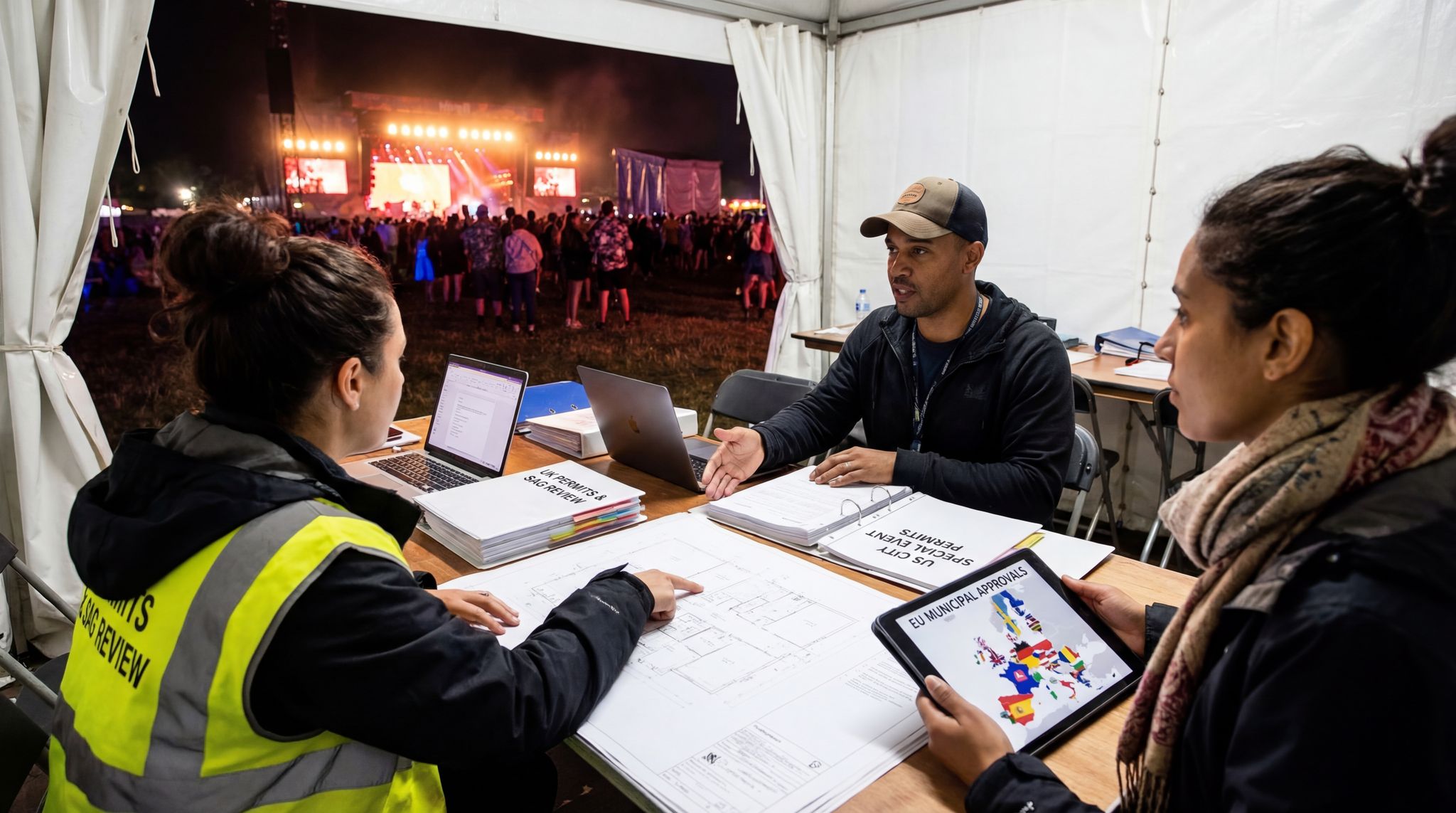
Dealing with permits and regulations in a new country can be one of the most daunting aspects of expansion. Every region has its bureaucratic quirks, and emerging markets are often notorious for complex or opaque processes. The first step is thorough research: identify all the permits and approvals required – from event licenses, mass gathering permits, and entertainment licenses to venue-specific permissions, health and safety approvals, fire department clearances, and alcohol sales permits if applicable. In some countries you may need endorsements from multiple agencies (city council, police, national ministry of culture, etc.). Start this process early – in some emerging markets it’s wise to begin permit applications 12+ months out if possible, a key step in navigating permits and local regulations. A common strategy is to engage a local consultant or fixer who specializes in event permitting. They can guide paperwork through the system and know whom to talk to when things stall. It’s also advisable to have face-to-face meetings with key officials early on – presenting your festival plan, safety measures, and community benefits can preempt concerns and humanize your project. Bring translated documents if needed; language barriers have derailed many a permit when foreign organizers submitted paperwork only in English to a local office.
Be prepared for some curveballs: rules may change or be applied inconsistently. For example, a city might suddenly enforce a noise curfew that wasn’t on the books, or require additional insurance coverage at the last minute. Flexibility and a contingency budget for “facilitation” (extra fees, expedited processing) can help navigate these surprises. Local laws can also affect festival content and operations in ways you might not expect. Some countries have censorship boards that review festival marketing or even stage visuals (e.g., no sensitive political or religious imagery). Others might restrict certain genres or dances if deemed obscene. Ensure you understand any content restrictions – it’s not unheard of for artists to be asked to modify lyrics or for festival dress codes to be enforced in conservative areas. Labor laws are another factor: will you be allowed to use foreign staff on site, or are work visas needed for everyone? Many places require work permits for foreign crew and artists, so budget time and money for those applications as well. Don’t forget licenses for music and media – performance rights organizations might need to be paid (so your artists can play their songs legally), and if filming, you may need a separate filming permit. It’s a lot to track, which is why one of the earlier points – having a local partner – is so important. They can often handle or at least guide the regulatory compliance tasks. A final tip: maintain good relationships with authorities year-round, not just when you need something. Invite officials to attend the festival as guests, show them the safety control room, demonstrate you’re a professional outfit. When regulators see a festival is run with integrity and competence, they’re more likely to support its continuity (and less likely to hit you with fines or last-minute shutdown threats). In short, do your homework and leave no form unfiled – it’s tedious but absolutely essential for success abroad, requiring cultural sensitivity and community trust.
Visas, Carnets, and Artist Logistics
Moving a festival across borders means moving people and equipment across borders – a logistical jigsaw puzzle that can become a nightmare without planning. An early consideration is artist visas. Each country has its own visa category for performers; some are simple work visas, others might be special cultural exchange visas. The process can take weeks or months and might require submission of artist portfolios, invitation letters, and proof of non-criminal record. High-profile artists usually have teams to handle this, but smaller artists might need guidance. Consider hiring an immigration consultant if bringing in many international acts. In some cases, negotiations with government can yield waivers or simplified group visas for festival performers – especially if your event has government backing as a cultural event. Always have a backup plan for artists who might get denied entry (it happens – e.g., due to past criminal records or geopolitical issues). For instance, some acts have had trouble entering the U.S. or vice versa; the same can happen in emerging markets if formalities aren’t followed.
On the equipment side, carnets (international customs permits) are your best friend. A carnet allows you to temporarily import gear without paying duties, as long as you take it back out after the event. Make an inventory of all equipment you plan to ship (sound systems, lighting rigs, stage structures, merchandise, etc.) and get a carnet through channels like the Chamber of Commerce. Countries that are part of the ATA Carnet system will then allow easier passage. However, not all emerging countries accept carnets – in those cases, you may have to post a bond or pay a deposit to customs that is refundable on exit. Work closely with a freight forwarder experienced in events; they can coordinate paperwork and advise on routing. Sometimes splitting shipments can help (e.g., flying critical audio gear, but sea freighting heavy staging weeks ahead to save cost). Note that local infrastructure at ports or airports might be less efficient – build in extra days for customs clearance, and consider greasing wheels by hiring a local customs broker who knows the officials. When Ultra Festival expanded to South Africa, their production team noted the importance of sending gear well in advance and doing test shipments to gauge customs delays.
Transporting gear internally (the “last mile”) is another challenge: bad roads or remote sites can slow down convoys. In Africa and parts of Asia, it might take a day to cover what would be a few hours’ drive on a highway elsewhere. Plan accordingly and have rugged vehicles or helicopters if budget allows for really inaccessible spots. Local rental options vary – you might be able to source some staging or lighting locally, which reduces what you need to import. Many emerging markets now have at least one or two quality AV suppliers thanks to growth in corporate events and concerts. For example, Kenya and Nigeria have local stage/sound companies capable of mid-sized festival setups; if you’re doing something huge, you might still bring in overseas vendors or gear. A hybrid approach can work: bring specialized components (e.g., laser projectors, pyrotechnics) and rent basics (scaffolding, generators) locally to support the domestic industry and save shipping effort. Finally, have a solid travel logistics team for your staff and artists. Book flights early (some remote locales have limited flights that book up), arrange local transport (e.g., an artist shuttle fleet with drivers briefed on local traffic patterns), and confirm accommodation blocks well in advance. Nothing derails a festival expansion like artists stuck at the airport due to visa snafus or missing gear because it’s impounded at customs. Triple-check these logistics and designate team members solely to manage border-crossing details – it’s that important.
Infrastructure Gaps: Power, Water, and Connectivity
In many emerging festival sites, you won’t have the luxury of plug-and-play infrastructure. Unreliable power grids, limited running water, and spotty connectivity are common issues, highlighting infrastructure challenges in untapped regions. Festival success in these regions hinges on self-sufficiency. Power is number one: invest in robust generators with redundancy. For instance, bring in multiple generator units that can carry full load individually, so if one fails, the show doesn’t stop. In the hot climates typical of many emerging markets, generators also need shelter and maintenance (dust, heat, and fuel quality can cause breakdowns). Secure fuel supply lines – don’t assume diesel will be readily available nearby in the quantities you need; sometimes you must pre-arrange fuel trucks. Lighting towers for safety, charging stations for attendees, and artist compound power should all be on backup circuits. Water and sanitation is number two: if the site lacks plumbing, arrange bulk water delivery and storage tanks for both drinking water and general use. Portable toilets are a must of course, but in high-density festivals you may need to hire vacuum trucks to service them more frequently due to heat and high usage. A pro tip from a festival in Malawi: they hired local contractors to dig temporary wells and boreholes on-site ahead of time, providing grey water for cleaning and cooling stations which saved on trucking water in, addressing water and sanitation needs on site.
Waste management is often overlooked – ensure you have a plan for trash removal, as local municipal services might not extend to a private festival or might be overwhelmed by the volume. Trucking out waste or hiring a waste management firm (perhaps from the nearest city) might be necessary. Connectivity is not just for attendee convenience; it also affects operations like ticket scanning, point-of-sale devices, and emergency comms. If a site has poor cell service, consider solutions like bringing a mobile cell tower (several telecom companies rent these for events) or setting up a mesh Wi-Fi network for the venue to ensure communications and connectivity. Satellite internet can serve remote command centers; increasingly, festivals are deploying Starlink or similar satellite units to ensure reliable internet in the middle of nowhere . Another angle is partnering with local telcos – they might sponsor your event by boosting coverage or installing temporary infrastructure (they benefit from happy customers who can Instagram from the festival). Additionally, plan for terrain challenges: if your dream location is a beach, a desert, or a mountain plateau, you may need heavy equipment to flatten and secure grounds, lay down flooring to prevent mud, or build access roads. At Vic Falls Carnival in Zimbabwe, organizers had to grade a site and install temporary road mats to handle cars and stages on uneven ground, similar to challenges at Envision Festival in Latin America. All these measures can be costly, so budget accordingly. It’s wise to allocate a healthy contingency fund (10-20% of production budget) for infrastructure surprises. As one emerging-market producer bluntly put it, “Assume the site is a blank empty field with nothing – now plan to bring in everything including the kitchen sink.” If you plan for the worst, you’ll be equipped for whatever reality throws at you. And when the lights stay on and the water flows while thousands dance under the sky, you’ll know the extra effort was worth it.
Sample Timeline: Launching a Festival in a New Region
| Timeframe | Key Actions and Milestones |
|---|---|
| 18–24 months out | Market research and site scouting: Visit the country, meet local promoters and officials. Identify potential venues and dates (check climate/holiday calendar). Secure local partner(s) and outline roles. Create preliminary budget with local cost estimates. |
| 12–18 months out | Begin permitting process: Initiate contact with government agencies for event licenses, visas, and tax requirements. Apply for any known permits with long lead times. Also start outreach to sponsors (both global brands interested in region and local companies) and ensure the event concept aligns with any government support programs. |
| 9–12 months out | Book headliners and local talent early to anchor the lineup (especially if routing international tours). Launch a “save the date” or teaser announcement to gauge interest. Finalize venue and pay deposits. Set up local business entity if needed for contracts. |
| 6–9 months out | Ramp up marketing campaign in-region (local social media, press events with partners). Open early-bird ticket sales (adjust pricing to local purchasing power). Begin hiring key local staff (production managers, marketing managers) to integrate with your core team. Lock in suppliers for staging, AV, generators, fencing – if bringing international suppliers, get shipping plans underway. |
| 3–6 months out | Final permitting checks and site plans submitted for approvals. Execute targeted promotions: university outreach, local influencer partnerships. Monitor ticket sales and adjust messaging or offers (e.g., installment payment plans if locals are price sensitive). Arrange artist visas, logistics (flights, hotels). Start procurement of any specialty items to be shipped. |
| 1–3 months out | Close out ticket tiers, push final sales with community events (e.g., local meet-ups, radio/TV appearances by organizers or artists). Conduct on-site drills with local crew if possible (especially for security/medical). Ensure all shipments have arrived in country; clear customs. Set up temporary infrastructure (power, water, communications) at site. Final coordination with local authorities on policing, traffic, and emergency plans – invite them for a site walk-through. |
| Event week | On-site build and technical rehearsals. Offer venue tours to media and VIPs (including officials) to showcase preparedness. Translate key signage and brief all staff/volunteers on cultural etiquette. Run the festival as planned – but also be ready to adapt in real time (common in new markets). Plan a team celebration after closing night – you’ve earned it! |
| Post-event | Debrief with local partners and authorities. Gather feedback from attendees and community. Address any cleanup or damage promptly to leave a positive impression. Evaluate financials versus budget (note unexpected costs or savings for next time). Secure date/venue for next edition if all went well, as continuity helps build momentum in new markets. |
This timeline is a general guide – flexibility is key. In some cases you might have less lead time (perhaps a government invites you on short notice), or you might plan even further ahead for a very large project. But the overarching theme is start early, integrate locally, and leave nothing to last minute that could sink the project.
Marketing, Ticketing and Outreach in Emerging Regions
Localized Marketing Channels and Language
Cracking a new festival market requires a hyper-local marketing strategy. What works in London or Los Angeles might not resonate in Lagos or Lima. Start by identifying the dominant media and communication channels in the target region. In many emerging markets, social media usage is massive, but the platforms can differ. For example, Facebook and WhatsApp are hugely influential for spreading news in Africa and South Asia, whereas in Thailand or Indonesia, Instagram and TikTok might drive youth engagement, as Asia’s live boom continues. China, of course, has its own ecosystem (WeChat, Weibo, Douyin) and virtually requires hiring a local digital agency if you’re marketing there. Tailor your content to local languages – even if many young people speak English, running ads and creating posters in Spanish, Arabic, Thai, etc., shows respect and will widen your reach beyond the cosmopolitan elite. When Tomorrowland did satellite events in Mexico and Brazil, their promotion heavily featured Spanish/Portuguese content and local slang to connect with fans. It’s also wise to partner with local influencers and media personalities. Identify popular radio hosts, YouTubers, or bloggers who align with your festival’s vibe and invite them to be ambassadors. They can translate the excitement of your brand into the local context far better than generic global ads. In regions with strong music press or fan communities (like dedicated K-pop or EDM fan groups), engage those networks early – perhaps through exclusive pre-sale codes or fan meet-up tie-ins.
Don’t underestimate traditional media and grassroots methods either. In some areas, radio is still king for reaching mass audiences, and a well-placed interview or jingle on a top station can create huge buzz. Billboards and street posters in local languages around key urban centers can also signal that something big is coming to town – often important for reaching older or non-social-media audiences. Another effective tactic is on-ground activations: send a promo team to university campuses, nightlife districts, or shopping malls to do flash ticket giveaways, QR code hunts, or mini-events. These stunts, when done with local flair (like bringing a samba band to promote a fest in Brazil, or a K-pop dance crew in Indonesia), not only grab attention but show you get the culture. Timing of marketing pushes should consider local buying patterns – as noted earlier, many markets have later buying cycles, so you might hold your biggest advertising blitz until 2-4 weeks before the event to catch the last-minute deciders, a pattern noted in Asia’s expansion for international acts. Conversely, if travel is required (for a destination festival), start international marketing early to allow fans abroad to plan trips. In all communications, be mindful of cultural sensitivities: imagery or phrases that are fine in the West might be misinterpreted elsewhere. Having locals vet your campaigns can prevent embarrassing gaffes. Ultimately, your goal is to make your festival appear as the hottest new thing that still has local roots – a careful balance of exotic and familiar. Nail that, and you’ll see tickets fly.
Pricing, Currency, and Payment Methods
Setting the right ticket pricing and enabling convenient payment are make-or-break factors in new markets. Affordability relative to local income is crucial – you might be used to charging $300 for a weekend pass in the US, but in many emerging markets that could exceed a month’s wages for average workers. Research the local concert ticket range: what do fans pay for a big domestic concert or a night at a club? You may need to price lower and offer more tiers. For instance, many festivals in Asia and Latin America provide single-day tickets at lower cost, knowing some fans can’t afford the full event. Also consider group deals or early-bird discounts to incentivize uptake in price-sensitive communities. Offering installment payment plans can be very effective (and common in places like Brazil or India for big purchases) – e.g., allow fans to pay 3 or 4 installments over months, which makes a high price less daunting. Be transparent about what the ticket includes to avoid any disappointment; if you need to charge extra for camping or parking, make that clear upfront in local language and currency.
Dealing with currencies can also be an obstacle. Will you sell tickets in the local currency or in USD/EUR? Generally, using the local currency is better for trust and avoiding exchange rate issues for customers. However, if the currency is unstable, you might price in USD for foreign buyers (like regional travelers) while also fixing local currency prices for domestic buyers to avoid confusion. Payment methods must cater to local habits. Credit card penetration can be low in some countries, but mobile money or bank transfers might be prevalent. For example, in Kenya, M-Pesa mobile payments dominate – festival ticketing there almost always integrates M-Pesa, part of embracing global mobile wallets. In China, if you’re not accepting WeChat Pay or Alipay, you’re excluding a huge portion of potential buyers by not accepting Alipay and WeChat Pay. Latin American markets might lean on OXXO or Boleto (cash voucher systems in Mexico and Brazil, respectively) where people can reserve online and pay cash at a convenience store. Ensure your ticketing platform or partner can handle these local methods – or integrate a solution that can leverage travel tech and fintech integrations. This not only boosts sales but signals you value local convenience. Furthermore, consider the need for a physical ticket outlet or street team for cash sales if online usage is limited. In some communities, trust in online purchasing is low, so having a pop-up box office at a mall or a partnership with a local ticket shop chain can capture those who prefer in-person transactions.
In the Middle East, promoters must pay close attention to the rapidly evolving GCC mobile ticketing market. Gulf Cooperation Council nations like the UAE and Saudi Arabia boast some of the highest smartphone penetration rates globally, making digital-first entry systems non-negotiable. Organizers entering this space should prioritize platforms that integrate seamlessly with local digital wallets and offer robust QR-code security to prevent scalping. Leveraging advanced mobile ticketing technology not only streamlines gate operations but also provides invaluable data analytics on attendee spending habits and demographic trends across the Gulf.
It’s also wise to tackle fraud and scalping proactively in new markets – some regions have issues with counterfeit tickets or unscrupulous resellers exploiting fans. Use a reputable ticketing system that offers secure QR or RFID tickets that are hard to duplicate, and educate buyers on how to purchase safely from official channels. If dynamic pricing (the practice of raising prices as tickets sell) is something you use, be cautious – in many emerging markets, sudden price hikes feel like bait-and-switch and can anger fans (and note: Ticket Fairy notably avoids dynamic pricing for a smoother fan experience). Instead, fair tiered pricing announced from the start might be better accepted. Lastly, factor in taxes – some countries levy high entertainment taxes or value-added tax on ticket sales, which can impact your net revenue or price-to-consumer. Work with local accountants to set the price right after tax. The golden rule is to make buying a ticket as easy and accessible as possible for locals. If you remove friction – be it cost, payment method, or trust barrier – your festival will open to a much wider audience and likely sell far more tickets.
Earning Trust and Hype in a New Market
When debuting in an emerging market, you’re often an unknown quantity. Building trust with the audience that your festival will deliver what it promises (and even simply happen as planned) is a significant hurdle, especially in places where events have been less common. One strategy is leveraging the reputation of your brand if it’s already known via media or fandom (e.g., global EDM fans in Asia knew of Tomorrowland Belgium, which created instant hype when a spin-off was announced). But if you’re not a globally famous brand, focus on credibility signals: showcase your team’s past successes elsewhere, highlight partnerships with beloved local entities (“presented by the crew behind X festival” or “in collaboration with Y local radio”), and be very visible and transparent in communications. Launch with a polished website and local-language social pages that provide all necessary info (lineup teasers, venue details, FAQs about safety) to quell uncertainty. Including local community figures or artists in your marketing can reassure people that this is a serious venture. For example, having a respected local musician endorsing the festival or a well-known MC as the local host gives a sense of legitimacy.
Another aspect of trust is safety and attendee experience. New audiences might be wary about things like crowd safety, harassment, amenities, etc., especially if they haven’t attended many large-scale festivals. Address these proactively: advertise the measures you’re taking (e.g., “international-standard security and medical teams on site” or “free drinking water stations and shaded rest areas provided”). If your festival is all-ages or in a conservative society, mention accommodations like family zones or gender-separated camping if relevant – this can broaden your potential audience by assuring them their comfort norms will be respected. On the flip side, generating hype is about creating Fear Of Missing Out in a community that hasn’t had something like this. Countdown campaigns, unveiling high-profile headliners one by one, and highlighting any “firsts” (“first time [big artist]performs in [country]!”) can stir excitement. Use content from your flagship events – aftermovies, testimonials – to paint a picture of the immersive experience you’ll bring, but always relate it back to what locals value. For instance, emphasize that this festival will be a meeting point for the local music community or an unprecedented cultural exchange. Engaging early ticket buyers as ambassadors (maybe via a referral program or exclusive merch) can also help word-of-mouth. Some festivals start street teams of superfans who spread flyers and hype in exchange for free tickets – these passionate early adopters can be gold in markets where personal networks influence decisions.
One more component: customer support. Setting up local customer service lines or social media support in the local language will win trust. People feel more secure to buy tickets if they know they can ask questions and get a quick response from a real person. Whether it’s inquiries about allowed items, refund policies, or directions to the venue, being responsive builds your reputation. Over time, as you deliver a successful first edition and maintain dialogue with attendees (encourage them to share feedback, perhaps host a post-event forum), you’ll convert skepticism into loyalty. There’s nothing quite like the first major festival in a place – it tends to become legendary if done well. By balancing hype with trust-building, you set the stage for not just a one-off splash but a sustainable annual event that people can’t wait to attend again.
Case Studies: Lessons from Global Festival Expansions
Lollapalooza: Adapting a Mega-Festival Brand Abroad
Lollapalooza began in the USA in the 1990s but has become a poster child for successful international expansion in the 21st century. Over the past decade, Lolla spread to South America (Chile, Brazil, Argentina), Europe (Germany, France, Sweden), and most recently Asia (India). Each expansion offers lessons. Localization was key: Lolla’s organizers (C3 Presents, now under Live Nation) smartly partnered with top local promoters in each country – generating instant local expertise and credibility. In Chile, for example, they teamed with Santiago-based Lotus Productions, who knew how to navigate local authorities and tastes. Lineups in Latin America mix global headliners like Metallica or Ariana Grande with Latin stars (e.g., Brazil’s Anitta or Argentina’s indie darlings) to ensure regional appeal. Notably, Lolla Brazil in São Paulo has grown to 100,000+ attendees per day, partly because it feels like a Brazilian festival that’s also international, not the other way around. By contrast, Lolla attempted an expansion to Tel Aviv, Israel, planned for 2015, which was cancelled due to geopolitical tensions – a reminder that even big brands must consider regional stability and perceptions. The launch of Lollapalooza India in 2023 was instructive: despite being a new market, the brand sold 60,000 tickets by working with India’s BookMyShow and pricing appropriately (tickets started around ?7,000 – expensive by Indian standards but still accessible to the middle-class segment), helping Lollapalooza India welcome 60,000 guests. They heavily promoted the diverse lineup (implying “something for everyone” in India’s musically fragmented market) and emphasized safety and organization given most attendees had never seen a multi-stage Western-style festival before. The result was a smooth event that garnered trust and excitement for future editions. Key takeaway: A strong brand opens doors, but you still must tailor the experience – content, partners, pricing – to each locale. Lolla’s careful localization and willingness to share control with local partners has been fundamental to thriving where others might have stumbled.
Ultra Worldwide: Franchising the Festival Experience
Ultra Music Festival, the EDM powerhouse from Miami, took a somewhat different approach globally: a franchise-like model of Ultra Worldwide events. Starting around 2012, Ultra rapidly expanded to host festivals in at least 20 countries spanning Asia (Japan, Korea, Singapore, etc.), South America (Brazil, Chile, Peru), Africa (South Africa), and beyond. The Ultra model offers a template: they maintain a consistent brand and production quality – the famous Ultra Main Stage design, for instance, pops up around the world – while teaming with local event companies who license the Ultra name and expertise. This allowed Ultra to scale quickly without overextending a central team. However, maintaining consistency is a double-edged sword: fans expect an “Ultra” level show, which can strain local production capabilities. Ultra’s debut in Croatia and South Africa, for example, went well as they shipped in seasoned production crews and equipment to meet the standard. But an attempt in New Delhi, India (2017) reportedly faced logistical issues and hasn’t recurred, illustrating that not every venture sticks on the first try. Ultra Japan in Tokyo became a huge success, drawing well over 100,000 attendees annually, likely because Japan had a ready EDM fanbase and strong local promoters (plus cultural enthusiasm for high-tech spectacle, which Ultra delivered). Ultra Brazil in 2016/2017 had decent turnout but hit Brazil’s economic slump and competition from local EDM events, so it paused; Ultra learned to time market entry better and returned later when conditions improved. One of the biggest feathers in Ultra’s cap is Ultra South Africa, which since 2014 has run in Cape Town and Johannesburg and proven that a global festival brand can sustain in Africa with the right adjustments (e.g., aligning with SA’s summer season and working with local promoters who navigate the venues). The Ultra approach shows the importance of brand consistency and trust – fans worldwide know what to expect from Ultra in terms of lineup (top DJs) and production (top-tier visuals and sound), which helped sell tickets in new markets. Yet, it also underscores being strategic about expansion pace: Ultra sometimes pulled back to regroup (they exited markets like Thailand and Croatia for a while, then returned with smaller “Road to Ultra” events before full festivals). The franchise model works if you select capable franchisees and maintain oversight on quality. The lesson: global templates can be replicated, but always remain ready to adapt or temporarily retreat based on ground realities. Scaling is great, but sustaining is the true success metric.
Afro Nation: Tapping the Global African Diaspora
Afro Nation is a newer festival brand (launched in 2019) that has quickly become a case study in building a festival across continents by uniting a cultural movement. Created by a team of British-Nigerian promoters, Afro Nation’s concept is celebrating Afrobeats, hip-hop, dancehall, and African diaspora music. The inaugural edition in Portugal (far from Africa, notably) drew a huge crowd of Afro-Europeans and other fans – essentially leveraging the tourism-festival model. Since then, Afro Nation has expanded to Ghana, Puerto Rico, and the U.S., and plans for other African and Caribbean locations, effectively following the diaspora. The Ghana edition (Accra, Dec 2019 and 2022) was especially symbolic: it coincided with Ghana’s Year of Return campaign and attracted thousands of international visitors to Accra, transforming Ghana into a cultural mecca. The festival not only showcased Africa’s biggest stars (like Burna Boy, Wizkid) on African soil but also injected significant revenue into the local economy (flights, hotels sold out, local businesses boomed). However, Afro Nation’s Ghana event also highlighted challenges – local organizational capacity was stretched, with some complaints about long lines and infrastructure hiccups. The organizers learned and adjusted by partnering more deeply with Ghanaian production teams for subsequent editions and engaging the government for support on security and traffic management. Meanwhile, the brand’s ability to move to Puerto Rico shows its flexibility: by targeting another hub of the African diaspora (in this case, Afro-Caribbean and Afro-Latin music fans), they managed to maintain brand identity while exploring new markets. Their marketing has been very savvy: heavy use of social media targeting diaspora communities, leveraging pride in African culture, and creating FOMO by posting glossy aftermovies of beach parties and pan-African unity vibes. Afro Nation illustrates that if your festival taps into an identity and culture that travels, you can almost “bring the audience with you” to new locales. Still, it requires balancing two sets of stakeholders – the traveling fans and the local attendees on-site. Afro Nation tries to do this by incorporating local artists wherever it lands and contributing to local initiatives (they’ve spoken about committing to community projects in Ghana, for instance). The big takeaway from Afro Nation is the power of community: they built a global community first (through music and social media) and then leveraged it to launch festivals in multiple countries where that community wanted to gather. For producers, it’s a lesson in cultivating a passionate fan base that views the festival not just as an event, but as a movement that they’ll follow anywhere.
Primavera Sound: Expansion and Adaptation Lessons
Spain’s Primavera Sound is renowned in Europe for its curated indie/alternative music festival in Barcelona. In 2022, Primavera embarked on a bold expansion, nearly simultaneously launching new festivals in Los Angeles (USA), São Paulo (Brazil), Santiago (Chile), and Buenos Aires (Argentina). This ambitious leap offers cautionary tales and adaptations. On one hand, Primavera successfully transplanted its brand ethos – eclectic lineups mixing indie rock, electronic, and urban music – to these new markets, receiving praise from music aficionados. Primavera São Paulo 2022 saw big crowds and proved that Brazil’s audience appreciated the diverse curation beyond typical mainstream festivals. But on the other hand, Primavera Buenos Aires struggled financially amid Argentina’s economic crisis and had to cancel its 2024 edition, as mentioned earlier. This underscores how macroeconomic factors in emerging markets can derail even a well-loved brand. Primavera’s team has been transparent that Latin America’s high inflation, currency controls, and import difficulties (for gear, international artists) made the costs untenable at the moment – valuable honesty that other organizers can learn from, as it’s better to pause than produce a compromised event that could harm the brand. Meanwhile, Primavera LA 2022 – their first foray into the highly competitive US market – taught another lesson: don’t assume your overseas cachet guarantees instant success. The Los Angeles edition had lower attendance than hoped and some logistical hiccups (it was a new environment with different regulations and a tough audience to crack). Primavera adjusted by postponing a planned 2023 LA return to reevaluate. The adaptability in Primavera’s approach is notable: they didn’t stubbornly barrel forward; they gauged feedback and conditions, and made tough calls to ensure long-term viability. They also maintained their reputation by delivering quality experiences even if some were one-offs. For example, those who attended Primavera Santiago or Buenos Aires loved the event itself – so if/when conditions improve, the demand is still there. Key lessons: Expand at a pace where you can maintain quality control, be ready to pivot or even retreat based on external factors, and tailor each expansion to the local market’s reality (perhaps Primavera could have scaled down the first Argentina edition to reduce risk). Additionally, their case highlights the importance of local knowledge: some critics noted that scheduling a festival in Los Angeles in September was risky due to extreme heat – local promoters likely would have advised a different calendar slot. So again, integrating local insights for scheduling and format can’t be overlooked. Primavera took big swings; not all connected, but their experiences enrich the playbook for others venturing into emerging markets – emphasizing prudent risk management alongside creative ambition.