Why Data-Driven Convention Panel Scheduling Matters
Fan convention panel scheduling can make or break an event’s success. In an era where major cons host hundreds of panels and activities, using attendee data to guide programming is no longer optional – it’s essential. The biggest fan events, from San Diego Comic-Con’s 135,000+ attendees to New York Comic Con’s record 180,000 tickets sold, illustrate the stakes: packed panels lead to engaged, satisfied fans, while empty rooms or overcrowded halls signal missed opportunities. Convention veterans have learned that data-driven event programming isn’t just a buzzword; it’s a competitive edge that keeps fans coming back every year.
Attendees vote with their feet at conventions – showing up for content they love and skipping what doesn’t interest them. By analysing which sessions draw big crowds and which fizzle, organisers can continuously refine their schedules. For example, Anime Expo 2024 in Los Angeles featured around 400 panels, screenings, and events over four days. With such breadth of content, a data-driven approach is crucial to allocate popular panels to bigger rooms, schedule them at optimal times, and ensure niche topics find their passionate audiences. Simply put, leveraging attendee data helps fill seats year after year by aligning programming with fan demand.
Beyond improving fan satisfaction, data-informed panel scheduling makes economic sense. Packed rooms often mean higher on-site spending and happier sponsors, exhibitors, and guests. Conversely, consistently half-empty panels waste resources and can dampen the event atmosphere. As recent convention industry trends highlight, technology is enabling organisers to fine-tune experiences based on real-time insights. Leading fan events worldwide – whether a 2,000-person local anime con or a 100,000+ attendee expo – are embracing data to drive decisions. The result? More must-see panels, fewer scheduling misfires, and a reputation that keeps attendees excited for next year.
Collecting Attendee Data: From Registration to Panel Rooms
Data-driven panel programming starts with collecting the right attendee data. To truly understand what your fans want, you’ll need reliable metrics on how they engage with your content. This means gathering information at every stage – from pre-event surveys and registration info to on-site attendance counts and post-event feedback. Here’s how veteran organisers capture data to inform their panel scheduling:
Data-Driven Event Marketing
Track ticket sales, demographics, marketing ROI, and social reach in real time. Exportable reports give you the insights to make smarter decisions.
Tracking Panel Attendance and Participation
The foundation of data-driven scheduling is knowing how many people attend each panel and who they are. Manual headcounts can work for intimate events, but larger cons benefit from technology to track attendance accurately. Many conventions use badge scanning or RFID tracking at panel room entrances to log attendee counts in real time. For example, some events issue RFID-enabled badges and have attendees tap in at each session – yielding precise headcounts and even insights into individual attendee preferences. Modern convention registration systems (such as a dedicated pop culture convention ticketing solution) often support session check-in scanning or integration with mobile apps that attendees use as programme guides.
By tracking attendance per session, you can calculate the fill rate of each room (attendance as a percentage of capacity). Aiming for panels to be well-attended but not overpacked is key. Overcrowding leads to safety issues and turned-away fans, while under-filled panels indicate either niche interest or scheduling missteps. As a rule of thumb:
Ready to Sell Tickets?
Create professional event pages with built-in payment processing, marketing tools, and real-time analytics.
| Panel Fill Rate (Capacity) | Interpretation | Programming Action Next Year |
|---|---|---|
| < 20% full (mostly empty) | Very low interest or poor timing | Reevaluate topic or time; consider cutting |
| 20–60% full (moderate) | Below potential | Improve marketing or avoid content clashes |
| 60–90% full (healthy) | Good engagement | Keep and refine; this hit the mark |
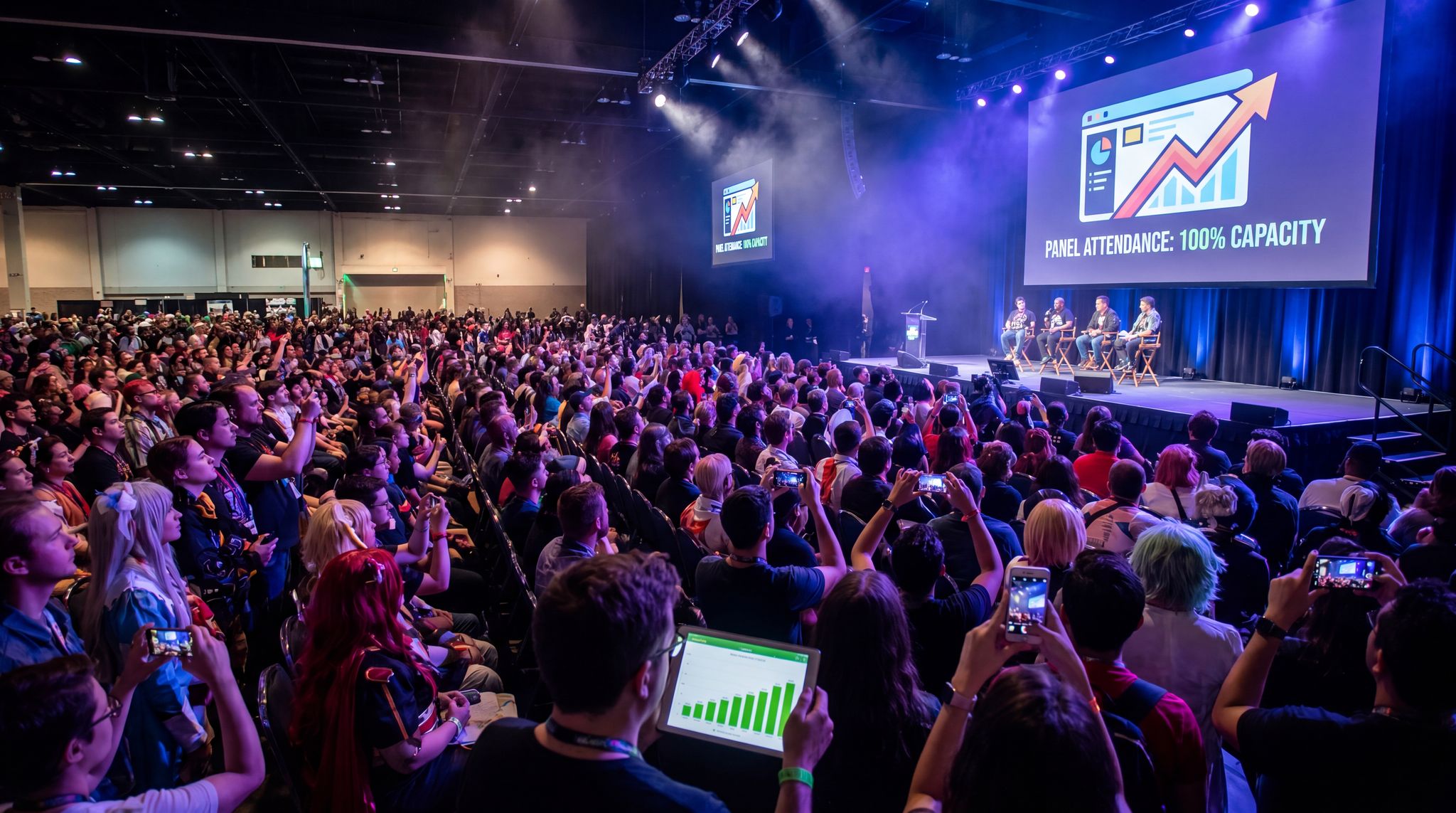
| 90–100% full (popular) | High demand, near capacity | Strong interest; consider larger room |
| Over capacity (overflow) | Overwhelming demand | Must address – bigger venue or repeat panel |
Tracking these metrics requires counting attendees diligently. At smaller cons, staff or volunteers can click counters at the door or collect tickets for limited-seating panels. Larger events rely on electronic check-in – for instance, using a mobile scanning app to scan badges or tickets at each session door. An all-in-one event platform like Ticket Fairy’s ticketing and analytics system can simplify this, as it logs entries and gives organisers a live attendance dashboard. Real-time data allows you to see if a room is filling up faster than expected and respond accordingly. (Some cons station crew at popular sessions with standby lines, opening overflow space or offering alternate viewing if data shows rooms near capacity.) The goal is to ensure you know exactly which panels fans are flocking to and which ones they skip.
Harnessing Surveys and Fan Feedback
Raw attendance numbers only tell part of the story. To truly program panels that resonate, you need qualitative insights from attendees. That’s where post-panel and post-convention surveys come in. Effective organisers collect attendee feedback on questions like: Which panels were your favourites? Which topics or guests would you like to see in the future? Did any sessions disappoint, and why? Combining this feedback with attendance data paints a fuller picture of panel performance.
Many conventions deploy quick panel surveys via their mobile app or a QR code given out at the end of each session. Even a simple 1–5 star rating for each panel, plus an open comment field, can yield valuable pointers. For multi-track events, consider a short nightly survey during the con (when impressions are fresh) and a longer post-event survey afterward. Consistently, organisers find that response rates jump if you keep surveys short (5 questions or less) and perhaps incentivise them (e.g. a prize drawing for completed surveys). For example, a mid-sized sci-fi con in the UK saw survey response rates climb to 35% after offering a free signed poster to ten random respondents.
Attendee surveys can reveal hidden gems and pain points that numbers alone might miss. You might discover that a panel with moderate attendance still earned rave reviews from those who went – hinting at a niche hit that could grow if promoted better. Or perhaps a well-attended panel received poor feedback due to content issues, which is crucial to know before you simply repeat it next year. One comprehensive industry report on event attendance notes that organisers who blend quantitative data (attendance, sales) with qualitative input (satisfaction scores, comments) get the clearest insight into event success. In short, listen to your fans. Their direct feedback, combined with hard data, is a powerful guide for curating next year’s schedule.
Turn Fans Into Your Marketing Team
Ticket Fairy's built-in referral rewards system incentivizes attendees to share your event, delivering 15-25% sales boosts and 30x ROI vs paid ads.
Don’t overlook registration and demographic data as well. If your ticketing platform allows custom questions at checkout, consider asking attendees about their interests or fandoms. For instance, when buying badges, fans could tick which tracks (anime, comics, gaming, etc.) they’re most excited about. This pre-event data can hint at which content might draw crowds. An organiser of an Australian pop culture convention noticed a surge in attendees identifying as “cosplay enthusiasts” during registration, prompting the con to expand its cosplay programming and prop policy workshops. Sure enough, those sessions ended up standing-room-only. Modern platforms also capture data like what time tickets are bought or which marketing source brought an attendee – indirectly showing what announcements or guests drove interest. All these data points, from registration trends to panel ratings, feed into smarter programming decisions.
Analyzing the Data for Patterns and Preferences
Collecting data is useless unless you analyze it for actionable insights. The next step in data-driven event programming is to sift through your attendance numbers, survey results, and other intel to spot trends. What patterns emerge from the data, and how can they inform your panel scheduling? Experienced con runners treat this analysis as a post-event ritual – a “programming post-mortem” that turns numbers into strategy.
Grow Your Events
Leverage referral marketing, social sharing incentives, and audience insights to sell more tickets.
Identifying Hot Topics and Underperformers
Start by ranking your panels by attendance and by attendee satisfaction. Which sessions filled every seat, and which struggled to draw a crowd? Look for common threads among the top performers: Was it the theme (e.g., Marvel superhero panels outdrawing others), the format (Q&A sessions vs. lectures), or perhaps the star power of a guest? For example, at a large comic con in India, the organisers discovered that panels about new blockbuster film releases consistently had 80%+ fill rates, whereas classic comic lore panels averaged much lower. The takeaway was to increase content around upcoming movies and TV series – what’s hot now – to meet fan demand, while finding new hooks to boost classic content panels (like adding popular creators to those sessions).
At the same time, identify underperforming panels. If certain topics repeatedly see <30% attendance, that’s a red flag. It could mean that content is too niche, or maybe the panel was scheduled against a big main event (and thus was doomed by conflict, not lack of interest). Data needs context: cross-reference the timing and room location for low-attendance sessions. You might find a scheduling clash or a far-flung room suppressed an otherwise worthy panel. For instance, one anime convention noticed all their academic lecture-style panels were poorly attended – not necessarily because attendees disliked the topics, but because those panels ran parallel to the cosplay contest and were located in a separate building. The next year, they adjusted the schedule to avoid that conflict and saw those panel attendance numbers double.
It’s useful to categorise panels by type and genre when analysing. Break down your data by track, theme, and format. Maybe workshops and interactive panels had higher satisfaction scores than passive speaker panels – indicating fans crave more hands-on content. Or data might reveal that your gaming-related panels were 90% full while the science-fiction literature track lagged at 40% on average. These patterns help in reallocating emphasis. Many veteran organisers actually produce a simple report or heat map of their panel grid: highlighting which slots were most and least attended. This visualization can quickly show, for example, that Saturday mid-day sessions were jam-packed, while Sunday morning sessions (perhaps unsurprisingly) had sparse attendance. Informed by this, you might program lighter fare for early mornings and save blockbuster panels for peak times.
Beyond attendance figures, look at engagement metrics if available. Did certain panels generate a lot of social media buzz during the event? For example, if your event app or hashtag saw a spike in posts during the “Mystery Celebrity Panel” on Saturday, that’s a qualitative indicator of high interest. Likewise, if your panel feedback forms show that 95% of respondents “would recommend this panel to a friend,” that’s a session to consider expanding or repeating. According to IAEE’s industry data on conference metrics, participation is the single most important indicator of event success – people “vote with their feet” and their time. So dig into where attendees chose to spend their time. The patterns you find in that data are gold for future planning.
Smooth Entry With Mobile Check-In
Scan tickets and manage entry with our mobile check-in app. Supports photo ID verification, real-time capacity tracking, and multi-gate coordination.
Understanding Audience Segments and Interests
Another powerful use of attendee data is identifying who your audience is and how different segments behave. Your convention is likely composed of various fan subgroups – for example, hardcore cosplayers, casual pop-culture fans, gamers, anime enthusiasts, etc. Data can help tailor programming to these segments. Start by examining any demographic info you have (age ranges, first-time vs. repeat attendees, VIP ticket holders vs. general) and see if their panel choices differ.
For instance, repeat attendees might gravitate towards niche “insider” panels that go deeper into lore, while first-timers flock to celebrity Q&As and main attractions. A European gaming expo noticed that their attendees aged under 25 showed up in droves for esports tournament panels and game demo sessions, whereas those 25+ preferred developer talks and retro gaming discussions. By segmenting the feedback and attendance data, the organisers decided to create two new panel tracks the next year: one aimed at “pro gamers and esports fans” and another on “retro and industry topics” – effectively catering to both demographics more directly. Both tracks subsequently saw improved satisfaction scores as fans found content that spoke to them.
If your ticketing or registration system integrates with a CRM or analytics tool, you can even overlay purchase behavior or marketing data onto programming preferences. For example, you might discover that attendees who bought VIP badges (or higher-priced tiers) are the ones filling the front rows of academic or niche panels – perhaps because they’re the super-fans with broader interests. Understanding these nuances allows for data-driven content curation: you can ensure each key audience segment has something tailored to them, and you market those sessions to the people most likely to be interested.
Some advanced conventions experiment with attendee personas based on data. They cluster attendees into types (e.g. “The Cosplay Creator”, “The Collectibles Superfan”, “The Anime Binger”) and map out a sample itinerary of panels that each persona would love. Then they check if their schedule actually supports those ideal itineraries without conflict. This kind of analysis can highlight, say, that all the cosplay creator-oriented panels were bunched together, forcing a difficult choice, whereas they could be spread out. It’s an approach borrowed from corporate conferences, but it works for fan events too – ensuring your schedule offers a balanced journey for different interest groups. The more you understand your audience segments through data, the more precisely you can program content that each group will consider unmissable.
Scheduling Panels with Data-Driven Insights
Collecting and analysing attendee data sets the stage – now it’s time to apply those insights to actually schedule your next convention’s panels. Data-driven scheduling means using evidence (not just gut instinct) to decide what panels to include, when and where to slot them, and how to manage them for maximum engagement. The result should be a programme that consistently draws full rooms and happy attendees. Here are key strategies to implement:
Optimizing Room Allocation and Time Slots
One of the most immediate payoffs of data is smarter room assignments. By predicting which panels will be most popular, you can match high-demand panels to larger rooms and lower-demand ones to smaller spaces. This sounds obvious, but without data it’s guesswork – many organisers have been caught off guard by a “sleeper hit” panel in too small a room or an overhyped session not filling a giant hall. Look at last year’s attendance and any pre-registration or interest indicators for new content. If a similar panel last year hit 95% capacity in a 500-seat room, consider moving it to a 800-seat room this time. Conversely, if an experimental panel only drew 50 people in a 400-seat hall, you might downsize that session or combine it with another topic.
Go Cashless With RFID Technology
Enable contactless payments, faster entry, and real-time spending analytics with RFID wristbands and NFC-enabled ticketing for your events.
Data can help predict panel popularity surprisingly well. In fact, organizers of the PASS Summit tech conference used historical data and algorithms to forecast session attendance, successfully assigning rooms so that overcrowded sessions dropped from 17% of sessions to just 8% year-over-year. They analysed factors like speaker popularity and topic trends to make these predictions. For fan conventions, you can similarly weigh factors such as: the popularity of the franchise/topic, social media buzz, guest star draw, and previous attendance for similar panels. Even a simple ranking (e.g., “Tier 1” headliner panels, “Tier 2” mid-level interest, etc.) based on data can guide your room allocation. It’s far better to have a slightly too large room than to turn away hundreds at the door. As experienced organisers often say, empty seats don’t tweet angry complaints, but fans locked out of a full panel might.
Aside from room size, use data to optimise time slotting. Your analysis might show certain time slots consistently outperform others. Is Saturday 11:00 AM a prime time when many fans are on site and energetic? Schedule a big-name panel or highly anticipated topic then. Perhaps your data shows that late afternoon sessions dip in attendance – that might be a good time for niche topics or secondary content, since fewer will attend anything then. Also consider patterns like meal times and other activities: for example, if a major cosplay contest or concert is at 7 PM, any panel scheduled opposite it could suffer. Stagger your “marquee” events so they don’t cannibalise each other’s audiences. A data-driven grid might entail anchoring each day with one or two tentpole panels (based on prior popularity) and filling around them with complementary content.
Another scheduling tweak informed by data is repeating popular sessions. If you have a panel that always fills up and still has excess demand, consider running it twice (maybe once each on two different days) or offering an encore on the final day. Some conventions do this with extremely high-demand content – for instance, a Japanese culture panel in New York might run on both Saturday and Sunday if the first session maxed out. Data from prior days (or previous years) can justify these encores. It’s a way to spread out attendance and give more fans a chance to see the content they want. Just be mindful to schedule repeats such that they don’t conflict with related content that the same audience would also want.
Avoiding Conflicts and Managing Crowds
Your attendee data is also a map of fan interests, which can help you avoid scheduling conflicts that split your audience. A classic rookie mistake in programming is to schedule two super-popular panels at the same time, forcing fans to choose and leaving both half-full rather than one completely full. Data can prevent this. By reviewing which panels appealed to similar attendee segments (from surveys or pass scans), you can identify potential conflicts. For instance, if you know the attendees who went to the “Game of Thrones Fan Discussion” also largely attended the “Lord of the Rings panel” last year, don’t put those in the same time block this year – you likely have a significant overlap in audience. Instead, schedule them sequentially or at least far apart. Using data in this way can increase overall panel attendance by ensuring fans aren’t forced to skip one favourite for another.
Many large cons also adopt tools like a panel reservation system or “lottery” for the most in-demand sessions. This not only improves fan satisfaction by making access fair, but it gives organisers excellent data on interest levels. For example, SXSW’s PanelPicker system allows the community to vote on proposed sessions ahead of the event, directly telling organisers which topics have the most fan support. Fan conventions might use a simpler approach: during registration or via the event app, allow attendees to mark a few panels they’re most interested in (not as a guarantee, just as a gauge or RSVP). If 2,000 attendees pre-favourited a panel that only seats 500, you know to expect long lines or implement a ticketing mechanism for that panel. New York Comic Con, for instance, has used online lotteries for popular panels in limited rooms – the data from those sign-ups helps them anticipate crowd size and allocate security and line space accordingly. Embracing these tools, especially if your convention ticketing platform supports session reservations, turns potential crowd control headaches into manageable, data-informed logistics.
Even with great scheduling, the reality is some panels will be very popular. That’s where data-informed crowd management comes in. Monitor attendance data during the event (many platforms offer real-time dashboards) to see if certain sessions are over capacity or lines are forming hours early. Armed with these insights, you can deploy solutions on the fly. For example, Comic-Con International’s Hall H uses a wristband system to manage overnight queues, ensuring only the first 6,500 in line (Hall H’s capacity) stay in queue. While not every event has Hall H levels of hype, the principle stands: use info on demand to implement fair access. Perhaps you designate an overflow room with a live video feed for a panel that’s blowing up – data from past days or pre-signups can justify having that backup. Or you adjust room assignments for Day 2 if Day 1 data showed you underestimated an audience. Some cons even re-run a “surprise hit” panel on the final afternoon once they see how beloved it was.
Free Tool: Split Tickets for Max Gross
Given capacity and a target price, the optimizer proposes Early Bird / GA / VIP allocations and prices — with projected gross at 100%, 80% and 60% sell-through.
It’s also worth planning for line management and entry order using data about who has access. Many premium ticket holders (VIPs, etc.) expect early entry to big panels. Data can tell you what portion of a room might be taken by VIPs versus general attendees, which helps plan separate queues or reserved seating blocks. In short, a data-driven mindset doesn’t stop at scheduling – it extends to how you execute the seating and flow. (For further reading on avoiding queue chaos, see our guide on advanced convention crowd management tactics that keep lines orderly while maximizing fan satisfaction.) By anticipating needs and conflicts through data, you ensure that full rooms are a positive – an electric atmosphere – rather than a negative experience.
Case Studies: Data in Action at Fan Conventions
Nothing illustrates the impact of attendee data better than real-world examples. Here are a few cases from conventions globally that have leveraged data to boost panel success:
SXSW (Austin, USA) – Community Voting Shapes the Schedule: One of the most well-known examples of data-driven programming is South by Southwest’s PanelPicker® process. SXSW invites its community to vote on proposed sessions months in advance, effectively crowd-sourcing data on what content attendees most want to see. Organisers combine this fan input (which can total tens of thousands of votes) with internal curation. The result is a conference lineup that consistently matches attendee interests – because it was literally shaped by would-be attendees. For SXSW, this process has helped keep session rooms packed year after year; when fans have a voice in programming, they show up for those sessions. Convention organisers can take a page from SXSW by involving fans in programming decisions, whether via pre-con polls or advisory committees, to ensure the content resonates. It’s data-driven scheduling in the form of direct democracy.
Anime Expo (Los Angeles, USA) – Refining Content via Surveys: Anime Expo (AX), North America’s largest anime convention, gathers extensive attendee feedback to fine-tune its programming. After AX 2022, organisers noticed through surveys and panel attendance data that interest in industry insider panels (like discussions with anime producers and studios) was surging. In response, AX 2023 expanded that track with more sessions and larger rooms. They featured panels by major Japanese anime studios in the convention’s Petree Hall, which seats thousands. The outcome was phenomenal – those panels hit full capacity with lines out the door, and post-con surveys rated the industry track one of the year’s best additions. By contrast, AX also saw that some fan-run community panels had dipped in attendance. Rather than cutting them blindly, organisers cross-referenced feedback and discovered that scheduling was the culprit: many fan panels were slotted early morning when attendees were either in line for big events or simply not yet on-site. With that insight, AX 2024 shifted many fan-run panels to early afternoon slots and saw participation rebound strongly. This example shows how combining attendance stats with direct fan feedback allows a convention to pivot programming strategy and reap immediate results in attendance.
MidSizeCon (Global Examples) – Predictive Room Allocation: A mid-sized gaming convention in Germany (let’s call it MidSizeCon) faced complaints in 2022 about overcrowded and half-empty panels – sometimes both on the same day. For 2023, the organisers harnessed their data to predict and allocate better. They noticed that every time they had a panel about “Retro Gaming Classics,” it drew a consistent 300+ people, despite being in a 200-seat room previously. Meanwhile, a series of “Indie Game Dev” panels were in a 500-seat theatre but only ever saw about 150 attendees on average. So MidSizeCon flipped their approach: they upgraded the retro gaming panel to the bigger room and moved the indie dev talks to a smaller one, aligning capacity with demonstrated demand. They also looked at time-of-day patterns – data showed that the retro panel drew even bigger crowds when scheduled right after lunch, so they gave it a prime early afternoon slot. The results were clear on site: no more turned-away fans for the retro session (the larger room accommodated everyone), and the indie sessions felt nicely full in the smaller space, creating better energy. Attendance for both tracks improved, and feedback was positive across the board. This case underlines that even without fancy algorithms, basic data analysis (past headcounts and time slot successes) can dramatically improve room utilisation and audience experience.
Professional Conferences – Lessons for Fan Cons: It’s worth noting that corporate conferences and trade shows have been employing data-driven session scheduling for years, and fan conventions are now catching up. For instance, a tech conference used machine learning on its attendee data to anticipate interest levels, reducing overflow incidents significantly. They found that speaker popularity was a top predictor of attendance – a finding that resonates in fan events too (a famous actor or creator will spike numbers regardless of panel topic). Many such conferences also correlate session rating with attendance and sometimes find surprising results, like how a packed room doesn’t guarantee high session quality ratings. Fan convention organisers similarly should balance popularity with quality – data can flag situations where a panel drew a crowd but got poor feedback, indicating a need to improve content or moderation next time. The crossover lesson is clear: more data leads to better programming decisions, whether for industry keynotes or cosplay sketch workshops.
Grow Your Social Following With Every Sale
Require social media follows, shares, or playlist adds to unlock presale access or special pricing. Turn every ticket purchase into audience growth.
Each of these examples – from letting fans vote, to analysing surveys, to reallocating rooms – shows data’s tangible impact. Conventions that take a data-driven approach tend to see higher overall panel attendance and attendee satisfaction. Fans feel their interests are heard and met. When you program based on what the data says your attendees crave, you create a virtuous cycle: successful panels generate excitement, which drives word-of-mouth and higher attendance the next year. It’s no surprise that events known for great programming often have robust data practices behind the scenes.
Continuous Improvement: Building a Year-Round Data Feedback Loop
The final piece of a data-driven programming strategy is making it continuous and iterative. The goal is not just to use attendee data for one event, but to build a feedback loop that makes each year’s convention better than the last. Veteran organisers treat data like a compass – guiding decisions not only in scheduling panels, but in marketing, ticketing, and overall event design. Here’s how to embed data into your year-round planning cycle:
Post-Event Analysis and Debrief: Right after your convention, do a thorough data review while everything is fresh. Generate reports from your ticketing system and registration platform with the panel attendance numbers, no-show rates for special events, and any other stats (e.g. how many people used the panel reservation system if you had one). Combine this with your survey summaries and team observations. Many teams hold a post-con “brain dump” meeting where department heads (programming, guest relations, operations) share impressions – backing those up with data prevents decisions from relying purely on anecdotal memories. For instance, instead of “Saturday felt really busy,” you can say “Saturday 1-3 PM saw 20% higher panel attendance than any other period, possibly due to the two blockbuster panels – next year let’s space those out.” Document these insights in a programming playbook for the next edition.
Set Data-Backed Goals for Next Year: Use insights to establish concrete goals. Maybe you want to improve average panel fill rate from 60% to 75%, or reduce the number of panels under 20% capacity to zero. You might aim for a certain uplift in satisfaction scores for panels, or to eliminate complaints about panel schedule conflicts. Having measurable objectives helps focus your strategy. For example, if feedback showed confusion about overlapping big panels, a goal could be “zero overlapping Tier-1 panels” in the schedule. If panel attendance on Sunday dipped to 50% of Saturday’s, a goal might be “increase Sunday panel attendance by 25%” – achieved by scheduling a must-see event Sunday morning or offering an incentive for fans to stick around. By tying goals to data, you can later quantify if your new programming strategy worked.
Implementing Changes with the Right Tools: Achieving data-driven improvements often requires the right tools. Modern event management platforms can be invaluable here. Ideally, you want a system that integrates ticketing, scheduling, and analytics so that all your attendee data is in one place. Using a solution like Ticket Fairy’s all-in-one platform gives organisers 100% ownership of their attendee data – meaning you can export and analyse every click and scan. Data portability is vital; you don’t want your insights locked behind a vendor. Ensure any platform you evaluate lets you easily access raw data (sales, check-ins, survey responses) for your own analysis. Also look for features like real-time dashboards (to monitor at-event trends) and CRM integration to enrich profiles of attendees with their panel interests. A great tool will not make decisions for you, but it will surface the information you need when planning your schedule.
Additionally, technology can help execute some data-driven tactics effortlessly. For example, Ticket Fairy’s system includes referral tracking and promo codes, which lets you see which announcements or guests spurred ticket sales. If a particular panel announcement (say, a special reunion panel) led to a spike in referrals and new registrations, that’s data you can use to allocate more time or marketing to similar content. On the operations side, robust ticketing platforms offer access control apps – you can use these not just at the main entrance, but at panel rooms to scan badges for entry. All those scans feed back into your analytics to show live attendance numbers by room. Some events incorporate RFID wristbands for seamless tracking across the venue. When evaluating solutions, consider one that has these advanced capabilities without sacrificing attendee experience. Fans shouldn’t feel like they’re being tracked – it should be smooth and in service of a better event for them.
Marketing the Improved Experience: As you implement data-driven changes, let your attendees know that you heard them. For example, if surveys complained about long lines for a popular panel, you might announce “New for next year: a reservation system for the most popular panels to guarantee your seat.” This not only addresses a pain point but becomes a marketing asset to drive early ticket sales. Many organisers launch referral programs (turning fans into ambassadors) to boost attendance once they’ve crafted a compelling schedule. After all, a well-programmed con is easier to promote – fans will be excited about the content. A referral initiative can amplify this, and data helps here too. You can track which fan ambassadors bring in attendees for particular segments. For instance, if an influencer in the anime community sells many referral tickets, perhaps their followers will want more anime panels – data you gather as registrations roll in can validate that and you could still adjust your final schedule accordingly.
Finally, stay agile and iterate. The fan landscape evolves constantly – what was a hit panel this year might cool off by next year as new shows, games, or memes capture fandom’s imagination. By keeping a year-round pulse on fan discussions (online forums, social media trends, etc.) and comparing with your own attendee data, you won’t be caught flat-footed. Many conventions now maintain a community presence year-round (via Discord servers, fan clubs, etc.) where they can poll their core audience on potential panel ideas. Coupled with solid post-event analytics, this ensures when it’s programming time, you’re armed with up-to-date insight on what will draw a crowd. It’s this continuous feedback loop – plan, execute, measure, adjust – that turns data from a one-time helper into a permanent compass for your convention’s growth.
In summary, building attendee data into your panel programming cycle transforms the process from educated guesswork into a science-backed art. It doesn’t replace the need for creative vision or understanding of your fandom – rather, it enhances it with evidence. The conventions that thrive in today’s competitive scene are those that treat data as a friend of creativity, not its enemy. Use the numbers to empower your team’s passion and intuition, and you’ll create an event schedule that not only fills seats, but leaves fans counting days until they return.
Frequently Asked Questions
What is a good panel fill rate for a convention?
A healthy panel fill rate for a convention is between 60% and 90% of the room’s capacity. This level indicates strong audience engagement without causing safety issues or turning fans away. Panels falling below 20% capacity usually require reevaluating the topic, while those exceeding 100% need larger venues.
How do convention organizers track panel attendance?
Convention organizers track panel attendance using technology like badge scanning, RFID tracking at room entrances, and mobile app check-ins. These digital systems provide precise, real-time headcounts and individual attendee preferences, replacing manual click counters and allowing staff to monitor if rooms are filling up faster than expected.
Why is data-driven panel scheduling important for fan conventions?
Data-driven panel scheduling ensures programming aligns directly with fan demand, leading to packed rooms and higher attendee satisfaction. Leveraging attendance metrics and surveys helps organizers allocate popular topics to larger rooms, avoid scheduling misfires, and boost overall event economics through increased on-site spending and happier sponsors.
How can event organizers avoid scheduling conflicts for convention panels?
Organizers avoid scheduling conflicts by analyzing attendee data to identify overlapping fan interests and separating those panels into different time blocks. By reviewing past attendance and survey data, planners can ensure two highly popular sessions targeting the same audience segment do not run simultaneously, maximizing overall participation.
How does attendee demographic data improve event programming?
Attendee demographic data improves event programming by revealing specific content preferences among different audience segments. Analyzing factors like age, ticket tiers, and registration interests allows organizers to tailor panel tracks directly to distinct groups, such as creating dedicated esports sessions for younger attendees or deep-lore panels for VIPs.
How do large conventions manage crowds for highly popular panels?
Large conventions manage crowds for popular panels by utilizing advance reservation systems, online lotteries, and real-time attendance dashboards. Organizers also deploy on-the-fly solutions like opening overflow rooms with live video feeds or issuing wristbands to cap queues, ensuring fair access and safe line management for high-demand sessions.
What is the best way to collect attendee feedback on convention panels?
The best way to collect attendee feedback is through short, incentivized post-panel surveys deployed via mobile apps or QR codes. Keeping surveys under five questions and offering rewards, like prize drawings, significantly boosts response rates, providing qualitative insights that raw attendance numbers cannot reveal.
How do community voting systems influence convention panel schedules?
Community voting systems influence panel schedules by crowdsourcing direct fan input on proposed sessions months before the event. Platforms like SXSW’s PanelPicker allow organizers to combine thousands of attendee votes with internal curation, ensuring the final lineup matches actual audience interests and guarantees packed rooms.