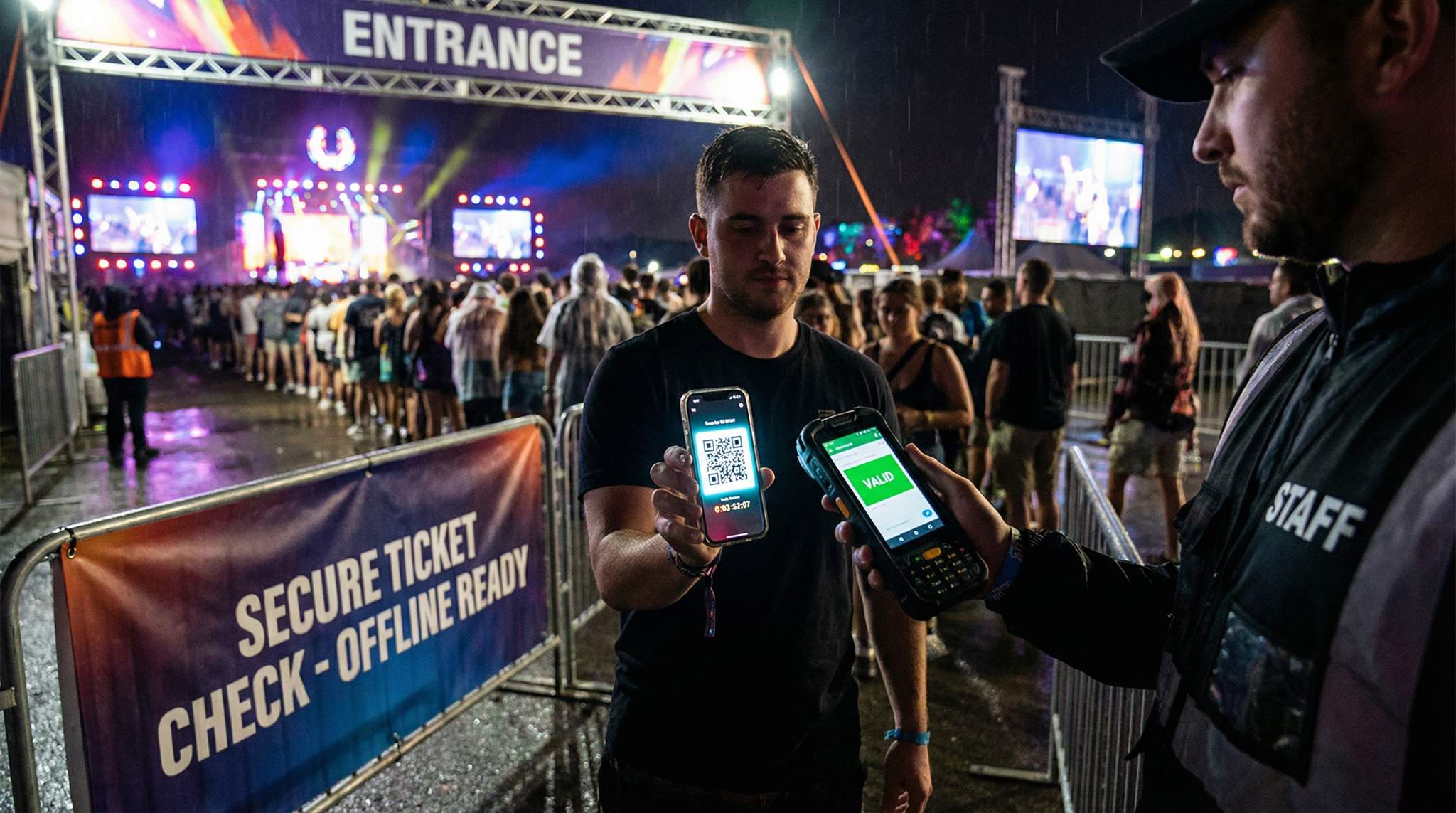
In the world of festivals, few things can sour an event’s success like ticket fraud. For festival producers worldwide, dealing with counterfeit or unauthorized tickets isn’t just about lost revenue—it’s about safety, trust, and the fan experience. An oversold or gate-crashed event can lead to dangerous overcrowding and long delays at the entrance, casting a shadow over what should be a joyful occasion. This is why robust anti-fraud ticketing practices have become a top priority, whether the festival is a small local gathering or a massive international event. Some legendary festival organisers have gone to great lengths to curb ticket fraud – Michael Eavis of Glastonbury famously introduced personalised photo-ID tickets to deter scalpers – but today, technology offers even more tools to keep events secure.
Outdoor festivals held in fields or remote locations face an extra layer of challenges when combating ticket scams. Unlike urban venues, these field locations often suffer from spotty internet connectivity, making real-time ticket verification tricky. Crowds at such events can range from music-loving families with kids to die-hard fans, all of whom expect quick and hassle-free entry. Balancing strict security with smooth operations is critical—festival-goers need to feel the system is efficient and fair, not draconian. Ultimately, maintaining a clean ticketing system isn’t just about stopping fraud; it’s about protecting the trust between festival organisers and their community of attendees.
Developing a Comprehensive Event Ticketing Fraud Prevention Strategy
For modern promoters, effective event ticketing fraud prevention requires more than just a single technological fix; it demands a multi-layered strategy. A robust defense combines proactive measures during the initial on-sale period with strict access control at the gates. By integrating identity-locked ticket assets with a reliable live music events platform, organizers can establish a secure perimeter long before the first attendee arrives. This holistic approach ensures that every phase of the ticketing lifecycle—from purchase to scan—is actively monitored and protected against malicious actors.
How Mobile Ticketing Solutions Fundamentally Reduce Fraud
For decades, promoters relied on physical box office checks and paper lists, which left massive loopholes for bad actors. Today, when organizers ask how mobile ticketing solutions reduce fraud, the answer lies in the shift from static documents to dynamic, trackable digital assets. A comprehensive mobile ticketing platform acts as a closed-loop ecosystem. By forcing passes to live exclusively within an encrypted app or digital wallet, event producers strip scalpers of their primary weapon: the ability to infinitely duplicate a static barcode or PDF. Furthermore, these mobile-first systems provide organizers with real-time data analytics, allowing box office managers to instantly revoke compromised passes, track suspicious transfer behaviors, and ensure that the person scanning in at the gate is the legitimate buyer.
Keep Tickets in Fans' Hands
Our secure resale marketplace lets attendees exchange tickets at face value, eliminating scalping while keeping you in control of the secondary market.
Timed Barcodes: Dynamic Defenses Against Duplicates
One modern solution to ticket fraud is the use of timed or dynamic barcodes on tickets. Instead of a static barcode that could be copied, these digital tickets display a QR code that refreshes every few seconds or minutes. This means that even if someone screenshots their ticket and tries to share it or sell copies, that image will be useless by the time another person attempts to use it. The legitimate ticket on the original buyer’s phone will have a new code, and only that up-to-date code will scan as valid.
Many major festivals and sports events have adopted this approach to stay ahead of scammers. For example, some high-profile stadium concerts now send tickets to mobile apps that show a rotating barcode; when fans arrive at the gate, security scans the live code from the app. If a scammer has sold duplicates of that ticket, those copies won’t work because the code they have is outdated. This adds a strong layer of defense against the classic “print-screen-and-sell” scam that has plagued events for years.
Planning a Festival?
Ticket Fairy's festival ticketing platform handles multi-day passes, RFID wristbands, and complex festival operations.
To implement timed barcodes effectively at a festival, organisers should ensure attendees use an official mobile ticket app or digital wallet that supports these refreshable codes. Communication is key: let ticket holders know they may need internet access at the gate or that they should open the app just before arrival to get the latest code. If your festival is in a location with poor connectivity, consider alternatives like cryptographic offline QR codes – codes that are generated with an encrypted timestamp that scanning devices can verify without needing continuous internet. The technology can be complex, but platforms like Ticket Fairy include secure verification methods to make this seamless. The bottom line is that dynamic barcodes greatly reduce the window of opportunity for any would-be fraudster to exploit a copied ticket.
Evaluating QR Code Solutions for Event Ticketing: Scannability and Fraud Protection
When organizers set out to list the best QR code solutions for event ticketing, the evaluation must go beyond basic barcode generation. Top-tier platforms differentiate themselves by how they balance rapid scannability with ironclad fraud protection. In a high-volume festival environment, a scanner must read a code in milliseconds, even under glaring sunlight or in pitch-black tents. Solutions that utilize high-contrast, dynamically scaling QR codes ensure that gate staff aren’t slowed down by unreadable screens. On the security front, the most effective systems pair this high scannability with advanced algorithms that detect screenshot attempts and instantly rotate the cryptographic token. By comparing these features, promoters can select a user-friendly yet powerful tool that keeps entry lines moving swiftly while completely neutralizing counterfeit threats.
Device Fingerprinting: Unique Digital Signatures for Tickets
Another powerful anti-fraud tool is device fingerprinting – a technique to uniquely identify the devices or accounts interacting with your tickets. In practice, this can mean tying each ticket to a specific user account or smartphone. If a ticket’s QR code or PDF is copied and someone tries to use it on a different device or in an unrecognized app, the system can flag this discrepancy. For example, an attendee might be required to download their mobile ticket through an official festival app or ticket wallet that logs the device ID. Should that ticket suddenly appear on another device elsewhere, it could be a sign of a shared or duplicated ticket, triggering additional verification (like prompting for the buyer’s ID at the gate).
Device fingerprinting also helps on the ticket purchasing side. It can detect when a single person or bot tries to buy many tickets from the same device or IP address, which is a common tactic in ticket scalping. By catching these patterns, festival organisers can cancel fraudulent orders before those tickets ever reach the secondary market. Some large events in India and Singapore, for instance, have started implementing such checks to curb bulk buying by scalpers, and it’s made a noticeable difference in reducing counterfeit tickets showing up later.
Go Cashless With RFID Technology
Enable contactless payments, faster entry, and real-time spending analytics with RFID wristbands and NFC-enabled ticketing for your events.
For organizers of both massive sports events and music festivals, recognizing the early signs of scammers buying tickets is a critical component of proactive ticketing fraud detection. Fraud rings and scalper bots often leave distinct digital footprints during the initial on-sale period. Look for anomalies such as multiple transactions originating from a single IP address, rapid-fire purchases that outpace human typing speeds, or the use of sequential credit card numbers. By monitoring these behavioral red flags, promoters can intercept malicious activity before inventory is depleted, ensuring that highly secure anti-counterfeit tickets end up in the hands of genuine fans.
When implementing device or account-level tracking, transparency is key. Make sure your privacy policy covers how you use this data, and communicate to genuine buyers that these measures are in place to protect their purchase. From the organisers’ perspective, having a log of which device scanned which ticket (and when) can be invaluable for investigating any issues. It also ensures that only authorised scanning devices (whether it’s smartphones running your ticketing app or dedicated scanners) can validate tickets. This way, no rogue device can arbitrarily mark tickets as used. All these precautions build a digital fingerprint for every legitimate entry, making it significantly harder for a fraudster to slip through unnoticed.
Need Festival Funding?
Get the capital you need to book headliners, secure venues, and scale your festival production.
The Anatomy of Highly Secure Anti-Counterfeit Tickets
Transitioning from legacy paper stubs to modern digital formats requires understanding what actually constitutes highly secure anti-counterfeit tickets. In the past, promoters relied on physical deterrents like custom holograms, UV ink, and intricate foil stamping. While these methods offered a baseline of security, they were ultimately static and vulnerable to sophisticated forgery rings. Today, the standard for an anti-counterfeit pass is entirely dynamic. It relies on cryptographic signatures generated by the ticketing platform, ensuring that the digital asset cannot be reverse-engineered or cloned by malicious actors.
When evaluating a live music events platform, promoters should prioritize systems that issue identity-locked ticket assets. By permanently binding a digital pass to a verified user profile or specific smartphone, organizers ensure that the credential cannot be anonymously transferred or sold on unauthorized secondary markets. This identity-centric approach transforms a simple barcode into a secure, non-transferable license to enter, giving producers absolute control over their inventory and attendee data.
Deploying these advanced, tamper-proof digital assets does more than just secure the perimeter; it fundamentally streamlines box office operations. When organizers rely on easily duplicated PDFs, they inevitably see ticket complaints skyrocket at the gates as fans discover they purchased invalid copies from third-party scalpers. By issuing highly secure anti-counterfeit tickets that are locked to a buyer’s specific mobile device or digital wallet, event producers can virtually eliminate these heartbreaking and time-consuming customer service bottlenecks, protecting both revenue and brand reputation.
Automated Ticketing Fraud Detection Systems
Beyond device-level tracking, modern event platforms utilize comprehensive ticketing fraud detection algorithms to analyze purchasing behavior in real time. These automated systems evaluate hundreds of data points during the checkout process, assigning a risk score to every transaction. If a buyer’s profile exhibits suspicious characteristics—such as using a VPN known for masking locations, attempting rapid checkout speeds impossible for a human, or testing multiple credit cards within seconds—the software can block the purchase instantly. For festival producers, deploying advanced fraud detection means stopping bad actors at the point of sale, drastically reducing the volume of invalid passes that eventually reach the gates and minimizing the need for manual order reviews.
Smooth Entry With Mobile Check-In
Scan tickets and manage entry with our mobile check-in app. Supports photo ID verification, real-time capacity tracking, and multi-gate coordination.
Offline Scanners: Prepared for Connectivity Outages
Field festivals often take place far from reliable Wi-Fi or cellular service. Even at well-connected venues, the sheer number of attendees can overwhelm networks. That’s why having offline-capable ticket scanners is absolutely essential. An offline scanner (whether a handheld device or a smartphone with the right app) can validate tickets against locally stored data or using cryptographic validation, even when disconnected from the internet. Each scan is logged, and once the device regains connectivity, it syncs with the central system to update the list of used tickets. This ensures that if the same ticket is presented at another gate, those other scanners will know it was already used.
Major festivals have learned the importance of this the hard way. At a UK music festival in 2019, for example, network issues at the wristband validation gates caused huge delays, with frustrated crowds waiting for hours because the scanning system couldn’t connect to the database. Some attendees even broke through barriers in the chaos. To avoid such nightmares, festivals like Glastonbury (UK) and Stagecoach (USA) equip their entrances with scanners and software that can operate offline. Stagecoach – one of the largest country music festivals, held on a sprawling desert field – utilises RFID wristbands and offline verification so check-in keeps moving even if the cell towers get jammed. The lesson: always have a plan for when (not if) connectivity drops.
To implement offline scanning, work with a ticketing provider that supports it (for instance, Ticket Fairy’s scanning app is designed to work both online and offline). Test everything before gates open: simulate a network outage during a trial run to see if your devices still catch invalid or duplicate tickets. Also, ensure you have enough scanning devices to cover peak entry times, plus backups charging and ready to swap in. If you expect thousands of attendees, a few smartphones won’t cut it – you may need dozens of devices across all entrances, all synced with the latest ticket data. By planning for offline operation, you’re protecting your festival from technology hiccups and keeping the welcome experience smooth, rain or shine, signal or no signal.
Dedicated Lanes for Staff and Ticket Issues
It’s a smart move to separate your staff/credential entry and problem-ticket lanes from the general admission lanes. Festival staff, vendors, and artists often have special passes or wristbands that need verification – these can take longer to process if, say, a name isn’t on the list or a credential chip isn’t activating. You don’t want families with excited kids or regular ticket holders waiting behind a complicated credential issue at the main gate. By giving staff and production crew their own entrance (or at least a dedicated lane), you can sort out any ID checks or pass problems away from the public flow.
Likewise, have a clear procedure for handling any ticket that triggers an “invalid” or “already scanned” alert at the gate. Rather than arguing with the attendee on the spot or halting the line, gate staff should politely direct them to a nearby resolution tent or help desk. There, a trained customer service team can investigate the ticket: Was it bought from an unauthorized reseller? Is it a duplicate? Often the person holding a fake ticket is an innocent victim of a scam, so this needs handling with empathy. For example, CMA Fest in Nashville stations customer support staff at the entry points specifically to handle ticketing snags; if a fan has an issue, they’re pulled aside calmly and the main line keeps moving. This approach keeps the majority of attendees smiling and entering smoothly, while those with problems get more focused attention (and aren’t made to feel like they’re on display). Clear signage and staff guidance will help everyone know where to go, minimizing confusion at the gates.
Nightly Reconciliation and Anomaly Investigation
For multi-day festivals, the job of fraud prevention continues even after the gates close each day. It’s crucial to reconcile your ticket scans nightly and investigate any anomalies. Modern ticketing systems will log every scan (successful or denied), giving festival organisers a goldmine of data to review each evening. Have your team run reports on how many tickets were scanned vs. how many were sold or expected that day. If those numbers don’t line up, you need to find out why.
Free Tool: Size Your Festival Site
Zoned capacity planning for arena, campsite, parking and entry lanes — against UK Purple Guide and NFPA density standards. Finds your bottleneck zone.
What should you look for in these reports? Here are a few red flags to investigate:
- Duplicate Scans: Did the system log any ticket ID being scanned twice (or more)? If so, was the second attempt allowed or flagged as invalid? A duplicate scan attempt could mean someone tried to reuse a ticket or use a counterfeit copy.
- Invalid Entry Attempts: How many tickets were denied at the gate for being invalid? A cluster of invalid attempts might indicate a batch of fake tickets in circulation (for example, if many people bought from the same scam website).
- Discrepancies in Count: Do the total scans match the attendance you expected? If more tickets are scanning than were sold, you might have gatecrashers or counterfeit tickets slipping in. If fewer, perhaps some people haven’t arrived yet or there’s a scanning issue to correct.
- Problem Gate Patterns: See if one entry gate had more problems than others. If Gate A saw 20 invalid scans and Gate B saw 0, something might be up at Gate A (maybe a lax staff member or targeted fraud at that entrance).
By combing through these details daily, you can catch issues early and respond. For example, at a Canadian country music festival, organisers discovered through nightly reconciliation that five VIP tickets had been scanned twice on the first day. They quickly traced this to a single scammer who had sold duplicated VIP e-tickets online. Armed with this information, the team alerted gate staff to be on the lookout for those duplicate codes on Day 2 and issued a warning to attendees about fake tickets circulating. This proactive approach prevented a handful of disappointed fans from becoming a flood on the following days.
In addition to catching fraud, nightly audits help with operational accuracy. It confirms that your attendance numbers are solid and that your entry process is functioning as intended. If any scanning devices failed to upload their data due to being offline, you’ll catch that and can sync them or fix the issue by the next day. Essentially, reconciliation is your opportunity to learn and adapt in real time during the festival, keeping you one step ahead of any ticketing trickery.
Clear Communication with Attendees
High-tech defenses are only effective if your audience understands them. It’s important to communicate your ticketing procedures clearly and confidently to attendees, without causing unnecessary alarm. Well before the festival, let ticket holders know what to expect at the gates. For example, if you’re using dynamic QR codes, you might instruct attendees to download the festival’s official ticket app and ensure their tickets are loaded there. If tickets are personalised or ID checks will be in place (common for some VIP or age-restricted entries), remind people to bring proper identification. Emphasise the positive: “These measures are here to protect you from fraud and get you into the venue faster.” By framing security steps as benefits (speed, safety, fairness), attendees are more likely to cooperate happily.
On-site, make sure signage and staff announcements reinforce these messages in a friendly way. Train your gate staff and volunteers on how to handle ticket issues with empathy and discretion. If someone is stopped with an invalid ticket, it’s often not malicious—many times they’ve been duped by a scam. Instead of treating them like a criminal, staff can calmly explain the situation and guide them to the help desk for assistance. This approach was exemplified by Tomorrowland in Belgium: when thousands of counterfeit tickets were found in circulation a few years back, Tomorrowland’s organisers didn’t chastise the victims at the gate. They set up dedicated support lines to explain and help, and widely publicised advice on avoiding fraud for future editions. The key is to educate without scaring. Let your fans know that the festival has strong security in place and that by following official channels and guidelines, they’ll have a smooth experience. When people see that you’re proactive about fraud and also respectful toward fans, it builds trust. They’ll be more likely to buy tickets through legitimate means next time and spread the word that your festival is well-run and customer-focused.
Managing the Secondary Market: Official Exchanges and Verified Resale
Even with strict primary ticketing controls, the secondary market remains a major vulnerability for large-scale events. Promoters often ask, what is a verified resale ticket, and how does it protect the event’s ecosystem? Essentially, a verified resale program allows attendees who can no longer make it to sell their passes through an official, organizer-sanctioned exchange. Once a transaction is complete, the original barcode is invalidated, and a new, unique digital ticket is issued directly to the buyer. This closed-loop system eliminates the ambiguity of third-party platforms. When fans are forced to navigate unregulated secondary markets, organizers inevitably see ticket complaints surge at the box office from victims of duplicate or non-existent passes. By providing a secure, official resale channel, you maintain control over the ticket lifecycle and drastically reduce gate-crashing attempts.
Free Tool: Project Your Bar Revenue
Per-head spend benchmarks by event type turned into projected bar and food revenue, with a stock-mix estimate and gross-margin line. Free calculator.
Clean Systems Protect Trust
The integrity of your ticketing system directly affects your festival’s reputation. Fans need to trust that when they buy a ticket, it will get them in without a hitch, and that the event won’t be dangerously oversold by fraudsters sneaking in extra people. By using tools like timed barcodes, device fingerprinting, and offline-ready scanners, festival teams can dramatically reduce the opportunity for ticket scams. The result is more than just preventing lost revenue – it’s creating a safer and more enjoyable experience for everyone on-site.
Successful festivals, whether it’s a local folk gathering or a massive country music mega-fest, treat ticket security as a top priority. It’s as fundamental to the event’s success as great artists, good sound, and clean amenities. A venue that is free of counterfeit tickets is a venue where crowd size is as expected, resources (like water, food, and space) are sufficient, and emergency services can accurately account for attendees. In short, a clean ticketing system keeps the festival experience fair and secure. It also sends a message: this festival cares about its community and runs a professional operation.
As technology continues to evolve – from RFID wristbands to potential biometric check-ins – the core principle remains the same: stay one step ahead of those who would abuse the system. By implementing the measures discussed above, festival organisers not only fight fraud effectively but also uphold the trust that keeps fans returning year after year. In the end, protecting your attendees from ticket scams is part of taking care of them, just like great music and safe facilities. And when fans feel taken care of, they’ll reward you with loyalty, glowing reviews, and a vibrant, sold-out festival for years to come.
Frequently Asked Questions About Festival Ticketing Fraud
How do mobile ticketing solutions reduce fraud?
Mobile ticketing solutions reduce fraud by replacing static, easily copied PDFs with dynamic digital assets. Features like timed, rotating QR codes, device fingerprinting, and encrypted offline validation ensure that a ticket cannot be screenshotted, duplicated, or transferred outside of the organizer’s approved ecosystem.
What are the most common signs of scammers buying tickets for sports events and music festivals?
Organizers should watch for rapid, high-volume purchases from single IP addresses, the use of known proxy servers, mismatched billing information, and accounts created moments before an on-sale. Advanced ticketing fraud detection software can automatically flag these bot-like behaviors to block scalpers in real time.
What features should organizers look for in ticketing fraud detection software?
When evaluating platforms, event producers should prioritize ticketing fraud detection tools that offer real-time risk scoring, machine learning capabilities to identify emerging bot patterns, and automated blocking for high-risk transactions. Additionally, the system should seamlessly integrate with device fingerprinting and support secure, dynamic barcode generation to provide end-to-end protection from the initial on-sale to gate entry.
What makes digital passes highly secure anti-counterfeit tickets compared to traditional paper?
Modern digital passes are considered highly secure anti-counterfeit tickets because they utilize cryptographic signing, dynamic refresh rates, and device-locked delivery. Unlike traditional paper stubs that rely on static, forgeable elements like watermarks or holograms, these advanced digital assets cannot be screenshotted or cloned, ensuring that only the original, authorized purchaser can access the event.
What is a verified resale ticket?
A verified resale ticket is a secure, official pass purchased through an organizer-sanctioned exchange. When an original buyer can no longer attend, they list their pass on the official network. Upon purchase, the system invalidates the original barcode and issues a new, identity-locked ticket asset directly to the new buyer. This closed-loop process eliminates the risk of counterfeit duplicates and ensures the new attendee has a guaranteed valid entry.
What are the core components of effective event ticketing fraud prevention?
A successful event ticketing fraud prevention strategy relies on a combination of dynamic digital assets, real-time behavioral monitoring during checkout, and secure access control at the venue. By utilizing identity-locked passes and offline-capable scanning technology, organizers can effectively neutralize scalper bots and eliminate counterfeit entry attempts.
How should promoters compare QR code solutions for event ticketing?
When evaluating the best QR code solutions for event ticketing, promoters should compare features like scannability under diverse lighting conditions and robust fraud protection mechanisms. The ideal platform combines advanced algorithms for dynamic barcode rotation with offline validation capabilities, ensuring a user-friendly experience for attendees and highly secure, rapid entry for gate staff.