Introduction:
Nothing captures the soul of a small town or the energy of a stadium crowd quite like a country music festival. From intimate 500-person campouts on a ranch to mega-productions like Stagecoach in California – now considered the world’s largest country music festival – and Nashville’s famed CMA Fest drawing tens of thousands daily, country music festivals come in all sizes and flavors. These events blend music, community, and tradition – where cowboy boots and line dances meet state-of-the-art staging and logistics. Producing a country festival means balancing big-city production quality with down-home local charm. It’s an undertaking that demands careful planning, cultural sensitivity, and a knack for hospitality.
Key Stat: In 2023, Nashville’s CMA Fest drew over 90,000 fans each day – a testament to the massive scale a country music celebration can reach. For perspective, Australia’s Tamworth Country Music Festival (one of the largest outside the US) sees over 300,000 attendees across its ten-day run, showing how country festivals can become regional phenomenons.
Whether a boutique gathering or a multi-stage extravaganza, a country festival weaves entertainment with local heritage. Unlike an urban EDM rave, a country music fest might feature daytime rodeo shows, evening bonfires, or spontaneous acoustic jams at the campsite. It’s a cultural immersion as much as a concert. This guide provides festival producers with a roadmap to plan and execute an unforgettable country music festival experience from start to finish. We cover every facet – from choosing the perfect patch of land, to booking legends and local heroes, to keeping everyone safe, smiling, and two-stepping through the night.
Table of Contents
- Capturing the Country Spirit
- Choosing the Right Location and Venue
- Infrastructure and On-Site Operations
- Safety, Security, and Emergency Preparedness
- Programming a Lineup That Resonates
- Diversity and Inclusion: Everyone’s Welcome
- Food, Drink, and Merchandise: Serving Up Country Flavor
- Logistics and Guest Services
- Artist Relations and Backstage
- Marketing, Ticketing, and Promotion
- Community Partnerships and Impact
- Essential Reading
- FAQ
- Glossary
- Conclusion
Capturing the Country Spirit
Country music festivals have a character all their own. They’re often friendly family reunions as much as concerts – multi-generational crowds camped out in trucks and RVs, local food on the grill, and couples two-stepping under the stars. The best festivals embrace this spirit. A charismatic local MC on the mic, perhaps a hometown radio DJ or rodeo announcer, infuses the event with small-town pride and down-home humor. Fans aren’t just spectators; they’re participants – from impromptu line dances in the dirt to singing along with every word of a classic ballad.
Free Tool: Size Your Festival Site
Zoned capacity planning for arena, campsite, parking and entry lanes — against UK Purple Guide and NFPA density standards. Finds your bottleneck zone.
Unique activities give country festivals their charm. One corner of the grounds might host a quiet cowboy poetry and storytelling session while the main stage prepares for a world-record line dance attempt involving thousands of attendees. If the festival includes live animals (like a daytime rodeo or horse parade), organizers must manage those horses with professional care and safety – a feature unique to country-themed events. These touches create a festival that feels rooted in country lifestyle rather than a generic music event.
Warning: Don’t lean on caricatures of country culture – fans will spot insincerity a mile away. Avoid clichés like fake “hillbilly” accents or superficial décor that doesn’t fit the region. Instead, involve genuine local talent and traditions. Authenticity is key to earning the crowd’s trust and making the experience real.
Embracing local culture can be as simple as inviting the town’s church choir or a junior fiddle champion on stage for a song. The goal is to celebrate what makes your festival’s locale special. When fans see reflections of their own hometown values – whether it’s a tribute to farmers, veterans, or just good old-fashioned hospitality – they invest emotionally in the event. Capturing the country spirit means every element, from stage design to the morning prayer or national anthem, honors the community and the genre’s heritage.
Choosing the Right Location and Venue
Selecting a venue is one of the first big decisions in planning a country festival. Many country festivals thrive in wide-open rural settings – fairgrounds, ranches, rodeo arenas, or farm fields – but each option comes with considerations. Fairgrounds and rodeo arenas often have built-in infrastructure (grandstands, restrooms, maybe even barns or arenas for secondary stages). Open pastures or ranch lands offer a blank canvas and beautiful vistas, though you’ll need to bring in everything from stage structures to power and sanitation.
| Venue Type | Example Locations | Key Considerations |
|---|---|---|
| Fairgrounds / Rodeo Grounds | County fair sites, rodeo arenas in small towns | Permanent facilities (bleachers, pens, basic utilities) exist. Check local rules – permits for rodeo shows, fireworks, and grandstand use may be needed. Neighbors are closer, so enforce reasonable sound curfews and practice good noise diplomacy. |
| Open Ranch or Farm Field | Private ranchlands, pastures | Lots of space and rustic charm, but minimal infrastructure. You’ll rent stages, generators, light towers, fencing, etc. Uneven ground is common – have solutions for accessibility on rough terrain. Dust or mud can be an issue – consider watering dirt roads and using ground mats if needed. |
| Mountain or Forest Amphitheater | Natural hillside, woods campground | Stunning scenery and acoustic advantages, but prepare for altitude and weather. High elevation and wind can affect sound and equipment (and artists’ lungs). Wildlife and fire safety are concerns – coordinate with park officials on precautions. Nights get cold; advise campers accordingly. |
| Coastal / Riverfront Site | Beachside park, river harbor stage | Waterfront settings wow attendees but bring unique issues. Salt air can corrode gear and stages (plan maintenance and covers). Reflections and ocean breeze may impact sound. If using a floating barge stage on a river, account for currents and boat traffic etiquette. Tide schedules or wind conditions might dictate show timing on the water. |
Indoor options, like barn arenas or old dance halls, can offer an intimate “barn dance” vibe as a backup for bad weather or winter events. If you use large halls or barns, pay attention to acoustics – high wooden ceilings and metal walls can cause echo. Draping fabric or using sound boards helps make an indoor country festival sound warm and not hollow and echoey.
No matter the venue, consider access and amenities. How far is it from the nearest town or highway? Remote sites can offer magical atmospheres but might require shuttle loops to ferry attendees from hotels or parking lots. Ensure there’s enough flat space for stages, camping, and parking. Also, think about what weather the site is best suited for – some fields turn to mud pits in rain, and some fairgrounds are treeless and brutally hot in mid-summer.
Keep Tickets in Fans' Hands
Our secure resale marketplace lets attendees exchange tickets at face value, eliminating scalping while keeping you in control of the secondary market.
Pro Tip: Visit your prospective festival site at the same time of year and time of day your event will be held. Walk the grounds in the late afternoon sun, check where shadows fall, feel the evening breeze. You might notice that one side of the field gets intense sunset glare (so you’ll orient your stage differently) or that the campground area gets chilly fast after dark (so you’ll advise campers to pack layers). This on-site scouting helps you catch surprises months before showtime.
Finally, get to know the local community around the venue. A country festival can’t just drop into a town unannounced – involve the neighbors and authorities early. Secure all the necessary permits in a permit matrix covering fire, noise, alcohol, building codes and beyond. Make sure emergency services are looped in to your plans. Laying this groundwork will save headaches as the event weekend approaches.
Planning a Festival?
Ticket Fairy's festival ticketing platform handles multi-day passes, RFID wristbands, and complex festival operations.
Infrastructure and On-Site Operations
Turning an empty field or fairground into a fully functioning festival requires robust infrastructure planning. Power, water, lighting, communications, and waste management are the big pillars.
Power: Most rural sites won’t have sufficient grid power to run stages, sound, and vendor booths. Plan for generators (diesel or biofuel) and ample fuel. Calculate your wattage needs per stage and vendor zone, then add safety margin and backups. To keep the “quiet” in the countryside, use noise-reducing generators and strategic placement to minimize rumble – for example, bury power cables and position gensets behind natural berms or at a distance. Always have spare generator capacity or rapid refuel teams on call, especially for multi-day festivals.
Water & Sanitation: Drinking water and toilets are non-negotiable. If the site has wells or city water hookups, great – if not, you’ll need to truck in water or arrange water tankers and refill stations. Provide plenty of free water refill points (bring in big tanks and pumps) to keep people hydrated. For sanitation, rent enough portable toilets and servicing – aim for roughly 1 toilet per 75–100 attendees for a day event (more if camping). Don’t forget accessible units and hand-wash or sanitizer stations. Also plan greywater disposal for showers or food vendors. If your festival runs multiple days, consider renting shower trucks to give campers a refresh option.
Lighting & Signage: A country festival often means big open spaces with minimal built lighting – so you must light your grounds wisely after dark. Illuminate main pathways, parking areas, and toilets with gentle but sufficient lighting. Avoid harsh floodlights that kill the night vibe; instead use the “night ops” approach of warm, shielded path lights and lanterns for a magical yet safe atmosphere. Hang string lights in trees, use LED towers with downward-facing lights on walking routes, and place small marker lights at tent ropes, curbs or any trip hazards. Also ensure all exits and emergency routes are well-marked with lights and signs so that even at 11 PM, people can find their way.
Go Cashless With RFID Technology
Enable contactless payments, faster entry, and real-time spending analytics with RFID wristbands and NFC-enabled ticketing for your events.
Signage deserves special attention in wide rural grounds. You’ll want big, clear signs for everything from stage names to camping sections. Design a festival signage system that stays legible under bright sun and dusty conditions. Rustic wooden signs fit the country aesthetic, but make sure the font is high-contrast and even dust-proof (dark letters on light backgrounds, no elaborate cursive that people can’t read at a distance). Use creative naming for areas – e.g. “Whiskey River Stage” or “Bluebonnet Field Camping” – but always pair it with directional arrows and perhaps color coding so people can navigate easily. A wayfinding strategy with memorable trail names and landmarks (like a big cowboy boot statue as a meeting point) adds both fun and function.
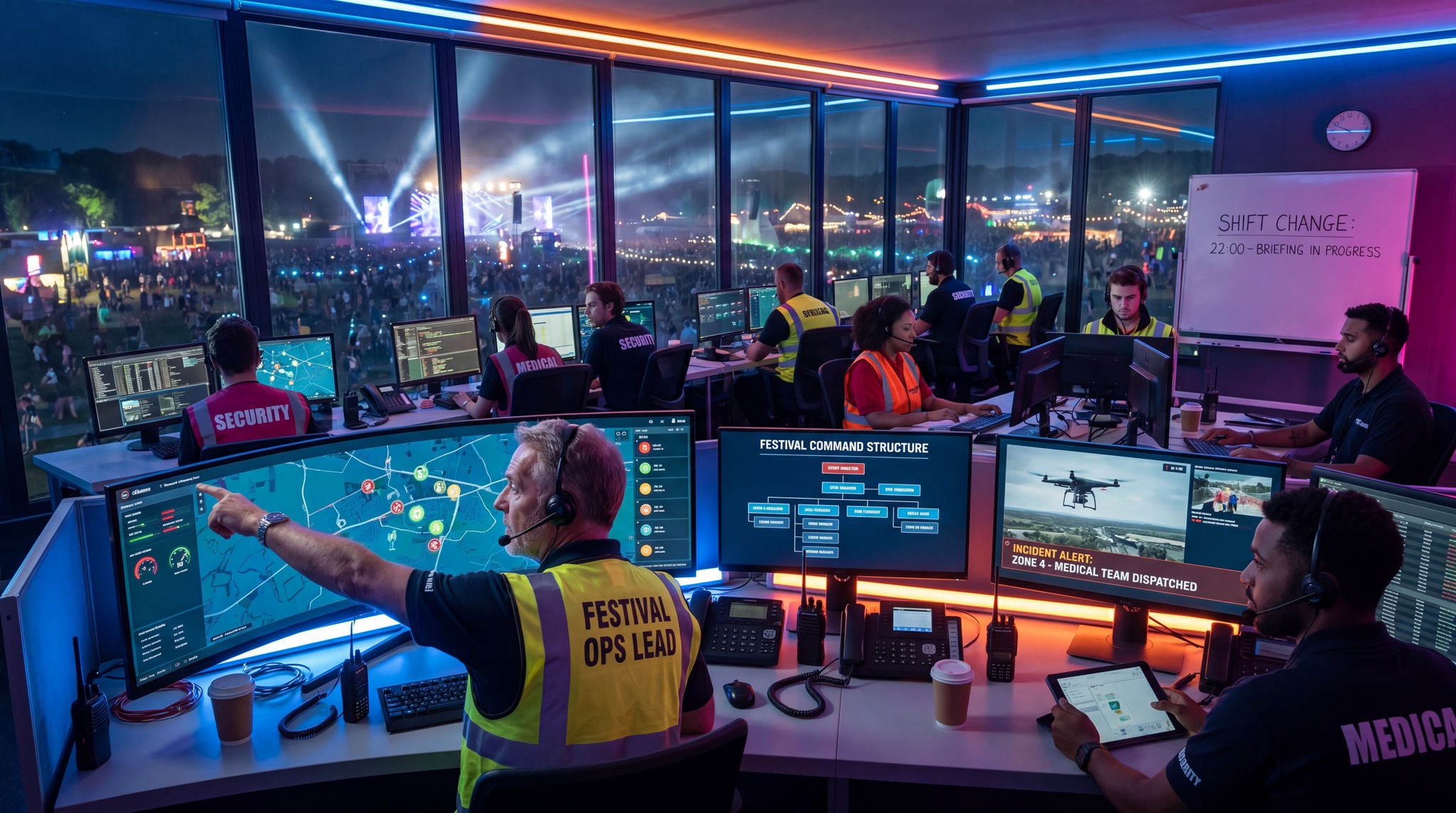
Communications & Ops Center: Set up reliable communications for your team. In rural settings, cell service might be spotty (and overloaded by crowds), so equip staff with two-way radios on clear channels. Establish a central command post (often a trailer or tent office) for operations, where site managers, security chiefs, and medical leads can coordinate. Many large festivals even use an “ops dashboard” – software or displays showing real-time info like gate entries, weather radar, and incident reports. If your event is big, consider using an operations dashboard to run the show by the numbers. But even on a small scale, a dedicated ops HQ with a whiteboard and radio chargers can keep everyone organized.
Need Festival Funding?
Get the capital you need to book headliners, secure venues, and scale your festival production.
Waste & Environmental Stewardship: Country folks respect their land, so your festival should too. Arrange for plenty of trash and recycling bins throughout the venue (especially at food areas and campgrounds) and schedule regular pickups. Embrace a “leave no trace” ethic with reusable materials and ground protection. For instance, you might provide ticket holders with a souvenir trash bag to keep their campsite tidy, or use compostable food service items. Plan cleanup crews during and after the festival – nothing wins community points like leaving the fairgrounds cleaner than you found it.
Pro Tip: Keep your attendees safe and comfortable by offering free sunscreen and water. Set up sunscreen dispensers or free packets at info booths and first aid tents – a lot of country fans spend all day in the sun and appreciate the gesture. And make water super accessible: have roving water refill carts or clearly marked wells where people can top up their bottles for free. Hydrated, sun-protected fans stay happy (and out of the medical tent), which keeps the festival running smoothly.
Safety, Security, and Emergency Preparedness
A country festival should feel welcoming and relaxed, but behind the scenes you need strong safety protocols. Many country events are all-ages and family-friendly, which means your security and medical teams must be ready for anything from lost children to line-dancing sprained ankles. The foundation is a detailed emergency action plan that staff, vendors, and volunteers are trained to follow.
Security Team & Approach: Tailor your security presence to the country crowd. That typically means a “firm but friendly” tone – officers or guards who can enforce rules without killing the vibe. Brief your security personnel to say “howdy” and chat with attendees, not just stand with arms crossed. At the same time, have enough staff to cover all key points: entrances, stage pit, campgrounds, parking lots, and backstage. Small festivals might rely on local volunteer crews or off-duty deputies, whereas large ones hire professional event security firms by the dozens. Either way, ensure everyone understands the unique country context (e.g. fans may carry pocket knives or multi-tools; there may be pickup trucks coming in and out of the grounds). Develop a clear code of conduct and be consistent but polite in enforcing it. A security culture that’s equal parts firm and friendly will make fans feel safe and respected.
Smart Promo Codes & Presale Access
Create percentage or flat-rate discount codes with usage limits, date ranges, and ticket type restrictions. Plus unlock codes for private presales.
Medical & First Aid: Country festivals, especially outdoors in summer, see a lot of minor medical issues – heat exhaustion, dehydration, sunburn, blisters, and the occasional “dust lung” from breathing in dirt all day. Have an EMT-staffed first aid station centrally located, and consider roving medical teams on ATVs or foot patrol. Stock up on water, electrolytes, and basic first aid supplies (bandages for boot blisters, aloe for sunburns). For large events, coordinate with local emergency services to have an ambulance on standby on-site. Also implement a lost child protocol – e.g. any found child is taken to the first aid or info tent, and all staff have a radio code for missing kid incidents. Often, country crowds include a lot of families, so you want procedures that feel reassuring, not frantic.
For mega-festivals handling hundreds of minor medical incidents over a weekend, meticulous documentation is essential for liability protection. Your medical provider should maintain strict patient logs. While digital systems are standard, remote rural sites often rely on paper backups. In these high-volume field hospitals, understanding administrative tools—like the outguides for medical records definition, which refers to physical markers used to track when a patient’s file has been temporarily removed for review or transfer—can help your medical director maintain organized, compliant incident tracking even when the Wi-Fi drops.
Warning: Never oversell your venue beyond what it can handle. Overcrowding creates serious safety hazards – overwhelmed exits, insufficient bathrooms, and panicky crowds if there’s an incident. It might be tempting to pack in a few hundred extra ticket buyers, but the risks far outweigh a quick profit. Always adhere to a capacity that allows everyone breathing room and quick egress in an emergency.
Weather Emergencies: Outdoor festivals live and die by the weather. Have a weather monitoring system and defined triggers for action – for instance, if lightning is detected within X miles, or wind gusts exceed Y mph, you pause the show and instruct fans to seek shelter. Write an evacuation script in advance (with that friendly authoritative tone) and designate who will deliver it over the PA. Practice that “storm delay” announcement script so it comes out calm and clear if dark clouds roll in. Also plan shelter locations – for example, cars and buses in the parking lot can serve as temporary refuge in lightning, or a solid barn structure if available. Being decisive and communicative is vital; fans will cooperate if you give them timely info. Many a festival has avoided disaster by evacuating early when a tornado was spotted in the region, then resumed once the threat passed.
Warning: Don’t gamble with severe weather. Some festival tragedies (stage collapses and panicked crowds) have occurred because organizers “hoped for the best” instead of stopping the show. If dangerous weather looms, act early and decisively – even if it means a delay or cancellation. It’s far better to issue refunds or schedule a makeup show than to put fans and staff in harm’s way.
Emergency Communications: In any emergency – weather, medical, or security – make sure there is one official voice. Assign a spokesperson (often the MC or festival director) to handle all announcements so attendees get clear, consistent instructions. Back that person up with messages on screens or the festival app if possible. The principle of “one voice” in emergency comms prevents chaos. Additionally, equip security and staff with radios and have an emergency channel that becomes priority when needed (e.g. all non-urgent chatter stops when a CODE RED is called). Conduct a briefing each morning of the festival to review emergency roles and remind everyone of nearest exits, shelters, and protocols.
Free Tool: When Should You Announce?
Pick your event date and genre — the free planner outputs a recommended announce, presale, on-sale and reminder schedule anchored to how your audience actually buys.
Crowd Management: Plan out your entry and exit flows in detail. Designated gates with proper ticket scanning and bag checks keep things smooth at ingress. For egress (especially at night after the headline act), open up extra exit lanes or gates if possible to get everyone out safely. Use lighting and staff with glow sticks or wands to direct the outgoing tide of people. If you anticipate a lot of drunk attendees at closing time (which, at a rowdy country show, isn’t uncommon), coordinate with local police for traffic control on surrounding roads. Also consider a rideshare or taxi zone so folks aren’t wandering on dark roads. In campgrounds, have an overnight safety patrol to handle any issues quietly (many country fans love late-night campfire jams; you want those to stay safe and not turn into safety problems).
Special Situations: Prepare for the unexpected. If protesters show up (for instance, against an artist or a sponsor), have a plan: create a designated area near the entrance for lawful protests so they don’t disrupt the festival inside, as outlined in many protest preparedness guides. If you expect any high-profile political or controversial elements, brief security on handling disturbances calmly. Ensure you also have adequate insurance – a tailored festival insurance policy that covers everything from weather cancellation to livestock liability (if you have a rodeo or petting zoo) is worth every penny.
Programming a Lineup That Resonates
The music is the main event, and curating the right lineup can make or break your festival’s appeal. Country music festivals often pride themselves on a mix of legendary hit-makers, current chart-toppers, and homegrown talent. Getting that balance right keeps the schedule exciting from noon to midnight.
Start with anchor artists: your headliners. These are the legend or superstar acts that will draw major ticket sales. It could be a Nashville chart-topper or a classic country icon returning for a special set. Many festivals ensure at least one female headliner and one male headliner if possible, to appeal broadly (and promote diversity). Spread headliners across your days if multi-day, or across stages if you have two big stages alternating.
Fill in the next tiers with rising stars and tribute acts. A smart approach is outlined in lineup architecture guides – essentially, include a bit of everything: “legends, breakouts, and locals.” For example, pair a young breakout artist (the kind blowing up on TikTok or Texas/Red Dirt circuits) right before a legacy act. The veteran’s fans get exposed to a fresh face, and younger fans come early and catch a piece of the old-school set. Always sprinkle in local and regional bands, too. Giving a slot to the honky-tonk bar band from down the road not only fills early afternoon stage time, it also boosts local attendance as their fans and family will show up.
A hallmark of country festivals is programming beyond the main stage – the extra experiences that country fans cherish. Consider setting up a small acoustic stage or songwriting tent to showcase storytellers. Intimate songwriter circles and storytelling sessions can become the heart of your festival, where hit songwriters or stripped-down performers share the tales behind the tunes. Similarly, you might offer daytime instrument clinics for fiddle, banjo, steel guitar and more. Fans who play music themselves will jump at a chance to learn a lick from a pro. These activities enrich the festival, turning it from just a concert into a community gathering of learning and jamming.
Variety and sub-genre representation are important too. Country isn’t monolithic – there’s modern pop-country, bro-country, traditional bluegrass, outlaw country, Red Dirt, Americana, and more. You might dedicate part of your program to a specific scene or theme. Some festivals split into dual vibes, like a “modern Nashville” stage versus an “Outlaw country” stage for the rebels. Others host a themed showcase – for instance, invite a roster of Texas and Oklahoma acts for a special Red Dirt takeover night, immersing the crowd in that distinctive style. Think about your audience demographics and regional flavor: if you’re in Appalachia, a bluegrass gospel brunch might be a huge hit; if you’re in Calgary, some cowboy western swing might go over great.
When evaluating a country musician for festivals, organizers should consider how the artist fits into the broader landscape of the genre. A comprehensive country music genres list includes traditional honky-tonk, bluegrass, neo-traditional, country-pop, alt-country, and Americana. Booking a diverse array of these types of country music ensures your festival appeals to both purists and mainstream radio listeners. For instance, if you are wondering what makes a bluegrass festival engaging, it is often the emphasis on acoustic virtuosity, impromptu picking sessions, and close-knit audience interaction. Injecting a dedicated bluegrass afternoon into a broader country event can capture that same engaging, community-driven magic.
As organizers look ahead to booking country festivals 2026, the competition for top-tier talent is fiercer than ever. Securing a premier country musician for festivals now requires locking in contracts up to eighteen months in advance, especially as the genre’s global footprint expands. For instance, launching a country festival UK edition or partnering with European promoters has become a viable strategy for routing international tours, allowing producers to share talent costs across continents while tapping into new, enthusiastic fanbases.
Additionally, studying regional event timelines—such as analyzing the Charters Towers Country Music Festival 2026 schedule—can help international promoters understand how heritage events structure their multi-day programming to balance local talent with touring headliners.
Don’t forget the “fun factor” programming and festival lore. Country festivals love to attempt crowd participation records or host novelty acts. Maybe it’s a massive line dance during intermission (chasing that world record, if you dare), or special guest cameos (like when a famous NASCAR driver or rodeo star says howdy from the stage). Some events hold competitions – a talent contest for local singers, or a cowboy hat decoration contest for attendees. These moments create buzz and memories beyond the music sets.
Plan the daily schedule with flow in mind. Stagger set times across stages so there aren’t dead periods. If you have two stages, you can alternate: while the main stage resets, have music on the secondary stage so people can wander over and still hear something. Keep nighttimes tightly managed – long gaps after dark can send people back to their camps early. And always end with a bang: many festivals plan a grand finale like a superstar encore that brings out multiple artists together, or a classic cover song singalong that unites everyone.
Grow Your Social Following With Every Sale
Require social media follows, shares, or playlist adds to unlock presale access or special pricing. Turn every ticket purchase into audience growth.
Pro Tip: Collaborate with the artists to create unique festival moments. For example, ask a pair of artists who are friends to do a one-time duet on your stage, or arrange a “songwriters round” with three singers trading songs. These collaborative sets – not seen on tour anywhere else – give your festival a reputation for special experiences. Fans will know they’re getting one-of-a-kind performances, which is a big draw for true music lovers.
Finally, production and special effects: while country festivals aren’t as laser-and-Pyro heavy as rock or EDM fests, don’t shy away from adding spectacle where appropriate. A high-energy headliner might appreciate a little fireworks or flame cannons to punctuate their big songs. If you do incorporate pyrotechnics for a rock-influenced act, hire licensed operators and coordinate with fire authorities, of course. More common are the end-of-night fireworks over the field – a tradition at many country fests. With drone light shows becoming popular, you might weigh fireworks vs. drones for your finale depending on noise concerns and budget. Either way, capping off the evening with something visually stunning – fireworks booming or illuminated drones painting the sky – sends everyone home in awe.
Diversity and Inclusion: Everyone’s Welcome
Country music is for everyone, and modern festivals are actively working to make sure everyone feels that way. The genre has historically skewed towards white male artists, but that’s changing – and festival producers can lead the charge by building inclusion into their events from the ground up.
Key Stat: As recently as 2016, women made up only about 18% of the main stage lineup at Nashville’s CMA Fest. Today, many festivals are pushing toward gender-balanced bills and more diversity on stage – a big shift to better represent the broad fan base of country music.
To ensure diversity, start with your lineup. Set concrete representation goals: for example, commit that a certain percentage of your artists or headliners will be women, artists of color, and so on. This might mean actively seeking out talent beyond the usual Nashville roster. There are great female-fronted bands, Black country singer-songwriters, Latino country-rock artists, and Indigenous folk storytellers making waves – bring them into the spotlight. Don’t tuck diverse acts in early slots only; put them in prime positions so the audience sees inclusion at the top of the bill. Some festivals have even adopted the Keychange pledge (aiming for 50/50 gender split). Whether or not you pledge a specific number, making diversity a priority will enrich the music and appeal to wider audiences.
Inclusion isn’t just about who’s on stage. It’s also the festival atmosphere. Take steps to make LGBTQ+ fans and artists feel welcome too – for instance, explicitly promote an environment of inclusion and zero tolerance for harassment. Something as simple as offering pronoun stickers at the info booth or having security staff briefed on respecting all identities can go a long way. If your region has specific underrepresented communities (say, a local Indigenous nation or a large Spanish-speaking population), consider incorporating elements they’ll connect with – maybe an opening blessing by tribal elders, or booking a bilingual country act.
Pro Tip: Be transparent about your inclusion efforts. In pre-festival communications or on your website, share the breakdown of your lineup (e.g. “This year, 45% of our artists are female and we’re proud to feature Black and Latino country performers from five different states”). When fans see you walking the walk, it builds trust. You can also invite community organizations (women’s associations in music, minority musician coalitions, etc.) to partner or have a presence at the festival to further demonstrate your commitment.
Creating an inclusive country festival also means looking behind the scenes. Strive for diversity in your staff and crew hiring – local staffing can help here. If the festival is in a largely Latino town, for instance, having Spanish-speaking volunteers and signage is respectful and practical. Ensure ADA accessibility and accommodations are robust (mobility shuttles, viewing platforms, sensory-friendly spaces for those with autism or PTSD, etc.) – inclusivity extends to people of all abilities.
Finally, celebrate the diversity of country music itself. Highlight pioneers and current stars from underrepresented groups. For example, you might showcase a tribute to Black country pioneers like Charley Pride, or host a roundtable discussion on women in country before the festival kicks off (maybe in partnership with a sponsor or radio station). When fans see themselves represented on stage and in the festivities, it deepens their connection to the event. The best country music festival is one where everyone who loves the music feels like they belong.
Food, Drink, and Merchandise: Serving Up Country Flavor
Great music will draw people to your festival, but great food and fun extras keep them smiling between sets. Country festivals, especially those spanning a full day or multiple days, need a solid plan for feeding and refreshing the crowd (and making a bit of money doing it).
Food & Beverage: Country folks appreciate hearty, tasty food – this is not the crowd for dainty portions or overly fancy fare. Think barbecue brisket plates, burgers, fried chicken, chili cook-offs, flapjacks in the morning for campers, maybe some Tex-Mex or Cajun spice if it fits your region. Feature local vendors whenever possible: not only does it support the community, but attendees love trying the “famous peach cobbler from Mrs. Johnson’s bakery” or the craft beer from the nearby microbrewery. Aim for a mix of options – meaty BBQ and vegan jackfruit tacos, spicy and kid-friendly mild, etc. – because your audience will be diverse. Long lines can be a buzzkill, so keep food stalls well spaced out and numerous enough to handle peak dinner rush. Layout matters: create a food court with picnic tables or hay bale seating so families can sit and eat comfortably.
To reduce lines, stress to vendors the importance of quick service and cashless payments. Consider implementing a festival-wide payment system (RFID wristbands or a token system), or at least ensure vendors have reliable card readers. Many rural events struggle with connectivity, so invest in offline-capable payment solutions (point-of-sale systems that can cache transactions if Wi-Fi drops). Provide vendor training or guidelines on efficient service – from pre-prepping popular items to using disciplined POS practices for faster transactions. It helps to set expectations through vendor service-level agreements – e.g. standards for food safety, reasonable prices, and speed of service.
As for drinks, beer is usually king at country fests. If you serve alcohol, work within local laws for licensing and distribution. Many festivals do a wristband system to mark attendees over 21, and use ticket tokens or a special bar area. Given country culture, consider partnering with a major beer or whiskey sponsor (just do so tastefully so your event doesn’t feel over-commercialized). Also, very importantly, provide non-alcoholic alternatives beyond soda – iced tea, lemonade, cold brew coffee, and plenty of water. A growing trend is having “Zero-Proof” areas or saloons dedicated to those who don’t drink, so they can enjoy specialty mocktails and a bar vibe without alcohol. This is a thoughtful touch for designated drivers, folks in recovery, or younger attendees.
Merchandise & Activities: Country music fans love their gear. Official festival merch is a key revenue stream and marketing tool (spot your t-shirts at county fairs all year!). Offer a range of merch that fits the country vibe: besides the usual tees and hoodies, think caps, bandanas, and even custom belt buckles with your festival logo. Practical items like reusable drink koozies, bandanas (great for dust), or enamel pins with a cowboy hat design can sell well. Also, consider on-site experiential merch: for instance, a booth doing live screen printing of t-shirts or engraving names on leather keychains.
Enhance the attendee experience with a few charming services. Many country festivals now offer boot shining and hat steaming stations. After a day in the dust, fans get their cowboy boots cleaned up or their felt Stetsons reshaped – it’s a fun luxury that fits the theme. You could also set up Western-themed photo backdrops, like a vintage truck or hay bale stack decorated for selfies. Make sure these photo ops are safe (no rusty metal or tripping hazards in that vintage truck bed) and have good lighting at night, because people will be Instagramming their memories.
Interactive workshops can be a hit too. Offer hands-on activities that align with country life – maybe a leather tooling workshop, line dancing lessons in the afternoon, or a lasso-throwing tutorial. Just be sure any such activity is well-supervised and follows rules (as noted in the guide on running workshops with safety in mind). A schedule of mini-events like “3 PM Line Dancing at the Barn Stage” or “Learn to Lasso at the Rodeo Arena” scattered through the day keeps folks engaged beyond just waiting for the next band.
Pro Tip: A little friendly competition among your vendors can improve everyone’s experience. Consider offering an award (with perhaps a discount on next year’s vendor fee as a prize) for the “Fastest Service Vendor” or “Best Festival Food Vendor” based on attendee votes or secret shopper timing. Knowing they could win Best BBQ of the festival might motivate your food stalls to serve quicker and put extra love into each dish – meaning happier, well-fed attendees.
And of course, keep everything hygienic. Ensure food vendors have up-to-date permits and food handling training. Provide ample trash bins in the food area and empty them often (bees and bad smells can ruin a meal). Clearly mark any water sources as potable or not. If the festival is multi-day, have a sanitation crew power-wash and reset the food court each morning so it’s clean to start the day.
Logistics and Guest Services
Logistics covers all those behind-the-scenes details that make the attendee experience smooth – parking, camping, getting around the site, and generally keeping folks comfortable and informed. A country festival often involves a sprawling physical footprint, so planning these elements is critical.
Parking and Traffic: Expect a lot of pickup trucks, SUVs towing campers, and maybe even horse trailers if you have rodeo elements. Design your parking layout to accommodate oversized vehicles – perhaps a separate lot for RVs and trucks with trailers. In fact, it’s wise to create a dedicated area for RVs, tour buses, and trailers with a separate entrance if possible. This avoids logjams caused by a 30-foot camper trying to squeeze in with compact cars. Have parking staff guide vehicles efficiently and fill areas in an orderly fashion (pickups often like to back in tailgate-style). Mark the rows with signs or flags so people can remember where they parked (“Row G – Green Tractor flag”).
For multi-day festivals, many attendees camp on-site. A well-organized campground makes a huge difference in their experience. Lay out camping spots in a grid or sections (and sell them as such, like “Camp Zone A, spot 50”). Provide a camp host or information kiosk in the campground. Enforce quiet hours in family camping zones versus maybe a late-night jam zone if you allow picking and singing until 2 AM somewhere. Also, ensure emergency vehicle access lanes through camps.
At peak arrival times, traffic control on rural roads is key. Work with local police for bigger events to manage the highway turn-off or stoplight leading to your site. Post signs starting miles out (“Festival Parking This Exit”). To avoid massive departure bottlenecks, consider letting campers stay overnight after the final show – leaving Monday morning instead of all trying to exit Sunday at midnight. Staggering exit flows reduces chance of accidents (and drunk driving). Have a clear egress plan especially for large trucks and trailers; you might, for example, release RVs in waves to prevent them clogging the roads alongside cars.
If your venue is remote or in a small town, shuttle transportation is a lifesaver. Running shuttle buses from a nearby city, hotel cluster, or park-and-ride lot can get more people in without the parking headache. It’s also great for reducing DUI risk – promote a shuttle from the nearest major town so folks don’t have to drive back after drinking at the show.
Guest Comfort and Info: A positive experience means thinking about the little conveniences. Provide adequate shade and seating around the grounds – maybe large tents or picnic areas where people can escape the sun. In hot climates, create “cool zones” (even a simple misting tent or an air-conditioned trailer for cooling off). If it’s dusty, consider watering the main walking paths each morning and night to keep dust down.
Set up an information booth or “general store” tent near the entrance or main area. Staff it with friendly volunteers who can answer questions about set times, lost and found, whatever. Also supply common necessities for sale: sunscreen, earplugs, basic meds like ibuprofen, ponchos if rain is possible, portable phone chargers, etc. A well-stocked general store can rescue someone who forgot their sunblock or needs a new cowboy hat (merch opportunity!).
Speaking of phones – expect that during the day, especially at a big outdoor site, cell service and data may be weak. If you have a festival app, ensure it has offline functionality (schedule and map should work without connectivity). Design your festival app UI in a simple, country-friendly way – not too cluttered, big buttons, perhaps even a built-in radio stream or playlist. Many country fans appreciate straightforward info, so an app that’s basically “Map, Schedule, Artist Info, Alerts” is perfect.
For those who don’t use the app, traditional communication works: post daily schedules on notice boards (and update them if there are any changes or delays, so everyone sees it). Use the MC to announce key info (“Folks, looks like a storm might brush by at 5, so head to your vehicles for a bit around then; we’ll keep you posted!”).
Accessibility & Special Needs: Ensure your festival is accessible to fans with disabilities. That means ADA parking near the entrance, shuttles or golf carts available to help disabled guests move between areas if distances are large, and an ADA viewing platform at the main stage so those in wheelchairs can see over the crowd. Have ASL interpreters for stage announcements or performances if you know deaf fans are attending (at least for the headliners). If the terrain is very rough, lay down some temporary pathways or plywood on soft ground to create routes for wheelchairs. Communicate on your website about what accommodations are available and a contact for any special requests – the community will appreciate it.
VIP & Upgrades: We mentioned VIP earlier – logistically, if you offer VIP tickets, plan for their separate parking or entry, perhaps a dedicated VIP lounge tent with better bathrooms and some snacks. The key, as one guide puts it, is offering extra comfort without a “class war” vibe. Provide perks that don’t take anything away from general attendees (e.g., a VIP viewing area that doesn’t block GA sightlines, or a VIP bar that normal ticket holders aren’t forced to use). VIP should add comfort, not resentment. Make sure the VIP amenities you promise (like free BBQ or meet-and-greets) are delivered smoothly – assign a VIP coordinator to look after those high-value guests.
Family Services: If your festival is family-friendly, set up a kids’ zone. It could be a small corral area with supervised activities like face painting, games, maybe a safe petting zoo (no large animals unless very controlled). Many modern country festivals choose not to have live pony rides or similar due to liability – instead they opt for creative play areas inflated bounce houses or mechanical bulls for older kids. Check out guides on kid corral ideas without live ponies for inspiration. Have a clear tag or wristband system for kids in case they get lost (e.g., give parents a matching wristband number to the child’s). Announce a protocol like “if you’re looking for a lost parent, find any staff in a yellow shirt”.
At the end of the day, logistics and services are about removing obstacles to joy. A festival runs best when attendees don’t have to worry about where to park, how to find Stage B, or what to do if their phone dies. Sweat these details in advance and your crowd will barely notice – they’ll just know they had a blast and everything “just worked.”
Pro Tip: Offer a little down-home hospitality on-site. For example, provide tractor-drawn hayride shuttles or golf carts to help ferry folks (especially seniors or parents with kids) from far parking lots or between distant areas of the festival. It’s not just practical – riding a hay bale wagon to the stage adds to the country fun. Small gestures like free coffee in the campground at sunrise or a Sunday morning cowboy church service can also pleasantly surprise your guests and show you understand the culture.
Artist Relations and Backstage
Happy artists lead to better shows – it’s that simple. Treat your performers well and they’ll give 110% on stage (and spread the word that your festival is a joy to play). Artist relations covers everything from booking travel to hospitality to keeping the backstage secure.
Travel and Routing: Many country acts, even big stars, often tour by bus. Work with tour managers on routing so their trek to your festival is convenient – for example, if you’re in Montana, see if you can book the artist the night after they play a fair in a neighboring state to make routing logical (a concept explained in tips on routing artists across fairs, rodeos, and theaters). Offer to cover fuel or parking for tour buses. If an act is flying in, arrange airport pickups (nothing worse for an artist than being stranded at a tiny regional airport). For international artists (say you’re bringing a Canadian or Australian country singer to a U.S. fest), handle the visa paperwork and border logistics diligently – start months out, use experienced immigration brokers if needed. You don’t want your headliner held up at customs because someone forgot a performance work permit.
Lodging and Hospitality: Depending on the vibe of your festival, lodging artists can range from downtown hotels to literal ranch stays. Many smaller country festivals pride themselves on personal hospitality – maybe you put the band up at a local ranch B&B and treat them to a home-cooked breakfast. If that fits your setting and the artists are game, it can be a memorable touch (some ideas are shared in artist hospitality guides). For bigger acts, usually it’s hotels – try to choose a nice one within reasonable driving distance (30 minutes or less). Provide a hospitality rider for each artist backstage: plenty of water, some beer or whiskey if they drink, and hearty snacks (again, country artists might appreciate comfort food over a fancy cheese plate). Include local goodies if possible – jars of local jam or beef jerky from a local shop – these small things get noticed.
Backstage Setup: Create a comfortable backstage compound for artists and their teams. A common approach is to use a few trailers or tents: one as a green room lounge with sofas, one as a changing room, etc. Keep it stocked with refreshments and make it a calm oasis away from the crowd. Security at backstage entrances must be solid – no one gets back without a credential or escort. This protects artists from impromptu meet & greets that they haven’t agreed to. However, also train backstage security to be polite and chill; a big burly guard with a smile and a “how ya doin’ ma’am” sets the right tone versus overly stern personnel. Backstage etiquette and security protocols should be reviewed with all staff: things like do not bring guests or media backstage unless approved, keep catering areas tidy, and absolutely no wandering fans.
If you have meet-and-greets scheduled (common at country fests where VIPs or fan club members get a quick photo with the artist), organize them tightly. Do it in a controlled area away from the artist’s actual green room, stick to the time limit, and have a staff member there to manage the line and take photos. Many country artists are extremely gracious with fans, but you don’t want a meet-and-greet making them late for stage or cutting into their pre-show prep time.
Stage and Sound: Work closely with artists’ tour managers on stage plots and soundchecks. Country acts can range from solo acoustic to 11-piece bands with pedal steel and fiddles, so advance all those details. Provide quality backline gear as requested so they don’t have to haul everything (especially for international acts). Have a dedicated stage manager for each stage to handle any last-minute needs. Punctuality is key: keep that schedule on track so artists aren’t frustrated by delays (but also be ready to pad changeovers if a band has a lot of gear to set up).
Special Touches: Country artists tend to be down-to-earth, and a few special touches can go a long way. Perhaps assign each artist a local liaison – say, a volunteer or staffer from the area – to be their go-to person (“Hey, I’ll drive you to the rodeo grounds for your press interview” or “We arranged a tour of the local guitar shop if you’re interested”). Artists often appreciate getting a feel for the town they’re in, even if only for a day. If your festival is in a cool locale (mountains, ranch, beach), consider giving artists an optional experience – a short horseback ride, a boat outing, etc. Not all will partake, but those who do will remember your festival for it.
And always get feedback. After their set, or via email a week later, ask the artists or their reps how their experience was. Did they get everything they needed? Any suggestions? This not only helps you improve, but it also signals that you care about their experience, building goodwill for future bookings.
Pro Tip: Assign each major artist or band a dedicated artist relations host – essentially a personal guide for the day. That host greets them on arrival, escorts them to the green room, has their schedule on hand (“Your soundcheck is at 4 PM, dinner at catering is from 5-6, meet-and-greet at 6:30…”), and is basically their concierge. It can be a friendly local volunteer or a pro, but someone who knows the festival in and out. This one-on-one attention means artists never feel lost or ignored. Plus, if an issue arises (“we need more ice in our cooler” or “our van has a flat tire”), they have a direct person to tell, and you can fix it fast.
At the end of the festival, treat your artists like part of the family. Many country festivals hold an informal after-party or bonfire for staff and artists – if appropriate, extend an invite. That’s where memories are made and relationships are cemented. A happy artist will spread the word in the industry that your festival is a must-play, and that pays off for lineups in years to come.
Marketing, Ticketing, and Promotion
You can book the best lineup in the world and set up the perfect site, but you need to sell those tickets and get the word out. Marketing a country music festival requires a mix of old-school community outreach and modern media savvy.
At its core, effective country music marketing relies on authenticity and storytelling. Unlike EDM or pop events that might lean heavily on flashy digital ads, promoting a country event requires building trust with a highly loyal demographic. Successful campaigns often blend digital targeting with grassroots outreach, ensuring that the festival’s brand resonates with the core values of the community.
Branding and Identity: First, establish a strong brand for your festival. Is it a nostalgic classic country weekend? A edgy “new country” party? A family-oriented cultural celebration? Develop a name, logo, and visual style that convey that vibe. Many country fests go for a rustic aesthetic – wood textures, cowboy imagery – but make sure it’s also professional and clear. Create a brand system that balances rustic charm with readability. All your marketing materials, from posters to the website to social media graphics, should have a cohesive look and feel. This builds recognition, especially if your festival will be an annual affair.
Advertising Channels: Country fans can be reached through a variety of channels:
– Radio: Country radio is still huge. Partner with regional country stations for ticket giveaways, artist interview spots, or a festival jingle that gets airplay. DJs often love to broadcast live from festivals; offering that can give you hours of free promo.
– Local Print and Press: In rural areas, local newspapers or county magazines and agriculture journals (think farm bureau newsletters) are effective. Engage local news and ag channels by pitching the festival as a community highlight. A human-interest angle – like the economic boost or a story of a local kid playing the fest – can get you a feature story.
– Social Media: Use Facebook (very popular with older country fans) for event pages, community updates, and targeted ads to people interested in country music within driving range. Instagram and TikTok can reach younger audiences: share artist lineup announcements, behind-the-scenes site build videos, and clips of past festival fun (if you have them). Encourage artists to post about their appearance too.
– Digital & Email: Build an email list via your ticketing platform or website. Regular newsletters with artist spotlights, festival tips (“Top 5 items to pack for a country festival!”), and nearby accommodation info can keep potential attendees warm and excited. Also, country music forums and Facebook groups could be good places to share your news (just be respectful, no spam blasting).
– Posters and Flyers: Print isn’t dead in small towns. Print some nice posters and ask to hang them in feed stores, western wear shops, music stores, bars – anywhere your target market visits. You’d be surprised how a great poster in a cafe can spark word-of-mouth. If you have the budget, billboard ads on highways leading toward the festival (especially if near a state border or major city) can catch road-trippers’ eyes.
– Word of Mouth & Ambassadors: In tight-knit country communities, personal recommendation is gold. Leverage local heroes – maybe a popular local band or the high school football coach – as ambassadors who talk up the festival. If a country star is from your region, even if they’re not playing, see if they’ll plug your event on social media or radio as a hometown shoutout.
One unique marketing avenue for country fests is the artists themselves. Country artists often have fan clubs and are active on social. Provide them with easy-to-share materials (graphics, links) to promote their appearance at your festival. The more the artists hype it up, the more their fans will come specifically to see them.
Effective country music promotion also relies heavily on targeted public relations. A dedicated country music PR strategy should involve pitching stories to genre-specific publications, lifestyle blogs, and regional influencers. Rather than just blasting out a generic press release, tailor your pitches to highlight the unique cultural aspects of your event, such as exclusive artist collaborations or community impact initiatives. This specialized approach to promotion ensures your festival stands out in a crowded summer calendar.
Ticketing Strategy: Simplicity and fairness go a long way. Many country fans appreciate straightforward pricing – e.g., Early Bird general admission, then Regular GA, maybe a VIP pass – rather than overly complicated tiered packages. Set a reasonable tier system and stick to it. If you sell physical tickets through local outlets (like the feed store or local radio office), ensure those are integrated with your digital inventory to avoid oversells.
Keep an eye on the secondary market. Unfortunately, ticket scalping hits festivals of all genres. Implement tools like timed entry barcodes or device limits on e-tickets to combat fraud. Some festival ticketing systems now include anti-scalping measures and verified resale exchanges – consider using those, so fans who can’t make it can resell safely at face value and fans who need tickets last-minute aren’t forced to go to shady scalpers.
Given some country fans may be less tech-savvy or lack reliable internet at home, offer ticket purchasing by phone or local outlets, not just online. And clearly communicate your refund or rollover policies (especially post-pandemic, people ask about this). If the festival has to postpone or cancel (heaven forbid), being fair and prompt with refunds or honoring tickets for next year will maintain goodwill.
Promotions and Deals: To boost sales, run occasional promotions – like a “4th of July Sale” with a discount code, or a local’s discount if purchased in-person at certain stores. Partner with local businesses: e.g., a hotel might offer a package that includes festival passes, or a western wear store gives a coupon with each ticket purchase. These cross-promos widen your reach.
Press and PR: Develop a professional press kit (press release, high-res photos, a brief history of the festival, quotes from organizers or artists) and send it to regional media and relevant blogs. Emphasize what makes your festival unique. Is it the scenic location? The fact that it’s benefitting local charities? Or maybe a once-in-a-lifetime superstar lineup? Teach editors about your festival’s authentic story so you’re not just “another country fest.” If you can get a segment on the local morning TV news or a piece in the state tourism magazine, that’s valuable exposure.
Connectivity on Site: Increasingly, festivals engage attendees digitally during the event – like app push notifications (“Line dancing contest at 2 PM in the corral!”) or branded photo filters on social media. This is cool, but remember at a country fest the vibe is often to disconnect from screens and enjoy the moment. Find a balance. Perhaps encourage a festival hashtag and have a live social media feed on a screen, but don’t overdo it. One fun idea is a photo booth that posts pictures to an album attendees can access later. That way, people take a quick snap with their friends in front of a country-western backdrop and then get back to dancing, and the festival gets shareable content.
Throughout your promotions, highlight not just the music but the whole experience: camping under the stars, cookouts, line dances, scenic sunsets with music playing. Sell the sizzle. A first-time attendee should read your materials and practically smell the BBQ and feel the grass under their boots.
At the same time, underscore the practical benefits: “safe, family-friendly environment,” “free parking with ticket,” “kids under 10 attend free,” whatever applies. Country folks like value and clarity. If your festival drives economic benefits or supports a cause (like a portion of proceeds goes to a local charity), promote that too – people take pride in an event that gives back.
In summary, marketing a country music festival means engaging the community and the genre’s fanbase with respect and authenticity. Use every channel from radio shoutouts to Facebook groups, and make buying a ticket easy and fair. The result will be not just strong ticket sales, but an audience who arrives already excited because they’ve been hearing about this festival from all sides for months.
Pro Tip: Don’t underestimate the power of partnerships. Team up with local rodeos, fairs, or even country dance halls to cross-promote. For instance, send an street team to a popular rodeo with flyers and maybe a ticket giveaway. Or sponsor the halftime of a minor league baseball game with a country band and toss T-shirts into the crowd. The more people associate your festival with the fabric of the community, the more likely they’ll remember to buy tickets. Also, consider a festival launch event – perhaps a mini concert or line dance flash mob in the town square a couple of months out – to generate buzz and media coverage.
Community Partnerships and Impact
Country festivals don’t just drop in from the sky – they thrive when rooted in the local community. Building alliances with your town, neighbors, and regional organizations will not only smooth the planning process but also turn your festival into a beloved annual tradition. Moreover, demonstrating positive impact (economic and cultural) ensures long-term support.
Local Alliances: Start by partnering with community groups. Engage churches, schools, and ranchers early on. Churches might help by providing volunteers (or even hosting a Sunday morning gospel hour on-site). The high school FFA (Future Farmers of America) club or 4-H might run a petting zoo or a food booth as a fundraiser. Ranch owners might lend you parking land or even board artists’ horses if someone brings one! When these groups have a stake in the festival, they’ll promote it to their networks and stand up for it if any naysayers emerge.
Work with local businesses too. Coordinate with motels, gas stations, outfitters, and restaurants in town – they can offer festival weekend specials (like a diner could do a late-night menu for campers coming back into town, etc.). This makes the whole town feel like it’s rolling out the welcome mat. Some small festivals in fact issue “Welcome Country Fans” kits to businesses with window posters and info, which builds a unified spirit.
Government and Permitting: Cultivate a positive relationship with city officials, law enforcement, and emergency services. Meet with them, hear concerns, show your detailed plans. If the town council sees you’re prioritizing safety and community benefit, they’re far more likely to greenlight permits and even advocate for your event. Sometimes it helps to invite key officials to be part of the festival – not just ceremonially (though a mayor cutting a ribbon or a sheriff saying a few words on stage can be nice) but also practically (perhaps the tourism office sets up an info booth at the fest).
In rural areas, noise and traffic are common complaints. We already touched on noise diplomacy with neighbors – basically, be proactive. Visit the nearest neighbors with a gift basket and festival info; offer them VIP passes or at least a hotline number to call if they have issues during the event. Sometimes doing a special “locals only” pre-sale or a free community night (like opening up the Thursday soundcheck as a locals’ free party) can generate goodwill.
Economic Impact and Sponsorship: One of your strongest cards to play with local leaders and sponsors is the economic boost your festival brings. Highlight how many hotel nights will be booked, how vendors will source from local suppliers, how gas stations and eateries will see a spike. In fact, consider doing an economic impact study after year 1 (even a simple one) to quantify this. For example, Nashville’s CMA Fest pumps tens of millions into the city each year. Your fest might bring a few hundred thousand dollars into your small town – still significant for a rural economy. Sharing projected and actual figures builds credibility. It might even help you secure tourism grants or cultural funding from regional authorities if they see tangible returns.
Key Stat: Nashville’s CMA Fest 2022 generated roughly $65 million in direct visitor spending for the city, setting a record for June tourism. Even a smaller festival can drive a big economic boost to its town – a fact worth highlighting to sponsors and civic leaders.
Sponsorship goes hand-in-hand with community ties. Approach local and regional businesses as potential sponsors. A farm equipment dealer might sponsor your second stage (imagine the “John Deere Back Forty Stage”). A local bank might underwrite your shuttle buses or the wristbands. Emphasize to sponsors the direct connection to their target market – a country fest is a goldmine for certain brands (beer companies, western apparel, outdoor gear). Also approach state tourism agencies, especially if you can tie in heritage aspects like local crafts or history exhibits at your fest – they often have grant money for events that draw visitors.
Cultural Preservation: Many communities see a country music festival not just as entertainment but as preserving and celebrating their culture. Lean into that. Include elements like local line dance troupes, cowboy poets, rodeo demonstrations, or farming heritage displays. Show that your event honors the region’s traditions. This can unlock support from cultural organizations and older community members. If your area has a unique music history (e.g. birthplace of a subgenre or famous star), incorporate that story in the festival marketing and programming.
Feedback and Involvement: Make the community feel heard. After the festival, hold a debrief town hall or send around a feedback form (both to attendees and residents). Listen to any complaints about noise or traffic and actively address them next time. When people see you’re responsive, they’re more likely to be supportive or at least tolerant in the future. Engage local youth as volunteers or interns in planning – it gives them ownership (plus free labor and fresh ideas for you).
On the flip side, stand firm against any unreasonable demands that could compromise the festival too much. There’s a balance – you might get a cranky neighbor who insists music stop at 9 PM. You probably can’t do that if you want a viable festival, but you can compromise (maybe end main stage at 11 and then enforce silence). Show you attempt to find middle ground.
Legacy and Goodwill: Aim to leave a positive mark. Some festivals donate a portion of proceeds to a local cause (like the volunteer fire department or school music programs). Or perhaps build something lasting, like planting trees at the site or funding new bleachers for the rodeo arena. These gestures demonstrate that the festival isn’t just extracting value from the community, but investing in it.
Another idea: if the festival is annual, do small events throughout the year to sustain goodwill. Maybe sponsor a float in the holiday parade, or have an artist do a charity gig in town under the festival’s name. The festival then becomes not an outsider but an integral part of the community’s calendar and identity.
Pro Tip: Show appreciation to the community at every step. Thank the town in your program and on stage (“Let’s hear it for the folks of Copper Creek for hosting us!”). After the event, put a thank-you ad in the local paper naming the police, city council, businesses, etc. that helped. Small acts of gratitude build a reservoir of goodwill. Additionally, consider a locals-only presale or discount for next year’s tickets as a thank you for putting up with the road closures and noise. When the community feels acknowledged and rewarded, they’ll welcome you back.
In essence, treat the festival as a partnership between you (the organizers) and the community. When done right, a country music festival can boost local pride, economy, and unity – people start calling it “our festival.” And that’s when you know you’ve built something that can last for decades.
Essential Reading
- Night Ops: Light the Festival Trails, Keep the Magic Soft – Expert tips on illuminating your festival grounds safely without losing the starry-night charm.
- Vendor POS Discipline at Country Music Festivals: Faster Transactions, Happier Crowds – How to train and equip vendors to keep food and drink lines moving briskly.
- Permit Matrix for Country Music Festivals: Fire, Rodeo, Alcohol, Stages, and Bleachers – A comprehensive look at permits and regulations you’ll likely need before the music starts.
- Horses at Festivals: Manage With Care – Guidance on safely incorporating horses or rodeo events into a festival setting.
- Kids’ Corral Without Ponies: Safe and Fun Alternatives at Country Music Festivals – Ideas for entertaining young festival-goers while avoiding unnecessary risk.
- Songwriter Circles and Storytelling Stages: The Soul of Country Music Festivals – Enhancing your festival’s authenticity with intimate performance setups.
- Inclusive Country Music Festivals: Amplifying Women, Black, Latino, and Indigenous Voices – Strategies to make your lineup and culture more inclusive and representative.
- Country Festival Marketing: Radio, Playlists, and Local Heroes – Marketing techniques tailored to country music audiences and channels.
- Tourism and Grant Funding With Teeth: How Country Music Festivals Drive Economic Uplift and Cultural Preservation – Leveraging your festival’s economic and cultural impact to secure funding and community support.
- Run the Show by Numbers: Ops Dashboards for Country Music Festivals – Using real-time data and dashboards to monitor and manage festival operations efficiently.
FAQ
How far in advance should planning start for a country music festival?
Ideally, start planning large festivals 12-18 months in advance. This gives time to book top artists (who often schedule tours a year out), secure permits, and arrange sponsorships. For smaller 500-1000 attendee events, 6-9 months might suffice, but earlier is always better. Early planning means more venue options and time to promote. Many veteran producers lock in the venue and dates a year ahead, announce a save-the-date, and then confirm the lineup and vendors over the ensuing months.
What permits and licenses do I need for a country festival?
It depends on your location, but common permits include: an event permit from the city/county, fire department permits for open flames (campfires, fireworks) and tent structures, health department permits for food vendors, alcohol license if you’re serving beer or liquor, noise variance permits if music will go past certain hours, and building/safety permits for stages and bleachers. If you have rodeo events or animals, you may need additional liability waivers or animal welfare permits. Always check with local authorities early and map out a permit checklist. Submitting applications well in advance is crucial, as some (like alcohol or mass gathering permits) can take months for approval.
How can a small festival afford big-name country artists?
Getting a major headliner on a tight budget is challenging but possible. One strategy is to schedule your festival when artists are already touring nearby – you can sometimes snag a routing date at a lower fee if it fits into their tour routing. Partner with other regional events (fairs, casinos, rodeos) to “share” artists on consecutive dates, reducing travel costs for the artist. Sponsorship can also offset an artist’s fee – for example, a sponsor covers part of the cost in exchange for advertising. Additionally, consider rising stars who are about to break out – they may command lower fees now, but still draw a crowd. Finally, strong community support (like city tourism grants or fundraising) can supplement your talent budget to bring in a marquee name.
What are some unique attractions to include besides the music?
Country festivals often feature lots of fun add-ons. Popular attractions include line dancing lessons (and even record attempts for the longest line dance), mechanical bull rides, hayrides around the festival grounds, and songwriting or instrument workshops with musicians. Rodeo or horse demonstrations can be a hit if you have the space and specialize personnel. Don’t forget simpler touches too: a classic car or vintage truck display (doubling as a photo op), a kids’ corral with games for families, or nightly campfire sing-alongs for campers. Think of activities that celebrate country lifestyle – from chili cook-offs to cowboy poetry readings – to make your festival experience rich and well-rounded.
How do festivals handle alcohol sales and underage drinking?
Most festivals implement strict ID checks and a wristband system. Upon entry (or at a dedicated booth), attendees 21+ get a wristband that allows them to purchase alcohol. Security and bartenders are instructed to check for that wristband for every sale. Alcohol is often sold in a designated beer garden or from licensed vendor booths – some festivals keep all alcohol in a limited area, others allow it festival-wide. It’s personal to your layout and local laws. Enforcement is key: hire experienced pourers who won’t serve minors and will cut off overly intoxicated guests. Also, provide plenty of free water stations and encourage pacing. Having a “sober tent” or zero-proof lounge can offer a comfortable space for those who aren’t drinking. Lastly, coordinate with local police for a presence during egress to discourage intoxicated driving – many festivals promote ride-share codes or shuttle options to keep everyone safe.
What if bad weather hits during the festival?
Every festival should have a weather emergency plan. If lightning, high winds, or severe storms approach, be ready to pause performances and instruct attendees to seek shelter. Use your PA system, screens, and app to clearly communicate instructions (for example: “Severe storm approaching – please return to your vehicles or the designated shelter immediately. We will resume when it’s safe.”). If you have sturdy buildings on-site (like concrete restrooms or a storm shelter), direct people there; otherwise, cars and buses often serve as safe shelters from lightning. Have a weather monitoring team (or app) tracking systems so you can act early. Many festivals build extra time into schedules to resume shows after a delay. In worst case scenarios (tornado warnings, etc.), the priority is safety – get everyone sheltered and wait it out. Once danger passes, communicate updates (even if it’s a cancelation). People appreciate proactive and transparent decisions when weather intervenes. Also, consider offering ponchos for sale and have drainage pumps ready if rain floods areas – a little preparedness goes a long way.
What makes a bluegrass festival engaging for attendees?
An engaging bluegrass festival relies heavily on participatory culture. Unlike standard stadium concerts, bluegrass events thrive on acoustic instrument workshops, open campground picking sessions, and intimate storytelling stages. Organizers can boost engagement by creating dedicated spaces for fans to jam together, hosting instrument clinics, and ensuring the stage design allows for close, acoustic-friendly listening.
What are the emerging booking trends for country festivals in 2026?
For country festivals 2026, organizers are seeing a massive shift toward global routing and genre-blending lineups. Because the demand for a top-tier country musician for festivals has skyrocketed globally, producers are securing headliners much earlier. Additionally, international expansion is booming; a country festival UK event can now draw tens of thousands of fans, proving that the genre’s appeal extends far beyond North America. Promoters are increasingly collaborating across borders to co-offer lucrative multi-continent tour runs to major artists.
What can boutique events learn from the biggest country music festival productions?
Even if you are organizing a 1,000-person gathering, studying the biggest country music festival operations—like Stagecoach or CMA Fest—offers valuable lessons in crowd flow, VIP tiering, and sponsor integration. Mega-festivals excel at creating distinct “neighborhoods” or zones within the grounds, a tactic smaller promoters can scale down to keep attendees engaged throughout the day without feeling overcrowded.
How should promoters balance different types of country music on a single lineup?
Curating a successful event means acknowledging that the genre is incredibly diverse. Promoters should map out different types of country music—from mainstream radio pop-country to traditional bluegrass, Americana, and outlaw styles—and assign them to appropriate stages or time slots. This strategic programming prevents sonic whiplash while ensuring fans of specific subgenres have dedicated spaces to enjoy their preferred sound.
Glossary
Backline: Equipment provided on stage (amps, drum kit, keyboards, etc.) that multiple artists can use. Festivals supply backline gear to reduce changeover times between acts.
Lineup: The roster of artists performing at the festival, often displayed in order of prominence or set time. A well-balanced lineup includes headliners, mid-level acts, and emerging local artists.
Headliner: The top-billed artist(s) at an event, usually performing in the climax time slot (e.g., final act of the night). Headliners are often major draws that help sell the majority of tickets.
Outlaw Country: A subgenre of country music known for its rebel attitude, often showcased with artists like Willie Nelson or Waylon Jennings; festivals sometimes dedicate an “outlaw” stage or night to this style.
Red Dirt: A regional style of country music originating in Oklahoma and Texas, with its own fan base; some festivals feature “Red Dirt” acts to bring local flavor.
MC (Master of Ceremonies): The host or announcer of the festival who introduces acts and keeps the audience engaged between sets.
Rider: A set of requests or requirements from an artist, typically covering hospitality (food, drink, accommodation) and technical needs (gear, sound setup).
Secondary Ticket Market: The resale marketplace where tickets are sold by fans or brokers; festival producers often try to control this to prevent scalping and fraud.
Ingress/Egress: Industry terms for how attendees enter (ingress) and exit (egress) the festival site; critical for crowd flow and safety planning.
Wristband: A wearable ticket alternative (often RFID-enabled) used at festivals for entry access and sometimes cashless payments on site.
Stage Plot: A diagram provided by performers that shows where instruments and equipment go on stage, helping the stage crew set up quickly.
Volunteer Crew: Community volunteers who help run the festival (ticket scanning, info booths, cleanup, etc.), especially important at smaller festivals with limited paid staff.
Conclusion
Producing a country music festival is a labor of love that combines professional event management with heartfelt community spirit. From the first idea to the final encore, it’s about meticulous planning and countless tiny decisions – but also about the goosebumps of a great song under an open sky and the smiles of families two-stepping together. By now, you’ve seen that success comes from balancing all the moving parts: choosing the right venue, building solid infrastructure, prioritizing safety, curating a lineup that honors country’s roots and future, welcoming everyone, and engaging the local community at every step.
When done right, a country festival becomes more than an event – it becomes an annual reunion, an economic boon, and a point of local pride. So saddle up and put this knowledge to use. With hard work, a keen ear for what country fans love, and a deep respect for the community that hosts you, you can create a country music festival that stands the test of time. Now dust off those boots, rally your team, and get ready to turn your festival vision into a boot-stompin’, hand-clappin’, unforgettable reality. See y’all on the festival grounds!