As the 2026 festival season approaches, understanding crowd psychology has become as crucial as booking headliners. Recent years have shown how a crowd’s mood and behavior can make or break an event’s safety. Tragic incidents – from the Roskilde 2000 crush to the Astroworld 2021 disaster where 10 fans lost their lives due to a crowd surge – underscore the stakes. Yet we’ve also seen inspiring examples of skillful crowd management: when a stage caught fire at Tomorrowland Unite Spain 2017, organizers calmly evacuated 22,000 attendees without injuries thanks to professional intervention. These lessons highlight a powerful truth: by applying behavioral psychology principles, festival producers can design environments that keep crowds safe, comfortable, and even blissfully happy.
This comprehensive guide explores how to harness crowd psychology for better festival experiences in 2026. From calming communication strategies and intelligent signage to music and lighting cues that guide crowd energy, we’ll cover actionable techniques backed by real-world examples. Whether you’re running a local boutique fest or a 100,000-strong mega-event, these insights will help you create a festival that feels secure yet electrifying – a place where attendees can let loose and feel cared for. Let’s dive in.
Understanding Crowd Behavior Dynamics
From Individuals to One Crowd Mind
The Myth of “Crowd Panic”
One of the biggest misconceptions is that crowds will instantly panic in an emergency. In reality, stampedes are rare and often triggered by specific failures (like blocked exits or lack of information). Crowd psychology experts note that people don’t lose all judgment in a crowd – in fact, many remain surprisingly orderly if they trust the organizers and have clear instructions for crisis communication. For instance, when severe weather hit Lollapalooza 2012 in Chicago, officials calmly announced an evacuation plan over loudspeakers and video screens; tens of thousands exited without chaos as they were guided to shelter. The lesson: crowds are more likely to stay composed if given timely, clear directions. Panic tends to arise only when people feel helpless or uninformed. Veteran producers treat communication as a safety tool, ensuring attendees are never left in the dark during a crisis. By dispelling the “crazy crowd” myth and planning for human nature, you can avoid self-fulfilling prophecies of panic.
Free Tool: Size Your Festival Site
Zoned capacity planning for arena, campsite, parking and entry lanes — against UK Purple Guide and NFPA density standards. Finds your bottleneck zone.
If you do encounter a localized crowd in panic—perhaps triggered by a sudden loud noise, a medical emergency, or a structural failure—the immediate operational question is: so what to do? The protocol should be instant, visible leadership. Deploy your rapid-response teams to the epicenter to provide calm, authoritative direction, while simultaneously using your PA system to explain the situation transparently. People default to order when they see organizers taking swift, competent control.
Emotion Is Contagious (for Better or Worse)
Crowds amplify emotions. A wave of excitement can spread like wildfire during a headliner’s encore – but likewise, fear or frustration can ripple through a packed audience with equal intensity. This emotional contagion is a core aspect of crowd psychology. Festival organizers must be tuned in to the crowd’s emotional state and use tools to steer the mood in a positive direction. Something as simple as an upbeat song between sets or a soothing announcement can reset a tense atmosphere. On the flip side, negative cues – an aggressive security approach or sudden silence with no information – can breed anxiety that travels through the crowd. Understanding this, many festivals deploy “vibe teams” (like the famous Ground Control volunteers at Electric Daisy Carnival in the U.S.) who mingle with attendees, spread positivity, and report any brewing concerns. The takeaway is clear: emotions in a crowd are contagious, so consciously project the energy you want to see. If you keep attendees feeling informed, respected, and excited, they’ll pass those feelings on to each other.
Planning a Festival?
Ticket Fairy's festival ticketing platform handles multi-day passes, RFID wristbands, and complex festival operations.
The Shift from “Crowd Control” to “Crowd Management”
When discussing how to control crowds at events, veteran producers know that the terminology itself is evolving. Traditional “crowd control” implies a reactive, forceful approach—stepping in only when a situation escalates. Today’s industry standard is proactive crowd management. Rather than trying to physically force thousands of people into submission, modern event operators design environments that naturally guide behavior. This means utilizing psychological cues, strategic site layouts, and transparent communication to prevent bottlenecks before they form. By shifting the mindset from controlling an audience to managing their experience, organizers can foster a cooperative atmosphere where attendees willingly follow safety protocols.
Physical Layout & Crowd Flow: Designing for Safety
Event Safety Planning Guidelines for 2026
As regulatory frameworks evolve, adhering to updated event safety planning guidelines for crowd management in 2026 is non-negotiable for producers. Modern safety planning, often supported by robust event funding and ticketing advances, requires a proactive, documented approach rather than relying on reactive measures. Venue operators and promoters must develop comprehensive risk assessments that account for dynamic crowd movement, extreme weather contingencies, and multi-agency communication protocols. By integrating these updated guidelines into your site design from day one, you establish a baseline of operational resilience that protects both your attendees and your festival’s liability.
Furthermore, as we transition from the lessons learned in recent years, the event safety planning guidelines for crowd management spanning 2025 and 2026 emphasize continuous real-time risk assessment. Regulatory bodies now expect promoters to maintain living documents that adapt to changing conditions—such as sudden weather shifts or unexpected attendance spikes, which can be better managed with advanced ticketing solutions—ensuring that safety protocols remain effective throughout the entire festival lifecycle.
Crowd Density: Know Your Limits
How you design the festival site can profoundly influence crowd behavior and safety. A critical factor is crowd density – essentially, how many people are crammed into a given space. Experts warn that when densities exceed about 6-7 people per square meter, movement becomes restricted and the risk of a dangerous crush soars at high densities. In such packed conditions, even a small trigger (like a sudden rush toward a stage or a rumor that spreads) can create a shockwave of bodies with nowhere to go. To prevent this, map out your venue with realistic capacity limits for each area. Use the “tokyo subway test” – if an area would feel like an overstuffed subway car, you’ve probably pushed past safe capacity. Many experienced festival producers now employ crowd simulation software in advance to test different layouts. They identify chokepoints where foot traffic could bottleneck and ensure there are ample escape routes. The goal is to keep most crowd densities in the comfortable range of 2-4 people/m² and never let main areas hit that 6-7+/m² danger zone.
Free Tool: How Many Staff Do You Need?
Get a starting headcount for security, stewards, scanners, bar staff and first aid from your crowd size, event type and risk level.
To illustrate safe vs. risky densities, here’s a quick reference:
| Crowd Density (people per m²) | Experience for Attendees | Risk Level |
|---|---|---|
| 2 or less | Plenty of personal space; easy movement. | Low (Relaxed) |
| ~4 (Moderate) | Shoulder-to-shoulder crowd; manageable shuffling. | Medium (Manageable) |
| 6 or more | Packed tight; little ability to move or lift arms. | High (Danger of crush) |
Furthermore, as we transition from the lessons learned in recent years, the event safety planning guidelines for crowd management spanning 2025 and 2026 emphasize continuous real-time risk assessment. Regulatory bodies now expect promoters to maintain living documents that adapt to changing conditions—such as sudden weather shifts or unexpected attendance spikes—ensuring that safety protocols remain effective throughout the entire festival lifecycle.
Need Festival Funding?
Get the capital you need to book headliners, secure venues, and scale your festival production.
Crowd Density: Know Your Limits
How you design the festival site can profoundly influence crowd behavior and safety. A critical factor is crowd density – essentially, how many people are crammed into a given space. Experts warn that when densities exceed about 6-7 people per square meter, movement becomes restricted and the risk of a dangerous crush soars at high densities. In such packed conditions, even a small trigger (like a sudden rush toward a stage or a rumor that spreads) can create a shockwave of bodies with nowhere to go. To prevent this, map out your venue with realistic capacity limits for each area. Use the “tokyo subway test” – if an area would feel like an overstuffed subway car, you’ve probably pushed past safe capacity. Many experienced festival producers now employ crowd simulation software in advance to test different layouts. They identify chokepoints where foot traffic could bottleneck and ensure there are ample escape routes. The goal is to keep most crowd densities in the comfortable range of 2-4 people/m² and never let main areas hit that 6-7+/m² danger zone.
To illustrate safe vs. risky densities, here’s a quick reference:
| Crowd Density (people per m²) | Experience for Attendees | Risk Level |
|---|---|---|
| 2 or less | Plenty of personal space; easy movement. | Low (Relaxed) |
| ~4 (Moderate) | Shoulder-to-shoulder crowd; manageable shuffling. | Medium (Manageable) |
| 6 or more | Packed tight; little ability to move or lift arms. | High (Danger of crush) |
By designing your site and ticket counts to avoid “High” density scenarios, you set the stage for both safety and enjoyment. Attendees who can move comfortably are not only safer – they’re happier too.
Smart Barriers and Zoning
Physical barriers and layout play a pivotal role in crowd psychology. When used thoughtfully, barriers guide crowds and prevent hazardous build-ups; when used poorly, they can create traps. Aim to design your stages and audience areas with “flow-through” barricade systems that diffuse pressure. A classic example is the D-shaped front-of-stage barricade used at mega-festivals like Rock am Ring (Germany) and Glastonbury (UK). This setup places a secondary curved barrier further back from the stage, creating a buffer zone and splitting a massive crowd into more manageable sections. If one section gets too rowdy or crowded, pressure can spill into the buffer rather than crushing those at the front. Importantly, always include escape lanes at the stage wings or through the barricades – no attendee should ever feel trapped with no way out. Many festivals have learned this the hard way. After the Roskilde 2000 tragedy (when nine people were fatally crushed during Pearl Jam’s set), European festivals widely overhauled their stage barricade designs and added real-time crowd monitoring to spot dangers early. The UK’s Health and Safety Executive now even recommends convex-shaped stage barriers (curved toward the crowd) to help spread out force laterally. The message is clear: invest in professional barricade systems and use layout to work with crowd movement, not against it.
Go Cashless With RFID Technology
Enable contactless payments, faster entry, and real-time spending analytics with cashless RFID wristbands for your events.
Beyond the main stage, apply smart zoning across your site. Identify high-traffic crossroads – like where footpaths meet near food courts or restroom areas – and ensure they’re wide and unconstricted. If you know 5,000 people will migrate from Stage A to Stage B at 9:00 PM, design a gentle, multi-route pathway rather than forcing everyone through a single narrow gauntlet. Use fencing and signs to split large flows (“Food this way, Exit that way”) and prevent cross-traffic jams. The layout should communicate an intuitive route for crowds, almost like lanes on a highway. When festival-goers can navigate without confusion or dead-ends, they stay calmer and feel the event was well organized. As one veteran put it, “good layout is crowd control that attendees don’t even notice, but it keeps them safe.”
Smooth Ingress and Egress
Getting in and getting out of the festival are two moments that really test crowd management. Bottlenecks at entry or exit can cause frustration at best – and dangerous crushes at worst. To keep things safe, design a robust gate system and run plenty of drills. For entry, that means enough entry lanes (with ticket scanning, security check, etc.) to handle peak arrival times without huge queues. Instead of one or two big general entrances, many festivals create multiple smaller entry points around the perimeter to distribute the load. Queueing barriers (like those winding switchback lines used at airports) can organize large groups into an orderly flow. It’s also wise to meter the entry if possible: for example, allowing gates to open 30 minutes earlier or using pre-entry holding areas so that not everyone pushes in at once when the first act starts. Communication is key here – announce entry times clearly via email and social media so fans don’t all arrive at the same second. When attendees do line up, keep them informed (signage or staff announcements like “20 minutes to gates opening”) to reduce anxiety.
For organizers wondering exactly how to reduce queues at festivals, the answer lies in a mix of technology and dynamic staffing. Implementing RFID wristbands shipped in advance, deploying mobile box office staff to scan tickets further down the line, and creating dedicated “no bag” express lanes can drastically cut wait times. A seamless entry process sets a positive baseline for the entire crowd experience, proving to attendees immediately that your operations are dialed in.
Exits require equal care. At closing time, or in an emergency evacuation, you want to get everyone out calmly and quickly. Print an evacuation plan in your operations manual and share it with local agencies. Designate multiple exit routes and practice opening them on cue. Train your safety staff on a universally understood signal to pause the music and announce a coordinated exit if needed. One emerging best practice is the “Showstop” protocol, a standardized procedure for stopping a show and evacuating that was developed by top crowd safety experts in 2022. This protocol defines exactly who has authority to halt performances and how to communicate it, ensuring precious minutes aren’t lost in debate. Major events from Denmark’s Roskilde to EDM festivals in Las Vegas have begun adopting these clear stop-show procedures. The difference can be life-saving: when everyone from the headliner’s team to security guards knows their role in an evacuation, crowds can be directed out efficiently without anyone panicking. In short, plan your exits as carefully as your entrances – both the audience and your crew should know how they’ll leave before they even arrive.
Communication Strategies to Guide & Calm the Crowd
Setting the Tone Early
Communication with your audience begins long before they step through the festival gates. The information you provide (or fail to provide) in advance shapes attendee expectations and stress levels. Experienced festival organizers start setting a calming tone in pre-event communications – emails, websites, and apps – by clearly outlining what attendees can expect on-site. Simple things like a map of the venue, show schedules, and FAQs about water, bathrooms, and safety policies go a long way in reducing uncertainty. When people know the basics (e.g. “There are free water refill stations by each stage” or “The last shuttle leaves at 1 AM”), they arrive more confident and less anxious. It’s also smart to communicate any rules or attendee responsibilities in a friendly, positive way. Instead of threatening language (“ANY VIOLENCE WILL GET YOU EJECTED”), craft messages that emphasize community values (“We look out for each other here – if someone needs help, alert our staff”). This kind of tone-setting builds trust. Attendees who feel respected by the organizers are more likely to behave cooperatively. In 2026, many fests even include short “know before you go” videos with artists or staff cheerfully explaining guidelines – a personable touch that humanizes the festival and psychologically positions the organizers as caring and approachable.
Calm, Clear Announcements (Especially in Crisis)
How you speak to a crowd in the moment can profoundly influence their behavior. Whether it’s a routine MC announcement or an emergency message, the key is to be calm, clear, and authoritative without sounding alarmist. Psychology shows that people take cues from tone of voice: a confident but composed voice of authority can stabilize thousands of people. Train your main stage MCs and announcers to maintain a reassuring tone even when delivering critical instructions. For example, if severe weather is incoming, an announcement like “Ladies and gentlemen, due to lightning in the area, we need everyone to slowly and calmly move to the designated shelters marked on your map. Our staff will assist you – please walk, don’t run. The show will resume as soon as it’s safe.” achieves urgency without panic. Compare that to a hypothetical chaotic announcement (“Everyone evacuate NOW!”) which could spark fear. The content matters too: always explain the situation and give clear next steps. Studies from crowd emergencies have found that people handle even bad news better when they understand what is happening and what to do. So, if there’s a delay or safety hold, be transparent – e.g. “Our medical team is assisting someone in the crowd, we’ll pause music for 10 minutes. Please take this time to rest and hydrate – the show will continue shortly.” This approach keeps the audience informed, treating them as partners in safety rather than sheep to be herded.
Free Tool: Will the Money Be There in Time?
Map your deposits and balances against when ticket money reaches you. See your lowest balance and how much you need to find before it arrives.
Another best practice is pre-scripting emergency messages as part of your planning. Many veteran producers prepare a playbook of announcement scripts for scenarios like evacuations, missing children, or lost persons (“Code Adam”), so that in the heat of the moment, the wording has already been vetted to be clear and calm. Having multilingual messages or visual cues (like flashing message boards) is also important for international audiences or loud environments. Overall, great communication is about guiding the crowd’s mental state. As one industry safety group puts it, “communication is another form of crowd control.” It costs nothing to speak with clarity and empathy, but it can avert injuries and even save lives.
One Voice: Training Your Team and Channels
Consistency is critical in festival communications – the moment attendees receive conflicting information, confusion and anxiety spike. That’s why leading festivals enforce a “one voice policy” in emergencies: all messages, whether from the stage, social media, or staff on loudhailers, should relay the same instructions. To achieve this, train your entire team (MCs, security, info booth staff, social media managers) on the chain of command for communications. Decide beforehand who drafts and approves public messages during an incident. Typically, a festival will have a designated Communications or Public Information Officer who coordinates with the operations chief. When an issue arises, that person crafts an announcement in simple language and disseminates it to all channels simultaneously. For example, if there’s a temporary evacuation, the message might be sent to the stage MC, pushed as a phone alert via the festival app, posted on Twitter, and fed to customer service staff – all within minutes. By having a unified script, you avoid scenarios where one security guard tells fans “it’s canceled” while others say “it’s just a delay,” which can spark unrest.
In preparation, consider running a short drill with your team focused just on communications. Some festivals hold a tabletop exercise where a mock crisis is announced, and the social media lead, stage manager, and radio-equipped staff all practice relaying the same scripted message. The difference this makes in real incidents is huge. Attendees will often comply rapidly when they hear a coherent directive from multiple sources. On the flip side, contradictory or unclear messages breed mistrust – people might ignore instructions or start making their own (potentially dangerous) assumptions. A tragic example was the Astroworld 2021 incident: there were reports of delayed or unclear orders to stop the show, contributing to confusion on the ground. The industry has taken note, and in 2026 more events are emphasizing communication training just as much as security training. Remember, information is a form of crowd care. Treat it with the importance it deserves, and your attendees will reward you with their cooperation.
For a deeper dive into crafting a festival crisis comms plan, see our guide on creating a crisis communication plan to keep attendees safe and informed.
Intelligent Signage and Wayfinding
Guiding Crowds with Visual Cues
The signage around your festival is more than just décor – it’s a silent conversation you have with every attendee. Well-designed wayfinding systems can subconsciously keep crowds calmer and happier by reducing confusion. Think about it: a lost or disoriented person in a huge crowd often experiences rising panic or frustration. Multiply that by thousands and you have a recipe for negative crowd energy. The antidote is clear, intelligent signage everywhere it’s needed. At minimum, ensure that all critical points (entrances, exits, first aid, water stations, toilets, stage areas) are marked with highly visible signs. Use universally recognizable symbols (for restrooms, medical, food) alongside text, since a significant portion of your crowd may not speak the local language fluently. Major festivals that attract international fans, like Tomorrowland (Belgium) or Ultra Music Festival (Singapore), use icon-based signs and multiple languages on maps to accommodate everyone. This is a simple inclusion that pays huge dividends in crowd comfort.
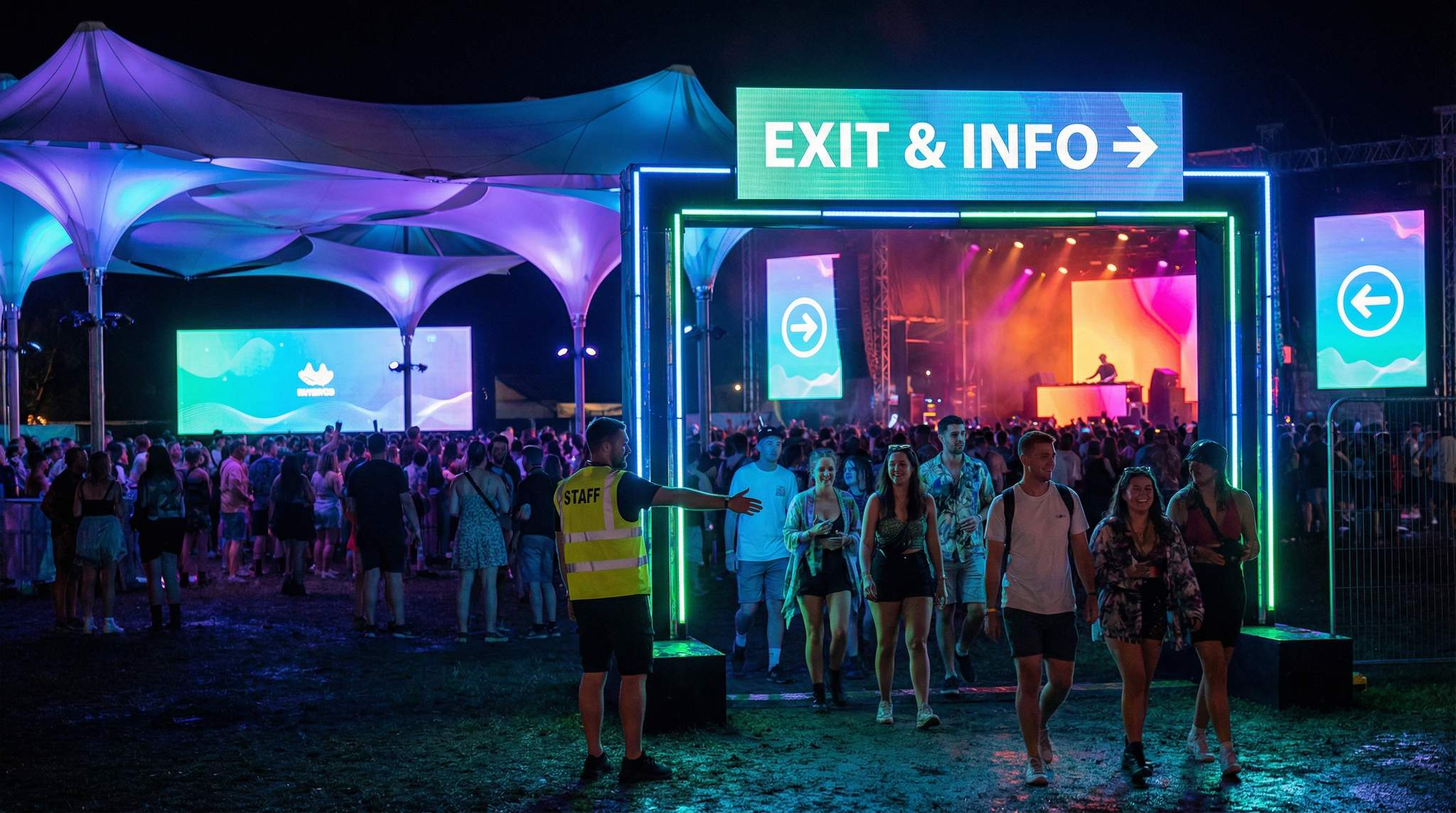
Beyond the basics, consider how you can get creative with signage to influence crowd movement intelligently. For example, Coachella (USA) employs towering balloon markers and colour-coded lot signs in its parking areas so that when the show ends and tens of thousands pour out, people can navigate to their cars without wandering (and without fraying tempers). Some festivals put LED arrows or dynamic message boards above crowd eye-level to gently nudge foot traffic – illuminating “<– Main Stage / Exit –>” messages at decision points. In 2026, expect to see more use of digital signage that can change in real-time: imagine being able to redirect people away from a congested area by updating a few electronic signs and a festival app alert on the fly. Even on a smaller scale, festivals can use staff with handheld signage (like paddles or flags that say “Exit” or “Water this way”) during peak exit times or if something disrupts the normal routes. The goal is that no attendee should ever feel lost or wonder “am I allowed to go this way?” – the environment itself should always be giving them cues on where to go next.
Data-Driven Event Marketing
Track ticket sales, demographics, marketing ROI, and social reach in real time. Exportable reports give you the insights to make smarter decisions.
Design Signage for Clarity and Trust
Psychologically, good signage also sends a message that “the organizers have thought of your needs.” This builds trust, which in turn keeps crowds happier. To achieve this, focus on a few design principles. First, make signs easy to read – big legible fonts, high-contrast colors (a tip: yellow text on black or white on dark blue are among the easiest to see from afar), and simple wording. A sign that tries to be too artistic or crams in too much text can be overlooked or misunderstood in the frenzy of a festival. Stick to clear labels like “Entrance ->” or icons with one-word labels. Many seasoned producers develop a signage style guide so that all signs share a consistent look. This consistency helps attendees instantly recognize official festival signs and not confuse them with sponsor ads or random banners. For example, you might decide all directional signs are bright orange with black text and placed 10 feet high – by day 2, your fans will spot an orange sign from across the field and know it’s telling them something useful.
Secondly, plan signage placement as part of your site layout (not as a last-minute afterthought), integrating event design from the start. Walk through the festival map in your mind from an attendee’s perspective: where might they be unsure which way to go or in need of assurance? Common “decision points” include any fork in a path, exits from stages into open areas, or the approach to a cluster of food stalls (where’s the queue line vs. walkway?). Place signs before these decision points – e.g., a sign 30 metres before a turn saying “Camping <-” so people can prepare to turn left. Don’t wait until people have already missed the turn. Early and frequent guidance is the mantra. Also, always comply with safety signage regulations: illuminated exit signs for enclosed tents, “No Smoking” or “Fire Exit” signs as required, capacity limits posted at tent entrances, etc. These aren’t just legal hoops; they genuinely help in emergencies when adrenaline is high and people need obvious exit markings to get out safely.
Lastly, maintain your signs. A sign that falls down mid-event or a direction board that’s being obscured by a food truck does no good. Assign a crew to do periodic “signage sweeps” to ensure everything is still in place and visible. It’s a small operational task that can prevent big headaches. Attendees often appreciate these little details – when they easily find the restroom at a critical moment, it subconsciously reinforces that the festival cares. As one festival signage designer aptly said, “Effective festival signage is about saying ‘we’ve got you’ to the audience,” creating fans who appreciate the well-organized experience. That sense of care can turn first-timers into loyal fans who rave about how well-organized your event felt.
Information Booths and Human Signposts
Even in a high-tech age, sometimes nothing beats face-to-face help. Strategically placed information booths or roaming info staff can greatly enhance crowd comfort. Not everyone will notice or read signs, especially if they’re overwhelmed. That’s why the best festivals deploy clearly identifiable info teams (e.g. staff in bright “INFO” T-shirts or hats) standing at key junctions. Their job is to answer questions (“Which way to Stage X?”) and gently correct any potentially unsafe behaviors (“Hi! Just so you know, the exit is actually back that way, we want to keep this path clear.”). These human signposts add a personal touch to your wayfinding system. For example, Fuji Rock Festival (Japan) is known for its super-polite, visible staff throughout the grounds, who attendees say are “better than Google Maps” when you’re lost in the moment. The mere presence of approachable staff can also psychologically reassure people – much like seeing a friendly flight attendant makes nervous fliers feel safer.
If an incident occurs or a change needs to be communicated (say one gate is closed due to a hazard), you can quickly position these staff at approaches to that area to redirect attendees. Imagine a team of volunteers with “Ask Me” signs standing in front of a closed entrance, cheerfully telling arriving fans where to go instead – that can prevent a confused crowd from bunching up at a non-functioning gate. In essence, combine static signage with dynamic human guidance. Tech can enhance this too: many festivals now use their mobile apps to send push notifications for important info (like wait times or emergencies) – but they back it up with physical signs and staff announcements for maximum coverage using push alerts and crisis messaging. By covering visual, audio, and human channels, you ensure no one in the crowd misses the memo. The result? A crowd that feels informed and in control, which is exactly how you keep the collective mood confident and content.
Learn more about designing an effective wayfinding system in our in-depth article on festival signage and navigation that keeps your event safe.
Smooth Entry With Mobile Check-In
Scan tickets and manage entry with our mobile check-in app. Supports photo ID verification, real-time capacity tracking, and multi-gate coordination.
Music and Lighting: Shaping the Crowd’s Energy
Using Music Programming to Pace the Crowd
Festival-goers often describe the experience as an “emotional rollercoaster” – and as the producer, you are in the conductor’s seat. Thoughtful music programming and scheduling can guide the rise and fall of crowd energy, preventing burnout or over-excitement that could lead to incidents. The key is to pace your lineup and use music strategically throughout each day. For example, kicking things off in the early afternoon with some groove-oriented, mid-tempo acts can warm up the crowd without spiking adrenaline too soon. Save the most intense, bass-dropping DJs or mosh-pit bands for prime time, when people are ready for a peak experience. And towards the end of the night, consider a “cool down” artist or DJ to gently land the collective energy. Many electronic festivals do this by having a more melodic or downtempo act close out a stage – it’s not anticlimactic, it’s intentional crowd care. It sends attendees off on a high but calm note, rather than a frenzied dash.
Even during a single performance, producers can coordinate with artists and sound engineers to influence crowd state. For instance, encouraging a headliner to include a breather moment in their set – perhaps a short acoustic interlude or an inspirational speech to the crowd – can give an excitable audience a chance to catch their breath. Some festivals known for hardcore music genres will schedule brief intermissions with ambient music or even a short performance by a calming act (like a solo instrumentalist or a cultural dance) after a very intense show. The audience often welcomes the diversity and the chance to regroup. Use background music in the venue between sets to your advantage as well: playing something chill and positive over the PA when stages are resetting keeps people relaxed. On the other hand, continuous silence can sometimes make a crowd restless, so a bit of carefully chosen tune filler helps. Ultimately, remember that music is a tool to modulate mood. By pacing highs and lows, you prevent the crowd from reaching fatigue or hysteria. The happier and more balanced they feel, the safer your event will be.
Lighting Cues: Balancing Euphoria and Safety
Lighting isn’t just for eye-candy – it’s a powerful communicator to a massive crowd. The best festival lighting design walks a line between creating magical immersion and providing illumination when needed for safety. One strategy is to plan intentional “lights up” moments that unify and exhilarate the crowd. For example, at many EDM festivals like EDC Las Vegas or Tomorrowland, the lighting directors will occasionally flood the entire crowd with light, allowing attendees to see each other and revel in the enormity of the event. When tens of thousands of fans are lit up at once, it often triggers huge cheers and a sense of unity – a peak emotional moment where the crowd feels like part of the show. Utilizing these moments sparingly (perhaps at a big drop or the end of a headliner’s set) can boost collective happiness. Some festivals even distribute LED wristbands that sync with the lights, as seen at Coldplay concerts and events like Rock in Rio, turning the audience into a twinkling canvas. These are examples of using lighting for crowd euphoria.
On the flip side, lighting is also your best friend in an emergency or to calm things down. Every festival’s lighting plan should include a full lights on contingency plan. If something goes wrong – a security issue, a fire, a severe weather alert – being able to instantly illuminate the entire venue informs the crowd that this is serious and helps them move safely. There have been cases where this quick action averted tragedy. One famous example: when a stage caught fire at Tomorrowland Unite in 2017, the production team immediately killed the music and lit up the area, helping tens of thousands exit swiftly in near-total calm, preventing attendees from being plunged into darkness. Take a page from their book: rehearse with your lighting operator a scenario where they must switch from art mode to safety mode. Many festivals pair a sudden lights-on with an audio cue (like a specific alarm tone or the MC firmly addressing the crowd) to signal an emergency. Attendees might be momentarily startled, but they will grasp that it’s time to pay attention. Also ensure exits, pathways, and important signage are always illuminated enough to be seen by keeping exits and paths visible – no matter how dark or wild your light show gets, you never want people literally left in the dark when trying to find their way out.
Another aspect of lighting psychology: avoid harmful lighting effects. We all love a good strobe frenzy during a big dubstep drop, but be mindful of health and comfort. Intense strobes at high frequency can disorient or even trigger seizures in some individuals. Industry guidelines often suggest capping strobes at about 4 flashes per second and using them in short bursts, following industry guidelines for strobe usage. Prolonged blinding lights can also cause anxiety and anger in a crowd – nothing snaps someone out of euphoria like being unable to see for several seconds. Use white flood lights or “blinders” sparingly as dramatic accents, not as a constant assault, as lighting that is too intense can snap a crowd out of euphoria. A tip from veteran lighting designers is to warm the color temperature when pointing lights at the crowd – e.g., using golden or amber hues instead of pure white – to make the illumination less jarring. In essence, empathize with your audience’s eyes and nerves. The goal is to amplify the music’s energy and create beautiful moments, without causing distress. When you strike that balance, lighting becomes a tool that heightens the collective joy and keeps everyone safe.
For an in-depth look at festival lighting tactics, see our article on balancing crowd euphoria and safety with smart lighting design.
Sound Levels and Audio Messaging
While the lineup’s music drives the vibe, other sound elements influence crowd psychology too. Sound levels should be managed to avoid causing agitation. If audio at a stage is too low, fans might get frustrated (or push forward en masse to hear better); too loud, and people may become overstimulated or physically uncomfortable. Calibrate your sound system to deliver thrilling volume up front without deafening those at the edges. Many festivals now have sound technicians monitoring levels throughout the crowd and adjusting in real time. Also consider sound bleed between stages – clashing beats can create a sense of audio chaos that raises stress. Orient speakers and schedule sets to minimize overlapping noise; your crowd will feel more at ease when their auditory environment is coherent.
Additionally, audio messaging systems (like public address announcements or recorded safety messages) can be employed to subtly guide the crowd. Playing short reminders in between music sets can reinforce positive behavior: e.g., a calm voiceover, “Remember to drink water and take breaks – we want you to enjoy the whole night safely!” at regular intervals. Some festivals even craft these as part of the experience, with thematic voiceovers that match the festival’s character (a whimsical narrator, a soothing yogi voice, etc.) so they don’t feel jarring. The 2022 Tomorrowland had a pre-recorded gentle female voice giving crowd reminders that blended into the fantasy theme of the event – attendees took notice and many complied because the message felt like it was from the festival itself. The key is to integrate such announcements when there’s a captive audience (e.g., right after an act ends) so they’re heard, but not so often that they become annoying. When done right, audio cues become another thread in the event’s narrative that can calm, direct, or energize the masses as needed.
Attendee Comfort and Well-Being
Facilities that Reduce Frustration
Comfort may not seem like a “psychology” topic at first, but a comfortable attendee is a happy and cooperative attendee. If basic needs aren’t met, even the friendliest crowd can turn grumpy or aggressive. Think of long lines for toilets, or running out of water on a hot day – those conditions breed irritation that can spill over into fights or disregard for rules. That’s why providing ample facilities is a cornerstone of crowd management. Ensure you have plenty of water stations, restrooms, and waste bins relative to your crowd size (and locate them conveniently). A common guideline is at least 1 water point and 1 toilet per few hundred people, but observe how your specific audience uses them and be ready with backups (e.g. extra water jugs in case of a refill station failure). Also crucial: keep them serviced. If toilets become filthy or water runs out, people will either start leaving en masse (creating exit crowding) or worse, take out frustrations on staff and each other. Many 2026 festivals are upping their investment in these unsexy infrastructure elements because fan expectations have risen – attendees now demand clean loos and free water as a standard. In return, you get a crowd that feels looked after and less prone to boiling over at small annoyances.
Consider the flow of foot traffic around amenities too. Position food vendors and merch stands in ways that their queues won’t block main walkways (perhaps at a slight distance or at a cul-de-sac area). Mark out queue areas with barriers if needed. This prevents random line spillover from causing inadvertent crowding. Adding simple comforts like some shade sails or misters in sunny queue lines, or heaters near outdoor winter bars, likewise keeps people content while they wait. It’s all about eliminating points of pain. Remember, if fans have paid a lot for tickets (and with rising costs, they often have), little touches like free water, plentiful shade, and spots to sit directly contribute to their sense of getting value. They’ll be more forgiving and positive even if minor hiccups occur during the show, because their fundamental needs are met.
Chill-Out Zones and Welfare Services
No matter how great the music and production, festivals can be sensory overload for many people. Providing areas for attendees to decompress can significantly improve overall crowd mood and safety. Many large festivals now incorporate “chill-out zones” or dedicated welfare tents. These might be spaces away from the stages with calmer music, comfy seating (bean bags, carpets, hammocks), and perhaps cooling features like fans or water sprays. For example, Glastonbury has an area known as the Green Fields which, beyond its eco-focus, offers a relative respite from the crush of the main stages – here people can grab a cup of tea and relax, which helps those feeling overwhelmed re-center themselves. Even a smaller festival can designate a quiet corner with some seating and low-key background music for attendees who need a break from the crowd.
Hand-in-hand with chill zones is the provision of welfare services. Consider having a staffed first-aid and mental health support tent that is well advertised on your map and signposts. Australia’s Splendour in the Grass, for instance, offers a “Sanctuary” tent with volunteers who are trained to talk down panicked or distressed festival-goers (often those having a bad drug experience or anxiety episode). These services drastically reduce the chance of vulnerable individuals causing unintentional disruptions or harm in the crowd. Even without a formal program, train your medical and security staff on basic compassionate response – if they encounter someone crying or hyperventilating in the throng, it helps to escort that person to a calm area. From an organizer perspective, each person who’s cared for is one less potential trigger for crowd disturbance.
Let’s not forget accessible facilities for those with disabilities, pregnant attendees, or older fans. Providing viewing platforms for wheelchair users, golf cart shuttles for those who need mobility help, and clearly marked accessible toilets isn’t just morally right – it improves crowd flow and comfort for everyone. For instance, if an older patron can easily find a seating area rather than stand in a densely packed crowd, that’s one less person potentially struggling (and possibly causing involuntary slowdowns or accidents in the mass). Inclusivity in design benefits the whole crowd, creating a more relaxed atmosphere. As discussed in our guide on making festivals senior-friendly and comfortable for older attendees, simple additions like more benches, clearer signage, and quieter zones can turn a potentially stressful experience into a welcoming one for all ages.
Health Essentials: Hydration, Weather, and More
Physical health and mental state are deeply connected in a crowd setting. Dehydrated, sunburnt, or exhausted attendees are more likely to become cranky, panicky, or even require medical evacuations that disrupt the event. Festival producers thus need to think like public health coordinators. Hydration is number one: make water not just available, but encouraged. Many events now promote a “bring your empty bottle” policy and have volunteers reminding people to drink water at stage fronts. Some display heat index warnings on screens (“High of 34°C today – drink water!”) and offer free electrolyte ice pops in the afternoon. The expense of a few thousand free ice pops is trivial compared to preventing dozens of dehydration collapses. Likewise, if your event is in a very hot climate, shade and cooling become safety features. Create shade structures over crowd waiting areas, and consider a misting station or two. If cold, provide heating lamps or windproof tents as warming spots.
Also, prepare for weather mood swings. Rain can either be fun (mud dancing!) or turn nasty (hypothermia, everyone stampeding to limited shelter). Watch forecasts and have a plan: if heavy rain is expected, communicate beforehand “bring a poncho,” and have cheap ponchos for sale on-site. If lightning is a risk, be ready to pause the show and instruct the crowd to seek shelter (per that earlier communication strategy). Your calm guidance during weather issues will greatly shape whether the crowd stays chill or not. A famous example: TomorrowWorld 2015 became a quagmire after storms, and poor communication left attendees stranded and furious – a reputational disaster. In contrast, Exit Festival 2021 in Serbia faced a surprise thunderstorm but had pre-coordinated with local authorities; they paused entry, made regular announcements, and resumed only when safe, resulting in minimal chaos and a crowd that actually praised organizers for how it was handled.
To tie these comfort factors together, here’s a snapshot of amenities and their crowd psychology benefits:
| Comfort Element | Implementation Example | Benefit to Crowd Psychology |
|---|---|---|
| Free Water & Hydration | Water refill stations at every stage; roving water vendors. | Prevents dehydration-related irritability and medical incidents; keeps mood upbeat. |
| Shade & Cooling | Tented chill zones, misting fans in queues during heat. | Reduces heat stress, helping attendees stay calm and enjoy rather than overheating. |
| Clean, Ample Toilets | 1 toilet per ~100 people, cleaned 24/7 by staff. | Shorter lines and sanitary conditions = less frustration and distraction from the fun. |
| Seating Areas | Benches, picnic tables, or lawn areas away from crowd rush. | Allows tired attendees to rest, preventing fatigue and crankiness in the crowd. |
| Welfare/Mental Health | “Safe space” tent with counselors; trained volunteers on ground. | Aids attendees in distress, preventing situations that could alarm or affect those around them. |
Investing in these areas might not seem as flashy as a laser show, but it pays off in a safer environment and higher attendee happiness. Fans who feel physically and emotionally cared for are likelier to exhibit cooperative behavior – they become partners in keeping the festival safe and enjoyable.
Fostering Community and Shared Identity
Building a Festival Culture of Care
Crowd psychology isn’t only managed from the top down – it also grows from the culture you cultivate among attendees. The most beloved, long-running festivals often have almost a mythic community culture: think of the “PLUR” (Peace Love Unity Respect) ethos at raves, or the 10 Principles at Burning Man emphasizing inclusion and communal effort. These cultural frameworks encourage festival-goers to take care of each other, not just rely on staff. As an organizer, you can nurture this sense of community through messaging and programming. For instance, include a note in your program or opening announcement that highlights shared values: “Welcome to our festival family! Here, we look out for one another. If you see someone who needs help, give them a hand or alert our team – that’s how we do things here.” Such statements, especially if echoed by artists on stage or in social media groups, set a norm of positive collective behavior.
You can also design activities that bond people. Ice-breakers like interactive art installations, group workshops (yoga sessions, drum circles), or festival-wide games (a scavenger hunt across the venue) get strangers to interact and feel part of a larger “us.” Some events have had success with mobile apps that allow attendees to form teams or collect points for doing eco-friendly actions during the show – it may sound gimmicky, but it taps into our social brain and can transform how crowds behave. When people feel they belong to a community, they’re more likely to self-police bad behavior and cooperate with requests (like clearing an area or keeping the grounds clean). As evidence, look at Glastonbury’s famous volunteer cleanup crews composed of attendees – thousands stay after the final act to help pick up litter because they’re invested in the festival’s well-being. That’s crowd psychology at work, turning fans into stewards.
Local Community Connection
Another angle often overlooked: how your festival engages the local community and culture can influence crowd atmosphere. Festivals that integrate local arts, food, or traditions tend to make attendees (especially those from the area) feel a sense of pride and ownership of the event. This can translate into more respectful behavior and a friendlier vibe. For example, Fuji Rock in Japan incorporates local village food stalls and even a traditional sake ceremony at the opening of the festival – many credit this blending of culture for why Fuji Rock’s crowd is famously polite and orderly, with near-zero incidents. In New Zealand, Splore Festival invites local M?ori elders to bless the event at the start, creating a powerful shared moment of respect that echoes through the crowd’s attitude all weekend. Even at comic and pop culture festivals, acknowledging local fan communities or involving local artists can ground your event in a community context.
Consider doing outreach with neighborhood groups or city authorities as part of your planning. If residents near the venue feel respected (noise controlled, traffic managed, perhaps free entry for some locals or charity donations), that positivity can indirectly affect the crowd – you won’t have angry neighbors yelling at festival-goers or negative vibes at the perimeter. Instead, you might have locals welcoming visitors, which further contributes to everyone’s comfort. A great case study is Tomorrowland in Belgium: it’s held in a small town, and the organizers go out of their way to involve locals, including donations to local projects and a yearly “thank you” event for residents. As a result, the town’s people often greet festival attendees warmly, and festival-goers in turn behave respectfully in the village. It’s a virtuous cycle that starts with the organizers’ approach.
Case Studies: Festivals Nailing Crowd Vibe
Let’s highlight a few festivals around the world that have applied crowd psychology principles with notable success, and what we can learn from them:
| Festival (Country) | Crowd Psychology Tactic | Outcome & Lessons |
|---|---|---|
| Burning Man (USA) | Strong shared identity (“no spectators” rule) and communal responsibilities for participants. | Attendees internalize safety and community norms, resulting in high cooperation and low traditional security needs. Fans step in to help each other, creating a self-regulating crowd. |
| Tomorrowland (Belgium) | Thematic messaging (“People of Tomorrow” unity) and immersive decor, plus synchronized LED wristbands/light shows. | Fosters a profound sense of togetherness; tens of thousands feel like one tribe. This unity means crowds celebrate as one and handle inconveniences (rain, delays) calmly. |
| Electric Daisy Carnival (USA) | “Ground Control” teams roaming the grounds offering help, water, and positive vibes; extensive signage and friendly staff at info stations. | Improved attendee well-being and trust. Early intervention by Ground Control prevents incidents, and fans report feeling safe knowing help is always nearby, which encourages a relaxed party atmosphere. |
| Glastonbury (UK) | Long-standing festival culture of tolerance, charity (support for Oxfam, WaterAid, etc.), and peer enforcement of the “Love the Farm, Leave No Trace” ethos. | Crowds that embrace social responsibility – festival-goers often clean up after themselves and others. This community accountability reduces security pressures and makes the massive crowds more manageable. |
| EXIT Festival (Serbia) | Social mission (started as pro-democracy event) giving attendees a unifying purpose; volunteers integrated into operations. | Attendees share a mindset of unity and positivity linked to the festival’s roots. This has led to notably peaceful crowds even during high-energy performances, proving purpose-driven festivals can channel crowd energy constructively. |
These examples show there’s no one-size-fits-all approach – a dance music festival and a rock festival might employ different tactics – but the common thread is intentional design of crowd experience. By thinking about how your audience feels and behaves collectively, and borrowing proven ideas from others, you can create a festival environment where safety and happiness reinforce each other.
For more on putting community at the heart of your festival, read our piece on community-centric festivals building lasting success.
Training & Tech: Enhancing Crowd Management in Real Time
Educating Staff and Volunteers on Crowd Psychology
Your crowd management plan is only as good as the people executing it on the ground. In 2026’s competitive event climate, leading festivals are investing heavily in training their staff and volunteers on crowd psychology basics. This goes beyond routine security briefings – it’s about teaching everyone from gate staff to stagehands how to read crowd mood and respond appropriately. For example, train security personnel to use non-aggressive body language and de-escalation techniques. A staffer who remains calm and smiles while directing a rowdy group will generally defuse tension better than one who yells. Role-play scenarios during training: how to handle a surge at a barricade, how to respond if fans start overheating in front rows, how to spot signs of panic in a crowd. Many large events now bring in professional crowd managers or leverage certifications like the IFEA’s crowd safety workshops to upskill their teams. As noted earlier, new initiatives like the “Showstop” emergency stop protocol are being taught globally – festivals such as Roskilde and groups of UK venue managers have had courses where dozens of their staff learn exactly how to halt a show and evacuate safely, as demonstrated by straightforward practices to stop a show. The result is a crew that can act with near military precision and calm when seconds count.
To ensure these protocols are actually followed, update your standard operating procedures to reflect modern realities. Detailing festival crowd safety and staff coordination manual tasks for 2026 means moving beyond generic guidelines. Assign specific, checklist-based duties to each zone manager—such as hourly density checks, barrier integrity inspections, and mandatory radio check-ins—so that every team member knows exactly what their manual tasks are during peak hours.
Essential On-the-Ground Coordination Checklists
To truly elevate your crowd experience and ensure seamless operations, organizers must translate high-level strategies into concrete, manual duties for their teams. While automated monitoring is invaluable, the physical presence and coordinated actions of your staff remain your strongest asset. If you are looking to expand your operational playbook—or simply thinking, “give me some more actionable steps”—here is a breakdown of critical manual tasks your zone managers and safety personnel should be executing throughout the event:
- Hourly Density Sweeps: Zone supervisors must physically walk their designated areas every 60 minutes, reporting back to event control on crowd density levels using the “Tokyo subway test” metric.
- Barricade Integrity Checks: Security personnel stationed at the pit and secondary barriers should manually inspect interlocking joints and pressure points between artist sets to ensure structural stability.
- Vibe and Hydration Monitoring: Roaming welfare teams (like Ground Control) should actively scan the audience for signs of heat exhaustion or distress, manually distributing water and reporting escalating tensions before a crowd in panic can form.
- Egress Pathway Clearing: Dedicated ushers must continuously patrol primary exit routes and emergency lanes, physically removing discarded items, vendor overspill, or loitering groups that could bottleneck a sudden evacuation.
Implementing these standardized manual procedures ensures that your staff coordination is proactive rather than reactive, creating a safer environment for every attendee.
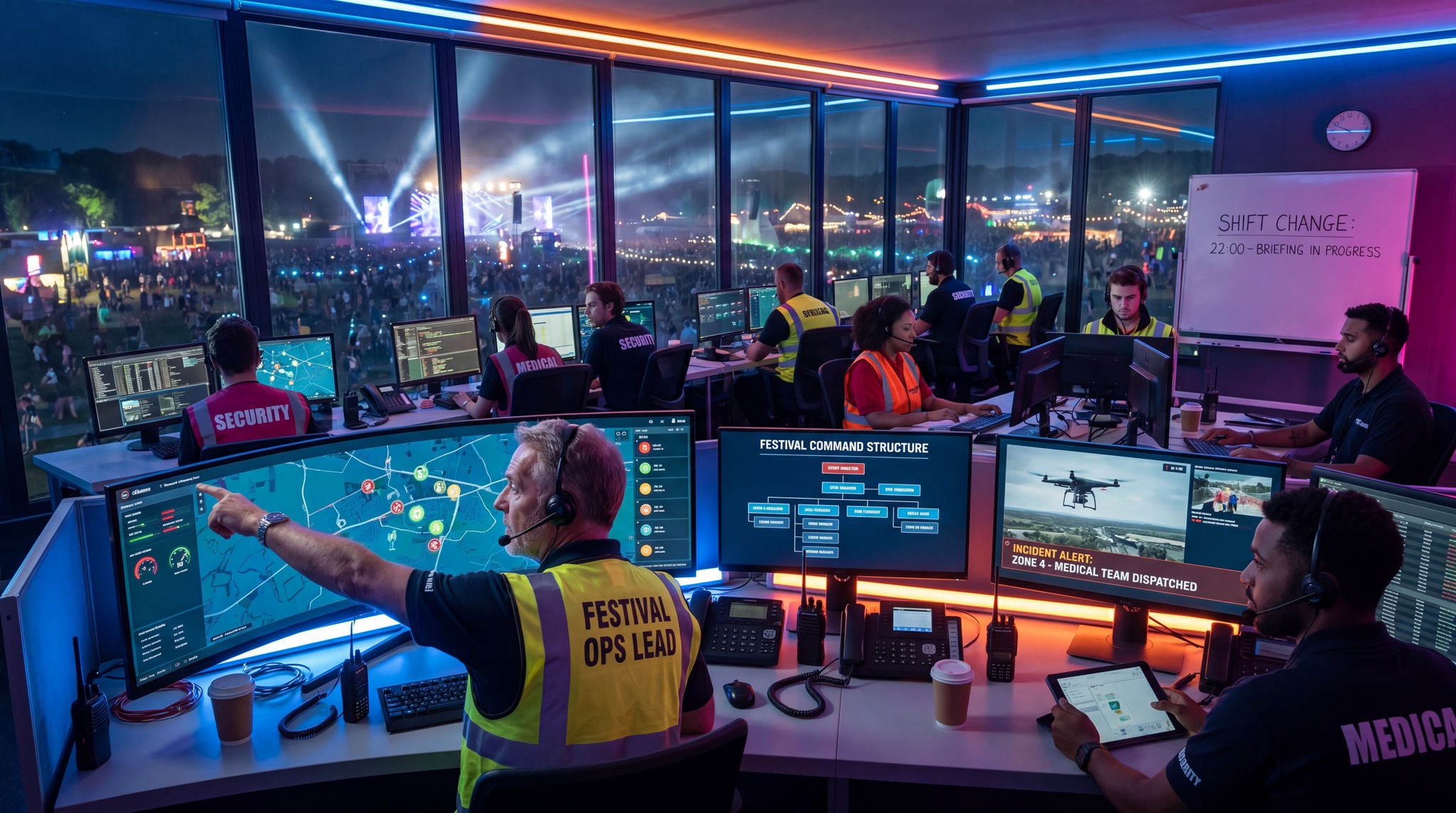
Don’t overlook volunteers and vendors either – anyone who interacts with attendees can influence crowd mood. Brief your food and merch vendors on expected rush times and how to manage queues pleasantly. Instruct volunteers at info points or as rovers on basics like not to block pathways, and to keep an eye out for distressed individuals. An empowered volunteer who radios in “Hey, Section B is looking really crowded and hot, maybe announce a water break?” can save you from a crisis. Create a culture where every team member feels responsible for crowd well-being, and you’ll have hundreds of extra eyes and ears working in tandem. It’s also wise to designate a Crowd Management Lead in your command structure – someone whose sole job is monitoring crowd conditions (via CCTV, reports from the field, etc.) and coordinating responses. This person or team should regularly update security and production on the crowd’s status (like “the vibe is good but getting energetic at Stage 2, let’s get Ground Control in there to pass out water”). With a trained, aware team, you form a human safety net that catches issues before they escalate.
High-Tech Monitoring and Analytics
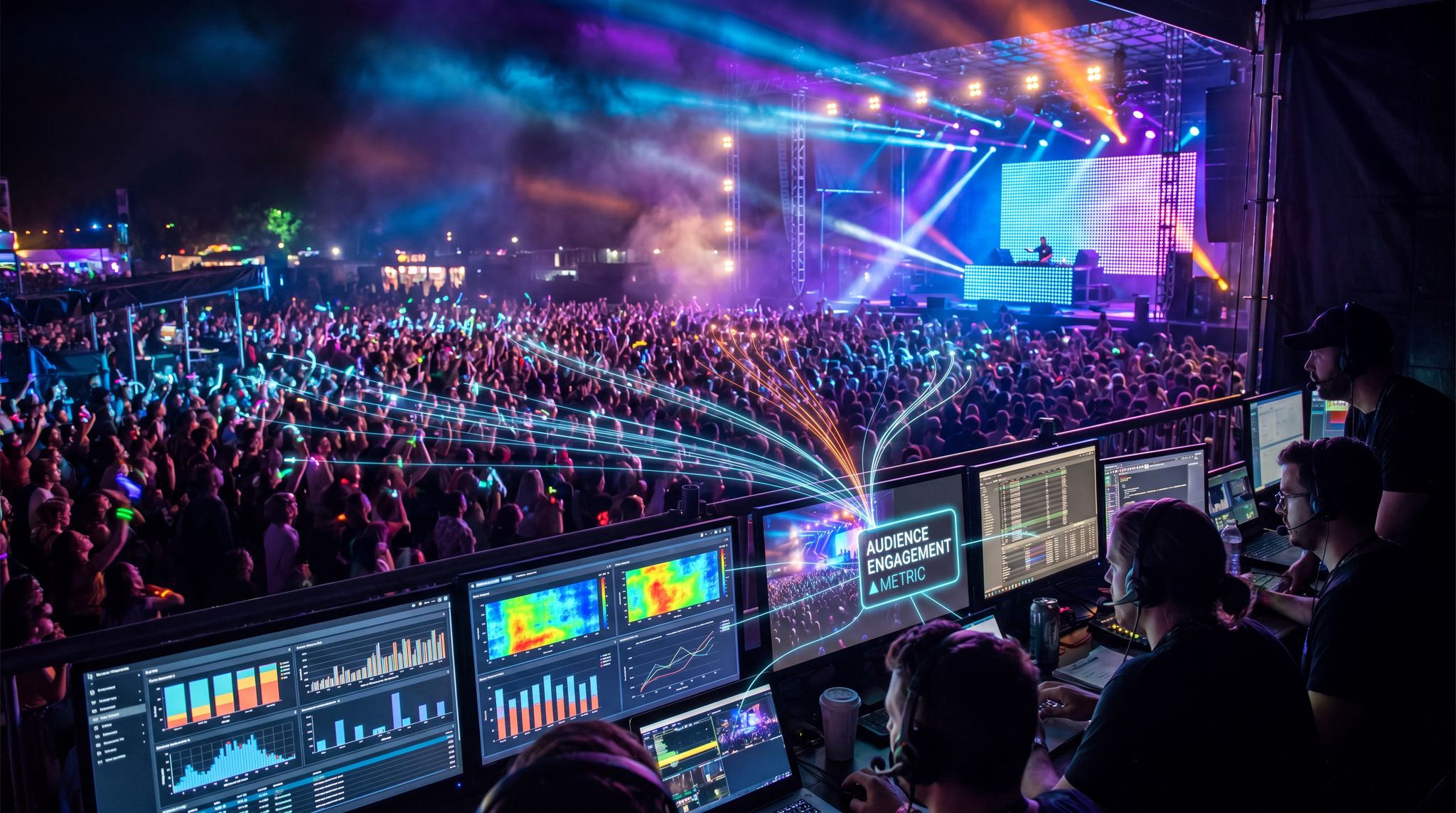
Technology has become a game-changer for understanding and guiding crowds in real time. In 2026, a range of crowd monitoring tools are available to festival organizers. These include overhead CCTV cameras with AI software that can estimate crowd density and even detect patterns that indicate distress or the beginnings of a surge. Some festivals have experimented with drones for aerial crowd monitoring – although unauthorized drones are a hazard that many events are trying to eliminate, using your own controlled drones or stationary balloons to get live crowd images can be very insightful (just coordinate with local aviation rules). There are also crowd heat-mapping apps that use anonymized data from attendees’ mobile phones to show where people are clustering. For instance, If you see a sudden massive movement on the app toward one exit, you can proactively send staff there to manage flow.
Radio-frequency identification (RFID) or Bluetooth-based wristbands and badges can also feed you data on crowd distribution. If your festival is using RFID tickets or cashless payment wristbands (common at large events), tap into the system’s analytics: it can often tell how many people are in each zone (based on scans at entry points or purchases at zone-specific vendors). Real-time dashboards might alert you if 80% of the crowd is all at one stage – a sign you may need to divert attention or be ready for a big exit. In recent years, some events have tested wearable crowd density sensors that staff or even some attendees carry, which transmit live density info. While still an emerging tech, the promise is that organizers can react in seconds to overcrowding – long before a human eye might notice it from ground level.
On the flip side of monitoring is communication tech to reach the crowd. We touched on push notifications via apps; another tool is SMS emergency alerts to all ticket buyers (cell networks can get jammed at festivals, so use sparingly and ensure your venue has mobile boosters if possible). Social media, ironically, is also a real-time crowd management tool – if people tweet about a problem (“Water empty at north tent!”), your social media team can catch it and relay to operations to fix the issue, then respond publicly to acknowledge the fix. Some festivals have dedicated Discord or WhatsApp groups for attendees where moderators can quickly share updates or correct rumors (with tens of thousands, this might not be feasible, but for smaller niche festivals it has worked to quell misinformation). Embrace these tech solutions that extend your situational awareness and communication reach. They act as force-multipliers for your on-site team, helping you be proactive rather than reactive.
Learn how festivals are innovating on-site solutions in our piece on turning your festival into an innovation lab by partnering with startups, and see how some use VR in virtual reality safety drills for festival staff.
Rehearsals and Simulations
Given the complexity of crowd behavior, one of the smartest things you can do is simulate scenarios before the real crowd arrives. High-profile festivals now often run full-blown crowd simulations as part of emergency planning. This can be as simple as a tabletop exercise (discussing “what if” situations with all department heads present) or as high-tech as a VR simulation where staff wear headsets and navigate a virtual festival environment to practice their response to various incidents. Virtual reality drills have been used to train teams on handling crowd surges and evacuations without the cost and risk of assembling a live crowd for practice. Staff have reported that these simulations make them feel much more confident and clear on procedures if a real emergency occurs.
Even on event day, you can do a mini-run-through. Some festivals open gates an hour later to the public on Day 1 so that staff can do a last-minute walkthrough drill: testing radios, doing a quick mock announcement on the PA (before attendees enter), checking that emergency gates open properly, etc. If you have volunteer “crowd actors” or just involve some early-arrival staff to mimic crowd movement in these drills, it can surface issues you hadn’t thought of. For example, you might discover that the plan to divert people out Gate C during evacuation is tricky because of a fence bottleneck – better to realize that Thursday morning in a simulation than during a live show Saturday night.
Finally, a post-event debrief is part of the training loop. Analyze crowd data and staff reports: Were there choke points you missed? Did certain messages not reach part of the audience? Collect feedback from attendees too about where they felt unsafe or confused versus when they felt really happy and engaged. Continuous improvement is the name of the game, turning each festival into a learning lab for crowd psychology. By 2026, the industry has learned a lot from past mistakes; the next wave of producers can stand on those shoulders and deliver events that are not only spectacular but psychologically savvy.
Frequently Asked Questions: Festival Crowd Management
What are the most critical festival crowd safety and staff coordination manual tasks for 2026?
For the 2026 season, top manual tasks include hourly physical density sweeps by zone managers, manual barricade integrity checks between sets, active “vibe monitoring” by roaming welfare teams, and continuous clearing of egress pathways. Coordinating these physical duties alongside digital monitoring ensures a comprehensive safety net.
How can organizers effectively reduce queues at festivals?
Reducing bottlenecks requires a mix of dynamic staffing and layout optimization. Best practices include deploying mobile ticket scanners further down the line, creating dedicated “no bag” express lanes, shipping RFID wristbands in advance, and opening gates in metered phases to distribute the arrival flow.
If a localized crowd in panic occurs, so what to do first?
The immediate operational response must be visible, authoritative leadership. Deploy rapid-response teams directly to the epicenter to provide calm direction, while simultaneously using the PA system and digital screens to transparently explain the situation and provide clear, step-by-step instructions to the audience.
How do organizers effectively control crowds at events?
Controlling crowds at large-scale events relies on proactive environmental design rather than physical force. Organizers achieve this by implementing strategic site layouts that eliminate bottlenecks, utilizing flow-through barricade systems, pacing the music programming to manage energy levels, and deploying clear, multi-channel communication to keep attendees informed and calm.