Introduction
Drum ‘n’ Bass, Dubstep, and bass music festivals have evolved from underground sound system gatherings into global events drawing tens of thousands of fans. With roots in Jamaican reggae sound system culture and the UK rave scene, these festivals are built around one main element: the physical power of bass. From boutique 500-person weekenders to massive productions with over 30,000 attendees, bass music festivals span all sizes and locations. The common thread is an emphasis on immersive low-frequency sound, high-energy performances, and a passionate community that expects intense drops and non-stop dancing.
Producing a successful bass festival requires specialized considerations. Extreme sound levels, rapid-fire beats (drum & bass tracks often running at 160–174 BPM), dimly lit atmospheres with striking visuals, and strong community traditions (like MCs rhyming over drum & bass sets) all influence planning. The world’s largest drum & bass festival, Let It Roll in Czechia, now attracts tens of thousands across multiple stages, while niche gatherings like Sun and Bass keep an intimate vibe for a few hundred diehards. In the U.S., dubstep-focused Lost Lands festival famously deploys a 500,000-watt sound system to immerse crowds in earth-shaking bass.
Key Stat: Lost Lands’ sound system blasts a staggering 500,000 watts of bass, exemplifying the scale of low-frequency impact at modern bass events.
This comprehensive guide covers every aspect of organizing Drum ‘n’ Bass, Dubstep and bass music festivals – from securing permits and designing the perfect bass-heavy sound system to managing unique venues, curating genre-spanning lineups, and keeping the crowd safe. Drawing on decades of festival production experience, it offers essential insights to help any producer create an unforgettable event that stays true to the bass music ethos.
Free Tool: Size Your Festival Site
Zoned capacity planning for arena, campsite, parking and entry lanes — against UK Purple Guide and NFPA density standards. Finds your bottleneck zone.
Table of Contents
- Understanding Bass Music Culture and Audience
- Licensing, Permits and Compliance
- Urban Venues and City Logistics
- Outdoor and Remote Locations
- Sound Systems and Bass Audio Design
- Stage Technical Operations and DJ Management
- Visual and Lighting Production
- Crowd Safety and Harm Reduction
- Operating Hours and Festival Format
- Lineup Curation and Genre Flow
- Community and Cultural Programming
- Essential Reading
- FAQ
- Glossary
- Conclusion
Understanding Bass Music Culture and Audience
Bass music festivals thrive on a dedicated subculture. Attendees (‘bass heads’) often have deep knowledge of the music and expect authenticity. A festival must balance catering to purist fans versus appealing to a broader crowd. For example, organizers might designate a special opening night for the hardcore heads’ music – rare tracks and niche subgenres – while saving more accessible anthems for peak times. This approach ensures die-hards feel respected without alienating newcomers who come for big drops and party vibes.
The genre’s roots in sound-system culture also shape festival dynamics. Drum & bass and dubstep originated from Jamaican-style sound systems where massive speaker stacks and crew “clashes” were central. Successful events honor this heritage by bridging sound-system culture with modern festival production. That could mean featuring iconic sound system crews, encouraging friendly soundclash battles, or simply embracing the ethos of unity through bass. Additionally, fans expect a certain ‘bassweight’ promise – if a festival markets itself on heavy bass, it must deliver. Treating bassweight as a contract with the audience is essential to maintain credibility.
Planning a Festival?
Ticket Fairy's festival ticketing platform handles multi-day passes, RFID wristbands, and complex festival operations.
Community and lineage are hugely important. Many bass festivals weave in elements of the culture’s history – whether through art installations of old pirate radio imagery or inviting genre pioneers. Emphasizing a festival’s own origin story (say, starting as a pirate radio night or a local club series) can strengthen its brand and trust with fans. Ultimately, knowing the audience means understanding their passion: these attendees aren’t passive listeners but active participants in a culture. When a festival respects the scene’s roots and gives both “for the heads” moments and big communal anthems, it builds a loyal following that will return year after year.
Licensing, Permits and Compliance
Organizing a bass music festival means navigating a maze of permits and regulations. Bass events often operate at high decibel levels and late hours, which may require more than the standard event permits. Producers should assemble a comprehensive “permit stack” covering all bases: land use permits (for the venue or outdoor site), mass gathering permits, health and safety certifications, fire department approvals, and crucially, noise permits. Many jurisdictions cap allowable dB levels or enforce strict curfews – you may need special permission to run past 11 PM or to exceed certain noise thresholds.
Pro Tip: Engage local authorities and the community early. Present your plans (including sound management and crowd control measures) well in advance to build trust. A cooperative relationship with city officials and neighbors can significantly smooth the permitting process.
In building the permit stack, noise management is often the thorniest issue for bass festivals. Heavy sub-bass can carry for kilometers, so authorities may ask for noise mitigation plans. Festival producers should conduct sound impact assessments and commit to measures like directional speaker arrays and real-time monitoring. Embracing a measurement culture with real-time analyzers and sound logs can demonstrate compliance: for instance, station staff with decibel meters at the perimeter to ensure levels stay within allowable limits, and keep a log in case of any disputes.
Finally, remember all the other compliance pieces: insurance coverage (especially important for high-energy events), environmental impact if in a sensitive location (noise and waste), and accommodations for any age restrictions (all-ages shows might need extra security and alcohol control). Each permit has its own timeline – some need applications months in advance. The best practice is to create a master compliance checklist and timeline so nothing slips through the cracks. Heavy-bass festivals can happen lawfully and successfully as long as organizers respect the regulations and proactively address officials’ and residents’ concerns.
Urban Venues and City Logistics
Staging a bass festival in an urban environment comes with unique opportunities and challenges. City venues can range from warehouses and clubs to large civic arenas. Each presents logistics to solve. Older industrial buildings and basements, for example, require careful planning for safety. If you repurpose a basement or underground parking area, ensure adequate egress routes and ventilation so heat and CO? don’t build up. Urban bass shows run hot – hundreds of people dancing in a confined space can quickly push temperatures up, so install fans or temporary AC if needed and clearly mark exits.
Need Festival Funding?
Get the capital you need to book headliners, secure venues, and scale your festival production.
Concrete city structures like highway underpasses or tunnels are edgy festival spots but bring acoustic quirks. In an under-viaduct or tunnel venue, plan for heavy reverb and even water drips from above. The concrete will reflect bass in unpredictable ways, so you might hang sound dampening fabric on walls or adjust speaker placement to reduce echo. And if it rains, water could trickle through expansion joints – have tarps or guttering ready to protect equipment and dance areas.
Urban festivals also have neighbors – sometimes literally next door. Industrial zones might seem empty at night, but factories could have overnight workers. Coordinating with any nearby businesses or residents is crucial. Inform them of event dates and times, provide a hotline for complaints, and perhaps offer earplugs or tickets to bring them on your side. Cities often enforce strict noise curfews, so be prepared to turn down or off the outdoor sound at a set time (and possibly switch to an indoor stage or afterparty).
Many city venues involve multiple levels or unusual layouts. A multi-story club venue with balconies and stairs can host a festival-like event, but you must manage vertical crowd flow. Use signage to direct people and security at choke points like stairwells. In multi-level or “vertical” venues, consider weight and vibration limits – bass frequencies vibrating an old balcony full of dancing people is a serious structural consideration. Consult an engineer if using unconventional spaces.
On the plus side, urban logistics grant access to transit, hotels, and existing infrastructure like bathrooms and power. A clever format for city events is the club-and-courtyard hybrid – part of the festival is inside a club, and part spills outdoors (in a courtyard or closed-off street). This can offer the best of both worlds: an indoor space for late-night afterhours and an outdoor stage for daytime or evening crowds, with an easy flow between. Just be mindful of noise bleed between inside and outside and coordinate set times or soundproofing accordingly.
Free Tool: Project Your Bar Revenue
Per-head spend benchmarks by event type turned into projected bar and food revenue, with a stock-mix estimate and gross-margin line. Free calculator.
In summary, throwing a bass festival in the city demands creativity and careful neighbor relations. With solid planning, even warehouses and tunnels can become legendary bass arenas in the urban jungle.
Outdoor and Remote Locations
Natural settings like beaches, forests, and mountains offer stunning backdrops for bass festivals – but they come with their own challenges. Sand, altitude, and weather can all complicate production. If you plan a festival on a beach or boardwalk, consider infrastructure and environmental protection. Vehicles and heavy equipment can’t easily drive on soft sand. The solution is often to lay down temporary roadway mats or build stages on boardwalks or platforms designed for sandy terrain. Salt air and sand can also corrode gear, so weatherproof your speakers and lights as much as possible (rain covers, sealed cable connections). Wind is another factor – strong sea breezes can carry sound farther (both a plus for crowd coverage and a minus for noise control) and can even topple unsecured structures, so double down on stage anchoring.
Mountain and alpine festivals require dealing with altitude and rapidly changing weather. High elevation means thinner air, which can affect both people and equipment. Attendees (and staff) may tire more quickly or get dehydrated faster at a 7,000-foot altitude event. Overcoming high-altitude challenges involves providing plentiful water, shady rest areas (the sun is stronger at altitude), and perhaps oxygen cans on-site for those who struggle. Electronics, especially projectors and lasers, might need cooling since thinner air cools less efficiently – keep an eye on gear temperatures. Weather can swing from hot sun in the day to near freezing at night, so advise attendees to bring layers and be ready with heat lamps or fire pits (with proper safety measures) in chill-out zones.
Forests and remote wilderness locations present amazing ambiance – imagine heavy bass echoing under a canopy of trees – but also require sensitive handling. Check if your forest venue has noise restrictions to protect wildlife. Trees actually absorb sound pretty well, which can help contain noise, but rocky outcrops in forests (or quarry venues) might reflect bass unpredictably. Each terrain has its acoustic signature: a grassy field will dampen vibrations, whereas a concrete or stone surface can amplify them. Plan your sound system layout accordingly, and note that ground type (grass vs. asphalt vs. concrete) changes how bass is felt.
In remote sites, infrastructure must often be built from scratch: power generators, lighting towers, water and sanitation. Budget significant time for load-in and build, and have contingency for bad weather (muddy roads can delay trucks). Noise control in rural areas might seem less critical with no neighbors for miles, but low frequencies carry far on quiet nights. Still, authorities may be more flexible if no one’s around. Warning: Remote festival sites can strain emergency response – ensure you have adequate on-site medical and clear evacuation routes since hospitals are likely far away.
On the flip side, remote and outdoor festivals allow more freedom with 24-hour operations (if permitted) and creative stage designs integrated into nature (stages in a quarry pit or among trees). Many bass festivals thrive in these environments by embracing the setting – sunrise sets on the beach, or a “jungle stage” literally in the jungle. Just respect the environment: carry out all trash, avoid fragile habitats, and leave the site as you found it. A well-executed forest or mountain bass festival can become mythic in the scene, precisely because the setting adds so much magic.
Free Tool: Model Promoter Payouts
Flat-percentage, flat-per-ticket, or tiered-bonus commission structures — get per-promoter payouts and total commission as % of gross. Free calculator.
Sound Systems and Bass Audio Design
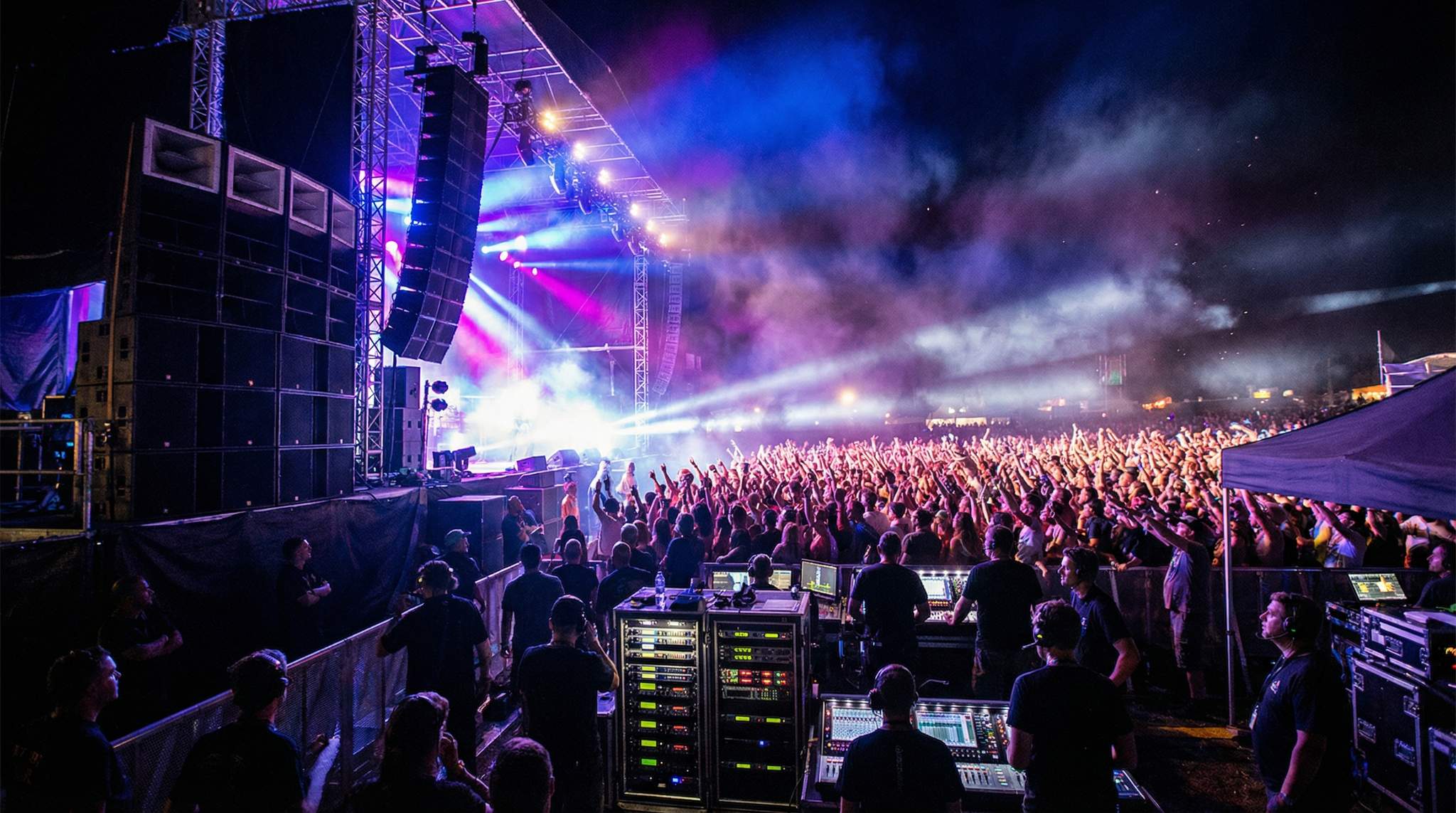
At the heart of any bass music festival is the sound system – it’s not just equipment, it’s an experience. Designing an audio system to deliver massive bass while maintaining clarity is a specialized task. Start with subwoofers: heavy genres require lots of them, but placement and configuration is what turns loud sound into quality sound. Techniques like cardioid and end-fire subwoofer arrays allow you to aim the bass where you want it (the dancefloor) and cancel it where you don’t (backstage or outside the venue). By arranging subs in specific patterns and timing their output, these methods reduce the boom behind the stacks, which helps on stages located near each other or near residential boundaries.
For large outdoor setups, coverage is key. You might have an enormous main stage that stretches far back – without supplemental speakers, the people at the back will not feel the bass impact. Enter delay towers: secondary speaker masts positioned further out in the audience. Properly implemented, delay tower speakers extend the reach without creating echo or lag. The trick is to time-align them so that sound from the main stage and the tower arrive simultaneously to a person in between. This requires calculating the delay based on distance (sound travels roughly 343 m/s) and sometimes using advanced processors – but the payoff is seamless sound across a massive crowd.
Bass behaves differently depending on the environment. Indoors in a warehouse, you might get standing waves or “modes” – spots where bass is overly boomy or oddly cancelled. Tuning the system with EQs or physical traps can help, but outdoors you have other issues: wind, humidity, and no walls means less natural bass reinforcement. One interesting factor is ground surface: the material underfoot (grass, asphalt, concrete) affects the feel of bass. A concrete lot might make bass feel more intense because it reflects energy upward, while grass and soil absorb some energy, slightly reducing the “shake.” This doesn’t usually change your plan drastically, but it’s worth noting if you wonder why the same rig thumps harder on tarmac than on a lawn.
If you have multiple stages, smart sound design includes managing interference and total output. Position stages as far apart as feasible and point their speakers away from each other. Some festivals also allocate SPL (Sound Pressure Level) “budgets” to share loudness across stages. For instance, if two stages run concurrently near each other, they might not both run at full volume for bass at the same time – one dials back during the other’s biggest act. Scheduling and production coordination can prevent a sound clash (literally, clashing waves of bass causing a muddy mess in between stages).
Finally, maintain consistency in your audio gear for predictability. Mixing and matching subwoofers from different manufacturers or different designs is risky: combining horn-loaded subs with reflex subs can create phase issues where they cancel each other out at certain frequencies. If you must use mixed sub types, keep them on separate outputs and have an audio engineer tune their phase alignment. Overall, the investment in a great system and proper design pays back with an ecstatic crowd – because in bass music, feeling the music is as important as hearing it.
Stage Technical Operations and DJ Management
Bass behaves differently depending on the environment. Indoors in a warehouse, you might get standing waves or “modes” – spots where bass is overly boomy or oddly cancelled. Tuning the system with EQs or physical traps can help, but outdoors you have other issues: wind, humidity, and no walls means less natural bass reinforcement. One interesting factor is ground surface: the material underfoot (grass, asphalt, concrete) affects the feel of bass. A concrete lot might make bass feel more intense because it reflects energy upward, while grass and soil absorb some energy, slightly reducing the “shake.” This doesn’t usually change your plan drastically, but it’s worth noting if you wonder why the same rig thumps harder on tarmac than on a lawn.
If you have multiple stages, smart sound design includes managing interference and total output. Position stages as far apart as feasible and point their speakers away from each other. Some festivals also allocate SPL (Sound Pressure Level) “budgets” to share loudness across stages. For instance, if two stages run concurrently near each other, they might not both run at full volume for bass at the same time – one dials back during the other’s biggest act. Scheduling and production coordination can prevent a sound clash (literally, clashing waves of bass causing a muddy mess in between stages).
Finally, maintain consistency in your audio gear for predictability. Mixing and matching subwoofers from different manufacturers or different designs is risky: combining horn-loaded subs with reflex subs can create phase issues where they cancel each other out at certain frequencies. If you must use mixed sub types, keep them on separate outputs and have an audio engineer tune their phase alignment. Overall, the investment in a great system and proper design pays back with an ecstatic crowd – a success also supported by efficient event ticketing processes – because in bass music, feeling the music is as important as hearing it.
Stage Technical Operations and DJ Management
Behind the scenes, a bass festival’s technical team has to ensure every performance runs smoothly despite the extreme conditions created by high sound pressure, mirroring the need for smooth operations in event ticketing management. One big concern is DJ monitoring. The DJs on stage need to hear their mix clearly even while the main system is pounding out huge bass. Heavy sub-bass can rattle the DJ booth and obscure the beat in monitor speakers, leading to trainwreck mixes. To combat this, use powerful monitor speakers (including sub-monitors if needed) on stage and consider high-pass filtering the DJ monitors slightly so they emphasize mids/highs over the very low end. Proper monitor placement and isolation (foam pads or stage risers) can prevent vibration issues too. In short, configure DJ monitoring to withstand the sub-bass assault – the DJs will thank you.
Modern DJ setups rely heavily on digital media (USB drives) and complex gear like CDJs or DJ software. It’s crucial to enforce good tech practices. Encourage USB drive hygiene and consistent gear firmware to avoid mid-set failures. This means: all rental CDJs/mixers should be updated to the same firmware version well before the show, and you might even communicate to artists to format their USBs properly (FAT32 vs exFAT can be an issue on some older gear) and not bring corrupted files. Having a couple of spare, festival-prepped USBs with emergency tracks is a good failsafe in case an artist’s media doesn’t read.
Bass festivals often pepper the lineup with not just DJs (“selectors”) but also live acts – perhaps a drum & bass band or a hybrid live/DJ performance. Switching between these on stage can be chaotic without planning. Create a clear backline setup for live acts vs. DJ sets. Typically, you’d have DJ gear set up front and center. When a live act comes, a common strategy is to have them perform on a separate riser or off to the side, which is rolled on-stage quickly, or have the DJ gear on a wheeled table that can swap out. Ensure the festival’s stage plot accounts for where instruments, drum kits, or extra mixers will go, and do a line check for the band’s gear well in advance (perhaps during a scheduled changeover break). A stage manager calling these changeovers is essential to keep the festival running on time.
Microphones and wireless gear also demand attention because MCs are a staple in drum & bass (and sometimes dubstep) performances. Under high volume, a normal mic can easily feed back or sound muffled. Invest in quality mic capsules and proper frequency management for wireless mics. Supercardioid or hypercardioid mic patterns help reject background noise (like the booming speakers). Additionally, coordinate RF (radio frequencies) if you have multiple wireless mics – last thing you want is the MC’s mic dropping out because two stages are on the same channel.
Pro Tip: Always have spare gear on standby. A backup mixer and extra CDJ in the wings, a couple of spare cartridges/needles for turntables if you allow vinyl sets, and extra cables can save a set from disaster if something blows or breaks mid-festival.
Finally, prepare for quick action in true emergencies. Every crew should have an Emergency Mute or kill-switch procedure – for example, if a speaker catches fire or a structure issue arises, the audio team should know how to cut the music instantly and power down safely. This could be a big red button linked to the main PA power or simply a well-communicated plan over radios (“mute all sound now” command structure). It’s rarely needed, but when it is, every second counts to get attention or allow an announcement to come through. Also consider recording sets (with permission): not just for marketing later, but having audio logs can help review any problems (like a sound drop or distortion) after the fact to improve next time.
Visual and Lighting Production
Visuals and lighting at bass festivals play a huge role in crafting the immersive atmosphere. These events often favor intense, cutting-edge effects – lasers slicing through fog, LED walls with trippy graphics, and moving lights choreographed to the drops. However, safety and design coherence are crucial to avoid sensory overload or hazards.
Lasers are a fan favorite in drum & bass and dubstep shows, painting geometric shapes above the crowd. Operating high-powered lasers requires strict controls. In many countries you need licenses or variances to legally use audience-scanning lasers (where beams might hit people). Always work with a licensed laser operator and secure proper laser variances, following audience scanning safety protocols. This ensures beams remain at safe heights or power levels so no one’s vision is at risk. The best laser shows wow the crowd without ever endangering them.
Strobe lights are another common element in bass music drops – that machine-gun flashing amps up the frenzy. But remember that some people are photosensitive. It’s good practice to test and audit your strobe sequences to ensure they won’t trigger seizures (generally, avoid sustained flashing above 5-8 Hz). Post warning signs at entrances that strobe and intense lighting will be in use. Also, use strobes judiciously; a few impactful moments are better than a constant assault.
Haze or fog machines are the unsung heroes of a killer light show. Without a bit of haze, those beautiful laser beams and moving light shafts are invisible. However, too much fog can choke people or set off alarms. Optimize the amount so that atmospherics enhance the look without clouding the room or stage. Use high-quality haze fluid (less irritating than cheap fog juice) and make sure ventilation in indoor venues can cycle the air. Outdoors, you’ll need larger haze output since it dissipates – but watch wind direction, as a sudden shift might blow a wall of fog into the crowd or off-site.
To make lighting truly complement the music, consider movement and cueing. Bass drops and tempo changes are perfect moments for lighting cues – for instance, coordinating moving head lights to sweep the crowd or do a dramatic tilt right at a drop. Yet, more motion isn’t always better. Aim for kinetic lighting effects that punctuate the music without turning into random chaos. You might program fast pan-and-tilt sequences for a frenetic drum & bass climax, but keep them off during a vocalist’s intro or a breakdown to give contrast. The best VJs and lighting designers treat the show like a story, with visuals building and releasing tension along with the set.
Content-wise, adapt visuals to the subgenre and time of night. A deep dubstep set at 3 AM might call for dark, immersive visuals – slow morphing fractals or minimalistic graphics – whereas a daytime liquid drum & bass set could sport brighter, melodic imagery. VJs should tailor their visual “grammar” to different bass music styles so that the vibe of the graphics matches the sound. Also, don’t neglect projection surfaces: if you are projecting onto unconventional backdrops like warehouse walls or shipping containers, test it out. Some surfaces love bass – LED panels or projector screens might wobble if mounted on trusses that shake with the music. Secure everything, and use high refresh-rate LED screens (with a sufficient nit brightness) if the crowd will be very close, to avoid seeing pixellation or causing eye fatigue.
In essence, visual production should amplify the music’s impact, not distract from it. Safety first (laser and strobe caution), then creativity. When done right, the synergy of pounding bass and stunning lights/visuals will transport your attendees into the world you’ve built for them.
Crowd Safety and Harm Reduction
High-energy bass events can get rowdy, so proactive crowd safety and harm reduction measures are non-negotiable. With mosh pits, surging crowds, and marathon dance sessions, festival producers must create an environment where fans can cut loose without serious harm.
Up front at the stages, physical safety is priority. Use sturdy barriers and configure the front-of-stage area intelligently. A classic straight metal barricade can protect the stage, but consider adding slight curves or “peninsulas” that jut out to break up the crowd mass. Some major festivals employ secondary barriers further back to prevent a single dense crush at the front. Thoughtful pit and barrier design can include pressure release zones (small gaps or escape routes for people who need out). Always have trained security or volunteers at the front who can see into the crowd, spot anyone in distress, and pull them over the barricade if needed.
Warning: Without proper barriers and crowd management, bass-fueled mosh pits and sudden crowd surges can result in serious injuries. Plan for those peak moments when a drop hits and everyone pushes forward.
Security presence at bass festivals should be friendly but firm. The stereotype of a rough, combative security crew can actually make situations worse. Instead, train your team in an approachable, community-friendly security posture. This means officers who dance and mingle a bit, who attendees feel they can ask for help if needed, rather than fearing them. It’s still critical they enforce rules, but tone is everything. Brief them about the culture – for example, many drum & bass fans see the event as a family gathering of sorts, and heavy-handed tactics will break that vibe.
Entry procedures also affect the overall sense of safety and respect. Implement bag checks and contraband searches, but do so with dignity. Many festivals successfully use amnesty bins and non-confrontational search methods at the gates: attendees can drop prohibited items (like weapons or drugs) in a bin, no questions asked, before security pats them down. Emphasize privacy and respect during any pat-downs or searches – separate lines by gender identity if needed, and train staff to be polite. A welcoming entry sets the tone that, yes, safety is taken seriously, but attendees are respected as part of the community, not treated as suspects.
Once inside, keep your crowd safe from less visible dangers too. Hearing damage is a real issue at bass events. Many fans won’t think to bring earplugs, so you should. Provide cheap or free foam earplugs at minimum – at entrances, info booths, bars – and perhaps offer higher-fidelity plugs for sale. Make it a normalized part of the culture: some festivals even brand them and hand them out like merch. Earplug programs that fans actually use frame hearing protection as a positive (“Enjoy the bass, protect your ears”). Remember, exposure to ~100 dB (common right in front of the speakers) can start causing hearing damage in under 15 minutes without protection, while 85 dB is generally the safe 8-hour exposure limit.
Hydration and cooldown spaces are another must. Bass music events often run through late nights when people might forget to drink water because it’s cooler out – but dancing is dancing, and dehydration or overheating can sneak up. Provide ample water refill stations (and clearly mark them). Having a chill-out area or a medical tent with volunteers from harm reduction organizations can save lives. On-site harm reduction services and chill-out spaces allow attendees struggling with substance effects, panic, or exhaustion to get help in a calm environment rather than being kicked out or left on their own. Trained staff can handle situations quietly and without judgment – whether it’s giving someone electrolyte solution, or grounding someone having a bad psychoactive experience.
A clearly communicated code of conduct for attendee behavior ties everything together. Outline the festival’s stance on harassment, unwanted touching, drink spiking (unfortunately an issue in any nightlife), and even etiquette like not filming people without consent. Post these rules online and on-site, and empower staff to enforce them. When everyone knows that the festival has zero tolerance for predatory behavior and that the community looks out for each other, it creates a safer space. Encourage a we’re all in this together mentality – for example, remind people to help anyone who falls in a mosh pit, or to alert staff if they see someone who might need medical attention.
In summary, safety at a bass festival is about foresight and culture as much as reaction. Design the space and train the people such that the crowd’s wild energy is channeled positively. With robust harm reduction and a caring approach, you can keep the vibe electric and safe at the same time.
Operating Hours and Festival Format
One key strategic decision is whether your festival runs all night long or follows a daytime-into-evening schedule. The all-night model versus a day-into-night model each has pros and cons, especially for bass music events.
All-night festivals (for example, classic rave-style events that go from 9 PM till 6 AM) align well with drum & bass and dubstep’s club origins. They allow for that magical late-night energy when the bass feels extra deep at 3 AM. In places like the UK and Europe, it’s common for DnB events to run till dawn, as fans are accustomed to overnight raves. If you go this route, consider stamina and pacing: offer some quieter zones or ambient music lounges where people can take a break, and provide hot food and drinks through the night to keep everyone fueled. Also, coordinate with public transport or have shuttles/taxis ready by morning, since attendees will emerge at sunrise needing a way home (and potentially being very tired). Not least, ensure you have the legal ability – all-night events require special late license permits in many areas.
Day-into-night festivals are more common for large outdoor events and in cities with noise rules. Typically, gates open late morning or afternoon, and music might run until roughly 10 or 11 PM (or whenever local curfew hits). The benefit here is attracting a broader audience: people who may not be up for an all-nighter can attend, and all-ages or family-friendly programming is easier in the daytime segment. Production-wise, you might need to emphasize lighting less in earlier daylight hours and focus more on shade structures or visuals that work under sun (like colorful decor, graffiti walls, etc.), then transition to full lighting rigs as dusk falls. If your festival stops at night, many organizers plan official afterparties at clubs to extend the fun. This can be a revenue bonus and keeps hardcore fans satisfied.
If noise curfews are a concern but you still want late vibes, one clever solution is a silent disco as post-curfew relief. Essentially, after the mains shut down, you hand out wireless headphones and have DJs continue in silence – except in attendees’ ears. This has worked at several urban festivals: neighbors hear nothing, but participants can dance until the wee hours, headphones glowing. It’s a different energy, but bass heads often enjoy the novelty and the fact the party doesn’t have to end.
Another element of format is how you structure each day’s arc. For an event going past midnight, think about the pacing: you might hit a peak around 9-10 PM with big acts, then intentionally dial it a bit more experimental or deep in the early AM hours, before a gentle close. Some festivals engineer a special finale in the morning – like a “quiet peak” sunrise set of deep 140 BPM tunes. This could be an ambient dubstep or downtempo jungle session at dawn to help everyone cool down emotionally while still feeling it’s a climax. Such moments can become legendary if done right (imagine everyone hugging and swaying as the sun comes up to a beautiful, dubby track).
From an operational standpoint, whatever schedule you choose, communicate it clearly. All-night events might require attendees to organize their sleep or travel differently (some might book hotels, others might bring camping gear or plan power-naps). Day events might waste the first few hours if not enough people realize music starts early. Use your marketing to set expectations (“Join us from noon till night, across two stages” or “Raging from dusk till dawn with no curfew”). Also coordinate staff shifts: overnight festivals need a fresh crew in the morning to handle cleanup and any stragglers, while day festivals might need extra staff right at opening if everyone arrives at once.
In summary, align your format with your audience and venue. If local laws and venue ambience allow, an overnight rave can feel truest to the bass ethos. If not, a well-planned day-into-night event with afterparties can still deliver an amazing experience. Both can work brilliantly as long as production is tailored to the hours of operation.
Lineup Curation and Genre Flow
Booking the right lineup and scheduling sets in the optimal order is both an art and a science. Bass music spans a spectrum of tempos and flavors, from dubstep’s lurching 140 BPM riddims to drum & bass’s lightning 174 BPM breaks. How do you ensure it all flows well at your festival?
One approach is to dedicate separate stages or days to distinct subgenres, effectively creating parallel experiences. Some large events implement a “two-festival” strategy with dedicated DnB and dubstep zones. For example, Stage A might feature drum & bass acts exclusively, while Stage B focuses on 140 BPM bass and dubstep, each with its own coherent progression. This way purists of each genre get their fill, while adventurous attendees can sample both. If you go this route, ensure each stage is strong enough to stand alone, and try to stagger headliners so they’re not clashing if many want to see both. A big joint encore or collab set can be fun to unite everyone at the end.
If your festival is one-stage or mixed-genre by design, then craft a timeline that gradually moves the energy. Bridging 140 and 174 BPM seamlessly to craft an energy arc is possible with careful ordering. Perhaps start the day with slower tempos (dub, reggae, future garage around 130-140 BPM), build through bass house or breaks (around 130-150 BPM) in the afternoon, and as night falls, transition into faster drum & bass territory (165-174 BPM). You could insert a halftime DnB act (85 BPM feel) or a deep dubstep set as a breather in between high-tempo acts. The idea is to avoid jarring the crowd. Sudden big jumps in BPM or style can break the groove – like slamming from a chill 140 set to a frantic 174 without transition might confuse dancers. Instead, use a bridging artist or let a versatile DJ gradually increase the tempo over their set.
Another helpful concept is tempo architecture with dedicated “halftime” or chill rooms. For instance, if the main stage is going full-throttle DnB, you could have a smaller stage playing 140 BPM deep bass or old-school dubwise tunes concurrently, giving attendees an option to downshift intensity without leaving the music area. This can prevent burnout and also showcase more substyles.
Curating the artist roster itself requires balancing big names with community heroes. Major headliners (international DJs/producers with huge followings) will sell tickets, but the festival’s soul often comes from resident DJs and local crews who know the crowd personally. A robust strategy is pairing headliners with local support in a way that lifts both. For example, put a beloved local DJ right before a headliner – the local gets exposure to a packed crowd, and the crowd gets warmed up by someone who understands the hometown vibe. Just ensure the local act complements the headliner’s style (you wouldn’t want a super-chill local set right before an aggressive jump-up DnB headliner, for instance).
Label showcases are common in bass festivals and can be a big draw. Inviting a renowned record label to take over a stage or timeslot can bring a built-in narrative (e.g., “Hospitality Night” by Hospital Records, or a Deep Medi dubstep hour). But remember to maintain the festival’s own identity. Having too many takeovers could make it feel like a patchwork of separate events. It’s wise to limit them and ensure that a label takeover doesn’t drown out the festival’s voice. Maybe co-brand the stage: e.g., “XYZ Stage hosted by
Special set formats deserve planning too. Back-to-back sets (B2B, where two or more DJs play together) are fan favorites, especially for closing sets or unique pairings. However, coordinate with the artists on these. Have them agree on how they’ll structure the B2B – perhaps one does the first half hour then alternate, or trade every two tracks. Make sure they’re comfortable and not stepping on each other’s toes. Providing clear back-to-back DJ etiquette agreements ahead of time saves confusion on stage. Also, if you have MCs, plan those appearances. You might have an “MC roster” who rotate among sets. Avoid shoving too many MCs on at once; give each a scheduled window, and brief them to respect each other’s mic time and the DJs’ sound. Establishing MC rotation without chaos will result in a better showcase of their talent and less headache for your sound engineers (fewer mics to mix at a time).
Lastly, honor the genre’s legends and diversity. Book a mix of pioneers (who might not draw the youngest crowds like a current star, but lend credibility and history) and cutting-edge newcomers. Maybe you celebrate a legend with a classics set or put them in a highlight time slot to educate the crowd. If your festival spans a weekend, you can theme days or stages by subgenre (e.g., one area for “Liquid” DnB, another for “Neurofunk” or a “Deep Dubstep” hideout). This festival scene mapping of liquid lovers, riddim ravers, neuro heads, etc. can ensure everyone finds their tribe at some point. A well-curated lineup and schedule is like a journey – it gives the crowd a coherent experience and leaves them remembering not just individual sets, but the overall ride the festival took them on.
For promoters looking to carve out a highly specific niche, focusing entirely on a single subgenre can be a lucrative strategy. An event planner specializing in liquid bass productions, for example, will curate a vastly different atmosphere than a heavy riddim promoter. Liquid drum & bass events often require venues with warmer acoustics, daytime or sunset scheduling, and a focus on melodic, soulful vocalists rather than aggressive mosh pits. By establishing your brand as the go-to for specialized liquid bass or authentic UK drum and bass showcases, you can attract a dedicated demographic that values high-fidelity audio and a relaxed, groove-oriented environment over pure high-octane energy.
Community and Cultural Programming
The best bass festivals don’t just put on DJ sets – they actively contribute to the culture around drum & bass and dubstep. Consider weaving in programming that educates, empowers, or celebrates the community. This transforms your event from just a party into a cultural hub.
Workshops and interactive sessions are one way to give back to the scene. For instance, hosting an MC workshop that trains up-and-coming local voices can be immensely popular. You could have a daytime session where veteran MCs like Flux or Dynamite MC share skills with newcomers on mic control, crowd engagement, and lyric writing. Not only does this invest in the next generation, it also signals that your festival values the craft behind the music. Similarly, offer backstage producer masterclasses or studio “show-and-tell” sessions where top producers break down their tracks or sound design tricks. Platforming knowledge in this way deepens the ecosystem – fans who are aspiring artists get inspired and educated.
Celebrating the history and lineage of bass music can be a festival highlight. Perhaps dedicate a small tent or space as a mini-museum or speaker series. For example, a Bass History Tent displaying pirate radio artifacts, dubplates, and sound system legend stories would draw older heads and curious new fans alike. You could schedule talks or Q&A with genre pioneers (imagine having a jungle OG discuss the early 90s, or a sound system engineer show off vintage speaker amps). Align such programming with any anniversary or theme – e.g., if it’s 30 years since 1995 (a golden year in drum & bass), do a retrospective showcase or a classic album listening session.
Diversity and inclusion make a scene thrive, so integrate that into programming. If women, non-binary, or LGBTQ+ artists are underrepresented in your lineups traditionally, fix that by curating special segments that aren’t side stages at 2 PM, but prime slots that showcase these talents. Perhaps an up-and-coming collective of female DJs gets a peak hour to show their stuff. Many festivals are adopting women- and non-binary-led takeover blocks that are truly high-impact – not just token support acts, but giving them headline responsibilities and production support. The result is often a distinctive vibe and a refreshing break from the “same 10 headliner dudes” problem. It also invites a wider audience who see themselves represented on stage.
Another aspect of community is local scene support. A festival can rejuvenate its local bass scene by how it involves residents. Ensure a portion of your lineup is from the city or region. Go further by maybe running a DJ contest for a local opening slot, or collaborating with local crews on pre-parties. Putting local residents and youth on the lineup – for instance, an “Under 21 Showcase” for teen DJs if all-ages, or spotlighting the city’s longest-running DnB weekly night with a dedicated slot – ties the big festival back into the grassroots. It shows you’re not just parachuting in big acts, but growing the talent ecosystem.
Festivals can also foster international community links. Consider crew exchange programs across regions. For example, you partner with a bass festival in another country: you host their resident crew for a takeover at your festival, and later they host yours. Each festival night becomes a cultural exchange – fans get exposure to how another city does it (different MC styles, maybe a unique subgenre flavor), and it builds goodwill globally. This kind of global bass diplomacy with multilingual MCs extends to hiring multilingual MCs or vocalists so non-English-speaking fans feel included.
Finally, think about the end of the festival – can you incorporate a positive community moment? Some festivals have started doing Sunday decompression sessions with wellness activities, like group stretches or ambient yoga to an ‘Ambient Jungle’ soundtrack. Others might play an anniversary video montage to thank the community. These touches reinforce that the festival isn’t just a commercial event, but a gathering of a tribe.
By embedding cultural programming, you ensure that when people leave your festival, they feel not just entertained but also enriched and more connected to the scene. It’s these experiences – learning something new, feeling represented, respecting the music’s history – that turn casual attendees into lifelong evangelists for your festival.
Essential Reading
- Licensing & Permits for Heavy Bass Music Festivals: Building a Comprehensive Permit Stack
- Sound-System Culture Meets Festival Production: Stacks, Clashes & Bass Unity
- Festival Pit Design: Barriers, Pens, and Pressure Releases
- Harm Reduction at Bass Music Festivals: Keeping the Vibes Safe and Sound
- Bridging 140 and 174: Crafting a Seamless Festival Energy Arc
- MC Culture Done Right: Roles, Rights, and Sound Discipline at Bass Music Festivals
FAQ
Q: How are Drum ’n’ Bass and Dubstep festivals different from other music festivals?
A: Drum & bass, dubstep, and other bass music festivals put a huge emphasis on the sound system and low-frequency impact. The music is generally higher BPM (for DnB) or very sub-bass-heavy (for dubstep) compared to mainstream festivals. Culturally, these events often include MCs hosting the sets (especially in DnB) and have roots in underground rave and sound system culture. The crowd tends to be very passionate and knowledgeable about the genres. Production-wise, expect more speakers and subs, darker lighting with lots of lasers and strobes, and a programming style that caters to an underground vibe rather than radio hits. In short, the focus is on immersive bass and community energy over big mainstream spectacle.
Q: What special permits or licenses do I need for a bass music festival?
A: Besides the standard event permits (venue rental, health & safety, fire, etc.), bass festivals often need specific noise permits because of the loud sound. Many cities require a permit if you plan to exceed certain decibel levels or go past certain hours. You might also need an extended hours license for an all-night event. If you use lasers, you may need a variance or license for audience-scanning lasers. Always check local regulations – for example, some places treat festivals as “mass gatherings” requiring their own permit, and if it’s outdoor, you’ll need to coordinate with environmental or parks departments. The key is to apply early and provide authorities with detailed plans on how you’ll handle sound, crowd, and safety.
Q: How can we manage noise and avoid disturbing neighbors during the festival?
A: Start by designing your stage and speaker layout to direct sound toward the audience and away from residential areas. Techniques like cardioid subwoofer arrays can reduce bass bleeding backward. Implement a strict curfew for loud outdoor sound if required (and use silent disco headphones to continue quietly after curfew). Communicate with neighbors in advance – let them know event times and give a hotline to call with issues. Real-time monitoring is helpful: station staff with decibel meters at the perimeter to watch levels and adjust if needed. Some festivals put up temporary noise barriers or berms, though those help more with mid/high frequencies than deep bass. Ultimately, showing you’re proactive (through scheduling, technology, and outreach) goes a long way. In some cases you might offer local residents free tickets or hotel stays to keep them happy if they’re very close by.
Q: What kind of sound system do I need for a bass-heavy festival?
A: You’ll want a professional-grade PA with an emphasis on subwoofers. Line-array speaker systems are common for the main outputs, paired with a large number of subwoofers (often 18-inch drivers or larger). The exact specs depend on crowd size and venue, but as an example, a 1000-person indoor DnB show might use 6-8 dual 18” subs, whereas a 20,000-person outdoor festival might deploy dozens of subs across the front and additional delays. Look for brands known in the bass music community (Funktion-One, PK Sound, Void, etc., are popular because they’re tuned for clarity at high SPL). In terms of power, it’s not unusual to have sound systems pushing hundreds of thousands of watts. Just as important is hiring an experienced audio engineer team who knows how to tune the system for bass music – they’ll set the crossover frequencies, limiters, and EQ to get that chest-rumbling bass without distortion. And don’t forget heavy-duty monitoring on stage so DJs and MCs can perform confidently.
Q: How should I schedule drum & bass versus dubstep acts to maintain a good flow?
A: It’s wise to avoid abrupt BPM jumps. One strategy is to group sets by relative tempo or style – for example, have your slower 140 BPM dubstep and related genres earlier in the day or on a separate stage, and let the tempo build up to the faster 174 BPM drum & bass later on. If on one stage, you might transition in steps: a breaks or grime act (140–150 BPM) leads into a halftime DnB act (effectively 85 BPM feel but works as a bridge), then into full-tempo DnB. Alternatively, segregate by stage: one stage for primarily dubstep/140, another for DnB, so each stage can maintain a consistent vibe. If you expect the same audience to enjoy both, schedule a clear switch-over with maybe a host announcing “we’re speeding things up now!” It can also work to have a special transition set — some DJs are versatile in both dubstep and DnB and can start at one tempo and end at another over an hour. The goal is to take the crowd with you, so that a dubstep fan maybe discovers they enjoy the 160s BPM range when it’s introduced smoothly, and vice versa.
Q: What should I consider when choosing a venue for a bass festival?
A: Think about acoustics, neighbors, and atmosphere. For indoor venues, warehouses and large halls are popular – they contain sound better and weather isn’t an issue, but you must ensure they have good ventilation and structural integrity for heavy bass vibrations. Check if the building can handle low frequencies (no loose fixtures or weak windows). For outdoor venues, distance from residential areas is important due to noise. Open fields, secluded parks, beaches, or mountain resorts can work; just plan for infrastructure like power and consider ground surface (flat, dry ground is easier for dancing and staging). Urban venues like stadium parking lots or under-bridge spaces are edgy and accessible, but you’ll need robust noise control and possibly earlier ending times. Also factor in capacity and layout – you want a space that can safely hold your crowd but not so sprawling that the energy thins out. Access to public transport or roads, availability of parking, and local authority support are practical factors. Finally, choose a venue that matches the vibe: a gritty industrial spot suits an underground dubstep throwdown, whereas a scenic outdoor spot might better complement a multi-day bass festival with camping.
Q: How can we ensure attendee safety and comfort given the intense music and long hours?
A: Several ways: Provide free water and make it easy to stay hydrated (water refill stations, roaming water sellers). Set up chill-out zones where people can take a break from the noise – a tent with cushions, lower volume music or ambient sound, maybe some art installations to focus on. Hand out earplugs at entry and throughout – many will use them if readily available. Use signage to remind attendees to take care of themselves (“Stay hydrated,” “Take a rest if you need – chill zone this way”). Have a well-marked first aid or medical tent with trained medics on duty the entire time. Also, consider shorter set lengths or small breaks in programming if it’s an extremely long event (some festivals pause main music for 30 minutes to reset and encourage people to rest). For crowd safety, ensure security staff are embedded in the crowd, not just perimeters, so they can respond quickly if someone falls or needs help in the middle of the dancefloor. Keep pathways clear for emergency egress. Lastly, lighting the site adequately (especially around trip hazards or to bathrooms) after dark helps prevent accidents – you can still keep stage areas dark and moody, but safety lighting where needed is key.
Q: How can we involve local artists and the community in our bass festival?
A: Start by booking local DJs and producers in your lineup, not just as openers at 2 PM, but if they’re popular in the community, give them meaningful slots. Partner with local promoters or collectives who have built the scene – you could let a trusted local crew host a side stage or a portion of the night. In the lead-up, you might hold a DJ competition at a local club, where the winner gets a festival slot (this also doubles as promotion). Beyond performance, involve local visual artists for decor, graffiti, or VJing to showcase homegrown art. Maybe collaborate with local food vendors for your stalls, giving festival-goers a taste of local cuisine. Community engagement is also about being a good neighbor: invite locals to a “sound check preview” or offer discounted tickets to nearby residents. If possible, do something charitable – like a portion of proceeds supporting a local youth music program or having a donation bin for a community cause on site. When the community feels the festival is theirs and not an outside imposition, you get more support and a richer event.
Q: What is the bass music genre, and how should promoters market it?
A: When defining what is bass music genre for marketing or local authorities, promoters should describe it as an umbrella term for electronic dance music heavily focused on low-frequency sound design. This includes dubstep, drum & bass, trap, and grime. For marketing purposes, it’s crucial to specify the exact subgenres your event features, as the audience for a melodic liquid bass production differs significantly from the crowd at a heavy dubstep music festival. Clear genre definitions help set accurate attendee expectations and guide your venue selection and sound system requirements.
Q: Are there specific production differences when organizing dedicated dubstep festivals compared to multi-genre EDM events?
A: Yes. Dedicated dubstep festivals require a disproportionate investment in subwoofer arrays and low-frequency reinforcement compared to standard EDM events. Additionally, because the crowd energy at a dubstep music festival often involves intense moshing and headbanging, organizers must reinforce front-of-stage barricades, widen pit pressure release zones, and deploy specialized security teams trained in heavy bass crowd dynamics.
Glossary
- Drum ’n’ Bass (DnB): A genre of electronic dance music characterized by fast breakbeats (generally 160–180 BPM) and heavy basslines. Evolved from early 1990s UK rave and jungle music, drum & bass is known for its energetic rhythms and often features MCs providing live vocals.
- Dubstep: A genre of electronic music that emerged in the late 1990s/early 2000s in the UK. Typically around 140 BPM, dubstep is defined by its wobbling basslines, half-time drum patterns, and emphasis on sub-bass frequencies. It often has a dark, heavy sound with dramatic “drops.”
- Bass Music: An umbrella term referring to music genres centered on prominent bass frequencies. It can include dubstep and drum & bass, as well as related styles like trap, UK garage, grime, footwork, and others. Bass music festivals focus on these bass-heavy genres as opposed to mainstream EDM or rock.
- Bassweight: Slang for the perceived weight or physical impact of bass frequencies. When a sound system has a lot of bassweight, it means you can literally feel the bass (in your chest, vibrating the floor, etc.). Bass music fans often seek out “bassweight” as a sign of a powerful sound system and authentic experience.
- Sound System: In general, a set of speakers and audio equipment. In context, also refers to “sound system culture” – the Jamaican-origin tradition of crews with custom speaker stacks throwing events. A sound system crew often includes DJs, MCs, and engineers devoted to delivering great bass sound. Notable in reggae, dub, and the roots of dubstep/dnb culture.
- MC (Master of Ceremonies): In bass music, the MC is a vocalist who hypes up the crowd and complements the DJ, especially common in drum & bass events. A good MC knows how to contribute to the music without overpowering it, providing live raps, vocals, or crowd interaction to elevate the energy.
- Back-to-Back (B2B): When two DJs perform together in the same set, taking turns mixing tracks. Popular in festival lineups for special combos, but requires coordination to flow well.
- Subwoofer (Sub): A speaker designed specifically to reproduce low-frequency bass sounds. Festivals use large subwoofers (often in arrays) to deliver the deep bass that defines the music.
- Sound Pressure Level (SPL): A measure of sound loudness, in decibels (dB). Festivals often have SPL limits set by regulations and have to monitor SPL levels to protect hearing and comply with noise permits.
- Halftime: A style in drum & bass (and related genres) where the beat pattern gives a feeling of half the actual tempo. For example, a 170 BPM track with a halftime rhythm feels like a slow 85 BPM groove. Halftime sections can add variety and a heavier, head-nod feel in sets.
- Jungle: The precursor to drum & bass, emerging in early 1990s UK. Characterized by rapid breakbeats, reggae/dancehall influences, and heavy sub-bass. Jungle laid the foundation for DnB; the term is still used to describe that early sound or modern tracks that emulate it.
- Dubplate: Traditionally an exclusive, custom-cut vinyl (often acetate) that DJs use to play unreleased or special tracks. In sound system culture, dubplates might feature personalized versions of songs. They symbolize exclusivity and the cutting-edge in DJ sets, especially in reggae, jungle, and dubstep scenes.
- Pirate Radio: Unlicensed radio broadcasts. In the context of UK bass music, pirate radio stations in the ’80s and ’90s were crucial for spreading genres like jungle, garage, and grime that weren’t played on mainstream radio. Many pioneering DJs and MCs built their reputations on pirate radio, which helped foster the bass music community.
Conclusion
Producing a Drum ’n’ Bass, Dubstep, or bass music festival is a complex but rewarding endeavor. By understanding the unique cultural expectations (delivering chest-rattling bass and honoring the genre’s roots), tackling the technical demands (from subwoofer arrays to laser safety), and looking after your crowd (with thoughtful scheduling, amenities, and harm reduction), you lay the groundwork for an unforgettable event. The world’s best bass festivals thrive because they marry meticulous production with genuine love for the music and its community. Armed with the knowledge in this guide and a passion for bass, a festival producer can create an experience that resonates—literally and figuratively—with fans long after the last track ends.