Imagine it’s the day after your festival. How will you know if it was a success? In the festival world of 2026, you need more than smiling faces and cool photos to measure victory – you need data and clear benchmarks. The live events industry is booming again, with reports of record-breaking ticket sales and attendance in 2023 signaling a strong recovery. This resurgence brings higher expectations from attendees, sponsors, and communities. That’s why establishing clear goals and success metrics is a vital early step in festival planning. Setting well-defined objectives gives your team a shared purpose and guides every decision toward the outcomes that matter. It also provides concrete benchmarks so you can evaluate performance afterward and pinpoint areas to improve. Without clear goals, a festival can drift aimlessly – in fact, many new festivals fail due to a lack of community-centric vision. By defining success on your own terms, you’re steering your event with purpose from day one.
Define Your Festival’s Objectives
Start with the big-picture objectives. Ask yourself: What do I want this festival to accomplish? The answers will vary depending on your festival’s nature and your motivations as an organizer. Common festival objectives include:
- Attendance and Growth: Perhaps your primary goal is to attract a certain number of attendees. For a first-year boutique festival, you might set a target like 1,000 attendees; for a larger concept, maybe 10,000+. Even the world’s biggest festivals started small – Glastonbury began with about 1,500 people in 1970, and today events like Coachella draw massive crowds reaching 125,000 attendees per day. The point is to choose an attendance target that matches your event’s scope and ambition. Beyond raw headcount, growth could also be an objective (e.g., “increase attendance by 20% in the second year”), signaling your vision to scale over time.
- Financial Results: If the festival is a business venture, profit or revenue targets will be key. You might aim for a specific profit margin (say 10–15%), or simply to break even (a realistic goal for year one). Define clear numbers, like “$50,000 in ticket revenue” or “sell 80% of VIP packages,” so you have a concrete financial target. For a nonprofit or community festival, the financial goal might be to raise funds for a cause or at least not lose money while delivering a community benefit. Keep in mind the economics of festivals can be challenging – a recent study found two-thirds of music festivals in France ran a deficit in 2024 despite solid attendance, due to skyrocketing costs. In this climate, getting creative with funding can help: you might seek sponsors or tap arts grants and public funding opportunities (many savvy festivals explore these routes to support their vision).
- Attendee Experience and Satisfaction: Many festivals prioritize delivering a particular kind of experience. Your goal could be qualitative, like “Provide a world-class immersive art experience,” “Achieve a family-friendly atmosphere where attendees feel safe and welcome,” or “Foster an inclusive environment with diverse music genres and representation.” These can later be measured by satisfaction surveys, repeat attendance rates, or other feedback. For example, you could aim for “90% of post-event survey respondents rate the experience 4 or 5 stars out of 5” or a Net Promoter Score (NPS) above +50 indicating strong loyalty. Also consider safety and comfort as part of the experience – an incident-free event with short lines and happy vibes is a huge success metric in itself.
- Reputation and Brand Impact: You might aim to put your city or your festival’s niche “on the map,” establishing the event as a must-attend annual gathering. For instance, a goal could be “Become the premier jazz festival in our region,” or “Gain national media coverage and recognition for our innovative concept.” These objectives are about influence and brand positioning. Success might be measured by media impressions (number of press articles, blog reviews, or TV features), by social media buzz, or even by industry accolades (for example, being named in a “Top 10 Festivals” list or winning a best-of award). In an increasingly oversaturated and competitive 2026 festival landscape, carving out a distinctive reputation is key to long-term survival. If you succeed, your festival’s name will carry weight that attracts talent, sponsors, and attendees in the future.
- Community and Cultural Goals: Perhaps you have objectives like “Support local artists by giving them a platform,” “Boost tourism during the off-season for our town,” or “Educate the public about environmental sustainability.” These speak to a broader impact beyond the festival gates. For example, you might aim to showcase 50 local bands or artisans, or to attract 2,000 out-of-town visitors to stimulate the local economy. Some festivals set sustainability targets (like running a zero-waste event or powering with 100% renewable energy) as key goals, or social targets like raising awareness for a cause. A great example of community impact: in 2025, Spain’s Viña Rock festival welcomed 240,000 attendees and generated a €22 million economic impact for the region – a huge win for the host area. Your festival might not be that massive, but the principle is the same: tying your event to community benefits can define success in a very meaningful way.
- Legacy and Continuity: Another goal might simply be to create a sustainable annual tradition. For a first-time festival organizer, a valid goal is “Execute a successful inaugural event that builds momentum for an annual festival” – essentially, to survive year one and plant the seeds for the future. Longevity can be a goal in itself: you want your festival to become a beloved yearly event or even an institution decades down the line. That means focusing on attendee loyalty and consistent quality so people come back. You could set a continuity metric like “Achieve at least a 60% return attendee rate next year” or “Secure two multi-year sponsors by the end of Year 1.” Thinking beyond the immediate event helps you plan for long-term growth. (For more on growing strategically, check out strategies for sustainable multi-year festival growth to ensure you scale wisely while staying true to your vision.)
Write down a set of 3–5 major objectives that capture what success looks like in your eyes. The key is that they should reflect your festival’s unique vision and values (remember that mission statement!) and give you clear direction. It’s okay if some goals are ambitious (“become the biggest festival of our genre in five years”) and others are humble (“no major safety incidents, and positive feedback from attendees”). Defining these priorities will help align your team and set the stage for everything that comes next.
Make Goals SMART
You’ve probably heard it before: make your goals SMART – Specific, Measurable, Achievable, Relevant, and Time-bound. This classic framework is a handy checklist to ensure each of your festival objectives can be acted upon and evaluated. In practice, for each broad objective you set, ask yourself if it meets the SMART test:
Data-Driven Event Marketing
Track ticket sales, demographics, marketing ROI, and social reach in real time. Exportable reports give you the insights to make smarter decisions.
- Specific & Measurable: Put concrete numbers or clear targets against the goal. If your goal is “increase awareness of local filmmakers,” define how you’ll measure that – maybe “screen 50 local short films and aim for an average audience of 100 at each,” or “secure at least 10 media mentions highlighting our local filmmakers.” If the goal is attendee satisfaction, you might say “Achieve a 4.5/5 average rating in post-event surveys” rather than just “people should enjoy the festival.” For revenue, set a dollar (or euro) figure: “Achieve $50,000 in ticket sales” instead of “earn a profit.” Attaching numbers forces clarity and gives you a tangible target to hit.
- Achievable: Set goals that are ambitious but realistic. It’s great to dream big, but your targets should be grounded in reality so they motivate rather than discourage. If this is a first-year festival, aiming for 100,000 attendees might be way out of reach (and lead to disappointment or overstretching). Perhaps 5,000 is a challenging but attainable number to start with – you can always scale up in future years. Use any research or feasibility studies you’ve done as a guide. Look at events similar in size or theme: if comparable festivals typically draw a max of 3,000 people, targeting 2,500–3,000 for your debut makes sense. Likewise, if sponsors in your niche usually contribute around $20k, don’t bank on getting $100k your first year. Base your goals on data and realistic assumptions so you can actually achieve them.
- Relevant: Make sure each goal ties back to your festival’s core purpose. It’s easy to get excited and list too many goals, including some that might not really drive your festival forward. Focus on what truly matters for your vision. For example, chasing a vanity metric like total Instagram followers might not be relevant to your festival’s success unless social media influence is central to your strategy. If your mission is about cultural impact, a goal about profit alone might feel off-base (and vice versa). Every goal should directly support the mission and the long-term health of your festival. In short, keep your objectives aligned with the why of your event.
- Time-bound: Anchor your goals to a timeframe. Usually, the horizon is your festival date or the end of the festival season. Some objectives could be year-over-year (“by the second year, accomplish X”). Having a deadline or time frame adds urgency and accountability. It’s the difference between “someday we’d like to do this” and “we will do this by next July.” For instance, “Increase early-bird ticket sales by 15% by March 2027” is clear about when it needs to happen. A time-bound goal lets you work backward on your timeline and creates a bit of healthy pressure to drive progress.
Pro Tip: Research industry benchmarks or similar events to calibrate your targets. If you know that most new festivals in your genre sell about 2,000 tickets, use that as a reality check for your attendance goal. Talk to other organizers or mentors, if possible, to learn what a reasonable first-year profit margin or attendee rating might be. Using real benchmarks ensures your goals are grounded and achievable, and it gives you confidence that you’re aiming neither too low nor unrealistically high.
Let’s look at an example of turning a general goal into a SMART goal. Instead of saying “We just want a lot of people to come,” you could specify, “Attract at least 2,500 attendees over our two-day festival in 2026.” Instead of “People should like the festival,” you could aim to “Achieve a Net Promoter Score of +50 (excellent) from attendee surveys by the end of the event.” Numbers and details make all the difference. The table below shows a few examples of how a vague goal can be reframed the SMART way:
Planning a Festival?
Ticket Fairy's festival ticketing platform handles multi-day passes, RFID wristbands, and complex festival operations.
General Goal vs. SMART Goal Examples
| General Goal | SMART Target Example |
|---|---|
| “Get a lot of people to come.” | “Attract at least 2,500 attendees over our two-day festival in 2026.” |
| “People should like the festival.” | “Achieve a Net Promoter Score of +50 on post-event attendee surveys.” |
| “Increase awareness of local filmmakers.” | “Screen 50 local films with an average audience of 100 each, and secure 10 press mentions highlighting these filmmakers.” |
By making goals SMART, you turn fuzzy intentions into strategic targets. This not only helps you plan better (you know what “success” looks like in measurable terms), it will also make it much easier to evaluate your festival once it’s over. Essentially, SMART goals set you up with a game plan and a way to keep score.
Identify Key Performance Indicators (KPIs)
With your goals defined, the next step is to determine the Key Performance Indicators (KPIs) you’ll track to know if you’re meeting those goals. Think of KPIs as the metrics that matter most – they are your festival’s vital signs, helping you monitor progress during planning and measuring success after the event. Each KPI should directly relate to one of the goals you established.
In the broader context of live entertainment, establishing robust key performance indicators for event management is what separates amateur gatherings from professional, scalable productions. Whether you are overseeing a multi-day music festival, a corporate summit, or a large-scale food and beverage expo, these core metrics provide the quantitative foundation needed by stakeholders, investors, and local authorities to validate your operational competence.
Free Tool: Size Your Festival Site
Zoned capacity planning for arena, campsite, parking and entry lanes — against UK Purple Guide and NFPA density standards. Finds your bottleneck zone.
Here are examples of KPIs corresponding to common festival goals:
- Ticket Sales & Attendance KPIs: These measure your reach and growth. Track things like daily and weekly ticket sales leading up to the event, total tickets sold, and attendance count each day of the festival. You can also look at what percentage of your capacity you sold (did you reach 80% capacity, 100% sell-out?), which shows how well you filled the venue. If tourism or broad geographic reach is a goal, measure the number of out-of-town attendees or how many ZIP codes/countries are represented in ticket buyers. If building loyalty is a goal, track the number or percentage of repeat attendees from previous years. Other useful metrics: peak entry rates (how many people came through gates per hour – helps with staffing), or no-show rate (tickets sold vs. actual attendees scanned in).
- Financial KPIs: These tell you how the money side of the festival played out. Key financial KPIs include total revenue (broken down by source, e.g. ticket sales, food & beverage, merchandise, sponsorships), total expenses, and ultimately profit or loss. You can drill down further: average revenue per attendee shows how much each attendee is worth on average (total revenue divided by attendance), which can inform ticket pricing and concession strategy. Also look at sponsorship dollars raised (did you hit your target for sponsor contributions?) and perhaps cost per attendee (total expenses divided by attendance) to gauge efficiency. If you had a specific fundraising goal (for example, raising $10,000 for charity), that figure is a KPI too. Essentially, these numbers show whether the festival met its financial expectations. (For a deep dive on festival finances, see common festival budgeting mistakes and solutions to avoid common pitfalls.)
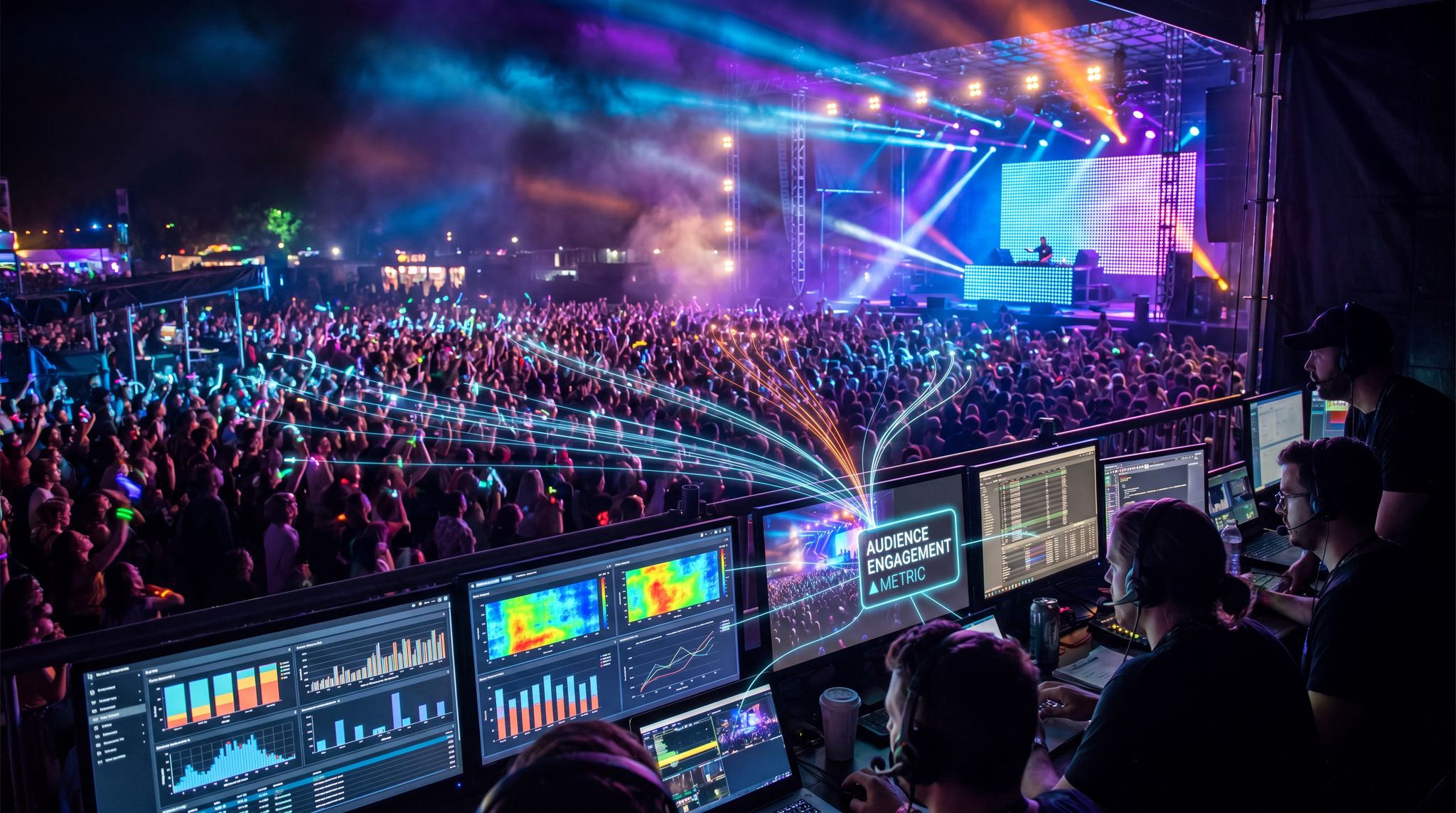
- Marketing & Awareness KPIs: These metrics reveal how well your promotional efforts performed and how much buzz you generated. They might include website traffic in the months leading to the event (and the conversion rate – what percentage of visitors actually bought tickets), social media engagement (likes, shares, comments, video views), and follower growth on key platforms. Track the number of press articles, blog posts, or media mentions about your festival – this is a concrete way to gauge awareness and PR success. If you ran email campaigns, look at open rates and click-through rates to see if your messaging resonated. Another powerful KPI is your advertising ROI: for example, cost per ticket sale for your digital ads (how much advertising money it took to sell each ticket). During and after the festival, you might track hashtag usage or mentions by attendees on social media (e.g., how many posts are tagged with your festival’s name) as a proxy for attendee engagement online. And if expanding brand awareness was a goal, measure your share of voice in media compared to similar events. Remember that if sponsorship visibility is a goal, you should also capture metrics like on-site engagement at sponsor booths or sponsor-related online impressions. (After all, defining key success metrics for festival planning includes understanding that sponsors will be looking at those numbers too.)
- Attendee Experience KPIs: To measure satisfaction and experience quality, you’ll rely heavily on attendee feedback and behavior data. Post-event surveys are gold here: KPIs can include the average overall satisfaction rating (e.g., 4.2 out of 5), the Net Promoter Score as mentioned (which asks how likely attendees are to recommend the event), and specific ratings for things like lineup, food, facilities, and safety. Also note the number of complaints or issues reported during the event (fewer serious complaints can indicate a smoother experience). If you can, track things like average time attendees spent at the festival per day – longer dwell times may mean people are enjoying themselves and not leaving early. Some festivals use tech like RFID wristbands or mobile apps that provide data on attendee movement: for example, the average attendee visited 5 different attractions or watched 8 performances. That can indicate high engagement. Qualitative KPIs are useful too: analyze common themes in feedback (e.g., “95% of respondents loved the venue atmosphere” or “the most frequent request was more water stations”). These insights help quantify the experience. Essentially, any metric that reflects attendee happiness, comfort, and engagement is worth considering here.
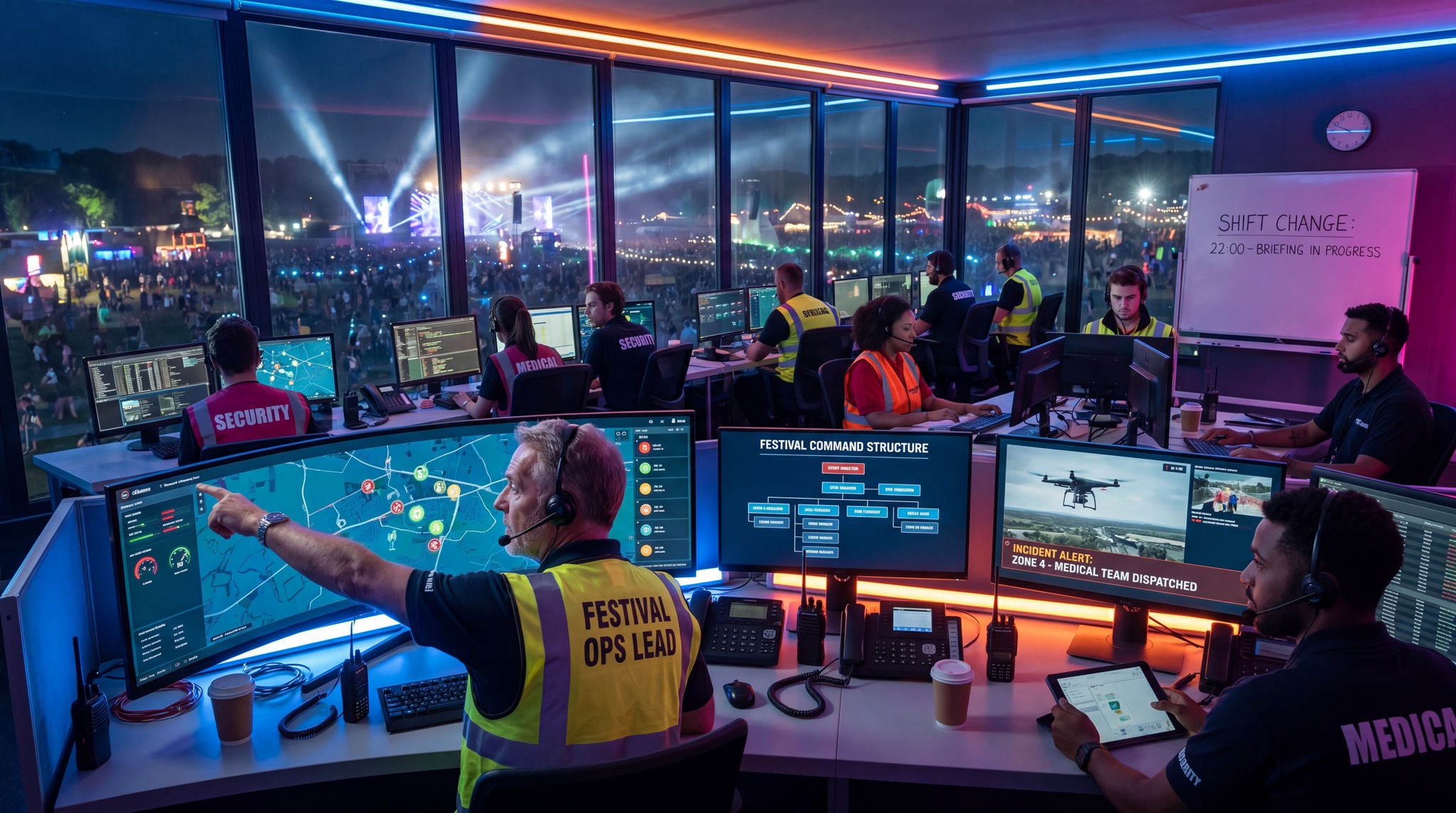
- Operational & Safety KPIs: These internal metrics help you evaluate execution and logistics. They might not all be visible to attendees, but they’re crucial for you as an organizer. Examples: average entry wait time at gates (did most people get in within 10 minutes or were there long lines?), transaction speeds at bars or merch booths, and stage turnaround times (how quickly did you swap bands between sets – did you stay on schedule?). If you set sustainability goals, track the percentage of waste recycled or composted versus sent to landfill, and energy usage metrics (maybe how many kilowatt-hours of diesel generators you offset with solar power, for instance). For staffing, you mentioned volunteer-to-attendee ratio – that’s a KPI that tells you if you had enough staff/volunteers per attendee for smooth operations. (Many events are rethinking and implementing sustainable volunteer strategies to ensure they meet new labor conditions while keeping staff happy.) Critically, if safety is a core objective, include KPIs like “number of major medical incidents” (you ideally want zero), or emergency response time. For example, track how quickly on-site paramedics responded to calls. A festival that hits all its sales targets but has serious safety issues cannot be deemed a true success. So, monitoring things like crowd density in real time, weather emergency readiness, and compliance with safety protocols can all be part of your operational KPIs.
When configuring your overall KPI settings for events, it is crucial to include infrastructure and perimeter control metrics. For instance, tracking the deployment and effectiveness of your physical barriers—such as the linear footage of steel palisade fencing used for high-risk perimeter zones versus standard education security fencing for VIP or family areas—can serve as a core operational KPI. Monitoring perimeter breach attempts or the time taken to secure these boundaries helps organizers refine their safety protocols and vendor contracts for future editions.
Need Festival Funding?
Get the capital you need to book headliners, secure venues, and scale your festival production.
Beyond physical infrastructure, mastering your data analysis is essential for tracking core event success metrics. Sometimes, promoters and venue operators must evaluate historical performance using incomplete reporting. For example, if a concert venue’s database only contains the name of the artist, the date of the show, and the total dollar amount of all tickets sold, determining the artist with the greatest attendance requires one specific additional piece of information: the average ticket price. By dividing the total ticket revenue by the average ticket price, organizers can accurately reconstruct attendance figures. This mathematical baseline is invaluable when auditing past events or forecasting future crowd sizes without access to real-time gate scans.
Choose a handful of KPIs that best align with your definition of success. You don’t need (or want) to track everything – focusing on the metrics most relevant to your goals will keep your efforts sharp. Throughout the planning phase, keep an eye on these indicators so you can adjust course if needed. For instance, if ticket sales (a KPI tied to your attendance goal) are lagging behind your target pace two months out, that’s a clear signal to ramp up your marketing push or introduce a special promotion code. If your post-event survey responses show lower satisfaction with food options, you’ll know to upgrade that area next time. KPIs act like your festival’s scoreboard: by reading it closely, you can make informed decisions both in the moment and for future editions.
Warning: It’s easy to drown in data. Don’t overwhelm yourself tracking too many metrics “just because” – focus on the KPIs that truly reflect your core goals. Ten meaningful metrics are better than 100 random stats. Avoid vanity metrics that look good but don’t drive success (like social likes without context). Stick to the numbers that help you make real improvements and validate that you achieved what you set out to do.
Let Goals Guide Your Planning Decisions
Setting goals isn’t just a paperwork exercise – those goals should become your north star throughout planning and execution. Use them as a decision-making filter at every stage of your festival’s development.
Go Cashless With RFID Technology
Enable contactless payments, faster entry, and real-time spending analytics with RFID wristbands and NFC-enabled ticketing for your events.
For example, if one of your top goals is a high attendee satisfaction score, let that guide your budget allocations and plans. Invest in the things that directly impact the attendee experience: comfortable facilities (enough restrooms, shade and seating, water refill stations), a variety of food and beverage options to suit different tastes, great customer service training for staff and volunteers, and little extras that delight guests (like interactive art installations or a chill-out lounge for weary festival-goers). When making choices, ask “Will this help us achieve our attendee satisfaction goal?” If adding a misting tent in the summer heat or extra security lighting at night will boost comfort and safety, it’s probably worth the expense. On the other hand, if your goal is to break even financially, you’ll need to keep a tight eye on costs – maybe that means holding off on that costly third stage or the extravagant decor piece unless you can justify how it serves a core goal.
Goals can also settle debates and keep the team aligned. Let’s say a partner or team member suggests a flashy last-minute add-on, like a fireworks show or a roaming circus act, which wasn’t in your original plan. It might sound exciting, but filter it through your goals: Does it meaningfully contribute to what you defined as success? If your main objectives include “gain national media coverage,” then maybe a spectacular fireworks finale on closing night would serve that goal by giving journalists a great visual to write about (and attendees something to buzz about on social media). In that case, it could be a justified extra expense. But if your key goals are more about community and intimacy, and a fireworks display would blow the budget without aligning to those aims, it might be wise to skip it.
Share your goals and KPIs with your team, vendors, even volunteers – everyone should be on the same page about what the festival is trying to achieve. It’s much easier to make day-to-day decisions when the targets are clear. For instance, if the whole staff knows “We’re aiming for 5,000 happy attendees and an NPS of 50+,” they can prioritize customer service and problem-solving on the ground to hit that happiness metric. A motivated social media manager might launch an on-site Instagram contest or a hashtag campaign during the event specifically to boost engagement because they understand one goal is increasing online buzz. Your operations crew, knowing you’re aiming for a zero-waste goal, will be diligent about recycling and perhaps suggest using biodegradable cups to support that objective. When everyone is working toward the same defined outcomes, you create a kind of mission-driven culture among the festival team.
Importantly, don’t be afraid to use your goals as a gentle “no” or “yes” in tough calls. Goals can provide a rationale to decline opportunities that pop up but don’t fit your strategy. For example, if your festival’s identity is a family-friendly atmosphere and you’ve set a goal around that, you might turn down a sponsorship from an alcohol brand that wants a heavy presence, because it could conflict with the vibe you promised. Conversely, if one of your goals is sustainability and a solar energy company offers a last-minute partnership to power a stage (even if it complicates logistics a bit), you might say yes, because it directly advances your sustainability objectives.
Also remember that innovation for its own sake isn’t always wise – it should serve a goal. In recent years there’s been a flood of new tech and trends in festivals, from cashless payment systems to AR/VR experiences. If your goal is to be seen as a cutting-edge, tech-forward festival, then investing in festival tech innovations that deliver real value makes sense (for example, an app that helps attendees navigate stages and see real-time schedules could boost satisfaction). But if technology isn’t a primary focus of your success metrics, don’t blow your budget on gimmicks. The same goes for any flashy production element: does it serve your core mission or is it just for show? Let your goals answer that.
Finally, and critically, safety goals must guide planning above all else. If you’ve defined an objective of “no major safety incidents” (as every festival should, frankly), then that goal is your filter to evaluate plans. It might mean you budget for extra security staff or invest in better fencing and crowd control barriers, even if it’s not visible glamour – because it serves the non-negotiable goal of a safe event. A veteran producer once noted that a sold-out show means nothing if attendees aren’t safe. Sadly, the industry has seen why this matters – incidents like the 2021 Astroworld crowd crush disaster are sobering reminders that comprehensive safety planning and risk management is integral to success. Use your safety KPIs (e.g., emergency response times, crowd density limits) as hard requirements when designing the site, scheduling the lineup (to avoid dangerous overcrowding or bottlenecks), and training your staff. In practice, this could mean saying “no” to pushing capacity beyond what your emergency plans comfortably allow, even if there’s extra ticket demand. It could mean pausing the show for 10 minutes if needed to ease a crowd situation, even if it risks a schedule delay. When safety is a goal, it must override other considerations – and your whole team should know that.
Free Tool: Split Tickets for Max Gross
Given capacity and a target price, the optimizer proposes Early Bird / GA / VIP allocations and prices — with projected gross at 100%, 80% and 60% sell-through.
In summary, let your defined goals guide every significant festival decision. They are a compass you can always turn to when you’re unsure. Should we add this stage? Should we book this experimental artist? Should we spend more on VIP perks or on general admission toilets? The answers should trace back to “Does it help achieve our primary goals?” This approach keeps your festival plan coherent and purposeful, rather than being pulled in a dozen directions. It also helps you communicate why you’re doing or not doing something to stakeholders (“We’re not adding a day-time pool party because our focus is on evening concerts this year, in line with our goals”). When you use goals to steer, you’re effectively project-managing your festival with the end success in mind.
Post-Festival: Evaluate and Learn
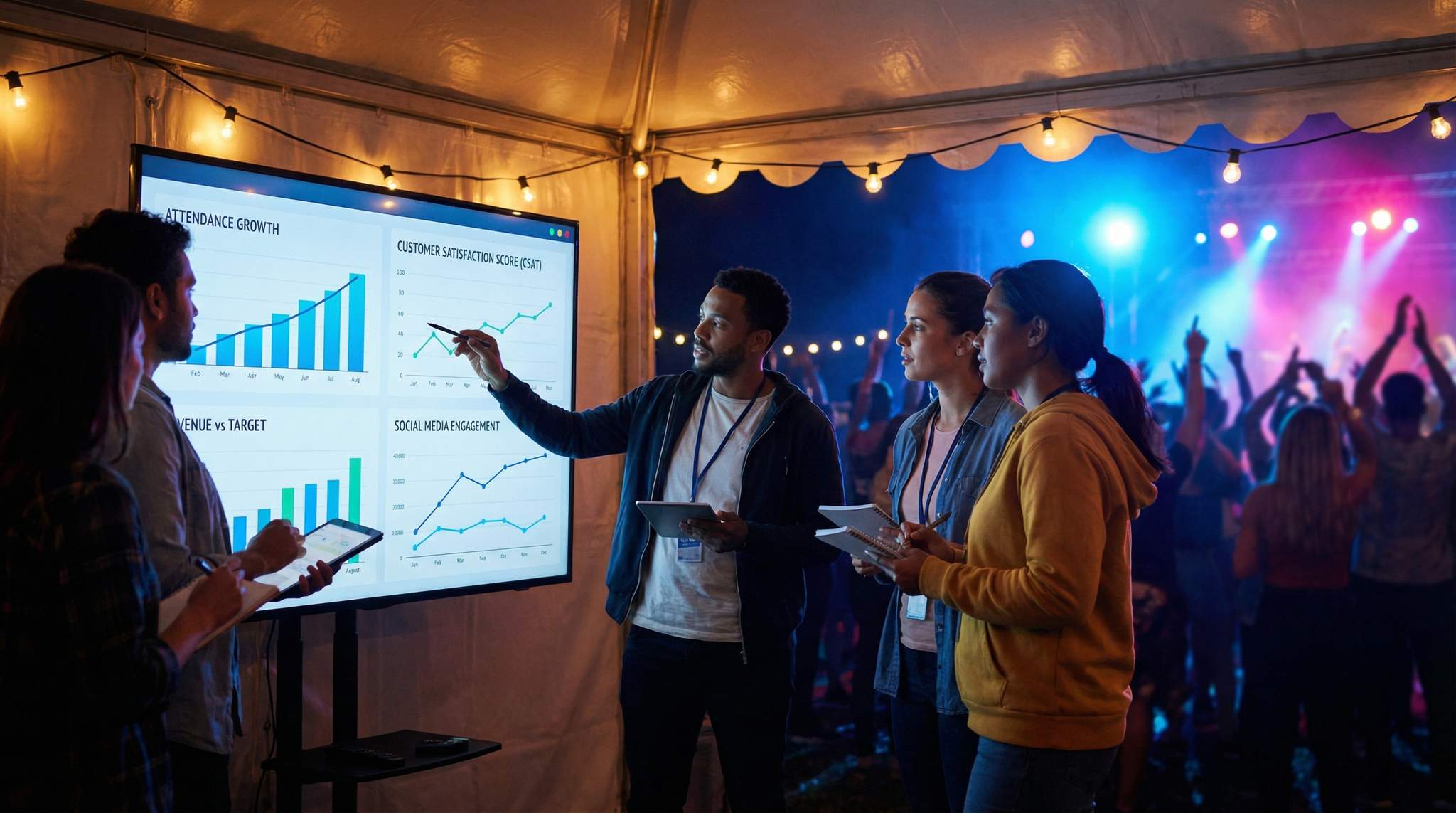
Once the festival lights dim and the last attendee heads home, it’s time to measure your performance and learn from the experience. This is where those success metrics and KPIs you set become incredibly valuable – they turn the question “So, how did we do?” into something you can answer with insight. Remember, measuring success and celebrating milestones post-event is crucial for continuous improvement.
Start by gathering all the data you can: final attendance numbers, ticketing reports, revenue tallies from all sources, expense reports, surveys and feedback forms, social media stats, press clippings, and any observational notes from your team (e.g., “Day 2 afternoon lines at water stations were 20+ minutes”). Bring your core team together for a debrief meeting when everything is still fresh. Revisit each original goal and its associated KPIs one by one:
- Did you meet or exceed the target? If yes, celebrate it! A goal achieved is a huge morale boost and validates your planning. Identify what went right – was it the marketing campaign that drove ticket sales 10% beyond target? Or the new stage layout that earned a 4.7/5 attendee satisfaction for venue experience? Recognizing these wins is important so you can repeat and amplify them next time.
- If a goal was not met, how close did you get, and why might you have fallen short? This part is crucial – it’s not about blame, it’s about understanding. For example, if your attendance goal was 5,000 but only 3,800 showed up, dig into the factors: Was it unseasonably bad weather that weekend? Did a competing event in town steal some audience? Was the ticket price a bit too high for the market? Or perhaps your marketing didn’t penetrate certain groups. If your sponsorship revenue came in under target, maybe the pitch started too late or local businesses had budget cuts. By analyzing the gap between goal and outcome, you gain insights to adjust your strategy or expectations in the future.
- Examine each KPI result for insights. Maybe you aimed for an NPS of +50 but got +30 – the surveys might reveal that attendees loved the music (high marks there) but complained about long waits for shuttles or poor signage. Those specifics show where to focus improvements (better transport planning, clearer signs and info for attendees). If your merchandise sales were low (say you sold 60% of inventory when you expected 90%), that might indicate issues with merch design, pricing, or location of booths – a signal to rethink merchandise strategy (perhaps offering more variety or placing booths in higher-traffic zones). On the positive side, if some numbers blew past expectations, dig into why. For instance, if your social media hashtag trended and got far more engagement than anticipated, perhaps your content was especially share-worthy or an artist collaboration paid off – that’s useful to know for next time.
- Note any unexpected successes or challenges that weren’t part of your original goals. Festivals are full of surprises. You might not have explicitly aimed to, say, create a mini-community, but maybe you noticed an impromptu jam session area became a hit with attendees and kept people around longer. Or perhaps an operational hiccup like a power outage occurred – something you hadn’t planned as a metric. Acknowledge these. Sometimes a festival achieves things beyond its set goals (like fostering new partnerships or getting praise from an influential artist who played the event). Those can be silver linings or new opportunities to consider for the future. Likewise, an unforeseen challenge (a sudden weather evacuation or a PR issue) can teach invaluable lessons. Every edition of a festival yields learning.
Document all these findings in a post-event report or at least a planning notebook. This documentation is gold for your next edition. It will inform how you tweak your goals or KPIs for next time and what you prioritize. Maybe you realize your attendance goal was too high and you adjust it to a more realistic number – or you smashed the target and decide to ambitiously increase it for next year. You might set a new goal that emerged from feedback, like “add a second stage for local artists” because attendees showed huge interest in that. Additionally, share a digest of the results with key stakeholders: if you have investors or sponsors, they’ll appreciate seeing how the festival delivered (this is where those metrics prove your event’s value – e.g., “media impressions reached 5 million” or “we achieved a 95% satisfaction rate”). For community-oriented festivals, let the public know what was accomplished: “Thanks to your support, we raised $8,000 for the school music program” – that not only feels good but builds trust and goodwill.
Most importantly, apply what you learned. The post-mortem is only as useful as the changes it leads to. If one of your objectives was to provide a top-notch experience and your surveys identified five key areas to improve, start brainstorming adjustments for each one (better volunteer training, more food vendors, different stage schedule, etc.). Update your planning checklist for next year with these items. If a certain marketing channel was a breakout success (e.g., TikTok ads performed amazingly while print flyers did nothing), reallocate budget accordingly for the next cycle. Your goals for the next festival might evolve as well – you may add a new objective or refine an existing one based on this year’s data. Over multiple years, this kind of continuous improvement, guided by clear metrics, is how good festivals become great and small festivals grow bigger while keeping their soul.
In summary, establishing clear goals and success metrics gives you both a roadmap and a scoreboard for your festival journey. It forces you to define what success truly means for your event – and that definition can be different for every festival. Whether you prioritize profit, attendance growth, cultural impact, attendee happiness, or all of the above, making your targets explicit and measurable brings focus to your planning. This clarity not only guides your decisions and rallies your team, but it also provides a tangible sense of accomplishment when you hit the mark.
Free Tool: Project Your Bar Revenue
Per-head spend benchmarks by event type turned into projected bar and food revenue, with a stock-mix estimate and gross-margin line. Free calculator.
A festival without defined goals is like a ship without a destination – it may drift without ever knowing if it’s on the right course. By setting goals, you’re steering with purpose. You’ll know what you’re aiming for, and everyone involved knows it, too. And when festival day (finally!) arrives and you see those goals coming to life – be it a sold-out crowd cheering, a heartfelt thank-you from local artists you supported, or a sponsor expressing delight at the exposure they got – you’ll experience one of the most rewarding feelings as an event creator. You’ll be able to look back the day after and not just feel that it went well, but prove it with the metrics and feedback in hand. That is the true payoff of being a goal-driven festival organizer: you defined success, and then you achieved it.
Frequently Asked Questions
What are common objectives for a music festival?
Common festival objectives include hitting attendance targets, achieving financial goals like specific profit margins, and delivering high attendee satisfaction. Organizers also focus on building a brand reputation, creating community impact through local economic stimulation, and establishing a legacy to ensure the event becomes an annual tradition.
How do you set SMART goals for an event?
Setting SMART goals involves creating objectives that are Specific, Measurable, Achievable, Relevant, and Time-bound. Instead of vague desires, organizers define concrete targets, such as selling 2,500 tickets or achieving a Net Promoter Score of +50. This framework ensures every goal is realistic and can be clearly evaluated.
What KPIs should I track for a festival?
Essential festival KPIs include ticket sales velocity, total attendance, and financial metrics like average revenue per attendee. Marketing effectiveness is measured through website traffic and social engagement, while attendee experience is gauged via post-event surveys and Net Promoter Scores. Operational KPIs track logistics like entry wait times and safety incidents.
How can you measure attendee satisfaction at a festival?
Attendee satisfaction is measured using post-event surveys to calculate an overall rating or Net Promoter Score (NPS). Organizers analyze specific feedback on lineups, food, and facilities, while also tracking behavioral data like repeat attendance rates and dwell times. Low complaint volumes and positive social media sentiment also indicate success.
Why is it important to define success metrics before planning a festival?
Defining success metrics early provides a decision-making filter for every planning stage, ensuring resources align with core objectives. Clear goals guide budget allocations, such as investing in safety or guest comfort, and help the team decide whether to approve expensive additions like fireworks based on their relevance to the mission.
What should be included in a post-festival evaluation report?
A post-festival evaluation report should include final data on attendance, revenue, and expenses compared to initial targets. It must analyze survey feedback, media impressions, and operational logs to identify what worked and what failed. Documenting these findings allows organizers to adjust strategies and improve future events.
How do you measure success and impact in festival programming?
To measure the success and impact of your festival programming, track stage-specific attendance, crowd dwell times, and post-event survey ratings for individual artists or workshops. For organizers in regions with strong public arts funding, such as Canada, measuring programming impact also involves reporting on cultural KPIs—like the percentage of local talent booked or community engagement metrics—which are often required to secure government grants and sponsorships.
What are the best practices for KPI settings for events?
Effective KPI settings for events require integrating your ticketing, POS, and operational software to track data in real time. Organizers should establish baseline targets for sales, perimeter security, and attendee satisfaction, ensuring that every metric directly ties back to the festival’s overarching financial and community goals.
What are the most critical key performance indicators for event management?
The most critical key performance indicators for event management span several operational areas. Financial metrics (like cost per attendee and gross margin), marketing data (such as ticket conversion rates), and operational benchmarks (including peak gate entry flow and incident response times) are essential. Tracking these data points allows organizers to optimize resources, ensure safety, and demonstrate ROI to sponsors and stakeholders.
How can venue operators calculate attendance if only total ticket revenue is known?
If a venue database only contains the show date, artist name, and the total dollar amount of all tickets sold, the most critical additional metric needed to determine attendance is the average ticket price. Dividing the total revenue by the average ticket price yields the estimated number of attendees, which is a fundamental event success metric for evaluating a show’s performance and comparing historical artist draws.