Understanding the Spiritual Mission and Audience
Defining the Festival’s Spiritual Vision
Every successful faith-based music festival starts with a clear spiritual mission that guides every decision. Organizers need to articulate why the event exists – for example, to celebrate gospel music and praise, to foster interfaith understanding or to provide youth with a positive worship experience. This guiding vision will inform programming, marketing, and even logistics. It’s important to document this vision in writing and share it with your team and partners. When everyone involved understands the core purpose (be it evangelism, community fellowship, or cultural celebration), decisions from talent booking to vendor selection can be aligned with that purpose. Seasoned festival producers of cause-driven events emphasize that balancing passion with pragmatic planning is key – the mission should shine through, but not at the expense of operational fundamentals, a principle often seen when producing cause-driven events like Pride festivals.
Identifying Audience Needs and Values
Faith-oriented festivals often attract diverse yet values-aligned crowds: families with children, youth groups, elders from congregations, and curious community members. Knowing your specific audience is critical. Are you catering to a single faith tradition (like a Christian worship festival or a Sikh kirtan gathering), or a broad multi-faith audience? Conduct surveys or consult community leaders to understand attendee expectations. For instance, a Christian music festival might find that a majority of ticket buyers are church-going families and youth groups, meaning they’ll expect wholesome entertainment, prayer opportunities, and kid-friendly activities. On the other hand, a multi-faith cultural festival may attract people from various religious backgrounds – requiring a careful balance so no one feels alienated. Use your ticketing platform’s data (e.g., Ticket Fairy’s registration tools with custom questions) to gather insights in advance – for example, asking if attendees will want access to inclusive prayer and meditation spaces. Understanding whether your crowd skews younger or older, local or international, very devout or more casual, will help tailor everything from the schedule to amenities. Ultimately, designing the festival around your audience’s values and needs ensures the event resonates on a deeper level.
Balancing Core Mission with Event Practicalities
While the spiritual mission is the heart of a faith-based festival, it must harmonize with the practical logistics of event production. This means making sometimes tough choices to honor religious values without compromising safety, quality, or financial viability. For example, an event’s mission might encourage a “come as you are” ethos of radical hospitality – but you still need clearly defined rules and plans to manage crowds and ensure everyone’s well-being. Some faith-driven organizers initially shy away from the business side (budgeting, contracts, insurance) believing “faith will guide us”, but experienced producers know that faith and planning go hand-in-hand. In practice, this balance could involve scaling the festival vision to the resources available: if ticket sales or donations come in lower than hoped, you might adopt a Plan B where you use a smaller stage or fewer production elements rather than cancel the event, similar to how Creation Fest overcame financial deficits. Veteran festival producers stress the importance of backup plans and financial discipline in mission-oriented events – as one puts it, “Trust God but tie up your camels”. In other words, have faith, but also do your due diligence. Keeping one eye on the mission and the other on cash flow, safety protocols, and attendee experience will help the festival achieve its higher purpose and run smoothly.
Venue and Atmosphere: Creating a Sacred Festival Space
Choosing the Right Venue: Grounds with Meaning
The venue sets the tone for a faith-based music festival. Many organizers choose sites imbued with spiritual or community significance – from church grounds and retreat centers to public parks that can be transformed into welcoming sacred spaces. When evaluating venues, consider not just capacity and logistics, but how the environment supports your mission. For instance, a gospel music gathering might thrive in an open field next to a church, creating a revival-like atmosphere under the sky. A multi-faith cultural event may opt for a neutral venue like a civic plaza or university campus that feels inclusive to all traditions. Ensure the locale has the necessary infrastructure (power, water, sanitation) or that you can bring those in with generators and portable facilities. If your event involves camping (as some Christian festivals do), look for venues that can support overnight stays and remember to separate areas for quiet family camping and any late-night activities. Meaningful touches can make a big difference: some festivals place symbolic decor around the site (like scripture banners, peace flags, or artwork from local congregations) to infuse the space with the event’s spirit. Ultimately, the goal is a venue that is safe, accessible, and logistically sound and one where attendees feel a sense of reverence and belonging as soon as they arrive.
Free Tool: Size Your Festival Site
Zoned capacity planning for arena, campsite, parking and entry lanes — against UK Purple Guide and NFPA density standards. Finds your bottleneck zone.
From a venue operator’s perspective, hosting live programming at established places of worship or historical pilgrimage destinations offers a unique synergy. When thoughtfully produced, religious festivals enhance the spiritual site experience by activating quiet grounds with vibrant, communal energy. For instance, a historic cathedral or a serene retreat center might typically attract solitary visitors or older congregants. By introducing a well-curated music festival, venue managers can draw multi-generational crowds, introducing younger demographics to the location’s heritage. This dynamic programming transforms a static visit into an immersive, shared journey. Furthermore, the revenue generated from site fees, ticketing, and on-site donations during these larger gatherings often funds crucial preservation and maintenance efforts for the sacred grounds, ensuring the site remains viable for future generations.
Alcohol-Free and Family-Centric Policies
Many faith-oriented festivals maintain alcohol-free and substance-free grounds as part of their values. This creates a different atmosphere than a typical music festival – often calmer, more family-friendly, and focused on fellowship. If your event has a no-alcohol policy, communicate it clearly in advance through your website, tickets, and on-site signage so attendees know what to expect. Plan alternative revenue streams since you won’t have bar sales; for example, you might emphasize food vendors, merchandise, or even accept donations or love-offerings to cover costs. Family-centric policies go hand-in-hand with this approach. Consider designating the event as smoke-free or having clearly marked smoking areas away from the crowds (and perhaps offer support for those who need breaks). Enforce a strict no-illicit-drugs rule with security checks on entry – not only for legal compliance but to uphold a wholesome atmosphere. Many religious festivals also implement guidelines on appropriate behavior and attire; while you likely won’t enforce a formal dress code, encouraging “modest and respectful dress” in the program or FAQ can set expectations, especially if certain attire might offend conservative attendees. From a logistics standpoint, having an alcohol-free site can simplify some safety issues (fewer intoxicated incidents) but don’t get complacent – security teams should still be present and trained to handle any situation calmly and respectfully. It’s wise to brief security and volunteers on the festival’s values so they can enforce rules in a friendly, understanding manner. The end result of these policies is a space where parents feel comfortable bringing kids and where attendees of all ages can enjoy the music and message without concern.
Planning a Festival?
Ticket Fairy's festival ticketing platform handles multi-day passes, RFID wristbands, and complex festival operations.
Designing Spaces for Worship and Reflection
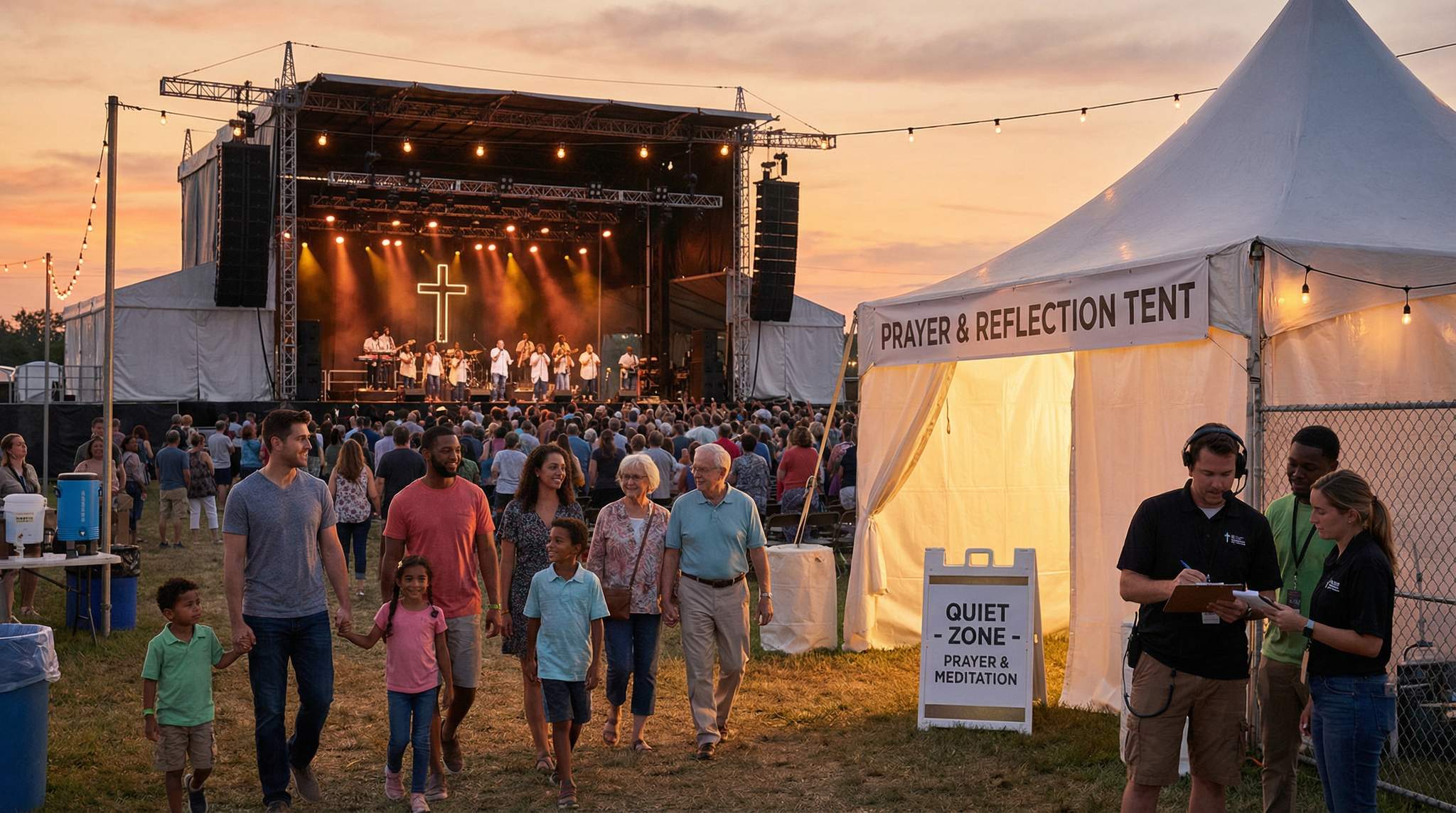
A defining feature of faith-based festivals is the integration of worship or meditation opportunities alongside performances. In practical terms, this means carving out physical spaces and times for spiritual activities. Many festivals set up dedicated prayer tents, chapels, or quiet zones on-site. When planning your site layout, choose a location slightly removed from the noisier stages for these sacred spaces – somewhere peaceful but still accessible. Equip the area appropriately: for example, provide prayer rugs and an ablution station if you expect Muslim prayers, or seating and altar decor if a priest/pastor will lead services. Make it ecumenical if you have a mixed crowd – a simple tent labeled “Prayer & Meditation Space” with neutral decor can welcome everyone. Lighting should be gentle, and you might post a schedule of any organized worship sessions (like group prayers or meditation circles) at the entrance. Learn from mainstream events that have embraced spiritual needs: even secular mega-festivals like Glastonbury in the UK have partnered with local churches to host a “Sanctuary Tent” offering prayer and pastoral care to attendees. In a faith-oriented festival, such spaces are not an afterthought but a central part of the experience. Plan for some privacy (room for individual reflection or one-on-one prayer with counselors) as well as open areas for group worship. Additionally, consider the acoustics – keep these zones far from loudspeakers, or use sound-dampening materials, so a quiet prayer isn’t drowned out by the main stage. Done right, these worship and reflection areas become an oasis where festival-goers can reconnect with the spiritual reason they came.
Inclusive Facilities and Amenities for All Ages
Since faith-based events often draw entire families and community members of all generations, your venue needs to accommodate a wider range of needs than the average festival. Accessibility is paramount: ensure there are pathways and viewing areas for attendees with disabilities, plenty of seating options (many older attendees will appreciate chairs or at least hay bales/benches to rest), and accessible toilets. If your venue is a large field or campground, think about providing shuttles or golf carts to help seniors or disabled guests move between areas. For families with young children, create a safe parenting space or family area – perhaps a tent for baby changing and nursing, with some shade and maybe even a play area. You can also offer child-friendly programming (like a kids’ music stage or arts and crafts workshop led by a church youth group) to keep young ones engaged. More festivals are realizing the importance of catering to religious dietary and worship needs to drive loyalty, and for faith festivals this comfort extends across generations. Also consider religious-specific amenities: dietary needs are a big one (provide or allow food that meets Halal, Kosher, or vegetarian requirements as appropriate) – indeed, making sure food vendors cater to common religious diets will make many guests feel welcome by ensuring inclusivity in food and facilities. You might also provide free water stations as an act of hospitality, especially if summer heat is an issue or if people are fasting (e.g. during Ramadan fast days, having water available for sunset). Think through the daily routines of your attendees – from morning till night – and ensure the site has everything they need to feel safe, cared for, and included. Simple touches like ample lighting on paths (for evening prayer walks or after-concert strolls) and clearly marked information booths staffed with friendly volunteers can greatly enhance the family-friendly, community atmosphere you want to create.
Mindful Food and Beverage Choices
“Food and fellowship” often go together in religious gatherings, so plan your festival’s food and beverage offerings with cultural and spiritual sensitivity. If your event is tied to a particular faith, you may choose to avoid certain foods entirely (for example, a Muslim-oriented music festival would not serve pork or alcohol; a Hindu cultural festival might forgo beef). Communicate with vendors well in advance about these requirements – provide them written guidelines on what is or isn’t allowed on the menu. In many cases, you’ll want to hand-pick food vendors who align with your ethos: think church groups running food stalls as fundraisers, halal or kosher-certified food trucks, vegetarian/vegan vendors for Jain or Buddhist contexts, etc. Make sure each vendor has the proper health permits and understands the volume of guests to prepare for. Scheduling also plays a role: be mindful of timing meals around prayer or worship segments. For instance, if you have a sunset worship or prayer session, ensure food stalls either pause operations or do so quietly, and perhaps resume after the worship time (or if it’s Ramadan, explicitly plan a food service break at sunset for iftar). Another consideration is how food is consumed on site – providing some picnic tables or communal eating areas can encourage the fellowship aspect, where families or youth groups sit and eat together. This builds community and gives a small break from the busy festival pace. If your festival is largely volunteer-run, don’t forget to feed your volunteers as well – arranging donated meals from local restaurants or community members for your crew can both cut costs and honor the spirit of service. Overall, by carefully curating food and drink policies, you ensure that no attendee is stuck hungry or conflicted by what’s available, and everyone can break bread (perhaps literally) in line with their faith.
Scheduling and Programming that Honor Faith
Incorporating Prayer and Worship into the Schedule
One of the biggest differences in a faith-based festival is that the daily schedule often includes designated times for prayer, worship, or spiritual reflection. It’s crucial to integrate these elements early in the scheduling process rather than treating them as add-ons. Many religious festivals kick off each day with an opening prayer, scripture reading, or brief worship session on the main stage to set the tone. If your festival spans multiple days, you might also hold a longer service on one morning (for example, a Sunday morning ecumenical worship at a Christian festival, or a meditative yoga/prayer session at sunrise for a multi-faith event). During the day, plan short breaks where no major act is performing so attendees who wish can attend to personal prayers – for instance, pause the music for 15 minutes in the afternoon and evening to accommodate Muslim attendees’ prayer times or to simply offer a communal prayer moment. These breaks should be clearly noted in the program so people know when they can take time out. You can even broadcast a gentle reminder from the stage, like: “We’ll take the next 10 minutes as a quiet break for anyone who’d like to pray or reflect. Music will resume at 3:15.” In a multifaith context, consider rotating the worship elements – maybe a gospel choir performs a worship set at one interval, and later a Buddhist chanting or an interfaith prayer for peace is offered, giving representation to different traditions. Such programming needs to be handled respectfully; work with faith leaders or cultural advisors to schedule these moments appropriately and avoid any inadvertent offense (e.g., don’t schedule a loud concert encore that conflicts with the call to prayer at sunset in regions where that’s customary). By intentionally weaving spiritual practices into the timetable, you reinforce the event’s mission and give attendees space to nurture their faith amidst the festivities.
Free Tool: Project Your Bar Revenue
Per-head spend benchmarks by event type turned into projected bar and food revenue, with a stock-mix estimate and gross-margin line. Free calculator.
Avoiding Conflicts with Holy Days and Customs
Choosing your festival dates and crafting the program requires sensitivity to religious calendars. Always check for major holy days or fasting periods that could affect your community. For example, scheduling a Jewish music festival on Yom Kippur or during Passover would obviously deter your core audience from attending. Likewise, a Christian festival over Easter Sunday might conflict with church commitments (unless the festival itself incorporates Easter services). If an unavoidable date overlap occurs, adjust your programming accordingly. A great example is how some events adapt during Ramadan: if a festival happens to fall during this Islamic holy month, organizers might schedule main stage performances later in the evening after sunset, when fasting attendees can more comfortably participate, and even provide an iftar meal or space for scheduling around holy times and days. Be aware of weekly worship days too – many faith-based festivals avoid Sunday mornings (or alternatively, they include a Sunday morning service on-site so attendees don’t have to miss church). For multi-day events, take into account Sabbath observance: a festival over a Friday-Saturday in Israel, for instance, would need to respect the Jewish Sabbath by possibly having a slower program or special accommodations for observant Jews (like avoiding use of electricity on stage during that time, which might be too complex – hence scheduling around it is easier). Not every attendee will be deeply observant, but honoring these customs shows respect and avoids putting anyone in a position where they must choose between their faith practice and the festival fun. Additionally, consider time-of-day customs: some devout Christians may prefer not to stay up too late into Saturday night, families might leave early to get kids home, etc. You might set earlier end times than a typical festival – wrapping up by 9 or 10 PM – to align with a family-friendly ethos (and local noise ordinances, which often coincide nicely). The bottom line is to do your homework on religious observances and engage with advisors from the faith communities to pick optimal dates and times. This level of planning prevents unintentional scheduling blunders and demonstrates cultural competence to your audience.
Balancing Devotion and Entertainment
A faith-based music festival lives in two worlds: it’s part spiritual retreat, part high-energy entertainment event. Achieving the right mix of devotion and fun is an art that develops with experience. If the schedule is too heavily loaded with sermons or ceremonial elements, attendees (especially younger ones or those new to the faith) might disengage. Conversely, if it’s all concerts and carnival with only a perfunctory prayer thrown in, the event could feel shallow to the faithful. Strive for a program flow that naturally ebbs and flows between worshipful moments and lighthearted enjoyment. For instance, you might follow a rousing mid-day band performance with a brief testimony or inspirational message by a speaker, giving the crowd a moment to reflect. Later, after hours of music, scheduling a sunset prayer or candlelight vigil can create a moving collective experience that reminds everyone of the festival’s deeper purpose. Some Christian festivals include “altar call” or ministry moments in the evening when artists or pastors invite attendees to prayer or counseling; if you plan something like this, coordinate with your artists so they know how much time is allotted and have trained prayer team volunteers ready to interact with people who respond. In multi-faith or cultural festivals, you might instead have a designated time where each faith tradition shares a short devotional piece – ensuring equal spotlight and avoiding turning the event into a single-faith revival. Use content warnings or schedule notes to inform attendees about explicitly religious segments, so those who might not wish to join in can use that time for food or rest (this is similar to how folk festivals have managed interfaith and secular balance in programming). By choreographing the day’s programming arc thoughtfully, you keep people spiritually engaged and entertained. Think of it like a well-composed worship service blended with a concert setlist – pacing is everything. And always have a contingency for when spiritual segments run longer than planned (which can happen if the spirit moves people to continue); build a little flexibility into the timetable or have a stage manager gently wrap up if needed to stay on track.
Need Festival Funding?
Get the capital you need to book headliners, secure venues, and scale your festival production.
Programming for Multi-Faith Engagement
If your festival is explicitly multi-faith (or aims to be very inclusive of various religions), programming requires an extra layer of diplomacy and creativity. You’ll want to celebrate each tradition represented without veering into tokenism or, on the other extreme, watering everything down. One approach is to curate different stages or program tracks for different traditions: for example, a “Gospel Stage” for Christian artists, a “Sacred World Music Stage” for diverse faith music, etc., and then have certain times where everyone comes together on the main stage for collaborative performances or joint prayer for peace. Another approach is weaving elements sequentially: start the day with a blessing from an indigenous elder, midday have a Sufi dance performance, later a Jewish folk band, and so on, alternating throughout. In doing this, clarity and communication are key. Clearly describe events in the schedule so attendees know what to expect (e.g., note if a performance is devotional in nature or if a session is a panel discussion on faith topics). Providing context via the MC or in the festival program can educate the audience – for instance, explaining a bit about Sikh kirtan before those performers begin helps everyone appreciate it even if it’s not their tradition. Also, be prepared for some pushback; not everyone will love every element. Reinforce a message of respect: encourage attendees to see these moments as an opportunity to learn and celebrate humanity’s spiritual richness, rather than focusing on differences. It can be helpful to establish a theme or common thread for the festival (such as “Unity in Diversity” or “Many Voices, One Song of Praise”) that ties the programming together under an inclusive banner. And logistically, remember dietary and prayer accommodations will need to span multiple faiths – perhaps an interfaith prayer space as mentioned, and food vendors for various needs. Programming multi-faith content is definitely a challenge, but when done thoughtfully it can be extremely powerful. Real-world events like the Festival of Faiths in Kentucky or the Fez Festival of World Sacred Music in Morocco have shown that audiences are receptive to a well-curated mix of spiritual expressions, especially when each is presented with authenticity and respect. Aim to create those “goosebump moments” where a gospel choir, a rabbi, and a Buddhist monk might all share a stage in succession – leaving the crowd inspired by the sense that we’re all part of something bigger.
Faith-Aligned Talent and Performances
Booking Artists and Speakers Who Share Your Values
Booking talent for a religious or spiritually-focused festival means looking beyond just popularity and genre – you must consider the message and values each artist or speaker brings. Fortunately, in today’s music industry, faith-oriented artists span every musical style from rock and hip-hop to EDM, folk, and metal, where the line between Christian and mainstream audiences is starting to blur. The key is to choose those whose content aligns with the uplifting or devotional atmosphere you want. Start by tapping into the networks of faith-based talent: gospel and worship bands, faith-influenced singer-songwriters, religious dance troupes, spoken word artists with spiritual themes. If you’re running a Christian festival, for example, you might target both well-known Contemporary Christian Music (CCM) acts and local worship teams. For a multi-faith festival, build a roster that includes performers from different traditions (a Sufi music ensemble, a Christian choir, a Hindu devotional dance group, etc.) to reflect diversity. When approaching artists, be upfront about the festival’s mission and audience. Most faith-based artists will be excited to be part of a spiritually-focused event, but if you’re also including some secular artists for broader appeal, have polite conversations to ensure they’re comfortable with the context. Assess lyrics and reputation: do your due diligence by reviewing song content or past performances. An artist doesn’t necessarily need to sing overt hymns to fit (some may simply have positive, family-friendly songs that resonate with values), but you’ll want to avoid acts known for profanity-laden or explicitly anti-religious content. It’s not unheard of to include a mainstream artist with a positive message to headline and draw crowds – just ensure they respect the guidelines (many artists are adaptable and will tone down on request for a special event). In addition to musicians, consider booking a few inspirational speakers or faith leaders as part of the lineup – short motivational talks, group prayers, or testimonies can break up the music and deepen the impact. These could be youth pastors, interfaith ministers, well-known religious authors, or even celebrity believers who can share a personal story. Their presence can draw in an audience segment that might not come just for music. Overall, by carefully curating artists and speakers who genuinely resonate with the festival’s spiritual mission, you’ll create an experience that feels authentic and uplifting for the crowd.
Beyond traditional bands and soloists, consider diversifying your lineup with multi-disciplinary acts that bring scripture and spirituality to life in unique ways. Booking a faith-driven ensemble promoting gospel through dramatic and musical expressions can provide a deeply moving, theatrical element that breaks up the standard concert format. These groups often combine powerful choral arrangements with spoken word, choreographed dance, or short theatrical vignettes, offering a highly engaging visual and auditory experience. This type of dynamic performance resonates strongly with multi-generational crowds, capturing the attention of younger attendees while delivering the profound theological depth appreciated by older congregants. Integrating such ensembles not only elevates the production value of your stage but also reinforces the festival’s core message through compelling, immersive storytelling.
Setting Content Guidelines for Performances
Once your lineup is set, it’s important to communicate any content guidelines or expectations to performers well in advance. Even faith-based artists are used to the standard festival scene, so if your event has special protocols (like opening every set with a short prayer, or adhering to modest dress on stage), let them know during the booking process and reiterate in the artist advance packet. Common guidelines include no profanity or crude language on mic, avoiding overly sexualized stage attire or choreography, and being mindful of the diverse audience (e.g., if it’s an interfaith crowd, an artist’s excessive denominational preaching might be toned down to keep things welcoming for all). Draft an artist conduct rider that goes with the contract, detailing these points. For example, “Artist agrees to perform content appropriate for a general audience and reflective of a family-friendly, faith-positive atmosphere.” This gives you recourse if someone goes off-script. Most performers will willingly comply, but it’s wise to have a gentle conversation in advance with any act that you suspect might push limits – clarify your expectations and the reasons behind them. Backstage, enforce the same standards: if your festival is dry/no substances, artists and their entourage should not be drinking alcohol on site either. This may require a tactful but firm approach from your hospitality team. Some veteran producers recommend designating an artist liaison who comes from a faith background themselves, as they can comfortably communicate boundaries and even pray with artists or support them spiritually if the artists desire. Inevitably, things don’t always go to plan – perhaps an excited speaker goes ten minutes over their time, or a band impulsively leads the crowd in an altar call that wasn’t scheduled, or conversely an invited artist swears on stage out of habit. Have a stage manager or MC ready to smooth things over. In serious cases, be prepared to cut power or intervene, though that’s rarely needed if your vetting was solid. It’s all about setting the tone that this festival is a different kind of gig – one where uplifting content is the norm. When artists understand the heart behind your rules, they’re likely to respect them. In fact, many appreciate playing an event where they don’t have to censor their faith – an opportunity that mainstream festivals don’t often provide. By aligning artist conduct with the festival’s values, you protect the attendee experience and uphold the integrity of your mission.
Collect Any Attendee Data at Checkout
Add custom registration fields to your checkout — dietary needs, t-shirt sizes, company names, and more. Conditional logic and per-ticket-type fields.
Integrating Local Faith Communities into the Lineup
A powerful way to deepen the authenticity of a faith-based festival is to involve local religious communities in the programming. Don’t think of your festival talent solely as professional touring acts; consider also the church choirs, youth worship bands, temple ensembles, or community theater groups that can bring a homegrown spirit to the stage. For example, you might have a segment for “Community Praise” where a combined church choir from the region sings a few well-known hymns or gospel songs, inviting the crowd to sing along. Many Christian festivals include slots for regional worship teams early in the day, both to give them exposure and to draw their congregations to attend (instant audience boost!). If your festival serves a specific cultural or ethnic faith community, definitely reach out to local cultural associations or religious schools – perhaps a children’s dance troupe from the Hindu temple can perform, or a band formed by young members of a mosque. These local performers often bring their families and friends, enhancing that family reunion vibe. To make this work, you’ll need to coordinate with the community well ahead of time. Speak at church group meetings, approach ministers or faith leaders about recruiting their best talent for the event. Be prepared that community groups might not have professional gear or experience, so provide support: invite them to sound check early, help them with backline instruments if needed, and ensure your stage crew is patient and encouraging during their set. It’s also worth arranging a “community stage” or tent specifically for these performances if your schedule is tight on the main stage. This can run concurrently as a showcase of local talent and faith expressions in a smaller setting. Not only does integrating local groups enrich the content, it also cements partnerships – those communities will feel a sense of ownership of the festival’s success. They’re more likely to help promote the event, volunteer, or even financially support it if they see their own members highlighted. Plus, attendees love seeing people “just like them” on stage; it reinforces that the festival is for the community, by the community, not just an outside production. As a bonus, tomorrow’s headliners might emerge from those local acts you nurtured on your stages today.
Professional Production Quality, Spiritually Attuned
One stereotype to dispel is that a religious or values-based event is somehow lower in production quality or professionalism. In fact, many of the largest faith-based festivals boast world-class stage production, sound, and lighting – the key is doing it in a way that complements the spiritual atmosphere. Invest in good production within your means: crisp sound systems so that both music and spoken word are clear (nothing kills a prayerful moment like a screechy mic or bad mix), quality lighting rigs to create inspiring visuals (for example, gentle washes of color during worship songs, dynamic lights for celebratory numbers, maybe even a stunning light cross or symbol moment). If you have LED screens, use them thoughtfully – displaying live lyrics can encourage the crowd to sing along in worship, or showing imagery that’s meaningful (like nature scenes during spiritual instrumentals, or amplifying a speaker’s message with visual scripture text). Just be cautious with content on screens; avoid anything too flashy or secular that might break the tone. For instance, pyrotechnics and wild strobe effects might be fun, but consider whether they enhance or distract from the worshipful vibe. In some cases, simpler might be better – many spiritual songs have moments where lights dim and the focus is on a single candle or a soft spotlight, which can be very moving. Coordinate with your artists about their technical needs and any special moments: a Christian rock band might want to end their set with a brief worship segment, so ensure lighting transitions to something appropriate and camera operators know to maybe capture the crowd with eyes closed or hands raised. Behind the scenes, treat the production team with the same courtesy and care as any church volunteer. Even if your audio tech or riggers are hired pros who aren’t part of the faith community, foster an environment where they feel the special nature of the event – welcome them, perhaps include them in pre-show prayers if they’re open to it, or simply ensure they get time off to rest since these festivals often run long days. By delivering a high production value and maintaining a reverent tone, you demonstrate that “doing it for God” doesn’t mean cutting corners. As many experienced producers will tell you, a well-produced event honors both the message and the audience: it shows respect for the artists’ craft and helps convey the spiritual message with clarity and power. In short, strive to match professional standards seen at any mainstream festival, while letting your unique faith-inspired creativity shine through production elements that elevate the soul.
Community and Volunteer Engagement
Partnering with Churches, Temples, and Faith Organizations
One of the greatest strengths of faith-based festivals is the built-in network of communities that can support and amplify the event. From day one of planning, engage local churches, mosques, synagogues, temples, and faith-based organizations in your area (or even nationally, if applicable). These partnerships can provide crucial resources: venues for smaller lead-up events or rehearsals, promotion to congregations, and even financial backing or in-kind support. For example, if you’re organizing a Christian music festival, ask area churches to become official partners – perhaps they sponsor a stage or host a food stall, and in return you provide group ticket discounts for their members and visibility for their ministry. Some festivals create a “Church Ambassador” program, where each partnering church has a liaison who helps recruit volunteers and spread the word within their congregation. Similar approaches work with other faith communities. If multiple religions are involved, reach out to an interfaith council or committee as a starting point so no group feels left out. Regular meetings or calls with these community partners can glean programming ideas (maybe the local gospel choir wants in, or the Buddhist center suggests a meditation area) and can preempt any concerns. Also, community leaders can help navigate sensitivities – they’ll tell you, for instance, if your planned festival date conflicts with a big pilgrimage or if certain terminology in your marketing might rub people wrong. Partnering with established faith institutions also bolsters your credibility and trustworthiness, which is key when asking people to attend an event, especially a new one. As you cultivate these relationships, be sure to acknowledge and thank your partners publicly – on your website, from the stage, and by offering them complimentary booths or hospitality. A shining case study is how Greenbelt Festival in the UK works closely with Christian charities and churches: they have long-term partnerships with organizations like Christian Aid that not only fund the festival but integrate its mission with broader social causes. This kind of deep partnership transforms a festival from a one-off event into a movement that communities feel proud of and invest in year after year.
Mobilizing Volunteers with a Shared Vision
Faith-based events often rely on armies of volunteers drawn from congregations and youth groups – people who are passionate about the mission and willing to donate their time. Mobilizing and managing these volunteers is both an opportunity and a challenge. On the plus side, your cause gives you an edge in recruitment: many folks are eager to serve something that aligns with their beliefs. You should tap into that by making calls for volunteers at local worship services, posting sign-up sheets at community centers, and leveraging social media (for example, church Facebook groups or WhatsApp networks) to spread the word. When recruiting, clearly outline roles and the commitment required: ushering, parking cars, prayer team, stage crew, cleanup, etc., along with shift lengths. However, even though volunteers are unpaid enthusiasts, treat the process as professionally as hiring staff. That means providing proper training and orientation. Before the festival, hold a volunteer training day – perhaps hosted at a church hall – where you not only go over job duties and safety procedures, but also inspire them with the festival’s mission. Connect the mundane tasks to the bigger picture (“Parking may not seem glamorous, but you’re the first welcome our guests receive, and that hospitality is a ministry in itself,” you might tell them). Make sure each volunteer leader or team captain understands labor laws and fairness: gone are the days when festivals could work volunteers to exhaustion with no oversight, as revamping festival volunteer programs becomes a necessity for modern events. Even if labor laws in your country allow nonprofit volunteers, ethically you should give people breaks, reasonable shifts, food, and thanks. A tired, stressed volunteer can sour an attendee’s experience just as much as a paid staffer can. Some veteran festival organizers even mix volunteers with paid crew in critical areas to ensure reliability. Also be mindful of the volunteer-to-employee line: if your festival is a for-profit venture (which few faith-based ones are, but some might be), know that for-profit companies generally cannot use unpaid volunteers for work that employees would otherwise do, a distinction clarified by Department of Labor guidelines. This can raise legal issues, so consult local regulations or guidelines. Assuming most are nonprofit/community-driven events, leverage the good will but don’t abuse it. Provide volunteers with some perks – free t-shirts, a private chill zone with refreshments, perhaps a discount on next year’s tickets or a special post-event outing just for them. The joy and camaraderie among volunteers can become a defining feature of your festival (many Christian festivals describe their volunteer crew as feeling like a “big family” or ministry team). And from a purely operational view, an engaged volunteer force can dramatically cut labor costs—a strategy often used when managing complex venue operations—while also enhancing guest services through their genuine care. But it only works if you organize and appreciate them properly. In short: recruit with clear vision, train with diligence, manage with compassion, and your volunteers will become the beating heart of your festival.
Respecting Leadership Roles and Hierarchies
When working with faith communities, be aware that there may be formal or informal hierarchies that you need to navigate diplomatically. Unlike a standard music festival where decisions lie mostly with the producer and operations team, a religious-oriented event might involve pastors, rabbis, imams, or elders whose influence in the community is significant. You might also have a board of directors or committee from a sponsoring ministry providing oversight. It’s important to show respect to these figures and involve them appropriately without compromising the chain of command for event operations. For example, if the local Bishop or senior Pastor is supporting your festival, you’ll likely want to invite them to give an opening blessing or have a small speaking role – that both honors their position and gains their buy-in. However, tactfully ensure that they don’t unintentionally derail plans (we all may know a well-meaning church leader who decides at the last minute to change the schedule or add a lengthy speech). The solution is communication: keep leadership informed with regular updates and let them know when critical decisions or cut-off times are approaching (“Reverend, we have to finalize the stage schedule by July 1st, so if you’d like to include a prayer segment please let us know by then”). Many festivals form an advisory council of faith leaders to guide on matters of doctrine and community sentiment, while the festival producer retains say on logistical execution. This separation of duties can prevent clashes. On the day of the event, assign a knowledgeable liaison to any VIP faith leaders present, ensuring they are comfortable and in the right place at the right time. Show deference to religious protocols too: if clergy are on stage, your crew should dress modestly and act respectfully around the stage during those moments (for instance, one wouldn’t have stagehands loudly chatting during a prayer). Similarly, if you’re holding the festival on temple or church property, understand the site’s spiritual significance – maybe there are areas where certain footwear should be removed, or sanctuaries that shouldn’t be used for secular purposes. Brief your team on these nuances. By leading with humility and collaborating with the existing faith leadership structures, you’ll foster a cooperative atmosphere. Community leaders will feel valued and thus more likely to lend their full support, whether that’s promoting the event or handling any critics who arise. Remember, these leaders often hold the trust of your target audience – when they’re on board, their followers will come along.
Giving Back to the Community and Leaving a Legacy
A faith-based festival isn’t just a one-time party – it’s an expression of values, and one of those values is often service or charity. To truly win the hearts of the community, consider how your event can give back and leave a positive legacy. This could take many forms. For some festivals, it’s a built-in charitable component: donating a portion of ticket revenue or on-site collections to a cause aligned with the faith mission (e.g., a Christian festival raising funds for a clean water project in Africa, or a multi-faith event supporting local homeless shelters). Others incorporate service projects into the festival itself – for instance, setting up a booth where attendees can assemble relief packages, sign up for volunteer missions, or donate blood. Not only do these activities do real-world good, they also reinforce the festival’s deeper meaning and engage attendees beyond entertainment. Another aspect of giving back is engaging in sustainable and ethical practices as an embodiment of stewardship, which many religions emphasize. Implement strong recycling and composting programs on-site, partner with eco-friendly vendors, and perhaps use the festival platform to educate about caring for creation (many communities will appreciate that you walk the talk on values like caring for the Earth). Also, think about the local residents and businesses neighboring your venue. How can the festival benefit them? You might offer free or discounted admission to local families, hire local food vendors or stage crew, or hold an open community prayer service as part of the festival that anyone can join without a ticket. Proactive community relations are essential, especially if you plan to make this an annual event. Meet with community boards or councils beforehand, explain the festival’s positive goals, and address any concerns (noise, traffic, etc.) with clear mitigation plans. By the time the festival is over, strive for the situation where even those who didn’t attend recognize it as a respectful, uplifting presence in the area. Have volunteers do a thorough cleanup of the venue and surrounding streets – perhaps even leave it cleaner than you found it. As you wrap up, send thank-you notes to partnering organizations and a follow-up report to stakeholders highlighting both the fun and the impact (e.g., “500 youth inspired, $10K raised for charity, 1,000 cans for the food bank collected”). Ending on that note not only glorifies the mission, it paves the way for your festival’s future. The narrative becomes: when this community of faith throws a festival, everyone benefits.
Grow Your Social Following With Every Sale
Require social media follows, shares, or playlist adds to unlock presale access or special pricing. Turn every ticket purchase into audience growth.
Operations, Safety, and Compliance with Values
Navigating Permits and Legal Requirements
No matter how divine the purpose, a festival must comply with earthly laws and regulations. Faith-based events need to secure the same permits and follow the same rules as any other festival – there are typically no special exemptions for being religious in nature. Early in planning, check with local authorities about what permits are required: common ones include public event permits, noise permits (especially important if you’ll have amplified music near residential areas or on worship grounds not usually used for concerts), health permits for food vendors, fire department permits for tents and stages, and building permits for temporary structures. If your festival is on church or temple property, don’t assume that covers you – if it’s a mass public gathering beyond the regular congregation, you likely still need city sign-off. Some locations may be more receptive when they hear it’s a family-friendly or religious event (for instance, a city might waive an alcohol license requirement if you declare no alcohol on site, or be a bit more flexible on curfew hours if they see strong community support), but never bank on verbal assurances – get everything in writing and follow proper channels. Engage local officials and be transparent about your plans. It can help to mention any community benefits or charity aspects when applying, to position your festival as a positive for the area. Also, ensure you handle licensing in terms of content: if you plan to project worship song lyrics or have a mass singing, look into licenses like CCLI (Christian Copyright Licensing) for legal use of worship materials; similarly, if you’ll have recorded devotional music between sets, make sure your performance rights with PROs (ASCAP/BMI etc.) are covered. Many first-time festival teams underestimate the legal legwork, a challenge often faced by those producing cause-driven events like Pride festivals – don’t be one of them. Create a checklist early on (permits, contracts, insurance, licenses) and consult a lawyer or experienced event planner if possible to review it. Everyone will sleep easier knowing the festival is legally sound. Finally, keep detailed records: save copies of all permits and contracts on-site during the event. If an inspector shows up or a misunderstanding arises, you can quickly produce documentation. By treating compliance as a non-negotiable (just like stage power or artist hospitality), you protect the festival’s mission from being derailed by fines, legal disputes, or a last-minute shutdown. Remember, doing things “decently and in order” – a value many faith traditions share – very much applies to logistics.
Security and Safety the Community Trusts
Providing a secure environment is essential, but at a faith-based festival, security should operate with a particularly community-oriented touch. Your attendees may include a lot of families and individuals who expect a gentler atmosphere, so overtly heavy-handed security measures can feel jarring. The goal is to keep everyone safe while maintaining a welcoming vibe. Start with your security team selection: ideally hire a company or recruit volunteers who have experience with crowd management in family or community settings (some church organizations have their own security ministries or volunteers, which can complement professional guards). Brief all security personnel on the festival’s values – for example, emphasize courtesy, helpfulness, and understanding of religious practices. A guard who sees someone praying on the ground, for instance, should know not to disturb them unless there’s an urgent safety issue. That said, don’t compromise on core safety protocols like bag checks at entry, perimeter fencing, and emergency response plans. Given current realities, places of worship and faith gatherings can sadly be targets for bad actors or protestors, so you must be prepared. Coordinate with local law enforcement well in advance, informing them of the event details and any dignitaries (popular pastors, imams, etc.) who may draw attention. Some festivals arrange for off-duty police or hired peace officers to be on site, not necessarily in visible uniform but ready if needed. Also plan for internal conflicts: though we hope everyone is on best behavior, even faith events can see medical incidents, lost children, or disputes. Equip your team with clear protocols (a lost child center at the info booth, a first aid tent staffed with EMTs or Red Cross volunteers, and radios or a mobile app to communicate across staff). An often overlooked aspect is cultural sensitivity in security: instruct security to respect religious clothing and items during any searches (for instance, handle religious texts or symbols with care if found in bags, and ensure any pat-downs or interactions are done by same-gender staff when dealing with attendees who have modesty concerns). In situations like confronting a rules violation, a softer approach is usually effective – many attendees will respond to a polite request from a volunteer or staff member especially if the reasoning is framed in values (“For everyone’s comfort, we’re asking you not to smoke in this area, thank you for understanding”). However, if someone is truly disruptive or poses a threat, your team should act decisively as they would at any event. It’s a delicate balance: the security team must be both guardians and friends. When festival-goers see that the protectors on site are also looking out for their well-being in a kind way, it builds trust. People can relax and focus on the music and message, which is exactly what you want.
Crowd Management for Families and Congregations
At a typical music festival, crowd management focuses on controlling rowdy behavior and directing flows of often intoxicated young adults. In the faith-based context, your crowd dynamics might be quite different, but still require careful planning. For one, expect groups – many attendees will arrive in organized church groups, youth ministries, or as entire extended families. Leverage this in your planning: provide a group check-in or gathering spot where buses can drop off and group leaders can orient their folks. Having a volunteer welcome team specifically assigned to bus arrivals (often church buses) can set a friendly tone and help avoid confusion at the entrance. Inside the venue, consider seating and comfort. Unlike a rock fest where everyone stands for hours, your crowd will appreciate areas to sit. If your budget allows, set up large tents or shade structures with chairs – these can serve as both cooling stations and casual chapels if someone wants a quiet moment. Families with children may bring strollers or wagons, so ensure your layout has room to navigate those, and maybe a stroller parking area near stage front if it gets crowded. Another consideration is maintaining order during particularly moving moments: for instance, if you have an altar call or a moment when many people might come forward (common in evangelical events), have a plan for how they’ll line up or congregate, and make sure that doesn’t block exits or turn into a crush. Use barriers or ropes to subtly guide flows if needed, and station volunteers (like an usher team) to direct people calmly. Similarly, for communion services or rituals that involve distributing items to the crowd, practice and plan this with military precision – nothing derails a spiritual moment like logistical chaos. One strategy is to break the crowd into zone clusters, each overseen by a zone manager or church group leader, who can disseminate instructions and even lead their section in song or movement if coordination is needed. As with any event, clearly marked signage for entrances, exits, restrooms, first aid, and schedules will help self-regulate the crowd. Since your demographic likely ranges from energetic kids to slow-moving seniors, pace your event accordingly. Schedule short intermissions where everyone can stretch, hydrate, or use facilities without missing key content. If you have festival apps or SMS updates, use them to gently remind attendees of what’s happening (“Concert starts in 5 minutes at Main Stage – make your way over!” or “Remember to stay hydrated – water refill stations are near the blue tent”). These cues can prevent last-minute rushes and keep people distributed comfortably. Finally, prepare your staff for an atmosphere of hospitality rather than enforcement – think “ushers” not “bouncers.” A warm smile and helpful direction go a long way in guiding a congregation-like crowd that, in many ways, will self-police with kindness if the culture is set right.
Contingency Plans and “Acts of God”
In the world of risk management, contracts often refer to unpreventable incidents as “Acts of God” – an ironic term when planning a faith-based festival! Nonetheless, you must have robust contingency plans for emergencies and disruptions, whether natural or man-made. Weather is a big one: outdoor festivals face risks from thunderstorms, extreme heat, or even rare events like tornadoes. Develop an adverse weather plan that includes monitoring forecasts closely, having an alert system (text blasts, public address announcements, app notifications) to warn attendees, and identified shelter areas or evacuation routes if needed. This might involve coordinating with on-site buildings (like a church hall or school gymnasium nearby) as refuge in case of a sudden downpour or storm. Some religious events might be inclined to attempt to “pray away” the storm – and while positive thinking is great, it’s no substitute for a proper weather evacuation protocol, as demonstrated when Creation Fest faced 75mph winds. Outline step-by-step what happens if, say, lightning is spotted: who makes the call to pause or cancel, how to signal the crowd to clear the main field calmly, and how to communicate when it’s safe to resume. Health emergencies are another consideration. In a mixed-age gathering, you may have higher chances of medical issues (a grandparent with chest pain, a child getting lost or having an allergic reaction). Ensure you have medical staff and supplies on site. It’s wise to partner with an organization like the Red Cross or St. John Ambulance, or hire EMTs who have experience at large events – they can set up a first aid station and also rove the grounds. If your festival includes any physically intense activities (some faith events might have energetic dancing, or even trust-fall games in youth zones), have necessary equipment like stretchers, and always some water on hand for overheated attendees. For more severe crises, such as a security threat or serious accident, integrate your plan with local emergency services. Work with police on a traffic management plan in case of evacuation – many faith festivals print a safety instruction page in the program or app telling people where to go or how to respond to an emergency (for example, “in case of emergency, remain calm and follow instructions from stage and staff; emergency exits are marked on the site map”). An often overlooked scenario is a headline artist cancellation – while not life-or-death, it can feel catastrophic if the star worship band or speaker falls ill or misses their flight. Always have a backup option: maybe a local band can extend their set, or a “worship playlist” can fill in over the PA while an impromptu prayer session is led by the MC. Communicate honestly with the crowd and focus on the positive – many audiences at faith events are surprisingly understanding if you frame the setback as “meant to be” and rally everyone to still have a meaningful time. The key to all these scenarios is preparation and practice. Conduct a tabletop drill with your core team: “What do we do if X happens?” Run through the steps, assign responsibilities, and have those emergency phone numbers handy. You might even ask a pastor or counselor to be available in case of emotional crises – sometimes large spiritual gatherings can trigger overwhelming feelings or conflicts that someone may need help with. By covering both the practical and the pastoral aspects of crisis management, you embody the very balance of logistics and care that defines a faith-based festival.
Marketing, Sponsorship, and Communications in a Faith Context
Reaching Your Audience Through Faith Networks
Marketing a religious or faith-oriented festival can be a whole different ballgame from promoting a commercial concert. The good news is, you have ready-made networks to tap into: houses of worship, faith-based media, and community word-of-mouth. Start by making a list of churches, youth ministries, religious schools, and cultural centers within your target region. Create an outreach plan to each – this could involve sending a friendly email or physical flyers to pastors and community leaders with information about the event, or personally visiting their gatherings to invite people. Many churches are happy to announce an upcoming festival in their bulletin or from the pulpit, especially if their own members are involved or if it aligns with their mission. Offer group ticket packages specifically designed for church groups or spiritual organizations (e.g. buy 10 tickets, get 2 free for volunteers, etc.) to incentivize them to bring a crowd. Don’t overlook faith-based media channels either: Christian and gospel radio stations, for example, are key for reaching devout music fans – consider sponsoring a radio contest or having your artists do on-air interviews about the festival. In some countries, religious TV networks or community cable channels might run your PSA. Social media is crucial too, but tailor your messaging to the community. Facebook is widely used by church groups; create shareable event posts and encourage your network of pastors and youth leaders to share it with a personal note (“Join us at Revival Fest this Saturday – our church choir will be on stage at 2 PM!”). Leverage any denominational or faith-based associations – if you can get a mention in a diocese newsletter or the national faith group’s email blast, that’s golden. One strategy is to identify “influencers” within the faith community: these might not be traditional social media influencers, but respected figures like a popular worship leader, a blogger who writes about family and faith, or a youth pastor with a big following among teens. Get them on board to help spread the word, perhaps by giving them a small role at the festival (like hosting a segment) so they’re personally invested. Despite the focus on community channels, don’t ignore general marketing best practices. Build a simple, inspiring website and use an event ticketing page that allows easy group purchases. Collect emails during ticket sign-up and send informative, uplifting newsletters counting down to the festival – include testimonies or profiles of performers to create a personal connection. Highlight the unique selling points in all marketing: for instance, “Enjoy an uplifting day of music in a family-friendly, alcohol-free environment” or “Experience the diversity of three faiths united in celebration.” The more you show that this event is by and for people like your target audience, the more naturally the word will spread. Often with faith events, you’ll find a tipping point where churches and communities take the reins and promotion becomes organic – if people are excited about the mission, they’ll bring their friends and neighbors along.
Optimizing Your Faith-Based Event Ticketing Strategy
Selecting the right platform for faith-based event ticketing is a critical operational decision that directly impacts your marketing success and attendee experience. Unlike standard commercial concerts, religious gatherings often require specialized registration features. You need a system that seamlessly handles group bookings for youth ministries or church congregations, allowing a single group leader to manage multiple passes. Additionally, look for ticketing software that supports integrated donations or “love offerings” at checkout, enabling attendees to financially support your spiritual mission or partnered charities before they even arrive on site. Advanced data collection is another must-have; utilizing custom checkout questions allows you to gather essential logistical information, such as dietary restrictions for catered meals or interest in specific breakout sessions. By treating your registration process as the first touchpoint of hospitality, you set a welcoming, organized tone for the entire festival.
Turn Fans Into Your Marketing Team
Ticket Fairy's built-in referral rewards system incentivizes attendees to share your event, delivering 15-25% sales boosts and 30x ROI vs paid ads.
Crafting Messages That Inspire and Include
The tone of your promotional messaging should reflect the spirit of your festival. This likely means leaning into positive, inclusive, and uplifting language. Focus on what makes the experience meaningful, not just the headliners or the logistics. For example, instead of a typical festival ad that might say “Live on stage: Band A, Band B – get your tickets now!”, a faith-based festival might say “Join us for a day of hope, music, and unity – featuring uplifting performances by Band A and Band B.” Paint a picture of the atmosphere attendees can expect: “worship under the stars,” “fellowship with thousands,” “a celebration of faith and culture.” If your event is targeting a specific group (say Christian youth), tailor the message: maybe use a catchy biblical theme or slogan that resonates (e.g., “Rise Up 2026 – mount up with wings like eagles”). Always double-check the inclusivity of your wording. If it’s a multi-faith event, avoid language that skews too much to one religion – instead of “worship Jesus together” you’d use something like “lift your voice in praise and prayer.” On the flipside, if it’s a distinctly Christian festival, it’s okay to be open about that in marketing so that non-Christians aren’t confused about the nature of the event. Clarity helps the right audience find you and prevents misunderstandings on-site. Similarly, for an interfaith or inclusive event, make it clear that people of all backgrounds are welcome – explicitly state it: “All ages, all backgrounds welcome – whether you’re coming from a temple, a church, or just curiously seeking, you have a place with us.” Given the sensitivity around religion, it’s wise to have a few trusted members of different demographics review your key marketing materials to ensure nothing is accidentally offensive or exclusionary. A phrase or image that seems fine to you might carry unintended connotations to someone else. For instance, certain religious symbols on a poster could alienate those of a different faith, so you might opt for neutral symbols (like a peace dove, musical notes, rays of light) that convey spirituality without specific doctrine. Storytelling can also be powerful: share short testimonials or quotes in your promotions, like “I brought my whole family last year – it was life-changing to sing and dance with so many others who share our faith,” says XYZ. People connect to personal stories and it adds authenticity. In our digital age, video content works wonders: consider a promotional video with clips of joyous crowds, maybe a pastor inviting viewers personally, or a montage of performers and volunteers prepping with a voiceover about the festival mission. An inspiring, well-targeted message not only sells tickets – it sets expectations so that those who come are primed to fully engage with the event’s spiritual and communal aspects.
Sponsorships and Partners Aligned with Your Values
Sponsorship for faith-based festivals can be a double-edged sword. On one hand, many companies and organizations will be keen to support a positive community event; on the other, you need to filter sponsors to avoid those that conflict with your values or could upset your audience. Start by targeting mission-aligned sponsors. These might include local businesses that share community values (family-owned shops, ethical brands), or national brands that specifically cater to faith-based consumers (for example, Christian bookstores, family-friendly entertainment companies, or providers of products like modest apparel). Also consider nonprofits or ministries as “sponsors” or partners – even if they can’t give big money, they might provide in-kind support or help with promotion, and their presence adds to the festival vibe (imagine a tent where a humanitarian organization showcases their work, fitting the event’s ethos). Craft sponsorship packages that offer value but also are clear about boundaries. For instance, a bank or grocery chain might be a great sponsor, but a beer company obviously would not fit an alcohol-free religious event. Be cautious with political or controversial entities; unless your festival has an activist component aligned with your faith values, it’s usually best to keep the event itself apolitical and family-focused in its partnerships. When pitching to potential sponsors, highlight the unique demographic you reach: perhaps “3,000 devoted attendees, primarily families, church communities, and young adults committed to positive lifestyles,” which can be attractive to certain brands. Provide statistics or surveys if you have them (e.g., “67% of our attendees are homeowners” or whatever relevant data might appeal to a sponsor’s market goals). Emphasize the community goodwill and press that comes from supporting the festival – their logo might be on stage banners, in church bulletins, or mentioned in local news covering the event’s charitable angle. It’s a different kind of ROI from a typical music festival, but many sponsors value that positive association and access to a loyal community. Once sponsors are on board, integrate them in a way that feels natural at the event. Perhaps instead of a pushy sales booth, a sponsor might underwrite a free water station (with a subtle logo and “Provided by…”) or sponsor the children’s activity area with their branding on balloons – things that enhance the attendee experience. Always maintain transparency: some religious attendees can be skeptical of commercialization, so if you suddenly bombard them with ads they’ll feel the festival was a bait-and-switch. Instead, present sponsors as partners in making the festival possible. Thank them publicly on stage in a genuine way. Also, ensure any sponsor giveaways or messaging align with the atmosphere (no risqué swag or aggressive marketing). If done right, sponsorship can significantly bolster your budget without compromising the festival’s integrity. It’s all about choosing the right partners and crafting win-win arrangements where the sponsor’s presence feels like a natural part of the community celebration, not an intrusion. And of course, deliver on your promises to them – a satisfied sponsor who feels respected will likely support you year after year, growing alongside your event, much like how Greenbelt Festival has cultivated long-term partners.
Media Relations and Public Perception
In addition to direct marketing, managing how the public and media perceive your festival is key, especially given the sometimes sensitive topic of religion. You’ll want to proactively engage with local media – newspapers, TV, and online outlets – to get positive coverage of your event’s mission and story. Start by crafting a press release that highlights the unique nature of the festival: the spiritual mission, the expected attendance, notable performers (particularly if any have mainstream crossover appeal), and any community benefit angle (“food drive included”, “interfaith choir to perform”, etc.). Emphasize the inclusive and family-friendly aspects; this helps dispel any notion that a religious festival is insular or overly preachy. Send this press release out a couple of months in advance to event listings and community editors, and follow up closer to the date with any exciting updates (like “Festival sold out 5,000 tickets – community excitement builds!” or “Local church youth band to open for Grammy-winning artist”). Invite press to attend with media passes and offer to set up interviews with key figures – maybe the festival director (you or the lead organizer) or a charismatic artist or pastor involved. These interviews are your chance to humanize the event and convey enthusiasm. Be prepared to answer questions about why you started this festival, what impact you hope it has, and how it’s different from other music events. Given the topic, you might get some tough questions too, perhaps about how you handle inclusion of different groups, or if any controversy has arisen (for example, if a conservative and liberal group are both participating, a reporter might poke at that). It’s wise to media-train your spokespersons: coach them to stay positive, avoid divisive statements, and circle back to the festival’s core message of unity or inspiration. Another aspect is community perception. Despite your best efforts, some people might have misconceptions (e.g., neighbors might worry “oh, a religious gathering will be noisy like a revival” or conversely some ultra-conservative folks might think “festival” sounds too wild to be holy). Tackle this by doing community information sessions or partnering with neighborhood associations. Show them your plans for parking, sound control, security – so they see you’re responsible. During the event, keep noise within stated hours (nothing will sour local support faster than a late-night drum circle if you promised quiet by 10 PM). If protestors or detractors show up – which can happen, for instance, if a group feels you’re not aligned with their particular doctrine or oppositely if atheists object to a public religious event – have a strategy. Designate an area far enough not to disrupt, and instruct staff/attendees to not engage in arguments. Police can assist if anyone is truly disruptive. Afterwards, media might ask how the event went and if there were any issues; you can share the success: “We had X thousand attendees singing together in peace, with no major incidents – it really brought the community together.” That kind of headline is gold. Lastly, leverage your own media: post photos and videos on your official pages showing the best moments (smiling families, beautiful stage shots at sunset, diverse groups holding hands in prayer – whatever encapsulates the magic). These not only help this year’s narrative but also excite people for the next edition. Public perception will largely follow the story you craft through both professional media and your direct communication. If you consistently highlight the festival’s positive impact and smoothly address any concerns, your faith-based music festival will earn a stellar reputation as a beloved annual highlight for the community.
Case Studies: Real-World Faith Festival Insights
Creation Fest (UK): Weathering Storms with Faith and Planning
Creation Fest, a Christian music festival in Cornwall, England, offers a fantastic lesson in balancing spiritual mission with on-the-ground pragmatism. In 2021, as festivals were coming back from the pandemic, Creation Fest organizers felt a calling to proceed despite many challenges, driven by a mission to bring hope and communal worship back to people who’d been isolated. However, they didn’t rely on faith alone – the team went through scenario after scenario (they joked they had Plans A through F) to adapt to changing regulations and finances. At one point, a £100,000 funding gap threatened the festival, but through a mixture of community fundraising and cost trimming, they persevered. They also scaled down production to an outdoor stage format to reduce complexity and cost. Then, literally on the eve of opening day, a severe storm hit the festival site with 75 mph winds. Here, their preparation paid off: they had a weather contingency. The main stage roof was safely lowered before the gale could tear it, flags and tents were secured or taken down, and campers were moved to shelter. By morning, there were collapsed tents and uprooted marquees, but no injuries – and the festival still went on, albeit with a revised schedule. The organizers openly gave credit to God for pulling them through, but as an observer one can see it was also their emergency action plan and dedicated crew that saved the day. The takeaway from Creation Fest is that a strong spiritual conviction can energize an event, but it must be matched with diligent planning and adaptability. Their director later noted how important the festival was for the community’s morale that year – hundreds gathered, worshipped, and even the setbacks became part of a shared testimony of resilience. Creation Fest’s experience illustrates how balancing mission with logistics isn’t just about avoiding failure; it can turn challenges into powerful moments that reinforce the very purpose of the festival.
Greenbelt Festival: 50 Years of Faith, Arts, and Activism
Greenbelt Festival in the UK is a long-running example of a faith-inspired festival that has evolved into a cultural institution. Founded in 1974 with Christian roots, Greenbelt uniquely blends faith, arts, and justice issues in its programming. It’s not just music; you’ll find poetry, workshops on social activism, worship services, and even secular artists who align with themes of hope and change. How has Greenbelt thrived for 50 years? A big reason is community engagement and partnerships. They work with dozens of like-minded organizations: churches, charities like Christian Aid (with whom they’ve partnered for decades), and arts collectives. This network provides funding, content, and a steady inflow of new attendees. Greenbelt also listens to its audience and the times – for instance, as LGBTQ+ inclusion became a conversation in churches, Greenbelt created space for those voices in its talks and acts (even if it meant some conservative attendees disagreed). They balanced being rooted in faith with being open to questions and diversity, which expanded their reach beyond just one denomination. Logistically, Greenbelt has moved venues several times (from racetracks to parks) to adjust to size and vision, showing flexibility. They maintain professional production standards – stages are well-equipped, and they’ve integrated technology like cashless payments, but always with a human touch (their volunteer teams famously create a warm atmosphere). One notable aspect is Greenbelt’s focus on families: they provide extensive children’s programming and even parents’ conveniences, understanding that a churchgoing demographic often comes with kids in tow. And sustainability is front and center – treating caring for creation as a spiritual mandate, they have robust eco-policies and even theology workshops about it. Financially, the festival sticks to realistic budgets (sometimes cutting back in lean years) and is transparent with its community when asking for support or donations. The result of all this is an event that many describe less as a festival and more as a “family reunion” or pilgrimage for like-minded souls. Greenbelt has shown that by aligning logistics with mission – whether that’s choosing ethical vendors aligned with their values or scheduling a mix of worship and TED-talk-like sessions – you can create a festival with a uniquely loyal following. Newer festival producers can learn from Greenbelt’s longevity: adapt with purpose, partner widely, and never lose sight of why you started in the first place.
Multi-Faith Celebrations: Unity in Diversity on Stage
There have been a number of festivals around the world designed to bring multiple faiths together through music and culture. One example is the Fez Festival of World Sacred Music in Morocco, which, while set in a Muslim-majority country, intentionally invites performers from a vast array of spiritual traditions – Sufi chanters, Christian gospel choirs, Jewish cantors, Hindu bhajan singers, and more – to perform over several days. The logistics of such an event are instructive. The programming team at Fez had to coordinate not only languages and genres, but also religious etiquette: ensuring that, say, the Jewish group had a kosher kitchen available, or scheduling the gospel choir’s outdoor performance not to coincide with the call to prayer from nearby mosques (or if it did, pausing respectfully). They utilized multiple venues across the city, from outdoor plazas to historic courtyards, matching each performance to a setting that honored its tradition. Communication to the audience was key – program booklets and emcees gave context about each act, fostering understanding and respect among the predominantly Moroccan crowd who might be encountering foreign religious music for the first time. By the end of the festival, audiences were not only entertained; many reported a sense of unity and peace witnessing all these traditions harmonize in one event. In another part of the world, the Festival of Faiths in Louisville, Kentucky, takes a slightly different approach by mixing music with panel discussions and visual arts, but similarly aims at interfaith engagement. They found success by partnering with local interfaith leaders and the city government, which helped with permits and promotion because the event aligned with a civic goal of diversity and inclusion. However, not all attempts are smooth – one multi-faith concert in a European city faced criticism from fundamentalists of different sides who felt uncomfortable sharing the stage. The organizers navigated this by establishing ground rules (no proselytizing or denigrating any tradition on stage) and emphasizing the common goal of peace. They also intentionally included collaborative segments, like a finale where an Imam, a Priest, and a Rabbi came together to deliver a joint blessing for the attendees – a powerful symbolic moment that required months of relationship-building to achieve. The lesson from these multi-faith festivals is that meticulous planning + bridge-building diplomacy yields extraordinary experiences. You must accommodate various needs (dietary, worship, scheduling), and likely spend extra effort on consensus-building. But in doing so, you create not just an event but a living model of harmony that can have ripple effects beyond the festival grounds. For producers, it’s a reminder that the logistics of inclusion might be complex, but the payoff in impact and inspiration is immeasurable.
Data-Driven Event Marketing
Track ticket sales, demographics, marketing ROI, and social reach in real time. Exportable reports give you the insights to make smarter decisions.
Local Church Festivals: Grassroots Success Stories
Not all faith-based music festivals are massive productions – many start small at the grassroots level and serve as a blueprint for community-driven events. Consider a local church that decides to host a day-long “Gospel Jubilee” on its grounds. Perhaps it began as simply an afternoon picnic with some live worship bands, but over a few years it grew into a beloved annual mini-festival drawing congregants from across town. These kinds of events succeed by leveraging what’s readily available: the church parking lot or lawn as the venue (saving rental costs), the church’s own sound system and volunteer musicians as the entertainment (keeping production simple), and plenty of potluck food or affordable concessions run by church members. The informality can be part of the charm – kids might be playing tag while a choir sings, and the pastor’s wife is handing out homemade baked goods at a stall. However, even these casual fests reach a point where adding a bit of professional know-how really helps. For instance, one church festival in Texas started attracting so many people from the wider community (beyond the church) that they had to implement real crowd control and traffic management for the first time – they enlisted congregants with security backgrounds to direct parking and hired an off-duty police officer to ensure safety, turning it into a more organized affair. They also learned about obtaining city permits the hard way when a neighbor complained about noise one year; the next year, the organizers preemptively got a permit and ended the amplified music by dusk to keep the peace, working with the local council’s guidelines. On the flip side, local festivals have the advantage of close-knit communication – everyone knows everyone, so volunteer coordination and last-minute changes can be handled via a quick phone chain or Sunday announcement from the pulpit. We’ve also seen small-scale faith festivals innovate creatively on slim budgets: using hay bales as both seating and decor, recruiting enthusiastic teenagers to run games and children’s activities (doubling as a service opportunity for the youth group), and borrowing tents/stage pieces from a partner church rather than renting. A notable trend is the rise of “Worship Nights” that became periodic mini-festivals. These might be monthly or quarterly events hosted by rotating churches, featuring a couple of hours of music from local worship bands and prayer time – essentially a micro-festival – which build momentum into larger annual gatherings. They show how consistency and collaboration can grow an audience without huge advertising spends. The key lesson from these smaller faith-based festivals is that the fundamentals still apply (permits, sound, safety, scheduling) but can be scaled appropriately. And at the core, the mission focus is what drives volunteer passion and community turnout. Even without superstar artists or fancy staging, a heartfelt grassroots festival can create lasting impact and tradition. In fact, many big festivals (possibly including ones like Creation or Kingdom Bound in the US) started in exactly this way – a few faithful people gathering folks in a field or arena for a day of music and praise, then year by year expanding. So, never despise the day of small beginnings – with each successful small festival, experience grows, community trust builds, and God willing, it could be the seed of the next big thing.
For emerging promoters wondering how to start a music festival with no money, these grassroots church events provide the ultimate masterclass in bootstrapping. When upfront capital is non-existent, your strongest currency is community equity. You can eliminate venue costs by partnering with a local congregation or community center willing to donate their grounds in exchange for co-branding or ministry outreach. Production expenses can be slashed by borrowing backline equipment and PA systems from allied houses of worship, while marketing becomes a zero-cost endeavor when you leverage pulpit announcements and church bulletin inserts. Instead of paying hefty artist guarantees, invite local worship bands or community choirs who view the performance as a service opportunity rather than a commercial gig. By securing in-kind sponsorships for essentials like food and staging, and relying entirely on a dedicated volunteer workforce, you can successfully launch a spiritually impactful gathering without a massive initial budget.
Frequently Asked Questions
How can organizers start a music festival with no money?
Launching a live event with zero upfront capital requires strategic bootstrapping and community partnerships. Promoters can eliminate venue costs by collaborating with local churches or community centers willing to donate space in exchange for outreach opportunities. Production expenses can be minimized by borrowing backline equipment and PA systems from allied organizations. Instead of paying high artist guarantees, book local worship bands or community choirs who view the performance as a service opportunity. Finally, utilize in-kind sponsorships for essentials like food and staging, and rely on a dedicated volunteer workforce to manage on-site operations.
How do religious festivals enhance the spiritual site experience?
Producers can elevate the spiritual atmosphere of a venue by intentionally designing spaces for worship and reflection. This includes setting up dedicated, quiet prayer tents away from main stage noise, using ambient and gentle lighting to create a reverent mood, and incorporating symbolic decor that aligns with the event’s faith mission. Ensuring acoustic separation between high-energy concert zones and meditation areas allows attendees to seamlessly transition between celebration and personal devotion, deeply enriching their overall site experience.
What are the benefits of hosting live events at historic spiritual sites?
For venue operators and historic preservationists, hosting live religious festivals and events can significantly enhance the experience of visiting spiritual sites. These gatherings activate the grounds with communal worship and music, attracting younger, multi-generational demographics who might not otherwise visit. Additionally, the site fees and donations generated during large-scale events provide vital funding for the ongoing maintenance and preservation of these sacred locations.