Introduction
Modern festivals are undergoing a tech-driven transformation. From cashless payments to immersive virtual worlds, technology has become integral to how festivals are planned, produced, and experienced. Major events and boutique gatherings alike are embracing emerging tech trends to streamline operations and captivate audiences. The result is a new era of festival innovation where data guides decisions, digital platforms extend reach, and on-site experiences are more interactive than ever. This authoritative guide explores the cutting-edge tools and strategies festival producers are using to elevate their events – whether hosting a local 1,000-person fair or a 100,000-strong global music extravaganza.
Table of Contents
- Data-Driven Planning and AI Management
- Ticketing, Cashless Payments & Crypto Innovations
- Connectivity & Communications Infrastructure
- IoT & Smart Festival Operations
- Immersive On-Site Experiences (AR, Wearables & More)
- Hybrid & Virtual Festival Experiences
- Mobile Apps and Personalized Engagement
- Safety & Security Tech at Festivals
- Sustainability Tech: Greener Festival Innovations
- Accessibility & Inclusivity in Festival Tech
- The Future of Festival Tech: Integration & Innovation
- Essential Reading
- FAQ
- Glossary
- Conclusion
Data-Driven Planning and AI Management
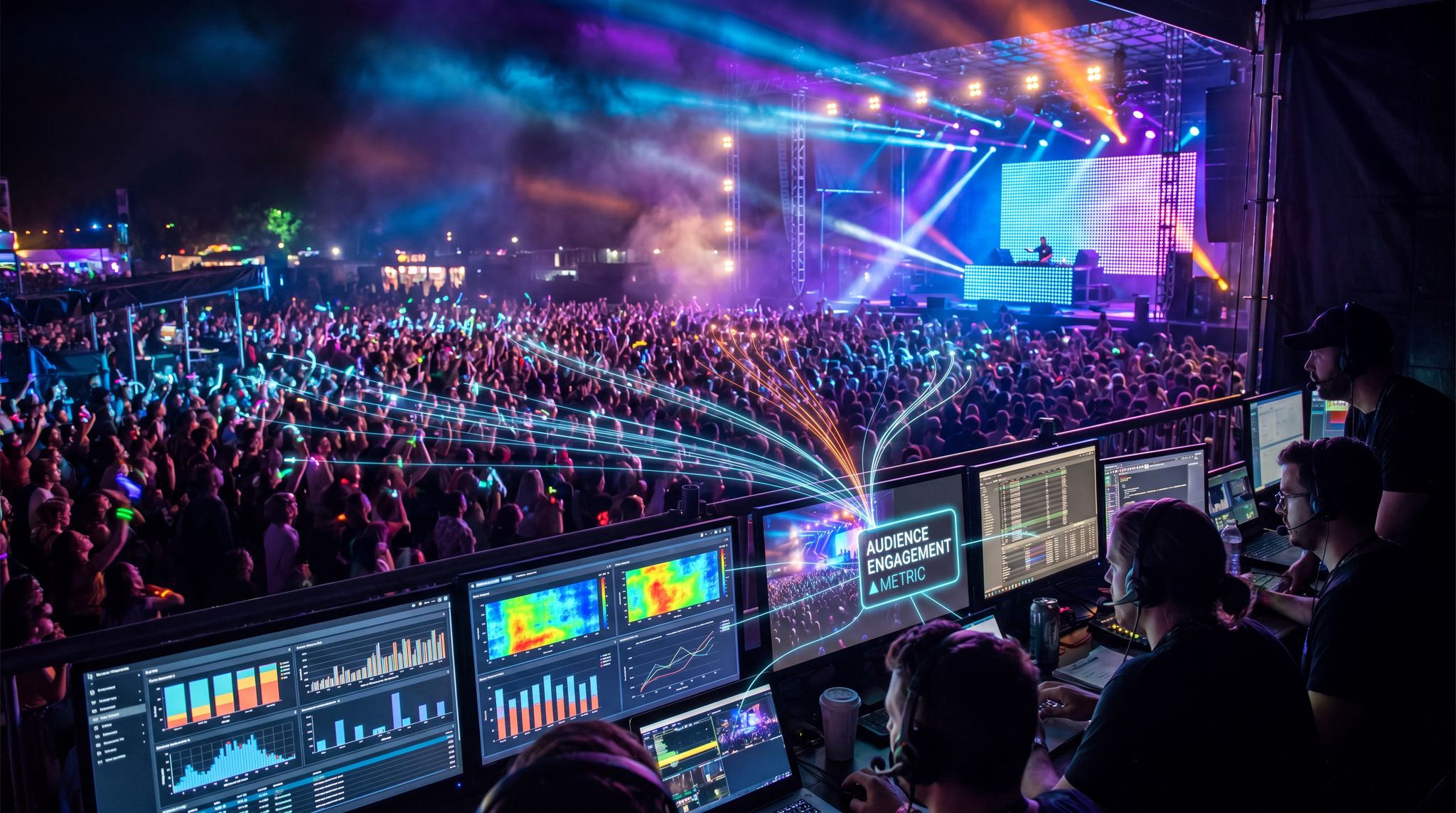
Effective festival production now begins with data and artificial intelligence. Organizers are moving beyond gut instinct and spreadsheets – instead leveraging AI-driven tools for festival planning and engagement to make smarter decisions. For example, predictive analytics platforms ingest historical sales, weather patterns, and artist popularity metrics to forecast attendance with remarkable accuracy. By using AI and data to forecast attendance, producers can adjust ticket inventory, staffing, and amenities well in advance rather than relying on guesswork. This data-driven approach helps prevent both overestimating (which drives up costs) and underestimating (which causes shortages and upset patrons).
AI is also transforming how producers manage complex festival workflows. Smart scheduling software can auto-optimize stage schedules, volunteer rosters, and vendor load-in times. During the event, real-time operational dashboards give festival teams instant insights into everything from crowd density to concession sales. Instead of reacting hours later, teams can respond to issues on the fly – rebalancing security staff to a crowded gate or dispatching cleanup crews before trash overflows. The shift from static plans to live data dashboards marks a cultural change in festival management, often summed up as moving “from guessing to knowing.”
Pro Tip: Set clear data goals during planning. Identify key metrics (ticket sales pace, social media engagement, etc.) and track them closely. Early data signals can inform marketing pushes or lineup changes months before the festival.
Another emerging tool is AI-driven decision support. Some festivals deploy machine learning algorithms to simulate different scenarios (e.g. rain on main day, an artist cancellation) and suggest optimal responses. These AI management systems, highlighted in guides to smart tools for festival planning and engagement, augment the producer’s expertise with data-backed recommendations. While human experience and intuition remain vital, technology is increasingly acting as a co-pilot in the production office. The result is more precise planning, efficient resource allocation, and the ability to confidently scale festivals in size or complexity because decisions are grounded in evidence.
Warning: Data is only as good as its source. Ensure your analytics tools draw from quality, relevant data – faulty assumptions or outdated figures can mislead planning. Even the smartest AI can amplify a mistake if it’s fed bad data, so always validate forecasts against real-world context.
Ticketing, Cashless Payments & Crypto Innovations
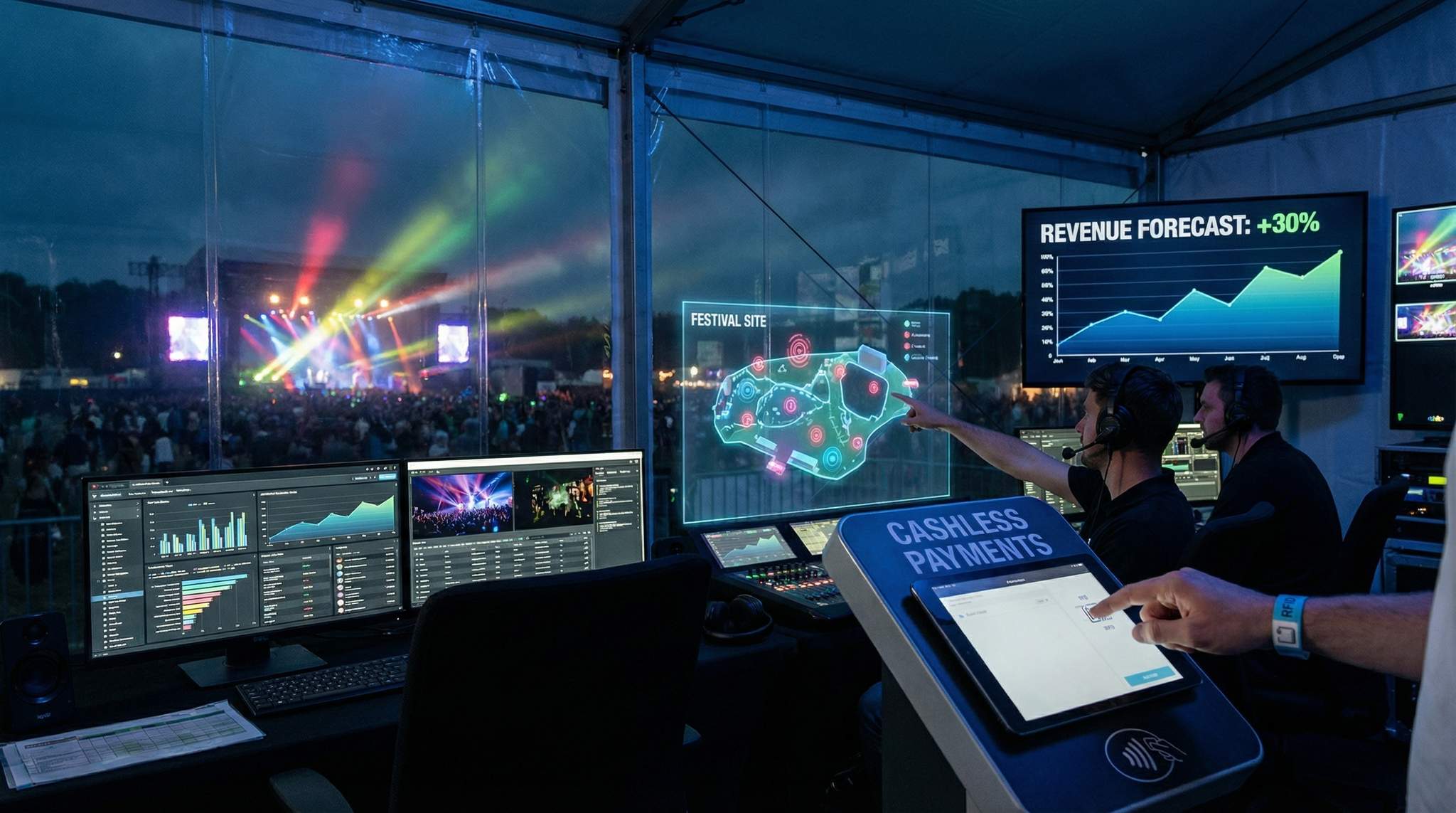
The festival gate has gone high-tech. Modern ticketing systems are a far cry from paper tickets and manual check-ins. Today, many events implement RFID wristbands for tap-and-go entry and payments. Attendees receive a wristband embedded with a tiny RFID chip linked to their ticket account. At entrances, RFID readers scan these wristbands in less than a second, dramatically speeding up entry. This same tech powers cashless payments: attendees load funds onto the wristband or link a credit card, then simply tap to pay for food, drinks, or merch. These systems not only cut lines but also virtually eliminate ticket fraud and cash theft on-site.
Key Stat: Major festivals implementing RFID cashless payment systems have reported 20–30% higher per-guest spending after going cashless, as seamless purchases encourage attendees to spend more. For organizers, this can translate into hundreds of thousands of dollars in additional revenue.
Inside the grounds, going cash-free has other benefits. It improves security (less cash to lose or steal) and provides rich data on purchasing patterns. Organizers can see in real time which vendors are busiest and what items are top sellers. According to insights from implementing RFID for tap-and-go cashless payments, this data helps in adjusting inventory or sending promotions to boost underperforming stalls. Smaller events are also adopting simpler cashless solutions – like mobile card readers or QR code payments – to bring these benefits without a huge investment.
The ticket itself is evolving thanks to blockchain. A few pioneering festivals have experimented with NFT-based tickets and digital collectibles. Through crypto-powered fan engagement and funding models, organizers are selling NFTs that double as festival passes or unlock exclusive perks. These tokenized tickets can be traced on a blockchain, combating counterfeits and enabling resales with automatic royalty kickbacks to the festival. Some events have raised capital by issuing fan tokens or even exploring DAOs (Decentralized Autonomous Organizations) to give superfans a stake in the festival’s success. While still niche, these crypto innovations hint at new financing and engagement avenues beyond traditional ticket sales.
Go Cashless With RFID Technology
Enable contactless payments, faster entry, and real-time spending analytics with RFID wristbands and NFC-enabled ticketing for your events.
Of course, any digital ticketing system must be user-friendly. Many festivals integrate ticketing into their official mobile apps, allowing attendees to seamlessly access their QR code or RFID registration on their phones. On-site, mobile ordering systems cut queues by letting fans order food and merchandise from apps and simply pick up when ready, rather than waiting in long lines. The trend is clear: eliminate friction at every transaction. When fans can get in quickly and buy things with a tap, they’re happier – and they spend more. The key for producers is choosing a reliable cashless/ticketing vendor and thoroughly testing the system at smaller events or with test audiences. Glitches at the gate or point-of-sale can negatively impact thousands of patron experiences, so these systems must operate flawlessly under peak load.
Warning: Always have a backup plan for payments. Even with cutting-edge cashless platforms, internet outages or system glitches can occur. Keep a contingency like offline card imprinters or a small reserve of cash tills. Redundancy is critical – a tech failure shouldn’t grind your festival to a halt or leave attendees unable to buy water if their wristband malfunctions.
Connectivity & Communications Infrastructure
Behind every high-tech festival is rock-solid connectivity. Attendees, staff, artists, media – everyone expects to stay connected, whether for coordinating operations or sharing the excitement on social media. For producers, this means investing in on-site networks, robust radio systems, and even dedicated cellular infrastructure at large events. A cornerstone is reliable staff communications: implementing clear radio communication protocols for festival teams ensures security, medical, and operations crews can talk instantly even in large, noisy venues. Festivals work with radio specialists to create detailed radio plans, assigning channels to different departments (e.g. channel 1 for security, 2 for operations, etc.) and establishing plain-language codes to avoid confusion. This old-school tech remains a lifesaver when modern networks congest – if cellphone towers overload, those handheld radios will still get through on their own frequencies.
On the attendee side, expectations are sky-high for connectivity. Fans want to livestream moments, post photos, and find their friends via messaging apps. Ensuring site-wide connectivity for crew and attendees is no small task, especially as festival sites often span remote fields or valleys. Many large festivals now partner with telecom providers to roll in portable cell towers and boost coverage. Wi-Fi hotspots are deployed in high-traffic areas like stages and food courts. Some events even offer dedicated media Wi-Fi for press and VIPs to guarantee bandwidth for live video feeds. In urban festivals, organizers coordinate with city telecom services to strengthen signal during the event days.
Key Stat: At Glastonbury Festival, data consumption was projected to soar above 70 terabytes in a single weekend – a nearly 30% increase over previous years. This illustrates the explosive growth in bandwidth demand as tens of thousands of attendees simultaneously upload videos, stream performances, and use festival apps on-site.
Powering all these connections requires significant hardware. Equipment like high-capacity routers, fiber-optic cables, and satellite uplinks may be brought in to create a temporary digital city. And it’s not just about internet – powering thousands of phones is a challenge too. Festivals now provide smartphone charging and connectivity solutions on-site, from free charging stations to rentable battery packs, often powered by renewable energy sources such as solar to align with sustainability goals. Keeping devices charged means attendees continue to use the festival’s digital platforms (and share their experiences online, which is free promotion). Some innovative events have even experimented with kinetic charging stations where attendees pedal bikes to generate power for phone charging, turning connectivity into an interactive attraction.
On the operations side, dedicated communication networks are set up for production. Alongside radio, many crews use team communication apps on rugged smartphones or tablets. Secure, closed Wi-Fi networks allow things like digital walkie-talkie apps, GPS tracking of assets, and instant push notifications to crew if plans change. For example, if a schedule adjustment occurs, the production office can alert all stage managers via a crew app. The article on keeping everyone connected on-site notes that some festivals issue local SIM cards or devices to key staff to ensure they aren’t reliant on public networks at all. The bottom line is that communication failures can quickly escalate into safety issues or operational chaos, so producers leave nothing to chance: multiple layers of connectivity, constant monitoring of network performance, and backup communications (like satellite phones for emergencies) are the new norm for well-run events.
Pro Tip: Conduct a site visit with your telecom partners months in advance. Map out signal dead zones and high-density areas. This allows time to arrange extra cell towers or re-position antennas. Never assume the venue’s existing coverage will suffice – always test under festival conditions if possible (e.g., bring a crowd for a smaller pre-event) to identify connectivity weak spots.
IoT & Smart Festival Operations
Festival sites are becoming “smart” spaces thanks to the Internet of Things (IoT). Tiny sensors and connected devices now help organizers monitor and manage the venue in real time, bringing a new level of efficiency to festival operations. One practical example is in facilities management: events are deploying IoT sensors to optimize toilets, trash, and crowd flows. Smart trash bins can signal when they’re nearly full, prompting cleaning crews to act exactly when needed instead of following a fixed schedule. Restrooms outfitted with sensors can report usage levels or supply shortages (like low soap), enabling rapid response to maintain sanitation. Even temporary festival lighting and generators are often IoT-connected, allowing remote monitoring of fuel levels and performance, so technicians can address issues before they lead to a blackout in the middle of a headline set.
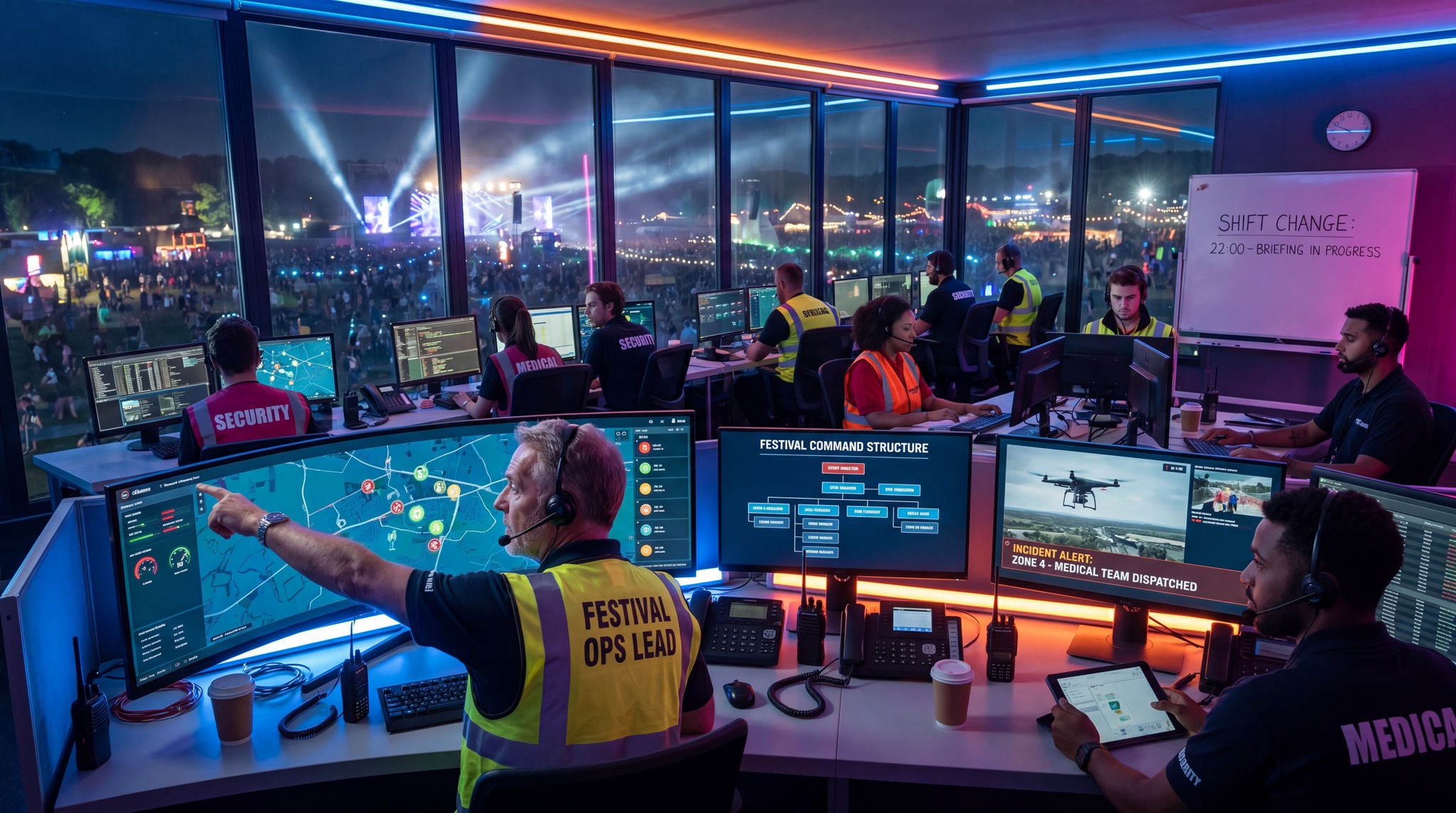
These sensor networks feed into centralized dashboards in the ops control room, often alongside other data streams. One revolutionary development is live crowd management systems that use heat maps and AI monitoring. Overhead cameras or drones equipped with computer vision can detect crowd density in different zones, identifying bottlenecks or surges. Organizers see a live map of crowd “heat” and can proactively open additional entry points, dispatch staff, or send PA announcements to redistribute people. This tech is especially valuable for avoiding dangerous overcrowding and spotting potential crush points before they become critical. In the past, crowd control depended on staff radioing observations, which can be subjective and delayed. Now, a digital eagle-eye watches over the grounds 24/7, augmenting (not replacing) human security teams. The result is safer, smoother crowd flows and a better experience for attendees.
Drones are another high-tech tool joining festival operations. Festivals use drones for aerial video and light shows as part of the entertainment (choreographed drone light displays have wowed crowds at night). But those same drones can double as surveillance and operational eyes-in-the-sky. A drone can quickly fly over a parking lot to assess how full it is, or hover above a stage crowd to give security a live feed of what’s happening in the middle of a dense audience. Thermal imaging drones can even spot if someone has collapsed in a hard-to-see area. By using drones for aerial video, light shows, and surveillance, festivals extend their situational awareness dramatically. Some events station drone pilots in the control center, ready to deploy at a moment’s notice for anything from checking on a distant campsite to capturing footage for social media.
Not all operations tech is flying robots and sensors; some of it upgrades everyday workflows like staff management. Volunteer and crew coordination, which used to mean endless spreadsheets and phone trees, is now handled by purpose-built software. Festivals are using technology to streamline crew and volunteer management – staff can receive shift assignments, updates, and maps through a mobile app, and they can check in/out digitally. This reduces no-shows and confusion, as everyone has the latest info in their pocket. It also provides management with instant reports on check-in rates and staffing levels across the site, so gaps can be addressed quickly. Likewise, digital credential systems are replacing paper wristbands for crew; an RFID badge or mobile pass can grant a staff member access to only the zones they’re authorized for, enhancing security.
Free Tool: Size Your Festival Site
Zoned capacity planning for arena, campsite, parking and entry lanes — against UK Purple Guide and NFPA density standards. Finds your bottleneck zone.
All these operational technologies feed into what are essentially “smart festivals” – akin to smart cities. Generators report their status, crowds report their location (anonymously via phone signals or wristbands), and staff report their tasks completed, all into integrated ops systems. A post-event benefit is data logging: producers can analyze exactly how many trash bags were filled per hour or which entry gate saw the most foot traffic by hour. These insights inform next year’s layout and staffing plans, creating a virtuous cycle of improvement. As described in turning guesswork into knowledge via festival operations dashboards, the availability of precise operational data has been a game-changer. Festivals can run leaner, respond faster to issues, and provide a safer environment – all thanks to armies of sensors and connected devices quietly working behind the scenes.
Warning: When introducing IoT devices and drones, don’t neglect attendee privacy and perception. Clearly communicate if you will be using monitoring cameras or tracking wristbands, and what the data is used for. Today’s festival-goer is tech-savvy and privacy-aware – transparency and opt-out options (when feasible) can prevent a backlash from those concerned about being overly surveilled at an event meant for fun.
Immersive On-Site Experiences (AR, Wearables & More)
It’s not just behind the scenes – technology is fundamentally enhancing the on-site experience for festivalgoers. Attendees today don’t just want to watch a show; they want to be part of it. Festivals have answered this call by deploying interactive tech that blurs the line between performer and audience. A prime example is augmented reality enhancing on-site experiences. With AR mobile apps, attendees can view digital overlays through their phone cameras – imagine pointing your phone at a stage and seeing extra visual effects, artist info, or gamified content like hidden characters to collect around the venue. Some festivals create AR scavenger hunts, where finding virtual objects in the real world leads to prizes or Easter eggs, deeply engaging fans with the festival’s environment. By adding augmented reality features to the festival grounds, events bring an element of interactive play that can be especially appealing to younger attendees accustomed to gamification.
Wearable technology worn by attendees is also turning crowds into part of the show. A famous example is distributing LED wristbands or badges that sync to the music. Interactive wearable tech makes attendees part of the show by lighting up in coordinated patterns, effectively turning a 10,000-strong crowd into a giant pixel display. Major artists have used this to create breathtaking moments – waves of color rippling across the audience or spelling out messages. Smaller festivals are catching on too, using simpler wearables like LED lanyards to give the audience a participatory role in the visual spectacle. Beyond lights, some festivals offer haptic wearables (that vibrate with the bass, for example) to let fans literally feel the music. These innovations deepen immersion and give attendees a memorable sense of unity, as if they collectively become part of the performance.
Pro Tip: When planning AR or wearable experiences, ensure they are additive rather than distracting. The best tech enhancements complement the music and vibe – for instance, an AR overlay might display set times when pointed at a stage, or wearable lights might glow gently between acts and then burst into patterns during headliners. Always test the timing and synchronization in advance so that the tech accentuates the show’s peak moments.
Festivals are also becoming showcases of creative technology installations. From interactive art pieces that respond to touch, to 3D projection mapping on giant stage sets, these events push the envelope of what’s possible in live entertainment. Many cool tech experiences at festivals worldwide serve as inspiration: for example, a festival in Europe created a “VR tent” where attendees could don headsets and step into a virtual replica of the main stage from the middle of the crowd, experiencing the show from different angles. Others have implemented giant LED floors that react to footsteps, or misting stations that combine water with holographic light projections for surreal effect. These innovations not only dazzle attendees but also generate buzz on social media – a win-win for experience and marketing.
Data-Driven Event Marketing
Track ticket sales, demographics, marketing ROI, and social reach in real time. Exportable reports give you the insights to make smarter decisions.
Crucially, the most effective on-site tech is tailored to the festival’s identity and audience. A techno music festival might have a interactive DJ booth that lets attendees influence the visuals via a mobile app slider. A food festival might use AR to show ingredient sourcing when you point your phone at a dish. The possibilities are endless, but integration is key – technology shouldn’t feel tacked on, it should feel like an organic extension of the festival’s theme. With thoughtful design, tech experiences can create magical moments that become the stuff of legend (and viral videos). As the innovation showcases from festivals around the world demonstrate, creativity is the only limit. Festival producers are now collaborating not just with talent bookers and stage designers, but also with technologists and interactive artists to craft these one-of-a-kind attractions.
Hybrid & Virtual Festival Experiences
Technology has exploded the boundaries of festivals beyond the physical venue. In the wake of global events like the COVID-19 pandemic, the concept of hybrid festivals – combining in-person and virtual experiences – has become mainstream. Organizers are incorporating virtual elements into traditional festivals to engage audiences who cannot attend in person, whether for reasons of distance, cost, or safety. A common hybrid approach is to live-stream key performances online, effectively turning the festival into a broadcast event as well as a physical one. Fans around the world can tune in to catch sets they’d otherwise miss. Some festivals have reported millions of unique viewers on their live streams, rivaling the size of the on-site audience.
But simply streaming video is just the start – innovative festivals monetize these virtual audiences and make them interactive. Organizers have learned how to monetize festival live streams and video archives, for instance by selling digital “online passes” that grant access to multi-camera HD streams, exclusive backstage content, or even on-demand replay of performances after the festival. This creates a new revenue stream without hitting venue capacity limits. Moreover, chatrooms and social media tie-ins allow online viewers to be part of the conversation, vote on encore songs, or get shout-outs from MCs on stage, bringing an element of participation rather than passive watching.
Virtual reality is taking remote attendance a step further. Some forward-thinking events are developing virtual reality festival experiences where fans can use VR headsets to “attend” a festival in a 360° immersive environment. For example, a VR user might explore a digital recreation of the festival grounds, watch the live stage in 3D, and even bump into other avatars to chat – all from their living room. While VR attendees aren’t physically present, the goal is to replicate some of the social and visual thrill of being there. Early trials have been promising: during the pandemic, a few major festivals launched VR editions that attracted tens of thousands of virtual visitors, many of whom said it felt more engaging than a flat livestream. As gear becomes more accessible, we may see hybrid events where in-person and VR audiences experience festivals simultaneously, each in their own mode.
The concept of the metaverse is also creeping into festival planning. By integrating festivals with virtual worlds, producers are creating persistent digital spaces that live year-round outside the festival dates. This might be a branded area in a popular metaverse platform where fans can gather, watch past performance footage, buy NFT merchandise, and maintain a community. When the live festival happens, that metaverse space can spring to life with real-time content and fan interactions. Essentially, the festival experience transcends the confines of time and space, becoming an ongoing engagement. We are seeing the mainstage to metaverse connection emerge with experiments like DJ sets performed in-game or virtual meet-and-greets with artists hosted online after their physical set.
Key Stat: In 2022, Coachella auctioned 10 lifetime festival passes as NFTs (the “Coachella Keys”), generating $1.5 million in sales. This not only illustrates a new revenue stream via digital assets, but also showcases how festivals are blending real and virtual value – the buyers of those NFTs receive a real-world pass each year, plus unique virtual perks.
All these hybrid and virtual initiatives greatly expand a festival’s reach. A physical venue might cap at 50,000 attendees, but online, hundreds of thousands can participate in some fashion. This inclusivity can amplify a festival’s cultural impact and brand footprint globally. Still, producers must carefully calibrate these offerings. A common challenge is avoiding cannibalization of the live experience – the virtual version should complement, not replace, the in-person magic. That’s why many festivals offer basic streams for free (to entice new fans) but make the in-person ticket special with exclusive in-venue content, tactile swag, or simply the irreplaceable energy of being in the crowd. Conversely, virtual attendees can be courted with things the live crowd doesn’t get, like multiple viewing angles or interactive polls that influence something on stage. Finding the right mix is an evolving art.
Ultimately, the hybrid model seems here to stay. As explored in incorporating virtual elements into festivals, even as normalcy returns for live events, many festivals are continuing to invest in their online platforms. It’s an additional layer of engagement and insurance against uncertainties. By having a robust virtual contingency, festivals are more resilient – if extreme weather strikes or a pandemic resurfaces, the show can still go on for fans everywhere in some form. And in the best case, hybrid festivals are not just a fallback but an enhancement, turning a weekend on the ground into a global celebration that anyone can join.
Planning a Festival?
Ticket Fairy's festival ticketing platform handles multi-day passes, RFID wristbands, and complex festival operations.
Warning: When live-streaming or offering a virtual festival component, never neglect the production quality. Online viewers have endless entertainment options; if your stream is low-resolution, has poor audio, or constantly buffers, they will drop off quickly (and it reflects poorly on your brand). Invest in a professional streaming crew and robust infrastructure. Test all feeds, audio mixes, and interactive features beforehand with a pilot broadcast to ensure a seamless experience for the remote audience.
Mobile Apps and Personalized Engagement
As festival-goers have become inseparable from their smartphones, the festival itself has followed them onto those devices. A well-designed mobile app is now considered essential for medium to large events, and even smaller boutique festivals are finding value in custom apps or mobile web portals. The goal: keep attendees informed, engaged, and even spending, all through the screen they check most often. When you develop an engaging festival mobile app, you create a direct communication channel to every fan on-site (and even those off-site following along).
Common app features include interactive maps, performance schedules, artist info, and personalized itineraries. Attendees can build their own schedule within the app by favoriting artists, and then receive reminders before those sets start. In fact, some festivals now use AI to personalize attendee schedules via an app – analyzing which artists or activities a user has shown interest in and suggesting a custom itinerary, perhaps introducing them to similar acts they might love. These personalized recommendations can greatly enhance discovery, especially at festivals with dozens of overlapping performances. It’s like having a digital concierge that ensures each attendee gets the most out of the event.
Real-time updates are another critical function. Set times can change, weather can cause delays, or surprise pop-up shows might be added. Rather than relying on a bulletin board or word of mouth, the app can send push notifications for any important announcements. With a robust system for delivering real-time set-time updates without chaos, festivals keep attendees on the same page and avoid confusion. For example, if a headliner’s set is pushed back 30 minutes, a notification can instantly inform everyone, preventing disappointment and crowding at the stage too early. Apps also often feature live news feeds or social walls, highlighting the best fan photos and tweets, which builds a sense of community and FOMO (fear of missing out) that encourages people to check out different areas of the festival.
Run Your Events From Your AI Assistant
Ticket Fairy exposes a Model Context Protocol server, so the assistant you already work in can read your events, orders and check-in numbers and act on them. By default a refund or a deletion stops and asks you to approve it first.
Customer service and information delivery have also gotten a tech boost through festival apps. Increasingly, events deploy chatbots and virtual assistants to provide instant attendee support. Instead of searching for an information booth, attendees can ask questions in the app chat – “Where are the water refill stations?” or “What time does parking close?” – and get an instant answer from an AI-powered chatbot trained on the festival FAQ. This is available 24/7 and can handle thousands of inquiries simultaneously, which is invaluable at large events. Of course, human support is still on hand for complex issues, but offloading common questions to a chatbot frees up staff and provides quick help to attendees. Some virtual assistants even use voice recognition, so a user could speak their question into the app. By enhancing attendee support with chatbots, festivals are meeting young audiences on their preferred communication channel – instant messaging.
Beyond information, apps have become platforms for driving spending and sponsor activation. Using location services and purchase data, organizers can send targeted promotions – for example, a push notification of a real-time dynamic deal to boost on-site revenue: “Happy Hour at the Craft Beer Tent – 2 for 1 until 6 PM for app users!” or detecting when a user is near the merch booth and sending a discount for that band’s t-shirt. These timely nudges can significantly increase secondary revenues. One festival reported tens of thousands of dollars in extra sales by using push offers and flash deals delivered via their app during slow periods. Gamification elements like digital scavenger hunts or points for visiting sponsor activations also help monetize engagement while enhancing fun. For sponsors, the app provides coveted real estate (banner ads, sponsored push messages, branded schedule sections) that can be sold as part of sponsorship packages.
Pro Tip: Encourage downloads early by offering exclusive content or perks through the app. For instance, release the schedule in the app first before posting it on the website, or include a discount code for festival merch that’s only visible in-app. The more attendees adopt the app beforehand, the smoother your on-site communication will be. Plus, you’ll have an engaged user base ready when ticket renewals or next-year announcements roll around.
Perhaps the most futuristic aspect of festival apps is integration with other tech. Many apps now integrate the user’s RFID wristband or ticket QR code for entry, so the phone essentially becomes a wallet and ticket. We’re also seeing the beginnings of open APIs where third-party developers or super-fans can create their own mini-apps that plug into the festival’s platform (as discussed later in the Open Data section). The long-term vision is an ecosystem where the festival app is not just a digital guide, but a hub for community and creativity – keeping fans linked to the festival year-round with content drops, community forums, and exclusive streams. In sum, a well-executed mobile app shifts the festival experience into the digital realm in all the right ways: more convenience, more personalization, and more opportunities to surprise and delight the audience.
Safety & Security Tech at Festivals
Ensuring the safety of tens of thousands of people in a live event setting is a monumental responsibility – one that technology is helping to address on multiple fronts. Security starts long before gates open, with cybersecurity measures protecting ticketing and attendee data. Festivals are prime targets for fraud and hacks (imagine the fallout if an attacker steals thousands of credit card numbers or takes down the ticketing system). As outlined in guides to strengthening cybersecurity for festival data and systems, producers now routinely invest in hardened IT infrastructure, encryption, and network monitoring. This ensures online ticket sales, on-site Wi-Fi, and cashless payment networks are safeguarded against breaches. Many events hire cybersecurity consultants to conduct penetration testing and have an incident response plan ready. While fans may not see this side of festival tech, it’s critical for protecting both the business and the patrons’ personal information.
On the ground, emergency response technology is saving lives. Weather is one of the biggest uncontrollable risks to outdoor events – sudden lightning storms or high winds can turn deadly. Festivals increasingly deploy real-time lightning and weather detection systems that provide early warnings of dangerous conditions. High-end radar and lightning sensor systems can detect strikes within a certain radius and automatically alert organizers if a storm is approaching. This tech, combined with clear evacuation protocols, enables producers to swiftly pause a show and move the crowd to safety when needed. Fans have been pulled out of open grounds minutes before lightning hit, thanks to these advance warnings. Lightning is a serious threat – the U.S. still averages 23 lightning fatalities per year – so having dedicated weather monitors and automated alerts is now considered a best practice, especially for large multi-day festivals where the probability of weather issues is higher.
Festival safety also extends to personal emergencies in the crowd. One recent innovation is panic-button safety apps for attendees. These are mobile app features or standalone apps where if a person feels in danger or sees someone needing medical help, they can tap a button to immediately summon assistance and transmit their geolocation to festival security. For example, a person feeling threatened could discreetly call for help without having to locate staff. Or if someone has a medical issue, fellow attendees can quick-alert medics with precise location info, which is faster than running to the nearest staff member. By giving attendees a panic-button tool, festivals empower the crowd to be an active part of the safety net. Some large U.S. festivals have reported dozens of valid interventions thanks to these apps – ranging from preventing assaults to getting EMTs to a collapsed person within two minutes of a crowd alert.
Another promising area is wearable safety tech. In addition to fun wearables, some events offer or rent devices geared towards health and safety. For instance, wearable health tech that monitors attendee well-being in real time is being piloted to prevent incidents like heat stroke. These could be smart wristbands or patches that track vital signs such as body temperature, heart rate, and hydration levels. If an attendee’s stats move into danger zones (say, body temp too high on a scorching day), the system can alert the person via their phone and simultaneously notify first aid teams nearby. While such wearables are optional and raise privacy considerations, they have been tested at extreme events like desert festivals where dehydration and heat exhaustion are common. In one case, data from wearables helped medics identify and treat several attendees in the early stages of heat stress, before their conditions escalated. Even beyond dedicated wearables, festivals encourage use of existing tech like the health apps on smartphones or smartwatches for attendees to monitor themselves.
Need Festival Funding?
Get the capital you need to book headliners, secure venues, and scale your festival production.
Crowd security benefits from tech as well. We discussed CCTV and drones in operations; those are equally vital for security surveillance – spotting altercations or suspicious behavior in a sea of people. AI-powered camera systems can detect when a fight breaks out or when an individual is moving against the flow (potentially indicating panic or wrongdoing), alerting security to check it out. Access control is another facet: RFID crew badges, as mentioned earlier, prevent unauthorized backstage entry, reducing risks of intruders. Biometric ticketing (using fingerprints or facial recognition for entry) has been tested at some events to eliminate ticket fraud and help identify known troublemakers, though it’s controversial and raises privacy issues.
No security discussion is complete without considering data privacy and regulations. Festivals, especially in regions like Europe, must comply with laws like GDPR when collecting personal data through apps or RFID systems. This means obtaining attendee consent for tracking, providing opt-outs, and securing all stored data. Failure to do so can result in hefty fines and reputational damage. Thus, even as tech opens new safety capabilities, festivals have to implement them in ways that respect privacy. The topic of protecting attendee information in a digital age has become a key part of festival management training. In practice, this could mean anonymizing sensor data (e.g., using ID numbers instead of names in health monitoring systems) and segregating personal data from operational data. Attendees are generally willing to accept safety measures as long as it’s clear their data won’t be misused. Communication is therefore critical: festivals that introduce new safety tech often do blog posts or on-site signage explaining the measures, how they work, and how they benefit the attendee.
Key Stat: Ultra Music Festival’s sustainability and safety initiatives show how tech can achieve real results. Over recent editions, Ultra’s waste reduction program (powered by tech-driven sorting and incentives) diverted 293,000 pounds of waste from landfills and eliminated 2.1 million single-use plastic items. While focusing on green goals, these same programs improve safety by reducing site hazards (less trash means fewer obstacles and pests) and foster a culture of care among attendees that extends to looking out for each other’s well-being.
Warning: No technology can replace good old-fashioned human vigilance. All the apps and sensors in the world won’t help if your security team isn’t adequately trained or if emergency protocols are not practiced. Use tech as a force multiplier, not a crutch – continue to conduct staff drills (for evacuations, active threats, medical emergencies) and ensure that your human teams know how to interpret and act on the data tech provides. The tools should support decisions, but people must still make the critical calls under pressure.
Sustainability Tech: Greener Festival Innovations
In recent years, festival producers have faced growing pressure – and moral responsibility – to reduce the environmental impact of their events. Large festivals can generate shocking amounts of waste and carbon emissions, but technology and innovation are providing solutions to make festivals more sustainable without sacrificing the experience. A key area of focus is energy. Traditionally, diesel generators have powered stages, lights, and vendor booths, belching emissions throughout the weekend. Now, events are adopting cutting-edge energy and sustainability tech to green their festivals. This includes solar farms and wind turbines installed on-site to supply a portion of power, hydrogen or renewable biodiesel generators to replace standard diesel, and battery storage systems that smooth out usage peaks so generators can run more efficiently. Some multi-stage festivals employ smart power management systems that allocate electricity on demand, shutting down parts of the grid when not needed and preventing wasteful idling of generators.
Another vital component is waste management and reduction. Technology is helping festivals minimize waste generation and increase recycling rates. For instance, many events have moved to digital tickets and cashless systems (already discussed), cutting down on paper and plastic waste from physical tickets and cash handling. In terms of disposables on-site, festivals invest in water refill stations to slash single-use bottle usage, and encourage or even mandate that vendors use compostable food service ware. Innovations like AI-powered sorting machines can be used back-of-house to automatically separate recyclables from trash more effectively than human sorting lines. As a result, festivals have significantly improved waste diversion from landfills. One case study comes from Ultra Music Festival’s sustainability program, which through numerous tech-driven initiatives (from reverse vending machines for recycling to electronic waste monitoring) prevented 50 tons of waste from ending up in landfills in a single year. Those kinds of numbers show that “green tech” isn’t just for show – it has tangible impacts.
Many festivals have begun to harness the enthusiasm of attendees to promote sustainability via tech. Mobile apps might include features that encourage eco-friendly actions, like a digital “green passport” that rewards fans for refilling water or using recycling bins (verified by QR codes or staff scans). Some events partner with sustainability startups to pilot new ideas, effectively turning the festival into a living lab for green innovation (overlapping with our discussion of innovation labs). For example, festivals have tested smart grid systems where portable solar panels can be deployed and moved as needed, or “pee-to-power” units that generate electricity from wastewater. These may sound experimental, but several have proven effective at small scales and are scaling up. The article on greening your festival with energy tech highlights how even mid-sized events can drastically reduce their carbon footprint with measures like LED stage lighting (70% more efficient than traditional lighting), solar-powered art installations, and scheduling decisions that minimize electricity draw (for instance, staggering set times so not all stages demand peak power at once).
Transportation is another piece of the sustainability puzzle improved by tech. Festivals are using data tools to optimize shuttle routes, rideshare pickups, and carpool matching for attendees. Some have apps that facilitate ride-sharing – connecting attendees from the same city to fill up car spots – or provide real-time transit schedules and bike rental info. Reducing vehicles on the road not only cuts emissions but also improves local community relations by easing traffic. Drones and satellite imagery data have even been used to analyze traffic flow in and out of festival sites so that traffic management plans can be refined year over year, shortening idle times and detours.
Lastly, festivals are starting to measure and offset their carbon emissions with the help of software platforms. Specialized carbon tracking tools let an event input all its data (power used, miles traveled by artists and attendees, waste tonnage) and output a carbon footprint. This clarity helps in setting reduction targets and also in purchasing credible carbon offsets for what can’t be eliminated. There’s a trend of festivals openly reporting these metrics, driven by both altruism and savvy marketing – eco-conscious fans appreciate transparency and progress. Technology thus provides the data and means to make genuine environmental improvements rather than vague promises. From a branding perspective, showcasing innovative sustainability tech (like a field of solar panels powering a stage) can even be a selling point, attracting sponsors and attendees who want to be associated with forward-thinking, responsible events.
Key Stat: Glastonbury, one of the world’s largest greenfield festivals, has eliminated the sale of single-use plastic bottles on-site since 2019. This policy, alongside providing extensive free water refill stations and incentivizing reusable bottles, is estimated to have kept over 1 million plastic bottles per festival out of landfills and the environment each year. Such bold tech-assisted sustainability measures (in Glastonbury’s case, using water infrastructure tech to replace bottled water logistics) demonstrate the scale of impact festivals can have in driving eco-friendly practices.
Pro Tip: Engage your attendees in sustainability efforts through technology. Use your festival app or email list to share live stats during the event – for example, a push notification that “We’ve composted 5 tons of waste so far – keep it up!” or a display at the entrance showing percentage of attendees who took shuttles instead of cars. Seeing the numbers in real time can motivate festivalgoers to participate (nobody wants to be the reason a goal wasn’t reached). By gamifying green goals and reporting progress publicly, you turn sustainability into a collective achievement that fans can feel proud of.
Accessibility & Inclusivity in Festival Tech
An often overlooked aspect of festival innovation is making the experience accessible to all attendees, including those with disabilities. Technology is a powerful enabler of inclusivity, and progressive festival organizers are weaving accessibility considerations into their tech deployments from the ground up. It starts online: building accessible festival websites ensures that buying tickets and finding information is possible for everyone, including people who use screen readers or have other assistive browsing needs. Simple practices like proper text alternatives for images, high-contrast text, and logical navigation structure can make a world of difference for visually impaired or neurodiverse users trying to plan their festival trip. Many festivals now adhere to Web Content Accessibility Guidelines (WCAG) for their official sites, often consulting with accessibility experts during development.
On site, mobile apps again play a key role. Festival apps are evolving to serve as personal accessibility tools. For example, developers are designing accessible festival mobile apps that support text-to-speech, offer adjustable font sizes, and integrate features like interactive maps that include accessibility routes (pointing out wheelchair-friendly paths or viewing areas). Some apps allow users to toggle modes for color-blind friendly palettes or simplified, high-contrast interfaces for those with low vision or cognitive disabilities. By making festival mobile apps inclusive, festivals help attendees of varying abilities navigate and enjoy the event more independently. For those with hearing impairment, apps can deliver vibrating alerts for important announcements (like evacuations) that accompany visual cues, ensuring no one misses critical info.
Live event technology is also enhancing experiences for deaf and hard-of-hearing fans. Accessible live stream experiences with captioning and ASL have become more common, particularly for festival livestreams and video broadcasts. But even on festival grounds, some events are providing closed captioning on video screens for MC announcements or spoken word performances. In partnership with tech companies, a few forward-thinking festivals have tested smartphone apps that provide real-time captions of on-stage dialogue or lyrics – attendees open the app, and it uses the audio feed to display synchronized captions (much like subtitles) on their own device. Additionally, improved sound technology like hearing loop systems can be installed at stages to assist those with hearing aids, reducing background noise and delivering clearer music directly to their devices.
For fans with mobility challenges, technology assists by providing better physical access information and services. Apps may offer on-demand shuttle or golf cart requests, so someone with limited mobility can summon a ride across a large festival site instead of struggling through mud or long distances. Sensor technology can be used in accessible viewing platforms to alert staff if those areas are overcrowding or if someone needs assistance. Even basic tech, like WhatsApp or SMS groups for accessibility services, can streamline communication – attendees can text a central number for assistance and the nearest roving staff (who are location-tracked) can respond.
Inclusivity also extends to neurodiversity and mental health. Festivals are experimenting with “quiet spaces” or sensory-friendly zones equipped with soft lighting and sound-dampening, where overstimulated attendees can decompress. Notifications in the app can allow users to opt into alerts for when a particularly intense production (strobe lights, pyrotechnics) is about to happen, giving sensitive individuals a heads-up or suggesting them to move to designated viewing area with less direct impact. These adaptations show how thinking about accessibility can overlap with general attendee comfort – many of these features benefit everyone.
Smooth Entry With Mobile Check-In
Scan tickets and manage entry with our mobile check-in app. Supports photo ID verification, real-time capacity tracking, and multi-gate coordination.
The push for accessibility is not only ethically right but often legally required (for example, under the ADA in the United States or similar regulations elsewhere). However, festivals are learning to see it not as a compliance chore but as an opportunity for innovation. By consulting with disabled attendees and advocacy groups, producers have identified pain points that clever tech applications can solve. One striking development has been in navigation: some festivals now offer app-based indoor navigation (for venue-based events) or outdoor GPS with detailed mapping of curb cuts, ramps, and accessible toilets. Through inclusive design of festival websites and apps, a message is sent that everyone is welcome at the event.
Pro Tip: Form an accessibility advisory panel during your planning process. Include individuals with disabilities or experts in assistive tech. They can provide valuable feedback on your plans for things like app features, site layout, and communication methods. Often, small changes (like the placement of a screen or clarity of a caption) can hugely improve accessibility. Tech solutions should be tested by actual users with disabilities whenever possible – their perspective will catch issues others miss.
Finally, many festivals are sharing their accessibility tech learnings openly with the industry, leading to rapid adoption of best practices. For instance, if one festival finds success using an app for requesting ASL interpreters on demand, others can follow suit. This spirit of collaboration means accessibility tech doesn’t remain a niche effort but becomes standard operating procedure over time. The hope is that in the near future, talking about accessibility at festivals won’t even be a separate topic – it will be seamlessly integrated into how all festival technology is evaluated and implemented, ensuring equal enjoyment for everyone in the crowd.
The Future of Festival Tech: Integration & Innovation
Looking ahead, the festival of the future is poised to be a marvel of integration – where every tech system, from ticketing to turntables, works in concert to create a cohesive and continually evolving experience. One major movement is toward a unified festival tech stack. Instead of using a patchwork of vendors and platforms that don’t talk to each other, organizers are seeking integrated solutions that tie ticketing, RFID cashless payments, mobile apps, CRM, marketing, and analytics into one ecosystem. By integrating ticketing, RFID, and apps for seamless operations, festivals can gain a 360-degree view of the customer and operations. For example, knowing that a VIP attendee bought a ticket, checked in at VIP entrance, visited the VIP lounge twice (tracked via RFID), and spent $200 on merch provides a complete journey that can inform personalized post-event marketing and improved services next year. Integration also reduces points of failure and data silos – the more unified the system, the fewer separate logins and exports/imports the team deals with, which means less human error and faster decision loops on site.
Open APIs and data sharing will also shape festival innovation. Some events are pioneering the idea of “open festival data” – providing APIs where third-party developers or even attendees can safely access certain festival data (like band set times, maps, or public shuttle info) to create their own tools and mashups. By opening up festival data for fan and developer interaction, a festival effectively crowd-sources innovation. We might see fans building custom schedule recommenders, independent bloggers creating real-time analytics of which stages are most popular, or local transit apps integrating the festival’s schedule to help people catch the right train after the show. This kind of ecosystem can increase engagement and give rise to ideas the organizers wouldn’t have developed in-house. It does require careful control (security and privacy must be maintained, and APIs should not expose sensitive info), but if done right, it can turn a festival into a platform for innovation far beyond the core team’s capacity.
Partnering with startups is another way festivals are staying on the cutting edge. The concept of turning your festival into an innovation lab has gained traction – essentially using the festival as a testing ground for new event technologies. This might involve inviting a few tech startups to deploy their solutions on-site in exchange for feedback and exposure. Festivals get early access to novel tech (often at low or no cost), and startups get a live environment to refine their product. For example, a festival might pilot an experimental augmented reality art installation from a local tech company, or test a prototype AI-driven scheduling assistant developed by a startup, giving real-world usage data and testimonials back to the creators. Such partnerships keep festivals innovative and can even lead to permanent enhancements if a trial goes well.
In terms of emerging tech to watch, several buzzworthy areas could become commonplace in festivals over the next decade. Generative AI is one – beyond planning and chatbots, generative AI can create visual content, music, or personalized messages at scale. We’re already seeing festivals leveraging generative AI for visuals, branding, and promotion. In the near future, an AI might design entire stage atmospheres or produce endless unique graphics for LED walls reacting to the music in real time. It could also tailor marketing content: imagine every attendee receiving a recap video of the festival with music and images selected specifically based on what stages they visited, generated automatically by AI.
Blockchain and Web3 technologies may also find new applications. While we covered NFTs and tokens for ticketing and funding, decentralized tech could influence how communities form around festivals. We may see more DAO-like governance for fan communities, community-curated lineups via token-holder votes, or even artist collectives running their own micro-festivals within a larger metaverse environment, all enabled by blockchain for trust and transparency. If a significant portion of tickets become NFT-based, the secondary market might become more regulated and lucrative for organizers (with all resales capturing a royalty). Fan loyalty programs could shift to crypto tokens that carry perks across events – for instance, a “festival passport token” that various independent festivals honor for discounts if you hold it.
Hardware advancements will play a role too. By the time 5G networks blanket most venues (and eventually 6G), bandwidth constraints might be a thing of the past, unlocking new possibilities like high-definition AR for everyone or thousands of simultaneous VR streamers on site. Wearable tech might evolve to e-textiles – perhaps festival T-shirts with built-in LEDs or haptic feedback – turning merch into interactive experiences. Biometric entry (facial recognition gates) could speed up access, though it will require thoughtful implementation to avoid privacy pushback. On the sustainability front, we could see AI optimizing entire festival supply chains, or innovations like carbon capture generators that neutralize their own emissions.
The future festival likely blurs the line between event and community. Year-round engagement through digital platforms, augmented by periodic in-person gatherings, could become the model. Technology will knit together these experiences so that the hype, interaction, and creativity continue 365 days a year. Yet amid all this high-tech evolution, the heart of festivals – human connection, music, art, cultural expression – remains constant. Tech is a means to amplify and safeguard that essence, not replace it. The smartest festival producers of tomorrow will be those who wield innovation in service of creating more meaningful, inclusive, and unforgettable experiences for their audiences.
Key Stat: According to industry surveys, over 72% of festival organizers plan to increase their technology budgets in the next year, with AI-driven analytics, cashless payment systems, and mobile app enhancements being the top-three areas of investment, according to research on event technology adoption and RFID popularity trends. This surge in tech focus underscores that innovation is not a luxury for festivals – it’s becoming a baseline expectation for staying competitive and delighting a tech-savvy generation of festivalgoers.
Warning: In the race to adopt new tech, don’t lose sight of your festival’s identity and audience. Not every trendy innovation will suit every event. A small folk music festival might not need flashy AR apps, but could benefit immensely from a simple volunteer scheduling tool. Always assess technology through the lens of your attendees’ needs and the spirit of your festival. It’s better to implement a few appropriate tech solutions well than to overload the event with gadgets that feel gimmicky or alienating. Authenticity comes first – tech should enhance, not overshadow, the reason people are there.
Essential Reading
- Embracing Festival Tech: Trends Shaping Live Events
- Innovation Showcase: Cool Tech Experiences from Festivals Around the World
- AI and Festival Management: Smart Tools for Planning and Engagement
- Hybrid Festival Events: Incorporating Virtual Elements
- Cybersecurity for Festivals: Protecting Data and Systems
- Energy and Sustainability Tech: Greening Your Festival
- Crowd Management Tech for Festivals: From Heat Maps to AI Monitoring
- Augmented Reality (AR) Experiences at Festivals – Enhancing the On-Site Experience
- Crypto-Enabled Festivals: Using NFTs, Fan Tokens, and DAOs to Engage Fans and Fund Events
- Unified Festival Tech Stack: Integrating Ticketing, RFID, and Apps for Seamless Operations
- Festival Mobile App Development: Engaging Attendees on Their Phones
- Turning Your Festival into an Innovation Lab: Partnering with Startups for On-Site Solutions
FAQ
How can technology improve the festival experience for attendees?
Technology enriches the attendee experience in many ways. Festival mobile apps keep fans informed with real-time updates, interactive maps, and personalized schedules tailored to their tastes. On-site, innovations like augmented reality can add a playful digital layer to performances or art installations, while wearable LED accessories help the crowd become part of the show. Cashless payment systems and RFID wristbands also make life easier – attendees can enter seamlessly and buy food or merchandise with a quick tap, cutting down on time spent in lines. All these tools let fans focus more on enjoying the music and atmosphere, while feeling more connected and in control of their festival journey.
What are the risks of relying on too much festival technology?
While tech offers great benefits, over-reliance comes with cautions. Technical failures are a prime risk – if a cashless payment system goes down or the app crashes, it can disrupt essential operations. There’s also a learning curve for attendees and staff; not everyone is tech-savvy, so backup analog solutions (like accepting cash or providing printed info) should be in place. Excessive tech can sometimes overwhelm or alienate attendees who prefer a more traditional experience. Additionally, festivals must guard against cybersecurity threats when using complex networks and ensure compliance with privacy laws when collecting attendee data. The key is to balance innovation with robust contingency plans and to introduce technology that truly adds value without overshadowing the festival’s human and creative core.
How can small or mid-sized festivals afford advanced tech solutions?
Many high-tech solutions are scalable and have become more affordable in recent years. Smaller festivals can start with modular systems or software-as-a-service (SaaS) platforms that charge based on usage rather than huge up-front investments. For example, there are ticketing and RFID providers that offer packages suitable for events of a few thousand people. Partnering with tech startups or sponsors is another strategy – a company might provide free or discounted tech in exchange for testing it at your event or gaining marketing exposure. Additionally, focusing on the tech that yields the highest impact for cost is important. A mid-sized festival might prioritize a reliable cashless payment system and a basic app over more extravagant things like VR experiences. By phasing in technology step by step, smaller events can modernize gradually without straining their budgets, often seeing revenue gains or cost savings from efficiencies that help fund the next tech upgrade.
Which festival operations benefit most from AI and data analytics?
AI and data analytics have proven valuable across several areas of festival management. One of the biggest wins is in attendance forecasting and ticket sales analysis – AI can crunch historical and real-time data to predict final attendance numbers, helping with everything from staffing plans to inventory orders. Marketing is another domain; data analytics can identify which promotions are driving ticket sales or social media engagement, allowing organizers to focus efforts where they work best. During the event, operations dashboards use data to monitor crowd flows, concession sales, and even restroom usage in real time, enabling dynamic decision-making (for instance, reallocating staff or resources to busy areas). AI is also used for customer service via chatbots, handling common attendee questions automatically. In short, any aspect of the festival that generates data – ticketing, marketing, on-site purchases, crowd movements – can potentially benefit from AI analysis to uncover patterns and optimize efficiency and attendee satisfaction.
How is festival technology used to increase revenue?
Festival tech drives revenue in a number of ways. Cashless payment and RFID systems are known to boost spending per attendee by making transactions frictionless – people buy more when they don’t have to fumble with cash or worry about running out. Mobile apps enable targeted promotions such as flash sales or exclusive merchandise drops that spur impulse buys on-site. Data analytics help identify high-demand products or peak sales times, informing pricing strategies like dynamic pricing (e.g., discounting unsold VIP upgrades on the fly to fill spots). Live streaming and virtual access open up entirely new revenue streams by selling online tickets or post-event video content to fans worldwide. Even sponsorship revenue can climb thanks to tech: sponsors pay more for integration into festival apps, live stream branding, or interactive on-site installations that offer richer fan engagement data. Essentially, technology both enlarges the customer base (reaching those off-site) and encourages each attendee to spend a bit more through convenience and timely offers.
What future innovations could shape festivals in the next decade?
Several exciting innovations are on the horizon. In the realm of attendee experience, expect deeper immersion through AR and VR – perhaps AR glasses that overlay interactive visuals onto live performances, or virtual reality events running in parallel to physical ones. Artificial intelligence will play a bigger role too; we may see AI-curated festival lineups tailored to audience preferences, or AI personalization where every attendee’s experience (from schedule to amenities) is custom-optimized. Sustainability tech will likely advance, with festivals potentially using smart grids, onsite renewable energy farms, and even carbon capture to achieve near-zero emissions. Biometric technologies might streamline entry and age verification via facial recognition or fingerprints, speeding up lines (though not without privacy debates). The metaverse is another frontier: festivals could develop persistent digital worlds where communities gather year-round, blurring with the actual event. Finally, improved connectivity (like widespread 5G/6G) and edge computing will mean higher bandwidth for everyone – enabling things like real-time 3D holograms of performances or massive multiplayer on-site games. While some of these sound futuristic, the pace of innovation suggests that today’s experimental tech can become standard in just a few years, continually reshaping what a festival can be.
Glossary
- AI (Artificial Intelligence): Computer systems or algorithms that simulate human intelligence to perform tasks. In festivals, AI helps with planning (forecasting attendance), automating support (chatbots), and real-time decision-making by analyzing large data sets faster than humans.
- AR (Augmented Reality): An interactive technology that overlays digital information or visuals onto the real world, typically through a smartphone camera or AR glasses. Festivals use AR for enhanced visual experiences, interactive games, or informational overlays on stage performances and art installations.
- VR (Virtual Reality): A fully immersive computer-simulated environment experienced via VR headsets. Virtual reality can transport users to a 3D digital space. Festivals have utilized VR to create virtual attendee experiences, allowing fans to feel “present” at the event remotely or explore virtual worlds related to the festival.
- IoT (Internet of Things): A network of physical devices embedded with sensors, software, and connectivity, enabling them to collect and exchange data. In festival contexts, IoT includes smart devices like sensor-equipped trash bins, weather monitors, and connected generators that help automate and optimize operations by providing real-time data.
- RFID (Radio Frequency Identification): A wireless technology using radio waves to read information stored on a tag (or chip) from a short distance. RFID wristbands and cards are used at festivals for speedy entry and cashless payments; scanners at gates and vendors read the chip’s unique ID to validate access or deduct payment.
- NFT (Non-Fungible Token): A unique digital asset certified via blockchain, which proves ownership of a one-of-a-kind item (like digital art, music, or a festival ticket). Some festivals sell NFT tickets or collectibles – for example, a digital memorabilia or a token that grants special privileges – and these NFTs can be traded in online marketplaces.
- DAO (Decentralized Autonomous Organization): A blockchain-based organization governed by smart contracts and community voting, rather than a traditional central authority. In theory, a festival DAO could allow fans (token holders) to vote on decisions like lineup choices or resource allocation, essentially crowd-governing some aspects of the event.
- API (Application Programming Interface): A set of protocols and tools that allows different software applications to communicate with each other. Festivals might provide APIs so that developers can retrieve festival data (schedules, stage times, etc.) and build their own apps or integrations, or to integrate the festival’s systems (ticketing, app, etc.) with each other seamlessly.
- 5G: The fifth generation of mobile network technology, offering significantly higher data speeds and lower latency than 4G. 5G coverage at a festival can support more attendees streaming video, using AR/VR features, and connecting devices without network congestion, enabling more advanced connected experiences on-site.
- Metaverse: A collective virtual shared space, often described as a blend of virtual reality, augmented reality, and the internet. For festivals, the metaverse might be an online universe where the festival’s community interacts through digital avatars, attends virtual concerts, and engages year-round, extending the festival’s presence beyond the physical event.
- Generative AI: A type of artificial intelligence that can create new content (images, text, music, etc.) based on training data. In festivals, generative AI might be used to produce visual art for stages, generate tailored music recommendations for attendees, or even autonomously design marketing materials and posters that fit the festival’s theme.
- Wearable Technology: Electronic devices that can be worn on the body or clothing. In a festival setting, this includes things like LED wristbands that sync with music, health monitors that track vital signs, or smart badges for staff. Wearables enhance the festival by engaging attendees (flashing lights or vibrations with the show) or by providing data (like health or location info) to improve safety and operations.
Conclusion
Festival production has always been an exercise in creativity and logistics, but today it is equally an exercise in technological innovation. The world’s most successful festival producers treat technology as a core pillar of their event strategy – not a gimmick, but a fundamental tool to elevate every aspect of the experience. As we’ve explored, embracing festival tech can lead to smoother operations, safer environments, more engaged attendees, broader audiences, and even new revenue streams. From small boutique festivals using apps to better connect with their niche community, to global mega-festivals deploying AI and IoT to manage 100,000+ crowds, the spectrum of tech adoption is vast and scalable. Crucially, technology is enabling festivals to be more inclusive and sustainable, ensuring that the magic of live events can be enjoyed by as many people as possible with minimal harm to community and planet.
Yet, amid this high-tech transformation, the heart of festivals remains unchanged. People still flock to festivals for the music, the art, the sense of belonging, and the collective joy that blossoms when thousands gather for a shared passion. The role of a festival producer – now armed with data dashboards and digital tools – is still to nurture that intangible vibe that makes an event special. The most adept producers use innovation to amplify the human elements, not overshadow them. A perfectly timed app alert can bring people together at a secret show; a stunning AR effect can awe the crowd just as a fireworks display would; a safety app can quietly save a life without anyone on the dancefloor noticing. In this way, technology works best as the silent partner to the producer’s vision.
Standing at the intersection of tradition and innovation, festival professionals have a thrilling opportunity. They can harness decades of hard-earned production wisdom and supercharge it with real-time insights and futuristic tools. The learning curve is continuous – what’s cutting-edge today might be standard tomorrow. But that’s precisely what makes this era of festival production so exciting. The definitive takeaway is that adaptability and openness to innovation are now among the festival producer’s most important skills. By staying informed (and hopefully, resources like this guide help), experimenting thoughtfully, and always centering the fan experience, producers can navigate the ever-shifting tech landscape.
In the end, festival technology and innovation are not about gadgets – they’re about possibility. The possibility to create safer, more spectacular, more personalized and far-reaching events than ever before. The festivals of the future are already taking shape now in the minds of imaginative producers and the labs of inventors. It’s a future where the only limit on a festival experience is the boldness of our ideas. And as technology continues to evolve, one thing is certain: the communal spirit at the core of festivals will continue to thrive, enriched by tools that previous generations could only dream about. The beat goes on, and it’s synced to an intelligent, innovative rhythm.