Global Spectacle vs. Summer Festivals: The 2026 Overlap
A Summer Like No Other: World Cup 2026 by the Numbers
The 2026 FIFA World Cup will dominate mid-2026 with 48 national teams playing across 16 cities in the US, Canada, and Mexico, as reported by Economic Times regarding US tourism expectations. This 39-day tournament (June 11–July 19, 2026) is expected to draw over a million international visitors to North America, according to tourism projections, and captivate billions of viewers worldwide. For context, the 2018 World Cup reached a record-breaking 3.57 billion viewers globally, with 1.12 billion tuning in for the final match alone. Such massive engagement creates a cultural moment that’s impossible for any summer event to ignore.
Meanwhile, summer is prime time for music, food, and cultural festivals around the world. In Europe and North America especially, late June and July weekends usually host flagship festivals drawing tens of thousands of attendees. This includes everything from mega music festivals to local community events. In 2026, these two phenomena will collide – a global football spectacle overlapping with peak festival season. Festival producers must understand the scale of World Cup fever: stadiums packed with 80,000 cheering fans, host cities like Kansas City bracing for 650,000 visiting supporters according to local volunteer recruitment data, and millions more gathering at public viewing “fan festivals.” The World Cup isn’t just sports; it’s a cultural juggernaut that can siphon attention, travel dollars, and media coverage.
Festival Season Under the Microscope: Key Dates and Conflicts
Scheduling will be tricky in summer 2026. The World Cup’s group stage runs through late June into early July, with multiple matches daily (including weekends). Knockout rounds follow in early to mid-July, culminating in a July 19 final, which is expected to draw massive tourism. These dates overlap directly with major festival weekends. For example, a festival traditionally held the last weekend of June might conflict with high-stakes Round of 16 matches. A first week of July event could find itself clashing with quarter-finals or semi-finals. Even iconic festivals are not immune – Glastonbury’s usual late-June schedule will coincide with group matches, and events like Denmark’s Roskilde or Belgium’s Rock Werchter (often in early July) could overlap with elimination games.
To visualize the overlap, consider the timeline below:
Free Tool: Size Your Festival Site
Zoned capacity planning for arena, campsite, parking and entry lanes — against UK Purple Guide and NFPA density standards. Finds your bottleneck zone.
| Period (2026) | World Cup Stage | Festival Considerations |
|---|---|---|
| Mid-June (June 11–20) | Opening & Group Stage Matches | Avoid scheduling opening weekend; football buzz is highest. If a festival runs now, offer viewing areas for key matches to keep fans on-site. |
| Late June (June 21–30) | Group Stage climax & Rest days | High engagement as teams vie to advance. Festivals here should plan around days when local teams play. Non-match days are opportunities for festival programming. |
| Early July (July 1–10) | Knockout Rounds (Round of 32/16, QFs) | Critical matches draw immense interest, especially if host or nearby countries are still in. Consider shifting dates away from quarter-final days, or pause festival shows during match time to broadcast games. |
| Mid-July (July 11–19) | Semi-Finals & Final | Absolute peak attention on football. It may be wise not to hold a festival on World Cup final weekend. If unavoidable, integrate a final match viewing party as a headline event and schedule festival performances around it. |
This overlap isn’t unprecedented – past World Cups and Olympics have caused similar dilemmas. Seasoned producers recall Euro 2016 and World Cup 2018 summers when festival crowds huddled around big screens to watch national team games. In one case, a UK festival saw its Saturday attendance dip noticeably when England played a quarter-final, whereas a competitor festival that proactively screened the match on-site retained their crowd and turned it into a unifying moment. Even Glastonbury made special arrangements during the 2019 Women’s World Cup, broadcasting England’s quarter-final on the big stage screens so fans wouldn’t have to choose between music and the match. The lesson is clear: ignoring the World Cup is not an option if it overlaps with your dates.
A Polarized Market: Mega-Events vs. Niche Festivals
The World Cup exemplifies a “mega-event” – on par with the Olympics – that can overshadow other entertainment. In 2026, festival organizers find themselves squeezed between global spectacles and niche experiences. Industry veterans note that mid-sized festivals are already navigating a polarized market of giant corporate events versus small boutique gatherings, as noted in World Cup ticket market analysis. The World Cup’s huge presence will accentuate this trend. Festivals that survive and thrive will be those that adapt their positioning: either leaning into unique niche appeals or upping their game to offer experiences worth missing a football match for. According to live industry analysis, festivals that try to be “everything for everyone” during such summers struggle, whereas those with a clear identity or community focus maintain loyalty. In fact, some independent events are focusing on core community-centric values to build resilience – a strategy that can pay off when casual attendees might be lured away by the month-long football carnival.
Planning a Festival?
Ticket Fairy's festival ticketing platform handles multi-day passes, RFID wristbands, and complex festival operations.
Key takeaway: 2026 will not be “business as usual.” Understanding exactly when and how the World Cup overlaps with your festival plans is the first step. With good data and historical insight, organizers can turn this potential collision into an opportunity to innovate, rather than a threat to attendance.
Rescheduling and Flexibility: Adjusting Festival Dates
Mapping Out High-Risk Dates (and Finding Safe Zones)
Begin your 2026 strategy by overlaying the World Cup schedule onto your planning calendar. Identify the high-risk dates – when marquee matches (especially those involving your audience’s home team or host country teams) are happening. For instance, any festival day that coincides with a national team’s game (think Mexico playing on your festival Friday in Mexico City, or USA playing on a Saturday afternoon when you have a full lineup) is a major red flag. The semi-finals and final are global viewing events; even casual fans tune in. No festival wants to be forcing attendees to choose between their favourite band and a World Cup final. Savvy producers will find “safe zones” in the calendar: perhaps early June (before the tournament starts) or the gap days when teams are resting. If your event can anchor on a weekend just before or after the World Cup window, you may avoid direct competition altogether.
Whether you are producing an early-season spring fest or a peak-July mega-event, the ultimate goal is to thrive despite the logistical hurdles. Moving a late-spring festival slightly earlier into May can completely bypass the tournament’s media shadow, ensuring your promotional cycle doesn’t compete with opening ceremony hype.
Of course, not every festival has the luxury to shift dates easily – venue availability, artist tours, and local tradition play a role. But 2026 might justify a special adjustment. Communicate early with stakeholders if a date shift is on the table. Many fans will appreciate a proactive move to avoid conflicts. In 2012, several UK events tweaked schedules to steer clear of the London Olympics period; in 2026, a minor date shift could be the difference between a sold-out festival and half-empty grounds glued to phone screens. Use tools like surveys and historical ticketing data to gauge how much of your audience overlaps with World Cup enthusiasts – if a large portion does, that’s a strong case for moving your dates.
Smart Promo Codes & Presale Access
Create percentage or flat-rate discount codes with usage limits, date ranges, and ticket type restrictions. Plus unlock codes for private presales.
Pros and Cons of Shifting Your Festival Schedule
Changing your festival’s dates (or even shortening/lengthening the duration) is a significant decision. Pros: You steer clear of the biggest competition, reduce the chance of no-shows during match hours, and potentially gain media attention for taking a bold step. You might also enjoy cost benefits – for example, equipment rental rates or vendor availability could be better on an off-peak weekend (when other festivals are avoiding World Cup dates too). Cons: You could lose the dates you’ve “owned” historically, confuse loyal attendees, or conflict with other events. There’s also a risk that moving too early (e.g., to late May or early June) might put your festival outside the usual summer holiday period, affecting attendance for other reasons like school or work schedules.
Perform a stakeholder impact assessment before finalizing a new date. Consult with artists and their agents – are they available if you move the festival by a few weeks? Check with your city officials on permitting for the alternate dates. If you’re a midsize or regional event, beware that moving could pit you against a different competitor festival. It’s wise to research who else might be scheduled on the new dates; no point moving away from the World Cup only to collide with another major festival next door. Remember that right-sizing your festival’s ambitions to fit the context, based on the history of FIFA Fan Festivals, can include temporal adjustments. Sometimes a smaller event at the usual time, or a full event at a changed time, is better for long-term success than stubbornly sticking to an untenable schedule.
Need Festival Funding?
Get the capital you need to book headliners, secure venues, and scale your festival production.
Notably, some festivals have opted to skip a year entirely when global events pose too great a challenge. In the face of financial or logistical pressure, taking a planned “fallow year” (as Glastonbury does periodically) can preserve resources and fan goodwill. Industry reports have observed that in tough climates, smaller festivals occasionally take a year off rather than produce a subpar event, a trend highlighted in 2025 music festival reports. While extreme, it’s a legitimate strategy if 2026 looks unworkable – better to pause and return strong in 2027 than to suffer a high-profile failure. If considering this route, communicate it as a strategic hiatus, and keep engagement with your community through other activities (merch drops, smaller pop-up events, etc.) so you don’t lose momentum.
Coordinating with Host Cities and Local Schedules
For festivals in or near the World Cup host cities, there’s an extra layer of complexity. Host cities will be buzzing with official events, sponsor activations, and FIFA Fan Festivals (massive public viewing parties often with concerts and entertainment). In North America, organizers in cities like New York/New Jersey are planning a 39-day FIFA Fan Festival with live concerts on non-match days, as detailed in Live Nation’s production announcements – essentially a free-entry extravaganza for tens of thousands of fans. That means if your festival is in one of those cities (or within driving distance), you’ll need to account for a saturated local entertainment scene. Rather than going head-to-head with official fan events, consider coordinating your schedule around them. For example, if the fan festival has big shows on certain nights, maybe schedule your headline programming on alternate nights or later slots. If the city is hosting matches on particular dates, explore holding your festival just before or after those dates to attract traveling fans looking for something to do on off-days.
It’s also wise to collaborate with local authorities and tourism boards. Many host cities are actively seeking ways to distribute the influx of visitors and economic activity. A festival that’s aligned with city plans – say, an official after-party series or cultural festival timed between match days – could even secure support or sponsorship from local government or World Cup committees. Engage early with city event coordinators; show that your festival can be part of showcasing local culture to World Cup tourists rather than a competition. Coordination might involve adjusting your operating hours (e.g., a city might impose noise curfews on match nights for residential areas, or conversely allow extended hours for celebration events). By staying plugged into host city schedules, you can avoid permit surprises and even piggyback on the massive marketing machine that will be promoting city-wide festivities.
Backup Venues and Relocation Plans
Venue challenges are another consideration. If your festival site is an existing stadium, fairground, or park, is there any chance it’s being used for World Cup activities? Host cities may repurpose parks for fan zones or team base camps, sometimes with little flexibility for other events. If there’s a risk your usual venue won’t be available or suitable in 2026, start scouting backup venue options now. Moving a festival’s location on a World Cup year might be wise if it avoids operational headaches – for instance, relocating from a city-centre park (needed for fan events) to a nearby countryside location where you have more control. Executing a venue change without losing momentum is difficult, but not without precedent amidst the expected US tourism boom. With careful planning – involving transparent communication to ticket holders, early logistics work, and perhaps even rebranding the move as a one-time “special edition” – some festivals have successfully relocated for a year and kept their audience on board.
Free Tool: Project Your Bar Revenue
Per-head spend benchmarks by event type turned into projected bar and food revenue, with a stock-mix estimate and gross-margin line. Free calculator.
If relocation isn’t feasible, look into design adjustments to make your site World Cup-proof. This could mean reorienting stages to reduce sound conflicts if FIFA sets up a viewing area next door, or creating modular layouts since you might get access to the venue late (if a fan event occupies it right before your festival). In short, don’t assume your traditional site will be business-as-usual. Double-check leases, city leases or contracts, and remain ready to be flexible. A contingency venue or date is your insurance policy in this unusual year.
Embracing the World Cup: Festival Fan Experiences
On-Site Viewing Parties: Keeping Fans Close
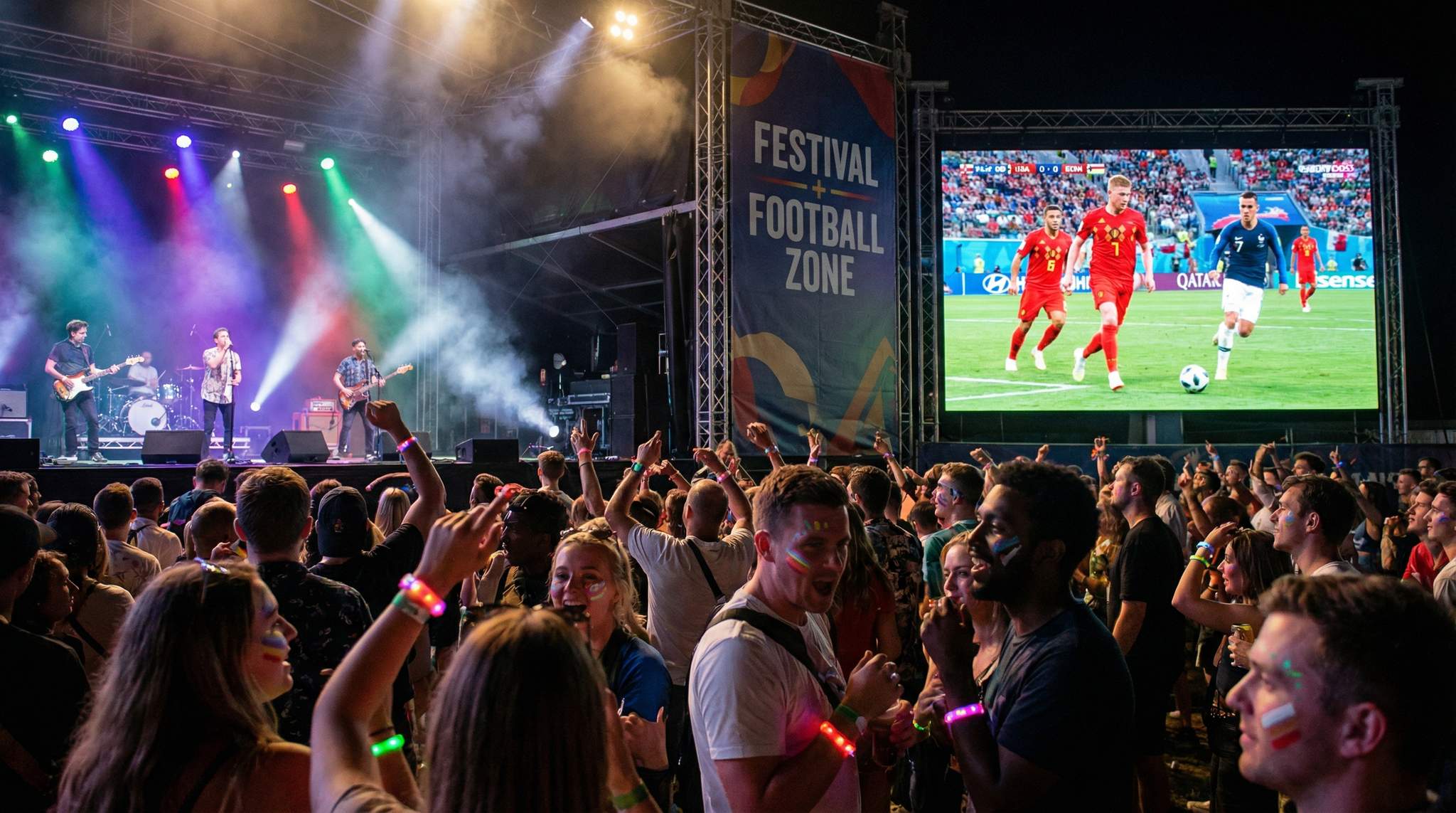
If you can’t beat ’em, join ’em – many festivals will find success by incorporating World Cup viewing into their on-site experience. Setting up a dedicated World Cup viewing zone with giant LED screens, professional sound, and plenty of space can turn a potential conflict into a festival highlight. Schedule it like a stage: when a big match kicks off, other programming can be paused or toned down so that fans who want to watch can gather without feeling they’re missing the festival. This keeps attendees on-site instead of leaving for the nearest pub or parking lot stream. For example, during the 2018 World Cup, Belgium’s Rock Werchter festival famously televised the national team’s quarter-final, creating an electrifying crossover moment as 80,000 music fans roared for football goals and guitar solos in the same field. Likewise, at Glastonbury 2019, organizers showed England’s Women’s World Cup QF match on the West Holts Stage screens to ensure attendees didn’t miss the action – illustrating that even the biggest music festival in the UK knew when to pause the music for a nation’s passions.
To do this right, plan the logistics rigorously. Source an LED screen and projection setup suitable for daylight viewing (if matches fall during afternoon). Ensure you have a reliable broadcast feed; consider the rights and licensing – in some countries, public screening of World Cup matches at a ticketed event may require permission from broadcast rights holders or FIFA. In practice, many festivals partner with a sponsor (like a beer or electronics brand) to create the “Fan Zone” and handle the broadcast arrangement. Provide ample concessions near the viewing area, since fans will settle in for 90+ minutes; this can actually boost your food and drink sales during what might have been a slow period. Also, reinforce your power supply – broadcasting sports live is tech-intensive, and you don’t want a power trip right at the penalty shootout. (When the main stage power failed during a World Cup screening at a 40,000-capacity festival in 2014, it taught producers a hard lesson about backup generators!). Schedule some festival content around the viewing to keep non-fans entertained (e.g., street performers or DJs at a smaller stage) and to re-energize the crowd right after the final whistle with a live act so the festival vibe picks up immediately.
When planning these viewing zones, organizers must carefully weigh their 2026 FIFA World Cup broadcast options and evaluation factors. Key considerations include commercial public viewing licenses (which FIFA strictly regulates for ticketed events), the technical reliability of satellite versus IP-based streaming feeds, and hardware requirements like daylight-readable LED walls. Evaluating these broadcast options early ensures you don’t face last-minute legal cease-and-desists or technical blackouts during a crucial penalty shootout.
Thematic Collaborations and Crossover Content
Instead of viewing the World Cup as a pure competitor, think of ways to integrate it thematically. This global spectacle celebrates international culture – which is something many festivals do as well. Some ideas to consider:
- Global Village Attractions: Set up areas in your festival that celebrate the cultures of World Cup nations – e.g., a food court featuring dishes from around the world, or art installations with international flags. This can attract both football fans and globally minded festival-goers, reinforcing that your event embraces the worldwide party.
- Football-Inspired Activations: Engage attendees with fun football-related activities. Perhaps there’s a mini soccer pitch for impromptu matches or penalty kick contests. Organize a celebrity or artist footy match if logistics allow – artists versus fans charity game on festival grounds, anyone? These kinds of crossover activations can generate press buzz and social media content (imagine bands posting about the match they played against fans).
- Merchandise & Memorabilia: Limited edition festival merch with a football twist could sell well – think jerseys or scarves co-branded with festival artwork. (Be careful not to infringe on FIFA trademarks; keep designs original and fun, like a soccer ball with your festival logo). This not only drives revenue but also gives attendees a unique souvenir of the year your festival and the World Cup collided.
- Themed Days or Stages: If your festival spans multiple days, you might theme one day loosely around “international celebration.” This could influence your lineup (book a couple of artists from countries playing that day), your décor (flag buntings, etc.), and even your greetings or announcements (“Happy World Cup Day!” messages on screens). It signals that the festival is part of the global party, not tone-deaf to it.
Crucially, any thematic integration should feel authentic to your festival’s brand. If your event is a hardcore underground music festival, a sudden soccer theme might feel forced – instead, maybe just have a subtle viewing area and keep the rest low-key. But if your festival has a broad audience or a cultural angle, leaning into the World Cup vibe can enhance the experience. The goal is to add value for attendees, not to distract from your core identity. When done right, festival-goers will remember that year as a uniquely festive one where music and sport united. As one industry veteran put it, “We stopped fighting for our crowd’s attention and celebrated with them – it made the atmosphere twice as electric.” This kind of positive memory can boost loyalty and word-of-mouth.
Free Tool: Will the Money Be There in Time?
Map your deposits and balances against when ticket money reaches you. See your lowest balance and how much you need to find before it arrives.
Integrating Sports Festival Production Elements
For some organizers, 2026 presents an opportunity to pivot toward dedicated sports festival production. Rather than just adding a screen to a music event, producers are designing hybrid events where athletic competitions, interactive soccer clinics, and e-sports tournaments share equal billing with musical headliners. Executing a sports-centric festival during the World Cup requires specialized production logistics, including reinforced turf protection for active play areas, specialized sports lighting rigs, and dynamic crowd control barriers designed for active participant movement rather than static viewing. By adopting these specialized production strategies, your event can capture the demographic of highly active fans looking for immersive, physical engagement before the daily matches begin.
Aligning Schedules: Music and Matches in Harmony
To maintain a great experience, adjust your festival schedule so that the biggest matches don’t clash with your most important performances. This doesn’t mean halting all music for every game – but be strategic. For example, on the day of a World Cup final or a crucial semi-final, avoid scheduling your headliner during the match. Instead, use that time for the viewing event or for lower-key programming. You might put instrumental or ambient performers during the match as a subtle background for those not watching football. Then, time your headliner to start soon after the match ends (leverage the energy, especially if the local team wins) or earlier in the day before kickoff.
Artists and crews can be surprisingly understanding if you build the schedule around an event like the World Cup – many of them are fans too. Open communication is key: let your booked talent know why set times might be unusual in 2026. Some festivals in sports-mad countries have even shifted their daily start/end times – e.g., starting earlier in the morning so that stages can break during a big 3pm match, then resuming after the final whistle and running slightly later into the night (with local authority permission). Just be sure to update all your planning documents and contracts clearly if you intend to deviate from standard running orders. The last thing you want is an agent upset that their artist’s set was moved to accommodate a game – head off any misunderstandings by baking it into the deal (even highlighting, for instance, “Stage will be dark from 7–9pm for World Cup broadcast” in offers and schedules).
Another tactic is to use the match breaks to your advantage by delivering other content. For instance, halftime is typically about 15 minutes – a perfect slot for a short surprise performance or special announcement on the festival PA. Imagine a popular comedian doing a quick halftime set at your viewing area, or a drum troupe parading through the grounds to keep energy up. Get creative so that the transition back to festival mode after a match is smooth and exciting.
Safety and Vibe Management During Matches
Bringing World Cup fever into your festival comes with some crowd management considerations. Football matches, especially knockout games, provoke strong emotions. Be prepared for surges of excitement or frustration in the viewing areas. Bolster your security and medical teams during match screenings – much like you would for a peak headliner – as large groups watching a tense game can occasionally lead to heat exhaustion (when packed in sunlight, fixated on a screen) or scuffles if rival fans are present. Many experienced producers treat a big match like they would a major act in terms of risk assessment: clear ingress/egress routes in the viewing zone, barriers if needed to control density, and staff trained to de-escalate any heated fan interactions.
Also consider your alcohol management. If your festival serves alcohol, expect an uptick in consumption during a high-stakes game. Work with vendors to maybe pause alcohol sales right around the end of a match if you sense things are too rowdy, or have water freely available to keep people hydrated. Some festivals implement a temporary court-like ban on drinks in the immediate viewing front zone to prevent thrown cups when goals are scored – though this might or might not be necessary depending on your crowd. Know your audience: a family-friendly festival will have different concerns (e.g., ensuring kids have ear protection if the crowd gets loud, or providing a quiet area for those sensitive to noise) versus a youth-oriented festival (where you might need more crowd control).
Data-Driven Event Marketing
Track ticket sales, demographics, marketing ROI, and social reach in real time. Exportable reports give you the insights to make smarter decisions.
Finally, keep the festival spirit alive even during match times. Encourage a positive atmosphere: have your MCs or video screens remind people “We’re here together – whether for the music or the football or both, let’s enjoy it all!” This sets a tone of unity. If the local team wins, be ready to celebrate – maybe an impromptu encore by a hometown artist or a fitting song played over the system. If the team loses and fans are upset, have your next act acknowledge it empathetically and then lift the mood with great music. In short, weave the two passions together so your festival remains a cohesive, safe environment.
Rethinking Marketing & Promotion in a World Cup Year
Cutting Through the Noise: Stand-Out Messaging
Summer 2026 will see World Cup headlines dominating media and social feeds. Festival marketers must accept that traditional promotional windows might get crowded out by football news. How can your festival announcements and ads cut through this noise? One tactic is timing: avoid launching major ticket sales or lineup announcements in the middle of World Cup mania (for instance, don’t drop your lineup the same week as the World Cup opening ceremony or knockout stages – it may be overlooked). Instead, aim for either well before the tournament starts or in the lull right after it ends, when people are coming off the football high and looking for the next thing to enjoy. If you must promote during the Cup, do it on days with fewer marquee matches (perhaps days with no local team playing, or the rest days between tournament rounds).
Next, sharpen your messaging to highlight what makes your festival worth attending despite the World Cup. Emphasize exclusive features: are you offering a once-in-a-lifetime headliner performance? A unique theme or community experience fans won’t get from watching matches at home? Focus on FOMO – the fear of missing out – by showcasing festival moments that can’t be replicated. For example, use video footage of past festival crowds in ecstatic moments, reminding audiences that live festival energy is irreplaceable, even in a big sports year. You may even gently acknowledge the World Cup in marketing: e.g., “This summer, the whole world comes together… and not just for football. Join 50,000 fans in a different kind of celebration at [Your Festival].” The idea is to ride the cultural wave without directly competing.
If your festival is targeting demographics less invested in soccer, double down on reaching them. Families, certain music subcultures, or older audiences might be less impacted by World Cup fever. Tailor ads and content to those groups, highlighting amenities or themes that appeal to them. On the flip side, for hardcore football fans, your marketing can acknowledge their passion and assure them they won’t miss out: “Love music and football? We’ve got you covered – live World Cup screenings by day, live bands by night!” By addressing the concern upfront, you build trust that attendees won’t be forced to choose one love over another.
Social Media and Content Strategy During World Cup
Social media engagement will be tricky during the tournament, as feeds will be filled with match commentary, memes, and trending hashtags like #WorldCup2026. Your festival’s social team should plan content that remains relevant and visible without trying to fight the tide. One approach is to embrace the tournament conversationally: light-hearted posts that reference big moments (“We’re warming up the stages while Team USA warms up the pitch! Who else is multitasking festivals and football this summer?”) can humanize your brand. However, beware of overdoing it or appearing opportunistic with official logos or slogans – FIFA is strict about ambush marketing, and you don’t want to violate any rules by implying an official association. Use generic terms like “football” or “global soccer fest” if needed rather than “FIFA World Cup™”.
Consider creating a content calendar that interweaves with the World Cup schedule. For example, on days of huge matches, your content might lean into fun, low-sales posts (memes, behind-the-scenes festival prep with a football twist) rather than pushing ticket deals. On quieter days, post your more important announcements. If you have artists on your lineup who are big football fans, collaborate with them for cross-content – maybe a short video of them juggling a ball backstage while inviting fans to see them at your festival. User-generated content can also be powerful: encourage your followers to share how they’re representing the festival while watching the World Cup (perhaps wearing your festival merch at a viewing party) and reshare the best posts. This keeps your community engaged and feeling like the festival is part of their whole summer, not separate from the World Cup experience.
Boost Revenue With Smart Upsells
Sell merchandise, VIP upgrades, parking passes, and add-ons during checkout and via post-purchase emails. Increase average order value by up to 220%.
In terms of paid advertising, adjust your targeting and spend. Online ad costs might spike for entertainment keywords during the World Cup as many brands compete. It could be wise to focus on highly targeted campaigns (e.g., geo-targeted ads in your region, or interest-based targeting for music fans specifically) rather than broad campaigns that will drown under world cup ads. Also, explore alternative channels: maybe lean more on email marketing, where you’re not vying with sports content, or local radio and community newspapers (which might have special “summer events” features even amid sports coverage). And don’t forget SEO – ensure your festival website is optimized so anyone searching for things to do during that summer can find you easily, considering Live Nation’s co-production of fan festivals. Some people will literally search “events during World Cup near me” if they’re not into football, or if they travel to a host city and look for other activities – you want to appear in those results.
Collaborative Promotions and Cross-Audience Appeals
Think laterally about partnerships: 2026’s big event could open doors to creative cross-promotions. For example, team up with sports bars or sports media in your area – perhaps ticket buyers to your festival get a discount at a local World Cup fan bar, and the bar in turn displays your festival posters or streams your artist playlists on non-game days. Or partner with a travel company targeting World Cup tourists: they could offer an add-on festival experience for visitors (imagine international fans in town for a match getting a package deal to attend a local festival as part of their trip). These partnerships can expand your reach to audiences who wouldn’t normally be in your funnel.
Sponsorship tie-ins can also bolster marketing. While many big brands pour their budget into official World Cup sponsorships, some mid-tier and local sponsors might be looking for ways to capitalize on the football craze without paying FIFA prices. This is an opportunity: a sports apparel company, a regional brewery, or a telecom provider not officially tied to FIFA could sponsor your festival’s World Cup viewing lounge or international stage. In exchange, they promote your event through their channels, effectively widening your marketing reach. Just ensure any co-branded messaging is clear about what it is (your festival’s fan zone, not an official FIFA event) to avoid confusing the public or irking FIFA’s branding police.
Another angle is community engagement marketing. Recognize that while the world’s eyes are on soccer, not everyone is a soccer fan or they won’t watch every match. Position your festival as a haven or complement to the World Cup. For instance, if your local community has a sizable immigrant population whose home country is playing, you might do outreach: “Cheer on your team in the afternoon, then come celebrate your culture with us at night – featuring [Band from that country] on our stage.” Community groups, cultural associations, and university alumni clubs can be allies in spreading the word for such programming. This kind of positioning not only helps attendance but builds goodwill and a reputation that your festival cares about what the community cares about.
Lastly, be prepared to extend your marketing push later than usual. Ticket buying patterns might shift in 2026 due to the World Cup capturing attention. Many producers expect a high rate of last-minute festival ticket purchases that year – fans might wait to see if their team gets knocked out before committing to a festival, for instance. So allocate budget for a strong final marketing blitz once the World Cup is winding down, enticing those who suddenly realize they want a big party before summer ends. Messaging like “Now that the Cup is over – keep the excitement going at Our Festival next weekend!” could resonate perfectly in mid-July.
Sponsorship and Revenue: Navigating the 2026 Landscape
Sponsor Budgets in a World Cup Year – What to Expect
Global brands often spend heavily on World Cup advertising and sponsorship – think Coca-Cola, Budweiser, Visa, Adidas – which collectively shell out hundreds of millions to be part of the FIFA spectacle. This means some marketing budgets will be tighter for other summer events. Festivals that rely on big-name sponsors might hear responses like “we’ve allocated a lot to World Cup campaigns this year” more often. It’s important to gauge early on which of your past sponsors are committing significant resources to the World Cup, either globally or in host cities. For example, if a major beer company has the exclusive beer rights at World Cup fan festivals, they might pull back or delay a decision on sponsoring your beer garden. The worst outcome is finding out in April 2026 that a usually reliable sponsor can’t contribute as much as before – so start those conversations early (in 2025) to get a sense of intentions.
On the flip side, the World Cup can also shake loose new sponsorship opportunities. Brands that aren’t official World Cup partners – including competitors of those who are – may seek alternative ways to capture consumer attention during the summer. Your festival could be an attractive platform. A non-sponsor energy drink or telecom company might see your audience as a way to run a cool summer promotion outside the FIFA umbrella. The key is to package your festival’s value proposition in terms that resonate in 2026: emphasize your attendance demographics, engagement levels, and how you can integrate sponsors in meaningful ways, from traditional logo placements to interactive on-site activations. Show how a sponsor at your event can get quality face-time with thousands of potential customers in a fun environment, versus the impersonal reach of a TV ad during a match.
Creativity in sponsorship packages will go a long way. For instance, propose a “World Party Lounge” sponsored by a brand, where fans at your festival can catch highlights or play foosball and also sample the sponsor’s product. Or a tech sponsor could power an AR experience in your app that ties into both music and soccer themes. By tailoring sponsorship opportunities that subtly nod to the World Cup zeitgeist, you make your festival sponsorship feel timely and relevant.
Here’s a quick look at how sponsor categories might shift focus in 2026 and where festivals can fit in:
| Sponsor Category | World Cup Involvement | Festival Opportunity |
|---|---|---|
| Beverages (Beer & Soda) | Big brands like Budweiser, Coca-Cola are official World Cup sponsors. Huge spend on stadiums, fan fests, TV ads. | Pitch to rival or craft brands. A regional craft beer or emerging soda brand may jump at exclusive pouring rights at your festival since the big players are busy elsewhere. |
| Financial Services | Visa has World Cup exclusivity in payments, massive global campaign. Other banks/cards can’t use World Cup logos. | Approach competing financial companies or fintech firms. Emphasize targeted engagement: “Directly reach 20,000 young consumers at our event” as opposed to competing with Visa globally. |
| Telecom & Tech | Likely heavily involved in World Cup (telecoms sponsoring fan connectivity, tech showcases at fan zones). | Focus on local ISPs, gadget brands, or startups. Perhaps a local telecom sponsors your festival Wi-Fi or charging stations, branding it as a service to fans . They get goodwill without World Cup’s clutter. |
| Automotive | World Cup might have a car sponsor (e.g., Hyundai/Kia traditionally). | Competing car brands or local dealerships could sponsor stages or provide shuttle vehicles for your fest. Offer test-drive promotions on-site for an experiential angle. |
| Travel & Tourism | Airlines, hotels, and tourism boards spend around World Cup to attract travelers. | Partner with tourism boards and travel companies for your region. If tourists are coming for matches, a tourism board might fund your cultural festival as an official side-attraction. Co-brand with “Visit [City]” initiatives. |
| Consumer Goods & Apparel | Sports apparel giants dominate World Cup. Others (fashion, cosmetics, daily products) might not invest there. | Sell them on lifestyle branding at your event. A sunglasses company or fashion retailer could do a pop-up store or sponsor the VIP area, tying into summer festival vibes when they’re not spending on sports. |
To understand the competitive landscape, organizers should look at major brand movements, such as the anticipated Kia FIFA World Cup sponsorship 2026 strategy. Automotive giants like Kia will deploy massive, multi-channel marketing campaigns, particularly focusing on host markets with deep integrations—offering valuable marketing strategy insights for events operating in Canada, the US, and Mexico. Because these official sponsors will dominate the primary sports media inventory, independent festival producers must pivot their pitch. If an official automotive partner is blanketing the host cities with fan zone activations, your festival can offer competing regional dealerships or alternative transit brands (like rideshare apps or regional rail lines) a targeted, uncluttered environment to reach young, affluent attendees who are actively avoiding the mainstream football crowds.
As always, ensure any sponsor integration feels organic to your attendees. Festival-goers can sense when something is a forced advertisement versus a cool added experience. Lean toward interactive and experiential sponsorships – these give brands value beyond a banner, and they enhance the event for attendees (like free product samples, fun photo booths, lounges, etc.). In a World Cup year, attendees will have been bombarded with passive ads; your festival can offer them a two-way engagement with a brand, which is refreshing and memorable.
Strength in Community: Local and Non-Traditional Partners
If national corporate budgets are strained in 2026, look closer to home. Local businesses and regional sponsors can become important allies. These might include local breweries, restaurants, media outlets, or even universities and cultural institutes. They have a direct interest in keeping local entertainment thriving during the World Cup, especially if your city isn’t hosting matches (or even if it is – they want spillover business). For example, a coalition of downtown businesses might pool funds to sponsor part of your festival so that you bring foot traffic to the area on a weekend when people might otherwise stay home watching TV. Or a local sports club could partner to run the on-site football activities in exchange for promotion and maybe a share of revenue from a skills contest. Tapping into local patriotism and pride can unlock support: if your festival can be framed as “our city’s way of celebrating through music while the world celebrates football,” you may find community sponsors eager to be part of that narrative.
Government and tourism bodies are another avenue. City councils, arts councils, or tourism boards often have special funding for cultural programs, especially when a big event is drawing visitors. Explore grants or one-time funds for 2026 that could support your festival if it aligns with showcasing local culture. For instance, if your city expects thousands of international visitors for matches, the tourism board might sponsor your festival to offer those visitors additional entertainment (and keep them in town longer spending money). This is a different dynamic from a normal year, where such agencies might not have spare budget for festivals – but World Cup years often come with windfalls directed at “city experience” enhancements.
Also consider allying with other festivals or events in resource-sharing or cross-promotion. 2026 might not be a year of cutthroat competition between events; it could be a time to band together. Independent festivals have found success forming alliances to share costs and audiences. You might coordinate scheduling with a neighboring festival to ensure you’re on different weekends (so you can promote each other as a package: two great festival experiences around the World Cup, rather than splitting the crowd on one weekend). Or share infrastructure – maybe you jointly rent a big screen that moves from their event to yours. When global factors squeeze the industry, collaboration can turn zero-sum scenarios into win-win. At the very least, open a friendly channel with other event producers in your region about the World Cup impact; you may discover opportunities to support each other, like swapping vendor contacts or co-hosting a joint “festival night” at a fan zone to market your events.
Delivering Value: What Sponsors Want in 2026
In any sponsorship pitch for 2026, be mindful of what sponsors are particularly keen on during a World Cup year: visibility, alignment, and analytics. Visibility because everyone is fighting for consumer attention – so highlight how your festival provides in-person visibility (something digital World Cup ads can’t) to an engaged audience for multiple hours. Alignment because brands that aren’t officially part of the World Cup still want to ride the wave – so show how your festival’s values (celebration, community, international music, youth culture, etc.) align with the positive emotions around the World Cup without using any protected symbols. And analytics because marketing spend is scrutinized – be prepared with data and post-event reports to prove ROI. If you can use your ticketing or RFID tech to give a sponsor stats like “10,000 people visited your sponsored stage and spent an average of 20 minutes there,” that’s gold given the record-breaking global viewership stats.
Additionally, lean into the long-term relationship angle. Some sponsors might have scaled back on festivals in 2026, but if you show flexibility and partnership, they’ll remember it next year. Maybe a sponsor can only contribute half their usual amount in cash – could you accommodate with a smaller package or accept in-kind support (e.g., they provide some equipment or cross-promotion)? Keeping them involved, even at a smaller scale, maintains the relationship for the future. Emphasize how sponsoring your festival in a challenging year demonstrates their commitment to the community and the arts, which reflects well on their brand. Being a loyal partner when times are tough often leads sponsors to double down when times get better.
One caution: watch out for any ambush marketing conflicts. If you do secure a sponsor that is a competitor to an official World Cup sponsor (say, you bring on PepsiCo brands because Coca-Cola is tied up with FIFA), be careful with any co-promotions in World Cup contexts. Avoid implying any official connection or doing something like handing out flyers at World Cup stadiums – that could breach laws or contracts. Keep festival sponsorship activities within your event and marketing channels. Essentially, enjoy the indirect boost that the big event offers, but play by the rules so you don’t risk legal issues or reputational harm.
Operations, Staffing & Logistics: Summer 2026 Adjustments
Battling the Brain Drain: Crew and Staff Retention
One often-overlooked impact of a World Cup year is on staffing. The event industry will be stretched – from stagehands and sound techs to security personnel and medics. Host cities need massive staff for stadiums and fan zones, and even non-host regions may see workers taking gigs abroad or simply taking time off to enjoy the Cup. Festivals in 2026 must plan early to secure their core crew. Many producers are already facing staffing shortages post-pandemic, so this adds another layer.
Start by locking in key personnel well in advance. Reach out to your trusted production managers, stage crews, and contractors and get them to commit to your dates before they sign on to World Cup-related jobs. You may need to offer incentives – perhaps a small “World Cup year bonus” or perks like extra time off during the festival for them to catch important matches if they’re fans. Flexibility can build loyalty; for example, if a stagehand really wants to watch the final and your festival is on that day, could you adjust schedules or set up a staff viewing area backstage? These gestures can convince staff to stick with you rather than chase a possibly higher-paying but short-term World Cup contract.
Also, widen your recruitment net. Look at pools of potential crew who might not be as distracted by the World Cup. For instance, tap into local student communities or event management program graduates – they might be eager for festival experience and less likely to be hired for official FIFA events. Retirees or older volunteers (for roles like ushers or info booths) could also supplement if younger typical staff are scarce. Some festivals in 2026 are even considering raising volunteer stipends or offering free tickets to a future event as a way to attract reliable help if paid crew is thin. Remember that any labor gaps could potentially be filled with technology solutions as well – many festivals are accelerating automation like cashless systems and self-service check-in, while short-term rental bookings surge in host cities, to reduce the number of staff needed. While you can’t automate a stage crew, you can streamline areas like ticket scanning, bar service (to an extent), and information desks to alleviate the manpower load.
Communication is crucial: talk to your vendors (security firms, cleaning companies, etc.) about their staffing plans. Make sure they aren’t planning to pull half their team for a fan zone contract at the last minute. Build clauses into contracts about staff substitution or minimum staffing levels, so you have some recourse if they under-deliver. It’s worth having a backup agency or two in mind for critical services – even if they’re more expensive or not your first choice, a Plan B could save you if your regular vendor suddenly can’t supply the agreed workforce.
Equipment, Rentals and Supply Chain Considerations
Demand for event infrastructure will be off the charts in summer 2026. Huge temporary setups for fan festivals, sponsor events, and city celebrations will require staging, lighting, video walls, generators, tents – many of the same items your festival needs. Expect longer lead times and possibly higher prices for rentals. To mitigate this, book essential equipment as early as possible. By late 2025, identify your needs for stages, towers, big screens, etc., and start locking them in with vendors. If you wait until spring 2026, you may find everything in your region has been reserved by World Cup events or other festivals front-running the scramble.
One strategy is to explore suppliers outside the usual circle. If a lot of gear is being pulled into World Cup host cities, maybe vendors in non-host cities or neighboring states/provinces have availability. You might have to pay a bit more for transport, but at least you secure the inventory. Another approach is resource-sharing alliances with fellow festivals. If you know a festival taking place right after yours, consider jointly purchasing certain equipment and sharing the cost, or consecutively renting (the gear goes from your festival straight to theirs, with one delivery charge). These kinds of collaborations can save money and ensure someone in the alliance has what’s needed. For example, a coalition of independent festivals in Europe have in the past combined orders for everything from fuel to fencing, getting bulk rates and priority service – 2026 is an ideal year to revive such practices.
Don’t forget about production essentials like AV gear and special effects. The best audio engineers and high-end PA systems might get scooped up for high-profile sponsor parties or ceremonies. If your festival demands top-tier production, secure those contracts early and be upfront about the World Cup timeline so suppliers understand why you’re in a hurry. It may even be worth paying deposits sooner than normal to lock things in (just make sure the vendors are reputable and the deposit terms protect you from non-delivery).
Logistics around deliveries and freight also need a close look. Host cities will have heightened security zones and transport restrictions around match days – if you’re in or near one, plan your load-in/out carefully. A city might ban heavy trucks on match day for security, for instance. Work with local officials to get the necessary permits or escorts if you must move gear on those days, or adjust your schedule to avoid it. Additionally, international shipping in 2026 could be congested if equipment is being imported for the World Cup (like specialized staging from Europe to North America). Order items like custom staging elements or lighting rigs well in advance to buffer any shipping delays.
Travel, Accommodation & Local Infrastructure
For festivals drawing international or out-of-town attendees, travel and accommodation pose challenges in 2026. Flights to host cities will be more expensive and possibly fully booked on certain dates. Even if your festival isn’t in a host city, nearby airports could be busier. Encourage your attendees to plan travel early – perhaps include travel tips in your communications (“Book flights by X date for the best rates, as World Cup games may affect prices”). If you typically arrange travel packages or shuttles, coordinate with airlines or bus companies on group rates, since they’ll appreciate predictable bookings amidst volatile demand.
Local accommodation (hotels, Airbnb, campgrounds) might also be tight. If your festival is near a host city, many hotels might prioritize football fans or teams. Secure room blocks early for your artists, VIPs, and critical staff. You may need to expand the radius of where you book – maybe lodging crew a bit further out of town and shuttling them in if central hotels are too costly or sold out. Communicate with your attendees about lodging options: promote camping at your festival if you offer it, or partner with hotels in smaller towns nearby that might have availability. Some tourism boards maintain lists of alternative accommodations (like university dorms or homestays opened up for big events); tap into those resources for your guests.
Traffic and transportation infrastructure will be under strain around match dates. Work closely with local transport authorities on your traffic management plan. Attendees might face road closures or public transit re-routes on days when matches occur. Include this info in your event app or website: e.g., “On June 26 (match day in our city), use exit Y instead of X due to road closures near the stadium.” If you run shuttle buses or park-and-ride, coordinate times so they’re not stuck in post-match congestion. It could even be strategic to slightly adjust your festival hours on a big match day – for instance, start entry earlier to get people in before local game traffic peaks, or end a bit later to let traffic die down.
One potential uptick is the availability of unique infrastructure: since host cities are investing in things like better connectivity, you might find improved internet or temporary cell towers that benefit your festival. 5G mobile units or satellite internet might be deployed for the influx of visitors, improving infrastructure in a changing market, which you could coordinate to support festival Wi-Fi or cashless payment systems. Stay in the loop with city planners to leverage any temporary utilities being put in place.
Risk Management: Expect the Unexpected
Risk planning for 2026 should include some World Cup-specific scenarios. For instance, consider the risk of a big match result causing extreme behavior – if the local team wins (or loses) dramatically, could there be city-wide disruption that impacts your event (crowds celebration, public transit overwhelm, or in worst cases, civil disorder)? Liaise with law enforcement on what to expect and have contingency for securing your festival site in case a spontaneous parade of fans comes near it. Conversely, plan for the emotional impact on the crowd – a devastating loss for the home team could deflate the mood; a huge win might lead to rowdiness. Train your staff and volunteers on these possibilities: much like you prepare for weather events, prepare for emotional crowd waves. An attendee who just watched their team get eliminated might need as much cheering up as one drenched in a rainstorm!
It’s worth reviewing your insurance and contracts in this context. Standard event insurance likely won’t cover losses due to “people stayed home to watch football” – that’s a business risk you absorb. But ensure you have coverage for any physical damage or liability that could connect to having large crowds watching matches (check with your insurer if adding a screen or sports viewing requires any additional rider or consideration under your policy). Additionally, check artist and vendor contracts for flexibility: if you had to delay a set due to an overtime game or reschedule a load-in because a street was closed longer, will your contracts allow that without penalty? Building in a bit of timing cushion in agreements (or at least mutual understanding of the World Cup factor) can save you from breach of contract issues.
By thinking through operations with a World Cup lens, you’re effectively doing a specialized contingency plan. It might feel like extra work now, but come festival time, you’ll be grateful for every scenario you pre-solved. Many veteran organizers can recount stories of global events catching events off guard – from power generators reserved for a Super Bowl that left a concert short, to local police stretched thin by a championship parade, affecting festival security response. Those who had a plan B in place weathered it best.
Audience Experience: Keeping Attendees Happy (Football Fans or Not)
Know Your Crowd: Audience Analysis in 2026
Understanding your audience’s makeup is critical this year. Use all the data at your disposal – past attendee surveys, social media polls, ticket buyer demographics – to estimate what portion of your likely attendees are avid football fans versus indifferent. If your festival skews younger, male, and local, chances are a good chunk will be invested in the World Cup. If you skew older, family, or genre-specific (e.g., an alternative arts festival), the overlap might be smaller. This informs how much you need to lean into accommodating football interest.
For the football fans in your crowd, the goal is mitigation of conflict. You want them to feel they can enjoy both passions. This includes all the measures discussed: scheduling around key matches, providing viewing options, and maybe offering on-site football-themed content. Essentially, show them “you won’t miss out if you come to the festival.” Some festivals might even offer re-entry on specific days as a gesture (e.g., if someone truly insists on leaving to watch a match elsewhere and coming back, you might allow a special re-entry policy that day – though controlling that can be difficult). Another idea is a mobile app alert system: if you have a festival app, let users opt in to get important match score updates. A fan dancing in front of a stage might appreciate a subtle buzz that “England scored a goal!” – it lets them stay in the moment at the festival without total FOMO for the game. Small touches like this show you’re thinking about them.
For the non-fans, the message is escape and alternative. Many people who don’t care about the World Cup will actively look for things to do away from it. Market your festival to them as a haven: “Not into football? Lose yourself in art and music with us – the perfect getaway from the match madness.” On-site, you also need to cater to them during match times. Ensure that if, say, half your crowd is at the screens cheering a game, the other half have something to do – maybe a quieter acoustic set in a different area, wellness workshops, art installations to explore, etc. Give those not watching the match a rich experience so they don’t feel second-class or bored. Also, provide physical spaces that remain football-free: for example, a chill-out tent where no games are shown, for those who truly want zero part of it. They’ll remember that you respected their preferences too.
Crucially, communicate clearly to attendees what to expect. In your program, app, and signage, indicate which areas will be showing matches and when, versus which will be “football-free zones.” Attendees can then self-select where to be. Transparency avoids scenarios like an unsuspecting person walking into a loud fan zone and being uncomfortable, or a football fan missing the first 10 minutes because they didn’t realize you had a screen up on the other side of the grounds.
Enhancing Festival Value Proposition
In a year when some potential customers might be saving money for World Cup trips or tickets, you need to make your festival’s value proposition shine to maintain strong attendance. This might involve sweetening the deal. Consider offering flexible ticket options tailored to the hesitant fan. For example, introduce a “World Cup pass” – a slightly discounted ticket that might start after the group stage, for those who didn’t want to commit before knowing the match outcomes, or a multi-day pass that allows one transferrable day (so if someone attends two days and wants to give their third-day ticket to a friend because their team reached the quarterfinals that day, they could do so within your system). Ticketing flexibility can convince someone on the fence that they won’t waste their money if they end up glued to a TV for part of the weekend. Platforms like Ticket Fairy can help facilitate such custom ticket rules, given their advanced ticketing features and customer-focused tools.
Focus as well on experience enhancements that justify the spend. If someone is deciding between spending $200 on festival tickets or on a new big-screen TV for the World Cup, how do you tip the scales? Emphasize the intangible: community, memories, multisensory immersion, and the fact that a festival is live. Perhaps bolster your lineup or attractions slightly in 2026 to add extra “wow.” This could mean booking a special guest artist (maybe someone who’s doing only a few shows, or a unique collaboration set), or investing in a spectacular art piece or fireworks – something that says “this will be an epic party you can’t replicate at home.” Some festivals are planning one-time offerings like limited capacity immersive areas or secret shows to create buzz. These can be marketed as “in addition to all the World Cup hype, we’ve got our own surprises.” If potential attendees feel they’ll get more for their money at the festival than they would from simply watching games (which are free on TV), they’ll commit to attending both.
Don’t underestimate the draw of social connection. After the isolation of the pandemic years, people value being in crowds and communal events – the World Cup provides that in one way, but festivals provide it in another, often more personal way. Your marketing and programming should highlight the social nature of your festival: campgrounds, group activities, meetups, etc. For someone only mildly into football, the thought of “all my friends will be at the festival dancing together, versus me sitting alone watching a match” can influence their choice. Leverage your community of past attendees: user testimonials like “I met my best friends at this festival” or “the festival weekend was the highlight of my summer” can remind folks why festivals matter, World Cup or not.
Inclusivity and Cultural Sensitivity
With a global event in the backdrop, your festival may actually attract a more diverse crowd. You might see an uptick in international attendees – for instance, fans traveling for matches who look for other events, or international students staying around for summer. Ensure your festival remains inclusive and welcoming. Simple touches like signage in multiple languages for key info (maybe Spanish and French, given the North American World Cup context) or having some volunteers who can help non-English speakers can make a difference. If you have world food vendors or cultural showcases, highlight them – it dovetails nicely with the spirit of international unity that a World Cup fosters.
Be mindful of cultural sensitivities too. World Cup can sometimes bring nationalist fervor; keep an eye out for any inappropriate behavior (e.g., a couple of overly boisterous fans from rival countries getting into arguments). Train your staff on cultural awareness – for example, understanding that some gestures or chants that might show up have different meanings to different groups. Your security should handle any discriminatory or overly aggressive behavior with zero tolerance. Fortunately, festivals by nature are about peace and coming together, so there’s a good chance the vibe stays positive. In fact, your festival could become a mini United Nations: you might see flags of many countries being worn as capes or hung at campsites. This can be beautiful – encourage it! Maybe facilitate a flag parades or group photos for people from various nations attending. It gives a sense that your festival is part of something bigger.
For those attendees who are doing both – attending World Cup matches and your festival – help them out. Provide info they might need, like secure lockers or a bag check if they’re coming straight from a stadium with bags (since stadiums have restrictions). If someone shows up late one day because they were at an earlier match, have a clear system for them to get in smoothly. These thoughtful details in customer service will earn you lifelong fans. As an experienced organizer knows, it’s the small gestures (free water refill stations, a helping hand with directions in the local language, etc.) that often get remembered and praised.
In summary, keep your attendees at the heart of decisions. By actively managing the attendee experience with 2026’s unique context in mind, you maintain the quality and reputation of your festival. Fans will appreciate that you went the extra mile to accommodate both the football frenzy and the festival magic. A happy attendee will spread the word – “I had an amazing time at the festival and watched the final with thousands of fellow fans there; it was the best of both worlds!” – that kind of feedback is what will sustain your festival through the World Cup summer and beyond.
Budgeting and Financial Resilience for 2026
Budget Forecasts: Plan for Different Scenarios
Financial planning in a World Cup year means building multiple scenarios. It’s prudent to be conservative in your base case: anticipate that ticket sales might be a certain percentage lower than a normal year, or that you may need to spend more on certain expenses (security, screens, last-minute marketing). Create a version of your 2026 budget that assumes, say, 10–20% lower attendance or revenue than usual, and see if the event is still viable. Then identify what can be adjusted to make it viable – perhaps scaling back one stage, reducing daily hours, or finding cost savings in production. Many successful festivals take a lean approach in challenging years, even as the World Cup is projected to revive the US tourism economy, focusing resources on delivering the core experience and cutting out “nice-to-haves” that most attendees wouldn’t miss.
At the same time, prepare an upside scenario: it’s possible that with the right strategy, your festival could match or even exceed normal sales (for instance, if you capture those not interested in football and face less competition from other events that chose to skip 2026). So have a plan for that too, especially operationally – if you end up with a surprise sell-out because you cornered the market on non-soccer entertainment, can your infrastructure handle it? Better to book that extra row of portable toilets or larger water supply in advance with an option to cancel if not needed, than to be caught short because you expected a smaller crowd.
Consider setting aside a contingency fund specifically for World Cup-related pivots. This might cover last-minute needs like additional screens if a home team makes a deep run and you decide to expand viewing, or extra staff for crowd control for a big match day. It could also buffer any sponsor shortfalls. For example, maybe you assume you’ll fill $100k in sponsorship, but only $60k comes through due to the climate – your contingency could cover the gap so you don’t have to slash programming last minute. Think of it as an insurance policy within your budget.
Also, scrutinize your cost structure for expenses that might inflate in 2026. Insurance premiums might rise (the insurance market for events has been tight amidst high demand for FIFA World Cup tickets, and they factor in any large external risks). Fuel costs for generators might fluctuate if travel demand is high. Even things like catering costs can go up if suppliers devote resources to stadium contracts. Talk to vendors now about pricing expectations; secure quotes or even fixed pricing if you can for critical items. Bulk purchasing certain supplies in 2025 (non-perishables, merch inventory, etc.) might save you from price hikes during the tournament period. It’s a bit like preparing for a peak season or even a mini inflation spike.
Ticketing Strategy: Flexibility and Creativity
To maintain healthy ticket sales, adapt your ticketing strategy to the unique customer mindset of 2026. Flexible options were mentioned earlier – these can be a game-changer. Some ideas to implement:
- Single-Day Passes and Partial Attendance: If you typically only sell full weekend passes, introduce single-day tickets for 2026. A fan may only be free on the non-match day or might choose to attend around their team’s schedule. Giving that option can secure a sale rather than losing them entirely. Price the single days attractively so it’s a lower barrier for someone splitting time between events.
- Group Offers: The World Cup is often enjoyed in groups; leverage that by offering small group packages for the festival (“bring 4 friends, get 5th ticket half off”). People already gathering for matches might be enticed to all go to a festival together as well if there’s a deal.
- Deposit or Installment Plans: Some fans are committing big money to travel or match tickets, so cash flow is an issue. Using a ticketing platform that supports installment payments can help – let buyers reserve their festival pass with a deposit and pay the rest after the World Cup when their wallet recovers. This lowers the hurdle to commit early.
- Refund or Exchange Policies: This one is tricky – typically tickets are non-refundable, but perhaps a limited-time World Cup guarantee could be offered: if the local national team reaches the final, allowing ticket holders who can’t attend the last day to transfer their ticket to someone else or get a partial credit for next year. This kind of goodwill gesture (with clear conditions and deadlines) could reassure hesitant buyers. Just handle it carefully to avoid abuse – and factor in the cost of potentially lost revenue. It might be acceptable if only a small fraction uses it (e.g., if by miracle USA or Mexico makes the final and a chunk of fans skip the festival final day, the goodwill and PR might outweigh the loss, and you could refill some spots with walk-ups anyway).
Communicate any special policies very clearly. Use your ticketing FAQ, email blasts, and social channels to explain how you’re accommodating the World Cup conflict. Customers will appreciate the transparency and customer-first approach, which builds trust. Remember that a lot of people will wait last-minute – so plan a robust last-minute sales drive. That means keeping some marketing budget in reserve, having your social media team geared up to respond quickly to inquiries (“Yes, tickets are still available!”), and operationally, be ready for a surge in sales the week-of. Ensure your online ticketing system can handle a spike. If you sell at the gate, staff up those ticket booths to avoid long lines, since procrastinators might all show up at once.
One more tip: use the World Cup as a marketing hook for ticket sales deadlines. For instance, “Score your festival ticket before the quarter-finals and get a free merch item” or “Ticket prices go up at kickoff of the World Cup!” These thematic twists on early bird deadlines or price tiers can spur action by tying into the broader timeline. It’s a fun way to ride the World Cup excitement to drive your own urgency.
Alternate Revenue Streams
If you anticipate a hit to your usual revenue (say lower ticket sales or sponsor money), think about alternative revenue streams to bolster the bottom line, drawing inspiration from music festivals during the Qatar World Cup. Many festivals have grown creative in monetizing beyond the gate. Could you, for example, offer a paid live stream or digital experience of your festival for those who are traveling for the World Cup and can’t attend in person? A nominal fee for a weekend streaming pass might attract some extra income (and also keep remote fans engaged with your brand for future years). With the technology now, multi-camera live streams or even VR experiences are feasible – just ensure it’s done well so it reflects positively.
Merchandise is another area. A special edition 2026 merch line, maybe with a tongue-in-cheek nod to the World Cup (“Festival vs. Football Tour t-shirts” listing your festival dates and key match dates like a concert tour – could be humorous and popular) might sell briskly. Online merch sales to people who aren’t even attending can be a nice revenue add. Leveraging nostalgia is great too: “I skipped the World Cup to attend XYZ Festival” slogan could resonate with your die-hard attendees and become a badge of pride.
If your festival has physical assets (stages, tents, staff) that sit idle outside the event, you could rent them out during this season to other events. Perhaps your staging supplier is short – if you own any structures or gear, you might temporarily lease to a local fan fest on your off-week to earn side income. Some festivals rent their grounds for parking or camping to World Cup tourists if nearby – that’s an unconventional one, but not impossible if you have land access. The key is to think broadly about your “festival enterprise” not just as a 3-day event but as a brand and set of assets that can generate value year-round, a strategy utilized by festivals during previous tournaments. Even producing a World Cup tie-in concert under your brand (like a one-night showcase during a gap in matches) could bring in some revenue and keep staff employed.
Cost Control and Financial Safety Nets
Finally, a reminder to tighten up cost control. We mentioned looking at where you can trim the fat, but also put some safeguards in place. For example, if you’re selling fewer tickets, can you scale down variable costs like hardware rentals, staff hours, etc. in proportion, or are you locked in? Try to negotiate flexible contracts with suppliers: maybe you book 100 portable toilets but can drop 10 if pre-sales indicate lower crowds by a certain date. Or arrange with a catering vendor that you’ll commit to a baseline, but not pay for extra inventory unless it’s needed (they might be okay if they can use it at another event).
Monitor your cash flow closely going into 2026. With economic uncertainties and a big global event in play, ensure you have enough cash or credit to handle late swings. If ticket income comes in late, will you be able to pay deposits and bills in spring? Talk to your financial partners or bank if needed – maybe a line of credit for 2026 to bridge any timing gaps, using your historical numbers as proof you’re good for it once revenues arrive.
Also, verify refund policies and insurance around cancellations. While the World Cup itself likely won’t force you to cancel (unless, say, you scheduled on the final and literally nobody shows up – but that’s more a slow bleed than a sudden cancel scenario), you still have normal risks like weather. Given the tight financial model, an unexpected hit could be worse than usual. So confirm your event cancellation insurance if you carry it, and that it’s updated for any new aspects (like if you’re adding a screen and fan zone, ensure your coverage extends to that area). It’s not about expecting doom, just about knowing your safety nets.
Many festival organizers find that going through this rigorous financial planning under duress actually makes them more disciplined and innovative. You might carry forward some money-saving or revenue-generating ideas from 2026 into future editions even when the World Cup is long gone. In that sense, this challenge can leave your festival’s business stronger and more diversified.