In the film festival world, how you treat your guests can make or break your event’s reputation. Filmmakers, actors, and industry attendees remember festivals not just for the films, but for the hospitality. Festivals that prioritise guest services – from travel help to personal touches – often earn glowing word-of-mouth and long-term loyalty. Conversely, neglecting your guests (like leaving a director stranded at the airport or cramming them in noisy lounges) can sour their experience. The wisdom of veteran festival organisers is clear: go the extra mile to win hearts, and your festival will thrive on goodwill.
Seasoned festival producers across the globe, from Sundance in the snowy mountains of Utah to Cannes on the French Riviera, have learned that exceptional guest services are a hallmark of great festivals. Whether you’re running a small indie film showcase or a massive international cinema extravaganza, the principles remain the same. Let’s explore practical guest service strategies – backed by real examples – that will delight your guests and set your film festival apart.
Single Point of Contact & Proactive Itineraries
One of the simplest ways to reduce guest stress is to assign each film or VIP a dedicated point of contact. This “festival liaison” acts as the go-to person for that filmmaker or guest, handling all queries and guiding them through the event. Many successful festivals implement this approach. For example, the Open City Documentary Festival in London tasks its Guest Coordinators to be the main point of contact for every assigned filmmaker and invited guest, as described in the Independent Cinema Office’s job descriptions. This means from the moment a film is accepted, someone is personally reaching out, introducing themselves, and offering help.
Proactive itineraries are another game-changer. Don’t wait for guests to ask “What’s next?” – instead, provide a clear schedule of their festival activities well in advance. This itinerary should include screening times, Q&A sessions, press interviews, networking events, and even local sightseeing suggestions if time permits. Many festivals send a welcome packet or email that outlines each guest’s personalised schedule. For instance, one UK festival (catering to a queer film audience) even sent filmmakers a detailed PDF guide to the host city, listing things to do and places to eat broken down by dietary needs and budget, a strategy highlighted in Festival Formula’s town hall discussions. Such proactive communication shows consideration and ensures the guest is never left wondering what to do or where to go.
Collect Any Attendee Data at Checkout
Add custom registration fields to your checkout — dietary needs, t-shirt sizes, company names, and more. Conditional logic and per-ticket-type fields.
Having a single dedicated liaison also helps build the itinerary and ensures nothing falls through the cracks. The liaison can coordinate airport pickups, hotel check-ins, tech rehearsals for film screenings, and more – all communicated in a neat agenda for the guest. Festivals like Tribeca and Berlinale commonly have hospitality teams that arrange these details so filmmakers can focus on enjoying the event. The key is to be organised and anticipatory: if you address needs before they become issues, guests feel truly cared for.
Travel Assistance, Per-Diems, and Transparent Reimbursement
Travel can be one of the biggest hurdles (and expenses) for filmmakers attending festivals. While not every festival can afford to pay for flights or hotels, the best ones do offer travel help in some form. At minimum, guide your guests through travel logistics: suggest reliable hotels, provide visa invitation letters, and arrange local transportation. The Rhode Island International Film Festival, for example, openly acknowledges that as a non-profit it cannot pay for airfare or lodging, but it partners with local hotels to offer special discounted rates to visiting filmmakers, explaining in their FAQ. This kind of honesty – paired with solutions like discount codes or homestay programmes – goes a long way.
Planning a Festival?
Ticket Fairy's festival ticketing platform handles multi-day passes, RFID wristbands, and complex festival operations.
Of course, many top-tier festivals do cover travel and stay for their most important guests. Some even cover costs for all selected filmmakers as a policy. Hot Docs in Canada traditionally provides complimentary flights and four nights’ hotel stay for feature directors, according to No Film School’s guide to hospitable festivals, and Sheffield Doc/Fest in the UK similarly covers travel and three nights of accommodation for international filmmakers. In Greece, the Thessaloniki International Film Festival is so filmmaker-friendly that the festival director was known to slip personal welcome notes under guests’ hotel doors, inviting them to local lunches and tours—a heartfelt touch noted by industry observers on top of covering travel needs. Even mid-sized festivals strive to “bring the world” to their screenings: the Kolkata International Film Festival in India, for instance, has a reputation for paying airfare and hotel for attending directors. For a more personalised approach, the New York African Film Festival exemplifies hands-on hospitality – its founder, Mahen Bonetti, personally calls each invited filmmaker, helps arrange their travel, and even hosts them for dinner in her own home, exemplifying hands-on hospitality and personal attention. That level of personal care can be as meaningful as covering costs, making guests feel like welcomed family.
These efforts require budget, but they send a powerful message that your presence is valued.
If you can’t afford full travel stipends, consider smaller gestures. Provide per-diems (daily cash allowances) or meal vouchers so guests can eat without worrying about the bill. Some festivals arrange catered meals or partner with local restaurants for free lunches and dinners. One regional U.S. film festival even puts all visiting filmmakers up for four nights free and treats them to lunch and dinner every day at local restaurants, as shared in industry discussions on festival hospitality. Similarly, the Sedona International Film Festival in Arizona reportedly covers hotel rooms and all meals for filmmakers – eliminating nearly all out-of-pocket costs during their stay. These perks not only ease the financial burden on indie artists, but also encourage guests to stick around and engage more (since they’re not constantly searching for affordable food!).
Whatever level of support you offer, maintain a transparent reimbursement policy. Clearly communicate which expenses the festival will cover or reimburse – and how to claim them. Nothing sours a relationship faster than a misunderstanding over money. If you promise airport pickups or ground transport, make it happen on schedule. If you offer to reimburse taxi fares or baggage fees, provide simple instructions (e.g. an online form or on-site office to submit receipts) and reimburse promptly. A transparent policy builds trust: guests can plan their trip knowing exactly what the festival will handle. For instance, if your festival covers up to five nights in a hotel and $50/day for meals, put that in writing and include it in the welcome packet or agreement. Being upfront avoids awkward scenarios where a filmmaker is left guessing which costs are on them.
Free Tool: Size Your Festival Site
Zoned capacity planning for arena, campsite, parking and entry lanes — against UK Purple Guide and NFPA density standards. Finds your bottleneck zone.
Also, don’t forget to leverage technology to streamline guest travel and ticketing. Modern event management platforms (like Ticket Fairy’s system) can simplify issuing guest passes, comp tickets, or discount codes to your invited filmmakers and VIPs. By handling VIP access through an integrated platform, you ensure your guests can get into all events hassle-free. It’s another form of guest service – making sure that from flights to festival badges, logistics are as smooth as possible.
Quiet Green Rooms & Functional Filmmaker Lounges
After long flights and back-to-back events, festival guests dearly appreciate a quiet space to recharge. That’s why providing peaceful green rooms and well-thought-out filmmaker lounges is essential. A “green room” – typically a backstage waiting area at venues – should be more than an empty corner. Equip it with comfy seating, water, tea/coffee, light snacks, and clear signage that keeps it restricted to staff and guests (so they aren’t mobbed by fans or press while trying to relax). Importantly, pick a location that is truly quiet – away from the noisy lobby or loudspeakers. For example, at a large premiere screening, having a small private room or cordoned-off area behind the auditorium where the director and cast can gather before their Q&A can calm nerves and allow last-minute preparation.
Need Festival Funding?
Get the capital you need to book headliners, secure venues, and scale your festival production.
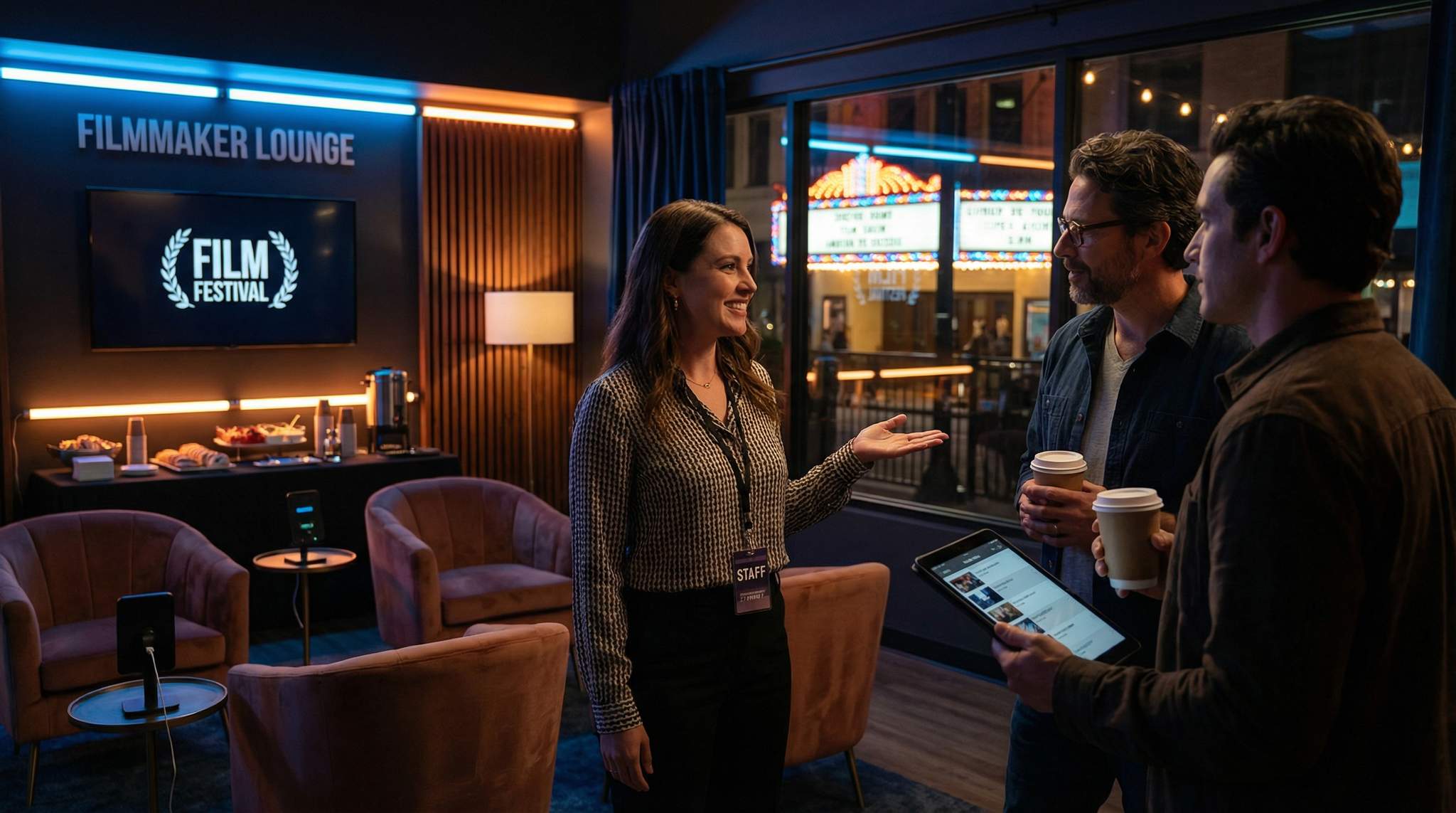
In addition to individual venue green rooms, many festivals create a central filmmakers’ lounge or hospitality suite open throughout the event. When done right, these lounges become an oasis for creators. The Toronto International Film Festival (TIFF), for instance, operates a Filmmakers’ Lounge that serves as both an industry meeting spot and a casual hangout where accredited guests can grab a bite, get some work done, or simply take a break, offering a functional social hub. It’s stocked with essentials like Wi-Fi, refreshments, and comfortable workspaces – fulfilling its purpose as a functional social hub, not just a name on a door. Smaller festivals can emulate this by partnering with a nearby café, gallery, or hotel lobby as their filmmaker lounge. The key is to ensure it “actually functions” – meaning it has the amenities filmmakers need (food, drinks, charging stations, seating) and is available at convenient hours. A lounge isn’t helpful if it’s closed when people are free, or if it’s too crowded with unrelated events.
Many festivals find success in blending comfort with networking or even a bit of adventure. For example, the Camden International Film Festival in Maine treats filmmakers to lobster dinners and mansion parties in the evenings—adding local flavour as part of the hospitality—while also ensuring travel and accommodation are covered. In the Caribbean, the Bahamas International Film Festival (BIFF), led by founder Leslie Vanderpool, has dreamed up excursions like paintball tournaments and swimming with dolphins for its guests, and even organises a private island retreat for filmmakers before the festival begins, creating memorable activities for guests. These memorable activities, along with BIFF’s practice of covering flights for many visiting directors, turn the festival visit into an unforgettable experience.
On the other end of the spectrum, a small French short film festival simply served homemade soup and stew in the central gathering space each day – a humble touch that created a wonderfully inclusive vibe. Filmmakers, festival hosts, and even audience members mingled over these daily meals as equals, with no sense of barriers between artists and attendees. Whether your hospitality is extravagant or simple, the crucial thing is that your green rooms, lounges, and events truly make guests feel comfortable and appreciated.
Remember that a lounge or green room that’s too noisy, chaotic, or hard to find defeats the purpose. If the “filmmaker lounge” turns into a loud party open to anyone, your VIP guests will avoid it. Strive to balance accessibility with exclusivity – perhaps do a badge check at the door to keep it to filmmakers and industry only, and have a volunteer or staffer present to ensure the area remains tidy and inviting. Consider soliciting sponsorships for your lounge as well: a beverage or coffee sponsor, for example, can help provide free drinks or snacks to your guests, enhancing their experience at no extra cost to you.
Free Tool: Project Your Bar Revenue
Per-head spend benchmarks by event type turned into projected bar and food revenue, with a stock-mix estimate and gross-margin line. Free calculator.
Post-Festival Feedback & Continuous Improvement
Your commitment to guest services shouldn’t end when the awards are handed out and the last screen goes dark. Post-festival feedback is a goldmine for improving year over year. The best festival producers proactively survey their guests after the event and pinpoint any pain points. This can be as simple as an emailed questionnaire to all attending filmmakers and industry visitors, or a more personal follow-up call with VIPs and sponsors. Encourage honesty – what aspects of their festival experience were smooth and what could be better?
Many festivals already survey their general audience, but it’s just as important to get feedback from filmmakers and invited guests. For example, the Cork International Film Festival in Ireland asks attendees to share feedback as they plan for the next year, often incentivizing participation with prizes. Filmmaker-specific input might highlight things you wouldn’t catch otherwise: maybe the shuttle schedule to the hotel was confusing, or the green room at a certain venue ran out of water, or perhaps the guest accreditation process was too slow. These are all fixable issues – but only if you know about them.
When feedback comes in, act on it. Make a list of action items for your team, no matter how small. If several guests mention that communication was lacking about events, you might implement a new notification system or WhatsApp group for guest updates next time. If a filmmaker points out that the “quiet lounge” wasn’t so quiet due to a DJ booth next door, consider relocating or redesigning that space. Some festivals have even added entirely new programs in response to guest suggestions – for instance, introducing a city walking tour for visiting filmmakers who wanted to see more of the locale, or setting up one-on-one industry meetings after guests indicated interest.
Share the improvements with your community as well. Thank your guests for their feedback and let them know you’re listening. This can be done in a courteous email (“We heard your comments about X, and next year we’ll be doing Y to make it better”) or a social media post highlighting planned changes. Such transparency signals that your festival is not complacent; it’s continually evolving to serve creators better. Filmmakers talk to each other, and over time, this responsiveness builds a strong reputation.
Finally, remember that great guest service is a mindset more than a checklist. It’s about fostering an environment of respect, comfort, and excitement for the people who are sharing their art at your festival. Whether it’s a first-time short filmmaker from overseas or a seasoned Oscar-winning director, each guest will appreciate thoughtful, human touches. Treat them like partners in your festival’s success – because they are. As experienced organisers will attest, when you treat your guests like VIPs and like family, you not only win their hearts but also set the stage for an unforgettable festival experience.
Frequently Asked Questions
Why should film festivals assign a dedicated liaison to guests?
Assigning a dedicated point of contact reduces guest stress by handling queries and guiding filmmakers through the event. Festivals like Open City Documentary Festival use Guest Coordinators to reach out personally upon acceptance, ensuring itineraries, airport pickups, and tech rehearsals are organized proactively so nothing falls through the cracks.
How can festivals assist filmmakers with travel costs?
Festivals support filmmakers by offering per-diems, meal vouchers, or partnering with local hotels for discounted rates when full funding isn’t possible. Events like the Sedona International Film Festival cover accommodation and meals to eliminate out-of-pocket costs, while others provide transparent reimbursement policies for specific expenses like ground transport.
What should be included in a film festival guest itinerary?
A proactive guest itinerary includes screening times, Q&A sessions, press interviews, networking events, and local sightseeing suggestions. Festivals often send a personalized welcome packet or PDF guide detailing these activities alongside logistical information like airport pickups and hotel check-ins, ensuring guests are never left wondering where to go next.
Why are filmmaker lounges important at film festivals?
Filmmaker lounges function as essential hubs where accredited guests can recharge, network, and access amenities like Wi-Fi and refreshments. Successful examples, such as the lounge at TIFF, provide a quiet workspace and social area separate from the general public, allowing creators to relax between screenings and industry meetings.
How can festivals improve guest services after the event?
Organizers improve guest services by conducting post-festival surveys to identify pain points and actionable feedback. Festivals like Cork International Film Festival ask attendees for input to fix issues like transportation confusion. Acting on these suggestions and communicating changes builds trust and a strong reputation among the filmmaking community.
What unique hospitality activities can festivals offer guests?
Festivals enhance hospitality by organizing unique local experiences or communal meals. Examples include the Camden International Film Festival hosting lobster dinners, the Bahamas International Film Festival arranging excursions like swimming with dolphins, or smaller festivals serving homemade soup to foster an inclusive vibe between artists and attendees.