When festival-goers reminisce about their favorite events, it’s often the souvenirs they took home that keep the memories alive. A well-loved t-shirt emblazoned with the festival logo or a limited-edition poster can transport fans back to those moments of music, art, and community. For festival producers, merchandise is far more than a trivial side hustle – it’s a core part of the event experience and a significant business opportunity. Done right, festival merch simultaneously strengthens your brand, delights attendees, and generates critical revenue to support the festival’s mission.
Merchandising at festivals ranges from small-batch artisan crafts at boutique gatherings to massive apparel operations at international music extravaganzas. No matter the scale, the challenges remain the same: selecting the right products, forecasting demand, managing ethical sourcing, and creating a seamless buying experience for fans. This comprehensive guide draws on hard-earned festival production wisdom to navigate every aspect of festival merch, from designing sustainable apparel that sells out to leveraging new trends like NFTs for year-round fan engagement.
Key Stat: The festival merch business is big – one leading platform processes over $1.6 billion in on-site merch and concessions sales each year.
Table of Contents
- The Role of Merchandise in Festival Success
- Designing Merchandise Fans Can’t Resist
- Sustainable Merchandise: Eco-Friendly Materials & Packaging
- Ethical Production: Fair Labor & Sourcing
- Inventory Planning & Production: Right Quantity, Right Time
- Merch Booth Operations: Maximizing On-Site Sales
- Online & Off-Site Sales: Year-Round Merch Revenue
- Limited Editions & Collectibles: Sparking Hype
- Creative Merch Ideas: Beyond the T-Shirt
- Digital Merchandise: NFTs and Virtual Collectibles
- Conclusion
The Role of Merchandise in Festival Success
Festival merchandise is more than just a chance to make extra cash – it’s a pillar of your event’s brand and an extension of the fan experience. A distinctive merch line can turn attendees into walking advertisements for your festival and deepen their emotional connection. Many top festivals treat merch as a strategic priority, often dedicating staff and planning months in advance to get it right. If you approach it with the same rigor as booking headliners or securing sponsors, the payoff can be substantial.
Merch sales can also be a key revenue stream that fills budget gaps. In some cases, successful merch operations have covered a festival’s entire profit margin for the year. Conversely, ignoring merch or leaving it as an afterthought means missed opportunity. Fans come ready to spend – if you’re not prepared to sell them something exciting, you’re essentially leaving money on the table. One study even found that festival-branded items account for around 60% of merchandise sales, far outpacing artist-related merch (which is closer to 25%). The takeaway: attendees often crave a memento of the overall festival experience itself, so give them what they want.
A critical factor in how festivals make money is managing cash flow across the entire event lifecycle. While early-bird ticket sales provide initial capital, merchandise pre-orders and VIP bundle upgrades inject crucial revenue weeks before the gates open. On-site, apparel and accessory sales act as immediate, liquid income that can be used to settle final vendor invoices or staff payouts. Understanding this timeline allows promoters to leverage retail not just for overall profit, but as a strategic cash-flow management tool.
Planning a Festival?
Ticket Fairy's festival ticketing platform handles multi-day passes, RFID wristbands, and complex festival operations.
Ensuring your festival merch operation stays profitable means treating merch with professionalism and creativity. Set clear goals for your merch program – whether it’s maximizing revenue, boosting brand visibility, or enhancing VIP packages. Track your sales and costs like any business unit. By weaving merchandise planning into the fabric of your event plan from day one, you set yourself up to delight fans and drive meaningful income.
Warning: Don’t treat merch as an afterthought. Rushing design and orders at the last minute leads to generic products, higher costs, and missed sales opportunities on-site.
Designing Merchandise Fans Can’t Resist
Choosing the right merch starts with knowing your audience. Are your attendees more likely to rock a classic black band tee, a colorful festival tank top, or a tie-dye hoodie? Successful festivals curate a product line that fits their vibe – and they don’t just stick to t-shirts. From hats and enamel pins to tote bags and posters, variety can boost sales, but only if each item is something fans genuinely want. It’s usually better to have a focused selection of popular items than an overstuffed catalog that confuses buyers and strains your budget.
Invest in quality design and materials so that merch becomes a cherished keepsake, not a throwaway item. That might mean hiring a graphic designer who can capture your festival’s aesthetic or collaborating with artists on unique illustrations. Fans proudly wearing your merch around town is free advertising, so ensure the designs are stylish and the fabrics comfortable. Also, consider limited-run designs or color variants to create a sense of exclusivity (we’ll dive more into limited editions later). And remember, if you plan to include performer names or logos on your merch, you must have permission.
Boost Revenue With Smart Upsells
Sell merchandise, VIP upgrades, parking passes, and add-ons during checkout and via post-purchase emails. Increase average order value by up to 220%.
Another key element in learning how to make concert merch professional is focusing on the finer garment details. Moving away from standard promotional blanks to retail-quality, heavyweight cotton elevates the tactile experience for the buyer. Additionally, replacing generic manufacturer tear-away labels with custom-printed inside neck tags adds a premium touch that signals high production value to your attendees.
When organizers ask what wholesale apparel sells best for festivals and events, the data consistently points toward mid-weight, ringspun cotton tees and garment-dyed blanks. These options strike the perfect balance between cost-effectiveness for the promoter and a premium feel for the attendee. Beyond the classic short-sleeve, French terry hoodies and unstructured dad hats are currently dominating bulk orders. Sourcing these specific blank garments from reputable B2B distributors ensures your merchandise booth is stocked with silhouettes that modern attendees actually want to wear long after the weekend ends.
Need Festival Funding?
Get the capital you need to book headliners, secure venues, and scale your festival production.
Pro Tip: Involve your community in the design process. Some festivals boost sales by running fan design contests for a t-shirt or poster. The winning designs already resonate with the audience, virtually guaranteeing strong demand.
Warning: If you plan to feature artist names, logos, or other trademarked images on merchandise, secure proper licensing or agreements. Selling unlicensed merch can lead to legal trouble and damage your relationships with artists.
Sustainable Merchandise: Eco-Friendly Materials & Packaging
Today’s festival-goers are increasingly eco-conscious, and they’ll notice if your merch contradicts an otherwise green event. Sourcing sustainable merchandise isn’t just good for the planet – it can actually be a selling point that drives more sales. Use organic or recycled fabrics for apparel, offer items like bamboo sunglasses or upcycled accessories, and eliminate single-use plastics from packaging. One analysis of festival merchandise sustainability noted that 10% of worldwide CO2 emissions come from clothing production, and roughly a truckload of apparel is burned or buried every single second. These staggering numbers underscore why choosing eco-friendly materials and processes isn’t just a token gesture; it’s quickly becoming an industry standard.
Fans will often pay a little more if they know a shirt or hoodie is ethically made and will last. Market your sustainable choices: for example, include tags on products that explain “This t-shirt is 100% organic cotton, printed with water-based inks” or highlight that a portion of merch proceeds supports an environmental cause. Such details can tip a customer’s decision in your favor when they’re comparing whether to grab a shirt or not.
Free Tool: Size Your Festival Site
Zoned capacity planning for arena, campsite, parking and entry lanes — against UK Purple Guide and NFPA density standards. Finds your bottleneck zone.
Pro Tip: Offer merch that doubles as a sustainability initiative. Selling branded reusable water bottles or stainless steel cups not only gives fans a practical souvenir, it also cuts down on disposable cup and plastic bottle waste at your event.
Warning: Avoid “greenwashing.” Be genuine and transparent about your eco-friendly efforts. If you claim a product is sustainable, be ready to back it up (for instance, with organic certifications or supplier info). Savvy attendees will call out disingenuous claims, so stick to changes that truly make an impact.
Ethical Production: Fair Labor & Sourcing
Hand-in-hand with sustainability is making sure your merchandise is produced under fair, humane conditions. Fans increasingly care about the story behind the merch – who made that shirt and how were they treated? Reputable festivals work only with vendors and manufacturers who can ensure fair wages and safe working conditions for workers. This might involve choosing suppliers that are Fair Trade certified or follow initiatives like the Fair Labor Association’s guidelines.
Ethical sourcing not only aligns with basic human rights, it protects your festival’s reputation. The last thing you want is a social media expose revealing that the “cool” festival shirt was sewn in a sweatshop. To avoid that, do your due diligence: ask for certifications or audits from merchandise suppliers, opt for companies that are transparent about their supply chain, and whenever feasible, consider producing merchandise locally (or with worker co-ops) even if the cost is a bit higher.
For example, some festivals publicly commit to responsible merch. In the UK, Shambala Festival ensures all its apparel is “consciously sourced” – meaning made from sustainable materials and by fairly paid workers – which resonates strongly with their eco-conscious audience. Following such practices can deepen trust with your patrons.
Fair labor and ethically sourced festival merchandise practices also have a marketing upside: you can share the story of your merch – how the bracelets were handwoven by a women’s collective, or how the tees were printed at a local worker-owned shop – as part of the festival narrative. Many festival websites now include a blurb about their merch sourcing in the about section or merch booth signage, turning what could be a negative (“Why is this shirt $5 more expensive?”) into a positive differentiator for your brand.
Smart Promo Codes & Presale Access
Create percentage or flat-rate discount codes with usage limits, date ranges, and ticket type restrictions. Plus unlock codes for private presales.
Inventory Planning & Production: Right Quantity, Right Time
Ordering festival merchandise is a Goldilocks problem: order too little and you miss out on sales, order too much and you’re stuck with expensive leftovers (also known as deadstock). Effective inventory planning starts with realistic forecasting. Use any historical data you have – if 30% of your attendees bought merch last year, that’s a good baseline. If you’re a first-time festival, research comparably sized events or do a quick attendee survey on social media (“What merch are you most likely to buy?”). It’s usually safer to underestimate and sell out of a few items than overestimate and end up with boxes of unsold goods.
Building an inventory plan also means balancing item types and sizes. Track the ratio of t-shirts to hoodies to hats you order, and the breakdown of sizes. Many festivals find that M and L shirts sell the fastest, while XS and XXL move slower – adjust your quantities accordingly rather than ordering the same count for each size. Pay attention to timing as well: production can take longer than expected, especially for custom or overseas orders, so lock in your order early. Having merch arrive a week after your festival ends doesn’t do you any good!
To stay agile, some events adopt on-demand merch techniques. For instance, you can print certain designs live at the festival or use a local print shop to do a small second run overnight if a particular item sells out on Day 1. This approach minimizes upfront risk and lets you dial up production of the hits while avoiding oversupply of duds. Technologies like direct-to-garment printing make it possible to offer personalization and varied designs without huge inventory.
Integrating your merchandise sales directly with your event registration software can automate much of this heavy lifting. When attendees purchase tickets and add a hoodie to their cart, the system tracks that inventory in real-time. It’s almost like having the merch fairy working behind the scenes for your operations team—eliminating manual stock counts, reducing human error, and ensuring you know exactly what to print before the gates even open.
Avoiding merchandise leftovers and lost sales comes down to diligent planning and a bit of art. Monitor sales in real-time during the event if possible (a good POS system will tell you if one design is flying off the shelf by midday). You can then promote what’s available (“Only 20 left!” announcements can spur last-minute buyers) or even shift stock between booths. And if despite best efforts you do have extra stock after the festival, it’s not the end of the world – those can be sold online or held for the next year if the design is still relevant.
Pro Tip: Design some of your merch without the event date or year. An evergreen festival logo tee or generic design can be reused for multiple years. If you overestimated demand, undated items become inventory for your next event instead of deadstock in storage.
Merch Booth Operations: Maximizing On-Site Sales
Having amazing merch won’t matter if fans can’t buy it easily on-site. A well-run merch booth can dramatically increase your take. Start with location and layout: place merch booths where foot traffic is heavy but won’t cause bottlenecks. Near the main entrance or central plaza is great – fans often shop when they first arrive or as they’re leaving (so they don’t have to carry items all day). If your festival grounds are large or segmented, consider multiple merch points or mobile merch carts to reach different areas.
Presentation counts. Use vertical space to display designs (hang shirts high, use mannequins or display boards) so people can spot cool items from afar. Clearly list prices – ideally on a big menu board – to speed up transactions. And speaking of speed, minimize waiting. Long lines not only frustrate attendees, they also deter others from even getting in line. Make sure you have sufficient staff, especially during peak times (like right after a headliner set). Train your merch team to be friendly and ultra-efficient: one person can handle the register while others fetch sizes and bag items.
Accept cash and cards (nowadays cashless payments are a must – services like Square or atVenu make it easy to swipe credit cards or even do Apple/Google Pay). If Wi-Fi is spotty, have a backup like a battery-powered offline card reader or a plan to take transactions offline and sync later. The last thing you want is turning away a willing buyer because you “can’t take card right now.”
To avoid clogging main walkways, use queue lines (bike rack barricades or tape on the ground) that keep crowds orderly. Boosting merch sales without causing crowd chaos sometimes means thinking outside the booth: some festivals employ roving vendors who sell popular items in the crowd (for example, someone walking around with a flagpole of bandanas or a box of glow-in-the-dark festival pins). Meeting your fans where they are can capture sales from folks who never make it to the merch tent.
Finally, consider the customer experience. A great merch booth is almost like another attraction – some festivals set up photo ops near merch or have live printing stations that draw interest. Make buying merch feel like an integrated part of the fun. Happy, engaged fans are more likely to make that impulse buy, especially if they feel they’re getting something special and convenient.
Online & Off-Site Sales: Year-Round Merch Revenue
Your merch revenue doesn’t have to end when the festival does. By launching an online merch store, you can keep the cash register ringing and the fan community engaged 24/7/365. Setting up an online store (through your festival’s website or platforms like Shopify) allows distant fans to buy items, and lets attendees grab gear they missed at the event. It’s also the perfect outlet for selling leftover stock instead of letting it gather dust.
Running an online store does require planning – you’ll need to handle shipping, customer service, and potentially manage inventory year-round. However, you can simplify operations by using drop shipping or print-on-demand partners. For example, you could upload your t-shirt designs to a print-on-demand service that prints and ships orders as they come in, without you holding inventory. The margins might be a bit lower, but you have virtually no upfront costs or storage needs.
Think about off-season merch drops to keep fans excited. Maybe you release a limited “festival alumni” hoodie six months after the event, or you do a holiday sale with special bundled merch packs. Some festivals even create entirely new products post-event. For instance, a popular food and music festival might extend its brand with a festival cookbook featuring recipes from the food vendors – turning the event’s vibes into a product people enjoy at home.
Don’t underestimate the marketing power of an online store. Every merch sale in the off-season is also a little reminder of your festival, helping maintain excitement until tickets go on sale again. Promote your store on social media and to your email list. Share photos of fans wearing last year’s merch and let them know new designs are up. You might be surprised: a fair share of die-hards will snap up anything with your logo on it, especially if you tease it as an exclusive item not available at the festival.
Pro Tip: Offer merchandise pre-orders when selling tickets online. Many festivals allow fans to buy a t-shirt or other item during the ticket checkout process, then pick it up at the event. This locks in revenue upfront and gives you a clearer idea of baseline demand for popular items, reducing the guesswork of how much to produce.
Limited Editions & Collectibles: Sparking Hype
One surefire way to get fans scrambling to the merch booth is to offer something truly exclusive. Limited-edition merch – whether it’s a run of 100 numbered screen-printed posters, a special colorway of your t-shirt only sold on Day 1, or a collectible enamel pin available only to VIP ticket holders – creates urgency and hype. Humans are collectors by nature. If fans know an item is scarce or only available at this one event, they’re far more likely to buy it (and fast!).
To successfully deploy limited editions, plan the details and communicate them clearly. Announce ahead of time if you’re doing a special release (“50 limited vinyl records of the headline set will be on sale at noon each day”). This lets serious collectors prepare and builds pre-event buzz. At the festival, make sure staff enforce any limits (e.g., one per customer if an item is super limited) and have a plan for what to do if a line forms specifically for the exclusive drop. You could issue tickets or wristbands for those in line to keep things orderly.
Free Tool: Project Your Bar Revenue
Per-head spend benchmarks by event type turned into projected bar and food revenue, with a stock-mix estimate and gross-margin line. Free calculator.
Exclusive collectibles often carry a higher price tag, and true fans won’t mind – they understand they’re getting something rare. Some festivals also tie exclusives into experiential perks. For example, selling a deluxe poster that comes with a meet-and-greet with the poster’s artist, or a limited hoodie that grants the wearer a discount at festival food stalls. Creativity here can drive both merchandising and overall festival appeal.
While limited merch is great for hype, use it strategically. If everything is “limited edition,” the concept loses impact (and you risk frustrating fans). It works best for a couple of standout items each year. And be transparent once they’re gone – there’s inevitably some disappointment from those who miss out, but that FOMO can translate into earlier ticket or merch purchases next time.
Creative Merch Ideas: Beyond the T-Shirt
T-shirts and hoodies are mainstays, but they’re just the beginning. The most memorable festival merch lines often include creative items that align with the festival’s theme or location. Brainstorm what unique angle your event has, and turn that into merch. Is your festival set in the desert? Branded bandanas, sunglasses, or sunscreen could be a hit. Running a winter holiday festival? Sell cozy branded blankets or beanies. If it’s a BBQ and music festival, maybe offer a branded hot sauce or a grilling apron.
Consider merch that doubles as memorabilia. Photo books, for example, with high-quality shots from past editions of the festival can become coffee-table keepsakes. Some events sell vinyl records or USB drives with live recordings from the festival’s performances. Others partner with local artisans to create co-branded crafts – think pottery, jewelry, or artwork that reflects the festival’s spirit. These kinds of products can elevate your festival’s cultural footprint and often appeal to attendees who might not be interested in a typical logo t-shirt.
Also, don’t overlook experience-based merch. This could be something like a DIY poster station where fans can screen print their own commemorative poster (choosing from a couple of designs), or a customization booth to embroider their name on a festival jacket. Such interactive merch experiences can become a talking point and set your festival apart. The more personal a souvenir feels, the more value it holds to the fan who takes it home.
In the end, creativity in merch should complement, not replace, the basics. Cover your core offerings first – the majority of people still want a cool shirt or hat – but sprinkle in a few “wow” items that give your event its own flavor. These unique offerings can generate media buzz (“Guess what this festival is selling!”) and, more importantly, deepen the bond between your festival and its community by celebrating what makes your event unique.
Keep Tickets in Fans' Hands
Our secure resale marketplace lets attendees exchange tickets at face value, eliminating scalping while keeping you in control of the secondary market.
Digital Merchandise: NFTs and Virtual Collectibles
As the world goes digital, so does festival merch. In the past few years, forward-thinking festivals have begun offering non-fungible tokens (NFTs) and other digital collectibles as part of their merchandise lineup. These can range from digital art (like animated festival posters or badges) to utility-infused tokens (like an NFT that doubles as a lifetime VIP pass). While a physical t-shirt can fade over time, a well-designed digital collectible can live in a fan’s crypto wallet and potentially even rise in value on the resale market.
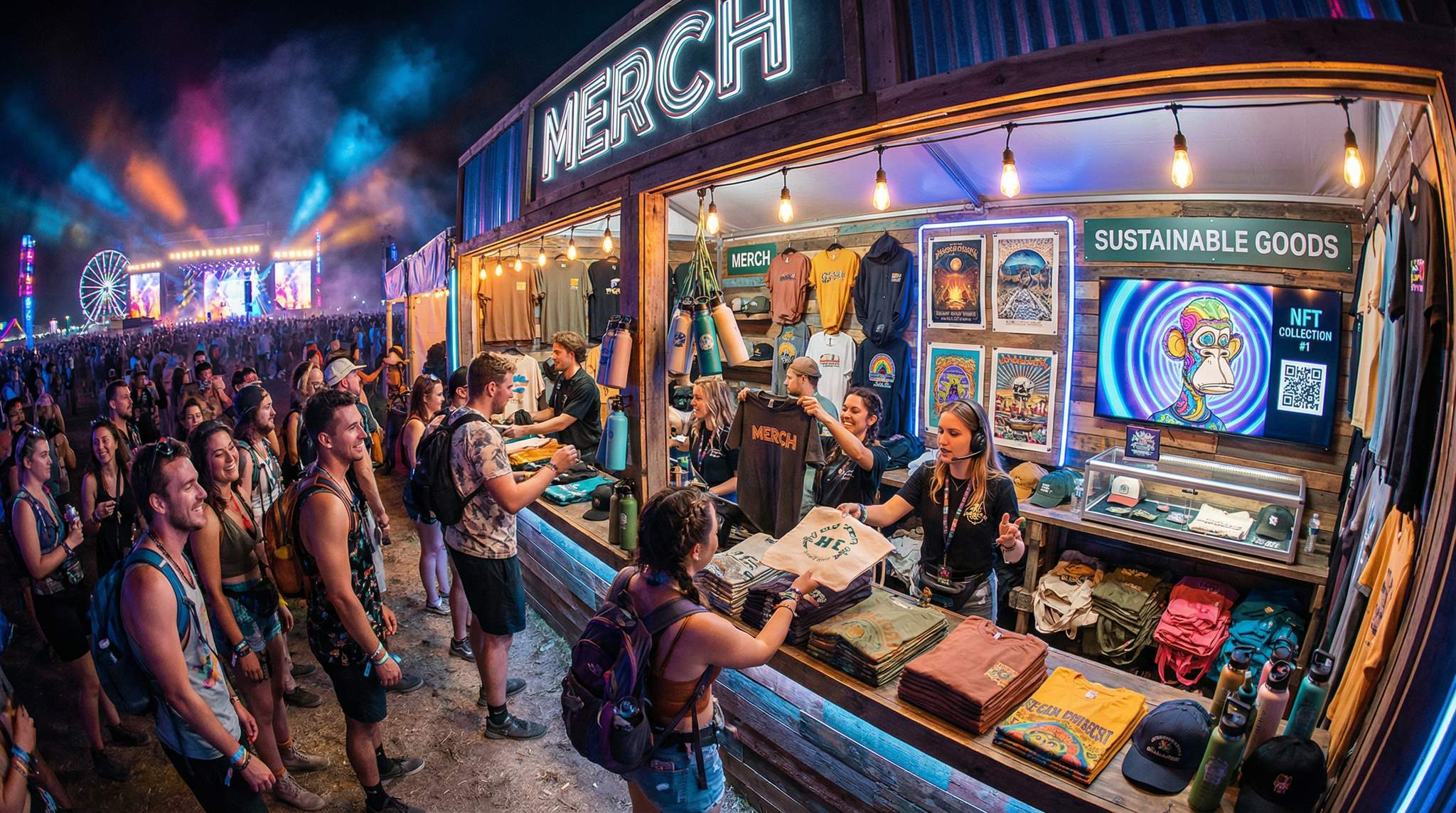
One high-profile example is Coachella’s 2022 NFT initiative. Coachella’s NFT auction netted $1.47M in sales, offering a collection of 10 “lifetime passes” and exclusive digital art to fans. Other festivals have explored NFTs that grant special perks, like Tomorrowland’s digital tokens that unlocked exclusive content for holders. These successes show that there is a willing audience for festival-related NFTs, particularly among tech-savvy fanbases.
Beyond massive mega-festivals, we are seeing a growing number of independent events using NFTs to solve real-world operational challenges. For instance, some boutique electronic and Web3-focused gatherings utilize token-gated ticketing, where holding a specific digital asset grants entry, prevents scalping, and streamlines the check-in process. These smart contracts can also be programmed to airdrop surprise perks to attendees during the weekend—like a voucher for a free drink or an invitation to a secret pop-up stage—adding an interactive layer of gamification to the standard festival format.
For promoters, launching music festival digital collectibles offers a unique way to bridge the gap between physical events and year-round community building. Instead of just a static image, these digital assets can be programmed with smart contracts to grant holders early access to next year’s lineup, discounts on physical apparel, or even exclusive audio stems from live performances. This transforms a simple souvenir into a dynamic loyalty program that keeps your audience engaged long after the stages are packed away.
To maximize the impact of these virtual assets, organizers should focus on frictionless onboarding. Partnering with specialized Web3 ticketing platforms can streamline the rollout of music festival digital collectibles, ensuring the purchasing and claiming process is as simple as buying a standard ticket for attendees who may not be familiar with crypto wallets.
If you’re considering digital merch, keep a few things in mind. First, ensure the digital item has clear value – whether it’s beautiful art, exclusive access, or a gamified reward. Simply minting an NFT of your logo and trying to sell it probably won’t fly; there needs to be a storytelling element or tangible benefit. Second, choose a platform or partner with experience in the space (there are NFT marketplaces now specifically for music and events). They can help navigate the technical and customer support challenges, especially for fans who might be new to blockchain wallets.
Go Cashless With RFID Technology
Enable contactless payments, faster entry, and real-time spending analytics with RFID wristbands and NFC-enabled ticketing for your events.
It’s also important to gauge your community’s appetite. An experimental art/music festival might have attendees eager to collect NFTs, while a heritage folk festival audience could be less interested or even a bit skeptical. In any case, tread transparently – perhaps frame it as a modern twist on merch and be ready to explain how it works. Environmental concerns around NFTs have subsided with newer blockchains being more energy-efficient, but you should be prepared to address those questions too.
Digital merch likely won’t replace the joy of a physical memento (there’s no NFT that can replace a comfy hoodie on a cold day!). However, it’s a cutting-edge supplement that can open new revenue streams and engagement opportunities beyond the physical confines of the festival. Especially for global events with massive followings, NFTs and digital collectibles allow fans worldwide to own a piece of the experience, even if they can’t attend in person. As the technology evolves, festivals that embrace these new frontiers early on will be well-positioned to grow their brands in the digital realm.
Conclusion
Festival merchandise isn’t just about selling stuff – it’s about extending the festival’s story beyond the stages. A thoughtful merch strategy can transform casual attendees into loyal promoters who wear your logo with pride, remind sponsors that your brand has cultural cachet, and provide financial stability when planning future events. From the smallest local fest to the biggest international extravaganza, the principles remain the same: know your crowd, offer quality and creativity, plan smartly, and stay true to your festival’s ethos.
When you nail your merch operation, it creates a virtuous cycle. Fans get memorable products that spark joy and nostalgia, your festival gains extra income and free advertising as those items circulate in the world, and the reduced waste and ethical choices show that you walk the talk. It’s a win for everyone. So treat your merch booth as a vital stage of the festival – one where commerce and community meet. With the insights and strategies from this guide, you can turn festival merch from a mere sidenote into a headline act of your production.
Essential Reading
- Greening Your Festival Merch: Sustainable Strategies That Sell
- Optimizing Festival Merch Inventory: Avoiding Leftovers and Lost Sales
- On-the-Fly Festival Merch: Personalized Souvenirs Without Overstocking
- From T-Shirts to Totes: Running a Profitable Festival Merch Operation
- Ethical Festival Merch: Fair Labor and Sustainable Sourcing Strategies
- Beyond the Grounds: Launching an Online Festival Merch Store to Drive Year-Round Revenue
- Festival Merch that Moves Without Clogging Arteries
- Limited-Edition Festival Merch: Driving Hype and Revenue with Exclusive Collectibles
- The Festival Cookbook: Extending Your Event’s Flavor into Year-Round Revenue
- Festival Merch Goes Digital: NFTs and Digital Collectibles
FAQ
How can I estimate how much merch to order for my festival?
Start by looking at your attendance and any past sales data. If you’ve run the event before, calculate what percentage of attendees bought merch in previous years and how much of each item sold. For a new festival, research similar events’ numbers or conduct a pre-event survey of ticket buyers to gauge interest. A common rule of thumb is that 20-30% of attendees will buy at least one item, but this varies. It’s wise to order conservatively at first – you can often reorder popular items or produce more during the event if needed (especially if you have on-demand printing). Track sales closely year-to-year; over time you’ll get better at forecasting. Also remember to break down your order by sizes and styles based on what’s most popular – for example, t-shirts might outsell hoodies 3:1, and within t-shirts, size Large might be the top mover.
What merchandise sells best at festivals?
The classics like t-shirts and hoodies are almost always top sellers – apparel that fans can wear to show off they attended. Hats (beanies, caps) are also consistently popular, along with accessories like posters and stickers as lower-cost mementos. That said, it depends on your audience and event theme. A music festival might find success with bandanas, patches or even vinyl records of live sets, whereas a cultural or food festival could sell cookbooks or artisanal crafts related to the event. Pay attention to attendee demographics: younger crowds might go for trendy items like enamel pins or tote bags, while an older audience might prefer a nice coffee mug or a high-quality zip-up jacket. Experiment with a mix, and then double down on what moves – your sales data will quickly tell you your best-sellers.
How do I price festival merchandise for profit?
Effective pricing starts with knowing your costs. Calculate the total cost per item (production, shipping, any merch vendor fees). As a rough guide, many festivals aim for a gross margin of about 50-60% on merch – meaning if a shirt costs you $10 all-in, you’d price it around $20-$25. Consider the value of the experience too: fans often expect to pay a bit more for festival-branded items than a comparable generic item. However, there’s a ceiling – if prices feel gougy (like a $50 ordinary t-shirt), some attendees will balk. Look at similar events’ merch prices to benchmark. Also decide if you want a simpler pricing structure (e.g., all tees $25, hoodies $50) to speed up sales. Don’t forget to include sales tax or card processing fees in your margins as well. Ultimately, aim for prices that cover costs and contribute profit, but still seem fair and accessible for fans looking for a keepsake.
How can festivals make their merch more sustainable?
There are several steps to reduce the environmental impact of your merchandise. Firstly, choose sustainable materials – for example, shirts made of organic cotton or recycled polyester, and avoid harmful dye processes. Work with suppliers who have certifications for sustainable and ethical production. Secondly, minimize plastic use: use paper or biodegradable bags at the merch booth (or encourage people to bring their own bag), and skip plastic packaging on individual items. Third, offer products that help sustainability on-site, like reusable water bottles or bamboo utensils, as part of your merch line. You can also produce smaller quantities to avoid waste, then use on-demand printing to fill extra demand rather than over-ordering. Lastly, be sure to communicate these efforts – when fans know that their merch is eco-friendly, it adds to the perceived value and encourages them to support your initiatives.
What should I do with leftover merch after the event?
Leftover merchandise is common, even with good planning. The good news is there are several ways to recoup value from unsold stock. One approach is to sell it online through your festival’s website or store – you can market it as a “last chance” or offer a small discount to move it. Loyal fans or those who missed the event might still buy it. Another option is to hold the merch for your next festival (if the items aren’t event-date specific). Generic festival logo gear can often be sold at subsequent events. You can also use leftover merch for promotions – giveaways on social media, contest prizes, or added-value items for VIP ticket buyers next year. If you’re truly unable to sell certain items, consider donating them to local charities or arts organizations (it’s a goodwill gesture and useful for tax write-offs in some cases). The key is, don’t throw merch away if you can help it – with a bit of creativity, even leftovers can continue to build your brand or bring in some revenue later on.
Is it worth selling festival merch online year-round?
For many festivals, yes – an online merch store can be a great addition. It extends your sales window beyond the festival weekend and reaches fans who may not have attended. Year-round sales can provide a trickle (or sometimes a stream) of income in the off-season. The effort involved includes setting up an e-commerce site and handling fulfillment (packing and shipping orders), but solutions like print-on-demand or partnering with a merchandising company can lighten that load. Even smaller festivals can benefit; you might only get periodic orders, but those are still extra revenue and marketing impressions out in the world. Additionally, having an online store keeps your community engaged – you can drop new merch designs at key points in the year (holidays, lineup announcement time, etc.). That said, manage expectations: online sales for a festival might not be huge unless your event has a significant national/international following. It’s worth trying, and you can scale up the effort if you see demand. Plus, selling online is an excellent way to clear leftover stock without time pressure. Overall, if you have the capacity, year-round online merch can definitely be worth it as part of your festival’s strategy.
How do music festival digital collectibles generate revenue for organizers?
Music festival digital collectibles generate revenue through initial primary sales (minting) and, crucially, through secondary market royalties. When an organizer releases a limited run of digital assets—such as virtual posters, 3D badges, or VIP access tokens—fans purchase them just like physical merch. However, unlike a traditional t-shirt, smart contracts embedded in these digital items can be programmed to pay the festival a percentage every time the collectible is resold or traded between fans in the future. Additionally, offering these virtual items as premium add-ons during the ticketing checkout process provides a high-margin, zero-shipping-cost revenue stream that directly boosts your event’s bottom line.
What are some practical examples of events using NFTs beyond digital art?
While digital art and virtual posters get the most media attention, many forward-thinking events using NFTs focus heavily on utility and access. Promoters are deploying token-gated ticketing to eliminate counterfeit tickets and control secondary market scalping. On-site, these digital assets can act as dynamic VIP wristbands, unlocking exclusive lounges, fast-track entry lanes, or hidden performances. Post-event, organizers use the same tokens to grant holders early-bird access to next year’s presale or discounts on physical merchandise, effectively turning a digital collectible into a lifetime membership and loyalty program.
How can organizers make concert and festival merch look more professional?
Learning how to make concert merch professional comes down to elevating both the product quality and the retail environment. Start with the garments: swap out cheap, stiff promotional shirts for premium, retail-quality blanks. Go the extra mile by removing generic manufacturer tear-away tags and screen-printing custom branded neck tags. On-site, upgrade your presentation from folding tables to a true pop-up shop experience. Use grid walls, slat walls, and proper spotlighting to highlight designs. Ensure your staff is trained on the point-of-sale system, wears branded uniforms or lanyards, and keeps the inventory neatly folded and organized. A polished, boutique-style presentation justifies higher price points and builds stronger brand trust.
How do festivals make money beyond standard ticket sales?
While ticketing is the primary revenue engine, understanding how festivals make money requires looking at ancillary streams like merchandise, food and beverage (F&B) concessions, and brand sponsorships. A highly optimized merch operation can sometimes generate enough profit to cover significant operational overhead or artist booking fees. By diversifying income through VIP upgrades, on-site experiential activations, and year-round online apparel sales, promoters can protect their margins against unexpected cost overruns and build a more financially resilient event business.
What wholesale apparel sells best for festivals and events?
When sourcing blanks, the wholesale apparel that sells best for festivals and events typically includes heavyweight, garment-dyed cotton t-shirts and mid-weight French terry hoodies. Attendees have shifted away from thin, standard promotional shirts in favor of retail-quality, streetwear-inspired fits. Unstructured cotton twill hats and oversized drop-shoulder tees are also top performers at the merch booth. For organizers, purchasing these specific premium blanks in bulk from established B2B distributors yields the best return on investment, as fans are willing to pay a higher retail price for a comfortable, durable garment.
Glossary
- SKU (Stock Keeping Unit): A unique identifier for each product variant (size, color, design) used to track merchandise inventory.
- Minimum Order Quantity (MOQ): The smallest number of units a supplier will produce or ship in one batch. Suppliers often give price breaks for meeting higher MOQs.
- Point-of-Sale (POS) System: The hardware/software setup for processing sales transactions on-site at the festival (e.g., cash registers, card readers, tablets running payment apps).
- Screen Printing: A traditional merch printing method where ink is pressed through a stenciled mesh screen onto fabric. Great for bulk orders of shirts or posters, but each color requires a separate screen.
- Direct-to-Garment (DTG) Printing: A modern digital printing technique that works like an inkjet printer for clothes – allowing full-color prints directly on apparel with no screens or minimum order, ideal for on-demand prints.
- Drop Shipping: A fulfillment method where the merch is shipped directly from the manufacturer or warehouse to the customer. Festivals can use drop shipping for online orders to avoid handling inventory and shipping themselves.
- Gross Margin: A measure of profitability per item, calculated as (Selling Price – Cost) ÷ Selling Price. For example, an item that costs $10 to make and sells for $25 has a 60% gross margin.
- Merch Cut: A percentage of merchandise sales that the event or venue takes from artists or vendors. (For instance, a festival might take a 20% merch cut from band merchandise sold on-site as part of the vendor agreement.)
- Deadstock: Unsold merchandise remaining after the event. High deadstock often indicates over-ordering or lower-than-expected sales. Strategies like online sales or repurposing can help recover value from deadstock.
- Exclusive Merch: Items produced in deliberately limited quantities or availability, often to create hype. Exclusive merch could be tied to VIP packages or one-day-only sales and is meant to sell out due to its rarity.
- Upsell: A sales technique where you encourage a customer to buy additional or higher-priced items. For example, suggesting a buyer add a festival hat at a discount when they purchase a t-shirt is an upsell.
- Licensing: Official permission to use protected logos, artwork, or names on merchandise. Festivals need licensing agreements when printing, for example, a headliner’s name or a famous artwork on their merch.
- Sell-Through Rate: The proportion of inventory sold to customers, usually expressed as a percentage. A 100% sell-through means you sold out, whereas a 50% sell-through means half of the stock was sold (and half remains unsold).