At any electronic dance music (EDM) festival – whether a mega-rave in Las Vegas, a beachside event in Goa, or a boutique show in Ibiza – one behind-the-scenes factor can make or break the attendee experience: sanitation. Festival producers around the world have learned that clean, readily available restrooms keep crowds happy, healthy, and focused on the music. Poor sanitation, on the other hand, can lead to frustration, health risks, and even a tarnished reputation for the event. This article shares veteran insight on scaling sanitation for EDM crowds, ensuring that high-energy revelers spend more time dancing and less time dreading the porta-potty.
Plan for Peak Restroom Demand (Not the Average)
A common mistake in event planning is basing restroom counts on average usage. Experienced festival organizers know to model for peak demand – especially during set changeovers and breaks – rather than relying on daily averages. At EDM festivals, thousands of attendees might rush the toilets in the short window between DJ sets or stages. For example, when a headliner finishes and crowds flood out, you could see a massive surge in restroom visits within 10-15 minutes. If you only catered to the “average” usage (spread evenly over hours), you’d end up with unacceptably long queues and overflowing toilets during these peak moments.
For leading EDM festival producers, understanding the unique rhythm of an EDM festival crowd is the first step in infrastructure planning. Unlike traditional concerts where audiences remain largely stationary, dance music events feature constant, fluid movement between stages. Savvy event creators map these migration patterns to position restroom banks strategically along major walkways, ensuring that high-traffic zones don’t become dangerous bottlenecks.
To get it right, plan your toilet ratios and placement around the busiest intervals:
Free Tool: Size Your Festival Site
Zoned capacity planning for arena, campsite, parking and entry lanes — against UK Purple Guide and NFPA density standards. Finds your bottleneck zone.
- Analyze the schedule: Identify when multiple stages have breaks or big artist changeovers simultaneously. Stagger set times when possible to avoid all stages peaking at once.
- Do the math for surges: Estimate the largest number of people who might hit the restrooms in a 15-minute break. Then ensure the number of units can handle that surge with minimal wait. (As a rule of thumb, a single porta-loo can serve roughly 50 uses per hour in ideal conditions – but if 1,000 people need to go in 15 minutes, you’d theoretically need over 130 units to meet that demand!)
- Factor in alcohol and weather: If your EDM festival serves alcohol (as many do), plan for at least 30–40% more restroom capacity, a necessity highlighted in guidelines on peak usage considerations for event toilets and gender considerations for flexible capacity management. Alcohol is a diuretic and will send people to the loos more often. Likewise, hot weather (more hydration) or cold weather (physiological effects) can both drive up toilet visits, so adjust your numbers upward in extreme conditions.
- Consider audience demographics: The makeup of your crowd (age, gender balance, etc.) influences bathroom usage. A hydration-conscious crowd at a summer trance festival in Australia might use water and restrooms more frequently, whereas a shorter 4-hour indoor rave may have different patterns. Always review data from similar past events (if available) to gauge peak needs.
By planning for the worst-case rush, you ensure a smooth experience even at peak pressure. This avoids the nightmare scenario of an overwhelmed sanitation system – something infamously witnessed at Woodstock ’99, where overflowing toilets and poor planning turned parts of the venue into a health hazard, a disaster detailed in retrospectives on Woodstock 99’s infrastructure failures. Modern EDM festivals have learned that it’s far better to have a few extra stalls standing idle during lull times than to have thousands of desperate party-goers stuck in a 40-minute line when they should be dancing.
Designing Inclusive, Efficient Restroom Areas
Beyond sheer numbers, how you design and manage your restroom areas makes a big difference. An emerging best practice is to use gender-neutral restroom banks (especially for single-occupancy portable toilets) to maximize flexibility. That means anyone can use the next available stall, which helps even out wait times across genders. At large festivals like Tomorrowland (Belgium) or Electric Daisy Carnival (USA), organizers typically provide big clusters of unisex portable toilets rather than strictly separated “Men” and “Women” sections – a strategy that speeds up lines and promotes inclusivity.
Planning a Festival?
Ticket Fairy's festival ticketing platform handles multi-day passes, RFID wristbands, and complex festival operations.
However, success with this approach requires careful execution:
- Clear Signage: Make sure it’s obvious to attendees what each restroom area offers. Use universally understood signs for “All-Gender Restrooms” so people aren’t wasting time searching for a specific gender label. If you’ve designated certain facilities (like urinal pods or trailers) for a particular group (e.g. women-only or men’s urinals), mark them clearly too. Good signage reduces confusion and gets people to the right spot quickly – crucial when nature calls in a crowd of 50,000.
- Attendant Staffing: Station staff or volunteers at large restroom banks whenever possible. Attendants can direct people to open stalls (speeding up turnover), encourage orderly queueing, and deter inappropriate behavior. They also serve as a point of contact if supplies run out or if a unit needs cleaning. For instance, at a recent festival in Singapore, having a few staff manage the restroom queues helped prevent bottlenecks – they’d quickly point out free units down the line that people farther back couldn’t see. Staff presence also enhances safety for attendees of all gender identities using shared facilities by providing a sense of oversight.
- Balancing Urinals and Stalls: In some regions, event producers deploy stand-up urinal units (urinal troughs or clusters) for men to speed things up. These can be very effective at high-traffic events in places like Germany or the UK, where male-heavy crowds might otherwise congest the stalls for simple needs. If you use urinals, position them adjacent to the main toilet banks and add screens or barriers for privacy. It’s wise to still maintain plenty of regular enclosed stalls for everyone, including those who can’t use urinals. In recent years, even women’s urinals have been introduced at festivals like Glastonbury (UK) – complete with female attendants and disposable devices – to improve flow for female attendees. The key is providing options while keeping the system easy to understand at a glance.
- Cultural Sensitivity: Remember that comfort levels with shared restrooms can vary across cultures. In some countries, attendees might expect gender-segregated facilities or additional privacy. If your EDM festival in Indonesia or India, for example, serves a more traditional local crowd, you could consider a mix of gender-neutral stalls and a smaller separate section of women-only toilets. The goal is a balance that maximizes efficiency and attendee comfort. Pay attention to feedback and be ready to adapt your layout in future editions.
By thoughtfully designing restroom areas, festival organizers ensure that no one is deterred from using the facilities when needed. This is not just about comfort and inclusivity – it’s also about public health and revenue. Studies have shown that almost half of festival-goers will avoid using badly managed toilets, and about 1 in 5 even drink less water or fluids to dodge the loo, according to surveys on festival washroom experiences. That’s a dangerous path to dehydration, especially in the heat of dancing, and it’s bad for business when bar sales drop. An inclusive, well-run restroom setup keeps everyone safe and hydrated, and keeps the good vibes going.
Lighting, Hygiene Stations, and Nighttime Upgrades
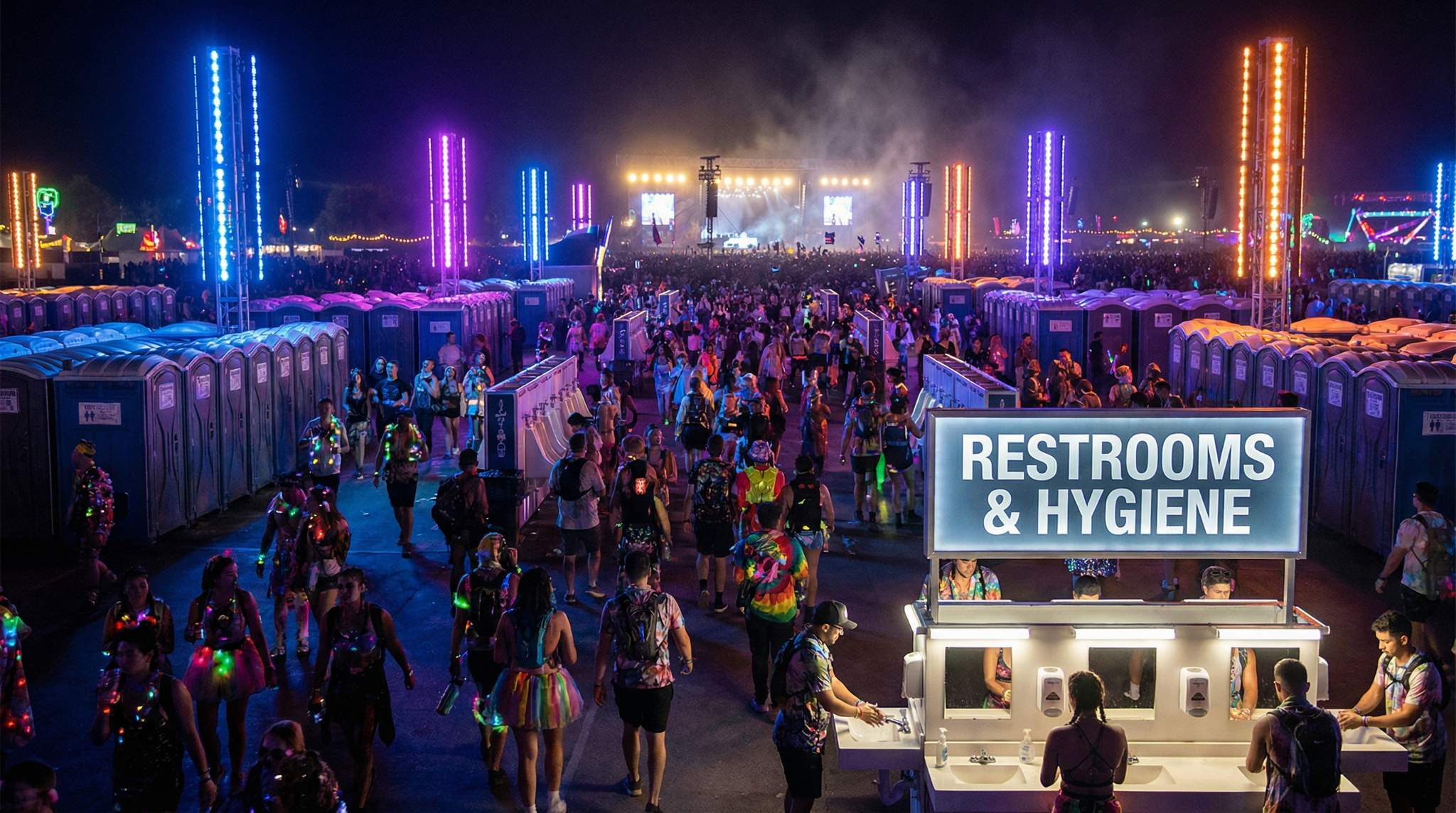
EDM events often stretch into the night (or even go round-the-clock), so proper lighting and hygiene amenities around restrooms are non-negotiable. It’s not enough to simply drop a row of porta-potties in a field – a veteran producer outfits those units to be user-friendly at 2 PM and at 2 AM alike. Here are key additions that make a world of difference:
- Nighttime Lighting: A dark toilet area can be both unsafe and uninviting. Always install lighting in and around the restroom areas for any event running after dusk. This could mean renting portable light towers that illuminate the whole bank of toilets and pathways, as well as using lanterns or battery-powered LED lights inside each unit. In Mexico City’s Electric Zoo festival, for example, organizers brought in generator-powered floodlights to ensure the main restroom zones were easily visible and safe at night. Good lighting helps prevent accidents (like trips, falls, or entering the wrong stall) and also deters vandalism or misconduct. No attendee should have to use their phone flashlight to find a clean spot in the loo – plan ahead to keep facilities bright and secure.
- Hand-Washing & Sanitizing Stations: Providing ways for people to clean their hands is a must for any food and restroom area. Ideally, set up dedicated hand-wash stations with soap and water near the exits of each restroom bank. If plumbing or water tanks aren’t feasible, at least provide alcohol-based hand sanitizer dispensers by the doors. Many big festivals, such as Tomorrowland and Ultra, position foot-pump sink units and hand sanitizer stands next to the toilets. To really encourage hygiene, consider making these stations attractive – for instance, well-lit mirrors above basins (so attendees can freshen up or fix festival makeup while washing hands) will draw more people to actually use them. Remember to stock ample soap, paper towels (or air dryers if you have power), and trash bins for used paper. Clean hands not only keep your crowd healthier, they also reduce the chance of contamination on shared surfaces.
- Mirrors and Grooming Touches: A small but appreciated upgrade is adding mirrors and other basic amenities. EDM festival-goers often wear elaborate outfits, face paint, glitter, and glow accessories – they’ll love a chance to check their look or reapply something. Mount some inexpensive mirrors at the wash stations or even inside a few of the portable units. Consider a shelf or table near restrooms where people can quickly put down a drink or phone while they adjust their outfit. These touches don’t go unnoticed; they turn a basic toilet stop into a quick pit-stop to refresh, helping attendees feel their best all festival long.
- Spill Response Kits: High-energy crowds and portable toilets can be a messy combination. Things tip over or overflow – it’s just a reality when serving tens of thousands of people. Smart festival teams stage cleaning and spill kits nearby so they can rapidly tackle any unpleasant messes. For instance, keep a sealed bin at each restroom area with supplies like absorbent sawdust or cat litter (to soak up liquids), disinfectant spray, trash bags, paper towels, a mop, and protective gloves. If a toilet leaks, someone knocks over a giant cup of soda, or an unfortunate bout of sickness occurs, these kits allow staff to address it immediately. Quick spill response not only prevents slip hazards and bad odors, it also signals to your audience that cleanliness is a priority. Nobody wants to wade through a puddle of who-knows-what on the way to the loo at 1 AM.
Maintenance, Monitoring, and Risk Management
Even the best plan can fall apart without continuous maintenance. Festivals that nail sanitation have a dedicated team and a solid plan to keep restrooms operational and clean throughout the event. This is both a logistical challenge and a risk management issue – a lapse in sanitation can become a health emergency quickly (imagine dozens of toilets out of service, or a gastro outbreak because handwash ran out). Here’s how to stay on top of it:
Free Tool: Project Your Bar Revenue
Per-head spend benchmarks by event type turned into projected bar and food revenue, with a stock-mix estimate and gross-margin line. Free calculator.
Unlike permanent municipal infrastructure—where a visitor might simply ask, “do DMVs have bathrooms?” and expect a standard, plumbed facility—temporary event sites require building and maintaining a high-capacity sanitation grid from scratch. For EDM festival organizers, this means treating portable restrooms as dynamic, high-maintenance utilities rather than static fixtures.
- Cleaning Schedules: Schedule regular cleaning and waste pumping cycles that account for peak and off-peak times. For multi-day EDM festivals (like a 3-day camping festival in California or a week-long event in Croatia), empty and service the toilets at least once daily – often late at night or early morning when crowds are thinnest. If the music runs 24/7, arrange a rolling service (clean a few units at a time in rotation) to avoid shutting down entire banks. Ensure your sanitation vendor is equipped for quick pump-outs and restocks; at very large events, trucks may even be on-site to continuously service during the day. Don’t wait until units are literally brimming – as one UK festival learned when attendees found toilet waste piling up to the seat by morning due to delayed servicing, triggering public outrage on social media.
- On-Demand Response: Maintain a hotline or radio channel for sanitation issues so any staff member can report a problem (like “Unit 24 is clogged” or “handwash station near Stage B is empty”). Dispatch roving cleaning crews or attendants to fix issues between scheduled cleanings. The faster you react, the less likely a minor issue becomes a major headache. Many festivals assign dedicated “sanitation managers” or contractors whose sole job is to monitor restroom status, refill supplies, and coordinate with pump truck teams.
- Waste Management & Environmental Rules: Be mindful of local regulations and environmental impacts. Different countries have various health codes for events. For example, in parts of the EU you might need a certain ratio of toilets per attendee by law, and in Australia outdoor events might have strict greywater disposal rules. Always secure the necessary permits for sanitation and have a disposal plan for waste (ensure your vendor will haul it to an approved treatment facility). Also, consider sustainability: using biodegradable chemicals in porta-potties, or providing composting toilets where feasible, can reduce environmental harm. It’s a nice talking point if your festival can say it’s “eco-friendly” even in how it handles waste.
- Contingencies for Crowd Surges: If ticket sales exceed expectations or a particular day sees an unexpected spike in attendance, have a backup plan. This could mean holding a few extra portable units in reserve (on standby in the parking lot ready to deploy) or having an emergency contract with a local provider for more units on short notice. It’s better to pay a little extra for readiness than to be caught short. Also, monitor real-time usage if possible – some events now use smart sensors or staff headcounts to gauge line lengths. If one area is mobbed, you might redirect attendees to another restroom cluster via announcements or event apps, or temporarily convert a staff-only toilet to public use, etc. Flexibility can save the day.
How Top-Tier Organizers Negotiate Sanitation Contracts
Securing the right infrastructure goes beyond simply ordering a set number of portable toilets. Veteran EDM festival organizers know that the secret to flawless execution lies in the vendor contract. Rather than accepting standard rental agreements, experienced production teams negotiate strict Service Level Agreements (SLAs) that dictate exact response times for clogs, mandatory pump-out frequencies, and minimum staffing levels for on-site attendants.
Need Festival Funding?
Get the capital you need to book headliners, secure venues, and scale your festival production.
When drafting these agreements, event promoters must also map out dedicated “back of house” access routes. A common logistical failure occurs when pump trucks cannot reach the restroom banks because crowds have filled the pathways. Top-level organizers design their site plans so that sanitation vehicles have unobstructed, behind-the-scenes access roads, allowing them to service units continuously without crossing paths with the EDM festival crowd. By treating sanitation providers as integrated operational partners rather than mere equipment drop-offs, production teams ensure their infrastructure scales seamlessly with attendee demand.
Learning from the Field: Successes and Cautionary Tales
Every seasoned festival organizer has a few battle stories about sanitation – the time a pump truck got stuck in mud and toilets overflowed, or the time a well-planned restroom setup earned praise from attendees. Here are some real-world insights to illustrate why all the above elements matter:
- Woodstock ’99 (USA) – A lesson in what not to do. This rock festival became infamous for its sanitation collapse. Over 200,000 attendees had insufficient facilities, and maintenance failed; eventually, overflowing toilets mixed with mud, creating a horrific sludge that led to health issues, as documented in accounts of the riotous conditions. The chaos contributed to the event’s downfall. The takeaway for EDM festivals is clear: underestimating restroom needs or neglecting maintenance can literally ruin the entire festival atmosphere.
- Tomorrowland (Belgium) – Managing scale with tech and staff. As one of the world’s largest EDM festivals (drawing visitors from Europe, North America, Asia, and beyond), Tomorrowland deploys thousands of toilets across its sprawling site. They invest in high-end restroom trailers and frequent cleaning. Notably, they also use technology like real-time monitoring and ample signage to direct flow. Attendees can check the festival app for nearest restroom locations, reducing panic searches. And throughout the day and night, cleaning crews in recognizable uniforms circulate to keep things tidy. Tomorrowland’s consistently positive reviews on cleanliness show that scale is no excuse for poor sanitation – it just takes more coordination.
- Regional & Boutique Festivals – Right-sizing for smaller crowds. Even a 500-person underground rave needs proper toilets. In fact, with small venues, the lack of infrastructure (like no existing bathrooms on a remote beach or forest) means you must bring everything in. A New Zealand bush doof (outdoor rave) learned this when initially providing just a handful of toilets – the result was long waits and some unhappy campers despite the intimate crowd size. The next year, they doubled the number of units (going from say 1 per 100 people to 1 per 50) and instituted volunteer bathroom attendants on each shift. The difference was huge: no lines, cleaner loos, and attendees commented that the festival “felt professional” even though it was small. The moral is, never skimp on the basics. Tailor your sanitation plan to your audience’s expectations: smaller events can charm attendees with unexpected attentiveness (like super-clean toilets for a tiny event can become a talking point that sets you apart).
Every festival – whether in the USA, Mexico, the UK, India or anywhere else – has its unique context, but the sanitation principles remain universal. Plan generously, execute diligently, and keep the attendee’s perspective in mind. A festival-goer who can quickly find a clean, well-lit bathroom when needed is one who will stay longer, spend more, and remember your event fondly (instead of ranting about the “gross toilets” on social media).
Establishing Best Practices for Event Sanitation at Music Festivals
To consistently deliver a safe and hygienic environment, production teams must codify their approach into standard operating procedures. The foundational best practices for event sanitation at music festivals revolve around proactive capacity modeling, continuous maintenance loops, and rapid incident response. Veteran promoters document these protocols in their site operations manuals, ensuring that every contractor, volunteer, and site manager understands the baseline standards. By standardizing these hygiene protocols—from mandatory hourly inspections during peak times to strict vendor service level agreements—organizers can scale their infrastructure predictably, whether they are hosting a 5,000-person boutique gathering or a 100,000-capacity mega-event.
Data-Driven Event Marketing
Track ticket sales, demographics, marketing ROI, and social reach in real time. Exportable reports give you the insights to make smarter decisions.
Frequently Asked Questions
How should organizers plan restroom capacity for EDM festivals?
Experienced organizers model restroom counts based on peak demand during set changeovers rather than daily averages. Since thousands of attendees may rush facilities within a 15-minute window between DJ sets, planning for these surges ensures the number of units can handle the traffic without creating unacceptably long queues or overflowing toilets.
How does alcohol service impact portable toilet requirements?
Festivals serving alcohol require at least 30–40% more restroom capacity because alcohol acts as a diuretic, significantly increasing the frequency of visits. Organizers must adjust toilet ratios upward to account for this physiological effect, as well as potential weather factors like heat, to prevent overcrowding and maintain sanitation standards.
What are the benefits of gender-neutral toilets at festivals?
Gender-neutral restroom banks maximize flexibility and speed up lines by allowing any attendee to use the next available stall. This strategy, used by major events like Tomorrowland, balances wait times across genders and promotes inclusivity. Success requires clear signage and staff attendants to manage flow and ensure safety.
What sanitation amenities are essential for nighttime events?
Proper lighting inside units and around pathways is non-negotiable for safety and to deter vandalism during events running past dusk. Beyond visibility, organizers must provide hand-washing stations with soap and water, mirrors for grooming, and spill response kits to ensure hygiene and comfort for attendees throughout the night.
How often should festival portable toilets be serviced?
Multi-day festivals must empty and service toilets at least once daily, typically during low-traffic hours like late night or early morning. For 24-hour music events, rolling service schedules allow cleaning crews to maintain hygiene without closing entire banks. Continuous maintenance prevents waste buildup and health hazards similar to the Woodstock ’99 disaster.
Can poor restroom facilities impact festival bar sales?
Poorly managed restrooms negatively impact revenue because attendees often drink less water or alcohol to avoid using dirty facilities. Studies indicate that 1 in 5 festival-goers limit fluid intake to dodge bad toilets, leading to dehydration and reduced bar sales. Clean, accessible restrooms keep crowds hydrated and spending money.
Why do EDM festival producers need specialized sanitation strategies?
EDM festival producers require specialized sanitation strategies because dance music events feature unique crowd dynamics, including extended event durations, high hydration needs, and massive surges in restroom use between DJ sets. Standard baseline ratios are insufficient for an active EDM festival crowd, making peak-demand modeling and rapid maintenance protocols essential for safety and attendee satisfaction.
What should event promoters include in a sanitation vendor contract?
Event promoters should negotiate comprehensive Service Level Agreements (SLAs) that go beyond basic equipment rental. Contracts must specify mandatory pump-out schedules, guaranteed response times for maintenance issues, and the provision of on-site attendants. Additionally, organizers should require vendors to outline their emergency contingency plans for unexpected crowd surges or equipment failures.
What are the core best practices for event sanitation at music festivals?
The core best practices for event sanitation at music festivals include modeling capacity based on peak crowd surges rather than daily averages, implementing continuous maintenance and pumping schedules, and deploying gender-neutral facilities to optimize flow. Additionally, organizers should mandate strict service level agreements with vendors and ensure adequate nighttime lighting and hand-washing stations are available.