The 2026 Talent Wars: A High-Cost, Competitive Landscape
Superstars at Super Prices
Booking top artists has never been cheap, but by 2026 the cost for marquee talent has skyrocketed. Many headline performers now command fees in the seven figures for a single festival set, a challenge discussed when navigating the financial realities of mid-sized festivals and balancing headliners against local talent costs. This surge is part of a broader trend – according to a French National Music Center study, artist fees jumped 30–40% on average since 2020. The economics of touring have shifted in artists’ favor: mega-stars like Taylor Swift can gross over $14 million per concert on tour (her 2023–24 Eras Tour topped $2.2 billion in revenue, as AP News reported on the record-breaking tour). To lure such talent, festivals must now compete with those lucrative solo tour earnings. The result? Gigantic guarantees that can devour a festival’s budget. Veteran production managers confirm it’s not unusual for 40–50% of a mid-sized festival’s expenses to go to artist fees, up from perhaps 25–30% a decade ago. Top-tier headliners know their worth, and they’re driving hard bargains.
For independent promoters, navigating an unexpected artist’s talent price spike requires immediate adjustments to financial forecasting. When an act that cost $50,000 in 2022 suddenly demands $150,000 today, that sharp escalation in talent fees forces organizers to rethink their entire programming model. This rapid inflation isn’t just a gradual increase; it’s a sudden surge that can derail a carefully planned budget if buyers aren’t prepared to walk away from unreasonable quotes.
A Crowded Festival Field Fuels Bidding Wars
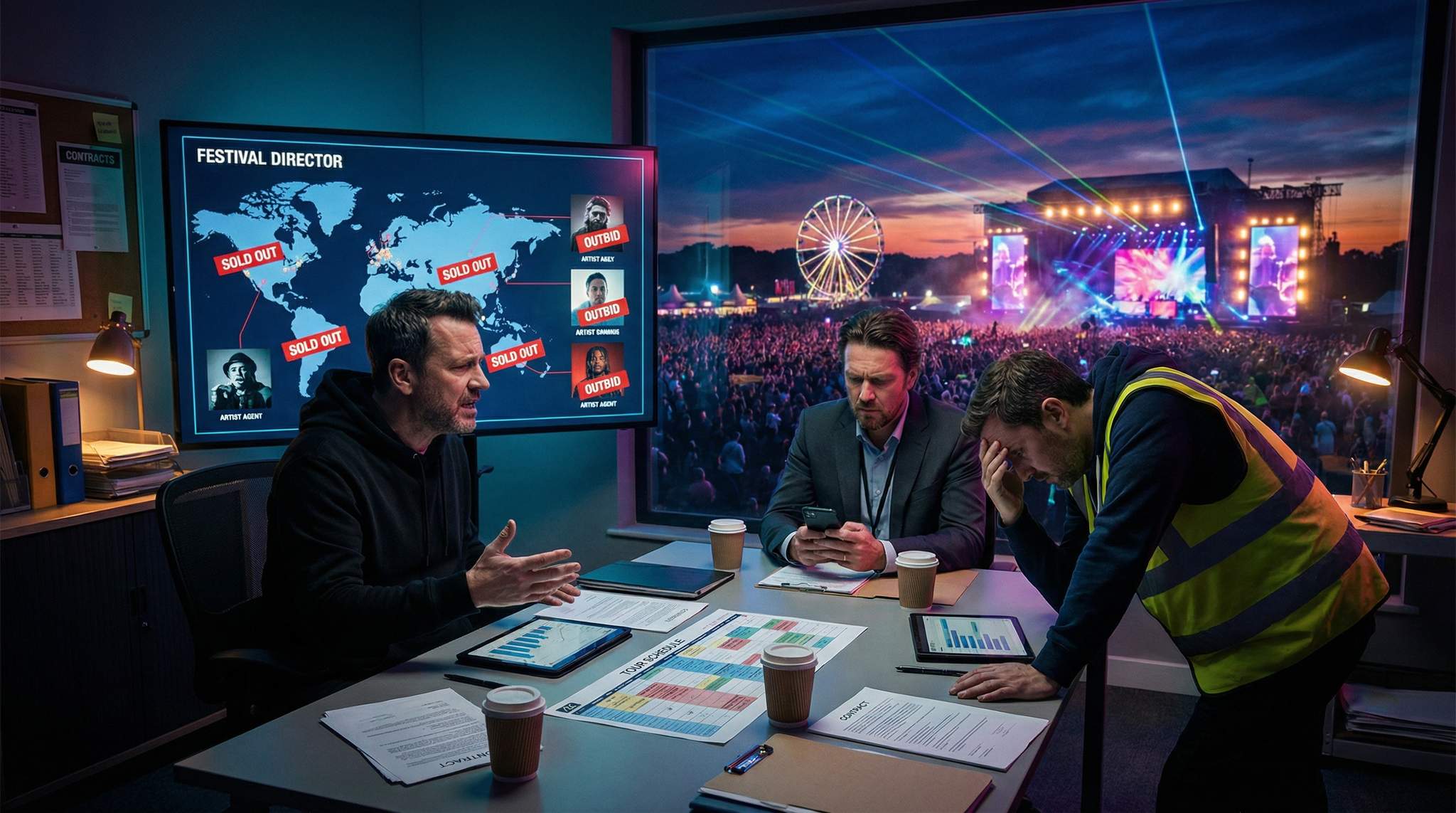
The explosion in the number of festivals worldwide has intensified competition for talent. In the 2020s, more events in every region – from new boutique gatherings to corporate-backed mega-fests – are chasing many of the same headliners. This crowded field means bidding wars for popular acts have become the norm. Big corporate festivals can offer exclusive deals and higher pay, often boxing out independent events. Major promoters also use radius clauses, preventing an artist from playing other festivals in the same region for months, effectively using exclusivity to restrict competitor lineups. For example, if a superstar DJ headlines a large festival, they might be contractually barred from appearing at any other regional festival that season. Such exclusivity keeps talent scarce for competitors. The calendar itself is a battleground: summer weekends pile up with marquee events, and even global spectacles like the 2026 FIFA World Cup will vie for audiences’ attention (festivals in 2026 must plan around the World Cup’s massive draw for fans, noting the impact of global sporting events). All these factors create a seller’s market for artists – demand far exceeds supply at the top end, driving fees further upward.
Mid-Sized Festivals Feeling the Pinch
The impact of these “talent wars” is felt most acutely by mid-sized and independent festivals. Lacking the deep pockets of Coachella or Glastonbury, mid-tier events find it increasingly hard to afford big-name acts. In 2024, a sobering analysis in France found two-thirds of festivals ran a deficit, citing skyrocketing artist fees as a key factor in this analysis of French festival deficits. Similarly, industry reports note mid-sized festivals are getting squeezed by rising talent costs and competition, with mid-sized festivals facing rising talent costs and dealing with intense market competition. When one or two headliners can consume nearly half a modest festival’s budget, the financial risk is enormous. These events often operate on thin margins to begin with – a single over-budget booking or a slight dip in ticket sales can put them in the red, a reality of operating on increasingly thin profit margins while managing the financial risks of headliner bookings. In recent years, several independent festivals have canceled or scaled back specifically because talent pricing made their lineups untenable. Smaller festivals also struggle to compete for attention when mega-fests dominate headlines. The stakes are clear: to survive in 2026’s high-cost talent market, festivals must adapt their booking approach. The good news is that creative strategies can level the playing field, as we’ll explore below.
Turn Fans Into Your Marketing Team
Ticket Fairy's built-in referral rewards system incentivizes attendees to share your event, delivering 15-25% sales boosts and 30x ROI vs paid ads.
Reshaping Your Talent Budget Strategy
Setting a Realistic Talent Fee Cap
In an era of ballooning artist fees, disciplined budgeting is your first line of defense. Savvy festival organizers now set a hard cap on talent spending as a percentage of their overall budget – and plan their lineups to stick to it. For example, an independent festival with a $5 million budget might limit talent fees to no more than 45% of total costs. This ensures other critical expenses (production, staffing, safety, etc.) aren’t starved of funds. Experienced producers recommend working backwards: determine your total budget based on realistic ticket sales and sponsorship, then allocate a maximum dollar amount for all artist bookings. Never book acts that push you past your budget’s comfort zone. If a superstar’s quote would eat up half your budget, it’s time to look at alternatives rather than gambling the entire event on one name. By capping talent spend, you force your team to be strategic – seeking out the right mix of artists you can afford, instead of chasing a dream lineup that could bankrupt the festival.
Developing an Internal Artist Booking Price List
One of the most common questions from emerging promoters is where to find a standardized artist booking price list. The reality of the live music industry is that a universal, public rate card simply doesn’t exist. Talent fees are highly dynamic, fluctuating based on routing, radius clauses, the performer’s current streaming momentum, and the specific demands of the 2026 touring landscape. Instead of searching for a static pricing sheet, successful festival organizers build their own proprietary databases. By meticulously tracking historical quotes, agency roster minimums, and shared data from festival alliances, your talent buying team can develop an internal reference guide. This living document helps buyers quickly benchmark whether a new quote aligns with current market rates or if an agency is artificially inflating the cost, allowing for more grounded and confident negotiation.
Planning a Festival?
Ticket Fairy's festival ticketing platform handles multi-day passes, RFID wristbands, and complex festival operations.
Benchmarking Standard Talent Fee Rates in 2026
While a universal catalog doesn’t exist, establishing a baseline for standard talent fee rates in 2026 is essential for accurate financial modeling. Industry averages have shifted dramatically; for instance, emerging regional support acts that previously commanded $1,500 to $3,000 may now require $5,000 to $8,000 to cover inflated touring logistics. Mid-tier touring bands and electronic artists frequently quote between $25,000 and $75,000, depending on their recent streaming metrics and social momentum. Meanwhile, established sub-headliners and legacy acts often start negotiations at $150,000, scaling rapidly into the millions for top-tier global superstars. Promoters must cross-reference these typical booking costs against their specific market size, venue capacity, and anticipated ticket yield to ensure every offer remains economically viable.
Balancing Marquee Acts and the Undercard
A sustainable 2026 lineup often means resisting the urge to book every hot artist on the charts. It’s about balance. Festival veterans advise allocating your talent budget across a portfolio of acts: a couple of well-chosen headliners plus a strong undercard of mid-tier, regional, and emerging artists. This approach spreads both the cost and the draw. While a single A-list headliner might sell a chunk of tickets, a diverse lineup of mid-level acts can collectively attract a comparable crowd for a fraction of the price. It also hedges risk – if one act cancels or underperforms in ticket sales, you haven’t sunk your entire investment. Calculate the ROI of each prospective booking: estimate how many tickets that artist might realistically move versus their fee. Industry data and your own past sales patterns can inform this. For instance, if a pop star wants $1 million but you suspect they’d only bump attendance by 1,000 people, the math likely doesn’t work. You might get a better return booking two artists at $200,000 each who appeal to different fan segments. The goal is to maximize “bang for buck” – combine artists in a way that the sum of their fan followings fills your venue, without any single act breaking the bank.
Budget Breakdown: Talent vs. Other Costs
It helps to understand how talent spending fits into the bigger financial picture of a festival. Let’s look at a simplified budget breakdown for a hypothetical mid-sized music festival versus a mega-festival:
| Expense Category | Mid-Sized Fest (~20k attendees) | Mega Fest (~100k+ attendees) |
|---|---|---|
| Talent (Artist Fees) | ~45% of budget (multiple mid-tier headliners) | ~30% of budget (top stars, heavily sponsor-subsidized) |
| Production (Stages/A/V) | ~20% (solid production on few stages) | ~25% (massive stages and cutting-edge A/V) |
| Operations & Staff | ~15% (crew, security, medical, etc.) | ~20% (large staff and extensive services) |
| Marketing & Promotion | ~10% (regional marketing efforts) | ~5% (global buzz, strong brand) |
| Site & Logistics | ~5% (site rental, infrastructure) | ~8% (huge site, more infrastructure) |
| Insurance & Safety | ~3% (basic coverage, compliance) | ~2% (bigger policy, but scaled by volume) |
| Contingency | ~2% (small emergency reserve) | ~10% (substantial contingency fund) |
Table: Approximate budget allocation comparison. Mid-sized events often spend a much larger slice on talent, as they lack the sponsorships and scale of mega-festivals.
Data-Driven Event Marketing
Track ticket sales, demographics, marketing ROI, and social reach in real time. Exportable reports give you the insights to make smarter decisions.
Notice how the mid-sized festival in this example devotes 45% of its budget to talent, whereas a mega-festival might keep talent costs closer to 30%. This reflects a real pattern: smaller festivals generally must spend more (proportionally) on artists to stay competitive, a dynamic often cited when analyzing mid-sized festival survival strategies. Larger events benefit from economies of scale and big-brand sponsors that offset talent fees. For an independent fest, this means you have to be extra shrewd with those talent dollars. Every booking needs to count. If you blow past about half your budget on a few names, you risk under-investing in other areas that impact attendee experience (and ultimately your reputation). The key takeaway: decide your talent spend limit early, and engineer your lineup within that financial reality. It might mean targeting a different caliber of artist than the Coachellas of the world – and that’s okay. There are other ways to craft an exciting lineup, which we’ll get into next.
Estimating the Total Cost to Run a Music Festival
When aspiring promoters or investors ask exactly how much does it cost to run a music festival, the answer hinges entirely on scale, location, and infrastructure. For a boutique, grassroots event hosting 3,000 to 5,000 attendees, baseline production and talent expenses typically start between $300,000 and $750,000. Scaling up to a mid-sized regional festival (15,000 to 20,000 capacity) requires a significantly larger capital injection, often ranging from $2 million to $6 million depending on the caliber of the headliners and whether the site is a turnkey venue or a raw greenfield requiring heavy infrastructure like temporary fencing, power grids, and sanitation. Mega-festivals drawing upwards of 100,000 fans operate in a different stratosphere, with total operational costs easily exceeding $20 million to $30 million. Regardless of the tier, seasoned producers know that building a comprehensive financial model—accounting for everything from artist guarantees and staging to liability insurance and marketing—is the only way to ensure long-term viability in a volatile market.
Need Festival Funding?
Get the capital you need to book headliners, secure venues, and scale your festival production.
Passing the Cost to Attendees: The Ticket Price Dilemma
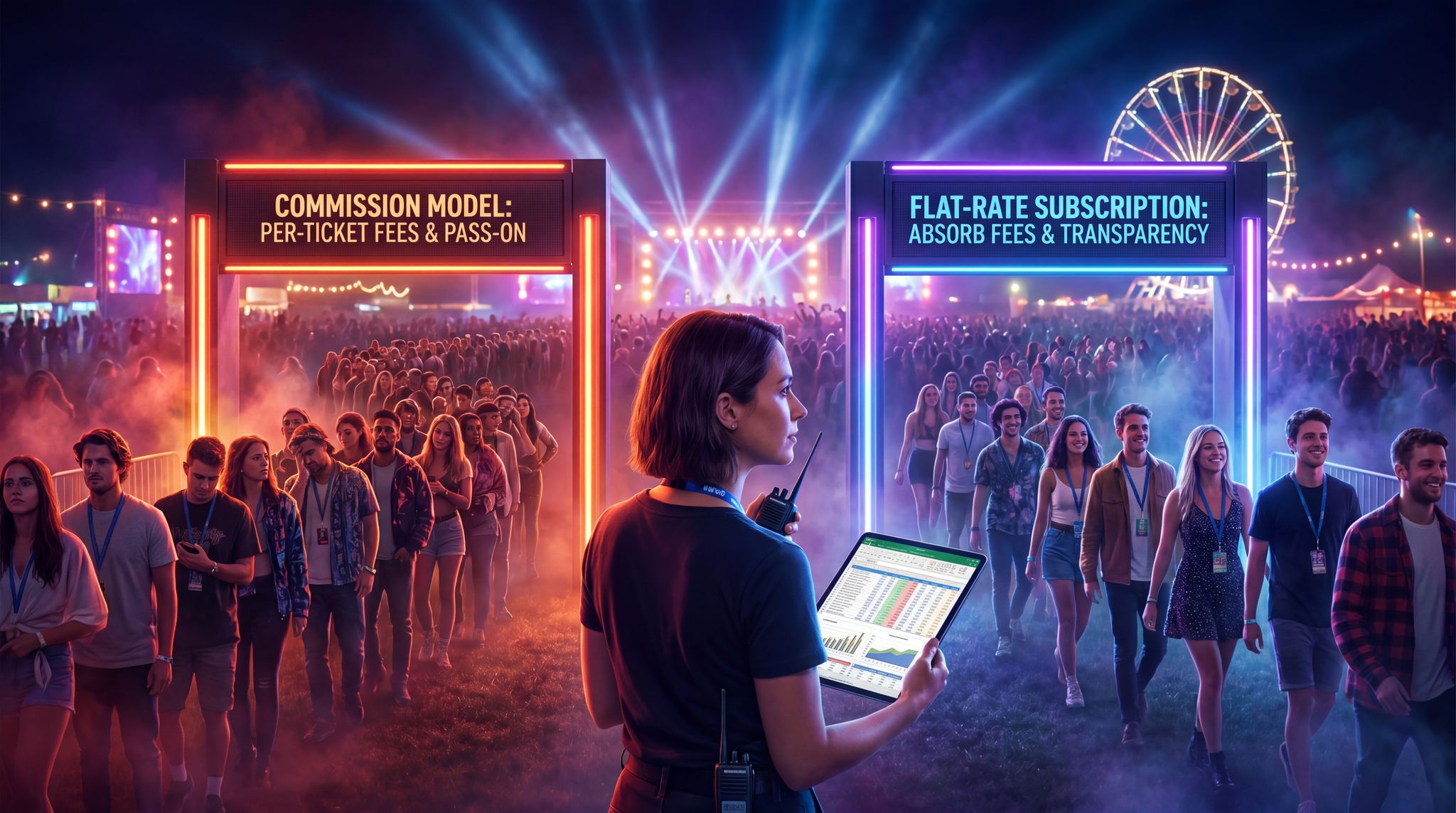
As the talent wars of 2026 rage on, organizers face a difficult question: how much of this burden can be passed onto the consumer? Calculating your 2026 ticket prices cost structure means finding the delicate threshold where fans are still willing to buy. If you raise general admission rates too high to cover exorbitant talent fees, you risk alienating your core demographic. Smart producers are instead introducing tiered VIP experiences, payment plans, and premium add-ons to offset the artist price spike without pricing out the average festival-goer.
Collaborating with Fellow Festivals for Mutual Gain
Strength in Numbers: Festival Alliances
In this climate of fierce competition, some festivals are choosing cooperation over rivalry. Festival alliances are emerging as a smart way to fight back against soaring costs. By banding together, independent events can share resources, increase their bargaining power, and avoid undercutting each other. For example, dozens of indie festivals in the UK, Europe, and North America have formed networks to discuss everything from booking strategies to equipment rentals. The logic is simple: united, festivals have more clout when dealing with big suppliers or agencies. Alliances also prevent a “race to the bottom” where festivals compete so hard for talent that they drive fees even higher. Instead, open communication about schedules and wish-lists can lead to collaborative solutions – like co-booking artists or swapping lineup slots. Industry associations and informal collectives alike are encouraging this new spirit of solidarity. Seasoned promoters note that sharing knowledge and even lineups with peers can ultimately make everyone’s events stronger. The era of guarded secrecy is fading as organizers realize they face common challenges. Together, festivals can negotiate deals and shape a fairer marketplace in ways a lone buyer often can’t.
Sharing Artists and Routing Deals
One of the most effective alliance strategies is coordinating artist bookings across multiple festivals. Instead of each event flying the same band in for separate one-off gigs (and paying full freight each time), allied festivals arrange for the artist to play several dates on a regional circuit. By routing a tour-like sequence – say Festival A on Friday, Festival B on Saturday, Festival C the next weekend – they can split travel costs and even negotiate better fees per show. Agents are often amenable to package deals that guarantee their artist multiple bookings in one go, showing how resource sharing alliances cut costs. A real-world example comes from Europe’s reggae festival circuit: events like Rototom Sunsplash (Spain), SummerJam (Germany), and Reggae Geel (Belgium) deliberately line up on successive weekends. International reggae acts can hop between those festivals by tour bus or train instead of expensive transatlantic flights, effectively coordinating travel logistics between allied events. Each festival only pays a share of the travel, and the artist gets a convenient mini-tour. In North America, we’ve seen independent festivals in neighboring states coordinate on shared headliners – one fest might take the Friday slot, another books the Saturday – so the artist can make a tour of it. This reduces downtime for the artist and costs for the fests. The win-win: artists earn more total gigs, and festivals get top talent for less per show. To make it work, start talking with peer festivals well in advance about which artists you could collaboratively book. Line up your dates to align, and approach agents with a unified offer. It requires trust and good communication between festivals, but when done right, everyone benefits.
Pooling Resources and Bulk Bargains
Festival alliances also unlock savings beyond artist fees. By pooling resources, events can cut overhead costs and free up more budget for talent. Allied festivals often bulk-buy supplies together – from wristbands and beer cups to stage hardware – scoring volume discounts that a single fest couldn’t get. Some even share costly equipment: if your festival is one weekend and a friend’s is the next, you might jointly purchase a stage, lighting rig, or video screen and rotate its use, rather than each renting separate gear, a tactic for sharing infrastructure to reduce overhead. Crew sharing is another alliance perk; a trusted pool of technicians can be deployed across events in the network, ensuring experienced staff without each festival having to train an entirely separate team. All these efficiencies lower the cost of doing business. For talent specifically, festivals in a network might agree to avoid bidding against each other on the same artist – preventing price escalation. Instead, they coordinate who goes after whom, or simply agree to focus on different genres to spread out demand. Some coalitions even approach sponsors or governments collectively for funding that can be used to support artist bookings across multiple events. The underlying principle: by sharing and collaborating, independent festivals can achieve scale-like advantages. Every dollar saved on infrastructure or marketing is a dollar that could be redirected to programming and talent. In the end, the attendees win too – they get well-produced festivals and possibly see their favorite artists at multiple stops, thanks to smart coordination behind the scenes.
Free Tool: How Many Tickets to Break Even?
Enter your venue, artist, production and marketing costs with your ticket price. See how many tickets cover your costs and how many you still need to sell.
Spotlighting Emerging and Local Talent
Elevating Rising Stars to Headliner Status
When headliner fees go through the roof, one solution is to grow your own headliners. Festivals that make a name for discovering emerging artists can thrive without chasing every top-40 act. Remember, today’s superstar was an unknown five years ago – and many festival-goers love the thrill of seeing “the next big thing” first. By spotlighting rising talent, you not only save money, but also build your festival’s brand as a tastemaker. Savvy organizers program plenty of buzzy newcomers and give them prominent slots (not just early afternoon invisibility). Some even elevate fast-rising acts to headline smaller stages or high evening slots, effectively anointing them as festival headliners. This was the case when Billie Eilish headlined major festivals by age 20 after playing smaller font lineups just a few years prior – forward-thinking festivals booked her early and reaped the reward as her popularity exploded. Industry veterans stress the importance of tracking trends and signing breakout artists before they become household names. Use tools like streaming analytics and social media buzz (more on that in the data section) to identify which up-and-comers are connecting with audiences. By booking a future star in 2026 for a moderate fee, you might be landing a 2028 headliner at a bargain. There’s risk – not every hyped new act will pan out – but the upside is huge. Plus, you cultivate loyalty: artists tend to remember festivals that gave them a big break and often return to those stages even as their clout grows.
The Power of Local Heroes and Niche Genres
Another underutilized talent pool lies right in your backyard. Local and regional artists can be major assets in crafting an exciting lineup without the superstar price tags. These acts, often with dedicated followings in your city or country, typically cost far less than international touring artists – yet they add authenticity and can mobilize local fans. A strong contingent of “hometown heroes” on the bill also signals that your festival supports the community, which can boost goodwill (and sometimes unlock local arts funding or sponsorships). For example, New Zealand’s Rhythm & Vines festival often highlights Kiwi acts who draw huge crowds at home, offsetting the need for too many pricey imports. Likewise, niche-genre performers (think legendary blues musicians, underground techno DJs, or indie darlings) might not top the pop charts but have fanatic followings willing to travel for them. These artists may charge less than mainstream pop stars while delivering unique performances that set your festival apart. A diverse lineup that mixes big names with local talent and niche genre acts can create a rich tapestry of experiences. As one Ticket Fairy guide on lineup curation notes, the most memorable festivals blend blockbuster headliners with rising artists and beloved local acts to keep the experience fresh, creating a festival talent mix that sells while utilizing regional artists to tap into local fanbases. The big names draw the masses, but the undercard of local and niche artists provides the heart and soul – and often surprises the audience in the best way. By giving local talent meaningful slots (and proper promotion), you might find they become surprise highlights of the weekend.
Success Stories: Festivals That Launched Careers
History shows that investing in emerging and local talent can pay off tremendously. Many iconic festivals earned their reputation by breaking new artists. For instance, Glastonbury Festival runs an “Emerging Talent Competition” that gives unknown acts a shot at performing on major stages, effectively creating emerging artist ladders to main stages. Winners and standout entrants over the years – from UK rock bands to singer-songwriters – have gone on to national prominence, often returning to Glastonbury in later years as billed stars. In the U.S., South by Southwest (SXSW) built its brand as the premier showcase of unsigned and indie artists; countless bands got discovered there and then climbed to headliner status at other festivals. By showcasing tomorrow’s talent, these events maintained exciting lineups and became must-attend for industry scouts and hardcore fans. Even mid-sized and boutique festivals have success stories: in 2013, the small-scale Particles Festival (fictional example) gave a young EDM producer one of his first big gigs – by 2018 he was a Grammy-nominated headliner who still made a point to play that festival out of gratitude. The lesson is clear: being the festival that nurtures talent can secure you a pipeline of future headliners who feel a loyalty to your event. It also creates a narrative that attracts attendees — fans want to attend “the festival where you might discover your next favorite artist.” This strategy doesn’t mean you never book established stars, but it reduces reliance on them. Over time, your festival gains prestige for its curation, which is priceless and can’t be bought at any fee.
Becoming a Destination for Unsigned Talent
Another highly effective strategy for combating rising costs is intentionally positioning your event as one of the premier music festivals for unsigned artists. By dedicating specific stages or entire days to independent, unrepresented musicians, promoters can drastically reduce their reliance on expensive agency rosters. Unsigned acts are typically hungry for exposure, meaning their performance rates are highly negotiable or even structured around travel stipends and professional media assets. For the organizer, this creates a low-risk, high-reward environment where you can test dozens of new acts, build direct relationships with future stars before they sign with major agencies, and cultivate a reputation as an industry tastemaker.
Smart Negotiation Tactics for Artist Deals
Multi-Event and Multi-Year Booking Deals
When dealing with high-priced talent, getting creative with contract terms can make bookings more affordable. One approach seasoned promoters use is offering artists multi-show or multi-year deals. Rather than a one-off gig, you might contract an artist for a small tour or for repeat appearances over a couple of years, in exchange for a more favorable rate per show. For example, a festival could partner with a few venues to book an artist for a festival set plus two club shows in the region; the combined fees for all three shows might be negotiated slightly lower than if each were separate. Alternatively, secure an artist on a two-year festival deal: they play a sub-headliner slot this year for a moderate fee and agree to return as a headliner next year at a pre-set fee. This can lock in talent before their market value increases (important if you suspect they’re on the verge of blowing up). It also gives the artist a guaranteed future booking, which some appreciate for stability. Of course, these deals require careful planning – you need confidence the artist’s trajectory and your festival’s plans align. But many agents will entertain a multi-show deal if it guarantees their client added exposure or multiple paydays in one negotiation. Bundle bargains aren’t just for sponsors; they can work for talent too. Especially if you run multiple festivals (or have allies that do, as discussed earlier), leverage that multi-event clout. Agents often prefer locking in a whole tour leg with one promoter, and they may cut you a break on price per show for the convenience and assured income.
Creative Fee Structures and Incentives
Not every booking has to be a flat-fee transaction. Consider structuring deals with incentives to lessen upfront costs. One model is a lower guarantee plus a bonus – you pay a guaranteed base fee that’s lower than the artist’s normal ask, but include a bonus if certain ticket sales or attendance thresholds are met. Essentially, the artist shares in the risk and reward of your festival’s success. This is similar to how promoters structure deals in the concert world (e.g. a door deal or bonus at sell-out). For example, an artist might accept half their usual fee guaranteed, with the other half only paid if the festival sells, say, 90% of capacity. If the artist truly helps draw crowds, they get their full pay; if not, you aren’t left holding the bag on an overpaid underperformer. Another tactic is offering tiered billing or marketing perks in lieu of cash. An artist might reduce their fee if you agree to give them top billing on your poster or a special “guest curator” slot that raises their profile. Some might trade a discount for extended rights to their performance footage or other content opportunities. Non-monetary perks can also sweeten deals: offering an artist a prime set time, a bespoke on-site experience (like a vacation package around your festival), or extensive hospitality and travel upgrades might convince them to accept a bit less money. This works best with artists who value the exposure or vibe of your event – perhaps they admire your festival’s ethos or want to reach your specific audience. Be cautious to keep things fair (you don’t want to seem like you’re skimping), but definitely negotiate beyond just “fee = $X.” A bit of creativity can bridge the gap when budgets are tight.
Grow Your Social Following With Every Sale
Require social media follows, shares, or playlist adds to unlock presale access or special pricing. Turn every ticket purchase into audience growth.
Navigating Exclusivity and Optimal Timing
Exclusivity clauses and timing can make or break your booking strategy. Negotiating around radius clauses is crucial if you’re in a saturated market or season. If an artist’s contract with a big festival blocks other shows in the area, see if you can book them just outside that restricted window – e.g. a few weeks before or after the major event, or perhaps as a surprise guest unannounced (if the clause allows exceptions for unadvertised appearances). Some independent festivals have found success by shifting their dates slightly to fall just before the big players lock in exclusives. You might secure an artist on the early leg of their tour, before the competition heats up. Another tactic: focus on open tour periods and off-peak seasons. Many top artists play the summer festival circuit in Europe or North America, but have downtime in winter or early spring – which is summer in the Southern Hemisphere. Festivals in Australia, New Zealand, or South America, for instance, often nab big acts in the November–February window when those artists aren’t as booked elsewhere. Even within a year, catching an artist right after they’ve finished an album (and before their own tour launches) could yield a more reasonable fee, since they’re eager to get in front of audiences. Experienced talent buyers also emphasize the power of relationship-building: maintain friendly, honest relations with agents and managers year-round, not just when you need something. If agents trust you and see you as a long-term partner, they’re more likely to tip you off early about artists available (or give you a first pass on avails) and perhaps hold back on that extra 10% fee hike for the sake of goodwill. In a tight market, relationships can get you a better deal than a cold call ever would. Finally, don’t be afraid to walk away from a deal that doesn’t make financial sense. Sometimes the smartest negotiation move is politely declining an overpriced offer. There are always other artists, and part of coping in a talent war is knowing when to say “no, thanks” and pivot to a more viable option.
Creative Lineup Curation Strategies
Curated Themes and Unique Collaborations
If you can’t win at the money game, win with creativity. Thoughtful lineup curation can make your festival stand out without relying purely on pricey headliners. One approach is to build a strong theme or narrative into your lineup. For example, curate a day or stage around a genre or concept – such as an “Old-School vs New-School” rap showcase, a celebration of Afro-Caribbean music, or a spotlight on women in rock. By giving the lineup a cohesive identity, you create excitement that isn’t tied to one big name. Fans come for the theme and discovery. Festivals like Glastonbury and Primavera Sound are known for expertly curated stages (e.g., an entire stage curated by a famous artist or label) which feature unique artist collaborations and rare appearances. These special sets can generate buzz that money alone can’t buy. For instance, a festival might organize a one-time “superjam” where members of different bands perform together – an experience exclusive to that event. Or commission artists to cover classic albums or tributes that won’t happen elsewhere. Such programming twists make the lineup memorable and media-worthy without necessarily involving superstar fees (artists often charge less for these fun, one-off collaborations, seeing them as artistic opportunities). Partnering with cultural institutions can also yield creative acts – like an orchestra performing video game music, or a local dance troupe joining a DJ set for a crossover performance. By thinking outside the standard touring roster, you craft a festival that people talk about for its originality. Uniqueness is a currency of its own: even if you haven’t booked the absolute hottest chart-topper, you have something fans can’t see anywhere else.
Enhancing the Experience Over Expensive Names
In the talent wars, remember that a festival is more than its lineup. Many successful events compensate for fewer A-list acts by dialing up the attendee experience in other ways. The idea is to make your festival itself the star attraction. This can include immersive art installations, spectacular stage production, interactive games, themed areas, gourmet food and craft beverage offerings, wellness and activity zones – all the elements that create a rich environment. If people are having an incredible time throughout the venue, the headliner on stage becomes just one part of a larger adventure. Some festivals have leaned into this by branding their event around a concept or atmosphere rather than any specific artist. For example, Burning Man (though not a traditional festival with booked talent) proves that an unmatched experience can draw 70,000+ attendees without a single scheduled headliner. On a smaller scale, boutique festivals often focus on comfort, community, and creativity to ensure attendees leave with great memories, regardless of who was on the poster. Investing in high-quality sound and lighting for all stages, good crowd flow, ample amenities, and surprises like pop-up performances or fireworks can make the festival feel premium even if your lineup budget was lean. Attendee satisfaction drives loyalty – if fans know they’ll have a blast at your event every year, they’re more likely to buy tickets no matter who’s playing. This reduces the pressure to snag that one headline name to sell tickets. In essence, you’re shifting the value proposition: from “come see X star at our festival” to “come for the amazing festival, which by the way has lots of great music.” It’s a long-term strategy, but the most enduring events strike that balance. They use technology and innovation smartly, innovating without losing the festival’s soul, and focus on creating a holistic vibe that can’t be pirated or streamed.
When Less Is More: Quality Over Quantity
Resisting the impulse to go bigger, louder, more can actually be a winning strategy in a high-cost talent era. Many festivals have found that scaling back – fewer stages, fewer but better-curated acts, maybe a slightly smaller capacity – results in a stronger event. By trimming the fat, you concentrate your budget and audience attention on the things that matter most. For instance, instead of five stages running simultaneously (demanding dozens of artists and full production at each), you might opt for three stages with no overlap during headliner slots. This way you can afford higher-quality production on those stages and book solid acts for each time slot, rather than stretching to fill an excessive schedule. Attendees won’t necessarily miss the extra acts if what’s on offer is more focused and consistently excellent. It also fosters a sense of community when the whole crowd watches the same set, rather than fragmenting into too many niches. Some independent festival promoters have intentionally reduced their event’s scale and seen better financial health and fan feedback as a result. As one analysis put it, right-sizing your festival can be smarter than endless growth . The idea is to find the size where you can deliver peak experience and sustainable costs. If that means booking 30 artists instead of 50, so be it. Those 30 will each get more attention and care. Fewer headliners can also mean each gets a bigger impact – you’re not diluting the star power by having too many competing big names on the bill. Plus, a leaner lineup gives newer artists a better chance to shine (and attendees less FOMO from impossible schedule clashes). Don’t equate quantity with quality; sometimes a “less is more” approach leads to a festival that fans and finances both appreciate.
Data-Driven Talent Booking
Using Fan Data to Spot Trends Early
In 2026, successful talent booking isn’t just about gut feeling – it’s about harnessing data. Festival producers are increasingly using analytics to guide lineup decisions, especially to identify emerging talent and underserved fan interests. One valuable approach is analyzing streaming data to see which artists are surging in popularity regionally and globally. Services like Spotify, Apple Music, and YouTube provide a goldmine of stats: trending artists in your city, rapid increases in listenership, demographic breakdowns of who’s listening to what, allowing organizers to use audience insights to curate high-demand lineups. By diving into these numbers, a talent booker can spot a rising star months before they hit the traditional radio charts or press. For example, noticing that an indie pop band has a huge spike in your region’s Spotify streams could tip you off to book them as a sub-headliner early, before everyone else is after them. Social media trends are another key signal – are TikTok or Instagram reels suddenly full of a certain DJ’s track? Is an artist going viral among Gen Z listeners? These are clues to who might draw crowds this year. The savviest festivals even use ticketing data from past events: analyze which lesser-known acts sold the most advance tickets or had the largest crowd flow at your previous festival. Those could be candidates to move up on the lineup (or return for an encore performance) because they clearly resonated with your audience. In short, let fans’ behavior inform your bookings. If you see that your target demographic is gravitating towards, say, alt-R&B and Afrobeat artists in their playlists, infuse more of that into your lineup. Data won’t replace curation expertise, but it will augment it, ensuring you don’t miss the forest for the trees when tastes shift.
Streaming, Social, and Ticketing Analytics
To get concrete, here are a few data sources and how to use them in talent booking:
Free Tool: Size Your Festival Site
Zoned capacity planning for arena, campsite, parking and entry lanes — against UK Purple Guide and NFPA density standards. Finds your bottleneck zone.
- Streaming Platforms: Monitor Spotify’s charts (both global and local), and use tools like Spotify for Artists or third-party analytics (Chartmetric, etc.) to identify artists with fast-growing listenership or strong listener bases in your city/country. For instance, if an emerging Latin trap artist has 50,000 monthly listeners in your country (despite no radio play yet), that signals real grassroots interest – booking them could tap into a ready audience.
- Social Media & Search Trends: Track trending music hashtags on TikTok, YouTube viral music videos, and even Google search trends for artist names. Upward spikes often precede mainstream fame. An artist going viral on TikTok (as has happened with many pop hits) can become a big draw for younger festival-goers even if they have modest radio presence. Also, follow fan communities (Reddit music forums, etc.) to see which artists are hot topics.
- Ticketing & CRM Data: Analyze your own ticket sales data and surveys. Did certain artists in past editions cause noticeable bumps in day ticket sales or early sellouts at certain stages? Use post-festival surveys or social media sentiment analysis to see which artists were most praised (or which genres attendees wish for more of). If a significant portion of your attendees list an artist or genre when asked “who would you like to see next year?”, that’s a strong indicator. Use your ticket platform’s analytics to segment buyers – for example, Ticket Fairy’s tools can help identify what other events your ticket purchasers go to, hinting at artist preferences.
- Comparative Data: Look at similar festivals’ lineups and which artists on the undercard generated buzz. If a peer festival sold out after announcing a certain mid-level artist, that artist clearly has pull. Conversely, if a big name was announced and ticket sales barely moved, maybe their draw isn’t as strong as assumed.
By embracing a data-driven mindset, festival organizers effectively become talent scouts with superpowers. You can justify bookings to stakeholders with evidence (“This artist has a huge local following on streaming; we expect them to attract at least 1,000 attendees”). Moreover, data insights can lead to pleasant surprises – you might discover an entire genre or scene that is booming under your nose, ready to be plugged into your lineup. Some festivals have uncovered niche audiences (like a surge in interest around K-pop, vaporwave, or Afro-house) and capitalized on that before others did, leveraging data to identify high-demand genres. The result is a lineup that feels fresh and demanded, not just a copy of every other festival’s bill.
Feedback Loops: Learn and Refine
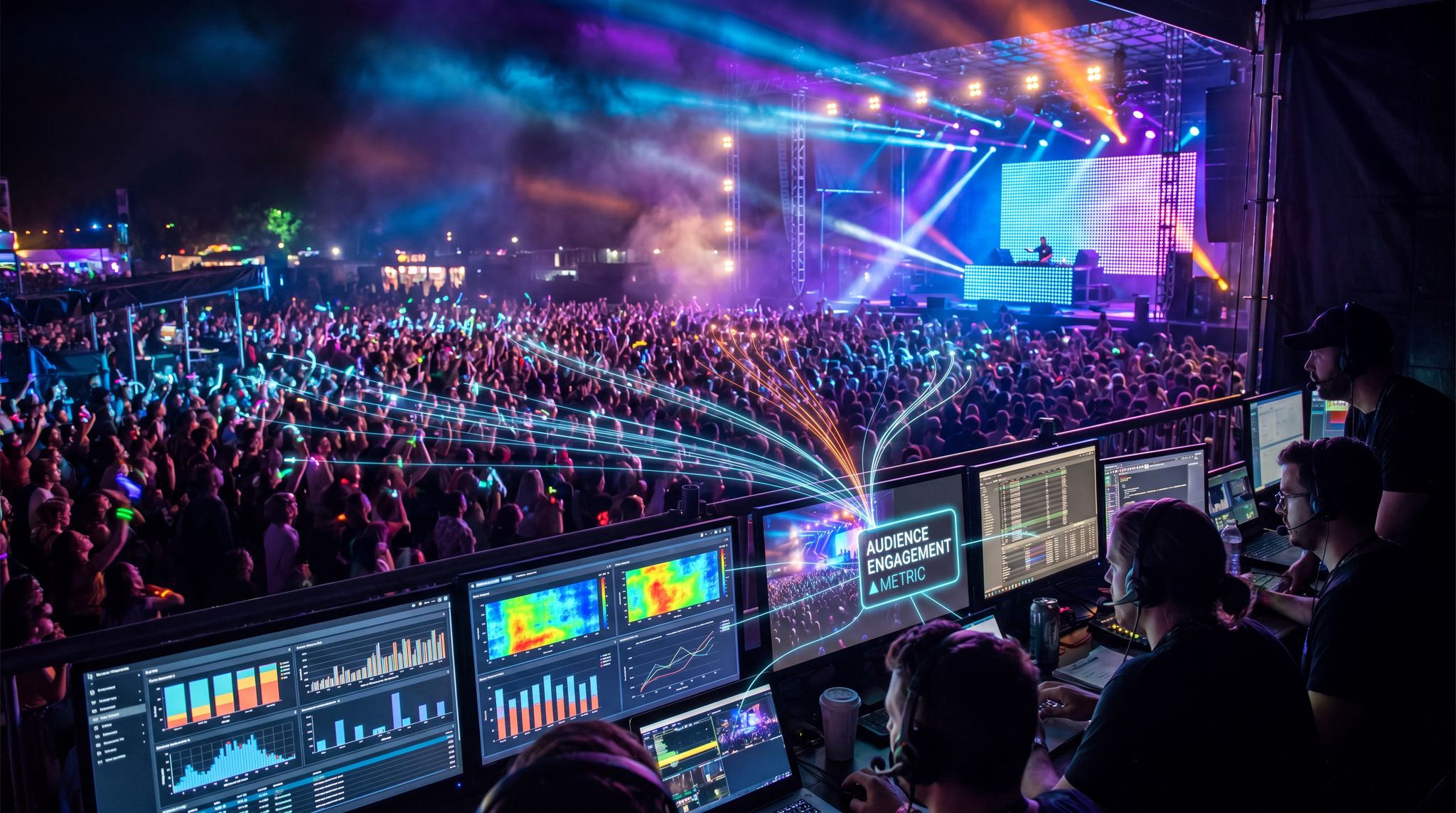
Data-driven booking isn’t a one-and-done process – it thrives on feedback loops. After each festival edition, gather as much info as possible about performance outcomes. How were attendance numbers at each set? Which acts had the most engagement on your app or social media during the fest? Did certain artists get noticeably higher ratings in post-event attendee surveys? Use that to refine your strategy for the next year. For example, if the data shows that your gamble on an up-and-coming electronic artist paid off with a massive turnout at the secondary stage, consider bumping them up to main stage next time (or booking similar artists). Conversely, if an expensive headliner didn’t move the needle much, maybe you adjust your spending priorities. Additionally, keep an eye on the external data year over year. The music landscape shifts quickly – the hot genres of 2023 aren’t the same in 2026. Continuously update your analysis: this year’s streaming metrics might reveal that, say, pop-punk is making a comeback, whereas EDM interest is dipping for your audience. Feeding these insights back into the booking process creates a cycle of continuous improvement. Many experienced festival bookers actually maintain a “data dashboard” throughout the year – a living document or set of charts that track key stats (ticket sales pace, social followers growth for artists they’re eyeing, etc.). This helps in making mid-course corrections, like adjusting a lineup announcement or adding a buzzing artist last-minute if a trend emerges. The bottom line: treat data and fan feedback as an integral part of curation. It’s the compass that, combined with your creative vision, can guide your festival through the volatile winds of the talent wars.
Sustaining Your Festival’s Appeal and Viability
Building a Brand That Fans Trust
When talent markets get tough, a strong festival brand is your safety net. The most enduring festivals have cultivated an identity and reputation that transcends the lineup. This means attendees trust that any lineup you curate will be worthwhile, because it carries your festival’s stamp of quality. Working toward this level of brand loyalty can take years, but every step counts. Focus on consistency in the values and experience your event offers – whether that’s cutting-edge music discovery, a family-friendly atmosphere, a commitment to sustainability, or all of the above. Communicate your mission clearly in marketing. For instance, if your festival is “about celebrating the local creative community,” make that a prominent message. Over time, fans internalize what your event stands for. Then, even in years where you can’t secure the biggest headliner, your core audience will still buy tickets because they believe in how you curate and the overall vibe they’ll get. This is how festivals like Primavera Sound or Fuji Rock have flourished – they built a trust that the lineup will be eclectic and high-quality, even if the names aren’t all mainstream. Part of brand-building is storytelling: highlight the narratives of your past successes (e.g., “we booked XYZ’s first festival show!”) to reinforce that you have a knack for great music experiences. Also, develop recognizable brand elements – from distinctive stage designs to traditions and rituals at the event – that make your festival a unique world of its own. When fans feel emotionally connected to that world, the talent lineup becomes just one facet of why they attend.
Community Engagement and Fan Loyalty
Beyond brand in the abstract, actively cultivating a community around your festival can boost resilience against talent challenges. Engage your audience year-round, not just during ticket sales. This could be through social media groups, forums, or in-person meetups and smaller events. Some festivals run ambassador programs or street teams, turning passionate fans into advocates who spread the word and even give input on the festival. By empowering your most loyal attendees (for example, via a Festival Fan Ambassador initiative ), you create a two-way relationship – the festival isn’t just an event they attend, it’s their community too. When people feel ownership, they are more forgiving if one year the headliners are a bit less famous, or tickets a bit more expensive due to cost pressures. They want the festival to succeed long-term. Consider also transparent communication with your audience about the challenges you face. Some independent festival organizers have openly shared when budgets were tight or certain artists were out of reach; surprisingly, fans often respond with support, starting grassroots campaigns or accepting higher ticket prices when they understand it’s to keep their beloved festival alive. Offering loyalty rewards helps as well – early access to tickets for returning attendees, alumni discounts, or on-site perks for those who come back every year. These gestures reinforce that you value your fans as partners in the festival’s journey. A community-centric approach is more than feel-good talk: it’s a strategic asset. Festivals that put community first tend to build a cultural significance that money can’t buy, proving how community-centric festivals build lasting success. They become cultural institutions that weather ups and downs. In practical terms, a strong community means reliable baseline ticket sales (so you’re not wholly dependent on a flashy lineup reveal to drive interest) and word-of-mouth promotion that no marketing budget can beat.
Adapting and Innovating Year After Year
Finally, survival in the talent wars requires constant adaptation. The live events landscape in 2026 is dynamic – new challenges arise (like sudden visa rule changes making it costly to book overseas acts, as detailed in reports on complex new artist visa regulations), and new opportunities too (such as virtual performances or hybrid festival models). The key is to stay nimble and open-minded. Make it part of your team’s DNA to review each festival edition’s outcomes, scan the horizon for trends, and brainstorm innovations for the next year. Maybe you experiment with a smaller winter spin-off festival to build off-season revenue and artist relationships. Or you pilot a streaming partnership so fans can pay to watch certain sets online – generating extra income to afford those artists. In tough economic times, some festivals pivoted to incorporate more local art, wellness workshops, or educational panels, enhancing appeal without much added cost. Others are exploring tech like metaverse concerts or AR-enhanced stages to create hype that isn’t purely about star power. The point is, don’t be afraid to reinvent aspects of your festival formula if the old ways become unsustainable. Many legendary festivals have undergone evolutions: for example, some scaled back their days or capacity to ensure quality, while others expanded into year-round content creation to keep audiences engaged and sponsors interested beyond the main event, often by creating emerging artist ladders that build long-term loyalty. Also, keep learning from peers – attend industry conferences (like IFEA conventions or FestForums panels on talent buying) to swap ideas with other producers who face the same talent market issues. Being part of the professional community ensures you hear about new tactics early. Above all, maintain a realistic but hopeful mindset. Not every year will be easy, but with sound strategies and a passion for delivering great experiences, your festival can navigate the high-cost era and come out stronger. Adaptation is the name of the game: treat each challenge as a chance to innovate, and you’ll find your event thriving even when others falter.
Frequently Asked Questions About Festival Talent Buying
What are the standard talent fee rates in 2026 for mid-sized festivals?
Standard talent fee rates in 2026 vary widely by genre and artist momentum. Emerging regional acts typically range from $5,000 to $10,000, mid-tier touring artists command $25,000 to $75,000, and established sub-headliners often start at $150,000. Promoters should build internal databases to track these evolving benchmarks.
How can promoters mitigate an unexpected artist’s talent price spike?
To handle a sudden artist’s talent price spike, organizers should enforce strict budget caps, explore multi-event booking alliances to split costs, and pivot toward emerging or local acts if a headliner’s quote exceeds the festival’s financial viability threshold.
How much does it cost to run a music festival today?
The total cost to run a music festival depends heavily on scale. A boutique 3,000-person event may cost between $300,000 and $750,000, while a mid-sized regional festival (15,000 capacity) typically requires $2 million to $6 million. Mega-festivals often exceed $20 million in operational and talent expenses.
Are music festivals for unsigned artists profitable?
Yes, music festivals for unsigned artists can be highly profitable. By dedicating stages to independent musicians, promoters significantly reduce talent acquisition costs while building a reputation as industry tastemakers, attracting dedicated fans eager for music discovery.