Introduction
After the final encore fades and the festival grounds empty, a producer’s work isn’t over. In fact, how organizers handle the days and weeks after an event can determine a festival’s long-term success. Post-event evaluation and follow-up steps – from thanking stakeholders to dissecting what went wrong – are crucial for continuous improvement. Festivals that excel year after year treat the aftermath not as an afterthought, but as an integral stage of the event lifecycle.
Key Stat: Timely post-event evaluations have been shown to boost event ROI by up to 45%. In other words, the effort you invest in debriefing and analysis now can directly pay off in a more successful (and profitable) festival next time.
Table of Contents
- Expressing Gratitude to Attendees and Stakeholders
- Celebrating the Team and Reflecting on Success
- Gathering & Learning from Attendee Feedback
- Evaluating Press and Industry Reviews
- Conducting a Post-Mortem Debrief with Your Team
- Compiling an After-Action Report for Stakeholders
- Documenting Key Lessons and Creating a Playbook
- Initiating Plans for the Next Festival Cycle
- Building Legacy and Festival Brand Growth
- Case Study: Tomorrowland’s Iterative Improvement
Expressing Gratitude to Attendees and Stakeholders
Expressing sincere thanks is the first order of business once a festival concludes. Many veteran producers make a point of ending on a grateful note with thank-you messages to all attendees, artists, sponsors, and vendors immediately after the show. Whether it’s a heartfelt email blast, social media post, or an announcement on the festival website, this gesture shows everyone involved that their contributions mattered. It also keeps the festival’s positive energy alive in the immediate aftermath – a particularly valuable effect when you’ll be inviting the same people back next year.
A well-crafted thank-you communication can even double as a feedback request. For example, many organizers include a call-to-action inviting guests to share their experience through a post-event survey when thanking them for attending. By combining gratitude with a feedback opportunity, you not only show appreciation but also open a channel to learn from your audience. Just be sure the tone remains genuine – the message should first and foremost make recipients feel valued, rather than come off as a disguised ask.
Free Tool: Size Your Festival Site
Zoned capacity planning for arena, campsite, parking and entry lanes — against UK Purple Guide and NFPA density standards. Finds your bottleneck zone.
Pro Tip: Draft your attendee thank-you notes before the festival ends. Scheduling a ready-to-go thank-you email or social post to send within 24–48 hours keeps the goodwill flowing while the event is still fresh in everyone’s mind.
Celebrating the Team and Reflecting on Success
Your crew and volunteers have poured countless hours into making the festival happen, so it’s essential to acknowledge their efforts. Shortly after the event, the festival leadership should formally celebrate success with the team and reflect on the event together. This could be an informal wrap party, a team dinner, or a relaxed meeting where you recap major wins. Taking time to say “thank you” to staff and volunteers in person – and highlighting specific accomplishments (like the stage crew’s flawless changeovers or the security team’s handling of crowd flow) – goes a long way toward boosting morale. It reinforces a culture where hard work is appreciated.
Planning a Festival?
Ticket Fairy's festival ticketing platform handles multi-day passes, RFID wristbands, and complex festival operations.
Team reflection is also a bridge into deeper evaluation. In these initial post-festival days, encourage team members to share what they think went well. Often, frontline staff have insights into successes that might not be immediately obvious to leadership. By recognizing these bright spots, you not only give credit where it’s due but also start identifying practices to repeat next year. For instance, maybe the new ticket scanning system drastically cut entry wait times – the staff running the gates can confirm that success so it becomes a standard for future events.
Key Stat: Festivals with structured volunteer and staff recognition programs have seen retention rates improve by up to 50%. When people feel valued for their contributions, they’re far more likely to return and bring their A-game year after year.
After a brief celebration and rest, it’s time to pivot from pats on the back to constructive critique. Within a few days post-event, plan to gather key team members for a more structured post-mortem debrief meeting focused on learning and improvement. The goodwill and open communication fostered during the team celebration will help set a positive, collaborative tone for that forthcoming analysis.
Gathering & Learning from Attendee Feedback
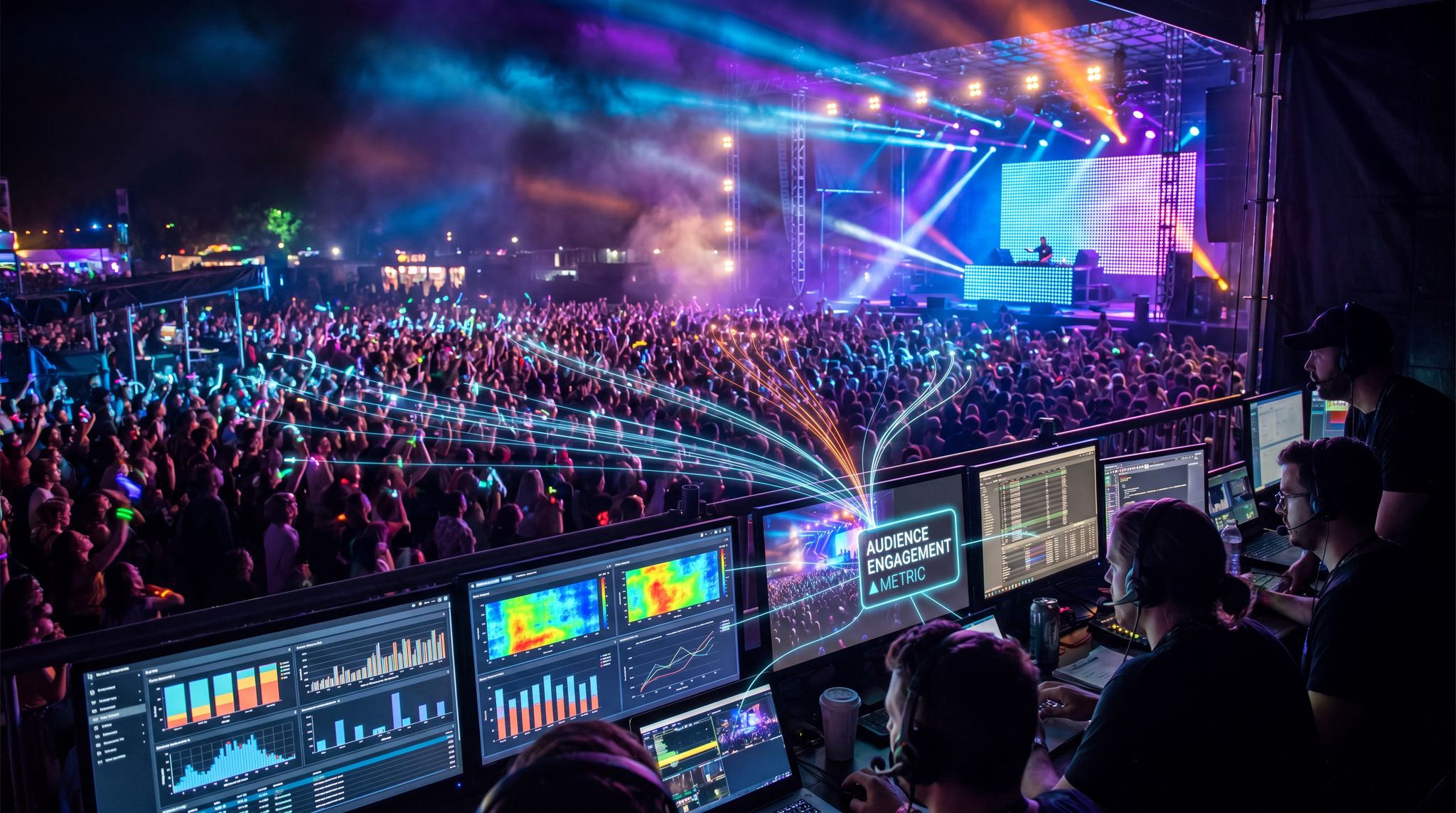
A festival isn’t truly over when the music stops – it continues in the minds of your attendees. Capturing their feedback is one of the most enlightening things you can do post-event. Start by sending out attendee surveys within a few days of the festival. Keep the survey accessible (online forms work well via email or app) and concise. Ask key questions about their experience: overall satisfaction, favorite aspects, any difficulties or disappointments, and ideas for the future. When structuring these surveys, use a mix of rating scales (to quantify satisfaction) and open-ended prompts (to capture specific comments), as guided by best practices for learning from festival audience feedback.
Data-Driven Event Marketing
Track ticket sales, demographics, marketing ROI, and social reach in real time. Exportable reports give you the insights to make smarter decisions.
Timing and incentives are critical. The sooner you send the survey, the fresher the festival experience is in attendees’ minds – and the more responses you’ll get. Many successful festivals send their survey link out with the post-event thank-you email or social posts, as mentioned earlier, to catch people while they’re still buzzing from the event. Consider offering a small incentive to encourage participation (for example, a discount code for next year’s tickets or entry into a giveaway for festival merchandise). Such gestures can significantly boost your response rate and show fans you value their time and opinions.
Beyond formal surveys, pay attention to organic attendee feedback channels. Festival-goers often voice their unfiltered opinions on social media, in community forums, or via direct emails. Monitor your event’s hashtags and online communities in the days after the festival to gauge the chatter. You might discover trends – for instance, multiple people tweeting about long bar lines or praising a new stage layout. These candid reactions are a treasure trove of insights. Additionally, take note of what industry press and critics are saying about your event, as media reviews often echo attendee sentiment on a broader scale.
Warning: Without a smart approach, post-event survey participation can be disappointingly low – often well under 20% of attendees respond. To avoid skimpy feedback, send your survey promptly while memories are fresh, keep it short, and consider incentives (like a prize draw or discount) to motivate more responses.
Listening to your audience is not just an exercise in humility; it’s a blueprint for improvement. Each critique or suggestion is an opportunity to refine the festival. When attendees say they loved the silent disco but found the restroom lines too long, you know what to double down on and what to fix. Showing that you’ve listened – for example, by communicating changes you’ll make based on feedback – can also strengthen attendee loyalty. People are more likely to come back if they feel their voices matter in shaping the event’s future.
Evaluating Press and Industry Reviews
In the wake of your festival, the outside world will have opinions too. Local newspapers, music blogs, industry trades, and even artists themselves often publish reviews or post-event commentary. This press and industry feedback is a public report card on your festival’s performance and reputation. It’s crucial to gather these reviews and evaluate them alongside attendee feedback. Start by collecting all media coverage: news articles, blog posts, video reviews, and even notable social media posts from influencers or artists. Tools like Google Alerts or media monitoring services can help catch mentions of your festival across the internet. Once compiled, sift through this coverage for common themes. Are journalists praising the lineup curation? Did multiple outlets mention logistical hiccups or highlight the same crowd energy moments?
Understanding the media narrative offers a few benefits. First, it helps you see your event through the eyes of outsiders – a perspective that might catch aspects you and your team overlooked. Second, press quotes and statistics can be powerful to include in marketing and in reports to stakeholders (e.g., “X Magazine hailed our festival’s sound quality” or “Local news estimated 10,000 fans present for the headline act”). If you find inaccuracies in press reports, it may also be worth politely reaching out with correct information – especially for things like attendance numbers or economic impact, as those figures can influence sponsors and community perception.
Turn Fans Into Your Marketing Team
Ticket Fairy's built-in referral rewards system incentivizes attendees to share your event, delivering 15-25% sales boosts and 30x ROI vs paid ads.
Key Stat: An in-depth analysis by Sprout Social revealed that Coachella 2022 generated approximately $1.4 billion in earned media value and reached about 93 billion potential impressions. This illustrates the massive reach that festival press coverage and social buzz can achieve – a metric every festival organizer should track and leverage when reporting success.
Not all press will be glowing, of course. Negative reviews or critical articles should be handled constructively. Look for the kernel of truth in criticisms – if a respected industry outlet points out issues with sound bleed between stages or subpar crowd management, treat it as valuable feedback. These are areas to prioritize for improvement. In some cases, you might consider issuing a post-festival press release or statement addressing major criticisms (for example, outlining how you plan to improve parking arrangements next year if congestion was widely reported). This shows both the media and the public that you’re proactive and committed to bettering the festival experience.
Need Festival Funding?
Get the capital you need to book headliners, secure venues, and scale your festival production.
Finally, consider the broader context of industry feedback. Were there any discussions about how your festival fits into larger trends (like sustainability efforts or diversity in lineups)? Such commentary can guide strategic positioning for the future. And remember to integrate key press highlights into your internal evaluation process – often the insights from media reviews can be included in your stakeholder after-action report to provide a 360° view of the festival’s impact.
Conducting a Post-Mortem Debrief with Your Team
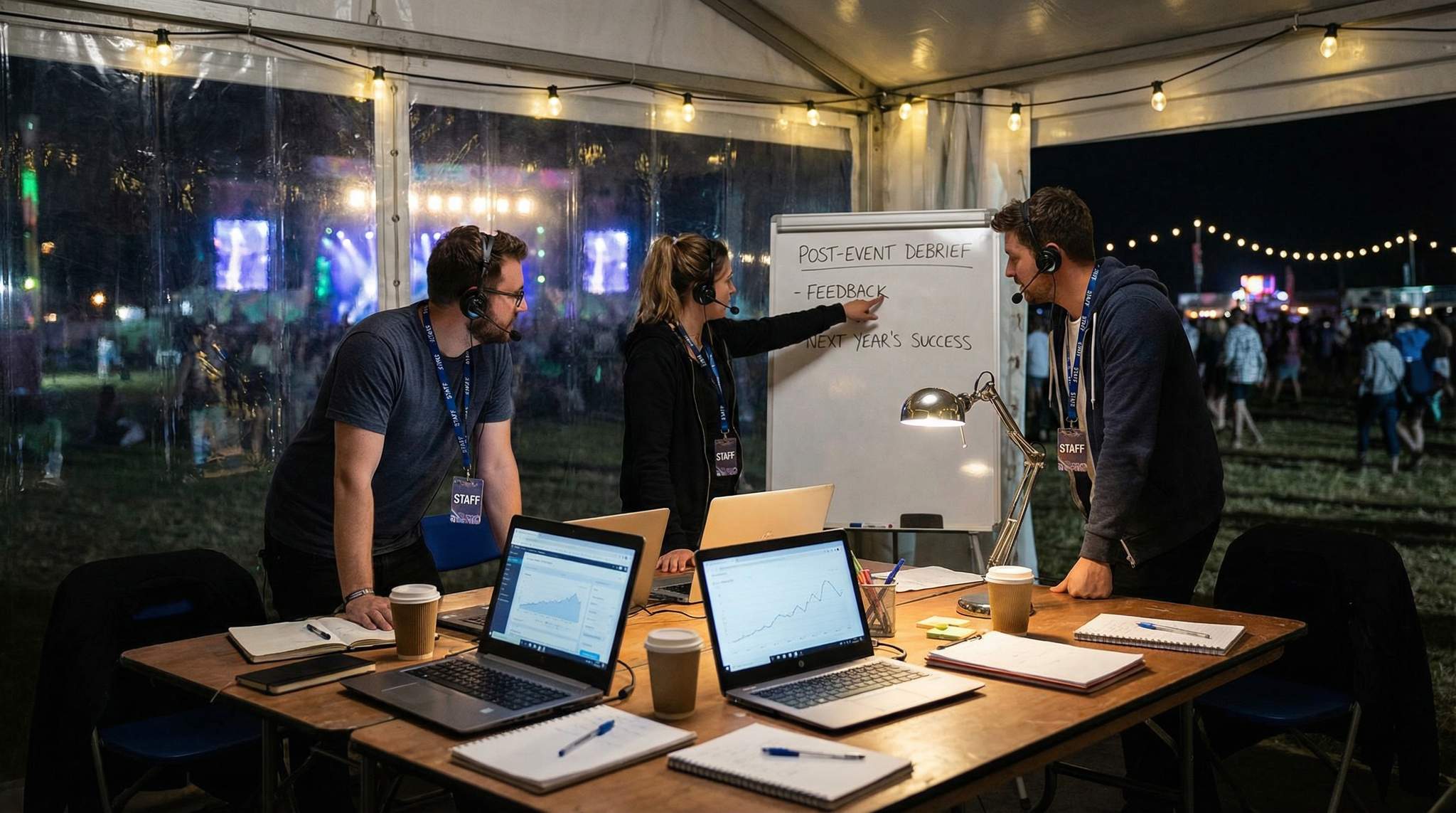
Once immediate post-event tasks are done, it’s time for a deep dive into the festival’s operations. A post-mortem debrief is essentially an internal audit of everything that happened – the good, the bad, and the unexpected. Schedule a formal debrief session within a week or two of the festival, while memories are still fresh. Include core team members and department heads (production, logistics, security, marketing, ticketing, etc.), as well as representatives for volunteers or contractors if applicable. The goal of this meeting is to systematically analyze what went right and what needs improvement. To keep it productive, circulate an agenda or prep sheet in advance: for example, ask each leader to come prepared with a list of their top 3 “successes” and top 3 “challenges” from the event. That way, the discussion will be structured and thorough, covering all major aspects.
During the debrief, foster an environment of openness and blameless problem-solving. Start by reaffirming that the purpose is to learn, not to assign fault. It often helps to begin on a positive note – have each person share one highlight or victory from their area. This sets a constructive tone. Then, delve into the issues. Tackle one department or topic at a time so nothing gets lost. Perhaps you discover that entry lines were longer than expected on Day 1 due to understaffed bag check; the operations head might suggest a fix like more staff or added lanes next year. Maybe the marketing team notes that a last-minute artist cancellation caused confusion because the update wasn’t pushed to the app quickly – a cue to streamline communication protocols. For every issue raised, try to pin down a resolution or at least an action item to explore a solution.
Part of this operational audit must include a hard look at your external partners and software providers. For instance, you need to evaluate the event management company or ticketing platform you used. Did they handle the on-sale traffic spikes smoothly? Did their marketing tools actually drive conversions? Understanding how platforms like The Ticket Fairy boost event exposure through automated rewards, affiliate tracking, and targeted audience building can help you decide if your current tech stack is maximizing your reach or holding you back. If a vendor didn’t deliver on their promises, the debrief is the time to flag it and start researching alternatives for the next cycle.
Smart Promo Codes & Presale Access
Create percentage or flat-rate discount codes with usage limits, date ranges, and ticket type restrictions. Plus unlock codes for private presales.
It’s critical to document all these findings. Assign someone to take detailed notes or record the meeting. Later, those notes should be distilled into a clear list of lessons learned and recommendations. Storing these insights in your festival’s archive or playbook will ensure they are accessible when planning the next edition. The U.S. Department of Transportation’s official event management guide even advises that post-event evaluation results be documented and made accessible to benefit future events – a testament to how universally important this practice is.
Warning: Keep the tone of the debrief constructive. A post-mortem can quickly turn counterproductive if it becomes a blame game or a defensive sparring match. Establish ground rules that focus on issues and processes, not personal blame. Encourage candor by reminding everyone that even the best festivals have hiccups – what defines success is how you address them. A safe, solution-focused atmosphere will yield far more honest feedback and creative fixes.
Before wrapping up the debrief session, make sure to identify the top priorities to act on. Not every minor gripe will warrant major changes, but some issues will clearly emerge as must-fix items for next time. Highlight these and consider forming small working groups or assigning responsible parties to investigate each one further (for example, task the site operations manager with researching better fencing options if perimeter breaches were a problem). Finally, tie the debrief to forward momentum: the actionable takeaways should directly feed into next year’s festival planning. Everyone in the room should leave knowing that their feedback isn’t just heard – it’s going to translate into concrete improvements when the cycle begins anew.
Compiling an After-Action Report for Stakeholders
While internal reflection is vital, you also owe your external stakeholders a thorough accounting of the festival. Sponsors, investors, partners, local authorities – all will be interested (and in some cases contractually entitled) to a post-event report. This after-action report is a comprehensive summary of the festival’s performance and outcomes, tailored to those who have a stake in its success. Typically, it includes key facts and figures: total attendance vs. projected attendance, demographic information about attendees, ticket sales data, revenue and expenses, and any notable economic impact on the community. But numbers are just one part. A good report also highlights achievements (e.g., sold-out days, social media reach, successful new programs) and doesn’t shy away from explaining challenges (such as how a weather delay was handled or why a particular attraction underperformed).
When writing the report, consider the perspective of each stakeholder category. For instance, sponsors will want to see metrics related to their involvement – impressions and engagement for their activations, fulfillment of their branding placements, and ideally some measure of return on investment (like how many samples they handed out or leads they gathered). Local government or permitting bodies will be interested in community impact: were noise and safety regulations adhered to? What was the estimated economic boost to local businesses? Investors or owners will focus on the financial bottom line and growth indicators (did the festival grow in attendance or revenue year-over-year?). It’s often useful to include a narrative section as well, summarizing the festival in story form – “This year’s edition expanded to three stages, showcased 45 artists from 12 countries, and introduced sustainability initiatives that diverted 60% of waste from landfill,” for example. This paints a picture beyond the raw data.
Compiling all this information can be a heavy lift, but if you maintained comprehensive records throughout the festival, it becomes much easier. Pull data from your ticketing system, gather feedback stats (like NPS scores or satisfaction ratings from those attendee surveys), and summarize the media coverage (perhaps noting that the festival garnered 30+ press articles or a TV news segment, as detailed in your media recap). Including a few compelling attendee testimonials or press quotes highlighting the festival’s success can add color to the report as well.
Free Tool: When Should You Announce?
Pick your event date and genre — the free planner outputs a recommended announce, presale, on-sale and reminder schedule anchored to how your audience actually buys.
Pro Tip: Customize your after-action report for different audiences. You might prepare a succinct executive summary for high-level stakeholders and a more detailed data-rich version for operational partners. For example, city officials may care most about community impact and safety compliance, whereas a title sponsor will be keen on brand exposure metrics and attendee engagement with their activation. Tailoring the emphasis in each version ensures every stakeholder gets the information they value most.
Transparency is key in these reports. If something didn’t go as planned – say the attendance fell short of the target or an experimental stage had technical issues – address it frankly, but also outline what was learned and how you’ll improve. Most stakeholders appreciate honesty and a problem-solving attitude. It builds trust. On the flip side, don’t hesitate to toot your horn about successes. If the festival broke an attendance record, drove tourism dollars into the city, or saw a spike in social media followers, highlight those wins with clear evidence (charts, comparisons to last year, etc.). Ultimately, the after-action report should leave stakeholders feeling confident that their investment or support was worthwhile, and excited about the festival’s future. A strong report can even help secure early sponsor renewals and swift permit approvals for next year – it’s your way of turning post-event analysis into continued buy-in.
Documenting Key Lessons and Creating a Playbook
As the dust settles, one of the smartest moves a festival producer can make is to diligently archive everything. All the plans, schedules, contacts, and notes that were created over the planning year are gold for the future – don’t let them vanish into inboxes or individual laptops. By creating a detailed festival playbook through diligent record-keeping, you ensure that every lesson learned and every piece of logistical knowledge is captured in one place. Start with the basics: store your final site maps, production schedules, vendor contracts, staffing rosters, budget spreadsheets, and permits in a shared repository. Then add the nuanced stuff: write a brief summary of each major aspect (e.g., “Parking – Lot A reached 100% capacity by 3pm, Lot B by 5pm; shuttles cleared out by 11pm with minor delays”). Include the debrief notes and action item lists. Essentially, you are compiling a living document that says, “Here’s how we did it this year, and here’s what we learned.”
This playbook becomes the starting blueprint when the next edition kicks off. New team members can read it to get up to speed about how the festival operates. It also prevents “reinventing the wheel” – you won’t be scrambling to remember which supplier provided the stage lights or how many radios you rented for staff, because it’s all recorded. Over multiple iterations of the festival, this archive allows you to chart progress and avoid past pitfalls. For example, you might notice from past records that certain vendors consistently delivered late, or that the VIP ticket package tends to undersell; such patterns become clear when documented year over year. Moreover, having thorough records can be a lifesaver if key staff leave the organization – the knowledge stays behind in the playbook.
Pro Tip: Use cloud-based collaboration tools to maintain your festival archives. Platforms like Google Drive, Dropbox, or Notion allow multiple team members to contribute and update documents in real time. Organize files in clear folders (e.g., by year and by department) and include a README or index so future users can quickly find what they need. Regularly back up critical data to avoid any loss.
A good archive isn’t just about internal convenience; it can also bolster your festival’s credibility with external parties. When speaking with potential sponsors or investors for future editions, you can draw on hard data and reports from your archives to make a case (for instance, showing attendance growth trends or the detailed economic impact figures from prior years). In fact, formal event guidelines emphasize the value of this documentation. The FHWA, in its event management handbook, advises that post-event evaluation results be documented and accessible to inform future planned events – a principle that applies perfectly to festivals.
Free Tool: Project Your Bar Revenue
Per-head spend benchmarks by event type turned into projected bar and food revenue, with a stock-mix estimate and gross-margin line. Free calculator.
Finally, consider that your festival playbook contributes to your event’s legacy. By meticulously recording each chapter of your festival’s story, you’re creating a reference that can be handed down, adapted, and scaled. Should you expand to additional cities or launch a spin-off event, these records serve as a foundation of experience. Many of the world’s longest-running festivals have decades of archives behind the scenes, guiding their continuous success. Your archive is, in essence, the institutional memory of the festival – treat it with the importance it deserves.
Initiating Plans for the Next Festival Cycle
One hallmark of seasoned festival organizers is that they are already thinking about next year as soon as this year’s event concludes. Planning the next festival edition should begin much earlier than most people outside the industry would assume. In fact, for large-scale events, it’s common to start initial preparations a full year (or more) in advance. Even for smaller festivals, you’ll want to kick off the planning cycle at least several months out. Coming out of your post-event evaluations, you now have a wealth of information about what to repeat and what to change – and it’s best to translate those insights into action as soon as possible.
Start with the big rocks: confirm your dates and venue for next year as early as you can. Popular venues can book up over a year ahead, and securing the dates ensures all other planning can align. If the festival requires city permits or stakeholder approvals, begin those conversations early while goodwill from the recent successful event is high (remember that you likely just impressed them with that neatly compiled after-action report). When it comes to talent booking, being proactive is key. Major artists often plan tours and festival appearances 6–12 months in advance. If you already have a sense of next year’s desired lineup or headliners, reach out to booking agents soon – you might beat competing events to the punch and lock in a sought-after act. Similarly, re-engage sponsors by discussing renewal shortly after the event while the positive results are fresh in their minds.
As you set these plans in motion, directly incorporate the lessons from your post-event evaluation. Make a point to review your list of improvements from the debrief and feedback. For example, if crowd flow in the food court was an issue, the layout redesign should be a line item in your new site plan. If attendees clamored for more water stations or more diverse musical genres, those elements should find a place in your next budgeting and programming discussions. Essentially, the first phase of planning is turning this year’s critiques into next year’s to-dos. By addressing known pain points early, you can allocate time and resources to fix them properly, rather than scrambling late in the game.
Another strategic element is keeping the audience engaged in the “off-season.” Many top festivals announce their next year’s dates or even start pre-sales shortly after the event. This isn’t just a marketing gimmick; it serves a planning purpose too. Early interest or ticket sales can give you a gauge of momentum and help with cash flow for deposits and early expenses. It also builds a sense of continuity – your festival goes from being a one-time event to an annual community that people are already looking forward to rejoining. Consider rolling out a “loyalty” or early-bird ticket for returning attendees weeks or a couple of months post-event. That initiative can reward your most enthusiastic fans and provide you with valuable early funding and attendance projections.
Pro Tip: Leverage the post-festival excitement. Announce the dates (or at least the month and city) for next year as soon as you can, and open an early registration or ticket pre-sale for die-hard attendees. By doing so, you capture the current buzz to drive commitment for the future – and secure some early revenue that can go straight into planning the next spectacle.
Warning: Don’t wait too long to start planning the next festival. Venues get booked, sponsors allocate budgets elsewhere, and the insights you gained begin to fade. Many experienced festival teams begin initial preparations just weeks after the last event – delaying too much can cost you momentum (and opportunities).
Early planning doesn’t mean everything must be decided right away, but it does mean establishing the framework. Set a timeline for major milestones: when you’ll finalize the lineup, launch the main ticket sale, announce major improvements, etc. Assign team members to start working on critical path items, whether that’s redesigning the site map to address this year’s issues or researching new vendors for a problem area like sound equipment. By having a clear roadmap for the year ahead, you turn the overwhelming task of planning a whole festival into manageable phases with checkpoints. And with each cycle beginning earlier and running smoother (thanks to your accumulated experience and records), your festival is poised to grow in quality and scale in a sustainable way.
Building Legacy and Festival Brand Growth
Every festival, from the humblest community fair to the global mega-event, is in the process of writing its legacy. Post-event evaluation isn’t just about operational tweaks for next year – it’s also a chance to step back and consider the bigger picture of your festival’s identity and long-term trajectory. After you’ve crunched the numbers and fixed the immediate issues, ask yourself and your team: What do this year’s outcomes say about our festival’s place in the cultural landscape? Are we staying true to our vision, and how can we evolve that vision as we grow?
One aspect of legacy building is consistency in values and quality. Take a look at attendee and press feedback to discern what your festival is becoming known for. Perhaps attendees consistently praise your event’s intimate, family-friendly atmosphere – that’s a sign to double down on that identity as you expand, ensuring any growth doesn’t dilute the charm. Or maybe your festival is carving out a niche for groundbreaking production design or championing local artists. Recognize those emerging brand strengths and nurture them. The post-event period is a perfect time to brainstorm initiatives that reinforce your unique selling points (for instance, establishing a yearly theme that highlights your creative production, or a local artist grant program to solidify your community roots). These are moves that help evolve your festival brand intentionally rather than leaving growth to drift.
At the same time, legacy is also about learning from mistakes in a way that shapes your festival’s story. Every festival that stands the test of time has had missteps – what sets the great ones apart is how they responded. If this year revealed a significant flaw (say, a scheduling decision that upset fans or a logistic failure that got media attention), handling that with grace can actually become part of your festival’s lore (“Remember 2019 when the power went out? They brought in that generator truck within 30 minutes and kept the show going – it’s the year the ‘Acoustic Encore’ was born!”). Embrace these moments as part of the narrative and show that the festival is constantly improving. Over years, attendees will trust that even if something goes wrong, your team learns and bounces back stronger.
Building a lasting festival brand also involves engaging your community year-round. Post-event, consider how you’ll continue to interact with fans and stakeholders in the months when the festival isn’t happening. This could mean maintaining a social media presence that shares throwbacks, insider looks at planning, or related content (like artist news or cultural topics relevant to your festival’s theme). Some festivals hold smaller off-season events or meet-ups to keep the spirit alive. The time right after the festival is ideal to announce these initiatives if you have them, or even to simply thank the community publicly one more time. A heartfelt message that “We can’t wait to see you next year” helps cement the festival’s continuity in people’s minds. It’s part of publicly thanking your community and partners and reinforcing that everyone – attendees, artists, crew, city – is in this journey together.
Warning: While it’s important to innovate, avoid making drastic changes that abandon the festival’s identity or loyal audience expectations. A sudden pivot in style or values can alienate the very fans and partners who built your festival’s legacy.
Remember that legacy isn’t only about the past; it’s what you are building toward. Use the insights from this year to refine your long-term goals. Maybe your five-year plan is to become carbon-neutral, or to double attendance, or to be known as the launchpad for new artists in your genre. Post-event evaluation is when you measure progress on those kinds of goals and adjust your course. If one of your aims is growth, for example, and feedback shows an appetite for more, you might decide to cautiously increase capacity or add an extra day in coming years. Conversely, if maintaining quality is the focus, you’ll reinforce limits and focus on enhancing experience rather than expanding headcount. Each festival edition is a chapter – by analyzing each one with an eye on the big picture, you’re actively authoring the legacy your festival will leave in the industry and in the hearts of its community.
Case Study: Tomorrowland’s Iterative Improvement
To truly understand the power of post-event evaluation and continuous improvement, it helps to look at a real-world example. Tomorrowland, one of the world’s most celebrated electronic music festivals, didn’t start off as the global phenomenon it is today. In 2005, its first edition was a modest one-day event in Belgium with only a few thousand attendees. The festival faced typical newbie challenges – low turnout (fewer than 9,000 people showed up that year), budget constraints, and logistical learning curves. Rather than aiming for instant super-stardom, Tomorrowland’s organizers focused on methodically improving the festival year by year. Each edition was treated as an opportunity to refine and grow, applying lessons from the last.
In 2006, after gathering feedback, the team made crucial adjustments. They improved signage and logistics after noting attendee confusion about the layout, and booked a more diverse line-up to broaden appeal. The result? Attendance grew and the festival atmosphere benefited from smoother operations. By the third year (2007), Tomorrowland expanded to two days – a direct response to rising demand and the organizers’ confidence from prior successes. They also invested heavily in creative stage designs and thematic elements, establishing what would become a signature of the brand. However, growth brought new challenges, like scaling up infrastructure for larger crowds. Again, they learned – after experiencing long lines and some technical hiccups in Year 3, the organizers beefed up entry points and upgraded sound systems for Year 4.
This iterative cycle continued over the next decade. Tomorrowland’s producers never rested on their laurels; after each festival, they poured over data (ticket sales, crowd flow metrics, social media reactions) and gathered input from attendees and staff. Did certain stage areas become overcrowded? They reconfigured the grounds and added more space. Was there a huge interest from international fans? They eventually expanded not just to two weekends by the mid-2010s, but also launched spin-off events on other continents. Every big enhancement – from introducing elaborate storytelling themes to rolling out cashless payment systems on site – was piloted, evaluated, and then either improved further or reworked in the following years. The festival grew carefully but steadily, balancing ambition with careful attention to attendee experience.
Key Stat: Tomorrowland drew just 9,000 attendees in its 2005 debut, but welcomed about 600,000 fans across three weekends in 2022. This explosive growth was not luck – it was driven by systematic, year-over-year improvements that responded to audience feedback and operational learnings.
Tomorrowland’s story highlights a few key takeaways for any festival producer. First, patience and consistency in implementing improvements can yield huge results over time. Iconic festivals are rarely built in a single year; they are crafted through a cycle of idea, trial, feedback, and refinement. Second, listening to your community is crucial – Tomorrowland’s organizers cultivated a passionate global fan base in part because they delivered on what fans wanted (incredible stage production, more days to experience the magic, a feeling of unity), all of which they learned from engagement and feedback. Finally, innovation remains constant. Even as it became an industry leader, Tomorrowland didn’t stop innovating (e.g., introducing live-streams and international satellite events) – showing that evolving your festival brand is an ongoing process, not a one-time task.
In essence, Tomorrowland exemplifies how effective post-event evaluation fuels a festival’s evolution from fledgling to flagship. By applying a similar iterative mindset – no matter your festival’s size – you keep building on your successes and chipping away at your shortcomings. Over the years, the incremental gains compound, and who knows? You might just find your event on the path to its own legendary status.
Essential Reading
- Festival Thank-You Communication: Ending on a Grateful Note
- Festival Team Recognition & Reflection: Celebrating Success Together
- Attendee Feedback and Surveys: Learning from Your Festival Audience
- Press and Industry Feedback: Reading the Festival Reviews
- Post-Mortem: Conducting a Festival Debrief
- Reporting to Stakeholders: What to Include in the Festival After-Action Report
- Archiving and Record-Keeping: Creating a Festival Playbook
- Planning Next Year’s Festival: When and How to Start
- Legacy and Growth: Evolving Your Festival Brand
- Case Study: Iterative Improvement – Tomorrowland Festival Over the Years
FAQ
How do you evaluate success after a festival ends?
Evaluating success requires looking beyond just the financial bottom line. As a producer, you should measure performance against the specific KPIs set during your initial planning phase. This includes quantitative data—such as total ticket sales, gate scan rates, food and beverage revenue, and your Net Promoter Score (NPS)—alongside qualitative insights gathered from attendee surveys, staff debriefs, and media reviews. A comprehensive evaluation blends these financial, operational, and experiential metrics to give you a true picture of the event’s overall health and sustainability.
How soon after our festival ends should we hold a team debrief?
It’s best to schedule your internal post-mortem meeting within a week of the festival ending. This timeframe ensures details are still fresh in everyone’s mind, but gives your team a brief chance to rest. Many successful producers aim for roughly 3–5 days after the event for the first debrief session. If that’s not feasible, definitely convene within two weeks at the latest. The sooner you gather the team to discuss what happened, the more accurate and fruitful the feedback will be, and the quicker you can start addressing any issues for next time.
What should be included in a festival after-action report?
An after-action report for a festival should cover all the key metrics and findings that stakeholders care about. This typically includes attendance numbers (planned vs. actual), financial outcomes (budget, revenue, profit or loss), and marketing reach (ticket sales trends, social media metrics, press coverage summaries). It should also highlight successes (like sold-out days, positive attendee feedback highlights) and be honest about challenges or shortfalls (with explanations of causes and proposed solutions). For sponsors, include specifics such as brand exposure figures and attendee engagement with their activations. If applicable, note the economic impact on the local community (e.g., hotel occupancy, local sales boost). Essentially, the report should provide a clear picture of the festival’s performance and value, backed by data and examples.
How can I encourage more attendees to complete post-festival surveys?
Boosting survey participation often comes down to timing, simplicity, and incentives. Send out the survey very shortly after the festival – ideally within 24–48 hours – so attendees still feel connected to the experience. Keep the survey as short as possible (people are more likely to finish a 5-minute survey than a 20-minute one). Use clear, easy-to-answer questions with an option for additional comments. Providing an incentive can significantly improve response rates; consider offering a small reward like a discount on next year’s tickets, a chance to win VIP upgrades or merchandise, or even a free music playlist download from festival artists. Mention this incentive prominently when you share the survey link. Also, assure respondents that their feedback will directly help shape improvements – people are more willing to give feedback when they know it’s valued and will lead to action.
What’s the best way to handle negative press after a festival?
Handling negative press starts with staying calm and assessing the critiques objectively. First, gather all the media coverage and identify specific issues raised. If a journalist or reviewer highlighted genuine problems (safety concerns, organizational slip-ups, etc.), it’s important to acknowledge these. You can respond publicly if appropriate – for example, issuing a brief statement or press release addressing the concern and explaining how you plan to fix it next time. This shows accountability. If the negative press revolves around a misunderstanding or factual error, you might politely reach out to the outlet or writer with clarifications or correct information. Internally, treat negative press as constructive feedback: discuss it in your team debrief and factor it into your improvement plans. Over time, consistently fixing the pain points that media (and attendees) call out will bolster your festival’s reputation. In summary, respond with transparency and action, not defensiveness.
When should planning start for next year’s festival?
Planning for the next festival should start almost immediately once the current one is done – at least at a high-level. In practice, many festival teams begin initial preparations a few weeks after the event. Key early steps include securing the venue and dates for next year (often done 9–12 months in advance or more, especially for large festivals), reviewing budgets, and reaching out to critical partners or headliners early. While detailed planning (like full line-up booking or vendor contracting) might ramp up a bit later, the groundwork – incorporating lessons learned, setting goals, assigning responsibilities, and establishing timelines – should be laid as soon as possible. For major annual festivals, it’s not unusual that planning is a year-round endeavor, meaning by the time you’re wrapping up one festival, you’re already deep into planning the next.
How do we decide which feedback to implement for next year?
Deciding which feedback to act on involves looking at a few factors: frequency, feasibility, and impact. First, note any feedback themes that came up repeatedly – if a large portion of attendees or multiple media outlets point out the same issue (for example, sound problems at a stage or not enough water stations), that item should likely be high on your fix list. Next, assess feasibility and resources: some suggestions might be great in theory but challenging in budget or logistics (e.g., “bring world-famous band X” might be financially out of reach). Focus on changes that are realistic for your team to implement. Finally, consider impact on attendee experience: prioritize improvements that will make a noticeable positive difference for many people at the festival. It can help to compile a list of all suggestions and then score them on these dimensions. Quick wins – things that are easy to do and appreciated – can be implemented right away. Bigger changes might be slotted into longer-term plans. Remember, you don’t have to incorporate every single piece of feedback, but you should address the critical pain points and popular suggestions to keep improving the festival in the eyes of your audience.
Glossary
After-Action Report
A comprehensive report created after an event that details its outcomes, data, and learnings. In festivals, this report is shared with stakeholders (sponsors, investors, partners) to summarize performance, including attendance, finances, press coverage, and key successes or issues.
Post-Mortem Debrief
A structured meeting held shortly after the festival where the team discusses what went well and what didn’t. It’s an internal review session aimed at identifying lessons learned and actions for improvement, without assigning blame.
Attendee Survey
A questionnaire sent to festival-goers after the event to gather feedback on their experience. These surveys typically ask about satisfaction levels, favorite and least favorite aspects, and suggestions for the future, providing organizers with direct audience insight.
Net Promoter Score (NPS)
A metric used to gauge attendee loyalty and satisfaction. It’s derived from asking attendees how likely they are to recommend the festival to others on a scale (usually 0 to 10). NPS is calculated by subtracting the percentage of critics (low scores) from promoters (high scores).
Return on Investment (ROI)
A measure of the benefit or profit gained from an investment relative to its cost. In festival terms, ROI can refer to financial returns (like profit made from the festival vs. money spent organizing it) or the value sponsors gain (exposure, sales, leads vs. what they paid).
Stakeholder
Any individual or organization with a vested interest in the festival’s success. Stakeholders include sponsors, investors, municipal authorities, local community leaders, vendors, and even attendees. They are parties who are affected by or can affect the festival.
Earned Media Value
The estimated monetary value of publicity gained through media coverage and word-of-mouth, rather than paid advertising. For example, if a festival gets significant press and social media buzz, the “earned media value” quantifies what that exposure would have cost if it were purchased as ads.
Festival Playbook
An internal document or collection of documents that outlines how a festival is planned and executed. It includes timelines, contacts, procedures, checklists, and past event records. Essentially, it’s the knowledge base or manual that can be used to reproduce and improve the festival each year.
Legacy (Festival Legacy)
The long-lasting reputation, cultural impact, and traditions that a festival builds over time. Legacy is about how a festival is remembered and the goodwill or community it creates, beyond just one edition. For instance, a festival’s legacy might include being known as the first to spotlight a now-famous artist or having a decades-long commitment to sustainability.
Iterative Improvement
A process of making continual, incremental enhancements over time. In the festival context, iterative improvement means using each year’s post-event evaluations to make changes for the next year, gradually elevating the festival’s quality and scale through repeated cycles of feedback and refinement.
Sponsor Renewal
The process of existing festival sponsors signing on to support the event again for a subsequent year. High sponsor renewal rates often indicate that sponsors felt they received good value (ROI) from the festival. Post-event reporting and relationship management are key factors in securing sponsor renewals.
Economic Impact
The effect the festival has on the local economy, usually measured in terms of money spent in the region due to the event. This can include attendee spending on hotels, food, transport, and shopping, as well as jobs created or supported by the festival. Festivals often report their economic impact to demonstrate value to host communities and officials.
Conclusion
The end of a festival is not the end of the journey – it’s the beginning of the next one. By taking a purposeful approach to post-event evaluation and next steps, festival producers can transform one weekend of revelry into a springboard for continuous growth. Every thank-you note sent, every survey response analyzed, every debrief meeting held, and every report compiled feeds into the larger cycle of improvement. These practices strengthen relationships with fans, team members, and stakeholders alike, ensuring that each edition of the festival isn’t just a repeat of the last, but a new and better experience.
In the fast-paced festivals and events world, those who stand still get left behind. The most revered festivals have climbed to the top by embracing an ethos of learning – using feedback and reflection as tools to delight attendees and impress partners year after year. By implementing the post-event strategies outlined in this guide, you position your festival to join those ranks. The ultimate payoff? A vibrant festival legacy, a loyal community that grows with you, and the satisfaction of watching your vision get closer to its full potential every single time the lights go up. In festival production, as in any creative endeavor, the magic lies in never truly being “finished” – always listening, always adapting, and always reaching for that next level of excellence.