Site Planning: The Hidden Blueprint of Festival Success
A festival’s site layout can make the difference between a legendary event and a logistical nightmare. Surprisingly, many festivals – from 500-person gatherings to 100,000-strong mega-events – repeat the same layout mistakes year after year. Veteran producers know that meticulous site design isn’t just aesthetics; it’s fundamental to safety, flow, and the attendee experience, as crowd densities reaching critical levels can lead to catastrophic collapse. When layout blunders lead to overcrowding or bottlenecks, the results can be disastrous – from dangerous crowd crushes to furious fans venting on social media. This guide shines a spotlight on the most common site planning pitfalls and, crucially, how to fix them. By drawing on real-world triumphs and failures, we’ll map out a smarter approach to festival layouts that saves headaches, money, and reputations.
(Before diving in, remember that site planning is just one piece of the puzzle. Festivals must also nail things like permits and contracts – areas where mistakes can be equally costly. For more on that, see our companion guide on getting permits and contracts right to avoid legal pitfalls.)
Bottleneck Entrances: Avoiding Queue Chaos and Crush Risks
Underestimating Entry Throughput
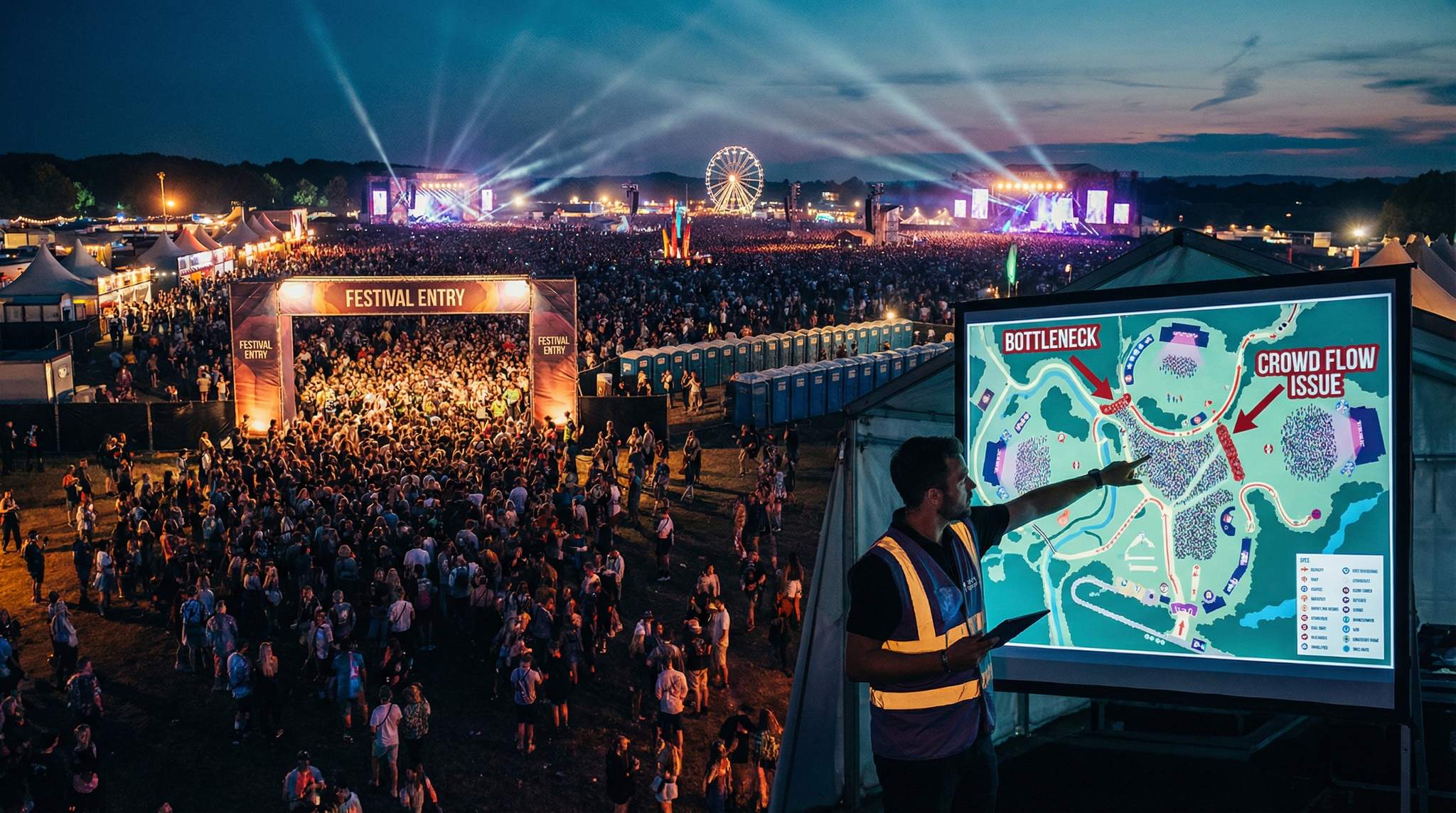
One of the costliest mistakes in site planning is underestimating how many people can safely and quickly funnel through the festival entrance. Too often, events provide only a single narrow gate or too few entry lanes, resulting in hours-long queues and frustrated attendees. At small events, an understaffed door can mean a slow trickle that delays show start times. At large festivals, a bottleneck entrance is more than just an inconvenience – it’s a serious safety hazard. When a massive crowd builds up outside a venue, the pressure to get in can spark dangerous surges. For example, at Germany’s 2010 Love Parade, throngs trying to reach an overcrowded venue were forced through a single tunnel that became a deadly bottleneck, described as “like trying to get through the eye of a needle” in reports on the Love Parade tunnel stampede. The panic and crush that ensued tragically claimed 21 lives, underscoring how entry design flaws can turn fatal.
Designing for Crowd Surge and Speed
Experienced festival producers approach entrance design with the same care as a stage build. It’s critical to calculate the maximum entry rate (attendees per minute) your gates can handle and size everything accordingly, utilizing major event capacity and egress calculation standards. This means deploying enough entry lanes, turnstiles, or scanning devices to process peak crowds without backing up. A rule of thumb is to design for the largest surge – typically when gates first open or before a headliner – and ensure there’s sufficient buffer space for lines to form inside security perimeters, not spilling onto public streets. For instance, Coachella in California uses multiple color-coded entrances and dozens of magnetometers and ticket scanners in parallel. This way, they can safely admit tens of thousands of fans in a short window. Staggered arrival strategies help, too: some festivals encourage campers to arrive early on Thursday or use timed entry ticketing to spread the load. The key is building redundancy – always have more gate capacity than you think you’ll need. If one lane malfunctions or a surge hits, the system can still cope.
Free Tool: Size Your Festival Site
Zoned capacity planning for arena, campsite, parking and entry lanes — against UK Purple Guide and NFPA density standards. Finds your bottleneck zone.
Security Screening Without the Squeeze
Another common pitfall is placing security checkpoints too close to the gate, causing a choke point as bags are checked and wristbands scanned in the same tight spot. Best practice is to spread out the screening: use a wider screening plaza or multiple checkpoints leading into a single entrance. This avoids one giant crush point. Imagine an airport security model – multiple lines feeding into one concourse. Festivals in the UK often design marshalling areas before ticket scan where security can do thorough searches without holding up the main entrance. Also, consider technology: RFID wristbands and cashless systems can speed up verification dramatically. At Tomorrowland in Belgium, entry is a well-oiled machine partly because attendees arrive pre-registered with RFID bracelets, allowing for a quick tap-and-go at the gates. Training staff to work efficiently – and cheerfully – at the doors also makes a huge difference. The first impression for attendees is the entry line; a smooth welcome sets a positive tone for the whole event.
External Traffic and “Last-Mile” Logistics
Poor entrance planning isn’t confined to the gate itself. Festivals often forget to manage the “last mile” – the flow of people from transport hubs or parking lots to the venue gates. A great site layout can be undermined if thousands of attendees are stuck in traffic on a two-lane country road or walking miles because of insufficient shuttles. Avoid this by integrating your site plan with an external traffic control plan. Work with local authorities on dedicated festival routes, ride-share zones, and signage well beyond the venue. For urban events, consider turning city streets into pedestrian-only zones and smart detours to get attendees in safely. For remote festivals, provide ample parking, shuttle buses, and clear directions for drivers. Glastonbury Festival in the UK, which sees over 200,000 attendees, is famous for its traffic management – they publish detailed route maps, stage entry times by vehicle pass, and coordinate with highways agencies to prevent rural road logjams. By smoothing out arrivals and departures through careful external planning, you not only reduce attendee frustration but also prevent dangerous situations like pedestrians walking along highways. Remember, the festival experience begins when fans leave home – if the first and last miles are misery, it taints the whole event. (For deeper strategies on this, see how top venues ensure smooth fan arrivals and departures with shuttles, traffic control, and parking management.)
Planning a Festival?
Ticket Fairy's festival ticketing platform handles multi-day passes, RFID wristbands, and complex festival operations.
Holistic Strategies to Reduce Queues at Festivals
When organizers ask how to reduce queues at festivals, the answer extends far beyond the front gate. Wait times at bars, merchandise tents, and food vendors can severely impact both attendee satisfaction and your bottom line. Implementing decentralized service areas, deploying mobile ordering apps, and utilizing roaming hawkers can drastically cut down line lengths. Furthermore, poorly managed lines aren’t just an annoyance; they are a liability. In highly constrained environments—such as a boutique seaside festival or a pop-up micro cinema event—tight spaces can quickly lead to a dangerous queue collapse if a sudden surge occurs. To mitigate this, operators must use sturdy, serpentine barricades to structure lines, employ dedicated queue-management staff to monitor density, and ensure that waiting areas never overlap with primary thoroughfares or emergency access routes.
Poor Internal Circulation: Choke Points and Crowd Flow Failures
Choke Points Waiting to Happen
Inside the festival grounds, crowd flow is king. Attendees should be able to move freely between stages, food areas, restrooms, and exits. Yet many site plans inadvertently create choke points – narrow pathways, dead-ends, or intersections where foot traffic snarls. Common culprits include a single bridge or tunnel connecting major areas, a constricted pathway around the main stage, or vendor booths placed in a way that blocks a natural walking route. New festival organizers often “paint themselves into a corner” by not leaving enough open space for thoroughfares. The result is dense crowding that not only frustrates attendees but can become dangerous if panic or urgency arises. We’ve all seen the aerial photos of festivals with seas of people gridlocked between stages. Beyond the visual, there are real risks: when crowd density grows beyond about 4 people per square meter, individual control is lost and the crowd can start to behave like a fluid when crowd density exceeds four people per square meter. That’s when even a small stumble or push can send shockwaves through a packed audience. Several tragedies at concerts and festivals have been linked to such conditions. In response, savvy site planners now work to eliminate single points of failure in crowd movement.
To establish a baseline for safety, many international organizers look to established event industry standards. Specifically, the UK’s Purple Guide crowd density persons per square metre guidance provides a crucial framework for site planners. According to this documentation, a density of two people per square meter allows for comfortable, unrestricted movement. However, when concentrations reach four to five individuals in that same space, it is considered a high-risk environment where dangerous surges become highly probable. By strictly adhering to this guidance, producers can calculate exact capacity limits for viewing areas and thoroughfares, ensuring that physical space always aligns with ticket sales and expected audience flow.
Mapping Wide, Multi-Route Pathways
To get crowd flow right, think like a highway engineer. Design multiple routes to every key destination on site – no stage or area should be accessible by only one path. Main arteries (like the path from the main stage to the second stage, or from camping areas to the arena) must be wide enough for two-way traffic and then some. A good practice is to designate certain pathways as one-way during peak traffic (for instance, after the headline act ends, have a loop that directs flow outwards to exits and food courts only). Use fencing and signage to enforce these flows. Spreading out attractions also helps: if all the popular stages or activations are clustered in one corner of the site, that zone will constantly be congested. Disperse high-traffic attractions so that crowds naturally distribute. For example, Glastonbury spans such a large area that it creates distinct “villages” within the festival – if one area gets too crowded, attendees can flow to another with different attractions. Many U.S. festivals now place their second-biggest stage at the opposite end of the venue from the main stage, drawing people across the grounds and relieving pressure on any one spot. The bottom line: always assume your audience will take the easiest path available – your job is to ensure that path is spacious and there’s an alternate route if it fills up.
Go Cashless With RFID Technology
Enable contactless payments, faster entry, and real-time spending analytics with RFID wristbands and NFC-enabled ticketing for your events.
The Power of Signage and Wayfinding
Even with a well-designed site, you need to help attendees navigate it. Poor signage or lack of information can cause its own congestion as lost people stop in walkways, or masses all head unknowingly to a closed gate. Smart wayfinding is an often-overlooked aspect of layout. Large festivals now invest in high-visibility directional signs, maps, and even real-time digital displays that guide crowd movement. For instance, Coachella’s app and video screens will notify guests if one entrance is less crowded or if an area is at capacity, directing them elsewhere. In 2026, interactive maps and real-time digital signage are helping guide festival crowds more seamlessly than ever. Simple measures make a difference: color-coded zones (e.g., Green Zone camping vs. Blue Zone), clearly marked routes (“To Main Stage this way”), and staff or volunteers serving as wayfinding guides at key junctions. At Japan’s Fuji Rock Festival, for example, multi-lingual signage and staff help a diverse crowd navigate an expansive mountainside venue with minimal confusion. Good wayfinding not only prevents bottlenecks but also improves attendee comfort – people feel safer when they know where they are and how to get where they want to go. Don’t make your audience wander and guess; light the way for them.
For operators wondering how to navigate multi-stage music festival sites effectively, the solution lies in combining physical layout strategies with digital tools. When attendees need to move between three or four different stages, visual landmarks become essential. Erecting large, illuminated art installations or tethered balloons near specific stages provides instant orientation, even in a dense crowd. Pairing these physical beacons with a robust mobile app that offers GPS-enabled routing and push notifications about stage capacities ensures that fans can transition smoothly from a main stage headliner to a smaller side-stage act without causing gridlock.
Need Festival Funding?
Get the capital you need to book headliners, secure venues, and scale your festival production.
Real-World Lesson: Disperse and Conquer
Case studies from past festivals drive home the importance of internal circulation. The Love Parade disaster mentioned earlier taught planners to never rely on a single route for large crowds. Since then, major European festivals have rethought their layouts: many introduced secondary exits and looped pathways so there’s always another way out. Large events like Lollapalooza in Chicago purposely leave very broad walkways across Grant Park and cap daily attendance to keep crowd density reasonable (citing safety limits, Chicago city officials insist on strict capacity calculations). In contrast, consider a near-miss: at a 2019 EDM festival, heavy crowds converged on one small footbridge to reach a popular stage. Organizers noticed early signs of dangerous crowding – and swiftly re-routed foot traffic to alternative paths, broadcasting the change on screens and over audio announcements. Disaster was averted because a contingency existed. The lesson is clear: plan your site as if one path will be blocked (by crowd or an emergency) – do you have Plan B and C ready? If not, redesign until you do. In modern festivals, there’s no such thing as “too many exits” or “too many pathways.”
Amenities and Comfort: Toilets, Water & Other Essentials
Too Few Toilets = Unhappy (or Unhealthy) Campers
It’s an unglamorous truth: sanitation can make or break your festival. Many organizers, especially at first, woefully underestimate restroom needs. The result? Overwhelmingly long lines, filthy conditions as units overflow, and extremely irate attendees. Guests might forgive a minor inconvenience, but “they never forget a festival with filthy or insufficient toilets,” as seasoned producers warn in our guide on sanitation and portable toilet planning for festivals. Beyond grossing people out, poor sanitation poses health risks and can even get you in trouble with health authorities. A common rookie mistake is skimping on toilet rentals to save money – a false economy if ever there was one. We’ve seen this play out in post-event surveys: a festival that provided far too few porta-loos became notorious on social media, with attendees swearing never to return. On the flip side, going above and beyond with clean, abundant restrooms earns tremendous goodwill. So what’s the right number? Industry best practice suggests aiming for roughly 1 toilet per 75–100 attendees for a day event, and closer to 1 per 50 for multi-day festivals or those with camping, as detailed in guides on sanitation planning for day events and facility matching for camping festivals. (If the crowd skews heavily female, increase the number, since women typically need more facilities.) As an example, a 5,000-person day festival should have on the order of 50–70 toilet units minimum. It’s far better to have a few extras than to face overflowing loos and public health nightmares.
Strategic Placement and Maintenance
Having enough toilets is step one. Step two is where you put them and how you maintain them. The golden rule is to distribute amenities so that no attendee is ever too far from relief. Clustering all facilities in one corner of the grounds is a common mistake – it leads to one huge queue and people abandoning areas of the festival just to find a restroom. Instead, place toilet banks near every major area: by the main stage, near secondary stages, at the camping site, next to food courts, and at the entrance/exit. Map them out clearly on your site map and with on-site signage. A great tip from the UK’s Purple Guide (the events industry bible) is to also put toilets by exiting areas (so people can go before a long journey home) and near the queuing areas (like parking lots or box office lines), a strategy supported by The Purple Guide’s event sanitation standards. This way, as soon as attendees arrive or before they leave, they have facilities available. Don’t forget accessible toilets in each cluster – at least 5% of your total, or minimum one per restroom area, should be ADA-compliant units, ensuring compliance with legal accessibility requirements and constituting at least 5% of total units. And then comes maintenance: plan for regular cleaning and restocking. At big festivals, teams of sanitation staff or contractors circulate to pump out waste, refill toilet paper and hand sanitizer, and hose down units as needed. It’s not fun work, but it’s vital. Many experienced producers have “learned the hard way” that a little extra spend on cleaning crews vastly improves conditions, preventing sanitation disasters that ruin the attendee experience. It’s wise to schedule cleanings during off-peak times (e.g., mid-show or early morning in camping areas) and have backup units ready if one goes out of service. With vigilant maintenance, your toilets can go from a horror story to a footnote – exactly what you want.
Hydration Stations and Free Water
Right alongside restrooms in importance is water access. Festivals that overlook hydration do so at great peril; attendees can suffer dehydration or heat stroke, especially in hot weather or high-activity events (think dance-heavy festivals or summer noon-time sets). Many festivals have earned bad reputations and even faced medical emergencies due to lack of water. The infamous Woodstock ’99 festival is a cautionary tale: the event took place in 38°C (100°F) heat, with much water only available at $4–$5 a bottle. Attendees had free water spigots, but they were scarce and required a long walk – a fact that incited anger and contributed to unrest and riots at the festival, as detailed in reports on the Woodstock 99 water crisis. The clear lesson: never force your crowd to choose between paying exorbitantly for water or going thirsty. Today, the expectation (and often local regulation) is that festivals provide easily accessible free water. The best practice is installing high-capacity water refill stations throughout the venue. For example, festivals like Glastonbury (UK) and Lollapalooza (USA) scatter dozens of free water taps and refill stations all over their sites, ensuring that tens of thousands of attendees can fill up bottles without a wait. To get this right, plan for more water access than you think necessary – it’s better to have taps running free than a line of 50 people waiting for one faucet, avoiding critical shortages when temperatures soar by distributing hydration stations strategically. Place stations near stages and attractions (so people can hydrate between sets) and near exits (so they can fill up before a long journey home by placing water refill stations strategically). Crucially, do not hide water stations next to toilets or in obscure corners; keep them visible and separate from restroom areas to avoid confusion, making them obvious with tall flags or signage. A savvy move is to announce water locations in the festival app, map, and signage – some events even incentivize refilling by selling branded reusable bottles and encouraging their use. The more you normalize constant hydration, the safer and happier your attendees will be. (For a deep dive into effective hydration programs, check out our guide on setting up ample hydration stations and water supply at festivals.)
Smooth Entry With Mobile Check-In
Scan tickets and manage entry with our mobile check-in app. Supports photo ID verification, real-time capacity tracking, and multi-gate coordination.
Food, Beverage, and Shade Considerations
Beyond toilets and water, a smart layout considers other amenities that keep fans comfortable: food, beverage, shade, and seating. Food and drink vendors are revenue drivers, but if they’re placed poorly, they can create their own logjams. A classic mistake is putting all the food stalls in one small “food court” area. Come mealtime or post-show, that zone becomes a mosh pit of hungry people. Instead, distribute vendors around the grounds – a few near each major stage or area – to decentralize lines. This also encourages attendees to explore different corners of the site (reducing crowding in any one spot) and shortens the wait at each location. Likewise, beer gardens or bar areas should be roomy and strategically placed. Remember age restrictions: in some countries like the US, you’ll need fenced 21+ areas for alcohol – plan those so they’re convenient but don’t block traffic. And think about queue design: use railings or barriers to create organized lines for popular vendors, keeping queues from spilling into walkways. Many festivals have discovered that more, smaller bars spread out = shorter lines = more sales (happier fans spend more), validating the approach of cutting wait times at bars and concessions to boost both customer satisfaction and revenue.
Comfort amenities like shade and seating are often afterthoughts, but they’re crucial in extreme weather or all-day events. Shade structures or tents in open field festivals can prevent medical issues on hot days. For instance, at Australia’s outdoor festivals, organizers consistently provide shaded “chill out” zones and misting fans once temperatures climb, knowing the sun can be brutal. If your site has no natural shade, budget for shade sails or tents near high-traffic areas (water stations, food courts, first aid). Similarly, seating (even simple benches or hay bales) gives folks a chance to rest – preventing fatigue and spreading attendees out away from stage fronts between acts. It’s remarkable how a small amenity like a shaded rest area can improve attendee mood. Festivals that learned from past heatwaves, like Bonnaroo in Tennessee, introduced dedicated cooling stations and lounges – reducing heat-related illnesses dramatically. The takeaway: design your site for human needs, not just entertainment. When people can easily find a drink, grab a bite, use a clean loo, and take a breather in the shade, they stay longer and leave happier. These comforts translate into positive reviews and repeat attendance, which is the lifeblood of any festival.
Stage Layout and Sound Management
Avoiding Overlapping Sound and Crowds
The placement of stages is a critical component of site design that is often misjudged. A frequent blunder is positioning stages without regard to sound bleed or crowd overlap. If two stages are too near or facing each other, their sound systems can interfere, creating a muddy mix for the audience and a nightmare for sound engineers. Similarly, scheduling loud acts simultaneously on proximate stages can ruin both performances. To get it right, map out a “sound radius” for each stage – how far the sound travels – and ensure major stages are spaced and oriented to project sound away from each other. Many large festivals use back-to-back stage layouts (stages on opposite ends, pointed outward) or angle stages in different directions. Natural buffers like hills, woods, or buildings can also help. For example, Tomorrowland in Belgium carefully designs each themed stage area with its own acoustics in mind, often enclosing stages with decorative structures that contain sound. When done correctly, an attendee can walk from a thumping EDM stage into an adjacent chillout area without the beats overpowering the ambient music there.
Crowd overlap is another hazard: if two popular stages empty out into the same corridor at the same time, you get a flood of people converging – a potential crush point. Stagger set times to avoid simultaneous massive exits. If the main stage headliner ends at 11:00, consider starting the next-biggest act at 10:45 on a second stage, so some fans pre-migrate and the exit flow is gradual. Also use video screens and speakers in overflow areas so that crowds that can’t get close to a stage can still participate from a distance. This prevents desperate surges forward. After some unfortunate experiences, many festivals now place delay towers (speaker towers relaying the live audio) far back from big stages to encourage people to spread out rather than all press to the front. The goal is to create a layout where even at full capacity, the audience is naturally segmented and not one gigantic mass.
Vantage Points and Visuals
A well-laid-out site ensures that as many attendees as possible can actually see and enjoy the performances. Common mistakes include low stages on flat ground (great for intimacy, terrible for visibility in a large crowd) or placing a stage at the bottom of a slope where people in back can’t see over those in front. Topography is your friend if you use it wisely: many festivals put the main stage at the base of a gentle hill, creating a natural amphitheater so even far-back viewers get a sightline. If your site is flat, invest in bigger stage structures and elevation: higher risers, perhaps even multi-level viewing platforms for VIP or ADA viewing which can double as line-of-sight breaks for sound. Glastonbury’s famous Pyramid Stage is gigantic not just for show – it’s designed so that tens of thousands can see the acts from a distance. Another layout trick is angling secondary stages rather than having everything face front north – this can create more “front of stage” perimeter length, effectively giving more people a decent view rather than all deep in one direction.
Video screens are essential for large events. If a stage holds 20,000 people in its immediate area but you sold 50,000 tickets, assume a large portion will be watching from beyond the immediate vicinity. Strategic placement of LED video walls relaying the live feed keeps those further away engaged and less likely to push forward dangerously. In 2022, Rock in Rio in Brazil set up huge secondary screens halfway down its field for the main stage, turning what would have been a distant lawn spot into a viable viewing area. For multiple stages, make sure screens and lights from one don’t distract or blind the audience of another – physical separation is key. It may seem like overkill, but doing a 3D simulation of sightlines during the planning phase can highlight problems (e.g., a big tent blocking view of a stage for one section of the crowd) that you can solve by repositioning before anyone sets foot on site.
Free Tool: Project Your Bar Revenue
Per-head spend benchmarks by event type turned into projected bar and food revenue, with a stock-mix estimate and gross-margin line. Free calculator.
Artist and Audience Segregation
A subtle but vital aspect of stage area layout is the barricade configuration. The front-of-stage barrier isn’t just to keep fans off the stage – it’s a primary crowd safety tool. Many festivals learned this after the year 2000 Roskilde tragedy, where fans rushed the stage, leading to fatalities. Modern large festivals use secondary barriers to break up large crowds. For example, a “D-shaped” barrier about 20 meters from the stage is common, creating a front pit for a few thousand fans and a buffer walkway behind it for security and medics. This prevents the entire weight of a 50,000-strong crowd from pushing on those at the very front. If an event foregoes these and packs everyone in a single field, they risk uncontrolled surges. Authorities investigating the Astroworld 2021 tragedy in Houston have focused on whether the barriers and crowd control in the Astroworld tragedy contributed to the deadly crowd surge. Proper design would channel crowds safely or relieve pressure, whereas a poor design can magnify it. The takeaway: engage professional crowd safety engineers to design your stage barricade setup if you’re dealing with big numbers. Even for smaller stages, ensure you have secure perimeters, an ample “moat” or buffer between stage and crowd, and designated emergency exits out of the front section. It’s also wise to separate technical areas (like the front-of-house sound mix position) with barricades so that they don’t become accidental choke points in the middle of the audience. In short, stage areas should facilitate an amazing show and provide controlled, safe spaces for both artists and fans. If you’ve done it right, even at peak excitement the crowd energy will be positive and manageable rather than chaotic.
Emergency Egress and Safety Planning
Exits: More (and Bigger) Than You Think
No festival organizer likes to imagine having to evacuate their site in an emergency – but planning for that possibility is absolutely non-negotiable. A disturbingly common mistake is under-provisioning emergency exits, or using exit routes that look fine on a map but don’t actually accommodate a panicked crowd. In some cases, festivals focus so much on entry and internal layout that they forget to mirror that capacity at the exits. The hard rule should be: your entire audience must be able to get out quickly if needed. Many safety authorities (such as the UK’s Green Guide for events) recommend designing for a full site evacuation in 8 minutes or less, a standard cited in major event capacity and egress calculations. That means calculating the total exit width needed – often on the order of hundreds of meters of exit space for a 50,000 person festival – and then actually implementing that number of exit gates. Each exit pathway should be clear, well-marked, and lead to a truly safe assembly area away from the venue. Too often, we see token exits: a couple of double-door gates for a crowd of thousands, which would be woefully insufficient in a crunch. During planning, work closely with fire marshals or local inspectors who typically have formulas for egress (e.g., X people per exit meter per minute). Err on the side of excess. If you think you need four big exits, put six. If you have any fenced perimeters, ensure multiple break-out points in those fences that staff can swing open.
The location of exits is as important as the count. Space them out around the perimeter so attendees can evacuate in any direction. A notorious tragedy, the 2010 Love Parade mentioned earlier, saw 21 people die largely because the festival had only one exit route – the tunnel – which was quickly overwhelmed, highlighting why planning multiple festival evacuation routes is critical. Never let one exit become the sole escape valve. Also consider the flow of exit routes: they should ideally lead downhill or on flat ground (people move slower uphill and can trip), and avoid forcing two large streams of people to merge. If your site has distinct sections or arenas, each needs its own exits. For multi-level venues or sites with obstacles, plan alternate routes if one is blocked. And of course, keep exits unobstructed. Don’t let a food truck or parked van accidentally block half an exit path – clearly mark no-parking zones and monitor them.
Emergency Lane Access
In addition to getting people out, you may need to get emergency responders in. An often-seen site plan flaw is failing to include emergency access lanes that run into and through the venue. Imagine a medical crew with a stretcher trying to reach a collapsed attendee in the middle of a dense crowd, or a fire engine needing to get near a stage. Without pre-planned lanes, these become impossible scenarios. To avoid this, design at least one or two internal roads or corridors (minimum 4-6 meters wide) where vehicles like ambulances, police, or fire trucks can drive if needed. These can double as service roads during normal operations (for restocking vendors, etc.), but they must be kept clear of attendees and obstacles. Many festivals achieve this by using barricades or fencing to delineate a path along the edge of the crowd areas. For example, a path running from the backstage area out to the main thoroughfare can serve as a quick access route. Train your security teams to keep these lanes clear at all times – it’s tempting for crowds to overflow into any open space, so mark them clearly with signage like “Emergency Access – Do Not Block”. In large field festivals, even a simple trick like painting a bright line on the ground and periodically having patrols clear the lane can work.
Don’t forget emergency access to the site as well. Coordinate with local authorities on a dedicated route for emergency vehicles to approach the venue. If your festival causes road closures, make sure there’s still a way in for ambulances. Some events station an ambulance on-site at the medical tent for quicker response, which is wise. The goal is that in a worst-case scenario – be it a fire, structural collapse, or medical mass casualty – responders can reach victims within minutes and attendees can exit swiftly. It’s a sobering thought, but planning for it can save lives and also demonstrates professionalism to regulators and stakeholders. (For more detailed guidance on emergency egress design, see our article on designing emergency exits and evacuation routes for festivals, which breaks down exit width calculations and case studies of successful evacuations.)
Communication and Crowd Management in Emergencies
Even with ample exits and lanes, a poor communication strategy can doom an evacuation. Festivals often neglect to prepare for how they’ll instruct the crowd if something goes wrong. Don’t assume you can improvise; have a clear emergency messaging plan. This includes a public address (PA) override to make emergency announcements from the stages or control center, and/or messaging via screens and the festival app. Use simple, calm language telling people where to go. For instance: “Attention: due to approaching severe weather, please calmly proceed to the nearest exit and shelter in your vehicles. Staff are on hand to guide you.” Rehearse these messages with your team and ensure they’re ready to broadcast. It’s wise to also train staff and volunteers in basic crowd management. If evacuation is needed, all crew (from security to bartenders) should have an assigned role, whether it’s opening gates, directing traffic, or assisting vulnerable patrons. Assign key supervisors to monitor each major exit route during egress – they can report back any issues (e.g., a blocked path) to the command center which can then adjust instructions.
Boost Revenue With Smart Upsells
Sell merchandise, VIP upgrades, parking passes, and add-ons during checkout and via post-purchase emails. Increase average order value by up to 220%.
A shining example of emergency planning paying off happened at Lollapalooza Chicago a few years back when a sudden storm hit. Organizers, having been through drills, stopped the music, flashed messages on giant LED screens, and evacuated tens of thousands of people from Grant Park in under half an hour with no injuries. Police and staff directed crowds to pre-designated shelter areas. Compare this to some festivals that have been caught off-guard: one EDM festival in 2019 had a main stage speaker fire and tried to evacuate tens of thousands through one area; the confusion and panic led to dozens of injuries. The difference is night and day when you plan. As a festival organizer, you must adopt a safety-first mindset: be ready to clear your beloved event at a moment’s notice if it means keeping people safe. And if you do it well, your audience will thank you for putting their safety above all.
Accessibility and Inclusivity in Layout
Designing for ADA Compliance and Beyond
Accessibility isn’t just a legal box to tick – it’s about making your festival welcoming to all fans. Many festivals get this wrong by failing to incorporate accessibility needs into the initial site plan. The result is disabled attendees facing literal barriers: stages without viewing platforms, pathways that can’t accommodate wheelchairs, or far-flung ADA parking with no shuttles. Start by following local regulations (e.g., the Americans with Disabilities Act in the US, or similar laws elsewhere) which often mandate things like a minimum number of accessible toilets (typically around 5% of total) as part of proper sanitation planning for festivals, wheelchair-accessible routes, and reserved viewing areas. But don’t stop at the minimum. Consult with disability advocacy groups or hire an accessibility coordinator to review your layout. Key features of an accessible festival site include:
- Accessible Viewing Platforms: For major stages, construct raised platforms where wheelchair users and those who can’t stand in crowds can catch the show. These should be located with decent sightlines (not behind the sound tower!) and have ramps and railings. Limit their capacity to avoid overcrowding and implement a pass system if needed.
- Wheelchair-Friendly Routes: Ensure there is a smooth, solid-surface route connecting all major areas – entrance, stages, vendors, toilets, first aid. If your site is a grassy field or beach, consider temporary flooring or pathway mats for mobility devices. Mark these routes on the festival map with the wheelchair symbol so users know how to navigate.
- ADA Parking & Drop-off: If you offer on-site parking, reserve spots near the entrance for those with disabilities (with enforcement). Have a drop-off/pick-up point for accessibility transport (taxis or private vehicles) that is as close to the gate as possible, with an easy way in.
- Sensory-Friendly and Quiet Areas: Accessibility can also mean considering neurodivergent attendees or those with sensory sensitivities. Providing a quiet tent or chill-out zone away from loud stages can be a blessing for someone who gets overwhelmed by crowds and noise, allowing them to take a break and then rejoin the fun.
- Clear Signage and Info: Use universally recognizable symbols (the wheelchair icon, assistive listening icon, etc.) on your signs and maps. Also, train staff at information booths to handle common accessibility questions. Something as simple as knowing where the closest ADA restroom is can greatly help a guest in need.
By designing with accessibility in mind from day one, you avoid retrofitting costly solutions later or, worse, facing criticism that your event excludes part of the community. Many modern festivals are stepping up on this front. For example, Primavera Sound in Barcelona earned praise for its accessibility program – offering on-demand sign language interpreters for performances and on-site mobility assistance. And Bonnaroo in the US sets aside camping areas for ADA, complete with accessible showers and a dedicated shuttle to stages. These efforts pay off in goodwill and wider audience reach. Remember: an inclusive layout not only meets legal obligations but also taps into a broader fanbase. The more accessible your festival, the more people can share in the experience – and that’s a win-win.
Catering to All Age Groups
Another dimension of inclusivity is designing for different age groups and attendee types. Family-friendly festivals, for instance, should plan spaces for parents and kids. This might include a family camping zone (quieter at night, with closer access to toilets), baby changing stations, and maybe even a kids’ activity area away from the rowdiest crowds. If you advertise your event as all-ages, consider how minors will be separated from alcohol service areas. Many events institute a wristband system for 18+ or 21+ and create clearly fenced-off beer gardens so that underage attendees can’t wander in. The site layout should minimize points of friction between these groups. For example, place the all-ages food court in a central area where everyone can mingle, but keep any 18+ nightclub-esque zones or marijuana consumption lounges (where legal) off to the side with controlled entry. This ensures compliance without making underage guests feel unwelcome.
For events geared towards older audiences (say a jazz festival or a wine & arts fest), think about comfort: more seating, shaded wine-tasting lounges, and easy access to rest areas. These attendees might not tolerate endless standing in crowds, so your layout can provide them options to sit and relax while still enjoying the show. On the other end, if your demographic is predominantly young and energetic, you might prioritize open dance spaces and interactive areas over seating. The point is, know your audience profile and design spaces that suit their needs. A festival in Singapore once misjudged this – marketing to families but providing zero play areas or seating, leading to many discontented parents. Post-event feedback spurred them to add a “family zone” the next year, which was a big hit.
Cultural and Community Considerations
Site planning should also respect the local community and cultural context. If your festival is in a region with specific cultural norms, adapt accordingly. An example is festivals in certain parts of Asia or the Middle East, where there may need to be considerations for gender-segregated spaces (e.g., separate security screening lines for men and women, or prayer tents for events in Muslim-majority countries). Understanding and incorporating these needs shows respect and can avoid conflicts. Community engagement is key – involve local residents or authorities in reviewing the layout for any red flags, whether it’s noise, lighting, or foot traffic in adjacent neighborhoods. Some European festivals, like Denmark’s Roskilde, engage extensively with locals; they program community areas just outside the festival where residents can enjoy food stalls and music at certain hours, creating goodwill despite the influx of people. In terms of layout, this might mean buffer zones between the festival and nearby homes (like parking lots or landscaping that dampens sound), placing loud stages on the side of the venue farthest from residences, or building temporary sound barriers. A well-thought layout demonstrates that you’re not just plopping an event down, but intentionally fitting it into the environment.
Turn Fans Into Your Marketing Team
Ticket Fairy's built-in referral rewards system incentivizes attendees to share your event, delivering 15-25% sales boosts and 30x ROI vs paid ads.
Another critical community factor arises when one or more buildings need access during events. If your festival footprint encompasses or borders active businesses, residential complexes, or municipal facilities, your site plan must accommodate their continuous operation. This means designing dedicated bypass walkways, utilizing secure credentialing for local workers, and ensuring that delivery routes for these buildings remain unblocked by festival infrastructure. Failing to maintain this access not only violates local permits but can severely damage your relationship with the host community.
Sustainability is another community-minded aspect: plan your site to minimize damage to the land. Designate paths to avoid trampling sensitive areas, have clear trash and recycling points to prevent littering (and position them conveniently or people won’t use them), and plan for load-in/load-out routes that won’t destroy public infrastructure like curbs or fields. Many festivals now include a post-event site restoration plan as part of their layout considerations – for instance, placing heavy equipment on protective mats so as not to churn up mud, or using biodegradable confetti and decor so as not to pollute. If your festival can leave the site as good as you found it (or better), you’re much more likely to be welcomed back.
Back-of-House and Operations Layout
Artist, Crew, and VIP Areas
While focusing on the attendee-facing part of the site, don’t neglect the back-of-house (BoH) needs. Festivals often get this wrong by squeezing artist compounds, crew spaces, and VIP areas into whatever leftover space remains – leading to operational headaches. A classic error is placing the artist backstage area too far from the stage or not providing direct access, causing delays in artists getting on stage or equipment load-ins. When laying out your site, carve out dedicated zones for:
- Artist Village/Backstage: This should be a secure area behind or adjacent to each stage where artists can relax, with hospitality, restrooms, etc. It needs a clear route to the stage (ideally a fenced path where artists and their entourage can move without cutting through crowds). Major festivals give each stage its own backstage compound to avoid mixing too many performers in one place and to streamline logistics.
- Crew Operations Hub: A production office, staff break area, and crew catering space are crucial. Situate them in a central but tucked-away spot – central so crew can reach all parts of the site, tucked away so they’re not in attendees’ view or taking up prime real estate. Ensure crews have an easy path to stages and infrastructure spots (e.g., power generators, comms towers) from this hub.
- VIP/Guest Areas: If you have VIP viewing platforms or lounges, integrate their location from the start so they don’t interfere with GA (general admission) flow. A VIP platform at main stage, for instance, should have its own entry staircase and a nearby VIP bar or amenities, arranged so that those amenities don’t lure GA crowds trying to sneak in. Poorly planned VIP sections can cause resentment if they block views or space; manage this by thoughtful placement (often to one side of a stage, elevated, rather than dead center front).
- Vendor and Staff Access: For any area where staff or vendors need routine access (like a refilling a bar or restocking merch), plan a service corridor. One mistake is plopping the merch tent in the middle of the audience area with no behind-tent access; every cash pickup or restock then has to push through the crowd. Instead, align things so that there’s a back opening of tents for staff to access from a secure side or back service road.
Supply Routes and Logistics
Festivals are mini-cities, and like any city, they need logistics routes. Think about how trucks, forklifts, or ATVs will move equipment and supplies around during the event (not just during build and tear-down). If ice needs to be delivered to bars, or generators need refueling, or trash needs collecting, you want vehicles to get in and out without crossing the main pedestrian zones. The site plan should include service roads looping around the perimeter or even bisecting the site at discreet points. Schedule heavy supply runs for times when crowds are minimal (early morning, or during main stage performances when many people are stationary elsewhere). At multi-day camping festivals, the operations continue 24/7 – so your logistics plan might designate certain hours as “no vehicle movement” in high-density areas when foot traffic is heavy, switching to hand carts if needed.
Coordination with vendors is key to this. Communicate early on where deliveries will happen. A common failure is not having a clear loading area for vendors, leading to random vehicles on site or vendors carrying stock long distances through crowds. Designate a vendor loading zone and perhaps provide vendor carts or shuttle service for restocks. The same goes for waste management: plan routes for trash collection teams. Many big festivals use small utility vehicles that tow trailers for garbage – make sure they have routes that can navigate behind tents and along edge-of-site to pick up bags from collection points without getting stuck. One festival in California learned this the hard way when their trash trucks got stuck in mud in the middle of a field stage area – because they could only reach the bins by cutting through the audience space. Now they place dumpsters along a service road at the back and have crews bring trash out to that road instead.
Importantly, coordinate all these movements with security so that a rogue golf cart doesn’t accidentally plow into a crowd. Some events implement a radio clearance system: any vehicle movement on site must radio control for permission, and control ensures no crowd in that area at that time, etc. This might be overkill for small events, but some level of regulation is wise. The site map given to all staff should clearly mark the service roads and any gates in fencing where vehicles can pass. Lock or guard those gate points so attendees don’t wander out or in through them – they should not become unofficial exits for the public.
Power, Water, and Other Infrastructure Placement
Your site layout plan must also accommodate the less visible infrastructure: generators, water tanks, fuel storage, tech hubs, etc. Mistakes here include putting a noisy diesel generator right next to a quiet campsite or too near a stage (hum in the audio), or placing fuel storage in an unsecure area accessible to the public (major safety violation!). Cluster infrastructure in logical, off-stage places: for instance, behind the stages or along the perimeter fence. Map out cable runs for power – ideally run them along fence lines or bury them with cable ramps to avoid tripping hazards and eyesores. If you have a central “power farm” (multiple generators together), fence it off and mark it on the site plan so everyone knows to keep clear. Similarly, if running water lines or pumps, note where the hoses will go.
Weatherproof these placements. A generator in a depression that could flood is asking for outages. Raise important gear on platforms if rain is a threat. Consider prevailing winds: if you put the portaloos and waste dumpsters upwind of the audience, you might be sending unpleasant smells right into the crowd – better to place them downwind when possible. These are small details that make a big difference in comfort.
One operational consideration that ties into layout is lighting. Once you’ve set where everything goes, ensure the site is lit appropriately for safety. Pathways to toilets, exits, and camping areas need lights (temporary tower lights or strings) so people can get around at night. A festival might have a gorgeous stage setup but if the area between the stage and the campground is pitch dark, you’ll have injuries from falls or worse. Light the backstage and tech areas too, for crew working at night. Pro tip: use colored lights or signs for orientation (e.g., a big balloon light over Stage X in blue, another over Stage Y in red), so people can navigate by those reference points – “meet me by the blue light” becomes a common phrase and helps locate friends.
Planning all these behind-the-scenes elements early, and integrating them into the layout, prevents chaos later. It’s much easier to tweak a site plan on paper than to reroute a water line on show day because it’s blocking a fire lane. As you finalize the layout, do a “day in the life” exercise: mentally walk through an attendee’s journey (arrival, entering, moving around, using amenities, exiting) and a staff member’s journey (load in, servicing, emergencies). This 360-degree view often exposes a few weak spots that can be addressed proactively. The best-run festivals appear to attendees as if they run by magic – everything just works. But behind that illusion is an excellent operations layout that keeps the machine humming out of sight.
The Crucial Role of the Operations Manager
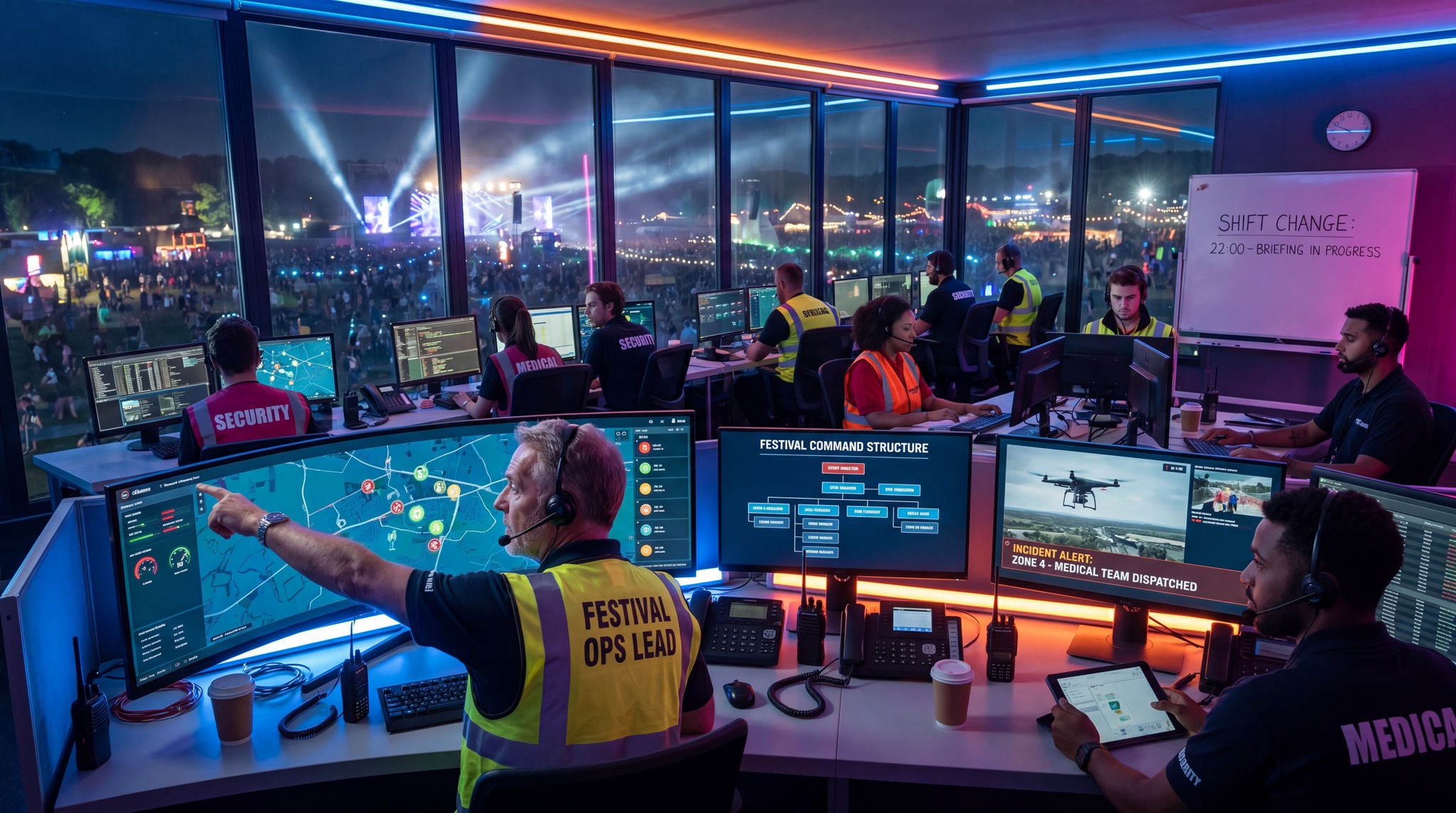
All of these logistical puzzle pieces underscore why a dedicated operations manager is important for the success of a festival event. This key leader designs the site layout, manages crowd flow, secures access points, oversees backstage and VIP areas, and coordinates all logistics—from transport and equipment to complex schedules. For example, in rapidly growing event markets like the Philippines, where organizers must navigate unique tropical weather patterns and dense urban or remote island terrains, an experienced operations director is the linchpin of the production. By ensuring smooth operations and maintaining a professional image, they directly drive guest satisfaction. Without a central figure orchestrating these moving parts, even the best-drawn site map can unravel on show day.
Adapting to Terrain, Weather, and Environment
Working With the Terrain, Not Against It
Every festival site has unique geographic features – flat or hilly, grassy field or urban streets, forested or open desert. A common misstep is imposing a cookie-cutter layout onto a site without accounting for its natural advantages and hazards. Smart organizers conduct thorough site visits and obtain topographical maps well in advance. Look at slope grades: a slightly elevated area might be perfect for a stage (for natural amphitheater effect), whereas a low-lying spot might collect water in heavy rain (avoid putting anything critical there). Leverage existing infrastructure: if there are permanent roads or paths, design your layout to use them for main walking routes or service roads. If there’s a cluster of trees, maybe that can serve as a natural shade area (just ensure branches are safe and won’t fall). Conversely, identify and mitigate hazards – e.g., fill in any ditches or mark them off if people could trip, remove or pad any low-hanging branches in crowd areas, and avoid rocky or uneven ground for high-traffic zones.
Terrain also impacts how sound travels and how crowds move. Hills can act as sound barriers or, if facing the wrong way, create echo chambers. If your site is sloped, note that people will generally avoid going up and down too much unless motivated – position key attractions accordingly. For example, if parking or camping is on a hill, don’t put all the stages at the very bottom far away, or you’ll tire out your audience (unless you provide shuttles). One festival in New Zealand learned this after a year on a steep vineyard site – attendees complained of the hike between stages – they then reoriented everything the next year along a contour line (horizontal) rather than vertical up/down alignment, making walks much easier.
Weather-Proofing the Layout
Even the best site plan can be upended by Mother Nature if you’re not prepared. Festivals frequently get caught by rain, mud, heat, or wind because they failed to include weather contingency in the layout. If your event is in a rainy season or climate, assume it will rain at some point. Plan drainage – keep important areas on higher ground, dig temporary ditches or use berms to redirect water away from stage fronts and tent areas. Have ground protection (like plastic floor tiles or straw) ready for high-traffic mud-prone spots like gateways and dance floors. A prime example of underestimation was TomorrowWorld 2015 in Georgia: a couple days of light rain turned the site’s dirt access roads into impassable mud, forcing organizers to halt shuttles and leaving thousands of attendees stranded in the cold and wet for hours, as rainy weather caused immense problems and staff stopped shuttles due to road conditions. That fiasco could have been mitigated with better preparation – graveling roads, having alternate shuttle pickup points on solid ground, or metal trackway mats for vehicles.
For heat and sun, the layout should include shade and water as we discussed, but also consider cool-down zones (perhaps a tent with fans or misters). If your region is known for extreme heat, you might integrate a large sheltered structure or an air-conditioned building if available for relief – in the Middle East, some outdoor festivals even provide air-conditioned “chill tents” and free electrolytes. Wind is another factor: know the prevailing wind direction. Don’t place stage backdrops or video walls in a way that a strong wind could topple them onto crowds; many events orient structures to face away from the main wind or beef up their ballast if winds are forecast. If you’re in tornado or cyclone territory, identify a sturdy building or area of refuge – even a concrete restroom building or under a grandstand could be safer than open field.
Dust is a unique challenge of desert or dry-area festivals (looking at you, Burning Man). If dusty conditions are likely, arrange for regular water trucks to dampen the ground on roads and around stages. It can be the difference between a pleasant day and everyone breathing through bandanas. A famous example is Burning Man’s Black Rock City, which is deliberately laid out in a broad semi-circle that can accommodate dust storms: the arc shape helps so that when dust blows (which it does annually), there are multiple pathways around any given white-out area, and critical infrastructure is kept central and somewhat shielded. While most festivals won’t deal with that level of challenge, the principle remains – design with worst-case weather in mind.
Flexibility and Plan B
The best site layouts include built-in flexibility. This means if one area becomes unusable or unsafe due to weather or other issues, you have a backup plan. For instance, designate an alternate camping area on higher ground if the riverside field floods. Even if you never need to use it, knowing it’s there can be a savior. Some festivals actually stake out these backup zones quietly in advance (e.g., mark off extra parking that can open if main parking is waterlogged). In 2017, heavy storms in Belgium forced Tomorrowland to evacuate one of its stage areas – but organizers had prepared an adjacent open space as an overflow, so crowds could be moved there temporarily until the issue was resolved. Having extra space available for emergency crowd relocation or vehicles is a huge plus.
Moreover, involve local emergency services in your planning; they might point out environmental risks you didn’t know. Perhaps that pretty field has a history of flash floods, or that venue by the coast could get unexpected fog that disorients people at night. Local fire/police, when consulted, also feel more confident in your event and will respond quicker if you’ve shown foresight. Remember that cancelling or pausing a festival due to weather is sometimes necessary (safety first), but a great site layout can reduce those occurrences or make the process smoother when it happens. It’s far easier to evacuate to on-site shelters or to restart after a storm if your site has multiple exit routes and clear open spaces as staging areas.
Finally, document these environmental plans in your Emergency Action Plan and share it with your team. All staff should know, for example, “If lightning strikes, stage X audience goes to Tent A, stage Y audience to Tent B, etc.” Use your site map as a communication tool for these contingencies. By integrating terrain and weather considerations from the beginning, you transform your layout from a fair-weather plan to an all-weather resilient design. That resilience could save your event (and possibly lives) when the unexpected hits.
Scaling Up or Down: Layout Strategies for Any Size
Every festival is unique, but many site planning principles scale up or down depending on the attendance. Smaller events might think they can be casual about layout (“we only have 500 people, it’ll be fine!”), while huge festivals may assume throwing money at the problem covers everything. In reality, regardless of size, thoughtful planning is needed – just tailored to scale. Let’s compare some key aspects for small vs. large festivals:
| Aspect | Small Festival (500–1,000 ppl) | Large Festival (50,000+ ppl) |
|---|---|---|
| Entrances | 1–2 entry points may suffice, but still provide ample staffing and a buffer zone so a sudden crowd doesn’t overwhelm. Perhaps a single main gate with two lanes (ticket check & bag check). | Multiple gates across different locations (e.g., North, South entrances) with dozens of lanes. Use RFID or fast scanning to process thousands per hour. Separate VIP/staff entrances to reduce main gate load. |
| Walkways & Flow | Likely a compact site, but still avoid funneling everyone through one tight spot (e.g., gate to stage). Keep vendors to the side to leave a clear path. Easy to communicate directions by signage or even staff shouting. | Dedicated wide avenues for main traffic (at least 10–15m wide). One-way routes for entering/leaving stages at peak times. Use extensive signage, maps, and possibly mobile apps for navigation. Plan for crowd control barriers to create lanes if needed. |
| Amenities | A handful of toilets (but don’t skimp – small numbers amplify issues if one fails). One water station or free water at the bar. A couple of food vendors spread out so lines don’t merge. Staff can monitor amenities easily. | Hundreds of toilets in clusters near all key areas (see guidelines of 1 per 75 people). Dozens of water refill points, clearly marked. Food vendors arranged in multiple food courts to cater to crowds in each zone. Need dedicated teams to service and clean amenities continuously. |
| Emergency Prep | Staff likely know the site intimately and can guide people verbally. Still, have at least two exits and a simple evac plan (e.g., “everyone out the way you came in” plus one alternate in case). Medical tent can be small but make sure ambulance can reach it. | Detailed evacuation plan with multiple muster points. Professional medical teams on-site with field hospital setup. Clear emergency audio/visual messaging systems. Multiple large exits – often aiming for full site evac in <10 minutes. Coordination with city emergency services is a must. |
| Back-of-House | Might be minimal (one tent for artists/crew). Ensure it’s clearly separated so fans don’t wander in. Crew can likely hand-carry equipment due to short distances, but still plan a route for any vehicle if needed (e.g., in case of heavy gear or weather issues). | Extensive BoH: gated compounds for artists at each stage, production offices, etc. Use service roads for gear and crew movement – for example, golf carts shuttling artists from a central artist village to stages. Security at every access point to keep public out. |
As the table shows, scaling up isn’t just doing the same thing bigger – it often requires exponentially more infrastructure and forethought. But small festivals shouldn’t be complacent either; a 500-person event in a single warehouse can have a tragic outcome if, say, the lone exit is blocked in a fire. In fact, at intimate sizes, every individual’s experience is more visible – one overflowing toilet or one rude traffic marshal can affect 10% of your attendees and become the talk of the town. Large festivals have more buffer (and budget) but far less margin for error in crises, because the logistics of correction are huge.
The good news is that the core goals remain consistent: safety, smooth flow, comfort, and contingency. A savvy producer of a small festival will borrow ideas from the big leagues (e.g., having a spare generator on standby, or color-coded signs, even if it’s a single-room event). Likewise, big events can learn from the personal touch of smaller ones (e.g., clear communication and signage can make a giant festival feel as navigable as a local fair). Always adjust the scale of your solutions to the scale of the crowd.
Finally, as your festival grows year over year, revisit and revise the layout. Don’t get attached to last year’s map if your capacity is increasing. Many festivals have faltered by trying to squeeze double the people into the same footprint – the layout must evolve with attendance. Ideally, design your first layout with expansion in mind (e.g., “if we had to add a second entrance or another campground, where would it go?”). By proactively scaling your site design, you’ll save yourself from painful reworking down the line.
Frequently Asked Questions
How many portable toilets should a festival provide per person?
Industry best practices recommend providing one toilet for every 75 to 100 attendees for single-day events. For multi-day festivals or those with camping, the ratio increases to roughly one toilet per 50 people. Organizers should increase these numbers if the crowd is predominantly female or alcohol is served to ensure sanitation and comfort.
At what crowd density does festival safety become critical?
Crowd safety risks escalate significantly when density exceeds four people per square meter. At this level, individual control is lost and the crowd begins to behave like a fluid, increasing the risk of dangerous crowd collapse. Planners must design wide pathways and disperse attractions to ensure densities remain below this critical threshold.
How can festivals prevent bottleneck entrances and long queues?
Organizers prevent entrance chaos by calculating the maximum entry rate per minute and deploying sufficient lanes and scanning devices to handle peak surges. Strategies include staggering arrival times, using multiple color-coded entrances, and separating security screening from ticket scanning to create a smoother flow similar to airport security models.
What are the standards for festival emergency evacuation times?
Safety authorities often recommend designing exits to allow for a full site evacuation in eight minutes or less. This requires calculating total exit width based on attendance capacity and ensuring multiple, unobstructed escape routes are spaced around the perimeter. Exits must be capable of handling the entire audience without relying on a single pathway.
Where should water stations be placed at a festival?
High-capacity water refill stations should be distributed throughout the venue, specifically near stages, attractions, and exits to facilitate hydration between sets. Planners must avoid hiding water stations near restrooms to prevent confusion and should use high-visibility signage or flags to ensure attendees can easily locate free water sources.
How do festival organizers prevent sound bleed between stages?
Site planners prevent sound interference by mapping the sound radius of each stage and positioning them back-to-back or angled away from one another. Utilizing natural buffers like hills or woods helps contain audio. Additionally, scheduling is staggered so loud acts do not perform simultaneously on proximate stages, preserving audio quality for the audience.
How can organizers reduce queues at festivals?
To effectively reduce queues at festivals, organizers should implement decentralized service areas, utilize RFID or cashless payment systems to speed up transactions, and deploy mobile ordering for food and merchandise. Structuring lines with serpentine barricades and using dedicated queue-management staff also prevents dangerous surges and keeps walkways clear.
What is the best way to help attendees navigate multi-stage music festival sites?
Helping attendees navigate multi-stage music festival sites requires a mix of physical and digital wayfinding. Organizers should use tall, illuminated landmarks or tethered balloons near stages for visual orientation, combined with GPS-enabled festival apps and clear, color-coded directional signage at major intersections.
What is the Purple Guide guidance on crowd density and persons per square metre?
The UK’s Purple Guide provides essential crowd density guidance, stating that safe, comfortable movement is generally maintained at around two persons per square metre. When density approaches four to five people per square meter, the risk of crowd collapse and dangerous surges increases significantly. Festival organizers use this persons per square metre guidance to calculate safe capacities for stages, walkways, and viewing areas.
Why is an operations manager critical for festival site planning?
An operations manager is essential because they oversee the practical execution of the site layout, crowd flow, and access points. They coordinate all logistics, including transport, equipment, and schedules, ensuring that backstage and VIP areas function seamlessly. Their leadership guarantees smooth operations, elevates the event’s professional image, and ultimately drives high guest satisfaction.