Introduction
Inflation and soaring production costs have hit festivals worldwide, driving up everything from artist fees to tent rentals. Ticket prices for major events have climbed steeply – one analysis found festival passes in France jumped around 60% in the past decade, far outpacing the ~20% general inflation rate, according to analysis by Le Monde. Fans are feeling the pinch, and “sticker shock” at checkout is real. Yet even as attendees balk at higher price tags, they still eagerly invest in experiences that truly deliver value. The challenge for festival organizers in 2026 is clear: make every ticket feel worth every penny.
How can festival producers justify rising costs without alienating their audience? The key is to enhance the attendee experience in tangible ways and communicate openly about improvements. This article draws on decades of production experience and real case studies from festivals big and small. From upgraded amenities and unique programming to transparent budgeting and fan engagement, we’ll explore proven strategies to keep your crowd happy and loyal – even as expenses climb. By focusing on value design and honest communication, festivals can turn a higher price point into a positive story rather than a sore point.
Let’s dive into the practical tactics that savvy producers are using to combat sticker shock in 2026, ensuring fans leave saying, “That was worth every cent.”
Confronting Rising Costs and Fan Sticker Shock
Inflation’s Impact on Festival Budgets
Global inflation has driven up the cost of nearly every line item in a festival budget. Talent fees, fuel, materials, insurance, and staffing costs have all escalated in recent years. In some markets, artist fees have skyrocketed – for example, French festivals report top artist guarantees up 30–40% since 2020, as reported by French festival organizers. One U.S. festival co-founder noted that talent now consumes 40–45% of their entire budget, up significantly from past years, a trend highlighted by Axios. Production essentials are pricier too: energy costs, staging equipment, and even portable toilets cost more due to supply chain pressures.
Free Tool: Split Tickets for Max Gross
Given capacity and a target price, the optimizer proposes Early Bird / GA / VIP allocations and prices — with projected gross at 100%, 80% and 60% sell-through.
These rising expenditures inevitably push ticket prices higher. According to a 2023 industry survey, promoters faced “enormous rises in the costs” of putting on shows and had to adjust ticket pricing just to keep up, a struggle noted by Glastonbury organizers. Furthermore, Pollstar’s executive survey confirms that rising operational costs are forcing these adjustments. Basic economics leave organizers little choice – but fans may not see it that way. Attendees are simultaneously dealing with higher living expenses themselves, so a festival ticket can feel like a luxury ask. In the UK, officials have even scrutinized ticket pricing practices after dynamic pricing models caused costs to double during sales. The message is clear: producers must be mindful of fan perception when passing on cost increases.
The Risk of Sticker Shock for Attendees
“Sticker shock” refers to the jolt fans get when they see a steep ticket price or a total far above last year’s. If a festival pass that used to be $250 is now $350+, fans will inevitably ask: “Is it really worth it?” In 2025, many U.S. festival-goers voiced concerns that events were becoming “harder to justify” amid high food and housing costs. Social media and Reddit threads show fans openly comparing what they paid versus what they feel they received. Festivals have encountered backlash when attendees perceive prices have jumped without clear improvements. For instance, fans of Maryland’s All Things Go festival bemoaned that tickets were higher than previous years and questioned the value of the lineup.
Planning a Festival?
Ticket Fairy's festival ticketing platform handles multi-day passes, RFID wristbands, and complex festival operations.
The last thing an organizer wants is a narrative that their event is gouging fans. If sticker shock sets in unchecked, it can hurt advance sales and erode brand goodwill. Particularly for mid-sized festivals squeezed by rising costs and fierce competition, there’s a danger of losing price-sensitive attendees to other entertainment options. A 2024 analysis by IQ Magazine noted that average European festival ticket prices increased ~5% for 2025 after even larger jumps the year before, indicating some cooling due to fan pushback on continual hikes. Audiences will accept higher prices only if they feel the experience justifies the expense.
Aligning Price with Value Perception
The core strategy to combat sticker shock is simple: align your pricing with clear value. Experienced producers emphasize that any ticket price increase must be accompanied by equivalent (or greater) enhancements that the attendee can see, feel, or appreciate. In practice, this means investing in the parts of the festival experience that matter most to your audience, and making those improvements highly visible.
Attendees tend to evaluate value across questions like:
– Quality – “Is the lineup or content better than ever?”
– Comfort – “Will it be easier to get water, food, rest, and enjoyment on site?”
– Experiences – “Are there more things to do and see for my money?”
– Trust – “Do I feel this organizer cares about my experience, not just my money?”
By boosting these areas, you can raise the perceived value to meet (or exceed) the higher ticket cost. For example, if tickets cost 10% more this year, ensure attendees encounter at least a 10% improvement in some combination of talent, amenities, programming, or convenience. Many savvy festivals treat a price hike almost like a promise – a commitment that the show will be even more spectacular and fan-focused. In the following sections, we’ll explore how festivals around the world are successfully delivering on that promise.
Let Fans Pay Over Time
Offer flexible payment plans that split ticket costs into manageable installments, making higher-priced events accessible and boosting conversions.
(Key point: rising costs are unavoidable, but they can be counterbalanced by smart investments in attendee experience. Next, we’ll get specific about those investments.)
Enhancing On-Site Amenities for Extra Value
Comfort and Convenience Upgrades
One of the most direct ways to make attendees feel their money was well spent is to dramatically improve their comfort on site. Think about the pain points festival-goers commonly endure – long bathroom lines, scarce water, no shade, poor seating. Alleviating these issues can have an outsized impact on attendee satisfaction.
Need Festival Funding?
Get the capital you need to book headliners, secure venues, and scale your festival production.
Simple upgrades in infrastructure and services go a long way:
– Better Bathrooms: Clean, abundant toilets are always noted in post-event feedback. Adding more portable loos (or higher-end restroom trailers) and scheduling frequent cleanings will be noticed. For example, Glastonbury Festival invested heavily in composting toilets and urinals to cut wait times and odour, which fans appreciated during the muddy 2023 edition.
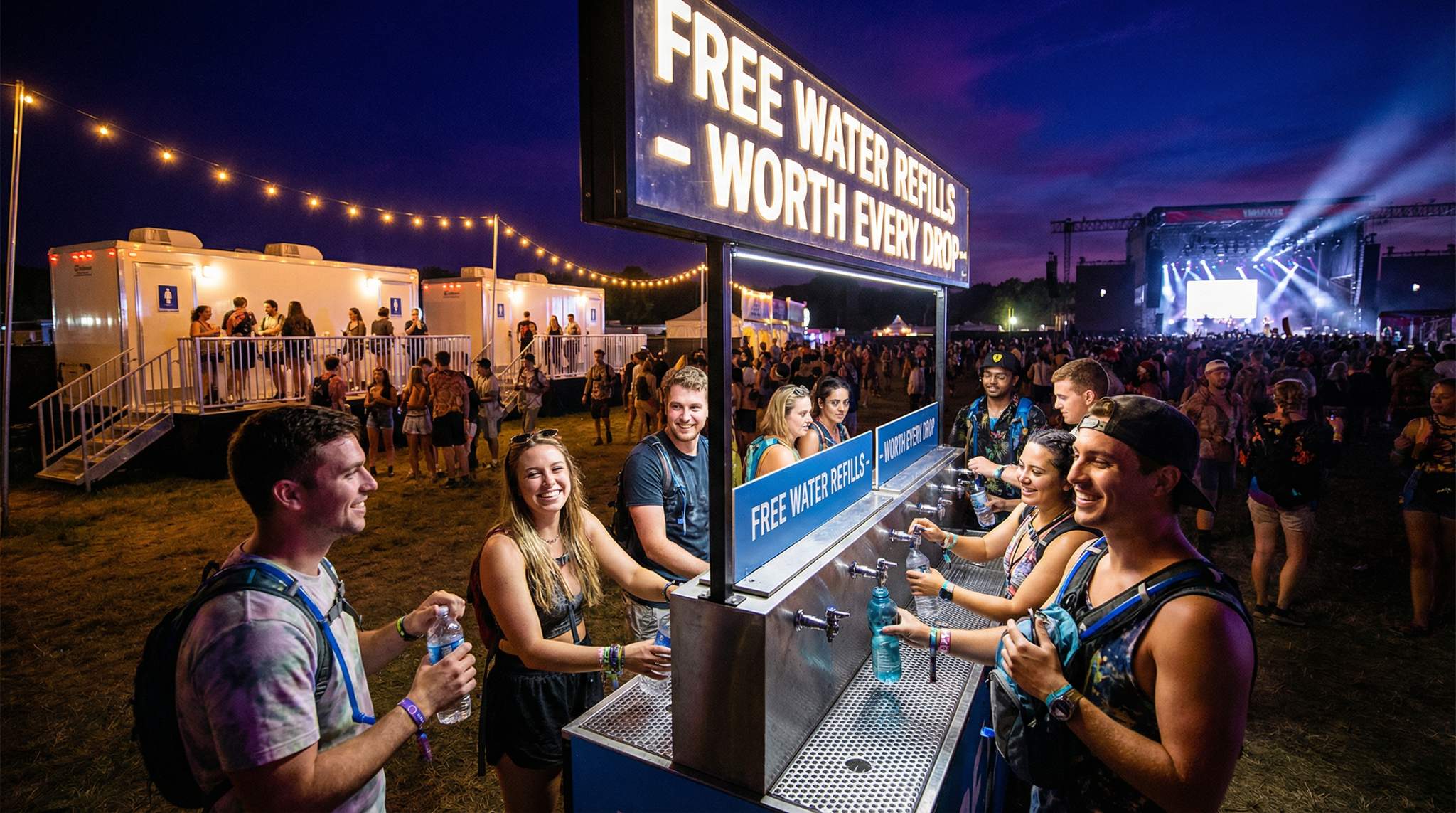
– Free Water Stations: Hydration is both a safety issue and a wallet issue. Installing numerous water refill stations (with clear signage) saves attendees from buying $5 bottled water all day. Major fests like EDC Las Vegas and Bonnaroo now provide free water refills – a relatively low-cost amenity that earns enormous goodwill (and reduces medical incidents from dehydration).
– Shade and Seating: If your venue is an open field or parking lot, create oasis areas. Tents, shade sails, misting areas, and picnic tables or benches give people a place to cool down and relax between sets. Comfort zones not only make the experience more civilised, they encourage attendees to stay longer on site (boosting food & drink sales too).
– Phone Charging & Lockers: In the smartphone era, offering charging stations (lockable or attended) is a valued perk. Many festivals now have phone charging zones or portable battery rental services. Attendees are less anxious about drained batteries and can keep sharing their experience online – free marketing for you! Secure lockers for rent also let attendees stash belongings instead of hauling bags, improving their comfort.
In practice, these enhancements do cost money, so planners must budget for them. However, they tend to deliver high perceived value per dollar spent. The table below illustrates a few amenity investments and how they pay off:
| Amenity Upgrade | Estimated Cost | Value to Attendees |
|---|---|---|
| Additional 50 portable toilets & cleaning staff | $30,000+ | Shorter wait times, cleaner facilities, happier guests |
| 10 Water refill station setups (incl. plumbing) | $20,000 | Free hydration all day; saves attendees money & plastic |
| Shaded chill-out tents (with seating) | $15,000 | Sun relief and resting areas for comfort and health |
| 200 Phone charging ports (solar or generator) | $5,000 | Stay connected; share on social media; less battery anxiety |
| Total Investment | ~$70,000 | Dramatically improved comfort and satisfaction |
For a mid-sized festival, an extra $70k in infrastructure might require a slight ticket price bump – but if it eliminates the top complaints on attendee surveys, it will feel “worth it” to your crowd. Anecdotally, festivals that prioritize attendee comfort see higher retention: fans return year after year because the experience doesn’t “rough it” on basics. As one festival operations veteran put it, “Happy fans spend more and gripe less.”
Conversely, failing to invest in these core amenities can quickly derail a festival’s reputation. When organizers underestimate hydration needs, the resulting backlash—such as the widely documented attendee water refill frustration at events like EDC Thailand—can dominate the post-event narrative. Ensuring your water infrastructure scales with your crowd size isn’t just a perk; it’s a critical operational safeguard against PR disasters and severe safety hazards.
Turn Fans Into Your Marketing Team
Ticket Fairy's built-in referral rewards system incentivizes attendees to share your event, delivering 15-25% sales boosts and 30x ROI vs paid ads.
Safety and Wellness Amenities
In 2026, attendees also value festivals that actively look after their well-being. Enhancing safety and health services on site not only prevents issues – it visibly shows that you care. When ticket prices rise, fans are quicker to notice if something is lacking in the safety department, since they expect a professionally run event. By the same token, they greatly appreciate (and remember) festivals that go the extra mile to keep everyone safe.
Consider investing part of your budget into:
– On-Site Medical & First Aid: Expand your medical tent presence and staffing. For example, Tomorrowland and Electric Zoo partner with local EMTs and hospitals to have mini-clinics on the grounds. Quick response teams roaming the crowd can address dehydration, injuries, or other issues faster. Communicate to attendees that medical help is readily available – it reassures them their ticket includes a safety net.
– Cooling and Shade Stations: In hot climates, provide cool-down stations with misting fans or air-conditioned domes. Festivals in Australia and the US have introduced “heat relief” tents in response to increasing temperatures. Attendees might not consciously attribute this to ticket “value,” but subconsciously it increases their comfort and likelihood to attend again (especially older fans or those with health conditions).
– Free Earplugs and Hearing Protection: A growing number of music festivals now offer complimentary earplugs or sell them at cost to protect attendees’ hearing. Some even set up “quiet zones” near stages with lower decibel levels. This kind of amenity costs relatively little – foam earplugs are pennies apiece – but demonstrates a commitment to attendee wellness. Fans often mention it positively. Implementing such hearing protection initiatives can turn a potentially negative (loud sound) into a plus (festival cares about your ears).
– Cleanliness and Hygiene: Ramp up trash cleanup, hand-washing stations, and even amenities like “beauty stations” (seen at events like Coachella, where Sephora sponsored a tent for makeup refresh). While not essential, these touches make attendees feel looked after. A spotless festival site also projects quality, subtly telling fans “we invest your ticket fee back into the event.” In contrast, if attendees are wading through garbage by Day 2, they’ll certainly be asking where their money went.
Crucially, if you invest in safety and wellness features, advertise them. Let attendees know in advance about the free water, earplugs, cooling tents, etc. This can even be a marketing angle: “New for 2026: more shade, free earplugs and enhanced first aid – all included!” By highlighting these upgrades, you preempt the question of “why is it more expensive this year?” with concrete answers. Moreover, a reputation for excellent attendee care can differentiate your festival in a crowded market.
Technology and Connectivity Perks
Today’s festival audiences are digital natives who appreciate tech conveniences. Introducing the right technology amenities can add surprise-and-delight value to the on-site experience – as long as tech is used to serve people, not frustrate them. Here are a few innovations festivals have rolled out to enhance value:
– Site-Wide Connectivity: Offering robust Wi-Fi or cell coverage on the grounds enables attendees to share moments in real time (generating FOMO marketing) and stay connected with friends. It’s not trivial in remote fields, but some events partner with telecom sponsors or use mesh networking and satellite internet solutions to keep the festival connected. The payoff is attendees who can Instagram and livestream without frustration – a modern luxury that makes a higher-end festival ticket feel justified. If full Wi-Fi isn’t feasible, even strategically placed signal boosters or free Wi-Fi zones in key areas is a welcome perk.
– Cashless Payments and RFID: Many festivals have gone fully cashless, using RFID wristbands or mobile payments for vendors. This speeds up lines and gives attendees more time to enjoy the event rather than waiting to buy tokens or drinks. It also feels slick and premium. Ensure your system is reliable; when done right, cashless systems are a win-win because organizers benefit from faster transactions and data, as noted in industry year-end reviews.
– Festival Mobile Apps: A well-designed festival app can greatly enhance the attendee experience – allowing fans to build custom schedules, get real-time updates, find stages on an interactive map, and even receive surprise perks (like push notifications for secret shows or giveaways). For inclusivity, design your app accessibly so all attendees can use it. In recent years, some apps have added AR scavenger hunts or photo filters themed to the festival, creating an extra layer of fun. Just be careful that digital gimmicks don’t detract from the music and community – technology should complement the festival’s soul, not overshadow it, a sentiment echoed regarding overcrowding concerns.
– Interactive Tech Experiences: Consider if any tech-driven attractions fit your festival theme. Examples include VR tent experiences, 3D photo booths, drone light shows at night, or AI-generated art installations. At Coachella, massive art installations (like 2019’s seven-story moving astronaut) and innovative stage production are part of what attendees pay for. If you raise ticket prices, delivering at least one jaw-dropping new visual or interactive element can cement the impression that “they really upped the game this year.” Just ensure it aligns with your audience – a cutting-edge AR game might thrill a tech-savvy EDM crowd but confuse an older jazz festival audience.
When evaluating these upgrades, implementing dedicated cashless payment systems for festivals often yields the highest immediate return on investment. Beyond simply reducing queue times, a robust closed-loop or RFID-based point-of-sale network provides organizers with granular, real-time data on attendee spending habits. This allows producers to dynamically adjust bar staffing, identify top-performing food vendors, and eliminate the security risks associated with handling physical cash on site. By removing the friction of traditional transactions, fans naturally spend more, directly offsetting the initial setup costs of the technology.
The takeaway is that thoughtful tech enhancements can signal that your festival is forward-thinking and improving each year. One organizer described their approach as finding the “high-tech with a human touch” – embracing innovations that genuinely make the experience smoother or more magical, while avoiding tech for tech’s sake. Used wisely, these upgrades contribute to an atmosphere of progress and added value that helps justify a higher ticket price.
Go Cashless With RFID Technology
Enable contactless payments, faster entry, and real-time spending analytics with RFID wristbands and NFC-enabled ticketing for your events.
Unique Programming and Exclusive Experiences
Curating Unmissable Lineups and Surprises
Ultimately, the core product of a festival is its content – the music, art, film, or thematic experience that people come for. In a climate of rising prices, the lineup or programming must deliver more than ever. Fans will forgive a price increase if the festival gives them performances and moments they simply can’t get elsewhere.
One approach is to invest in a stellar, unique lineup that warrants the cost. This doesn’t always mean the most expensive headliners; it can also mean creative bookings and special collaborations. For example:
– Exclusive Performances: Strive for at least one or two bookings that are exclusive or rare. This could be a legendary band reuniting only at your festival, an artist performing a classic album in full, or a one-time-only supergroup jam. When Barcelona’s Primavera Sound added an exclusive reunion set of a beloved local band, many regional fans felt the ticket was immediately worth it to witness that moment.
– Cross-Genre Collaborations: Coax artists into doing something special on your stages. Perhaps a EDM DJ and a live orchestra together, or a famous pop singer sitting in with a jazz trio. Festivals like Bonnaroo and Glastonbury are known for surprise guest appearances and cross-genre jams – attendees relish these unannounced treats, which add a sense of “you had to be there” value. It costs little beyond logistics, but creates huge buzz.
– Deeper Lineup Curation: If you can’t afford all A-list headliners (few can in 2026’s talent wars and rising artist fees), put effort into curating a lineup that is thematically rich or showcases the best emerging talent. A thoughtfully crafted bill can feel more valuable than one or two big names with filler underneath. Many boutique festivals thrive by offering a niche musical journey or the hottest new acts that attendees discover on site. Fans will pay for a trustworthy curation if you earn a reputation for it.
Marketing should underscore these programming perks. Rather than just listing artists, communicate the narrative: e.g. “Only at XYZ Fest will you see this once-in-a-lifetime collab”. Create anticipation around secret sets or surprise guests (without giving them fully away). The goal is to make ticket buyers feel they’d truly be missing out if they skip it – which makes the price tag easier to swallow.
Interactive and Immersive Activities
Beyond the main stage, packing your event with interactive experiences and immersive environments can dramatically increase perceived value. If a ticket grants the attendee access to multiple mini-events or attractions within the festival, it feels like a better deal.
Successful festivals often include elements such as:
– Workshops and Classes: Daytime yoga sessions, dance workshops, drumming circles, craft or art classes, even speaker panels – these give attendees more to do than just watch performances. Transformational festivals like Lightning in a Bottle (USA) and Wonderfruit (Thailand) include extensive workshop schedules (wellness, sustainability, art, etc.) all included in the ticket. Attendees often remark that these “festival within a festival” offerings make the experience richer and well worth the cost.
– Art Installations and Interactive Zones: Investing in visual art can turn your festival grounds into a living gallery. Think interactive sculptures, live painting, themed photo booths, or graffiti walls where attendees can contribute art. Burning Man pioneered the model of participant-driven art, and many music festivals have followed suit – from Electric Forest (with its enchanted forest art pieces) to South Africa’s AfrikaBurn. Even a mid-sized event can collaborate with local artists to install pieces that light up at night or invite climbing and exploration. These create memorable moments that attendees feel fortunate to experience.
– Carnival Rides and Games: If space and budget allow, adding elements like Ferris wheels, swing rides, or game areas can make a festival feel like a full-fledged entertainment carnival. Notably, EDC Las Vegas includes carnival rides free for all ticket holders, and it’s a beloved part of the event’s identity. When attendees can ride a Ferris wheel overlooking the festival lights – included in admission – they perceive tremendous value. Even smaller rides or lawn games (giant Jenga, anyone?) in the camping area can add fun at little cost.
– Themed Experiences or Zones: Create zones within your festival that each offer a distinct vibe or activity. A retro 80s disco dome, a quiet ambient music chillout lounge, a gaming tent, a meditation space, a rave cave – curated micro-environments like these give attendees the sense of multiple experiences in one ticket. For instance, Tomorrowland in Belgium is famous for its multiple fantastical stage areas, each with its own theme and decor; attendees feel like they explore new worlds throughout the grounds, which feels like added value beyond just a concert.
The trick is to bundle these extras into the general admission experience, rather than upcharging for every little thing. If everything fun costs extra on site, attendees start feeling nickel-and-dimed (which undermines value perception). Instead, include as much as possible with the ticket. Of course, some premium activities might warrant an upsell (e.g. bungee jumping at a festival might cost a fee), but the baseline ticket should unlock plenty of free fun. When done right, attendees leave saying “I didn’t even get to do everything, there was so much included!” – a great sign they’ll be back despite a higher ticket price.
Free Tool: How Many Tickets to Break Even?
Enter your venue, artist, production and marketing costs with your ticket price. See how many tickets cover your costs and how many you still need to sell.
Real-Life Examples: Adding Value through Programming
Many festivals have thrived despite rising prices by innovating their programming. Let’s look at a few brief examples:
– Glastonbury (UK) – Known not just for its massive lineup but for endless variety: theatre shows, an entire nighttime mini-city (Shangri-La) of immersive art, political speakers, kids’ areas, and more. Glastonbury’s ticket price has risen to over £340 according to recent pricing announcements, yet it sells out instantly because attendees know the banquet of experiences on offer. One 5-day ticket gets you almost too much to experience: from watching mega-headliners on the Pyramid Stage to stumbling upon a hidden piano bar at 2am. That abundance makes the cost feel justified.
– Fuji Rock (Japan) – Faced with high logistics costs, Fuji Rock distinguishes itself by its natural setting and added adventures. The ticket includes not just concerts but a scenic gondola ride up a mountain, wooded trails with hidden performances, and a generally cleaner, more polite experience than many Western fests. Attendees often cite the festival’s atmosphere and amenities (like free hot springs foot baths and pristine toilets) as reasons they don’t mind the high ticket price – they feel taken care of in return.
– South by Southwest – SXSW (USA) – While primarily a conference/festival combo, SXSW’s badge is pricey. They justify it by offering an immense cross-disciplinary lineup: music showcases, film premieres, tech exhibitions, gaming expos, and keynote talks, all on one pass. Attendees hop between vastly different experiences (catch a buzz band’s gig, then a film screening, then a VR demo) which creates an impression of huge value density. It turns what could be “overpriced” into an actually reasonable fee for a 10-day feast of content.
– Small Boutique Festivals – Even at a small scale, unique programming can lift perceived value. For example, Soundstorm Festival in Saudi Arabia introduced curated “VIP guest experiences” like desert camel rides and cultural tours for festival-goers, leveraging local culture as a value-add. And boutique music festivals like Moogfest (USA, an electronic music/art fest) include hands-on synth workshops and tech art installations, so fans feel the ticket buys them both concerts and an educational convention – two for one.
The common thread: these festivals identified what extra value they could offer in line with their identity, and integrated it for all attendees. By doing so, they turned higher costs into improved product, not just a higher price for the same thing. That is the mindset of delivering value despite rising costs.
Transparent Communication and Trust Building
Breaking Down Where the Money Goes
In an era of social media savviness, honesty truly is the best policy when it comes to ticket prices. Many veteran producers have learned that being transparent about costs can preempt criticism and earn attendee trust. If you need to charge more, explain why – and show how that money will make the festival better.
One effective tactic is to break down your budget for the audience. Consider sharing a simple overview of where each ticket dollar is spent. For example:
| Expense Category | Approx. Share of Ticket Price |
|---|---|
| Artist talent fees | 40% |
| Staging, sound, lighting | 20% |
| Staffing & security | 15% |
| Venue, permits, infrastructure | 10% |
| Safety, medical & insurance | 5% |
| Amenities & sanitation | 5% |
| Environmental initiatives (eco programs) | 3% |
| Community charities (if applicable) | 2% |
This is a hypothetical breakdown, but sharing something similar (in a pie chart or infographic on your website or social channels) can be eye-opening for fans. It emphasizes that their money isn’t pure profit – it’s largely reinvested in the show. For instance, if they see 40% goes to the artists they love and another chunk to the massive stages and sound, they better understand the pricing. Some independent festivals have posted such breakdowns to social media with great success, often receiving comments like “Wow, I didn’t realize how much things cost – thanks for letting us know!”.
Even large mainstream festivals have embraced cost transparency. When Glastonbury had to raise its ticket price nearly 20% between 2022 and 2023, co-organizer Emily Eavis candidly blamed “enormous rises in the costs” of running the vast show and the lingering financial fallout of COVID cancellations. She addressed fan concerns head-on via public statements. Notably, Eavis pointed out that they had “tried very hard to minimise the increase” and were still recovering from two years with no festival. This level of openness – essentially saying “we’re not price-gouging, we’re struggling too” – resonated with many long-time Glasto fans. Despite grumbles, the 2023 tickets sold out in under an hour, as usual.
Boost Revenue With Smart Upsells
Sell merchandise, VIP upgrades, parking passes, and add-ons during checkout and via post-purchase emails. Increase average order value by up to 220%.
Another aspect of breaking down the costs is highlighting new investments. If you’re charging more because, say, you’ve added a whole new stage or doubled your safety budget, tell people! Before your event, use newsletters, blog posts, or media interviews to publicize the upgrades. For example:
– Announce that “25% more bathrooms and water stations” are being added (tie it to the initiative to improve attendee comfort).
– Reveal that you’ve expanded the wellness and safety team by X people or brought in a new experienced safety manager.
– Promote the fact that a portion of the ticket is funding eco-initiatives like solar power or local community programs.
By linking price increases to specific benefits, you convert the narrative from “tickets are more expensive” to “the festival is investing more into things fans care about.” Modern audiences appreciate this candor. According to an industry poll, showing all fees and costs upfront is critical because surprise add-on costs deeply erode fan trust. Indeed, a 2025 UK survey found only about 34% of concertgoers felt they understood what each ticket fee was for, and hidden charges averaging up to 25% extra left many feeling ripped off. Don’t let your festival fall into that trap – be an open book instead.
Honesty in Pricing (No Hidden Fees or Gotchas)
Transparency isn’t just about big picture costs – it also applies at the micro level of fees, pricing tiers, and refund policies. To maintain fan goodwill in a high-cost era, pricing honesty is paramount. This means:
– Disclose All Fees Upfront: List booking fees, facility fees, taxes, and any surcharges clearly before the final checkout page. Nothing aggravates a buyer more than thinking a ticket is one price, then seeing a much higher total after “service fees.” If you use a ticketing platform that allows fee flexibility, consider absorbing some fees into the advertised price for simplicity. At minimum, communicate transparently: e.g. “Tickets $100 + $10 fees + tax.” As one report noted, surprise costs at checkout feel like a bait-and-switch and can prompt people to abandon their purchase, emphasizing the need for festival ticketing that feels fair.
– Explain New Surcharges: If you introduce a special surcharge (say a “sustainability levy” or a venue-imposed fee), include a note about what it is. Recently, some UK concertgoers encountered a mysterious “£1 restoration fee” for shows at new venues, causing confusion and anger. The issue was not so much the £1, but the lack of clarity: fans asked “why are we paying a restoration fee for a brand-new stadium?” In that case, the promoter eventually explained it was intended to support grassroots music venues. The lesson: if you have an add-on charge, be clear about its purpose, or better yet, roll it into the base price to avoid the optics of nickel-and-diming.
– Avoid Predatory Dynamic Pricing: Dynamic pricing (where ticket prices fluctuate based on demand, often skyrocketing for hot shows) has drawn heavy public backlash in the live events industry. High-profile concerts saw fans furious when ticket costs doubled or tripled in real-time. For festivals, unpredictable pricing undermines the trust that loyal attendees place in you. It’s wiser to stick with stable pricing or clearly defined tiered releases (e.g. early bird, tier 1, tier 2) so buyers know where they stand, helping keep pricing honest and fans happy. If you do experiment with dynamic pricing, cap the increases and communicate openly to avoid a PR fiasco. Many festival industry veterans recommend transparent tiered pricing over surge pricing as a more fan-friendly approach.
– Fair Refund and Resale Policies: In uncertain times, another value signal is how you handle refunds or ticket resales. If attendees know they can get a refund or easily transfer their ticket if plans change, the high cost feels less risky. Consider offering refund protection add-ons or partnering with an official resale platform where fans can sell tickets at face value (preventing scalper markups). Some festivals even have fan-to-fan exchange systems to keep it fair. These policies show that you’re not trying to profit off uncontrollable circumstances, further building attendee trust.
Bottom line – a “no surprises” approach to pricing helps fans feel respected. One Ticket Fairy article aptly points out that making your festival “famously fair with transparent pricing and real VIP perks” builds loyalty for the long run. Fans are far more likely to accept necessary price increases if they feel you’re being straight with them and not employing sneaky tactics. In fact, when you distinguish your festival as one that keeps pricing honest and fans happy, you become a preferred choice for ethically minded consumers who might skip more opaque competitors.
Communicating Value Proactively
Transparency isn’t only reactive (answering why after fans ask) – it should also be proactive. Smart festivals weave communication about value and improvements throughout their marketing campaign. The idea is to educate attendees on what their ticket buys so effectively that by the time they show up, they’re already convinced it’s money well spent.
Consider these proactive communication steps:
– Pre-Event “Value Emails”: In the lead-up to the festival, send out an email or social post series highlighting new features. For example, “Top 5 Improvements We’ve Made for Attendees in 2026” detailing things like improved shuttle services, better camping facilities, new free experiences, etc. Use an upbeat, appreciative tone (“Thanks to your support, we’ve been able to add…”) so fans feel their ticket purchase is directly funding cool upgrades.
– Website FAQs or Blog Posts: Have a section of your website or blog that addresses common questions like “Why did ticket prices increase this year?” Use it to tell the story of your investments (e.g. “we added a whole extra day of programming,” “artist fees have risen dramatically so we’re ensuring we can still book a top-quality lineup,” etc.). Some festivals publish open letters from the director outlining these points, which can humanize the situation and rally community understanding.
– Highlight Community/Charity Contributions: If part of your revenue goes to charity or community projects, trumpet that fact. For instance, Glastonbury donates millions to charities like Oxfam and WaterAid each year – knowing this, attendees often feel better about paying more, as it’s for a good cause. If your festival supports local arts programs, sustainability efforts, or any charitable initiative, include that in your narrative: “$1 of every ticket supports XYZ.” It turns the ticket into not just a purchase, but a contribution, which many fans value.
– Post-Event Transparency Recap: After the festival, consider sharing a brief report or infographic of what was achieved. E.g., “Here’s where your ticket money went: X meals served, Y gallons of water provided, Z kilowatts of solar power used, X staff employed, donations made, etc.” This closes the loop and sets the stage for next year – attendees see concretely the impact of their spending, making them more likely to trust future increases. The organizers of Burning Man do this exceptionally well, publishing an annual report detailing all expenses (from art grants to porta-potty costs), which solidifies trust in their community.
Transparent communication might feel risky (“are we drawing attention to the price?”), but in practice it builds an informed fan base that appreciates the complexity and effort behind the scenes. In an industry where some promoters still rely on hidden fees or vague answers, being open can become a competitive advantage. As a bonus, transparency also forces you as a producer to be disciplined – if you plan to explain every dollar, you’re more likely to spend wisely on genuine fan value, rather than on things that don’t matter to attendees.
Fostering Fan Loyalty and Community Engagement
Rewarding Loyalty and Repeat Attendees
When costs rise, loyal fans are your bedrock. These are the attendees who have been coming for years and feel a personal connection to the festival. If you keep them happy, they will not only stick with you through price hikes but also advocate for your event to others. Thus, it’s crucial to actively reward loyalty and make repeat attendees feel valued.
Some strategies to consider:
– Loyalty Discount or Presale: Offer returning customers a chance to buy tickets early at a special rate. For instance, some festivals email a unique presale code to people who attended the last event, allowing them to purchase for, say, 10% off or at last year’s price. This gesture shows appreciation and eases the blow of increased cost. It can also encourage early renewals of attendance. Even if the discount is modest, fans love being recognized as insiders.
– Alumni Perks: Beyond pricing, think of perks exclusively for multi-year attendees. This could be a dedicated fast-entry lane for people who’ve attended 5+ years, a loyalty lounge on site, or a commemorative merch item (e.g. a pin or bandana given at the gate) for veterans. The monetary cost of these is low, but the symbolic value is high – it says “you’re part of the festival family.” For example, Tomorrowland has a program where long-time fans accumulate “loyalty points” for various perks, and some UK festivals have secret gigs or areas accessible only to those who know (usually the die-hards).
– Fan Clubs and Memberships: Consider establishing an official festival fan club or membership program. Members (perhaps via a small annual fee or continued attendance) can get benefits like exclusive updates, a say in certain decisions (voting on a minor lineup choice), or special merch. A formal loyalty program can add value for superfans and also generate off-season engagement. Just ensure the benefits are meaningful enough to warrant it. Some festivals send out loyalty gift boxes or holiday cards to their top fans – these little touches can turn casual attendees into passionate advocates.
– Referral Rewards: Your loyal fans likely recruit their friends to come. Tap into this by offering referral bonuses – for example, if someone refers 5 new ticket buyers, they get $100 credit for on-site merch or a backstage tour. The Ticket Fairy platform enables referral tracking and incentives, helping promoters grow attendance through word-of-mouth. Supporting these organic evangelists not only helps sales, but the new attendees they bring are more likely to trust the value if their friend (a loyal fan) vouched for it.
The overarching theme is to build a community, not just an audience. When attendees feel like they are part of a tribe or tradition, they are far more forgiving of price changes. They’ll say “we have to be there, it’s our thing” rather than coldly evaluating the cost. By rewarding loyalty, you strengthen this emotional bond. As one festival director said, “We don’t have customers, we have a community – that’s why we’ve lasted.”
Year-Round Engagement Beyond the Festival Weekend
Another way to deliver more value for the ticket price is to extend the experience beyond the festival itself. Rather than a once-a-year transaction, make your festival a year-round presence in fans’ lives. If attendees feel they get ongoing entertainment, content, or benefits even when the stages are dark, the annual ticket cost feels more justified.
Here are tactics to keep fans engaged (and happy) year-round:
– Post-Event Media and Content: After the festival, don’t go silent. Release high-quality photo galleries, aftermovies, live session recordings, or even a full concert film of highlight performances. Many festivals upload select live sets to YouTube or their website for fans to relive (or for those who couldn’t attend to see what they missed). Some even produce documentary podcasts or behind-the-scenes videos about the festival’s creation. This content is essentially a free bonus for ticket buyers and keeps them excited until the next edition. For example, Tomorrowland sells a beautifully produced aftermovie and also mails out a theme-based keepsake ticket box each year – these touches make the experience feel like it extends well beyond the festival dates.
– Community Forums and Social Groups: Facilitate spaces where fans can interact with each other and with the organizers. This could be an official Facebook group, Discord server, or forum on your website. Active fan communities (think Burning Man’s Burner community or Insomniac’s Headliner community) exchange stories, tips, and hype each other up all year. Jump in occasionally with teasers for the next year or to solicit feedback (“what would you love to see in 2026?”). When fans have a year-round emotional connection, they are less likely to balk at ticket prices – attendance becomes part of their identity.
– Off-Season Mini Events: If feasible, organize smaller events or meetups in between the big festival. This could be a one-night concert in a few key cities featuring artists associated with your festival, a pop-up art exhibit, or a stage takeover at another event. Some festivals host official pre-parties or launch events months in advance, which might be free or discounted for ticket holders. Others run “road to [Festival]” club nights. These keep the momentum going and give fans additional touchpoints. They’ll feel like the festival ticket is a season pass to a series of cool happenings, not just one weekend.
– Engage in Meaningful Causes: Use your platform to involve fans in causes year-round. If sustainability is part of your ethos, organize volunteer beach clean-ups, tree plantings, or charity drives under the festival’s name. Community-centric festivals that give back – like donating to local food banks or hosting workshops in schools – earn deep respect. Fans become proud to support the event because it stands for more than profit. For instance, Lightning in a Bottle and Shambala Festival (UK) both champion eco-initiatives beyond their event, and have cultivated loyal followings who view the ticket as supporting a positive movement.
– Merchandise and Media Sales: While typically a revenue stream, festival-branded merchandise can also reinforce year-round value. Whether it’s a cookbook of famous recipes or educational content on how to get festival budgeting right, these give fans a way to take the experience home. Some might purchase these separately, but occasionally including a digital download or small merch item with higher-tier tickets (“VIP pack comes with an exclusive vinyl record of last year’s best performances”) can be a nice value-add.
By treating the festival as a 360-day brand rather than a weekend event, you make the ticket feel like a subscription to a lifestyle. This approach has a side benefit: it can unlock additional revenue streams (merch, smaller events, content sponsorships) that help offset your main event costs. But importantly for attendees, it means more value for the money. They are essentially getting entertainment and engagement spread across the year, not just a single burst. In times of rising costs, that can make the difference in their decision to stick with your festival versus a cheaper alternative.
Building a Community-Centric Festival Culture
Perhaps the most intangible but powerful factor in perceived value is the sense of community a festival fosters. When attendees feel like they are part of something bigger – a culture, a family, a tradition – the experience transcends typical consumer metrics. They are no longer evaluating “was this worth $X?” in isolation, because the festival means more to them than just a series of concerts or exhibits.
Cultivating this community-centric ethos can involve:
– Encouraging Participation: The more attendees contribute to the festival, the more they feel ownership of it. This could be through volunteering (many festivals allow fans to do volunteer shifts in exchange for tickets), or through creative participation (e.g. costume themes, art cars, open mic stages, etc.). Burning Man is the ultimate example – everyone is a participant, not a spectator, which creates a fanatic level of loyalty despite the huge cost and effort to attend. While you don’t need to go that far, even small participation elements (like a community mural wall or a costume day) can increase attachment.
– Engaging Local Communities: A festival that integrates and respects its local host community often wins long-term support. This might entail showcasing local artists and food vendors, providing discounted “local resident” tickets or invitation-only local previews, and ensuring the festival gives back economically. For example, Festival X might partner with nearby restaurants to offer ticket-holders discounts during festival week, creating a town-wide atmosphere. Or involve local schools in art projects for the site. When locals feel the festival is for them (not an invasion of outsiders), they champion it even if prices rise – and they’ll convey that positivity to other attendees.
– Developing Traditions: Over the years, foster festival traditions that attendees look forward to and feel a part of. It could be a yearly theme, a special closing ceremony, a group photo moment, or a signature song that always plays at a certain time. Traditions build a sense of continuity. At Denmark’s Roskilde Festival, for instance, it’s tradition that on the final day everyone throws urine-filled cups in the air during a certain song (messy but cherished!). Such rituals, however odd, make attendees feel like insiders. They’ll pay more to return and relive those unique shared moments that they can’t get elsewhere.
– Open Dialogue and Responsiveness: Actively listen to your attendee community. Solicit feedback through surveys and actually implement visible changes based on it. Then tell people you did so. When fans see that “they added more water stations because we asked” or “they booked X genre because feedback showed we wanted it,” they feel a sense of mutual respect. It reinforces that the festival isn’t just selling a product, but facilitating a collective experience. According to industry experts, knowing your audience deeply and involving them in shaping the event is key to long-term success.
The result of strong community focus is authoritativeness and trust that money can’t buy, creating cultural and financial impact. Festivals like Burning Man, Tomorrowland, and Boom Festival have almost cult-like followings who will defend the value fiercely to any critic. They’ve transcended being mere events to being cultural touchstones. While not every festival can hit that level, aiming for a community-centric model will undoubtedly increase attendees’ willingness to pay and return. People might come the first time for the lineup, but they’ll come back (even at a higher price) because of the community and belonging they felt.
Tiered Pricing and VIP Options that Deliver
Designing VIP Packages with Real Value
When cost pressures mount, many festivals turn to VIP tiers and premium offerings to bolster revenue. VIP tickets, backstage passes, cabanas, and other upsells can indeed generate extra income – but they also risk creating a two-class system if handled poorly. To keep overall attendee satisfaction high, it’s critical that VIP packages are designed to add value without detracting from the general admission experience.
First, ensure your VIP offering is truly worth the premium price. Savvy festival-goers won’t shell out for a VIP pass that only grants a slightly nicer view and a cash bar. They expect meaningful perks, such as:
– Exclusive Viewing Areas: A VIP platform or pit access that isn’t overcrowded, providing a clear sightline of the main stage (and maybe secondary stages). For example, Coachella VIPs have access to areas adjacent to the main stage that offer space to lounge and watch comfortably. It can justify VIP cost if GA still has decent views (more on GA fairness soon).
– Comfort Upgrades: VIP zones should have amenities like real shade, comfortable seating, upgraded restroom trailers (often a huge selling point), and perhaps air-conditioned lounges. Essentially, VIP should offer an oasis of comfort amid the festival bustle. At Lollapalooza and many Live Nation festivals, VIPs enjoy plush lounges with couches, misting fans, and even spa services – touches that clearly differentiate the experience.
– Faster Access: Many VIP packages include expedited entry (skip the general line), dedicated faster lanes at the bar or food stalls, and sometimes separate parking or shuttle arrangements. Time saved is value added. If a VIP guest can breeze through an entrance in 5 minutes versus GA taking 45 minutes, that’s a perk they remember positively.
– Inclusive Treats: Complimentary or included items go a long way. Open bar is rare (and expensive), but some VIP areas provide free water, soft drinks, or snacks. Others do daily happy-hour free cocktail tastings or a dedicated merch booth with a free festival poster for VIPs. These little “freebies” make VIPs feel pampered. Austin City Limits Festival, for example, gives VIPs free gourmet catering and craft beer in their area – a true value considering food is a big expense on site.
– Unique Experiences: The highest-end packages might include special access like side-stage viewing for one set, a brief meet-and-greet with an artist, or a guided tour backstage. While logistically limited, these once-in-a-lifetime moments can justify a very high-tier ticket for those who can afford it.
The success of VIP tiers lies in making those buyers feel they got something truly special while ensuring the regular attendees don’t feel neglected. As a rule, never let VIP arrangements harm the GA experience. We’ve seen cases where festivals faced backlash for fans requesting refunds because VIP blocked their view, alienating the general admission crowd. The optics (and drone photos) of a half-empty VIP pit while GA is packed further back are terrible. Avoid this by sizing VIP viewing areas modestly and balancing them with plenty of great viewing spots for GA.
In short, deliver VIP as a bonus, not by subtracting from GA. If you add a VIP platform, perhaps also elevate some GA viewing platforms further back or on the sides to keep things fair. Keep VIP fences low-impact and consider allowing GA right up to stage fronts at secondary stages. Experienced producers design layouts such that general admission attendees never feel like second-class citizens compared to VIPs. This might mean limiting how close VIP can get in one prime stage, or opening VIP sections to GA after a certain time if not filled. Policies like those ensure your core audience (GA) still loves the festival even if they skip VIP.
When VIP is done right, it can significantly boost revenue and also serve those fans who are willing to pay for luxury. Many festivals report VIP and platinum tickets being the first to sell out despite high prices – a sign that segment perceives real value. Just make sure your VIP customers become your biggest cheerleaders (“It was pricey but so worth it – best experience ever!”) and that your GA customers hardly notice VIP except maybe to aspire to it next year. Achieving that balance is key to growing revenue without hurting your reputation.
Flexible Ticketing and Payment Options
In times of economic strain, another aspect of delivering value is simply making it easier for fans to purchase and attend. Flexible ticketing options can alleviate the immediate financial burden and reduce sticker shock, even if the face value is high. By offering more ways to pay and attend, you effectively increase the perceived accessibility of your festival, keeping fans happy.
Here are a few options to consider:
– Payment Plans & Installments: More festivals are allowing ticket buyers to pay in multiple installments rather than all upfront. This could be an in-house layaway plan or via ticketing platforms that support monthly payments. For example, many younger fans in 2025 relied on payment plans to afford big festival tickets, considering the cost and hassle. Implementing a split payment option (e.g. 50% at purchase, 50% a month later, or a 4-month payment plan) can dramatically widen your audience. It doesn’t change the ticket price, but it feels more affordable. The Ticket Fairy ticketing platform allows promoters to easily offer installment plans, which can be a selling point when marketing passes – emphasizing “Book now for just $50 down!” can convert on-the-fence buyers worried about cost.
– Early Bird and Tiered Pricing: This is a classic strategy: reward those who commit early with a lower price. Not only does it help your cash flow, it gives fans a sense of victory locking in a deal. Clearly advertise how many tickets are in each tier and when prices will rise. Fans appreciate the transparency and the chance to save by acting early. Tiered pricing also creates a narrative of increasing demand (“80% sold-out, next tier almost gone”), which can spur more sales. Just be careful to set your initial early-bird price such that even the final tier is still reasonable – you don’t want the last tier to end up so high that late buyers feel punished.
– Group Deals and Bundles: Encourage attendees to come with friends by offering group ticket packs, such as “Buy 5 tickets for the price of 4” or other volume discounts. Splitting costs among a group can soften sticker shock for individuals. Families might appreciate bundles too (e.g. a family 4-pack with two adult and two youth tickets at a slight discount). Some festivals also bundle extras like drink vouchers or merch with higher-tier tickets as a value-add: for instance, a “Party Pack” ticket that costs more but includes 10 drink coupons and an event T-shirt could appeal to groups who see the net value.
– Multi-Day and Single-Day Options: If your festival spans multiple days, consider offering single-day tickets alongside full weekend passes. Price single-day tickets in a way that the full pass is still the better value overall, but the option provides flexibility. Someone who can’t afford $300 for the whole weekend might still pay $120 for one stacked day. By capturing those attendees even for a day, you’re expanding your audience and maybe converting them to full-weekend customers in the future. It’s also a goodwill gesture, showing you understand not everyone can take three days off or pay for them. Many large festivals (e.g. Reading & Leeds in the UK, Lollapalooza) successfully sell single-days to broaden attendance.
– Special Access Passes: Another idea is offering limited cheaper tickets with some restrictions, if feasible. For example, a “locals only evening ticket” that lets local residents in after 5pm at a lower rate, or a Sunday-only family pass with no camping. Glastonbury runs a locals lottery for reduced-price tickets to support the community. While you must balance not cannibalizing your main sales, targeted options can generate goodwill among key groups. Ensuring fair local access with community passes can turn local neighbors into allies rather than critics of higher prices.
Strategic tiering is particularly effective for driving immediate revenue. For example, analyzing the pricing curves of major international events—such as the notable jumps in Big Mountain Festival Thailand ticket prices after early bird allocations sell out—demonstrates how aggressive price scaling incentivizes immediate purchases. When fans know the cost will increase substantially in the next tier, they are highly motivated to secure their passes early, providing organizers with the crucial upfront cash flow needed to fund deposits for talent and infrastructure.
Finally, always communicate these options clearly in marketing. If fans know they can snag an early bird deal, pay over time, or find a ticket type that suits their budget, they’ll feel the festival is on their side in making attendance feasible. That perception itself is a form of value. It says: “We want you there, and we’ll work with you.” In an era where some live events have been accused of price-gouging, being the festival that ensures fair and flexible access is a competitive advantage. Fans will remember and reward you with loyalty.
Ultimately, selecting the right ticketing for festivals is the foundational step in this flexible approach. A robust festival ticketing platform does more than process transactions; it acts as the central hub for your attendee relationship. By utilizing advanced software, promoters can seamlessly deploy these multi-tier upgrades, manage automated layaway billing, and capture vital demographic data before the gates even open. When your ticketing partner provides a frictionless, mobile-optimized checkout experience, you reduce cart abandonment and set a professional, welcoming tone from the very first click.
Fairness Between General Admission and VIP
We touched on VIP design earlier, but it bears emphasis: preserving a sense of fairness across all ticket tiers is crucial for attendee happiness. As you introduce VIP or premium experiences to raise revenue, keep asking, “Am I still taking care of my GA audience?” The moment general admission attendees feel like second-class citizens or an afterthought, you risk reputational damage that no price increase can offset.
Some guidelines to maintain balance:
– Limit VIP Segregation: Aside from designated VIP zones, the core festival space should be shared by all. Avoid overly partitioning the event. For example, don’t make popular attractions or necessities (like water stations or prime food vendors) exclusive to VIP. Everyone’s paid to be there and deserves the full experience. Reserve exclusivity for comfort enhancements, not core content. As festival consultant Steven Adelman advises, “Give VIP nice things, but don’t take things away from GA to do it.”
– Keep GA Areas High-Quality: Just because GA tickets are cheaper doesn’t mean those areas can be neglectful. Ensure general admission viewing areas have good sightlines and sound, ample amenities (food, drink, toilets nearby), and some shade or seating as able. If VIP has cushy lounges, maybe GA gets a fun free-play area or splash pad – different, but also enjoyable. Protecting the GA experience is non-negotiable.
– Communication and Optics: Be mindful of how things look. Large empty VIP sections at the front during an act, while GA is packed behind, looks bad. If that happens, consider opening VIP to GA for that show or resizing for next time. Conversely, celebrate the togetherness of the crowd in communications – emphasize that festival spirit is universal across tiers. Share photos of the massive GA crowd having the time of their lives (not just VIP lounging). The narrative should be that everyone had a great experience, with VIP as a footnote, not the headline.
– Tier Pricing Gaps: Price your tiers logically. If VIP is astronomically higher priced than GA, it will create outsized expectations and possible resentment (“Those rich folks paid 5x what I did – did they get 5x the experience?”). It’s often better to have a moderate VIP tier and maybe an ultra-limited super-premium tier (for those high rollers), than to make the standard VIP too elite. This way, GA doesn’t feel such a gulf. Some festivals use three tiers: GA, VIP, and an ultra “Platinum” or “Owners” level that is kept very small. That way the visible VIP area is still relatively accessible to many, and only a handful of ultra-VIPs get the butler service behind the scenes.
– Solicit Feedback from All: After the event, get feedback from GA and VIP ticket holders separately. If GA attendees complain about feeling shunted aside in favor of VIPs, take that extremely seriously. It might mean rethinking your layout or policies. Fans have long memories for perceived snobbery. On the other hand, if GA feedback is glowing and VIP folks also loved their perks, you’ve achieved the balance.
In essence, you want the average fan leaving your festival to feel just as euphoric and satisfied as the VIP fan – they should not feel like they experienced a “lesser” festival. When GA attendees say “I can’t imagine how it could have been any better even if I paid more,” you’ve nailed it. Ironically, that pride in the GA experience can convince some to upgrade in the future out of curiosity, but they’ll never feel they needed to in order to have fun. That is the sweet spot: every tier feels valued. Producers who manage this equilibrium will find their audience far more accepting of ticket price increases because they trust that, no matter what they pay, they’ll be treated to a fantastic time.
Streamlining Operations to Fund Value Adds
Cutting Costs Backstage (Without Cutting Corners)
Facing rising costs doesn’t only mean charging attendees more – it also means finding efficiencies in your operations so you can deliver a great experience without an exponentially growing budget. By running a lean, smart production, you can save money behind the scenes and redirect those resources to attendee-facing value or to minimizing ticket price hikes. The key is to trim waste and optimize processes, not to cut the elements that impact attendee enjoyment or safety.
Strategies for leaner festival operations include:
– Efficient Scheduling and Labor Management: Optimize your build, break, and show schedules to avoid costly overtime and idle time. For instance, if stagehands are union or on hourly rates, tight scheduling can save thousands. Some veteran production managers use lean management techniques to streamline load-in and load-out. In 2023, one major venue group improved per-event profit margin by closely tracking expenses and optimizing staffing on a show-by-show basis. Those savings can be passed to the festival budget. Also, cross-train staff where possible (e.g. someone who can handle multiple roles) to reduce total headcount without losing capability.
– Bulk Buying and Resource Sharing: Leverage economies of scale. Buy supplies like wristbands, cups, merchandise, and non-perishables in bulk – possibly in coordination with other events or through associations. A coalition of independent festivals in the UK found they could save significantly by sharing resources and bulk purchasing together. If you have multiple events, reuse decor, infrastructure, or signage across them. Or partner with events in your region to share certain rentals (one festival uses the stage one weekend, another festival the next). This kind of resource-sharing alliance can cut equipment costs and create a collegial network.
– Negotiating Better Deals: All vendor contracts – staging, AV, tenting, security, catering – should be competitively bid and negotiated. In the post-pandemic rush, costs for rentals shot up, but if you build long-term partnerships or guarantee multi-year engagements, you may secure better rates. Always review major expense contracts annually to find any fat. Some festivals even partner with sponsors in operations (e.g. a beverage company providing refrigerators or a solar company providing power infrastructure at low cost in exchange for sponsorship). Creative deals can defray big expenses.
– Technology and Automation: Consider investments in tech that reduce manual labor needs. For example, RFID access control can reduce the number of staff needed at gates (and speed up entry). Mobile app FAQs and chatbots can reduce strain on customer service teams. Drones can do quick site surveillance that might otherwise require multiple roaming personnel. Many 2026 festivals are exploring automation to fill labor gaps – from self-service ticket kiosks to automated inventory systems for bars. While there’s an upfront tech cost, the long-term savings on wages (especially amid staff shortages) can be significant. The key is to ensure any automation maintains or improves the attendee experience (for instance, shorter lines due to cashless tech), so it’s a win-win.
– Sustainable Cost Savings: Green initiatives can save money too. Solar lighting towers eliminate fuel costs. Recycling and composting can reduce waste disposal fees. Encouraging attendees to BYO water bottles (with refill stations) cuts down on trash hauling. Some festivals have implemented sustainability measures that ended up saving them money in the long run – e.g., using durable staging materials year after year instead of rebuilding, or selling reclaimed merch made from past years’ unsold shirts. It’s possible to be green and save green through efficient practices, which means more budget for things audiences notice.
By trimming excess behind the scenes, you create a buffer in your budget. You can then either avoid raising ticket prices as much, or allocate those funds to the improvements and perks we’ve discussed earlier. It’s crucial, however, not to cut corners that the audience will feel. Skimping on things like security, sound quality, or talent quality to save money will backfire badly in value perception. One festival industry saying goes, “Never cut what touches the fan.” So cut smart, not cheap.
The best outcome is when attendees have no idea you cut costs – they only see things got better. If you can achieve that, you’ve essentially increased value without increasing cost proportionally. Many independent festivals survive through such frugal innovation, proving that creativity can substitute for cash. As the old proverb says, necessity is the mother of invention; the necessity of handling rising costs can push you to refine operations in a way that ultimately benefits your audience and your bottom line together.
Essential Festival Budgeting Tips for 2026
Mastering the financial side of production is more critical than ever. When implementing these operational changes, organizers should rely on proven festival budgeting tips to keep margins healthy. First, always build a contingency fund of at least 15-20% into your master spreadsheet to absorb unexpected supply chain spikes or last-minute talent travel costs. Second, adopt zero-based budgeting for each new edition rather than simply rolling over last year’s numbers; this forces department heads to justify every line item, from staging to sanitation. Finally, track your cash flow meticulously. When attendees inevitably ask why mega-events like Coachella are so expensive, the answer lies in these massive upfront capital requirements—securing top-tier headliners, building temporary cities, and funding multi-million dollar production designs months before the gates open. By understanding these macro-level financial pressures, independent promoters can better explain their own pricing structures and allocate funds where they generate the highest return on attendee satisfaction.
Smart Sponsorships and Partnerships to Offset Costs
Sponsors and partners can be lifesavers when budgets are tight – if you integrate them in a way that adds value for attendees rather than feeling like intrusive advertising. The right sponsors can subsidize enhancements that directly improve the fan experience, effectively giving you more budget to work with. The key is to choose partnerships that align with your audience’s interests and needs.
Consider pursuing sponsors that can provide:
– Sponsored Amenities: Some brands will fund a specific festival amenity in exchange for branding it. This is an ideal win-win. For example, a telecommunications company could sponsor free Wi-Fi on the grounds (their routers and name on the login page), delivering a high-value service to attendees at no cost to you. Or an energy drink brand might sponsor a chill-out lounge or shading structures, branding them with their colors. At one festival, a toilet paper company famously sponsored upgraded restrooms – complete with attendants and air fresheners – and plastered fun ads inside. Fans raved that those were “the best festival toilets ever.” The sponsor got positive exposure, attendees got cleaner bathrooms, and the festival didn’t foot the full bill.
– Product Sampling and Freebies: Partner with beverage, food, or merch companies to give freebies to fans on site. It could be something like a free popsicle on a hot day courtesy of a ice cream brand, or free sunscreen handed out with a sponsor’s logo on the packets. At Outside Lands in San Francisco, one year a major tech company set up charging lockers and device charging for free – a godsend for attendees – just to demo their charging technology. These little perks make attendees feel cared for, and the cost is covered by someone else. Just ensure the products are actually useful and desired (festival-goers love free water, earplugs, sunglasses; they might not care for a random trinket).
– Content Partnerships: Some sponsors can enhance programming by funding stages or artists. For example, a brewery might sponsor a smaller stage that features local talent – essentially paying for the talent budget on that stage. Or a brand might underwrite a headliner’s fee in exchange for hospitality benefits and branding. If done tastefully (e.g., minimal on-stage signage), attendees just see a richer lineup or additional stage thanks to the sponsor. A real-world example is how Red Bull has funded music stages or entire small festivals (e.g. Red Bull Music Academy events) giving fans more to enjoy, while associating their brand with cool content.
– Logistical Support: Think outside the box for partnerships that reduce core costs. Perhaps a local trucking company becomes the “official transport partner” and gives discounted rates on hauling gear. Or a tent company provides a few free structures in exchange for VIP tickets for their execs. Maybe a waste management company handles recycling at a lower fee because you’ve highlighted them as a green partner. These kinds of deals aren’t front-facing for fans, but they free budget to spend elsewhere.
– Community and Government Grants: Not a typical “sponsor,” but don’t overlook local tourism boards, arts councils or government grants if your festival drives cultural value or tourism. Cities often sponsor events that bring in visitors. For instance, a city might provide free police presence or public park use, saving you security and venue costs, if you can demonstrate economic impact. Again, the benefit to fans is that you can invest more in the show instead of these costs.
The caution with sponsors is to maintain authenticity. Festival-goers, especially younger audiences, can sniff out over-commercialization. Avoid plastering logos everywhere or letting sponsors take over core identity elements (fans probably don’t want to chant a brand name in place of your festival’s name…). The integration should feel organic: e.g., “Coachella Main Stage presented by XYZ” is fine, but “XYZ Festival (formerly Coachella)” would be a disaster. Always ask, “Does this partnership enhance the attendee experience?” If yes, it’s likely a good fit. If not, approach with caution.
When done right, sponsors can subsidize exactly the things that make your festival better, effectively keeping ticket prices lower or quality higher than they otherwise would be. Particularly in 2026, many brands are eager to connect with live music and youth culture after years of limited events, so it’s a buyer’s market for sponsorship. Choose wisely, negotiate firmly, and structure deals so that fans walk away saying “That was awesome that [Brand] gave us that cool thing,” rather than “Ugh, [Brand] was everywhere.” The former adds value; the latter detracts from it.
Investing in Sustainability and Resilience
As mentioned earlier, investing in sustainability can have financial benefits – but it also boosts perceived value for a growing segment of eco-conscious fans. Today’s attendees (especially Gen Z and Millennials) appreciate festivals that reduce their environmental footprint, according to ticket price analysis. If part of your rising costs is due to implementing sustainable practices, make sure to highlight that as a value-add. Many fans are willing to pay a bit more knowing the event is green and responsible, supporting sustainable material integration.
Examples of worthwhile sustainability investments:
– Eco-Friendly Infrastructure: Use solar panels or renewable energy generators to power parts of the festival. This reduces carbon emissions and can save on fuel costs. Some festivals, like DGTL in Amsterdam, have moved toward fully renewable energy. If ticket prices need to be higher to support that, frame it as “building a sustainable festival for the future”. Fans aligned with those values will take pride in supporting an eco-forward event.
– Waste Reduction Programs: Go plastic-free (no single-use cups or bottles) and implement robust recycling/composting. Provide free water (as discussed) and maybe sell inexpensive refillable bottles on site. Offer incentives like a $1 refund for each cup returned for recycling (some festivals do “eco-bonds” on cups). Highlight the results: e.g. “Last year we diverted 85% of waste from landfill – highest of any festival our size.” Attendees feel their presence isn’t harming the planet as much, which adds moral value to their ticket. Plus it literally results in a cleaner, more pleasant environment during the show.
– Environmental or Community Initiatives: If you allocate funds to carbon offset projects, local community improvements (like tree planting or donating to local schools), or festival site restoration, tell that story. “$2 of your ticket goes directly into restoring the park grounds and funding local youth music programs.” That tangible good can make the cost easier to accept. It’s not just a transaction; it’s supporting causes. Festivals like Fuji Rock emphasize their work in preserving the local forest and area, something attendees respect as part of the package they pay for.
– Safety and Resilience Measures: In the wake of unpredictable weather and other risks, some festivals have started investing in resilience (like better drainage, temporary flooring to avoid mud, lightning-proof stages, etc.). These aren’t glamorous expenses, but they prevent catastrophic cancellations or uncomfortable experiences. While you don’t necessarily advertise “we spent $100k on drainage,” you can communicate reliability: e.g. “We’ve upgraded the venue to ensure the show goes on rain or shine.” Attendees will value the assurance that their costly ticket won’t be wasted due to foreseeable issues. Sharing how you’re weather-proofing the event (especially pertinent in outdoor summer festivals facing climate change) signals professionalism and care.
All these initiatives should be woven into your messaging about festival improvements. Sustainability efforts in particular can draw sponsor support and press coverage, amplifying the sense that your event is forward-thinking. Fans who care about these issues will choose your festival (even at a premium) over a cheaper but less responsible one. And increasingly, most fans care on some level – nobody enjoys a trash-strewn campsite or the guilt of a huge carbon footprint just for a weekend of fun. By being a leader here, you add a kind of value that goes beyond the immediate attendee experience: the value of aligning with their values. That psychological satisfaction can be a powerful component of the “worth” of a ticket in 2026 and beyond.
However, organizers must carefully weigh the cost of going green. The financial implications for festivals transitioning to renewable energy or zero-waste systems often involve significant upfront capital. While solar generators and biodegradable materials carry a premium, these initial investments frequently yield long-term operational savings through reduced fuel consumption and lower waste disposal fees. By treating sustainability as a multi-year infrastructure investment rather than a single-year expense, producers can balance their eco-friendly ambitions with strict financial realities.
Tailoring Value to Different Audiences
Family-Friendly Features for Parents and Kids
As ticket prices rise, expectations rise for all demographics – including families. If you want to keep drawing parents with children (or older attendees with young relatives), you must ensure your festival experience is safe, accessible, and enriching for all ages. A family that feels taken care of is far more likely to deem the expense worthwhile and become repeat customers in future years.
To appeal to families and add value for them:
– Kids Zones and Activities: Create a dedicated family area or kid zone with age-appropriate entertainment. This could include things like craft workshops, face painting, playground structures, or even a quiet nap area for little ones. Many family-friendly festivals set up “Kid Zones” with daycare or supervised play. For example, Victorious Festival in the UK has a huge kids’ arena with characters, circus skills and more, all included in the ticket. Parents greatly appreciate when their children have fun things to do beyond just sitting through adult-oriented sets.
– On-Site Childcare Services: If your budget allows and there’s demand, consider offering a professional daycare or babysitting service on site. Even a small childcare tent where certified staff mind children for an hour or two can be a godsend, letting parents catch a favorite act. Some festivals partner with local childcare providers to run a “festival daycare.” It’s not common, but when available it’s talked about as a huge value add by parent attendees. (Safety and vetting is paramount here – only do this with licensed, trusted partners.)
– Family Facilities: Make sure basic facilities accommodate families. This means baby changing stations in restrooms, some toddler-friendly food options, and sensitivity to noise in certain areas (maybe offer child-sized ear defenders or have quieter family camping zones). Provide stroller-friendly paths or shuttles where possible. If parents see you’ve thought about their needs, they’ll be more loyal even at premium prices. Some festivals even offer family camping areas with stricter noise curfews, which are very popular for those with young kids.
– Tickets and Pricing for Kids: Many festivals let children under a certain age in for free or at a reduced price. While that might seem like lost revenue, it encourages families to attend (who otherwise couldn’t afford multiple full-price tickets). For instance, a policy like “Kids under 12 free with a ticketed adult” can bring in parents who then spend on food, merch, etc., and become long-term patrons as their kids grow up. If you’ve raised adult prices, expanding the free-kid cutoff by a year or two might be a welcome trade-off for families. Also consider offering a family bundle as mentioned – it simplifies purchasing and signals that you want families to come.
– Programming for All Ages: Ensure some of your content appeals to a broad age range. Booking a couple of daytime acts or performers that kids/teens love (maybe a popular Disney actor turned musician, or a nostalgic act parents and kids both enjoy) can create shared moments. Additionally, non-musical programming like magicians, puppet shows, or interactive science demos can be scheduled earlier in the day for families. These touches show that the festival isn’t only catering to 20-something party-goers, but is truly an all-ages experience.
By making your festival an inviting place for families, you tap into a wider audience that often has spending power (parents may budget for one big family event each year) and appreciates value. A parent who sees their child having a magical time will absolutely say the ticket was worth it. In fact, they often value those memories more deeply than a solo attendee might value seeing a band. Take cues from renowned family-friendly events and consider dedicating a team member as a “family experience manager” to champion these initiatives. The return on investment is measured in lifelong fans – kids who grow up at your festival and continue coming back as adults because it’s a beloved tradition.
Accessibility and Comfort for Older Attendees
Another important demographic to consider in value delivery is older attendees (seniors or anyone who might have mobility or accessibility needs). Festivals aren’t just for the young – many events have significant numbers of fans in their 40s, 50s, 60s and beyond, especially if the genre appeals to multiple generations. Ensuring accessibility and comfort for older guests can turn a potentially challenging outing into a delightful one that they deem fully worth the money.
Key considerations for older festival-goers include:
– Mobility Access: Provide ample seating and rest areas throughout the venue. Older attendees greatly appreciate being able to sit down in between sets or even during shows if needed. Seating doesn’t have to mean chairs for everyone at stages, but consider some bleachers or benches at the back of major viewing areas, and plenty of picnic tables in food courts. Also, make sure paths are navigable for those with mobility aids (wheelchairs, canes). Many festivals now have ADA platforms at stages – raise awareness of these in your communications so those who need them know where to go. A well-placed raised platform for disabled and older folks to view comfortably can change their whole festival experience.
– Transportation and Shuttles: Long walks from parking or between stages can be tough for some older folks. If your site is large, consider operating a shuttle service or golf cart transport for those who need assistance. Even offering a courtesy shuttle from the remote parking lot to the entrance is a plus. At camping festivals, some provide shuttles from campground to main stage during peak hours. Highlight “accessible transport available” in info materials – it signals to older fans that you value their presence enough to make accommodations.
– Hearing Protection and Aid: Ironically, some older music fans are among the most concerned about loud volumes (perhaps after a lifetime of concerts!). Even as ticket fees and costs rise, providing free earplugs is a small cost that yields high appreciation. Also consider technology like hearing loop systems at stages for those using hearing aids – a rare feature, but it can be an incredible value for attendees with hearing loss. Even a note in your info that “we keep volumes at safe levels and have quiet zones available” can reassure older guests that they won’t be overwhelmed by the sonic onslaught.
– Senior Discounts or Packages: If you have a sizable older audience, a small senior discount (say 10% off for 65+) can be both a respectful gesture and a way to entice that demographic. Some events partner with senior travel groups or offer special seating sections for seniors. For example, Montreal Jazz Festival explicitly caters to older jazz aficionados with plenty of seating and free outdoor shows. While not every festival suits seniors, if yours does, lean into it. An older couple that feels comfortable and catered to will likely become annual attendees and speak highly of how considerate the event is.
– Healthcare and Accessibility Services: Ensure your medical tents are prepared for any age-related issues (heatstroke risk is higher in older adults, for example). Train staff on how to respectfully assist those with disabilities or elderly folks who may need a hand. Offering scooter rentals or wheelchair services could be an extra step if your site allows. Small things like larger-print programs or signage can help too (eyesight issues become common with age). All these add up to making seniors feel the event truly thought of them.
By prioritizing accessibility and comfort, you expand your audience and enhance value for a group that often has the means to pay but needs the incentive to spend it on a festival. Many in their 50s or 60s won’t tolerate discomfort the way a 20-year-old might, but they often do have disposable income for premium experiences. Show them that premium experience in the form of convenience and care. If a higher ticket price contributes to better facilities that benefit them, they’ll see it as well worth it. Ultimately, a multi-generational crowd also enriches the festival atmosphere – grandparents dancing with grandkids, longtime music lovers mixing with new fans – it all adds to the sense that your festival is more than a show, it’s a community event for all ages.
Inclusive and Welcoming Environments for All Attendees
Finally, delivering value isn’t just about tangible amenities – it’s about shaping an inclusive, welcoming atmosphere where every attendee feels safe and accepted. In recent years, festivals have put increased focus on attendee diversity and inclusion, recognizing that fans are more likely to support events that support them in return. If rising costs are a concern, one way to justify them is by doubling down on creating a uniquely welcoming experience that attendees can’t find elsewhere.
Key areas of inclusivity to consider:
– LGBTQ+ Inclusion: Make a point to ensure your festival is a safe space for LGBTQ+ attendees. This can include providing gender-neutral restrooms, using inclusive language in all communications (e.g., avoiding “ladies and gentlemen” in favor of inclusive terms), and training staff to handle any instances of harassment swiftly. Some festivals designate specific queer-friendly meetups or pride parades on site. Showing visible support – such as flying rainbow flags – can signal to LGBTQ+ fans that they belong. When people feel safe and seen, the ticket becomes more than an entertainment purchase; it’s access to a community that values them.
– Diversity in Programming: Book a diverse lineup that reflects different genders, ethnic backgrounds, and musical styles. Attendees notice when a festival cares about representation. For example, Afropunk Fest built a brand around celebrating Black alternative culture and has an extremely loyal following as a result. If fans see themselves represented on stage and in the crowd, they feel the event is for them. In 2026, many festivals are aiming for gender-balanced lineups and culturally diverse acts – not just for optics, but because it genuinely enriches the festival experience for all. A diverse lineup can attract a broader audience willing to pay for something different from the same old mainstream roster.
– Anti-Harassment and Safety Initiatives: Implement and publicize a strong anti-harassment policy (covering sexual harassment, racism, etc.). Having clearly posted codes of conduct, security staff trained in handling sensitive issues, and even “safe spaces” or help booths for those feeling uncomfortable can make a huge difference. Some festivals have adopted app-based panic button systems where attendees can quickly summon help – a high-tech solution that, while primarily about safety, also adds to perceived value by showing the festival cares. If attendees trust that they’ll be protected and respected on your grounds, they’ll equate that to a higher quality (and thus more worthwhile) event.
– Local Culture and Community Engagement: Inclusivity also means embracing the local community that hosts you. This was discussed earlier regarding local partnerships and access. By involving local cultural groups, food vendors, artisans, and residents, you create an atmosphere of authenticity. Attendees love when a festival has a sense of place. For instance, Byron Bay Bluesfest in Australia incorporates Welcome to Country ceremonies by Indigenous elders, acknowledging the traditional landowners. These thoughtful inclusions add depth and meaning to the festival experience – something you can’t put a price on. So even if the ticket costs more than another event, fans might prefer yours for its heart and community vibe.
– Attendee Feedback Loops: A truly welcoming festival listens to its attendees. Encourage feedback through surveys or interactive boards on site, asking what could make people feel more included or comfortable. If you notice a certain group underrepresented among attendees, reach out to understand why and how you might change that. Perhaps providing materials in multiple languages or adjusting some policies could open the door to new audiences. Continuous improvement in inclusion shows attendees that their experience is valued beyond the dollars they spend.
All these efforts contribute to a festival’s cultural value. When people describe why they love a particular festival, they often talk about the vibe or community spirit as much as the music or attractions. Fostering an inclusive, positive culture makes your festival stand out. Attendees will justify a higher expense by saying, “Yes it’s pricey, but the feeling there is unlike anywhere else – you feel so welcome and free.” That emotional resonance is a value that transcends spreadsheets and budgets. It turns customers into fans and fans into family. And when you’ve achieved that, you’ve truly delivered a festival experience that is worth every penny and then some.
Frequently Asked Questions: Festival Value and Operations
What are the most important features to look for in ticketing for festivals?
When evaluating ticketing for festivals, organizers should prioritize platforms that offer flexible payment plans, transparent fee structures, and robust data analytics. A dedicated festival ticketing system must also handle high-demand on-sales without crashing, integrate seamlessly with cashless payment systems, and provide reliable offline scanning capabilities at the gates to ensure smooth entry.
How do cashless payment systems for festivals improve the attendee experience?
Implementing cashless payment systems for festivals significantly reduces queue times at bars and food vendors, allowing fans to spend more time enjoying the programming. For organizers, these RFID or closed-loop networks eliminate the security risks of handling physical cash, provide real-time inventory data, and typically increase overall per-head spending by removing transaction friction.
How can organizers avoid infrastructure failures like water refill shortages?
Operational failures, such as the widely discussed EDC Thailand attendees’ water refill frustration, highlight the need for scalable infrastructure. Producers must calculate hydration and sanitation needs based on peak crowd density and extreme weather forecasts, not just average attendance. Building in a 20-30% redundancy for critical free amenities ensures that even if one station goes down, the overall attendee experience and safety are not compromised.
What are the top festival budgeting tips for independent promoters?
Effective festival budgeting requires building a 15-20% contingency fund, utilizing zero-based budgeting to justify every annual expense, and closely monitoring cash flow. Promoters should also negotiate multi-year vendor contracts to lock in rates and leverage real-time ticketing data to adjust variable costs, such as bar staffing and security, before the event begins.