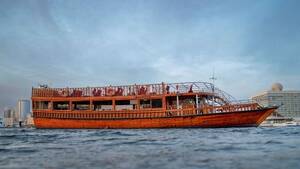
About Al Seef Dubai
Al Seef Dubai is not a conventional theatre, arena, or single ticketed attraction. It is a free-entry, fully pedestrianised waterfront district extending 1.8 kilometres along the Bur Dubai bank of Dubai Creek beside Al Fahidi Historical Neighbourhood. Developed by Meraas and opened in phases from September 2017, it occupies about 2.5 million square feet of built space and was planned for hundreds of shops, restaurants, cafés, hotels, marina services, cultural amenities, and event areas. Its identity comes from the transition between a contemporary creekfront zone and a heritage-inspired souk of wind towers, shaded sikkas, courtyards, textured walls, timber details, lanterns, and dhow views. Unlike a stadium, Al Seef has no published permanent audience capacity, fixed seating bowl, stage dimensions, or house technical inventory. Crowds spread across promenades, plazas, lanes, restaurant terraces, and temporary event footprints, so organisers determine safe capacities and configurations for each activation. This distinction matters when planning a visit: most public walks, fireworks, light installations, parades, and roaming performances are viewed standing or from dining tables rather than from reserved seats. Its importance to Dubai lies in making the creek a lively evening destination while translating trading, pearl-diving, fishing, and boat-building stories into an accessible leisure setting. The result feels simultaneously scenic.
History and Architectural Character
The project was announced at Cityscape Global in 2015, conceived as a revitalisation of a creekside area central to Dubai's maritime and mercantile development. Phase one opened to the public on 29 September 2017, bringing the modern waterfront promenade, restaurants, marina links, parking, and event space. The second phase was scheduled for early 2018 and added the 1950s-inspired souk heritage environment. Hotels subsequently embedded accommodation within the district, including a heritage property dispersed through traditional-style houses and contemporary hotels nearby. No major venue-wide rebuild was documented through 2025; stewardship shifted within Dubai Holding, with Souk Al Seef branding emerging. Architecturally, the masterplan is deliberately legible as two worlds. The modern section uses cleaner lines, glass, broad terraces, and open creek views. The heritage section compresses the route into lanes, courtyards, arcades, timber balconies, carved doors, wind towers, and sand-coloured surfaces. Wayfinding and lighting are integrated into this visual language using aged metal, timber, and understated signs. Traditional references recall coral stone, gypsum, palm, and imported timber once used around Old Dubai, although Al Seef itself is a modern reconstruction, not a preserved nineteenth-century quarter. That distinction has produced debate. Admirers value the climate-conscious shade, human scale, photographic character, and clear storytelling. Critics argue that artificial ageing can blur the line between authentic fabric and themed heritage.
Events and Programming
Public archives are incomplete; Al Seef's verified programme is seasonal, citywide, and mostly free rather than ticketed. Documented activity from 2020 through 2025 shows recurring emphasis on fireworks, markets, light art, family entertainment, heritage demonstrations, and traditional music. In 2020, the destination hosted Dubai Shopping Festival fireworks, a DSF market, a sea kite show, and New Year's Eve fireworks welcoming 2021. A women's worldwide motorcycle relay also reached Al Seef on 1 February. In the 2020-2021 winter season, the market combined shopping, food, and public entertainment. During 2021, the DSF Market returned and New Year's Eve fireworks welcomed 2022. The 2021-2022 festival season also promoted an outdoor play market. In 2022, Al Seef staged National Day fireworks at 8pm on 2 December with market offerings, then joined DSF's opening and daily fireworks programme from 15 December into January 2023. Seasonal markets provided trading space for local and regional small businesses. In 2023, the district celebrated the UAE's 52nd National Day from 2 to 4 December. Dubai Lights brought inflatable Anooki characters and environmental messaging, while late-December and early-January DSF fireworks drew crowds. Summer programming and Creek Festival activity added family experiences along the shoreline. The 2024 programme included Ramadan fireworks on 22-24 March, nightly projection and reflection displays, traditional Al-Musaharati, Toomina, oud, and qanun entertainment, Eid Al Fitr Ayallah dance, Tanourra dance, oud and qanun performances, plus second-day fireworks. Eid Al Adha staycation and family promotions ran from 15 to 20 June. Summer Escapes followed from 30 July to 4 August. National celebrations featured pottery, Sadu weaving, Harbia dance, oud, qanun, Arabic coffee, dates, and fireworks on 3 December. Winter programming from 6 December to 19 January used a 39-metre-high festive tree, an 18-metre fishing-net light sculpture, parades, acrobats, dancers, theatre, and an Italian-themed Harlequin circus. In 2025, Ramadan Reflections brought lanterns, projections, oud, violin, Abu Tbila, and March fireworks; summer, Eid Al Adha, Eid Al Etihad, and 31 December fireworks continued the established pattern.
Tickets and Booking
Entry to Al Seef itself is free, and there is no central box office because the district is not a single gated venue. Most fireworks, parades, heritage demonstrations, light installations, roaming music, and festival activations have historically been free to watch. Ticketing applies only when a specific attraction, cruise, hotel programme, workshop, private event, or restaurant package requires booking. For announced public events, details usually appear close to the season, especially around Ramadan, Eid, Dubai Shopping Festival, Eid Al Etihad, and New Year's Eve. Popular nights do not normally require reserved admission, but waterfront restaurants may impose reservations, set menus, or minimum spending. The best strategy is to arrive early, choose a viewing zone before dinner, and confirm any merchant conditions before ordering or entering.
Layout Production and Viewing
Al Seef has no permanent auditorium seating map. General admission effectively means standing along the creek promenade, in plazas, or within lanes where performers roam. Restaurant terraces provide seated views, but tables belong to individual businesses and often require dining. Fireworks sightlines are strongest from open water-facing stretches with fewer trees, canopies, or moored vessels. Heritage alleys are atmospheric for close-up music, crafts, and parades but poor for wide sky views. For temporary stages, arrive before the advertised start because flat standing areas fill first. Children may struggle to see behind adults, and there are no guaranteed elevated accessible platforms unless an event announcement specifically provides them. Acoustic quality varies by location: open water disperses sound, while walls in narrow sikkas can create reflections and uneven coverage. Nearby restaurant music, crowd noise, boats, and fireworks also affect listening. No verified permanent sound system, lighting rig, stage grid, backstage area, dressing rooms, loading dock, power schedule, or production inventory is publicly listed. Major activations therefore appear to use event-specific temporary loudspeakers, microphones, scenic lighting, projections, generators, barriers, and pyrotechnic controls. Visiting producers should request a technical pack rather than assume theatre-standard facilities.
Getting There and Parking
Al Seef runs along Al Seef Street in Umm Hurair 1, on the Bur Dubai side of Dubai Creek beside Al Fahidi. The most convenient public transport approach depends on which end you want. BurJuman station connects the Red and Green Metro lines, and bus C07 serves Al Seef Marine Station. Sharaf DG station on the Green Line is useful for the heritage and Al Fahidi side. Walking from either station can take roughly fifteen to twenty minutes, depending on pace, heat, and destination within the 1.8-kilometre site. Marine transport is part of the experience. Petrol abras have linked Al Seef with Baniyas, Old Souq, and Al Ghubaiba, with a published fare of AED 2 per trip. An on-demand electric abra has been advertised at AED 60 for thirty minutes or AED 120 for one hour. Ferry and tourist services also operate on selected schedules, but routes, timings, payment methods, and holiday operations can change. Check station boards on arrival. Drivers have access to more than 3,000 parking spaces across the destination. Published valet rates are AED 20 for two hours, then AED 15 for each additional hour. Standard VIP valet is AED 105 for three hours, then AED 25 hourly. Self-parking charges, if any, should be read from entrance signs rather than assumed. Taxis and rideshares can use Al Seef Street, hotel entrances, or kerbside areas. Ask for the heritage souk, modern section, or marina to avoid a long walk.
Inside Al Seef
There is no single front door or universal security search. Visitors enter from the promenade, parking, hotels, streets, and marine station during normal public access. Special events may introduce barriers, bag checks, controlled zones, or police directions, so follow posted instructions. A 24-hour Smart Police Station operates at the destination, and information hubs provide store guides and orientation. Facilities are distributed rather than centralised. Expect public toilets, restaurant washrooms, prayer facilities, seating pockets, shaded passages, cash and card payment at businesses, and mobile connectivity typical of central Dubai. There is no destination-wide coat check, locker room, merchandise stand, or free public cloakroom. Souvenirs, handicrafts, perfumes, clothing, jewellery, and gifts come from individual souk shops. Food ranges from Emirati and Middle Eastern cooking to Indian, Turkish, Asian, Mediterranean, coffee, desserts, and international casual dining. Alcohol is available only where a licensed hotel outlet serves it and must not be carried into public areas. Opening hours currently list retail from 10am until 10pm Monday through Thursday and 11pm Friday through Sunday. Food outlets stay one hour later.
Nearby Amenities
The easiest pre-event plan is to dine within Al Seef because the promenade contains creek-facing restaurants, cafés, dessert shops, and quick options. Well-known choices have included Al Fanar for Emirati dishes, Sabaa for heritage-style dining, Skafos for Mediterranean flavours, Kailash Parbat for vegetarian Indian food, Wokyo for noodles, and several Lebanese, Palestinian, Turkish, and coffee concepts. Tenant rosters change, so confirm openings onsite. Three accommodation styles sit around the district. Al Seef Heritage Hotel spreads rooms through traditional-style houses, while Canopy and Hampton provide contemporary stays. The area is also walkable to Al Fahidi Historical Neighbourhood, creek museums, cultural centres, BurJuman, and the textile souk. An abra ride connects naturally with Deira's Old Souq, Spice Souq, and Gold Souq. Arrive sixty to ninety minutes before major fireworks or holiday programmes. Sunset is ideal for photographs, dinner, and cooler walking. After midnight, taxis simplify homeward travel.
Cultural and Economic Impact
Al Seef's strongest cultural contribution is spatial. It reconnects everyday leisure with Dubai Creek, the waterway around which trading, fishing, pearl diving, boat building, and migration shaped the city. Seasonal programming turns those themes into lived encounters through Sadu weaving, pottery, Arabic coffee, dates, Ayallah, Harbia, oud, qanun, storytelling, markets, and maritime journeys. The setting also gives residents, visitors, and families an approachable bridge between nearby genuine historic fabric and contemporary hospitality. Economically, the original plan anticipated about 500 shopping and dining concepts, three hotels with 550 rooms, marina activity, and new opportunities for local businesses. Later DSF markets gave UAE-based and regional entrepreneurs access to high visitor footfall. Restaurants, retailers, hotels, boat operators, craftspeople, performers, and transport services all benefit when festivals extend evening dwell time. However, no reliable public study isolates Al Seef's jobs, visitor spending, or gross economic impact, so precise claims should be avoided. Visitor sentiment is broadly positive about cleanliness, safety, creek views, sunset atmosphere, architecture, photography, family walking, and abra rides. Common cautions concern summer heat, long distances, uneven heritage-style paving, tourist-oriented prices, persistent selling at some shops, and reduced weekday or hot-season energy. Architectural criticism adds a counterpoint: the district is compelling as contemporary placemaking but should not be mistaken for untouched history.
Visitor Tips and Information
Plan for an outdoor waterfront visit. Clothing, comfortable shoes, sun protection, and water matter by day, while a light layer can help on breezy evenings. Modest dress is appropriate in this heritage setting; swimwear does not belong on the public promenade. Ask permission before photographing identifiable people, families, and Emiratis, and never photograph restricted government or security sites. Bring a charged phone, but do not rely on finding lockers, charging points, or a destination-wide Wi-Fi service. A compact stroller works better than a bulky one in crowded lanes. Wheelchair users should favour the creekfront promenade and request the nearest step-free route at an information hub because some heritage-style paving, lanes, and shop thresholds may be uneven. The Americans with Disabilities Act is United States legislation and does not certify this UAE destination. Dubai uses its own universal design requirements, but no public accessibility audit or certification was found. Confirm event-specific viewing platforms, toilets, parking, and assistance before a visit. Avoid arriving exactly at fireworks time, when parking, traffic, and waterfront bottlenecks peak.
Frequently Asked Questions
Is Al Seef Dubai free to enter today?
Yes, access to the public promenade, heritage lanes, plazas, and most outdoor seasonal entertainment is free. There is no general admission gate. Paid costs arise only for optional attractions, cruises, workshops, restaurant bookings, hotel packages, or private events. On fireworks nights, arrive early because free viewing areas can become crowded despite having no reserved tickets required.
What is the official capacity of Al Seef?
No single official capacity is published because Al Seef is a 1.8-kilometre district, not one enclosed hall. Temporary event capacities depend on barriers, stage position, emergency routes, restaurant terraces, and authority approvals. Likewise, there is no permanent seating chart. For production planning, obtain an event-specific site plan and approved crowd figure from the organiser directly beforehand.
Does Al Seef have assigned seats for events?
Usually no. Fireworks, parades, markets, projections, roaming musicians, and heritage demonstrations use open standing areas along the promenade or lanes. Seated viewing normally means reserving a table at a creek-facing restaurant. Temporary shows may add chairs or controlled zones, but these are announced separately. Never assume seating from photographs, previous festivals, or the destination's general layout.
Where should visitors stand for the best fireworks?
Choose an open water-facing promenade section with an unobstructed view across Dubai Creek. Avoid narrow heritage lanes, covered terraces, dense trees, and moored boats that can block the sky. Arrive at least sixty minutes early on major holidays. Families should identify toilets, food, and an exit route before the crowd thickens around show time that evening.
How early should I arrive before major events?
For ordinary evenings, thirty minutes is adequate. For Eid, National Day, Dubai Shopping Festival, or New Year's Eve, aim for sixty to ninety minutes before the advertised performance, and earlier if parking or dining reservations matter. The long waterfront means late arrivals may walk far after finding a space or suitable viewing position for everyone together.
Which Metro station is closest to Al Seef?
BurJuman is convenient for the modern and central approaches, while Sharaf DG on the Green Line suits many visitors heading toward Al Fahidi and the heritage end. Walking commonly takes about fifteen to twenty minutes, depending on heat, pace, and destination. Bus C07 connects BurJuman with Al Seef Marine Station for an easier final connection overall.
Can visitors reach Al Seef by abra boat?
Yes. Al Seef Marine Station connects with creek routes serving locations such as Baniyas, Old Souq, and Al Ghubaiba. A published petrol abra fare has been AED 2 per trip, while private electric rides cost more. Schedules, frequencies, cash requirements, and holiday operations can change, so read the current station board before joining the boarding queue.
How much parking is available at Al Seef?
The destination advertises more than 3,000 parking spaces spread across its length. Valet currently lists AED 20 for two hours, then AED 15 per additional hour, with VIP valet priced higher. Self-parking fees and validations are not consistently published across every entrance. Check signs before leaving your vehicle and photograph the bay location for easier return.
Is Al Seef accessible for wheelchair users generally?
The broad creekfront promenade offers the easiest step-free movement, and information hubs can help with routes. However, heritage-style lanes may include uneven paving, narrow passages, steps, or awkward thresholds, and not every viewing point is guaranteed accessible. No public destination-wide accessibility certification was found. Confirm toilets, parking, restaurant entrances, and event platforms before attending peak programmes.
Are there toilets, prayer rooms, and family facilities?
Facilities are distributed through the district rather than concentrated in one lobby. Visitors can expect public or merchant washrooms, prayer facilities, seating, shaded passages, restaurants, and family-friendly spaces. Because Al Seef extends 1.8 kilometres, use the nearest facility before a parade, fireworks show, or long walk. Parents should carry essential child supplies rather than expect central storage.
What should visitors wear when exploring Al Seef?
Choose breathable, modest clothing and supportive walking shoes. Shoulders and knees do not face a formal destination checkpoint, but respectful dress suits the heritage surroundings and UAE public etiquette. Avoid swimwear, transparent garments, or offensive slogans. Add sun protection during daytime and a light layer for breezy winter evenings beside the creek after sunset arrives fully.
Can I take photographs and professional video there?
Casual photography is a major part of visiting Al Seef, especially around sunset, wind towers, lanterns, and dhows. Ask permission before photographing identifiable people, and avoid restricted security, government, or police subjects. Commercial filming, tripods, drones, lighting crews, and staged shoots may require prior permits or property approval. Individual shops can restrict indoor photography as posted.
Are food and drinks available during late events?
Yes. Al Seef contains many cafés, dessert counters, casual outlets, and full-service restaurants covering Emirati, Middle Eastern, Indian, Turkish, Asian, Mediterranean, and international food. Weekend food hours are generally later than retail hours, but kitchens vary. During fireworks or Ramadan evenings, book dining early and expect queues. Alcohol is limited to licensed venues only when available.
What do recent visitors like or dislike most?
Positive comments repeatedly mention cleanliness, safety, sunset views, photogenic architecture, calm creek walks, family atmosphere, dining, and inexpensive abra rides. Criticisms focus on summer heat, long walking distances, uneven paving, tourist-oriented souvenir prices, pushy sales, quieter hot-season periods, and questions about architectural authenticity. The best experience usually comes on a cooler weekday evening before peak crowds.
How long should a first visit ideally take?
Allow two to three hours for a relaxed sunset walk, photographs, dinner, and an abra ride. Add another hour for the Museum of Illusions, extended shopping, or neighbouring Al Fahidi. A complete end-to-end promenade walk takes longer than visitors expect, especially with children, mobility needs, heat, crowds, or repeated stops at waterfront viewpoints along the way.