About Dubai Desert Conservation Reserve
Dubai Desert Conservation Reserve, usually shortened to DDCR, is not in Sharjah and is not a conventional performance venue. It lies in the south-eastern part of the Emirate of Dubai, extending north towards the Sharjah border. The protected landscape covers approximately 225.9 square kilometres—about 5% of Dubai—and includes dunes, inland sand sheets, gravel plains, ghaf woodland and interdunal habitats.
Established to conserve Dubai’s original inland desert ecosystem, DDCR is recognised as the UAE’s first national park and an Important Bird Area. Current municipal data records 562 known wildlife species: 142 birds, 22 mammals, 28 reptiles and 298 invertebrates, alongside 72 plant species. Arabian oryx, Arabian gazelle, sand gazelle, Pharaoh eagle owl, lappet-faced vulture, Macqueen’s bustard and Gordon’s wildcat are among its most significant inhabitants.
There is no fixed audience capacity, auditorium or general-admission field. Access is managed according to the ecological carrying capacity of the reserve. Its regulations provide an annual ceiling of 350,000 visitors rather than a simultaneous venue capacity. Recorded attendance recovered from 158,480 in 2021–22 to more than 200,000 annually between 2022–23 and 2024–25.
History and Development
The reserve’s origins reach back to 1999, when the Al Maha conservation area and desert resort opened and Arabian oryx were reintroduced. The wider DDCR was created in 2002, with its perimeter fence completed during 2003. Dubai’s Law No. 11 of 2003 established the legal framework for nature reserves, while a further decree in 2014 formally listed Dubai Desert Conservation Reserve, also identified as Al Maha, among Dubai’s protected areas.
Conservation-led tourism developed alongside habitat restoration. Driving was channelled onto controlled routes, commercial access was restricted to approved operators and visitor income was reinvested in wildlife management and research. In 2019, DDCR introduced its first five-year management plan, a paperless visitor-tracking system and a formal programme promoting higher-quality nature and cultural experiences.
The pandemic sharply reduced attendance to 60,537 in 2020–21. Work resumed in 2021 with construction of the Visitor Centre, satellite-based habitat research and the relocation of 247 oryx to reduce excessive grazing pressure. Archaeological surveys in 2022 uncovered evidence including a Neolithic arrowhead dating to roughly 5000 BC. A renewed management agreement was signed in 2023, and the Visitor Centre officially opened in October that year.
During 2024 and 2025, the reserve expanded volunteer surveys, research partnerships and wildlife monitoring. The Visitor Centre roof was reinforced with aluminium sheets following heavy rainstorms, while rare bird records and GPS tracking of Pharaoh eagle owl chicks added to the scientific programme. DDCR’s published 2025–2030 plan now concentrates on rewilding, sustainable energy, specialist nature tourism, driver training and bringing ungulate numbers into balance with natural vegetation.
Events and Programming
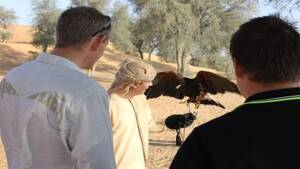
DDCR does not publish a calendar of concerts, theatre or touring artists. Its “programming” consists of nature-based excursions, environmental education, conservation activities and small-scale cultural experiences. Recurring options include wildlife drives, nature walks, dune drives on designated routes, camel and horse rides, falconry demonstrations, sandboarding, hot-air balloon flights, private desert dining and overnight camping. Availability varies by operator, weather and season.
Evening packages may add a Bedouin-style camp, Emirati or regional food, henna, traditional music, dance or other live entertainment. These elements belong to individual safari itineraries rather than a permanent DDCR performance season. Travellers primarily interested in conservation should choose wildlife drives, guided walks, falconry or Visitor Centre programmes rather than an entertainment-focused dinner package.
Public-facing activity since 2021 has included school visits, university research, volunteer reptile surveys, wildlife photography projects and conservation awareness events. For 2026 and beyond, the published plan calls for more specialist birding, butterfly and ecology visits, quarterly training for safari drivers, increased educational use of the Visitor Centre and expanded nature-based access. A carefully monitored native predator introduction is targeted by the end of 2026 to help regulate oryx and gazelle populations.
Tickets and Booking
The Visitor Centre has a separate admission ticket. The published rate is approximately AED 35 for adults, AED 25 for children aged five to 18 and free entry for children under five. This covers a self-guided indoor visit only; it does not include transport or entry into the wider reserve. The current management plan says the AED 35 reserve entrance fee was implemented in 2025.
Access beyond the Visitor Centre is normally included in an excursion booked through an approved reserve operator or as part of a stay at the desert resort inside DDCR. Shared morning or evening safaris commonly fall around AED 480–800 per person. Premium dining, ballooning and specialist heritage packages cost more, while private-vehicle experiences can range from roughly AED 1,800 to more than AED 3,000 per group. Prices vary substantially with transfers, meals and exclusivity.
Winter, public holidays and sunset departures are the busiest periods, so advance booking is sensible. Compare the actual itinerary rather than the word “safari”: check whether wildlife interpretation, dune driving, camel riding, dinner, beverages, falconry, the Visitor Centre and hotel transfers are included. Cancellation terms are package-specific, although Visitor Centre admission has been listed with a 48-hour cancellation deadline.
Layout, Capacity and Technical Features
The reserve is divided into management zones. Ecotourism areas support lower-impact activities such as walking and camel or horse riding. Development and recreation zones accommodate controlled dune drives and small dinner camps. Four-wheel-drive vehicles must use pre-planned routes, preventing the unrestricted cross-desert driving that once damaged vegetation over a much wider area.
The Visitor Centre contains five principal interpretive areas. Its reception uses large-scale wildlife photography, a stretch ceiling and an interactive reserve map. The Cultural Hall follows DDCR’s development and desert traditions; an audiovisual hall functions as a small cinema; the Habitat Hall uses 3D-printed models, specimens, holographic displays and interactive kiosks; and the Nocturnal Hall surrounds visitors with a dome presentation about wildlife after dark. An elevated platform provides open-desert views.
No verified building dimensions, room capacities, seating chart, stage specifications or architect details have been published. Likewise, DDCR has not released concert-grade sound, lighting, rigging or production specifications because this is an interpretive centre and protected landscape, not a live-performance hall. Its technical equipment is exhibition-focused: film projection, recorded narration, bird-call audio, interactive screens, holographic content and an immersive dome display.
Getting There and Parking
The public-facing destination is Dubai Desert Conservation Reserve Visitor Centre at Margham Gate, in the Umm Eselay and Margham desert area of Dubai. Drivers generally approach via the Dubai–Al Ain Road corridor. From central Dubai, allow approximately 45–60 minutes in ordinary conditions; journeys from Sharjah can take longer because they involve cross-emirate traffic and a rural final approach.
There is no Dubai Metro station at the reserve and no direct city bus to the Visitor Centre entrance. Rural bus route 66 serves the Dubai–Al Ain Road corridor and stops at Murquab, but a substantial taxi connection is still required. For most visitors, an excursion with hotel transfers, a private car or a pre-arranged taxi is considerably more practical than combining public transport and a last-mile ride.
Free parking is provided at the Visitor Centre. DDCR has announced an extension to increase parking capacity, together with solar-panel canopies intended to generate renewable energy and provide shade. Until those works are confirmed complete, arrive early during the cooler high season and do not assume every bay will be covered.
Inside the Visitor Centre and Reserve
The Visitor Centre is designed for an unguided visit of about one hour. Oryx hoofprints lead between halls, while life-size Arabian hare replicas provide recorded explanations. The atmosphere is museum-like rather than theatrical, combining scientific information with desert photography and cultural interpretation. The published schedule lists opening from 10am to 6pm, although Ramadan and seasonal operations may alter particular days.
A coffee shop provides drinks and light refreshments, and a small retail selection includes products featuring reserve photography. There is no confirmed coat check, large merchandise concourse or full-service restaurant at the Visitor Centre. Safari camps offer their own food, beverage, restroom and retail arrangements, so inclusions and standards differ from one package to another.
Entry into the wider reserve is controlled, with visitors, suppliers and staff requiring approval. Private recreational access is not generally permitted, and approved guides supervise activities within concession areas. The landscape is real wildlife habitat rather than a zoo: animals move freely, sightings cannot be guaranteed and visitors should remain with their guide at all times.
Accessibility and Inclusive Visiting
The published Visitor Centre information describes the building as accessible and accommodating for people with disabilities. Detailed specifications for ramps, accessible toilets, hearing loops, wheelchairs or tactile interpretation have not been publicly documented. The United States’ ADA legislation does not apply in the UAE; local terminology commonly refers to visitors with disabilities as People of Determination.
The indoor galleries are likely to be the most manageable option for visitors with reduced mobility. Dune driving involves repeated jolting, while camel boarding, sandboarding, walking on loose sand and high-sided safari vehicles can present significant barriers. State all mobility, sensory or medical requirements when booking so that the vehicle, transfer method and planned activities can be assessed before arrival.
Visitor Policies and Conservation Rules
Pets are prohibited to prevent disturbance, disease transmission and the introduction of feral animals.
DDCR enforces zero tolerance for littering, with waste reduction and recycling requirements applied to commercial operators.
Vehicles must remain on assigned routes, and only approved operators with qualified guides may conduct dune-driving excursions.
Commercial photography and filming require prior permits and formal approval. Visitors should not assume that drones are allowed in this protected and controlled area.
Do not pursue, feed, touch or crowd wildlife. Follow the guide’s instructions, particularly around oryx, gazelles, reptiles and nesting birds.
Package-specific rules may cover child ages, pregnancy, back or neck conditions, alcohol service, footwear and participation in adventure activities.
Nearby Amenities and Accommodation
DDCR is remote, and there is no walkable district of restaurants, bars or shops around Margham Gate. Eat beforehand or choose a package that explicitly includes breakfast, refreshments or dinner. Evening guests should also secure return transport rather than expecting a readily available street taxi after leaving a desert camp.
The principal accommodation inside the reserve is Al Maha, a Luxury Collection Desert Resort & Spa, a high-end property integrated with the original conservation area. Other desert camps provide dining or overnight programmes through approved operations, but most visitors stay in Dubai and travel to DDCR as a half-day or evening excursion.
Recent Visitor Experiences
Recent reviews consistently praise the sense of leaving Dubai’s traffic behind, close views of oryx and gazelles, knowledgeable guides and the contrast between the peaceful landscape and the city. Visitors have also responded positively to the Visitor Centre’s mini-museum format, wildlife displays and combination of education with a dune drive.
Common cautions are package-related rather than complaints about the reserve itself. Some guests find camel rides brief, food or drinks less impressive than expected, or transfer arrangements difficult to confirm. Experiences can vary significantly between a quiet conservation drive and a busy entertainment-led camp, making itinerary comparison especially important.
Economic and Cultural Impact
DDCR demonstrates how tightly regulated tourism can help finance conservation. All reserve visitor revenue is directed towards conservation and wildlife care, while commercial tourism has been estimated to cover about half of annual expenditure. By 2022, cumulative corporate support for the reserve had exceeded AED 28 million. Safari guides, conservation specialists, hospitality workers and transport providers also benefit from its operations.
The reserve also protects living heritage. Traditional wells and date farms connect the landscape to local communities, while Visitor Centre exhibits explain falconry, camel husbandry and date cultivation. School programmes and university partnerships give DDCR a role beyond tourism: it is both an outdoor laboratory and a place where younger generations can encounter the ecological foundations of Emirati culture.
What Makes Dubai Desert Conservation Reserve Special
DDCR’s defining quality is the balance it attempts to maintain between access and restraint. Visitors can experience dunes, wildlife, heritage and adventure, but only within zones and limits designed to protect the ecosystem. Its significance does not come from a stage, famous concert or monumental building. It comes from preserving a substantial portion of Dubai’s original desert while using tourism to fund research, reintroduction and habitat restoration.
The most memorable visits are often the simplest: an oryx herd crossing pale dunes, gazelles moving through gravel plains, bird calls around a waterhole or sunset viewed away from the city skyline. The Visitor Centre adds context, but the reserve’s real architecture is the changing geometry of sand, ghaf trees and open sky.
Visitor Tips and Information
Visit between October and April for cooler conditions and greater comfort outdoors. Wear breathable, modest clothing, closed shoes and sun protection; bring a light layer for winter evenings. Avoid heavy meals immediately before dune driving, and choose a nature drive rather than dune bashing if you are prone to motion sickness.
Allow at least an hour for the Visitor Centre, four hours for a morning excursion and around six hours for a typical evening safari including transfers. Carry identification, arrive at the stated pickup point early and confirm whether your booking visits DDCR specifically—many Dubai desert safaris operate elsewhere despite using similar descriptions.
Frequently Asked Questions
Is Dubai Desert Conservation Reserve in Sharjah?
No. DDCR is within the Emirate of Dubai, in its south-eastern desert region, although its northern extent approaches the Sharjah border. The public Visitor Centre is at Margham Gate. It is sometimes confused with Sharjah Desert Park, Al Wohoosh Desert Conservation Reserve or other protected landscapes near the emirate boundary.
Is DDCR a concert or live-performance venue?
No. It is a protected nature reserve and conservation attraction, not an arena, theatre or festival site. Some evening safari camps include traditional music, dance or other entertainment, but these are small hospitality programmes operated within designated areas. There is no permanent public stage, published concert capacity, box office season or touring-artist calendar.
Can I explore the reserve without booking a safari?
You can visit the indoor Visitor Centre independently with an admission ticket, but that ticket does not provide open access to the surrounding reserve. Wider exploration normally requires an approved excursion or a stay at the resort inside DDCR. Uncontrolled private driving, hiking and recreational entry are prohibited because access routes and visitor numbers are carefully managed.
How much does a DDCR visit cost?
Visitor Centre admission is approximately AED 35 for adults, AED 25 for ages five to 18 and free below five. Guided shared safaris generally begin around AED 480–650 per person, with premium packages costing more. Private vehicles, luxury dining or specialist experiences may exceed AED 1,800 per group, depending on transfers and inclusions.
How long should I spend at the reserve?
Allow around one hour for the self-guided Visitor Centre. Morning safaris usually require about four hours including transfers, while evening programmes with sunset, dinner and entertainment commonly take six hours. Overnight camping and resort stays naturally require longer. Build additional time into a self-drive visit because the reserve is outside central Dubai.
When is the best time to visit?
October through April offers the most comfortable weather for outdoor activities. Early morning is well suited to wildlife watching, photography and softer temperatures; evening visits provide sunset and dinner experiences. Summer visits remain possible, but outdoor time may be restricted by extreme heat, and sandboarding or other activities can be altered by weather and ground conditions.
Are wildlife sightings guaranteed?
No. Arabian oryx and gazelles are regularly encountered, but they are free-ranging animals rather than exhibits in enclosures. Bird and mammal sightings depend on season, temperature, route and chance. Early morning nature drives usually provide the best conditions. A knowledgeable guide can interpret tracks, plants and habitats even when rarer wildlife remains hidden.
Is Dubai Desert Conservation Reserve suitable for children?
Yes, particularly the interactive Visitor Centre, wildlife drives and gentle camel experiences. Children under five receive free Visitor Centre admission, while those aged 11 or younger must be accompanied by an adult. Minimum ages differ for balloons, buggies, overnight camps and other activities, so families should check every package component rather than assuming one age rule covers the entire visit.
Can pregnant visitors go dune driving?
Dune driving is generally unsuitable during pregnancy because of the repeated jolting, sharp gradients and sudden movement. It may also be inappropriate for people with serious back, neck, heart or mobility conditions. A calm wildlife drive, Visitor Centre tour or private dining transfer may be a better alternative. Disclose relevant medical needs before booking so the itinerary can be adjusted.
Is the Visitor Centre wheelchair accessible?
Published visitor information identifies the centre as accessible for people with disabilities, but detailed specifications are limited. The indoor museum experience should be easier than loose-sand activities. Wheelchair users should request information about step-free entry, vehicle boarding and accessible toilets when booking. Camel riding, sandboarding and many safari vehicles are not inherently wheelchair accessible.
Can I reach DDCR by Metro or bus?
There is no Metro station or direct public bus at the Visitor Centre. Bus route 66 serves parts of the Dubai–Al Ain Road corridor, including Murquab, but a long taxi connection remains. A package with hotel transfers, private car or pre-arranged taxi is usually the simplest option, particularly for evening visits when rural transport is limited.
Is parking available at the Visitor Centre?
Yes. Self-drive visitors can use free on-site parking at Margham Gate. The reserve has announced plans to extend the car park and install solar-panel canopies that will generate energy while shading vehicles. During busy winter weekends, arrive before your admission time and allow a few minutes for the rural approach and controlled entry process.
What should I wear?
Wear lightweight, modest clothing and secure closed shoes suitable for sand. Bring sunglasses, sunscreen and a hat, plus a light jumper or jacket for winter mornings and evenings. Avoid loose sandals for adventure activities. A scarf can be useful against sun or blowing sand, but expensive jewellery and clothing that cannot tolerate dust are best left at your hotel.
Can I buy food and drinks at DDCR?
The Visitor Centre has a coffee shop for drinks and light refreshments, but it is not a full dining destination. Safari packages may include snacks, breakfast, dinner or beverages, depending on the itinerary. Because there are no walkable restaurant districts nearby, bring water for the journey and verify meal inclusions before leaving Dubai.
Can I take photographs or fly a drone?
Personal photography is a normal part of most visits, provided it does not disturb animals or delay the group. Commercial filming requires formal approval and relevant permits. Drone use should never be assumed: DDCR is protected, access-controlled habitat with sensitive wildlife. Leave a drone at home unless written authorisation has been arranged for the specific date, location and purpose.
Are pets allowed in the reserve?
No. Visitors are prohibited from bringing domestic pets into DDCR. Dogs and cats can disturb wildlife, introduce disease and contribute to feral-animal problems. The reserve actively removes invasive and feral species, with particular attention given to feral cats. This rule applies even if a pet is normally calm or would remain inside a vehicle.
What happens if bad weather affects my visit?
Strong wind, extreme heat, rain or poor sand conditions can lead to altered routes or the cancellation of activities such as ballooning and sandboarding. Indoor Visitor Centre admission may still operate when outdoor programmes change. Refund and rescheduling terms depend on the booked experience, so retain the itinerary and monitor messages concerning pickup or weather-related amendments.
Can I stay overnight inside DDCR?
Yes, but only through authorised accommodation or camping programmes. The luxury desert resort inside the reserve offers overnight stays, while selected guided experiences use designated camps. Independent camping is not allowed. Overnight options range from highly serviced accommodation to specialist camp experiences, so compare bathroom facilities, meals, air conditioning, sleeping arrangements and morning activities before booking.