Music lovers attend live concerts and festivals to create once-in-a-lifetime memories. At the center of these events are the performers – the talent that draws fans of the performing arts. Booking a popular artist for your show not only brings a larger crowd but also drives traffic to your event ticketing site. Pair a star-studded lineup with a smart, meticulous marketing plan and you’ll boost your ticket revenues significantly, turning your concert into a sensation for both your team and the attendees.
However, beyond a front-row view of the stage, many fans (especially first-timers) crave a more personal connection with their idols. One powerful way to make your music event stand out is by organizing an artist meet-and-greet. Meet-and-greets personalize the live event experience – attendees still get the thrill of the show, plus the unforgettable opportunity to meet the artists or bands in person. In the age of VIP experiences, fans are eager for these moments; some even spend thousands for a quick interaction, as seen with K-pop fans paying hefty sums just to video chat with their favorite idols. A well-run meet-and-greet can delight your audience and generate buzz (and extra revenue) for your event.
That said, planning meet-and-greets comes with do’s and don’ts. Done right, they deepen fan loyalty and inspire rave reviews – done poorly, they can feel awkward or even exploitative. Some critics warn that overpriced, poorly handled meet-and-greets may leave artists feeling like “wax figures” and fans frustrated. The key is thoughtful preparation and clear communication. Before your next event, keep the following tips in mind to ensure your artist meet-and-greet is smooth, safe, and memorable for everyone involved.
Organize Multiple Teams to Tackle Different Tasks
An artist meet-and-greet might only last 15–60 minutes, but it requires a dedicated crew and careful coordination. Things can go wrong fast if you’re underprepared or short-staffed when eager fans finally get their moment with the artist. Start by assigning multiple teams or staff roles, each handling specific tasks, so no detail is overlooked. For example, create a floor team to greet VIP guests and guide them through the venue, and a separate check-in team to verify meet-and-greet passes at the entrance of the meet-up area. If your event offers different VIP packages (some with meet-and-greet access, some without), consider separate teams for each tier – that way, every VIP guest gets attentive treatment according to their package perks.
Smooth Entry With Mobile Check-In
Scan tickets and manage entry with our mobile check-in app. Supports photo ID verification, real-time capacity tracking, and multi-gate coordination.
Clear role definition is essential. Below is a breakdown of key meet-and-greet staff roles and their responsibilities:
| Role | Responsibilities |
|---|---|
| Meet-&-Greet Manager | Oversees the entire meet-and-greet operation; coordinates between teams and keeps the schedule on track. |
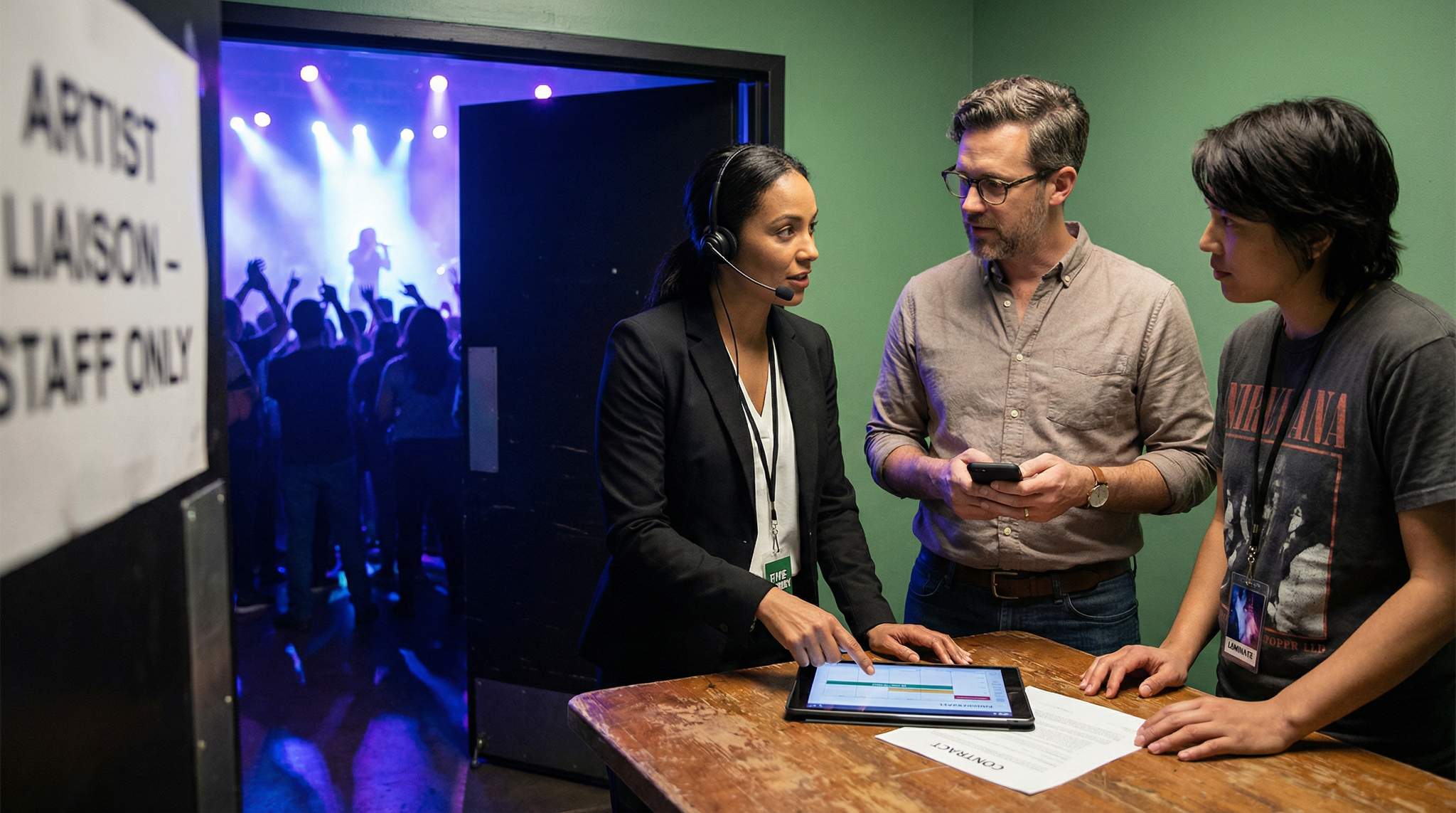
| Artist Liaison | Communicates with the artist’s tour manager and crew; ensures the artist is prepared, on time, and comfortable with the plan. |
| Check-In Staff | Verifies VIP credentials or tickets, manages the guest list at the meet-and-greet entrance, and issues badges or wristbands. |
| Floor Ushers | Guide fans through the designated route (from entry to the artist and then to exit); prompt attendees gently when their time is up and keep the line moving. |
| Photographer | Captures high-quality photos of each fan’s meet-and-greet moment (if photography is offered); works fast and coordinates with the floor team to ensure everyone gets a picture. |
| Merchandise Coordinator | Handles any merchandise included in the package (e.g., gives out posters or items for signing) and ensures markers, tables, and signing materials are ready. |
| Security Personnel | Protects the artist and attendees (more on this later); monitors the crowd, enforces rules (like no unexpected physical contact if that’s a rule), and swiftly addresses any misconduct. |
Having enough trained staff in each of these roles prevents chaos. It means, for instance, that while one team is busy checking VIP passes and handing out special lanyards, another team can be escorting the first group of fans to the meet-and-greet area. No single staffer is overwhelmed because duties are distributed. Proper training and rehearsal are just as important – brief your teams on the plan and even walk through the meet-and-greet flow before the event.
Ready to Sell Tickets?
Create professional event pages with built-in payment processing, marketing tools, and real-time analytics.
Pro Tip: Do a quick run-through with your meet-and-greet team earlier in the day (or at soundcheck) to iron out any kinks. Make sure every staff member – from security to the photographer – knows the exact procedure, their entry/exit points, and contingency signals if things need to slow down or pause. Rehearsing the meet-and-greet flow earlier in the day can reveal snags and boost everyone’s confidence when the real thing happens.
When establishing your on-site protocols, knowing exactly how to greet a VIP guest sets the tone for the entire premium experience. Your check-in and floor teams should be trained in high-level hospitality, ensuring that the initial welcome is both swift and warm. A proper greeting involves verifying credentials efficiently, addressing the attendee politely, and immediately providing clear directions to the designated holding area or lounge. This level of white-glove service reassures high-paying attendees that their investment was worthwhile before the artist interaction even begins.
For newer crew members wondering exactly how do meet and greets work behind the scenes, it helps to frame the activation as a highly synchronized hospitality circuit. The process relies on a continuous, controlled loop: verifying credentials, staging fans in a holding zone, facilitating the brief interaction with the meet and greet artist, and guiding attendees to a designated exit. Mastering this operational rhythm ensures that integrating musical guests smoothly into the broader festival environment feels effortless to the ticket buyer, even when backstage logistics are complex.
Consider Adding the Meet-and-Greet to VIP Packages (or Selling It Separately)
Meet-and-greets can also serve as a premium ticket perk. Deciding how to offer this experience is an important early step. Some organizers include meet-and-greet access as part of an exclusive VIP ticket package, while others sell it as a separate add-on or upgrade. There’s no one-size-fits-all approach – you have to gauge what fits your audience and event.
Boost Revenue With Smart Upsells
Sell merchandise, VIP upgrades, parking passes, and add-ons during checkout and via post-purchase emails. Increase average order value by up to 220%.
Bundling meet-and-greets into a higher-priced VIP tier can entice hardcore fans to splurge for the upgrade. In fact, nearly every modern festival or concert tour now offers some form of VIP or special package because many attendees are willing to pay more for unique experiences. These premium packages – from backstage passes to artist meet-and-greets – can significantly boost revenue if they deliver clear value. Even if VIPs are a small fraction of total attendees, their higher ticket prices often account for a substantial portion of ticket income. For example, as of 2025, VIP meet-and-greet packages range roughly from basic upgrades to ultra-exclusive access depending on the artist and perks included. Fans will pay a premium, but they expect an unforgettable experience in return.
On the other hand, offering the meet-and-greet as a standalone add-on ticket (separate from general admission) can work if your audience is more price-sensitive or if you want any ticket holder to have a shot at meeting the artist. This approach might widen the pool of interested fans – for instance, someone who can only afford a GA ticket might still splurge on a limited meet-and-greet pass if it’s sold independently. The trade-off is you’ll need to carefully cap the quantity. Warning: Avoid overselling meet-and-greet passes beyond what the artist’s time (and your space) can accommodate. If you have 20 slots and try to squeeze in 40 fans, nobody will get a quality interaction – rushing people through a meet-and-greet is a recipe for disappointment.
Grow Your Events
Leverage referral marketing, social sharing incentives, and audience insights to sell more tickets.
However you structure it, make these decisions early so you can include the details in your marketing and ticketing. If the meet-and-greet is limited to, say, 50 VIP package buyers, advertise it clearly as an exclusive perk. Conversely, if it’s a separate ticket, list it on your ticketing page as an upgrade (and let people know quantities are limited). Also, coordinate with the artist’s management during the booking phase about the plan – not every artist is open to meet-and-greets, and some may only agree to a certain number of fans or require additional fees or logistics. It’s wise to include meet-and-greet arrangements in the artist’s contract during the talent booking advance. That way, everyone is on the same page about when, where, and how the meet-and-greet will happen, and the artist’s team can prepare for it too.
While planning these premium tiers, learning how to cultivate a loyal fan community ensures you reap ongoing benefits from these high-value attendees.
Reach Out to Attendees in Advance
Once you’ve decided who gets to attend the meet-and-greet (VIP purchasers, contest winners, etc.), it’s crucial to communicate with those attendees well in advance. Managing expectations and logistics upfront will save headaches on event day. Assign a team (or at least one dedicated staff member) to be in charge of contacting meet-and-greet guests and guiding them through the process before they ever set foot on site.
If the meet-and-greet is tied to VIP ticket sales, start by emailing those purchasers a special invitation or confirmation that highlights their exclusive opportunity. Thank them for purchasing the VIP package and provide all relevant details: the date, exact time and location of the meet-and-greet, where to check in on-site, and what they need to bring (for example, a photo ID matching the ticket name is usually required for VIP check-in). It’s a good idea to send a reminder a few days before the event and again on the day of, via email or even text message, so these fans don’t miss the schedule. They’ve paid a premium for this experience, so white-glove customer service is warranted.
For meet-and-greet attendees who didn’t explicitly buy the perk (for example, if you’re inviting contest winners or special guests), outreach is even more important. You might run a promotion where fans enter to win a meet-and-greet spot – once you select the winners, reach out immediately with congratulations and the same crucial info: when, where, and how the meet-and-greet will take place. Create a guest list of confirmed participants and provide any special access materials they’ll need. Many organizers mail out or provide on-site VIP badges, lanyards, or passes that clearly distinguish meet-and-greet guests. Send these ahead of time if possible, or instruct winners to pick them up at the VIP will-call desk. Early communication ensures that on the day of the show, those lucky fans know exactly what to do and where to go.
It’s also wise to keep attendees informed of any guidelines or restrictions before they arrive (you’ll reinforce rules again on site, but a heads-up helps). For instance, if each fan is only allowed to have one item signed, or if no outside gifts are permitted, mention that in your email so they come prepared. Likewise, if photography will be handled by an official photographer and personal cameras/phones aren’t allowed in the meet-and-greet, let them know in advance. Setting expectations early leads to smoother interactions and happier fans.
One effective way to manage and reward fan interest is through a pre-registration program. Using Ticket Fairy’s tools, you can enable PREWARDS™ in the pre-registration phase of your event. This system allows fans to sign up early and complete engagement tasks (like sharing the event with friends on social media, following your pages, etc.) to earn points. Top participants can be rewarded with meet-and-greet access for their efforts. Pre-registering not only builds hype virally (fans literally promote your event for you), it also ensures the most enthusiastic supporters have a shot at a meet-and-greet. With PREWARDS, you set the points system and rewards as you see fit. For example, you might offer a pair of meet-and-greet passes to the fan who refers the most new ticket buyers. This approach guarantees that truly deserving, engaged fans get access, and it creates an exciting mini-competition among your community. It’s easily set up via Edit > Pre-Registration on the Ticket Fairy platform – a great growth hack for savvy promoters. This engagement strategy aligns with strategies every promoter should implement to bolster audience interest.
Confirm a Detailed Timeline and Agenda
Careful scheduling is the backbone of a smooth meet-and-greet. Long before the show, work out a detailed timeline: when will the meet-and-greet start, how long will it last, and how will it fit around the artist’s performance or other event activities? Decide whether the meet-and-greet will happen before the concert (common for smaller shows or artists who want to meet fans while they’re fresh) or after the show (common for festivals or artists who prefer to focus on the performance first). There’s no universal rule – it depends on the artist’s preference and schedule. Some headliners might prefer doing a quick VIP meet-and-greet before their set while energized, whereas others only want to do it after performing to unwind. The key is to align the meet-and-greet timing with the artist’s comfort level and availability, so discuss this during the advancing stage.
Once timing is settled, create an agenda with time stamps for the meet-and-greet itself. For example, if the meet-and-greet will run from 10:30–11:15 PM (45 minutes) after the main show, and you have 30 guests, you can budget roughly 1.5 minutes per person. That might allow each fan a quick hello, a handshake or hug (if permitted), a photo, and maybe a short comment or autograph. Build in a small buffer if you can – say it’s 45 minutes for 30 people, you might plan for 1 minute each and have a 15-minute buffer in case things run over or someone needs a bit more time. If you find each interaction must be super short due to time, consider doing group meet-and-greets (e.g. small groups of 5 fans meeting the artist together) to speed it up, or limiting what happens (perhaps just photos without autographs, which are quicker). In one recent example, a popular singer agreed to a meet-and-greet but capped it at 20 minutes total with only group photos – no individual conversations – so she could fulfill the VIP perk without exhausting herself or delaying her show. Every scenario will differ, but a structured agenda prevents chaos.
Coordinate this schedule with all stakeholders. The artist’s tour manager should have it on their rundown, the security team should know the timing, and your floor team should have a copy so they can pace the line accordingly. If the meet-and-greet is happening after a set, make sure the artist knows exactly where to go when they step off stage and how quickly to get there – you don’t want VIP fans waiting indefinitely. Conversely, if it’s before the show, be mindful to end on schedule so the artist has time for any pre-show rituals (warm-ups, costume change, etc.). It can be helpful to prepare a detailed schedule sheet for each participating artist, highlighting when and where they need to be for the meet-and-greet, and share this detailed schedule sheet with the tour manager on show day.
Also, plan how you’ll cue attendees and manage the flow. Often it works well to divide fans into small batches (e.g. 5–10 people) and have them meet the artist one after the other, rather than a free-for-all crowd. Your floor ushers or host can line up the first batch while others enjoy the show or wait in a nearby VIP lounge until their turn. Announce clearly (or even print on the VIP pass) what time and where attendees should assemble for the meet-and-greet. If, for instance, “Meet at the VIP Lounge at 10:15 PM for Artist X Meet-&-Greet” is communicated, it prevents confusion, much like instructing fans to meet at the VIP Lounge at a specific time.
Contingency planning is part of the timeline, too. Live events are unpredictable – a show might run late due to encores, or the artist might need a short break before meeting fans. Think ahead about how you’ll handle these shifts. If the performance runs over by 10 minutes, are you prepared to start the meet-and-greet 10 minutes late and inform the waiting VIPs? It’s a good idea to have a system (like a text alert or an update via your event app) to notify meet-and-greet guests of any last-minute schedule adjustments. Your on-site team should also be ready to entertain or appease waiting fans if there’s a delay (perhaps offering them water, or a place to sit). Pro Tip: Assign a staff member to keep an eye on the time during the meet-and-greet itself. A gentle signal system (like a subtle hand wave or a friendly “let’s take the photo now”) can help wrap up each interaction without making the fan feel brusquely rushed. By sticking to a timetable – yet remaining flexible for the unexpected – you’ll navigate the meet-and-greet like a seasoned pro. And if something does go awry (like an artist’s set running long), communicate. It’s far better to politely inform VIPs “there’s a 15-minute delay” than to leave them in the dark.
Ultimately, integrating musical guests smoothly into these pre- or post-show activities relies on strict adherence to your run-of-show. If promoters or venue operators are calculating exactly how long meet and greets last, a standard session typically spans 30 to 60 minutes in total, depending on the performer’s stamina and the size of the group. Keeping the talent on schedule ensures they can transition seamlessly from the interaction space back to their dressing room or the main stage without feeling rushed or fatigued.
Understand and Set Up Your Floor Plan
Designing the physical layout of your meet-and-greet is another crucial element for success. Essentially, you’re creating a mini-event space within your event – it needs to be welcoming, efficient, and safe. Start with choosing the right location. Ideally, the meet-and-greet area should be somewhat private and away from the main crowd, but still easily accessible. For example, you might use a side room/backstage area of the venue, a cordoned-off section of the festival grounds (like a hospitality tent), or a dedicated signing booth. Major festivals often set up official signing tents for artists – Glastonbury Festival in the UK even has a regular meet-and-greet tent at its West Holts stage where artists like En Vogue scheduled autograph sessions in 2025. Wherever it is, make sure it’s clearly marked and that your VIP guests know how to get there.
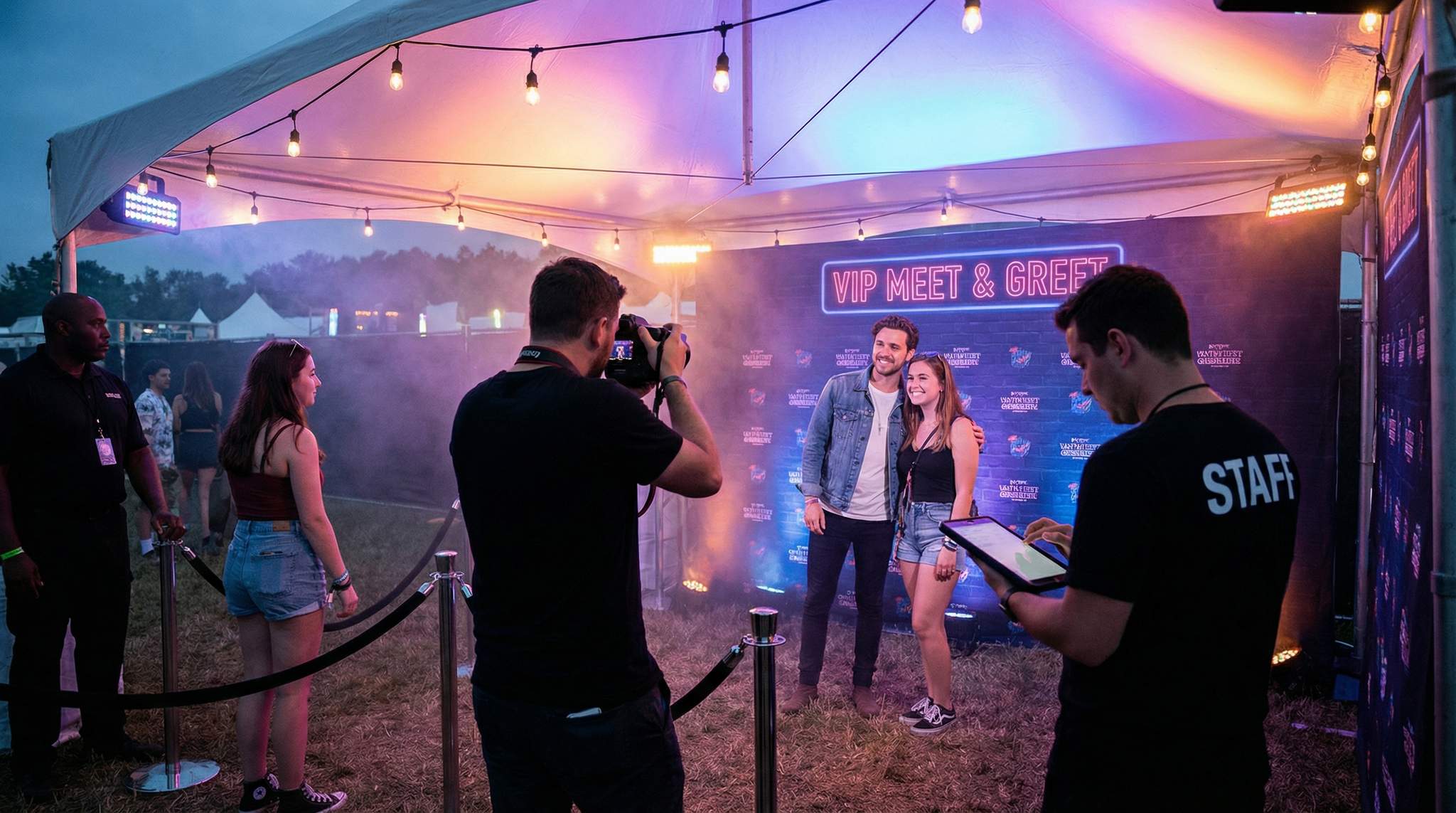
Next, plan the flow of people through the space. A common setup is to have a single entry point and a separate exit point. Fans enter, meet the artist at a designated spot, then exit out the other side. This one-directional flow prevents bottlenecks and keeps things moving. Use physical line management tools like stanchions or ropes to create a defined line-up area. If it’s a small room, keep the waiting line just outside to avoid crowding the artist. Your floor plan might include stations: for instance, a check-in station at the entrance (where Check-In Staff or security verify each person’s pass), followed by a short queue that leads to the meet-and-greet spot (perhaps a small stage, backdrop, or table where the artist is stationed). After meeting the artist, the fan exits towards an output station (maybe to pick up a signed poster or retrieve their phone if you had them stow devices). Map this all out in advance and share the layout with your team.
Think about furniture and backdrop. Will the artist be seated at a table (good for autograph sessions), or will they stand in front of a backdrop for photos? Prepare accordingly: if autographs are involved, have a skirted table, chairs, and plenty of markers (plus backups) ready. If photos are the main feature, invest in a nice backdrop – something as simple as a branded step-and-repeat banner or even a fun themed background. A well-lit area is important; consider bringing extra lighting if the room is dark, so that photos turn out well. Also decide if you need a merch display nearby (for example, sometimes VIP packages include a commemorative poster or merch item that the artist will sign and hand to the fan). All these elements should be arranged logically in the space.
Don’t forget creature comforts: both for the fans and the artist. If fans might be waiting in line for a while, make sure the area is not too hot or cold, and maybe have water available nearby. For the artist, set up a small green room corner or curtained-off area with some water, a towel, or whatever they might need during breaks – meeting dozens of fans can be surprisingly draining, and a comfortable artist is a happier artist. Coordinate with their team about any requests (some might want hand sanitizer between every few handshakes, for example; have it on hand). Your security team should also be positioned according to the floor plan: typically one guard near the entrance checking credentials, one near the artist to intervene if needed, and possibly one at the exit.
Once you have the floor plan sketched out, walk through it step by step as if you are an attendee. Is it clear where to go? Is there any confusion about where the line starts? Are there any tripping hazards or tight bottlenecks? Adjust as needed. Communicate the final layout to all staff so everyone is literally on the same map. Some events even distribute a simple map to VIPs or put up signage like “VIP Meet & Greet This Way” with arrows, which can be very helpful, especially in large festival grounds or multi-stage events. The meet-and-greet area might be just one part of your overall site plan, but it deserves the same level of attention as a stage or vendor area. Hammer out those details and you’ll set the stage (perhaps literally) for a seamless experience. When designing your layout, consider the broader backstage essentials for a successful festival to ensure the area is fully equipped.
Coordinate With Security
One of the non-negotiables of any meet-and-greet is a strong security plan. You’re bringing fans face-to-face with performers, which is wonderful for engagement – but it must be done safely. A competent security team will protect the artists from any disturbance or inappropriate behavior, and ensure attendees are safe and comfortable throughout the experience. Well before the event, loop in your security manager or chief on the meet-and-greet specifics: how many people will be involved, the location and layout, the timing, and any known security preferences of the artist.
On the day of the event, have a security briefing dedicated to the meet-and-greet. All personnel (both your own security staff and any personal bodyguards the artist might have) should be clear on the plan. Key points to cover include: where to stand during the session, how to handle the line (e.g. making sure no one not on the list sneaks in), and what the rules are regarding physical contact or gifts. Security should also be aware of the artist’s comfort level – for instance, if the artist is fine with handshakes but not hugs, security needs to know this so they can intervene tactfully if a fan forgets.
A good practice is to position at least two security staff at the meet-and-greet: one at the entrance of the area to control access, and one near the artist. The entrance guard checks that each person has the proper wristband, badge, or name on the guest list before they enter the interaction area. This prevents any overenthusiastic fans from crashing the meet-and-greet without permission. The second security person (or team) shadows the interaction – not intrusively, but close enough to step in if, say, a fan becomes overly physical or refuses to move on after their turn. Because meet-and-greets involve high emotions, you want security alert but friendly; they are there as protectors and facilitators, not to intimidate the fans.
Coordinate with the venue’s security as well. If this is a festival or large venue, the house security team may already have protocols for artist interactions. Make sure what you’re planning dovetails with the venue’s overall event safety plan. For example, if the venue doesn’t allow any outside items, your meet-and-greet shouldn’t inadvertently violate that by allowing fans to bring in gifts; clear it with them. If metal detection or bag checks are required at the main entrance, consider re-checking bags right before the meet-and-greet too, since a fan could potentially pick up something in the interim. It sounds extreme, but when you’re dealing with celebrity safety, it’s better to be overly cautious.
Communication is your friend here. Keep an open channel (radios or headsets) between the meet-and-greet staff and security team. If a situation arises – perhaps a fan gets emotional and needs gentle escorting out, or an uncredentialed person is found in line – your staff should be able to discreetly signal security. Likewise, if security has concerns (say they notice someone behaving oddly in line), they should alert your team to maybe give that person a little extra attention or a friendly chat before they meet the artist.
In short, a well-coordinated security presence creates a safe, well-managed environment for everyone. Artists will feel at ease knowing your team “has their back,” and fans, though they might not consciously realize it, will also feel more at ease when an event is orderly and under watch. Safety doesn’t have to be heavy-handed – with good planning, it’s just a natural part of the meet-and-greet flow.
Implement a Safety Protocol for Comfort and Health
Safety isn’t just about security handling unruly behavior – it’s also about basic comfort, health, and respect for boundaries. Implement a clear safety protocol that covers all these bases, in consultation with both the artist and what you know about your attendees. The goal is to ensure everyone – the performer and the fans – feels comfortable and has a positive experience.
Start with the artist’s own requirements. Some performers have specific meet-and-greet rules for safety or personal reasons. Especially in a post-2020 world, an artist might request that no one gets too close or touches them, or perhaps they only want to do fist-bumps instead of hugs. Some artists have even used subtle barriers (like small podiums or tables between them and fans) to maintain personal space. You need to know these preferences well in advance so you can accommodate them. It might be written in the artist’s rider or discussed during advancing. For example, an artist recovering from an illness might ask that fans wear masks during the meet-and-greet, or a singer might avoid handshakes to protect their vocal health (germs are a concern on tour). Always prioritize these requests – not only for the artist’s well-being but because if you violate them, the artist may cut the meet-and-greet short, which would be a bigger disappointment for everyone.
Next, consider attendee needs. Meeting one’s idol can be an emotional moment, and not every fan will handle it the same way. Some might become extremely nervous or starstruck. It helps to have a friendly host or MC figure in the meet-and-greet area who can gently guide the interaction if needed. This could be someone from your team who welcomes each fan (“Hi! Come on over, you can stand here next to the artist for your photo.”), gives a little polite direction (“Let’s get the autograph now so everyone has time for a signature.”), and generally keeps things moving kindly. Such a host can also step in if, say, a fan freezes up and forgets to speak – they can help ask a simple question to get a conversation going, or if a fan overstays their time, the host can diplomatically wrap it up (perhaps by saying “Alright, we have your photo – thank you so much for coming!” as a cue to move on). By having a staff member essentially emcee the meet-and-greet, you provide a reassuring presence that can ease nerves and prevent any one interaction from derailing the schedule.
Plan for emergencies or incidents, even minor ones. For instance, have some basic first aid or a medic nearby. It’s rare, but fans have been known to faint with excitement in meet-and-greets! If someone isn’t feeling well (overheated, dehydrated, or just emotionally overwhelmed), your team should be ready to assist quickly. Also consider the impacts of alcohol: if your event is 18+ and fans have been drinking during the show, an overly intoxicated person might not be in the best state to meet their idol. Your security or staff should watch for anyone who is visibly very drunk and have the authority to politely intervene – perhaps by pulling them aside, giving them water, and assessing if they can proceed. It might even be prudent to have a rule that no alcohol is allowed in the meet-and-greet area (no fan should be holding a drink when hugging the artist, for instance, for both spillage and conduct reasons). Communicate this to attendees beforehand (“Please finish any drinks before entering the meet-and-greet line”) and have security enforce it at the entrance.
Your safety protocol might also involve how items are handled. If fans are bringing things to sign, you may want a staffer to collect items just before the fan meets the artist (to avoid someone pulling out something odd or dangerous at the last second). That staffer hands the item to the artist to sign and then gives it back to the fan after. It’s an extra layer of control that can make a big difference. Some events even ban certain items entirely – for example, no large bags or sharp objects in the meet-and-greet area. Decide what makes sense for your event and clearly enforce it with signage or prior instructions.
Finally, be ready to adjust on the fly. If during the meet-and-greet the plan needs tweaking (maybe the artist is getting tired and you need to shorten each interaction), have a quick huddle with your team to implement changes. Safety and comfort should always come first, even if it means not every single fan gets the lengthy moment they hoped for. Most fans will understand if you communicate changes honestly. Remember, what sets exceptional meet-and-greets apart is how seamlessly they run from the outside, even if backstage you’re making constant minor adjustments. A well-thought-out safety protocol, plus the ability to adapt, is the “vital cog” that keeps the meet-and-greet machine running smoothly. Beyond safety protocols, consider technological innovations that create a better experience to streamline the process.
Communicate Rules Clearly to Artists and Attendees
By the time the meet-and-greet is around the corner, you should have all the logistics and rules ironed out – now it’s about making sure everyone involved knows them. Clear communication, delivered in a positive tone, will set the right expectations and keep the experience enjoyable for all parties.
Start with the artist and their team. In your advance conversations, you hopefully gathered the artist’s meet-and-greet preferences and non-negotiables (like no kisses, or okay with selfies, etc.). Closer to the event, perhaps at soundcheck or when the artist arrives, take a moment to reconfirm the plan with their tour manager or the artist themselves. For example, “We have 30 fans lined up to meet you after your set, in the green room tent. We’ll do one photo with each, no autographs as per your request, and our staff will be there to help. Does that still sound good?” This not only reassures the artist but signals that you’re on top of their needs. If the artist has any last-minute concerns or tweaks, you can accommodate them. It’s crucial that the performer feels respected and safe – a happy artist is much more likely to give each fan a warm, genuine interaction.
Now, for the attendees: communicating rules to them requires some diplomacy. You want to lay down guidelines without dampening their excitement. The best approach is to frame rules as ways to ensure everyone has a great experience. For instance, instead of “Don’t do X,” phrase it as “So that everyone gets their special moment, we ask that you… [do this].” When your meet-and-greet guests check in or line up, have a friendly staff member or host give a short welcome briefing: “Hi everyone! In just a few minutes you’ll get to meet [Artist]. We want to make sure each of you gets a chance to say hello and get a photo. A couple quick guidelines to help things go smoothly: [Artist] will sign one item per person – our staff will take your item and hand it to them to sign. We’ll also take a professional photo for you; please refrain from taking selfies so we can keep the line moving. And [Artist] has requested no hugs, but they’re happy to do a friendly high-five! Thank you for understanding these little rules – they ensure everyone gets an awesome experience!” By delivering this message warmly, you set expectations without sounding scolding.
Put any key meet-and-greet rules in writing too, where fans will see them. This could be in the confirmation email, on the event website FAQ, or even on a sign at the meet-and-greet entrance. Common rules to cover include:
- Autographs: (e.g. “One item per person will be signed, no instruments or large items, please.”)
- Photos: (e.g. “Our photographer will take one photo per person. No personal cameras or videos, but we’ll provide a download link after the event.”)
- Contact: (e.g. “Please respect the artist’s personal space – no unsolicited hugs or grabbing. Handshakes or high-fives are okay if the artist initiates.”)
- Time: (e.g. “Each fan will have about a minute with the artist, so we ask you to have your item ready and make it count!” said in a friendly way.)
- Behavior: (e.g. “Friendly conversation is welcome! But due to time, please no long personal stories or gifts that need unwrapping on the spot.”)
- Recording: (e.g. “No live streaming or professional video recording during the meet-and-greet.”)
If your event serves alcohol, you might add: “No drinks are allowed in the meet-and-greet area” as mentioned earlier. And if underage fans are involved, a note like “Attendees under 16 must be accompanied by a parent or guardian in the meet-and-greet” is important (and be sure the guardian has a pass too!). Cover these bases in a concise, upbeat way.
Finally, brief your staff on enforcement. The meet-and-greet team should know the rules cold, and also know how to handle any breaches. For example, if despite all notices someone still pulls out a phone for a selfie, your photographer or security can gently remind them of the no-selfie policy and offer to take a quick photo of them with the artist instead. It’s all about being firm but polite. Most fans will gladly follow the rules when they understand it’s for fairness and safety. On very rare occasions you might have to turn someone away (if, say, they refuse to cooperate or are causing a scene), but hopefully with good communication that won’t happen.
In summary, don’t assume people know the etiquette – spell it out in a friendly manner. Both artists and attendees will appreciate knowing what to expect. When everyone is informed, you avoid awkward moments (“Oh, I didn’t know I couldn’t ask for an encore selfie”) and you can focus on facilitating the joyful meetings that meet-and-greets are all about. As the organizer, it’s your job to maintain a bit of decorum and structure, which ultimately protects the experience for each fan. Communication is just one of the 10 aspects of event planning every promoter should check to ensure success.
Meet-and-greets are truly a fantastic way to elevate your music event or festival from “just another show” into a personalized, standout experience. Few things can match the thrill in a fan’s eyes as they come face-to-face with their favorite singer, DJ, or band – it’s a memory they’ll treasure (and likely share on social media, giving your event organic promotion). By following the do’s and don’ts outlined above, you’ll create a meet-and-greet environment that is safe, well-organized, and fun, allowing those magical moments to happen without a hitch. Remember that successful meet-and-greets aren’t just about the artist and fan interaction itself, but all the work behind the scenes: the advanced planning, the team coordination, the clear communication, and the respect for everyone’s well-being.
When you put in that effort, the payoff is huge. Happy VIP attendees become loyal fans who are more likely to buy tickets to your future events (especially if they know you offer such special experiences). Artists, too, will appreciate an efficiently run meet-and-greet – it enhances their connection with the audience without causing them stress or security worries, meaning they’ll be more inclined to do it again at your event. In a time when fans crave authentic, live experiences more than ever, a smooth meet-and-greet can be a defining highlight that sets your event apart from the rest. So plan diligently, stay adaptable, and watch the positive vibes unfold when your attendees get that incredible moment with the artists they love.
To wrap up, here’s a quick reference of the key Do’s and Don’ts for a smooth artist meet-and-greet:
| Do – what you should do for a great meet-and-greet | Don’t – what to avoid doing at meet-and-greets |
|---|---|
| Plan and staff thoroughly: Coordinate multiple teams (check-in, floor, security, etc.) and rehearse the flow in advance. | Don’t Understaff or “wing it”: Never assume one or two people can handle everything. Last-minute or sloppy planning leads to chaos. |
| Limit the number of participants: Keep the meet-and-greet group small enough to give everyone quality time. Cap the slots based on limiting the number of spots to what the schedule and artist can realistically handle. | Don’t Oversell/Overcrowd: Avoid selling too many meet-and-greet passes or letting a huge horde in. Overcrowding leads to rushed interactions and safety issues. |
| Communicate clearly: Tell fans and the artist exactly when, where, and how the meet-and-greet will work, and what the guidelines are. Use emails, signage, and staff announcements to set expectations. | Don’t Keep People in the Dark: Never assume attendees “just know” the rules or schedule. Lack of information breeds confusion and frustration. |
| Prioritize safety and comfort: Have security in place, respect personal boundaries, and enforce rules politely. Make sure the artist and fans feel secure and at ease at all times. | Don’t Neglect Security/Rules: Skimping on security or ignoring the artist’s safety requests can result in uncomfortable or risky situations that tarnish the experience. |
| Deliver on promises: If you sold a VIP package with a meet-and-greet, make it special – smooth logistics, a personal moment, and maybe a souvenir (photo or autograph) for each fan. | Don’t Treat it as an Afterthought: A meet-and-greet isn’t just a photo line. If you don’t put effort into logistics and fan experience, it can feel impersonal or exploitative, as meet-and-greets can exploit fans and artists if handled poorly. |
Follow these guidelines, and you’ll be well on your way to running meet-and-greets that leave everyone smiling. With the right mix of planning, professionalism, and passion for fan experience, your next meet-and-greet can become the story attendees gush about for years – the moment that made your event truly unforgettable.
For more insights on talent management, learn how to negotiate with agents when booking talent. If you focus on niche genres, discover strategies for booking underground music while staying profitable. Finally, stay ahead of the curve by reviewing the latest trends in music festival attendance.
Frequently Asked Questions
Why should event planners organize artist meet-and-greets?
Organizing artist meet-and-greets personalizes the live event experience, deepening fan loyalty and generating significant extra revenue. These premium interactions allow fans to connect with idols beyond the stage performance. When executed well, they create buzz and inspire rave reviews, whereas poorly handled events can feel exploitative or awkward.
What staff roles are needed for a smooth artist meet-and-greet?
A smooth meet-and-greet requires a dedicated crew including a Meet-and-Greet Manager to oversee operations, an Artist Liaison to coordinate with the talent, and Check-In Staff to verify credentials. Essential roles also include Floor Ushers to guide traffic, a Photographer for high-quality images, and Security Personnel to ensure safety and enforce rules.
How should organizers structure meet-and-greet ticket packages?
Organizers can bundle meet-and-greets into high-priced VIP tiers to entice hardcore fans or sell them as standalone add-ons to widen accessibility for general admission ticket holders. While VIP packages often account for substantial revenue, standalone upgrades allow price-sensitive fans to participate. It is crucial to cap quantities to avoid overselling.
How long should an artist meet-and-greet last per fan?
Planners should budget roughly 1.5 minutes per person for a standard interaction, allowing time for a greeting, photo, and autograph. If a session runs 45 minutes for 30 guests, this schedule includes a necessary buffer. For tighter schedules, organizers might utilize group photos or limit autographs to keep the line moving efficiently.
What is the best floor plan layout for a meet-and-greet?
An effective meet-and-greet layout utilizes a one-directional flow with separate entry and exit points to prevent bottlenecks. The space should include a check-in station, a defined queuing area using stanchions, and a specific spot for the artist with appropriate lighting and backdrops. This setup ensures fans move efficiently from arrival to the interaction and exit.
What safety rules should be enforced during artist meet-and-greets?
Safety protocols must address physical boundaries, such as prohibiting unsolicited hugs or requiring masks based on the artist’s preference. Organizers should restrict personal items like large bags and enforce policies against alcohol consumption in the interaction area. Clear communication of these rules via emails and on-site signage ensures a comfortable environment for both talent and attendees.
How should event staff greet a VIP guest upon arrival?
When deciding how to greet a VIP guest, event staff should prioritize a swift, warm, and professional welcome. The check-in team must verify credentials efficiently while immediately directing the attendee to the designated hospitality area. Providing a brief, polite overview of the upcoming artist interaction sets a premium tone and ensures the guest feels valued from the moment they arrive.
How do meet and greets work from an operational standpoint?
For event organizers, meet and greets work by establishing a highly controlled, secondary activation within the main venue. Operationally, this involves coordinating a dedicated floor team, managing a strict run-of-show, and setting up a secure, one-way traffic flow for VIPs. The process requires advancing the session with the meet and greet artist’s tour management to align on timing, permitted interactions, and security protocols before any fans arrive.