The Rise of Fan-First Festival Ticketing Platforms
Major festivals around the world are dumping outdated ticketing systems in favor of new “fan-first” festival ticketing platforms. This shift is not just hype – it’s a response to real frustrations from fans and organizers alike. Think about recent ticketing debacles: fans stuck in endless online queues, surprise fees adding 25–30% at checkout, and scalpers scooping up tickets only to relist them at triple the price. These experiences erode trust and can tarnish a festival’s reputation. In fact, regulators are even stepping in – a 2026 U.S. Justice Department settlement with Live Nation (Ticketmaster’s parent) aims to give promoters more ticketing options and curb monopolistic control, as detailed in recent coverage of the U.S. Justice Department settlement. With the playing field opening up, festival producers are seizing the moment to choose platforms that put fans (and independent organizers) first.
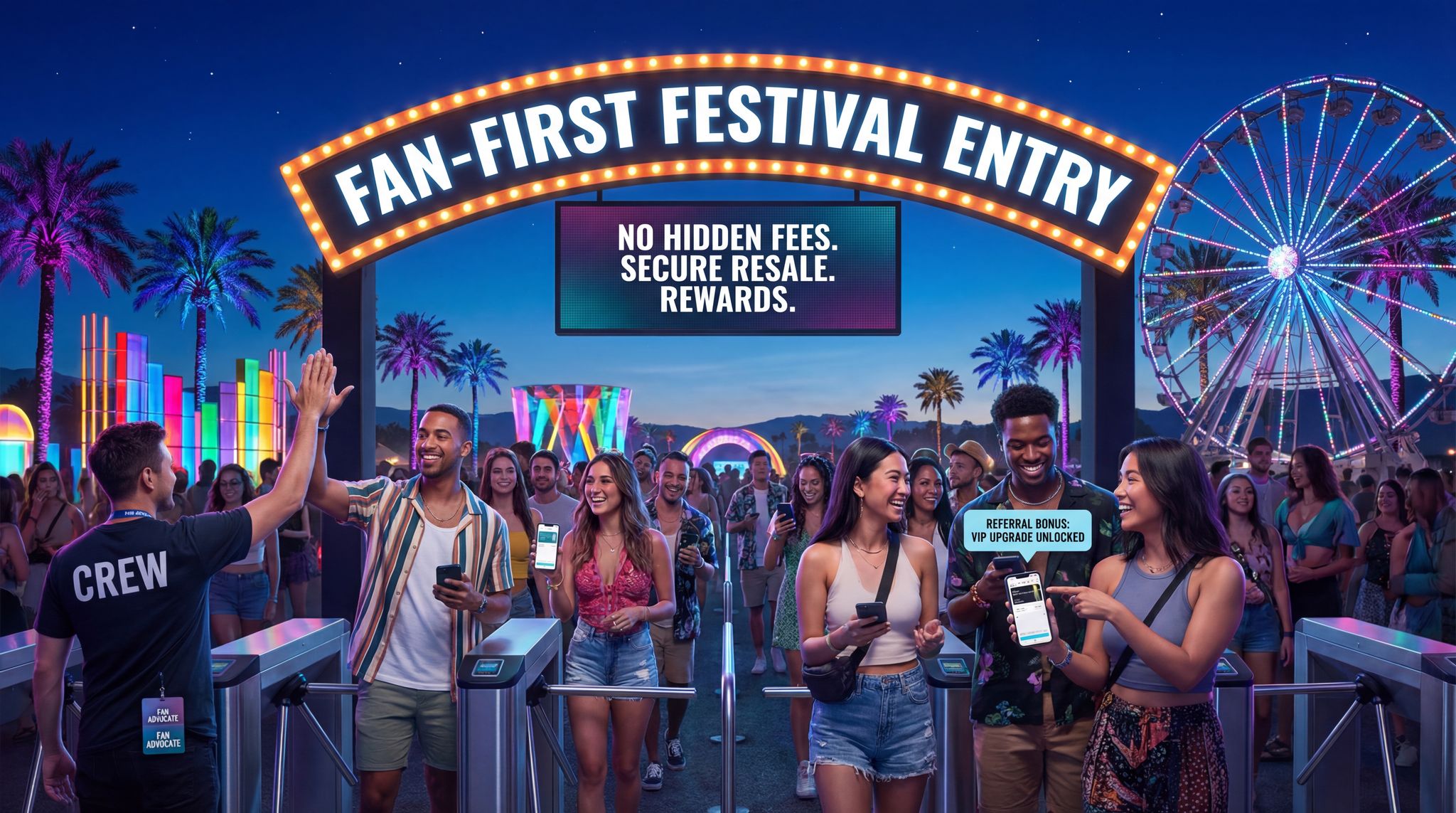
What does “fan-first” mean in practice? It means lower ticket fees and transparent pricing up front, so buyers aren’t turned off by hidden surcharges. It means robust anti-scalping measures, like verified resale marketplaces that keep tickets at face value for real fans. It means built-in referral rewards that turn attendees into ambassadors, driving word-of-mouth sales. And on the organizer side, it means full access to data and even financial perks like daily payout of ticket revenue – empowering festivals to improve marketing, boost cash flow, and deliver a better experience year after year. Early adopters of these modern festival ticketing platforms are already reporting tangible wins: higher ticket sales, near-elimination of scalper listings, and record fan satisfaction scores, proving that upgrading from outdated ticketing platforms can elevate your festival’s success.
Below, we break down the concrete benefits driving this trend and how forward-thinking festival producers can evaluate their own ticketing solution. From lower fees and fair resale to referral programs and data insights, see why 2026 is the year of the fan-first ticketing platform for festivals – and how switching could boost your sales, loyalty, and peace of mind.
Lower Fees, No Surprises: Rebuilding Fan Trust
One of the biggest fan pain points with legacy ticketing is cost – not just the ticket price, but the fees. Traditional providers often tack on service fees, order fees, facility fees (and more), which inflate the final price by an average of 27% according to U.S. government data on ticketing junk fees. These “junk fees” outrage fans and undercut accessibility for those on a budget. Worse, they’re usually revealed at checkout, creating sticker shock that leads to abandoned carts and angry social media posts. Fans feel duped when a £100 ticket suddenly costs £127+ after fees – and that frustration lands on the festival brand as much as the ticketing company.
Keep Tickets in Fans' Hands
Our secure resale marketplace lets attendees exchange tickets at face value, eliminating scalping while keeping you in control of the secondary market.
Fan-first platforms tackle this head on. They emphasize transparent pricing – showing all fees upfront or even baking them into the listed price – so fans know exactly what they’ll pay from the start. This builds trust and reduces drop-offs during purchase. Many independent festivals have adopted a “no surprises” pricing policy for 2026, advertising the full price including fees in their marketing. For example, if the total is $250, that’s what the fan sees on the ticket page – no mysterious surcharges added in the final step. According to Axios, even Ticketmaster and major rivals felt pressure to improve fee transparency after high-profile criticism. Clearly, being honest about pricing isn’t just fairer – it’s becoming the expected norm.
Beyond transparency, lower service fees overall are a hallmark of fan-first ticketing. Legacy platforms often set high fees because they share revenue with venues or monopolize markets. By contrast, modern festival ticketing providers compete on more reasonable fees (or flexible fee structures) to win business. Some festivals negotiate to absorb a portion of fees themselves to keep fan costs down, knowing it can boost conversion and goodwill. Others partner with platforms like Ticket Fairy that intentionally avoid surge pricing schemes. Notably, dynamic pricing – where the system raises ticket prices in real time based on demand – is something fan-first platforms avoid entirely, even though some industry giants use it to maximize revenue. Fans widely criticize dynamic pricing as exploitative; in one recent case, UK fans were “shocked at having to pay more than double the face value” for an Oasis reunion show ticket due to algorithmic price surges during high-demand sales. It only takes one fiasco like that to permanently sour attendees. Festivals are learning that keeping prices fair and stable isn’t just altruism – it’s good business. By switching to a festival ticketing platform that caps fees and bans dynamic pricing, producers send a message: We value our fans, not nickel-and-dime them. The result is more trust, less cart abandonment, and a higher likelihood that fans will click “Buy” again next year.
Planning a Festival?
Ticket Fairy's festival ticketing platform handles multi-day passes, RFID wristbands, and complex festival operations.
Stopping Scalpers: Secure Resale & Fair Ticket Access
Nearly every festival producer has watched in frustration as tickets meant for loyal fans end up on secondary markets for outrageous prices. Scalping and bot-buying have plagued big events for years, but in the streaming era (where live shows are a major income source), it’s gotten even more intense. An influx of brokers and bots can snag thousands of tickets in seconds on a conventional ticketing site, then flip them on resale platforms at markups of 100%, 200%, or more. Genuine fans are priced out or forced to buy from shady resellers, and the festival’s reputation takes a hit for an experience it didn’t intend. As noted in Pollstar’s analysis on the truth about ticketing, unchecked scalping has been a major driver of sky-high ticket prices in the concert industry.
Fan-first ticketing platforms directly combat scalping with secure, controlled resale systems. Instead of letting third-party sites (StubHub, Viagogo, etc.) become the default exchange, festivals are creating official resale marketplaces where ticket holders can only resell to other fans at face value (or a promoter-approved price cap). For example, Glastonbury Festival famously requires photo ID registration and only allows resales through its own platform at the original price – completely cutting out profiteering. Even if your festival isn’t as large as Glastonbury, you can implement similar principles with the right ticketing partner. Modern platforms let organizers verify every ticket transfer and block bots or known scalpers. Some use unique barcodes that refresh if a ticket is resold, or tie tickets to the buyer’s account so they can’t be offloaded externally without permission.
The impact is huge: fans get a fair chance to attend at a reasonable cost, and your event maintains control over its ticket pricing ecosystem. Imagine the difference this makes. In the old way, it’s not uncommon to see tickets snatched up in minutes and re-listed on resale sites for triple the price, leaving your true fans outraged, which is why implementing verified fan-to-fan resale exchanges is essential for fighting scalping. But festivals that switched to fan-first platforms report the opposite – hardly any tickets show up on scalping sites because resellers have no incentive when buyers can safely get face-value tickets through the official exchange. For instance, multi-day events in Europe that introduced verified resale saw over 90% of secondary listings disappear by the next edition, as opportunists moved on. One U.S. festival promoter noted that after adopting a ticketing platform with an integrated fan-to-fan resale marketplace, their customer support calls about fraudulent tickets and price-gouging dropped to near zero.
Beyond stopping profiteering, protecting fans from counterfeit or invalid tickets is another benefit. When all transfers happen within your system, you can ensure each ticket is authentic (e.g. only issued QR codes or RFID that you control will scan at the gate). Contrast that with legacy systems where someone could buy a PDF ticket, resell copies to multiple people, and only the first person to arrive gets in – a nightmare scenario for fans and security alike. Fan-first platforms eliminate those traumas. Organizers can also set rules like one transfer limit or cutoff dates (e.g. disable resale a week before the event) to further deter professional scalpers. The bottom line is fans appreciate a fair marketplace. They know if they can’t attend, they have a safe way to sell their ticket without ripping someone off; if they missed out on the first sale, they might still find a ticket at a reasonable price later. That fosters goodwill and trust in the festival brand, turning frustrated would-be attendees into excited last-minute buyers instead of angry critics. No wonder so many producers are prioritizing anti-scalping tools as a must-have – it’s about keeping tickets in the hands of real fans and reputations intact.
Turn Fans Into Your Marketing Team
Ticket Fairy's built-in referral rewards system incentivizes attendees to share your event, delivering 15-25% sales boosts and 30x ROI vs paid ads.
Fans as Promoters: Referral Programs Drive Sales and Loyalty
Perhaps the most exciting advantage of switching to a modern ticketing platform is unlocking your fans’ passion to help sell tickets. Traditional ticketing systems are passive – they list tickets and process orders, but don’t actively help you market the event. Fan-first platforms flip that script with built-in referral programs and rewards that turn your audience into a grassroots marketing team. In a world where digital ad costs are high and social media is saturated, word-of-mouth from friends is pure gold. According to Nielsen research, 92% of consumers trust recommendations from friends and family over any advertisement, making built-in referral marketing a powerful weapon to boost sales. Festivals are harnessing this by empowering fans to spread the word in exchange for perks.
Here’s how it typically works: Your ticketing platform generates unique referral links or codes for each buyer (or interested promoter) to share. When someone buys via that link, the referrer gets a reward – maybe a small cash rebate, merch credit, drink vouchers, or even VIP upgrades if they refer multiple friends. It’s an easy opt-in program that lives right in the ticketing dashboard; fans don’t need to do anything complicated beyond sharing a link. These referral incentives create a ripple effect through friend networks, reaching people your ads might miss. And the results speak for themselves. Festivals using Ticket Fairy’s built-in referral tools often see 15–25% of their ticket sales come directly from referrals, essentially free sales generated by fan enthusiasm, demonstrating the impressive ROI of built-in referral marketing and how it helps reduce reliance on expensive paid ads. Even smaller events report that referral-driven purchases are the crucial last 10%+ that push them to sell out, as seen in real numbers from successful festival referral programs.
Consider a real example: Camp Bestival in the UK launched a new regional edition and leveraged fan referrals to kickstart interest. During the pre-sale, around 30% of sign-ups came via friend referrals, and by the end of the first on-sale week, one-third of all tickets sold were through referrals – jump-starting a brand-new festival community at virtually no additional acquisition cost. Another case: an intimate 1,500-capacity festival in Australia credited roughly 200 ticket sales to fan referrals, translating to over $20,000 in extra revenue that they might otherwise have spent on ads, proving that referral sales can significantly increase overall revenue. In the U.S., a multi-day festival found that referral incentives helped convert fence-sitters early, boosting cash flow and reducing reliance on last-minute discounting. These are not isolated anecdotes; they reflect a broader trend where producers see referral marketing deliver a 20:1 or better ROI compared to paid advertising, which is typical for a well-executed festival referral program especially when festival-goers are bombarded with traditional marketing. In practical terms, that means for every $100 in tickets sold via referrals, you might reward fans with $5, achieving $95 net new revenue – a trade any festival would take!
Beyond the raw numbers, referral programs have a powerful side effect: deeper fan engagement and loyalty. When someone brings friends to your festival, they’re personally invested in the event’s success and atmosphere. They essentially curate their own mini-community at the festival, which often leads to a better experience for them and their friends. Those friend groups can become repeat attendees together if they have a great time. By rewarding fans for advocacy, you send a message that you value their support, not just their money. This builds an emotional connection with your audience. Veteran promoters know that a loyal fanbase is the lifeblood of sustainable festivals – and that loyalty is earned by two-way appreciation. A referral system is one way to show fans you appreciate their help in growing the event. It also gives you extremely valuable data on who your natural ambassadors are (e.g. perhaps 5% of fans drive 20% of sales). You can nurture these super-fans with special perks or early access, further cementing their bond with your brand.
Importantly, modern ticketing platforms make referral marketing painless to set up and track. Everything is integrated: unique links for each user, real-time tracking of clicks and conversions, automatic reward calculations, and fraud prevention to ensure people can’t game the system. As a producer, you can monitor the referral campaign on a dashboard – seeing exactly how many tickets were sold by fans, who your top referrers are, and your ROI in real dollars. This level of insight is game-changing. It takes what was once hard-to-measure “word of mouth” buzz and turns it into tangible metrics you can report to your team (or sponsors). For a practical guide on maximizing this strategy, check out how events are boosting ticket sales by double-digits by reading real-world case studies on referral marketing ROI. The key takeaway: by switching to a ticketing platform that bakes marketing capabilities into the system, you’re not just selling a ticket – you’re supercharging your fan-driven promotion machine.
Owning Your Data and Your Audience
In 2026, data is everything. Yet many festivals are still flying blind when they rely on legacy ticketing providers that guard the attendee information. If your current ticketing platform gives you only a basic list of emails (or worse, just a final payout and no data), you’re left with no clear picture of who your fans are, where they heard about you, or how to re-engage them next year. Older ticketing contracts often treat the ticket buyers as the platform’s customers, not yours – meaning the platform holds onto rich data about purchase patterns, demographics, and fan behaviors, keeping your valuable insights trapped behind another company’s walled garden. This not only stifles your marketing; it can even leave you stuck in a “data hostage” situation if you ever consider switching. As an experienced producer put it, an outdated ticketing platform can quietly stunt your festival’s growth by keeping you in the dark about your own audience, which is a key sign you are stuck in a ticketing rut with an outdated platform.
Fan-first ticketing platforms reject that old model. They are built on the principle that event organizers own their ticketing data, 100%. When you sell through a modern festival ticketing platform for festivals, every piece of attendee info – name, email, postal code, purchase history, etc. – is accessible to you in real time, usually via a handy dashboard or exportable CRM format. This means you can understand and segment your audience like never before. Did 60% of your buyers come from within 50 miles of the venue? Are a quarter of them repeat attendees from last year? Which marketing channel drove the most sales? A data-friendly platform lets you answer these questions at a glance. Then you can put those insights to work: perhaps you’ll launch a targeted email campaign to past VIP ticket buyers for a new VIP offering, or tailor your social media ads to the age group that resonates most with your lineup. The difference in marketing efficiency (and effectiveness) can be night and day when you have rich first-party data at your fingertips, illustrating exactly why data ownership matters for festival producers.
Data ownership also opens doors to new revenue streams and partnerships. Sponsors in 2026 are increasingly keen on data – they love when a festival can provide detailed attendee demographics, engagement stats, and proof of onsite activations. If you can show a sponsor that “30% of our attendees are in the 25–34 age range and spent an average of 20 minutes at your branded stage,” that sponsor is far more likely to renew and invest more, because you can prove ROI. Festivals that control their data can even create anonymized audience insight reports for partners, adding value beyond just on-site logo placement, allowing you to provide detailed attendee insights to secure sponsorships. Conversely, if your ticketing partner hoards the data, you lose these opportunities. The same goes for artist relations: sharing attendance figures or regional data with booking agents can help you secure talent (artists want to play events that reach their target fans), or negotiate radius clauses effectively by showing distinct markets. In short, owning your data means owning your festival’s future – you retain the knowledge to make each edition better than the last by managing your attendee information diligently.
Need Festival Funding?
Get the capital you need to book headliners, secure venues, and scale your festival production.
Of course, with great data comes great responsibility. Fan-first platforms typically provide tools to help you handle data securely and in compliance with privacy laws (GDPR, CCPA, etc.). Features like consent checkboxes for marketing, easy opt-out links, and data deletion requests are increasingly built in. This ensures you can build marketing lists ethically and maintain trust. As you evaluate ticketing options, it’s wise to prioritize solutions that explicitly offer full data access and ownership rights, ensuring you choose a data-friendly ticketing partner. Read the fine print of contracts – the best ticketing platforms for festivals will even include clauses that guarantee your data portability if you ever leave. After all, no one wants to be stuck in a scenario where an old vendor “locks away” the past attendee list just because you decided to switch (it happens more than you’d think). The good news is that by choosing a fan-first, data-friendly ticketing provider, you’ll likely never feel the need to switch again, because you can continuously leverage your growing dataset to refine everything from lineup curation to crowd services. When you know your fans deeply, you can truly put them first in every decision – and that’s the ultimate competitive advantage.
Beyond Ticketing: Financial Flexibility and Operational Perks
Upgrading to a modern ticketing platform doesn’t just improve the fan experience – it can also boost your festival’s finances and operations behind the scenes. Traditional ticketing contracts often come with strings attached that aren’t so fan-friendly for organizers either. For example, many large providers hold onto your ticket revenue until after the event or pay out in infrequent batches. That means your money (from advance ticket sales) sits in their accounts, earning them interest, while you scramble to cover upfront production costs. Fan-first platforms are changing this dynamic by offering faster payouts and even advance funding options to help events thrive.
Imagine having access to your ticket proceeds as they roll in, instead of waiting months. That’s exactly what some festival-focused ticketing services now provide – daily or weekly payouts of ticket sales, directly to the organizer. This steady cash flow can be a lifesaver, especially for independent festivals that need to pay deposits to artists, secure suppliers, and market the event well before showtime. It reduces the need for external loans or dipping into personal funds to float the production. Additionally, a few innovative platforms (such as Ticket Fairy’s Capital program) even offer advance funding against ticket sales, essentially fronting a portion of projected revenue so organizers have working capital in the critical planning phase. These advances can range from tens of thousands up to millions of dollars, depending on the event’s scale, providing a crucial safety net and growth capital without the high interest rates of traditional loans. The ROI is better fan experience: with secure funding, producers can invest in improved staging, extra amenities, or unexpected costs (weather contingencies, anyone?) without cutting corners.
Operationally, switching to a new ticketing system can also bring workflow efficiencies that save time and money. Modern platforms tend to be all-in-one solutions or offer easy integrations, so you’re not juggling separate tools for ticket scanning, analytics, marketing, etc. For instance, a fan-first ticketing platform might include a built-in CRM and email integration, automatically syncing your ticket buyer list with Mailchimp or your marketing software. It might integrate with RFID wristband systems or access control apps to seamlessly handle entry and eliminate the need to import data into a different scanning system. Many also provide analytics dashboards that consolidate sales data, engagement metrics, and even advertising conversion tracking (by tying your Google or Meta pixels into the ticket purchase funnel). By having these capabilities under one roof, festival teams can streamline their tech stack and reduce errors from manual data transfers. One veteran producer noted that after adopting an all-in-one platform, their team saved countless hours reconciling data across systems and could focus more on creative planning. The company behind the platform (in this case Ticket Fairy) also provided 24/7 support and a dedicated account manager who understood festival needs, which was a stark contrast to the slow, generic support they got from their previous ticketing vendor.
Another often overlooked perk of newer platforms is brand customization and control. Legacy systems may force fans to buy through a generic ticketing website or app, where your event is just one listing among many. Fan-first platforms typically let you white-label the ticketing process – meaning the purchase page can live on your own festival website with your branding, or the e-tickets and communications are sent in your festival’s name. This creates a more seamless fan journey from event announcement to admission. It reinforces your festival’s identity rather than the ticket vendor’s, and it builds trust since attendees feel like they’re dealing directly with the event. Consistent branding and communication can even improve conversion rates, as fans don’t feel redirected to a third-party site they might not fully trust, because consistent branding from click to checkout builds trust and helps drive marketing and continuous event improvements. It’s a subtle but important aspect of a fan-first philosophy: every touchpoint should center on the festival-fan relationship, not the middleman.
When evaluating platforms, these financial and operational factors should be on your checklist along with fan experience features. In summary, look for a solution that offers fair, prompt payout terms, optional funding support if needed, robust integrations, and customization. The best ticketing platform for festivals will feel less like a vendor and more like a partner in your event’s success, providing tools and flexibility to solve problems, not add friction. Many top festivals switched precisely because their old systems were holding them back operationally – whether due to slow cash flow or lack of modern conveniences. By contrast, a fan-first platform can effectively act as an extension of your team, amplifying your capabilities. That’s something even die-hard fans might not see directly, but they will absolutely feel it in the form of a smoother, smarter festival experience that keeps getting better each year.
Switching Made Simple: How to Upgrade Your Festival Ticketing Platform
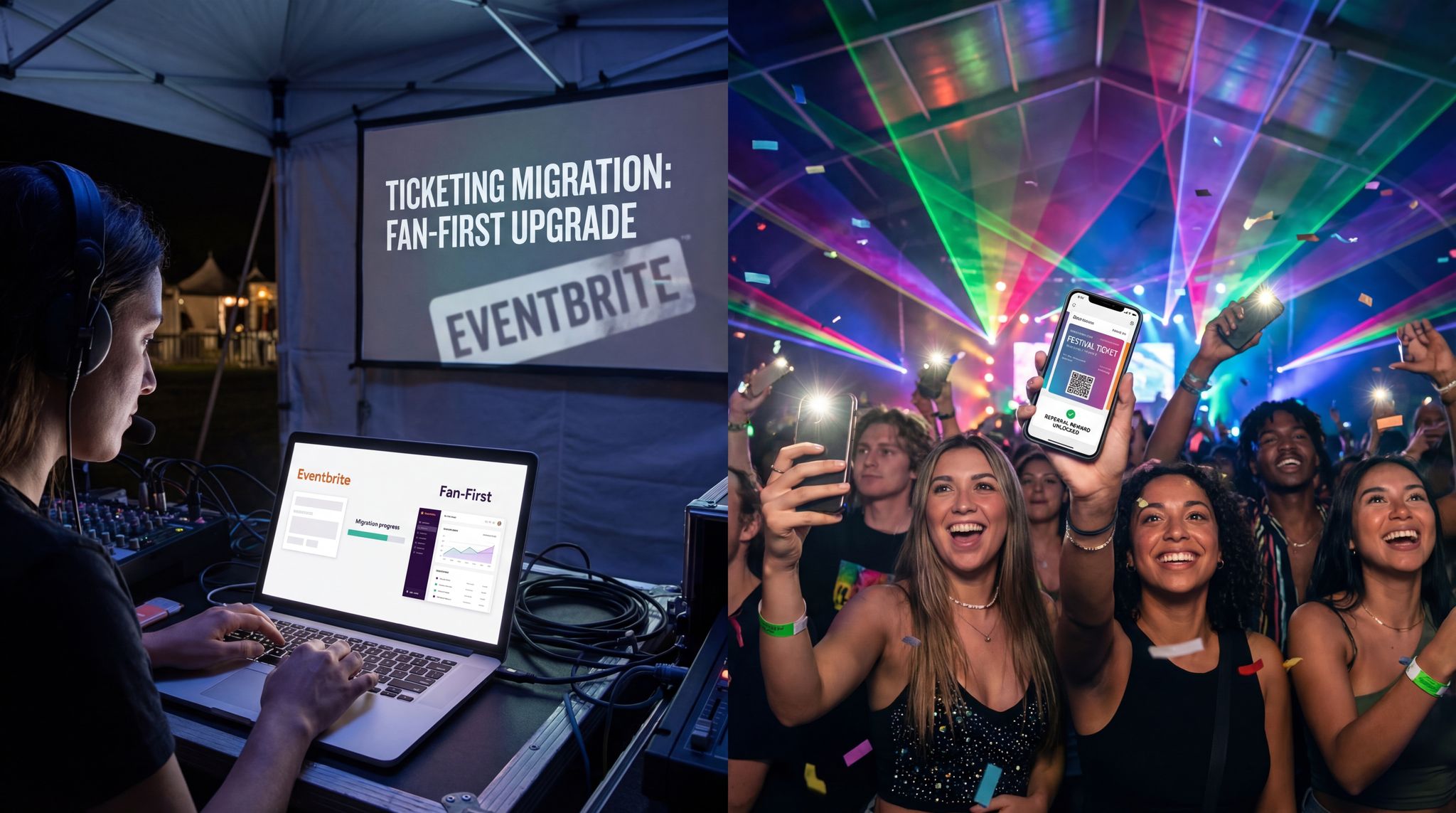
Even with all these benefits on the table, one question looms: How hard is it to switch? It’s normal to worry about disruption when changing a core system like ticketing, especially if you’ve used one platform for years. But the reality is that thousands of events – including major festivals – switch ticketing platforms every year, and with proper planning it can be a smooth transition. In fact, given the high stakes of ticketing (both in revenue and fan experience), switching providers is often a strategic investment that pays off quickly by unlocking new revenues, stronger fan trust, and better marketing programs. Here’s a step-by-step look at how forward-thinking producers are making the move without losing sales or sleep:
1. Audit Your Current System and Pain Points
Start by evaluating where your current ticketing solution falls short. Gather feedback from your team (and even attendees). Are fans complaining about high fees or clunky purchasing? Do you lack important features like a resale option or integrated marketing tools? How much useful data can you really access? Also review any hidden costs you’re incurring – for example, are you missing out on revenue because of unchecked scalping or abandoned carts? Quantify these pain points if possible (e.g. “We fielded 200 support emails about ticket issues” or “Our early bird allotment sold out in 2 minutes, but 1000 listings appeared on secondary sites”). This audit clarifies the real cost of staying in a ticketing rut and will inform which features matter most in a new platform, helping you identify game-changing features to look for and ensuring you make a smart investment by auditing your current ticketing needs.
It’s also crucial to check your current contract for terms like exclusivity or notice periods. Some big ticketing companies lock festivals into multi-year deals with hefty penalties for early exit. Knowing your contractual latitude will shape your timing – you might decide to wait until the contract expires (while lining up a new provider in advance), or negotiate an exit if the vendor failed to meet service levels. Increasingly, many festivals are negotiating data ownership and shorter terms into their contracts from the start to protect their valuable event data, precisely to keep the option to switch open. Hopefully, you have that flexibility. If not, don’t be afraid to approach your provider about improvements – sometimes the threat of switching can prompt better terms or features, but be prepared to follow through if they can’t deliver.
2. Research Fan-First Platform Options
With your needs in mind, start researching potential ticketing platform for festivals that align with a fan-first approach. Look for the features we’ve discussed: transparent fee structure, integrated resale, referral marketing, rich data access, flexible payouts, etc. Prioritize the features that solve your biggest pain points. For instance, if scalping was a major issue, ensure the new platform has a proven resale solution with controls. If data is key, confirm that you can get full data exports or API access in real time. Create a comparison matrix of top contenders – including at least one “Eventbrite alternative for festivals” that isn’t the usual giant, so you can gauge the difference in service and innovation. As you evaluate, also consider capacity and reliability: can the platform handle your peak on-sale traffic? (Fan-first platforms will proudly share uptime stats or how they’ve managed large festival on-sales without crashing). Ask for demos and actually walk through the buying process as if you were a fan – is it smooth on mobile? Can you easily buy add-ons like camping or parking in one go? The details matter here.
This research phase is also a great time to reach out to industry peers for candid feedback. Chances are, other festival producers in your network have made switches and can share their experiences. You might learn, for example, that Platform X’s support team was fantastic during on-sale, or that Platform Y lacked local payment options in certain countries. The festival community is generally supportive – everyone wants solutions that make live events better, so don’t hesitate to ask around. Some industry associations like the Association of Independent Festivals (AIF) or forums might have discussion threads on best ticketing platforms for festivals. Take those insights on board alongside your independent research. By the end, you should have one or two frontrunners that tick all your critical boxes.
3. Plan the Transition Timeline
Switching platforms is not an overnight task, but with a clear timeline it can be executed with minimal disruption. Ideally, time your switch for an “off-season” or well before your next big on-sale. Many festivals initiate the migration right after their current year’s event ends, giving themselves several months to set up the new system for next year’s launch. Build in a buffer for unexpected delays – for example, aim to have the new ticketing system ready 2–3 weeks before you actually announce ticket sales, just in case you need extra test runs.
Work closely with the new provider’s onboarding team (good fan-first platforms will assign you a dedicated rep to manage your migration). Outline all the tasks: importing any existing customer data you have, configuring ticket types, pricing tiers, and replicating any integrations (like payment gateways or CRM connections). This is also the time to train your staff on the new tools, especially if you are changing access control tech before going fully live. Run internal demos so that your customer service, marketing, and on-site teams all know how the system works from their perspective. Many organizers do a dry run or pilot – for example, selling tickets to a smaller side event or simply a test event – to ensure everything flows as expected, which is a crucial step when switching event tech vendors and migrating systems. If your festival uses scanners or access control hardware, test those with the new platform in advance to confirm compatibility and offline capabilities.
Communication is key during the transition. If there will be any noticeable differences for your customers (new purchase interface, new account login, etc.), inform your attendees ahead of the on-sale. A simple note in the announcement like “This year, tickets will be sold via [New Platform], which offers a more seamless checkout and fan-friendly fees!” can both explain the change and promote the benefits to fans. Highlight things like the official resale feature or new payment options (“Now accepting Klarna or Afterpay for payment plans,” for example, if the new system enables buy-now-pay-later). By marketing the switch as an upgrade, you set a positive expectation. Still, be prepared to support fans with FAQs or help if they have questions navigating the new system – though if you chose well, the buying process should be easier than before, not harder.
4. Launch and Monitor Closely
When your on-sale or registration goes live under the new platform, treat it as a mission-critical event (just as you would a major show day). Monitor the system in real time – most platforms will provide a live sales dashboard. Keep an eye on queue times, conversion rates, and any error messages. Have a direct line to your ticketing provider’s tech support in case of any issues, and ensure they have staff on deck as well during your on-sale. It’s wise to have contingency plans, though if you’ve done your due diligence, you likely won’t need them. Many festivals find their on-sales are actually smoother after switching – faster transactions and fewer complaints. Still, if something like a payment gateway hiccup occurs, coordinate with the provider to pause the sale if needed and update fans proactively on social media. Transparency during any hiccup maintains trust.
Once the initial rush subsides, review the data and gather feedback. How many tickets sold in the first hour? Did the new referral program get traction (e.g. dozens of shares in the first day)? Were there fewer customer support queries about checkout? This post-launch analysis is important to quantify the benefits of your new ticketing platform. It helps confirm the ROI of switching and surfaces any tweaks needed as sales continue. Share early positive results with your team – for instance, if cart abandonment dropped by 10% due to the transparent pricing, that’s a win worth celebrating. Also, continue to monitor the secondary market over the following weeks; if you see significantly fewer scalper listings (or none at all because of your resale marketplace), that’s concrete evidence you can tout to your community and stakeholders.
5. Keep Improving with Fan Feedback
Finally, remember that adopting a fan-first platform is an ongoing commitment, not a one-time fix. Listen to fan feedback as your ticket sales progress and during the festival. Are people loving the new features? (e.g. “The ticket transfer process was so easy, thank you!”) Are there any new pain points? The difference now is you likely have more tools at your disposal to address issues. For example, if you get feedback that the mobile ticket QR codes were hard to find in emails, you might work with your provider to adjust the email format or enable in-app ticket wallets. Most fan-first ticketing companies are eager to continually improve – they’ll welcome suggestions and often roll out updates much faster than old legacy systems did. As a partner, you have a voice in their development roadmap.
It’s also smart to revisit your ticketing strategy annually. Use the rich data you now have to refine your approach: maybe you’ll introduce a loyalty pre-sale for top referrers, or adjust pricing tiers based on last year’s sell-through patterns. Because you own the data and have flexible tools, you can experiment and iterate in ways you never could under a rigid old platform. In essence, switching to a fan-first system isn’t just a one-time change – it’s the beginning of a more agile and informed way of ticketing your festival. And that adaptability is key to staying ahead in the ever-evolving live events landscape.
Legacy vs. Fan-First: A Quick Comparison
To recap the differences between sticking with a legacy ticketing provider and embracing a fan-first platform, see how the two approaches stack up on critical points:
| Aspect | Legacy Ticketing Approach | Fan-First Platform Approach |
|---|---|---|
| Service Fees & Pricing | High “junk fees” (20–30% extra) revealed at checkout; possible dynamic pricing that inflates costs unpredictably, as noted in reports on ticketing junk fees and backlash against algorithmic pricing strategies. | Lower, transparent fees shown upfront; no dynamic pricing, fans pay the advertised price. Pricing is stable and trust-building. |
| Resale & Scalping | Little to no control – tickets easily end up on secondary sites at huge markups; fans risk fakes and overpaying. | Official face-value resale marketplace under festival control; transfers verified, scalpers are shut out, fans have fair access. |
| Marketing & Promotion | Basic tools only (e.g. promo codes); no built-in referral or viral share features, relying solely on paid ads. | Built-in referral rewards and social sharing that boost word-of-mouth; tracking links, promo incentives, and VIP upsells integrated. |
| Data Access | Limited attendee info provided (often just emails post-event); data viewed as ticketing company’s asset, not shared. | 100% data ownership for the organizer, with real-time dashboards and exports; rich insights on buyer demographics and behavior. |
| Payouts & Cash Flow | Funds often held until after event or released in large installments; organizers must self-finance upfront costs. | Frequent payouts (e.g. daily/weekly) of ticket revenue; optional advance funding programs provide upfront capital for producers. |
| Branding & Experience | Third-party branding on ticketing site and emails; festival branding is secondary, fans leave your website to purchase. | White-label options keep purchase within your site/app; cohesive branding from ticket purchase to event entry, enhancing trust. |
| Support & Flexibility | Standard support, often slow for smaller events; feature development and contract terms favor provider’s interests. | Dedicated support with event-specific expertise; agile development that adds features you need, and flexible terms (no long lock-ins). |
As the table above illustrates, the fan-first approach addresses many of the pain points that legacy systems impose on festivals and their communities. It’s not hard to see why more festivals are seeking out the best ticketing platform for festivals that aligns with these principles. Customers today expect a lot from the buying experience – and if we don’t meet those expectations, it’s all too easy for frustration to overshadow the excitement of an event. The good news is that by adopting a fan-centric platform, you’re solving problems for your audience and unlocking new opportunities for your team. It’s a true win-win.
Conclusion: Embracing Fan-First Ticketing for Festival Success
In the ultra-competitive festival landscape of 2026, delivering a great lineup and show is only part of the equation. Equally important is how you get fans in the door – from the moment they decide to buy a ticket until they scan in at the gates. Top festival producers are realizing that the ticketing platform is not just a backend utility, but a critical front-facing element of fan experience and a driver of revenue growth. By switching to fan-first ticketing platforms, events are seeing happier fans, stronger sales, and more control over their destinies. Lower fees and upfront pricing remove purchase friction and build goodwill. Anti-scalping measures ensure your tickets go to real supporters at fair prices. Referral programs create a virtuous cycle of attendees recruiting new attendees, amplifying your reach without massive marketing spends. Data ownership equips you to make smarter decisions and secure bigger sponsors. And flexible payouts plus better tools empower your team to execute festivals more efficiently and invest where it counts.
Of course, any change can be daunting. But as we’ve shown, switching festival ticketing platforms is entirely feasible with a thoughtful game plan – and the payoff can be immense. Festivals that have made the leap are future-proofing their events, aligning their business with what fans have been craving for years: fairness, transparency, and respect. In return, those fans reward organizers with trust and loyalty, coming back year after year.
If you’re considering this move, remember that you don’t have to do it alone. The new wave of ticketing providers are eager to help festivals succeed (your success is their success). For instance, Ticket Fairy’s festival ticketing software combines all the fan-first features discussed – from low-fee, no-surprise pricing to referral marketing and a built-in resale marketplace – in one platform designed specifically for music festivals. It even offers the Ticket Fairy Capital program for advance funding, and gives organizers full ownership of their data on a user-friendly dashboard. Many events that switched to Ticket Fairy report double-digit percentage boosts in ticket sales and higher profit margins, thanks to these capabilities. The common theme is that by putting fans first, you ultimately propel your festival forward.
As you weigh your options, take a cue from the industry’s leaders: don’t tolerate a ticketing solution that holds you back or alienates your audience. The technology and partners are out there to help you create a seamless, fan-centric ticketing experience. Making the change might be the best decision you make for your 2026 festival season. When you’re ready to explore what a fan-first approach can do, schedule a demo or consultation with a platform like Ticket Fairy – see the features in action and ask the tough questions. You’ll quickly see why so many promoters are saying it’s one of the best moves they’ve made. In the end, a festival is all about the fans, and your ticketing should be too. Embrace the change, and watch your ticket sales – and fan smiles – reach new heights.
Frequently Asked Questions
What is a fan-first festival ticketing platform?
A fan-first festival ticketing platform is a modern system prioritizing attendee experience and organizer control. These platforms feature transparent upfront pricing, capped service fees, and strict bans on dynamic pricing. They also include built-in face-value resale marketplaces to prevent scalping and offer organizers full ownership of their attendee data.
How do festival organizers switch ticketing platforms?
Festival organizers switch ticketing platforms by first auditing their current system’s pain points and contract terms. Next, they research alternatives offering transparent fees and data ownership. Organizers should time the migration during the off-season, run pilot tests with the new provider’s onboarding team, and proactively communicate the upgrade to attendees.
How do modern ticketing platforms stop ticket scalping?
Modern ticketing platforms combat scalping by utilizing secure, official face-value resale marketplaces. Instead of allowing third-party markups, these systems verify every ticket transfer and restrict resales to promoter-approved price caps. This controlled ecosystem ensures authentic tickets stay in the hands of real fans while eliminating bot-driven profiteering and counterfeit fraud.
How do fan-first ticketing platforms handle service fees?
Fan-first ticketing platforms utilize transparent pricing models that display all fees upfront or bake them directly into the listed ticket price. Unlike legacy providers that inflate final costs by an average of 27% with hidden junk fees, modern platforms cap service charges and strictly prohibit exploitative dynamic pricing algorithms.
How do festival ticket referral programs work?
Festival ticket referral programs generate unique tracking links for buyers to share with their networks. When new attendees purchase tickets through these links, the original referrer earns rewards like cash rebates, merchandise credits, or VIP upgrades. These built-in marketing tools routinely drive 15% to 25% of total festival ticket sales.
Why is data ownership important for festival organizers?
Data ownership allows festival organizers to access real-time attendee demographics, purchase histories, and geographic insights. Controlling this first-party data enables producers to launch highly targeted marketing campaigns, secure lucrative sponsorships by proving return on investment, and negotiate effectively with booking agents without being restricted by third-party ticketing vendors.
When do festival organizers receive their ticket sales revenue?
Festival organizers using modern ticketing platforms typically receive daily or weekly payouts of their ticket sales revenue as it rolls in. Some innovative providers even offer advance funding against projected sales, providing crucial working capital for upfront production costs rather than holding funds until after the event concludes.
What is the difference between legacy and fan-first ticketing platforms?
Legacy ticketing platforms often hide junk fees until checkout, allow unchecked secondary market scalping, and withhold attendee data from organizers. In contrast, fan-first platforms provide upfront transparent pricing, integrate secure face-value resale exchanges, offer built-in referral marketing tools, and grant event producers 100% ownership of their customer data.