Organizing a theater or fringe festival presents a complex puzzle of people, performances, and places. Unlike a typical music festival on one big field, these performing arts festivals juggle dozens (sometimes thousands) of intimate shows across multiple stages and unconventional venues. Veteran producers know that success lies in meticulous planning – from crafting airtight schedules and rapid-fire stage changeovers, to coordinating tech crews in quirky spaces and keeping artists & audiences happy. The following guide breaks down the unique challenges of theater and fringe festival production into practical strategies, peppered with real-world examples from events like the Edinburgh Fringe and community theater festivals worldwide.
Scheduling and Programming Complexity
Juggling Dozens of Shows Across Multiple Stages
The hallmark of fringe festivals is sheer volume: many small performances running concurrently. Major arts festivals like Edinburgh Fringe can host nearly 3,500 shows in a single month according to Playbill, meaning there are literally hundreds of acts scheduled each day across a city. Even local fringes may use 5–10 venues with shows starting every hour. Keeping this straight demands treating the schedule like a giant jigsaw puzzle. No two big crowd-pulling shows should clash if you can help it – just as multi-stage music festivals stagger headliners to avoid forcing fans to choose between them, a strategy often used when coordinating multi-stage music festival productions. In practice, this might mean giving a popular improv troupe a slot that doesn’t overlap with the festival’s one-man Shakespeare finale, so each can draw its full crowd.
To start, list out all confirmed performances, their duration, and preferred timeframes. Then map them onto a calendar or spreadsheet matrix by venue and time. Many seasoned festival organizers swear by visual scheduling tools (like giant color-coded spreadsheets or specialist software) to see conflicts at a glance. Clustering similar shows thoughtfully can also help – for example, grouping family-friendly puppet shows in morning/afternoon slots while edgy adult comedy stays late-night. This caters to audiences and avoids inappropriate content overlap. It’s a bit like solving a Rubik’s cube: adjust one piece, and another might fall out of place. Expect to iterate on the draft schedule many times before it clicks.
Building a Manageable Master Schedule with Buffers
Scheduling isn’t just picking show times – it’s also engineering the gaps between shows. Tight back-to-back scheduling with no breathing room is a recipe for disaster if anything runs late. Experienced stage managers recommend including 15–30 minute buffer periods between performances on each stage, which is crucial for maintaining a central schedule across stages. These short intermissions give crews time to strike the last show’s set, reset the stage, and seat the next audience. Without buffers, a single 10-minute delay early in the day can snowball into hour-long holdups by evening.
Buffers also act as safety nets for the unexpected. If an actor arrives late or a dance troupe’s act runs longer than planned, a built-in time cushion prevents immediate chaos. For instance, at the 2019 Edmonton Fringe Festival, organizers scheduled most shows 15 minutes apart – even if a piece only ran 45 minutes – specifically to absorb overruns and allow audiences to move between venues without rushing. That modest buffer kept overall days on track. As one veteran producer put it, “those extra minutes saved us countless headaches when an encore or tech hiccup threatened to throw off the whole night.” In short, plan for the worst so the show can go on.
Another scheduling best practice is staggering start times across nearby venues. If two theater spaces are adjacent (or one venue has multiple rooms), don’t start all shows at 7:00 pm sharp. Instead, start one at 7:00 and the next at 7:15. This reduces lobby congestion and gives patrons a chance to catch the beginning of one show before the other begins. This approach helps ramp energy back up between sets and assists with balancing acoustics and logistics in hybrid festivals. Staggering also helps with sound bleed in close quarters – a loud musical in Venue A might cover a quiet poetry reading in Venue B if they’re on the exact same schedule. By offsetting times or placing quieter acts opposite other quiet acts, you avoid sound conflicts. Smart scheduling is as much about what not to overlap as it is about timing the hits.
Planning a Festival?
Ticket Fairy's festival ticketing platform handles multi-day passes, RFID wristbands, and complex festival operations.
Tools and Staff for Coordinating the Schedule
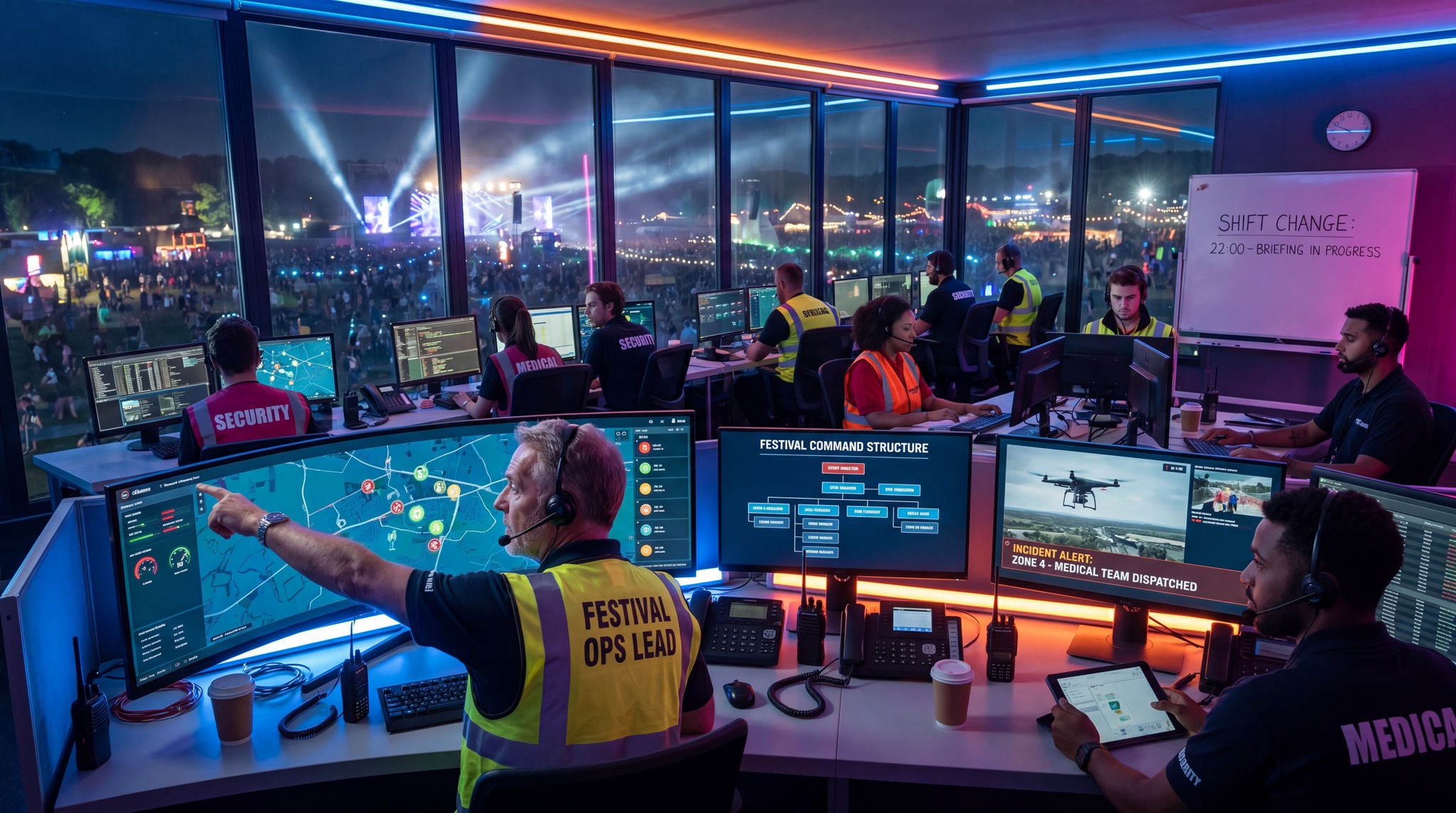
Managing a sprawling schedule requires not just planning but constant coordination once the festival is live. Large festivals use central scheduling teams or show controllers who monitor all venues in real time. For example, the Edinburgh Fringe Society sets up a central operations hub each August to track performances citywide and respond if issues arise. Smaller festivals might appoint a “schedule czar” – one person (or small team) with a master timetable, radio/walkie-talkie, and authority to make on-the-fly tweaks. This person can communicate, for instance, if Venue X’s 6:00 show is running 10 minutes late, so Venue Y (sharing the same crew) should delay their next start slightly.
Modern tech makes this easier. A shared digital schedule (e.g. Google Sheets, Airtable, or festival management software) accessible by all stage managers can ensure everyone works off the same plan. Some festivals use dedicated scheduling apps or internal websites where each venue updates when a show “doors open,” “show start,” and “show end” times in real-time. During the 2023 Edinburgh Fringe, organizers even reported strong uptake of their new official Fringe Festival app to help both staff and audiences navigate the day’s hundreds of showtimes, ensuring attendees can have a great experience. The key is communication: every venue and crew should know who to call or message if something changes. Assign runners or use group chats for instant updates. By treating the schedule as a live document – and empowering staff to adjust within agreed bounds – you can adapt gracefully when reality deviates from the plan.
Unconventional Venues, Unconventional Challenges
Transforming Everyday Spaces into Performance Venues
Fringe festivals are famous for turning non-traditional spaces into stages. A vacant storefront might host a one-act drama, a pub’s back room becomes a comedy club, and a public park bandstand doubles as an outdoor dance stage. These unconventional venues create charm and novelty – audiences love discovering theater in unexpected places – but they also pose logistical puzzles. Each space has its own quirks in acoustics, seating, and technical capacity. Producers must be creative in adapting them: how do you make a café corner feel like a theater?
Start by assessing the basics of each space: dimensions, seating potential, power supply, acoustics, and access. Safety and comfort can’t be compromised even in a quirky venue. If using a warehouse or church hall, ensure you meet fire code: adequate exits, emergency lighting, and no overstuffing beyond capacity. Many festivals partner with local fire marshals or venue owners early to walk through each location. For instance, the Adelaide Fringe festival (Australia) routinely works with city officials to approve dozens of pop-up venues, from tents to town halls, each year. They’ve shown it’s possible to safely present performances everywhere from a riverbank to a moving tram – but only with careful inspection and sometimes adding temporary infrastructure (like portable toilets and extra fire extinguishers on site).
Smooth Entry With Mobile Check-In
Scan tickets and manage entry with our mobile check-in app. Supports photo ID verification, real-time capacity tracking, and multi-gate coordination.
Converting an everyday space often requires temporary equipment installations. Simple risers or platforms can create a stage where none exists. Pipe-and-drape or black curtains can section off backstage areas and improve acoustics by dampening echoey walls. Portable lighting grids and sound systems might need to be brought in. For example, a small gallery might have no built-in theater lights; a producer could rent a lightweight LED stage lighting kit and mount it on a freestanding truss or even sturdy lighting stands. It’s all about making a professional environment from scratch. Successful fringe producers often keep a warehouse of modular gear (staging blocks, curtain pipe, PA speakers) that can be mixed-and-matched to outfit odd spaces quickly. Site visits are crucial: walk through each new venue months ahead with a production manager’s eye and note what has to be added or adjusted.
Logistics and Permits for Multiple Venues
Managing one venue is challenging enough; managing ten or more scattered across town multiplies the complexity. A fringe organizer is effectively running several mini-venues simultaneously, each with its own schedule, staff, and needs. This requires a robust logistics plan and often a decentralized team structure. Many festivals assign a venue captain or manager for each location – a point person responsible for everything at that venue, from unlocking doors in the morning to ensuring performances keep on schedule. These venue managers report back to a central festival director but have autonomy to solve on-site issues. For example, if a light fixture fails in Venue B, its manager can coordinate a replacement or adjust that show’s tech on the fly, without needing approval from the top for minor fixes.
Need Festival Funding?
Get the capital you need to book headliners, secure venues, and scale your festival production.
Communication and transportation are the lifelines of multi-venue festivals. Consider how staff, equipment, and even audiences will move across the city. Provide clear info and maybe even shuttle transport if venues are far apart. Edinburgh Fringe, spread throughout Edinburgh, doesn’t provide shuttles (people walk or bus), but everything is mapped in a central guide and app so attendees can find the next show easily. A smaller theater festival across a university campus, however, might offer golf carts for crew or a van to ferry props between spaces.
On the administrative side, don’t forget permits and agreements for each venue. One festival may require a dozen different venue contracts, each with unique terms. Whether it’s a city-owned park (needing a public space permit and possibly noise variance for evening shows) or a private bar (maybe you’re just sub-leasing their event room), lock these in early. Seasoned organizers warn that neglecting venue contracts or necessary licenses is a common festival pitfall that can torpedo an event before it starts, highlighting what most festivals get wrong about contracts. For example, a community fringe in California nearly had to cancel when they discovered their warehouse venue lacked the proper assembly permit two weeks out – a scramble with city hall resolved it just in time. The lesson: engage local authorities, get everything in writing, and double-check requirements (insurance, liquor licenses if serving drinks, etc.) for every space you operate. It’s better to spend a few weeks on paperwork than face a shutdown scenario mid-festival.
For independent producers and festival organizers navigating open-access models, understanding how to rent a theater for the Hollywood Fringe Festival or similar decentralized events like the Charm City Fringe Festival presents a unique logistical hurdle. Unlike curated festivals that assign you a space, these “bring-your-own-venue” models require participants to independently scout, negotiate, and lease their own performance spaces. As a producer, you must evaluate potential rental agreements for hidden costs—such as mandatory tech fees, box office splits, or insurance requirements—before signing. Building a strong relationship with venue operators in these regional fringes ensures your production secures prime time slots and adequate load-in access, turning a simple rental transaction into a collaborative festival partnership.
Ensuring Audience Comfort and Accessibility in Unique Spaces
Even the most innovative venue won’t wow attendees if basic comfort and accessibility needs aren’t met. Fringe crowds are adventurous, but they still expect a safe, reasonably comfortable experience. That means seating, sightlines, climate control, and accessibility should be considered for each venue. If you’re doing outdoor Shakespeare in a courtyard, will you provide enough chairs or at least allow rented seat cushions? For standing-room or site-specific shows, communicate that clearly so patrons know to wear comfy shoes. Shade and weather protection are important for open-air venues – handing out cheap rain ponchos or having tents on standby can save a show during a surprise shower.
Smart Promo Codes & Presale Access
Create percentage or flat-rate discount codes with usage limits, date ranges, and ticket type restrictions. Plus unlock codes for private presales.
Accessibility deserves special attention. Unconventional venues are often not ADA-compliant by default, which can exclude audience members with disabilities unless you intervene. Wherever possible, choose ground-floor venues or those with elevators/ramps for wheelchair users. If a cool space upstairs has no elevator, consider how to accommodate patrons – could you film that play and offer a ground-floor screening for those who can’t climb stairs? Also think about sensory accessibility: provide captioning or sign language interpretation for some performances, or designate “relaxed” shows for neurodiverse audiences when appropriate. Many modern festivals strive to be inclusive; for instance, Sydney’s Fringe included Auslan-interpreted performances and clearly labeled which shows were wheelchair accessible in their program, following the lead of accessibility initiatives at larger events, similar to inclusive practices in LGBTQ pride festivals. Building these considerations in from the planning stage ensures no frantic retrofitting later.
Finally, remember the audience amenities: Does each venue have restrooms (and are they clean and stocked)? If not, arrange portable toilets or shared facilities nearby. Is there drinking water available? Fringe-goers often theater-hop for hours; a simple water station or partnership with a nearby café for discounts can improve their experience. Crowd flow is another factor – make sure there’s a system so that as one audience exits a venue, the next can enter without confusion. Clear signage for each venue (with show times posted outside) and cheerful volunteer ushers guiding people go a long way toward keeping things orderly. In short, treat each unconventional venue with the same thoughtfulness as a traditional theater, and your audiences will appreciate the magic of the space without the discomforts.
Seamless Changeovers and Stage Management
Quick Set Turnarounds Between Performances
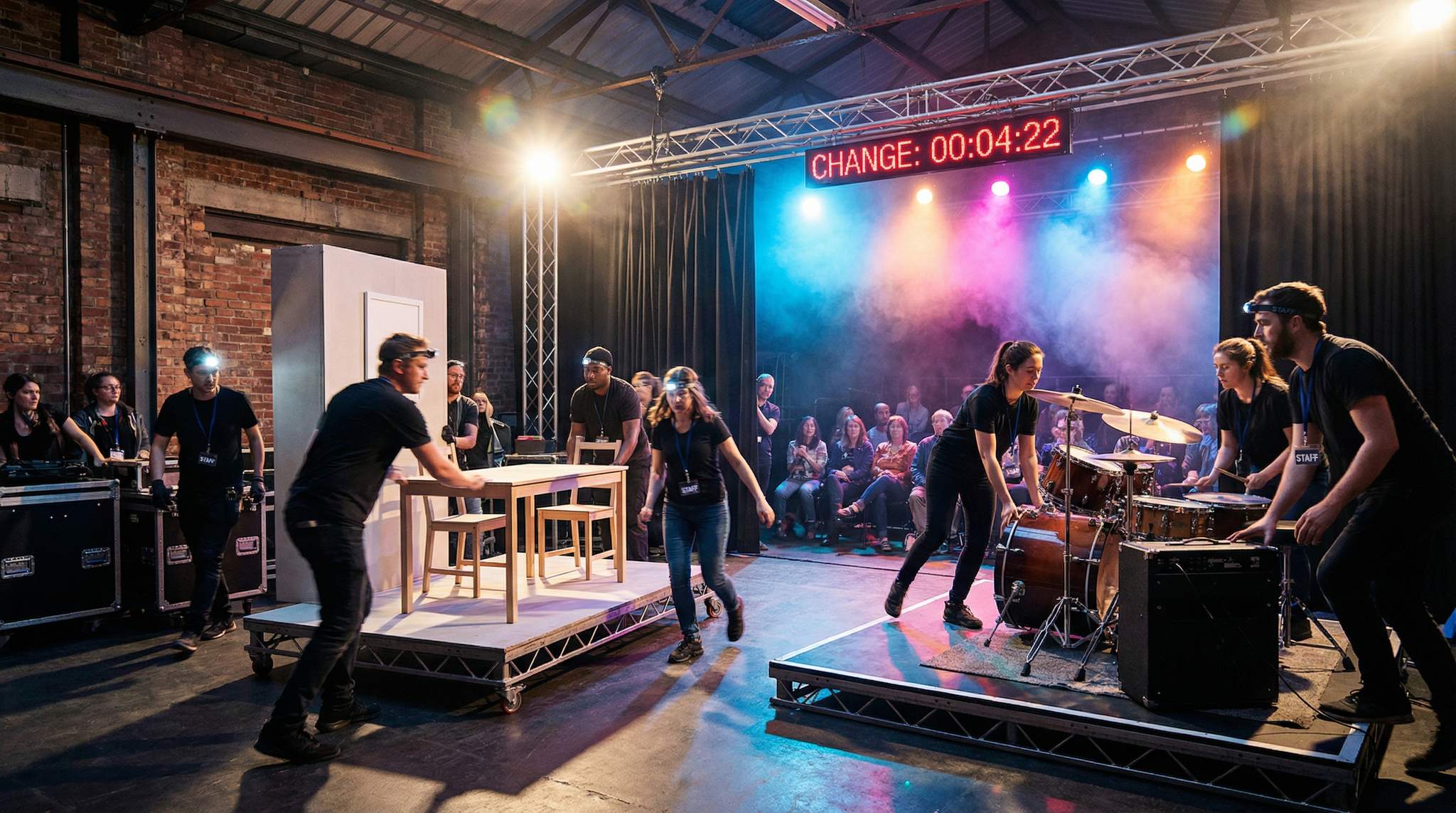
In a fringe festival, the show may last 50 minutes, but the changeover might be only 10. Rapid turnovers are the heartbeat of multi-show lineups. How do you get one group’s props, set pieces, and equipment off stage and the next group’s setup in place in mere minutes? The answer is intense preparation and choreography – almost a performance in itself. Stage crews should treat changeovers like a pit crew at a race: each member has an assigned task and they practice it. Many boutique festivals have developed a Stage Manager’s Playbook for lightning-fast changeovers to keep shows on schedule and vibes intact. This can include tactics like:
- Pre-set Rolling Platforms: If space allows, put complex set pieces (like a band’s drum kit or a play’s furniture) on rolling risers. One show’s set can be rolled off and the next rolled on seamlessly.
- Color-Coded or Pre-Labeled Gear: Mark cables, props, and mic stands by show or act, so there’s no confusion during the swap. For example, all items for Show A have red tape; Show B uses blue. Crew can quickly sort and strike items knowing what belongs where, a tactic often used in festival changeovers that respect the craft.
- Minimalist Set Design Philosophy: Encourage performers to use simple, easily movable set pieces. A montage of past fringe festivals shows that the most touring-friendly productions use perhaps “a table, two chairs, and a suitcase” which can be cleared in seconds. When artists propose elaborate sets, work with them to simplify or ensure extra hands are available for quick transitions.
- Countdown Clocks and Warnings: Have a visible side-stage clock or use walkie cues to count down remaining time. Announce “5 minutes to go” to the incoming crew so they’re poised to start load-in the second the last performer exits.
Rehearsing changeovers is as critical as rehearsing the performances. Savvy producers schedule a tech day or dress rehearsal day before the festival where each group gets one trial run in the venue – including practicing their load-in and load-out. Venue stage managers watch closely and give notes (“Your team took 12 minutes to clear – you need to cut that to 8 by striking the backdrop faster” or “That piano move was awkward; let’s put it on wheels”). With repetition, crews get faster. Some festivals even turn it into a friendly competition: who can execute the smoothest swap in the shortest time. The result of all this prep? Audiences barely notice the transition. The 7:00 show bows at 7:55, and by 8:05 the next production’s lights are up, as if by magic.
Stage Crew Coordination and Communication
Efficient changeovers and show runs demand a well-coordinated crew. Each venue should have a dedicated stage manager (or technical director) who runs the schedule and cues at that site. This person is the nexus of communication: they liaise with the festival’s central command, the incoming artists, and the tech staff. For smooth operations, establish a clear chain of command. For instance, if an issue arises (prop broken, power flicker, etc.), everyone knows immediately who to alert and how. Equip stage managers and key crew with radios or a reliable messaging app group. Quick communication is the ally of quick problem-solving.
It’s also vital to standardize protocols across venues. If you have multiple stage crews, get them on the same page before day one. Hold a crew orientation meeting (or several) to go over festival-wide policies: start times will be strict, no show runs over its slot without approval, how to handle late seating, etc. Supply checklists for changeovers. For example, a simple 5-step checklist (“1: Mic off and stowed, 2: Lights full, 3: Set pieces strike, 4: Sweep stage, 5: Reset default lighting”) can be taped in each tech booth as a reminder during the flurry of a swap.
Go Cashless With RFID Technology
Enable contactless payments, faster entry, and real-time spending analytics with RFID wristbands and NFC-enabled ticketing for your events.
Beyond basic checklists, standardizing your daily documentation—such as utilizing comprehensive fringe earthling production call sheet paperwork or similar industry-standard run sheets—ensures that every stage manager, lighting operator, and sound engineer is looking at the exact same cues, load-in times, and emergency contact numbers. Detailed call sheets eliminate the guesswork during rapid changeovers, providing a single source of truth that keeps the entire technical crew synchronized from the first morning soundcheck to the final late-night strike.
Even with preparation, expect that some changeovers will be down-to-the-second. In those moments, the crew’s experience and temperament count. Cross-train and empower your team. If a sound tech finishes her task early, she should jump in to help move a prop. If an actor’s personal stagehand is present and idle, invite them to assist another show’s load-out. Many fringe festivals foster a collective spirit: “we’re all in this together to make the festival shine.” That might mean crews helping acts beyond their own, or artists themselves lending a hand striking the set after their show (common courtesy at fringe). One anecdote from the U.K.’s Brighton Fringe stands out: when one solo performer fell ill and couldn’t move his heavy set pieces post-show, volunteers from the next act and venue staff all pitched in spontaneously to clear the stage in record time. That kind of camaraderie is sparked by example – if festival leadership encourages teamwork, crews will follow.
Handling Show Overruns and Last-Minute Changes
Despite firm schedules and best intentions, the reality is some shows will run over time or unexpected changes will occur. The key is to have a plan for when “the train comes off the tracks” so that a single incident doesn’t derail the whole day. Enforce hard stop rules when possible: many festivals include in artist agreements that shows must not exceed their allotted time (often an hour, including any Q&A or encores), and if they do, lights will be faded or mics cut. It sounds harsh, but when 20 other groups are sharing the day, discipline is necessary. A polite but firm approach works – in pre-festival comms, emphasize why staying on schedule matters for everyone’s benefit. Most artists will get it; a few might chafe, but a seasoned stage manager can often diplomatically nudge a long-winded performer to wrap up (“We have 2 minutes left – time for your final scene, thank you!”). If an act absolutely refuses to end on time and bleeds into the next slot, have a contingency: perhaps a short buffer or the ability to push the next start by 5 minutes and truncate their setup accordingly. Communication to the waiting audience is key – apologize and assure them the show will begin shortly.
Last-minute changes aren’t just about overruns. Sometimes entire performances cancel or swap. An artist might drop out due to illness or travel issues. For such cases, having a backup plan can save the day. Some ideas:
- Keep a “floater” act or two in reserve who can fill an empty slot if needed (perhaps local artists who can be on standby). Even a short 30-minute guest performance or an encore of a popular act can plug a gap so ticket-holders still get a show.
- If cancellation happens mid-festival, use signage and push notifications through your app or social media to immediately alert attendees and offer to rebook them for another show. The sooner you inform everyone, the less frustration.
- Consider insurance or refund policies for canceled shows, and communicate those clearly. Many festivals offer exchange vouchers or refunds proactively if they have to pull the plug on a performance.
An instructive example comes from a fringe theatre fest in New Zealand. When a touring act’s flight was canceled on short notice, the festival team quickly re-slotted a well-received local improv troupe into the empty theater slot. They announced the substitution on all channels, honored existing tickets, and even allowed refunds if people chose not to attend the replacement. The majority stayed, the improv group got an unexpected opportunity, and the audience saw a fun show instead of an empty night. Flexibility and quick thinking turned a setback into a win. The moral: anticipate common hiccups (late starts, no-shows, tech malfunctions) and empower your team to respond decisively. As the saying goes, “the show must go on” – and with foresight, it will.
Ticketing and Audience Navigation for Many Events
Centralized vs. Decentralized Ticketing Approach
One of the trickiest aspects of a theater festival with myriad events is how to handle ticketing. Do you sell all tickets through one central system, or does each venue/show handle its own? Most modern festivals opt for centralized ticketing because it’s more user-friendly – attendees can buy all their tickets in one place (online or at a central box office) rather than separately from each group. For example, the Edinburgh Festival Fringe has a unified ticketing platform run by the Fringe Society where you can purchase any show’s tickets via the official website or app. This greatly simplifies life for audiences navigating thousands of options. It also gives the festival organizers a real-time window into sales for every performance, which helps with planning (and bragging rights – Edinburgh Fringe regularly reports millions of tickets sold overall). On the other hand, each venue at Edinburgh Fringe also usually sells tickets at the door for last-minute walk-ups, and indie artists keep a portion of their ticket allocation to sell directly. The key is coordination – even if multiple sales channels exist, they must talk to each other to avoid overbookings and to accurately cap sales at venue capacity.
Free Tool: Size Your Festival Site
Zoned capacity planning for arena, campsite, parking and entry lanes — against UK Purple Guide and NFPA density standards. Finds your bottleneck zone.
For smaller festivals, a single centralized system is often easiest to manage. Many fringe producers turn to specialized festival ticketing software (like Ticket Fairy’s platform) that can handle dozens or hundreds of individual events under one umbrella. A good system will allow you to set up each show as its own ticketed event with its venue, time, capacity, and price, while still letting attendees make a one-stop purchase. It also supports various pass or package deals (more on that next) and provides at-a-glance reporting for all events. Crucially, centralized ticketing ensures consistent scanning or check-in methods at every venue – whether that’s QR codes on a single festival-wide mobile ticket, RFID wristbands, or printed tickets. Consistency speeds up entry and reduces training, since all front-of-house staff/volunteers use the same device or app to check tickets.
Decentralized ticketing (each artist or venue sells their own tickets independently) is increasingly rare for a cohesive festival experience, but some fringe-style events still allow it, especially if the festival is non-juried and loosely organized. The downside is audiences might have to visit multiple websites or physical locations to get tickets, which is a barrier to sales. You also lose oversight – you won’t really know how many people are coming until showtime, which can complicate staffing and resource allocation. However, decentralized can work for a very laissez-faire fringe where each production is autonomous. In those cases, the festival might act more like a marketing umbrella (producing a guide of all shows) but leaving transactions to artists. If taking this route, at least consider a centralized festival pass or badge that grants entry to all shows (coordinating with artists to honor it), so super-fans can buy one package rather than 30 separate tickets. Generally though, a unified ticketing approach has become standard because it streamlines the process for everyone involved.
As your event scales globally or regionally, adopting a robust web-delivered ticketing solution for performing arts becomes non-negotiable. Enterprise-grade platforms—especially those proven to handle massive volume, such as systems operating across 16 countries and processing upwards of 80 million tickets per year—offer the server stability required when thousands of eager fringe-goers attempt to book seats simultaneously. This level of infrastructure prevents site crashes during your crucial program launch and provides organizers with deep data analytics to track multi-venue sales in real time.
Beyond basic transaction processing, a top-tier cloud-based box office system provides critical resilience during peak demand. When thousands of fans rush to secure seats for a highly anticipated monthly variety night or a breakout storytelling event, the underlying server architecture must prevent queue crashes and overselling. Advanced platforms also empower promoters with granular reporting tools, allowing them to analyze buyer behavior across different regions and demographics. By leveraging an enterprise-level ticketing partner, festival directors can automate complex revenue splits, streamline artist payouts, and focus their energy on curating an unforgettable performing arts experience rather than troubleshooting software glitches.
For institutional producers managing multiple venues year-round, integrating a web-delivered ticketing solution for performing arts organizations ensures seamless data flow between the festival box office and regular season programming. When evaluating these systems, prioritize vendors with a proven track record of global scale—specifically those supporting operations across 16 countries and processing 80 million tickets annually. This level of enterprise reliability guarantees that your infrastructure won’t buckle when a viral marketing campaign suddenly drives thousands of concurrent users to your checkout pages.
Passes, Bundles, and Multi-Show Ticket Deals
With so many performances on offer, one goal is to encourage audiences to see more shows without friction – and ticketing strategy can help. Many festivals offer passes or multi-show bundles to incentivize attendees to sample widely. Here are common ticketing options and how they stack up:
Turn Fans Into Your Marketing Team
Ticket Fairy's built-in referral rewards system incentivizes attendees to share your event, delivering 15-25% sales boosts and 30x ROI vs paid ads.
| Ticket Option | Description | Pros | Cons |
|---|---|---|---|
| Single Show Tickets | Each performance sold separately. Audience buys tickets per show they want. | – Simple for attendees only interested in specific acts. – Clear revenue per show for artists. |
– Attendees must make many separate purchases for multiple shows. – Harder to encourage sampling of new or unknown acts. |
| Festival Pass (All-Access) | One pass allows entry to all (or most) shows in the festival. Often limited by capacity (first-come seating) or requires reservations. | – Maximizes freedom for attendees to explore shows. – Simplifies marketing (sell one product) and can boost overall attendance per show. |
– Requires system to manage capacity (pass holders might crowd popular shows). – Revenue distribution to artists can be complex if pass income is shared. |
| Multi-Show Bundle | Attendees buy a package (e.g., 5 shows for a discounted price). They then select which shows to attend using bundle credits. | – Encourages seeing more shows (increases overall ticket sales). – Lets audiences sample different genres without paying full price for each. |
– Requires tracking usage (redeeming bundle tickets for specific shows). – Some bundle tickets may go unused if scheduling conflicts occur. |
| Day Pass | Unlimited access to shows on a specific day (or weekend). | – Great for tourists or those free only one day. – Can drive fuller houses on typically slower days. |
– If too many pass holders, popular shows may overflow that day. – Less appealing if festival runs many days (people may choose one day instead of multiple single tickets). |
| Pay-What-You-Can | Some or all shows have voluntary pricing (suggested donation) instead of set ticket price. Often used for community-focused fringes. | – Low barrier to entry can attract larger audiences to experimental works. – Embodies the fringe ethos of accessibility and trust. |
– Unpredictable revenue; some attendees may pay far below average. – Harder to budget and to ensure fair artist compensation without minimums. |
There’s no one-size-fits-all: the right mix depends on your audience and financial model. All-access passes work great if venue capacities are large relative to demand, so pass-holders won’t get turned away. They’re also ideal for festivals with loyal local audiences who want the “see everything” experience. (e.g., Adelaide Fringe offers a limited VIP pass that lets hardcore fans jump into any show, but they manage it by requiring pass-holders to still reserve a seat in advance through the system, which prevents oversubscription.) Bundles (like 3-day passes or 5-show punch cards) can boost sales in regions where people are price-sensitive; essentially giving a volume discount. For instance, the Toronto Fringe has offered 5-show discount passes which not only reward festival-goers for seeing more shows but also help spread crowds across different performances.
Whatever your approach, ensure your ticketing platform can handle the complexity. It should be able to apply bundle credits or mark pass usage without causing confusion at the door. Educate your front-of-house teams: if someone shows up with a day pass, what’s the procedure? Likely scanning a single QR code and verifying ID or date. If an all-access passholder tries to attend a sold-out small venue, do they have priority or a separate queue? Decide those policies early and communicate them. And from a financial standpoint, plan how you’ll distribute pass revenue to artists. Common methods include: dividing by attendance (each show gets paid per passholder who attended), or a fixed allocation (e.g., the festival pools pass income and splits some evenly, with a portion as bonus to high-attendance shows). Clarity on this avoids artist resentment. In all cases, track usage data – knowing how many shows the average bundle buyer actually attends, or which day pass was most popular, will inform whether these deals are helping attendance or just cannibalizing full-price sales.
Streamlining Box Office and Entry
With potentially hundreds of tickets sold per show multiplied by dozens of shows, the sheer volume of transactions and check-ins can be daunting. A smooth box office and entry process is critical to keep audiences (and artists) happy. Here are some tactics to manage it:
- Distributed Box Offices: Instead of a single central box office location, consider having small ticketing kiosks or mobile ticket helpers at major venues, especially during peak hours. This way, attendees can buy or pick up tickets on-site rather than trekking across town. The Edinburgh Fringe, for instance, supplements its central ticket office with pop-up ticket booths on busy streets and at the biggest venues during the festival.
- Embrace E-Tickets and Mobile Scanning: Digital ticketing greatly speeds up lines. Most attendees are now used to e-tickets or QR codes on their phones. Equip each venue with a smartphone or tablet and use a unified scanning app to validate tickets. If your ticketing system supports it, print-at-home and mobile tickets should be the default, reducing will-call queues. Train volunteers on scanning – it’s usually straightforward, but have a backup method (like a door list or the ability to check ID against a purchase) if tech fails.
- RFID or Badge Systems for Passes: If your festival uses all-access passes or credentials, using RFID wristbands or barcoded badges can speed up entry at each show. Attendees just tap or flash their badge, which is linked to their pass in the system. For example, some multi-venue festivals have issued RFID wristbands that attendees load with their pass or tickets – a quick tap at the door logs them in. This can also help collect data on which shows pass-holders actually attended.
- Stagger Audience Entry Times: To avoid huge lines right at show time, encourage people to arrive early and stagger seating. You might say “Doors open 30 minutes before showtime” on tickets and actually start letting people in then. For very popular shows, consider a priority entry for pass holders or a separate line for those who already have tickets vs. those buying at the door. Clear signage like “Tickets in hand – line up here” vs “Need tickets – line up there” at each venue can organize crowds.
- Staff Adequately and Use Volunteers: It sounds obvious, but don’t skimp on front-of-house staffing during peak times. If a venue holds 100 and you expect it to fill, have multiple ticket scanners or ushers to get everyone in and seated quickly. Fringe festivals excel at leveraging volunteers; train them well and treat them as part of the team. Something as simple as having two enthusiastic volunteers outside a venue greeting and guiding ticket-holders can prevent confusion and get folks inside faster. As a bonus, those volunteers become the friendly face of your festival’s customer service.
Another critical box office strategy is preparing for a sudden influx of last-minute walk-ups or industry comps, often requiring staff to manage a surge doorlist. When a fringe show receives a rave review or wins a “Best of Fest” award, you might experience an unexpected crowd at the door just minutes before curtain. Equipping your front-of-house team with dynamic, cloud-based guestlist software allows them to process these surge doorlists efficiently, ensuring VIPs, press, and waitlisted fans are seated swiftly without delaying the performance.
A success story comes from a local fringe festival in California: after facing long lines that delayed shows one year, organizers revamped their entry system by adopting a new scanning app and doubling their usher team (mostly volunteers). They also implemented a “no late entry after 10 minutes” rule to incentivize punctual arrivals. The next year, lines moved so efficiently that shows began on-time 95% of the time, and audience feedback on the check-in process was overwhelmingly positive. The festival’s takeaway was that investing in good technology and well-trained front-of-house staff paid off in schedule reliability and attendee satisfaction. In fact, attendees tend to remember if they waited in a chaotic line for 20 minutes – or conversely, if an event was well-organized – so this aspect impacts your reputation.
Helping Audiences Navigate the Lineup
A fringe festival schedule can be overwhelming to attendees: dozens or hundreds of shows, all with different times and locations, often overlapping. To ensure good turnout across the board, producers need to help the public find shows and plan their own itinerary. A comprehensive festival program (printed booklet, website, and/or app) is step one – but it’s more than a list, it’s a navigation tool. Make it as easy as possible for someone to figure out what’s playing when and where. Categorize shows by genre, date, venue, and allow multiple entry points (“What’s on tonight?”, “Comedy shows”, “Nearby venues”). The Fringe Society in Edinburgh, for example, launched a robust mobile app that lets users filter shows by time, genre, location, and even “starting soon”, and then maps the route to the venue, ensuring attendees can have a great experience. Emulating these features on a smaller scale can greatly improve audience experience.
Data-Driven Event Marketing
Track ticket sales, demographics, marketing ROI, and social reach in real time. Exportable reports give you the insights to make smarter decisions.
If a custom app is out of budget, leverage existing platforms: a well-designed mobile-friendly website might suffice, or partner with an app like TimeOut or local event listings to highlight your schedule. Integrate calendar functionality – let people add shows to their personal Google/Apple calendars with one click, or build a “My Fringe Schedule” feature where users can bookmark the events they plan to attend. The easier it is for guests to organize their picks, the more shows they’ll likely go to (and the less often they’ll accidentally double-book themselves!). During the festival, use social media and push notifications to spotlight hidden gems and remind folks of schedule updates: “Did you know a magic show starts in 30 minutes around the corner?” – these real-time nudges can boost attendance for lesser-known acts.
Physical navigation shouldn’t be overlooked either. Many fringe festivals create a festival map highlighting all venues, perhaps color-coded or numbered, so people can hop venue to venue without getting lost. Posting daily schedules at major hubs or info booths is also helpful (some festivals use digital signage or whiteboards that volunteers update every morning with “Today’s Highlights”). In cities, sidewalk signs or flyers near venues can catch foot traffic (“Show starting in 15 minutes here!”). Essentially, think like a tourist guide: assume your attendees have never been to these venues or heard of these shows – how will you guide them to the right place at the right time? When the information flow is seamless, you reduce no-shows and late arrivals, and you enhance the discovery aspect that makes fringe festivals special. One might come to see one play, but with your guidance, end up catching three more on a whim – a win-win for audience and artists alike.
Beyond digital navigation, physical marketing remains a cornerstone of fringe promotion. Festival organizers should provide artists with best practices on how to build posters and flyers for your Adelaide Fringe show, Edinburgh run, or local community festival. Effective street-level marketing requires high-contrast designs, clear showtimes, and a prominent venue map or QR code linking directly to the box office. By offering a centralized template or a workshop on flyer design, producers empower performers to drive their own ticket sales while maintaining a cohesive visual standard across the festival’s physical footprint.
Technical Production Coordination
Standardized Equipment and Setup Across Venues
Unlike a concert festival where one massive stage gets all the gear, a fringe festival must equip multiple small stages to handle theatrical performances. It’s rarely feasible to give each venue state-of-the-art, customized tech; nor would most fringe artists expect that. Instead, the goal is to standardize a basic production setup that can accommodate a wide variety of shows. Typically, this means each venue is outfitted with a modest lighting rig (a few LED spotlights, some color washes, maybe a spotlight or moving head if budget allows) and a sound system appropriate to the space (a mixer, two main speakers, and monitors if needed). By using a similar equipment package in each small venue, you simplify support and ensure any technical crew can operate in any space.
Standardization also helps touring artists adapt quickly. If every 50-seat theater has the same lighting control board and similar light hang, an artist performing in one venue can expect similar capabilities in another. Festivals often send out a technical specs sheet to all artists in advance, detailing what is provided at each venue: e.g., “Venue A: 8-channel audio mixer, 4 LED stage lights, 1 projector (1080p) available”. Performers then know not to expect more than that and can design their show accordingly. Some might bring a small projector or special prop themselves, but at least they know the baseline. Sticking to well-known, user-friendly gear is wise because not every visiting artist will have a dedicated tech. Fringe tech crews often have to assist artists who aren’t tech-savvy – using common equipment (like an industry-standard lighting console or familiar microphone models) makes it easier for everyone to troubleshoot and operate.
It’s not just about hardware; consider technical settings and defaults. Establish a default lighting state (house lights, a general wash) and sound setup at each venue that all shows start and end with. This way, even if one show re-programs the lights for their needs, they must restore to the default cue after their performance. It prevents a scenario where Show #5 walks into a weird lighting state left by Show #4. Some festivals go as far as to forbid re-patching or moving certain fixtures to keep consistency. Another trick: use common power distributions and stage layouts. If each venue has a clearly marked power junction for artists to plug into, and a similar stage orientation (say, black backdrop, entrances on sides), it streamlines everything. The more uniform you can make the technical environment across all venues, the fewer unique fires you’ll have to fight.
Scheduling Tech Rehearsals and Sound Checks
One of the hardest things for performing artists in a fringe setting is mounting a show in an unfamiliar venue with almost no rehearsal time on stage. Unlike a traditional theater production that might tech for a week, a fringe show might get a 20-minute sound check or a single 1-hour tech slot before opening night. As a producer, you should facilitate whatever tech rehearsal opportunities you can, within reason, and schedule them fairly. Often this means using mornings or off-hours for quick run-throughs. If your festival runs for multiple days or weeks, consider keeping venues dark (unused) for a few hours every few days to allow new incoming shows to test things out on stage.
Organize a tech rehearsal schedule well in advance, and communicate it to artists. A common approach: each production is assigned one tech time on the day or day before their first performance, typically during daytime. For example, “Show X, you have Venue 3 on August 10 from 10:00–10:45 for tech.” During that time, they can set lighting cues with the board op, test sound levels, practice any tricky scene changes, etc. Emphasize that this is not a full run – they must come prepared to prioritize the technical elements. Many new fringe artists try to do a complete dress rehearsal and run out of time to actually test lighting and sound; provide guidance upfront (maybe even a checklist: “Focus on key moments: your blackout at the end of Scene 2, the microphone levels for your song, etc.”). Your venue techs should be on hand to assist and record cues. After the allotted time, it’s the next show’s turn.
Group tech rehearsals by venue if possible. One venue’s tech day could cycle through 5 shows back-to-back. Make sure to build short breaks between them, and have stage crew reset the space to default after each. This is also a good opportunity to ensure each show’s media is working – check that the laptop or projector they plan to use is compatible with your system, that their audio files play correctly on your speakers, and so on. There’s nothing worse than discovering a video won’t play during a live performance. A tech check can catch that. And if a show is particularly tech-heavy (say, a dance piece with complex lighting changes and multiple microphones), consider giving them slightly more time or an extra partial run early in the morning of their opening day when possible. That investment could prevent delays or failures during showtime.
Finally, for festivals where artists rotate venues (like touring fringes where the same show might play in different cities/venues on different dates), facilitate information sharing. Encourage artists to arrive early and watch a show or two in the venue before their own performance dates, to get a sense of the space. Some fringes even hold an open tech orientation – e.g., the day before opening, each venue is open for an hour for artists to drop in, see the setup, and ask the tech staff questions. The more comfortable artists are with the technical environment, the smoother the festival runs. In essence, by carefully scheduling and supporting tech rehearsals, you’re doing a lot to prevent technical meltdowns and frantic moments later on.
Allocating Technical Crew to Every Stage
Having the right people in the right places is just as important as equipment. Each venue needs competent technical staff or volunteers who can run lights, sound, and help with stage turnover. How you allocate crew can depend on budget and festival size. Larger festivals will hire professional venue technicians – for instance, Edinburgh Fringe venues (many run by independent venue managers) typically employ at least one tech per space, often young professionals or students with theater tech experience, to operate the board and assist artists. Smaller festivals, however, might rely on volunteer techs. If that’s the case, invest time to train them well, and pair less-experienced volunteers with a seasoned supervisor.
A common model is to assign a lead technician or venue TD (Technical Director) to each major venue, supported by one or two crew members or volunteers. The lead tech is responsible for maintaining the gear, supervising changeovers, and generally making sure each show’s tech requirements are met within the limitations. They often work long days, so watch out for burnout (more on crew care in the next section). Scheduling is crucial: no one can operate 10 back-to-back shows without a break. If one tech must cover multiple shows in a row, ensure there are built-in pauses or get a second person to tag-team. Some festivals create roving tech teams for things like projector setup or instrument mics – these specialists move from venue to venue as needed for specific setups, supplementing the local crews. For example, if only two shows in the fest use a drum kit, have a “drum tech” on call those days to assist at whichever venue, rather than training every venue crew on drum miking.
Don’t forget front-of-house (FOH) and stage management roles as part of tech coordination. Each venue should ideally have someone acting as stage manager/timekeeper (often the tech or venue manager doubles in this role) to start shows on time and call cues if needed. And FOH (like house managers or ushers) need to synchronize with tech too – e.g., the tech won’t start the show until FOH confirms the audience is seated and ready. Clear signals (a thumbs-up to the booth, a headset comm) keep everyone aligned.
Many festival producers emphasize relationship-building with tech crews. These folks are the unsung heroes who solve problems quietly and make artists look good. Treat them as such: involve them in planning, listen to their input on what’s feasible, and ensure they’re credited and appreciated. Just like artists, happy crew stick around or return year after year, bringing their growing expertise with them. One example: a local fringe in Colorado had a brilliant student lighting tech volunteer in their black box venue; after he single-handedly averted a lighting meltdown by rewiring a faulty dimmer mid-festival, the organizers publicly thanked him and gave him a small stipend bonus. He’s now been the lead tech at that venue 3 years running. Investing in skilled crew – whether through pay, perks, or praise – pays back in a smoothly run festival.
On the flip side, if you find yourself short on skilled technicians (a challenge often encountered during peak festival season when many events compete for the same freelancers to ensure smooth multi-stage coordination and handle multiple stage coordination and changeovers), consider reaching out to local theater schools or community theaters for support. Many tech students jump at the chance to work a fringe fest for the experience. You can also consolidate resources: if two venues are close by, perhaps they share a sound engineer who can run over if one needs troubleshooting. Use daily technical meetings to get crews to support each other – e.g., a morning huddle of all tech staff to discuss any issues from the previous day and redistribute gear or help as needed. In essence, proper crew allocation and oversight ensures that each performance, no matter how small, gets professional attention and any technical hiccups are swiftly managed.
(Side note: While managing crew, always mind labor laws and basic human limits – ensure no one is working unsafe hours. Savvy festival organizers avoid crew fatigue and legal trouble by scheduling sanely, adhering to labor regulations and preventing festival crew burnout.)
Managing Performers and Diverse Content
Balancing Genres and Show Types in Programming
The beauty of fringe festivals is the mix of genres – you might have a Shakespearean tragedy next door to a stand-up comedy act, followed by a modern dance piece. Crafting a program that flows well and appeals to varied audiences is a subtle art. While fringe lineups are often uncurated (open-access), as a producer you still influence scheduling and venue placement, which affects how the program is perceived. Aim for a balance: Don’t put five one-person monologues back-to-back in the same tiny room; intersperse different energies. For example, a heavy drama could be scheduled earlier in the evening and a light-hearted improv comedy later to lift the late-night mood (or vice versa, depending on crowd appetite). Think about your likely audience segments – families, college students, art aficionados, etc. – and ensure each has something for them at various times.
It’s also wise to consider technical and content needs when assigning shows to venues. Match the show to the right space: give the dance troupe the venue with a solid floor and high ceiling, reserve the quiet café corner for acoustic storytelling or poetry, and place the rowdy sketch comedy in the bar space where some noise bleed is acceptable. This prevents mismatches that could hinder a performance (a physical theater with lots of jumps and stomps won’t thrive on a fragile historic stage, for instance). During Edinburgh Fringe, venue managers carefully slot shows to spaces – a kids’ puppet show might be in a bright community hall in the morning, but not in the same slot as a provocative adult-themed act; they avoid jarring juxtapositions that could lead to awkward audience experiences (like kids accidentally walking past risqué material).
If your festival does any curation, ensure you showcase a diverse range of voices and styles. Modern audiences value diversity in casting, themes, and cultures represented on stage. Even if open-access, you can highlight diversity by marketing efforts: e.g., have themed nights or mini-series (like “Fringe After Dark” for experimental late shows, “Global Stage” highlighting international performers, etc.). This gives structure to the smorgasbord. Additionally, be mindful of genre clustering in the schedule – too many similar shows at the same time forces fans of that genre to pick one and skip others. A little coordination (“let’s not schedule all three drag cabaret acts at 9 PM on different stages; spread them at 7, 9, and 11 instead”) can increase overall attendance and artist satisfaction.
In practice, balancing the program is part science, part instinct. Use data if available: past sales or surveys might show what genres draw bigger crowds at what times. Use your team’s theater expertise as well – they might predict that a cutting-edge physical theater piece will attract the hardcore fringe-goers more likely to attend on weeknights, whereas a popular comedy show could anchor a prime Saturday slot. Ultimately, a well-balanced program means attendees have choices without feeling overwhelmed, and artists aren’t all cannibalizing each other’s audiences. It creates a sense that “there’s something for everyone” and that energy carries through the festival.
Artist Care and Hospitality on a Budget
While logistical planning is critical, festivals are ultimately about people – including the performers who pour their hearts out on stage each day. Taking care of your artists is not just kind, it’s strategic: happy performers deliver better shows and speak highly of your festival, attracting others to participate in future years. But fringe budgets are often tight, and artists are used to fending for themselves. Still, there are many low-cost ways to provide hospitality and support:
- Artist Lounge or Green Room: If possible, set up a simple artist enclave – a room or tent where performers can relax, leave their bags, and mingle. Stock it with water, tea/coffee, light snacks (fruit, granola bars). Having a safe space to decompress or do last-minute prep is invaluable, especially if venues lack backstage area. Festivals like Adelaide Fringe have a club for artists to meet and unwind, but even a modest shared room hosted by volunteers can work wonders.
- Local Partnerships for Discounts: Reach out to nearby restaurants, cafes, or hostels to arrange artist deals. Many businesses are happy to support arts by giving performers cheaper meals or lodging in exchange for festival promotion. Providing a list of “Fringe-friendly” eateries where artists get 10-20% off or a cheap prix fixe menu is a big morale boost. Similarly, negotiate with hotels or universities for discounted accommodations for visiting artists, and provide that info early.
- Transportation Passes: If your city has decent public transit, try to secure complimentary or discounted transit passes for artists during the festival. Not only does this help them get to their own shows, it encourages them to go see their peers’ performances (an important part of fringe culture). Some events work with city authorities or sponsors to hand out week-long bus passes, or at least point artists to the best options for getting around.
- Clear Communication & Schedules: One form of hospitality is simply respecting artists’ time and reducing their stress. Provide concise schedules, call times, and info packs so they know when and where to be, how ticketing is handled, and whom to contact for help. A well-organized festival is a welcoming one. Confusion over load-in times or ticket splits leads to anxiety; good communication prevents that.
- Feedback and Mental Health Support: Performing at a fringe – especially if attendance is low or reviews are harsh – can take a mental toll on artists. Encourage a supportive atmosphere: consider having a brief check-in with performers midway through the fest to ask how things are going. Some festivals even offer mental health resources, like connections to counselors or just a peer-support meetup for artists to share experiences. In recent years, awareness has grown about protecting artists’ mental well-being and balancing celebration with safety, so any gesture in this direction shows you care. Even something as simple as an anonymous feedback form or having volunteer “artist liaisons” who visit artists and ask if they need anything (water, a pep talk, etc.) can help artists feel seen and supported.
Crucially, foster community among the artists. Fringes are known for their camaraderie – many performers say one big reward is meeting other creatives. You can facilitate this by hosting a casual opening night gathering or an artist-only party during the run (even if it’s just a low-key meet-and-greet at a sponsor bar with discounted drinks). When artists bond, they often attend each other’s shows and promote them, lifting the whole festival’s energy. Plus, contented artists will sing your festival’s praises on social media and to their networks, boosting your reputation as an organizer who “gets it.” As one seasoned producer said, “We can’t pay huge fees, but we can pay attention.” A little empathy – understanding performers’ needs and stresses – goes a long way. For instance, when one fringe festival noticed a troupe struggling because their lodging fell through, the team quickly found them host families for the week. That troupe was so grateful, they’ve returned every year since. Building artist loyalty through hospitality is very real – take care of them, and they’ll take care of your festival’s success.
Content Guidelines and Audience Sensitivities
Fringe festivals are known for pushing boundaries with daring, experimental content – and that’s part of the charm. Audiences often come expecting the unexpected. However, as the producer, you should still set some ground rules and manage sensitivities to protect both the festival and attendees. First, establish clear content guidelines for artists during the application or onboarding process. If there are any hard no’s (such as open flames on stage, real weapons, or extreme graphic content in certain contexts), be upfront about those for safety/legal reasons. For example, some venues may prohibit any nudity due to local laws; an artist must know that in advance if it affects their piece. More commonly, you’ll simply ask artists to self-disclose content warnings – like strong language, violence, strobe lights, or triggers – so you can communicate these to audiences.
Age restrictions or ratings are a useful tool. Designate which shows are family-friendly, 18+, or somewhere in between, and enforce those at the door (no unaccompanied minors in an R-rated midnight show, for instance). This can be indicated in your program with a simple icon system. Many festivals also include brief content notes: “Content Advisory: Contains graphic depictions of war – recommended 16+”. This respects audience comfort without censoring the artist. When the Edinburgh Fringe program lists a show, it often includes warnings like “Strong language” or “Smoke effects” so attendees can make informed decisions.
What if an artist goes off-script or pushes beyond what was expected? Perhaps a comedian decides to launch into an extremely controversial rant, or a play’s on-stage violence is more intense than they let on. These situations test your preparedness. Ideally, have a code of conduct that all participants agree to, which can cover hate speech or incitement of violence as unacceptable. If something occurs that breaches community standards or causes public complaints, be ready to address it. This might mean talking to the artist about modifying the problematic part, or in extreme cases, canceling remaining performances for that show (a rare but sometimes necessary call). For example, in one fringe festival in Europe, a performer’s act included unexpected simulated self-harm that alarmed audiences and emergency services. Organizers quickly consulted with the artist to either add a clearer trigger warning and a pre-show announcement or face removal from the lineup for safety. A compromise was reached with additional warnings and an on-site counselor presence, showing that solutions can be found when content is dicey.
Aside from negative issues, managing content is also about highlighting the positive variety. Guide audiences to the content they’ll love. Train your volunteer ushers and box office to make informed recommendations (“If you enjoyed the magic show, you might like this circus act at 9 pm – it’s high energy and family-friendly!”). Embrace the artist-driven nature of fringe content – the festival should feel like a creative free-for-all – but within a framework that ensures everyone (performers, audiences, neighbors, authorities) stays comfortable and safe. As a producer, you’re the bridge between avant-garde art and public sensibilities. With transparent communication and fair policies, you can handle even provocative content without a hitch and maybe even earn praise for how you handled a tricky situation, ensuring festival changeovers that respect the craft and mastering quick festival stage swaps.
Budgeting and Funding for Fringe Festivals
Low-Budget Strategies and Cost Control
Theater and fringe festivals often operate on lean budgets – far leaner than their music festival or commercial theater counterparts. Many fringe events are run by non-profits or small organizations where every dollar (or pound, or rupee) counts. As the producer, you must become a master of stretching resources and cutting costs without cutting corners on safety or audience experience. One key approach is to prioritize spending on essentials (venues, basic production tech, insurance, and marketing) and get creative or frugal elsewhere. For example, instead of building elaborate sets or infrastructure, use existing architecture and repurpose materials. The charm of fringe is often its DIY aesthetic – a few painted flats and thrift-store furniture can serve dozens of different shows. Encourage set-sharing: if two shows both need a table and two chairs, perhaps they can use the same ones.
Labor is usually the biggest budget item in events, so controlling staffing costs is critical. This is where the army of volunteers comes in. Fringe festivals are famously volunteer-driven; it’s not unusual for a festival to have a handful of paid staff and literally hundreds of volunteers doing everything from ushering and tech support to postering the town. By building a strong volunteer program – recruiting early, offering perks like free show tickets or merch, and providing proper training – you can fill many roles without exorbitant payroll, as seen when you volunteer with Calgary Fringe. That said, there are some positions worth paying for, namely those where professional skill and accountability are paramount (e.g., your core production managers, an experienced technical director, security personnel if needed, and maybe a marketing coordinator). Pay those key people competitively if you can, and they’ll ensure the overall machine runs well. Meanwhile, support roles can be volunteers or interns hungry for experience. This mix keeps costs down and builds community involvement.
Another cost control tactic is scaling expenses to sales in real-time. Seasoned producers often set up Plan A/Plan B budgets to help create magical hybrid events that adjust if ticket sales are lower or higher than expected. For instance, you might have a “nice-to-have” list of extras (like printing a fancy program booklet or adding a closing night party) that you only execute if early ticket revenue comes in strong. If pre-sales are slow, you hold back spending on those non-essentials. Monitor cash flow especially if the festival spans several weeks – weekly financial check-ins let you know if you can, say, afford overtime for some crew in the final weekend or if you need to curtail expenses. Many fringe events also save money by seeking in-kind contributions: local businesses or sponsors providing goods and services instead of cash. Perhaps a print shop donates posters, an audio rental company lends speakers at discount, or a brewery supplies beverages for artist events. These deals can significantly reduce out-of-pocket costs.
Finally, always maintain a contingency fund in your budget (typically 5-10% of total expenses) for surprises. Festivals are unpredictable – a sudden venue repair, an extra marketing push needed if ticket sales lag, or emergency supplies for a rainy day can all pop up. By earmarking a contingency, you won’t break the bank when the unexpected strikes. And track every penny; good financial control is not just about cutting costs but watching where money is going so you can trim waste. If one venue consistently sells poorly, maybe you can reduce its staffing or close it earlier next time. If a supplier’s quote seems high, get a second quote. Fringes often operate on shoestring budgets (some small ones under £50,000 total, larger ones in the hundreds of thousands but still modest by event standards), so every efficiency and bit of scrappiness helps. The goal is to come out at least break-even or with a small surplus to seed next year, ensuring the festival’s longevity.
Funding Sources: Grants, Sponsors, and Community Support
Where does the money come from to fund a fringe festival? Unlike big commercial festivals, income often isn’t just ticket sales – in fact, many fringes return a large portion of ticket sales to the artists themselves. Diversified funding is the name of the game. Common sources include:
- Grants and Public Funding: Arts councils, city governments, and tourism boards frequently support festivals that drive cultural value or visitors. For instance, the National Endowment for the Arts (USA) or Creative Scotland may offer grants for multidisciplinary festivals, and many cities have event grants for community-building projects. Successful festival producers research these opportunities and build relationships with grant officers. Grant applications can be labor-intensive, but landing one can underwrite venue rentals or international artist travel. The key is aligning with funders’ goals: emphasize community engagement, cultural diversity, educational components, or economic impact in your proposal. A real-world example: the Dublin Fringe Festival has historically received arts council funding to ensure experimental works can be staged without purely commercial pressure, so consider how to support Dublin Fringe Festival.
- Sponsorship and Partnerships: Corporate sponsors might not throw huge sums at a small fringe, but don’t discount local businesses. Regional banks, tech startups, or hospitality companies often love affiliating with arts events (it’s good PR). They might contribute cash, or equally valuable, in-kind support (like a hotel partner offering free rooms for out-of-town artists, or a beer sponsor providing inventory for the festival club which you can sell to raise funds). Structure sponsor packages creatively: offer naming rights to popular venues or special events (“XYZ Cafe Stage” or “Opening Night presented by ABC Co.”), include logos on banners and websites, and provide VIP tickets. Always deliver on promises to keep sponsors happy. Also look at media partnerships – a local radio or newspaper might give you discounted or free ads in exchange for branding, saving your marketing budget. In the convention world, sponsor relations are key, especially when artistic creativity is under threat amid funding pressures, and much applies to festivals too: communication, clear benefits, and fulfilling their objectives are essential to secure and retain sponsors.
- Community and Crowdfunding: Fringes often have a grassroots vibe, and tapping into the community can yield support. Some festivals run crowdfunding campaigns, essentially pre-selling tickets or merchandise and soliciting small donations from fans. It not only raises money but also awareness and local buy-in. Membership or “Friend of the Fringe” programs are another model: individuals donate a set amount (say $100) and become a member who gets perks like advance booking or a free t-shirt, and the festival gets a stable base of support. For example, Minnesota Fringe in the U.S. uses a membership model to solicit year-round donations from loyal attendees. Additionally, fundraising events (like a kickoff gala, benefit performances, or auctions of donated items) can generate funds. These require effort but double as promotional occasions.
- Merchandise and Concessions: Every little revenue stream counts. Selling festival t-shirts, buttons, or posters not only spreads the brand but can bring in modest profit. Operating a central Fringe Club or bar can be a significant income source if your licensing allows – many festivals find the bar helps subsidize the art. Just be sure to budget for inventory and staff, and price appropriately. Some fringes also produce a printed program guide and sell ad space in it to local businesses; the ad revenue can offset printing costs and then some.
One thing to note: ticket revenue sharing with artists. In most fringe models, artists receive the bulk of their individual ticket sales (often 50-70% or even 100% after fees in some cases, especially if artists paid a registration fee up front). This is unlike a typical music festival where the festival keeps ticket money and pays artists a set fee. Thus, the festival’s own income from tickets might be relatively small. Plan accordingly – you may only retain, say, a $2 per ticket service fee or a percentage if your policy is to split tickets. That’s why those other funding sources are so important. It’s also why careful budgeting of common expenses (marketing, tech, admin) is needed to ensure the festival itself isn’t in the red while artists take home their due share.
In summary, patching together a festival budget is like assembling a mosaic: some public money here, some community contributions there, a few sponsors, a dash of ticket income. It can be unstable if one piece falls through, so always have a backup plan. If that big grant doesn’t come in, can you scale down or find a quick private donor? If a sponsor drops out last-minute, can a crowdfunding appeal fill the gap? Resilience in funding comes from not putting all eggs in one basket and cultivating a supportive network around your festival’s mission. And remember to tell your festival’s story to funders: highlight the economic impact (“this fringe brings 20,000 people into downtown, benefiting local business”) and the cultural importance (“provides a platform for 100 emerging artists”). Data and enthusiasm together make a compelling pitch for why your festival deserves financial support.
Revenue Sharing and Artist Compensation Models
A delicate balancing act in fringe festivals is handling artist compensation. Unlike traditional festivals where artists are booked for a flat fee, fringe festivals typically operate on a ticket revenue sharing model or require artists to invest upfront and then earn back through ticket sales. There are a few common approaches:
- Artists Keep Ticket Sales (Less Fees): Many fringes, such as those in the Canadian Association of Fringe Festivals (CAFF), follow a principle where 100% of the ticket face value goes back to the artists, and the festival only keeps a nominal ticketing fee (e.g., $1 per ticket) to cover operational costs. In this model, the artists usually pay a registration fee to the festival to participate, which helps cover venue hire and marketing. After that, whatever the artist earns in ticket sales is theirs. This model is very artist-friendly and incentivizes artists to promote their shows (since they directly benefit from every ticket sold), but it means the festival must fund itself through those registration fees plus other income like sponsorship.
- Revenue Split: In some cases, the festival and artists split the ticket revenue by a certain percentage (60/40, 70/30, etc.). For example, a community theater festival might do a 70% to artists, 30% to festival split of gross box office. This gives the festival a stake in good ticket sales too. If using a split, be transparent with artists upfront about what expenses that split covers. Often, festivals will justify a split by saying it covers venue costs, staffing, ticketing infrastructure, etc. If artists see the value (like “you handle all the ticketing and venue rental, so keeping 30% is fair”), they’re more on board. Conversely, if a festival takes a split but provides little support, artists may grumble.
- Stipends or Guarantees: Some curated theater festivals (not open-access fringes, but perhaps smaller themed festivals) might pay each act a small stipend or guarantee regardless of ticket sales. For instance, a fringe festival that’s part of a larger event might say: every group gets a $500 honorarium and then 50% of their ticket sales on top. Guarantees can help attract quality acts (since they won’t lose money entirely) but can be risky for the festival financially if sales are weak. Use guarantees only if you have secured funding or limited number of acts such that you can afford it. A hybrid approach is to guarantee up to a certain amount (like “if your ticket sales share is below $300, we’ll top you up to $300”) to ensure at least minimal compensation.
- Pay-to-Play Model: This is common in big fringes – artists pay a fixed fee to the festival (for registration, venue, etc.), sometimes also a bond or tech fee, and then they keep all their ticket income. Essentially, the risk is on the artist: if they sell well, they profit; if not, they could incur a loss after expenses. While this model can be tough on artists financially, it’s often the only way to handle thousands of shows (Edinburgh Fringe operates largely this way – performers rent venues and handle own finances, hoping to recoup in ticket sales and future opportunities). As a producer, if your festival uses this model, try to keep those fees reasonable and provide value (good venues, publicity) so artists feel it’s worth their investment. Also, be prepared for some artists not breaking even – it happens – and think about how to support them in non-monetary ways (like extra promotion) so they don’t have a sour experience.
From the festival’s perspective, whichever model, settlements must be handled with transparency and accuracy. Have a reliable ticketing and reporting system so you can easily calculate who is owed what. Ideally, settle with artists quickly after their run (some fringes even pay out progressively during the festival if it’s long, otherwise within a week or two after closing). Horror stories of festivals withholding payments or misreporting sales numbers erode trust fast – avoid those by auditing your reports and perhaps having an accountant or trusted finance manager oversee the payout process. Clearly communicate when and how artists will be paid.
Keep in mind, compensation isn’t just money. Providing non-monetary support, as discussed (housing, transport, networking opportunities), also factors into how artists gauge the festival’s value. Many fringe artists are more concerned with exposure, reviews, or future bookings than immediate profit, especially if they’re premiering new work. As a producer, facilitating press coverage or having industry showcase events could be part of the “compensation” in a broader sense. Still, fairness is key: if you promise them 80% of their ticket sales, make sure they get 80%. If a show sells out unexpectedly and becomes a hit, celebrate that and cut the check with a smile – their success is your festival’s success too.
One interesting case study: Adelaide Fringe in 2021 reported record-breaking $2.4 million paid out to artists through their system, thanks to high ticket sales that year, proving how Adelaide Fringe powers the SA economy. That kind of transparency in announcing artist payouts builds credibility. It shows that when the festival does well, the artists do well. Strive for that harmony where both festival and performers thrive together financially. In summary, design your revenue sharing to be as generous as feasible for artists (they’re the talent, after all) while keeping the festival solvent, and handle the money matters with utmost integrity and clarity.
Real-World Examples and Hard Lessons
Edinburgh Fringe: Managing Massive Scale
No discussion of fringe festivals is complete without looking at Edinburgh Festival Fringe, the granddaddy of them all. As the world’s largest arts festival, it annually brings together thousands of shows, over 300 venues, and millions of tickets. The scale is mind-boggling, but there are lessons even smaller festivals can learn from how Edinburgh operates. For one, decentralization with coordination is key. Edinburgh Fringe is actually a sum of many independent venue operators under one umbrella. Different companies run major venues (from the Pleasance to the Assembly Rooms), each handling their own on-the-ground production, but the Fringe Society provides centralized services like the official program, ticketing platform, and city-wide marketing, noting that the 2023 Edinburgh Festival Fringe was the second largest ever. The takeaway: if your festival grows, you might not manage everything centrally – empowering local venue managers or partners can help handle complexity, while a central team focuses on common infrastructure and standards.
Edinburgh also demonstrates the importance of embracing technology and data when scale demands it. In recent years, their ticketing system and app have become the lifeblood of navigating the Fringe. However, even they faced challenges: in 2018, a transition to a new ticketing system caused significant delays and customer frustration during the on-sale period (a cautionary tale about not underestimating IT projects!). They rebounded by improving the system and communication. By 2023, the Fringe Society reported robust online engagement and app usage, helping audiences sift through the huge program, ensuring attendees can have a great experience. The broader lesson is to continuously invest in tools that help manage your festival’s complexity – whether that’s an integrated scheduling database or an audience mobile app – and test them thoroughly.
A notable hard lesson from Edinburgh came during the COVID-19 pandemic. In 2020, the festival was canceled outright – the first time in over 70 years – devastating the performing arts community and local economy. In 2021, it returned in a much-reduced, hybrid form. This taught fringe organizers worldwide about the need for adaptability and crisis planning. Edinburgh’s team quickly developed online platforms to host virtual shows and sell tickets to streamed performances, giving artists an outlet and audiences a taste of Fringe from home. They also navigated shifting public health rules in 2021 and 2022, instituting measures like outdoor venues, social distancing, and vaccine pass checks where required. By 2024, the Fringe roared back with 3,500+ shows as the Edinburgh Festival Fringe begins, but the intervening years emphasized building resilience. Now, even small festivals have template contingency plans (for instance, how to downscale or pivot to online if a new disruption hits). The Fringe’s experience underscored that having some savings or emergency fund and digital capability can keep a festival afloat when disaster strikes.
Finally, Edinburgh Fringe exemplifies the importance of community and legacy. It’s not just an event, it’s an institution that involves the entire city of Edinburgh – residents host artists in spare rooms, businesses adjust hours to cater to fringe-goers, and a huge volunteer corps helps run it. The Fringe Society invests in community engagement year-round, from school programs to workshops, reinforcing goodwill so that when they need support (say, fundraising to survive the pandemic gap), people rally behind them. For burgeoning festivals, this is a cue to root yourself in the local community and artist community. Build traditions, gather feedback, and make the festival something people feel proud of and involved in. It’s a long-term asset that can see you through tough times and sustain growth with a soul.
Community Fringe Festival: Grassroots Innovation
Not every festival will be another Edinburgh – nor should it. Some of the most inspiring stories come from small community fringe festivals innovating on limited means. Take for example the Saskatoon Fringe in Canada or a newer startup like the Havana Fringe in Cuba. These festivals, often starting with just a few venues and a shoestring budget, succeed by leveraging local strengths and thinking outside the box.
One commonality is they turn constraints into creative solutions. Limited venues? They partner with community centers, libraries, or galleries that already have space. The Saskatoon Fringe famously uses a local business district street, closing it to create an outdoor busker and food area that makes the whole event feel like a street fair (at virtually no venue cost beyond permits). Limited marketing funds? They mobilize volunteers for flyer distribution, social media challenges, and rely on word-of-mouth through community networks – sometimes even having the artists parade through town in costume to drum up interest. The lesson: tap into community goodwill and unique local quirks. A fringe festival in a small town in India might schedule shows earlier in the evening out of respect for noise bylaws and use that as a selling point (“family-friendly showtimes!”). In Utah, one fringe held performances in historic pioneer-era buildings, turning heritage into a draw.
Innovation also appears in programming formats. A community fringe might not have dozens of big acts, so they spice up the schedule with workshops, panels, or open mic slots for local talent. For instance, the Hollywood Fringe (Los Angeles) introduced “Fringe Cabaret” nights where any artist in the festival could hop on stage for a short piece – this created a fun, informal showcase that encouraged artists to support each other and gave audiences a sampler platter. Another example: some small fringes collaborate with other niche festivals or events, like a food truck festival or an art walk, to cross-pollinate audiences. In doing so, they share resources and gain exposure to people who might not usually attend fringe theater.
Importantly, grassroots festivals underscore the power of volunteer-led efforts. A local fringe often starts with basically a committee of passionate theater lovers wearing multiple hats. They might be handing out programs one minute, then directing a show the next. This can be exhausting, but it builds a tight-knit family vibe. The key is to systematize and delegate as the event grows. Take the example of a small fringe in New Zealand: year one, the founder was doing everything; by year three, she had recruited heads for marketing, technical, and volunteer coordination (all still volunteers themselves) who each owned their domain. This freed her to focus on sponsorship and big-picture tasks. By empowering more people, they avoided burnout and kept the festival sustainable – a critical lesson that you can’t do it all alone, nor should you try.
One hard lesson often learned in small fringes is to expect the unexpected – and improvise. With minimal buffers, a small festival may face sharper turning points. For instance, when a principal sponsor for a regional fringe pulled out just one month before the event, the organizers quickly crowdfunded to cover the gap, leveraging the loyalty of their community attendees. Amazingly, they raised enough to proceed, and that crisis actually galvanized local support for future editions (people felt ownership because they “saved the fringe”). The moral: transparent communication in a crisis (“Hey folks, we’re short on funds, help if you can!”) can rally a community, whereas silently shrinking the festival might have gone unnoticed and unsupported.
In sum, community fringe festivals teach us about agility, intimacy, and tapping into what makes your location special. Whether it’s incorporating local culture (like a fringe in India including traditional folk theater acts alongside experimental plays) or simply the personal touch (leaders knowing volunteers and artists by name, fostering a warm atmosphere), these are advantages big fests sometimes lose. They show that success isn’t only measured in size or profit, but in impact on participants and spectators. A festival where 10 artists have life-changing performances and a town feels a surge of pride can be just as “without a hitch” in its outcome as any global event – because it achieved what it set out to do, and learned a few new tricks along the way.
Contingency Planning: Preparing for the Unexpected
Even the best-planned festival can hit an unforeseen snag – a sudden rainstorm during your open-air play, a key tech piece breaking, or an artist’s flight delayed. Contingency planning means thinking ahead about “What if…?” scenarios and having at least a rough backup plan for each. Seasoned producers often conduct risk assessments, listing potential risks and how to mitigate them. Here’s a snapshot of common risks for theater festivals and strategies to handle them:
| Potential Risk | Likelihood | Impact (on festival) | Mitigation Strategy |
|---|---|---|---|
| Lead actor illness or no-show | Medium | High – could force show cancellation or substitution | Have understudy or swing actors on call if possible; allow troupes to rearrange schedule (swap time slots with another show later) if an emergency; communicate refund/exchange policy to ticket-holders clearly. |
| Technical failure (sound or lighting system outage) | Medium | Medium – disrupts performances until fixed | Keep backup equipment (extra mixer, spare bulbs, spare cables) on site; have a tech support contact on-call for urgent repairs; in a pinch, be ready to do a “minimal tech” show with natural light or acoustic sound (inform audience and offer option to reschedule if tech issues mar the experience). |
| Show overruns causing delay | High | Medium – schedule cascades into next shows | Build buffer time between shows (as discussed) so minor overruns are absorbed, which is vital for effective scheduling and building buffers; empower stage managers to enforce stop times; if a significant delay happens, communicate to waiting audience with apologies and perhaps offer a small concession (like a coupon for a drink) if delay is lengthy. |
| Extreme weather (for outdoor venues) | Low (if mostly indoors; higher if many outdoor shows) | High – outdoor shows canceled or unsafe conditions | Have an indoor backup venue identified for key outdoor shows (even if smaller capacity); provide tents/cover for audiences or be ready to delay shows until weather passes; monitor forecasts and decide cancellations with as much notice as possible; ensure insurance covers weather-related losses. |
| Power outage in venue | Low | High – halts shows in affected venue | Equip venues with emergency lighting (battery-powered LED work lights) to safely evacuate or even continue a show in minimal light if appropriate; have a generator available for critical venues; coordinate with venue owner on restoration timeline; possibly shuffle that venue’s shows to other spaces if outage is prolonged. |
| Ticketing system failure (online or at-door) | Low | High – attendees can’t buy or validate tickets, revenue loss | Keep a backup attendance list for each show so you can manually check people in if scanners or internet fail; have IT support on call; in worst case, allow walk-up cash sales and manually cap at capacity, then reconcile later. Use robust ticketing providers with redundancy built-in . |
| Medical emergency (audience or artist) | Low | High – safety issue, potential show stop | Station basic first aid kits at each venue; train staff on emergency protocols and have phone numbers for local EMT/ambulance; identify if any staff/volunteers are CPR-certified; if an incident occurs, stop the show, ensure the person is cared for, and resume or cancel as appropriate. Audiences will understand when safety comes first. |
| Negative public reaction or controversy over content | Medium (depends on show topics) | Medium – could harm festival reputation if not addressed | Monitor media and social channels for issues; have a PR plan: a designated spokesperson and prepared statements if a show draws ire (e.g., protest or social media backlash). Engage with community leaders if needed to explain festival values. Ensure security is alert if any protestors or disruptions are possible at venues, requiring protocols for handling protests and counter-protests. |
This table isn’t exhaustive, but it illustrates the mindset: identify likely issues, gauge their impact, and think through responses in calm beforehand. Document your emergency plans and brief your team. It’s much easier to handle a crisis at 9pm on Saturday when everyone already knows “Plan B”. Some festivals create a quick-reference sheet (“Emergency Scenarios Guide”) and distribute it so even volunteers know, for example, who to call if a performer is injured or how to quietly signal for medical help in an audience.
One real-world example underscoring contingency planning came from a fringe festival in a small UK town where a main venue’s electricity went out on opening night due to a grid failure. Thanks to foresight, the organizers had previously tested running a show on generator power and had one on standby. Within 30 minutes, they had the generator up, powering minimal lights and sound, and the shows continued (albeit a bit late) rather than cancelling the night. Audiences actually erupted in cheers when the lights came back – a potential disaster turned into a memorable save, reinforcing trust in the festival.
The takeaway: hope for the best, plan for the worst. Many issues can be averted or their impact reduced if you have thought about them in advance. That’s truly producing “without a hitch” – not that nothing ever goes wrong, but that when it does, it’s handled so smoothly the audience scarcely notices. And if nothing goes wrong because you planned well, then you can quietly celebrate a minor miracle and start planning for next year!
Frequently Asked Questions About Fringe Festival Production
What should be included in standard production call sheet paperwork?
A comprehensive daily run sheet—often referred to in indie circles as fringe earthling production call sheet paperwork—must include exact load-in and strike times, technical cues, venue-specific default lighting states, and emergency contact numbers for the stage manager and venue captain. Standardizing this documentation ensures that rotating crews and incoming artists remain perfectly synchronized during rapid changeovers.
How do you choose a web-delivered ticketing solution for performing arts?
Look for enterprise-grade platforms capable of handling high-volume on-sale surges without crashing. Systems that have proven global reliability—such as those operating across 16 countries and processing 80 million tickets per year—provide the server stability, centralized box office capabilities, and real-time multi-venue analytics required for complex, decentralized fringe events.
How can organizers maintain audience engagement outside of the main festival season?
Developing year-round programming is a proven strategy to sustain momentum. Curating a mixed fringe comedy card, hosting dedicated storytelling events, or running a monthly variety night keeps your local community engaged between annual festivals. These recurring showcases also serve as an excellent testing ground for scouting new talent and refining your technical crew’s changeover speed.
What features define an enterprise-grade ticketing platform for large-scale arts festivals?
A robust, cloud-based box office system designed for high-volume performing arts events must offer real-time multi-venue analytics, dynamic capacity management, and automated revenue splitting. For global operations, it should also provide multi-currency support and proven server stability to handle massive traffic spikes during program launches without crashing.