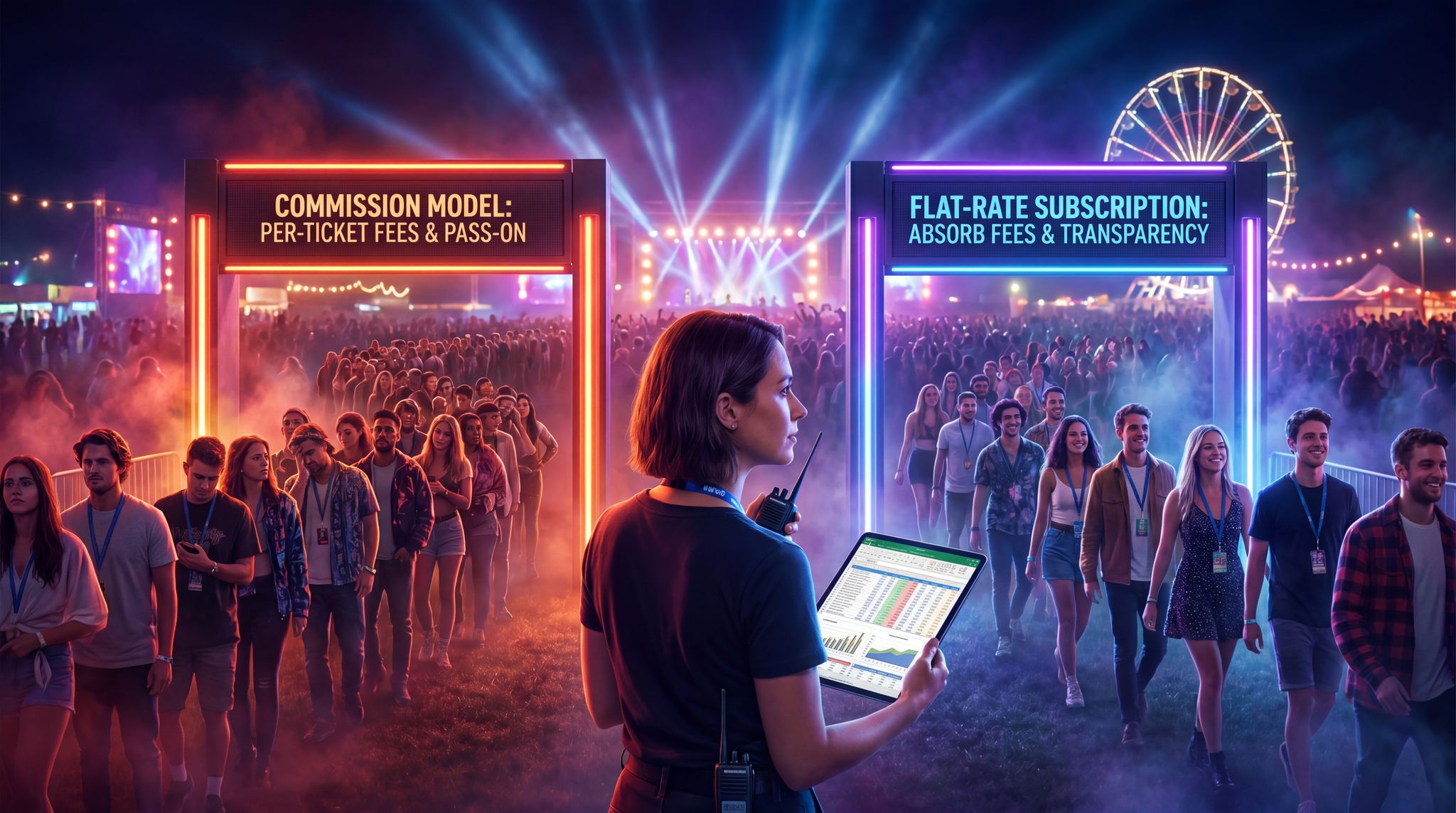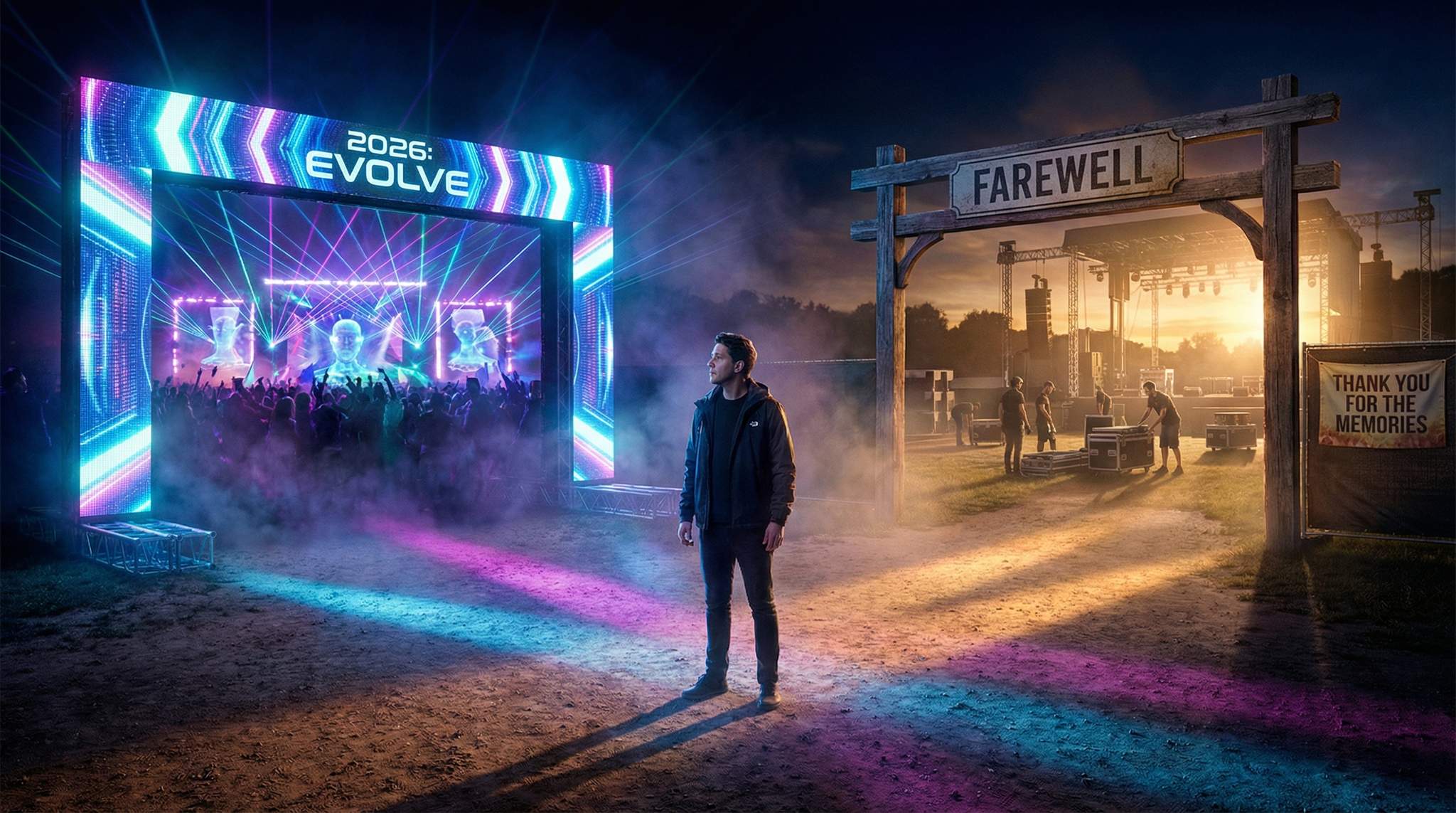
The Crossroads: Evolving or Ending in a Changing Landscape
The Shifting Festival Market in 2026
In 2026, the festival industry finds itself at a crossroads. After years of explosive growth post-pandemic, the market is showing signs of oversaturation and market correction. Fans now face a packed calendar with events every weekend, yet they have limited time and budgets. Many veteran organizers warn of “festival fatigue,” where too many similar events leave audiences overwhelmed. Mid-sized festivals in particular are feeling the squeeze: caught between mega-fests with massive budgets and boutique niche events, some independent 5,000–30,000 capacity fests are struggling. With tighter personal finances, fans find it harder to choose the same events year after year, leading to choice paralysis regarding time and money.
At its core, the modern festival business is undergoing a structural transformation. Promoters who previously relied on year-over-year capacity expansion are now realizing that the commercial side of live events requires a more nuanced approach. Running a profitable event enterprise today means prioritizing yield per head, operational efficiency, and targeted demographic capture over sheer crowd volume.
When mapping out the future for festivals, many veteran producers are rethinking the traditional calendar. A common question among promoters is how the music festival schedule will change in the future to adapt to this oversaturation. We are already seeing a strategic shift away from the jam-packed July and August windows. To secure talent and capture audience attention, the future of festivals in 2026 and beyond will likely feature more shoulder-season events, staggered multi-weekend formats, and non-traditional operating days. Adjusting your festival future plans to avoid direct date clashes with mega-events is no longer just a nice idea—it is a survival tactic.
Some organizers are finding it difficult to maintain attendance and margins in this environment. Rising costs for mid-sized events are a major factor. For example, in the UK alone, 72 festivals were canceled or postponed in 2024 – double the number in 2023, a stark indicator that not every event can survive in this crowded arena. Rising costs and fierce competition mean that festival organizers must either adapt creatively or risk bowing out of the race.
Smart Promo Codes & Presale Access
Create percentage or flat-rate discount codes with usage limits, date ranges, and ticket type restrictions. Plus unlock codes for private presales.
Economic Pressures and Audience Trends
Financial realities are also forcing hard decisions. Inflation and supply-chain issues have driven up expenses for talent, staging, and infrastructure, creating rising costs and competitive pressure even as fans grow more price-sensitive. Top artists’ fees have soared by 30–40% since 2020 in some markets as festivals outbid each other for headliners, creating fierce competition for talent. At the same time, attendees are cutting back: someone who went to four festivals a year now might only afford one or two due to inflation and higher living costs.
As a result, even established festivals that once sold out in minutes may struggle to hit capacity, testing the limits of fan demand. The data is telling – by mid-2024, an estimated 90 music events were canceled worldwide for reasons ranging from weak ticket sales to sponsor pullouts. Pollstar’s year-end analysis noted 2024 saw more festival cancellations than any year since the 2008–09 downturn, indicating a market correction is underway. In short, record-high costs and hesitant consumer demand have created a profitability crunch. If an event’s business model was marginal before, 2026’s climate could push it into the red for good. Organizers are increasingly looking at resource sharing alliances and other cooperative methods to level the playing field.
Planning a Festival?
Ticket Fairy's festival ticketing platform handles multi-day passes, RFID wristbands, and complex festival operations.
Recognizing the Red Flags Early
For festival producers, the first step is recognizing when an event is on an unsustainable path. There are several red flags that signal a festival’s concept might be faltering:
– Declining Ticket Sales Trajectory: It’s normal for sales to fluctuate year to year, but a multi-year slide in attendance or revenue is a serious warning sign. For instance, if early-bird tickets used to sell out in hours but now barely move, or the event relies on last-minute buyers to fill half the venue, it may indicate the festival is losing its must-see appeal. This is often one of the earliest red flags of decline and suggests that savvy organizers must develop new strategies.
– Diminishing Fan Engagement: Loyal attendees are the lifeblood of any festival. If social media buzz has gone quiet, fan surveys show boredom (“it feels the same every year”), or repeat attendance rates drop sharply, your festival’s core community might be eroding. A once-vibrant fan base becoming apathetic is a clear signal to either evolve the experience or face an exit. Organizers may need to incorporate similar elements to stay relevant or focus on building community-centric festivals.
– Talent and Lineup Challenges: Are you struggling to book compelling acts due to budget constraints or artist disinterest? In 2026’s talent wars where superstar headliners choose lucrative solo stadium tours over festival dates, many festivals find themselves recycling the same mid-tier artists. Even established brands like Lollapalooza have had to adapt historically. If your lineup has lost its star power or uniqueness and you can’t afford to compete, that undermines your concept. A festival built on big names might need a new strategy if those names are no longer accessible, especially when fans hesitate to commit time and money or when artists command higher fees amid fierce competition.
– Sponsor and Community Fatigue: Pay attention if long-time sponsors scale back or local authorities grow wary. Sponsors might cite declining ROI or clashing priorities as reasons to pull funding. Similarly, a host community that once welcomed your event could start voicing concerns about traffic, noise, or cultural relevance. These cues often mean your festival’s perceived value is slipping. Successful, enduring festivals nurture stakeholder goodwill year after year; if yours is fading, change may be needed.
Industry veterans emphasize acting on these signals sooner rather than later. By carefully evaluating these factors, you can determine if a pivot to a new direction is viable. “The worst scenario is realizing you’ve missed the boat when you’re already in a steep decline,” one long-time producer cautions. By identifying stagnation or strain while you still have a reservoir of goodwill and some financial runway, you preserve the option to reinvent the festival from a position of relative strength. In the next sections, we’ll explore how to evaluate your festival’s core concept and finances to decide whether a bold reboot or an amicable farewell is the right move.
Is Your Festival Concept Still Viable?
Audience Interests and Demographics
Festivals are ultimately about the audience experience. A critical viability test is whether your event still resonates with its target demographic. Tastes evolve over time – what thrilled crowds a decade ago may feel dated now. Established festivals often reach a point where evolution becomes necessary, and recognizing this need for change is critical. Examine your attendee demographics and behavior: Are you attracting new younger fans or mainly aging repeat attendees? A festival that once appealed to 18–25 year-olds but now sees mostly 40-somethings might be out of sync with emerging trends. For example, many 1990s-era alt-rock festivals faced this crossroads when millennials gravitated to EDM and hip-hop in the 2010s. Some, like Lollapalooza, recognized the shift and broadened their programming – evolving from a pure rock tour in the ’90s into a multi-genre destination festival by 2005, which successfully pulled in a new generation of fans. Others that failed to adapt, like the traveling Lilith Fair (which catered to 90s female singer-songwriters), found that the original concept no longer had the same pull and ultimately folded.
To gauge audience sentiment, use data and direct feedback. Analyze which stages or attractions get the most traffic at your event – are people still flocking to your main offerings or migrating to any newer additions? Social media and forums can also reveal if attendees talk about “wishing the festival had more of X” or if they’ve been attending other events for experiences you don’t provide. In 2026, younger audiences tend to value immersive, shareable moments alongside music. If your festival hasn’t kept up with what excites the current generation, its concept might be losing relevance. However, if core fans remain passionate and new fans show interest with just a few tweaks, that suggests an evolution (adding or changing content) could rejuvenate it. The key is honestly assessing whether lukewarm attendance is due to waning interest in the theme itself or simply execution issues that can be fixed. Choice paralysis is real, and your concept must be strong enough to overcome it.
Free Tool: When Should You Announce?
Pick your event date and genre — the free planner outputs a recommended announce, presale, on-sale and reminder schedule anchored to how your audience actually buys.
Brand Relevance vs. Fatigue
Every festival has a brand identity – a promise of the kind of experience attendees can expect. Over years, even a strong brand can drift or lose its luster. It’s important to ask: does your festival’s name and image still carry positive weight in the community? Signs of brand fatigue include media outlets losing interest in covering your lineup announcements, or longtime attendees saying “it’s the same old, same old.” Perhaps your event was once an innovator in its niche, but now dozens of copycats have diluted that uniqueness. For instance, a pioneering EDM festival might have stood out in 2012, but by 2026 the market is saturated with similar raves. If you’re hearing “seen one, seen ‘em all” from potential ticket-buyers, your brand may need a refresh or a graceful exit.
On the other hand, brand equity – the goodwill and recognition built up over the years – is incredibly valuable if it still evokes excitement. Some festivals maintain a near-mythic brand status (think of Glastonbury, Burning Man, or Tomorrowland) that continues to attract fans even in rough years. If your festival’s name still conjures something special, that equity can be the foundation for a pivot. A rebrand doesn’t necessarily mean abandoning your legacy; it can be a chance to modernize while honoring the past. Take the example of Montreux Jazz Festival in Switzerland: founded in 1967 as a pure jazz event, by the 2000s it expanded its programming far beyond jazz. Rather than drop the famous “Jazz” brand, Montreux kept its name but marketed itself as a diverse music festival with something for everyone – successfully shedding the image of being only for jazz purists. This kind of brand evolution can breathe new life into an event. Conversely, if a brand has been badly tarnished – say by a fiasco or safety incident – retirement might be wiser. A notorious example is the Fyre Festival (2017): its brand became synonymous with fraud and failure, giving it zero goodwill to attempt a comeback. Most situations aren’t that extreme, but it underlines the point: evaluate if your festival’s name is an asset to leverage or a liability holding you back.
Need Festival Funding?
Get the capital you need to book headliners, secure venues, and scale your festival production.
What’s Your Unique Value Proposition?
In a crowded festival landscape, having a clear unique value proposition (UVP) is essential for sustainability. You must offer unique experiences and value to stand out. If asked “what makes your festival special?” and your answer is shaky or generic, that’s a problem. When festivals launch, they often fill a niche – maybe showcasing a genre, celebrating a local culture, or offering a novel format. Over time, the scene changes. That niche might disappear or be filled by others. Assess whether your festival still offers something distinct that fans can’t get elsewhere. If not, can you create a new niche for it? Mid-sized festivals can thrive by delivering carefully curated experiences.
Consider the elements that set festivals apart in 2026:
– Location & Setting: Is your site or city part of the appeal (like a festival on a beach, or in a historic town)? If competitors have popped up in similar locales or if your once-unique venue has deteriorated or become hard to use, the draw may fade. Some events pivot by moving to a better venue to renew their UVP – for example, a struggling urban festival might relocate to a scenic outdoor site to create a fresh atmosphere. This might involve aligning with new activities or understanding the business of international events.
– Programming & Content: Perhaps you were “the first indie rock fest in the region,” but now every city has one. If your lineup looks like a dozen others, the UVP has eroded. Infuse new content: maybe integrate a crossover of genres or arts. Many forward-thinking festivals are blending music with food, tech, or wellness to stand out. It is vital to ensure that your core mission remains intact even as you pivot. If you can’t articulate how your programming differs from rivals (beyond minor lineup variations), that’s a sign to evolve or exit.
– Community & Culture: A strong festival culture – a loyal community, traditions, and values – is a competitive advantage. Building community-centric festivals creates lasting success. Does your festival foster a tribe-like following or a sense of “you have to be there”? Festivals like Burning Man or Electric Forest have such strong communities that attendees come for the culture as much as the artists. If your festival hasn’t cultivated this, it’s more vulnerable to competition. Pivoting toward a more community-centric model (for example, adding participatory elements, fan forums, camping communities) could amplify your UVP if pure entertainment isn’t enough. This can involve championing sustainability and local arts or fostering a “Burner” style community that amplifies reputation organically. Sharing photos and memories on social media helps drive this growth. On the flip side, if your event did have a unique community vibe that’s faded (say, due to scaling up too much or changes in management), regaining that magic might be tough – sometimes small is beautiful, and a downsizing or intimate reboot could restore the allure.
In summary, take a hard look at your festival’s concept. Is it still compelling in today’s market? If the answer is “not really,” you need to either invent a new reason for your festival to exist (a bold pivot) or prepare to bows out before it declines further. If the core idea still shines but just needs updates, that leans toward evolution. And if the concept is fundamentally passé or irreparably tarnished, it may be time to sunset the event on a high note. Before deciding, though, you must also examine the cold, hard numbers of financial sustainability, which we’ll tackle next.
Crunching the Numbers: Financial Realities Check
Budget Health and Sustainability
No festival can survive if it’s bleeding money. A thorough financial evaluation is critical when weighing your festival’s future. Start with a multi-year budget analysis to understand trends. Are costs rising faster than revenues? Many events saw budgets balloon from 2021–2025 due to inflation in everything from fuel to artist guarantees, driven by rising costs and competitive pressure. If your ticket prices haven’t kept pace (and raising them further would hurt demand), the math may no longer work. Calculate your true profit margin after all expenses. Industry reports show that mid-sized festivals often operate on razor-thin margins of 5–10% in good years, often burdened by expensive stage production. That leaves little buffer for a bad year. One unexpected storm or a headline artist cancellation can flip a slim profit to a loss. If your festival has no cash reserves or investors to absorb a hit, it’s inherently fragile.
Free Tool: Project Your Bar Revenue
Per-head spend benchmarks by event type turned into projected bar and food revenue, with a stock-mix estimate and gross-margin line. Free calculator.
Transitioning your mindset from hosting a passion project to managing a rigorous festival business is non-negotiable in this climate. Operators must scrutinize their live music business models, ensuring that every production choice—from site layout to talent acquisition—is justified by a clear return on investment. A mature event enterprise builds contingency lines into the budget specifically to weather these unpredictable market corrections.
Identify any financial red flags:
– Repeated deficits (losing money multiple years in a row) – a clear sign an intervention is needed. For instance, France’s National Music Center found that music festivals in France face fragile economics, with two-thirds running a deficit in 2024 despite strong sales. If you’re in that boat, continuation without change is not viable.
– Reliance on a single income source (like one big sponsor or one headliner-driven ticket boost). If that pillar falls through, would the festival collapse? Diversifying revenue (food and beverage, merch, sponsorships, camping fees, etc.) can help. Some savvy festivals are monetizing their brand year-round with off-season events and content to smooth cash flow beyond the main weekend.
– Sponsor pullback: If your sponsorship revenue has declined or the biggest sponsor is non-committal for next year, it drastically changes the budget outlook. Sometimes public grants or arts funding can fill a gap – for example, producers in 2026 are increasingly tapping government grants to bolster festival financing. If such options aren’t available and the private sponsors are drying up, the financial foundation may be too shaky to continue without a pivot to a leaner model.
Be realistic about cost cutting versus the integrity of the event. Can you trim expenses enough to reach breakeven without damaging the attendee experience? “Lean production” is a buzzword now, with veteran producers finding creative ways to do more with less staffing or simpler staging. Resource sharing alliances can help level the playing field, moving the industry from competition to cooperation. Perhaps moving to a smaller venue, reducing stage count, or sharing infrastructure with another event could significantly cut costs. The strategy of right-sizing a festival – scaling down to an optimal size – has saved some events from bankruptcy while actually improving fan satisfaction. If downsizing and smarter operations can realistically restore a positive budget, a pivot is worth considering. On the other hand, if the gap is too large (e.g., you’d need to slash half the budget, which would gut the festival’s quality), then the concept might simply be financially unworkable in 2026’s conditions.
Ticket Sales and Pricing Dynamics
Revenue side analysis is equally important. Look at your ticket sales curve over recent editions. Are you selling out? Coming up short? And at what pricing levels? If you’ve already exhausted typical levers like early-bird discounts, VIP tiers, and payment plans, and still can’t meet sales targets, that’s a major concern. It could indicate your festival is overpriced for its perceived value or that the demand just isn’t there at the scale you need. Many festivals have found that attendees in 2026 are extremely value-conscious – they expect more for their money given tighter personal budgets, and the fear of missing out (FOMO) isn’t always enough to drive sales. Artists commanding higher fees puts pressure on ticket prices. Ensuring your event feels “worth every penny” is vital to sustaining sales, especially when nothing new is on offer. You must cut through the noise even when attendees resist price hikes. If you’ve added perks or lowered prices and it hasn’t moved the needle, then the issue might not be price but interest.
Adapting your pricing model is another critical component of your festival future plans. Historical industry case studies show that transitioning a pricing model requires careful audience communication. For instance, when analyzing the evolution of festival ticket price changes over the years, promoters often look back at milestones like the year the Evolution Festival introduced an entry charge after previously operating as a free community event. That pivot required demonstrating immediate added value in production and lineup to justify the new cost. Today, organizers are exploring a hybrid festival ticket strategy—blending in-person VIP tiers with digital access or year-round membership perks—to diversify revenue streams without alienating their core demographic.
Also consider timing of sales. As noted earlier, a shift to last-minute buying could be messing with your projections. This is often one of the earliest red flags. If you believe interest exists but people hesitate to commit early, there are tactics to adapt – such as offering refundable ticket insurance, small deposits, or launching an off-season loyalty pre-sale for die-hards. Savvy organizers are developing strategies to combat this, such as selling tickets earlier in the cycle. However, if even last-minute sales are weak (e.g., the event date is near and you’re far below capacity), that’s a clearer sign of insufficient demand. An honest metric to examine is attendance versus capacity over time. If your festival used to draw 15,000 to a 20,000 cap and now only musters 8,000, you’re effectively half the size you once were – but are you still spending as if 15k will come? Some events confronted this by capping attendance lower and resizing production accordingly, rather than chasing a number they can’t hit. Others took a break to avoid the optics (and cost) of a poorly attended edition, planning to return with a stronger offering later.
Free Tool: How Many Tickets to Break Even?
Enter your venue, artist, production and marketing costs with your ticket price. See how many tickets cover your costs and how many you still need to sell.
Another angle: how much of your attendance is driven by out-of-town travelers versus locals? If your model relied on fly-in tourists and they’re not coming (perhaps due to travel costs or competing destination festivals), revenue suffers. In that case, pivoting to court more local or regional attendees with tailored marketing might help – or, conversely, doubling down on being a destination fest by elevating uniqueness. Either way, analyze your audience segments and their commitment levels. High no-show rates (people who buy tickets but don’t attend) could imply folks bought out of habit or FOMO and then lost interest, hinting at a concept issue.
Ultimately, if the financial equation shows little hope – costs outpacing realistic revenue, and no clear path to turn it around – it may be time to consider exiting before debts mount. If the numbers look tough but potentially fixable with a leaner operation or new revenue sources, that leans toward an evolution with a new business strategy. This quantitative perspective, combined with the earlier qualitative concept analysis, sets the stage for the big decision: pivot or end the festival. In the next section, we’ll weigh key factors to guide that choice.
Evolve or Exit: Weighing Your Options
When facing a make-or-break moment, festival organizers must weigh whether a radical reinvention can save the event or if winding it down is the wiser course. This decision isn’t just about emotion or ego – it should be a strategic evaluation of feasibility, potential, and risk. Here we break down the critical factors to consider in making an objective call on evolution vs. exit.
Potential for Reinvention and Market Fit
A core question is: Does a viable path for reinvention exist? Look at what’s happening in the wider entertainment market and ask if your festival, in some new form, could tap into a rising trend or underserved audience. If your original concept is struggling, perhaps a closely related concept is booming. For example, a faltering rock festival might have new life as an alternative music & arts festival incorporating interactive experiences that younger fans crave. Or a regional jazz festival might broaden into a “music and food” fest celebrating local cuisine to attract a wider community. If you can identify a gap or niche that leverages some of your festival’s strengths but changes the formula enough to be exciting again, that’s a point in favor of pivoting. History offers success stories: South by Southwest (SXSW) in Texas began in the late ’80s as purely a music showcase and by early 2000s reinvented itself into a multi-industry event (film, tech, media) – a pivot that transformed it into a global phenomenon rather than just another music fest. This involved expanding its original niche while ensuring the core mission remained intact. This was possible because the organizers saw a broader cultural moment (the tech boom, indie film rise) that their event could embrace, and they had the flexibility to execute that change.
On the other hand, if you struggle to envision any compelling new direction, that’s telling. Sometimes an event is so tied to a specific genre or community that shifting it would make it unrecognizable. If, say, your festival is built around a very narrow cultural tradition and interest is fading, a pivot might alienate the original community without guaranteeing a new one. In such cases, exiting while the brand still has dignity might be better than a half-hearted rebrand. The key is intellectual honesty: brainstorm creative pivots (maybe with your team or outside advisors) and assess if those ideas genuinely excite you and seem plausible. If the only pivots you come up with feel contrived or beyond your team’s capabilities, forcing an evolution may do more harm than good.
Legacy and Emotional Capital
Consider the legacy and goodwill your festival has built. If it’s a long-running event, it likely has intangible assets: a devoted fan base, supportive vendors, maybe even generation-spanning tradition. These are powerful assets – if treated carefully. Ask yourself, “Would ending the festival outright cause significant heartbreak or community loss, or would it be met with understanding (or even relief)?” If the festival is a cornerstone of the community and still deeply loved, that emotional capital is a reason to try saving it through a pivot or at least a hiatus. For example, when a beloved 20+ year local festival faces declining numbers, organizers sometimes opt for a “reimagining year” rather than cancellation, because they know the community identity is tied to that event. On the flip side, if the festival’s reputation has been eroded (through controversies, declining quality, or competing events overshadowing it), ending it might actually protect the legacy it once had. There’s wisdom in the adage “leave the party while you’re still having fun.” Some festival owners choose to end on a high note – a final edition when things are still decent – rather than see the brand fade away with dwindling crowds.
Turn Fans Into Your Marketing Team
Ticket Fairy's built-in referral rewards system incentivizes attendees to share your event, helping events sell 20% more tickets and 30x ROI vs paid ads.
Also weigh personal legacy: If the founders or key creative figures retire or move on (a common scenario), does the festival have a life without them? Sometimes founders are the brand; their exit can deflate an event’s spirit. If no successor has the vision or passion to carry it forward, a graceful closure might be kinder to the legacy than an extended, mediocre afterlife. For instance, Vans Warped Tour founder Kevin Lyman decided to end the iconic punk tour in 2018 after 24 summers, citing a changing cultural landscape and his own fatigue. He expressed mixed emotions about the end but knew it was time. The decision came after years of intensive touring. Rather than sell it off or let it dwindle, he gave Warped Tour a grand farewell, preserving its legacy as the longest-running traveling festival of its kind. That decision was tough but ultimately respected by the community – they knew it “ended on a high” with its reputation intact. When evaluating evolve vs. exit, think about what you want the festival to be remembered for in 5, 10, or 20 years. If a pivot can write a vibrant new chapter, great. If not, sometimes it’s better to curate the final chapter intentionally.
Team Capacity and Passion
No plan – revival or shutdown – succeeds without the people behind it. Take a hard look at your team’s capacity, skills, and enthusiasm for continuing. Reinventing a festival is essentially like launching a new event; it’s a significant undertaking that can be re-energizing but also taxing. Do you (and your core staff/partners) have the bandwidth to pour heart and soul into a risky new direction? Are there creative ideas in the team that have been waiting for a chance to shine? If your staff is brimming with concepts and eager to adapt, that bodes well for an evolution. In fact, involving your team in brainstorming the festival’s future can boost morale – people love to be part of an exciting turnaround story. Many experienced producers note that the process of reinventing a festival rekindled the passion that drew them to festival work in the first place, bringing a startup-like energy back to the project.
Conversely, burnout is real in the events world. After years of firefighting logistical challenges and financial stress, your key team members might be running on empty. If the thought of “one more big push to pivot” only induces anxiety and dread, forcing it could lead to mistakes or a subpar result. Also consider whether you have the right talent for a pivot. A festival shifting from, say, pure music to a music + tech conference hybrid might need staff with different expertise (conference programming, tech sector contacts, etc.). If those aren’t in your roster and you can’t afford new hires, that pivot might not be feasible. Sometimes it’s a personal equation too: maybe the founders have other opportunities, or health/family priorities, making them less inclined to continue. If leadership isn’t 100% committed to the reinvention, it’s unfair to everyone to proceed half-heartedly. In such cases, it might be better to plan a responsible exit and allow team members to move on rather than drag things out.
One option if the concept is good but the current team is tired is to consider passing the torch. Is there an external promoter or a younger team who might want to take over and reboot the festival? This could mean selling the brand or partnering with another organization. If a capable successor exists, the festival could evolve under new management while you step away. But if no obvious torchbearer is present and your team’s gas tank is empty, that leans toward closing up shop. Remember, producing a festival should ideally be as rewarding for the organizers as it is for attendees – if it’s become only a source of stress with no excitement, that’s a sign.
Stakeholder Support and Expectations
Stakeholders beyond your immediate team include investors, sponsors, host communities, venue owners, and even artists who frequently play your event. Their stance can heavily influence your decision. Engage in frank conversations (confidentially) with a few key partners: How would they react to a major change in the festival’s format or theme? Would your city still permit and support the event if it grows, shrinks, or pivots to a new focus? If you find openness and encouragement – e.g. a city official saying “we’d welcome a revamped festival that draws tourists in the fall, since summer is too crowded with events” – that’s a green light to evolve. Sponsors might similarly signal that they’re willing to stay on board (or even increase funding) if you make certain changes like hitting sustainability benchmarks or reaching a new demographic. Such feedback can give you confidence that a pivot has backing. On the other hand, if your major sponsor says they’re out regardless next year, or the community is lukewarm, you face an uphill battle. A festival pivot usually needs a coalition of the willing to succeed, since it’s almost like re-launching the brand.
Also assess commitments you’ve already made. Do you have multi-year contracts with a venue, or artists booked for next year, or ticket-holders rolled over from a postponed year? Exiting might mean refunding tickets, paying out contract penalties, or risking reputation if not handled well. Sometimes festivals take a hiatus year as a compromise – not committing to an immediate new edition, but also not outright canceling forever. This can be useful if stakeholders are unsure. It gives everyone time to regroup. For example, Glastonbury schedules “fallow years” every 5 years or so to rest the land and organizers, allowing the event to integrate with its surroundings. This has the side benefit of building anticipation and never wearing out their welcome. In a more emergent scenario, a troubled festival might announce “we’re taking next year off to rethink and come back stronger,” effectively testing stakeholder patience. If key partners react negatively (“if you skip a year, we’re out for good”), that’s a factor to weigh. However, many will understand if you frame it right – especially coming out of the Covid era, hiatuses are not uncommon.
Free Tool: Size Your Festival Site
Zoned capacity planning for arena, campsite, parking and entry lanes — against UK Purple Guide and NFPA density standards. Finds your bottleneck zone.
Ultimately, gauge whether your stakeholder environment leans towards “Please reinvent this, we’ll support you,” or “We understand if it’s time to end; you have our blessing.” Financial stakeholders will be particularly pragmatic – if the festival is losing money, investors might prefer cutting losses over throwing more resources at a gamble. Community stakeholders might lean the opposite – they may prefer a smaller or reformatted event over none at all, due to local pride or economic impact. Balancing these perspectives is tricky, but crucial. Make sure any pivot aligns with stakeholder needs (e.g., if tourism board funding is key, a new concept should still draw tourists). If you find alignment and enthusiasm, it’s a strong sign to evolve. If you encounter reservations or indifference, an exit may cause less fallout than you fear.
Decision Matrix: Pivot or End?
Combining all the above factors – concept, finances, team, stakeholders – can be overwhelming. It’s helpful to distill the decision criteria in a clear way. Below is a decision matrix highlighting conditions that typically favor a festival pivot/reinvention versus conditions that suggest considering an exit.
| Decision Criteria | Leans Toward EVOLUTION (Reinvent/Pivot) | Leans Toward EXIT (Hiatus or End Festival) |
|---|---|---|
| Core Audience Demand | Loyal core still exists; new audiences available with changes. Fans express interest in new direction. |
Audience largely apathetic or shrinking despite efforts. Little sign of new market to tap into. |
| Unique Value / Niche | Clear potential niche or theme to pivot into; UVP can be created or enhanced. Festival has some unique assets (location, legacy) to build on. |
Original niche has vanished or is overcrowded; nothing distinct left. Would be starting from scratch in a saturated market. |
| Financial Outlook | Losses manageable if adaptations are made (downsizing, new revenue streams). Some funding or sponsorship interest remains for a revamped concept. |
Continued losses with no relief in sight; unsustainable budget. Major sponsors/finances have pulled out, leaving funding gap. |
| Team & Leadership | Team is passionate about a new vision; skills can meet pivot needs. Leadership willing to invest time/energy into change. |
Key team members burned out or departing; lacking expertise for new approach. Leadership/founder ready to move on, no successor in place. |
| Stakeholder Backing | City/community and partners open to change; may support a revamp (or at least give a trial run). Some goodwill to leverage for relaunch. |
Stakeholders disengaged or skeptical; community wouldn’t miss the event much. An exit would not severely damage relationships or could even be amicable. |
| Brand Legacy | Brand still has positive cachet that could carry into new era. Ending now would disappoint many loyal fans who want it to continue in some form. |
Brand is stale or tarnished; ending might preserve its dignity. Festival had a good run – better to end proudly than risk a flop that hurts its memory. |
It’s rare that all factors line up entirely on one side. More often, you’ll have a mix: e.g. a passionate team and loyal fans (pro-pivot) but terrible financials (pro-exit). In those grey zones, ask which challenges are solvable and which are fundamental. Financial deficits might be solved by downsizing or securing a grant, but a totally disinterested audience is harder to fix. If multiple fundamental pillars (audience, finances, and team all negative) are broken, continuation is extremely difficult. If at least some pillars are strong, a pivot rests on reinforcing those strengths to compensate for weaker areas.
To further illustrate, let’s look at real-world examples of festivals that faced this very crossroad and what they chose to do:
| Festival (Location) | Challenge Faced | Decision & Action | Outcome/Notes |
|---|---|---|---|
| Lollapalooza (USA) | Declining interest in touring alt-rock fest by late ‘90s; competition from newer genres. | Pivoted – after a hiatus (2004), reinvented in 2005 as a multi-genre destination festival in Chicago. | Thrived. Now a flagship festival drawing diverse audiences, with global spin-offs (continued success). |
| SXSW (USA) | Saturation of music showcases; needed growth beyond music in mid-2000s. | Pivoted – expanded to include Film (1994) and Interactive tech (1995) alongside music. | Thrived. Transformed into a multi-industry event, became a cornerstone event for tech, film, and music sectors. |
| T in the Park (Scotland, UK) | Venue issues, local regulation challenges by 2015; rising costs and attendee fatigue. | Exited/Transformed – 2016 event was last; organizers launched a new city-based festival “TRNSMT” in 2017. | Mixed. T in the Park name retired; TRNSMT (a scaled-down urban fest) has succeeded in filling the gap, though original rural camping vibe was lost. |
| Vans Warped Tour (USA) | Pop-punk genre waning; founder exhausted after 24 years; youth tastes shifting to other styles by late 2010s. | Exited – held a final nationwide tour in 2018 for 24th edition; no continuing festival afterward (aside from one-off anniversary events). | Graceful End. Ended on a high note with a well-received farewell tour. Brand legacy remains strong among fans; minimal goodwill lost. Founder cited changing cultural landscape and personal fatigue. |
| Nozstock: The Hidden Valley (UK) | 25+ year boutique fest; rising costs and post-pandemic industry pressures in 2024. | Exited – announced the 2024 edition would be its final outing (festival ending by choice). | Respectful Exit. Organizers cited economic strains but celebrated the festival’s long run. Community sent it off with gratitude, avoiding a scenario of decline. |
These examples show a spectrum: some festivals successfully evolved and grew even bigger, some downsized or shifted and found a sustainable new life, and others chose to bow out while ahead. There’s no one-size-fits-all answer. The right decision hinges on the unique mix of factors for your event. The common thread, however, is careful planning and execution once the decision is made. In the next sections, we’ll provide step-by-step guidance on how to execute either path – without burning bridges or goodwill – whether you choose to pivot your festival or plan a graceful exit.
Pivot Playbook: How to Reinvent Your Festival
If you’ve decided your festival has a fighting chance through reinvention, it’s time to develop a concrete plan. Pivoting a festival can range from a moderate refresh (tweaking the theme or size) to a total overhaul (new name, new focus, maybe even new location). Below, we outline how to approach a pivot strategically, so that your “new” festival builds on the best of the old while attracting the audience and support you need.
Crafting a New Vision and Theme
A successful pivot starts with a clear vision for what the festival’s new identity will be. This is a creative and strategic exercise. Begin by revisiting your festival’s core mission: what experience or community were you originally trying to create? There may be a way to express that mission in a new format. For example, if the heart of your event was always “bringing people together to celebrate indie culture,” that could take many forms – not just an indie rock concert. It might pivot into an indie arts and food fair with live music, broadening the concept while staying true to the soul. Many festivals loop back to their mission to guide a pivot; it ensures you don’t alienate loyalists entirely. One veteran production manager explains, “The branding and surface changed, but the feeling people get had to remain familiar.”
Next, research and ideate on themes that have momentum. Look at thriving festivals and events in your region or globally: what content is drawing crowds? Maybe wellness and music combos are big, or festivals that blend technology and art installations. If you suspect your current theme is too narrow or outdated, identify a fresh theme that excites you and has audience appeal. It helps to study how other festivals successfully shifted focus. For instance, the organizers of a long-running folk festival might notice the rise of folk-fusion and craft beer events and decide to pivot into a “folk & beer weekend,” bringing in a younger drinking-age crowd without abandoning folk music entirely. Or a niche anime convention facing stagnation could broaden into a “pop culture and anime festival,” riding the global Comic-Con wave to attract more attendees. Aim for a concept that isn’t just a copy of someone else’s festival, but one that leverages your strengths and differentiates you. A great exercise is to write a one-paragraph press release announcing the “new festival” – if it sounds compelling and coherent in words, you’re onto something. If it sounds like a stretch or too vague, refine the vision further.
Don’t forget to involve stakeholders in the brainstorming. Your core team, loyal attendees, and even artists or sponsors can have valuable input. You might conduct a survey or host a focus group with superfans asking, “What would you love to see this festival become?” This not only generates ideas but also creates buy-in – people love to feel heard and part of the transformation. However, be mindful to manage expectations; not every fan wish can be fulfilled. Ultimately, leadership needs to synthesize all input into a focused new theme that is achievable and exciting. Once you have that, document it clearly: What is the festival’s new name (if changing), tagline, pillars of programming, target audience, and differentiators? This will become the blueprint for all further planning.
Rebranding and Public Messaging
A pivot often entails some level of rebranding – from a refreshed logo and website to a completely new name and marketing campaign. Deciding how far to go with rebranding is a strategic choice. If your old brand has mainly positive equity, you might do a “soft rebrand”: keep the name but give the visuals and messaging a new look and feel that reflects the updated theme. For example, maybe your logo gets revamped with new symbols or colors representing the broader scope, and your promotional tone shifts. On the other hand, if the old brand is a hindrance (say it pigeonholes you in a genre you’ve left), a name change could be on the table. This is a bold move, essentially launching a new brand – so weigh it carefully. Some festivals announce something like “XYZ Festival is now ABC Fest” to signal a clean slate. This can work if the old name truly doesn’t fit anymore, but it’s vital to communicate to past attendees that ABC Fest is the evolution of the beloved XYZ, not a wholly unrelated event. One tactic is to use a transitional phrase in marketing for a year: “ABC Fest (formerly XYZ Festival)” until the new name gains recognition.
Craft a narrative around the changes. People are naturally curious and a bit wary of change – they’ll ask why the festival is pivoting. It’s best to get in front of that with a clear, positive story. Frame the evolution as a response to opportunity, not desperation. For instance, “After 10 amazing years as XYZ Festival, we’re expanding our vision to become ABC Fest – a broader celebration of [new theme]that our community has been asking for.” Emphasize what’s exciting about the new version: perhaps new types of performers, activities, or amenities. If you have any continuity elements (same organizers, same venue, a signature tradition that will carry over), highlight those too: “Don’t worry, we’re still keeping the famous bonfire singalong at midnight!” This assures your loyal fans that their favorite parts aren’t being thrown away, even as you introduce fresh elements. You might be transforming a convention into a broader outdoor experience or simply changing the stage name or site.
From a tactical standpoint, choose the right moment and channels to announce the rebrand. Ideally, unveil the new concept with enough lead time to build hype for the next edition (6-12 months ahead is common, or even earlier if you are skipping a year and want to keep people engaged). Use a multi-channel approach: a heartfelt email or blog post from the festival director, a press release to media, and a coordinated burst on social media with new branding assets. Visuals matter hugely in rebrands – consider releasing a teaser video or imagery that encapsulates the new vibe. If budget allows, you can even host a launch event or online AMA (Ask Me Anything) to field questions live. Transparency and enthusiasm in this rollout will set the tone. Expect that some die-hards may be skeptical at first – change is hard – but often they come around if you make them feel like partners in the journey rather than simply an audience being sold to. Fans appreciate a respectful nod to the past and can become ambassadors of your new vision.
Adjusting Scale, Venue, and Budget
A pivot isn’t just about marketing – the operational backbone of the festival will likely change as well. Revisit all the basics: venue, scale, duration, and budget. Your new vision might thrive better in a different setting. For instance, if you’re transforming a music festival into a music + arts lifestyle event, perhaps a venue with indoor and outdoor spaces (for galleries or workshops) works better than an open field. Or if you’re downsizing to focus on quality over quantity, you might choose a smaller venue that will be comfortably full and easier to manage. Don’t be afraid to move locations if it serves the vision – but do consult any existing agreements or community relationships to handle that diplomatically. The Festival Relocation Playbook offers guidance on switching sites without losing fan trust, emphasizing early communication and highlighting the new site’s benefits (better transit, scenery, facilities, etc.). Some successful pivots have even involved changing the timing/season of the festival to avoid competition or capitalize on a niche (e.g., moving from a saturated summer slot to a fall or holiday-themed event).
Scaling appropriately is crucial for financial viability in a pivot. Decide if you’ll go bigger, smaller, or lateral. If demand was high but infrastructure was an issue, maybe you increase capacity with better planning. But more often, troubled festivals opt to reduce size to improve the experience and costs. Cutting from a three-day festival to two days, or from 4 stages to 2 stages, can significantly trim expenses while concentrating the crowd for more energy. Fans often prefer a really well-done smaller festival over a sprawling, half-empty one. One case in point: a mid-sized U.S. festival found success by capping attendance and curating a single-stage lineup of strong acts rather than multiple mediocre stages – they marketed it as an “intimate experience” and it actually boosted ticket demand because it felt exclusive. Use the “less is more” approach to right-sizing as a strategic tool, not just a concession. Downsizing can drive sustainability and help retain loyal fans, proving that bigger isn’t always better.
Rebuild the budget from scratch for the new concept. Don’t simply carry over last year’s numbers. Itemize what new elements will cost and where old costs can be shed. You might allocate funds differently – perhaps less on big headliners but more on immersive decor and secondary entertainment, if you’re pivoting to an experiential model. Seek out efficiencies: maybe partnering with other festivals to share equipment or staff could trim the budget. Resource sharing alliances allow independent festivals to face intense competition by moving from competition to cooperation. Bulk purchasing alliances, shared marketing initiatives, or co-producing a stage with another event can all save money (and build community). In 2026, many independent festivals are cooperating rather than competing to survive, so a pivot plan can include these collaborative tactics as part of the new strategy. Update your financial projections with conservative revenue estimates and realistic expense forecasts. The goal is a sustainable model where even if everything doesn’t go perfectly, the festival can break even or better. This likely means budgeting more cautiously than in boom years and having contingency funds for unexpected pivot hiccups.
Engaging Your Community in the Change
One of your greatest assets during a pivot is the community of fans and supporters who care about the festival. Engaging them actively can turn them from nervous bystanders into champions of the new direction. Start by identifying your festival ambassadors – those super-fans, long-time attendees, or local influencers who have been vocal supporters. Reach out to them personally when you’re ready to share the pivot news (perhaps even beforehand in a private preview). Make them feel like insiders on a special mission to help the festival they love. When these folks buy in, they will spread positivity through word-of-mouth that money can’t buy. You might create a “Street Team 2.0” or digital ambassador program where fans get perks (merch, discount codes, meet-and-greets) for helping promote the new festival and educating others about the changes.
During the lead-up, create interactive platforms for the community to connect around the festival’s evolution. This could be as simple as a Facebook group or Discord server where you discuss ideas, share sneak peeks of plans, and take constructive feedback. Host live Q&A sessions – maybe an Instagram Live with the festival director answering fan questions about why you’re pivoting and what to expect. Transparency goes a long way to quelling rumors or skepticism. If, for example, someone asks “Are you just doing this because ticket sales were bad?”, you can respond honestly that “We did see attendance dip, which told us it was time to refresh. But also we’ve been hearing folks want new experiences – and we listened.” Such candidness builds trust.
Another aspect of engagement is co-creation. Can you let your community vote on something for the new festival? It could be a choice of new logo design, a theme for one night, or which classic element from the past to carry forward. Some festivals run polls like “Which of these two new names do you like better?” or “Pick one legacy act you’d love to see return next year.” While you shouldn’t leave core decisions entirely to a vote, involving fans in some visible decisions makes them feel ownership. It signals that this is still their festival, just evolving. When Electric Zoo festival in New York pivoted its image a few years ago, they let fans suggest and vote on creative art installations to add – this not only generated thousands of social media impressions (free marketing) but made ticket-buyers excited to come see the fan-chosen installations in person.
Finally, consider hosting a small preview event or content series showcasing the new vibe. For example, if you’re adding a wellness component, hold a one-day yoga & music pop-up event months before the festival to give a taste of what’s new. Or release a series of short documentary videos highlighting how you’re reinventing, with interviews from staff, artists, or community members. All these efforts treat your pivot not as an abrupt change, but as a journey that fans are part of. By the time the gates open on the new festival, attendees should feel like they helped build this new chapter – a powerful sentiment that can translate into loyalty and word-of-mouth boost. Remember, you are not just changing an event, you’re guiding a community through a transition. Do that well, and they will reward you with patience, enthusiasm, and advocacy.
Relaunching After a Hiatus (If Applicable)
In some cases, the best way to execute a pivot is to take a hiatus year. This can give you the breathing room to plan thoroughly and avoid rushing a half-baked new concept to market. If you went this route – skipping a cycle before relaunch – there are special considerations to ensure your festival doesn’t lose momentum in the gap. First, maintain some presence during the off-year to keep the community warm. This could mean hosting a couple of smaller events under the festival’s banner. For example, the team behind Belgium’s Tomorrowland (during its off years or between main events) has hosted limited concerts and tie-in events to keep fans engaged. If your festival is skipping 2026, you might do a “Festival X Roadshow” series: one-night mini-parties in your key cities, or partner with a local club to host a stage takeover. These events remind people you’re not gone, just retooling.
Even without in-person gatherings, digital engagement during hiatus is key. Ramp up your content marketing – share throwback posts of the best festival moments, run contests for best photos or memories, and keep fans looped in on behind-the-scenes of the reinvention (to the extent you’re comfortable). Some festivals use downtime to start a YouTube series or podcast about their scene, essentially continuing to be tastemakers and community hubs even without the physical event that year. For instance, a New Zealand festival that paused for a year launched a podcast interviewing artists and local cultural figures, which kept their audience tuned in and excited for the festival’s return.
When it’s time to officially relaunch after hiatus, make a splash. You have the advantage of rarity – fans haven’t experienced your festival for a while, so anticipation can be higher. Play into that: perhaps a countdown campaign until the lineup reveal, or an exclusive presale for those who stuck with you through the break. A well-timed PR story can help too (“Festival X returns after two-year hiatus with bold new concept”) which local media might find newsworthy, especially if you tie it to larger trends or community impact. Lead with what’s fresh, but also invite everyone who ever loved the festival to “come home” for this new era. One strategy is reaching out to lapsed attendees (dig up those old email lists) with a tailored message: “We’ve missed you – and we think you’ll love what we’ve done with the place.” Perhaps offer them a loyalty discount or special OG perks to encourage their return.
Above all, ensure that when the festival does come back, it delivers on the promised improvements. A hiatus raises expectations; people will be looking to see if the new version lives up to the hype. Double-down on critical aspects like logistics, safety, and customer service – any hiccup in the comeback edition will be magnified in observers’ eyes (think of it as a grand reopening). In the first year of a pivot, it’s wise to slightly under-promise and over-deliver. It’s better to surprise attendees with unexpected delights than to have promised the moon and fall short. If you can pull off a smooth, exciting relaunch, your festival’s future will look far brighter. You’ve proven that an event can reinvent itself and come back stronger, which is perhaps the most inspiring outcome of all. Many in the industry will take note – and your team and community can take pride in being part of a reinvention story, not a cautionary tale.
Exit Strategy: Ending on a High Note
Sometimes, despite best efforts, the decision is made to wind down the festival. Choosing to end an event is never easy, but if done thoughtfully, it can be not only the end of something great but also a celebration of what was achieved. This section focuses on how to execute a graceful exit strategy that preserves relationships, protects your reputation, and honours the festival’s legacy.
Planning a Finale (Or an Orderly Shutdown)
If circumstances allow, consider hosting a final edition of the festival as a grand farewell. Not every situation permits this (financial or logistical constraints might force an immediate stop), but a planned finale has multiple benefits. It creates a positive narrative: the festival is concluding, not just fizzling out. Fans get a chance to say goodbye, which can bring closure and goodwill. From a business perspective, a well-marketed “last festival ever” can spur a surge in ticket sales – urgency and nostalgia are powerful draws. We’ve seen this with tours like Elton John’s farewell tour, and similarly with festivals: when Australia’s Soundwave Festival announced a final lineup, attendance spiked compared to prior years as people didn’t want to miss the last chance. If you go this route, lean into it – program some special moments that pay homage to the festival’s history (invite back favorite artists, bring on stage the team for a thank-you, etc.). A “Farewell, and thank you” theme can turn the final fest into a tribute that people will remember fondly, rather than a sad dud.
However, be cautious not to use a “last ever” tagline if you’re not 100% sure you won’t revive the festival someday (or in some form). It’s okay to say “indefinite hiatus” or “for the foreseeable future” if you want to leave a door cracked open. Some festivals have quietly returned after “ending” when conditions changed – announcing a definitively final edition is a commitment, and reneging on it can confuse or irritate fans. If you truly aim to close this chapter, though, clarity is kindest. Internally, start project-managing the shutdown well in advance. Treat it like a project with its own tasks and timeline: final budget reconciliations, contract wrap-ups, asset sales or storage (what will you do with equipment, merch stock, etc. after?), and staff transitions. Ensure key vendors and partners are informed early if this is the last run, so they can plan accordingly (and perhaps even do something special, like a discount or tribute knowing it’s the end).
If an immediate cancellation is needed (e.g., you determine you cannot go forward with the next scheduled event at all), the planning shifts to damage control and fulfilling obligations. You’ll need to have a solid financial and legal plan for unwinding things: refunding tickets, canceling vendor orders, possibly negotiating penalties down with contractors by informing them of the situation early. It’s often wise to consult legal counsel on the best approach to formally dissolve or pause the event entity to avoid lingering liabilities. The guiding principle is to handle practical matters diligently so that the closure doesn’t leave chaos. Pay any outstanding bills if at all possible – many festivals that closed left a sour taste because they disappeared owing money; don’t be one of those if you can help it. If funds are tight, communicate with creditors and try to work out payment plans rather than silence (this goes a long way to preserving personal and company reputation in the industry).
Whether you do one last festival or not, also think about how to memorialize the event’s legacy. For example, maybe compile an online archive of photos, videos, and lineups from all the years, and make it publicly accessible or send it as a thank-you gift to the community. Some festivals have produced a small commemorative book or documentary for their final edition, which can be underwritten by a sponsor or sold as merch – this turns into a keepsake and a historical record. It provides closure and cements the positive memories. The end of a festival can be emotional for those involved; channeling that into a tangible legacy item can be cathartic and appreciated by everyone from fans to staff.
Communications: Honesty and Gratitude
How you communicate the decision to end the festival will largely determine how it’s received by your community and the public. The tone to strike is a mix of honesty, respect, and gratitude. First, decide on the timing – coordinate your announcements so that key stakeholders (staff, artists, sponsors, etc.) hear it directly from you before it goes wide. There’s nothing worse for a crew member to read on social media that the festival they’ve poured their soul into is over. Inform your internal team with a personal touch: perhaps a meeting or a heartfelt email from leadership. Acknowledge their hard work and emotions; some crew might be relieved, others upset. Be available to discuss what it means for them (do you have any transition support, like writing recommendation letters or helping them find other gigs? Even if not expected, that gesture builds huge trust and respect).
For public announcement, a letter or press release from the festival director or founders is a common approach. It should briefly explain why the event is ending, but you don’t have to delve into every gritty detail. Focus on the positives and the rationale in broad terms: e.g., “We’ve decided that after 15 incredible years, Festival X has accomplished what it set out to do, and the time is right to bow out.” If there were hardships like rising costs or personal reasons, you can mention them in a factual but not bitter way: “The economic challenges in recent years have made it tough to produce the show at the level our fans deserve, and rather than compromise on quality, we have chosen to conclude on a high note.” By framing it about maintaining standards and respecting the fans, you turn it into a principled decision, not a failure. Definitely highlight the achievements and thank-yous: how many attendees entertained, funds raised for charity (if any), the cultural impact, etc. and list key groups to thank – attendees, artists, sponsors, volunteers, city officials. Many festivals write something like “To the 250,000 fans who danced with us over the years – you made this journey unforgettable.” Such statements resonate and allow people to feel part of something special.
When communicating with ticket holders for an upcoming edition that’s now canceled, include clear instructions about refunds or exchanges upfront. Don’t bury the lede – if people need to take action (or if you are automatically refunding), say that in the first couple lines of any ticketing notice. Using your ticketing platform’s email tools, send that info at the same time as or right after your public announcement. Ideally, partner with the ticketing provider (for example, Ticket Fairy or whomever) to handle the refunds smoothly and maybe waive certain fees in this unique case – a supportive ticketing partner can also help manage the messaging, since they have experience in customer communications. If you instead are still holding a last edition, clarify any changes (if someone rolled over a ticket from a postponed year, is it valid for the finale, etc.). Crisp, transparent info will reduce confusion and customer service issues.
One more tip: expect that news of a festival ending might draw media inquiries or social media chatter. Prepare a short FAQ or at least bullet points for whoever handles your social accounts to respond. There will be questions like “Why are you really ending it?” or “Is there anything that could bring it back?” Decide on consistent talking points. It’s okay to not spill every bean (like financials), but something like “We’ve had an amazing run; it’s mainly a combination of economic factors and the organizers deciding it’s time to move on to new projects” can suffice. Keep the tone thankful: gratitude to fans, pride in what was achieved, and optimism for the future of the community even without the festival.
Taking Care of Your People (Fans, Staff, Artists, Partners)
Ending a festival can feel like a breakup – and you want to part on good terms with everyone involved. Start with your staff and volunteers: after informing them, consider hosting a small end-of-project gathering or send-off to celebrate what you did together. This could be a wrap party post-final-event, or even just a casual get-together at a local bar to toast the years of success. Such gestures go a long way in showing people that their work was valued beyond the transactional relationship. For key team members, personalized thank-you notes or commemorative gifts (like a poster signed by the crew or a photo album of festival highlights) can be meaningful. These people are your referral network for future endeavors – if they feel positive about how things ended, they’ll sing your praises in the industry rather than lament how they were left in the lurch.
For artists and booking agents, if you’ve had regulars who played your stages multiple times, a personal note or phone call is a classy move. Thank them for being part of the journey. It’s a small world, and today’s artists or agents might work with you in other contexts tomorrow. If you had artists booked for a next edition that you’re now canceling, work with their agents on a solution – most will understand if you explain, and you might avoid hefty cancellation fees by perhaps offering a partial payment or a booking at one of your partner events in the future. The key is not to burn bridges: you don’t want the story in talent circles to be “they canceled last minute and left us high and dry.” It should be “they did their best to make it right given the circumstances.” Sometimes that might mean sacrificing some money to pay out a fraction of a fee, but it preserves a relationship – weigh those costs.
For sponsors and vendors, schedule quick meetings or calls to express your gratitude and ensure any outstanding matters are settled. If you’re doing a final event, invite your sponsors to be part of it prominently (it’s their last hurrah too – maybe a sponsor gets a special recognition plaque on stage for supporting the community). For vendors, from food trucks to production suppliers, timely payment and a sincere thank-you note will be remembered. You might be surprised – if you ever start a new event down the line, these same folks could be eager to work with you again if they felt respected, even in closure. Conversely, unpaid bills or abrupt cold shoulders will follow your reputation.
And then, the fans and local community – arguably the most important relationships to honor. Beyond the public announcement, think of doing something extra for them. If you can afford it, maybe a ticket holder appreciation gesture: for example, the festival could send a small digital gift like a free download of a live set recording from past years, or even a physical thank-you postcard to longtime pass holders (ticketing data can identify who attended, say, 5+ editions). Another idea is to set up a “goodbye forum” online where fans can share favorite memories, photos, or write messages about what the festival meant to them. People appreciate being given a space to reflect and celebrate. As an organizer, you might feel emotional reading those, but it can also be incredibly validating – seeing that all those years of work truly impacted lives. Some festivals have even organized a community town-hall or meetup after the last edition, almost like a wake, where everyone can talk about it. If your event is very community-centric, this might be appropriate.
Don’t overlook the local residents and authorities if your festival was a major fixture in a town. Write a formal thank-you letter to the city council, police department, parks department, etc., acknowledging their support over the years. If there were any community funds or charities involved, make sure to tie up those commitments (e.g., if you promised a donation from your last event’s proceeds, follow through). These steps ensure that the festival is remembered as a positive contributor, not one that left a mess. It matters for legacy – and also for any future dealings you, or other events, might have in that area. Leaving on good terms could even open the door to return years later if conditions change and you or someone else wanted to revive something. Communities often miss a festival once it’s gone; by departing gracefully, you leave them with warm memories and gratitude rather than frustration.
Preserving Goodwill and Lessons Learned
When the dust settles and the final note has faded, take a moment (or several) to document the journey for yourself and your team. There are rich lessons in every festival lifecycle, and these can be invaluable for whatever comes next – whether that’s another event, consulting, or simply personal growth. Conduct a candid post-mortem analysis: what were the key turning points? What strategies worked up until they didn’t? What would you do differently if starting a new festival tomorrow? In essence, harvest the hard-earned wisdom. Many organizers write an internal wrap report or even a public-facing blog post about lessons learned (if positioned wisely, the latter can boost your authoritativeness as an industry thought leader). Be sure to celebrate the successes: list out everything the festival achieved and the obstacles overcome. It’s easy to focus on the end, but remember the beginning and middle chapters were likely full of victories. This reflection not only is good for morale, it also solidifies the positive narrative of the festival’s life.
Preserving goodwill means staying connected with the community even after the event’s end. You might keep the festival’s social media pages live (even if not frequently updated) as a tribute and a way for people to occasionally share nostalgia. Some defunct festivals transform their website into an archive site – a static page that says “Thank you for 10 great years” and has photo galleries or links to media articles about the festival’s impact. This is a nice touch, as it prevents the abrupt vanishing of an online presence and gives future curious souls a way to know what it was. If there is a local historical society or cultural archive that might want records of the festival (posters, footage, etc.), donating those can literally cement the festival’s place in history.
You also want to maintain personal goodwill. The entertainment industry is interconnected; how you handle an exit can affect your reputation for years. If you communicate professionally, fulfill obligations, and treat people right, your trustworthiness as a promoter/producer remains high. This means if you ever do start a new project or festival, people will be willing to back you. One festival promoter who had to cancel one event but did so transparently found that sponsors who worked with him later said, “We appreciate how you dealt with that situation – that’s why we’re comfortable signing on to your new festival.” Integrity in tough times pays off long-term. Even fans might say, “I was sad Festival X ended, but the team was so great – I’d attend anything else they do.” That’s the kind of goodwill you can carry forward.
Finally, consider if there’s a way for the spirit of the festival to live on in another guise. Perhaps you and some collaborators spin off a smaller yearly party or join forces with another event. Or maybe the festival brand can morph into a community organization or online platform (for example, a festival focusing on sustainability might evolve into an annual seminar or a non-profit that continues the mission without the concert). Ending the festival doesn’t have to mean the end of everything it stood for. As an organizer, you have a wealth of experience and a network now – that can be redirected to new ventures. And when the time is right, you can share openly about your festival’s journey: at industry conferences, in articles, even mentoring younger event producers. By doing so, you ensure that the end of this festival contributes to the evolution of the industry. As the saying goes, “all endings are also beginnings.” By exiting gracefully, you pave the way for the next generation of festival ideas – or your own next big idea – to thrive with the lessons of the past in mind.
To wrap up, whether you choose to evolve or exit, doing it deliberately and compassionately will leave a lasting positive impact. The next section provides a concise recap of the key takeaways from this discussion, so you can keep these insights at your fingertips.
Communicating Your Decision and Sustaining Goodwill
Even after the internal decision is made to pivot or exit, how you communicate that choice can make or break its success. In this section, we break down communication strategies for each stakeholder group, ensuring your message is clear, considerate, and reinforces trust. Consistent, empathetic communication will help carry your festival through the transition – whether into a new era or a graceful goodbye – without burning bridges.
Internal Team and Crew
Start your communications in-house. Your staff, crew heads, and key volunteers should hear about the decision directly from leadership before any public news. For a pivot, gather the team and share the exciting new vision; acknowledge any uncertainties, but emphasize the opportunities it brings. Many experienced producers treat this as a mini-relaunch within the organization – re-aligning everyone around the new mission. Provide a forum for team members to ask questions and express concerns. For an exit, assemble the team and deliver the news frankly and compassionately. It’s important to recognize their contributions and emotions. Some crew might be shocked or saddened; others may have seen it coming. Be transparent about reasons to the extent appropriate (you might not share every financial detail, but don’t sugarcoat it as purely “moving on to other things” if in truth finances were dire – your core team often knows the score). Importantly, outline next steps for them: are their roles ending immediately? Will some staff be kept on through a transition period? Offer to write recommendation letters or make introductions to other events; this support can ease their career anxiety. As a festival producer who retired noted, “I wanted my team to feel proud of what we built, not abandoned. We held a crew reunion after the last fest and I personally thanked each department – it helped bring closure and retain those friendships.” By treating your team with respect and gratitude now, you carry professional goodwill into the future.
Artists and Booking Agents
Your lineup partners merit direct communication as well. If you’re pivoting the festival’s style or scale, assess how it affects artists you traditionally book. Are you moving away from certain genres? Downsizing stages? Reach out to recurring artists and their agents to inform them of the shift before it’s public, especially if it means they might not be booked next year. A friendly note like: “We wanted you to hear first that we’re evolving the festival in a new direction which likely won’t include the XYZ stage. We so value the performances you gave us over the years. We’ll keep you in mind for other opportunities.” This heads-up is professional courtesy; it prevents them from being blindsided and shows you value the relationship beyond just transactions. Who knows – your openness could even lead to an artist suggesting ways to be involved in the new concept (maybe they can do a different style set, etc.). If you are ending the festival, any artists already booked for future dates should be contacted immediately, individually. Express regret and thanks, and clarify how cancellations will be handled contractually. Often agents appreciate a quick phone call – it shows respect. Publicly, you don’t need to list all artists in your farewell announcement, but you should thank “all the artists and performers who have graced our stages” as a collective. Some festivals doing a finale invite a few favorite acts to play because it’s the last one – if you choose that, communicate early to lock them in and let them know it’s a special, likely emotional, appearance. Artists are people too; many have fond attachments to certain festivals. When Warped Tour ended, numerous bands expressed deep gratitude for being part of its history. Facilitate that positivity by giving them a platform – maybe a shared hashtag or a tribute video where artists can shout out the festival. This two-way appreciation boosts both your and the artists’ public images.
Sponsors and Partners
Your sponsors, media partners, and vendors (like production contractors, food/beverage operators) have invested in your festival’s success, so handle them with care. For a pivot, schedule briefings with major sponsors to walk them through the new concept and why it’s good for them. Prepare a refreshed sponsorship deck highlighting the pivot’s benefits – e.g., “our expanded content will reach a broader demographic, aligning even better with your brand.” Sponsors in 2026 are keen on innovation and community impact, so if your pivot touches on those (say greener practices, or more community engagement), underscore it. Address any exclusivity or contractual questions: if you promised 50,000 attendees and now plan for 20,000 boutique event, discuss how to restructure the deal (maybe more visibility per attendee, or adjusted pricing). Most reasonable sponsors prefer adapting the partnership over losing it entirely, as long as you are upfront. If a sponsor decides to bow out due to the changes, accept it gracefully – better to part amicably than force a mismatch. For an exit, inform sponsors of the festival’s conclusion with sincere thanks and a clear plan for wrap-up. If any sponsor benefits were pre-paid (like logo placements that now won’t happen), offer make-goods – maybe promotion on your social channels or refunds if appropriate. Major partners might appreciate a personalized gesture: e.g., present them with a framed festival poster signed by the team as a thank-you for their support. This might sound small, but it’s memorable and shows you see them as part of the family, not just a checkbook. Remember, companies talk; sponsorship directors move jobs. You want the story to be “that festival treated us right even at the end.” This preserves your credibility in the sponsorship arena for future endeavors.
Attendees and Community
Communicating with your ticket buyers and the broader community is arguably the most delicate task. For a pivot, the goal is to bring attendees along on the journey and ignite excitement, while soothing any disappointment about what’s changing. Roll out the news with fanfare: a dedicated email to past attendees, a social media blitz, and ideally local media coverage. Lean on the messaging frameworks we discussed in the Pivot Playbook section – emphasize new features and continuity of spirit. It helps to anticipate frequently asked questions and answer them proactively: Will my loyalty points or membership transfer? Is the camping still happening? What about the beloved late-night jam tradition? If something beloved is going away in the new format, be honest about it and say why, but then spotlight two new things to love. Monitor fan feedback closely in the days after the announcement. Assign team members to respond to comments online with empathy and extra info. Fans might say “I was sad Festival X ended, but the team was so great – I’d attend anything else they do.” Respond with something like “We understand – change can be big! We hope you’ll give it a try because we have amazing things planned (like XYZ). We’d love to have you with us as we start this new chapter.” The tone should be inclusive and appreciative, never dismissive of their feelings.
For an exit, communications to attendees should be heartfelt and reassuring where possible. Many fans will have practical concerns (refunds, etc.) and emotional reactions. On the practical side: send a direct email to all current ticket-holders (if an upcoming event is canceled) with bold headings explaining refunds or rollover options. If you schedule a final edition, make it abundantly clear “this is the last one.” For instance: “Join us for one final celebration of all the things we love about Festival X this July – appropriately themed The Last Dance – as we say goodbye.” That messaging can actually drive undecided folks to attend. For those who can’t be there, maybe offer a way to participate from afar – a livestream of the main stage or a digital memory book – so hardcore fans have closure. Emotionally, the public statements should radiate gratitude: highlight fan communities, the memories made, and even though it’s ending, how those memories live on. Sometimes organizers worry that admitting hardship (like low ticket sales) will tarnish the festival’s image. You don’t have to dwell on it, but acknowledging challenges can also humanize you. Many fans respond with empathy if you say “economic realities being what they are, we just can’t continue in the way you all deserve – we’d rather end proudly than deliver a subpar experience.” That tells them you put quality and their experience above making money, which softens the blow and maintains respect.
Also, communicate with your local community and authorities in tandem. If your festival has been an annual fixture in a town, issue a public thank-you to the community for hosting and supporting it (this might be part of an open letter or a separate note to the town and local press). If ending, some communities appreciate you addressing them directly – perhaps at a town hall or through a local newspaper op-ed – especially if the event significantly impacted local business or culture. It’s about giving closure not just to fans, but to neighbors and businesses who were part of the ecosystem. And if pivoting to something that will affect the community differently (maybe a smaller event means less tourist income, or a different season), work with local stakeholders to set expectations and continue goodwill, e.g., “We’ll no longer be bringing 10,000 people in June, but our new 3,000-person fall event will still shine a spotlight on our town’s artisans.” That kind of narrative helps preserve a positive relationship with the host community.
Managing the Narrative (Media and PR)
In both scenarios – pivot or exit – it’s wise to proactively manage the broader media narrative. Craft a press release that succinctly tells the story on your terms. For a pivot: the release should read like good news, highlighting innovation and forward momentum. Include quotes from organizers about why it’s exciting and perhaps a quote from a sponsor or local official supporting it (third-party endorsement of your decision helps lend credibility). Media might be skeptical (“Is this a Hail Mary because they were failing?”). You can acknowledge the industry challenges in a one-liner, but pivot immediately to how you’re adapting to better serve the community or align with trends. For example: “While the festival scene has become more competitive, our team took this as a chance to create something new. We’re responding to what fans have asked for and what the future of festivals looks like.” This positions you as ahead of the curve, turning a potential negative (saturation) into a positive (innovation).
For an exit, the press angle will likely be “Yet another festival closes – is this part of a trend?” You can contribute valuable context in your statements that frames your festival as going out on a thoughtful note, not as a failure. E.g., “After 12 successful years, we feel the festival has fulfilled its mission. It’s been a victim of its own success in some ways – we proved there’s a huge appetite for cultural events here, and now there are many. We’re proud of what we started.” This not only gracefully bows out but also subtly counters a doom-and-gloom narrative by saying “we succeeded in spawning a vibrant scene.” If appropriate, mention any high points: “We hosted over 100,000 attendees since 2010 and injected an estimated $5 million into the local economy over the years.” That reminds everyone (and gets printed in news articles) that the festival was a net positive, reinforcing your (and your team’s) reputational legacy.
Be available to key media for interviews if you are comfortable – a human voice can go further than a press release. However, prep your talking points to avoid any off-the-cuff remarks that could be misconstrued. It’s usually best to avoid casting blame (at government, competitors, etc.) even if those factors existed; it just isn’t a good look and won’t change the outcome. Instead, focus on the gratitude and what’s next for you or the community. If you’re pivoting, talk about the future enthusiastically. If ending, talk about what the festival achieved and that you’ll be focusing on new challenges or encouraging people to keep the spirit alive in other ways. Maintain a tone of optimism and professionalism. Industry observers, other promoters, and potential future partners will all read or hear these interviews. By demonstrating poise in transition, you mark yourself as a reliable, level-headed leader – someone worth doing business with down the line.
To ensure you don’t overlook any group in your communications, the table below summarizes a plan for engaging each stakeholder when deciding to evolve or exit your festival:
| Stakeholder Group | Timing & Approach | Key Message to Convey |
|---|---|---|
| Internal Team & Crew | Before public announcement. In-person meeting or personal email from leadership. | Be transparent about the decision and reasons. Emphasize appreciation for their contributions. Outline next steps (role changes, timeline) and offer support for transitions. |
| Artists & Agents | Direct outreach once decision is set; before press. Personal calls or emails to regular/contracted artists. | For pivot: Explain new direction and how it impacts bookings (or not). Express hope to work together in new format if applicable. For exit: Regretfully inform of festival ending or cancellation. Thank them for past performances; address any contract obligations/refunds. |
| Sponsors/Partners | Prior to or simultaneously with public news. Scheduled calls or meetings with major sponsors; email to others. | Thank them for their partnership. For pivot: Present the exciting new concept and how it aligns with their goals (focus on continued mutual benefit). For exit: Explain the decision and assure that any sponsorship commitments will be honored or amicably closed out; express gratitude and future well-wishes. |
| Vendors/Suppliers | After informing key partners, before general public. Individual emails or calls, especially for those already prepping for next event. | Give early notice of changes or cancellation. For pivot: discuss how their services might adjust to new format, or release them from any prep if scaling down. Possibly renegotiate terms for new needs. For exit: Thank them for quality service; discuss settlement of any existing orders/contracts and ensure timely payment. |
| Ticket Holders/Fans | Same day as public announcement (immediately after internal stakeholders). Email blast to ticket buyers; website and social media updates. | For pivot: Exciting announcement of the new festival chapter – highlight new features and reassure what’s not changing. Provide FAQs about tickets (e.g., carryovers, policy changes). Encourage them to join you in the journey. For exit: Heartfelt farewell message. Key info on refunds or final event details. Enforce how grateful you are for their support. Possibly invite them to share memories or attend a last edition. |
| Local Community & Officials | Coordinate with public press release. Personal letters/emails to city officials, community leaders; public post addressing community. | Acknowledge the community’s role (hosting, supporting) in the festival’s run. For pivot: Emphasize continued commitment to the community (economic, cultural benefits) and any changes like date/scale that affect them. For exit: Thank the city and residents for the years of collaboration. Note positive impacts made together. If appropriate, express hope to return with other events or encourage locals to carry on aspects of the festival spirit. |
| Media/Public | After stakeholders above are informed. Issue press release; offer interviews. | Control the narrative: Pivot – it’s a forward-looking innovation story about adapting to trends and audience input. Exit – it’s an earned-break or mission-accomplished story, highlighting achievements and ending responsibly. Provide quotable statements that convey gratitude and optimism. |
By following a comprehensive communication plan like the above, you ensure everyone hears the news in the right way and at the right time. This thoughtful approach will preserve trust and respect across the board. As you’ve seen, a lot goes into making the tough call of evolve vs. exit and executing it gracefully. To conclude, we’ll summarize the most critical takeaways from this discussion – a quick-reference list of lessons for any festival organizer facing this pivotal decision.
Frequently Asked Questions About the Festival Business
How is the core festival business model changing for independent promoters?
The traditional festival business model relied heavily on scaling up capacity and securing massive headliners to drive ticket volume. Today, successful event enterprises are shifting toward niche curation, higher per-head yield, and diversified revenue streams (like year-round memberships and hybrid digital access) to offset soaring production costs and market saturation.
What are the most critical financial metrics for a live event enterprise?
Beyond gross ticket sales, operators must track true profit margin, customer acquisition cost (CAC), and attendee lifetime value (LTV). A sustainable commercial festival operation also closely monitors its ratio of fixed infrastructure costs to variable expenses, ensuring the event can survive a year with lower-than-expected attendance.