As the festival industry races into 2026, the role of a festival producer has expanded far beyond booking artists and coordinating vendors. Modern festival producers must command an arsenal of new skills – blending data-driven strategy, technological savvy, cultural insight, and sustainable thinking – to keep their events thriving. The following guide breaks down the crucial competencies today’s festival organizers need to stay ahead of the curve, with practical tips and real-world examples of these skills in action. By mastering these emerging areas, producers can enhance operations and attendee experiences, ensuring their festivals remain effective, inclusive, and resilient in a rapidly changing events landscape.
Embracing Data Analytics for Smarter Decisions
Leveraging Data for Planning and Budgeting
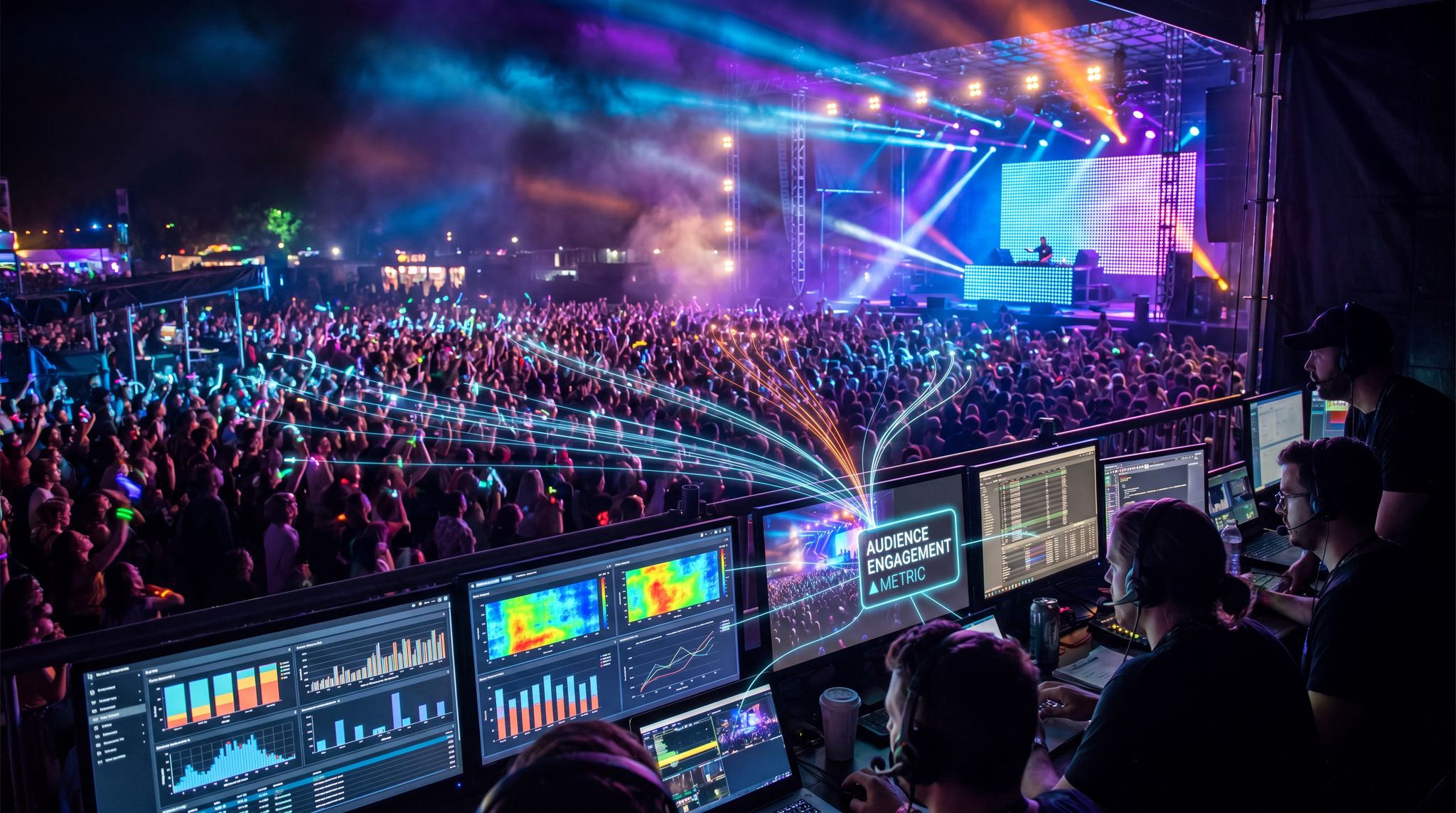
Successful festival production in 2026 starts with making decisions based on data rather than gut feelings. Gone are the days when planning was guesswork – modern producers are embracing data-driven festival planning at every step. Key metrics like historical attendance figures, ticket sales pacing, and online engagement stats provide a factual foundation for estimating crowd size, staffing needs, and budgets. For instance, analyzing pre-sale ticket trends and social media buzz can help forecast festival attendance with greater accuracy, preventing disasters like understaffing or shortages.
Today, the industry is shifting toward using AI and data analytics for smarter planning rather than relying on guesswork. A well-calibrated attendance forecast ensures you don’t rent a 10,000-capacity site for 6,000 attendees or run out of water when 8,000 people show up unexpectedly. Leading producers now feed ticketing data, Google Analytics, and even weather forecasts into predictive models to right-size every aspect of the event. The result is safer events, sound finances, and no nasty surprises.
To put this into perspective, consider a scenario:
Turn Fans Into Your Marketing Team
Ticket Fairy's built-in referral rewards system incentivizes attendees to share your event, delivering 15-25% sales boosts and 30x ROI vs paid ads.
| Planning Scenario | Potential Consequences |
|---|---|
| Under-projecting attendance (expecting far fewer than reality) | Overcrowded areas, long entry lines, understaffed security, shortages of food, drinks & amenities – safety risks and frustrated fans. |
| Over-projecting attendance (expecting far more than reality) | Wasted budget on idle staff and infrastructure, unsold inventory, empty VIP lounges – strained finances and lost revenue opportunities. |
In the past, many festivals learned these lessons the hard way. Today’s producers leverage data at every turn to avoid such pitfalls. Major events now use tools to monitor real-time ticket sales versus targets and adjust marketing or capacity accordingly. By tracking data early and often, you can spot if a certain ticket tier is selling slower than anticipated (triggering a promotional push) or if regional interest is higher than expected (justifying more shuttles or local partnerships). In short, data analytics turns hindsight into foresight for festival teams.
Metrics and Tools Every Producer Should Know
Being data-savvy doesn’t require a PhD – it means knowing which numbers matter for your festival and using the right tools to track them. Key performance indicators (KPIs) for festivals include ticket conversion rates, marketing ROI per channel, on-site spend per attendee, peak entry/exit times, and engagement metrics like app usage or social mentions. For example, tracking ticket sales and social engagement allows you to optimize campaigns with data and reveal which promotions drive the most conversions.
Planning a Festival?
Ticket Fairy's festival ticketing platform handles multi-day passes, RFID wristbands, and complex festival operations.
Furthermore, if you can’t measure your marketing efforts, you can’t improve them. If a particular YouTube after-movie or an influencer’s promo code drives a spike in sales, a smart producer doubles down on those efforts.
Modern event analytics platforms make this easier than ever. Google Analytics 4 (GA4) on your festival website shows where ticket buyers come from and which online ads or posts lead to purchases. Social media and email analytics inform you which content resonates with your audience. Many ticketing providers now build dashboards that consolidate these insights. Ticket Fairy’s ticketing platform, for instance, provides real-time dashboards and robust reporting on ticket sales, demographics, and engagement, offering tools that make analytics easy so even small festival teams can glean insights without needing a dedicated data scientist. The table below highlights some essential data tools and how producers use them:
| Tool/Platform | Purpose | How Festival Producers Use It |
|---|---|---|
| Google Analytics (GA4) | Website traffic & conversion tracking | Monitor ticket page visits, referral sources, and funnel drop-offs to improve marketing and ticket purchase flow. |
| Ticketing Analytics Dashboards (e.g. Ticket Fairy) | Ticket sales & attendee data in real time | Track sales by ticket type, geography, and time; identify sales spikes or lulls and adjust marketing or inventory (like parking or merch) accordingly. |
| Social Media Insights | Engagement metrics on posts/ads | See which announcements or ads got the most likes, shares, and link clicks. Focus spending on high-performing content or platforms. |
| Survey & Polling Tools | Attendee feedback and interest gauging | Collect data on what artists or features fans want, and estimate demand for new festival elements or merch via surveys. |
| Spreadsheet & BI Tools (Excel, Tableau) | Budgeting and deep-dive analysis | Build detailed budget models; analyze historical data (e.g., weather vs. attendance) to find patterns and make data-informed contingency plans. |
The key is measuring what matters. Producers should define clear metrics of success (attendance, satisfaction scores, profit margin, etc.) and track them rigorously. Just as importantly, share these insights with your team. A data-informed crew – from marketing to operations – can collaborate on evidence-based improvements. By fostering a culture that asks “What do the numbers tell us?”, festival organizers make smarter choices at every turn.
Real-World Example: Data Insights in Action
Many forward-thinking festivals have already reaped the rewards of analytics. For instance, the team behind Bonnaroo (USA) uses data to map how attendees move around the site, revealing which stages or attractions become congested. By identifying choke points from previous years’ location data, they reconfigured layouts and entry points, resulting in shorter waits and happier crowds. Automation is also delivering real value here, with some events seeing throughput increase significantly while requiring a third of the staff previously needed.
Data-Driven Event Marketing
Track ticket sales, demographics, marketing ROI, and social reach in real time. Exportable reports give you the insights to make smarter decisions.
In the UK, Glastonbury Festival famously implemented a pre-registration system years ago; beyond helping with anti-scalping, this provides a trove of demographic data well before the gates open. Glastonbury’s producers analyze this data to tailor services – for example, knowing a large percentage of fans are arriving from London influences shuttle planning and bar stock (different demographics have different drink preferences!).
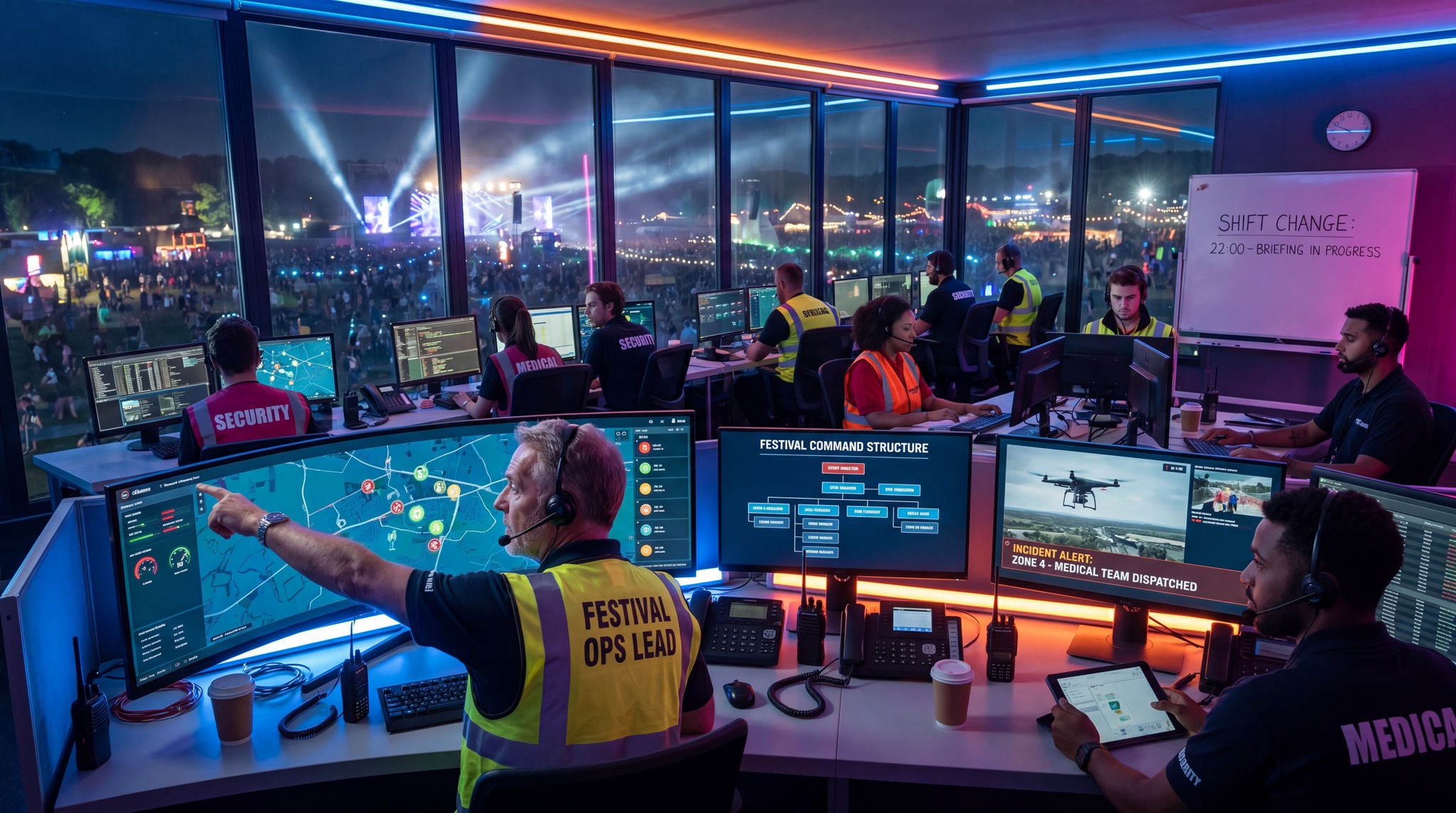
Some festivals even use real-time data dashboards during the event. Coachella’s operations center monitors live information on security incidents, medical calls, and throughput at each entrance. If data shows a particular gate is handling 20% more entries per hour than planned, managers can quickly redeploy staff from quieter gates to balance the load. Data alerts can also prevent problems: if merchandise sales data shows one particular T-shirt is selling out on Day 1, producers can rush-order more inventory overnight to meet demand on Day 2.
Need Festival Funding?
Get the capital you need to book headliners, secure venues, and scale your festival production.
The bottom line is that in 2026, information is power for festival crews. Producers who invest the time to collect and analyze data – and act on the insights – gain a significant edge in efficiency and attendee satisfaction. In an industry where margins are thin and fan expectations are sky-high, data literacy has become as important as having good taste in headliners.
Mastering AI and Automation in Event Production
AI for Operational Efficiency and Staffing
Artificial intelligence has quickly moved from buzzword to business tool in the festival world. In 2026, AI-powered planning is helping producers solve complex logistical puzzles that once took weeks of manual effort. Scheduling and staffing are prime examples: festivals juggle intricate schedules (artist set times, crew shifts, vendor load-ins) and AI software excels at optimizing these variables. AI-driven scheduling tools can crunch countless lineup permutations to minimize overlapping popular acts and even suggest optimal set times based on predicted crowd energy levels. Seasoned production managers report that algorithmic scheduling has cut their timetable planning from weeks to days, reducing artist conflicts and boosting attendee satisfaction.
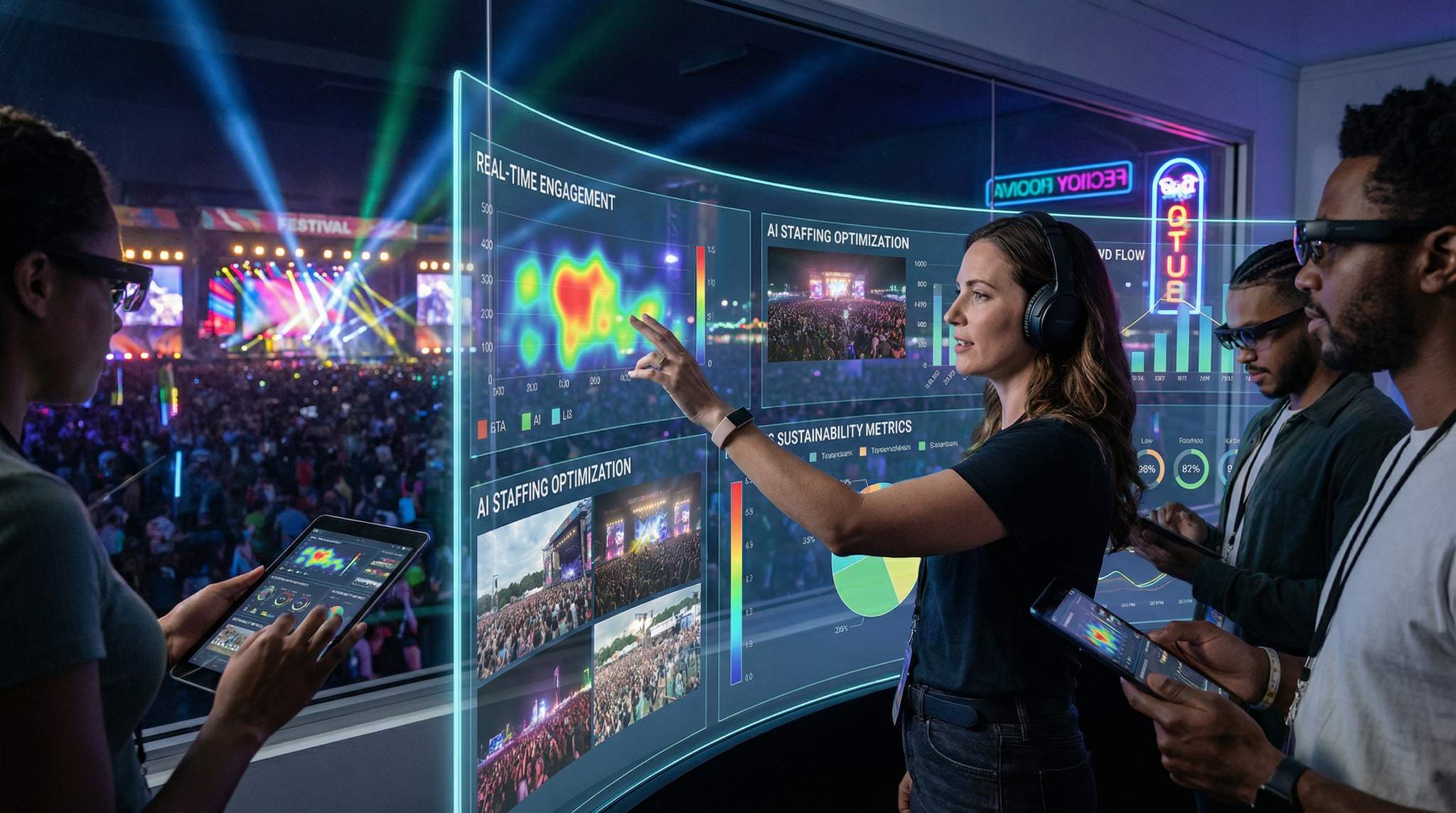
Similarly, machine learning is making staffing more precise. Instead of relying on standard formulas or hunches, producers feed historical entry data and online engagement metrics into AI models to forecast hourly crowd surges. At some large 2025 events, AI models predicted each day’s peak entry times with over 90% accuracy, improving attendee satisfaction by ensuring better service on the ground. Armed with these forecasts, one festival reallocated its gate staff schedule – adding more staff during the predicted 5–6pm surge and scaling back during slower hours – and cut average wait times in half. Data-informed adjustments like these translate directly to a better fan experience on the ground.
Beyond staffing, organizers are increasingly adopting ai tools for construction project forecasting to manage massive site builds. Erecting a temporary city requires precise coordination of heavy machinery, staging contractors, and infrastructure delivery. By utilizing predictive models originally designed for commercial development, festival production managers can anticipate weather delays, optimize load-in schedules, and prevent costly overtime during the critical build week.
Free Tool: Size Your Festival Site
Zoned capacity planning for arena, campsite, parking and entry lanes — against UK Purple Guide and NFPA density standards. Finds your bottleneck zone.
AI can also assist with real-time decision-making. If rain is forecast, AI simulations can estimate how that will affect attendee behavior (e.g. more people taking shelter in tents) and suggest proactive steps. Some festivals are testing AI-driven crowd monitoring via cameras and sensors; the AI flags unusual congestion or crowd flow issues so staff can intervene early. While these systems are still emerging, the potential is clear – AI offers an extra “brain” processing thousands of data points per second to help producers keep the event running smoothly.
Automating Repetitive Tasks (Without Losing Quality)
The festival labor crunch in recent years has accelerated the adoption of automation on-site. With many events facing staffing shortages, this “brain drain” left festivals facing a steep learning curve on site. Producers are turning to tech solutions to maintain service levels. A striking example is at the festival entrance: instead of dozens of staff manually scanning tickets, many 2026 festivals use self-service scanning kiosks and RFID turnstiles. Attendees simply scan their own QR code or wristband, while a few staff oversee multiple lanes. One attendant can monitor 2–3 kiosks handling ~30 people each per minute, meaning entry moves faster and with a third of the staff previously required, utilizing tech solutions to maintain service.
Festivals piloting these self-scan gates have seen entry wait times plummet and throughput per staff member drastically increase. By scanning a code or RFID wristband, attendees can be automatically charged, replacing slower manual processes.
Organizers are also rolling out automation at the bar and concession stands. Self-serve beer walls and QR code ordering systems let attendees pour their own drinks or pick up pre-ordered food without bartender or cashier bottlenecks. This allows for faster service and reduced lines. For example, a 2026 event in California deployed self-pour beer taps linked to RFID wristbands – one supervisor could oversee what used to be 4–5 bartender positions, and wait times for a drink dropped by 30-40%. These tech-driven efficiencies are especially valuable when staffing is tight post-pandemic.
Beyond serving drinks, festivals have started using cleaning robots to vacuum venues at night and drones for security patrols, handling tasks that would otherwise demand dozens of personnel on foot. These tools can monitor perimeters for security, covering vast areas efficiently. Real-world trials show that when thoughtfully implemented, automation can maintain or even improve service quality with fewer hands on deck.
However, savvy producers know technology shouldn’t replace the human touch where it matters. The rule of thumb is to automate repetitive, high-volume tasks – ticket scanning, payment transactions, basic information inquiries – while freeing human staff for roles where empathy, creativity, or complex decision-making are needed. As one industry report put it, the goal is “high-tech, human touch,” prioritizing safety and sustainability. While tech offers convenience, it should never replace the personal elements of hospitality. A volunteer with a warm smile greeting guests or a stage manager solving an artist’s last-minute request cannot be replaced by a robot. So while you might see robot bartenders and AI chatbots at 2026 festivals, the best producers deploy them to enhance efficiency without sacrificing the personal elements that make festivals magical.
Run Your Events From Your AI Assistant
Ticket Fairy exposes a Model Context Protocol server, so the assistant you already work in can read your events, orders and check-in numbers and act on them. By default a refund or a deletion stops and asks you to approve it first.
To ensure automation truly benefits your event, involve your team in the process. Train staff on the new systems so they can assist attendees and handle exceptions (e.g. a jammed ticket scanner). Monitor performance closely during implementation – gather data on whether the self-serve options are reducing wait times as intended, and be ready with a backup plan (like some human cashiers on standby) in case of tech glitches. By blending automation with human oversight, producers can fill labor gaps and control costs while keeping service quality high.
AI in Marketing and Fan Engagement
The impact of AI isn’t limited to behind-the-scenes operations – it’s also transforming how festivals market to and engage with fans. AI-driven marketing analytics help identify which potential ticket buyers to target and with what message. For example, machine learning can analyze past ticketing data alongside social media profiles to segment your audience and predict who’s likely to attend again. This enables micro-targeted promotions: an AI might reveal that attendees who came on a single-day pass last year are 40% more likely to upgrade to a full weekend pass if offered a loyalty discount. Armed with such insight, your marketing team can send personalized offers (with the AI even writing email copy tailored to each segment). Indeed, some festivals use AI-based tools to automatically adjust ad spend across platforms, shifting budget to the outlets generating the best ROI in real time.
Customer service is another domain where AI shines. Many festivals have rolled out chatbots on their websites and apps to handle common questions 24/7. Not all AI uses are purely functional; some events are embracing generative AI art to enhance the aesthetic experience. Instead of fans waiting hours for an email reply about the parking policy or allowed/prohibited items, an AI chatbot gives instant answers (“Yes, you can bring a reusable water bottle”) any time of day. This not only improves the fan experience but also lightens the load on your customer support team, who can focus on complex or urgent inquiries. Producers should work with their tech teams to “train” these chatbots with an updated festival FAQ and hand off any unfamiliar questions to human staff. Attendees show up better informed and happier – which translates to fewer issues on-site.
On the creative side, generative AI tools have become a secret weapon for lean festival teams. Visual design and content creation for festivals demand high volume and quick turnarounds – think lineup posters, stage screen animations, social media teasers – and AI can produce impressive assets in a fraction of the time. Image-generating AI like DALL·E or Midjourney allows producers to create eye-catching poster art or merchandise designs by simply describing the concept. On the creative front, festival marketing is evolving rapidly. Several mid-sized festivals in 2025 generated unique artwork for each lineup announcement using generative AI, yielding fresh styles that boosted fan engagement and saved thousands in graphic design costs.
Teams can now use tools like DALL-E or Midjourney to brainstorm posters, experimenting with novel visuals while saving on art direction costs. Likewise, AI video tools can help stitch together after-movie footage or promotional content quickly, while AI text generators draft press releases or social posts that staff can then fine-tune.
Of course, human creativity and oversight remain critical. Top producers treat AI-generated content as a starting point or a brainstorming partner, not a final product. This approach can lead to bigger crowds and higher profits when executed correctly. Festival marketing teams often generate multiple AI visuals, then pick the best and have a human designer refine the details to ensure the art aligns with the festival’s authentic brand. This hybrid approach dramatically speeds up production while keeping the results on-message. And the cost savings are real – one European festival reported cutting their promo graphic design budget by 50% by supplementing with AI art tools, allowing them to reallocate funds to on-site experience improvements.
Go Cashless With RFID Technology
Enable contactless payments, faster entry, and real-time spending analytics with RFID wristbands and NFC-enabled ticketing for your events.
Looking ahead, we can expect AI to play a bigger role in personalizing the attendee experience. Imagine a festival app that uses AI to recommend a schedule for each fan (“You loved last year’s techno stage, and it’s about to get crowded – head there in 10 minutes and we’ll reward you with a discount at the nearest coffee cart”). Some festivals are already experimenting with AI-driven personalization: in 2025, personalized lineup schedules and silent disco playlists tailored by AI debuted at a tech-forward music fest in Amsterdam, delighting fans who felt the event was custom-made for them. The key for producers is to explore these innovations with an eye on value – does an AI application genuinely enhance the fan experience or solve an operational challenge? If yes, it’s worth a test. If it’s just tech for tech’s sake, think twice.
One study of the live music sector suggests that AI can indeed boost resilience, efficiency, and creativity in events when applied thoughtfully. Industry-wide, adoption of AI tools has surged as their benefits become clear. As a festival producer, you don’t need to code algorithms, but you must be comfortable managing AI-driven projects and partners. This might mean working with a tech vendor who provides an AI scheduling system or hiring a data analyst who can interpret AI insights for your team. Encourage your staff to take workshops on AI in events, share case studies of festivals successfully using AI, and maybe start with a small pilot project (for example, use an AI chatbot just for VIP ticket holders and gauge the feedback). By upskilling in AI and automation – and creating a team culture open to innovation – you’ll keep your festival running at peak efficiency and ready to wow attendees in new ways.
Balancing Innovation with Human Judgment
While mastering AI and automation is crucial, producers must also develop the discernment to know when to rely on tech and when to lean on human judgment. Technology can introduce new risks or ethical questions – algorithms might unintentionally reflect biases in data (say, favoring certain music genres in recommendations) or an automated system might fail in a way humans wouldn’t (like misidentifying a security threat). That’s why the best festival organizers treat AI as an assistant, not an infallible boss. Human oversight and common sense remain paramount.
For example, if an AI scheduling tool suggests cutting an act’s set short to optimize changeover times, an experienced producer considers the artist relations impact and fan reaction before blindly accepting it. If data predicts low attendance on a certain day, you still ensure full safety measures in case it’s wrong. In essence, tech skills go hand-in-hand with traditional festival know-how. As one festival director put it, “Use AI to make better decisions, not to make the decisions for you.” Producers that blend cutting-edge tools with their own expertise will strike the right balance – keeping their festivals innovative and authentic.
Cultural Fluency, Diversity, and Inclusion
Understanding Global Audiences and Tastes
Festivals have never been more global. In 2026, a hit song can explode on TikTok in one country and create fan communities for an artist halfway across the world. Festival producers need cultural fluency to navigate this global stage. This means understanding the values, trends, and sensitivities of different cultures and subcultures – both to book the right talent and to avoid missteps. An organizer in California might host a K-pop showcase to attract young Korean-American fans (knowing the global K-pop “fan army” phenomenon), while a European festival expanding into the Middle East must adapt to local norms around attire, food, and mixed-gender crowds.
Emerging markets are a particular focus. Global festival producers are looking at new regions and new audiences across Asia, the Middle East, Africa, and Latin America, which are experiencing a boom in live music demand thanks to youthful populations and rising middle classes. A festival expansion to a new region can be hugely successful – or a costly failure – depending on how well producers adapt to the local culture. For example, Nigeria’s Gidi Culture Fest tapped into West Africa’s huge youth demographic by succeeding in emerging markets with local acts, blending Afrobeats stars with international talent. This demonstrates how aligning with local music trends and rising incomes yields rapid growth. In the Middle East, producers learned that scheduling around religious holidays and providing ample prayer areas on-site are key to winning over local attendees. Global cultural know-how also extends to marketing: an ad that works in Australia might fall flat in India, and social media platforms popular in the West (Facebook, Instagram) might be less relevant elsewhere compared to TikTok or local networks.
Grow Your Social Following With Every Sale
Require social media follows, shares, or playlist adds to unlock presale access or special pricing. Turn every ticket purchase into audience growth.
The savviest festival organizers do their homework before entering any new cultural context. That means consulting local partners, conducting audience research, and sometimes doing smaller showcase events first to learn. Adapting to local cultures when expanding to new regions isn’t optional – it’s essential for avoiding cultural gaffes and building genuine connections with audiences. A great strategy is to forge partnerships on the ground: team up with local promoters, community leaders, or government tourism boards who understand the landscape. These partners can guide everything from permits to programming choices that will resonate. In fact, many governments welcome festivals as tourism boosters. It’s not just consumer demand driving this; governments like Saudi Arabia’s are supporting events like MDLBEAST Soundstorm, as noted in a review of emerging festival markets. By working hand-in-hand with local stakeholders, producers show respect for the culture and often gain financial or logistical support that sets their event up for success.
Beyond geography, cultural fluency also means understanding shifting audience values and tastes. Gen Z and millennial audiences worldwide tend to value diversity, social impact, and unique experiences. They are as excited for a yoga-and-meditation session or an esports gaming lounge as they are for a headline DJ. Producers should keep a finger on the pulse of youth culture: what memes or viral challenges could be playfully incorporated onsite? What global events (e.g. a World Cup match or Diwali celebration) might overlap with your dates and how can you acknowledge them? Even subtler, cultural fluency means knowing how your festival’s ethos can include everyone. Are you celebrating only one subculture, or creating a space where multiple communities feel at home? The best festivals often blend genres and cultural elements – take Primavera Sound in Spain, which in recent years has mixed reggaeton and Korean pop acts alongside indie rock, reflecting the eclectic tastes of modern audiences.
Designing Inclusive and Accessible Experiences
True cultural competence for a festival producer extends to diversity and inclusion in every aspect of the event. Festivals should aim to welcome people of all backgrounds, abilities, genders, and orientations – not just because it’s the right thing to do, but because it genuinely creates a richer festival atmosphere. An inclusive festival that makes everyone feel welcome tends to build more loyal audiences and positive word-of-mouth. Organizers who prioritize accessibility and diversity see tangible benefits. Achieving this requires thoughtful planning and proactive measures:
- Accessible Facilities: Ensure your venue and infrastructure can accommodate attendees with disabilities. This might mean installing temporary ramps and sturdy pathways over rough terrain, providing wheelchair-accessible viewing platforms at stages, and reserving accessible camping or parking spots. Using matting or pathways over uneven ground is a crucial step. Many top festivals now also offer multi-sensory areas and charging for medical devices like wheelchair batteries. Additionally, providing sign language interpreters for major performances and live captioning screens for deaf or hard-of-hearing guests helps ensure that everyone is included. These services not only help those who need them, but they send a message that everyone is invited to the party.
- Gender-Inclusive Amenities: Festival producers in 2026 commonly provide gender-neutral restrooms and changing areas alongside traditional facilities. It’s a simple step that helps transgender and non-binary attendees feel safe and comfortable. Likewise, training staff on proper use of pronouns and having a clear anti-harassment policy are industry-standard best practices to ensure all guests – regardless of gender or orientation – feel respected. Many events prominently post their code of conduct and have “safe space” or welfare teams on-site, making inclusion a visible priority.
- Diverse Lineups and Content: The artists, speakers, and experiences at your festival should reflect the diversity of your audience. Strive for a lineup that includes different genders, racial and ethnic backgrounds, and music genres. This isn’t just tokenism – it genuinely improves the show. A study by UC San Diego found that festivals with more diverse artist lineups often attract larger and more varied crowds, as they tap into multiple fan bases. A shining example is Primavera Sound’s 2019 edition, which achieved a 50/50 gender-split lineup (half the acts were female-fronted). This became the first major festival to achieve a 50/50 gender split, setting a new normal. Primavera’s team reported that the gender-balanced lineup not only earned praise for its progressiveness, but it also delivered one of the festival’s most memorable years, with standout performances by women artists who might previously have been underrepresented. The success debunked the myth that “there aren’t enough female headliners,” and many festivals have since followed suit, proving they are out there.
- Cultural Representation and Sensitivity: It’s important for producers to be mindful of cultural appropriation and representation. If your festival features art or themes from a particular culture (say, a Native American art installation or a Bollywood dance workshop), collaborate with members of that culture to do it authentically and respectfully. Also consider holidays or significant dates for various communities – for instance, avoid scheduling your festival over major religious holidays that might exclude part of your audience (unless your event is a celebration of that holiday). When everyone sees their culture respected and represented, it creates a sense of belonging that elevates the entire festival vibe.
Producers should solicit feedback from diverse voices during the planning process. Assemble a volunteer advisory board or focus group that includes people of different ages, abilities, genders, and cultural backgrounds to review your plans. They can offer valuable perspective on everything from the accessibility of your site map to whether your marketing images reflect a diverse crowd. In 2026, many festivals also engage directly with fan communities on social media or via surveys to ask: How can we make our event more inclusive and welcoming for you? Listening and responding to that input builds trust – attendees feel heard, and you catch issues early.
Remember, inclusivity isn’t just about avoiding problems; it’s a positive driver of success. A festival known for its inclusive atmosphere will attract a wider audience (including groups who historically might have felt unwelcome at large events) and can often tap into special interest sponsorships or grants aimed at supporting diversity in the arts. It’s no surprise that some of the fastest-growing festivals are those leading the way in inclusion – for example, many Pride-themed festivals or those with explicit diversity missions have seen loyal followings. When people attend a festival and see a diverse crowd that brings energy and new perspectives, it enhances the experience for everyone. From the accessible entrance to the main stage, creating that environment ensures your festival will stand out in the best possible way.
Cultural Competency on Your Team
To produce a culturally fluent and inclusive festival, start with your internal team and crew. Hire and empower a diverse staff and volunteer base that brings different perspectives to the table. Having team members from various backgrounds (ethnic, national, linguistic, etc.) will help you catch cultural nuances you might otherwise miss. For instance, a producer might not realize a particular stage design or slogan has an unintended meaning in another language – but a team member who speaks that language could catch it and save potential embarrassment. A diverse team is also more likely to come up with creative ideas that appeal to a broad audience, simply because they have a broader combined outlook.
Invest in cultural competency training for your festival staff. Many large event organizations now conduct diversity and inclusion workshops before the season, covering topics like unconscious bias, respectful communication, and conflict resolution among attendees. Front-line staff (security, customer service, stage crew) should be coached on scenarios such as assisting attendees with disabilities, handling instances of discrimination or harassment, and being sensitive to cultural customs (e.g., how to approach a headscarf-wearing attendee of a different faith if doing a security pat-down, or understanding why some attendees might not drink alcohol and ensuring they have other options). These trainings can significantly improve how your team interacts with festival-goers and with each other.
Another aspect of cultural fluency is community engagement. Festivals often take place within local communities that have their own cultural dynamics. An experienced producer makes an effort to build positive relationships with local residents, businesses, and authorities, showing respect for the community hosting the event. This might involve attending town hall meetings, offering locals discounted tickets or opportunities to vend/perform, and incorporating local culture into the festival programming. A good example is Austin’s South by Southwest (SXSW) festival, which, despite growing into a massive international event, works closely with local Austin organizations and highlights Texas artists and cuisine. By doing so, they maintain local goodwill and authenticity even as global stars arrive. In short, don’t be the outsider festival that parachutes in each year without regard for the locale – integrate and celebrate the community, and you’ll create a festival culture that people want to be a part of year after year.
In summary, cultural fluency, diversity, and inclusion are not just “nice-to-have” values in 2026 – they are must-have skills for festival producers. The world is interconnected and audiences expect events to reflect that. Producers who champion inclusivity and demonstrate cultural intelligence will craft festivals that resonate deeply with attendees, avoid unwanted controversies, and open doors to new markets and partnerships. It’s about creating an environment where everyone feels they belong under the festival banner.
Driving Sustainability and Environmental Leadership
Setting Sustainability Benchmarks for 2026
Environmental responsibility has shifted from a niche concern to a central pillar of festival management. In 2026, producers are under intense pressure from fans, sponsors, and regulators to not only talk the green talk but walk the green walk. Festival producers face a mandate to demonstrate measurable action or risk backlash. This means setting clear sustainability targets and hitting them. Key benchmarks many festivals now strive for include:
- Zero Single-Use Plastics: Eliminating disposable plastics from the festival – no single-use plastic cups, straws, bottles, or cutlery for vendors and backstage. England’s government, for instance, implemented a far-reaching ban on single-use plastics in October 2023, which pushed UK festivals to adopt reusable cup programs and water refill stations en masse. Leading events like Glastonbury and Reading Festival introduced deposit-return cup systems (attendees pay a small deposit for a sturdy cup and get it back when they return the cup) and dramatically reduced plastic waste almost overnight.
- Waste Diversion Rate: Achieving at least 90% waste diversion from landfills is an increasingly common goal. As the 2026 festival season approaches, hitting these targets helps win sponsors and satisfy regulators. This means the vast majority of festival waste is recycled, composted, or reused. Many festivals now conduct on-site sorting – teams of volunteers or paid “trash crew” ensure that recyclables and compostables are separated from true trash. For example, Boom Festival in Portugal reportedly hit an 85% waste diversion rate by investing in extensive recycling stations and creative upcycling projects for decor. Some events aim for zero-waste status by encouraging attendees to bring their own cups/plates, banning non-recyclable vendor packaging, and donating left-behind tents and gear to charities. Zero waste may be tough to achieve, but every percentage point closer counts (and can be touted in press releases to demonstrate leadership).
- Carbon Emissions Reduction: Festivals are major carbon emitters, mainly from audience travel, artist transportation, and power generation. Many 2026 producers are committing to measurable carbon reduction plans – for instance, cutting carbon footprint by 50% compared to a 2019 baseline, or powering the event with at least 50% renewable energy. Some benchmarks are set through initiatives like the Green Deal circular festivals (in Europe) or industry pledges such as ADE Green. A concrete example: DGTL Festival (Netherlands) achieved a 100% renewable energy supply (using biofuels and solar) and significantly cut carbon by sourcing local talent and offering train packages to international attendees. Even if full decarbonization isn’t feasible yet, festivals are taking steps like planting trees to offset emissions, or partnering with carbon accounting firms to track and transparently report their footprint.
- Sustainable Material Use: Another benchmark is ensuring stage materials, merch, signage, and infrastructure are made from sustainable sources. This can mean using biodiesel for generators, LED lighting to save energy, sustainably sourced timber for stages, and banning things like styrofoam entirely. A practical goal might be “100% of festival merchandise and staff clothing made from organic or recycled materials” – which some events have written into their sustainability charters.
Achieving these benchmarks requires planning and often multi-year roadmaps. Festival producers should start by conducting a sustainability audit of their event’s current impact: how much waste is generated, how much diesel is burned, etc. From there, set specific targets and timelines (e.g., “eliminate single-use plastic water bottles by 2024; transition 50% of generators to solar or renewable fuel by 2026”). Many festivals now hire a sustainability coordinator or consultant to lead these efforts and to interface with environmental regulators. Keep in mind, transparency is key – publish your goals and progress in an annual sustainability report or on your website. Fans and sponsors appreciate honesty, and if you fall short one year, acknowledging it and outlining how you’ll improve builds trust.
It’s worth noting that around 70% of festival-goers now say a festival’s environmental practices influence their ticket purchasing. The message is clear: merely talking about green issues is not enough. In a UK survey, 56% of festival-goers labeled sustainability a major factor or quite important in their choice of events, and an overwhelming 81% expect festivals to actively mitigate the negative impacts they have on the environment. These stats make it clear: embracing sustainability can give your festival a competitive edge, while ignoring it can result in backlash or lost attendees.
Implementing Eco-Friendly Innovations
Once goals are set, producers need to translate them into action through both small changes and big innovations. Some effective sustainability practices and tools taking off in 2026 include:
- Renewable Energy and Grid Power: Instead of diesel generators chugging along all weekend (and emitting CO2 and noise), festivals are investing in renewable energy sources. This ranges from installing temporary solar panels and wind turbines onsite, to using portable battery systems that store green energy produced off-site. In cities, many events are simply connecting to the electric grid (which gets cleaner each year as renewables grow) rather than using generators at all. A case in point: Denver’s Grandoozy Festival cut generator use by hooking into the city grid and purchasing renewable energy credits to cover their electricity. Likewise, Australia’s Splendour in the Grass festival has trialed solar-powered stage setups. There is often an upfront cost, but fuel savings and potential sponsorship from green tech companies can offset it.
- “Green Touring” Alliances: A fascinating development in 2026 is festivals teaming up with artists and each other to reduce travel emissions. Through green touring alliances, organizers are setting up analytics foundations to coordinate scheduling so artists can play a circuit in one region instead of crisscrossing the globe. They also share resources like backline equipment to avoid each festival transporting its own. For example, several European fests created a pooled system where a set of festival-owned LED screens and lighting rigs travel efficiently by train to each event in sequence, rather than each festival shipping separate gear. By cooperating, they slashed trucking emissions (and saved money on freight costs). Producers should communicate with booking agents and fellow festivals – if you know you’re booking a few of the same headliners as another event a week apart, see if you can collaborate on routing or equipment sharing. It’s both cost-effective and eco-friendly.
- Waste Reduction Innovations: Festivals at the forefront of sustainability are rethinking every aspect of waste. Compostable plates and cutlery are standard at many events now, enabling food waste and serving ware to go into compost together. Some events even provide pocket-sized reusable utensil kits for attendees (often sponsored by a eco-minded brand). Water refill stations have popped up everywhere to discourage bottled water – some festivals go a step further, selling branded reusable bottles and providing free chilled water to anyone with one. To tackle campsite waste (tents and camping gear left behind), initiatives like tent rental programs or on-site “leave no trace” education teams have shown success. There are also emerging apps that encourage festival-goers to log sustainable actions (like refilling their bottle or recycling something) in exchange for points or prizes, effectively gamifying eco-friendly behavior.
- Local Sourcing: A subtle way to cut carbon and support communities is local sourcing of food, beverages, and materials. A lot of emissions come from trucking goods long distances. By working with local farms, breweries, and vendors, festivals reduce transport emissions and often get fresher products. Plus, “locally sourced” is a great marketing point to today’s attendees. Some creative twists: a New Zealand festival partnered with local farms to create a “farm-to-festival” food court where everything was grown within 50km; the left-over cooking oil from food vendors was collected to be converted into biofuel for the next year’s generators.
- Technology for Sustainability: Tech isn’t just for operations – it’s helping sustainability tracking too. Producers are using tools like smart power management systems to optimize generator use (automatically turning them off when demand is low) and IoT sensors to monitor trash bin fill levels (so they’re only emptied when needed, reducing trips). Drones have been used to survey campsites after load-out to quickly identify areas with left-behind trash or tents, directing cleanup crews more efficiently. There are even apps that calculate the carbon footprint of an attendee’s journey based on their check-in location, which some festivals use to raise awareness (e.g., showing a user their trip emitted X kg of CO2 and encouraging a donation to an offset program).
Crucially, producers should evaluate which green initiatives deliver the most bang for the buck. Some interventions both reduce environmental impact and save money – those are no-brainers to implement. For example, switching to LED lighting on stages can cut energy use by up to 70%, which either lowers fuel costs for generators or your power bill. You can discover how to optimize your event to find these savings. Introducing a reusable cup system might involve upfront costs for the cups but can save on waste disposal fees and even generate income if you charge a small deposit that many attendees keep as a souvenir. In fact, many festivals find that going green can boost the bottom line when done smartly.
A noteworthy case: Shambala Festival (UK) eliminated meat from its food vendors to reduce carbon footprint; not only did this cut emissions significantly, but it also sparked positive media coverage and didn’t hurt ticket sales at all (attendees adapted to the delicious vegetarian offerings). Shambala also reports that by removing meat (which is costly to store and cook safely at a festival), some operational expenses dropped. Likewise, implementing robust recycling can reduce the number of dumpster pulls and trash haul fees you pay. In short, sustainability and profitability aren’t mutually exclusive – they often go hand in hand when approached creatively, as shown by various sustainable festival initiatives that save money on operations. Furthermore, energy and sustainability tech is greening festivals while maintaining the thrilling spectacle of music.
Engaging Fans and Sponsors in Sustainability
The most effective sustainability programs are those that actively involve the attendees and artists. Festival producers are realizing that fans want to be part of the solution and can actually help drive your eco-goals if you encourage them.
Start by communicating your sustainability mission clearly to attendees. If you’ve set goals to be greener, tell your audience what you’re doing and why – and how they can help. Use your website, social media, and signage at the event to highlight green initiatives (e.g., “We’re striving for 90% recycling – please sort your waste at our colorful recycling stations!”). Many festivals hand out a “Green Guide” as part of the program or app, detailing things like shuttle options, where to find water refills, and tips for an eco-friendly festival experience. When fans understand the why and the how, they generally respond well. A 2024 survey found that 56% of festival-goers care more about a festival’s environmental impact than they did the year before, with many citing it as a major factor in their decision. Half said they are personally taking steps to reduce their own festival waste. This is a trend you can harness by making sustainability part of the festival’s story.
Incentives can boost engagement. Some festivals implement “eco rewards”: bring a bag of recyclables to the eco-station and get a token for a discount on merch or a chance to win VIP upgrades. Deposit schemes (like $5 cup deposits) already incentivize returning cups, but you can get creative beyond that. At several European festivals, attendees who take public transit or carpool receive fast-track entry or a free merch item, rewarding low-carbon travel. These programs both educate and make sustainable actions fun. Gamifying sustainability – such as a digital leaderboard for the camp that recycles the most – can turn eco-consciousness into a community competition in the spirit of the event.
Artists and sponsors are powerful allies in sustainability efforts. Many artists are outspoken about climate issues and appreciate events that align with their values. Consider creating a “green rider” addendum for artists, offering them options like electric vehicle transfers, locally-sourced catering, and asking them to take part in fan messaging (e.g., recording a quick video to play on the screens urging fans to clean their campsites or using a reusable water bottle on stage as a subtle message). High-profile acts doing these things can really influence fan behavior. For example, superstar DJs at Tomorrowland have taken to making short stage announcements encouraging the crowd to pick up trash around them – and thousands of fans oblige, creating a peer-driven cleanup moment.
Sponsors, too, are increasingly interested in festivals’ sustainability creds. Companies have their own ESG (Environmental, Social, Governance) goals, and if your festival meets certain benchmarks (like being carbon neutral or plastic-free), it can attract sponsorship from brands that want to be associated with those positive efforts. In 2026, we’ve seen sustainability partnerships where an eco-focused sponsor underwrites a particular initiative – for instance, a solar energy company sponsoring your solar-powered stage, or a water filtration company sponsoring all the free water stations. These relationships can provide both funding and expertise. Don’t be shy about asking sponsors to support green projects; it often results in win-win PR and genuine improvements. A prime example is Roskilde Festival in Denmark, which partnered with energy company Ørsted to deploy innovative sustainable power solutions on-site, greatly reducing diesel use and giving Ørsted a living showcase for their tech.
Lastly, engage with external sustainability programs and certifications to validate and improve your efforts. Organizations like A Greener Festival offer assessment and awards for festivals that hit eco-targets, and the process of getting certified can reveal new areas to work on. There are also collaborative networks (like the Green Events & Innovations Conference) where producers share best practices. By plugging into the sustainability community, you’ll stay updated on new solutions – and signal to all stakeholders that you take your environmental impact seriously. In the eyes of fans and media in 2026, a festival that can proudly say it’s moving beyond greenwashing and achieving real results is far more likely to earn respect, loyalty, and positive buzz.
In summary, sustainability leadership has become a core competency for festival producers. Those who embrace it are not only protecting the planet but also future-proofing their events against regulatory changes and earning the love of eco-conscious fans. The skills involved – from carbon literacy and waste management to community engagement – might feel new to old-school producers, but they are quickly becoming as important as booking talent or securing insurance. The festivals that thrive into the late 2020s and beyond will be the ones that can honestly say they left the world a little better (or at least no worse) through their events.
Collaborative Leadership and Building a Future-Ready Team
Multidisciplinary Team Management
Modern festivals are massive undertakings that require a multidisciplinary team. As a producer, you’re not just managing stage crews and vendors anymore – your core team might include data analysts, sustainability officers, social media managers, app developers, health & safety experts, community liaisons, and more. To thrive in 2026, producers need excellent crew and team management skills to coordinate these diverse roles toward a common vision. This starts with structure: clearly defining roles and responsibilities so nothing falls through the cracks. Many veteran organizers recommend drawing up a detailed org chart and communication plan early in the planning phase, especially if you’re scaling up. When each team member knows their domain (and who they report to), it prevents chaos during crunch time. Adopting a lean organizational structure with clear roles ensures that everyone knows “who does what,” preventing tasks from being dropped.
One challenge with multidisciplinary teams is avoiding silos. The marketing team and the operations team, for example, might have very different expertise and priorities – but their work is interconnected (a promo promising “skip the line with Fast Pass” needs ops to implement that!). As the leader, foster a culture of collaboration and regular cross-department check-ins. Some festivals hold weekly all-hands meetings where each department shares updates – this keeps everyone informed and encourages problem-solving across specialties. Use project management tools (Asana, Trello, Monday, etc.) with shared dashboards so that, say, the site ops folks can see the ticket sales trajectory (to plan parking and toilets), and the marketing folks can see the site layout (to know what experiences to highlight in ads). Technology can greatly aid team coordination: a centralized communication platform (like Slack or Microsoft Teams) with channels for each project or stage can replace dozens of confusing email threads. Encourage a culture where the sustainability manager can chime in on the production chat if they have an idea to reduce generator use, or the security chief can flag a concern to the talent team if a particular artist tends to draw rowdy crowds.
Remote work and global teams are also more common now. You might be coordinating stage designers in Los Angeles, a ticketing specialist in Singapore, and a PR agency in London, all for a festival in Brazil. Producers need to be adept with virtual collaboration – scheduling across time zones, using video conferencing effectively, and ensuring that remote team members feel as included and accountable as those on-site. During the pandemic, the industry got used to planning events over Zoom, and that’s stuck as a norm for many planning meetings to avoid travel costs. But don’t underestimate the value of periodic in-person site visits or team retreats if possible; they can solidify relationships and align everyone on the festival’s vibe in a way that video calls can’t.
Leading a multidisciplinary crew also means speaking everyone’s language to some extent. A producer doesn’t need to write code for the festival app, but should understand the tech team’s timelines and challenges. You might not run the mixing board, but knowing the basics of audio and lighting workflows will earn your production crew’s respect. Take time to learn at least a little about each domain (ask your experts questions, attend a seminar, read an industry blog) so you can make informed decisions and translate between groups. Being the bridge between marketing, technology, creative, and logistics teams is now a core part of the festival producer’s role. When everyone is rowing in the same direction under unified leadership, the event runs markedly smoother and the team morale stays high.
Innovative Approaches to Staffing and Volunteers
In 2026, many festivals are grappling with a staffing crisis: a shortage of experienced crew due to post-pandemic industry changes and increased competition for talent. The festival industry’s workforce was hit hard, leading to dire shortages of over 25% in some areas. Tackling this requires producers to get innovative with recruitment and retention. First, cast a wider net in recruitment – the old method of relying on the same local crew or word-of-mouth hiring may not suffice. Festivals are now reaching out to new talent pools: gig economy workers, recent event management graduates, even enthusiastic fans with relevant skills. For example, some producers partner with universities and offer internship or practicum programs that bring in students to assist in areas like marketing, production design, or admin. This pipeline not only fills roles, but trains the next generation of festival professionals. Others are tapping into online communities – posting crew calls on social media and forums to find people with niche skills (e.g., drone operators, accessibility coordinators) who might not be on the usual event crew circuit.
Retaining your best team members has become equally important. Veteran lighting techs or site managers are worth their weight in gold; losing them means losing institutional knowledge. Competitive pay and benefits are one obvious retention strategy – festival work used to be notoriously underpaid, but in 2026 many organizers have increased day rates or started offering perks like travel stipends, meal allowances, or even health insurance for longer-term contracts. However, money isn’t the only factor. Crew surveys show that a sense of growth and appreciation is key to staying on board. Provide clear pathways for advancement (like promoting a stagehand to an assistant stage manager, or a volunteer coordinator to crew chief over a couple of years) so people see a future with your festival. Encourage skills development by hosting training sessions (you could bring in a safety expert to certify the crew in crowd management, for instance, which is a resume booster for them). A number of festivals now hold off-season crew workshops or send staff to convention seminars (such as the Event Safety Summit or IFEA conferences) as a reward and development opportunity.
Volunteer programs also need a refresh for the new reality. Volunteers have long been the lifeblood of festivals – trading labor for tickets – but their expectations have evolved. Young volunteers are often looking for more than a free pass; they want meaningful experiences or career-related benefits. In response, some festivals are overhauling volunteer programs to be more educational and community-oriented. Determining which innovations actually improve festivals applies to staffing too. For instance, Coachella’s volunteer orientation now includes a behind-the-scenes tour and Q&A with department heads, turning the volunteer gig into a mini masterclass in festival operations. Others create volunteer “teams” (green team, info team, artist liaison support) that build camaraderie and give a sense of identity beyond just checking wristbands at a gate. Recognition is crucial: shout-outs on social media, a dedicated volunteer thank-you party, or a simple certificate of hours served (useful for students) can go a long way. Also, with labor laws tightening in some places, festivals are careful to ensure volunteer roles are truly voluntary and not replacing what should be paid jobs – one solution has been offering more modest wages or stipends for critical roles, effectively making them paid crew, and focusing volunteers on supplemental tasks.
A great case study is Lollapalooza Chile, which found itself short on experienced stage crew. They partnered with a local technical institute to recruit students of audio engineering and event production as paid apprentices during the festival. These apprentices filled entry-level roles, shadowed seasoned crew, and in following years many stepped up into full roles – effectively creating a pipeline of talent. Similarly, several UK festivals facing stewarding shortages joined with the Scouting association to bring in volunteer teams of Scouts (and their leaders) to help with basic duties, in exchange for donations to the Scout group. It was a win-win: the festival got reliable volunteers known for teamwork and the Scouts got a fundraising opportunity and a unique experience.
In tight labor markets, producers also collaborate rather than compete for staff. For example, if two festivals are a month apart, they might coordinate on hiring the same stage construction crew, offering them a slightly longer contract covering both events (with a break in between). This guarantees the crew more work and income, making them more likely to stick around, and both festivals benefit from crew continuity. Solving the staffing crunch with innovative recruitment and retention strategies has become a hot topic among producers sharing tips on networking groups and blogs. Facing a festival staffing crunch requires innovative recruitment and retention strategies to overcome industry-wide challenges. The consensus is clear: treat your crew like the invaluable partners they are. Happy, well-supported staff will not only come back next year (saving you recruitment headaches), but they’ll also go the extra mile to ensure the festival’s success.
Training, Upskilling, and Knowledge Transfer
With so many new technologies and practices in festival production, continuous training is essential. Even experienced crew need to learn new tricks – whether it’s how to operate the latest cashless payment system, follow updated safety protocols, or work with a sustainability plan. Producers should implement regular training programs for their teams, both pre-season and on-site. This could be formal (like hiring a consultant to run a crowd management simulation drill with your security team) or informal (like encouraging department heads to hold brief “toolbox talks” each day to go over one key learning or debrief from the day before). The goal is to create a learning culture where feedback and skill growth are baked into the event cycle.
Safety training in particular cannot be one-and-done. The environment keeps changing – for instance, the rise of rogue drones means your security team should be briefed on what to do if a drone flies over the crowd (some festivals have even invested in drone jamming guns or set up “no-fly zone” detection systems). It’s important to distinguish between buzzwords like AI, AR/VR, and NFTs and tools that solve real problems. Similarly, with heightened awareness of medical risks like opioids, training staff and volunteers in areas like Naloxone administration for overdoses or basic first aid has become more common. This is part of using data analytics for smarter planning and safety preparedness. A great example is festivals that now run emergency drills on site before gates open: they simulate an incident (like a stage evacuation or severe weather shelter-in-place) with the full crew to practice the response. This kind of hands-on training is invaluable; it helped one Midwest U.S. festival handle a sudden tornado warning smoothly because the team had practiced exactly that scenario two days prior.
Don’t overlook leadership and teamwork training as well. A festival is like a temporary city with a workforce that often just met each other days ago – investing a bit in team-building can greatly improve communication when the pressure is on. Something as simple as bringing key crew chiefs together for a half-day retreat before the season to discuss common challenges and build rapport can yield a more unified leadership team on site. Some events use personality or work style assessments (like Myers-Briggs or DiSC profiles) to help teams understand each other’s communication styles at a high level. The bottom line: strong teamwork doesn’t always happen organically under duress; a proactive producer works to cultivate it.
Another critical aspect for long-term success is knowledge transfer. Festivals often have returning staff mixed with first-timers. You want the veterans to pass on their hard-earned knowledge to newcomers so that mistakes aren’t repeated and improvements continue year to year. Set up a buddy or mentor system, pairing an experienced crew member with a newbie in the same department. Document processes – for example, your site ops team can maintain a “playbook” that gets updated each year with what was learned (like which forklift paths worked best or how the new stage hoist mechanism performed). Regular debrief meetings after the event (and even daily roundups during it) allow sharing of lessons learned while fresh. Some producers incentivize veteran crew to train others by offering a small bonus or title (e.g., “Crew Lead”) that recognizes their mentorship role. Encouraging this sharing mindset prevents brain drain if a key person leaves, and empowers newer staff to grow into larger roles confidently. As an industry veteran might say, “Our mistakes were our tuition – let’s make sure the next class doesn’t pay for the same lesson.”
Crew Well-Being and Positive Culture
Festivals are high-stress, all-hands-on-deck endeavors. In the rush to delight attendees, the well-being of the crew can sometimes be overlooked – but a happy, healthy crew is far more productive and committed. Producer teams in 2026 are increasingly aware of mental health and burnout issues among event staff and are taking steps to address them. It’s not uncommon now for multi-day festivals to have a dedicated crew welfare coordinator or at least a break area stocked with refreshments where staff can decompress on their off time. Scheduling reasonable shifts (and mandatory rest breaks) is crucial – 18-hour days might happen during showtime, but not for two weeks straight of setup and show without a breather. Some festivals stagger their build schedule or bring extra crew so that everyone can catch up on sleep before the big push.
A supportive culture starts from the top. As a producer, leading by example sets the tone: if you remain calm under pressure, treat everyone with respect (from the stage manager to the trash pickers), and show appreciation, it will ripple through the crew. Something as simple as providing decent crew catering (with hot meals and dietary options) or springing for a thank-you BBQ after teardown shows you value your team. Many events also give crew some free merch or an exclusive afterparty as a token of gratitude. But beyond perks, it’s the day-to-day interactions that count. Empower your department heads to solve problems creatively rather than enforcing rigid hierarchies. Encourage ideas from any level – maybe a volunteer has a smart traffic idea; hearing them out could save hours of cars queuing.
Inclusivity within the crew is just as important as for attendees. Make it clear that harassment or discrimination among staff will not be tolerated. If issues arise (sadly they sometimes do in intense environments), deal with them promptly and fairly. A cohesive, inclusive crew will function like a family, watching each other’s backs. This camaraderie not only prevents incidents but also makes the gruelling work more enjoyable. One festival introduced a “crew of the day” shout-out system where each team could nominate someone who went above and beyond, announced in morning briefing – it boosted morale seeing peers recognized.
Finally, don’t underestimate passion. Many people work festivals because they love the magic of live events. Fan that flame by connecting the crew to the mission. Remind everyone that their effort is bringing joy to thousands of people and maybe even changing lives (lots of folks meet lifelong friends or partners at festivals, discover new artists, etc., all because of the environment the crew created). Sometimes during a hectic build, taking a moment to share an uplifting note – like an appreciative email from a past attendee or a shout-out from an artist about how great the production team is – can recharge your crew’s sense of purpose. Producers who actively kindle a positive, purpose-driven culture tend to retain staff year after year, and those staff become evangelists who attract other quality people to the team. In an era of labor shortages, culture is a competitive advantage you can’t buy – you have to cultivate it. And when you do, your festival’s reputation among industry crew (which is a small world) will soar, making future recruitment that much easier.
Marketing and Digital Engagement Mastery
Standing Out in an Oversaturated Market
Entering 2026, the festival calendar in many regions is more packed than ever – dozens of events every weekend in summer, multiple festivals often vying for similar audiences. This saturation makes effective marketing and brand differentiation a critical skill for producers. It’s no longer enough to announce a lineup and assume tickets will move; you need to craft a unique identity and narrative around your festival that cuts through the noise. Savvy producers are taking cues from brand marketing playbooks: identifying their festival’s core values and USP (Unique Selling Proposition) and ensuring every marketing message reinforces it. For example, one mid-sized festival carved out a niche as the eco-conscious, community-driven alternative to big corporate fests, and leaned heavily into that story in marketing – featuring their local community projects and green initiatives in promo videos and press releases. It helped them connect with fans fatigued by “cookie-cutter” big festivals and build loyalty in an otherwise oversaturated season.
An important part of standing out is delivering on experiences that live music fans can’t get elsewhere. Think about what makes your festival special: Is it the stunning location? The genre blend? The interactive art installations? Once you know, amplify that in your outreach. Producers should drive their marketing teams to go beyond just lineup posters – develop content that showcases the feel and community of the festival. User-generated content can be gold here: repost fan photos or testimonials from past events that highlight those unique elements. If you have a passionate core audience, leverage them as ambassadors. Some festivals run referral programs (with discounts or merch for fans who get friends to buy tickets) and street team promotions to turn loyal attendees into marketers. This peer-to-peer promotion is powerful in a crowded market because people trust recommendations from friends over any ad.
One trend is integrating marketing with experience design. For instance, producers might plan a series of pop-up events or launch parties in key cities months ahead, giving a taste of the festival vibe and generating buzz on social channels. These might include small club nights with local artists or sponsor activations that tie into the festival theme. Not only do they serve as promotion, but they create FOMO and tangible connection points that ads alone can’t. Another tactic is creative ticket launches – when you first go on sale, doing something newsworthy like “pay what you can” day or hiding easter egg rewards for early buyers (e.g., a random purchaser gets a free upgrade) can spur word-of-mouth among the community of hardcore festival-goers who follow industry chatter.
Digital marketing is of course a huge component. Targeted social media advertising using data analytics ensures you reach the right demographics for your event – if you have an indie rock festival, your digital ads can target Spotify listeners of bands in that genre, or attendees of similar events. The conversion data from these campaigns feeds back to refine your strategy, which is why data analytics skill (as discussed earlier) overlaps with marketing expertise. SEO also plays a role; optimizing your festival website to rank high on search results for relevant keywords (e.g., “2026 jazz festival Europe”) can significantly boost organic ticket sales. You can learn how to optimize your event’s website to sell more tickets. Many producers now invest time in content marketing – maintaining a blog or video series that covers festival news, artist interviews, or behind-the-scenes looks – not only to engage fans but to improve their search visibility and web traffic. If these tasks sound technical, they can be learned or delegated, but a producer should at least understand their importance. There’s a Ticket Fairy article dedicated to festival SEO strategies for boosting ticket sales, reflecting how crucial this area has become.
Finally, consider the timing of your marketing. In a saturated market, festival-goers often wait until last-minute to commit, hoping to see lineups from competing events or snag deals . This “waiting game” means producers should create urgency and incentive at multiple points: early bird pricing, tiered ticket releases, and value-add bundles (like merch or an extra event included for those who buy early). It’s also smart to keep some marketing budget in reserve for the final weeks before the event when last-minute buyers surge. Analyze consumer behavior – if you notice an uptick in site traffic but not conversions, it might be time to drop a limited promo code or flash sale to capture fence-sitters. By mastering these strategic marketing moves, producers can maintain strong ticket sales even in the face of festival fatigue and heavy competition.
Social Media and Community Engagement
Social media remains the heartbeat of festival marketing and fan engagement in 2026. But the landscape evolves quickly – platforms rise and fall in popularity, algorithms change, and audience content preferences shift. Successful producers need to stay social media savvy and guide their marketing teams to harness each platform effectively. Right now, short-form video and authentic, interactive content are king. TikTok, Instagram Reels, and YouTube Shorts can make a festival go viral if used cleverly. We’ve seen instances where a 15-second TikTok of a surprise guest appearance or a cool stage design at a festival garnered millions of views overnight, translating into a spike in interest and ticket sales for the next edition. Encourage your team (and even artists on your lineup) to generate shareable moments – maybe that’s a flash mob, a backstage glimpse, or something humorous on site – and leverage official hashtags so attendee-made content is grouped and amplified.
The tone on social media should be genuine and two-way. Modern festival audiences, especially Gen Z, value brands that feel human. Producers and their social media managers often adopt a friendly, responsive voice – answering questions promptly in comments, jumping into trending memes (if on-brand), and even acknowledging mistakes openly. For example, when one festival had a ticketing site crash during an on-sale, they quickly posted a meme about “breaking the internet” and followed up with real-time updates and apologies until it was fixed. The result? Fans actually responded with empathy and humorous replies, defusing frustration because the festival was transparent and humanized.
Community-building is a powerful, longer-term strategy in social channels. Instead of just advertising at people, producers facilitate spaces where fans interact with each other – Facebook groups, subreddit forums, Discord servers, etc. Having an official or semi-official community where fans can discuss plans, share memories, or ask questions turns your festival into a year-round presence in their lives, not just a once-a-year transaction. Some festivals appoint community moderators or “superfans” to help manage these groups and seed discussions (for example, starting a thread about favorite past performances or dream future lineups). Keep an eye on these discussions; they’re goldmines for feedback and ideas. If a lot of fans in the group express concern about something (like water availability or a past issue), you can address it proactively in your planning and even announce the fix (“You spoke, we listened: we’re doubling water stations this year!”), which scores trust points.
Also, user-generated content campaigns can deepen engagement. Run contests for the best festival outfit photo, or a hashtag challenge like “#
One thing producers shouldn’t overlook is customer service via social media. Many fans now treat a festival’s Twitter or Instagram DM as a support line, asking questions about allowed items, ticket issues, etc. Being responsive on these fronts (or setting up a dedicated support handle) is key to nipping issues in the bud and showing you care. Speed is especially crucial during the event itself – if someone tweets that a water station is empty or a bathroom needs attention, a quick public response like “On it, thanks for alerting us!” followed by action is the kind of small moment that can prevent a gripe from becoming a PR problem. In the digital age, these micro-interactions are visible and contribute to your festival’s reputation.
Embracing New Media and Technologies
Beyond mainstream social platforms, festival producers should keep an eye on emerging media channels and content formats. By 2026, things like augmented reality (AR) and the metaverse are playing a role in some events’ marketing and experience. Forward-thinking festivals are experimenting with AR filters on Snapchat or Instagram that let fans “try on” the festival look or reveal parts of the lineup in an interactive way. Others created virtual festival worlds people could explore online as a teaser. While we learned during the pandemic that full virtual festivals can’t replace the real thing, integrating digital enhancements to your marketing can set you apart. A compelling example was a festival that dropped virtual NFT collectibles for early ticket buyers – besides generating hype in the crypto community, those NFTs doubled as fast-track passes at the entry gate, blending the digital and physical perks.
Producers should evaluate what tech truly adds value. Festival mobile apps have become standard for large events, and ensuring yours is top-notch is important. An app can serve as a direct communication line (send push notifications for schedule changes or emergency info), an interactive map, a personal scheduler for attendees, and sometimes even a engagement tool (fan polls, scavenger hunt check-ins, etc.). The push toward more accessible festival apps – with features like text-to-speech, high-contrast modes, and simple interfaces – aligns with inclusion goals. If your festival has the budget, investing in app improvements (or partnering with a tech sponsor who provides it) can boost the attendee experience and give you valuable data on attendee movement and preferences.
Another marketing aspect is ticketing technology. Modern producers often need to collaborate with ticketing platforms not just as sales processors but as marketing partners. Using features like social referral tracking, payment plan options, and global payment methods can open up new customer segments. For instance, a festival targeting international attendees might embrace Alipay, WeChat Pay, and global mobile wallets to ease purchasing for Chinese fans – a move that can significantly increase conversion rates from that market. Or adopting a ticket waitlist/ resale system can help maintain momentum after sell-out and keep fans engaged (reducing fraud from scalpers at the same time). The Ticket Fairy platform and similar solutions often provide marketing integrations such as promo code tracking and ambassador programs natively, which producers should fully leverage.
At the core of this technological ecosystem is your choice of festival ticketing software. The right platform does far more than process transactions; it acts as the central nervous system for your event’s data. International promoters frequently evaluate platforms based on their backend capabilities—often asking questions like whether ticketfairy.com su sistema de análisis de marketing es bueno (is its marketing analysis system good?). The answer is a resounding yes, as top-tier ticketing solutions now provide robust, real-time marketing analytics that allow organizers to track ad spend ROI, identify geographic sales hotspots, and adjust promotional strategies on the fly.
When evaluating these systems, organizers often look holistically at the beneficios de la plataforma de Ticket Fairy to justify the switch from legacy providers. The overarching benefits extend beyond basic sales tracking; they encompass automated pre-registration campaigns, seamless integration with Meta and Google advertising pixels, and dynamic pricing capabilities. By utilizing a platform designed specifically for event growth, producers can effectively turn their ticketing partner into an extension of their digital marketing team.
In essence, mastering marketing in 2026 is about blending creative storytelling with tech-enabled precision. Producers must guide their teams to create compelling content that builds a community and brand, while also utilizing data and tools to target and convert effectively. It’s a tall order – requiring both left-brain and right-brain prowess – but festivals that get it right are the ones selling out in minutes and trending on Twitter for all the right reasons. If marketing isn’t a personal strong suit, producers should at least surround themselves with savvy marketers and be open to new approaches. The worst mistake today is relying solely on old playbooks (“we always just post the lineup and people buy tickets”). The festival producers who thrive now are essentially part creative director, part data analyst, and part community manager. It’s a modern skillset that keeps the magic alive in an ultra-competitive environment.
Prioritizing Safety, Security, and Risk Management
Modern Crowd Safety and Health Protocols
No matter how exciting your lineup or how advanced your tech, a festival’s success hinges on one non-negotiable factor: the safety of attendees, staff, and artists. In recent years, tragic incidents at concerts and festivals have underscored the deadly consequences of inadequate crowd management. As a result, festival producers in 2026 must be well-versed in crowd psychology and safety planning – it’s truly a life-or-death competency. This includes understanding crowd dynamics (how crowds move and behave in different scenarios) and implementing design and communication strategies to prevent dangerous situations. For example, staggering stage times to avoid massive simultaneous crowd movements, creating physical crowd lanes or one-way routes in tight areas, and installing screens outside of packed tents to disperse audiences are all tactics that have been used to good effect.
Producers should collaborate with experienced crowd safety professionals (like those certified in Crowd Science or who have worked on mega-events) to assess their festival site plan each year. Tools like crowd simulation software can predict congestion points at various crowd levels and allow you to adjust layouts before you even build. Training your security and volunteer staff in calming communication and de-escalation is another must. Adopting lean festival production techniques can streamline operations, but safety communication is paramount – a well-timed announcement or a staff member who knows how to handle a panicking person can avert crowd panic cascades. Many festivals now employ real-time crowd monitoring, whether through CCTV systems with AI analytics or good old-fashioned human spotters on elevated platforms who use clickers/counters and radios to report any sections that look too dense. If a particular stage is reaching dangerous density, you should have protocols to temporarily halt entry to that area and communicate clearly to the crowd (e.g., announcing that it’s at capacity and directing people to other screens or stages, coupled with on-screen messaging). Case studies from events like Germany’s Love Parade 2010 (which had a disastrous crowd crush) have been circulated widely in the industry, providing lessons on what warning signs were missed and how to better manage crowd flow with ample exits and cancellation triggers.
Health preparedness is now firmly part of safety as well. Festivals must be ready to handle medical emergencies ranging from dehydration and substance incidents to potential disease outbreaks. The COVID-19 pandemic taught events the importance of having health protocols that can scale up. In 2026, while we thankfully aren’t in active pandemic mode, producers still keep disease prevention in mind: hand sanitizing stations everywhere, contingency plans for isolating any infectious disease cases, coordination with local public health officials, etc. More common are issues like heat-related illness – with climate change, many summer events are seeing higher temperatures. Providing shaded rest areas, free water, and messaging like “drink water, take breaks” on stage screens or via the MC are simple yet effective measures. Some U.S. festivals now employ “cooling buses” (air-conditioned buses or tents anyone can step into if they’re overheated) and distribute electrolyte packets at first aid stations.
Another pressing health safety topic is the risk of overdoses in the audience. Progressive festivals have started carrying Naloxone (Narcan) and training staff and even peers how to use it to reverse opioid overdoses. This is another example of using data analytics for smarter planning to anticipate health risks. Having dedicated medical teams roving the crowd, not just stationed at a tent, allows for faster response. Producers should liaise with local EMS and hospitals well in advance to ensure they’re prepared for the event’s risk profile and that on-site medics have direct lines to outside emergency transport if needed. All these steps play into a concept that top producers champion: duty of care. It’s the idea that when people come to your event, you have a moral (and legal) duty to look after them as best as possible. It also happens to be good business – a well-managed safe event protects your brand and bottom line from the devastation of bad publicity or lawsuits.
Speaking of legal duties, know the regulations and standards that apply. Different countries and regions have their own event safety codes; many follow guidance like the UK’s Purple Guide or standards from the Event Safety Alliance. Being compliant is the minimum; going above and beyond is the new norm. In fact, insurance companies are scrutinizing risk management plans more than ever before issuing coverage, and premiums are soaring for those deemed risky. Encouraging feedback from attendees and providing a channel for reporting issues can help ensure accessibility and diversity in safety protocols as well. A robust safety plan can actually save you money on insurance and certainly helps in obtaining permits. Part of this plan should cover robust emergency preparedness: clearly defined incident response procedures for scenarios like severe weather, fire, aggressive person/terror threat, structural collapse, etc., and practiced chain-of-command for decision-making if you need to pause or evacuate the event.
Tech-Enabled Security and Infrastructure
Security threats at festivals have expanded in scope – it’s not just about unruly fans or fence jumpers anymore. Unauthorized drones, for example, have become a real headache at outdoor events. While buzzwords like AI and NFTs dominate headlines, producers must focus on tech trends that actually deliver value in security. These can range from annoying (fans trying to get illegal footage) to dangerous (drones crashing into crowds or being used with malicious intent). Many 2026 festivals coordinate with local authorities to enforce no-fly zones over their event and invest in drone detection systems that alert security if an aircraft enters the airspace. Some have trained operators ready to disable drones via signal jamming or capture (anti-drone “guns” and intercepting drones are emerging tools). As a producer, you should at least have a policy: detect, communicate (“everyone look out, there’s a drone, don’t focus on it”), and clear action steps (maybe temporarily stopping a performance until the drone is gone if it’s over a dense crowd). It’s another example of a novel risk that producers in this era must anticipate and manage.
Cybersecurity is another facet – large festivals rely on complex IT systems (ticketing, cashless payments, mobile apps). A breach or failure could be chaotic (imagine your cashless system down, or an attacker hacking your app to send a false emergency alert). Ensuring your ticketing and payment partners follow high security standards (PCI compliance, DDoS protection, etc.) is crucial. Some festivals engage ethical hackers to test their systems before showtime. Additionally, social engineering scams have targeted events (fake staff credential emails, etc.), so train your team on basic cyber hygiene. The recent uptick in ticket scams (fake resale tickets or impostor Facebook event pages) is something producers are fighting as well, to protect fans. Emerging festival markets in 2026 present new bureaucratic challenges, but clear communication to fans about only buying through official channels, and swift action (takedowns, warnings) against scammers on social media, are part of a modern security strategy.
A major area of risk management is weather and infrastructure resilience. The climate’s unpredictability means festivals must build with sturdier materials and backup plans. Temporary stages and structures should be engineered to withstand winds and rain well above the historical norms (because those norms are being exceeded regularly now). Having on-site weather monitoring – either a contracted meteorologist or subscribing to hyper-local alert services – allows faster decisions if severe weather is approaching. We’ve unfortunately seen high-profile evacuations and even stage collapses due to sudden storms (e.g., the Indiana State Fair stage collapse in 2011, various hurricane-threatened events since). Modern producers often plan a “weather trigger action chart”: e.g., if lightning is detected within X miles, pause show; if winds exceed Y mph, evacuate big tops, etc. Climate resilience is now a part of festival planning, not just an afterthought. In fact, extreme weather impacted numerous events in 2023: heat illness spikes at a country festival, flooding canceling Bonnaroo, and the mud ordeal at Burning Man all underscore that robust emergency plans and quick decision-making are essential. These moves reflect growing challenges for entertainment and public gatherings in the face of climate change.
Another point: well-run security and medical operations should be visible to attendees as a feature, not a flaw. Fans appreciate knowing there are ample medics, security who are friendly but firm, and clear signage/instructions on what to do if something goes wrong. Communicate safety measures in advance (like your bag policy, entry search procedures, etc.), so attendees know what to expect and why. During the event, use the stage and app for occasional safety messaging (without killing the vibe – it can be done subtly, like “hydration check! take a sip of water everyone!” from an MC, or a friendly reminder to “look out for each other!” on screens). The culture of safety is, interestingly, contagious: at events where organizers set the tone that safety matters, attendees often self-police more and help each other. Crowd psychology research indicates that when people feel part of a community, they behave more altruistically. By using techniques to streamline planning and operations, you can build that positive community vibe which doubles as a safety asset.
Insurance, Compliance and Crisis Response
Even with all precautions, things can go wrong. That’s why producers must also be adept at crisis management and the aftermath – including insurance and legal considerations. Festival insurance has become more complex and expensive post-pandemic and post large-claims incidents. You need to start the insurance process early, be extremely forthright about your risk profile, and budget for higher premiums or specific coverage (like communicable disease coverage, which is now often separate). It’s wise to consult brokers who specialize in live events; they can advise on the right mix of policies (general liability, weather insurance, cancellation insurance, terrorism cover in some cases, etc.). Know the exclusions and limits of your policies. If your policy has a wind limit clause (say it covers cancellation only if winds exceed 40 mph), you might have a difficult call if winds are 35 mph but you feel it’s unsafe – will insurance cover the lost day? These nitty-gritty details matter, and having an open line with your insurer about developing risks (like a forecast days out) is important so everyone’s on the same page. Also encourage feedback from attendees to ensure accessibility and diversity in your crisis planning.
If an incident does occur, documentation and communication are critical. Festival producers should have a plan for recording any incidents: a log of times, what happened, who responded, and outcomes. Many incidents won’t make the news (minor injuries, a small fire quickly put out, etc.), but you still want a record for internal review and insurance. In more serious cases, like an attendee injury or property damage, prompt notification to your insurer is required (often within 24 hours or immediately for very severe events). The process of navigating insurance claims can be arduous – having legal counsel who’s experienced in event claims is prudent. They can guide how to correspond and what not to say publicly to protect your position while still being humane and transparent. A known tip: never admit fault in the heat of the moment. Focus on the facts when documenting (“the stage roof collapsed at 5:42pm”), and let investigators determine causation. That doesn’t mean lack compassion – you certainly should express concern or sorrow if people were hurt – but without assigning blame until more is known.
Crisis communication is another skill. If your festival faces something like a weather evacuation or a serious incident, how you communicate with attendees, media, and stakeholders can make or break your reputation. It’s often recommended to have a templated crisis comms plan: draft statements for various scenarios ready to tweak, and designate a single spokesperson (usually the festival director or head of communications). The messaging should be swift and factual – and via all channels (PA announcement, push notification on app, social media, email if possible). It might be as simple as, “Due to approaching severe weather, we are temporarily suspending the show. Please calmly proceed to the designated shelter areas marked on the map and on signs. We will provide an update in 30 minutes.” If something more serious occurs, acknowledging it and focusing on what’s being done is key. Trying to cover up or delay bad news often backfires. Fans in 2026 are media-savvy; they will appreciate honesty and human-centric messaging. For example, after an incident, a statement might read, “We are heartbroken that an incident occurred… Our team responded immediately and is cooperating with authorities… Our deepest concern is for those affected.” and so on, followed by any necessary info on schedule changes, etc. Always follow up later with more details once you have them – a post-festival recap addressing the incident and what will be learned or changed can help rebuild trust.
One more layer of resilience: financial and business continuity planning. Risk management also means asking, what if the worst happens and we have to cancel or refund? Does the festival have reserves or backup capital, or insurance, to survive? The pandemic taught the industry hard lessons here. Some festivals diversified their income streams (merch, off-season events, etc.) to not be solely reliant on one big weekend that could be wiped out. Others established refund policies that protect them from full cash hemorrhage (credit rollovers, partial refunds after a certain date, etc.). As a producer, thinking through these contingencies – though unpleasant – is smart business. It could be the difference between your festival returning next year or not. One strategy is forming alliances or backstop agreements with investors or city authorities that value the festival’s economic impact. In some cases, local governments provided emergency support to events hit by unforeseen disasters, recognizing their cultural importance.
Ultimately, prioritizing safety and risk doesn’t dampen the spirit of a festival – done right, it enhances it, because everyone (attendees, crew, and you as the organizer) can relax and enjoy knowing things are under control. It’s about professionalizing festivals to the level of other large industries. Fans may never see the countless hours you put into safety planning (and hopefully they never see an emergency at all), but they will feel the difference: in the breathing room they have in a crowd, in the clean site, in the confident way staff handle a situation. And in the wake of a smooth, safe event, the story that gets told is how awesome the festival was, not any horror headline. That is the true mark of a thriving festival in 2026 – one that delivers peak experiences and brings everyone home safe to tell the tale.
Continuous Learning and Adaptability
Staying Ahead of Industry Trends
The festival industry is constantly evolving – what wowed crowds in 2016 might be old hat by 2026. To be a successful festival producer today, you must embrace continuous learning. Think of it as professional development: just as doctors or pilots keep up with the latest practices, so should event organizers. This means reading industry publications (Pollstar, IQ Magazine, Billboard’s live events sections) to catch news like rising artist fee trends or new staging technology. It means attending conferences and trade fairs – the International Live Music Conference (ILMC) in Europe or Pollstar Live! in the US are prime examples where you can network and hear panel discussions from top festival promoters. These gatherings often highlight upcoming challenges and innovations; for instance, Euro festival heads innovate to stay ahead, giving you a head start in planning. In a field as dynamic as festivals, standing still is falling behind. By deliberately exposing yourself to new ideas, you’ll find opportunities to improve your event and avoid pitfalls others have encountered.
When looking for inspiration, many top organizers analyze the best festivals Europe 2026 has to offer, using these premier events as benchmarks for stage design, sustainability, and crowd flow. To truly understand where the market is heading, producers seek out raw insights from these industry leaders. Getting a 2026 prediction filter free from veteran promoters—rather than sanitized PR statements—reveals the real operational challenges and technological shifts shaping the upcoming season.
Another avenue is professional associations like IFEA (International Festivals & Events Association) or AIF (Association of Independent Festivals) in the UK. These organizations offer training programs, certifications (like Certified Festival & Event Executive, CFEE), and resource libraries. Engaging with them adds to your credibility and equips you with standardized best practices. It’s also worth following thought leaders – many veteran producers share insights on podcasts or blogs. Perhaps allocate a bit of time each week as “R&D” – Research & Development – to explore one new topic, be it AI, sustainability case studies, or innovative sponsorship models. Do keep a healthy skepticism; not every hot trend delivers value (remember the hype around festival NFTs that fizzled?). But understanding them allows you to make informed decisions on what to adopt or skip. A balanced mindset is: be open to experiment, but demand evidence of benefit (either through pilots or case studies from other events). You should evaluate tech trends that actually deliver value versus hype. Approach experimental tech similar to how you would handle the basics.
Cultivating an Innovation Mindset
Adaptability isn’t only about reacting to trends – it’s fostering an innovation mindset in your team’s culture. Encourage curiosity and problem-solving. Some festivals hold internal debriefs and brainstorming sessions right after the event when ideas are fresh, asking “What can we do better or differently next time?” This might generate ideas for new traffic plans, or maybe a whole new stage concept. Create an environment where team members at all levels feel comfortable suggesting out-of-the-box ideas. Sure, not every wild idea will be feasible, but organizations that listen to their frontline staff often surface game-changing improvements. For example, a crew member might notice that a particular demographic (say, families with kids) is underserved and propose a new family area – which could open up a new ticket segment in future years.
Being innovative also means sometimes taking calculated risks with new features or technology. A good approach is to pilot innovations on a small scale before scaling up. Want to try a festival metaverse experience? Perhaps debut it as a supplementary stream for one stage rather than the whole event. Events are increasingly leveraging generative AI for visuals and branding. Thinking of implementing an AI-based personalization in your app? Test it with a subset of loyal fans first. This way, you gather feedback and ensure it works as intended without jeopardizing the core event. Keep a budget line for R&D or experimental projects, even if modest – it signals to your team that experimentation is valued. Also, study cross-industry innovations: some of the best festival improvements come from outside the music world. Festival operations lessons from Disney and the World Cup can inspire festival solutions. In one instance, a festival borrowed the “virtual queue” concept from theme parks (much like Disney’s FastPass) to let fans reserve a spot at a popular attraction on-site instead of lining up for hours. It was an experiment that, once tweaked, became a beloved feature.
An innovation mindset goes hand in hand with adaptability when things don’t go as planned. If Plan A fails, do you have Plan B, C, or D ready? The past few years have taught producers to be flexible – whether pivoting to smaller local editions during travel restrictions or reimagining layouts due to last-minute venue changes. Embracing technology has been a big part of adaptation; even something like quickly switching to all-digital, cashless ticketing to reduce contact was an adaptation many did in 2021-2022. The attitude to instill in yourself and your team is “We can handle change.” Tabletop exercises (scenario planning) can help build this muscle. Try running a “what if” drill: What if our headliner cancels day-of? What if the city’s public transit goes on strike that weekend? Go through how you’d respond. This not only prepares you for real crises (resilience), but sometimes spawns proactive strategies that improve the event regardless (like building a stronger relationship with a backup artist, or arranging alternative transport options for fans just in case, which might prove popular anyway).
Ultimately, an innovative, adaptable producer is one who never stops learning and never clings blindly to “the way we’ve always done it.” It’s someone willing to course-correct when data or feedback indicates a change is needed, and willing to pioneer when opportunity knocks. It could be as modest as tweaking your marketing copy based on A/B testing or as grand as shifting your entire festival concept to keep it fresh. Case in point, some long-running festivals have introduced completely new modules – like a TED-style talk stage in the mornings or a wellness campground – as a response to audience interests pivoting. Those who didn’t adapt (ignoring calls for change, whether on pricing, amenities, or lineup diversity) have seen attendance stagnate or decline.
There’s a saying in events: the only constant is change. Successful festival producers not only accept this – they embrace it and make it part of their strategy. That’s how you evolve a festival from year to year, keeping veteran attendees excited and attracting new ones. And it’s how you weather storms, literal or figurative, emerging with lessons that make you stronger. In the fast-moving world of 2026 and beyond, continuous improvement isn’t a luxury – it’s a necessity for survival and success.
Networking and Knowledge Sharing
No producer is an island. Part of growing your skillset is learning from peers and even competitors. Networking in the festival industry can pay huge dividends in knowledge and sometimes in collaborations. Maintain relationships with other promoters; if you’re non-competing (different regions or genres), you might share vendor recommendations or even do combined artist bookings to save costs. Industry meetups, festivals summits, and online groups (LinkedIn communities, Clubhouse chats, etc.) allow you to swap war stories and solutions. For example, another festival producer’s insight on a new access control system might save you headaches, or their experience with a certain staging contractor could inform who you hire.
Mentorship is another facet. If you’re newer, seek mentorship from a veteran in the scene – many are happy to impart advice (they have plenty of “lessons learned the hard way” to steer you away from). Conversely, if you’re experienced, mentoring up-and-coming organizers can refresh your perspective and solidify your own expertise. Some festivals even set up program exchanges, where staff from different events “swap” for a weekend to see how others run things – a practice common among European festivals coordinated by groups like Yourope (the European Festival Association). These exchanges can be eye-opening, revealing different methods that you can bring home.
Government and community relationships also fall under networking. Cultivate ties with city officials, tourism boards, and cultural organizations. They can keep you abreast of local developments (say, a new transit line opening near your venue in two years, or new event regulations in the pipeline) so you can plan long-term. Being connected means you’re not blindsided by changes and can even influence policies in your favor through advocacy. In some countries, festival associations successfully lobbied for regulatory changes or financial support (like COVID relief) because they banded together and spoke as one to authorities. It underscores that adaptability isn’t just within your festival – it’s about shaping the external environment too when possible.
To remain resilient, always have an ear to the ground and a finger on the pulse. Subscribe to newsletters, join Slack groups for event pros, read post-mortems of other events. The learning truly never stops, and that’s exciting if you embrace it. It means each year you’ll bring something new to your festival, whether it’s a tiny efficiency that saves $5,000 or a big idea that reinvents the vibe. It keeps the job interesting (preventing your own burnout) and keeps your festival relevant. A telling sign of this attitude is how producers handled the chaotic years of 2020-2021. Many who survived used that downtime to overhaul systems, adopt new tech like enhanced streaming or hybrid models, and strengthen community engagement despite no physical shows. So when festivals returned, those producers were ready to thrive, not just return to status quo.
In conclusion, continuous learning and adaptability form the backbone of a future-ready festival producer. By staying educated, curious, and connected, you ensure that you won’t be left behind as the industry marches on. Instead, you’ll be at the forefront, leading your festival to new heights and navigating whatever the world throws at you – be it a trend, a challenge, or an opportunity.
Frequently Asked Questions About Festival Production in 2026
How effective is Ticket Fairy’s marketing analysis system for large-scale events?
Ticket Fairy provides a highly advanced marketing analysis system tailored specifically for event promoters and festival organizers. The platform delivers real-time insights into ticket buyer demographics, tracks the exact return on investment (ROI) for social media ad spend, and integrates seamlessly with tracking pixels. This level of granular data empowers producers to optimize their marketing budgets on the fly, making it a top choice for international festival operators looking to maximize conversions.
What features define the best festival ticketing software?
Modern festival ticketing software needs to function as a complete growth engine rather than just a checkout page. Essential features for 2026 include built-in peer-to-peer ambassador programs, waitlist and resale management to prevent scalping, global payment gateway support, and deep data reporting. These tools allow organizers to scale their events safely while maintaining full control over their brand and customer data.
What are the core advantages of using Ticket Fairy for global festival expansion?
As events scale internationally, promoters frequently research the beneficios de la plataforma de Ticket Fairy to understand how it supports cross-border growth. The key benefits include localized checkout experiences, multi-currency support, and automated referral marketing that turns early buyers into brand ambassadors. For organizers operating in Latin America, Europe, and beyond, these built-in growth tools drastically lower customer acquisition costs while providing the data ownership needed to build long-term attendee loyalty.