The Evolving Festival Sponsorship Landscape in 2026
Heightened Competition for Sponsor Investments
The festival boom of the mid-2020s means brands have more events vying for their dollars than ever. With an oversaturated 2026 festival season filled with new and returning events, creating a highly competitive trade show and event marketing landscape, sponsors can afford to be choosy. Large global spectacles like the 2026 FIFA World Cup have also soaked up big advertising budgets, forcing a shift toward data-driven sponsorship models and compelling festivals to work harder to prove their unique value. In this competitive climate, experienced festival producers know they must clearly differentiate their event’s audience and experience to catch a sponsor’s eye. That means highlighting what makes your festival distinct – whether it’s a niche music genre, a loyal local community, or innovative programming – to stand out from scores of sponsorship pitches.
Keeping a close eye on overarching festival sponsorship trends in 2026 is essential for any promoter looking to secure major brand partners. Specifically, music festival sponsorship trends in 2026 point toward a demand for highly integrated, tech-forward, and values-driven partnerships. Organizers who adapt to these shifts early will find themselves at the top of the pile when brands begin allocating their annual spend.
Beyond music-specific gatherings, broader event sponsorship trends in 2026 indicate that corporate partners are looking for cross-pollination between different types of live experiences. Whether you are producing a food and wine expo, a tech conference, or a boutique arts fair, the overarching movement is toward hyper-personalized, interactive brand storytelling. Promoters who study these wider event industry shifts can often adapt successful activation formats from B2B trade shows or sporting events into their own festival environments, giving them a unique edge when pitching to global brands.
To stay ahead of the curve, promoters must continuously analyze these emerging event sponsorship trends in 2026 for brands across various industries. Understanding what corporate partners prioritize—whether it’s interactive tech, sustainability, or hyper-targeted lead generation—allows organizers to position their festival as a premium marketing vehicle rather than just another logo placement opportunity.
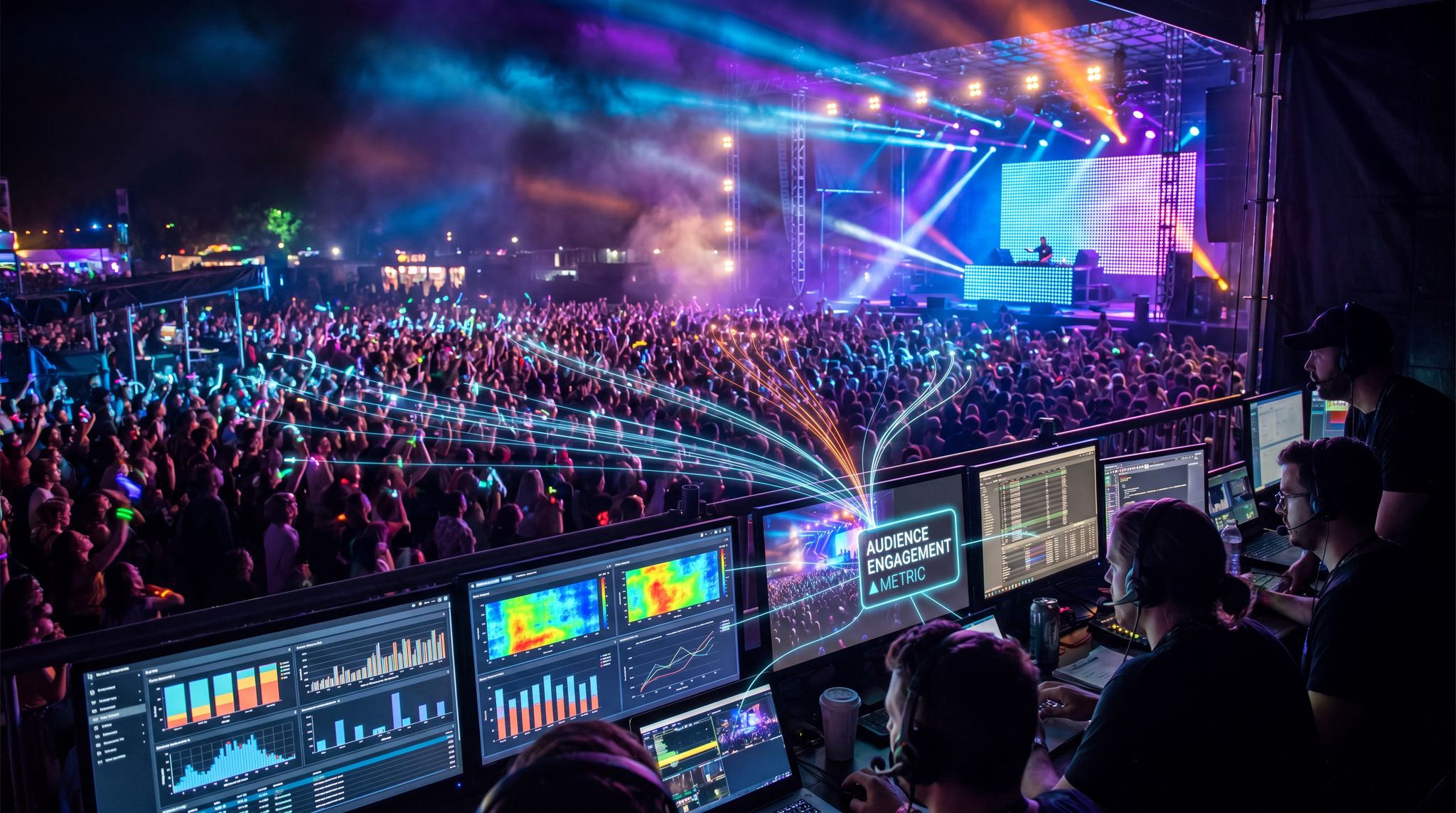
Data-Driven Event Marketing
Track ticket sales, demographics, marketing ROI, and social reach in real time. Exportable reports give you the insights to make smarter decisions.
As you evaluate these festival sponsorship trends for 2026, remember that the most lucrative deals are struck when organizers treat sponsors as co-producers of the event experience. The days of selling standard logo placements are over; today’s overarching music festival sponsorship trends dictate that brands want to actively shape the cultural moments that attendees capture and share.
Sponsors today scrutinize proposals more closely, evaluating which festivals align best with their marketing goals. Industry veterans recommend researching each target sponsor’s current campaigns and past event partnerships. A beverage brand might be casting a wide net in summer music events, while a tech company might favor innovation-focused festivals. Tailor your approach accordingly. When there are hundreds of festivals in the market, a one-size-fits-all pitch won’t cut through the noise. Instead, focus on personalization and relevance: demonstrate that your festival delivers the specific demographics and brand fit a sponsor is seeking. As one veteran production manager puts it, “Don’t just sell a festival, sell their audience at your festival.”
Brands Seeking Deeper Engagement (No More Passive Logos)
Gone are the days when slapping a logo on stage banners or a step-and-repeat was enough to satisfy sponsors. The sponsorship model of old – essentially passive visibility – is rapidly giving way to active engagement. Both brands and festival organizers acknowledge that the traditional sponsorship model is broken. In 2026, sponsors want deeper integration that actually engages festival-goers. This means immersive experiences, hands-on demos, interactive installations, and other touchpoints that let attendees feel the brand’s presence rather than just see it.
Seasoned festival producers have watched this shift unfold over the past decade. For example, instead of a static beer logo on a banner, a beer sponsor might now build a lively branded beer garden stage or host craft beer tasting sessions during the event. At major music festivals like Coachella, Heineken’s long-running “Heineken House” activation transformed simple branding into a full-fledged stage and lounge experience – featuring DJ sets, air-conditioned rest areas, and exclusive artist meet-and-greets – all co-created with the festival’s producers. Attendees flocked to it as a destination within the event, giving Heineken far more meaningful engagement than passive logo sponsorships ever could. These kinds of value-add activations align the sponsor with memorable moments, making the brand a part of the festival experience.
The takeaway for 2026 is clear: sponsors expect participation, not just presence. A leading events marketing firm put it bluntly – brands now seek “involvement that means something,” like workshops, influencer-led content, or interactive zones, rather than being a logo on the sidelines, as passive branding becomes increasingly ineffective. Festival organizers should be prepared to brainstorm creative activation ideas with potential sponsors. The goal is to pitch opportunities where the brand enhances the attendee experience in an organic way. Think along the lines of a tech sponsor powering a free Wi-Fi lounge or phone charging station, a wellness brand hosting a yoga session or chill-out zone, or a gaming sponsor running an interactive VR booth on-site. These not only delight attendees but also associate the sponsor with a positive, useful contribution.
The Post-Pandemic Shift in Priorities
It’s not just the number of festivals that has changed – the priorities of sponsors have evolved significantly in the wake of the pandemic and ensuing industry shakeups. Marketing budgets are under greater scrutiny, and every sponsorship dollar needs to show a return. Many brands are emerging from a cautious period where live events were scarce, and now they’re eager to re-engage but with a more data-driven, strategic mindset. ROI accountability, safety, and brand image alignment are all front and center.
Go Cashless With RFID Technology
Enable contactless payments, faster entry, and real-time spending analytics with RFID wristbands and NFC-enabled ticketing for your events.
Festivals in 2026 must address sponsor concerns that might not have been deal-breakers a decade ago. Health and safety, for instance, is now often a discussion point – sponsors want assurance that your festival has solid safety plans and will not risk negative PR by association with a poorly managed event. (Major incidents at events in recent years have made sponsors vigilant about reputational risk.) Demonstrating robust safety and crowd management protocols can actually be part of your pitch, reinforcing trustworthiness. Similarly, flexibility in contingency planning is valued: seasoned organizers highlight having backup plans for things like extreme weather or talent cancellations, showing sponsors that their investment is protected no matter what, as global sponsorship spending continues to rise.
Another post-2020 shift is the acceleration of digital integration. Sponsors got accustomed to the detailed metrics of online events and social media during lockdowns. Now they expect live festivals to offer that same clarity of data (more on that in the ROI section). The savviest festival producers adapted by investing in tech solutions and staff training so they can capture rich data from their events. For example, many have added RFID wristbands or mobile apps not only to improve attendee experience but also to track foot traffic and engagement – data goldmines that sponsors in 2026 absolutely love to see. Experienced producers know that coming to a sponsor meeting armed with hard data from last year’s festival (e.g. attendance breakdowns, dwell time in sponsor zones, app engagement rates) turns a pitch from vague to compelling.
Planning a Festival?
Ticket Fairy's festival ticketing platform handles multi-day passes, RFID wristbands, and complex festival operations.
When organizers ask how sponsorship markets are evolving as brand spending priorities shift, the answer lies in the reallocation of traditional advertising dollars toward experiential marketing. Corporate partners are moving away from broad, untargeted media buys, instead prioritizing live events that offer measurable engagement and direct consumer interaction. This evolution means festival producers must position their properties not just as entertainment, but as high-value marketing channels capable of delivering the targeted outcomes that modern brands demand.
Impact of Global Events on Sponsor Budgets
2026 is a year of massive global spectacles – notably the FIFA World Cup – which inevitably influence sponsorship dynamics. Global sporting events can siphon off marketing budgets that might otherwise go to music and cultural festivals, reflecting the shift toward data-backed sponsorship decisions. Many international brands have committed substantial funds to World Cup partnerships and campaigns, meaning festival producers must be even more strategic to attract remaining sponsor dollars. This doesn’t mean festivals are left in the cold; it means your sponsorship pitch needs to highlight value that even a World Cup can’t provide – such as a more targeted demographic, a grassroots community connection, or an exclusive activation niche.
One strategy, as discussed in guides to thriving during global event summers, is scheduling and theming cleverly. Some festivals are choosing to avoid date clashes with major tournament weekends, while others actually lean in and offer World Cup viewing parties or soccer-themed sponsor tie-ins to ride the wave. For instance, a festival could partner with a big-screen TV sponsor or a sportswear brand to set up a “World Cup Fan Zone” on festival grounds, giving fans a place to watch matches during the day. This kind of integration turns a potential competition for attention into a sponsorship opportunity – the brand gets to be part of both cultural moments at once. The key is to show sponsors that your festival is aware of the broader 2026 landscape and has a plan to keep attendees engaged (and by extension, sponsor brands visible) even when a World Cup match is on.
In general, fiscally cautious sponsors in 2026 are prioritizing fewer, bigger partnerships. They might support one large flagship festival per region instead of many small ones, or they might require combined packages (e.g. sponsoring a series of events under one deal) for economies of scale. If you’re a mid-sized or emerging festival, consider teaming up with others or offering multi-event packages to appeal to these efficiency-minded brands. Some independent festivals have started forming alliances to approach sponsors collectively, proving that truth and authenticity win with consumers, presenting a combined reach that rivals a mega-festival. While that approach might not fit everyone, it highlights how far producers are going to adapt to sponsors’ new expectations.
Smart Promo Codes & Presale Access
Create percentage or flat-rate discount codes with usage limits, date ranges, and ticket type restrictions. Plus unlock codes for private presales.
Articulating the Core Benefits of Event Sponsorship for Brands in 2026
To successfully close deals in this competitive market, promoters must clearly articulate the primary benefits of event sponsorship for brands in 2026. Corporate partners are no longer just buying impressions; they are investing in deep audience engagement, authentic user-generated content (UGC), and direct lead generation. By sponsoring festivals, companies gain unparalleled access to highly targeted demographics in a positive, high-energy environment. This experiential connection accelerates brand affinity and consumer trust much faster than traditional digital advertising. Highlighting these specific advantages—such as bypassing digital ad fatigue and fostering real-world community ties—helps organizers frame their pitches around tangible business growth rather than just logo placement.
Beyond simply listing these advantages, organizers should emphasize that sponsoring festivals offers a unique, uncluttered environment where companies can build deep emotional connections with consumers. Whether a company wants to sponsor a festival to launch a new product or to align with a specific cultural movement, the experiential nature of live events delivers engagement metrics that traditional media simply cannot match. A well-executed festival sponsorship transforms passive viewers into active brand advocates.
Need Festival Funding?
Get the capital you need to book headliners, secure venues, and scale your festival production.
| Aspect of Sponsorship | Traditional Approach (2010s) | Modern Expectation (2026) |
|---|---|---|
| Brand Visibility | Logo on banners and stage signage; mentions in MC scripts. | Immersive brand experiences (themed stages, lounges, interactive installations) that actively engage attendees. |
| ROI Measurement | Basic reports: attendance numbers, estimated media reach after the event. | Detailed, data-driven metrics (real-time impressions, engagement time, lead capture, social media analytics) mirroring digital ad campaign reports. |
| Values Alignment | “Nice to have” – minimal focus on event’s social or environmental impact. | Essential – brands vet events for sustainability, diversity & community initiatives to ensure partnerships reflect their ESG values. |
| Duration of Exposure | Event weekend only – sponsor visibility starts at gates open and ends at gates close. | Year-round engagement – pre-event content, live-streaming, post-event highlight reels, and community building that extend sponsor presence beyond the festival dates. |
| Sponsorship Packages | Tiered packages (Bronze/Silver/Gold) with fixed benefits; one-size-fits-all brochures. | Customized partnerships – flexible benefits tailored to sponsor objectives, co-created activations, and collaborative planning to meet specific goals. |
As this table summarizes, festival sponsorship expectations have evolved on multiple fronts. Organizers entering sponsorship negotiations in 2026 must be prepared to address each of these areas. From proving ROI with hard data to demonstrating genuine social impact, every proposal should show that your festival understands the current demands and has concrete plans to fulfill them. In the following sections, we’ll break down these emerging expectations in detail and provide actionable tactics to adapt your sponsorship offerings accordingly.
Demanding Measurable ROI: The Data-Driven Pitch
Sponsorship Metrics Now Mirror Digital Ads
One of the most dramatic shifts in sponsor expectations is the insistence on measurable return on investment (ROI) with the granularity of a digital marketing campaign. In 2026, sponsors behave like savvy media buyers – they want to know exactly what value they’re getting for their spend, backed up by data. Sponsors now expect detailed reporting on impressions, engagement, lead quality, and even conversions from festival partnerships, as sponsors increasingly favor organizers who can measure impact, essentially treating an event sponsorship like a targeted ad buy. If a festival can’t provide metrics comparable to online advertising, many brands will pass in favor of opportunities that can.
This means that festivals must collect and analyze more data than ever before. Experienced festival producers advise integrating data capture mechanisms into your event infrastructure from the start. For example, use ticketing platforms and entry systems that log attendee demographics and check-in times; deploy RFID wristbands or QR codes to track how many people visited each sponsor activation; and monitor social media tagging and engagement throughout the event. Many festivals have adopted cashless payment systems and festival mobile apps – not only for convenience, but because they generate valuable usage data that can be shared (in aggregate form) with sponsors. Every touchpoint becomes a chance to quantify engagement.
A telling comparison is how sponsorship decks now read a bit like digital ad proposals. A decade ago, a sponsorship pitch might promise “exposure to 20,000 attendees” and a logo on the main stage live stream. In 2026, that same pitch is expected to promise “at least 1.5 million brand impressions”, broken down by source (onsite signage, social media reach, live-stream viewers, etc.), plus specifics like “5,000 direct interactions at the sponsor booth” or “a 25% increase in social mentions of the brand during festival weekend.” In other words, generalities are out – precise KPIs (Key Performance Indicators) are in. Organizers who back their sponsorship offers with concrete numbers convey professionalism and credibility. In fact, according to industry research, a majority of brands (over 70%) say they are more likely to sponsor events that project clear, data-backed outcomes for their investment (e.g. expected reach, engagement rates) rather than those that offer vague branding opportunities.
Turn Fans Into Your Marketing Team
Ticket Fairy's built-in referral rewards system incentivizes attendees to share your event, delivering 15-25% sales boosts and 30x ROI vs paid ads.
Just as important as promising metrics is the ability to deliver on them and prove them. Festivals should be prepared with tools to measure throughout the event and a plan to compile results immediately after. In practice, this could mean setting up dashboards that track social media mentions in real time, using heatmaps from Wi-Fi or RFID data to count how many people visited a sponsored zone, and collecting scans when attendees redeem a sponsor offer or freebie. Well before day one, determine what “success” looks like for each sponsor and how you will measure it. If a beer sponsor’s goal is 10,000 product samples, have clickers or POS data ready at each bar; if a tech sponsor wants lead generation, integrate a digital sign-up or QR code at their booth to capture emails. The festivals that thrive in sponsorship now treat data as part of the product they are selling.
Capturing Attendee Data and Engagement Insights
Collecting audience data is fundamental to demonstrating ROI. However, it’s not just about volume of data, but relevance and quality. Sponsors are interested in who your attendees are and how they behaved at the event in relation to the sponsor’s brand. Understanding your audience – and aligning that with the sponsor’s target – is key. This begins with ticketing data: age demographics, geographic breakdown, and purchasing patterns of attendees. Modern ticketing and analytics platforms (for example, those that offer integrated festival CRM features) can provide rich profiles: what percentage of your crowd is Gen Z vs. Millennials, how far they traveled, even music or spending preferences through surveys. These insights should be highlighted in your pitch to show sponsors, “Your target customers are here.” In fact, a 2025 global sponsorship report noted that Gen Z’s distinct habits – notably their love of live music – are reshaping sponsorship strategies, with brands prioritizing music festivals to reach younger audiences, a trend highlighted in recent global sponsorship trends reports. If your festival attracts a youth demographic or a specific subculture, emphasize that alignment as a selling point. For instance, a festival in India with a 60% Gen Z attendance and strong social media engagement is a prime channel for brands aiming at young, digital-native consumers.
Beyond who attended, sponsors want to know what attendees did at the festival – especially in relation to sponsor touchpoints. This is where on-site engagement data comes in. Use technology to your advantage: for example, encourage attendees to scan a QR code or tap their RFID wristband at sponsor activations to access a giveaway or content, thereby logging that interaction. Mobile event apps can track which sponsor pages or offers were viewed and clicked. Social media monitoring can quantify how many posts or stories mentioned the sponsor (and what the sentiment/tone of those mentions was). If your festival app has interactive maps, you might see that 8,000 users clicked on the map location of the “XYZ Sponsor Lounge,” indicating interest. All these micro-level data points roll up into a story of engagement that sponsors will appreciate.
Privacy and compliance are crucial to collecting attendee data ethically. Attendees should opt-in to any data sharing (for example, explicitly consenting if they sign up for a sponsor’s newsletter or enter a contest). Be transparent in your privacy policy about what attendee information may be shared with sponsors. Festivals must also follow regulations like GDPR for international attendees, meaning personal data should be anonymized in reports unless individuals gave permission to be identified. Industry associations and standards (such as the International Association of Privacy Professionals for events) stress that mishandling data can erode trust and land you in legal trouble, which in turn would scare off sponsors. So, gather data smartly and responsibly. Many veteran organizers include a brief note in sponsor reports like, “All data is aggregated and privacy-compliant,” to assure brands that the festival is diligent on this front.
A smart way to gather qualitative ROI data is through attendee surveys that include sponsor-related questions. After the festival (or via push notification during it), ask attendees which sponsor activations they noticed or enjoyed, and whether their perception of the sponsor improved due to its presence at the event. This kind of feedback can be gold for a sponsor. For example, if 78% of surveyed attendees say they remember and liked the “XYZ Brand Chill-Out Lounge,” that’s a compelling statistic to deliver. Some festivals even work with sponsors to incorporate a question about the sponsor’s product (“Did trying ABC drink at the festival make you more likely to purchase it in the future?”) – if responses are positive, it directly demonstrates impact on brand affinity or purchase intent, which is high-end ROI insight. When presenting such findings, compare them to benchmarks if possible (e.g., “Our 78% recall rate is 20% higher than the industry average for event sponsorship campaigns, proving what this means for your event strategy)”). This level of detail impresses sponsors and builds a strong case for renewing the partnership.
Tech Tools for Tracking On-Site ROI
To meet these data demands, festival producers are increasingly turning to technology solutions. Automation and digital tools help capture information that manual methods would miss. Here are some tech approaches widely used by 2026 that every festival organizer should consider:
Free Tool: What Should Sponsors Pay?
Price sponsor tiers and exhibitor booths from your audience size and what each package includes, and see what is left after delivery costs.
- RFID Wristbands or NFC Passes: These are not just for cashless payments; they can log each time an attendee enters a certain zone or interacts with a checkpoint. If sponsors underwrite the RFID system, you can even name the program (e.g., “[SponsorName] FastTrack Entry”). RFID data can report that, say, 5,243 attendees visited the Sponsored Experience Tent on Day 1. It provides hard numbers for foot traffic.
- Mobile App Analytics: Encourage everyone to download the festival’s official app (perhaps incentivized by exclusive content or a smooth schedule planner). Within the app, you can have sponsor banners, a scavenger hunt game by a sponsor, or a “vote for your favorite artist presented by [Brand].” Every click and engagement in the app is tracked. As long as you design the app to feature sponsor content in a non-intrusive but visible way, those analytics become part of your ROI story (e.g., “Sponsor X’s banner was seen 50,000 times and clicked 2,000 times in the app”). Importantly, ensure the app is accessible and user-friendly to maximize adoption – wider usage means better data.
- On-site Wi-Fi and Beacons: If you provide event Wi-Fi (which many festivals now do, often with a tech sponsor’s help), the network can anonymously track device counts in various areas. Bluetooth beacons or Wi-Fi sniffers can estimate how long people lingered in the sponsor’s activation area versus other spots. As long as it’s aggregate data, you can legitimately say, “On average, attendees spent 15 minutes in the XYZ Sponsor Lounge – 50% longer than the typical dwell time at the event’s other areas.” That indicates strong engagement. Some festivals partner with telecom companies to get this kind of footfall data; others use dedicated crowd analytics services.
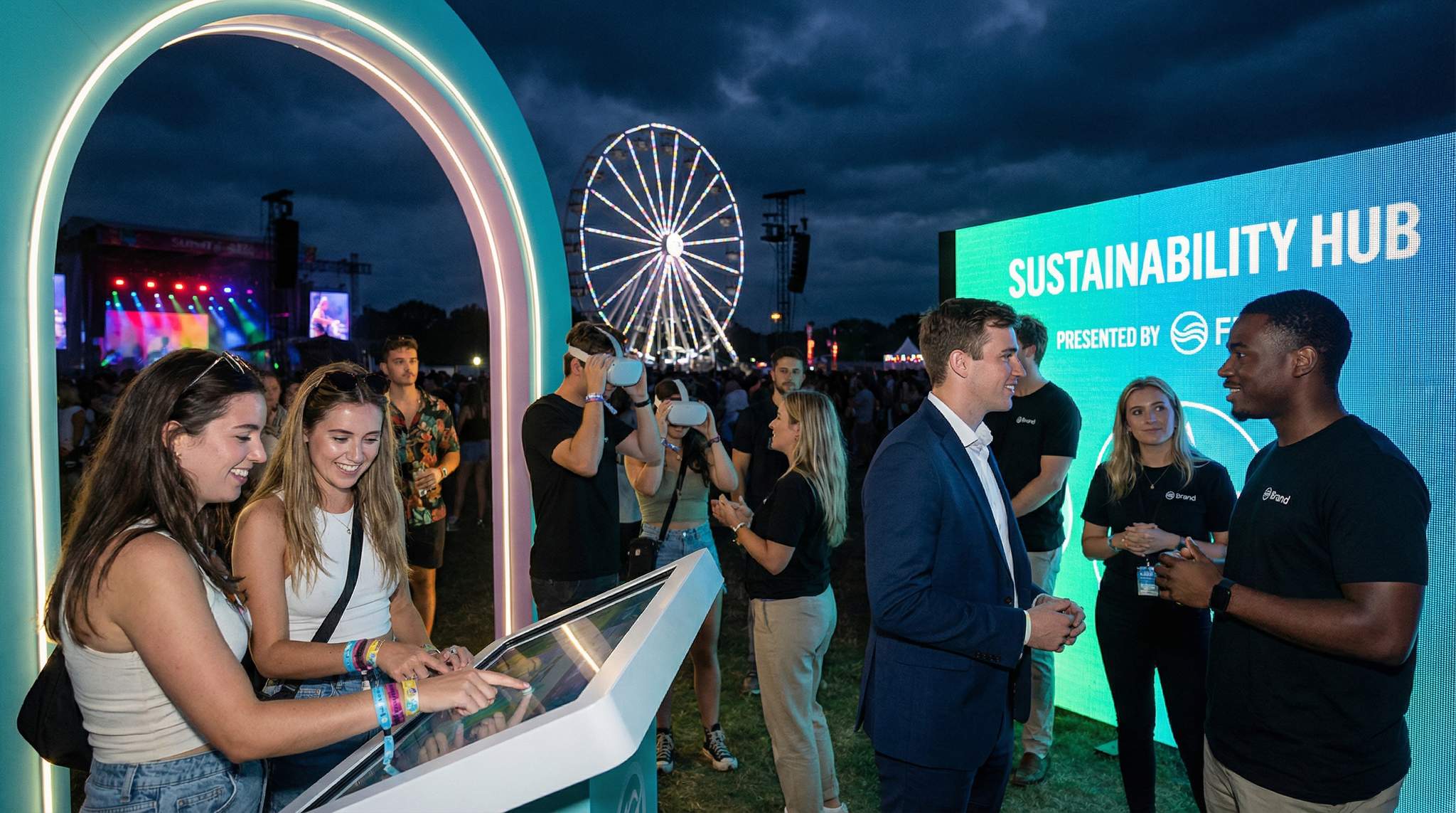
- Interactive Kiosks and QR Codes: Replace or supplement static sponsor signage with interactive elements. For example, a touchscreen kiosk at a car sponsor’s booth where people can enter a contest or design a virtual car – every interaction can be counted. Even a simple QR code on a poster like “Scan to get a free sample at the [Brand] tent” helps log interest. A pro tip is to use unique QR codes for different locations or messages, so you can see which call-to-action worked best. These tools not only engage attendees but also create trackable actions.
- Social Media Listening Tools: Keep an ear on the digital chatter. Hashtag tracking platforms or even manual checking can quantify how many posts mentioned the festival’s sponsors. For sponsors, quality matters as much as quantity – a flood of negative tweets is no good – so read the sentiment. If fans are praising the free water stations provided by a sponsor, screenshot a few representative positive posts to include in the report. It substantiates the numbers with real voices. Some sponsors also appreciate influencer metrics, so if any influencers or artists posted about their activation, note the follower counts as a proxy reach. (For instance, “DJ XYZ’s Instagram story from your branded stage reached 200,000 followers.”)
Industry experts note that adopting such tech is increasingly not optional. An event trend analysis for 2026 emphasized that organizers who leverage data and automation to demonstrate clear ROI are winning sponsorships over those who rely on guesswork, confirming that data-driven sponsorship models are winning. At the same time, it’s important not to implement technology in a way that alienates attendees or over-commercializes the vibe, requiring careful outreach and follow-through. The tech should be as seamless as possible – gathering data in the background or through fun interactions – so that fans still feel like the festival is about them, not a data farm for sponsors. Striking that balance is why “high-tech with a human touch” has become a mantra for many festivals, balancing high-tech tools with the human element of the show.
Finally, remember to benchmark and contextualize the data you report. Numbers in a vacuum can confuse. Compare this year’s figures to last year’s (e.g., “30% more engagements at your booth than in 2025, thanks to our improved activation”), or to industry standards (if you have access to any, like average sponsor recall rates or typical social media impressions for similar events). This shows sponsors that not only are you delivering data, you understand what it means.
| Sponsor Goal/Key Metric | How It’s Measured at the Festival | Example Result Delivered |
|---|---|---|
| On-site Engagements (count of interactions) | RFID scans at entry to sponsor zone; QR code redemptions; headcount by staff. | 8,500 attendees visited the Brand X Experience Dome (scanned in via RFID) over 3 days. |
| Brand Impressions (visual reach) | Combination of ticketed attendance, plus social media reach of festival posts mentioning sponsor, plus live stream viewers for sponsor-branded segments. | ~1.8 million impressions for Brand X (25,000 on-site views of logo/stage; 1.5M online via live-stream; 250k via social media). |
| Product Trials (samples or demos given) | Point-of-sale data or manual counts of samples; unique voucher codes used. | 5,200 product samples distributed at Brand X booth (104% of the 5,000 target) – with unique QR codes linking to online coupon used 1,100 times during the festival weekend. |
| Lead Generation (contact info or sign-ups collected) | Digital forms on tablets at sponsor booth; contest entries; post-event survey opt-ins for sponsor newsletter. | 1,300 qualified leads (emails) captured for Brand X, all opted-in for future marketing – sponsor’s sales team reported 200+ follow-ups scheduled from these. |
| Brand Affinity (attitude/preference) | Post-event attendee survey question: e.g., “Did Brand X’s presence improve your festival experience?” or social sentiment analysis. | 88% of attendees surveyed recognized Brand X as a sponsor; 72% said the Brand X Dome was a festival highlight. Net promoter score for Brand X at the festival was +45 (highly positive sentiment). |
This table illustrates how a festival might translate a sponsor’s objectives into concrete metrics, then measure those metrics with specific tools. Providing such structured results in your post-event report shows that you take the sponsor’s ROI seriously – and are not just throwing random numbers at them. The example results also demonstrate exceeding expectations (e.g., distributing 104% of the target samples) which is something you should always aim for and highlight. Organizers who can deliver and document these achievements earn a reputation as reliable, data-driven partners. Many brands in 2026 have internal dashboards where they compare sponsorship ROI across different events and marketing channels. Ensuring your festival’s line on that graph is high is the surest way to secure a renewal.
Crafting Compelling Post-Festival Reports
The work isn’t done when the music stops – arguably, one of the most important phases of sponsorship management is after the festival, when you compile and present the results. A detailed, professional post-event report is not just a formality; it’s your evidence of delivered value and a pitch for next year in one. Industry veterans know to treat the sponsor report almost like a client deliverable in an agency campaign. It should be timely, data-rich, and narrative.
Aim to send a draft or highlights within a week after the event (while the excitement is still fresh), followed by a more comprehensive report within 30 days. The report should include:
- Executive Summary: a one-page recap of key successes – hitting attendance targets, standout activation moments, major media coverage, etc. Include a thank-you note expressing how the sponsor’s involvement contributed to the festival’s success and attendee enjoyment. This sets a positive tone from the start.
- Data & Metrics: all the hard numbers discussed earlier. Charts and tables help here (e.g., a bar graph of foot traffic each day at the sponsor booth, a pie chart of attendee demographics, social media reach figures). Visualizing the data makes it more digestible for corporate folks who might skim. Highlight any especially strong metrics in festival context or versus sponsor’s benchmarks. For instance, if the sponsor gave a KPI of 10k engagements and you delivered 12k, put that in bold.
- Attendee Feedback: summarise relevant survey results or quotes. If people raved about the sponsor’s activation on social media, consider dedicating a slide to “What attendees said about [Brand] at [Festival].” Seeing real customer voices praising the sponsor can really validate the investment. It’s effectively qualitative ROI.
- Media Coverage & PR Value: list any notable media mentions of the sponsor in context of the festival. Sometimes sponsors get name-dropped in press articles (especially if they did something newsworthy like powering the festival with renewable energy, etc.). Include those clippings or screenshots. If you have a media monitoring service that calculates AVE (Advertising Value Equivalency) or similar, you can translate those mentions into a dollar value of what that exposure would have cost via ads. But be cautious – many modern marketers take AVE with a grain of salt. It can still be an impressive figure to show, just don’t rely on it solely.
- Photos and Videos: a picture is worth a thousand data points. Include high-quality photos of festival-goers happily engaging with the sponsor’s activation – a packed crowd at the Brand X Stage, smiling fans wearing the sponsor’s logo on free bandanas, a long line at the branded food truck, etc. If you provided a recap video, integrate a few key screenshots or a link. This helps remind the sponsor of the visceral impact their brand had on-site. Some producers even create a short dedicated highlight reel of the sponsor’s presence, which can be a memorable touch.
- Fulfillment of Assets: a checklist verifying that all contracted benefits were delivered – logo placements, number of shout-outs from stage (with timestamp examples), banner ads in emails (with open rates), etc. This is the nuts-and-bolts part to show you fulfilled the agreement to the letter. It leaves no room for doubt that you kept all your promises.
- Lessons & Recommendations: if appropriate, mention anything you’d improve or expand on in the future. For example, “The Brand X lounge was at capacity most of the time – next year we could double its size or add a second location due to demand.” This shows you’re already thinking of growth and addresses any minor shortcomings proactively. It frames the narrative towards the next edition.
Finally, customize the report for the sponsor’s internal audience. Chances are, the person you worked with needs to show this report upward to their bosses to justify the spend. Make it easy for them by being clear, organized, and tying the results back to the sponsor’s original objectives. Trustworthiness is built by not hiding any flaws, too. If something didn’t go as well as hoped – say a scheduled sponsor DJ set had low attendance due to a rain delay – be honest about it and note how you’ll mitigate such issues in the future. It’s better they hear it from you with assurance it’s under control, than notice it themselves and lose confidence. Transparency goes a long way.
Professionalism in reporting not only cements your current relationship, but also becomes part of your reputation in the industry. Sponsorship managers at different companies do talk to each other, and festivals known for delivering strong ROI reports create a positive buzz. As one industry report put it, “The future belongs to organizers who can measure and communicate impact.” communicate impact, reinforcing that the future belongs to organizers who measure results. By mastering the data-driven pitch and follow-up, you’re aligning your festival with that future.
Authentic ESG and Values Alignment
Sustainability as a Core Requirement
In 2026, brands are under more pressure than ever to demonstrate genuine commitment to sustainability and social responsibility – and they expect their event partners to do the same. Festival producers are finding that a strong environmental track record isn’t just nice to have, it’s often a deal-maker or deal-breaker for sponsorship. Many major companies have explicit ESG (Environmental, Social, Governance) criteria for partnerships. They will grill festival organizers on sustainability practices: Do you have a recycling and composting program? Are you working toward renewable energy? How are you minimizing waste, especially plastic? If those answers aren’t satisfactory, some sponsors will walk away, fearing consumer backlash for associating with an event perceived as wasteful or harmful.
It’s no longer enough to have green initiatives in name only – sponsors can spot greenwashing from a mile away. They are looking for concrete actions and measurable sustainability benchmarks . Festivals like Glastonbury in the UK have led the charge by banning single-use plastic bottles and implementing solar panels and biofuel generators, setting a high bar. Others, like DGTL Amsterdam, achieved a circular waste model (fully recycling or reusing all materials) and openly publish their sustainability reports. These efforts attract eco-conscious sponsors ranging from clean energy companies to brands that want to boost their green image. Even consumer goods sponsors (think beverage or clothing brands) prefer festivals with strong sustainability credentials, as it aligns with their own corporate pledges. For example, Heineken partnered with Formula E electric car racing and several European festivals as part of its Brewing a Better World initiative, opting for events that share its carbon reduction goals. If your festival can show similar alignment, highlight it.
Experienced festival organizers advise making sustainability a core part of your sponsorship pitch. Dedicate a section of your proposal deck to environmental initiatives: energy use, waste diversion rate, water conservation, transport emissions reduction (like incentivizing carpooling or public transit). Include any certifications or partnerships: are you working with A Greener Festival or following ISO 20121 sustainable event standards? Have you joined industry coalitions like the Association of Independent Festivals’ “Drastic On Plastic” pledge to eliminate single-use plastics? These specifics signal to potential sponsors that you’re serious, not just paying lip service. Moreover, show how a sponsor can participate in these efforts. Perhaps a sponsor can fund your recycling program in exchange for branding on recycling bins (a visible, positive message), or maybe they can supply reusable cups with their logo, tackling waste while getting exposure. At New Zealand’s Splore Festival, for example, a partnership with an eco-products company provided free filtered water stations (branded) to cut plastic – a win-win that sponsors love to see. By aligning a sponsor with your sustainability action, you enhance their ROI with a halo of environmental goodwill.
Most critically, be prepared to measure and report sustainability outcomes just as rigorously as other metrics. If you claim a “zero landfill” festival, then in the post-event report to sponsors include data like “85% of waste was recycled or composted, 15% repurposed, 0% to landfill” or “we generated X kWh of solar power on-site, offsetting Y tons of CO2.” Brands have CSR (Corporate Social Responsibility) departments that will read those stats closely. Showing year-on-year improvement is even better (e.g., “reduced generator fuel use by 30% compared to 2024 by switching to biofuel”). This level of transparency not only satisfies sponsor expectations but can actually be a selling point to attract sponsors in sectors like clean energy, electric vehicles, sustainable fashion, etc., who want platforms to showcase their solutions.
Overall, festival sustainability has shifted from an operational concern to a sponsorship asset in its own right. A 2025 global trends report highlighted that brands are increasingly using sponsorships to broadcast their ESG commitments, as sponsorship markets continue maturing. If your festival provides a credible platform for that – essentially acting as a living case study of eco-friendly practices – you become very attractive to modern sponsors. One caution: don’t exaggerate your sustainability just to win a sponsor. If you tout being carbon-neutral and it’s not true, it could lead to a PR fiasco for both you and the sponsor. Authenticity here is paramount, which leads to our next point…
Free Tool: Size Your Festival Site
Zoned capacity planning for arena, campsite, parking and entry lanes — against UK Purple Guide and NFPA density standards. Finds your bottleneck zone.
Diversity, Equity & Inclusion Expectations
ESG isn’t only about the “E” – the social side is crucial too. Many brands in 2026 have strong stances on diversity, equity, and inclusion (DEI), and they look for festivals that reflect those values. This can manifest in several ways. Sponsors may ask about the diversity of your lineup (Are women and artists of color represented? Do you have inclusive genres and headliners from different backgrounds?). They might inquire about your attendee base and whether your marketing reaches diverse communities. They could even be interested in your staff and crew diversity, or policies to ensure a welcome environment for all fans (such as anti-harassment policies, gender-neutral bathrooms, accessibility for people with disabilities, etc.). These factors can influence a sponsor’s comfort level with associating their brand.
For example, a global brand that prides itself on inclusion will be wary of sponsoring a festival with a history of only male headliners or one that had incidents of discrimination. On the flip side, a festival known for being inclusive and progressive provides a positive context for the sponsor’s messaging. Many festivals are stepping up in this area: from LGBTQ+ inclusive festivals that create safe spaces for queer attendees, capitalizing on emerging sponsorship opportunities and winning strategies, to hip-hop events elevating female and non-binary artists on their stages. Highlight such efforts to sponsors, as it demonstrates forward-thinking and a broad appeal. “Our festival is proudly inclusive” could be backed by specifics like community partnerships (e.g., working with a local LGBTQ+ center), on-site initiatives (like pronoun badges or prayer rooms for various faiths), and diverse hiring practices. If you’ve done staff training on unconscious bias or accessibility, mention that too.
One useful step is to provide potential sponsors with demographic info about your audience in terms of age, gender, and possibly ethnicity or other factors if collected (in a respectful, legal way). If you can say, “Our attendees are 50% female, 50% male, and come from a wide range of backgrounds, reflecting the diversity of our city,” that’s reassuring. If your festival has a niche (say it celebrates Indigenous culture, or it’s aimed at a certain ethnic community), clearly there will be a focus, but then emphasize how sponsors can support and respect that culture rather than appropriate it. Many brands have initiatives to support minority-owned businesses or cultural heritage, and sponsoring a culturally specific festival can fit those initiatives – but they’ll be cautious to do it authentically. Show that your festival has the trust of the community and can guide the sponsor to engage in a respectful way. Possibly involve community leaders or cultural consultants in sponsor activations if appropriate.
Lesson learned: authenticity is everything. A hard lesson some events learned (and some sponsors too) is that if there’s a mismatch between what a sponsor stands for and what the festival community values, it can backfire. A stark example came in 2024 when SXSW (a major festival/conference) faced artist boycotts because of a sponsor relationship that clashed with attendees’ social values – they eventually dropped the contentious sponsor after public outcry, leading to SXSW dropping the US Army as a sponsor. The message is clear: festivals and sponsors both must vet each other for values alignment. As a festival organizer, you should proactively assure sponsors that there’s no such misalignment on your end. Vet your sponsors too – turning down money from a brand that your audience would find objectionable can be wise for the long-term trust in your event (and ironically, sponsors respect festivals that maintain a strong identity, even if it means being selective).
In practical terms, incorporate DEI highlights into your sponsorship discussions. If your festival has partnerships with social causes – perhaps you donate a portion of proceeds to charity, or run programs for underprivileged youth music education – these are strong value-adds. Sponsors in 2026 often have cause marketing budgets specifically to support social causes. For instance, a bank might have a diversity program that could sponsor a stage featuring emerging artists from underrepresented groups, or a fashion brand with an inclusivity campaign might fund your accessibility services (like free tickets for caregivers, ADA viewing platforms). When you pitch these opportunities, be sure to explain the mutual benefit: the festival is more inclusive and enriched, the sponsor gets credit for making it possible and aligning with a cause authentically.
Supporting Local Communities and Causes
Gone are the days when a festival could roll into town, throw an event, and leave without regard for the local community. Today’s sponsors often care deeply about a festival’s community impact. They ask questions like: How does this festival benefit the local economy? Does it collaborate with local businesses or artists? Is it welcomed by residents or does it face opposition? This is partly due to brands wanting to avoid reputational risk (no one wants to sponsor the festival that the neighbours hate), and partly because supporting community aligns with many companies’ social responsibility goals.
Festival producers have learned that engaging the community isn’t just the right thing to do, it’s a selling point. For example, community-centric festivals that prioritise local vendors, hire local crews, and involve local charities tend to build lasting goodwill , which sponsors see as a positive association. If your festival sources food from local farms, or gives free booths to local artisans, or partners with the city on a volunteer cleanup day, trumpet those efforts. It shows the event is integrated into the local fabric, not an isolated corporate venture. Some sponsors, especially those with a strong local presence (like a regional bank, city tourism board, or a local brewery), will only invest if they see that a festival is giving back and not causing harm (such as noise complaints, environmental damage, etc.). For instance, a regional bank might love that your festival offers scholarships to local music students or that you rehabilitated a park space for the event that remains for public use year-round.
Case in point: The Rocking the Daisies festival in South Africa involves local schools in environmental projects and gets sponsors to fund those projects, linking the festival, brand, and community in a meaningful triangle. In Mexico, Coca-Cola has sponsored local music festivals but always ties it with community recycling drives and improvements to public spaces post-festival. These examples show the trend: pure advertising is out, community impact is in. Therefore, outline in your pitches any community engagement programs and invite sponsors to be part of them. Perhaps a sponsor can present the festival’s community grant (e.g., “ABC Corp Festival Community Fund” that gives a donation to a local cause each year), or sponsor free tickets for local residents, or co-host a job fair for event production jobs in the area. This elevates the sponsorship from mere branding to a partnership that locals and press will praise.
Another angle is tourism and local economy. If your festival draws tourists or significant spending in the city, gather those stats (e.g., hotel room nights, economic impact studies) to show sponsors that the festival is seen as an economic driver. Many government agencies and tourist boards will sponsor or support festivals when they see such benefits. Corporate sponsors too may justify the spend if they can frame it as helping the local economy (which scores CSR points). For example, a large company with a facility in the area might sponsor the festival to bolster the local culture and economy their employees partake in.
Also, if your festival has volunteer programs or charity components, integrate that into your sponsorship narrative. Perhaps a portion of sponsorship money is directly routed to charity (some sponsors like knowing their fee isn’t just lining pockets but also doing good). If sponsors send volunteers to help (some have corporate volunteer days at events), mention that opportunity. Festivals like Burning Man (though not sponsor-driven) spawn lots of community service ethos, and more mainstream festivals are picking up on that spirit to some degree.
In summary, think of community engagement as part of your festival’s brand story that you share with sponsors. Show that supporting your festival means supporting a whole ecosystem of positive local impact. This can definitely tip the scales in your favor, especially with brands that have comparable community-centric values or PR goals.
Avoiding Misaligned Partnerships – A Cautionary Tale
While focusing on your festival’s values and efforts is important, so is carefully choosing which sponsors to pursue or accept. Not every brand will be the right fit, and misalignment can lead to fallout. The 2024 SXSW incident mentioned earlier is a high-profile example: a festival known for tech, creativity, and progressive ideas took sponsorship money from entities that many in its community found objectionable (a weapons manufacturer and the U.S. Army during a controversial time). The backlash was swift – artists and attendees protested, reputations were dinged, and ultimately those sponsors were dropped amidst negative press, following a tumultuous year of boycotts and protests. This was embarrassing and stressful for all involved, to say the least.
The lesson for festival producers is to vet your sponsors just as they vet you. When a potential sponsor comes knocking with a big check, it can be hard to say no. But consider the long-term brand implications: Will this partnership alienate your core audience? Does the sponsor have any history of scandal or controversy that could flare up? Does the product align with the vibe of the event? For instance, an adult-oriented product sponsor (like alcohol, cannabis, gambling) at a family-friendly festival could be problematic. Or a brand with environmental issues sponsoring an eco-focused festival will ring hollow and invite criticism. In 2026, social media will call out any perceived hypocrisy in a heartbeat.
To avoid issues, many festivals have guidelines or even written policies on acceptable sponsors. For example, some publicly state they won’t partner with fossil fuel companies or arms manufacturers – similar to how some artists and fans object to those. Others might avoid political affiliations. It’s up to your event’s ethos. But once you define it, stick to it, even if money is tight. It’s far easier to prevent a bad partnership than to manage an uproar mid-event or do damage control after.
When negotiating, ensure clarity on what the sponsor intends to do on-site or in promotions so you can foresee any sensitive areas. If your festival celebrates inclusivity, and a sponsor’s activation accidentally excludes or offends (say they run a promotion that comes off as sexist or culturally insensitive), it’s your festival that will also catch the blame. Proactively review their plans and give guidance. Many brands will appreciate your expertise on what flies with your crowd. Think of it as protecting both parties – you help the sponsor avoid a misstep, and you safeguard the festival’s integrity.
In contracts, it’s wise to include a clause that gives you approval rights on all sponsor materials and activations using the festival name/logo. Also consider an exit clause if a sponsor faces a scandal (e.g., if the sponsor’s CEO is in the news for something terrible, can you drop them without breach of contract?). This might sound extreme, but big companies often put morals clauses in contracts for artists and events; festivals should have similar protections.
On the flip side, when you do find a sponsor that aligns wonderfully, nurture that relationship (we’ll talk more about retention later). Those sponsors can become an extension of your festival “family,” collaborating seamlessly and contributing positively year after year. Those are the partnerships you want to hold onto.
To cap things off in this section: authenticity and alignment are the currency of modern sponsorship. If your festival walks the walk on sustainability, inclusivity, and community, shout it from the rooftops – you’ll attract like-minded brands. And if a sponsor is courting you that doesn’t fit, don’t be afraid to politely decline or negotiate terms that keep things on track. The short-term money is never worth a long-term hit to credibility. Sponsors ultimately seek events that make them look good by doing good (or at least, not doing bad). Show them that your festival is a safe, positive, values-driven bet.
Integrated On-Site Activations & Experiential Marketing
Co-Creating Attendee Experiences with Sponsors
Sponsorship in 2026 is a creative endeavour. Brands no longer want to just place their logo on your festival — they want to co-create experiences on the ground that attendees will love and remember. Festival producers should approach sponsorships more like partnerships in producing content and attractions. This means sitting down with sponsors in the planning phase and brainstorming experiential ideas that serve both the festival’s vibe and the sponsor’s goals.
A great starting point is to ask the sponsor, “What story do you want to tell festival-goers, and how can we help you tell it in a fun, authentic way?” By involving sponsors in this way, you move from a transactional relationship to a collaborative one. For example, if a tech sponsor’s story is about connectivity, maybe they help create a “Connected Cafe” with free Wi-Fi and charging stations, where fans can relax and share their festival moments online. If a fashion brand’s story is about self-expression, perhaps they host a costume station or glitter makeover booth that fits the festival theme. A car company might not just display cars, but could curate a road-trip themed stage or provide shuttle rides in electric vehicles with branding – turning a practical service into an immersive ad.
Key insight from veteran producers: the best sponsor activations enhance the festival for attendees first and foremost. If fans enjoy it, they’ll engage willingly with the brand. This is the concept of “servant sponsorships” raised in discussions on trade show marketing trends – sponsors provide something of real value (be it comfort, entertainment, or utility) rather than just demanding attention. Think of how some festivals have a water refill station sponsored by a beverage company: attendees appreciate the free hydration and subconsciously credit the sponsor for it. Or a mobile carrier sponsoring a huge Ferris wheel that gives panoramic views of the festival – it’s an attraction that attendees would queue for, with the brand just subtly integrated. These are win-win: the festival gets a cool feature at offset cost, the sponsor gets positive engagement.
As you design these experiences, consider tapping into all senses and interactive elements. Gamification is one trend – e.g., a treasure hunt via the festival app where visiting sponsor booths yields points or rewards (by scanning QR codes), encouraging attendees to actively seek out sponsor areas. Another approach is “exclusive content”: a sponsor might host a small stage or tent with secret sets, workshops, or meet-and-greets. Festival-goers might need to, say, follow the sponsor on social media or have a special code to enter – which the sponsor distributes – thus driving an actionable ROI (followers gained, app downloads, etc.) while fans get a special experience.
Also, integrate sponsors into existing festival programming where possible. If you have a comedy tent, could a brand sponsor it and maybe offer a special guest comedian they bring? If you have a demo or makerspace area, perhaps a tech sponsor provides gadgets to demo. By weaving brands into what people are already excited about at the festival, it feels less like an interruption and more like added content. A good example is how some music festivals let a beer sponsor host a side stage featuring up-and-coming local bands – fans perceive it as the festival giving more music (thanks to the sponsor’s support) rather than a pure advertisement.
Communication and clarity are crucial during this co-creation. From the get-go, align on expectations: what the sponsor can and cannot do on site, the tone (no aggressive sales tactics – it should be soft sell via fun), and logistics (space, power needs, staffing, etc.). Some brands have big creative agencies – leverage their ideas but filter them through your knowledge of the festival audience. It’s a balance of creative freedom and brand guidelines with practical festival know-how. Many a time, a sponsor might propose something huge that isn’t feasible (like pyrotechnics or a massive structure too close to a stage); be ready to suggest alternatives that achieve a similar effect. Maintaining an open, solution-oriented dialogue will ensure the activations serve everyone’s interests.
When designing a custom festival sponsorship activation, seasoned organizers also carefully evaluate the physical flow of the event space. A well-placed brand experience acts as a natural gathering point rather than a disruptive roadblock. By seamlessly integrating these touchpoints into high-traffic areas—such as near food courts, VIP entrances, or main thoroughfares—promoters ensure maximum visibility and organic interaction, which ultimately drives the measurable ROI that modern corporate partners demand.
Lastly, think about integration with festival themes or culture. If your festival has an ethos (e.g., an EDM festival might be about unity and plur, a reggae fest about peace and love, an art festival about creativity), encourage sponsors to reflect that in their activation. Attendees will respond much better if the sponsor seems to “get” what the event is about. For instance, at a sustainability-focused festival, a sponsor activation could involve upcycling or a solar-powered show. At a comic-con type festival, a sponsor might create a cosplay repair booth or gaming lounge. Alignment with the culture deepens authenticity – it shows the sponsor isn’t just at the festival, they’re into the festival.
When evaluating brands sponsoring festivals, organizers must carefully consider the aesthetic and energetic match between the corporate partner and the event environment. For example, if a beer brand was sponsoring the perfect festival stage, which brand would fit that vibe? A craft brewery known for hazy IPAs and community roots might perfectly align with an indie-folk side stage, whereas a global mainstream lager is better suited for the high-octane energy of a main EDM arena. This principle applies across the board, whether you are pitching to tech companies or lifestyle brands sponsoring music festivals in 2026. Even seasonal events require this level of curation; organizers targeting companies that are sponsoring spring break gatherings must ensure the brand’s activation matches the high-energy, youth-focused demographic without feeling out of touch.
For organizers pitching beverage brands, providing a clear activation summary for wine sponsorship or spirits partnerships is highly effective. For example, a premium vineyard might sponsor a shaded, acoustic side-stage featuring sommelier-led tasting flights. The post-event summary would highlight metrics like total flights poured, QR code scans for direct-to-consumer bottle purchases, and the demographic breakdown of the tasting lounge visitors, proving that the brand successfully reached high-net-worth attendees.
Case Studies of Immersive Sponsor Activations
Sometimes the best way to spark ideas (and convince skeptical sponsors or internal stakeholders) is with real-world examples of sponsorship done right. Let’s explore a few case studies from various festivals around the world that illustrate how immersive activations can deliver value:
- Heineken House at Coachella (USA): As mentioned, Heineken didn’t settle for standard beer tents. They created a branded domed venue on the festival grounds – the “Heineken House” – which hosted DJ performances and surprise guest artist appearances throughout the weekend. The house was decked out in creative Heineken branding and offered an air-conditioned escape from the desert heat. This space became a destination within Coachella; thousands visited for the exclusive music sets and to relax with a drink. Why it worked: It provided a benefit (cool environment and unique shows) that enhanced the attendee experience. The Heineken brand was naturally integrated (you literally stepped into their world), and the positive association was strong – attendees had fun because of what Heineken provided. Metrics: on top of serving an immense volume of product, they garnered extensive social media buzz (festival fans would post “At #HeinekenHouse watching [Artist]!” giving the brand organic mentions). It’s no surprise this concept has been running and evolving for years, becoming iconic in its own right.
- Glastonbury & EE (UK): Glastonbury Festival partners with EE (a telecom company) to solve a critical festival pain point: phone battery and connectivity. EE provides on-site free Wi-Fi across parts of the massive grounds and sets up charging tents where festival-goers can plug in their devices, all branded in EE colors. They even deployed temporary mobile network masts to boost signal, branding them as ensuring “#GlastonburyConnected.” Why it worked: This directly tackled a need – in today’s festivals, people need their phones for photos, meeting friends, etc. By fulfilling that need, EE wasn’t an intrusion but a hero. They showcased their technology in a helpful way and earned goodwill from tens of thousands of relieved phone-charging fans. ROI-wise, EE often collects data by offering a free portable charger pickup for those who pre-registered (capturing emails) and demonstrates its network’s quality with live stats (e.g., “TBs of data used by Glasto fans on EE’s network” becomes a PR headline each year). It’s a textbook case of a sponsor activation doubling as a service.
- Lollapalooza & Toyota (USA): In recent editions of Lollapalooza, Toyota sponsored a secondary stage called Toyota Music Den, focusing on emerging artists. They didn’t just slap a name on it; Toyota also curated interactive elements like a car display that doubled as a DJ booth and free ride-share promo codes for festival attendees (tying into Toyota’s mobility message). Why it worked: By associating with a stage, Toyota became part of the festival’s musical discovery aspect. Fans checking out new bands at the Toyota stage subconsciously link the positive surprise of “finding a great new artist” with Toyota’s brand. The car tie-ins were presented as fun and useful (who doesn’t like a discounted ride home after the show?). It extended beyond the festival too – Toyota captured content from the stage and artists which they then pushed on their social channels, effectively extending the festival sponsorship into a broader marketing campaign. This gave them more mileage (pun intended) from the event and tangible content assets.
- Splendour in the Grass & Visa (Australia): At this Australian festival, Visa (the payments company) has activated by creating a “Cashless Village” where all transactions are done via Visa contactless payments, demonstrating the ease of their tech in a real-world (and fun) environment. They set up a stylish lounge that also functioned as an educational zone about going cashless, with perks like free water or merch for those who paid with Visa. Why it worked: It seamlessly integrated with an overall trend (most festivals are moving to cashless anyway). Visa positioned itself as enabling a smoother festival experience – no need to fumble with cash, and perhaps shorter lines at vendors. Attendees who might have been hesitant to use tap-to-pay got to try it in a low-stakes setting. Visa gathered data on transactions to show usage uptick. And festival-goers liked the convenience and the small rewards, associating Visa with innovation and helpfulness.
- Local Boutique Festival & Community Mural (Worldwide example): Even small festivals can do great activations. Consider a boutique arts/music festival that partnered with a local paint brand (or a global one wanting local goodwill). They set up a mural painting wall where across the weekend attendees could grab paints and add to a giant mural under guidance of a local artist. The paint brand supplied materials and branding on the mural’s borders. Why it worked: The activation was participatory and created a unique art piece by festival’s end. The paint brand basically made every participant an engaged customer for a moment, and onlookers enjoyed watching the art evolve. It tied into community and creativity, aligning the brand with positive artistic expression. For the festival, it produced a cool mural (which could even remain in the community if done on a permanent wall) and cost them little thanks to the sponsor. This concept can be adapted for various sponsor types – the key is hands-on involvement and leaving a mark (sometimes literally!).
When analyzing examples of sponsors for major US cultural festivals like Coachella, Lollapalooza, and Sundance, a clear pattern emerges for the upcoming season. The major festival sponsors in 2026 are diversifying far beyond traditional beverage and telecom categories. Today, organizers seeking a reliable festival sponsor are successfully pitching fintech platforms, streaming services, and sustainable mobility brands. For independent promoters looking to secure sponsors for festivals, studying these mega-events provides a scalable blueprint: corporate partners now prioritize interactive storytelling and utility over static signage.
Across these examples, common threads emerge: the sponsor provided something novel or useful, and integration was the name of the game. None of these felt completely out of place at their events; they felt like a natural extension brought to life by the brand’s resources. When pitching to sponsors, use such case studies (if not from your own festival, then from well-known ones) to illustrate what’s possible. It can get sponsors excited about the partnership and spark their imagination beyond the old playbook.
Making Sponsorships Enhance the Festival Experience
The ultimate test of an on-site sponsorship activation is this: Does it make the festival better for the attendees? When the answer is yes, everything else tends to fall into place – attendees engage more (driving ROI), sponsors are happier, and even festival staff find things smoother since attendees aren’t complaining about intrusive ads or irrelevant booths. Here are some guiding principles to ensure sponsorships truly enhance the experience:
- Keep Attendees First: When brainstorming any activation, start by identifying an attendee pain point or desire. Is it long lines at water stations? Lack of shade? Boredom between sets? Need for phone charging? Desire for exclusive content? Then ask, can a sponsor help solve this or add to it? For instance, many festivals have dead time in mornings; could a sponsor host a morning yoga or rave session to give early birds something to do? If fans typically leave trash, could a recycling sponsor fund a fun “trash for merch” program? By addressing what attendees need or want, sponsors become part of the solution, not a distraction.
- Seamless Branding: The best activations often don’t hit people over the head with marketing. Instead of excessive banners or repetitive announcements, branding is woven subtly. The environment, staff uniforms, and the name of the activation carry the brand. Attendees should know who made this cool thing possible, but they shouldn’t feel that it’s an overbearing advertisement. A common tactic is a clever naming: e.g., a silent disco sponsored by a tech firm might be called “The XYZ Quiet Riot” – the name includes the brand but in a playful way. And festival MCs can give a quick informative plug for the activation (“The XYZ Quiet Riot tent is open – check out the new headphones at the demo bar inside!”) which invites people rather than simply yelling a slogan. Maintain that balance of clarity and creativity.
- Trained Staff and Engagement: A brilliant activation can fall flat if the people running it are disengaged or pushy. Work with sponsors to ensure any staff or brand ambassadors they bring are well-trained in festival hospitality. They should be friendly, informed, and never doing hard sells. Mystery-shop your own sponsor booths during the event to see how fans are being treated. If an issue arises (like a staffer being too aggressive or a game not working right), nip it quickly by liaising with the sponsor’s on-site lead. Also, ensure festival ground staff understand the activation so they can guide attendees (“Yes, the charging lounge is over there under the green tents, brought to you by Sponsor Y – it’s free!”). This avoids confusion and encourages more participation.
- Fest Integration: Consider how the activation fits into the festival layout and schedule. A sponsor experience tucked in a far corner with no signage might get missed – so give prime or at least decent real estate for important sponsors, ideally along natural foot traffic flows. On the schedule, maybe coordinate with the sponsor if their activation can have programming that doesn’t conflict with headliners (unless it’s something intentionally alternative during a big act). For example, a quiet relaxation dome might be perfect during a loud headliner for those who want a break, but a competing music performance by a sponsor on a tiny stage during the main stage headliner might flop. Use your understanding of attendee movement and timing to guide sponsors to optimal engagement windows. Some festivals even print sponsor activations in the festival program/app map, so fans see them listed as attractions rather than just advertisements.
- Surprise and Delight: A bit of surprise goes a long way. Unexpected freebies or perks make people happy. If sponsors can occasionally upgrade an experience – say, a random act of kindness like handing out free cold brew coffee on a hot afternoon courtesy of a coffee sponsor, or a pop-up flash performance at the campsite by artists in a sponsor’s campaign – these create buzz. One interesting tactic: some festivals coordinate with sponsors to have “secret guests” at sponsor areas (maybe an unannounced DJ set at the branded lounge, or a meet-and-greet with a top athlete at the energy drink stand). When word spreads that something cool might happen at the sponsor spot, it drives more interest than any sign could. It makes the sponsor space exciting. Of course, plan the logistics well to handle crowds safely if a secret set blows up!
- Feedback Loop: After each festival day (or during, if possible), gather attendee feedback specifically on sponsor activations. Observe social media or forums to see genuine reactions. If something is not going over well, you might adjust overnight if feasible. For instance, if attendees say the sponsored VR experience line is too long and slow, maybe on Day 2 you shorten the demo or add another headset to increase throughput. Or if the freebie ran out too early, perhaps ration it differently or have a backup for the next day. Being responsive shows you care about experience above all. Debrief with sponsors post-festival on what fans loved or didn’t love about their activation – it’s a learning opportunity for both parties to improve next time.
When done right, sponsor activations become highlights of the festival. They get featured in attendees’ personal stories about the weekend (“I saw this amazing 3D light show at the X sponsor tent!”) and can even become annual traditions that people look forward to (“wonder what the X Lounge will do this year!”). That’s when you know sponsor integration has truly enhanced the festival – when it’s part of the lore. And practically speaking, an attendee who has a great time at a sponsor activation is more likely to feel goodwill toward that brand, accomplishing the sponsor’s marketing goal in an organic way.
Of course, not every activation will be a home run, but by prioritizing the fan experience in design and execution, you vastly improve the odds. Sponsors often come back saying “we want to do something even bigger next year, the activation was a hit!” – which is music to any festival organizer’s ears. It’s far easier to retain sponsors who have tasted success on-site through happy attendees than to find new ones from scratch.
Measuring Activation Success on the Ground
We’ve discussed the importance of data and ROI in an earlier section, but here we focus specifically on measuring the success of those on-site activations and experiences. After all, you and the sponsor put all that effort into creating something awesome on the festival grounds – now you need to capture how it performed. This not only justifies the activation’s cost but also provides insights to refine it in the future.
Here are key approaches and metrics for measuring activation performance:
- Foot Traffic Counts: The simplest metric: how many people showed up? Use clickers, RFID entry scans, or people-counters at the entrance of the activation space. If you had multiple facets (e.g., a lounge area and a separate demo area within a sponsor zone), track those separately too. For instance, 10,000 entered the Sponsor Village over the weekend, and 3,200 participated in the interactive game inside. This shows overall reach and deeper engagement. Compare it to the total attendance to express as a percentage – e.g., “25% of all festival-goers visited the Sponsor Village,” which sounds impressive.
- Dwell Time: How long did people stay at the activation? This can be a differentiator between an activation that people just peek into versus one they enjoy and linger in. Methods include manual sampling (timing a few people) or tech solutions like Wi-Fi/Beacon tracking. If the average dwell time was 10 minutes, that’s good for, say, a quick VR demo. If it was 30 minutes in a chill-out lounge, that indicates people really used the space fully. If dwell time was lower than expected, it might suggest the activation didn’t hold attention or was too slow to accommodate many people (so folks left due to queues, etc.). Communicate these findings to sponsor – for example, “visitors spent a total of 1,000+ hours combined in the XYZ Activation over the event” is a powerful statistic.
- Engagements or Interactions: Depending on the nature of activation, count what matters – number of samples handed out, number of game plays, number of photo booth prints, etc. If there was a social media kiosk, how many photos were shared? If a vehicle test drive, how many test drives? These are concrete tallies of brand interactions. For instance, “5,500 custom festival bracelets were made at the Craft Tent sponsored by ABC (each with ABC’s logo),” which means at least 5,500 direct contacts with the brand. If you have multiple touchpoints, break them down in the report.
- Qualitative Feedback On-Site: Have brand reps or festival volunteers gather quick feedback from participants. A 1-2 question survey on a tablet as people exit, or a “happy-sad face” button they press regarding their experience, can gauge satisfaction. If 95% press the happy face, the sponsor will be thrilled. Or simply, staff can note comments – “lots of people said our activation was their favorite part” or “people wished it was bigger/shorter/etc.” – all useful. This can be anecdotal but provide colour in reports. Sometimes sponsors themselves will have roaming reps doing this to justify internally; coordinate so you’re not duplicating or pestering attendees.
- Social Media & PR: Check if attendees shared the activation on their own feeds. Did people snap selfies at the sponsor’s art installation or in front of the branded stage backdrop? A simple way to track is unique hashtags or geotags if any were promoted. Or search the festival’s hashtag combined with the sponsor name to see organic mentions. If the activation was spectacular enough, media outlets might mention it in reviews (e.g., “One of the coolest sights was the neon-lit forest created by Sponsor X, which became the most Instagrammed spot at the festival.”). Gather those clippings because they indicate broader reach. Tools exist to count these mentions; even manual searching helps. Include a couple of real posts in your sponsor report (with user names blurred out if needed) with captions like “This is awesome! #FestivalName thanks @Sponsor!” – that’s evidence of success.
- Sponsor Sales or Leads: If the sponsor was selling something on-site (like a merch booth or product sales), obviously report the sales numbers and how they compared to targets. For lead-gen or sign-ups, give the total collected and any notes on quality (did they get a lot of signups agreeing to be contacted post-event?). One festival noted that the on-site test drives by a car sponsor directly led to several dealership visits the following week (the sponsor tracked voucher redemptions); that kind of stat closes the loop to real ROI. While not all festivals can get that granular, any connection to actual business results is the holy grail. Even something like “200 people scanned the QR code to download the sponsor’s app, making our event the #1 source of app downloads that quarter” is a strong link to value.
- Cost/Benefit Analysis: Though the sponsor cares more about benefits, it can be useful to illustrate efficiency or value: e.g., “The cost per engagement at our festival was $2 (sponsor investment divided by number of direct interactions), which is far below typical costs of $10+ per interaction at trade shows or city activations.” If you have such industry comparables regarding data-driven sponsorship shifts, use them. It shows the festival is a cost-effective marketing channel. Be careful to use realistic, defensible numbers to maintain trustworthiness. Even without stating cost, explaining “you reached 20,000 people in-person here, equivalent to the attendance of 40 roadshow events” frames the scale of impact.
Collecting these metrics requires planning. Before the event, map out how you will measure each activation. Brief the on-site team (perhaps assign a “sponsor activation coordinator” on your festival staff to oversee this during the event). Provide clickers, tablets, or tracking tools as needed. If the sponsor has their own measurement (like their staff counting or doing surveys), collaborate so you can share data – and ensure everyone is counting things the same way. After the event, analyze and visualize the data while it’s hot. If you can show a chart of hour-by-hour foot traffic at the sponsor zone, for example, you might notice it spiked after a certain announcement or at sunset – interesting insights for planning the next time.
One more advanced approach some festivals and sponsors are now using is RFID data for individual journeys: If many attendees use the RFID wristband for various things, you can potentially see how engagement with a sponsor activation affected their overall festival spending or behavior (in anonymous aggregate). For instance, attendees who visited Sponsor Y’s zone spent 20% more time on site and attended 2 more performances on average than those who didn’t. That could imply the activation increased overall satisfaction/engagement. This is a bit complex to parse and requires data science help, but it’s where big festivals are headed with data – proving that sponsors aren’t just benefiting themselves, but improving the event outcome too.
In the end, measuring on-site success is about telling a convincing story with numbers and examples: We created X, Y, Z experiences with you; here’s how many people loved them, here’s the buzz they generated, and here’s how it met or exceeded the goals. When sponsors see that, not only do they feel their money was well spent this time, they’ll start ideating with you for the next round, perhaps with an even bigger budget or multi-year commitment (since they know you’ll document the payoff thoroughly). Accurate measurement also helps you refine – maybe you realize Activation A underperformed while Activation B was a smash hit, guiding next year’s focus.
Extending Sponsorships Beyond the Festival Weekend
Year-Round Sponsorship Value and Community Engagement
Traditionally, a festival sponsorship was a short burst – a weekend of branding and then it’s over. But in 2026, that model is expanding. Festivals and sponsors alike are exploring how to extend their partnership beyond the festival dates, creating value all year-round. This benefits festivals by keeping sponsors engaged (and possibly providing off-season revenue or support), and it benefits sponsors by prolonging the exposure and connection with the festival’s fan community.
One straightforward way to extend value is through festival-owned content. Many festivals now operate like media brands, not just event organisers. They maintain active social media profiles, YouTube channels with artist interviews or past performance highlights, blogs or podcasts about the scene, etc. Sponsors can be integrated into this content in the off-season. For example, a festival might run a monthly “Road to Festival” video series featuring behind-the-scenes looks or artist features, presented by a sponsor. Or if you release aftermovies, perhaps the sponsor’s logo and a thank-you message appear at the end. Some festivals do year-round email newsletters to their fan base – including a message like “Latest from our sponsors” with exclusive discount codes or news is something you can sell as a value-add.
Another approach is hosting smaller events or experiences outside the main festival. This could be festival-branded club nights, a stage at another city’s event, workshops, or launch parties for lineup announcements. Sponsors might come on board for those if they are already your partner. For instance, if you have a beer sponsor at the main festival, that brewery might also sponsor a series of pre-festival local concerts that your brand curates (giving them extra bang for their buck and keeping the momentum going among your audience). Some festivals create traveling showcases – mini events in various cities to promote the big festival – and carry the main sponsors into those. It’s an enticing proposition to a sponsor: instead of a one-off, they get a campaign that spans multiple touchpoints and dates.
Building a community or fan club around your festival also offers year-round engagement that sponsors can tap into. Consider maintaining an online forum, Facebook group, or a dedicated community on your website where fans interact. A sponsor could host an “Ask Me Anything” with an artist on there, or provide exclusive content (e.g., a cooking festival’s sponsor might share recipes monthly). Some festivals develop membership programs or loyalty schemes (e.g., you pay a small annual fee or simply sign up and get perks like early lineup drops, merch discounts, etc.). Sponsors might give exclusive offers to members – like a streaming service sponsor offering a 3-month free trial to festival fan club members. These tactics keep the brand visible to your audience long after the stages are torn down.
Merchandise and products are another avenue. If your festival has a strong brand, you might sell merchandise year-round (t-shirts, a compilation album, even a festival cookbook with recipes ). When sponsors underwrite or co-brand these products, their reach goes home with fans. Think of how some festivals produce photo books or documentary films; a sponsor credit on those extends their presence to whoever watches or reads, even years later. If you press a limited vinyl of live recordings “presented by [Sponsor]”, it’s a collector’s item that doubles as marketing shelf-life.
Crucially, discuss these year-round ideas during sponsorship negotiations. You might bundle some off-season content or events as bonus value (or for an added fee). It shows you’re not just interested in their money for a weekend, but in a deeper partnership. Forward-thinking sponsors often jump at this because it aligns with how brands now operate – continuous engagement, content marketing, and tapping into communities. If a sponsor has an annual theme or initiative, you can weave it into off-season plans. For example, a sponsor focusing on mental health awareness could work with you to host a livestream panel on wellness in the music industry during the off-season, with festival branding and their sponsorship attached. This kind of initiative is impactful, relevant, and keeps the festival brand active outside the event itself (a positive for you as well).
One important note: ensure any year-round activations still feel connected to the festival’s identity and aren’t just forced advertisements. Everything should ultimately serve the fans in some way or celebrate the festival spirit. When done well, these off-season touches actually build excitement for the next festival (fans feel like the festival is always in their lives, not just a once yearly fling). It also builds what marketers call brand equity for the festival – making it more than an event, but a culture or lifestyle that sponsors are eager to join.
Lastly, year-round engagement provides additional data streams and ROI measures. Your social and digital content will have analytics (views, clicks, etc.) to share. Smaller events can have their own attendance and press metrics. All this can roll into the overall sponsorship value report, painting a picture that “the partnership ran from January through December, touching X people in person and Y people online, culminating in the festival event itself.” That’s a compelling narrative in an era where brands aim for persistent exposure rather than one-off spikes.
Digital Extensions: Livestreams, Virtual Worlds, and Hybrid Events
Digitally extending a festival’s reach exploded in prominence after 2020’s forced virtual pivot, and it remains a significant way to add value for sponsors in 2026. Livestreaming has become common for many festivals – broadcasting select performances or behind-the-scenes content to a global audience that couldn’t attend in person. For sponsors, this opens a whole new audience beyond the festival grounds, and it often comes with prime branding opportunities. For instance, a sponsor might have naming rights for the livestream (“[Brand] Live at FestivalName”) with their logos on stream interfaces and shoutouts by hosts. They could run short video ads between sets, or even better, integrate content (like a brief interview segment with artists at the “Brand X Backstage Studio”). The viewership numbers for big festivals’ livestreams can be huge – sometimes millions – which you should absolutely highlight to sponsors as part of the package. It effectively turns a 50,000-attendee physical event into a multi-million viewer media event.
Even mid-sized festivals can leverage streaming on platforms like YouTube, Twitch, or Facebook. It’s not super costly anymore to set up a decent stream, and sponsors might foot the production bill in exchange for branding. Make sure to gather the analytics from the stream: peak concurrent viewers, total unique viewers, watch time, and the geographic spread. Often you’ll find the online audience skews younger or international, which might hit a sponsor’s target better than the local on-site crowd, increasing their ROI. It’s a great data point if, say, “200,000 people from 30 countries watched the livestream, far extending [Sponsor]’s reach.”
Beyond basic streaming, virtual experiences and the metaverse have come into play. Some forward-thinking festivals are integrating VR/AR elements or even hosting parallel virtual worlds where fans can interact remotely. For example, a festival could offer an interactive 360° VR stream of the main stage, or create a small virtual festival site online with avatar-based participation. Sponsors can get involved here as well – perhaps a branded virtual lounge or a co-designed mini-game in the festival’s app or virtual world. While not every sponsor will be interested in this, tech and youth-focused brands might jump on it. There have been instances of festivals doing NFT drops or virtual merch; a sponsor could underwrite those and get logo placement or be part of the story (e.g., a festival’s NFT art gallery presented by a digital art marketplace sponsor). These cutting-edge integrations aren’t yet standard, but they can differentiate your sponsorship pitch. If you have the capability or a partnership with a tech provider, pitching a “From Mainstage to Metaverse experience for fans worldwide” with sponsor support could be a unique selling point.
Another digital extension is the festival mobile app. We discussed using it for data, but it’s also a year-round engagement tool. Long before the festival, the app could have a countdown, lineup teasers, and community forums – all of which could be sponsored sections. For example, a sponsor might have a rotating banner or even a dedicated tab in the app (some festivals let sponsors host polls or contests in the app in the lead-up). That maintains presence for months. Push notifications are valuable real estate too – a sponsor can sponsor important push alerts (“Don’t miss tomorrow’s ticket lottery – message brought by Sponsor Y”). Just avoid making any sponsor presence feel like spam. It should be part of the content flow.
Hybrid events – smaller events that combine in-person and online components – have also emerged. Maybe you do a live launch event for your lineup reveal with a small in-person audience and stream it. A sponsor could host that event at their corporate HQ or a partnered venue. Or consider a post-festival virtual panel (perhaps a debrief with the festival organizers or an artist Q&A streamed online). These hybrid elements keep the festival in conversation and give sponsors other moments to shine. For instance, a sponsor might present a “Fan Choice Awards” livestream after the festival where fans vote on the best performances via social media – something fun that keeps engagement rolling.
One example: Tomorrowland (the massive Belgian EDM festival) started Tomorrowland Around The World, a fully online virtual festival in 2020, which they’ve hinted might continue as a supplement to the in-person event. It had various sponsors integrated into its digital stages. Similarly, many festivals now offer on-demand video content post-event – essentially creating a library or a “festival replay week” online. A sponsor can brand this on-demand platform, or sponsor free access for fans (e.g., “Watch the replay of X’s set courtesy of Sponsor Z”). The extended lifespan of content ensures the brand lingers in fan minds long after the live show.
Importantly, when pitching these digital extensions, note the measurability. Online engagements come with precise metrics (views, clicks, etc.), which sponsors love. It complements the on-site experiential stuff which can be a bit more fluid. If a sponsor is hesitant about something novel like AR filters or virtual events, come armed with any data from industry sources about their reach and effectiveness. Or pilot something small and show the results. Sometimes just including a simple thing – like a sponsored Snapchat/Instagram filter for your festival – can garner tens of thousands of uses, which is a quantifiable extended brand exposure in the digital realm.
The evolving reality is that a festival is no longer a 3-day island; it’s part of a continuum of content and interaction. As a festival organizer, thinking like a 360° media producer will open up new sponsorship assets to offer. Just ensure you have the bandwidth to deliver these extras at a quality level that reflects well on everyone. If you promise a fully produced livestream or a VR experience and it flops technically, that can sour a sponsor (and fans). So scale digital promises to your capabilities or partner with professionals who can execute. Many festivals partner with streaming platforms or companies to handle the heavy lifting, while they just integrate the sponsor and promotion.
In summary, by integrating digital and hybrid elements, you transform a festival sponsorship from a single-event exposure into a multi-channel campaign. Sponsors in 2026 are actively seeking those kinds of integrated campaigns. It positions your festival not just as an event but as a content platform – which is exactly where brands want to be.
Social Media and Influencer Collaborations
In today’s landscape, social media is a critical battleground for sponsorship value. Festivals are highly social events – attendees love to post about them, artists share moments, and the festivals themselves push content. Sponsors want to be woven into that online narrative in a way that amplifies their message without coming off as forced. This involves both your festival’s own social media channels and leveraging influencers (artists, celebrities, or popular attendees) as ambassadors for the partnership.
First, consider your festival’s social media content plan involving sponsors. In the lead-up to the event, you might do sponsor spotlights – for example, an Instagram post or tweet thanking major sponsors, ideally framed with something interesting (like a sneak peek at their activation or a giveaway contest). During the festival, real-time posts can highlight sponsor contributions: a quick Instagram Story of the crowd at the Sponsor X Stage, or a TikTok of fans at a sponsor’s installation enjoying themselves, tagged appropriately. The tone should be celebratory and authentic: “Look at this awesome mural coming together at the @PaintBrand zone!” rather than a dry advertisement. Many sponsors will also cross-promote on their channels (“We’re live at @FestivalName!”) which effectively doubles reach if coordinated.
Branded hashtags and challenges can encourage attendees to create content featuring the sponsor. For instance, a festival and sponsor could co-launch a TikTok dance challenge or a hashtag like #FestivalNameXYZMoment for fans to share their best moments at a particular sponsored spot or just general fest highlights. If there’s a prize attached (like best post wins VIP tickets for next year, courtesy of the sponsor), engagement can skyrocket. Every user-generated post is bonus exposure for the sponsor and festival alike. Just ensure it’s something participants find fun and relevant – you don’t want a hashtag nobody uses. Monitoring and engaging (commenting on or sharing the best fan posts) shows that the festival and sponsor are paying attention, which further fuels activity.
Now, influencers and artists: Often, festivals have media or influencer partners – perhaps popular YouTubers or Instagram personalities covering the event. If sponsors want, they can integrate with those influencers. For example, a travel vlogger attending your festival might do a segment at the VIP area sponsored by an airline, effectively advertising the sponsor in an organic way as part of their vlog about the festival. Or an EDM Instagram influencer might take over the sponsor’s account for a day, posting live from the festival grounds. Setting these up requires alignment among sponsor, influencer, and festival PR, but when everyone’s on board, it’s potent. Influencers lend a relatable voice that traditional advertising lacks.
Another highly effective tactic is designing dedicated, highly visual spaces specifically meant for attendees to take a selfie. Whether it’s a stunning branded art installation, a neon-lit archway, or an interactive mirror, giving fans a beautiful backdrop naturally encourages them to snap a photo and share it online. These organic selfie moments act as free digital word-of-mouth, seamlessly blending the sponsor’s aesthetic into the attendee’s personal festival narrative.
To maximize the ROI of these visual spaces, organizers should ensure that every selfie station or branded photo backdrop is optimally lit and features clear, scannable QR codes or easily readable social handles nearby. When attendees share a selfie, the sponsor’s digital footprint expands exponentially, transforming a simple physical footprint into a viral digital asset that continues to generate impressions long after the festival gates close.
Furthermore, integrating augmented reality (AR) filters or dynamic digital props into these selfie stations can elevate the attendee experience while providing sponsors with rich, trackable engagement data. When a fan takes a selfie using a sponsor-branded AR lens, the resulting user-generated content feels native to platforms like Instagram and TikTok, bypassing traditional ad blockers and reaching new audiences organically.
Artists themselves can be influencers in sponsorship, but one must tread carefully. It’s generally not desirable to force artists to promote sponsors unless they’re personally inclined (it’s usually part of headliner contracts that they won’t be made to shill products on stage, etc.). However, organic interactions do happen. If an artist spontaneously thanks a sponsor on the mic because they enjoyed the lounge or something, great – but don’t bank on it. More controllable is having artists participate in sponsor-related content off-stage: like doing a short interview in the sponsor’s backstage studio that is then posted online, with artist consent. Many artists are okay with brief promo activities if it’s presented as media obligations. Just always have alternatives in case of artist no-shows or refusals (some might not want to appear with a brand due to personal stances). Some festivals manage to get artists to play acoustic sessions or DJ at sponsor lounges as secret sets, which as mentioned, is gold for the sponsor – but presumably those are negotiated with some incentive (like sponsor pays extra or charity donation in artist’s name, etc.). It’s complex, but worth exploring for major sponsors who want serious integration.
Consider also leveraging your existing fanbase as micro-influencers. For example, identify some loyal super-fans (maybe those who attend every year or run fan accounts) and empower them with small roles: perhaps they get early access to content to share, or they host a fan meetup at the sponsor’s installation that the sponsor can support (free swag for those who come). These grassroots efforts can create authentic content and word-of-mouth, which is invaluable. One caution: always disclose and align with advertising guidelines – if an influencer or fan is getting a perk to promote a sponsor, depending on local laws, they might need to hashtag #ad or #sponsored. Transparency is key to avoid any backlash.
From the sponsor’s perspective, they might bring their own influencers too. Maybe they invite a couple of popular TikTokers to the festival under a “hosted by Sponsor” arrangement, expecting them to create content that subtly features the brand (like wearing the sponsor’s merch or hanging at their activation). As festival organizer, you might help facilitate that – e.g., providing influencer tickets or special access – as part of the sponsorship deal. These are relatively low-cost additions that can make a sponsor feel they’re getting a comprehensive media push.
Measuring social and influencer activation: Keep track of all these. How many posts did the festival make mentioning sponsors and what was the engagement? Did the sponsor’s hashtag trend or how many user posts were made with it? What was the estimated reach of influencer content (some might share view counts with you if asked)? In one instance, a festival might report “Our collaborative TikTok challenge with Sponsor Z saw 500 fan video entries, generating over 2.3 million total views on the platform.” Or “The three influencers Sponsor Y brought to the event created content that reached a combined 5 million followers, with engagement rates above 10% – well above their typical benchmark, indicating strong interest.” These kind of outcomes validate the social strategy.
Social media can be unpredictable – not every attempt goes viral – but it’s a space you can’t ignore. For many younger-skewing festivals, the online buzz is almost as important as the on-site vibe. Sponsors are acutely aware of that, which is why they increasingly ask about your digital and social reach in preliminary talks. Being ready with a plan for integrating them into your festival’s social storytelling can set you apart from other events that just offer a logo slap. It shows you understand modern multi-channel marketing. Just ensure any social tie-in still feels genuine and fun, as authenticity is the currency in social media; the internet-savvy audience will scroll past anything too blatantly “ad-ish” in a heartbeat.
Exclusive Benefits and Loyalty Programs for Fans
One clever way to both entice sponsors and reward your attendees is through exclusive fan benefits delivered by sponsors. This ties into loyalty and VIP experiences. Essentially, sponsors can underwrite perks that make festival-goers feel special, while also achieving the sponsor’s aims of positive brand association or direct promotion. It’s another form of integration that often goes underutilized.
A classic example is credit card companies or banks that offer special perks to cardholders at festivals. American Express, for instance, has done tie-ins where Amex cardholders get access to a VIP viewing platform or a dedicated fast lane at entry. At some festivals, certain sponsors allow their members or customers to enter giveaways for free passes or meet-and-greets on site. The idea is to leverage an existing customer base (the sponsor’s) and give them something extra at your event, making both the sponsor and the festival more attractive. If you suspect a potential sponsor has a significant overlap with your audience (say a music streaming service that many attendees use, or a popular beverage), propose such perks. It could significantly drive ticket sales or app usage as well (e.g., folks signing up for a trial just to get the benefit).
Another angle is a festival loyalty program – perhaps you have one for returning attendees or those who rack up points volunteering, etc. Sponsors can provide the rewards in that program. For example, after attending 3 years, a fan gets a free merch item courtesy of a sponsor, or top-tier members of the loyalty scheme get a backstage tour given by a sponsor rep. Even if you don’t have a formal program, you can create one-off “loyalty” rewards such as special discounts for early buyers (like “first 1000 ticket buyers brought to you by Sponsor X get a free upgrade” or swag). A sponsor’s funding can help cover the cost of these extras.
Fan clubs or fan zones: Some festivals have fan clubs (official or unofficial) – sponsors might sponsor the fan club. Or at least join forces with it. For example, if there’s a group of superfans camping together every year, maybe a camping gear sponsor supplies them with better tents or a powered campsite as a surprise gift. These goodwill gestures go a long way with the hardcore community, who are often loud voices online. The sponsor is seen as a friend of the community rather than an outsider.
Pre-sale or launch exclusives also count as enticing benefits. A tech sponsor could sponsor the ticket pre-sale and allow their customers early access to tickets (with maybe a small discount or waived fees underwritten by them). Or a sponsor could do a cross-promo: buy their product and get a code for festival ticket early access. This not only drives sales for the sponsor but can lock in attendees earlier (which festival ticketing managers certainly appreciate, especially in an era of last-minute buyers ). Just coordinate carefully so any such scheme is fair and doesn’t alienate non-sponsor customers (always have general sales as well, etc.).
During the festival, VIP areas or lounges are often open only to artists and high-end ticket holders, but some sponsors create spaces for their special guests or even the general crowd through contests. For example, a beer sponsor might have a branded bar area, and while it’s open to all 21+ attendees, they might have a special reserved section or free samples specifically for contest winners or loyal retail customers they invited. If a sponsor has a list of key clients or contest winners on-site, the festival can facilitate hospitality for them (maybe offering a tour or a meet-and-greet pass as part of the sponsorship package). That adds a layer of B2B value for the sponsor, essentially letting them treat your festival as a hosting platform for their relationships. Many sponsors highly value this, as it’s a unique, memorable way to schmooze clients or reward employees. So in your sponsorship packages, consider a section on “hospitality benefits” – X number of VIP tickets, a private tent for entertaining guests, etc. Those can be as important as consumer-facing benefits.
Finally, think about post-festival loyalty. Could the sponsor provide festival attendees with an exclusive deal or content after the event? For example, a streaming service sponsor might give all ticket buyers a free curated playlist or a month of subscription. Or a retail sponsor might email a discount code for their products to attendees (via the festival’s mailing list, if privacy terms allow). This extends the goodwill beyond the event. It makes attendees feel the sponsor’s involvement continues to benefit them later on.
One success story: a well-known festival partnered with a fitness brand sponsor to send all attendees a link for a free virtual workout with one of the artists a month after the festival – a surprising bonus that kept people talking and associated the sponsor with a cool experience long after the gates closed. It was win-win: fans got access to a normally paid service for free, the sponsor got thousands of sign-ups and potential conversions, and the festival kept engagement alive.
These sorts of integrated benefits and loyalty plays show sponsors that you’re thinking beyond simple branding; you’re thinking about building a relationship between your audience, your event, and the sponsor that lasts. That’s a compelling narrative in pitches: “Our festival isn’t just a 3-day ad opportunity; it’s an ongoing platform for you to connect with a deeply engaged community of fans.” If you can back it up with examples or data (like “80% of our attendees subscribe to our newsletter year-round” or “Attendee surveys show 90% can recall at least one sponsor perk they got and appreciated”), you strengthen your case immensely.
Crafting Competitive Sponsorship Packages in 2026
Aligning Packages with Sponsor Objectives
In 2026, a “one size fits all” approach to sponsorship packages is largely outdated. To win deals, festival producers need to align each sponsorship proposal with the specific objectives of that brand. This means doing your homework on the sponsor and often customizing the package on offer. Start by understanding the sponsor’s industry and current marketing priorities. Are they launching a new product they want demos for? Trying to build brand awareness in a new region? Aiming to associate with a particular lifestyle or music genre? The more you can tailor your offering to tick their boxes, the stronger your pitch.
One effective strategy is to create a basic menu of assets (branding, activations, hospitality, digital content, etc.) but then assemble them like Lego blocks differently for each sponsor. For example, for a tech gadget sponsor focused on showcasing their devices, you might emphasize interactive demo booths, on-screen content during the live stream highlighting their tech, and maybe sponsoring the festival app where their technology can be showcased (like a map or AR feature). For a beverage sponsor focused on sales and sampling, you’d highlight pouring rights, branded bars, happy hour events, and perhaps VIP hosting (to influence key figures or influencers to try the product). Both sponsors might be at the same festival, but what you offer each is tuned to what they care about.
Industry veterans recommend literally asking sponsors early on: “What does a successful sponsorship look like for you? What key results do you need?” Not every sponsor will know (or they may just say “ROI”), but some will share specifics: e.g., “We want to collect 5,000 leads” or “We want to drive trial of our new drink among young adults” or “We need to impress our board with a high-profile activation.” With that intel, you can emphasize the elements that achieve those goals. In conversations, mirror their language: if they talk about “engagement” repeatedly, be sure to use that term when describing how your festival delivers engagement. If they mention “brand values”, reflect on how your festival’s ethos complements those values (referencing your earlier ESG/community points). It sounds simple, but showing you listen and understand a brand’s needs builds trust and credibility.
Remember, sponsors often are comparing multiple opportunities. If Brand X is looking at sponsoring either your festival or, say, a sports tournament or another festival, how will you persuade them that your event better meets their objectives? Part of it might be audience alignment (which we touched on earlier – demonstrate your audience is their target). Another part is creativity and flexibility. Festivals that show willingness to craft unique opportunities rather than rigid tiers can have an edge. If a sponsor requests something unconventional – maybe they want a sponsored drone show after the headliner, or an on-site store to sell their merch – be open-minded and see if you can accommodate it (safely and with the right fee). Unusual requests can turn into one-of-a-kind features for your event if they fit well.
That said, don’t over-promise beyond what you can deliver or what fits the festival. Aligning with objectives also means aligning expectations. It’s better to be clear if some metrics or results are outside your control (for example, “We can aim for 5,000 app downloads via our festival, but ultimately that depends on uptake – we will do A, B, C to push it, but want to be transparent that the app adoption historically has been around 30% of attendees”). Sponsors appreciate honesty and realistic baselines. Actually, bringing your track record data (“last year we delivered X impressions, Y engagements for a similar activation”) can shape their objective expectations and show that you plan based on evidence, not hype.
A practical tip: in your proposal or presentation, consider including a slide or section titled “Your Objectives and Our Solutions”. List what you understand the sponsor’s key goals are, and bullet how each will be addressed through the festival partnership. For example:
- Objective: Increase Brand Love among music fans.
Solution: Integrate [Sponsor] as a beloved part of the festival experience via a curated stage and surprise guest appearances, driving positive associations (we’ll survey fans on brand sentiment afterward to confirm uplift). - Objective: Drive product trial of new energy drink.
Solution: Exclusive pouring rights across 50+ bars (est. 100k tasting opportunities), plus a free sample upon entry for the first 5,000 attendees each day at gates. - Objective: Capture content for marketing.
Solution: Provide high-quality b-roll of the festival and sponsor activation, and facilitate artist interactions at the [Sponsor] media lounge for unique content pieces the sponsor can use post-event. - Objective: B2B relationship building.
Solution: Dedicated hospitality suite for [Sponsor] to host VIP clients, guided backstage tours, and meet-and-greets arranged with two headlining artists for top [Sponsor] guests.
By itemizing like this, you’re explicitly showing you aligned the package to what they want. This helps avoid the scenario where a generic sponsorship deck leaves them guessing “But how does this help our current focus?”. It also gives them ammunition to justify the spend internally – they can forward that alignment list to their boss, who will see their priorities addressed.
When building a target prospect database—such as a curated spring break sponsors list for seasonal collegiate events—promoters should categorize brands by their specific quarterly marketing objectives. A youth-focused energy drink or travel apparel brand will have vastly different Q1 activation goals than a B2B software company. Segmenting your outreach lists ensures you are only pitching relevant, high-energy experiential concepts to the right corporate partners.
Finally, alignment extends to ensuring internal buy-in on the festival side. Make sure your programming, operations, and marketing teams are aware of these sponsor objectives too. If a sponsor’s goal is heavy social media exposure and your social team isn’t looped in, you might miss delivering a promised element. Or if the sponsor cares about on-site user experience with their product, your operations team should ensure their activation location, power needs, etc., are top-notch. Essentially, the entire festival organization should rally around fulfilling the key sponsor objectives as part of delivering a successful event.
Moving from Standard Tiers to Tailored Packages
The old model for festival sponsorship sales often involved tiered packages (Gold, Silver, Bronze), each with preset benefits and a price tag. While tiers can provide a starting structure, 2026 demands far more flexibility. Many sponsors are no longer satisfied with pre-baked packages – they want to mix and match to suit their needs. Thus, festival organizers are shifting to a more consultative sales approach: think of it as creating a bespoke sponsorship menu for each partner.
This doesn’t mean you can’t have any tiers or levels – some sponsors, especially smaller local ones, might still just pick a defined package if it’s affordable and simple. But for medium and large sponsors, you should be ready to negotiate and customize. If your proposal document lists Gold/Silver/Bronze, be sure to preface that by saying “this is just a framework; we can adapt elements to best fit your goals.” Then actually adapt!
For instance, a sponsor might say, “We like most of Gold, but we don’t need the merch logo placement, we’d rather have an extra social media post instead.” Be prepared to value-swap. Know internally what each asset is roughly worth to maintain fairness (e.g., if merch logo is worth $10k in value, a social media blast might be $5k, so maybe they need two extra posts or another concession to balance it). This kind of bargaining requires you to quantify your offerings to some extent. Making a rate card for internal use can help – listing every possible benefit (from stage naming to email mentions to number of banners on site) with a dollar value. Then when a sponsor wants a different mix, you can recompute the package value on the fly and ensure you’re not short-changing your festival.
Case in point: A mid-sized festival once had a “presenting sponsor” tier with everything under the sun, but a prospective sponsor only wanted a subset (they didn’t care for naming rights but wanted more tickets and a custom activation). The festival pivoted, created a new custom tier at a slightly lower price than presenting, which the sponsor felt was tailor-made. They signed, and ironically because they didn’t take naming rights, the festival still had that inventory to sell to someone else. By being flexible, the fest got two sponsors where a rigid approach might have landed zero (since the first sponsor would’ve walked if forced to take naming at full price).
The trend in 2026 is toward experiential and integrated benefits over pure branding. So your packages might need to emphasize those. Instead of listing just logos and banners, list things like “Sponsor integration meeting with festival creative team to develop a custom activation” or “Ability to run joint promotions through festival channels pre-event” as part of upper tiers. Make it clear you’re offering partnership, not just signage. Tier names themselves are changing: some festivals rebrand tiers in creative ways (e.g., “Title Partner”, “Official Partner”, “Associate Sponsor”, “Supporter”) to avoid the precious-metal hierarchy and imply more bespoke roles. They might designate one sponsor as “Official Sustainability Partner” which comes with a certain set of rights tailored to green initiatives, another as “Official Innovation Partner” focusing on tech presence, etc. This aligns each sponsor with a unique identity at the event rather than just class rank.
When customizing, however, maintain consistency in value delivered. One pitfall is you secretly end up giving one sponsor way more for the same money than another if you’re not careful, which can lead to future issues (especially if sponsors talk or someone notices disparity). To manage this, keep a master spreadsheet of who is getting what benefit and the relative value. Also, enforce some limits: for example, you might decide only 2 sponsors can have stage naming rights max, only 3 can have on-site booths, etc., to keep the festival from turning into a cluttered bazaar and to maintain exclusivity. You can then clearly tell a sponsor, “We can’t add that benefit because it’s already exclusive to another, but we can offer you this alternative.” This not only maintains festival quality but also the integrity of each sponsorship.
One useful tactic is to create modular add-ons. Say you have a base package but then offer modules like “Digital Boost Package” (extra livestream and social media inclusions), “Hospitality Upgrade” (more VIP perks), “Experiential Activation” (we build/run a custom activation for you), etc. Sponsors can then pick and choose add-ons on top of a base level. It’s like customizing a car – choose your trim and then the extras. This way, you don’t reinvent the wheel each time, but still allow personalization. Document these modules well with costs so your team can assemble them quickly during negotiations.
Don’t forget geographic and category tailoring too. A global brand might want multi-festival deals (if you run several events or can partner with allied festivals) – that’s a whole other level of customization (selling them a bundle across cities or countries). Or if you have multiple sponsorship categories open (like “official beer”, “official soft drink”, etc.), you have to tailor within those constraints. Category exclusivity is a big draw; ensure your packages clearly state if they include category exclusivity. If not by default, some sponsors will ask for it (e.g., they don’t want a competitor also present). You can monetize that by charging a premium for exclusivity.
In transitioning to tailored packages, communication is key. Make the sponsor feel their input is valued. Instead of presenting a package as final, present it as a draft for discussion: “We propose the following mix based on what we discussed, but we’re open to adjustments – let us know what resonates or if there’s something missing.” This openness makes them more likely to voice needs or concerns rather than quietly pass. It also establishes a collaborative tone, which typically continues into the actual partnership execution.
To keep your festival sponsorship packages relevant, industry veterans recommend monitoring market shifts and adapting your offerings accordingly. Subscribing to trade publications and following festival sponsorship news allows promoters to track which brands are actively spending and what types of experiential assets they are purchasing. When you see a major brand execute a highly successful festival sponsorship activation at a competing event, use that intelligence to refine your own bespoke proposals, ensuring your pitches remain on the cutting edge of corporate expectations.
The bottom line: be as flexible as possible without undermining your festival’s needs. Internally, know your bottom lines (what exposure you must get for a certain dollar amount), but externally, appear flexible. This approach not only helps close deals but often builds goodwill: sponsors feel they got a custom deal, which often makes them more committed to making it work (since it’s their “bespoke” partnership, they have more ownership). It can also lead to creative new ideas that you might not have conceived on your own – sponsors may bring fresh concepts to the table when given freedom, enriching your festival in the process. In 2026, rigidity loses and adaptability wins in sponsorship sales.
Incorporating Data and ESG into Proposals
As we’ve explored, data and ESG (sustainability and social responsibility) are top-of-mind for sponsors now. Therefore, it’s wise to bake these elements directly into your sponsorship proposals and discussions, rather than treating them as side notes. This shows sponsors from the outset that your festival is aligned with modern priorities and that you will actively help them achieve and measure progress in these areas.
Starting with data: Traditionally, a sponsorship pitch document might have been heavy on creative ideas and branding opportunities, but light on measurement plans. In 2026, savvy festival organizers include a section explicit about how you plan to measure and report success. You can title it “ROI Measurement & Reporting” or similar. In it, outline the key metrics you anticipate for that sponsor (preferably tailored to their goals as earlier discussed). For example, if you’re pitching to a prospective “Official Payment Partner,” list metrics like number of cashless transactions via their platform on-site, app adoption rate, attendee satisfaction rating with payment process. If it’s a sustainability partner, perhaps waste reduction achieved, attendees engaged in recycling program, etc.
Also state your data collection methods (RFID, surveys, social listening, etc.) and commitment to a post-event report with full analysis. Mention if you’re open to defining KPIs together pre-event. This level of detail gives sponsors confidence that you won’t just take their money and vanish – you will deliver accountability. As noted earlier, sponsors who prioritize measurable impact and ROI are the future, so signal loud and clear that you are that kind of organizer.
One pro tip: If you have historical data, put a couple of compelling stats in the proposal. Like, “Last year our social media posts mentioning sponsors averaged 50,000 impressions each, and sponsor activations saw 8,000 visits on average.” Or if new festival, use analogous events. This sets a benchmark and builds your credibility (you’re not starting from zero). Just ensure any numbers are accurate and something you can achieve or beat, as you’ll be expected to deliver similar or better to your new sponsor.
On the ESG side, incorporate an “#ESG and Values Alignment” part in the proposal. Describe the sustainability initiatives of your festival (concise bullet points of what you are doing and any achievements like carbon reductions, community programs) – essentially a mini case that “your brand is safe and enhanced with us.” If you have awards or recognitions (e.g., “A Greener Festival Award – Commended” or “Top 10 Inclusive Festival by XYZ Magazine”), put those badges on there. Then crucially, explain how the sponsor would be part of or support these efforts. For example, “As the Official Green Partner, [Sponsor] will be the public face of our recycling program, with branding on all recycling stations and inclusion in our communications about our goal to become a zero-waste event. This offers a powerful narrative for [Sponsor]’s commitment to sustainability.” Or “We propose integrating [Sponsor]’s diversity initiative by co-hosting our emerging artist stage, which features 60% artists of underrepresented backgrounds; together we can showcase [Sponsor]’s support for diverse talent.” This ties their ESG goals with your tangible actions.
Another aspect is compliance and safety – part of governance in ESG. You can reassure them that you have robust safety plans, insurance, and follow regulations (sponsors appreciate a low-risk partner). If relevant, mention adherence to any standards (like ISO 20121 for sustainability, local safety certifications, etc.). It might seem dry, but the sponsor’s legal team will eventually care, so having it in the proposal as a proactive note – perhaps in a sidebar or appendix – shows professionalism and trustworthiness.
By highlighting ESG, you also invite the sponsor to contribute ideas or resources to those areas. Some might even have funding allocated specifically for, say, sustainability projects, beyond marketing budget. If they see an opportunity to put that to use (like sponsoring your solar lights or bike parking initiative), it could unlock extra money. Plus, integrating them here gives them positive stories to tell. For example, their PR team might put out a press release, “[Sponsor] teams up with [Festival] to go plastic-free,” which is great publicity for both of you. When you present proposals, have a few such story angles in mind that you can verbalize, painting a picture of the good PR they’ll get by partnering with you on ESG initiatives.
Keep in mind that some sponsors will evaluate proposals with scoring systems on these aspects. Big corporations sometimes have checklists: Audience fit? Check. Data/ROI plan? Check. Sustainability? Check. If you leave that out, you might get quietly dropped. Conversely, including it could give you an edge over another festival that didn’t mention it. It’s all about demonstrating that your event is in tune with 2026 priorities and is not stuck in an old-school sponsorship mindset.
One more thing: you can incorporate testimonials or quotes if available, especially about data and ESG. E.g., “According to our 2025 sponsor survey, 100% of partners were satisfied with our post-event reporting and 90% said our festival helped advance their CSR goals.” Or a quote from a past sponsor: “XYZ Festival delivered not just great branding but also helped us execute a record-setting recycling campaign on-site – Sponsor A.” These are trust signals and peer validation that bolster your claims.
Overall, integrating data and ESG into proposals is about speaking the language of modern sponsors. It shows that you’re not just selling exposure – you’re offering partnership in making positive impact and in proving effectiveness. That’s the kind of pitch that resonates in boardrooms and marketing meetings when sponsors review which opportunities are worth the spend.
Pricing Your Sponsorship Deals Strategically
Determining the right price for sponsorship packages can feel like part art, part science. With rising costs in festival production and high sponsor expectations, pricing in 2026 needs to be strategic and justified. Here’s how experienced producers approach it:
First, assess the market value. Research what similar festivals (in size, reach, genre) are charging sponsors. Industry publications, if available, sometimes give hints (e.g., Pollstar or IQ might mention a major festival’s sponsorship revenues). While many deals are confidential, talking to industry contacts or using agencies can help gauge ranges. If your festival has past data, obviously that’s your baseline – but don’t be afraid to adjust upward if you’re offering significantly more in 2026 than before (e.g., new digital reach, more attendees, better lineup). Sponsors expect costs to rise if value rises, especially given inflation and the rising cost environment for events .
Next, break down what you need. Make a budget of how much of your festival’s total budget you aim to cover from sponsorship (especially if ticket revenue alone won’t suffice). For instance, if you want sponsors to cover 30% of your $1 million budget, that’s $300k. Identify how many major slots you have (maybe one title sponsor, a couple of co-presenting or stage sponsors, several smaller ones). Allocate target figures to each – e.g., Title $100k, Stage sponsors $50k each for 2 stages = $100k, smaller partners rest of $100k combined. This ensures you’re pricing not just on intangible value but to meet financial goals. Of course, be flexible if one sponsor offers to take more – but often having a plan keeps you from underselling.
Bundle value when possible. If a sponsor is considering multiple rights (say, festival + other events, or on-site + digital combo), consider pricing them as a package slightly lower than the sum of parts to incentivize a bigger buy. For example, if on-site alone you’d charge $50k and year-round content alone $20k, you might bundle at $60-65k for both, making them feel they get more value. This upsell strategy can increase your revenue while still giving the sponsor a sense of getting a deal.
Be ready to explain your pricing in terms of reach and return. While not all sponsors will require a CPM (cost per thousand impressions) or cost-per-engagement calculation, you should have those calculations ready in your back pocket. For instance, if your festival has 20,000 attendees and your title sponsorship is $100k, that’s $5 per attendee reached (just on-site). But if you add media reach – say another 500k reach through online/press – maybe it’s $0.20 per person reached. Compare that to, say, a local TV ad campaign or a digital ad buy to show it’s competitive. Many sponsors do that math themselves; you presenting it shows you’re ROI-conscious. You might say in a pitch, “With all benefits considered, the effective cost per impression of this sponsorship is under $0.50, which is very efficient compared to typical advertising channels in our region.”
Also, articulate the qualitative value that justifies the price. Sponsorship isn’t just eyeballs – it’s association, exclusivity, hospitality, etc. Remind them of those perks and intangible benefits. If a sponsor balks at price, often it’s because they’re only seeing the surface (e.g., “That’s a lot just for some banners”). So justify with the full picture: “That investment includes not only branding but also a turnkey experiential campaign we run for you, media exposure through our channels, and a premium hosting experience for your clients. If you piece these out separately – event marketing, digital content, client entertainment – you’d likely invest much more to do them independently. We package it efficiently under one umbrella.” This helps frame it as a holistic value buy.
Be mindful of sponsor budgets and fiscal timing. Some sponsors lock budgets a year in advance, others have quarterly cycles. If you approach a sponsor at the right time, they might have unallocated budget (sometimes end of year leftover funds can be used for future commitments). In terms of asking price, corporate sponsors often have rough ranges: local companies might do $5-20k, regional $20-50k, nationals $50k+, etc., depending on their size. You can sometimes glean this by seeing what they sponsor elsewhere (like if they sponsor a smaller event for $10k, they might consider your bigger event for $25k). Don’t pitch something way above their typical spend without a compelling case, or you risk scaring them off. Instead, maybe tier it: “We have opportunities from $10k to $50k; let’s find one that fits your budget and needs.” That invites dialogue about budget.
Be prepared for negotiation. Sponsors in 2026 often try to get more for less, as their own budgets are under scrutiny. That’s okay – build a little buffer into your first offer if possible. If you can afford a 10-15% discount and still meet goals, you might price initially slightly higher expecting negotiation. Or hold firm on price but be willing to add a small extra benefit as sweetener (“We can’t go lower on fee, but we’ll include an extra full-page ad in our program and an additional 10 VIP tickets, valued at $X, at no extra cost”). That feels like a win for them. Always maintain an air of collaboration: “Let’s see how we can make this work within your budget.” Maybe you remove some elements to lower price, just ensure it still looks robust to the outside (you don’t want a sponsor paying half-price for half-visible presence if it diminishes the festival look – better to cut back behind-the-scenes perks than public visibility if you must scale down a package to fit budget).
Also consider in-kind and contra value as part of pricing. Some sponsors, especially in food/beverage or tech, might offer product or services that offset costs (free drinks, equipment, marketing support). Factor that in: assign a fair market value and include it in the proposal as adding to the partnership value. For instance, if a stage sponsor can provide the LED wall, maybe you lower their fee accordingly since they saved you rental cost. But get it clear in writing who covers what, to avoid misunderstanding. In-kind deals can reduce cash needs but be sure you actually needed that service/product and it’s of use.
Lastly, keep an eye on long-term value. Sometimes you might accept a slightly lower price in year one if it opens the door to multi-year deals or a marquee brand that attracts others. For example, landing a top-tier brand at a decent (not dirt-cheap but maybe a slight discount) rate can be leveraged in PR and to build credibility for future sponsors. You can say “FestivalName is presented by [BigBrand]” – which may make others want to join the party next year. It’s a strategic call: subsidize a bit now for bigger gain later. If you do this, try to lock them into a multi-year or first refusal, so you have a chance to recoup with a higher fee in subsequent years once results are proven. Many multi-year deals also come with incremental increases (e.g., 5-10% bump per year) built-in to account for growth and inflation.
When you finalize pricing in contracts, ensure payment terms suit your cash flow – ideally partial payment upfront to cover pre-event expenses, and clearly defined deliverables tied to final payments. With rising insurance and other costs , you don’t want to be chasing money after the festival is done.
In summary, pricing is about understanding value – both the tangible impressions/hospitality value and the intangible association value – and then communicating that convincingly. Show that the price is an investment with a clear return. And always leave the door open to tweak scope or structure to meet a sponsor’s budgeting constraints, rather than just slashing price with no concession, to maintain the perceived value of what you offer.
Navigating Corporate Budget Timelines and Payment Schedules
To successfully secure major deals, organizers must understand how top corporations plan their sponsorship marketing budgets, as well as the typical timeline for contract signing and payment in 2026. Unlike local businesses that might have flexible discretionary funds, global brands operate on strict fiscal calendars. For a summer 2026 festival, top-tier brands are often locking in their marketing allocations by Q3 or Q4 of 2025. Pitching a six-figure partnership in April for a July event is usually too late for these corporate giants. You need to initiate conversations 9 to 12 months in advance to align with their annual planning cycles.
Once a brand agrees to the partnership in principle, the contract signing phase can take anywhere from four to eight weeks, as agreements must pass through multiple legal and procurement departments. To protect your festival’s cash flow, structure your payment terms strategically within the contract. A standard best practice is requiring a 50% deposit upon contract execution to cover pre-production costs and secure the inventory, with the remaining balance due 30 to 60 days prior to the event gates opening. Avoid agreeing to post-event net-60 or net-90 payment terms whenever possible, as the rising costs of festival production require capital upfront. By mastering this corporate timeline, you ensure your event is fully funded well before the first attendee arrives.
Furthermore, understanding how corporate sponsors of music festivals manage their 2025 to 2026 finance transitions is critical for promoters. When dealing with top corporations, the timeline for sponsorship marketing budgets, contract signing, and payment in 2026 is heavily scrutinized by internal procurement teams. Promoters must provide comprehensive vendor onboarding documentation, clear ROI projections, and structured milestone payment schedules early in the negotiation phase to prevent legal bottlenecks that could delay funding.
Bridging the 2025-2026 Fiscal Gap for Major Brand Partners
As we transition through the mid-2020s, understanding the nuances of corporate finance becomes a distinct competitive advantage. Many global brands are restructuring their event marketing allocations, moving away from the experimental spending seen immediately post-pandemic toward highly scrutinized, multi-year financial models. For festival producers, this means that securing corporate funding for a 2026 event often requires tapping into a brand’s Q4 2025 budget surplus or aligning perfectly with their Q1 2026 fiscal kickoff. Promoters who can present a multi-phased financial commitment—where initial deposits are billed in late 2025 and final activations are invoiced in 2026—offer corporate procurement teams the flexibility they desperately need to manage quarterly cash flows.
Furthermore, inflation and rising production costs have forced corporate sponsors to demand price-lock guarantees when signing multi-year deals. If you are negotiating a partnership that spans the 2025 and 2026 festival seasons, your finance team must build in sensible escalation clauses. This ensures your event remains profitable despite rising infrastructure costs, while giving the sponsor’s accounting department a predictable expenditure forecast. By speaking the language of corporate finance—focusing on predictable billing cycles, transparent cost breakdowns, and cross-year budget flexibility—you position your festival not just as a creative marketing opportunity, but as a financially sound business investment.
When securing corporate sponsors, music festivals’ 2025 to 2026 finance planning must account for shifting corporate budgets. Promoters who proactively address these fiscal timelines can secure multi-year commitments, ensuring stable funding while allowing brands to amortize their marketing investments across multiple fiscal quarters.
Nurturing Sponsor Relationships and Retention
Transparent Communication and Expectation Setting
Securing a sponsor is just the beginning – how you manage the relationship from day one will determine if they remain happy through the event and come back next year. Transparent, proactive communication is the cornerstone of good sponsor relations. It starts the moment negotiations conclude and the agreement is signed. At that point, it’s wise to set up a kickoff call or meeting with the sponsor’s team to align expectations on both sides.
During this initial sync, go over the key deliverables and timeline. For example, confirm deadlines for things like logo submissions (for posters, website), approval processes for any co-branded content (e.g., “we will need your sign-off on the stage banner design by X date”), and the logistics info you’ll need (such as if they have an on-site booth: when do they load in, what do they require). It’s helpful to provide each sponsor a sponsor handbook or info pack covering these details and festival rules. Many festivals create a sponsor guide that includes contact points, schedules, venue maps with sponsor locations marked, accreditation info for their staff, and policies (for example, what they can/can’t hand out, any noise restrictions, safety guidelines, etc.). Sponsors, especially ones new to events, appreciate a clear roadmap.
Honesty up front prevents issues later. If there are any areas where you foresee a limit or challenge, tell them now. For example, maybe the city has strict noise curfews so their planned midnight pyrotechnic show might not be feasible – better to discuss alternatives now than have a surprise denial later. Or if your festival is in a remote area with limited connectivity, inform them so they don’t bank on, say, live-streaming from their booth without a backup plan. Most sponsors can adjust if they know early; frustration grows when they learn too late that something isn’t as expected.
Set expectations on response times and points of contact too. Introduce who on your team will liaise with them on various aspects: a sponsor coordinator for on-site, a marketing contact for any co-promotions, a technical contact if needed, etc. Encourage them to similarly assign a main point person on their side. This avoids scattershot communications. It’s also good to establish a regular check-in schedule in the months or weeks leading up. For example, monthly calls until 2 months out, then bi-weekly, then weekly as the festival nears. Of course, remain available for questions, but regular check-ins ensure nothing slips through cracks and builds rapport. Document action items from each call and follow up by email to keep everyone accountable and on the same page.
No surprises – that’s a motto to aim for. If you sense something might not go to plan (maybe ticket sales are slower so the attendance might be lower than you projected to them, or a promised artist for a meet-and-greet pulled out of the festival), tell the sponsor as soon as possible, along with how you’re addressing it. Sponsors are typically understanding if you’re forthright and present a solution. For example, “The DJ booked for your sponsored lounge has canceled their tour; we’re working on a comparable replacement and will update you by end of week.” Versus hiding it and the sponsor finds out on-site that their lounge DJ is someone different – making them feel out of the loop and unimportant. Even things like a schedule change that affects when their activation might be busiest should be passed on (“we moved the main stage times, so your demo hour might want to shift slightly to avoid clashing – lets discuss best timing”). These small communications build trust.
Another expectation to clarify is evaluation criteria. Back when aligning objectives, you probably set some KPIs. Closer to the event, confirm how you will gauge success in their eyes. For instance, if lead collection is key, agree on what number would make them very happy vs satisfied. This isn’t a fixed guarantee (festivals have variables), but it sets a mutual goalpost. And if during the event you sense it’s falling short, you can proactively take measures or at least acknowledge it and adjust deliverables if possible (maybe making up value in another area to compensate, like offering more shout-outs from stage if booth traffic is low). Sponsors would rather you address it in real-time than apologize after the fact with nothing to be done.
Transparency also means being upfront about limitations. Some sponsor requests might come in hot and heavy especially if they’re new to festivals: e.g., asking for extra passes beyond agreed number, or changes in signage design last-minute. Gently remind of contract terms or feasibility: “We’re happy to accommodate X if possible, but to set expectations, any extra passes beyond what’s agreed would be billable or need to come from your allotment for another day,” or “At this stage, our production team is flat out, so altering the signage isn’t feasible without incurring significant cost. Let’s see if we can achieve your goal in a simpler way.” Being polite but firm protects you from scope creep that can erode your margins or sanity. Most sponsors will respect fair boundaries if communicated clearly.
Finally, keep communication channels open and friendly. During the festival itself, check in with sponsors daily – a quick visit or call to ask if everything is going as expected, any issues? If something is wrong (maybe power at their booth tripped, or they ran out of giveaway merch sooner than thought), address it quickly if you can or help them find a workaround. It’s easy for a sponsor rep on-site to feel a bit lost in the chaos; your team’s attention will reassure them. Encourage them to share any concerns immediately, not after the event when it’s too late to fix. And conversely, if you see a sponsor doing something not allowed or problematic (like unscheduled on-site promo that breaches rules), address it in a calm, discrete way – remind them of rules or work together to adjust. Keeping tone collaborative rather than adversarial in those moments maintains the partnership spirit.
When everyone knows what to expect and communication flows freely, sponsors feel respected and secure. That emotional aspect often weighs heavily on renewal decisions – a sponsor might renew even if a few KPIs were under because they liked working with you and trust you, whereas they might drop a sponsorship that hit numbers but was a pain relationship-wise. So investing in good communication is investing in the long game.
Delivering on Promises During the Event
All the months of preparation and promises culminate in the festival itself – now it’s showtime not just for the fans and artists, but for demonstrating to the sponsor that you deliver what was promised (and ideally more). Execution is key: a sponsorship can be won in sales, but it’s truly earned in execution. Here’s how to ensure you hit the mark:
Begin with thorough pre-event checks. In the final days leading up, double-check all sponsor-related elements against your agreements. Is the sponsor’s logo correctly placed on all materials (website, app, banners)? Are their on-site branding and signage printed correctly and installed at the right spots? Have you briefed stage MCs or video screen operators on giving the proper shoutouts or playing sponsor ads at scheduled times? Create a checklist for each sponsor: something like “Branding visibility (check), Activation set-up (check), VIP tickets delivered (check), Stage mentions (scheduled), etc.” This reduces the chance of forgetting a small but important detail in the hectic lead-up. Many a time, a sponsor will notice if even one promised logo placement is missing, and while often minor, it can affect their perception of thoroughness. It’s far better if you catch and resolve it first.
During the event, dedicate staff to sponsor care. Ideally, each major sponsor has an assigned liaison or account manager on-site who is their go-to problem solver. This person should be empowered to make quick decisions or escalate to the right festival officials if needed. For example, if a sponsor has an issue with their booth space or needs an extra table, the liaison handles it fast. This “white glove” treatment can be the difference between a sponsor feeling neglected versus valued. Even for smaller sponsors, have a roaming sponsor manager who checks in with all of them periodically. It might be as simple as asking, “Everything good here? Need any water or help with something?” These little gestures go a long way.
Proactive updates during the festival can impress sponsors too. If you can get quick data reads (like attendance numbers each day, or “hey sponsor, looks like 3,000 people came through your activation today!”, or social media engagement numbers as they trend), share these wins in near-real time. It reinforces that things are going well and shows you care about their success. Similarly, if any hiccup happens, inform them promptly along with your remedy. For instance, if a scheduled power outage for maintenance will affect their zone at 2am when closed, maybe no big deal, but still let them know and that you have it covered. Transparency in operations builds trust.
Fulfill all deliverables to the letter, and if possible, exceed them. If you promised 10 social media mentions and you do 12 because content allowed, great – they’ll notice the over-delivery. If you promised an artist drop-by at their booth and the artist only can come for 5 minutes instead of 15, try to arrange maybe two artists for shorter times to make up for it. Always have contingency for key obligations: e.g., if their banners tear in wind, have spare printed; if their VIP catering runs low because more people came, have backup stock. Your ability to solve issues on the fly is part of delivering on promises – because live events always throw curveballs, but from the sponsor’s perspective, you want those to seem minor or invisible.
Another critical aspect: staff and volunteers interactions with sponsor elements. Train your crew that sponsor areas are special: keep them clean, well-maintained, and treat sponsor guests politely. For example, security or gate staff should be aware if certain passes are sponsor guests allowed in VIP, etc., to avoid embarrassments like “Sorry, you can’t come in” when the person actually has access—common miscommunication that can sour a sponsor exec’s night if not sorted. So make sure accreditation lists are clear and distributed. It’s wise to run a short training or briefing for key staff on sponsor activations: e.g., “Sponsor X has a car display – no one should block that area, don’t stack trash next to it,” or “Sponsor Y’s team will be taking some VIPs side-stage at 8pm – let them through with all-access passes.” These details ensure smooth execution of promised perks.
Keep an eye on attendee feedback in real-time too, as it pertains to sponsors. If you hear lots of positive buzz about a certain activation – fantastic, relay that to the sponsor (“People are loving your booth, we overhear great comments!”). If you catch any negative murmurs – e.g., maybe a sponsor’s freebie ran out and attendees are upset – react if possible (maybe the sponsor can restock, or you communicate better that it’s limited, etc.). Managing public perception of sponsor activation is part of delivery: you want the sponsor to walk away with their brand enhanced in the eyes of attendees, not tarnished by a misstep. The sponsor might not directly know attendees’ sentiment on-site, but you as the organizer can gauge it and adjust execution accordingly.
During the festival, it’s easy to be consumed by operational fires, but try to also be a good host to sponsors. If you have major sponsors on-site (company execs, etc.), consider a brief meet-and-greet if you can spare a moment – come by personally to shake hands, thank them, maybe even give a quick backstage tour if appropriate. This personal touch reinforces that they are partners, not just clients. One festival director made a point to join the CEO of their title sponsor for one set at the main stage in the VIP viewing area, casually chatting and enjoying the show together. That kind of goodwill can be more memorable than any report stat in determining renewal.
As the event wraps up or on the final day, check in about how things went regarding their specific aims: “Did you get the kind of engagement you were looking for at the booth? How did your client event go yesterday? Anything we can help with on the last day to maximize things?” This shows you haven’t forgotten their objectives in the heat of execution. Sometimes a sponsor might say, “We didn’t get as many sign-ups as hoped.” If there’s still time, maybe you can help – perhaps announce their contest once more from the stage or position a volunteer to help draw people in. These little endgame pushes demonstrate you care about their results.
In summary, delivering on promises is about attention to detail, responsiveness, and hospitality. Think of it as running a mini event (the sponsorship) within your big event. If all goes well, the sponsor should leave thinking, “They did everything they promised and took really good care of us.” That sentiment is what translates into renewal and positive word-of-mouth in sponsor circles (which can net you more sponsors later, as reputations do circulate). And importantly, it sets the stage for the next phase: debrief and renewal discussions.
Post-Event Follow-Through and Reporting
When the festival is over and the stages are quiet, one of the most important phases of sponsorship management begins: the post-event follow-up. This is where you prove your professionalism and lock in the goodwill generated. As discussed earlier in the ROI section, delivering a comprehensive post-event report is critical – but it’s not just about sending a document. How you handle the immediate post-event period can significantly influence a sponsor’s decision to renew.
Start with a thank-you and recap message within 24-48 hours after the festival. Even if you’re exhausted, a quick personalized email from the festival team to each sponsor, expressing appreciation for their partnership and perhaps sharing one or two preliminary success highlights, is a classy touch. For example: “Thank you for being such an integral part of Festival 2026! We loved seeing crowds at the [Sponsor] stage having a blast. Early estimates show over 5,000 fans visited your activation – we’ll provide full details in our upcoming report, but we wanted you to know how well it went. We hope you and your team enjoyed the experience too.” This acknowledges their effort and foreshadows positive results, keeping their excitement up. It also beats them to any punch – you don’t want a scenario where a week passes and the sponsor is wondering how things went or if you’ll be in touch.
Then, focus on assembling the post-event report as discussed: data, photos, analysis. Aim to deliver this while the event is still relatively fresh – typically 2-4 weeks out is good. If you can do sooner, great, but not at the expense of accuracy or completeness. Meanwhile, you might schedule a post-event meeting or call with them in advance, say two weeks post-fest, to go over results together. Sending the report a day or two before that meeting gives them time to digest, and then you discuss it. Going through it in person (or via video conference) is often more effective than just emailing it, as it lets you narrate the story of success and handle any questions on the spot. It also shows you care enough to invest time in reviewing outcomes.
When delivering the report, be frank about any shortfalls but shine light on achievements. If something didn’t hit target, don’t hide it; instead, address why and how you’d improve or mitigate that next time (this signals a learning mindset and not just glossing over issues). For instance: “Foot traffic at your booth was about 15% lower than we targeted – likely due to its location facing some unexpected congestion from the nearby stage. We have ideas to improve flow for next year or reposition for better visibility. On the upside, those who did engage spent more time and the conversion rate was excellent.” This way, even weaknesses are discussed constructively. In general, sponsors appreciate honesty and solutions, which builds trust.
Include in your follow-up not just stats but also qualitative feedback and testimonials. If you gathered any attendee quotes about the sponsor activation, or if team members noted how great the sponsor’s activation was run, mention it: “Our team heard numerous attendees say the XYZ lounge was a festival favorite – kudos to your team for executing it so well.” If you have feedback for the sponsor (perhaps their own staff could improve or something), handle that diplomatically, maybe in a separate conversation. The main report should mostly focus on positives and facts. But an open dialogue is good: ask the sponsor for their feedback on the festival organization too. They may have suggestions – maybe check-in was confusing, or they needed more power – which you should note and promise to refine. This shows you consider them partners whose input matters for future improvements.
Now, the goal: renewal/upsell. The post-event meeting is a prime time to gauge their interest in continuing. If results are great, the conversation might naturally head towards, “So, about next year…”. It’s wise to come prepared to tentatively lock them in or at least set a timeline for renewal. Perhaps offer a first right of refusal by a certain date or even an early-bird renewal incentive (like a small discount or added value if they recommit within 3 months). Some festivals even present a creative teaser for next year at the end of the report, to get sponsors excited – like theme changes, planned expansions, or new dates/venues if those are known, giving the impression of momentum they’ll want to be a part of. However, don’t be too pushy at the immediate debrief; read the room. If they look ecstatic, by all means float the idea: “We’d love to have [Sponsor] on board again. Given this year’s success, we can reserve your spot as Title Sponsor for 2027 if you’re keen.” If they seem on the fence or need internal discussions, set a follow-up timeline: “We’ll touch base in a few weeks once you’ve had time to evaluate. In the meantime, please reach out with any further questions.”
For sponsors that had a mixed experience or if results were below expectations, focus on remedy and reassurance. If it was partly your execution that fell short, consider offering a make-good (like extra promo in the offseason or preferential rates next time) to show goodwill. Many corporate sponsors understand one cycle can have hiccups; how you respond is what matters. A festival that’s quick to address issues and make up for them will earn a second chance more often than not. Also factor in the relationship longevity: if it’s their first year, there’s a courtship to extend; if it’s their fifth, lean on the history – “We value our long partnership and definitely want to iron out these kinks so next year is stronger.” Loyalty breeds some patience.
After the big report, don’t go radio silent. Keep light touch communication through the off-season. Send sponsors holiday greetings, major festival announcements (e.g., if you win an award or confirm next year’s dates, let sponsors know first as VIPs). Possibly invite them to any off-season events or industry mixers. The idea is to keep them feeling part of the festival family year-round . For those you particularly want back, perhaps send a small thank-you gift – maybe a framed photo of their spectacular activation in full swing as a desk memento, or some festival merch. These gestures keep warm feelings alive.
When it comes time to talk renewal formally (budget cycles vary, but often start the conversation at least 6-8 months before next fest), leverage all the data and satisfaction signals. If they were happy, it should be smooth – maybe a few tweaks to package based on lessons learned. Get the renewal in writing as early as possible, because that helps you plan and also you might publicize that early commitment which in turn encourages new sponsors (success breeds success). If they decide not to renew, graciously accept and learn why (maybe their strategy changed, or budget cuts – often not personal). Express that the door is open for future and thank them profusely. The events world is small; leaving on good terms means maybe they come back a couple years later or refer another sponsor to you.
In summary, post-event follow-through is where you cement the relationship. It’s about demonstrating results, appreciation, and a forward-looking attitude. Do this right and sponsors will not only return but likely increase their investment and become advocates for your festival in the corporate world – which in 2026’s competitive environment is a priceless advantage.
Renewals: Turning One-Off Deals into Multi-Year Partnerships
The true test of sponsorship success isn’t just pulling off one event, but converting that partnership into a multi-year alliance. Retention is gold: it provides financial stability, reduces sales workload, and deepens the integration potential with a brand. So how do you transform a one-and-done deal into an ongoing relationship?
Firstly, throughout everything we discussed – delivering value, communicating well, reporting – you’re already laying the groundwork for renewal. Assuming a generally positive outcome, you should proactively start renewal discussions early. Many festival sponsorship veterans aim to secure renewals at the same time as delivering the post-event report, or at least get verbal commitments. While the excitement and satisfaction are fresh, strike while the iron is hot: “We would love to have you back. Can we tentatively reserve [Sponsor] as our Stage Sponsor again for 2027?” If they respond positively, you might follow with a renewal proposal within a week or two after. Some sponsors might even be ready to sign multi-year deals from the get-go – if, for example, they have a 3-year corporate campaign, it might align to lock in a 3-year festival sponsorship. Don’t hesitate to ask if that’s of interest, often offering price protection or first rights can sweeten that.
Design multi-year packages thoughtfully. Typically, you might offer a slight discount or added perks for a multi-year commit, since it’s guaranteed business for you and reduces uncertainty. For instance, a three-year deal might be priced at, say, 5-10% less per year than if they renewed annually, or maybe stable pricing even if your event grows (that can be pitched as a benefit in times of inflation – they lock in current rates). Or you escalate deliverables: e.g., year 2 they get a bigger activation footprint at no extra charge, year 3 a small exclusive bonus, etc. Such incentives show you value a long-term relationship enough to invest a bit in it.
Multi-year deals should also have review points built in – typically an option to exit or adjust if something major changes, with notice periods, etc., to protect both sides. That’s standard and should be clearly documented, so neither feels trapped if things pivot drastically. However, the existence of the agreement sets an expectation of continuity which in most normal circumstances both will aim to continue.
When transitioning into a multi-year mindset, start thinking ahead with the sponsor. Discuss their future plans and how the festival can support them. For example, if they hint that next year they’ll be launching a new product line, you could start brainstorming how to incorporate that into next year’s activation. This not only pre-sells them on renewing (since you’re already planning it together), but also makes the sponsorship feel custom-fit to their evolving needs. It elevates you from vendor to strategic partner in their marketing plan. Some sponsors have annual marketing planning seasons – if you know when that is (say Q3 for the next year), ensure you feed them ideas before or during that period so they allocate budget for your event in those plans. It’s almost like an internal sell they have to do – equip your sponsor contact with the vision and data they need to justify a 2nd or 3rd year to their higher-ups.
Freshen the deal each year. Even the best sponsors and festivals can get stale if they repeat the exact same activation annually without innovation. While consistency is good (fans come to expect, e.g., the “Brand X stage” and it builds equity), you still want to enhance or tweak things. In renewal discussions, propose a couple of new ideas to keep the partnership “newsworthy” – maybe expanding their footprint, introducing a new tech element, or co-developing a new content piece. This signals that renewing isn’t just redoing last year – it’s making it even better, keeping the excitement alive for both parties (and for the audience). For instance, “Your stage was a hit, next year what if we also create a co-branded talent search program leading up to the fest, where the winner performs on your stage? Could be a great new storyline and add even more value for you.” Now the sponsor sees a fresh angle and reason to continue beyond just loyalty.
Also consider longevity recognition. By year 3 or 5 of a sponsor’s tenure, you might honor them publicly (if they agree) – e.g., an award or a special announcement thanking “our long-standing partner [Brand] who has been with us for 5 years!” Maybe you and they do a joint press release or case study about your partnership’s success (which can be PR for both). This positive publicity and acknowledgement can make a sponsor feel proud of sticking around and more eager to keep it going. It’s ego-stroking, sure, but in a genuine way: you’re acknowledging that their support helped shape the festival over the years (which is true). E.g., think of how certain festivals are synonymous with a sponsor after long partnerships (like “The Coca-Cola stage” at festival X becomes iconic, etc.). That brand gets built into the festival’s identity, which is exactly what sponsors want in a long play – it’s hard for a competitor to displace them once fans associate them strongly with the event.
However, always keep a pulse on whether a sponsor’s needs or circumstances change. Staff turnover can be a threat – your champion at the sponsor company might leave, and the new person might not have the same attachment. If that happens, make extra effort to educate the newcomer on the history and success, and establish rapport anew (perhaps inviting them out for a site visit or a meeting to walk through past results, essentially re-selling the partnership). If a sponsor’s business fortunes decline or strategy shifts (say they exit your region or cut marketing), sometimes retention is out of your hands. That’s why maintaining a pipeline of potential sponsors is still prudent; but often, if you had great multi-year performance, even in lean times a sponsor might keep your event on a smaller scale rather than drop completely – which you can accommodate by adjusting packages if needed.
In summary, turning sponsors into long-term partners is about consistent delivery, evolving value, and strong personal relationships. Treat them not as a checkbook, but as part of the festival’s story. Many legendary festivals have had a title sponsor for a decade or more (think “Virgin Fest” or “Barclaycard Presents BST” etc.), demonstrating that these relationships can be incredibly enduring and beneficial to both. When you can achieve that, you spend less time each year hunting for new sponsors and more time enhancing what you do with existing ones, which generally elevates the festival experience as well – a stable partnership allows more creative risks and investments to flourish. That’s the endgame: a roster of sponsors who are almost as committed to the festival’s long-term success as you are, because your success is directly tied to theirs through years of cooperation.
Frequently Asked Questions About Festival Sponsorships in 2026
How early should festivals pitch corporate sponsors for 2026 events?
For major corporate partners, festival organizers should begin pitching 9 to 12 months in advance. Top-tier brands typically lock in their marketing and event budgets for 2026 during the third or fourth quarter of 2025. Approaching them early ensures your event is considered before their annual fiscal allocations are finalized.
What are the most important sponsorship trends for music festivals in 2026?
The leading trends include a shift away from passive logo placement toward immersive, co-created attendee experiences. Additionally, brands are demanding rigorous, data-driven ROI reporting that mirrors digital advertising metrics, and they require strict alignment with Environmental, Social, and Governance (ESG) values.
How can organizers accommodate corporate finance timelines across 2025 and 2026?
Promoters can support corporate finance structures by offering flexible, cross-year billing. This might involve invoicing an initial deposit in late 2025 to utilize a sponsor’s remaining Q4 budget, with the balance scheduled for 2026. Providing clear milestone payment schedules helps corporate procurement teams manage their cash flow effectively.
What is the typical contract signing and payment timeline for top corporations in 2026?
For top corporations, the timeline for sponsorship marketing budgets, contract signing, and payment in 2026 requires significant lead time. Budgets are usually locked 9 to 12 months in advance. Contract signing can take four to eight weeks due to legal and procurement reviews. Payment schedules typically involve a 50% deposit upon signing to secure inventory, with the remaining balance paid 30 to 60 days before the event.
What are the primary benefits of event sponsorship for brands in 2026?
The core benefits of event sponsorship for brands in 2026 include direct access to hyper-targeted demographics, the ability to generate measurable ROI through experiential marketing, and authentic alignment with consumer values like sustainability and inclusivity. Sponsoring festivals allows companies to bypass digital ad fatigue and build genuine brand affinity through memorable, real-world interactions.
What are the top event sponsorship trends in 2026 for brands?
For brands in 2026, key event sponsorship trends include a heavy reliance on data-driven ROI, deep integration into the attendee experience rather than passive logo placement, and a strong emphasis on ESG (Environmental, Social, and Governance) alignment. Brands want to co-create memorable moments that resonate authentically with festival-goers.
How should organizers structure festival sponsorship packages in 2026?
Modern festival sponsorship packages should move away from rigid Gold/Silver/Bronze tiers. Instead, organizers must offer modular, customizable assets that align directly with a brand’s specific marketing objectives, such as targeted lead generation, bespoke on-site activations, and measurable digital ROI.
Why is tracking festival sponsorship news important for promoters?
Staying updated on festival sponsorship news helps organizers identify which corporate sectors are increasing their experiential marketing budgets. By analyzing recent brand partnerships and successful activations across the industry, promoters can tailor their pitches to match current corporate spending trends and secure more lucrative deals.
What types of brands are actively sponsoring festivals in 2026?
In 2026, the landscape of companies sponsoring festivals has broadened significantly. Beyond traditional beverage and telecom partners, organizers are seeing increased interest from fintech apps, sustainable lifestyle products, and health/wellness companies. Brands sponsoring music festivals or seasonal events like spring break are particularly focused on reaching Gen Z and Millennial audiences through highly interactive, experiential activations rather than static signage.
Who are the major festival sponsors in 2026?
The landscape of major festival sponsors in 2026 has expanded to include fintech apps, sustainable lifestyle brands, and health/wellness companies, alongside traditional beverage and telecom giants. When organizers look to secure a festival sponsor, they should target brands whose corporate ESG goals and target demographics align with the event’s audience.
What can organizers learn from examples of sponsors for major US cultural festivals like Coachella, Lollapalooza, and Sundance?
Looking at examples of sponsors for major US cultural festivals like Coachella, Lollapalooza, and Sundance reveals that top-tier brands demand deep, experiential integration. Whether it is a branded music den or an interactive film lounge, these mega-events prove that the best sponsors for festivals want to co-create memorable, value-driven experiences rather than just buying logo placements.
How are sponsorship markets evolving as brand spending priorities shift?
As brand spending priorities shift away from traditional, passive advertising, sponsorship markets are evolving to focus on experiential marketing and measurable ROI. Corporate partners now allocate budgets toward live events that offer deep audience engagement, data-driven performance metrics, and authentic alignment with their corporate values, forcing festival organizers to offer highly customized, interactive partnership packages.