Assessing the Financial Fallout
Facing the Hard Numbers
The first step after a festival financial flop is to confront the reality head-on. Tally up total costs, outstanding bills, and actual revenue to calculate the precise loss. This means gathering all invoices, receipts, and ticket sales reports to see how far in the red you are. It’s not easy – many festival producers experience a gut punch when they realize the shortfall, but you can’t craft a recovery strategy without a clear grasp of the damage. Industry surveys underscore how common this is: only about 56% of festivals turn a profit, while over one-third lose money amid skyrocketing costs. In Australia, for example, 35% of surveyed festivals lost money with a median deficit of nearly $470,000. Knowing you’re not alone can be cold comfort, but it highlights that a financial loss isn’t a death sentence – it’s a challenge that many events have overcome.
Identifying What Went Wrong
Next, perform a post-mortem on your budget to pinpoint why the festival lost money. Was it overestimated attendance, leading to revenue shortfall? Overspending on a headliner or flashy production? Perhaps a sponsor’s promised funds fell through or last-minute expenses piled up. Break down the budget vs. actuals for each category (talent fees, staging, marketing, etc.) to see the variances. Common pitfalls include underestimating costs (security, medical, logistics), over-reliance on one income source, or unforeseen hits like weather or date competition. For instance, Splendour in the Grass (Australia) cancelled its 2024 edition citing “unexpected financial pressures” after ticket sales dropped 30% below pre-pandemic levels and expenses climbed 30–40% across the board. Many events also learned the hard way that counting on unsecured sponsorship money can be ruinous – if a major sponsor backs out late (as happened to a promising California festival that pre-spent a six-figure sponsor pledge), you’re left scrambling to fill a budget hole. By scrutinizing exactly where your festival budget went off track, you can target the specific issues – whether it was budget overruns, weak revenue streams, or poor forecasting – that need fixing.
Learning from the Post-Event Analysis
Use the findings from your financial autopsy as a teaching tool for the future. This is where experience and data shine: identify which expenses didn’t deliver enough value and which revenue channels underperformed. Maybe you discover that an expensive second stage only drew small crowds, meaning production dollars weren’t well spent. Or perhaps last year’s marketing was too little, too late – leaving many potential attendees unaware of the event. Catalogue these insights. Seasoned festival producers document every miss and success in a post-event report to guide their decisions moving forward and help determine when scaling down or pausing can save the event. Essentially, treat the loss as feedback. Festivals like Tomorrowland in Belgium exemplify this iterative learning: their first edition in 2005 operated at a significant loss due to just 9,000 attendees showing up (versus 15,000 hoped). Rather than give up, the organizers made changes each year – adjusting promotion and programming – and eventually achieved profitability a few years later. Your goal is similar: turn the tough lessons from this edition into a roadmap for a leaner, smarter, and more resilient festival next time.
Ultimately, this post-mortem phase is about evaluating your overarching event strategies. If your core approach to talent buying, site layout, or marketing failed to resonate, minor tweaks won’t suffice. The most successful promoters use these hard lessons to pivot their entire strategic event planning framework, ensuring that future editions are built on resilient, data-backed event management strategies rather than outdated assumptions.
Turn Fans Into Your Marketing Team
Ticket Fairy's built-in referral rewards system incentivizes attendees to share your event, delivering 15-25% sales boosts and 30x ROI vs paid ads.
Transparent Communication with Stakeholders
Internal Team and Crew Debrief
When a festival loses money, your staff and core team should hear the truth directly from you – not through rumors. Gather your team for a frank debrief about the financial outcome. Outline the facts: how much was lost, and broadly why (e.g. lower ticket sales, higher costs). Good internal communication prevents a culture of panic or blame. Emphasize that while the result is disappointing, it’s a learning opportunity to improve. If budget cuts or policy changes (like spending approvals) will be implemented to prevent a repeat, let them know now. Be ready for tough questions – your production managers, accountants, and department heads will want to understand what went wrong in their areas. By being transparent and solution-focused, you keep the team’s trust and motivate them to help turn things around. Many industry veterans recommend holding a post-event all-hands meeting not just to dissect issues but to brainstorm ideas for recovery. This inclusive approach can boost morale: staff feel engaged in the comeback plan rather than left in the dark. Also, acknowledge the hard work the team put in – a financial loss can be demoralizing, so it’s crucial to separate the effort from the outcome. Celebrate what did go well operationally, even as you address the financial shortfall. This balanced debrief sets the tone that, despite the setback, the festival’s vision remains intact and the team’s contributions are valued.
Honest Updates to Investors and Partners
If you have investors, board members, or key partners (such as a host venue or municipal stakeholders), prepare a transparent report for them as well. They likely expected a certain return or at least a break-even, so confront the results and an outline of corrective actions. Explain the factors that led to the loss candidly – whether underperforming ticket sales, overspend, weather impacts, etc. – rather than trying to obscure the bad news. Importantly, present a high-level recovery plan at the same time: for example, how you will cut costs, seek new funding, or adjust the event’s scale. This shows stakeholders that you’re being proactive and responsible. Financial backers appreciate honesty and competence; hiding problems usually erodes confidence more. As a case in point, when Tomorrowland incurred heavy losses from pandemic cancellations (over €25 million in 2020–21), the organizers communicated their strategy to bounce back (adding a third weekend in 2022 to recoup losses) – demonstrating to partners that there was a path forward. Schedule one-on-one meetings or calls with major stakeholders to personally convey the situation and answer questions. By owning up to the challenges and highlighting solutions, you maintain your credibility. You may find that some investors are willing to extend additional support or at least remain on board for the next edition once they see a solid plan. In contrast, if you were to go silent or provide vague excuses, you risk losing the very allies you need for a comeback. As the saying goes in festival management, bad news is best delivered quickly and truthfully – and coupled with a hopeful blueprint for the future.
Reassuring Sponsors and Key Vendors
Don’t overlook communication with sponsors and critical vendors in the aftermath. These partners have a stake in your festival’s success and may be aware (or soon will be) that things didn’t go well financially. It’s far better they hear a professional, proactive update from you than through industry gossip. For sponsors, draft a communication thanking them for their involvement, acknowledging any shortcomings in the event, and affirming your commitment to future improvements. If deliverables were impacted by budget cuts or lower attendance (e.g. promised foot traffic or activation results fell short), be honest about it and propose how you’ll add value to them next time (maybe extra promo or exclusivity) to make up for it. This transparency can preserve sponsor relationships – they’ll see you as a trustworthy partner, not one who vanishes when things go awry. In fact, many brands appreciate a candid discussion on how to improve the partnership for mutual benefit.
For key vendors and suppliers (sound, lighting, staging companies, etc.), it’s likely some payments are delayed or invoices past due if money is tight. We’ll cover payment negotiations shortly, but start by communicating that you are aware of your obligations and working on solutions. A brief email or call along the lines of “We had a tougher year than expected, but we value our partnership and are arranging finances to get everyone paid” goes a long way. Vendors are more patient when kept in the loop; silence can breed frustration or push them to consider legal action. Reassure them that a plan (e.g. a timeline for payment or partial payments) is forthcoming. Also, if the festival will scale changes in the future (say, using fewer stages or a smaller venue), clue in the production vendors early – they might help you find cost-efficient solutions. The bottom line is to demonstrate professionalism and integrity in all communications. By being forthright with those who have supported your event – from sponsors to suppliers – you protect your reputation. Many festivals have been able to retain sponsors and vendors through rough years simply by being honest and collaborative. And since you’ll likely need their help to bounce back (whether through continued service or goodwill), maintaining that trust is critical.
Navigating Public Perception
In the age of social media, word can spread quickly if a festival hit the rocks financially – especially if there were visible signs (like half-empty grounds, canceled acts, or news articles about debts). Managing the public narrative is the next communication challenge. If your festival’s struggles have become public knowledge (or even just on fan forums), consider issuing a brief, positive public statement. This could be a newsletter to ticket buyers or a post on your official site and social channels. The message should thank attendees, acknowledge challenges, and most importantly, reinforce your commitment to coming back better. For example: “This year was challenging due to unexpected hurdles, but we are already hard at work redesigning a more sustainable festival model. We deeply appreciate every fan, artist, and partner – your support fuels our determination to return in full force.” Keep the tone optimistic and grateful, not defensive. If specific rumors need addressing (say, “Festival X isn’t paying its crew”), you might include a line to dispel that: “We are ensuring all obligations are met as we restructure for the future.” Transparency here can preempt misinformation.
Handling media inquiries is also key. If journalists reach out about the festival’s finances, it’s wise to prepare a succinct statement or even give an interview focusing on your recovery plan. Many festival directors have turned a negative story into a hopeful one by sharing how they plan to fix issues and safeguard the festival’s future. This can actually earn public sympathy and support – people love a good comeback story. For instance, when a major U.S. festival had a chaotic year (weather evacuation and big losses), the organizers openly discussed the lessons learned and improvements for the next year in media interviews. The result was favorable coverage that portrayed them as responsible and resilient, rather than incompetent. Aim to protect your festival’s brand by demonstrating accountability. If you have a PR team, work closely with them to craft messaging. If not, consider consulting a publicist for crisis communication tips. Above all, stay active on your own communication channels: silence can be misinterpreted as “festival disappeared” whereas regular updates (even minor, like sharing fan photos with a note of thanks) signal that you’re still here and planning for the future. By managing stakeholder, partner, and public communications thoughtfully, you lay the groundwork of trust and credibility that you’ll absolutely need to execute the comeback.
Smart Promo Codes & Presale Access
Create percentage or flat-rate discount codes with usage limits, date ranges, and ticket type restrictions. Plus unlock codes for private presales.
Renegotiating Vendor Contracts and Debts
Prioritizing Critical Payments
When the festival coffers are empty, you likely can’t pay everyone on time. A crucial strategy is to triage your payables – in other words, prioritize who must be paid immediately and who can wait. This prioritization is both practical and ethical. At the top of the list are usually staff wages and local crew payments. If your festival relied on hundreds of hourly staff, security personnel, medics, etc., those individuals’ livelihoods shouldn’t be jeopardized by delays. Paying them (or at least providing partial payment with a clear schedule for the remainder) is vital for moral and legal reasons. Next, consider artists’ fees: many festivals pay a deposit upfront and the rest after the performance. If any artist payments are outstanding, these are high priority; failing to pay artists (even smaller acts) can get you blacklisted with booking agents, destroying your ability to secure talent in the future. Major vendors that are critical to your operations (stage and sound companies, power generators, ticketing providers) also rank highly, but they may have more flexibility (often they deal with slow payments in the industry). On the other hand, lower-priority payments might include discretionary suppliers or expenses that have minimal impact if delayed (for example, a PR agency bill, or some equipment rentals especially if from big corporations). The table below provides a sample prioritization to guide your approach:
| Expense Obligation | Priority Level | Rationale |
|---|---|---|
| Staff & Crew Wages | High | Legal/ethical duty; maintain trust with workforce for future |
| Artist Performance Fees | High | Avoid industry blacklist; honor contracts with talent |
| Government Fees & Permits | High | Required for future licensing; prevent fines or sanctions |
| Primary Production Vendors (staging, sound) | Medium | Critical suppliers, but often open to payment plans if informed |
| Small Local Vendors (food, craft stalls) | Medium | Support community relationships; many rely on timely payment |
| Sponsor Activation Costs | Low | If any pending costs for sponsor activations, coordinate with sponsor – they might share or defer these expenses |
| Non-Essential Orders/Services | Low | Cancel or postpone any orders not yet delivered (merch, nice-to-haves) to conserve cash |
Every festival’s situation will differ, but the guiding principle is to prevent immediate damage: pay those who could create legal trouble, safety issues, or reputational nightmares if left unpaid. Simultaneously, communicate (with tact) to lower-priority creditors that you’ll address their invoices as soon as possible and appreciate their patience.
Planning a Festival?
Ticket Fairy's festival ticketing platform handles multi-day passes, RFID wristbands, and complex festival operations.
Negotiating Payment Extensions and Discounts
With a clear picture of your debts, it’s time to negotiate with vendors and creditors. Open up one-on-one conversations with each major vendor to whom you owe money. The goal is to secure breathing room – either via extended deadlines, installment plans, or even reduced fees. Start by explaining that the festival encountered a tough year and ask politely for extended payment terms. For example, you might propose paying 25% now and the remainder over 3-6 months. Many vendors prefer a scheduled plan over indefinite delay; it shows you’re committed to making them whole. In some cases, vendors might accept a smaller lump-sum partial payment as full settlement, especially if they fear you might go bankrupt otherwise. This is essentially a negotiated discount and can be win-win: they get something quickly, and you reduce the total debt. Approach these discussions case-by-case – a large staging company that’s worked with you for years may be willing to carry the balance to keep the partnership, whereas a small independent contractor might really need cash sooner. Be empathetic and honest in these talks. Acknowledge the value they provided and affirm that you want to keep working with them. If you have any assets or leverage, you could get creative: for example, offering a bonus or a slightly higher rate for next year’s contract if they forgive a portion of this year’s debt now. Some festivals have even offered vendors some sponsorship benefits (like free branding on-site next year) in exchange for a debt discount – effectively turning a debt into a partnership opportunity.
When navigating these delicate conversations, implementing formal post-disruption fee adjustments for your events, gatherings, or festivals can provide a structured framework rather than an ad-hoc plea. If a major disruption—like severe weather or a sudden drop in consumer spending—caused the shortfall, vendors are often more understanding of a standardized percentage reduction across the board. By presenting a transparent, shared-pain model where all top-tier suppliers accept a temporary 10-15% fee adjustment, you avoid making any single partner feel unfairly targeted. This approach to budgeting for an event in crisis mode shows leadership and preserves the ecosystem for future years.
Legal considerations come into play too. Review your contracts: some may have late payment clauses or penalty interest. If you communicate early, vendors might waive these penalties. Also, check if any contracts had force majeure or cancellation clauses that could apply (not to escape payment entirely, but perhaps to negotiate a fairer outcome if, say, extreme weather forced you to cut an expensive service short). In dire cases, consulting a lawyer about restructuring agreements or even temporary protection (insolvency proceedings) might be prudent, but that’s a last resort since it can damage relationships. Generally, an amicable renegotiation is far preferable to legal actions. Most suppliers would rather get paid a bit late than not at all, and they know festivals can hit hiccups. Remember the example of BottleRock Napa Valley: after its first-year financial disaster left hundreds of vendors unpaid, a new investor team stepped in and systematically negotiated settlements to pay off lingering debts. They communicated their plan clearly – and managed to satisfy critical creditors like the city (over $100k in fees) and stagehands’ union – which cleared the way for the festival to continue. While the event generated a gross that impressed industry observers, the debt management was key. You may not have a wealthy investor swooping in, but you can achieve a smaller-scale version of that strategy by working with each creditor in good faith. Track all new agreements in writing (email confirmations are fine) so everyone is on the same page. By proactively negotiating, you’ll stave off angry collection calls and lawsuits, and preserve the supplier network you’ll need for the next edition.
Cutting Costs and Obligations Immediately
In parallel with negotiating debts, look for any immediate cost cuts to conserve cash. First, halt non-essential spending the moment you realize the festival is in the red. This might mean canceling upcoming orders (e.g. merchandise that hasn’t been produced yet, or rental equipment for an afterparty that can be downsized). If you have ongoing vendor contracts that can be modified post-event, do it. For example, maybe you hired a marketing agency on a year-round retainer – consider pausing that contract until finances improve, or switching to a lower service tier. Every dollar you don’t spend now is one that can go toward plugging the hole.
Let Fans Pay Over Time
Offer flexible payment plans that split ticket costs into manageable installments, making higher-priced events accessible and boosting conversions.
Also, consider whether you can obtain any refunds or credits for services not fully rendered. Did bad weather force you to close a day early, leaving unused catering stock or unutilized staff hours? Some suppliers might be willing to charge only for what was actually used. Reach out and ask – the worst they can say is no. Similarly, if you paid any artists or attractions a deposit but then cut their performance (for example, you axes a stage in a last-minute scale-down), sometimes those artists might accept keeping the deposit as full payment and waive the balance (especially if they didn’t incur travel or play at all). These situations are delicate – you’re essentially asking for leniency on a contract – but if approached respectfully, you may find some savings. Make sure to emphasize your intention to hire them in the future when conditions are better.
Another area to examine is ticket refunds or customer compensation. If your event had significant downtime, cancellations or issues, you may owe refunds or credits to ticket buyers, which further strain finances. Prioritize fairness but also explore options: partial refunds, roll-over tickets for next year (which cost you nothing now but keep revenue locked in), or perks like free merch in lieu of refunds (lower cost than cash refunds). Many 2020 festivals that canceled due to COVID offered ticketholders the choice to roll tickets to the next year instead of refund, preserving cash when it was desperately needed. If you went through a cancellation or shortened event scenario, communicate clearly with attendees and try to funnel as many as possible into non-cash compensation if they’re amenable. However, be mindful of local consumer protection laws – some jurisdictions require refunds for canceled events. Again, transparency is key: explain that honoring all refund requests immediately may jeopardize the festival’s survival, and appeal to fans’ loyalty to opt for credits if they can. You’d be surprised – true fans often want to help the festival they love.
Need Festival Funding?
Get the capital you need to book headliners, secure venues, and scale your festival production.
Every cost you trim or defer feeds into your recovery. The immediate post-event window is about staunching the bleeding financially. The flipside, of course, is not to cut so much that you undermine safety or burn bridges (e.g. don’t not pay your security company and expect to hire them next year). It’s a balance. By freezing expenses and shedding any unnecessary costs now, you maximize the resources available to settle critical debts and regroup for the comeback.
Preserving Relationships Under Strain
Financial strains inevitably put stress on relationships with vendors, crew, and partners – but how you handle it determines if those relationships survive. Beyond the dollars and cents, make an effort to show appreciation and empathy to those affected. For example, when negotiating with a vendor for more time, acknowledge that this affects their cash flow too. A sincere apology for the inconvenience and a thank-you for their past work can soften the tension. Many veteran festival organizers recount how their candor and respect during hard times earned them loyalty; vendors remembered that and stuck around for the resurgence.
It’s also wise to involve your key team members in relationship management. If your production manager has a great rapport with the staging supplier, have them join the call when you negotiate new terms – their presence signals that your whole team values the partnership and isn’t trying to dodge responsibility. Shared trust can sometimes count as much as partial payment in assuring a vendor you’ll make good.
For staff and crew who might face cut hours or delayed payments, be transparent and, if possible, do something to show goodwill. Even a small gesture like a personalized thank-you note, a staff appreciation event, or a gift card can help maintain morale. It acknowledges that they are bearing some of the pain and that you care. One approach festivals use is offering loyalty incentives for crew to return next year (when you plan to be solvent) – such as first pick of shifts, a slight pay bump, or extra guest passes – as a reward for sticking with the festival through tough times.
Data-Driven Event Marketing
Track ticket sales, demographics, marketing ROI, and social reach in real time. Exportable reports give you the insights to make smarter decisions.
Engage the local community as well, especially if local businesses or contractors are among those owed money. Publicly thank the city and local partners for their support and patience. Community goodwill can override a lot of issues; conversely, if a town thinks a festival stiffed its people, your local license could be in jeopardy. Consider doing some community service or PR – for instance, if you can’t pay a community group immediately, perhaps volunteer at one of their events or lend equipment to their fundraiser. It’s a way of saying “we’re good for it, and we’re part of the community.”
Finally, keep communicating regularly with all stakeholders as you work through the recovery. Send out updates: “We’ve paid down 50% of outstanding bills and are on track to settle the rest by X date” or “We secured additional funding to ensure everyone is compensated.” Even if the update is simply “we’re still working on it,” it shows you haven’t forgotten anyone. In contrast, if months go by with no word, people assume the worst. Maintaining goodwill during a financial crisis is tough, but it’s absolutely doable with honesty, respect, and reliability (doing what you say you’ll do). These relationships are your festival’s backbone – treat them well, and they’ll be your allies in the comeback rather than adversaries. Many festivals that rebounded from the brink cite their network’s support as the key factor. By preserving those ties now, you’re investing in the festival’s long-term resilience.
Emergency Funding and Financial Lifelines
Short-Term Loans and Cash Advances
To dig out of a financial hole, you may need an infusion of cash – essentially, financing that can cover immediate debts and fund the skeleton of your next event. One option is a short-term business loan or line of credit. If your festival is an established entity (even if this year was rough), approach your bank or a finance company with your post-event accounts and a realistic plan for next year. Be prepared that loans to festivals can be hard to secure, since live events are seen as high-risk by lenders. However, if you have assets (e.g. equipment, or even personal collateral) or a cosign from a financially strong partner, it might be feasible. Keep the loan as small as possible – just enough to stay solvent – so that repayment isn’t a huge burden when your festival recovers. Interest costs and debt can quickly snowball if your next edition doesn’t vastly outperform; so treat this like a bridge, not a crutch.
Another route is exploring specialized event financing or advances from industry sources. Some ticketing platforms and event tech companies offer financing programs for promoters. For example, certain ticketing partners (like Ticket Fairy’s event financing arm) will advance a portion of projected ticket sales for your next festival upfront, giving you cash now and recouping it later from your ticket revenue. This can be a lifesaver if you’re confident in next year’s sales – essentially it’s borrowing against the future event’s income. Such advances often don’t require traditional collateral, as the guarantee is the ticket revenue itself. Since this type of funding aligns with the event cycle, it can be more flexible than a bank loan. Similarly, if your festival has loyal attendees, you could offer early bird ticket bonds – for instance, selling a limited batch of next-year tickets at a discount now to raise immediate cash. Fans essentially loan you money by buying super early; you get operating funds, and they get a deal (plus the reassurance the festival is coming back). This tactic was used by some festivals in 2020 that needed cash to stay afloat – they sold “future tickets” or vouchers to their community.
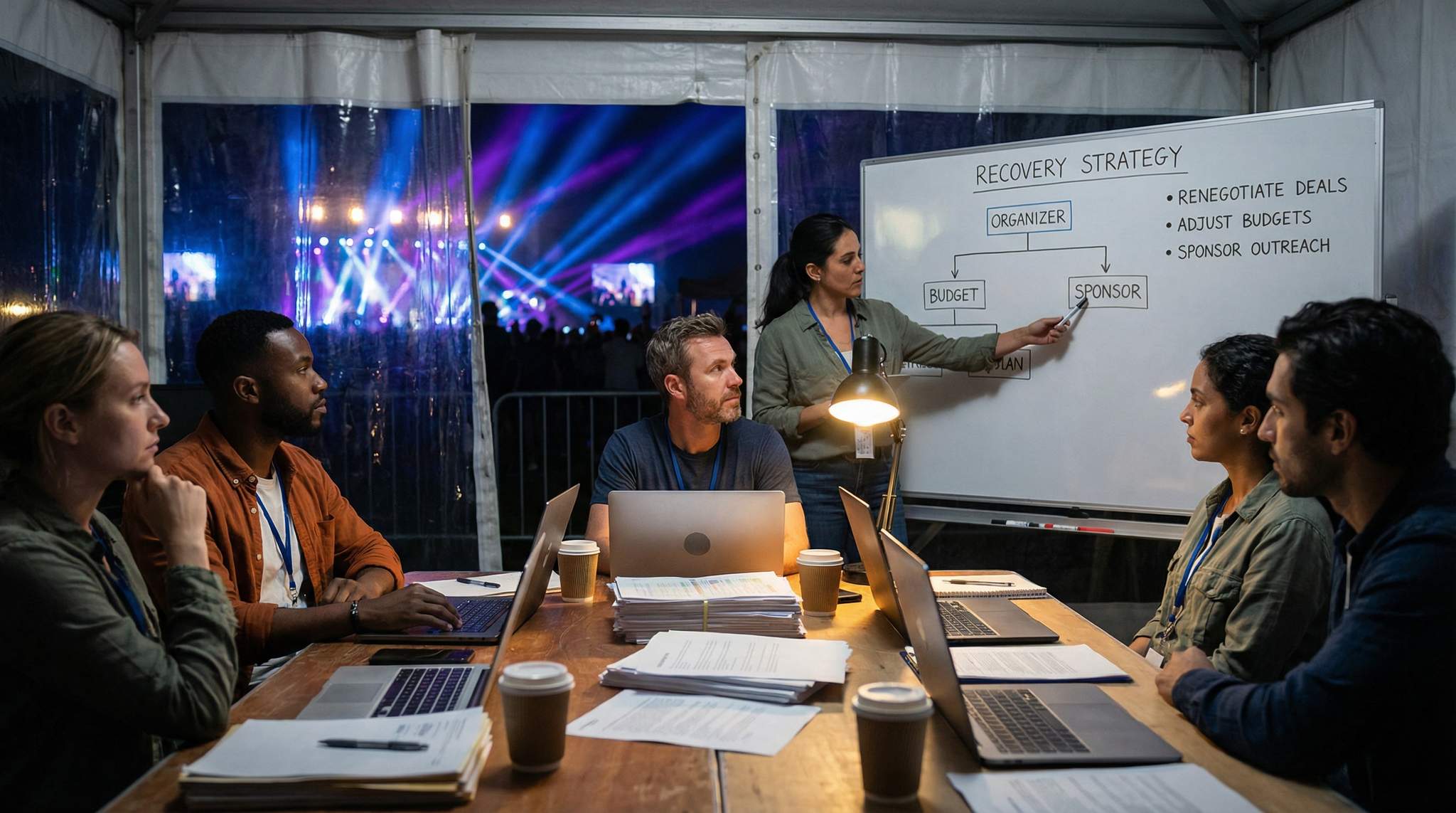
If you have wealthy personal networks or prior investors who didn’t invest this time, now is the moment to reach out. Private loans or equity investments from friends, family, or industry backers can inject capital quickly. Of course, handle these arrangements with formality – put the terms in writing, whether it’s a true loan (with interest, timeline for repayment) or them buying a stake in the festival business. Bringing on an investor when you’re desperate can mean giving up a bigger share than you’d like, but sometimes it’s better to own 50% of a successful festival than 100% of a bankrupt one. Co-producing with a partner who has deeper pockets is also a viable approach (we’ll cover more on partnerships in a moment). Be creative but prudent – consider the cost of each financing option, financially and in terms of control, and choose what aligns best with your recovery strategy.
For those looking at a complete financial reset, the challenge often mirrors how to start a music festival with no money. The secret lies in leveraging strategic partnerships and advance commitments. By securing a venue on a revenue-share model and negotiating backend-heavy deals with talent, you can launch (or relaunch) an event with minimal upfront capital. Ticketing platforms that offer cash advances against future sales are the modern promoter’s lifeline in these zero-capital scenarios.
When navigating a complete financial reset, the operational playbook closely resembles the tactics used when figuring out how to launch a live music event with zero upfront capital. Your primary currency shifts from cash to trust and sweat equity. In these bootstrap scenarios, organizers must rely heavily on co-promotion structures. This means negotiating with venue operators to waive rental fees in exchange for a larger cut of food and beverage sales, and working with talent agencies on door-split percentages rather than guaranteed flat fees. Securing a ticketing partner that provides marketing support and rapid payouts can also bridge the critical gap, allowing you to use initial presale revenue to fund immediate municipal permit and deposit requirements.
Bringing in a Strategic Partner
Many festivals have avoided collapse by joining forces with a partner organization that provides financial stability or operational support. This could be a larger festival promoter, a media company, or even an investor group that sees potential in your event. Essentially, you’re trading some ownership or influence for the resources to continue. A classic example is Coachella: after its inaugural 1999 festival lost nearly $1 million and was put on hold for 2000, Goldenvoice (the founding promoter) sold a 50% stake to the concert giant AEG Live. With AEG’s capital and backing, Coachella was able to return in 2001 and gradually become the global titan it is today. That partnership was strategic – AEG provided funding, infrastructure, and clout with artists, while Goldenvoice kept creative control (Paul Tollett remained at the helm). If you’re open to a partnership, look for entities that complement your weaknesses: maybe a national promoter who can absorb some risk and help with talent booking, or a local event company that has stronger sponsor connections or city relationships.
Entering a partnership or sale requires careful thought. Identify what your festival is worth – not just in current debts, but its brand value, audience loyalty, and growth prospects. If you approach another company, come with a proposal that highlights the festival’s strengths (e.g. “we drew 10,000 devoted fans even in a down year” or “we have an untapped market niche”). A partner will likely conduct due diligence, so be transparent about finances and learnings. They will want to see that with their help, the festival can flourish (and generate profit) moving forward. Also, structure the deal to preserve your festival’s vision and avoid losing your soul – a common fear when partnering up. It’s possible to partner without sacrificing your event’s identity, as long as roles and creative control are clearly negotiated. For instance, you might agree to give the partner a majority share of profits until debts are paid, but retain decision-making on lineup and experience. Or if they take equity, perhaps you hold veto power on certain artistic decisions. Each scenario will differ, but having a lawyer help frame the agreement is wise.
Beyond formal investors, consider partnership in the form of collaboration with another festival or event. If your region has multiple festivals, maybe teaming up on a joint event or merging two struggling festivals into one stronger one could be mutually beneficial. This can cut competition and pool resources. In practice, festival collaborations have happened for survival: a few European festivals facing tough times joined forces on combined weekends and shared infrastructure to save costs. You could explore a co-production where you and another promoter split costs and responsibilities for next year’s event – essentially hedging each other’s risk. The key is to ensure aligned goals and clear agreements on who does what (so nothing falls through the cracks). If done right, a partnership can provide not just money but also expertise and manpower. Your festival might gain an experienced operations crew or a better marketing machine through a partner. Ego can often hinder festival partnerships – organizers are understandably protective of their “baby” – but 2020s industry trends show that collaboration is sometimes the smartest path to longevity. If it can save your festival, it’s worth considering swallowing a bit of pride to allow others on board. In summary, strategic partnerships – whether through investment, acquisition, or co-production – are proven ways to bounce back stronger, as long as you choose the right ally and structure the deal to honor your festival’s core values.
Crowdfunding and Community Support
When traditional funding isn’t enough, why not turn to the people who love your festival most? Many independent festivals have successfully crowdfunded their comeback by rallying fans and community members. If your event has a loyal following or significant local importance, consider launching a fundraising campaign. This could be through platforms like Kickstarter, GoFundMe, or specialized event crowdfunding tools. The pitch should be compelling: tell the story of the festival’s situation and ask supporters to chip in to “Save the Festival” or “Help [Festival Name] Return in 2026”. In return, offer enticing rewards or perks for different contribution levels. Common rewards include festival merch, name engravings on a “founders wall” on site, VIP upgrades at the next event, or even lifetime passes for major donors. The key is to make backers feel like part of the festival’s story – which they are.
Real-world examples show this can work. An Edinburgh comedy festival lost a £15,000 sponsor just weeks before opening one year. Rather than cancel, the organizers launched an emergency auction of memorabilia and special experiences. They transparently told fans and the local arts community, “we need help to keep the shows going.” The community responded, the needed funds were raised in time, and the festival went on as planned – earning goodwill and press coverage for their resilience. In another case, a free local music festival in England (Keynsham Music Festival) faced cancellation due to budget shortfall and turned to crowdfunding; hundreds of residents donated to keep their community event alive. These stories illustrate that fans often don’t want to see a beloved festival disappear and will support it financially if asked in the right way.
Boost Revenue With Smart Upsells
Sell merchandise, VIP upgrades, parking passes, and add-ons during checkout and via post-purchase emails. Increase average order value by up to 220%.
If you pursue crowdfunding, be very clear about how funds will be used (e.g. “This will pay off remaining 2025 debts and form a base for 2026 expenses”). Provide updates to backers along the way. Also, understand it’s not “free” money – you’re trading future value (merch, tickets, etc.) for immediate cash, so price your reward tiers carefully to ensure the campaign truly helps your finances. Another approach is to organize a benefit concert or mini-event as a fundraiser. For example, assemble some of your regular local bands or DJs for a one-night “Festival Support” show at a club, with all proceeds going to the festival fund. Fans get a great night and know their ticket money is contributing directly to the comeback. Some festivals have even done benefit merchandise drives – selling “Save [Festival]” T-shirts or compiling a commemorative photo book, where profits go towards debt clearance. These tactics not only generate money, but also keep the community engaged and invested in the festival’s future.
One more unconventional tactic: reach out to local government or tourism boards for support. If your festival significantly benefits the local economy (hotels, restaurants, tourism), sometimes city officials can find grants or emergency arts funding to help bridge a crisis. This happened in the Netherlands and UK during the pandemic – local councils stepped in with relief funds to ensure key festivals survived the downturn. It never hurts to ask; at the very least, it makes officials aware of the festival’s value and struggles. They might not write a check, but they could offer in-kind help (like waiving permit fees next year or offering city services at a discount). The overarching point is to harness community goodwill. By publicly and proudly involving your audience and supporters in the festival’s rebound, you not only raise funds, you deepen the festival’s connection with its fan base. People will feel a personal pride in the comeback – “we helped save this” – which can translate into long-term loyalty and word-of-mouth marketing that money can’t buy.
Tapping Grants and Alternative Resources
In addition to private funding and fan support, research grant opportunities or industry assistance that might apply to your situation. Depending on your country or region, there may be arts grants, cultural funds, or COVID-19 relief programs (some are still ongoing for live events) that can provide financial aid. For instance, in the UK, the Arts Council’s Cultural Recovery Fund in 2020-2021 delivered millions to festivals and venues to cover losses and encourage future events. Some festivals were saved by these grants. While such large-scale programs might not be currently available in all places, there are often smaller grants for specific aims – e.g. tourism development, community arts, or environmental initiatives – which a festival can tap into. If your event has a strong community or cultural aspect, emphasize that in applications. The process takes effort (applications, proposals, sometimes matching funds), but free grant money is far better than loans if you can get it.
Don’t overlook industry associations and mentorship programs. Organizations like the Association of Independent Festivals (AIF), International Festivals & Events Association (IFEA), or local event producer networks often have resources for members in crisis. They might offer emergency loans (at low or no interest), or at least guidance on where to find support. They also host conferences (like ILMC, Event Safety Summit, etc.) where you can learn how others navigated similar issues. In times of need, even reaching out to fellow festival organizers can be a source of help – yes, technically they are competition, but the festival world can be tight-knit. A friendly producer might lend you staging equipment for cheap, share vendor discount contacts, or co-book artists to split costs (e.g. booking an artist on two festivals in one trip, so you each pay half travel). In 2026, we’re seeing more of these cost-sharing alliances emerge, where festivals team up to cut expenses and carbon footprint simultaneously. If cash is scarce, bartering and resource-sharing with peers can make a big difference.
Finally, scrutinize if there are any assets you can liquidate or expenses you can refund. Did you, for example, place a deposit on next year’s venue or on rental equipment that you now might change? You could negotiate to get that deposit back or applied later. Do you own festival equipment (staging, lights) that sits idle? Consider renting it out to other events in the interim for extra income, or selling non-essential gear. Some festivals have garage sales of old decor, props, or merchandise – fans and collectors might buy these, injecting a bit of money while clearing storage. It might not raise tens of thousands, but every little bit helps when rebuilding your budget.
By assembling a patchwork of funding sources – a small loan here, a grant there, a crowdfunding push, a cost-sharing agreement – you can create the financial runway needed to launch the next edition on solid footing. The best strategy is often a combination of approaches so you’re not over-reliant on one source. It’s much like diversifying an investment portfolio: mix some debt, some community support, some partnership, etc. This way, if one effort falls short, others can compensate. And psychologically, each win (a grant approval, a big crowdfunding day, a sponsor renewal) builds momentum and confidence in your comeback. It’s the art of financial patchwork quilting that festival producers know well – stitching together resources to keep the dream alive.
Free Tool: Split Tickets for Max Gross
Given capacity and a target price, the optimizer proposes Early Bird / GA / VIP allocations and prices — with projected gross at 100%, 80% and 60% sell-through.
Mid-Stream Adjustments to Limit Losses
Monitoring Early Warning Signs
One of the smartest moves a festival organizer can make is to identify trouble before it’s too late. Ideally, you shouldn’t be taken by complete surprise at a loss – there are usually warning signs in ticket sales or budgets months prior. Establish a monitoring system for key metrics like ticket sales pace, sponsorship confirmations, and major expense estimates during the planning cycle. For example, set benchmarks: “By 3 months out we need X% of tickets sold to stay on target.” If you hit that date and sales are, say, 40% behind, that’s an early warning that you may be facing a revenue shortfall. Similarly watch budget creep: if production quotes are coming in 20% higher than anticipated, note that gap. Gut instinct vs. data is a balancing act in festivals, but in financial monitoring, data should lead – track those numbers weekly or even daily. If red flags appear, gather your core team immediately to discuss mitigation (don’t wait and hope for a miracle). Smart festivals convene what’s sometimes called a “GO/NO-GO meeting” a couple months out if ticket sales lag – essentially a frank assessment of whether the show can go on as planned, needs to downscale, or in worst cases, postpone. While canceling pre-event is a last resort, it can sometimes be a lesser evil than proceeding and digging a deeper financial hole.
Assuming you plan to push forward (which is usually the case), use those early signals to trigger cost-saving measures and aggressive marketing adjustments mid-stream. For instance, if VIP tickets aren’t selling well, pivot marketing to focus on general entry and consider repurposing some VIP amenities to all attendees (cut the VIP costs, boost general experience to drive standard sales). If your data shows a certain demographic isn’t buying as expected (e.g. under-25s are lagging), adjust your promotion strategy – maybe you need different influencers or ads on TikTok rather than Facebook. The quicker you respond to what the numbers are telling you, the better chance you have to close the gap before showtime. Some festivals implement a tiered budget that aligns with ticket sales thresholds: for example, if by one month out only 70% of tickets are sold, automatically enact the “reduced budget” plan (fewer fireworks, skip the expensive art installation, etc.). This kind of contingency budgeting was highlighted in many festival planning guides post-2020, where flexibility became key. It’s essentially scenario planning – you have a full-scale plan, a medium plan, and a bare-bones plan, and you commit to one based on real-time revenue indicators. It takes discipline to cut things you were excited about, but it’s exactly how you avoid turning a minor shortfall into a catastrophic loss.
Trimming Production and Amenities on the Fly
When faced with an impending loss, scaling back production costs is often the fastest way to save money mid-stream or even during the event. Go through every production line item and ask, “Can we do without this and still run a safe, enjoyable festival?” You might find elements that wowed on paper but aren’t essential. For example, if you planned three elaborate stage setups but ticket sales only justify two, it’s prudent to consolidate. Many festivals have quietly reduced stage counts or operating hours in the final weeks once they saw the reality of attendance. Is it disappointing for the small fraction of attendees who might notice? Perhaps. But most fans care more that the core experience (music, community, basic amenities) is delivered well – they won’t miss the extra frills if you don’t advertise the cut. Focus on preserving the essentials: good sound, adequate lighting, safety infrastructure, and the promised artists’ performances. Extras like advanced pyrotechnics, expensive visuals, custom stage designs, or luxury furnishings in lounges can often be pared back or cut late in the game to save on rental and labor costs.
Consider negotiating with production vendors for a smaller package. If your staging company was set to provide 5 generators and you realize you only need 3 for a smaller crowd, tell them – that might shave a chunk off the bill. Similarly, if you rented 100 moving lights for the main stage but could do with 70, see if the contract can be adjusted (often rental vendors are flexible up to a short window before the event). Dropping a stage entirely might allow you to release a whole audio/lighting rig and related crew, saving tens of thousands. There are trade-offs, of course – fewer stages mean you may have to tweak the schedule or notify artists of a change. Handle that diplomatically: artists would rather play a combined stage to a decent crowd than a half-empty dedicated stage anyway. One mid-sized European festival that saw soft ticket sales combined two secondary stages into one a week before the show, cutting audio rental costs by 30%. They communicated to those stage artists that it was for better crowd energy and everyone still got to perform, just in a different slot – ultimately, it worked out and most attendees never realized the original plan was different.
Amenities and site infrastructure offer another area to tighten. For instance, if you ordered luxury restroom trailers but expect a smaller attendance than planned, you might cancel a few units and switch some to standard portable toilets. Or if you overestimated camping needs, reduce the size of the campground (less fencing, fewer security staff needed) and close off unused sections. Scale back decor and non-critical site art – yes, ambience is nice, but when funds are scarce, attendees will forgive having 5 art pieces instead of 10. It’s about preserving the core festival atmosphere while cutting the most expensive fluff. Use data from on-site if possible: on Day 1, if you see certain experiential zones empty, consider quietly shuttering them for Day 2 to save staffing and power costs. One festival we know realized their costly interactive art tent was getting little foot traffic; they closed it on the final day and redeployed those staff to help at busy beer stands – saving money and improving service where it mattered.
Safety-critical elements, however, should never be cut below the required levels. You must maintain sufficient medical, security, sanitation, and structural integrity no matter what – skimping here can lead to dangerous situations and far worse outcomes than a budget loss. Always consult your safety officer or production director before trimming anything that could impact health and safety compliance. Regulators won’t accept “we were over budget” as an excuse for failing to meet permit conditions. That said, if a smaller crowd shows up than expected, you might have over-allocated some safety resources and can scale proportionally (for example, if you planned for 50 security guards for 5,000 attendees but only 3,000 tickets sold, you might trim to 40 guards and still exceed the recommended ratio). Work with contractors on these adjustments – many will accommodate and only charge for actual personnel hours used.
In summary, stay flexible with production up to and even during the event. The ability to adapt on the fly – to “right-size” the festival in real time – can mean the difference between a manageable loss and a financial disaster. Your audience will still have a great time if you execute the essentials well. They likely won’t notice if a few less speakers are hung or if the decor is simpler than initially envisioned. What they will notice (and you will too) is if the festival goes bankrupt and doesn’t return. So trim the sails to weather the storm – you can always bring back the fancy extras in future years when you’re back in the black.
Optimizing Staffing and Scheduling
Labor is a significant festival expense, and one that can often be adjusted mid-stream to save money without compromising safety. Start by reviewing all staffing schedules leading up to and during the event. Are there departments with excessive overlap or hours that can be tightened? For instance, if you hired stagehands for load-in expecting three days of stage builds, but changes allow it to finish in two, release them early (it saves wages and those crew can potentially grab other gigs). During the show, if attendance is lower than anticipated, you might not need as many gate staff or crowd management personnel active at once. Communicate with your security provider – often they can scale down officers if the crowd size doesn’t require full force (especially on later days when you see actual attendance vs. projections). However, always ensure minimum safety staffing levels first.
Volunteer staff can be a cushion here as well. If you had a pool of volunteers or interns, consider increasing their role to cover non-critical tasks, reducing paid staff hours. Many festivals revamp their volunteer programs in tough times, offering slightly bigger incentives (like a free extra guest pass next year) to attract reliable volunteers who can shoulder more of the workload. Just be mindful of labor regulations – some regions have strict rules on what volunteers can do. But generally, enthusiastic volunteers can handle things like information booths, artist hospitality runners, decor setup, and cleanup, allowing you to dial back paid positions in those areas. It’s a strategy of trading budget costs for community engagement. One organizer described how in a pinch, they asked their volunteer crew to each do an extra 4-hour shift to cover a shortfall in paid staff – the volunteers agreed out of love for the festival, saving the organizers thousands in labor costs and preventing gaps in operations.
Schedule efficiency is another lever. Audit the operating hours of each festival area: if, for example, the campsite was planned to open 24 hours with staff throughout, but the site empties out by 3am, you could shorten the staffed hours (maybe close facilities for a few hours at night with minimal security) and save on overnight staff pay. Look at stage schedules too – could stages start a bit later in the day or end slightly earlier to cut overtime and production crews’ hours? Many festivals end up running music past midnight at great expense for lighting, staff, and transport, when a slightly earlier finish might not hurt the fan experience but would trim costs. If you decide to adjust showtimes, do inform attendees as early as possible to avoid confusion. Sometimes combining artist sets or using slightly longer changeovers can let you share stage crews across stages, reducing the total number of crew needed.
Also, feed and care for your crew efficiently. Hospitality costs for staff and artists can sneak up. If you over-catered catering based on a larger team, see if contracts can be amended or if you can donate excess to reduce waste (maybe a local charity can pick up unused meals – it’s goodwill and saves disposal costs). Ensure you’re not overspending on perks like shuttles or hotels that aren’t fully utilized; consolidate transports or room nights if possible. These dollars might seem minor, but during an on-site production every bit adds up.
To truly survive festival season on a budget, you must look at these operational micro-expenses. For massive mega-festivals, crew catering is a multi-million dollar line item. Take inspiration from global leaders: implementing a digital foods shift exchange system—similar to the rigorous meal token and shift-tracking logistics used by Tomorrowland for its thousands of workers—ensures you only pay for meals actually consumed. If a stagehand swaps a shift or leaves early, their catering allocation is automatically updated. This prevents the notorious “ghost catering” waste where promoters pay for hundreds of untouched hot meals, keeping your event budgeting lean and precise.
One more idea: if the writing is on the wall early that next year will need to be lean, consider moving some staff from paid roles to profit-share or performance-based pay. For instance, a marketing consultant might agree to lower their retainer fee in exchange for a bonus if ticket sales hit a certain target, aligning their cost to your revenue. Or your event manager might defer part of their fee until after a successful event. This is delicate – not everyone will go for it – but those who believe in the festival might be willing to share some short-term risk for long-term reward. It shows a unified commitment to revival.
In essence, make your operation as efficient as possible: the right people, in the right numbers, at the right times. Cutting staff must be done carefully – under-staff and you risk operational failures or safety incidents (which can cost far more). But thoughtful optimization can yield significant savings. A well-run smaller crew is better than an overstaffed, cash-bleeding army. Communicate with your team about why scheduling tweaks or shift reductions are happening – keeping them in the loop maintains trust. Veteran producers often note that tight-knit crews will go the extra mile in tight times, helping cover multiple roles or endure a bit longer hours so the festival can save on headcount. Don’t abuse that goodwill, but appreciate it. By the time you open gates, you want a lean, adaptable crew ready to deliver a great show to whoever comes – and a payroll that won’t sink your ship further.
Considering Pausing or Postponement
As tough as it is to contemplate, sometimes the best mid-stream decision is a strategic pause or postponement of the festival. If financial projections are dire enough that even with adjustments you’ll incur a crippling loss, it might be wiser to delay the event (if pre-event) or take a fallow year (if post-event) to reorganize. This isn’t failure; in fact, a well-planned pause can save the brand and allow a triumphant return. For example, the Sasquatch! Music Festival in the U.S. saw attendance plummet from 56,000 to 36,000 one year, leading to huge losses – the organizers ultimately ended the festival after 17 years rather than bleed money. But had they chosen to pause and rethink, Sasquatch might have found a sustainable model to come back. On the flip side, Glastonbury Festival has intentionally scheduled “fallow years” (break years) every few years to rest and recalibrate – and once did so out of necessity. After a financially disastrous 1979 edition, Glastonbury skipped 1980; Michael Eavis spent that time revamping management and securing better funding, and the festival returned in 1981 stronger. In recent decades, Glastonbury’s fallow years are planned when needed to avoid burnout and bounce back fresh.
If you decide to postpone an upcoming edition to avoid a loss, frame it strategically. Communicate to fans and media that you’re taking time to build a better festival experience. Highlight positive reasons: venue or date changes, improving offerings, ensuring financial viability. It’s crucial to preserve the festival’s reputation in how you announce it. Offer refunds or honor tickets for the next date to maintain goodwill (similar to what many did during the pandemic). Some independent European festivals facing oversaturated markets chose to pause for a year to rethink their place in the market, then returned with a revamped concept. Those who explained the move to fans as a commitment to quality often retained support. For instance, a boutique festival in Spain took 2023 off citing “market overload” and came back in 2024 with a more focused lineup and sold out – their fan base respected the honesty.
If the event already happened and you’re just deciding whether to produce next year or not, scaling down rather than outright pausing is another option. You could announce that next year will be a “limited edition” festival – maybe one day instead of three, or a single-stage “reunion show” instead of a full spree. By scaling down, you cut costs dramatically, but you’re still present in the market and in fans’ minds. Many producers find this more palatable than a full hiatus. It generates some revenue and keeps the brand alive, while buying time to rebuild. When doing this, communicate the upsides: a more intimate experience, a throwback for die-hards, etc. Ensure fans know it’s part of a plan for sustainability, not a sign that the festival is dying. As covered in “Sometimes Less is More: When Scaling Down or Pausing Your Festival Can Save It,” a strategic step back can ensure long-term success. Sharing that perspective with stakeholders can earn their buy-in. Sponsors might even appreciate a smaller event if it means more curated attendee engagement, for example.
Of course, pausing or postponing has risks: competitors can fill the void, and you lose one cycle’s income. But if continuing as-is would dig a debt you can’t climb out of, then it’s a risk worth taking. Use any pause wisely – streamline operations, seek new funding, perhaps rebrand or reimagine parts of the festival that weren’t clicking. Engage your community during off-time (social media, small local events) so you don’t lose momentum and ensure fans will be first to buy when you return. Remember, it’s far better to skip a year or go small than to deliver another money-losing event that could permanently bankrupt the festival. As painful as it is in the short term, a pause can be the breather that leads to a breakthrough. Plenty of festivals have done it and returned stronger – the key is planning the comeback from day one of the hiatus.
Rebuilding Trust and Brand Reputation
Addressing Attendee Concerns
When a festival has a rocky year (especially if on-site issues were evident due to budget cuts or last-minute changes), attendees will have concerns. Don’t shy away from addressing these head-on. Common fan worries include: “Will the festival survive until next year?”, “Will my ticket purchase be safe?”, “Are they going to cheap out on the experience now?” The best approach is honest communication combined with concrete assurances. Consider sending a post-event email survey or message to all ticket buyers – not only asking for feedback, but including a note acknowledging any shortcomings. For example: “We know lines were long at water stations and one stage had to close early – we apologize and are already planning improvements for next year, including more water points and backup power for stages.” By showing you listened and learned, you start regaining trust. If your financial situation caused any visible cutbacks (say an advertised attraction wasn’t there or a headliner had to be swapped last-minute), explain what happened in straightforward terms and how you’ll prevent it going forward.
It’s also crucial to individually handle any attendee complaints or refund requests with great care. Some fans may reach out because they felt the festival wasn’t as advertised. Respond promptly and empathetically. Even if you can’t offer full refunds (unless legally required), consider gestures like partial refunds, discount codes for future tickets, or free merchandise for those who had genuine bad experiences. A small expense here can turn a detractor into a loyal fan – and publicly, it shows the festival cares about its community. Festivals that have recovered from fiascos often did so one fan at a time: responding on social media, fixing customer service issues quickly, and sometimes personally calling top influencers or upset long-time attendees to apologize and invite them back. These efforts spread positive word-of-mouth that the organizers are taking responsibility.
If the festival’s continuity was in doubt, by the time you commit to the next edition, make sure customers know the event is happening and will be better. One tactic is to open next year’s ticket sales with a “loyalty pre-sale” for past attendees, possibly at a special discounted price or with an exclusive perk. Not only does this reward those who stuck with you, it creates a public vote of confidence – once fans start snapping up tickets, others see that and it rebuilds momentum. Highlight improvements when marketing the next edition: if finances caused a shortfall in say, site facilities, announce the specific upgrades or increased budget allocated to that area. For example, “New for 2026: 30% more toilets and free water refill stations, thanks to feedback from our 2025 attendees.” Transparency about fixes turns a past negative into a selling point. The worst thing would be to pretend nothing happened; instead, embrace a narrative of improvement. People love supporting events that strive to do better.
Lastly, consider hosting a small “town hall” meeting (virtually on a livestream or in-person if feasible) with core fans. Some independent festivals have done Q&As where the director talks about challenges and answers questions from the community. It takes thick skin, but being that open can greatly humanize the festival and build a sense of shared ownership among attendees. Fans then root for your success as if it’s their own. Remember, these attendees are your festival’s ambassadors – if they regain trust, they will convince others to attend in the future. So treat these relationships as paramount. Show that even though the festival lost money, its heart is in the right place and it’s committed to delivering the experience fans deserve. That sentiment, backed by real actions, will go a long way in repairing and even strengthening your festival’s reputation.
Making Amends and Showing Appreciation
After a tough year, one of the most powerful tools in your arsenal is gratitude. Everyone – from ticket buyers to crew to artists – likely went through some disappointment due to the festival’s struggles. Publicly and privately, thank those who stuck by you and helped make the event happen at all. When Bluegrass Underground (a U.S. cave-based music festival) faced severe weather and logistical hiccups one year, the organizers sent personal thank-you notes and a small gift to all vendors and team members, acknowledging the hardship and their support. That kind of gesture, though not widely publicized, cemented loyalty internally. Think about doing something similar: maybe a post-festival staff party or a simple personalized festival poster signed by the team sent to key contributors.
For attendees, a great way to show appreciation (and entice them back) is through loyalty rewards. For example, offer everyone who attended the problematic edition a special discount code for the next festival, or a free upgrade (if you introduce a new VIP lounge, they get access). This not only functions as an apology/thank-you, but motivates them to purchase again. If you can’t afford discounts broadly, consider surprises at the next event: perhaps a “loyalty fast lane” at the entrance for returning guests, or a commemorative merch item exclusively for those who stuck with you. These touches make fans feel seen and valued.
Another important group to make amends with is the artists and their teams. If any artists had a subpar experience due to budget cuts (e.g., simpler staging than promised or hospitality scaled back), reach out with thanks and explanation. Artists talk to each other, and their agents certainly trade notes on festivals. You want them to know that you recognize issues and will improve. For instance, you might send the agent a follow-up explaining any backstage shortcomings and how you plan to upgrade them next time, plus a sincere thank you for their artist’s flexibility. Such communications can turn a potentially soured relationship into one of mutual respect. An agent might say, “They really struggled last year but were transparent and treated us right after – let’s give them another shot when they’re back on their feet.” Also, if any artist was inconvenienced (like set times changed last-minute due to stage consolidations), consider booking them first for your next edition or finding another gig for them to make up for it. Reciprocity goes a long way in the talent world.
The community at large – local residents, businesses, authorities – also deserve appreciation. If your festival caused any disruption or didn’t deliver expected visitor spending due to lower turnout, be proactive in thanking the community for its patience and promising a better partnership next time. Write an open letter in the local paper or speak at a city council meeting to express gratitude for the community’s support. Festivals often rely on goodwill (e.g., tolerant neighbors, enthusiastic local press), and a rough year can strain that if not addressed. By publicly showing humility and appreciation, you rebuild any lost trust. For example, after a certain street festival had to drastically cut its schedule one year (disappointing local vendors and shops who count on it), the organizers organized a free smaller event later as a “thank you block party” to support those businesses – a classy make-good that kept folks on their side.
Sincerity is crucial. These gestures shouldn’t feel like marketing stunts; they must come from a genuine place. That means maybe admitting personal responsibility: “We as organizers learned a tough lesson, and we are so grateful to everyone who still had our back. We’re committed to rewarding that loyalty.” In showing some vulnerability, you humanize your festival brand. People support people, not just events. By making amends where needed and showering thanks on those who deserve it, you create a reservoir of goodwill. That goodwill is intangible but incredibly valuable as you plan your comeback – it means stakeholders will give you the benefit of the doubt and maybe even go the extra mile to help ensure your next chapter is a success.
Keeping Artists and Agents Onboard
Your lineup is the heartbeat of your festival, and maintaining good relationships with artists and their agents after a loss-making year is paramount. If any contractual obligations to artists were affected by the financial issues (for instance, if an artist’s full fee was delayed, or amenities in their rider were cut on-site), make resolving those a priority. As mentioned earlier, artist payments should be high priority. Beyond payments, communicate with each artist’s team to express gratitude for their performance and transparency about the festival’s plan moving forward. Agents talk – you don’t want an agent warning others, “Don’t play XYZ Fest, they can’t pay their bills.” Even if you’re late, a clear payment plan and follow-through will protect your reputation. Many agents appreciate a candid approach: “Hey, we had a rough year, but we’ve scheduled installment payments on these dates and you will be fully paid by X.” And then, crucially, deliver on that promise or even pay sooner if you can (surprise them!). This demonstrates integrity.
Consider offering future incentives to artists/agents who were part of the tough year. For example, give them right of first refusal for a slot next year, or perhaps a slightly higher billing or improved slot time at the next festival as a thank-you. If a mid-tier band played at 2pm on a side stage in the bad year, you might offer them a 5pm slot or main stage billing in the comeback edition (if their draw warrants it). This not only rewards them, it signals to the industry that you value partnerships. Another idea: if you had to cut some hospitality or perks this year, make a note to “over-deliver” for those artists next time – extra catering, additional local activities, whatever makes their experience great. Agents remember festivals that treat their artists like gold, especially after previously falling short.
When booking new artists for the next edition, you may encounter some skepticism if word circulated about financial issues. Leverage your track record and any corrective steps to reassure them. It helps if you can say, “Yes, 2025 was challenging, but we’ve since partnered with [New Sponsor] or downsized to ensure stability. We’ve successfully paid all artists and vendors and are in a strong position for 2026.” If you personally know any agents or managers, have a candid call with them to explain the festival’s trajectory. Personal credibility of the promoters goes a long way here. Festival booking is a small world; if you lost an artist last-minute due to budget in the bad year, that’s a hurdle to overcome – maybe reach out to that artist’s agent first with your new plans and even offer a gesture (like booking another one of their roster artists at a favorable deal) to rebuild trust. Essentially, you may need to do some PR within the talent industry to show that your festival is back on solid ground.
It might be beneficial to book a “sure thing” or two for the comeback edition – artists you have a strong relationship with who will vouch for you by returning. Their presence signals to others that the festival is trustworthy and worth playing. For example, if a DJ or band has played your fest every year and loves it, having them on the lineup again provides continuity and confidence. You can even use artist support in your narrative: sometimes artists publicly say, “We’re excited to help bring [Festival] back stronger!” (Of course, only if they truly feel that way – never script it artificially). In the realm of booking, consider leaning on agency relationships you’ve nurtured. If one major agency trusts you, they might green-light several of their artists to sign on, even if a rival agency is hesitating.
Lastly, remember that many artists are humans that empathize with struggling festivals – especially since COVID, there’s awareness that not every event is Rolling in cash. If you built a friendly rapport on-site with any artists (e.g., chatting with them about the festival’s mission or challenges), don’t be afraid to reach out on a human level and thank them, and say you hope to work together again. Artists often appreciate being treated as partners rather than just contractors. Some might even accept slightly lower fees or flexible terms for a year to help you out (particularly local acts or those early in their career who value the exposure). You won’t know unless you build that relationship. Keeping talent support is about communication, making good on promises, and showing you’ve learned. Do that, and your lineup quality – and the agents’ faith – will bounce back right alongside your finances.
Community Engagement and Transparency
Rebuilding your festival’s standing isn’t just about the industry and attendees – it’s also about the broader community and public image. Engaging your local community and fan community in your revival plan can turn them into active supporters rather than passive observers. One effective method is to create a sense of shared journey. For example, you might start a blog or video series documenting the “road to recovery” for the festival, highlighting changes and improvements as you make them. Feature interviews with team members – maybe your sustainability coordinator talking about cost-effective eco-initiatives you’re adding, or your booking team sharing excitement for a leaner, curated lineup. By pulling back the curtain, you invite fans to feel invested in the rebuild. This level of transparency can be risky if not managed (avoid revealing any sensitive financials that could cause alarm), but controlled openness builds trust. It shows you’re not hiding issues but actively working on them. Some festivals even crowdsource ideas from fans during off-season: “What would you prioritize if you ran the festival next year?” – you’ll get a slew of responses (some silly, some insightful) and fans feel heard. You might glean an idea that saves money or boosts experience that you hadn’t thought of.
For your local community (businesses, residents, city officials), continue the outreach we discussed earlier. You could host a community forum or a less formal meetup months ahead of the next event to discuss plans and address any concerns. Show them how you intend to avoid previous pitfalls – e.g., “We’re hiring a new traffic management company to ensure smooth arrivals” or “We’ve secured more sustainable power generators, which also cut costs.” Community members love to hear that their feedback (like noise complaints or traffic issues) is being taken seriously. It’s also an opportunity to re-emphasize the positive impacts: “Last year wasn’t great financially, but we still brought 5,000 visitors who spent in local hotels and restaurants. With our new approach, we aim to double that economic boost next year.” Reminding the community that they benefit from the festival’s success can rally local support, whether that’s informal promotion or formal backing like city council endorsements or logistical help.
Maintaining an active social media presence in the off-season is part of engagement too. Use your channels to celebrate small wins (secured a new sponsor? locked in a venue at a better rate? share the news). Also celebrate your community: highlight a fan of the week, share throwback photos to great festival moments, etc. By keeping positivity and momentum online, you counteract any lingering negative chatter. Importantly, when people comment or ask questions – especially critical ones – respond kindly and factually. If someone on Facebook says, “Heard you guys went broke, is this thing ever coming back?”, you can reply: “It’s true we had a tough year, but we’re happy to say we’re already planning next year’s festival with some exciting changes to make it better than ever. Stay tuned – we appreciate your support!” That kind of transparent optimism, repeated consistently, shapes public perception over time.
Finally, consider doing visible good in the interim. Aligning with a social cause or local charity can both help the community and rebuild goodwill. For example, organize a volunteer day for the festival staff and fans to clean up a park or host a charity concert for a local cause. Not only does this strengthen community ties, it shows that your festival stands for more than profit – which can make people more forgiving of a financial stumble. It’s crucial to be genuine – choose a cause related to your festival’s ethos (environmental cleanup if you’re an eco-themed fest, youth music programs if you’re about nurturing talent, etc.). Many festivals have successfully integrated cause-related events in off-years, and when they return, they find a broader base of support.
In essence, reputation repair comes from consistent positive actions and openness. By engaging people around you, you create a network of allies. They’ll be quicker to defend the festival if someone badmouths it (“Actually, they’ve been super open about what went wrong and how they’re fixing it”). Over time, the narrative shifts from “that festival that failed” to “that festival that overcame a challenge and came back stronger for the community.” And that is exactly the reputation you want heading into your relaunch.
Redesigning Next Year’s Festival for Profitability
Resetting Budget Assumptions
A critical outcome of a loss-making year is the chance to redesign your budget from the ground up. Take all the lessons learned and build a new financial model that is realistic and conservative. Start with revenue: reassess your ticket pricing and expected attendance. If you sold 8,000 tickets when you aimed for 10,000, it may be wise to base next year’s budget on 8,000 as the expected turnout (or even a bit less to be safe). It’s better to underestimate revenue than overestimate. Scrutinize pricing tiers – did you perhaps leave money on the table with too-low early bird prices? Or conversely, did high prices dampen sales? Find the sweet spot by analyzing price vs. sell-through data, and consider incremental increases or value-add packages to boost income (like bundle tickets with merch or offer a premium experience that can generate more cash per person). Also, diversify revenue projections: include merchandise, food & beverage sales, parking, and camping fees if applicable. These per capita spends can add up and were likely part of your actuals this year; use those figures to inform next year. Many festivals realize post-event that, say, each attendee spent $30 on food/drink on average – knowing that, you might forecast similarly and plan how to increase it (more vendors, better offerings). On the sponsorship side, only count confirmed or very likely sponsorship money – treat anything tentative as a bonus, not a core part of the budget.
The sheer importance of budgeting in event management cannot be overstated when plotting a comeback. Proper event budgeting is no longer just about tracking spreadsheets; it is a dynamic, strategic exercise that dictates your operational survival. When budgeting an event post-loss, you must shift from historical optimism to data-backed realism. Every line item in your event budgeting framework should be stress-tested against worst-case revenue scenarios. This rigorous approach to budgeting for events ensures that even if ticket sales stall, your core financial structure remains intact.
On the cost side, rebuild each expense category from scratch, questioning past excesses. A helpful method is zero-based budgeting: assume no cost is sacred and justify every line. For talent booking, set a firm cap (e.g., “talent fees will not exceed 30% of projected revenue”) and stick to it. If that means you can only afford two headliners instead of three, so be it – far better than overshooting and praying for a ticket miracle. Use the intel from your vendor renegotiations to get current market quotes for production needs. Where you secured discounts or learned of cheaper options, apply those. Also, allocate a contingency fund this time – a common rule is 10% of the total budget reserved for overruns or emergencies. If you had no buffer last year, that likely contributed to the crisis. Building in contingency may force you to scale down some plans to afford it, but it’s a non-negotiable for sustainability. As the saying goes, “Hope for the best, plan for the worst.” With a buffer, even if you hit a snag, you can cover it without derailing the whole event.
It’s useful to create multiple budget scenarios: worst case, expected, and best case. Worst case might assume, for example, 20% lower ticket sales than last year and perhaps a modest drop in sponsor money. Design a scenario where the festival can still break even or minimize loss in that worst case. That might be your slimmed-down version. Then an expected scenario (maybe flat growth), and best case (some growth or full target achieved). Plan what you’d do with any surplus as well (like repay debts faster or invest in one-time improvements, rather than simply increasing variable costs). A flexible model will let you adjust on the fly as sales come in, as discussed earlier. Importantly, share this new budget plan with key stakeholders (investors, partners) to show you’ve rethought things thoroughly. It will boost their confidence in supporting the next edition.
The table below illustrates how you might adjust major budget categories after a loss, focusing resources more efficiently:
| Budget Category | Last Edition Spend (% of total) | Next Edition Plan (% of total) | Strategy for Change |
|---|---|---|---|
| Talent (Artist Fees) | 50% | 30% | Limit number of headliners; seek emerging talent and co-book tours to reduce fees. Allocate within means to avoid overspend. |
| Production & Staging | 25% | 20% | Simplify stage designs; reduce total stages if needed; share equipment between stages or days to cut rental costs. Utilize existing infrastructure smartly. |
| Marketing & Promotion | 5% | 10% | Increase marketing spend to drive ticket sales (recognizing underspend hurt attendance). Use targeted digital campaigns and analytics to improve ROI. |
| Operations (Staff, Security, Facilities) | 15% | 15% | Maintain essential operations but improve efficiency. Optimize staff scheduling (no overstaffing), leverage volunteers, and negotiate better rates with contractors. |
| Contingency Reserve | 0% | 5% | Introduce a safety buffer for unforeseen costs (e.g. severe weather expenses). This fund remains untouched unless needed, providing insurance against budget shocks. |
| Other (Permits, Insurance, Misc.) | 5% | 5% | Continue covering all compliance and insurance costs. Shop around for competitive insurance rates; invest in weather insurance if climate is a risk area. |
This rebalance ensures that no single expense category overpowers the budget. Notably, talent and production – often the biggest spends – are trimmed to a sustainable proportion, while marketing is boosted to avoid the trap of “great event that no one knows about.” The contingency line helps absorb risk. Of course, your specific percentages may vary, but the idea is to align spending with realistic income and prioritize spending that drives value.
Rethinking your budget is just one piece of the puzzle; it must align with your broader event strategies for the upcoming year. Whether your new strategic direction involves pivoting to a boutique model, targeting a different demographic, or heavily integrating experiential brand activations, every financial assumption must support these revised event planning strategies. A budget that doesn’t reflect your updated operational tactics is simply a spreadsheet of wishful thinking.
To put this into practice, veteran producers rely on a few core festival budgeting tips to keep their ledgers in the black. First, always separate your operational funds from your ticket revenue until the event concludes—treating advance sales as a slush fund is a classic rookie mistake. Second, implement a hard “purchase order only” policy for your department heads to prevent rogue spending on site. Finally, build your break-even model on 60% of your target capacity, not 100%. If you can survive festival season on a budget at that threshold, any additional walk-up sales become pure profit.
Optimizing Lineup and Talent Costs
For many festivals, the artist lineup is both the biggest draw and the biggest expense. To bounce back financially, you’ll want to optimize your talent booking strategy to get the most bang for your buck. Start by analyzing the ROI of last year’s lineup. Did that pricey headline artist actually move the needle on ticket sales? Use data: if you added a superstar DJ and your attendance didn’t spike accordingly, that’s a sign the act may not have been worth the fee. Sometimes mid-tier or niche artists can sell nearly as many tickets as a mega-star, at a fraction of the cost. Consider focusing on artists who have a strong affinity with your core audience, even if they aren’t the most famous globally. These acts often have passionate followings that ensure their fans will attend. For example, a rock festival found that booking three mid-level cult-favorite bands brought more total attendees (as each had its own devotees) than one big mainstream rock headliner – and cost less combined.
Negotiate smarter with booking agents. Build on your relationships: if some agents took a chance on you in the tough year, acknowledge that and approach them early for the next edition. They may give you first pick on routing artists or flexible payment terms as a continuing partner. Being honest about budget limits can actually lead to creative solutions – a good agent might suggest rising artists within your price range or package deals (two acts together for a better rate). Also, explore collaborative booking via alliances with other festivals. If an artist is touring your region, teaming up with another festival or venue to share travel and lodging costs can lower the effective fee for each of you. The 2026 trend of green touring alliances has festivals coordinating schedules so artists play multiple events in one trip – often these come with cost-sharing benefits, not just eco-benefits.
Another tactic is to diversify the content beyond expensive musical acts. Could you incorporate local performers, art installations, workshops, or experiences that are low-cost but high-impact for attendees? Many successful festivals have grown by adding these elements – it gives more depth to the program and reduces reliance on costly headliners for entertainment value. Attendees then feel they got a rich experience even if the musical lineup is modest. If your festival can build a reputation for discovery (showcasing the “next big thing” rather than only established stars), you might snag artists before they blow up (and command big fees). A great example is South by Southwest (SXSW) in its early years – fans went to discover new talent, not for headliners, allowing the festival to thrive with relatively lower-cost lineups while building huge cultural cachet.
Consider adjusting the format or length of performances to manage costs. For instance, if you reduce the number of stages or days, you can concentrate your budget on fewer slots – spending the same total on talent but providing a tighter, more impactful lineup. Some festivals that faced downturns switched from three-day events to two-day events, trimming the least profitable day (often Friday if it’s weaker). This cuts not just artist fees for that day, but also production and staffing costs, and sometimes yields a better experience as the crowd is more focused together. If going shorter isn’t desirable, what about stage curation: dedicate each stage to a partner label or curator who might bring in artists for reduced fees as part of a showcase? They benefit from exposure, you benefit from not paying full freight for each act (sometimes these are sponsorship deals where a brand or label covers some costs).
Finally, nurture local and regional talent. Not only are homegrown acts cheaper, they often draw local fans and align with community support (which can help in funding or sponsorship). You could implement a program for up-and-coming artists – for example, host a battle-of-the-bands where the winners get a festival slot. This costs little and engages your community year-round. Plus, a stable of loyal local artists can become a festival’s family, willing to play for modest fees because it’s their hometown fest.
By making your lineup both strategically curated and financially prudent, you’ll maintain the festival’s appeal while avoiding the trap of overspending on star power that doesn’t pay off. Communicate some of these lineup philosophy changes to your audience too – let them know you’re committed to an amazing experience, not just big names. Often, festival-goers trust a festival’s curation if you’ve delivered quality in the past, and they’ll follow where you lead, big headliner or not. As you rebuild, a reputation for unique, well-curated lineups can set you apart from bigger-budget rivals and keep your costs in check.
Smart Ticket Pricing and Sales Strategies
Achieving profitability in your comeback will hinge largely on maximizing ticket revenue. That means it’s time to revisit your ticket pricing strategy with fresh eyes and perhaps some new tactics. First, analyze your previous pricing tiers and sales timeline. Did you sell out early-bird tickets too quickly, indicating they were priced too low? Or were later tier sales sluggish, suggesting you hit a price ceiling? Ideally, you want a pricing model that captures maximum willingness to pay without scaring people off. Many festivals implement tiered pricing (early bird, Phase 1, Phase 2, etc.), which not only rewards early commitment but also creates urgency at each stage. For example, instead of just Early Bird and General Admission, you might have Super Early, Early, Mid, and Last Chance tickets, each slightly more expensive. Communicate clearly how many tickets or until what date each tier lasts to drive FOMO (fear of missing out) among buyers.
Be careful, however, not to go so high that you suppress volume. A useful exercise is to check other festivals’ pricing in your region and genre – if you were significantly cheaper, maybe you have room to increase (especially if you’re adding value), but if you were at the top end, maybe hold steady to avoid attrition. Dynamic pricing (adjusting prices automatically based on demand) has become more common, but use it cautiously to avoid fan backlash. If you do enable it through a ticketing platform, perhaps cap how high prices can go, and be transparent if possible. Alternatively, you might try flash sales or limited-time offers rather than full dynamic pricing. For instance, if sales are slow mid-campaign, do a 48-hour promotion – it can spur action without permanently lowering the standard price (which could devalue your ticket perceived worth). Some festivals successfully use promo codes in targeted ways: e.g., a one-week “loyalty discount” code emailed to last year’s attendees to incentivize them to return, or special group bundle pricing (like 4 tickets for the price of 3) to encourage group attendance and upfront cash flow. Just ensure whatever discounts you give feel exclusive and time-bound, so people don’t just wait indefinitely for cheaper tickets.
Don’t ignore premium ticket options as a revenue booster. If you haven’t offered VIP or upgraded experiences, consider introducing them. They carry higher margins and can buoy your income. Think lounge access, premium viewing areas, dedicated bathrooms, maybe a meet-and-greet with an artist, all packaged at a premium price. The cost to deliver these perks can be contained, and a segment of your audience will gladly pay for the convenience and status. Similarly, add-ons like camping passes, parking passes, shuttle passes, after-party tickets, etc., can all contribute incremental revenue. Make sure to price these for profit (cover costs with a buffer). For example, if parking costs you $5 per car via the venue, charge significantly more – drivers will pay for the convenience. It’s often easier to raise ancillary revenues than base ticket prices, because they feel optional.
Leverage your ticketing platform’s features to drive sales through data. Use tracking pixels or UTM links to see which marketing channels yield conversions (e.g., Facebook ads vs. email vs. influencers). Then put more budget into the highest ROI channels. Set up retargeting campaigns for people who visited the ticket purchase page but didn’t buy – a gentle reminder or incentive might convert them. Implement a referral program where existing ticket buyers get a small refund or merch credit if they refer friends who buy. This turns your fans into marketers and can spark a viral effect. Many festivals in 2026 are using “fan ambassador” programs successfully to boost last-minute sales. If you partner with Ticket Fairy or similar platforms, you might have built-in tools for this (Ticket Fairy, for example, emphasizes viral marketing tools and analytics to promoters, which can help identify and mobilize your most influential fans).
Upgrading your core technology is another critical step. A robust festival ticketing system does far more than just process transactions; it acts as the central nervous system for your event’s financial recovery. By migrating to an advanced ticketing platform, organizers can automate tiered pricing escalations, seamlessly manage VIP upgrades, and access real-time cash flow dashboards. Furthermore, modern event registration software provides deep data ownership, allowing promoters to build highly targeted retargeting audiences without relying solely on expensive third-party ad networks. When margins are razor-thin, having a reliable ticketing partner that offers built-in marketing tools and rapid payouts can be the difference between breaking even and turning a healthy profit.
Lastly, consider payment plan options if you don’t have them – allowing people to pay in installments can increase the pool of buyers, especially for higher tier tickets or packages. It’s better to lock them in at a $200 ticket paid over 4 months than to lose them because they balk at a one-time $200 charge. Many folks plan festival attendance budgets long in advance; capturing that commitment early via a layaway can secure revenue and help your cash flow in the offseason.
Understanding the consumer mindset is equally critical here. When analyzing the top money reasons for skipping events, it usually points to a lack of perceived value or upfront affordability. Promoters must proactively offer ways to save money at festivals without cheapening the brand. This can include introducing “group buy” discounts, offering affordable meal-ticket bundles during the presale, or partnering with local transit authorities for discounted travel. By addressing these financial friction points head-on, you prevent price-sensitive fans from abandoning their carts.
In short, smarter pricing and sales initiatives can significantly improve your revenue without necessarily needing more attendees. You’re aiming to maximize revenue per attendee in a way that feels fair and even enhances their experience (like via VIP). Combine that with controlling costs, and the path to profitability becomes much clearer. It’s often said in live events: the easiest dollar earned is the one you don’t overspend, but the next easiest might be the one you undercharged on the ticket. So calibrate those prices thoughtfully with your new break-even in mind. It might feel risky to tweak pricing after a loss year, but with data and a customer-centric approach (always communicate value), you stand to unlock revenue that was left on the table before.
Strengthening Sponsorships and Revenue Streams
Another area to fortify is your non-ticket revenue streams – sponsorships, vendor fees, merch, and more. Coming off a loss, it’s essential to ensure these avenues are contributing as much as possible to the bottom line, without compromising the festival’s identity. Start with sponsorship strategy: evaluate what went right and wrong with your sponsor portfolio. If a sponsor pulled out or under-delivered funds last time, refine how you approach partnerships. Diversify your sponsors so you’re not overly reliant on one big check. Aim for several mid-sized sponsors rather than a single title sponsor if possible – it spreads risk. However, if you do go for a title sponsor again, lock them in with a solid contract (non-cancellation clauses, upfront deposits) to protect your festival. When pitching new sponsors for the comeback, highlight the changes and improvements you’re making. Show them that the tough year taught you how to get more engagement for their brand. Use any data or testimonials: for example, maybe despite lower attendance, those who came had high dwell times or social media activity that sponsors can capitalize on. If you have a passionate community, that’s a selling point – engaged attendees are marketing gold for sponsors.
Also, get creative with sponsorship assets. You likely have more to offer than just banners on stages. Can you create new sponsored areas or experiences? Perhaps a hydration partner branding all water refill stations, or a tech company sponsoring a phone charging lounge, etc. These can often bring incremental sponsor dollars. Keep it authentic, though – align sponsors with amenities that add value for attendees (like free water, phone charging, comfortable seating zones). That way sponsors contribute to costs (by funding those amenities) and get goodwill from festivalgoers. As you redesign the festival for profitability, you could incorporate sponsors into the very fabric of those plans – e.g., if scaling down production, maybe a sponsor curates a stage with their funding to cover that stage’s cost. One interesting trend is sponsors funding sustainability initiatives at festivals (like waste management or solar power) in exchange for being celebrated as eco-heroes; this can save you money and advance your values. The article “What Most Festivals Get Wrong About Sponsorship (and How to Get It Right)” emphasizes tailoring packages so that sponsors feel like partners, not just logos slapped on. Engage them early in planning for next year – perhaps they have ideas or resources that reduce your expenses (a beverage sponsor providing free staff drinks, etc.). Each bit helps.
Beyond sponsorship, look at vendor management for revenue. If you charged food vendors a flat fee or percentage of sales, is there room to increase that without driving them away? Vendors will pay more if they expect higher sales; show them your marketing plan to boost attendance so they see the value. Alternatively, if last year some vending spots went unsold, adjust pricing or bundle deals (e.g., discount for local vendors or multi-event deals if you do other events) to ensure all slots are filled – empty vendor spots are lost revenue and less food variety for attendees. If you have the capacity, you might even consider running one key booth yourself (festival-run bar or merch booth) to capture all profit from it, rather than just a fee – but only if you can execute it efficiently.
Merchandise is another area to revamp. If you didn’t focus on festival merch before, the comeback is a great time to launch some desirable items. Branded apparel, posters, and memorabilia not only bring in cash but act as walking advertisements. Analyze what sold previously (sizes, designs) and optimize your stock – you want to sell through, not be stuck with boxes of unsold merch. Limited edition “redemption” themed designs or anniversary merch (if you’re hitting a milestone year soon) can create hype. Also, online merch sales post-festival can trickle in extra income; set up a small e-shop for leftover items or special pre-order merch for ticket buyers during the on-sale period (like add a T-shirt at checkout, etc.).
Other revenue boosters include offering experience upgrades for sale. For instance, parking passes (as mentioned), locker rentals, or even referral incentives (not revenue directly, but drives more ticket sales via referrals). You could launch a friend referral program where fans earn merch credits – that indirectly boosts merch revenue and ticket sales. Additionally, think about off-season events: could you throw a launch party or holiday event leading up to the festival, selling tickets or crowdfunding in the process? Some festivals do small fundraising concerts or club nights whose proceeds fund the main event’s prep.
One caution: in chasing revenue, maintain your festival’s soul. Don’t plaster ads everywhere or jack up prices on everything and erode the attendee experience. The aim is to find win-win revenue streams – those that enhance or at least don’t detract from what makes your festival special. For example, a well-placed sponsor activation that’s fun for attendees (like a photo booth with freebies) adds to the vibe and pays you; whereas overselling VIP to the point that GA attendees feel second-class could hurt your brand long-term. Balance short-term gains with long-term loyalty. It’s a philosophy echoed in guides to festival growth: monetize smartly but don’t “sell out” in the eyes of your fans.
By solidifying and expanding every viable revenue source – and ensuring none are overly fragile – you make your festival’s financial foundation much stronger. It’s about having multiple pillars: tickets, sponsors, vendors, merch, ancillary, all contributing so that even if one falters, the event stays standing. In essence, diversified and robust revenue streams are the hallmark of festivals that succeed year after year, even through rough patches. Your bounce-back plan should strive for that stability.
Risk Management and Building Resilience
Creating Financial Safety Nets
To truly bounce back stronger, it’s not enough to fix immediate issues – you need to immunize your festival business against future shocks. One key is establishing financial safety nets and prudent practices so that a single bad break doesn’t spell disaster. We’ve touched on having a contingency budget for each event, but beyond that, consider building a general reserve fund for your festival company. This is essentially savings that accumulate in good years to cover any bad year. Many long-running festivals aim to have enough reserve to cover at least one full edition’s core expenses, or a significant chunk of it. That way, if ticket sales tank or an emergency hits, they can dip into reserves to meet obligations without scrambling or going under. It’s understandable that after a loss year, you might start with zero reserves – so treat the next profitable moments as opportunities to seed that emergency fund. It could be as simple as earmarking, say, 10% of any profits going forward into a separate account that you don’t touch except for genuine crises or strategic growth investments.
Another financial safety net is securing insurance for critical risks. Event cancellation insurance, while it can be costly, might have saved many festivals from bankruptcy when unexpected cancellations occur (be it weather, artist no-shows, or even pandemics – though communicable disease coverage now is rare). Evaluate insurance options: if weather is a known threat in your area, rain insurance or non-appearance insurance for key artists could reimburse a big chunk of costs if worst comes to worst. For example, some festivals recouped losses when hurricanes forced cancellation because they had the foresight to insure the event dates. Sure, insurance premiums add to budget, but they transfer catastrophic risk off your shoulders. Work with an insurance broker who specializes in events to tailor coverage – perhaps you insure the most expensive elements (like the headliner fee or major production rentals) so you’d recover those if you had to call off the show. Also ensure you have liability insurance up to industry standards to protect against lawsuits (one major lawsuit could ruin an already weak financial situation). It’s part of being resilient and trustworthy as a business.
Think about contractual protections as well. Negotiate contracts with vendors and artists that build in some flexibility for you. For instance, seek clauses that allow for reducing scope closer to the event without heavy penalties (especially with production suppliers). If you’ve now learned that committing to too much too early is risky, work with vendors to get more gradation – maybe you lock in a minimum spend, with ability to add on if sales are strong, rather than locking the full max upfront. With artists, perhaps include force majeure language that covers not just acts of God but any scenario where you have to cancel for safety or government order (post-COVID contracts often include those lessons). It won’t save money in normal operations, but it can reduce loss in abnormal ones.
Additionally, implement stricter financial controls and oversight. When things are flush, festivals sometimes get lax in spending oversight (freewheeling creative decisions, etc.). In bounce-back mode, run a tight ship: have your finance manager or accountant keep monthly cash flow reports, track budget vs actuals continuously, and flag any overruns early. Use a purchase order system if you didn’t before – no department should spend outside the budget without approval. These may sound like small bureaucratic steps, but they prevent creeping expenses from blindsiding you at the end. Several veteran festival producers have noted that instituting formal budget checkpoints and audits was key to turning their finances around. It’s just about being as professional with money as you are with music and art. Even something like setting aside tax obligations immediately (sales tax, VAT from ticket sales) in a separate account ensures you don’t accidentally dip into funds that aren’t truly yours to spend – a mistake that has tripped up some events.
Finally, strive to reduce fixed costs in your business model. The more of your expenses that are variable (scaling with audience size) versus fixed (incurred regardless of turnout), the less risk. For example, if you moved to a revenue-share deal with a ticketing company or a stage rental (pay a percentage of sales rather than a flat fee), you align costs with success. Not always possible, but worth exploring. Some festivals renegotiated venue deals post-pandemic to be hybrid rent-plus-percentage deals, so if attendance is low, the rent is lower. It shares risk with partners – they have incentive to help you succeed too. Similarly, avoid locking into long-term contracts for things like staff or offices until you’re stable. You might delay hiring full-time staff and continue with seasonal contractors a bit longer (contrary to growth thinking) while you rebuild that financial base. Or if you have office or warehouse space lying mostly idle, consider downsizing or subleasing until you truly need it. Flexibility is the name of the game.
By weaving these safety nets – reserves, insurance, smart contracts, financial discipline, and flexible cost structures – you transform your festival into a more resilient enterprise. The next curveball that comes (and in the festival world, one will come – be it economic downturn, talent cancellation, or something unforeseen) won’t so easily knock you down. Instead of a reactive scramble, you’ll have Plan B, C, and D ready to go. This not only ensures survival, but also gives you peace of mind to be creative and bold in other areas, knowing your downside is protected. In the long run, that resilience will become a competitive advantage; partners and stakeholders prefer to work with festivals that manage risk well and demonstrate stability. You’re essentially proving that your festival can take a punch and keep on dancing.
Data-Driven Decision Making for Future
One of the silver linings of a financial setback is the chance to institute a more data-driven culture for festival decisions. Emotions and artistic vision will always play a role in festival production – that’s the magic – but backing up decisions with solid data can prevent costly mistakes guided by wishful thinking or anecdote. Start tracking and analyzing every bit of data you can: ticket sales patterns, marketing metrics, attendee demographics, on-site spend, crowd flows, you name it. If last year you were caught off guard by low turnout, ask what data you missed or could have monitored better. Was there online engagement data hinting at low interest? Did Google Analytics show fewer site visits? Going forward, set up dashboards or regular reports. For example, monitor weekly ticket sales vs. the same benchmark for previous years (if available), and vs. marketing spend. If you notice a campaign isn’t yielding sales, pivot quickly – try different messaging or channels. Conversely, double down on efforts that your data shows are working (perhaps email newsletters or influencer collaborations were driving lots of traffic that converted).
Use data to refine your lineup curation and scheduling too. Analyzing which artists or stages drew the biggest crowds and when can inform booking and timetable next year. Maybe you paid a lot for a headliner but data shows a mid-tier act had equal draw at a cheaper cost – that insight could save money on future bookings. If you have RFID bands or app check-ins, you might see that certain experiences (like a sponsored activity or a workshop) had high engagement; this could justify seeking a sponsor for it next time or expanding it (if it also generates revenue). On the cost side, track your expense data meticulously – find out cost per attendee for each major service (e.g., how much did you spend per attendee on toilets, security, etc.). Those KPIs help benchmark efficiency and spot outliers. If your cost per attendee for waste management is way above industry averages, for instance, that’s an area to investigate for savings or a better vendor.
One advanced step is adopting forecasting models. Many modern event producers use tools or software that can predict final attendance or sales based on early indicators (like a regression model using month-out sales, social media sentiment, etc.). If you have a tech-savvy team member or can hire a consultant, building a simple forecast model for your festival can greatly aid decision-making. For example, by halfway to the event date, the model might predict final sales within a margin of error. If it shows a shortfall, you can still ramp up marketing or adjust spending in time. If it shows a surplus, great – maybe you can safely invest in a last-minute enhancement that delights fans. Some ticketing platforms offer analytics with predictive insights too – explore those features, especially if you’re using a modern ticketing solution that integrates marketing and sales data in one place.
One area of data often underutilized is surveys and attendee feedback. Post-event surveys (with maybe a prize incentive for completion) can give quantitative ratings on things like sound quality, lineup satisfaction, value for money, etc., as well as qualitative suggestions. If survey data shows attendees thought ticket prices were fair but had issues with concessions pricing, that tells you where you have pricing power and where to be cautious. Or if many say they wanted more of X genre music, and those artists are cheaper than the ones you booked, that’s a potential win-win insight. Track these responses year over year to see if improvements you make actually move the needle on satisfaction scores – this ties directly to loyalty and return rate, which are crucial for long-term financial health (cheaper to retain a customer than acquire a new one, as any marketer will say).
Implementing a data-driven mindset doesn’t mean you lose the human touch or creativity. It simply means you’re supplementing intuition with evidence. Legendary festival organizers often have great instincts, but even they will tell you how they lean on ticket reports and financial analysis to steer their vision pragmatically. Ken Weinstein of Bonnaroo said, “Most festivals aren’t going to make money in Year One” – that’s an experiential data point accepted in the industry. You have your Year One (or a rough year) data now – use it to calibrate expectations and strategies.
By institutionalizing data use – maybe having weekly stat meetings or including key metrics in all major decision proposals – you reduce the likelihood of falling into the same traps. It helps eliminate biases (for example, just because you love a certain artist doesn’t mean they’ll sell tickets – if their streaming and local draw numbers say otherwise, heed that). Balance is key: data for strategy, heart for execution. With robust data, you can say to stakeholders and yourself with confidence why you’re choosing a certain path. Over time, as you collect more historical data from your festival, your predictions and decisions will only get sharper. This will guard the festival’s finances and allow you to allocate resources where they truly count, driving a virtuous cycle of better fan experiences and better returns.
Scaling Up Cautiously and Strategically
As you rebuild, it can be tempting to dream of explosive growth to wipe away the memory of the loss. But one of the biggest lessons from festivals that have rebounded is to scale in a controlled, strategic manner. That means setting realistic goals for growth – whether in attendance, budget size, or number of stages – and not leaping beyond them even if you suddenly get a wave of hype. Plan your next edition as a solid step forward, not a giant risky jump. For instance, if you hosted 5,000 people this year, maybe target 6,000-7,000 next year, not 15,000. Gradual growth allows you to incrementally increase infrastructure and learn what works at each level without betting the farm. It’s like testing new waters: each year’s success can fund a slightly bigger venture the next year. Some festivals unfortunately have failed by over-scaling too fast after an initial success, only to find costs outpaced demand. Your comeback story will be more sustainable if it’s paced.
Tie your scaling to multi-year planning. Develop a 3-5 year roadmap for the festival’s evolution – for example, “By Year 3, reach X attendance with Y headliners, expand to two full days by Year 4,” etc. This doesn’t mean it’s set in stone, but it gives you a framework. It also communicates to investors and partners that you’re thinking long-term and won’t repeat past overextensions. If Year 1 of the comeback goes well, don’t immediately pour all profit into doubling the lineup or moving to a costly new venue unless the data and demand truly support it. Bank some of that profit (remember reserves) and stick somewhat close to your plan. In that plan, identify trigger points for scaling decisions: e.g., “If we sell out three years in a row at current capacity, then consider venue expansion or adding a day.” Or “Only add a second stage after hitting X attendance consistently.” This way, growth is earned by proven demand, not just optimism.
When you do scale elements, try to do so efficiently. Look for economies of scale rather than just scale. For instance, adding a second day with mostly the same infrastructure (stages left in place, crew already there) can be more cost-effective than doubling the size of one day. That’s why many festivals add a second weekend or an extra day once demand is strong – the marginal cost is lower than a whole separate event. Tomorrowland did this by adding a second (and in 2022 a third) weekend to capitalize on global demand without massively increasing one-weekend size. It helped them recoup losses by leveraging existing setup and logistics. Consider if something similar could apply: maybe a small pre-party or after-party that uses already rented equipment to bring in extra revenue with little extra cost. This cautious expansion uses assets you’ve paid for to yield more return.
Also, keep your core identity and quality constant as you scale. A trap is when scaling up dilutes what made the festival special – then you lose loyal attendees and gain only casual ones, which can hurt long-term stability. If your festival was beloved for its intimate vibe or particular community, preserve that even as more people come. It might mean cap attendance below the absolute max capacity, or invest in better attendee experience per capita as you grow. Savvy festival producers often reinvest a portion of new revenue directly into attendee experience improvements (more shade, art, interactive stuff, etc.), to ensure that growth doesn’t equal a worse time for everyone. Happy attendees = returning attendees, which means stable finances. And stable finances = you can scale again. It’s a cycle of sustainable growth.
From a financial perspective, treat each incremental growth as a mini test. Scale, evaluate results (did the extra investment in talent pay off with enough ticket sales? Did a bigger crowd still stay safe and happy?), then adjust the next step. It’s akin to startups doing iterative development – don’t launch a monumental new version without testing on a smaller scale. For example, if you envision eventually becoming a camping festival but have never done camping, maybe trial a small camping add-on for 500 people first rather than 5,000, to learn the ropes and costs.
Importantly, guard against overhead bloat as you grow again. It’s easy when more cash flows in to hire lots of full-time staff, fancy offices, etc. Keep the lean mentality for a while. Only expand your team in areas that directly contribute to revenue growth or crucial operations. Many festival businesses stumble by growing their fixed overhead (salaries, rent) too quickly – then one off-year tanks them. Use contractors and seasonal teams where possible until you’re absolutely sure the next plateau of scale is secure. When you do add permanent team members, make sure there’s plenty for them to do year-round, perhaps by diversifying into off-season events or other projects, so their cost is justified beyond just festival week.
In summary, strategic scaling is about patience, planning, and protecting the essence of your festival. Your comeback should not be measured solely in raw numbers (attendance or revenue), but in rebuilding a healthy event culture and financial footing step by step. If done right, you won’t just bounce back – you’ll set the stage for exceeding your previous highs, but with a far sturdier foundation underneath you. Many iconic festivals took 5, 10, even 15 years to grow from humble beginnings to massive success, weathering storms along the way. By scaling cautiously, you mimic that organic growth even after a stumble, ensuring that when you do hit big numbers again, it’s for the long haul and not a one-year blip.
Recovery Timeline Example: The table below outlines a hypothetical roadmap for your festival’s financial recovery and growth over the next year, integrating many strategies discussed:
| Timeframe (2026) | Key Recovery Actions & Milestones |
|---|---|
| Immediately (Jan – Feb) | – Complete detailed financial post-mortem of last festival – Communicate loss outcome & initial plan to team, investors, key vendors – Negotiate payment plans for outstanding debts; begin settling high-priority bills – Launch community outreach (public statement of commitment to return stronger) |
| Short Term (Mar – May) | – Secure emergency funding (small loan or advances) to clear remaining debts – Initiate sponsor talks for next edition; re-package offerings based on new strategy – Open early-bird ticket sales super early (with loyalty discounts) to boost cash flow and gauge interest – Host a fan forum/Q&A for feedback and keep engagement high – Book critical staff/contractors for next event with leaner contracts and cost agreements |
| Mid Year (Jun – Aug) | – Finalize revised budget for next festival, with scaled-down production and contingency fund – Lock in venue and date, negotiate flexible terms (e.g., lower deposit, revenue share if possible) – Begin targeted marketing with data-driven tactics (early ads to core audience, referrer program launch) – Confirm key returning sponsors and new sponsors (aim for diverse industries to mitigate risk) – Re-engage vendors: open applications with adjusted fees, ensure all slots will be filled |
| Pre-Festival (Sep – Oct) | – Ramp up ticket sales campaign: release next pricing tiers, push PR about improvements/new features – Monitor sales vs. targets; if lagging, launch flash sale or extra marketing burst in strong channels – Refine festival schedule & lineup based on lessons (fewer stages, balanced genres, etc.) – Conduct safety and risk assessment with new budget in mind; ensure insurance policies in place – Communicate event info transparently to attendees (what’s new, what might be different) to manage expectations positively |
| Festival Execution (Nov) | – Implement cost-saving measures in real-time: adjust staffing if attendance is below forecast, etc. – Deliver an excellent fan experience on the leaner budget (focus on core elements and attendee service) – Keep sponsors, VIPs, and media hosted well to rebuild festival reputation (even on scaled model) – Monitor everything: attendance each day, on-site spend, and any issues, feeding data for post-event analysis |
| Post-Event (Dec) | – Reconcile finances immediately: ensure all temporary staff paid, critical vendors settled quickly from event revenue – Analyze performance: Did the changes yield a profit or at least break-even? Identify remaining weak spots. – Thank community, sponsors, team publicly for successful comeback; highlight positive outcomes (e.g., “50% more tickets sold than last year, small profit achieved which will go into making 2027 even better!”) – Carry any profit to reserve fund and debt payoff as planned; update multi-year roadmap based on this year’s results (potentially start planning a careful scale-up for next edition if on target) |
This timeline demonstrates how recovery is not a single moment but a continuous process of improvement and communication throughout the year. Hitting these milestones positions the festival to emerge from its financial setback more robust and respected by stakeholders.
Frequently Asked Questions About Festival Recovery
What are the most effective event strategies for recovering from a financial loss?
The most effective event strategies for financial recovery involve a mix of immediate cost containment, transparent stakeholder communication, and rigorous zero-based budgeting for the next edition. Promoters should pivot their strategic event planning to focus on core attendee experiences while eliminating high-risk, low-ROI production elements.
How do you adjust event management strategies mid-festival?
Mid-stream adjustments require real-time data monitoring. If attendance or on-site spend is tracking below projections, organizers must deploy contingency event strategies—such as consolidating stages, optimizing staff schedules, and reducing variable costs—without compromising safety or the baseline fan experience.
What are the top festival budgeting tips for independent promoters?
The most crucial festival budgeting tips include zero-based budgeting (justifying every expense from scratch), maintaining a strict 10-15% contingency fund, and modeling your break-even point at 60% of expected capacity. Additionally, separating operational capital from advance ticket revenue ensures you don’t accidentally spend funds needed for post-event payouts.
How can organizers address the financial reasons fans skip events?
When economic downturns hit, the primary money reasons attendees skip events are high upfront ticket costs and expensive on-site amenities. Promoters can combat this by offering extended payment plans, transparent pricing with no hidden fees, and bundled packages that provide cost-effective ways to save money on-site, such as pre-purchased meal or drink tokens.
How can organizers start a music festival with no money or reboot a bankrupt brand?
Bootstrapping a live event with zero initial capital relies entirely on strategic partnerships and deferred-risk agreements. Promoters can secure sites through revenue-share models, negotiate backend-heavy or door-split deals with talent instead of paying upfront guarantees, and utilize ticketing platforms that offer cash advances against future presales to cover essential operational costs.
How can a modern festival ticketing system aid in financial recovery?
A comprehensive festival ticketing system provides crucial tools for financial recovery, including real-time sales analytics, automated pricing tiers to maximize revenue, and built-in marketing features like fan referral programs. Upgrading your event registration platform can also unlock faster payout schedules or cash advances, giving promoters the immediate liquidity needed to secure venues and talent for their comeback edition.