The 2026 Labor Crunch and Why Automation Is the Answer
Shrinking Staff Pools After the Pandemic
Global festivals have rebounded in attendance since the pandemic, but the workforce hasn’t kept pace. Many veteran crew members left the events industry for steadier jobs, and fewer newcomers are entering what is often seasonal work. Post-pandemic labour shortages have become a top concern – a 2025 report noted that 83% of employers in Ireland struggled to find skilled workers (the highest level in a decade), as reported by the Event Industry Association of Ireland. In festival terms, event insurers warn that staff shortages are now among the biggest barriers to full recovery. It’s a scenario repeating worldwide: production managers can’t find enough stagehands, security firms are stretched thin, and experienced technicians are in short supply.
Rising Wages and Tight Budgets
With demand outstripping supply, the cost of event labour is climbing. Staff expect higher pay and better conditions – and rightly so – but festival budgets are under strain from inflation and other rising costs. Operations and staffing often consume 15–20% of a festival’s budget, and that share is growing as wage rates increase. For independent festivals on tight margins, hiring a full crew at 2019 levels is simply not feasible in 2026. Festival organizers face a stark choice: either cut back on programming or find ways to do more with a leaner team. This is where technology and automation are stepping in as a lifeline.
From Short-Staffed to Tech-Supported
Forward-thinking festival producers have realized that automation can offset a smaller workforce without sacrificing safety or experience. In the same way factories use robots to boost productivity, festivals are deploying smart tools to maintain high standards with fewer hands on deck. Stadiums facing similar challenges have made a wholesale shift toward self-serve processes at entry gates and concessions, effectively “letting fans do the work” in areas like ticket scanning and food service. Festivals are now adopting these innovations, from self-service ticket scanning kiosks and cashless payment systems to AI-powered crowd monitoring and chatbot info assistants. The goal is to fill labour gaps with tech support, so that a festival with 30% fewer staff can still run smoothly and keep attendees happy.
Real-World Insight: Seasoned festival producers emphasise that automation isn’t about replacing all human staff – it’s about redeploying people to where they add the most value. By letting machines handle routine tasks (like scanning tickets or monitoring bin levels), the smaller human crew can focus on critical and creative jobs. In practice, that means your core team spends less time on grunt work and more time on things like artist relations, stage managing, or fan engagement.
Not the Only Solution – But an Essential One
Automation isn’t a silver bullet for the staffing crisis. Festivals are also getting creative with recruitment and retention and even forming alliances to share crew and resources. Those strategies can certainly help. However, technology stands out as the fastest and often most cost-effective way to relieve labour pressure. A new self-serve ticketing system or AI security camera can be rolled out in months – whereas training a wave of new staff or coordinating volunteer swaps may take years to bear fruit. That’s why 2026 is seeing a surge of “smart festivals” that are making the leap from short-staffed to self-sufficient.
In the sections below, we’ll explore practical automation tools that festival organizers can implement today. From the front gate to the back office, we’ll see how smart tech is helping festivals maintain high operational standards with leaner teams – and how you can deploy these solutions effectively.
Planning a Festival?
Ticket Fairy's festival ticketing platform handles multi-day passes, RFID wristbands, and complex festival operations.
Automated Ticketing and Entry Systems
Self-Service Scanning at the Gate
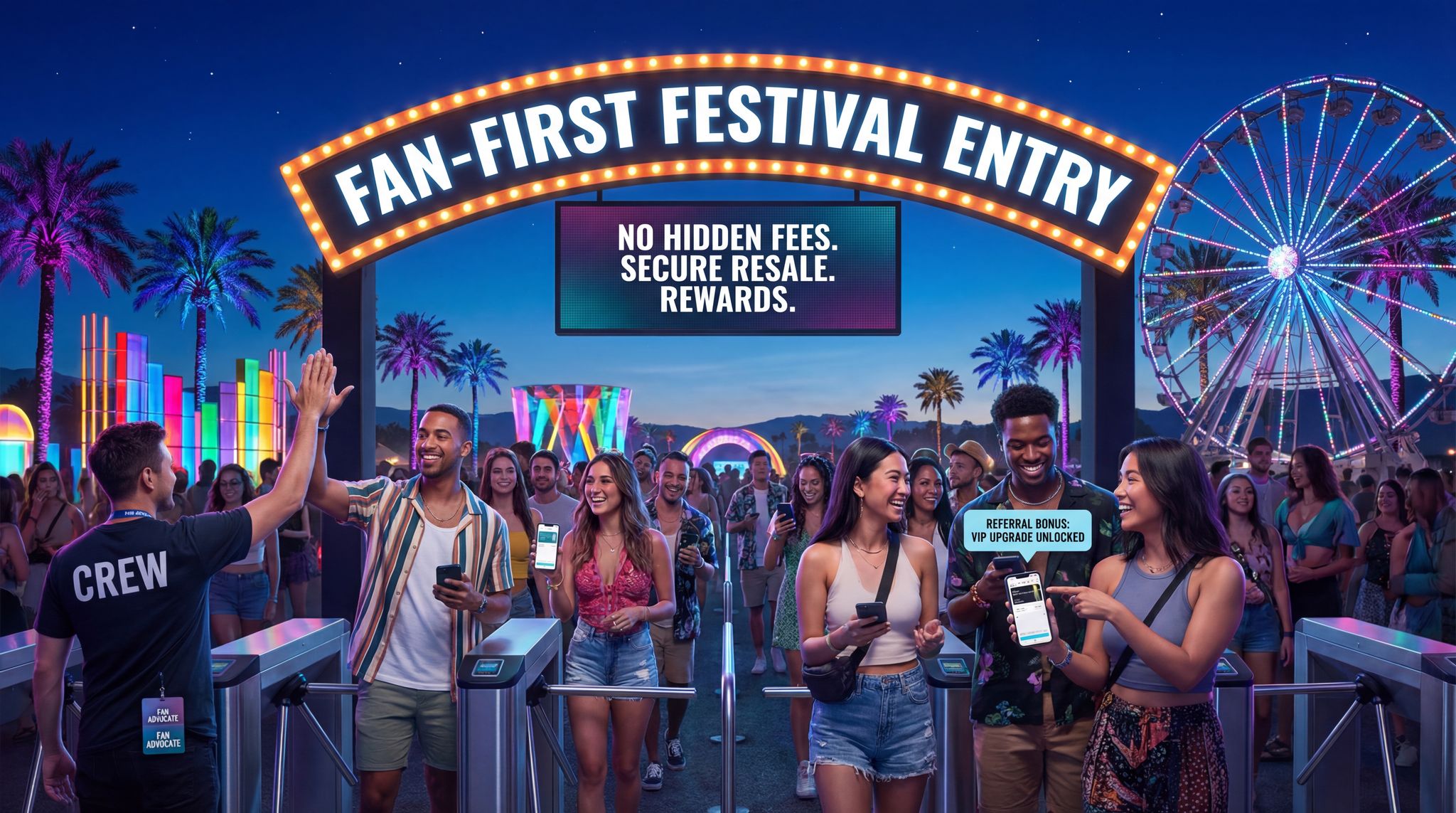
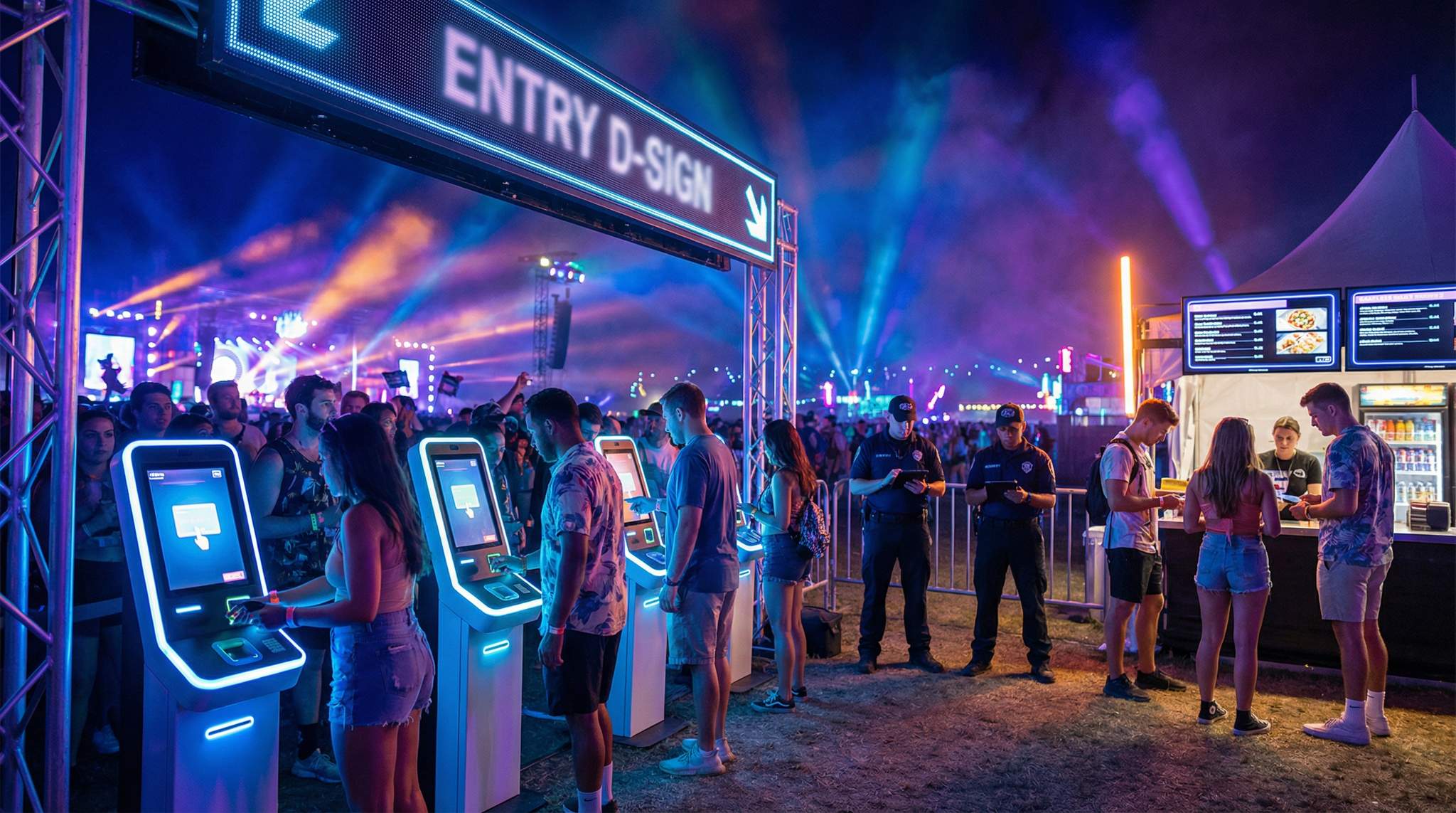
One of the most visible changes at festivals in 2026 is the transformation of entry gates. Instead of dozens of staff manually scanning tickets or checking passes, many events are moving to self-service scanning kiosks and turnstiles. These are similar to the automated gates you see in modern sports arenas or transit stations. Attendees simply scan their own QR code or RFID wristband at a pedestal, get a green light, and walk in – all under the watchful eye of a few staff stationed nearby.
This approach can drastically cut down the number of gate staff needed. For example, if one attendant can monitor 2–3 kiosks handling 30 people per minute each, the throughput per staff member skyrockets. Festivals that have piloted self-scan gates report that a smaller number of staff can cover the same entry volume, a trend observed in stadium entry logistics. At large events, this might mean deploying 10 staff to oversee what used to require 30+ ticket scanners. The result is shorter lines for fans and less stress on crew.
How to Implement: If you’re considering self-serve entry, look for ticketing systems or hardware providers that offer rugged, outdoor-friendly scanning kiosks or turnstile units. Some festivals rent these units, while others invest in them if they run multiple events. Key features to seek out include fast QR/RFID readers (to keep queues moving), an intuitive interface for attendees, and automatic flagging of invalid tickets. For instance, access control companies like Axess and Intellitix have kiosk solutions refined for festival use, and some modern ticketing platforms (like Ticket Fairy) support integration with these self-scan systems out of the box. Also, be sure to reconfigure your gate layout: dedicate lanes for self-scan and have a couple of staffed lanes as backup or for special cases (will-call, troubleshooting, VIPs).
Touchless Security Screening
Entry automation isn’t just about tickets – it’s also improving security checkpoints. Traditional bag checks and pat-downs are labour-intensive and slow. Newer technology uses AI-powered security scanners that allow ticket holders to walk through without stopping, while automatically detecting weapons or prohibited items. In stadiums, solutions like Evolv and CEIA scanners have enabled fans to enter with minimal manual screening, cutting down the number of security staff needed at each gate, according to stadium technology reports. Festivals are beginning to adopt similar tech, especially for large events where thorough security is non-negotiable but staff are scarce.
Go Cashless With RFID Technology
Enable contactless payments, faster entry, and real-time spending analytics with RFID wristbands and NFC-enabled ticketing for your events.
These scanning portals combine sensors and machine learning to differentiate everyday objects from threats. Instead of having five guards manually emptying bags and checking pockets, you might deploy one or two techs monitoring the AI scanner alerts. Fewer staff can effectively handle security for the same crowd size, and attendees benefit from a faster, less intrusive entry. It’s a win-win on both safety and efficiency.
Preparing for Offline Scenarios
Automating entry brings huge benefits – but it also raises the stakes if technology fails. A slow or offline ticket scanner can cause massive delays, which is why connectivity and redundancy are critical. Festival organizers should have an offline-capable ticketing system or backup scanning method so gates don’t grind to a halt if the internet drops. One major UK festival learned this the hard way in 2015 when a new cashless ticket system failed due to network issues, leaving fans stranded in long lines unable to get in or buy food, highlighting the need for offline ticket scanning and POS solutions. The lesson: plan for internet outages and technical glitches as a certainty, not an if.
Need Festival Funding?
Get the capital you need to book headliners, secure venues, and scale your festival production.
How to Implement: Choose an entry system that offers offline ticket scanning – meaning it can validate tickets against a locally stored list without internet. Many modern systems (including Ticket Fairy’s scanning app) cache ticket data on the scanning devices beforehand, ensuring that even if Wi-Fi goes down, your gate attendants can still scan tickets and get instant responses. Additionally, train your reduced gate team on emergency protocols: e.g. if kiosks fail, have them ready to switch to handheld scanners or to a manual check-in process (like scanning QR codes with a smartphone app). By having fail-safes, you avoid needing a large extra crew on standby to troubleshoot – your small team stays self-sufficient even under less-than-ideal conditions.
Cashless Payments and Self-Service Concessions
RFID Wristbands and Mobile Wallets
The push for cashless payment systems at festivals began years ago, but in 2026 it’s nearly standard. Going cashless isn’t just about convenience – it’s a strategic move to reduce staffing needs and errors in financial operations. When attendees use RFID wristbands, mobile pay apps, or contactless cards for all purchases, you eliminate many of the laborious tasks associated with cash handling (like making change, counting cash drawers, reconciling revenue at 4 AM, etc.). Fewer cashiers are required, and those you do have can serve customers faster.
Take for example the common RFID wristband system: attendees preload funds or link a card, and then simply tap their wristband at vendors. Transactions complete in seconds, and one staffer can handle multiple taps in the time it once took to process a single cash sale. At bars and merch stands, this translates to either shorter lines with the same staff, or maintaining service speed with fewer staff. In fact, many festivals report that after going fully cashless, they could run each bar with 20–30% less staff while actually increasing sales (because quick purchases encourage spending on that extra drink or T-shirt). Additionally, by embracing global mobile wallets like Alipay, WeChat Pay, and other popular apps, festivals can serve international guests without needing specialized staff for currency exchange or complicated payment issues – the tech handles it seamlessly.
Self-Order Kiosks and QR Code Ordering
Beyond how attendees pay, automation is changing how they order food, drinks, and merchandise. Many events are now deploying self-order kiosks at food courts and merch tents. These touch-screen kiosks let attendees browse menus, place orders, and pay – all without a cashier. The order flashes to the kitchen or fulfillment area where a minimal crew prepares it for pickup. This approach, popular in theme parks and fast-food restaurants, is proving effective at festivals, especially during peak meal times when lines can overwhelm a small staff.
Smooth Entry With Mobile Check-In
Scan tickets and manage entry with our mobile check-in app. Supports photo ID verification, real-time capacity tracking, and multi-gate coordination.
Even if you don’t invest in physical kiosks, QR code ordering systems can achieve something similar. Attendees scan a QR code at a food vendor, order through a mobile-friendly webpage, and get a pickup notification. This means a single staffer can oversee the output of multiple orders coming in digitally, rather than manually taking each order. It’s the same number of burgers being flipped or beers poured, but you might go from needing 4 cashiers to needing just 1 expeditor plus a runner. One industry concessionaire noted that with grab-and-go stands and kiosks, their staff act more like helpful concierges rather than pure order-takers, assisting customers as needed while the tech handles the transactions, shifting staff roles to customer ambassadors. That makes the work more rewarding for the staff on duty and ensures customers still feel taken care of.
To implement self-ordering, coordinate with your food and beverage vendors. Some may have their own tablet-based systems you can integrate, or you can use third-party festival ordering apps. Test these systems at smaller events or soft openings to iron out UX issues – e.g. ensure menus are clear and the tech is robust in low-signal environments. And always have a couple of human-manned points for those who absolutely need to pay with cash or have accessibility needs; your goal is to cover most attendees, not necessarily 100% with automation.
When deciding between self-order kiosks vs. QR ordering apps, festival producers must weigh hardware costs against connectivity. Physical kiosks require a higher upfront hardware investment and dedicated power, but they provide a highly visible, reliable point of sale that doesn’t rely on the attendee’s phone battery or cellular data. Conversely, QR code ordering apps are incredibly cost-effective to deploy across massive festival sites and allow fans to order from the comfort of the main stage crowd. For optimal results, many mega-festivals deploy a hybrid model: high-visibility kiosks in main food courts, supplemented by QR codes scattered across VIP tables and remote bar areas.
Automated Bar Service and Vending
When staffing is especially tight, festivals are even exploring automated bartending and smart vending solutions. Self-pour beer stations have popped up at some events – festival-goers tap their wristband, grab a cup, and pour their own beer from a tap wall. The system measures the pour and deducts the cost automatically. This can replace multiple bartenders with one or two staff overseeing the station, checking IDs and cleaning as needed. In some trials, self-pour systems have greatly reduced wait times because attendees handle the serving themselves in parallel, rather than queueing for a single bartender, significantly reducing wait times.
Similarly, smart vending machines are now capable of dispensing more than just soda. We’re seeing machines that can serve hot pizzas, mix cocktails, or vend festival merchandise (like earplugs, ponchos, sunscreen) all with cashless payment. For instance, an automated cocktail dispenser can take an order via app or kiosk and mix a perfect drink in moments – no bartender needed for the basic highball or beer, and trained bar staff can be reallocated to specialty cocktails or VIP lounges where the personal touch matters. At scale, these automated options free up your limited staff to handle tasks that truly require a human, like monitoring for alcohol safety or interacting with customers to build the vibe.
Of course, adding these machines has a cost and operational learning curve. They should augment rather than completely replace your concession staff. But if you’re short on reliable bartenders or volunteers to run a busy bar, technology can shoulder the load. In planning, decide which one or two high-traffic items (e.g. draft beer or soft drinks) you might offload to a self-service station. Keep an attendant nearby to assist and to verify ages if alcohol is dispensed (many systems can scan IDs or use the wristband’s age verification, but it’s wise to supervise). With careful integration, automated concessions can significantly stretch a small F&B team’s capacity without sacrificing service quality.
AI-Powered Crowd Monitoring and Safety
Smarter Eyes on the Crowd
Monitoring crowd flows and preventing incidents is a critical job – one traditionally handled by a combination of security personnel, CCTV operators, and on-ground spotters. In 2026, AI-powered crowd analytics tools are giving festivals a much-needed boost in this area, effectively multiplying the reach of a smaller security team. These systems use cameras and sensors to track crowd density, movement patterns, and even mood or anomalies in real time. They then apply artificial intelligence to flag potential issues, like a dangerous bottleneck forming or an unauthorized crowd surge near a stage.
After high-profile incidents like the Astroworld 2021 tragedy, festival organizers have zeroed in on crowd safety. But hiring scores of extra crowd spotters or security guards isn’t always possible – so technology is filling the gap. According to crowd management experts, many organizers have turned to tools like live heat maps and AI video monitoring to get better visibility of crowd dynamics, utilizing advanced crowd management technology. For example, heat map dashboards can show, at a glance, where attendee concentrations are heaviest on the festival grounds. If thousands of people suddenly flock to one side of the venue, the system glows red in that zone, alerting the operations center immediately. Staff can then respond by opening additional exit lanes, dispatching stewards to spread out the crowd, or momentarily pausing entry to an area until it thins out, effectively preventing crowd crushes before they happen by identifying where congestion is forming.
To illustrate, imagine a smaller festival where previously you might have 10 security team members roving to detect crowd issues. With an AI system watching through cameras, you might effectively cover the same ground with half that number; the software guides your team to where they’re needed most. AI can detect if a crowd’s movement slows (sign of congestion), or if people are starting to push or panic, and then alert your control room and radios. It’s like giving your team a super-intelligent lookout that never blinks. These tools have already been tested at major events – for instance, the Paris 2024 Olympics is trialing AI video surveillance to detect crowd anomalies, a controversial but effective method for spotting unusual crowd behavior – and festivals are adopting similar approaches for stages and dense areas.
Drones and Aerial Monitoring
Another way festivals are gaining extra “eyes” without extra staff is through drone surveillance. Drones equipped with cameras can patrol above large crowds and send live video to the security team. A single drone operator (or an autonomous drone on a preset route) can cover the same area that might have required a dozen personnel on the ground. Drones provide vantage points that ground staff simply can’t get, and modern drones can even be outfitted with thermal imaging for night or for detecting hotspots in a crowd.
Some festivals have started using drone monitoring especially for sprawling sites or difficult terrain (like forest or mountain festivals). The drones can check perimeters, monitor parking lots, and watch over stages in real time. Combined with AI or a trained operator, they can spot fights, fires, or medical emergencies quickly so a small response team can be dispatched. If you’re considering this, check local regulations – you may need permits or to coordinate with authorities – and invest in a skilled (or certified) drone operator on your team. One operator can potentially manage multiple drones in shifts, effectively doing the surveillance work of many ground personnel. Just ensure you communicate to attendees that a drone is overhead for safety (to avoid surprise or concern) and have no-fly zones over crowd if dropping low.
AI for Risk Detection and Incident Response
Beyond monitoring crowd density, AI is increasingly used to detect specific risks or incidents among thousands of attendees. For example, some video systems can identify if a person collapses on the ground or if an altercation breaks out, by recognizing unusual motion patterns. This is akin to advanced CCTV analytics already used in some smart cities. With fewer security guards on patrol, having AI that can shout “Hey, something’s wrong here!” is invaluable.
Festivals are also leveraging AI in more creative safety ways: sound analysis AI can monitor noise levels and alert if they exceed safe thresholds (protecting attendees’ hearing and complying with local bylaws). Weather AI can give hyper-local alerts for lightning or high winds at the festival site, triggering automated evacuation announcements or stage shutdown procedures without waiting for human decision-makers. And consider AI-driven access control – a system that can automatically bar someone at the gate if their ticket was flagged (perhaps due to a previous ejection or health check) without relying on a staff member recognizing them.
One notable example from the security realm is the use of facial recognition for identifying risky individuals. This is controversial due to privacy, but it has been piloted in some places. In China, for instance, facial recognition tech at a beer festival identified 25 wanted criminals in the crowd within seconds, demonstrating the speed of facial recognition technology. While most Western music festivals are not rushing to implement face scanning due to attendee privacy concerns and campaigns against it, the technology clearly exists. A more attendee-friendly spin on this is using facial recognition or biometrics for faster VIP check-ins or age verification at bars (reducing the need for staff to manually check IDs). If you do consider biometric tech, make sure to be transparent with festival-goers and comply with data privacy laws – trust is key to any technology’s success.
Wearables and Real-Time Alerts
It’s worth mentioning that wearable devices on attendees and staff can also play a part in automating safety. For instance, some festivals hand out smart wristbands or lanyards with inbuilt sensors that monitor crowd density or detect if the wearer falls. These devices can automatically send an alert to the control center. Similarly, staff might carry panic-button devices or apps (tied to GPS location) – with one tap, a volunteer who sees a hazard can alert the whole security team, rather than relying on radioing it in through a chain of command. This essentially empowers each staff member (no matter how junior or few) with an instant communication tool to trigger the right response.
Many festivals are embracing panic-button safety apps for attendees and crew. These apps let a guest call for help with a single button press on their phone, immediately flagging their location to festival security. By deploying such tech, you reduce dependence on having security guards everywhere – people can summon assistance on their own when needed, allowing a small security team to cover a larger area by reacting swiftly to these app alerts. The key to success is integrating these channels into your operations center (who monitors the alerts, how do you dispatch help). But once set up, they act as a force multiplier for safety.
Chatbots and Virtual Assistants for Attendees
24/7 Attendee Support Without More Staff
Gone are the days when answering attendee questions meant hiring an army of customer service reps or volunteers to staff info booths. In 2026, many festivals are deploying AI chatbots and virtual assistants to handle attendee inquiries both online and on-site. These chatbots live on festival websites, mobile apps, or messaging platforms (like Facebook Messenger, WhatsApp, etc.), and provide instant answers to common questions: “What time does the main stage open?” “Where are the water stations?” “Is there parking available on Sunday?” – all answered in seconds by the bot.
The impact on staffing is huge. One well-trained chatbot can field thousands of questions that would otherwise tie up your phone lines or info kiosks. For example, when Coachella introduced a Google Assistant integration called “Talk to Coachella,” fans worldwide could simply ask their smart speaker or phone for the festival lineup or set times and get an immediate answer, enhancing attendee support and information access. This kind of virtual assistant makes information self-service for attendees. Similarly, Glastonbury Festival experimented with a Messenger chatbot to help fans navigate their famously massive site and surprise secret shows – it handled over 50,000 messages during the event weekend on everything from schedule queries based on real-time data to weather updates, with staff monitoring the chatbot in real-time. That’s 50,000 questions answered without exhausting a human support team!
By deploying a chatbot, festivals have managed to reduce the number of support staff and volunteers needed for customer service, freeing those people to perform on-site roles that a bot can’t do (like personal assistance for disabled attendees, or dealing with complex issues). Attendees benefit because they get instant, on-demand info at 2am or in the middle of a show when no info booth is around.
Implementing Your Festival Chatbot
Setting up a festival chatbot does require an upfront effort – but it’s within reach even for modest events, thanks to user-friendly AI platforms. Here’s how to get started:
- Define the Bot’s Role: Decide what questions and tasks you want your chatbot to handle. Frequently asked questions (FAQs) are a great start (e.g. set times, festival map directions, ticket issues). You might also enable the bot to provide customer service (“I haven’t received my tickets email”) or even commerce (“How can I upgrade to VIP?”). Keep the scope manageable initially.
- Choose a Platform: You don’t need to build AI from scratch. There are chatbot builders like Dialogflow, IBM Watson Assistant, Chatfuel, or even specialized event bots. Pick one that integrates with your channels (website chat window, Facebook Messenger, SMS, etc.). Make sure it can handle the volume you expect and has multilingual support if your audience is international.
- Train with Festival Data: The bot will only be as good as the info you feed it. Load in your festival FAQs, schedules, maps, artist info, and any relevant policies. Many bots allow you to create a knowledge base – for a festival, that could include all the vendor locations, show times, camping rules, and so on. If using AI/NLP, train it on how people might phrase questions. (e.g., “When does music start on Friday?” and “What time is the first act Friday?” should both yield the same answer.)
- Test and Tweak: Trial the chatbot internally and with a small group of fans before the festival. See if it’s giving correct answers. Check for odd questions that stump it, and add those to its training. It’s also wise to program some personality – festival-goers appreciate a bot with a bit of fun festival vibe in its tone, as long as it remains helpful.
- Provide a Human Escalation Option: Even the best chatbot might not handle every situation. Offer a way to contact a human (live chat or an email form) if the bot is unable to assist. With fewer support staff, you might have a small team handling only the toughest questions while the bot filters out the easy ones. That hybrid approach works well.
When done right, your virtual assistant becomes like a digital concierge for the festival – always on-duty, never tired, and scaling effortlessly to thousands of users. Attendees increasingly expect this instant info service; as one festival technology guide put it, modern festival-goers want answers at their fingertips, rather than hunting down an info booth, as modern festival-goers expect 24/7 assistance.
Success Stories: Chatbots in Action
It’s worth looking at a couple of real-world results to see the potential. We mentioned Glastonbury’s chatbot handling 50k queries – importantly, the developers had staff monitoring and teaching the bot during the festival, which shows how a small team can supervise AI for maximum impact, proving that chatbots can handle massive query volumes while helping fans navigate surprises. Another case is OpenAir festival in Switzerland: they implemented a Messenger chatbot that not only answered FAQs but even guided users through buying tickets and invited their friends via referral rewards. This creative use led to a viral effect – they gained 3,000 new Messenger subscribers and boosted attendance by 25% that year by offering referral rewards via the chatbot and creating a customer service hybrid model. Even more, their marketing cost per ticket sold plummeted, because the bot was driving sales through referrals for pennies on the dollar compared to traditional ads, as the campaign went viral and attracted new fans.
These examples highlight that a chatbot can be more than a static FAQ machine – it can actively engage your audience and even drive revenue, all with minimal human oversight. As a festival producer, you should coordinate with your marketing and customer service leads to make the most of such bots. The tech team sets it up, but the content (answers, tone) should come from those who know the audience’s needs. Keep the bot active during the festival and even in the lead-up (when ticket questions or lineup curiosity is high). Post-event, your chatbot’s transcripts and analytics are a goldmine – they show what info people sought most, where confusion existed, etc., which you can use to improve both the bot and your festival operations next time.
IoT-Driven Operations: Smarter Venues, Less Manpower
Smart Sensors for Waste and Facilities
Festivals are essentially pop-up cities, and maintaining all the “city services” (trash, toilets, power, water) is a massive undertaking. Traditionally, you’d have separate crews constantly patrolling to check if bins are overflowing or bathrooms need restocking – a very labor-heavy process. In 2026, Internet of Things (IoT) sensors are taking over much of this monitoring, allowing a lean operations team to manage facilities through real-time data. Here’s how it works:
- Trash Bins: Festivals are installing fill-level sensors in waste and recycling bins. These small devices use ultrasonic or weight sensors to report how full a bin is. Instead of having cleanup staff roaming and eyeballing every bin, the sensors automatically alert the team when a bin is, say, 80% full, ensuring alerts are sent exactly when needed. A dashboard or mobile app shows a map of all bin locations with color codes (green = empty, red = needs pick-up). The result? The cleaning crew can be much smaller because they operate efficiently – they only go to the bins that truly need servicing, and they do so before the bin overflows and causes a mess, optimizing waste management across the site. Using IoT, even a two-person crew can manage dozens of bins spread across the site by systematically responding to sensor alerts.
- Portable Toilets and Water Stations: Similarly, occupancy sensors on porta-potties track usage and line lengths. If certain toilets are getting heavy use or running low on supplies, sensors can ping the maintenance team to service them. Some festivals put people counters or infrared sensors at the entrance of toilet areas to gauge queue times. The data can trigger actions like, “send cleaning staff to the main restroom block now” or even automated PA announcements directing guests to less busy toilets on the other side of the venue. Again, this allows targeted deployment of a small sanitation crew where they’re needed most, proving why toilets, trash, and crowds matter for operational efficiency. A handful of attendants with a mobile app can manage what used to require a much larger team constantly walking the grounds, as sensors in bathrooms and corridors spotlight pinch points.
- Water and Power Systems: IoT isn’t limited to cleaning; it’s also securing your utilities. Smart sensors on water tanks can report levels, ensuring you don’t run out of water for attendees (and removing the need for someone to manually check tank gauges). Power generators and distribution boxes can be fitted with sensors for fuel level, load, and temperature. If a generator is close to overheating or running low on diesel, it sends an alert – something a single tech can monitor for dozens of units. In the past, you might station one tech per generator area; now a central system monitored by one or two people can oversee all power nodes. This proactive monitoring prevents outages, which is not just a safety matter but also avoids last-minute scrambling to fix issues with too few technicians.
By converting these aspects of festival ops to data-driven systems, you maximize the effectiveness of every crew member. Instead of blindly checking 100 bins, your cleaner checks the 20 that need attention. Instead of guessing which toilets need rest, your sanitation lead knows exactly where to send a runner. The IoT approach essentially shrinks the “wasted work” and idle time, so even a skeleton crew covers all bases.
Centralized Dashboards for Real-Time Decisions
To make the most of sensor data, festivals are setting up central command dashboards. Think of it as a virtual operations center where one or two people can see everything that’s happening: crowd heat maps, bin levels, toilet status, power output, weather alerts – all in one screen. This centralization is crucial when you have fewer heads on the team. It allows for holistic decision-making: the operator might see that the main stage area is getting crowded and also note that the nearest bar’s wait time (which can be sensed via point-of-sale data or line sensors) is rising, so they radio to divert some crowd to another bar or open an extra concession.
Some festivals integrate IoT feeds into their existing production office. Instead of separate teams operating in silos (cleaning separate from security separate from power), a lean festival crew uses a shared digital platform so everyone has awareness. For example, if the IoT crowd-counters show a pinch point building in the central pathway, allowing staff to avoid health violations and add staff where heat maps indicate, the operations lead can simultaneously dispatch security to manage the crowd and cleaning staff to move any barricades or open an emergency exit. In a traditional model, those teams might not coordinate as quickly. With a dashboard, one person can spot the issue and mobilize multiple departments – effectively doing the job that might have required a whole committee on-site.
If you’re a mid-sized festival, you might worry that setting up a fancy “operations center” is beyond your means. But in practice, it could be as simple as a laptop or tablet with the right software. Many IoT solutions come with cloud-based dashboards accessible via web. And there are integrator tools that let you mash up various data streams (for instance, using APIs to feed sensor data into one interface). The key is choosing sensors and systems that are compatible – ideally, stick to devices that use common standards (LoRaWAN, Zigbee, even cellular IoT) and have open data access so you’re not locked into one vendor’s screen per system. By planning an integrated approach, you’ll empower your small team to act with the knowledge of a much larger crew.
Structural Safety Monitoring
A particularly exciting development in festival tech – and one that addresses safety with minimal manpower – is smart structural monitoring. Festivals build a lot of temporary structures: stages, lighting towers, tents, arches, etc. Keeping these safe used to mean hiring structural engineers and stage managers to constantly inspect, especially if bad weather looms. Now, IoT sensors can continuously monitor the health of stages and rigs. For example, load sensors and strain gauges on a stage roof can detect if weight distribution changes, and wind meters can report gusts in real time. If thresholds are exceeded (say, wind over 40 mph or a critical support starting to bend), the system sends instant alerts to production and stage managers. Modern festivals are embracing Internet of Things monitoring because real-time structural data is becoming the new safety standard.
By deploying IoT monitors on structures, festivals ensure that even a smaller production team can catch issues early. Think about a scenario with a sudden windstorm: instead of relying on one tech with an anemometer in one location, you have multiple sensors that automatically feed data and even trigger automated safety protocols (like lowering line arrays or closing stages). One person in the control room can halt a performance because the sensor network showed a dangerous gust on the far end of the site that the team on the ground hadn’t yet felt. This speed and proactivity is life-saving. There are real examples: events have avoided stage collapses by reacting to sensor warnings – for instance, an IoT wind sensor might give you a 2-minute warning to evacuate a stage area, whereas human notice might come only when tarps are already flying.
To get started, consult with your staging and tent vendors. Many now offer sensor packages as part of the rental or service, or you can purchase/rent them separately. They can be attached to key points (e.g., roof beams, king poles of tents, ballast weights) and networked to a central hub. If you’re small, even a few off-the-shelf weather stations and load sensors can be MacGyvered into a system – the important part is having someone (or an automated program) watching the readings. Insurers and safety inspectors increasingly love to hear that you have real-time monitoring. It shows you’re being proactive, which can be beneficial for meeting regulations and possibly reducing insurance premiums. In short, smart structures are becoming the norm, enhancing safety in ways unimaginable a decade ago, and they allow a festival to maintain top-notch safety standards without adding more personnel, just by augmenting the team with continuous digital oversight.
Maximizing a Lean Team with Smart Tools
Data-Driven Scheduling and Staffing
When you have a small team, scheduling and resource allocation become a high-stakes puzzle. Every crew member has to be in the right place at the right time. Here, data analytics and AI forecasting tools can be a game-changer in pre-production. By leveraging historical data and predictive modeling, festivals can optimize how many staff are needed for each task and when, so you’re never over-allocating scarce manpower.
For instance, analyze your entry rate data from past events or ticket scan timestamps to predict when gates will be busiest. An AI attendance forecast might show that 70% of attendees tend to arrive between 2–4 PM on opening day. This aligns with the future of automating music festival operations regarding logistics and planning, and helps optimize attendance and ticket sales tracking during live event dates. With that insight, you can schedule more gate kiosks open (and a couple extra floating staff) in that window, and then taper down by early evening. Conversely, if you know after 8 PM entry is trickling, you can have a smaller night shift. Similarly, look at point-of-sale transaction data by hour: if lunch rush is 1–3 PM, that’s when you need the maximum food vendor staff on duty; later at night, maybe fewer food stands but more roaming safety staff in the campsites. These decisions can be informed by algorithms rather than gut feel, ensuring you squeeze the most out of every staff hour.
There are products and templates out there to assist with this kind of data-driven planning (even some features built into ticketing or staffing software). If you already track things like volunteer check-ins, security incident logs, or bar sales, feed that into a simple spreadsheet or a more advanced tool to spot patterns. Experienced producers often use software to map out staff rotations and simulate different scenarios – for example, what if you staffed 10% less in one area, would response times suffer? Better to test it virtually with data than find out live at the event. A lean team needs to be carefully orchestrated, and data is your friend in achieving that.
Multi-Skilled Crews and Training
Another key to doing more with less is having multi-skilled staff and cross-training your crew to handle different roles. Technology can support this by providing the training and information people need to step into multiple jobs. For example, using an online learning platform or even a simple mobile app, you can train your volunteers and staff on several competencies: maybe your ticket scanners also learn basics of crowd management, or your stagehands are briefed on emergency medical procedures. The idea is not to overwork individuals, but to create a flexible team where people can switch hats as needed.
Modern crew management apps often include training modules, schedules, and communication tools. If one person calls in sick, you can quickly broadcast a request for a replacement and have someone from another department fill in, guided by checklists or digital documentation. Many veteran festival teams now embrace a “all-hands” mindset – during peak moments, everyone (even managers) may pitch in on ground tasks. Tech helps coordinate this: WhatsApp or Slack channels for crew can call for short-term extra hands (“Need 3 people at East Gate now to assist ingress”). With a smaller crew, real-time communication is vital. Equip your team with push-to-talk apps or two-way radios, and ensure your schedule app is updated live so folks know if they need to redirect.
Training is an area where VR and simulation tech is making inroads too. Some festivals have started using VR scenarios to train security and operations staff for emergencies – for example, a VR crowd surge drill or severe weather evacuation practice. Just as technology has evolved from ale to jail with facial recognition at the Temple of Heaven, VR is now transforming safety drills. With a lean team, you might only get one chance to handle a crisis correctly, so these simulated drills can be incredibly valuable. They let your team experience a chaotic situation in a virtual setting and learn proper responses, all without requiring a big in-person exercise (which would be hard to arrange with limited staff time). Adopting virtual reality safety drills for festivals can improve your crew’s readiness, effectively making a small team act like a seasoned larger team when the pressure hits.
Collaborative Tools and Delegation
When every staff member is wearing multiple hats, good collaboration tools become your operational backbone. Cloud-based project management boards, shared documents, and scheduling software ensure no task falls through the cracks even if you don’t have separate people devoted to each. For example, a digital production schedule with automated reminders can take the place of a coordinator whose only job is to chase people for deadlines. If you use something like Asana, Trello, or a festival management platform, set up task assignments and due dates – the system will ping team members, which is like having a virtual production assistant for free.
Another pointer: empower your vendors, partners, and even attendees to lighten your load. Many festivals have turned to outsourcing certain tasks to technology providers or sponsors. If you’re short on staff to manage the campground, maybe a partner company can supply an “info kiosk” trailer that’s self-serve (with maps, phone charging, basic first aid supplies). Or your ticketing partner might handle customer service inquiries up to a point. Also, consider adopting an ambassador or volunteer leadership program: train a small group of super-volunteers or “festival ambassadors” who can act as on-ground guides for the crowd, answering questions and assisting fellow attendees. This is effectively crowdsourcing part of your customer service to passionate fans, guided by you. As covered in the fan ambassador strategy, empowering knowledgeable attendees can enhance the experience for others and take pressure off your official crew.
Finally, don’t overlook simple tech solutions for communication that can save manpower. A well-timed SMS broadcast to all attendees (“The parking lot is now full, please proceed to shuttle lot B”) can preclude the need to station staff at the main lot turning cars away. An informative push notification on your app (“Show at Stage 2 delayed 15 min”) means you don’t need as many roving announcers or confused attendees seeking info. These little things, enabled by automation, reduce the human workload in aggregate.
Scaling Up: Multi-Venue and Multi-Day Logistics
As your event portfolio grows, piecing together standalone apps becomes a liability. Organizers often ask how to buy a festival administration system (FAS) that handles multi-venue, multi-day logistics without requiring a massive IT team. When evaluating an end-to-end event management or ticketing platform, prioritize centralized reporting and role-based access control. You need a system where a single dashboard can track inventory across three different city venues simultaneously, or roll over staff schedules from a Friday pre-party to a Sunday main event. Look for platforms with robust API integrations, offline-capable scanning, and unified data analytics so your core team can manage complex, sprawling operations from a single command center.
Challenges and Best Practices in Festival Automation
Upfront Costs vs. Long-Term Savings
It would be misleading to say automation is purely a quick cost-cutter – many of these technologies require investment. Kiosks, sensors, and software subscriptions cost money, and for smaller festivals the sticker price can be a hurdle. When considering an automation solution, festival producers should perform a cost-benefit analysis that includes long-term savings and qualitative benefits (like safety improvements or higher revenue) in addition to immediate cost. Often, the equation balances out: for example, renting 10 ticket scanning kiosks might cost a few thousand dollars, but if it allows you to trim 20 temp staff from the budget, you’ve broken even or better. Plus, tech doesn’t demand overtime pay when the gates stay open longer than planned!
One approach is to phase in automation gradually. Prioritize the areas with highest ROI – typically anything that directly handles transactions or large volumes (entry, ticketing, major bars) since cutting wait times boosts income and reduces staff hours. You can also look for tech partnerships or sponsorships. Some tech companies are eager to pilot their products at festivals (for the exposure) and might offer a discount or free trial. This was how a few events first got their AI crowd monitoring systems – as pilot programs with startups in exchange for feedback, effectively turning the festival into an innovation lab (a strategy explored in partnering with startups for on-site solutions).
When pitching the budget, highlight the hidden savings of automation: reduced errors (which can cost money), less theft or fraud, possibly lower insurance premiums due to better safety measures, and improved attendee satisfaction (which translates to better ticket sales and sponsor value long-term). For example, implementing an AI security scanner might be justified not just by fewer security guards, but by the potential to avoid a costly security incident. Similarly, a chatbot might directly save on call center outsourcing costs. If you can, attach numbers to these – e.g., “Chatbot implementation will cost $5,000, but will likely save 200 hours of staff time during the festival (worth ~$3,000) and could improve retention leading to a 5% higher renewal rate of ticket buyers.” These estimates make the value tangible.
Training Your Team and Adapting Roles
Switching to automated systems necessitates training – both for your core team and often for your seasonal staff or volunteers. A common mistake is underestimating the learning curve and assuming tech will run itself. It’s crucial to allocate time (and perhaps a bit of budget) to properly train everyone on the new tools well before show day. For instance, if you introduce handheld scanners or kiosks at the gate, do a thorough training with your gate staff on using the devices, troubleshooting common issues, and the new entry workflow. They need to understand not just which button to press, but how the whole system behaves (e.g., what if someone’s QR code isn’t scanning – what steps to take next?). The more comfortable staff are, the less likely you’ll need a lot of IT support personnel on site.
In many cases, automation changes job descriptions rather than erasing jobs entirely. Staff who used to do manual tasks might shift into supervisory or technical roles. A ticket taker might become a “gate concierge”, helping people use the kiosk and solving problems. A vendor cashier might become a food runner or customer service rep overseeing multiple self-order kiosks. Make sure your team understands this is a positive change – roles are evolving, and in fact many will find their new-tech-enabled jobs more satisfying than repetitive manual work. There can be initial resistance (“will the robots replace us?”), so communicate clearly that the goal is to elevate staff roles, not eliminate them. Share examples: Delaware North (a big concessions operator) found that staff in automated concession stands felt more like hosts and less like assembly-line workers, improving morale even as their numbers per stand decreased. Like the grab and go concepts, staff act as ambassadors or concierges, helping fans, while self-checkout technology is now catching up with the demand.
You may need to bring in a few new specialists, such as a tech support lead or a “digital ops” coordinator, especially during the transition. This person or small team handles the backend of your systems (software updates, network, sensor calibration). They’re not traditional festival crew like stagehands or bar managers, but rather IT-minded folks. If you don’t have someone in-house, consider contracting a specialist for the event. Having that expertise on call is insurance: it prevents little tech hiccups from ballooning into big problems that your regular staff might not know how to address. Over time, you can cross-train one of your existing production team members to take on this tech-whisperer role.
Maintaining the Human Touch
As we lean heavily into automation, one must remember that festivals are fundamentally human experiences. Attendees come for the atmosphere, the communal spirit – things that technology should enhance, not replace. Therefore, it’s important to deploy automation in ways that don’t alienate or confuse your audience. Always test from the attendee perspective: is the self-scan gate clearly marked and easy to use? Do you have friendly volunteers or staff greeters near kiosks to assist those who are less tech-savvy or who just prefer a human interaction?
There will always be some attendees (perhaps older festival-goers or folks with disabilities) who need or want the old-school service. For example, at a cashless festival, you might still maintain a small customer service tent where people can get help adding money to their wristband if they brought only cash, or ask a question to a real person if the chatbot didn’t solve it. Retaining these “human touchpoints” ensures that no one feels left behind by the tech wave. In fact, by freeing up staff from routine tasks, you can reassign some team members to be roving brand ambassadors – their job is simply to chat with attendees, make sure everyone’s having a good time, and add that personal hospitality that no algorithm can match.
Another consideration is communication about the tech. Be transparent with your festival community about any new automated features, especially those that might raise privacy or usability questions. If you introduce AI CCTV monitoring, let attendees know it’s for their safety and what it is (and isn’t) looking for. If you have a chatbot, advertise it clearly in your app or signage (“Questions? Ask our chatbot 24/7!”). When people understand the benefits – faster entry, shorter lines, safer environment – they’re more likely to embrace the changes. This openness builds trust, which is essential because trustworthiness underpins the success of any new system. After all, fans trust you with not just their good time but often their personal data and well-being too.
Finally, balance efficiency with the festival magic. Some aspects of a festival are charming precisely because of the human element – think of the quirky volunteer at the info booth who gives you great advice, or the merch seller who throws in a sticker and shares a laugh. Automation should not bulldoze these moments. Encourage your staff to still create those personal interactions whenever possible. For example, if an automated system handles 90% of transactions smoothly, the 10% that require manual help can become opportunities for really high-touch service. Your skeleton crew, enabled by tech, can actually spend more time engaging with attendees in meaningful ways because they’re not bogged down in mundane tasks. In that sense, automation is not just a cost-cutting measure but a tool to enhance the human side of your festival where it truly counts.
Fail-Safes and Contingency Plans
No matter how advanced your technology is, you must plan for the scenario where something doesn’t work as intended. This is doubly important when you don’t have a lot of spare hands – you can’t afford to be caught off guard. We’ve touched on having offline modes and backups, but let’s emphasise a structured approach to risk management for automated systems:
- Identify Critical Points: List out what automation is mission-critical (e.g., ticket scanning, payments) and what is nice-to-have (e.g., a chatbot). For each critical tech, have a Plan B. Example: If the entry kiosks fail, do you have handheld scanners or even printed attendee lists as a last resort? If the cashless payment system goes down, can you revert to manual cash sales at a couple of tills? Those old-school methods are slow, but at least they keep the show going.
- Staff Drills: Just like you’d do a fire drill, do a quick drill with your team on tech failure scenarios. “Our radios failed – how do we communicate?” (Maybe designate runners or use backup walkie-talkies.) “The app crashed – how do we inform attendees of a schedule change?” (Maybe have a plan to use the stage video screens or audio announcements.) When your team has walked through these scenarios, they’ll respond more calmly if something happens. This is where a small team can outshine a big one – you can get everyone together to practice because there are fewer people to coordinate.
- Technical Support: Ensure that you have 24/7 tech support from your vendors during the festival. Whether it’s a direct line to your ticketing provider’s support desk or an on-call agreement with the company that provided your crowd AI system, have those numbers handy and test them. Sometimes just a phone call with an expert can fix an issue remotely without needing a specialist on site. If a contract or SLA (service level agreement) is involved, check that it covers festival operating hours (often weekends and late nights, which normal business support might not cover by default!).
- Fallback Staffing: Consider arranging a small reserve pool of staff or trusted volunteers who can be called in a pinch. Maybe you don’t schedule them, but have an agreement (or even pay a small stipend) for them to be on standby if Day 1 reveals you underestimated manpower in a certain area that tech couldn’t cover. It’s like an insurance policy. In 2026’s gig economy, you might find professionals willing to be on-call for a one-time fee.
- Communication: If something does fail that impacts attendees (say the RFID payment system has a hiccup), communicate quickly and honestly to your audience. People are surprisingly forgiving when kept in the loop – it’s when they’re left in the dark that frustration mounts. Push a notification or make an announcement that you’re addressing the issue, and if necessary, temporarily deploy staff to affected areas to manage the situation manually. For example, if the fancy cashless taps stop working at one bar, send a couple of staff with a cash box or card reader to take payments in the interim. It’s all hands on deck for that short period, but that’s where your cross-trained, flexible team shines.
Bottom line: hope for the best, but plan for the worst. Automation does reduce many failure points related to human error or fatigue, but it introduces new ones (software bugs, connectivity issues). By acknowledging those and preparing, you ensure that your festival can ride out any tech turbulence without major service breakdowns, even with a limited crew.
Frequently Asked Questions About Festival Automation
Can event tech reduce staffing and labor costs?
Yes, deploying the right event technology can significantly reduce staffing and labor costs. By automating high-volume, repetitive tasks like ticket scanning, drink dispensing, and basic customer service inquiries, organizers can operate with a leaner core team. While there is an upfront investment in software and hardware, the long-term savings on hourly wages, overtime, and recruitment logistics usually yield a strong return on investment.
What festival operations can be automated, and where is this most effective?
When looking at what festival processes can be automated, the highest-impact areas are front-gate entry (via self-scan turnstiles), food and beverage sales (through cashless RFID or mobile ordering), and attendee support (using AI chatbots). Where festival automation truly shines is in high-friction, high-volume zones—such as main entrance gates during peak ingress or busy bar areas between main stage sets—where technology can process transactions much faster than human staff.
Conclusion
The festival industry in 2026 is proving that necessity truly is the mother of invention. Faced with labour crunches and rising costs, festival producers around the world are leaning on technology to do what large crews did in the past – and often doing it faster and better. From the moment guests arrive at the gate to the final encore, automation is smoothing the experience: self-check-in entry gets everyone inside swiftly, cashless systems keep the beer lines moving, AI watches over the crowd for safety, and chatbots handle questions at 2 AM so human staff can catch some sleep. Importantly, festivals big and small are finding that these innovations don’t just fill labour gaps – they also unlock new levels of insight and efficiency that were unattainable before. A smaller team armed with smart tools can punch well above its weight.
However, the most successful implementations have one thing in common: a balanced approach. The human element remains at the heart of festivals. Tech is there to empower the people running the show, not to turn the event into a soulless automated machine. By reallocating staff to the areas where personal touch matters – creative production, artist and attendee engagement, on-the-ground improvisation – festivals are using automation to become more human-centric than before. The drudgery is automated, the magic is amplified.
As a veteran festival organizer would advise: start small, learn and iterate. Maybe this year you introduce just one major automation like RFID payments or an AI crowd tool, and you measure the impact. Get feedback from your staff and your audience. You’ll likely discover that people appreciate the convenience (who really misses waiting in long lines or dealing with confusion?). And your team, though smaller, will appreciate being able to focus on higher-level tasks instead of being stretched thin across menial duties.
In moving from short-staffed to self-sufficient, you’re not just cutting costs – you’re upgrading the festival experience for everyone involved. With thoughtful implementation and a commitment to maintaining that festival soul, automation technologies will help carry your event into the future resiliently. The next wave of festivals isn’t about having the most staff; it’s about being smart with the resources you have. Embrace the tools available, and your festival can thrive even in challenging times.