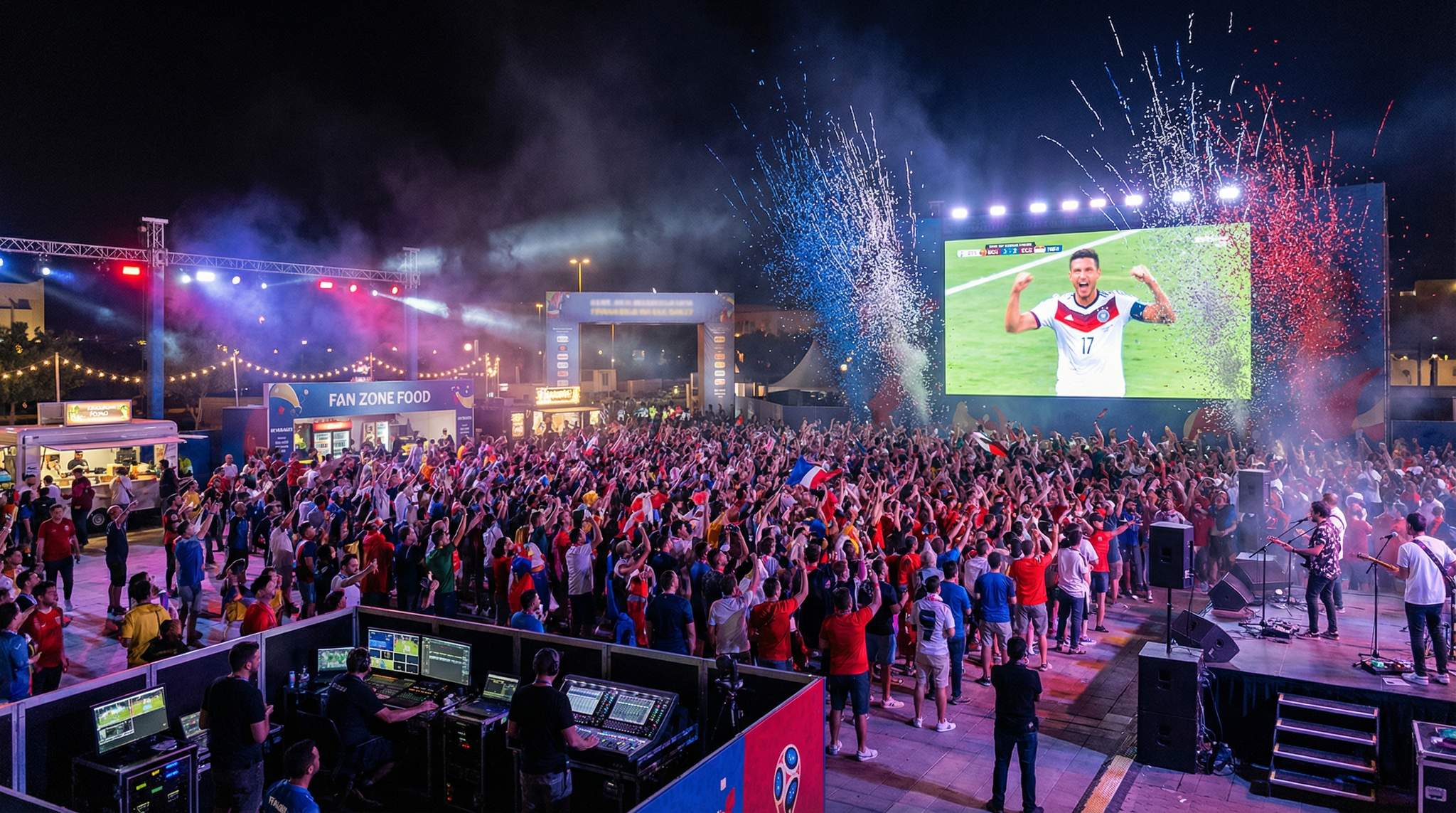
Sports mega-events aren’t just contests on the field anymore – they’re city-wide celebrations. From FIFA World Cup Fan Festivals to Super Bowl fan villages, turning a big game into a festival-style fan experience is a unique challenge and opportunity. Festival producers can amplify the excitement of matches by creating immersive fan zones that combine live sports viewing with the atmosphere of a carnival. This guide draws on decades of first-hand experience producing sports-focused festivals across the globe, offering actionable insights on planning, crowd management, sponsorships, and more.
Why Sports Fan Festivals? Major sporting events naturally bring people together – a well-run fan festival capitalizes on that energy. When done right, these events attract massive crowds (official World Cup fan zones often draw tens of thousands nightly) and leave lasting memories. They give fans who can’t get a ticket a communal way to cheer on their team, complete with music, food, activities, and that all-important big screen. From the Olympics to cricket championships, sports fan festivals have become a staple of fan engagement since the mid-2000s. But producing these events requires a savvy blend of festival know-how and sports event logistics. Let’s dive into the playbook.
Aligning Festival Plans with Game Schedules
Scheduling Around Match Days and Times
Planning a fan festival starts with the game schedule. Sports matches are immovable centerpieces – your event timeline must orbit around them. Veteran producers overlay the sports schedule onto their planning calendar to map out high-impact dates. Finals, semi-finals, or big rivalry games are “red letter” days when fan interest will peak. Schedule your festival dates to encompass these key matches, and be mindful of kickoff times.
A crucial tip is to avoid direct conflicts with the games fans care about most. If you’re producing an ancillary festival (for example, a music fest during a World Cup), check when the home team or major matches occur and plan around them to find safe scheduling zones. Many festivals have learned this the hard way – scheduling a big performer during a World Cup final or Super Bowl will leave your stage deserted. Instead, design your programming so that nothing significant overlaps with live game broadcasts. Treat the match as the headline act.
Smooth Entry With Mobile Check-In
Scan tickets and manage entry with our mobile check-in app. Supports photo ID verification, real-time capacity tracking, and multi-gate coordination.
Pre-Game, Halftime, and Post-Game Programming
Each match provides natural “windows” for additional entertainment. Successful fan festivals use the pre-game period for warm-up acts – think local bands, DJs spinning motivational tunes, or MCs leading chants and trivia. This builds excitement as fans gather. When kickoff approaches, smoothly transition focus to the screens. During halftime, plan brief, engaging content: maybe a quick live interview, a mascot performance, or a contest that keeps energy high but can wrap up in under 15 minutes. Always keep one eye on the game clock so your halftime show ends before play resumes.
Post-game is a unique moment – the crowd’s mood will be jubilant if their team won or deflated if they lost. Savvy producers prepare two sets of plans: a celebratory program (live music, confetti, victory anthems) if the result is happy, and a calmer wrap-up (soothing background music, thank-you messages) if fans are disappointed. For example, after the 2018 World Cup semifinal, London fan zones shifted to a consoling tone when England was eliminated, focusing on proud messaging rather than party vibes. Being ready to pivot based on the outcome shows you understand your audience. It’s wise to build flexibility into your schedule: matches can go into extra time or overtime, which might push everything back. Producers famously had to delay post-game concerts by nearly an hour when the 2014 World Cup final went into extra time – so always have a buffer and communication plan for schedule changes.
Planning a Festival?
Ticket Fairy's festival ticketing platform handles multi-day passes, RFID wristbands, and complex festival operations.
Synchronizing with Global Time Zones and Broadcast Schedules
In our interconnected world, you might be hosting a fan festival for an event happening halfway across the globe. This raises challenges like odd-hour kickoffs (think of World Cup 2002 matches airing at dawn in Europe, or Olympics events in different time zones). Be prepared to adjust local event hours – even if it means early morning or late-night viewing parties – if that’s when the live action happens. In 2022, Australian cities held Fan Festivals for FIFA World Cup Qatar matches in the middle of the night local time, proving that fans will show up at 3 AM if it’s a big game, as long as you create a safe, welcoming environment.
Aligning with broadcast schedules also means coordinating tightly with TV networks or streaming platforms. Live sports broadcasts start on time – your festival’s sound, screens, and feed must be up and running at the exact second the match begins. Do a countdown with your tech team for the feed, just as broadcasters do. Also consider broadcast pre-shows: if the TV coverage has a 30-minute pre-game show, you might show that to build context, or have your own MC provide a local pre-game commentary before switching to the live feed. The goal is seamless integration – fans shouldn’t miss a moment of the game because of your scheduling, and your added programming should feel like a complement, not a distraction.
Table: Sample Game-Day Fan Zone Schedule
| Time (Local) | Programming | Notes |
|---|---|---|
| 4:00 PM | Gates Open, DJ music warm-up | Fans arrive, explore food & merch stalls |
| 5:30 PM | Pre-Game Show on Main Stage | MC welcomes crowd, conducts team trivia and giveaways to energize fans |
| 6:00 PM | Team Entrances on Big Screen | Switch audio to live broadcast as teams take the field |
| 6:30 PM | Kickoff – Live Match Broadcast | All focus on screens; commentary audio on PA |
| 7:15 PM (Halftime) | Halftime Entertainment | Quick performance (marching band or mascot show) and live commentary recap |
| 7:30 PM | Second Half – Live Broadcast | Resume live feed; ensure concessions still open, lighting adjusted for viewing |
| 8:15 PM (Post) | Post-Game Reaction & Celebration | MC leads cheers if local team won, or thanks crowd for coming; highlight next events |
| 8:30 PM | Live Concert on Stage | Victory party with band/DJ if mood is celebratory (or more mellow set if loss) |
| 9:30 PM | Event Close Announcements | Remind about exit routes, next fan fest date, thank sponsors and fans |
| 10:00 PM | Fan Zone Closes | Security ushers remaining attendees out safely |
This sample timeline would be adjusted based on actual match start time and duration (include extra time/OT if relevant). The principle is to weave festival programming around the fixed spine of the match broadcast. Notice how everything pauses or supports the live game at 6:30 and 7:30 – the match is sacred.
Boost Revenue With Smart Upsells
Sell merchandise, VIP upgrades, parking passes, and add-ons during checkout and via post-purchase emails. Increase average order value by up to 220%.
Choosing the Right Location and Layout
Venue Selection and City Planning
Landing the perfect venue for a fan zone involves balancing size, accessibility, and atmosphere. You need a space large enough to accommodate a dense crowd on peak match days, ideally with an open layout for sight lines to giant screens. Many host cities offer signature public spaces: downtown plazas, parks, or areas near stadiums. For instance, Moscow’s 2018 World Cup Fan Fest took place on the scenic Vorobyovy Gory (Sparrow Hills) with the city skyline as a backdrop, while Super Bowl 50’s “Super Bowl City” fan village spanned multiple city blocks in downtown San Francisco, where the city built a massive fan village welcoming locals and visitors alike. Urban settings provide built-in foot traffic and symbolic locations (imagine a fan fest in London’s Trafalgar Square or Mexico City’s Zócalo). Just coordinate early with city officials – public spaces may require extensive permits and community consent.
If a city-center spot isn’t available, consider alternatives like fairgrounds, stadium practice fields, or even temporary arenas. The key is proximity to your audience. If most fans will be clustered around certain neighborhoods (e.g., near a university for college championship games), bring the fan zone to them. And always have a Plan B space: host cities sometimes repurpose parks for official fan activities or team base camps, which might displace your event. Experienced organizers secure a backup site in case their first choice becomes unavailable or proves too small once detailed crowd estimates come in.
Need Festival Funding?
Get the capital you need to book headliners, secure venues, and scale your festival production.
Layout: Screens, Stages, and Zones
Designing the fan festival layout is a bit like planning a theme park for sports fans. First priority: the main viewing area. This needs the largest screen (or multiple screens) and strong, stadium-quality audio. Position screens high enough so that even those at the back can see unobstructed. If you expect tens of thousands of attendees, consider multiple screens or a 360-degree setup with screens facing different directions, similar to how large public viewings in Berlin or Rio are arranged. Providing at least 1 square foot per person in the main viewing zone is a baseline to avoid dangerous crowd crush. Use speaker towers and delay audio properly so the commentary is synced for people far from the stage.
Next, incorporate a stage for live entertainment and MCs. Often this is adjacent to or beneath the main screen – it could even be a combined video-wall stage setup. Ensure your stage is big enough for bands or presentations, but not so huge that it blocks the screen sightlines. A pro tip: design the stage and screen area with some elevation and sturdy barricades at front to prevent surges when a goal is scored or game tension peaks. Crowd barriers (mojo barricades) leading out from the stage in radial lanes can channel people and prevent waves of pressure, much like at a concert.
Beyond the main arena, create zones to cater to different interests and comfort levels. Common zones include:
– Family Zone – A calmer area with smaller screens, seating, maybe kids’ activities (face painting, mini-games). Some events make these alcohol-free to keep it truly family-friendly.
– Fan Activations Zone – Space for sponsor booths and interactive games (e.g., a soccer penalty kick challenge, basketball hoop shootout, eSports gaming station). This is where fans engage with brand experiences and have fun between matches.
– Food & Beverage Zone – A food court or beer garden area with picnic tables or standing rails, dotted with food trucks, snack stands, and of course beverage tents. Place this strategically so people can grab refreshments without straying too far from the screens – perhaps along the sides or back of the viewing area.
– Merchandise and Info – Booths for official merchandise sales (team jerseys, event memorabilia) and an information tent/lost & found. Having an info point is crucial for a large crowd, doubling as a meeting point for separated friends or assisting with first aid until medics arrive.
– VIP or Hospitality (if applicable) – Some fan festivals have VIP sections or sponsor lounges with added perks (better seating, complimentary snacks). If you have this, keep it slightly elevated or off to one side so it doesn’t obstruct general fan viewing or come off as too elitist.
Be mindful of entry and exit flow. Design at least two, preferably more, wide entry points where security can screen fans as they come in (more on security later). Similarly, plan big exit routes – don’t make the mistake of having one narrow gate for thousands of people. At closing time or if a sudden egress is needed, you want fans able to stream out smoothly from multiple points. We’ve seen cities like Paris set up fan zones with numerous exit lanes after past incidents, recognizing that safe egress is just as important as controlled ingress.
Signage, Visibility and “Know Where to Go”
In a massive fan festival crowded with sports fanatics, good signage and wayfinding is gold. Picture tens of thousands of people, many half-watching the match and half searching for the restrooms or the nearest beer stand – clear signage ensures they find what they need without frustration. Effective wayfinding begins at the entrances: large maps or “You Are Here” boards can orient newcomers. Throughout the venue, use universally recognizable symbols (restroom, first aid, food, info) on high banners or flags. A lost attendee in a crush can quickly become anxious or even panicked; consistent, visible signs are the antidote. Psychologically, good signage sends a calming signal that the event is well-managed. Producers often follow a signage style guide (consistent colors and fonts) so fans immediately recognize official directions and don’t confuse them with sponsor banners, ensuring signage is placed for maximum visibility.
One lesson learned from past events is to communicate where screens and key amenities are located. Nobody should wander aimlessly and certainly no one should miss part of the match because they didn’t realize a screen was on the other side of the plaza. Imagine a fan wandering for a bathroom and missing a goal – that’s a failure in planning. Make frequent PA announcements (“Restrooms are to the north of the field, food trucks to the south”), and have staff or volunteers with directional signs. At a Euro Cup fan zone in 2021, producers noticed some attendees watching the first half from way back by the food area, unaware there was a second screen closer to them – a quick mid-event signage fix was made to point them to it. You want to avoid fans missing the match start because they didn’t realize a screen was set up on the far side of the grounds. A combination of static signs, LED screens with arrows, and roving info staff (“ask me” volunteers) keeps people informed.
Also plan for night-time visibility. Many fan fests stretch into the evening, so ensure paths and signs are lit (portable light towers help), especially exit signs and any ground-level hazards. If you’ve set up queue lanes for concessions or entry, mark them with lights or tape. In crowded, rowdy moments, the environment can get disorienting; lighting and signage work together to subtly guide the crowd and prevent chaos. When fans feel like the organizers have thought of everything – “Hey, finding the exit was easy and the place was well-lit!” – it builds trust and makes them more likely to come back for the next match.
Securing Broadcast Rights and Delivering the Live Action
Navigating Broadcast and Streaming Licenses
One of the most critical aspects of a sports fan festival is legally showing the game itself. Unlike a normal music festival where you control the content, here you’re rebroadcasting someone else’s footage – and that typically requires permission. Securing broadcast rights should be one of the first items on your checklist. In many cases, official fan zones (sanctioned by the event organizer, like FIFA or the NFL) come with broadcast arrangements in place – host cities partner with the rights holder to provide an official live feed. For instance, FIFA provides a live broadcast feed for its official Fan Festivals, and cities often work with national broadcasters to show matches publicly. If you’re working on an independent fan event, you’ll need to reach out to whoever holds the local broadcast rights (a TV network or streaming platform) to obtain a public viewing license. This usually involves a fee or agreement, especially if your event is large or if you are charging for entry. Some broadcasters offer special rates for community events, but never assume you can just plug in a cable box and show the game– large unauthorized public screenings have been shut down in the past for violating rights.
A savvy move is to partner with a media sponsor. Perhaps a local sports channel or radio station co-presents your fan fest – they might bring not only legitimacy (covering the licensing) but also promotion and on-air talent. We’ve seen cases where a beer company and a TV network teamed up to create an “official fan zone” in a city even when the event itself was overseas. The network provided the feed and some celebrity analysts for halftime, while the sponsor covered costs. Such partnerships can solve two problems at once: rights and marketing.
Also, clarify coverage details: Will you show the entire broadcast (pre and post-game coverage too)? What about commentary language – important in multilingual communities or international events. During the 2018 World Cup, fan fests in Canada offered both English and French commentary depending on the city’s preference. Some events even allowed fans to tune into radio commentary via an app if they wanted an alternate language or local announcers. These touches require coordination with broadcasters but can hugely enhance inclusivity.
Screen, Sound, and Stream: Technical Setup
Delivering a stadium-like live experience hinges on top-notch technical production. LED Screens should be high definition and daylight-bright (at least 5,000+ nits) so that the sun doesn’t wash out midday matches. Aim for screens large enough that even the furthest viewers can follow the ball – often this means 40 feet (12m) wide or bigger for crowds of 10,000+. If using multiple screens, get a professional video switcher to manage synchronized playback, especially if you want to show sponsor messages or switch to stage cams between games. A common setup is a central main screen flanked by two smaller screens at angles for side viewing.
For audio, invest in a concert-grade PA system. The ebb and flow of a match – the commentary, the roar of the stadium crowd on TV – should blanket your fan zone. Line-array speakers are typical for outdoor festivals and work well here; just tune the EQ to speech intelligibility so commentary is clear even to those who aren’t watching directly. Delay towers are important if your area is large: you don’t want sound from the distant speakers to lag audibly behind the screen action. Bring in an audio engineer who has done large outdoor sports events to calibrate this. And don’t forget language and captioning: consider showing subtitles on screen if a significant part of your crowd might not catch the commentary (some fan fests have multilingual fans or hearing-impaired attendees).
Redundancy is the name of the game with live broadcasts. Have backup sources for the feed: if you’re pulling from a satellite, also have a terrestrial or internet stream ready as fallback (and vice versa). Use an Uninterruptible Power Supply (UPS) or generator backup on critical broadcast equipment so a brief power flicker doesn’t kill the feed. In fact, power supply overall must be rock-solid and beefy. Broadcasting and large LED walls draw serious power, requiring robust power supply for broadcasting sports. Seasoned producers often dedicate a separate generator (or grid circuit) just for the screens and AV, separate from stage lighting or vendors, to isolate any overload issues. We’ll never forget the panic of a power failure during a title fight screening in 2017 – one generator’s breaker tripped from the combined load of the screen and nearby food trucks, plunging the viewing area into darkness mid-match. Lesson learned: isolate and over-spec your power, and have a tech on standby to switch feeds or gensets if needed.
To truly deliver on fan expectations, test everything live ahead of time. Do a full run-through with a lesser match or a past game recording. Some World Cup fan fests hold a public test event during the opening match of the tournament which typically has a bit less local fervor than when the home team plays – this acts like a soft launch to shake out technical bugs. If something goes wrong during the real match, transparency and speed are key. Have your MC or host ready to calmly explain technical delays – and get things fixed fast. Nothing enrages a crowd of sports fans more than missing a big goal or controversial play because the screen went blank. In an extreme example, fans in Bangladesh went on a rampage when power cuts blacked out a World Cup match broadcast, causing fans to go on a rampage – cars were vandalized and police were called in. The takeaway: do everything in your power to keep the live feed running without interruption, and have backup plans for worst-case scenarios.
Broadcasting Enhancements and Interactive Elements
While the live game is the core content, think about wraparound programming to enhance the viewing experience. Many fan festivals incorporate their own hosts or commentators who appear during breaks. For example, at the Olympics fan zone in Sydney, local sports heroes were brought on stage before events to share insights and pump up the crowd. If you have a budget, hiring a known commentator or a former player as an on-site MC for key matches can add a personalized touch beyond the global TV feed. They can lead cheers, explain context (helpful in international events where casual fans might not know all the teams), and most importantly, fill any unexpected downtime.
Some events integrate interactive tech. A simple but effective idea is syncing the crowd with what’s happening: distribute cheer sticks or wristbands that light up when a goal is scored, triggered by a linked system. It’s gimmicky but fun – think how arena concerts use LED wristbands, a fan fest can too. You might also encourage fans to participate via social media walls (“Tweet your fan zone selfie with #FanFestSydney”) and display a moderated feed during pre-game or halftime. Stadiums do this to great success, and it makes the crowd feel part of the story.
Finally, consider the broadcast audio mixing during critical moments. Many fan zones will lower the commentary volume and let the on-site crowd noise shine when big moments happen, essentially allowing fans to hear themselves roar. It’s goosebump-inducing to hear thousands cheer in unison. Work with your audio engineer or DJ to mute or soften feeds when, say, a goal is scored or at final whistle, so the organic reaction takes center stage. You’re not just showing a game, you’re amplifying the collective fan energy, which is the whole magic of a public viewing.
Designing an Engaging Fan Experience Beyond the Game
Blending Sports with Festival-Style Entertainment
A sports fan festival might revolve around a match, but it should feel like more than just watching TV in a crowd. The best fan zones infuse a true festival atmosphere by adding live entertainment and cultural flavour. Music is a major component: deploy DJs to keep the energy up when games aren’t on, or book live bands (especially those with local popularity or songs tied to sports culture). For example, the FIFA Fan Festival in Rio de Janeiro 2014 featured famous Brazilian artists on non-game days and before matches, turning the area into a concert venue at night. Keep music genres broadly appealing and upbeat – it’s about celebration, not niche taste. And always schedule performers around the sports action, never over it.
In addition to music, think of spectacles and ceremonies. Opening and closing days of your fan fest warrant some fanfare: maybe a local dance troupe performing a routine representing the host culture, or a marching band parade through the venue. At the Rugby World Cup 2019 fan zone in Tokyo, producers incorporated Taiko drummers for a dramatic countdown before Japan’s matches, successfully blending sport and traditional art. Such additions make your event feel special and site-specific, rather than a generic viewing party.
Interactive Games, Contests, and Fan Engagement
Sports fans love to get in on the action. A well-planned fan zone offers interactive activities that let attendees feel like participants, not just spectators. Common hits include:
– Skills challenges: Set up a small field or court where fans can try a mini version of the sport. For soccer, a penalty kick booth with radar gun for shot speed is always popular. Basketball fan fests might have a free-throw shooting contest. Cricket events often include a bowling speed challenge. These attractions let people blow off steam (especially useful for kids and teenagers during long days).
– Gaming and eSports: In today’s world, consider a gaming tent where fans can play FIFA, Madden, or other sports video games. Tournaments on big screens can draw crowds, and it’s a nice tie-in if your sponsors are tech or gaming companies. In 2023, one F1 Grand Prix fan zone featured racing simulators where fans competed for fastest lap times on a virtual circuit.
– Fan contests and giveaways: Don’t underestimate the power of free swag and friendly competition. Do a best-dressed fan contest (who’s wearing the wildest team outfit), a chanting competition between sections of the crowd, or trivia quiz about sports history with prizes. These can be quick stage segments pre-game or at halftime that fire people up. Ensure prizes are enticing – team merchandise, sponsor gifts, even tickets to a future game will motivate enthusiastic participation.
– Photo ops: Create Instagrammable moments. Sports provide great imagery – maybe a giant replica trophy that fans can pose with, or a photo wall that makes it look like you’re in the team locker room. Some events bring in actual trophies (the FIFA World Cup trophy toured to fan events before 2022, drawing huge lines for photos). If budget allows, get creative: how about a victory podium setup where fans can stand as “winners” for a photo, or a life-size cutout of a famous player to take selfies with. Modern fans crave shareable pics, and designing shareable yet authentic moments ensures your festival spreads online without feeling too contrived.
Cultural and Local Elements to Enrich the Experience
One way to elevate a sports fan festival from a mere viewing party to a cultural event is by infusing local character. Embrace the host city or country’s culture through performances, food, and art. For example, at Qatar’s 2022 World Cup fan zones, organizers included traditional Arabian hospitality tents, falconry displays, and local musicians alongside the international pop acts. This gave visiting fans a taste of Qatari culture. Similarly, if you produce a fan zone in Mexico, maybe include mariachi music and folkloric dancers during pre-game; in India, perhaps a colorful local festival vibe with regional street foods and Bollywood-inspired dance sessions in between matches. These touches create a richer experience that celebrates not just the sport but the community hosting the event.
Also consider art installations. Murals, sculptures or live graffiti art (perhaps painting famous sports moments) add a visual wow-factor and can engage attendees throughout the day. In France, the 2019 Women’s World Cup fan zone in Lyon featured a live muralist who painted each day’s match highlights in real time – a huge crowdpleaser and a distinctive memory for fans to take home. Art can double as both an attraction and a crowd flow tool (people wander over to check it out, dispersing density). Just be sure any installation is safe (no tripping hazards or climbable pieces that could topple with people’s weight).
Lastly, honor the sports culture. Fans come to these events because they love the sport, so acknowledge that passion. You might have “legends appearances” (retired players signing autographs), displays of historic memorabilia (like an exhibit of past championship rings or jerseys), or a wall of fame where fans post messages to their team. These elements deepen the emotional resonance of your fan fest. When people feel the event was made by fans, for fans, they’ll rave about how it wasn’t just another city event – it was their event.
Food, Drink, and Amenities with a Sports Twist
No festival is complete without great food and drink. For sports fan zones, you have an opportunity to combine typical festival fare with sports stadium favourites. Offer a range of options: quick snacks like pretzels, hot dogs, or samosas for those glued to the game, as well as more substantial local cuisine for fans making a day of it. If your event allows alcohol, a well-managed beer garden is almost expected at many fan fests (keeping it enclosed or with controlled entry helps monitor consumption). Always have non-alcoholic alternatives in abundance too – sodas, water, sports drinks. Pro tip: serve drinks in souvenir cups with event branding; fans keep them as collectibles and it reduces trash.
Consider tying menu items to the theme. During a World Cup fan fest, you might feature foods from the countries playing that day (e.g., offer English meat pies when England plays, Brazilian churrasco when Brazil plays). It’s a fun way to acknowledge the global nature of the event and get people to try new things. Coordinate with your food vendors on this idea – some may get really creative with themed specials.
Amenities are also crucial: ample restrooms (porta-potties with hand-wash stations) and hydration points should be planned for. Large crowds, especially in summer, need water. Provide free water refill stations if possible, and consider having a sponsor cover this cost in exchange for branding – it’s a win-win that shows care for fans, proving that sponsorships can be utility, not clutter. Attendees notice the difference when brands provide value rather than just advertising. Similarly, shade and cooling zones are important in hot climates (again, a sponsor can supply misting fans or air-conditioned tents as part of an activation). In the 2018 US Open Fan Week in New York, a sunscreen company set up free sunscreen dispensers and shaded seating with its logo, a perfect example of providing a utility while subtly promoting themselves.
Don’t neglect seating entirely. Not everyone can stand for hours; having some bleachers or picnic tables, especially for older fans or families, is a plus. You might not seat thousands, but a few hundred seats at the back or sides can be a relief for those who need it. And ensure accessibility: platforms for wheelchair users to see above the crowd, and accessible toilets. Sports fandom is for everyone, so your festival should be too.
Crowd Management and Safety for Rowdy (and Happy) Fans
Understanding Crowd Psychology in Sports Settings
A fan festival crowd is a beast of its own. These aren’t the passive listeners of a mellow concert – they are passionately invested, often vocal, sometimes drunk, and susceptible to huge surges of emotion. A goal is scored? People will jump, scream, hug, maybe cry. A bad referee call? Boos and thrown cups might ensue. As the organizer, you need to anticipate these swings in mood and plan crowd management accordingly.
One fundamental is crowd psychology: when people feel safe and looked-after, they’re less likely to turn unruly. Small things like visible security, clear communication, and quick problem response keep group mentality positive. Use the big screens and PA for calming messaging if needed (“Please take a step back and give each other space – everyone will see better that way”). If a tense moment is coming (like penalty shootouts in soccer, which are notoriously stressful), consider lowering any background music and having MCs encourage everyone to stay respectful. Many experienced event security managers will tell you that setting the tone before a flashpoint helps – e.g., reminding fans “we’re all here to enjoy safely no matter who wins” ahead of a championship result.
Also, be mindful of rivalries. Will fans of opposing teams mix in your fan zone? At international events, yes – you might have Brazilian and Argentine fans shoulder to shoulder. In most cases, the shared love of the game keeps things friendly, but known volatile mixes (like certain club soccer rivalries) might need a bit of gentle monitoring or even separate sections. In Europe, some city fan zones have sections for each team’s supporters during local derbies, with buffer areas and dedicated security for each, to prevent fights. Know your audience – if it’s national team games, the rivalry might be between expat communities; if it’s a local championship, two college alumni groups might be trash-talking. Have a plan for de-escalation (like staff trained in conflict resolution around to intervene early).
Security Staffing and Crowd Control Measures
You can’t shortcut on security at a sports fan festival. These events can approach the scale of stadium attendances but in an open environment. A good rule of thumb is to hire professional crowd management teams who have experience with both festivals and sports events. They will understand the need for bag checks (to intercept weapons, fireworks, or too much alcohol being carried in), pat-downs if risk level calls for it, and the general protocol of dealing with intoxicated individuals. It’s wise to have a mix of uniformed security (for authority presence) and plainclothes crowd spotters (to detect issues discreetly). Visible security presence at key points – entry gates, front of stage/screen, and roaming teams – can deter bad behavior. Stadiums also deploy visible security to set expectations for conduct. Just ensure they strike a friendly tone; fans should feel the guards are there for safety, not to ruin fun. Brief your security to be polite but firm.
Aim for a security staff-to-attendee ratio that suits your context. There’s no one-size-fits-all, but a benchmark often used is 1 guard per 250 attendees for higher-risk crowds (you might go lower ratio like 1:100 in very dense areas or if intelligence suggests possible trouble). Remember, if your event is drawing 20,000 people, that could mean having on the order of 80–100 security personnel on site. Big events like World Cups involve layers of security – including police, who might have a presence too. Work closely with local law enforcement; many cities will require police or civil defense be involved. For example, for a large public screening in Germany, police might handle outer perimeter and crowd monitoring on streets, while contracted security handles inside the fan zone. Coordination and communication channels between all security personnel are vital (radios, shared event control center, etc.).
Physical crowd control setups are your friend. Use barriers to create lines at entries and to section off areas as needed. If you expect full capacity, have a one-in-one-out system ready and a holding area for overflow (like how nightclubs have a queue outside). Importantly, establish an outer perimeter if possible: an initial checkpoint some distance from the screen area where you can enforce any bans (e.g., no glass bottles, no flares). The outer perimeter might just be staff monitoring bags informally and counting people to manage capacity. Inner perimeter is the controlled zone where full screening happens. Stadiums use this layered approach and so should you. On the ground site management is crucial for maintaining these perimeters effectively.
One often overlooked aspect: crowd movement between activities. If a band is playing on stage before the game, people might surge forward to watch, then all try to move back to be closer to a screen for kickoff. Use your MC and screens to direct people calmly (“Feel free to move closer to the main screen now – plenty of room for everyone”). If you notice bottlenecks (maybe a narrow pathway between the food area and main area), deploy extra volunteers or security there to prevent pushing. Some events put down simple one-way markings or barriers to guide flow if needed. Think like a stadium operations manager: at a World Cup, tens of thousands clear out of a stadium in minutes because of clear exits and ushers – your fan zone should strive for similar safe efficiency. A World Cup match day involves complex logistics that can be adapted for fan zones.
In the worst-case scenarios – say a fight breaks out or there’s a security threat – have a clear protocol for intervention. Security teams should practice removing instigators swiftly (ideally to a medical or cooling-off tent rather than directly ejecting into public if they’re just drunk and can be managed). If something huge happens (for instance a terror threat or known risk), be ready to pause the event and address the crowd with calm instructions. It’s like the captain of a ship speaking to passengers: even if something is wrong, how you handle it can prevent panic. Always keep an emergency egress plan in your back pocket: multiple exits, messages on screen telling people where to go, and staff guiding the evacuation if needed, utilizing an army of ushers and security to clear the area.
Medical, Hydration, and Fan Welfare
Big emotions and big crowds can lead to big health issues if you’re not careful. People at fan fests often stand for hours, drink alcohol, and get exposed to sun or cold depending on season. On-site medical services are a must. Hire paramedics or partner with the Red Cross/St John’s Ambulance or similar organizations to have first aid stations. A good ratio is one clearly marked medical tent per 5,000-10,000 people, plus roaming medics. Common issues will be dehydration, fainting, maybe minor injuries if someone trips. Prepare for the occasional more serious case too (heart attacks can happen in any mass gathering, especially with the excitement/adrenaline of sports). Ensure ambulances can access the site (keep a fire lane open through or around your venue). Time is critical in emergencies, so walk your team through the process for calling in external medical assistance or evacuating someone by stretcher.
Another factor is fan hydration and temperature management. As mentioned earlier, provide water stations and encourage drinking water especially in hot weather. If it’s a summer daytime event, consider a cooling zone or at least hand out free sunscreen (a sponsor like a sports drink or healthcare brand might co-sponsor a “Hydration Station”). Conversely, if it’s a winter sports fan zone (imagine an Olympic Winter Games live site), have heaters or warming areas, and perhaps free hot drinks courtesy of a sponsor to keep everyone comfortable. Comfortable fans are happier and less likely to get agitated or fall ill.
One special consideration at sports events: fan behavior related to substance use. Alcohol is the big one – rowdiness often correlates with drinking. Work with your alcohol vendors to enforce responsible serving (limit sales per person, cut off if someone is clearly intoxicated, possibly stop alcohol service at a certain point like the end of halftime to let people sober a bit before full-time). Some fan festivals implement a “family day” with no alcohol sales to attract a broader audience – for example, several Cricket World Cup fan zones have had dry days to ensure a more inclusive atmosphere. Even if you don’t go that far, having security watch for overly inebriated individuals and gently escorting them to a recovery area or out of the event is key. Also, keep an ear out for harassment or discriminatory chants – sadly, large sports crowds can sometimes let ugly behavior surface (racist or homophobic chants, etc.). Make it clear through signage and announcements that your event has a zero-tolerance policy for abuse and that everyone is welcome. Simply stating this publicly can empower other fans to shush bad actors and sets a positive tone.
Finally, learn from past incidents. History has stark lessons: crowd collapses in overcrowded fan zones have happened (for example, a fan zone crush in Nairobi during a big soccer match in 2010 caused fatalities). Overconfidence (“nothing bad has happened before”) is dangerous. Instead, approach each event with fresh eyes on risk. Do a risk assessment matrix beforehand, list out plausible scenarios from minor (rainy weather) to major (crowd riot), and assign mitigation strategies. It’s impossible to eliminate all risk, but having a practiced plan for the top risks means you’ll react faster and more effectively if something does occur.
Table: Sample Risk Assessment for a Fan Festival
| Risk Scenario | Likelihood | Impact (if occurs) | Mitigation Plan |
|---|---|---|---|
| Overcrowding beyond capacity | Medium | High (safety hazard, shutdown) | Use ticketing/entry counts, communicate early if nearing capacity. Open overflow viewing area or stop entry. Work with police for crowd control outside gates. |
| Team loss triggers fan anger (scuffles or vandalism) | Medium | Medium-High (fights, property damage) | Visible security presence, separation of rival groups, public address messaging promoting respect. Rapid response teams to break up fights, police on standby near venue. Provide positive outlet (e.g., encouragement from MC, play neutral calming music). |
| Severe weather (thunderstorm or heat) | Medium | Medium (discomfort, possible injuries) | Monitor weather forecasts. Have emergency ponchos and indoor shelter plan for storms; tents/shade and misting fans for heat. Announce safety steps (like instructing people to take cover or hydrate). Possibly pause event if unsafe conditions (lightning). |
| Screen or power failure during match | Low | High (crowd frustration, potential unrest) | Redundant power generators and backup feed sources. Tech staff on standby to fix issues within minutes. MC to quickly explain and apologize, keeping crowd calm (maybe entertain with chant or update). Offer partial refunds or make-good if ticketed and failure is prolonged. |
| Medical emergency in crowd (e.g., cardiac arrest) | Low | High (life at risk) | On-site paramedics and first aid stations equipped with AEDs (defibrillators). Staff trained to spot distress signals. Clear path for ambulance access. Practice emergency communication protocol (stop music, ask crowd to clear space, etc.). |
| Security threat (e.g., suspicious package or terror alert) | Low (depending on context) | Very High (mass panic or harm) | Work with law enforcement on threat assessments. Bag checks at entry. Evacuation plan ready (multiple exits, clear signage). Security drills with staff on how to handle bomb threat or similar. Coordinate an emergency message with police (pre-written scripts to avoid chaos). |
This table, while not exhaustive, shows how to think about likelihood vs impact. Notice that some “medium” likelihood issues like bad weather can be mitigated to just inconvenience, whereas a rare scenario like a terror threat has such huge impact you still plan intensely for it. By preparing for a range of outcomes, you earn the trust of authorities and the peace of mind that you can handle whatever game day throws at you.
Sponsorships, Partnerships and Community Buy-In
Embracing Sponsors Without Selling Out
Sports fan festivals can be expensive – big screens, security, and infrastructure add up – so sponsorships are often essential. But aligning with sponsors requires finesse. Fans can be skeptical of over-commercialization, especially in a community event that’s about team spirit. The goal is win-win partnerships where sponsors enhance the fan experience rather than detract from it. Avoid the trap of plastering every inch of your fan zone with logos, a mistake many events have made by equating more logos with more money. In reality, overloading your event with sponsor logos can cheapen the atmosphere and alienate fans. As seen when you walk onto some festival grounds, excessive branding can be overwhelming (not to mention it delivers poor ROI as attendees tune out the advertising). Instead, limit the number of major sponsors and give each meaningful visibility and engagement opportunities.
Focus on sponsorships that add utility or entertainment value. As festival veterans put it, the best sponsors provide something useful – it might be free water, phone charging, Wi-Fi, comfortable lounge areas – so fans appreciate the brand’s presence, avoiding situations where sponsorships clutter the event if not careful. For example, if a telecom company sponsors your fan fest and sets up a free Wi-Fi zone and charging station, fans experience real benefit and see the sponsor in a positive light. Getting a local telecom to sponsor connectivity is far smarter than just hanging their banner on a fence. Similarly, a beverage sponsor could fund shaded seating areas or misting tents for cooling off, branded with their logo – fans will thank them (and likely buy their drinks too). This approach turns sponsors into partners who enhance attendee well-being and enjoyment, rather than just ads. Attendees notice the difference when partners genuinely care for the audience.
Some sponsors naturally fit sports events: beer brands, soft drinks, snack foods, automotive, and electronics companies often seek these audiences. Also consider sports apparel brands or local retailers for merchandise tie-ins. You might have a sporting goods brand sponsor an interactive zone (e.g., Nike or Adidas setting up a mini-court or free shoe trials). Another idea is partnering with a broadcast sponsor – sometimes the TV network or streaming service broadcasting the game will co-sponsor your event in exchange for branding and maybe exclusive rights to some content. We’ve seen cases where a streaming platform sponsored fan zones to promote that they were airing the tournament, effectively turning the fan fest into a living advertisement for their service (but fans didn’t mind since the content was the games themselves).
When crafting sponsorship packages, be clear on deliverables and exclusivities. Big sporting events often have official sponsors with protected categories (e.g., if Coca-Cola is the World Cup sponsor, you can’t have Pepsi branding in your official fan fest without risking contractual breaches). If you’re an official affiliate event, you will need to adhere to those rights. If you’re unofficial, you still must avoid ambush marketing conflicts that could anger the governing body. For instance, you shouldn’t call your event “World Cup Fan Fest” if it’s not sanctioned – FIFA’s branding police are infamously strict, often policing festival fan zone branding. Use generic terms instead (e.g., “Downtown Football Fan Celebration”) and ensure your sponsors aren’t direct competitors to the event’s primary sponsors in a way that could trigger legal cease-and-desist. Always do your homework on major event marketing restrictions.
That said, local sponsors who don’t conflict with global ones can safely contribute. You might attract a regional bank, a supermarket chain, or a tech startup as backers. Offer them creative activations: maybe the bank sponsors a “Kick for Cash” challenge on stage, or the supermarket sets up a family picnic area with branded blankets. The activation should tie into their business subtly (for the bank, maybe winners of the contest get to donate prize money to charity — showing community goodwill; for the supermarket, they could sample new snacks in the picnic zone). Make the engagement genuine – a tone-deaf or forced activation can flop. We recall a case where a luxury watch brand sponsored a fan zone but did nothing except put up a VIP tent with displays; fans largely ignored it, and the sponsor saw little return. In contrast, at another event a car company brought a simulator where fans “drove” a virtual race car for prizes; lines were long the whole festival and people talked about it as a highlight.
Maximizing Sponsor Value and Long-Term Partnerships
From the festival producer side, treat sponsors as long-term partners. If you deliver a great experience for them and the fans, they’ll be inclined to support future events (perhaps even bigger each time). Over-deliver on value: provide them with attendee data if possible (e.g., footfall numbers, engagement stats at their activation), photo/video content of their brand in action at the event, and post-event reports. Many brand managers have to justify sponsorship spend by showing metrics like “50,000 people visited the fan fest, our hashtag got 1 million impressions, and we collected 5,000 leads at our booth.” Help them get those numbers (without compromising fan privacy or crossing any lines, of course). If you can present qualitative feedback like fan testimonials appreciating the sponsor’s contribution, even better.
Don’t oversell your event to sponsors in ways you can’t deliver. If you promise a certain attendance figure or on-screen airtime, be realistic. It’s better to under-promise and over-deliver. Align on expectations: some sponsors might mainly want branding, others want direct engagement like sign-ups or sales. A beer sponsor might just care that everyone’s drinking their product on site (so ensure no competitors available and maybe integrate them into toasts/cheers moments). A tech sponsor might want people downloading their app – you could accommodate that by having a QR code scavenger hunt or something fun that naturally leads fans to use their tech.
Be cautious with charging fans in exchange for sponsor perks. Generally, fan zones are either free or low cost entry, funded by city and sponsors. Fans sometimes bristle at feeling “nickel-and-dimed” at what’s supposed to be a community celebration. Unless your festival is more like a fair with lots of added content, try to keep admission free and monetize via sponsorships and vendor sales instead. It encourages larger turnouts – for example, the NFL’s Super Bowl fan village (“Super Bowl Live”) is typically free to enter, with the city and sponsors covering costs, which draws huge crowds and justifies sponsor spend by sheer foot traffic. In some data shared after a recent Super Bowl, Verizon’s multi-city fan fest campaign drew over 40,000 attendees across 30 markets, earning Brand Activation of the Year honors – impressive reach that sponsors love to see. If you do need to ticket your fan fest for capacity or budget reasons, perhaps offer value-add: a guaranteed spot, a commemorative item, or include a donation to a local sports charity to soften the ask.
Finally, acknowledge your sponsors graciously but keep the festival’s identity centered on the fan experience. It’s fine to name the event after a title sponsor (e.g., “Budweiser Fan Zone”) if that’s the deal, but within the event, let branding live in harmony with the decor and not overpower everything. People are there foremost for the love of the game. When you strike that balance – sponsors happy and fans happy – you’ve hit the partnership sweet spot.
Table: Example Sponsor Tiers for a Major Fan Festival
| Sponsor Level | Typical Contribution | Benefits and Exposure | Example Activation |
|---|---|---|---|
| Title Sponsor | Major funding (e.g. $250K+) or city co-host | Naming rights (“__Sponsor Name__ Fan Fest”), dominant branding on stage/screen and marketing, category exclusivity, VIP area access, on-stage mentions by MC | Branded main stage and giant inflatable replica of product (e.g., soccer ball or beer can) as landmark; sponsor’s CEO helps open the festival on Day 1. |
| Official Partner | Moderate funding (e.g. $50-100K) or in-kind essential services (audio, lighting, etc.) | Significant branding on-site (banners, flags), shared mentions in PR, booth space for fan engagement, some category exclusivity if applicable | Interactive booth (e.g., tech partner runs VR sports experience; food partner gives free samples). Co-branded giveaways like thundersticks or rally towels handed to fans at entry. |
| Supporting Sponsor | Minor funding (e.g. $10-25K) or product sponsorship (e.g., beverages for sale) | Logo presence in select areas (entrances, schedules), possibly inclusion in on-screen rotation, rights to use event photos for their marketing | Product sales on-site (if beverage/food sponsor), small contest or social media campaign tied to event (e.g., “Post your fan fest photo with #Sponsor hashtag to win”). |
| Local Partner | Minimal funding or in-kind contribution (e.g., local radio promotions, volunteer support) | Logo on community partner board, mentions in local press, perhaps stage time for a quick segment if relevant | Local radio station does live broadcast from fan zone; city arts council sets up a community art wall for fans to sign, with their logo modestly displayed. |
Note: The above tiers and examples are illustrative. Actual contributions and benefits will depend on event size, market rates, and negotiation. The idea is to structure levels so each sponsor knows what they get and higher contributions yield more prominent and engaging opportunities. Crucially, each sponsor’s presence should add something to the event (be it funding or a feature) – if a potential sponsor doesn’t fit the vibe or offers too little to justify cluttering the fest, it’s okay to politely decline.
Community Engagement and Local Government Support
Big sporting events often carry local pride, and a fan festival can either win over the community or irritate it, depending on your approach. Community buy-in is critical, especially if you’re using public spaces and city resources. Early on, engage with local government, police, and civic organizations. Many cities want these events because they boost economy and showcase community spirit – for example, host cities of tournaments often have budget allocated for fan zones as part of their bid commitments. Align your event goals with community benefits: emphasize how the festival will be free for the public, family-friendly, boost local vendors, and so on.
Secure necessary permits well ahead: you’ll likely need permissions for mass gathering, special event permits, health department sign-offs for food, noise permits if you’re in a residential area (imagine big late-night cheering near apartments – best to get a noise variance and inform residents). Work with local officials on setting appropriate operating hours. Some fan fests in city centers have to close by 10 or 11 PM to respect noise ordinances, for instance. Also coordinate on public transit and parking plans. Cities often extend transit hours or add shuttles when they know a huge crowd will be downtown for a match. Make it easy for people to attend without clogging streets with cars.
A best practice is to host a community meeting (or join an existing one) to explain the fan fest plans to local residents and businesses. Show them you have security and cleanup plans. Residents are often worried about drunken behavior or trash. Explain measures: security presence, portable toilets to prevent public urination issues, a cleaning crew that will restore the area each night (perhaps even augmented city services which you might pay for as part of permit). If local businesses are nearby, present opportunities: a nearby pub might love the overflow pre/post-fest foot traffic, whereas a retail shop might worry about rowdy crowds deterring customers. You can alleviate concerns by maybe providing those shops with “festival participant” signs or having volunteers keep an eye out in front of their stores. Building goodwill here can prevent later complaints or even legal challenges.
Another aspect of community engagement is local partnerships beyond sponsors. If your city has neighborhood associations, sports clubs, or cultural groups, involve them. For example, invite youth soccer clubs to do a little showcase or hold their team banners during opening day – it makes them feel part of it. Engage local cultural performers for opening ceremonies (as mentioned earlier). Perhaps collaborate with the tourism board if many visitors are expected; they often have funds or resources for such events as they showcase the city. In Rugby World Cup 2011, New Zealand involved Maori iwi (tribes) in welcoming ceremonies at fan zones, earning praise for involving indigenous culture in a global event and community.
Lastly, highlight the legacy or long-term benefits. If your festival is recurring (say a yearly All-Star game fan fest) or a one-time but huge event, what will it leave behind? It could be as simple as fond memories and a sense of community pride, but sometimes there are tangible benefits: rejuvenating a park, training volunteers who may go on to other civic roles, or donating leftover funds/equipment to local sports programs. One strategy is to include a charity component – maybe a local youth sports charity gets a portion of vendor proceeds or you host a donation drive for sports equipment at the fan fest. This not only does good, but also signals that your festival isn’t just extracting value, it’s giving back. Communities respond well to that, and it can tip the scale in getting officials and residents to support your endeavor wholeheartedly.
Marketing, Ticketing, and Communication Strategies
Promoting Your Fan Festival to the Masses
For major events, you often have a built-in demand – people want somewhere to gather and watch. But you still need strong marketing to make sure fans know about your festival, choose it over other options (like the bar or staying home), and bring their friends and family. Start marketing early, especially if your event is tied to a well-known schedule (e.g., “Join our fan fest starting with the World Cup kickoff on June 14!”). Key channels include:
– Social Media: Set up an official event page on Facebook, and accounts on Twitter (X) and Instagram at minimum. Post regular updates – countdowns (“10 days until our city’s biggest watch party kicks off!”), reveals of special guests or features (new food vendors, entertainment lineups), and interactive content (sports trivia, polls like “Who do you think will win the opener?”). Encourage sharing by showcasing fan enthusiasm – maybe run a contest for people posting about their team pride using your hashtag. During the event, keep sharing live updates and real-time content to show the atmosphere; this not only engages those present but FOMO-advertises to those who didn’t come yet.
– Press and PR: Get local media on board. Send press releases to city newspapers, TV and radio news, and sports journalists. Emphasize the community aspect and any notable attractions (“free entry, giant 40ft screen, special appearance by sports legend, etc.”). Often media will happily cover a big fan gathering, as it makes for good human interest stories especially during tournaments. Offer to have a spokesperson do interviews about preparations. If possible, time some announcements with sports milestones (like “On the day the national team roster is announced, we unveil our fan fest location and dates”). This rides the wave of public interest.
– Partner Promotion: Leverage the networks of your partners – sponsors, city government, sports teams, everyone. A major advantage is if the team or league itself acknowledges or endorses your event. For instance, if the national team’s social media or the official tournament site lists your fan zone, you’ll get credibility and visibility. Often host cities get a page on the official event website for their fan fests. If you’re not official, even local clubs, sports influencer accounts, or community groups can spread the word. Give partners ready-made graphics and text to share (“Please post this flyer on your Facebook page”). Many will do it gladly if they see value for their followers.
– On-Site and Guerrilla Marketing: Sometimes classic street marketing makes sense – put up posters around town, especially in areas where sports fans frequent (sports bars, universities, gyms, community centers). Hand out flyers at related events (for example, at local league games leading up to the big event, or during downtown foot traffic peaks). Tap into the fan clubs: if you have local supporter groups (e.g., an American Outlaws chapter for US soccer, or a fanclub of a Formula 1 driver), invite them explicitly and ask them to invite their members. They might even want to set up their own tent or activity at your event, which can amplify word of mouth.
Because this is a festival tied to a specific sports schedule, also push a sense of urgency and excitement in marketing. Use phrases like “Don’t watch alone – celebrate with thousands at the official fan fest!” and highlight unique offerings “40ft HD screen + live music + food trucks – free entry for all ages!” You want to convince folks that your event will have the best atmosphere outside of the stadium.
One more note: manage expectations. If your venue has capacity limits, it’s wise to communicate something like “First-come, first-served entry – gates will close if capacity reached, so arrive early!” This was done for the Euro 2020 fan zone in London, where they let people know capacity and entry rules well in advance to avoid frustration. Transparency builds trust and can actually serve as a marketing tool (“limited capacity” implies exclusivity, which encourages earlier commitment to show up).
Ticketing vs. Free Entry Dilemma
Many fan festivals choose free entry to maximize accessibility and attendance, especially if funded by public or sponsor money. Free entry has the benefit of inclusivity and sheer crowd size – which looks great on TV and for atmosphere. For example, all FIFA Fan Festival events are typically free, which helped one Women’s World Cup 2023 fan festival pack out to capacity night after night, proving FIFA fan festivals exceeded expectations. If you go free, consider a way to estimate attendance: you could use a free ticket RSVP system online to gauge interest (though not everyone will actually show), or simply prepare for the maximum and monitor in real time. With free entry events, crowd control at gates is important – inform people early when you’re nearing capacity (via social media, digital signage, or even local radio announcements) so you don’t have unsafe crowds piling up outside, similar to big Euro 2024 crowds in Munich that had to close due to overcrowding.
However, there are scenarios where ticketing might be beneficial or necessary. If the event budget can’t be covered fully by sponsors or grants, a modest ticket price can fill the gap. Or if you want to manage attendance tightly (perhaps due to limited space or lingering public health considerations), issuing tickets, even free ones, ensures you don’t overload. In Melbourne’s Federation Square during some past World Cup screenings, they switched to a free ticket registration to cap numbers after chaotic scenes in previous years. Ticketing can also improve security – knowing exactly who’s coming isn’t really feasible (people can transfer tickets), but at least you avoid way over capacity situations.
When charging, keep prices reasonable and clearly explain what value fans get (beyond just the game which they technically could watch at home). Maybe your festival offers a full day of concerts or is in a location with significant costs to manage. You can tier tickets: perhaps a general admission that’s cheap and a VIP option that costs more for added perks (like guaranteed front-area viewing, seating, or freebies). Use a reliable ticketing platform that can handle potentially last-minute surges (sports fans might decide on the day to attend). If you expect a lot of international visitors (tournament settings), look for a ticketing system that supports global payments and mobile tickets for convenience. Utilizing live updates and real-time communication helps manage these surges effectively. And integrate anti-fraud measures – big events attract scammers selling fake tickets or making phony event pages , so make sure your official communications direct people to the one authorized ticket source.
For example, the Ticket Fairy platform has capabilities for complex festival ticketing (multi-day passes, capacity tracking, etc.) which could be leveraged to manage a fan fest series. It’s wise to turn on e-ticket scanning at entrances even if free, just to count people in accurately in real time.
Finally, if ticketing, have a solid refund or contingency policy: what if a match is canceled or moved (rare, but could happen with scheduling changes or extreme weather)? Or if the home team gets knocked out earlier than expected – will you still run all event days if local interest wanes? Communicate any such conditions clearly on the ticket purchase page to avoid disputes.
Communication: Before and During the Event
Ensuring clear, continuous communication with your audience is vital. Before the festival, your marketing channels (social media, email newsletters, local news) should also serve to inform attendees of rules and logistics. Create “Know Before You Go” info: what can/can’t they bring (probably no outside alcohol, no large bags, etc.), transportation tips, security procedures, and amenities available. By educating fans in advance, you streamline entry and reduce complaints. For instance, if people know ahead that “no backpacks are allowed, only small bags and all will be searched,” they’ll be less frustrated at gate checks. Outline these in a friendly tone (“We’re excited to host you! A few reminders to make entry smooth:…”) and blast it out widely the day before the first event and periodically throughout.
During the event, real-time communication keeps everything running smoothly. Leverage social media for live updates, especially if issues arise like “Fan zone is nearing capacity, we advise heading to X secondary site” or “Storm rolling in, we are pausing activities – stay tuned.” Fans will check their phones, and local media might even relay your updates if significant. If you have an event app or have access to an official event app, use push notifications for urgent messages (but don’t spam trivial things). On-site, your PA system and video screens are your direct line to the crowd. Use them not just for fun stuff but critical announcements: lost child reunification messages, emergency instructions if needed, reminders to “drink water and stay cool,” etc. It’s a delicate balance – you don’t want to interrupt the game or kill the vibe, so perhaps use breaks in play or natural pauses to slot these in.
Another tip: coordinate messages with stakeholder communications. For example, if the transit authority is tweeting that the nearest train station is crowded and advising alternate routes, retweet that or mention it on screen after the match to help folks get home. It shows you care about their whole journey. Likewise, if authorities have an alert (extreme weather warning, for instance), be ready to share that info on all channels.
After each day’s events, post recaps and thank-yous online. Celebrate the attendance “What an incredible 5,000-strong crowd today at the Fan Fest – you guys rock!” and preview what’s next (“Tomorrow: live DJ at 5 PM before the quarterfinal match!”). Keep the momentum so people return and bring others. Cultivating a community feel – where fans tweet or comment about their experiences and you reply or highlight user-generated content – can make your festival’s online presence almost as lively as the physical event. As an example, during the 2019 Cricket World Cup, the official fan zone social accounts regularly reposted fan photos and stories from the day, fueling more interest and personal connection.
In summary, treat communication as a continuous loop: pre-event (set expectations, build hype), during event (inform and engage in real time), and post-event (wrap up and keep the community buzzing for the next round). When fans feel informed, heard, and hyped, they’re far more likely to show up in droves and have a fantastic time.
Budgeting and Monetization for Fan Festivals
Budget Priorities: Where the Money Goes
Sports fan festivals can range from modest community gatherings to multi-million dollar productions. No matter the scale, you need to budget wisely to ensure financial success (or at least break-even if it’s civic-funded). Key cost buckets often include:
– Infrastructure & Equipment: This covers staging, screens, sound, lighting, fencing, tents, power generators, video production equipment, etc. For a large event, this is typically one of the biggest slices of the budget. Huge LED screens and powerful sound systems with technicians don’t come cheap, but they’re the core of the experience.
– Operations & Staffing: Security personnel, medical staff, technicians, event staff, cleaning crews, and volunteer coordination all fall here. Even if you augment with volunteers, you’ll likely have plenty of paid staff (security firms, off-duty police, professional riggers and crew). Safety and smooth operations are worth the spend – scrimping here can lead to dangerous situations or a poor attendee experience.
– Entertainment & Programming: If you’re hiring bands, DJs, MCs, or special talent (like athlete appearances), account for performance fees, hospitality, and travel for those acts. A local band might be a few hundred dollars, while a top-tier act can be tens of thousands. Some events opt to budget less here if the sport itself is the big draw, while others, especially multi-day fan festivals, invest in entertainment to attract folks even on non-game days.
– Marketing & Communications: This includes advertising, printing, social media campaigns, PR agency fees (if any), and on-site communication tools (like mobile apps or signage specifically for messaging). Sometimes sponsors or city partners help cover marketing, but put some funds aside to promote the event properly.
– Permitting, Insurance & Legal: Don’t overlook these line items. Permits can have fees (for policing, road closures, park rental, etc.). Insurance for a large public event is absolutely necessary (liability insurance, and maybe weather insurance if rain could jeopardize the event). Legal fees may arise if you need contracts for talent, supplier agreements, and especially if negotiating broadcast rights – sometimes rights holders charge a fee based on expected attendance, which can be significant.
– Amenities & Miscellaneous: Restrooms (porta-loo rentals), sanitation (trash bins and hauling), decorations, volunteer expenses (T-shirts, meals), and contingency funds. Always include a contingency (~10% of total budget) for unplanned costs – maybe you’ll need extra fencing last minute or a replacement generator.
Here’s a hypothetical breakdown of a mid-sized fan festival budget:
Table: Example Budget Breakdown (Mid-Sized Fan Zone, 10,000 capacity)
| Category | Estimated Cost (USD) | Percentage of Total |
|---|---|---|
| Screens, Audio & AV Production | $100,000 | 25% |
| Staging, Lighting & Structures | $50,000 | 12.5% |
| Power & Utilities | $20,000 | 5% |
| Security & Crowd Management | $60,000 | 15% |
| Staffing & Operations (incl. medical, cleaning) | $40,000 | 10% |
| Entertainment & Talent | $30,000 | 7.5% |
| Marketing & Promotion | $20,000 | 5% |
| Permits & Insurance | $30,000 | 7.5% |
| Amenities (Toilets, Water, Seating) | $20,000 | 5% |
| Miscellaneous & Contingency | $50,000 | 12.5% |
| Total | $400,000 | 100% |
Note: These numbers are illustrative. A smaller local event might operate on $50k total or less (scaling down screens and staff), whereas a huge fan fest could run into the millions (for example, some Olympic fan parks in big cities have very high production values and security outlays). The main point is to allocate according to priorities: visualize what absolutely needs to be top-notch (screens, safety) and fund those first. Nice-to-haves (like extensive décor or non-essential extras) come after core needs are met.
Funding Sources: Sponsors, Grants, and Revenue Streams
How do you pay for all this? As discussed, sponsorship is a primary source. Ideally, you lock in a title sponsor that covers a large chunk. Other common funding streams include:
– Public funding: City councils, tourism boards, or sports federations often contribute, especially if this is an official or semi-official fan zone. They justify it as promoting culture, fostering community, and drawing tourists. Mexico City, for instance, funded much of its World Cup Zócalo fan zone infrastructure because it was essentially a civic event. Government grants or events funds can also support things like security or policing costs directly.
– Vendor fees and concessions: You can charge food trucks and merchandise vendors a fee or percentage of sales to operate on site. If your event will draw huge crowds, vendors expect to pay for that lucrative spot. Structure deals clearly – either a flat fee or a revenue share (e.g., 10-15% of gross sales is not uncommon for festivals). Additionally, if you partner with a beverage company, you might get revenue through product sales or sponsorship (some beverage sponsors pay a fixed fee and then sell their drinks on site, letting you double-dip by also taking a cut of sales if negotiated).
– Merchandise sales: If you produce event-specific merch (like t-shirts or scarves with your fan fest branding/year), revenue from those can help. Even selling official team merchandise on site might yield a percentage if you arrange with the retailer. Plan conservatively though – merch has upfront costs and you don’t want excess stock. Better to sell out a limited run (creates buzz too) than be stuck with boxes of unsold shirts.
– Ticket revenue: If ticketed, that’s straightforward income. For example, if you charge $5 entry and expect 10,000 people over a series of days, that’s $50k – not insignificant. Just be careful that the cost of ticketing (hiring ticketing service, on-site setup) doesn’t eat too much of that. And consider family packs or early-bird discounts to encourage pre-sales if you go this route.
– On-site upgrades: You might find creative revenue in offering upgrades like VIP experiences (paid meet-and-greet with a sports celeb, or a premium viewing area). Corporate hospitality packages could be sold – some companies might pay for a reserved block of space or a tent to host their clients/employees as a private viewing party within your event, effectively piggybacking. This happens at tournaments where businesses entertain during games; a fan fest could replicate that on a smaller scale with a priced hospitality section.
It’s wise to structure a budget projection early with worst-case and best-case scenarios in terms of revenue. For instance, list secured income (sponsor A, city grant = $X, confirmed) and pending or variable income (ticket sales, additional sponsors, vendor fees estimates). Don’t count your chickens before they hatch – maybe budget only, say, 75% of expected ticket sales in case turnout is lower, or keep a backup plan if a sponsor pulls out. Many events also save on costs by getting in-kind support: a stage company might give a discount if they get to showcase their tech, or a local AV school might volunteer students in exchange for experience (just ensure quality control). In-kind contributions should still be valued in the budget so you recognize their importance (e.g., “Stage rental provided in-kind by XYZ Co., valued at $20k”).
Finally, transparency and accuracy in budgeting will help with sponsors and partners too. If you can show a city or sponsor exactly how funds will be used and the benefits, they’re more likely to say yes. Post-event, doing a reconciliation and impact report (e.g., economic impact on local businesses, number of attendees, media reach) will also set you up favorably to gain support the next time. Many cities measure success by these numbers to decide if an event comes back. For example, if you can report “The fan festival brought 50,000 visitors and generated an estimated $2 million in local spending during the tournament,” that’s gold for ensuring future backing.
Economic Impact and Measuring Success
Speaking of impact, how do you measure success for a fan festival? It’s not just about profit/loss since some are intentionally break-even civic events. Key metrics can include:
– Attendance: Total number of visitors across all days, and peak concurrent attendance. If you had full capacity multiple nights (like Women’s World Cup fan fests hitting capacity often, showing that FIFA fan festivals exceeded all expectations), that’s a clear success indicator. Keep track via entry counts or estimates. This helps for bragging rights and future sponsor pitches.
– Fan Satisfaction: You can gauge this through surveys (even a quick one on social media or via a QR code at the event exit – “Tell us about your experience”). Look for qualitative feedback: did people feel safe, have fun, think it was well-organized? High satisfaction means you delivered a great experience which builds reputation and return attendance.
– Media Coverage and Social Media Reach: Did local/national media cover your fan fest positively? Track the press clippings and any TV segments. Also, look at social media mentions and hashtag usage. A trending hashtag or thousands of positive tweets/Instagram posts about the event extend its reach globally at zero cost. This also reflects well for sponsors (“earned media”).
– Economic impact: If you can estimate how much spending the fan fest drove (hotel nights for visitors, booming sales for vendors, etc.), it’s powerful. Some cities have formulas or research partners for this. For a rough idea: if 10,000 people attended and maybe 30% were out-of-towners who spent on transport, food, maybe lodging, plus local attendees spent on food and merch, it adds up. Providing these stats can justify city investment by showing ROI in tax revenue or business boost.
– Safety Record: Frankly, not making negative headlines is a success. No injuries, no major incidents, no public disorder problems means you managed a potentially rowdy activity responsibly. If you had zero arrests or only minor medical cases, highlight that as a safety success – it shows future hosts that these events can be run without trouble. It’s a good counter to any naysayers who feared a fan zone would cause chaos.
Financially, if you’re the organizer, of course meeting or exceeding your budget goals is a direct measure. If you found that you broke even or made a profit while delivering a fantastic event, that’s a huge win. If you lost money, you need to evaluate why (underperformed revenue? Overruns on costs?) and decide if it was nonetheless worth it for intangible benefits (sometimes cities accept a cost as it’s like funding a public festival).
Document lessons learned as well. Maybe you overspent on something that people didn’t care about, and underspent on something that they wanted more of. For example, perhaps you learned that you should have had more screens or an extra water station. Or you realized a certain sponsor’s activation flopped while another’s was a hit – you can use that to tailor future partnerships.
A successful fan festival creates a positive feedback loop: fans loved it and want it again, sponsors see value and want to reinvest, the city is pleased with the benefits, and you as the producer build a strong track record (and frankly, an incredible portfolio piece). It’s a challenging endeavor, but when you see thousands united in joy and hear the collective roar of the crowd you brought together, it’s as exhilarating as the sport itself.