Introduction: The Hidden Financial Struggles of Festivals
The Popularity–Profit Paradox
Festivals worldwide have never been more popular, yet behind the scenes many events struggle to stay afloat financially. It’s not uncommon to see sold-out shows that still lose money. In fact, industry reports show that only about 56% of festivals turned a profit in recent years, with more than one-third losing money amid skyrocketing costs reported by ABC News. This paradox – healthy attendance but unhealthy balance sheets – stems from a mix of rising expenses, thin margins, and planning pitfalls. A 2024 survey of Australian festivals found 35% lost money with a median deficit of $470,000, highlighting how even well-attended events can bleed cash without the right financial strategy. Seasoned producers and industry veterans emphasise that success isn’t just about drawing crowds; it’s about budgeting shrewdly and maximizing every revenue stream.
Recent Hard Lessons from 2023–2024
The past few seasons have offered painful case studies. In 2024, Splendour in the Grass – one of Australia’s biggest festivals – was canceled after ticket sales dropped 30% from pre-pandemic highs. Organisers cited “unexpected financial pressures” as costs climbed 30–40% across the board. Similarly, Tasmania’s avant-garde Dark Mofo festival bowed out of 2024, explaining that escalating costs made the event unsustainable. Even iconic global festivals are not immune: Belgium’s flagship Tomorrowland lost an estimated €25 million during 2020–21’s cancellations and had to add an extra weekend in 2022 to recoup those significant losses. These examples underscore that financial peril can hit any festival – large or small – if revenue and expenses fall out of balance. The good news? For each tale of struggle, there are festivals that bounced back by rethinking budgets, scaling smartly, and rallying community support. This guide distills those hard-won lessons into practical strategies so your festival can thrive financially in 2026 without sacrificing its soul.
It is a heartbreaking reality when a passionate organizing team finally concludes, “we won’t hold the festival, it costs too much money.” But avoiding that breaking point is exactly why mastering festival budgets is non-negotiable. By shifting from a passion-project mindset to a rigorous operational framework, you can protect your event from becoming another cancellation statistic.
Realistic Budgeting and Planning
Conservative Forecasting & Budget Building
One of the most common reasons festivals fail is overly optimistic budgeting. It’s easy to overestimate attendance or underestimate costs – and that gap can be fatal. Experienced festival producers know to be pessimistic in attendance projections and build budgets around conservative attendance numbers. For example, if you hope for 10,000 attendees, base your core budget on perhaps 7,000–8,000 to be safe. This ensures you don’t commit to expenses that a smaller crowd can’t support. Start your budget planning early and include every line item: venue fees, permits, staging, artists, staffing, insurance, marketing, even trivial supplies. Many new festival organizers forget “hidden” costs like trash removal, fencing, Wi-Fi, or credit card processing fees – which then snowball into budget overruns. Industry veterans recommend breaking your budget into categories (talent, production, operations, marketing, etc.) with realistic caps for each. According to professional frameworks (like those taught by IFEA and other event management bodies), a good practice is to allocate a contingency fund of at least 10% of the total budget for surprises. In short, hope for the best but budget for the worst – if the festival does better than the bare minimum, you’ll have a welcome surplus.
Smart Promo Codes & Presale Access
Create percentage or flat-rate discount codes with usage limits, date ranges, and ticket type restrictions. Plus unlock codes for private presales.
Accounting for Every Expense (and Some Padding)
A detailed budget is your festival’s financial blueprint. Go beyond simple lists – use spreadsheets or festival budgeting software to break down costs for different scenarios. Calculate your “break-even” point: how many tickets or how much revenue is needed to cover all costs. This clarity helps avoid the trap of thinking a sell-out crowd automatically equals profit (in reality, high costs can wipe out revenues even at full capacity). Separate your fixed costs (the stage, main artist guarantees, venue rental – which stay the same no matter the crowd size) from variable costs (staff overtime, merchandise, amenities that scale with attendance) that depend on crowd size. This way, you can adjust spending if ticket sales lag – for instance, only adding extra bathrooms, entry lanes or staff if higher attendance actually materialises. Always pad your budget for unexpected expenses. Veteran producers insist on a contingency line: gear can break, weather can cause damage, or a last-minute compliance requirement can hit – and those unplanned costs often run into tens or hundreds of thousands. A famous example: Glastonbury Festival in the UK had to invest heavily in a new drainage system after surprise mud floods one year, an expense only survivable because they had reserves. Whether it’s £5,000 for extra shuttle buses or $50,000 for emergency infrastructure, having contingency funds can be the difference between a minor hiccup and a major financial crisis.
When new promoters ask, “how much does it cost to put on a music festival?”, the answer varies wildly based on scale, location, and genre. A boutique 2,000-capacity weekend event might require $150,000 to $300,000 in upfront capital, while a mid-sized 15,000-person regional festival can easily demand a budget between $1.5 million and $3 million. Mega-festivals operate in the tens of millions. The bulk of these expenses typically split across talent acquisition (often 25–40% of the total), site infrastructure and production (20–30%), marketing, and essential operational overhead like insurance, permits, and staffing. Understanding these baseline figures is the first step in determining whether your vision is financially viable.
Planning a Festival?
Ticket Fairy's festival ticketing platform handles multi-day passes, RFID wristbands, and complex festival operations.
When festival budgets are meticulously managed, the financial upside can be substantial. While many events struggle just to break even, highly optimized mid-to-large scale operations can achieve a net profit over $700,000 per festival edition. Reaching those benchmark numbers requires treating your spreadsheet as a living document, where every variable cost is scrutinized and every revenue stream is maximized.
Monitoring Budget vs. Actuals & Adjusting
Creating the budget is only half the battle – discipline in execution is what separates financially successful festivals. Implement a system to track all spending against the budget in real-time. Professional event accounting tools or even an organized spreadsheet can let you see, at any given moment, if any category is trending over-budget. If you overspend in one area, compensate in another to stay within your overall limits. For example, if staging costs run high due to a supplier issue, you might trim some decor or pyrotechnics to offset it. Hold department heads (production, marketing, artist liaison, etc.) accountable for their budgets by requiring approval for unplanned expenses. Weekly budget meetings during the planning phase can catch cost overruns early, when you can still course-correct. Industry experts advise conducting a full budget review 2–3 months before showtime: if ticket sales are below target, this is when to implement cost-saving measures (scaling back non-essentials, renegotiating vendor fees, etc.). Conversely, if sales are strong, you might invest a bit more in fan experience or keep the surplus as profit. The key is active budget management – treat your festival like the business it is, with financial KPIs and quick responses to any variances. Many festivals that went bankrupt had a budget on paper, but failed to manage cash flow and changes dynamically. Don’t let that be you: stay on top of the numbers from start to finish.
Lean Operations and Cost Control
Managing Talent Costs Strategically
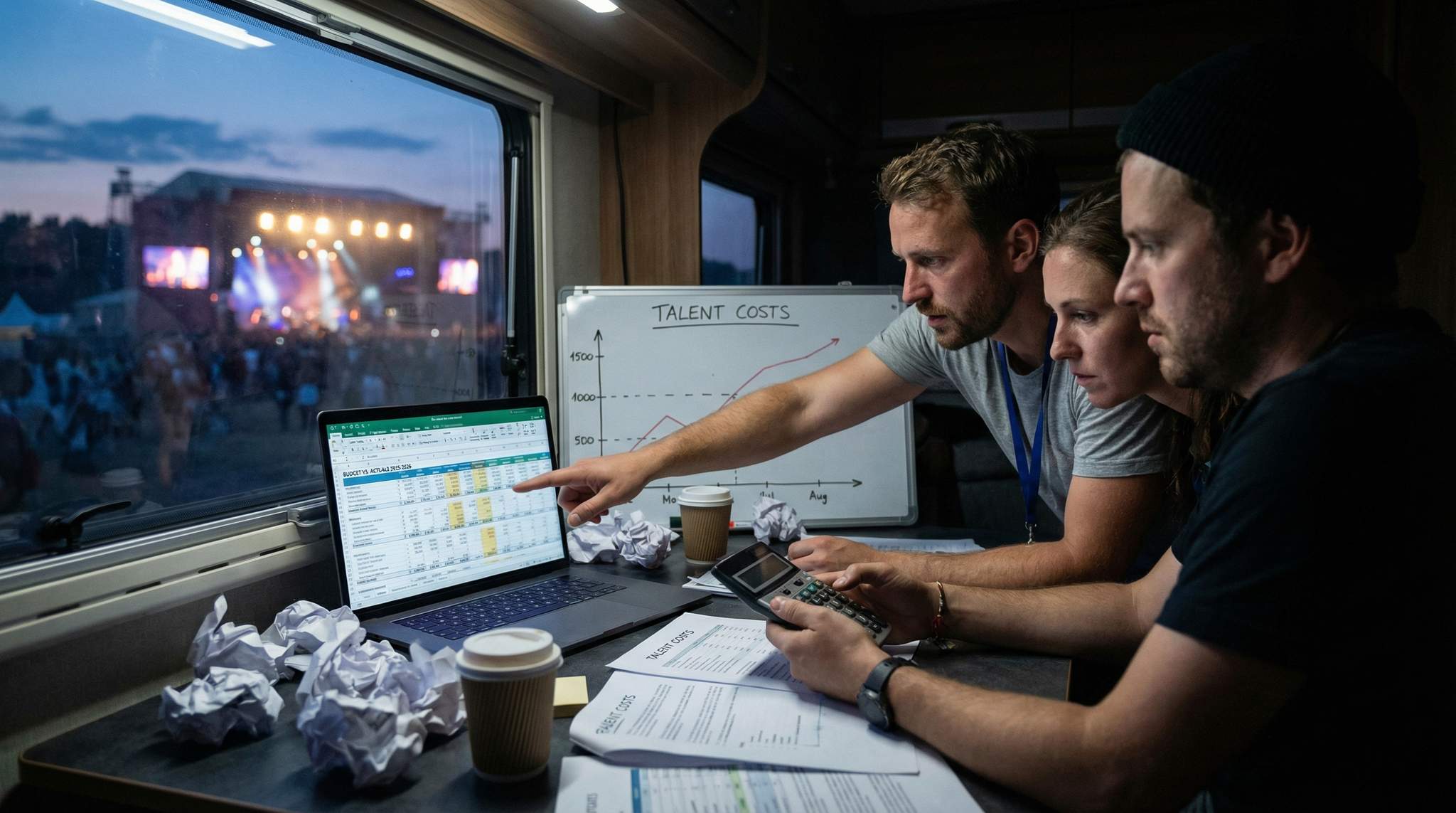
For most music festivals, the talent lineup is the single biggest expense – and a common budget-breaker. It’s tempting to chase that one big headliner, but veteran organizers caution against overpaying for talent at the expense of everything else and advise keeping costs balanced across all fundamental needs. A festival that spends 50%+ of its budget on a few superstar acts may find there’s no money left for quality sound, staffing, or safety – ultimately hurting the fan experience and long-term reputation. To avoid this “headliner trap,” approach talent booking with a cost-benefit mindset. Analyze an artist’s true draw in your market: will that $500,000 famous DJ actually sell enough extra tickets to justify their fee, or would a $100,000 emerging star plus several strong mid-tier acts achieve a better ROI? Often, a balanced lineup of mid-tier and local artists can deliver great experiences at a fraction of the cost of an A-list headliner. In the current “talent wars” (where artist fees have soared by 20–30% post-pandemic), many festivals are teaming up to share acts on routed tours. By coordinating schedules with other events, you can split travel and production costs – an approach exemplified by “green touring” alliances where festivals cooperate to cut carbon and costs (artists playing multiple regional festivals on one trip), a strategy highlighted in discussions about recouping festival losses and recent festival season analyses. Additionally, negotiate smart: use experienced booking agents who specialize in festival deals, and consider offering incentives like higher billing or exclusive afterparties instead of just cash. Savvy producers also build relationships with artists’ teams year-round; being known as a festival that treats artists well (reasonable hospitality, no last-minute schedule chaos) can make agents more willing to flex on fees or routing to include your event. Ultimately, control talent costs by staying creative – remember that the right acts at the right price beat bragging about a pricey lineup if it drives you into the red.
Production Efficiency and Innovation
Production and infrastructure are another major budget slice – stages, sound, lighting, power, facilities, and all the on-site logistics that make the magic happen. Here, big savings can be found through efficiency and smart tech. First, evaluate your production specs realistically: do you need that costly 5-storey LED wall, or will two smaller screens suffice? Scale production elements to your venue and crowd size; overspending on production for ego’s sake is a classic rookie mistake. Instead, focus on high-impact improvements that don’t break the bank: for instance, investing in better sound engineering and placement can often impress attendees more than sheer volume of speakers. Technology can also streamline operations. In 2026, many festivals are adopting cashless payments and RFID wristbands not just for fan convenience but to reduce cash handling costs and shrink staffing needs (fewer cashiers and shorter lines). Some have introduced self-serve kiosks and mobile ordering for food and drinks, cutting the number of staff needed and increasing per-person spending simultaneously, which helps manage last-minute buyer surges and ensures revenue flows before the event starts. Drones and AI-driven tools are assisting in site monitoring and security, potentially trimming security workforce requirements (though use these carefully – robots and drones can be helpful but are not a substitute for human judgment, as discussed in festival tech forums). Even basic measures count: using energy-efficient LED lighting and solar generators can slash fuel costs, and avoiding overnight construction labor by building site infrastructure earlier saves costly overtime. The mantra is “work smarter, not harder” on production – borrow operations ideas from other industries. For example, major theme parks like Disney design layouts to manage crowd flow efficiently; applying similar principles can avoid needing a dozen extra crowd managers with megaphones. Regularly review each production expense and ask, “Is there a cheaper way to achieve this without hurting the attendee experience?” Often there is – and those savings add up to a healthier bottom line.
Data-Driven Event Marketing
Track ticket sales, demographics, marketing ROI, and social reach in real time. Exportable reports give you the insights to make smarter decisions.
Organizers must also carefully weigh the cost of going green. The financial implications for festivals are shifting as sustainability becomes a regulatory mandate rather than just a marketing perk. While upfront expenses for eco-friendly infrastructure can be higher, the long-term savings and grant eligibility often offset them. For example, tracking core operational KPIs around diesel reduction by deploying solar generators, or utilizing green energy security fencing, not only lowers your carbon footprint but significantly cuts fuel transport costs over a multi-day site build.
Smart Staffing and Volunteer Programs
Labor is often a festival’s next big expense after talent and production. Large events can involve thousands of staff and volunteers. To control costs, find the right mix of paid staff, outsourced contractors, and volunteers. Some roles require seasoned professionals – you don’t want to skimp on a qualified safety manager or experienced audio engineers, for example. But many support tasks (ticket scanning, info booths, artist hospitality runners) can be filled by volunteers or interns if managed well. The key is structuring your volunteer program so that it’s beneficial for both sides. Offer meaningful perks: free tickets, unique merch, or exclusive volunteer-only events can attract reliable help. Clearly communicate shift lengths, responsibilities, and give proper training – volunteers perform best when they feel prepared and appreciated. In 2026, forward-thinking festivals are updating their volunteer programs to fit new labor realities. This might mean smaller volunteer shifts to avoid burnout, or partnering with local universities for interns in event management who earn credit while helping your festival (effectively low-cost skilled labor). On the staffing side, consider where outsourcing makes sense. Sometimes hiring an established security firm or cleaning service might be cheaper (and more effective) than staffing up a temporary in-house crew. For core festival team members, hiring year-round staff for critical roles can improve consistency and reduce last-minute scrambles – but be cautious about payroll growth. Many mid-sized festivals operate on razor-thin profit margins (often just 5–10% in a good year), creating less room for error for mid-sized festivals, so every salaried position must be justified with clear value. One strategy is to use contractors for seasonal surges and keep a lean full-time team. Additionally, automation is filling labor gaps: ticket scanning systems, inventory management apps for bars, even AI chatbots for customer inquiries reduce the personnel hours required, helping manage the waiting game of ticket sales. The goal is to minimize labor costs without compromising safety or service. Track your staff-to-attendee ratios and benchmark against industry norms – if you’re much higher, identify why and whether efficiencies or tech can bring it down. But also remember, under-staffing can be disastrous (long lines, poor service, safety incidents), which hurt your finances in the long run through reputational damage. Strive for that sweet spot of a lean, well-trained crew augmented by enthusiastic volunteers and smart tools.
Need Festival Funding?
Get the capital you need to book headliners, secure venues, and scale your festival production.
Vendor Negotiation and Shared Resources
Controlling costs isn’t just about what you spend, but how you spend. Savvy festival organizers treat vendors and suppliers as partners and negotiate for the best value. Whenever possible, get multiple quotes for big-ticket needs like staging, AV equipment, tent rentals, and power generators. Use your festival’s appeal as leverage: for example, a sound company might give a discount in exchange for being named an “official audio partner” or getting to showcase new tech at your event. Many vendors, from porta-loo providers to lighting designers, are willing to offer non-profit or bulk rates, especially if you sign multi-year deals. Locking in a multi-year contract at a fixed rate for, say, the next 3 festivals can hedge against inflation and guarantee the vendor steady business – a win-win if structured right. Another tactic is timing: schedule purchases or rentals in the off-season. T-shirt printing for merch or even certain equipment rentals can be cheaper if you book well in advance or for off-peak months when suppliers are slow. Also, consider sharing resources with other events. In regions or cities with back-to-back festivals, producers sometimes collaborate – for instance, splitting the cost of bringing in a large stage or video wall that both festivals will use on consecutive weekends (saving on transport and setup fees). Networking through associations like the Association of Independent Festivals (AIF) in the UK or regional promoter networks can open opportunities to co-rent or swap gear. Don’t overlook in-kind sponsorships here: maybe a local scaffold company provides staging in exchange for sponsor benefits, or a brewery lends infrastructure for a mention in marketing. Every dollar of cost you offset through a deal is a dollar less you need to earn. Just ensure any barter or sponsorship deals are clearly valued and contracted, so the partnership stays fair. Finally, manage your vendor contracts tightly – include clauses for performance and penalties (e.g., if a supplier’s failure causes delays, you get a discount) and avoid hefty cancellation fees on your side. By treating procurement as a strategic part of budgeting – not a last-minute scramble – you can significantly lower your expenses and insulate your festival from financial surprises.
Diversifying Revenue Streams
Increasing Per-Attendee Spending On-Site
If your festival is only breaking even (or worse) on ticket sales alone, you’re one unexpected cost away from a loss. The most financially resilient festivals diversify their revenue streams beyond the gate. A crucial area is on-site spending: once attendees are through the door, how can you maximize their spend in a way that enhances their experience? Food and beverage are typically the biggest on-site earners. Offer a wide range of options – from gourmet food trucks to local craft beer – and consider taking a reasonable percentage of vendor sales or charging vendors a fee that reflects the traffic you provide. The key is balance: set vendor fees too high or food prices too steep and people won’t buy (or vendors won’t return). Instead, aim for volume by making F&B attractive: some festivals implement meal deal packages or pre-paid drink tokens to boost on-site revenue streams. Merchandise is another stream: festival-branded merch and artist merch can have healthy margins if managed well. Coordinate with artists to stock exclusive merch items (splitting revenue fairly) and make buying convenient with ample sales points or even an online store for pickup at the event. VIP upgrades and experiential add-ons are increasingly popular – and lucrative. Many 2026 festivals charge premium rates for VIP areas with better views, comfortable lounges, or special amenities; well-planned VIP offerings can significantly raise your per capita revenue without a huge cost increase (e.g., a VIP lounge might just require nice furniture, shade, and a dedicated bar). Other ideas include paid workshops, carnival rides, or sponsored attractions on-site for a fee. Even smaller upsells, like locker rentals, premium camping spots, or fast-lane passes, contribute to the bottom line. Keep an eye on the data: track how much the average attendee spends beyond the ticket, and set targets to increase that each year by expanding offerings. Importantly, do this without gouging fans – offer genuine value for the extra spend. Festivals that thrive (think of Austria’s Electric Love or the US’s EDC) create an ecosystem where fans want to spend more because it adds to their enjoyment (like unique merch or foodie experiences), which in turn bolsters the festival’s finances.
When evaluating the best investments for boosting success of festivals, prioritize infrastructure upgrades that directly enhance the attendee experience while opening new revenue channels. High-speed point-of-sale systems, premium shaded seating areas, and upgraded flushable restrooms often yield the highest ROI. Comfortable fans stay longer and spend significantly more at the bar and food vendors, turning a baseline operational expense into a direct driver of profitability.
Sponsorships and Brand Partnerships
A well-structured sponsorship program can inject major revenue into your festival – often covering big chunks of costs like stages or marketing in exchange for brand exposure. However, many festivals get sponsorship wrong by either underselling their event or plastering logos ineffectively. To succeed in 2026’s climate, think of sponsors as long-term partners rather than one-off cash machines. First, identify brands that align with your festival’s audience and values. It’s easier to pitch a sponsor when there’s a natural fit (e.g., an outdoor gear company for an adventure-themed festival, or a tech firm for a music/tech hybrid event). Next, craft creative assets for them: gone are the days when sponsors just wanted a banner. Now they seek engagement. Can you offer a branded chill-out zone, a tasting booth, an interactive photo installation, or a stage naming right that actually resonates? The goal is a win-win: the sponsor gets a meaningful interaction with fans, and you get financial support or in-kind services. Avoid the common mistakes of sponsorship like logo overload with no story, or accepting deals that alienate your core attendees . Instead, tailor each package. For example, instead of a generic “Gold Sponsor” tier, pitch a beverage brand to create a custom cocktail bar experience, or a tech company to provide free phone charging stations with branding – things that fans appreciate. Data is king now: sponsors in 2026 often expect ROI metrics. Be prepared to report attendance demographics, social media impressions of their integration, or on-site engagement stats. If you deliver value, they’ll return. Also, diversify your sponsor base – it’s risky to rely on a single title sponsor for most of your funding (what if they pull out next year?). Better to have multiple mid-sized sponsors across different sectors (e.g., a beer sponsor, a telecom partner, an automotive partner, etc.). Some festivals also tap media partnerships where media outlets sponsor in exchange for advertising, reducing your marketing spend. And remember, not all sponsorship is cash; in-kind deals (providing equipment, hotels, flights for artists, catering, etc.) can offset costs significantly. A festival in Mexico, for instance, partnered with an airline to cover artist travel – a huge cost saved. Approach sponsorship as a form of business development and nurture those relationships year-round, not just at renewal time. The financial stability gained from solid sponsors who believe in your event is immense – but it only comes when you can articulate and deliver a partnership that benefits all sides.
Turn Fans Into Your Marketing Team
Ticket Fairy's built-in referral rewards system incentivizes attendees to share your event, helping events sell 20% more tickets and 30x ROI vs paid ads.
Grants, Subsidies and Public Funding
Beyond the private sector, there’s often money on the table in the form of grants and public funding – yet many festival producers never pursue it. Government agencies, arts councils, and tourism boards worldwide have funds to support cultural events, especially those that drive economic impact or community benefits. Don’t assume these are only for giant festivals; smaller and niche festivals frequently secure grants for specific purposes (e.g., supporting local artists, promoting sustainability, or boosting regional tourism). Research what’s available in your country or city. For example, the EU and UK offer cultural grants, Australia and New Zealand have tourism development funds, and many U.S. states have arts endowments or special event funding. Craft your applications like a business proposal: highlight how your festival enriches the community – whether through educational workshops, diverse cultural programming, or off-season tourism dollars. Real case studies abound of festivals saved by grants: New Orleans’ Essence Festival reportedly leveraged city funding and sponsorships to rebound during lean years, and in Europe, events like Primavera Sound in Barcelona worked with local authorities to expand while managing noise and crowd impacts – in return receiving venue support and promotion. To succeed with grants, follow best practices from experienced producers: start applications early (deadlines can be long before your event date), and measure the outcomes to report back (grant committees love to see data like how many hotel nights or jobs your festival generated). Also consider academic partnerships – universities might fund research or interactive installations at your festival, effectively subsidizing part of your programming. Public funding often comes with strings (like requiring free community access to some portions, or limitations on sponsorship categories), but when balanced well it’s essentially free money to bolster your budget. In times of tight margins, these funds can be game-changers. As one expert guide notes, don’t overlook opportunities to supercharge your budget by tapping grants and public funding. The process can be complex, but many festivals have found that investing the effort to win grants or municipal support pays off in a more sustainable event long-term.
Marketing and Ticket Sales Strategy
Pricing Tickets for Value and Profit
Pricing strategy can make or break your festival’s finances. Set prices too low and you leave money on the table (or fail to cover costs); set them too high and you risk scaring off attendees, reducing volume. The sweet spot should be determined by analyzing your value proposition and audience willingness-to-pay, not guessing. Research what similar festivals charge and consider your unique selling points. Many successful festivals employ tiered pricing: early-bird tickets at a discount to reward early buyers and gauge interest, regular general admission, and VIP tiers at premium rates. Early-bird sales not only drive early cash flow, they also create FOMO-driven momentum once those sell out. For 2026, note that fans are price-sensitive due to economic conditions – but they will pay for perceived value. Inflation is driving up festival costs, so modest ticket price increases may be needed, but communicate clearly about improvements or features that justify it. Importantly, avoid pricing gimmicks that erode trust. For example, sudden dynamic pricing (where the ticket price jumps unpredictably based on demand) has led to fan backlash in the concert industry – festival-goers appreciate transparency and consistency in pricing. Instead of hidden fees or bait-and-switch tactics, be upfront: if you must add service fees, show them early in the checkout. Some veteran promoters have found success with bundle deals (e.g., ticket + shuttle + merch for one price) which offer a discount and raise your per-customer revenue. Another tactic is offering payment plans – allowing fans to pay in installments opens your event to those who can’t drop a lump sum on day one, widening your market. Just ensure your refund policy and financing arrangements are rock solid to avoid complications. The bottom line: price your tickets with a business mind and a fan heart. Calculate your break-even and profit targets, but also put yourself in your attendee’s shoes – what price feels fair for the experience you’re delivering? Festivals that get this right, like Japan’s Fuji Rock or San Francisco’s Outside Lands, manage to sell out (or come close) every year and keep growing by aligning price with value. You want attendees leaving saying “that was worth every penny”, not “I paid all that for this?” – the former means repeat customers and strong financial footing, ensuring your festival delivers value.
Effective Marketing Spend & Audience Targeting
Even if you build the best festival, you need robust marketing to get those tickets sold – but how do you avoid spending so much on marketing that it eats your profits? The key is efficient, data-driven marketing. Start by identifying your core audience segments (based on genre, location, interests, age, etc.) and allocate your budget to channels that hit those segments effectively. Digital marketing offers great ROI when done right: leverage social media ads with laser-focused targeting (e.g., people who follow similar festival pages or artists on your lineup), and track conversion rates. If you spend $1,000 on Instagram ads, know how many ticket clicks or sales resulted – then double down on what works. Many festivals are also investing in content marketing and SEO so that interested fans find them easily; for instance, optimizing your website and event pages for SEO can organically boost ticket sales without heavy ad spend. Traditional media (radio, print, billboards) can still help, especially for local audiences, but negotiate media sponsorships or trades whenever possible to save cash. One often overlooked strategy is community referrals and ambassador programs – turn your passionate fans into marketers by giving them referral links or discount codes; it’s far cheaper to reward a fan with a $20 merch voucher for bringing in a new attendee than to pay $20 in ad clicks. Also, time your marketing push smartly: a big mistake is burning your budget too early. Build awareness early (teasers, “save the date” posts), but keep significant promotion budget for the final months as purchase urgency peaks. Keep an eye on the calendar – avoid clashing with major competing events or big national distractions (learn from 2018, when some festivals saw dips because the FIFA World Cup commanded everyone’s attention). If you must go head-to-head with other events, emphasize your unique angle. In an oversaturated festival market, marketing is about differentiation to stand out in an oversaturated season. Are you the only fest offering a certain genre, location, or vibe? Hammer that home. Lean into storytelling: share behind-the-scenes looks at preparations, testimonials from past attendees, and compelling narratives about what makes your festival special. Consumers in 2026 are bombarded with festival options, so authenticity and engagement go a long way. Finally, continuously seek cheap or free exposure – listings on event discovery platforms, local event calendars, partnerships with influencers or blogs in your scene. Guerrilla marketing (like pop-up performances or street art in key cities) can spark buzz without huge costs. Remember, every marketing dollar should eventually translate to ticket revenue – if something isn’t pulling its weight, reallocate that budget quickly. By being targeted and creative, you can fill your festival and keep marketing expenses at a sane percentage of your total budget.
Encouraging Early Sales and Cash Flow
One of the biggest financial risks festival producers face now is a late ticket-buying trend. Post-pandemic, audiences often wait until the last minute to buy tickets, which can wreak havoc on your cash flow and planning. To counter this, you need strategies to incentivize early sales. We already mentioned tiered pricing (early-birds at a discount) – make those early tiers truly attractive. Offer not just lower prices but perhaps exclusive perks for early buyers: maybe a free drink coupon, a chance to win a meet-and-greet, or first dibs on camping spots. Create a clear “rise” in pricing as the event approaches to reward action-takers. Another method is ticket + add-on bundles promoted early – for example, sell a “Holiday Package” months out that includes a ticket, a merch item, and a shout-out on the festival’s social media for a set price, targeting super-fans and gift purchases. Also consider group deals: some festivals do “buy 4 tickets, get 1 free” to encourage friend groups to lock in early. These tactics not only boost early cash flow, they also help gauge final attendance better. Additionally, maintain active communication and hype during the sales cycle to convert fence-sitters early. Regularly drop lineup announcements, content about amenities, or behind-the-scenes peeks to keep people excited and less likely to procrastinate. Despite your best efforts, expect a chunk of sales to still come late; thus, manage your cash flow accordingly. Many fixed costs (deposits for artists, venue, equipment) hit months before the festival, while a lot of ticket income may not arrive until weeks prior. To bridge this gap, secure other early revenues like sponsorships (get sponsors to pay upfront installments) or ancillary merch sales (launch an online merch pre-sale). Some festivals even set up layaway payment plans so attendees start paying far in advance, which brings in money sooner. If cash is still tight, arrange a line of credit with a bank or supportive investor as a safety net – better to pay a bit of interest than to cancel because you couldn’t pay critical bills waiting for ticket money. The bottom line is, don’t be caught without cash when you need it. As one festival CEO put it, planning an event without ample early cash is running an enormous risk. By driving early ticket sales and shoring up reserves, you’ll avoid the nightmare some events faced: having to pull the plug simply because the surge of last-minute buyers came too late to pay suppliers, as cash doesn’t start flowing until shortly before the event. Build early momentum, and your finances will be much steadier.
Choosing the Right Ticketing Platform
Amid all these financial strategies, it’s easy to overlook the role of ticketing technology. However, your ticketing platform can significantly impact sales conversion, cash flow, and even fraud prevention, all of which feed into financial success. In 2026, fans expect a seamless ticket buying experience – any friction (clunky interface, limited payment options, hidden fees) can literally cost you sales. Modern ticket platforms like Ticket Fairy (our host here) focus on smoothing this process: think mobile-first design, multiple local payment methods (credit cards, mobile wallets, etc.), and transparent pricing so buyers trust the process. A good platform will also deposit funds to you in a timely manner; it’s worth negotiating payout schedules so you aren’t waiting until after the event to access much-needed cash. Additionally, look at what tools your ticketing system provides to boost revenue. Many offer integrated upsells (prompting buyers to add parking, merch, or donation during checkout) which can meaningfully increase per-customer spend with zero extra marketing cost. Another critical aspect is fraud and scalper protection. Scammers creating fake event pages or selling bogus tickets not only steal your potential revenue but also damage your event’s reputation by keeping pricing honest and fans happy and ensuring transparent communication. Ensure your platform uses measures like secure digital tickets, unique barcodes/QR codes, and anti-bot controls to curb illegitimate sales, utilizing tech trends that actually deliver value and fraud algorithms to stop scalpers. Some advanced systems analyze buyer patterns to flag suspicious bulk purchases (a sign of scalpers) so you can intervene – for instance, by requiring ID checks at entry or invalidating resold tickets in violation of terms. All of this protects your income and your fans. On the analytics side, leverage the reporting dashboards from your ticketing partner: real-time sales data, heat maps of where buyers live, which promo codes are working, etc., are gold for adjusting your marketing and projecting final numbers. As you grow, you might also explore dynamic pricing tools (raising or lowering prices based on demand) carefully – but as mentioned, do this with transparency to avoid fan backlash. The right ticketing platform is more than just a sales portal; it’s a strategic ally in your financial management. Make the choice not on lowest cost but on overall value: a platform that can sell an extra 500 tickets through better reach or convert more last-minute buyers through smooth UX more than pays for itself. In short, don’t cut corners on ticketing – use a reputable, feature-rich system (like Ticket Fairy’s festival ticketing solution) to support your road to profitability.
Smart Scaling and Right-Sizing
Avoiding Overexpansion and Overspending
Growth can be a double-edged sword. Many festivals fail financially by scaling up too quickly – adding too many stages, expanding to a multi-day format, or moving to a vastly larger venue without the demand to support it. The annals of festival history are filled with events that had one successful year and then doubled in size the next year only to find expenses more than doubled while attendance plateaued. Overspending on capacity “just in case” crowds come is a common unseen money pit. For instance, renting a venue for 50,000 people when you’ve only ever sold 20,000 tickets means paying for extra space, staff, and infrastructure that may go unused. The lesson is to scale deliberately and sustainably. Treat each increase in attendance or programming as an investment that must yield returns. If you’re adding a second day, do you have data indicating many attendees would attend both days (and are there enough nearby accommodations, etc.)? If not, you might just double your costs for the same audience. A poignant case was Sweden’s Peace & Love Festival, which grew to 50,000 attendees with big-name lineups but collapsed in 2013 when quality declined and loyal fans felt it became too commercial – they had expanded beyond their means and lost their core support. The festival went bankrupt despite huge attendance, a cautionary tale that bigger isn’t always better. To avoid overexpansion, analyze each expense of growth: more stages mean more production cost and artists – will they attract enough additional fans to pay for themselves? Sometimes the answer is no, and a single well-curated stage could be more profitable (and enjoyable) than three half-full ones. Also be mindful of the complexity cost – a larger event is exponentially more complicated to manage, which can strain your team and lead to operational failures that carry financial costs (like fines or refunds). Growth should not outpace your organizational capacity to execute flawlessly.
Free Tool: Size Your Festival Site
Zoned capacity planning for arena, campsite, parking and entry lanes — against UK Purple Guide and NFPA density standards. Finds your bottleneck zone.
Scaling Gradually with Demand
The flip side of avoiding reckless growth is to embrace growth when the time is right. How do you know? Follow the demand and your waitlists, and listen to fan feedback. If you’re selling out within minutes every year and there’s clear evidence thousands more want to attend, that’s a green light to consider scaling up – carefully. In such cases, incremental growth is often best. Increase capacity by, say, 20% rather than 100%. This lets you test a larger crowd without betting the farm. Observe what new challenges arise at that slightly bigger size (did entry lines bog down? Did medical incidents spike? Could the local roads handle the traffic?). Iron out those issues before the next growth step. Data is your friend: track year-over-year ticket sales curves, customer geography, and engagement. Are you drawing more out-of-town attendees who might come if you had camping available? That could justify investing in a campground (which is also a new revenue stream). Conversely, if you notice a dip in returning attendees or engagement at your current size, don’t expand further – it might be time to consolidate and improve the experience. Some festivals rotate between growth years and “maintenance years” where they hold size steady to focus on quality. It’s also smart to scale by diversifying programming rather than sheer size. For example, instead of cramming 20 more acts into the lineup to draw more fans (which might not actually boost ticket sales much), consider adding other attractions – an art tent, a wellness workshop area, a second theme that broadens your audience slightly. These can attract new attendees or convince existing ones to pay for multi-day passes, effectively increasing revenue without massively upping capacity. Mid-sized festivals in particular feel a squeeze between boutique and mega-fests, as they feel a squeeze between boutique and mega-fests, but those that thrive find a unique space and grow carefully within it. A festival that settles in at 15,000 attendees with solid financials is far better off than one that jumped to 40,000 but is hemorrhaging money. Remember, growth usually means higher risk – more upfront costs, bigger guarantees to artists, more infrastructure. So raise your financial buffers as you grow (larger contingency funds, insurance coverage, etc.). One positive example: Coachella started modestly and didn’t expand to two weekends until a decade in, when global demand clearly exceeded supply. By then they had the formula and infrastructure down to replicate the event safely and profitably. Emulate that patience. Scale when you’re bursting at the seams, not when you’re merely dreaming of future crowds.
Matching Venue and Capacity to Your Budget
Venue selection and site capacity go hand-in-hand with scaling decisions – and choosing the wrong site can sink your finances. A common error is falling in love with a grand venue that impresses on paper (huge parklands, a massive stadium) but comes with immense costs or operational challenges. Always size your venue to a realistic attendance and factor in total cost of using that site before signing. A field may seem cheap to rent, but if it lacks water, power, fencing and you have to truck all that in, it might end up pricier than a smaller venue that has built-in facilities. Festivals that succeed financially often take a “right-size” approach: better to have a slightly snug venue that you can sell out and create buzz (and then maybe expand later), than a vast expanse that looks half-empty and wastes resources. Empty space is wasted money – you’re paying to permit, secure, light, and clean areas that aren’t generating attendee revenue. On the flip side, don’t underestimate capacity needs for critical functions: crowd bottlenecks can be both dangerous and costly (fines or required last-minute fixes). The ideal venue has room for your target crowd plus safe overflow but not so much that you’re stretching to fill it. Also consider location and access: a remote picturesque site might attract travelers but will increase costs (shuttles, staff travel, possibly lodging). An urban venue might come with noise ordinances or higher city fees, but you’ll save on infrastructure and tap into local attendance. Some festivals have found success in converting existing structures – for example, turning a convention center or sports arena into an “indoor festival” – trading off open-air vibes for huge savings on weather risk and avoiding costs that can run into millions of dollars. Think creatively: one organizer turned an old factory into a multi-stage venue, drastically cutting site fees and earning city grants for revitalizing a space. When budgeting for a venue, include everything: rent, permits, city services (police, medical), sanitation plans, parking or shuttle plans, and restoration costs (many parks require you to pay for reseeding grass, etc.). Then ask, is this scalable? If you double attendance in future, can this site handle it, or will you be forced to move and incur entirely new setup costs? It’s often financially prudent to plan for a multi-year home. Moving venues frequently drains money (new layouts, new community relations, marketing to inform attendees, etc.). So choose a site that fits your long-term realistic growth and negotiate a favorable multi-year rate if you can. The right location can boost your bottom line (through community support, easier logistics, higher attendee satisfaction leading to returns) – the wrong one can stealthily drain your budget dry.
Leveraging Community and Partnerships
Local Community Engagement and Support
Your host community can be either a tremendous asset or a source of costly conflict. Festivals that make money year after year almost always have strong local community relationships. Why? Because community buy-in can lead to local governments waiving fees or providing services, residents volunteering or attending, and businesses sponsoring or offering discounts – all boosting your finances. On the other hand, if locals feel your festival is a nuisance, you might face expensive permit battles, protest-driven restrictions (like early closing times or noise limits), or even fines and lawsuits that drain money. Start by treating the community as a stakeholder: meet with city councils, neighborhood groups and tourism boards well in advance. Be transparent about your plans and how the community benefits – e.g., influx of visitors spending at local shops and hotels, temporary jobs for residents, cultural enrichment, etc. Many smart festival organizers do community forums or listening sessions, incorporating feedback about traffic, noise, and safety. By addressing concerns (like setting up resident-only hotlines during the event or offering locals free earplugs and traffic management), you can turn critics into neutrals or fans. Some festivals go further and offer resident perks – such as discounted tickets for local zip code residents or a special “Community Day” event that’s free for locals – to show goodwill. A great example is Glastonbury Festival in the UK, which donates hundreds of thousands of pounds to local charities and has a village feel; in return, the local town largely supports the event despite the temporary inconveniences. Similarly, smaller festivals in towns around the world often partner with nearby farmers, schools, or cultural institutions to integrate into the community fabric. These efforts pay off financially: a supportive town might provide venues at low cost, or police and emergency services at reduced rates because they view the fest as a partner. Some city governments even sponsor festivals outright to boost tourism (e.g., Montreal’s Jazz Festival enjoys city and provincial funding assistance, which underwrites a chunk of costs). Engage the community year-round – don’t just show up on event week with demands. Participate in local causes, hire local crews and vendors (why fly in a caterer if a local restaurant can do it?). Beyond being the right thing to do, it often saves you money and builds goodwill. In 2026, with many communities recovering economically, positioning your festival as a community asset is not just good PR, it’s good business. The more the locals feel it’s “our festival”, the more likely you are to get favorable permits, repeat attendance, and even emergency latitude if something ever goes awry.
Festival Alliances and Resource Sharing
In a competitive landscape, forming alliances with other festivals and industry groups can bolster your financial resilience. This might seem counterintuitive – aren’t other festivals competitors? Sometimes, yes, but there are plenty of scenarios where collaboration saves everyone money. One example we touched on is routing artists through multiple festivals to share travel costs. Similarly, festivals have teamed up to jointly purchase expensive equipment (like stage components or tent structures) that each event uses in turn, splitting the capital cost. In Europe, some independent festivals formed buying consortia for everything from wristbands to insurance, achieving bulk discounts that a single event couldn’t get. There’s also strength in numbers when lobbying authorities or suppliers: an alliance of events can negotiate better terms with ticketing providers or sanitation companies, for instance, by promising volume business. Consider joining professional associations such as IFEA, AIF, or regional festival networks, which often facilitate resource sharing and collective bargaining. Another form of partnership is cross-promotion – linking up with festivals in other genres or locations with complementary schedules to swap marketing (each festival promotes the other to their audience, for example). This can save significant advertising dollars while reaching new ticket buyers. We also see the rise of multi-event producers who run several festivals under one company; they often share a core production team and central resources. If you produce a festival, adding a second or third event (perhaps in a different season or city) under the same umbrella can create economies of scale – though it requires careful time management . Even if you’re focused on one festival, you can mimic this by informally partnering with another event to split staff. For instance, you might share a pool of trained volunteers or a staging crew that goes to both events, ensuring they’re consistently busy and earning a steady paycheck (which can command a lower day rate than two separate short gigs). Alliances can extend to emergency support too: some festival organizers have pacts to assist each other if one event faces a crisis like a supplier failing to deliver – potentially lending spare equipment or personnel. Knowing you have a safety net can prevent financial catastrophe from an unforeseen snag. Ultimately, collaboration can cut costs through shared knowledge as well. Regularly talking with fellow producers (at conferences or even informal meet-ups) about budget tips, sponsor leads, or which vendors to avoid can save you costly trial-and-error. The festival industry has a strong camaraderie among veterans – tapping into that can help your festival dodge pitfalls and find savings that you might miss on your own. In short, don’t isolate – team up to thrive.
Building Fan Loyalty and Trust
Your audience is not just a source of ticket sales – they can be champions for your festival’s financial stability if you treat them right. Fan loyalty translates into reliable repeat attendance (reducing marketing costs) and positive word-of-mouth (free promotion). To cultivate this, focus on delivering value and respect for the fans’ investment. Consistent quality year over year is key: if you advertise great sound and punctual set times, make sure you deliver that every time. A single year of notable decline in experience (overcrowding, poor amenities, etc.) can break trust and see fans walk away, as some struggling festivals learned the hard way. Conversely, exceeding expectations (surprise guest performances, improved logistics, cleaner facilities) can turn attendees into annual die-hards willing to buy early each year. It also pays to communicate transparently, especially about money matters that affect fans. For instance, if rising costs force a ticket price increase, some festivals now openly explain how prices are linked to artist fees, venue improvements, safety measures, etc. Educating fans on where their money goes can build understanding and goodwill. Many veteran producers find that honesty is the best policy – fans may grumble about prices, but they’ll be far more upset if they feel price-gouged with no explanation. Another strategy is implementing loyalty programs: maybe returning attendees get access to early-bird tickets first, or a small discount code as thanks. These gestures make fans feel valued and encourage them to keep choosing your festival over the ever-growing competition. Engaging with your audience year-round on social media or via newsletters also strengthens the connection (share throwback photos, ask for lineup suggestions in polls, highlight fan stories). When fans feel a personal tie, they are more forgiving if minor issues happen and less likely to be lured away by another event. Importantly, loyal fans become your ambassadors – they’ll promote the festival to friends at no cost and even defend it in tough times. There have been cases where festivals hit by bad weather or a one-time setback bounced back the next year solely because a core fanbase rallied rather than bailed. Additionally, a community-oriented approach – like incorporating fan art in your marketing or hosting fan meet-ups – can deepen loyalty. From a financial perspective, retention is gold: it’s much cheaper to retain a ticket buyer than to constantly find new ones. High retention means more predictable sales, which makes budgeting and scaling far easier. It also potentially allows you to spend less on advertising because your “fan club” does it organically. In summary, invest in your audience’s happiness as part of your financial plan – happy fans come back, bring friends, spend more on-site, and give you a long-term revenue stream that no amount of flashy marketing can buy.
Managing Risks and Uncertainties
Weather and Event Cancellation Planning
Weather is the eternal wild card for festivals – and it can pose huge financial risks. A major storm, heat wave, or flooding can force delays, evacuations, or full cancellation, resulting in refund obligations and unplanned costs that bankrupt unprepared events. While you can’t control Mother Nature, you can mitigate the financial fallout. First, consider event cancellation insurance. This specialized insurance can reimburse lost revenue or additional expenses if your festival is canceled or disrupted by covered perils (like severe weather). Premiums have risen in recent years (the post-pandemic insurance market is tough), but going without coverage is essentially betting your entire budget on good weather. If full insurance is too costly, explore partial coverage – maybe insuring just critical high-cost elements. Next, have a detailed weather contingency plan. For instance, if there’s a forecast of lightning, can you delay programming by a few hours (and did you communicate that possibility in ticket terms to avoid full refunds)? Some festivals build an extra day into the schedule as a rain date or leave enough buffer in programming to resume after a pause. Budget for proper storm mitigation equipment: water pumps, gravel, stage coverings – spending a few thousand on weatherproofing can save tens of thousands by preventing damage. Also factor in heat: in hot climates, extreme heat can be as dangerous as storms. Ensure free water is available (and budgeted) and medical teams are ready, or your festival could be fined or shut by authorities for unsafe conditions. It’s wise to set aside a weather contingency fund within your budget – money that can be used for last-minute rentals of tents, mats, heaters, or whatever is needed to keep the event going safely if weather turns. Some festivals pre-arrange deals with suppliers for emergency equipment so it can be delivered quickly (for example, having a vendor on standby with extra flooring if mud starts forming). Communicate clearly with ticket-buyers about the weather policy – will you operate rain or shine? Under what conditions would you evacuate or cancel? Managing expectations can reduce demands for refunds if something happens. Indeed, some events include a “force majeure” clause in ticket terms saying no refunds for weather delays (legally useful, though from a goodwill perspective you might still offer partial refunds or discounts for the next year if a day is lost). Finally, stay informed: assign someone on the team to monitor weather hourly and coordinate with local authorities. Early action (like clearing an area before a storm cell hits) can prevent accidents that carry not just tragic human costs but financial liabilities too. In short, plan for the worst and hope for the best with weather. Festivals that endure have all faced bad weather at some point – those that had a plan lived to tell the tale (and host again) without going broke.
Boost Revenue With Smart Upsells
Sell merchandise, VIP upgrades, parking passes, and add-ons during checkout and via post-purchase emails. Increase average order value by up to 220%.
Insurance and Financial Safeguards
Beyond weather, numerous risks loom over a festival – injury, property damage, crime, even pandemics – any of which can drain finances through claims or legal costs. Comprehensive insurance coverage is therefore a non-negotiable part of protecting your festival’s financial health. General liability insurance covers spectator injuries and property damage; it’s a must to get permits virtually everywhere. But in today’s climate, you likely need more: cancellation insurance (as mentioned), artist non-appearance insurance (if a headliner no-shows and you have to refund tickets, for example), and perhaps terrorism insurance or public liability depending on your region. Work with brokers who specialise in events to tailor coverage – generic business insurance might leave gaps. Be forthcoming in disclosures (if you have a high-risk element like fireworks or extreme sports, tell the insurer) so that claims don’t get denied later. While insurance premiums have indeed soared and coverage narrowed – we’re seeing a true insurance crunch for festivals – the alternative of going uninsured is not worth the gamble. One lawsuit from a single incident could wipe out years of profit or personal finances if you’ve signed guarantees. Factor insurance premiums solidly into your budget from day one, and shop around with different providers or through festival associations which sometimes have group rates. Aside from insurance, think of other financial safeguards: set up your festival as a legal entity (LLC, LTD, etc.) to shield personal assets and possibly other business ventures from festival liabilities. Maintain a cash reserve or emergency fund that’s separate from your operating budget – this could cover an immediate expense in a crisis while you wait for insurance payouts or other resolution. Some festivals establish a line of credit in advance; having pre-approved credit means if something goes wrong (like an investor drops out last-minute or a sponsor payment is delayed) you can still pay critical bills and avoid cascading failures. It’s also wise to have a contingency in place for key personnel loss – for instance, if your technical director falls ill right before the event, do you have a backup you can call (and some budget to pay them)? Human risk factors can be as damaging as physical ones. Conduct a risk assessment matrix during planning: list potential risks, likelihood, and impact, then plan mitigation for each. Many events now hire safety or risk managers to focus exclusively on this area – it might feel like an extra cost, but it can prevent far greater losses. And as mundane as it sounds, keep meticulous documentation – contracts, incident reports, financial records. If a claim or dispute arises, having your paperwork in order can save you from payout disputes or regulatory fines. Ultimately, hope for the best but insure for the worst. As organizers say, “If you can’t afford insurance, you can’t afford to run the festival.”
Safety, Compliance and Reputational Risk
Financial failure isn’t always about dollars and cents on a spreadsheet – sometimes it’s the indirect result of a damaged reputation or regulatory shutdown. Safety issues, in particular, can not only cause harm (which is obviously the biggest concern) but also destroy audience trust and invite lawsuits or government action. Look at events like 2021’s Astroworld tragedy: beyond the immediate human cost, the festival brand was tarnished and faced enormous legal liabilities. The lesson is clear: never cut corners on safety to save money. Ensure you budget amply for security staff, medical teams, and safety infrastructure (like adequate barricades, lighting, surveillance). Even things like crowd psychology and flow design make a difference – a well-designed site plan prevents dangerous overcrowding and keeps attendees happy, helping avoid the mistakes of past disasters and address safety oversights and crowd control. In 2026, health & safety expectations are higher than ever; many local authorities require detailed safety plans and will shut you down if you’re non-compliant. Being proactive about safety can actually save money by preventing incidents that lead to refunds or legal costs. The same goes for compliance: noise ordinances, curfews, environmental rules (like protecting local wildlife or managing waste) – these vary widely by location, and ignorance is no excuse. If you violate permit conditions, you might incur fines or be denied permits next year (which in effect ends the festival’s life or forces an expensive move). So invest in compliance up front: maybe that means hiring off-duty police or certified traffic marshals, or paying for an acoustic consultant to monitor sound levels at the nearest residence. It’s cheaper to fix problems in advance than to deal with enforcement actions later. Don’t forget taxes and licenses: ensure you’re complying with music licensing (PROs like ASCAP/BMI fees for the songs played), and collecting sales tax or VAT on tickets if required. Fest accounting that neglects these can get hit with back taxes and penalties that accumulate fast.
Another subtle but huge factor is maintaining your festival’s reputation and goodwill. If ticket buyers lose trust – whether due to a prior safety issue, a chaotic refund process for a cancellation, or even perceptions of greed – your financials will suffer as ticket sales decline or sponsors shy away. That’s why in any crisis, how you handle it matters. Communicate swiftly and honestly with attendees if something goes wrong. Offer fair make-goods (discounts for next year, partial refunds where appropriate) – it may cost money in the short run, but it’s an investment in your brand’s future. Many festivals have bounced back from near-collapse because they owned up to mistakes and treated people right. For example, when heavy rain turned the 2017 Tomorrowland Unite event in Barcelona into a muddy mess and eventual cancellation, organizers promptly refunded tickets and provided a heartfelt explanation, managing to preserve trust and return strong in later editions. Fans appreciate integrity. Scandals too can kill a festival financially – whether it’s harassment issues, artist controversies, or mismanagement. Have a PR plan and crisis management strategy so that one incident doesn’t spiral out of control. It might be worth training your team (or hiring a consultant) on crisis communication. The bottom line: Protect your festival’s good name as fervently as you guard the cash box, because they are intimately connected. A festival seen as safe, compliant, and respectful of its community will find it easier to get insurance, attract sponsors, and sell tickets – all pillars of financial success.
Preserving Mission While Achieving Profit
Staying True to Your Brand Values
One of the “unseen” reasons some festivals lose their way financially is the erosion of their original mission or identity. A festival that gains a devoted following usually does so because it offers something unique – a cultural vibe, a sense of community, a musical niche, an ethos (be it eco-friendliness, inclusivity, etc.). If in the pursuit of profit you dilute that identity, you may inadvertently sabotage the very loyalty that sustained you. For example, if an indie folk festival suddenly books a bunch of mainstream pop acts just to sell more tickets, they might alienate their core audience and sponsors who loved the original concept – resulting in a net loss of support. Maintaining your cultural mission isn’t just feel-good rhetoric; it’s smart business for sustainability. Festivals like Burning Man have thrived for decades largely because they stick to their principles (no brand advertising, fostering a gifting economy) – any move away from that would cause backlash from their community. Similarly, boutique festivals often succeed by being authentic to a theme or local culture; sponsors and funders are actually more attracted when you have a strong story and values, not a generic event chasing trends. So, regularly revisit your festival’s core vision and stress-test decisions against it. Will a proposed change or partnership enhance your brand or just bring short-term cash at long-term cost? When you do make changes (and evolution is fine, even necessary), communicate how they align with your mission. For instance, if you introduce a new EDM stage at what’s been a jazz festival, perhaps frame it as exploring the legacy of jazz in modern electronic music – rather than just a cash grab.
At the same time, staying true to values doesn’t mean never innovating or being austere. It means finding ways to grow and monetise that reinforce your identity. Look at Glastonbury: it became more commercial over time out of necessity (bigger stages, major headliners), but it kept a grassroots, charity-focused spirit – still giving significant proceeds to charity and in 2022 even incorporating climate action messaging across the festival. They’ve hosted huge names like Beyoncé without losing the “Glasto soul” because they integrate new elements thoughtfully and continue beloved traditions (like the closing sing-along at the Pyramid Stage). The lesson: you can pursue profit and scale while preserving your festival’s soul, but it requires conscious effort and sometimes saying no to lucrative opportunities that would betray your brand. A practical tip is to codify your values in writing – like guiding principles for programming, sponsorship, and environmental impact – and share this with your team and partners. That way, everyone evaluates opportunities through the same lens, and you avoid incremental compromises that could erode what makes your festival special.
Monetizing Creatively Without “Selling Out”
How do you boost revenue streams while keeping culture front and center? The answer is creative monetization that aligns with your mission. Think about ways to generate income that actually add to the attendee experience or reinforce your theme. For example, if your festival celebrates local arts, monetise by hosting an artisan market where vendors pay a fee or revenue share – attendees get to buy cool local crafts (enriching their experience) and you earn money, all while spotlighting your mission of supporting arts. If sustainability is a core value, you might attract green-minded sponsors like solar energy companies or eco-product brands whose presence (with interactive eco stalls or free water refill stations they fund) underscores the festival’s ethos rather than clashing with it. Another approach is offering educational or premium experiences that align with your identity for an additional fee. A food festival could offer paid cooking masterclasses with top chefs; a comic-con style festival might have special paid meet-and-greets or workshops with artists. These make money and deliver on your festival’s purpose of celebrating a particular culture or talent.
Free Tool: How Many Tickets to Break Even?
Enter your venue, artist, production and marketing costs with your ticket price. See how many tickets cover your costs and how many you still need to sell.
Also, consider your off-season and off-site potential. Committed fans might pay for content or community experiences year-round. Some festivals monetize by releasing compilation albums of live performances, or offering subscription-based access to past festival footage and documentaries. Others organize smaller spin-off events: e.g., a one-night concert or pop-up in another city as a “taste of the festival,” which both markets the main event and brings in some income. These should be curated to strengthen the brand (e.g., featuring alumni artists or thematic tie-ins), not just random gigs for cash. Merchandise is another area to do thoughtfully: quality, ethically-sourced merch reflecting your festival’s art or message can become fashionable (Roskilde Festival’s merchandise, designed by local artists, is popular and furthers their cultural vibe). Some festivals have even partnered with fashion brands or designers to create limited-edition apparel that sells out, sharing profits. The key is, fans don’t see it as a soulless cash grab if the product is cool and authentic. Transparency helps too – if you do find you need to monetize something that might be sensitive, explain it. For instance, many festivals started charging for parking or camping to cover rising costs; the ones that messaged it as “in order to maintain the quality of X, we’re introducing a modest fee for Y” got more understanding than those who slapped fees without comment. At the end of the day, fans appreciate festivals that find clever ways to sustain themselves without compromising the core experience. By creatively integrating revenue opportunities into the fabric of your event, you can increase profitability and give attendees more to love – a financial win-win that keeps your mission intact.
Learning and Adapting from Setbacks
No festival is immune to setbacks – whether it’s a year of low ticket sales, a budget overrun, or a PR hiccup. The difference between festivals that fold and those that forge ahead often comes down to learning and adapting. Treat every tough year as a case study: perform a thorough post-mortem analysis on your finances and operations. Did a particular cost spiral out of control? Were ticket sales lower in a certain demographic or city? Did a new initiative fail to pay off? Gather data and candid feedback from your team, attendees, and partners. For instance, if you tried a new stage that wasn’t well attended, maybe you overstretched – you could scale it back or switch genres next time. If sponsorship came in below expectations, perhaps your pitch needs tweaking (or the economy shifted and you need new categories of sponsors). The important thing is not to ignore warning signs. Some festivals run on optimism and denial – they assume “next year will magically be better” without changing anything fundamental, which is rarely true. Sometimes, adaptation means making tough choices like downsizing or pausing the event to regroup. The hardest decision can be to take a break: several notable festivals that nearly went under managed to save themselves by taking a year off to restructure (finding new investors, reducing debts, reimagining the format) rather than pushing on and accumulating more losses. In the Ticket Fairy blog, there’s advice on knowing when to evolve or exit – not every festival needs to last forever if the model is broken. But assuming you believe in the event’s future, be willing to pivot. That could mean changing your date or venue to reduce competition or costs, rebranding the festival if the old brand was tarnished, or even shifting your genre focus to capture an underserved audience.
Keep an eye on industry trends as well – what worked a decade ago might not fly in 2026. We’re in an era where experiential elements, diversity and inclusion, and sustainable practices aren’t just nice-to-haves but expected by many fans (and can be selling points). If your festival lagged in these areas and saw attendance dip, that may be a signal to invest in improvements that align with modern audiences. Also, learn from others’ failures so you don’t repeat them. If a peer festival in your region collapsed due to, say, over-reliance on one sponsor or poor contingency planning, take that lesson to heart. The festival community is filled with war stories – seek them out, attend industry panels, read case studies. Many festival producers are surprisingly open about their near-misses and comebacks, and their insights are invaluable. In sum, resilience in the festival business comes from humility (acknowledging when things aren’t working), analysis, and adaptation. By embracing a mindset of continual learning and being unafraid to change course, you give your festival the best chance to achieve lasting financial success while staying true to what makes it great.
Frequently Asked Questions: Festival Financial Strategy
What are the best investments for boosting the success of festivals?
For event producers looking to maximize ROI, the most effective capital allocations focus on infrastructure that directly enhances the attendee experience and accelerates on-site spending. Upgrading to high-speed, cashless point-of-sale (POS) systems to eliminate bar queues, investing in premium VIP amenities, and deploying robust site-wide Wi-Fi are proven strategies. These operational upgrades consistently yield better long-term financial returns than simply overpaying for a single top-tier headliner.
How can organizers balance the cost of going green with tight festival budgets?
While the initial financial implications for festivals transitioning to sustainable operations can seem steep, the long-term savings are substantial. Utilizing solar generators or green energy security fencing reduces heavy diesel fuel consumption and transport costs. Furthermore, tracking these core operational KPIs opens doors to environmental grants, municipal subsidies, and eco-conscious brand sponsorships that offset upfront expenses.
Is it realistic for an independent event to achieve a net profit over $700,000?
Yes, highly optimized mid-to-large scale independent events can reach and exceed this benchmark. Achieving a net profit over $700,000 per festival edition requires strict discipline regarding variable costs, maximizing per-head on-site spending through diverse food and beverage options, and securing multi-year vendor contracts to hedge against inflation.
How much does it cost to put on a music festival?
The total expense to produce a music festival depends heavily on its capacity, duration, and talent tier. A small, single-day boutique event for 1,000 to 2,000 attendees can cost between $100,000 and $300,000. Mid-sized regional festivals drawing 10,000 to 20,000 fans typically require budgets ranging from $1.5 million to over $4 million. Major multi-day mega-festivals often carry price tags exceeding $15 million to $20 million. The largest cost centers are usually artist booking fees, site infrastructure (staging, power, fencing), and operational logistics like security and insurance.